
Cisco Meraki CW9166D1-MR Tanzania
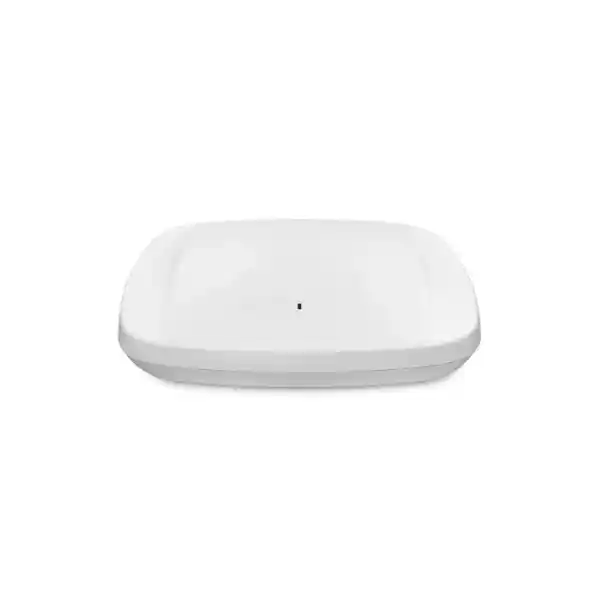
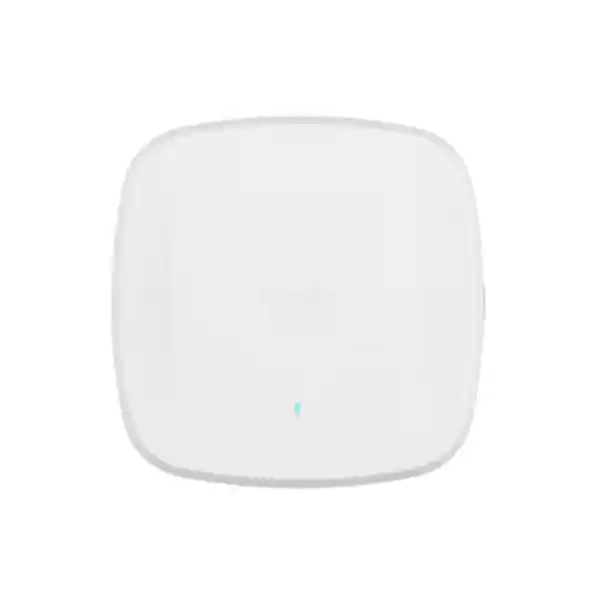
The Cisco Meraki CW9166D1-MR is a cloud-managed, enterprise-class Wi-Fi 6E access point built for demanding indoor wireless environments where high client density, predictable directional coverage and centralized operations matter. Its integrated directional antenna is particularly useful where wireless energy needs to be focused toward a defined area such as a warehouse aisle, auditorium seating zone, production floor, corridor, lecture hall, logistics area or other space where an omnidirectional access point may not provide the desired coverage pattern. The platform combines 4×4:4 MU-MIMO across 2.4 GHz, 5 GHz and 6 GHz, a tri-radio aggregate frame rate of up to 7.78 Gbps, a 5 GbE multigigabit Ethernet uplink, dedicated RF and security scanning, Bluetooth Low Energy/IoT capabilities and Meraki Dashboard management. For Tanzanian organizations planning a Wi-Fi refresh, the CW9166D1-MR offers a strong path toward modern wireless capacity while keeping network visibility, policy control and operational monitoring in a cloud-managed architecture.
What the Cisco Meraki CW9166D1-MR is designed to solve
Modern business wireless networks are expected to carry more applications, more concurrent users and more latency-sensitive traffic than earlier generations of Wi-Fi. Collaboration platforms, cloud applications, video meetings, mobile point-of-sale systems, handheld scanners, industrial tablets, guest access, IoT devices and real-time business systems can all compete for airtime. The CW9166D1-MR is designed for environments where the wireless network is business-critical and where the access point needs to deliver capacity without giving up operational simplicity. Its Wi-Fi 6E architecture adds the 6 GHz band where locally permitted, creating additional spectrum for compatible devices, while 4×4:4 MU-MIMO and OFDMA capabilities help improve efficiency in dense client environments.
The integrated directional antenna is the defining difference between CW9166D1-MR and models intended for more general omnidirectional coverage. Directional antennas concentrate coverage toward the area the access point is facing. This can support more intentional RF design in long aisles, audience-facing rooms, high-ceiling spaces and defined coverage sectors. The choice should therefore be based on a proper wireless design rather than specification alone. Organizations should consider client density, building materials, mounting position, cable path, power availability, expected 6 GHz client adoption, roaming requirements and the desired RF footprint before finalizing quantity and placement.
High-capacity Wi-Fi 6E
Supports 2.4 GHz, 5 GHz and 6 GHz operation with 4×4:4 MU-MIMO and Wi-Fi 6E features intended for high-performance enterprise deployments.
Directional coverage
Integrated directional antennas help focus RF energy toward a target area, useful for warehouses, halls, corridors and other spaces that need shaped coverage.
Cloud operations
Meraki Dashboard provides centralized configuration, monitoring, visibility, analytics and lifecycle operations across one or many sites.
Multigigabit uplink
A 5 GbE multigigabit Ethernet interface helps avoid constraining high-capacity wireless traffic at the wired access layer when paired with suitable switching.
Verified Cisco Meraki CW9166D1-MR specifications
| Specification | CW9166D1-MR |
|---|---|
| Wireless generation | Wi-Fi 6E / 802.11ax compatible |
| Client bands | 2.4 GHz, 5 GHz and 6 GHz, subject to local regulatory availability |
| Spatial streams | 4×4:4 MU-MIMO |
| Aggregate frame rate | Up to 7.78 Gbps |
| Antenna | Integrated directional antenna; 6 dBi gain at 2.4/5 GHz and 8 dBi at 6 GHz |
| Ethernet | One 5 GbE multigigabit interface |
| Power | 802.3at / 802.3bt PoE support; DC power option available |
| IoT | Bluetooth Low Energy / IoT radio and USB support |
| Management | Meraki Dashboard cloud management for the -MR variant |
| Licensing | Meraki access point license required for Meraki management |
Wireless capability is only one part of final design. The client mix, switch uplink capability, PoE budget, cabling category, internet and WAN capacity, RF conditions and regulatory domain all influence real-world outcomes. Tanzania buyers should verify the regulatory domain and applicable 6 GHz rules for the intended installation before ordering or deployment.
Meraki cloud management, security and visibility
The CW9166D1-MR is intended for organizations that value centralized network operations. Through Meraki Dashboard, administrators can monitor access points, configure SSIDs and policies, review wireless health, track clients and applications, apply firmware updates and manage multiple sites from a common interface. For distributed organizations, this can simplify operations because branch networks can be standardized without requiring the same level of local controller infrastructure at every site. The platform also supports RF optimization, application visibility and Layer 7 traffic shaping features that can help teams prioritize business applications and identify network usage patterns.
Security design should still be treated as a complete architecture. WPA3 capability, 802.1X authentication, segmentation, identity services, firewall policy, secure DNS, endpoint posture and access control may all play a role depending on the environment. The access point should be integrated into a wider wired and security design rather than treated as a standalone appliance. Organizations can explore broader networking options through FourTeck Tanzania technology solutions, or review regional delivery and solution coordination through FourTeck Africa.
Directional antenna planning and deployment guidance
Directional wireless design is useful when the desired coverage area has a clear orientation. In a warehouse, for example, an installer may need to direct coverage down an aisle rather than radiating equally in all directions. In an auditorium, the AP can be positioned so the coverage pattern favors seating rather than back-of-house areas. In a manufacturing or logistics environment, directional coverage can help align RF with work zones, scanning areas or loading spaces. This does not eliminate the need for a site survey. Shelving, metal structures, glass, concrete, machinery, ceiling height, neighboring access points and interference can significantly affect propagation.
A professional design should map expected user density, application types and client capabilities before deciding AP count. Wi-Fi 6E benefits depend in part on having compatible 6 GHz clients and local permission to use the band. Older 2.4 GHz and 5 GHz devices will continue to require suitable channel planning. For dense deployments, the goal is not simply maximum signal strength; it is controlled cell size, predictable roaming, adequate channel reuse and sufficient wired backhaul. The 5 GbE interface can also create upstream requirements: switching infrastructure should support appropriate multigigabit speeds and sufficient PoE capacity if the installation is to take full advantage of the AP.
For organizations extending a deployment across borders, related procurement coordination may be available through FourTeck Kenya, FourTeck Uganda, and FourTeck UAE. These links are useful for organizations comparing regional requirements or planning multi-country infrastructure standards.
Cisco Meraki CW9166D1-MR Tanzania
For businesses and institutions in Tanzania, the Cisco Meraki CW9166D1-MR is best suited to environments where wireless performance, directional coverage and centralized administration are all important. A Tanzanian deployment may involve a headquarters, campus, warehouse, hospitality property, healthcare facility, retail operation, educational institution, logistics hub or industrial building. Each has a different client profile and RF challenge. Warehouses may prioritize handheld scanners and long aisles; offices may prioritize video meetings and mobile collaboration; education sites may require high concurrent client counts; hospitality environments may need predictable guest and staff connectivity. The integrated directional antenna gives designers another way to shape coverage rather than relying entirely on omnidirectional AP placement.
Procurement planning in Tanzania should include more than the AP itself. Confirm the required Meraki licensing term, the correct regulatory domain, PoE source, multigigabit switching, mounting hardware, cabling and any required accessories. The CW9166D1-MR needs a Meraki access point license for cloud management. A buyer should therefore compare total lifecycle requirements rather than hardware price alone. Existing network switches should also be checked for PoE and multigigabit support, because a high-capacity AP attached to a constrained 1 GbE uplink or insufficient power budget may not deliver the intended design outcome.
Tanzania organizations should also consider operational ownership. Who will administer Meraki Dashboard? Which teams need access? How will SSIDs, VLANs and authentication policies be standardized? What is the migration approach from existing access points? Does the project require a phased rollout to avoid user disruption? Clear answers to these questions simplify deployment and reduce rework. FourTeck Tanzania can be approached for quotation support, model confirmation and project scoping without assuming stock, lead time or local authorization unless specifically confirmed during the quotation process.
Cisco Meraki CW9166D1-MR Dar es Salaam
Dar es Salaam organizations often operate in mixed-use buildings, commercial offices, hospitality properties, education facilities, logistics environments and branch networks where user density can vary significantly by time of day. The CW9166D1-MR can be a strong option when a project requires cloud-managed Wi-Fi 6E and a directional antenna pattern. In offices, directional placement may help concentrate coverage into meeting, training or open-plan work zones. In logistics and warehouse environments, it can be positioned to favor aisles or operational zones. In auditoriums or event spaces, the coverage pattern can be oriented toward users rather than radiating equally behind the AP.
A Dar es Salaam project should begin with the floor plan and use case. Designers should identify high-density areas, building materials, ceiling conditions and likely sources of interference. A coastal environment may also influence equipment-room and cabling considerations, making good installation practices important. For business-critical wireless, it is sensible to review switch redundancy, UPS coverage, WAN resilience and monitoring in parallel with the AP design. Meraki Dashboard provides centralized operations, but the surrounding wired and power environment still needs to be designed for continuity.
For quotation preparation, buyers should specify the number of intended coverage zones, expected client count, existing switch models, preferred licensing term and any mounting constraints. If the project is replacing legacy wireless, provide the current AP count and main pain points such as dead zones, unstable roaming, capacity limits or difficult remote management. That information makes it easier to determine whether CW9166D1-MR is the right directional model or whether a mix of directional and omnidirectional APs would provide a more efficient design.
Cisco Meraki CW9166D1-MR Mwanza
In Mwanza, businesses evaluating enterprise wireless may be supporting offices, healthcare sites, education, retail, manufacturing, distribution or hospitality operations. The CW9166D1-MR is relevant where a high-performance indoor Wi-Fi 6E platform is required together with a directional RF pattern. A directional access point can be especially useful in long rooms, corridors, warehouse aisles, training areas and other spaces where the desired coverage footprint is focused rather than circular. The 4×4:4 MU-MIMO design and support for 2.4 GHz, 5 GHz and 6 GHz give network teams flexibility to serve a broad mix of clients while preparing for wider adoption of 6 GHz-capable devices.
Mwanza buyers should verify the full project bill of materials. This includes access points, Meraki licenses, suitable PoE or power accessories, multigigabit switch ports, mounting requirements and cabling. If existing switches are limited to standard Gigabit Ethernet, the team should decide whether switching upgrades are part of the same project or a later phase. The CW9166D1-MR has a 5 GbE uplink, so wired infrastructure can become an important planning factor in higher-throughput deployments.
It is also useful to establish how the network will be monitored after installation. Meraki Dashboard supports centralized visibility and is particularly attractive for organizations with multiple branches. A Mwanza branch can be operated under the same policy framework as other sites, helping IT teams reduce configuration drift. Before ordering, confirm local regulatory suitability, determine whether 6 GHz operation is appropriate for the project and plan the RF design around the building rather than using AP quantity as a substitute for survey and placement work.
Cisco Meraki CW9166D1-MR Arusha
Arusha deployments may include tourism and hospitality properties, conference venues, offices, education sites, healthcare environments and distributed business facilities. The CW9166D1-MR can support these scenarios when there is a need for high-capacity indoor Wi-Fi, directional coverage and cloud-managed operations. Hospitality and conference environments often have sharp changes in user density, with meeting spaces or event areas becoming heavily occupied at specific times. In such settings, RF design should consider not only coverage but also capacity, channel reuse and user movement.
The integrated directional antenna can be useful for aiming coverage into a hall, along a corridor or toward a defined seating or work area. However, it should not be selected automatically for every room. Guest rooms, offices and open areas may be better served by different antenna patterns depending on floor layout and materials. A mixed deployment can therefore be more effective than using one AP type everywhere. This is why the design stage should map each physical space to its expected usage.
Arusha buyers should include licensing in their budgeting from the beginning. The -MR version uses Meraki cloud management and requires a Meraki access point license. Operational teams should also decide how guest networks, staff networks, authentication and segmentation will be configured. For multi-site hotel or business groups, centralized policy can reduce administrative effort and provide better visibility across locations. A quotation request is more useful when it includes floor plans, expected client counts, internet connection details and the switch model available at each installation point.
Cisco Meraki CW9166D1-MR Dodoma
Dodoma organizations planning a wireless refresh may include public-sector offices, educational institutions, commercial facilities, healthcare operations and growing enterprise campuses. The Cisco Meraki CW9166D1-MR is suited to demanding indoor areas where high-capacity Wi-Fi and focused RF coverage are priorities. Its cloud management model is also relevant to institutions that need to operate multiple buildings or branches from a centralized IT team. Administrators can manage configuration, monitor wireless health and maintain a more consistent policy framework without relying entirely on on-site intervention at every location.
For campus-style installations, the most important task is to segment the environment into usage zones. Lecture spaces, reception areas, corridors, offices, libraries and back-office areas may all need different RF designs. The CW9166D1-MR can be valuable where coverage should be directed into a specific zone. In areas requiring broad 360-degree coverage, an omnidirectional model may be more appropriate. This is a design choice that should be made from floor plans and survey evidence rather than from peak data-rate figures.
Dodoma procurement teams should request clarity on hardware, licensing, power, switching and mounting so that the final quote reflects the working deployment rather than a hardware-only list. Confirm the intended license duration, switch PoE budget and multigigabit capability, cabling readiness and any installation accessories. If the network will support voice, video or critical cloud applications, resilience in the WAN and power design should also be considered. These surrounding factors are essential for delivering a reliable user experience from an enterprise access point.
Cisco Meraki CW9166D1-MR UAE
For UAE projects, the Cisco Meraki CW9166D1-MR is relevant to enterprises, hospitality operators, warehouses, education facilities, healthcare organizations and multi-site businesses that require centrally managed Wi-Fi 6E. Dense commercial buildings and large logistics environments can benefit from deliberate RF design, particularly where wireless coverage needs to be shaped around aisles, halls or operational zones. The integrated directional antenna makes the CW9166D1-MR a specialized choice within the Meraki access point family rather than a universal replacement for omnidirectional models.
UAE buyers should verify the correct regulatory domain and permitted 6 GHz operation for the exact project. Enterprise wireless procurement should also include Meraki licensing, compatible PoE, suitable mGig switching and the chosen mounting approach. In high-density installations, the wired access layer becomes a major part of performance planning. The AP’s 5 GbE interface can support more than standard Gigabit Ethernet, but actual end-user performance depends on clients, spectrum, network design and upstream infrastructure.
Organizations with Tanzania and UAE operations may benefit from standardizing SSID naming, segmentation, identity policy and monitoring conventions across both markets while still respecting local regulatory requirements. Meraki cloud management can help simplify multi-site visibility. Procurement teams can use FourTeck UAE for regional coordination and compare project requirements with their Tanzanian deployment. Standardization should focus on operational consistency, not blindly duplicating AP quantities or channel plans across different buildings.
Cisco Meraki CW9166D1-MR Uganda
Ugandan organizations considering the CW9166D1-MR may be planning enterprise Wi-Fi for offices, educational institutions, financial services, hospitality, logistics or distributed branches. The AP’s cloud-managed architecture is particularly useful where IT teams need centralized visibility across multiple locations. Rather than treating each site as an isolated wireless island, administrators can apply common network standards and monitor performance centrally, while still tuning RF settings for each physical environment.
The directional antenna is useful when the coverage area has a clear orientation. Examples include warehouse aisles, corridors, assembly spaces or audience-facing rooms. Uganda projects should identify whether the intended area truly benefits from directional coverage before selecting this model. Open offices or rooms requiring balanced surrounding coverage may need different antenna characteristics. A careful design can combine several AP types within the same Meraki environment if that best fits the building.
Before requesting a final quotation, buyers should specify deployment size, license term, client count, existing switches and expected application mix. Meraki licensing is required for this -MR model. Power and mGig switching should also be confirmed. Organizations coordinating cross-border deployments can reference FourTeck Uganda for related regional planning while maintaining consistent procurement documentation across Tanzania and Uganda.
Cisco Meraki CW9166D1-MR Kampala
Kampala has many environments where enterprise wireless must support dense user populations, mixed device types and cloud-based business applications. The CW9166D1-MR can be a good fit for conference facilities, corporate offices, large training rooms, warehouses and other indoor areas where a directional RF pattern is desirable. Its Wi-Fi 6E architecture offers access to the 6 GHz band where permitted and supported by clients, while maintaining 2.4 GHz and 5 GHz connectivity for existing devices.
A Kampala deployment should be planned around real traffic patterns. A network carrying video conferencing, voice, cloud applications and large file transfers may need more careful capacity design than a basic guest-access network. Meraki Dashboard provides valuable operational visibility, but RF capacity still depends on channel planning, AP placement and client behavior. The AP’s 5 GbE port also means the wired edge should be reviewed so that the wireless design is not constrained by switching.
For procurement, request pricing that includes the correct Meraki license and any required power or mounting components. If the APs will be installed in high ceilings or difficult-to-access locations, maintenance access and mounting design should be addressed early. Where an articulating mount is required for precise orientation, confirm accessory requirements before ordering. A complete bill of materials reduces delays during installation and helps the project team align wireless, switching and cabling work.
Cisco Meraki CW9166D1-MR Arua
In Arua, organizations may be looking for modern wireless to support branch offices, education, healthcare, logistics, NGOs, hospitality or regional business operations. A cloud-managed access point can be particularly valuable when local IT resources are limited and a central team needs visibility into configuration and performance. The CW9166D1-MR provides enterprise Wi-Fi 6E capability together with directional antennas, making it useful for selected areas where coverage should be focused toward users rather than spread evenly in all directions.
Remote operational considerations are important. A good design should include stable power, suitable PoE, dependable WAN connectivity and clear procedures for remote troubleshooting. Meraki Dashboard can simplify visibility, but physical infrastructure still matters. If a switch cannot supply the intended power level or the uplink is limited, the access point may not operate with the performance expected from its headline specifications. Cabling quality and switch capability should therefore be checked during planning rather than after the APs arrive.
Arua buyers should also consider spare capacity and growth. If the site expects more users, additional scanners, tablets or guest devices over the next few years, network design should leave room for expansion. The CW9166D1-MR can serve as part of that growth strategy, especially where centrally managed multi-site standards are important. A detailed quote request should state the number of areas to cover, building type, approximate client count and any existing Meraki environment so the solution can be scoped accurately.
Cisco Meraki CW9166D1-MR Mbarara
Mbarara businesses and institutions planning enterprise Wi-Fi can consider the CW9166D1-MR for high-demand indoor zones requiring directional coverage. Typical examples may include training centers, warehouses, healthcare facilities, commercial spaces, hospitality and larger offices. The AP supports modern Wi-Fi 6E capabilities while retaining connectivity across the established 2.4 GHz and 5 GHz bands. This helps organizations modernize gradually as 6 GHz-capable devices become more common.
The value of a directional AP depends heavily on placement. It should be mounted and oriented so that the main lobe covers the intended user area. In a warehouse, this might mean aiming down an aisle; in a hall, toward seating; in a corridor, along the length of the space. Poor orientation can produce unnecessary coverage gaps or overlap. A pre-deployment survey and post-install validation are therefore useful, especially in buildings with metal shelving, thick walls or other RF obstacles.
Mbarara procurement planning should include Meraki licensing and a check of switching infrastructure. The AP includes a 5 GbE mGig interface, so a project intended to use high wireless capacity should verify compatible wired ports and power budgets. If the site is part of a larger Uganda or East Africa network, centralized policy through Meraki Dashboard can make ongoing administration more consistent. The purchasing decision should consider lifecycle management, not only hardware acquisition.
Cisco Meraki CW9166D1-MR Gulu
Gulu deployments may involve offices, education, healthcare, humanitarian organizations, hospitality or distribution sites that need stronger network visibility and more consistent wireless operations. The Cisco Meraki CW9166D1-MR is a specialized indoor AP for high-density environments, combining Wi-Fi 6E with integrated directional antennas. For organizations managing multiple locations, cloud management can reduce the need to maintain separate management systems at each branch and can give central administrators a clearer view of client and AP health.
The physical environment should determine whether the CW9166D1-MR is the right model. Directional coverage can be advantageous in long spaces or areas where users are concentrated in a specific direction from the AP. In smaller general-purpose rooms, an omnidirectional model may be more appropriate. The goal is not to choose the most powerful specification for every location; it is to choose the right antenna pattern, capacity and management model for each zone.
Gulu buyers should provide project details when requesting a quote: floor plans where available, number of users, application types, switch models and preferred license duration. If the site relies heavily on cloud software, resilient internet connectivity should also be included in network planning. Meraki Dashboard offers centralized control, but good user experience also depends on upstream WAN performance, DNS, authentication services and the health of the wired LAN.
Cisco Meraki CW9166D1-MR Kenya
Kenyan organizations evaluating the CW9166D1-MR often need to support dense enterprise environments, distributed branches, logistics, education, hospitality and large commercial sites. The AP is designed for high-performance Wi-Fi 6E and includes integrated directional antennas, making it useful where RF coverage needs to be aimed into a defined space. Its Meraki cloud management model can also support organizations that want centralized operations across Kenya, Tanzania and other East African markets.
Cross-border standardization can simplify IT, but RF planning should remain site-specific. Buildings differ in wall materials, floor layout, ceiling height, user density and interference. A successful Kenya deployment should define target coverage, capacity and roaming performance separately for each location. The 5 GbE uplink and PoE requirements should also be matched to suitable access switches. Where an older switch estate exists, a phased upgrade plan may be appropriate.
For procurement coordination, FourTeck Kenya can support region-specific inquiries while Tanzanian teams can maintain a common model and licensing strategy where appropriate. Buyers should confirm the correct regulatory domain, Meraki license duration and any mounting or power accessories. Licensing should be treated as a mandatory part of the operational model for the -MR variant rather than an optional add-on.
Cisco Meraki CW9166D1-MR Kuwait
Kuwait enterprises may use directional Wi-Fi in warehouses, retail back-of-house areas, campuses, conference spaces and other high-density indoor environments. The CW9166D1-MR combines Wi-Fi 6E, 4×4:4 MU-MIMO, a 5 GbE uplink and Meraki Dashboard operations. Where organizations maintain a common technology stack across Gulf and African locations, this platform can help standardize management while still allowing each site to have a tailored RF plan.
Regulatory planning is essential. The availability and operating rules for the 6 GHz band differ by country, so the correct regulatory domain must be verified before procurement. The installation design should also confirm PoE, cooling and equipment-room conditions, switch capacity and cabling. In high-density spaces, performance depends on more than the AP radio: channel planning, client support, network segmentation and application behavior all affect user experience.
A Kuwait quotation request should include the expected number of access points, project type, licensing period and any requirement for phased deployment. If the organization already uses Meraki networking, state the current organization and licensing model so the deployment can be aligned operationally. If it is a new Meraki environment, the team should define administrator roles, configuration standards and monitoring responsibilities before the rollout begins.
Cisco Meraki CW9166D1-MR Ghana
Ghanaian businesses considering the CW9166D1-MR may be planning high-density Wi-Fi for corporate facilities, education, hospitality, logistics, healthcare or multi-site operations. The access point is most compelling where directional coverage is useful and cloud management is preferred. Meraki Dashboard can help central teams apply policy, monitor wireless health and manage firmware across branches, reducing the operational fragmentation that can occur when each location is managed separately.
For warehouses and large operational areas, the directional antenna can help concentrate RF into work zones, though a proper survey remains necessary. Metal shelving, machinery and dense materials can create reflections or attenuation that change the ideal placement. The same principle applies in conference or education environments: the access point should be designed around people and device density rather than installed only for nominal coverage.
Ghana procurement teams should request a full solution bill including the required Meraki license, PoE or power accessories, mounting components and compatible switching. If high traffic levels are expected, multigigabit switching should be considered because the AP provides a 5 GbE uplink. Organizations coordinating deployments across Africa can use FourTeck Africa as a regional reference point while ensuring each country’s regulatory requirements are checked independently.
Cisco Meraki CW9166D1-MR Nigeria
Nigeria’s large enterprise, education, hospitality, finance, healthcare and logistics sectors create many use cases for high-capacity managed Wi-Fi. The CW9166D1-MR is suited to demanding indoor spaces where both high density and directional coverage are important. Its Wi-Fi 6E radio architecture supports modern clients while maintaining service for established 2.4 GHz and 5 GHz devices. The integrated directional antenna is particularly useful for focused coverage areas and should be selected based on an RF design rather than only a feature comparison.
For large Nigerian sites, the network team should model user concurrency and application demand. A wireless network supporting thousands of transient devices, video traffic or real-time business applications needs careful cell sizing and channel reuse. Meraki Dashboard can simplify management across sites, but capacity still depends on physical design. The wired access layer, WAN and authentication systems also need enough resilience to support the wireless service.
Procurement should include licensing, power, switching, mounting and local regulatory suitability. Organizations planning multi-country African rollouts should create a common technical standard with country-specific exceptions for regulatory and building conditions. That approach makes it easier to manage configurations and support while avoiding the mistake of assuming that the same AP quantity or channel plan will work identically everywhere.
Cisco Meraki CW9166D1-MR Seychelles
Seychelles deployments can include hospitality, resorts, commercial offices, education, healthcare and public-facing facilities where reliable wireless is central to user experience. The CW9166D1-MR is an indoor enterprise access point, so it should be used only in appropriate protected environments. Its directional antenna may be useful for conference rooms, back-office spaces, corridors, indoor guest facilities and other areas where focused coverage is preferable to a broad omnidirectional pattern.
In island environments, network resilience often depends on the full chain from the access point to switching, power and upstream internet connectivity. A strong Wi-Fi design cannot compensate for unstable power or insufficient WAN capacity. For business-critical deployments, consider UPS coverage, switching redundancy, remote monitoring and clear support procedures. Meraki cloud management can assist with remote visibility, which may be valuable where a central IT team oversees multiple properties or sites.
Seychelles procurement teams should confirm the regulatory domain, 6 GHz availability, license requirement and mounting plan before ordering. Building materials, room layout and environmental conditions should also be factored into placement. For hospitality, network segmentation between guest, staff, operations and IoT systems may be as important as raw wireless throughput. A complete quotation should therefore reflect the desired network design, not only the number of APs.
Licensing, power and switching checklist
Meraki license
The CW9166D1-MR requires a Meraki access point license for Meraki Dashboard operation. Confirm the license duration and co-termination or subscription approach used by the customer organization before finalizing the quote.
PoE budget
Confirm that the access switch or injector can provide suitable 802.3at or 802.3bt power. Do not assume every existing PoE switch has sufficient budget for a full AP deployment.
Multigigabit access layer
The AP includes a 5 GbE mGig interface. Projects targeting high throughput should verify compatible switch ports and cabling rather than connecting every AP to a constrained edge without review.
Where the CW9166D1-MR fits best
This model is best considered when the environment combines high performance requirements with a clear need for directional coverage. Warehouses are an obvious example because aisles can benefit from focused RF. Auditoriums, lecture halls, training rooms and conference spaces can also benefit when APs are aimed toward seating areas. Manufacturing environments may use directional coverage to serve production zones while limiting unnecessary overlap. In some retail or logistics facilities, the access point can help serve scanner-heavy operational areas.
It may not be the ideal choice for every general office or small room. An omnidirectional model may provide simpler and more balanced coverage in open areas. Network planners should compare physical layout, client density and intended mounting direction before selecting between directional and omnidirectional access points. The strongest enterprise design is often a deliberate mix rather than a single-model deployment.
Quotation checklist for Cisco Meraki CW9166D1-MR
For a more accurate commercial and technical response, prepare the following information before requesting a quote:
- Number of sites and approximate coverage areas.
- Expected simultaneous user and device count.
- Building type, ceiling height and any warehouse shelving or major RF obstacles.
- Existing access switch model, PoE capability and available multigigabit ports.
- Required Meraki license duration and any existing Meraki organization details.
- Main applications: voice, video, scanners, guest access, cloud ERP, education or IoT.
- Any roaming, segmentation, authentication or guest-access requirements.
- Preferred rollout timeline and whether installation or configuration assistance is needed.
Cisco Meraki CW9166D1-MR FAQs
Is the CW9166D1-MR a Wi-Fi 6E access point?
Yes. It supports 802.11ax operation across 2.4 GHz, 5 GHz and 6 GHz. Use of 6 GHz depends on local regulatory permission and compatible client devices.
What is different about the D1 model?
The CW9166D1 uses an integrated directional antenna. It is intended for deployments where wireless coverage should be focused toward a defined area rather than distributed equally around the access point.
Does CW9166D1-MR require a Meraki license?
Yes. The Meraki-managed -MR variant requires a Meraki access point license for operation with Meraki Dashboard. Licensing should be included in project budgeting.
Does it support multigigabit Ethernet?
Yes. The CW9166D1-MR includes a 5 GbE multigigabit Ethernet interface. The access switch and cabling should be checked for compatibility if the design expects to use more than 1 GbE of wired capacity.
Is this model suitable for warehouses?
It can be very suitable for indoor warehouses because the directional antenna can be aimed along aisles or work zones. A site survey is still recommended because shelving, ceiling height and materials influence coverage and roaming.
Decision recap
Choose Cisco Meraki CW9166D1-MR when you need an enterprise Wi-Fi 6E access point for high-density indoor environments, want centralized Meraki cloud management and have a specific use case for directional coverage. Validate the RF design, regulatory domain, Meraki licensing, PoE budget, multigigabit switching and mounting requirements before ordering. If the environment primarily needs broad omnidirectional coverage, compare the directional model with other access point options rather than assuming the highest-capacity device is automatically the best fit.
Talk to FourTeck Tanzania about your wireless project
A useful quote starts with the intended environment, not only the model number. Share your site type, floor plan, expected user count, switch platform, license preference and business applications. FourTeck can help frame the commercial request around the CW9166D1-MR and related infrastructure so the bill of materials reflects the intended deployment. For broader technology planning, visit FourTeck Tanzania or use the contact action below to request a project-specific discussion.



Reviews
There are no reviews yet.