
Business DECT Mobility • HD Voice • Scalable Yealink Ecosystem
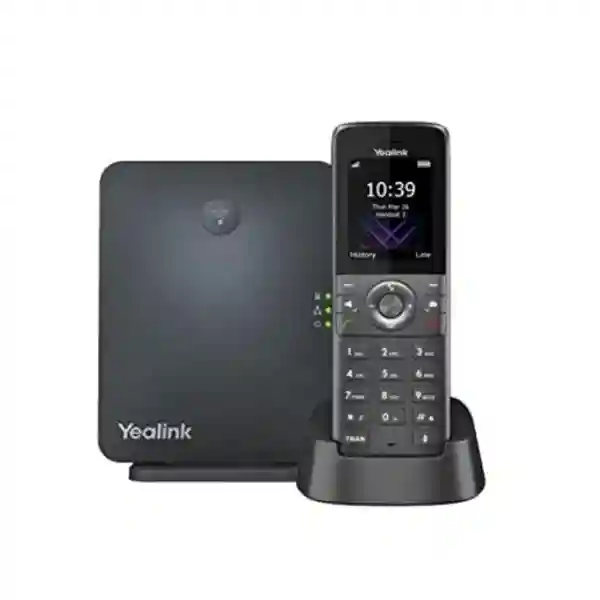
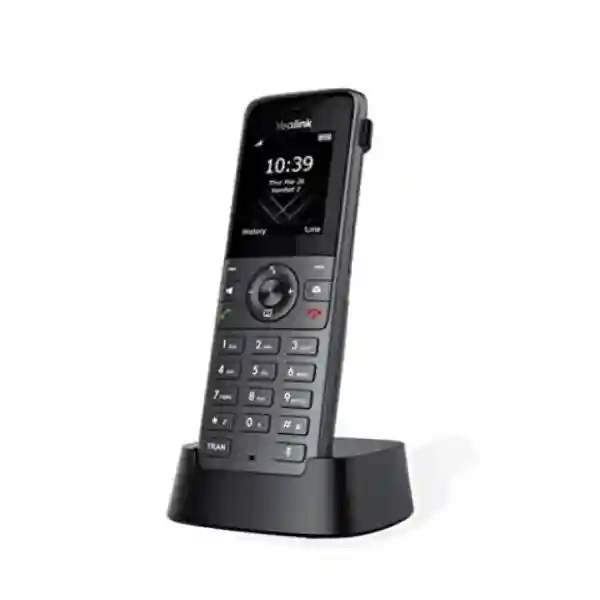
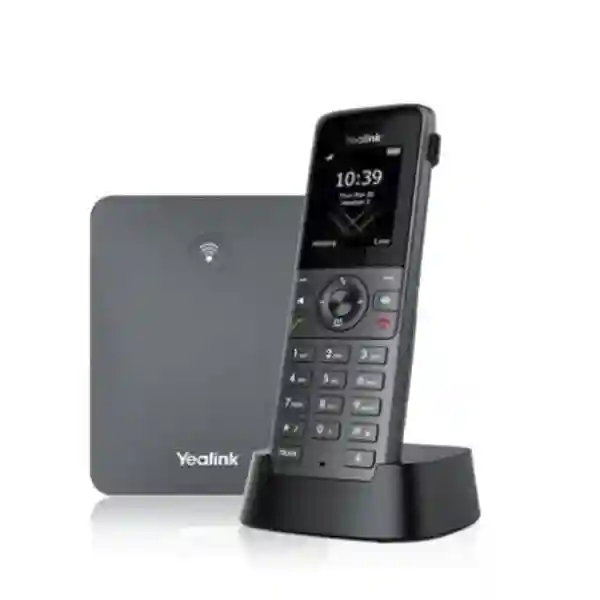
Yealink W73H DECT Handset
The Yealink W73H is a modern cordless DECT handset built for business users who need to move away from a fixed desk while remaining reachable on their organisation’s voice system. It is designed as a professional handset rather than a consumer cordless phone, combining clear HD audio, a compact 1.8-inch colour display, a backlit keypad, noise-reduction technology, full-duplex speakerphone operation and a practical 3.5 mm headset connection. With up to 35 hours of talk time and up to 400 hours of standby time under ideal conditions, the W73H is well suited to teams that need dependable calling throughout long working shifts.
Quick answer
Choose the W73H when your staff need a lightweight Yealink DECT handset for mobile business calling and you already use, or plan to deploy, a compatible Yealink DECT base. For a small office, a W70B-based system can provide a straightforward single-cell platform. For larger buildings or expanding environments, supported Yealink multi-cell systems such as W80 or W90 can extend the design. Always confirm the base model, regional DECT frequency and PBX/SIP requirements before ordering.
What the Yealink W73H is designed to solve
Many business users cannot work effectively from a fixed desk phone. Warehouse supervisors walk between receiving, storage and dispatch areas. Hotel staff move between reception and guest-service zones. Retail managers move around the floor. Clinic coordinators, school administrators, facilities teams and office supervisors may need to answer extension calls while away from their desks. The Yealink W73H addresses that mobility requirement by pairing a compact cordless handset with a compatible Yealink DECT infrastructure rather than relying on a desk-bound endpoint.
The handset also supports a useful set of daily business calling functions, including call transfer, call waiting, hold, mute, DND, call forwarding, redial, speed dial, voicemail indication, three-way conference, call history, keypad lock and emergency calling functions where configured. A notification light can signal voicemail or missed calls. Its display shows caller information and supports a multilingual user interface, while the backlit keypad remains practical in dimmer working areas.
For procurement teams, the key point is that the W73H is only one part of a complete DECT solution. It is not a standalone SIP desk phone and should be planned with the correct Yealink base or multi-cell platform. Yealink documents compatibility with its own W60B/W70B single-cell bases and supported W80/W90 multi-cell systems, and Yealink also states that its DECT technology is not compatible with third-party DECT base stations or handsets. That makes ecosystem validation important before purchase.
Verified Yealink W73H features
Display and controls
1.8-inch 128 × 160 TFT colour display, intuitive icon-based user interface, caller ID, notification light, screen saver, multilingual interface and backlit keypad.
Audio
HD audio, full-duplex speakerphone, hearing-aid compatibility, 100 Hz–7 kHz frequency response and Flexible Noise Reduction / noise cancellation.
Battery
Up to 35 hours of talk time and up to 400 hours of standby time under ideal conditions, supporting long workdays and shift-based use.
Calling capacity
Supports up to two simultaneous calls per handset. Overall system capacity depends on the selected Yealink DECT base or multi-cell platform.
Mobility range
Yealink specifies up to 50 metres indoors and up to 300 metres outdoors under ideal conditions. Actual coverage depends on walls, layout, interference and base placement.
Physical design
Approximate handset size 144.5 × 48 × 21 mm, weight 112 g, Space Gray finish, 3.5 mm headset jack and belt clip for mobile working.
Compatibility and deployment planning
The W73H should be selected as part of a Yealink DECT architecture. Yealink lists compatibility with W60B and W70B single-cell bases as well as W80B/W90B multi-cell systems, with newer support documentation also listing additional compatible Yealink DECT components. A single-cell system can suit a compact office, shop, reception area or small operational site where one base can provide adequate radio coverage. Multi-cell DECT becomes more appropriate when users need to roam across a larger building, multiple floors or a broader operational area without losing business calling access.
For a W70B-based deployment, Yealink documents support for up to 10 DECT cordless handsets or DECT headsets, up to 10 SIP accounts and up to 20 simultaneous calls at the base-system level, while the W73H itself supports up to two simultaneous calls. Larger W90 architectures can scale much further, but such deployments require proper radio planning, licensing or platform design where applicable, base placement and network readiness. The handset therefore fits both small and expandable systems, but the correct topology should be selected before purchasing large quantities.
A practical design review should include the existing PBX or hosted SIP platform, number of extensions, expected concurrent calls, building dimensions, floor materials, areas where users must roam, power availability for bases, Ethernet connectivity, VLAN and Quality of Service policy, internet resilience and future growth. FourTeck Tanzania’s business IT and communications services can provide a broader framework for coordinating endpoint, PBX and network requirements, while the Tanzania technology shop helps buyers review related business technology categories.
Technical specification summary
| Area | Verified specification |
|---|---|
| Display | 1.8-inch 128 × 160 TFT colour screen |
| Audio | HD audio, full-duplex speakerphone, FNR/noise cancellation, HAC compliant |
| Concurrent calls | Up to 2 simultaneous calls per handset |
| Talk / standby | Up to 35 hours talk; up to 400 hours standby under ideal conditions |
| Headset | 3.5 mm headset jack |
| Dimensions / weight | 144.5 × 48 × 21 mm; 112 g |
| DECT range | Up to 50 m indoors / 300 m outdoors in ideal conditions |
| Operating environment | Current Yealink support documentation lists 0–40 °C operating temperature and 10–95% humidity; verify hardware revision and regional documentation during procurement. |
| Package | W73H handset, charger cradle, rechargeable battery, belt clip and power adapter according to Yealink’s current W73H datasheet. |
Who should consider the Yealink W73H?
The W73H is strongest when users need voice mobility but do not need a ruggedised handset or a full smartphone-style endpoint. It can suit office administrators who move between desks and meeting areas, hotel teams who need to stay reachable around guest-service zones, retail managers who spend time on the shop floor, warehouse supervisors who regularly move away from a fixed station, healthcare or education staff who need internal extension access, and service teams who need a compact voice device that can be centrally integrated with a business telephony platform.
It may be less suitable where users need intrinsic ruggedisation, advanced Bluetooth functions, specialised emergency-worker capabilities or third-party DECT interoperability. In those cases, another Yealink handset or another endpoint category may be a better fit. Selection should therefore begin with the workplace environment, required roaming area, headset preference, durability expectations and existing voice infrastructure.
Yealink W73H DECT Handset Tanzania
Businesses looking for the Yealink W73H DECT Handset in Tanzania are often trying to solve two related problems: keeping staff reachable while they move around a site, and connecting that mobility into an organised business phone system rather than using separate consumer cordless phones. The W73H is well suited to this requirement because it functions as a professional Yealink DECT endpoint with business calling features, HD audio and long battery endurance. For offices, warehouses, schools, clinics, hospitality properties, retail operations and service centres, the important purchasing question is not simply whether the handset is available. Buyers should confirm which base station or multi-cell system will serve the site, whether the existing PBX supports the required SIP configuration and whether radio coverage is sufficient for the working areas where staff must remain reachable.
In Tanzania, building layout can strongly influence cordless coverage. Concrete walls, reinforced floors, metal shelving and multiple separated rooms can reduce practical DECT range from ideal laboratory figures. A small single-floor office may need only one correctly placed compatible base, while a larger warehouse, hotel, clinic or campus can require a multi-cell design so users can move through broader areas. The W73H itself supports the user experience, but reliable deployment also depends on Ethernet switching, stable power, structured cabling and the IP telephony platform behind the base stations.
For procurement, request the number of handsets required, the current PBX or SIP service, the building size, number of floors, preferred call flows and any expansion plan. If the organisation is replacing an older Yealink DECT environment, confirm the exact base models and firmware before assuming compatibility. If the business is starting from zero, ask for a complete bill of materials that includes handset quantities, base stations, network connectivity, power requirements, PBX integration and any installation or configuration scope. FourTeck’s Tanzania business technology platform provides context for integrating voice with wider network infrastructure.
The strongest reason to choose the W73H in Tanzania is controlled mobility: staff can keep a dedicated business handset with consistent extension features without carrying a desk phone from room to room. Its up to 35-hour talk time, up to 400-hour standby time and belt clip support long work shifts, while the colour display, notification light and backlit keypad improve everyday usability. Before ordering, verify the regional DECT frequency version, included accessories, base-system design, PBX compatibility and quantity requirements. This creates a quotation that reflects the whole communication requirement rather than the handset alone.
Yealink W73H DECT Handset Dar es Salaam
Dar es Salaam organisations frequently operate across busy offices, retail floors, logistics facilities, hotels, clinics and multi-room commercial sites where employees need to answer calls while away from a fixed workstation. The Yealink W73H can be a practical cordless endpoint for these environments when paired with a compatible Yealink DECT base architecture. A reception supervisor may move between front desk and back office, a warehouse coordinator may walk between receiving and dispatch, and a hospitality team member may cover several service zones. In each case, the handset helps preserve business extension access without relying on a personal mobile phone for every internal call.
For a Dar es Salaam deployment, building density and construction should be considered before choosing the number of bases. A single W70B may be adequate for a compact workspace, but a larger property or multi-floor facility can benefit from a supported multi-cell design. Yealink’s published maximum range figures are measured under ideal conditions, so walls, lift shafts, equipment rooms, storage racking and radio obstacles should be considered during planning. A useful pre-sales survey or floor-plan review can identify areas where users actually need coverage, rather than assuming that one base will reach every corner.
The network side is equally important. DECT bases connect into the IP network and depend on reliable switching, addressing, SIP reachability and, where required, VLAN and Quality of Service policies. Organisations adding cordless voice to an existing IP PBX should document extension numbers, inbound call routing, ring groups and transfer requirements. Those replacing analogue cordless devices should also consider how the new IP-based system will be powered during short outages; keeping relevant network switches, PBX equipment and DECT base infrastructure on suitable UPS protection can improve continuity.
When requesting a Yealink W73H quotation in Dar es Salaam, provide handset quantity, site size, existing PBX brand, current Yealink base model if any, expected simultaneous calls and whether users must roam between floors or buildings. This information helps avoid under-sizing the radio system or supplying handsets without the infrastructure needed to register them. The W73H is particularly attractive for teams that value a simple, focused voice handset with long battery endurance, clear audio and physical keypad operation rather than a more complex mobile device.
Yealink W73H DECT Handset Mwanza
For organisations in Mwanza, the Yealink W73H is relevant where day-to-day work involves movement between offices, storage areas, service counters, reception points or operational zones. The handset provides a dedicated business voice endpoint that can remain tied to the company’s extension plan while giving staff freedom from a desk. This can be useful for hospitality teams, distributors, education facilities, clinics, retail operations and businesses with a combination of front-office and back-office work. Because the W73H supports standard business functions such as transfer, hold, call waiting, DND and three-way conferencing, mobile users can participate in the same call workflow as desk-based colleagues.
Mwanza buyers should think first about system architecture. A W73H handset must register to a supported Yealink DECT platform; it is not intended to operate as an independent wireless SIP phone. If the site already uses a W60B, W70B, W80B or W90-series deployment, compatibility and firmware should be checked against current Yealink documentation. If this is a new project, the choice between single-cell and multi-cell should be based on actual coverage requirements and expected scale. A smaller office can often be kept simple, while a larger facility may need multiple cells so staff do not lose service as they move.
Power and connectivity planning can make a major difference to reliability. The base system depends on the LAN and PBX path, so a well-configured network is essential even though the user experiences the device as a cordless phone. Voice VLANs, stable switches, correctly configured SIP services and sensible firewall rules can reduce troubleshooting later. For sites where internet connectivity fluctuates, understand whether the PBX is local or cloud-based and what happens to internal and external calling if the WAN link is interrupted.
A well-prepared Mwanza quotation request should therefore include handset count, current telephony platform, building layout, number of floors, critical calling areas and future expansion expectations. The W73H’s compact 112 g body, long published battery endurance and 3.5 mm headset jack can make it comfortable for employees who spend much of the day moving. Procurement should still verify regional frequency, charger and power requirements, included accessories and compatible base hardware before final confirmation.
Yealink W73H DECT Handset Arusha
Arusha has a broad mix of hospitality, tourism, education, professional services, logistics and institutional environments where cordless business communication can be valuable. The Yealink W73H can support front-desk teams, guest-service staff, supervisors, administrators and operational users who need to answer extension calls while moving through a property. Unlike a consumer cordless telephone, it is designed to participate in a Yealink business DECT system that can integrate with SIP-based telephony and provide familiar enterprise call functions.
Hospitality properties should pay particular attention to coverage design. Guest rooms, service corridors, reception, restaurants, offices and back-of-house areas can be separated by dense walls and multiple floors, so ideal DECT range specifications should not be treated as guaranteed building coverage. A multi-cell design may be more appropriate for larger properties where staff roam between zones, while a single-cell base may work well for a compact lodge office or reception environment. The decision should be based on floor plans, required roaming paths, user count and simultaneous call needs.
The handset itself brings several useful characteristics for shift-based work: up to 35 hours of talk time and up to 400 hours standby under ideal conditions, a belt clip, notification light, backlit keypad, speakerphone and headset connection. Those features make it practical for users who may not spend much time near the charging cradle during a normal shift. However, battery performance can vary with actual usage, signal conditions and device age, so charging routines should still be part of operations.
Arusha procurement teams can improve quotation accuracy by specifying whether the request is for additional handsets on an existing Yealink deployment or for a complete new system. Include the PBX platform, existing base model, required extensions, property layout, number of floors, expected roaming, call groups and any integration requirements. A complete design should also consider switching, cabling, power backup and internet resilience. This approach ensures the W73H is purchased as part of a workable communication system rather than as an isolated device.
Yealink W73H DECT Handset Dodoma
The Yealink W73H can suit organisations in Dodoma that need professional cordless calling across offices, administrative buildings, educational facilities, clinics, retail spaces and service locations. Its advantage is focused business mobility: users can retain extension-based calling features while moving around the workplace. For managers and administrators, this can reduce missed calls when a user leaves a desk temporarily. For operational staff, the physical keypad, notification light and long battery endurance make the handset straightforward to use without the distractions or device-management overhead of a general-purpose smartphone.
A Dodoma deployment should begin with user groups and call flow. Identify which employees truly need cordless mobility, which users remain better served by desk phones, and whether some roles require ruggedised or specialised handsets instead. Then map the areas where DECT coverage is required. Yealink lists up to 50 metres indoor and 300 metres outdoor range under ideal conditions, but real buildings can reduce these figures significantly. Correct base placement and, for larger sites, multi-cell architecture can therefore matter more than the headline range.
Compatibility should be documented before procurement. The W73H works within Yealink’s own supported DECT ecosystem, and Yealink states that its DECT products are not compatible with third-party DECT base stations or handsets. An organisation with an existing mixed-vendor environment should not assume that a W73H will register to any DECT base. Verify the current base model, firmware, PBX registration method and required regional frequency. Where a new system is being designed, consider whether the projected user count can be handled by a single-cell platform or whether a multi-cell system is more appropriate.
For quotation preparation in Dodoma, include quantity, site address, building type, number of floors, PBX or SIP provider, current DECT equipment, concurrency expectations and any need for installation or configuration. A clear bill of materials should identify handsets, bases, network connections and supporting accessories. This protects procurement from receiving a handset-only quote when the real requirement is a complete cordless business phone system.
Yealink W73H DECT Handset UAE
For UAE businesses, the Yealink W73H fits offices, hotels, warehouses, retail locations, clinics and service operations where employees need to stay reachable while moving through a site. The UAE market includes many multi-floor offices and large operational facilities, making it important to distinguish between a small single-cell deployment and a scalable multi-cell DECT design. A W70B-class single-cell solution may suit a compact workplace, while larger premises can require a W80 or W90 family architecture to provide broader roaming and greater capacity.
The W73H offers the practical features expected from a professional cordless handset: HD audio, full-duplex speakerphone, noise reduction, a 1.8-inch colour display, backlit keypad, 3.5 mm headset connection, call transfer and conference functions, and long published battery endurance. These characteristics are useful for hospitality and service staff who may spend long periods away from a desk, as well as supervisors who need a dedicated voice device during shifts. Its compact size also makes it easier to carry than a full desk handset.
UAE procurement should validate the regional DECT frequency, PBX compatibility, included power accessories and the overall base-station design. It is also useful to align voice infrastructure with network switching, UPS power and structured cabling so that the DECT system remains reliable during day-to-day operations. Businesses with offices in both the UAE and East Africa may benefit from standardising extension naming, handset models and deployment practices where this makes operational sense, while still respecting regional radio and power requirements.
FourTeck’s UAE IT and telecom solutions site covers IP PBX, VoIP and broader infrastructure requirements that can sit around the handset deployment. When requesting a W73H quotation, include the number of handsets, existing Yealink base stations, PBX platform, required roaming area, floors and expected call concurrency. This allows the solution to be sized around the actual workplace instead of treating all cordless phone projects as identical.
Yealink W73H DECT Handset Uganda
Ugandan organisations can use the Yealink W73H where business voice must follow staff as they move through offices, hotels, education facilities, clinics, retail sites and operations areas. It is especially useful when a company already uses SIP telephony and wants cordless mobility without asking employees to use personal mobile numbers for internal business calls. The handset can participate in extension-based calling, transfers, forwarding, voicemail and other common telephony workflows through a compatible Yealink DECT infrastructure.
The right deployment depends on scale. A compact office may be served by a supported single-cell base, while a larger site may need multi-cell coverage to provide more consistent service across floors or wider areas. Radio surveys are particularly useful where walls, storage racks, machinery or separate buildings could affect coverage. Yealink’s published range is an ideal-condition guide, not a guarantee for every site, so system design should be driven by the physical environment.
Uganda buyers should also consider the full telephony path. A DECT handset can have excellent radio coverage and still deliver a poor experience if the PBX, SIP trunk, LAN or internet connection is unstable. Voice VLANs, network QoS, reliable switches, UPS-backed equipment and correct firewall configuration can all influence final call quality. If the business already operates IP phones, the W73H can complement rather than replace fixed desk endpoints by serving employees who need mobility.
The FourTeck Uganda IT and VoIP site provides regional context for IP PBX, VoIP and networking projects. For a quotation, state whether you require handset-only expansion or a complete system, then provide the base model, PBX, handset count, building layout, floors, roaming requirements and expected concurrency. This helps ensure that the Yealink W73H is matched to the correct supporting architecture and avoids ordering devices that cannot be registered to the existing system.
Yealink W73H DECT Handset Kampala
Kampala businesses often need flexible communications across offices, hotels, retail spaces, clinics, warehouses and multi-department workplaces. The Yealink W73H is a strong fit where users need to remain on the corporate voice system while moving between work areas. A supervisor can take calls while checking operations, a front-office team can respond while away from the counter, and service personnel can use extension features without depending entirely on smartphones. The handset’s physical keypad and dedicated calling interface are also useful in roles where users need quick, predictable phone operation.
When planning a Kampala deployment, do not assume a single DECT base will cover an entire building. Offices with reinforced walls, stairwells, lift cores or several floors can require more careful radio design. Warehouses and retail environments may contain metal shelving and equipment that affect propagation. A compatible Yealink multi-cell platform can provide a more scalable approach when users need to roam through wider areas. The W73H can then serve as the individual endpoint within that larger design.
The handset provides up to two simultaneous calls per device, long battery life under ideal conditions, HD audio and FNR/noise cancellation. It also supports a 3.5 mm wired headset, which can be valuable for employees who need hands-free operation but do not require Bluetooth. Before choosing it for a call-intensive role, compare user expectations with other Yealink models that may add functions such as Bluetooth or ruggedisation. A procurement decision should be based on role fit rather than simply choosing one handset for every employee.
For a Kampala quote, list the number of users, exact departments, current PBX, existing DECT base hardware, floors, desired roaming zones and whether users will share call groups or direct extensions. If the deployment includes a new base system, also identify switch ports, PoE capability where relevant, cabling and power protection. Planning these supporting elements together creates a more predictable business phone deployment and makes future expansion easier to document and support.
Yealink W73H DECT Handset Arua
In Arua, the Yealink W73H can serve organisations that need reliable extension mobility in offices, hospitality locations, health facilities, schools, distribution operations and service businesses. The handset is lightweight, has a belt clip and supports long published talk and standby times, making it suitable for employees who spend much of the day away from a fixed telephone. Its HD audio and noise-reduction features are helpful where background activity might otherwise make conversations harder to follow.
The purchase should begin by confirming whether the organisation already has a compatible Yealink DECT base. If it does, verify the exact model and firmware before adding handsets. If the organisation is building a new cordless voice system, first determine how many users need mobility and whether they work within a compact area or across a broader property. A single-cell system can keep smaller deployments simple, while multi-cell DECT can support broader roaming where the environment warrants it.
Arua deployments may also need careful attention to power and internet resilience. If the PBX is cloud-hosted, external connectivity becomes part of call continuity. If the PBX is on site, internal calling may remain available even during certain WAN interruptions, depending on the design. In either case, the DECT base, switching and PBX equipment need stable power. UPS protection for critical network components can be worth considering where communication availability matters operationally.
Before requesting pricing, prepare a simple scope: handset quantity, existing PBX, current base system, number of floors, approximate building dimensions, departments using the phones, typical simultaneous calls and areas where coverage is mandatory. Also identify whether wired headsets are required and whether the included charging arrangement matches how users will work. These details make it easier to compare quotations on a like-for-like basis and reduce the risk of discovering after purchase that additional base stations or infrastructure are required.
Yealink W73H DECT Handset Mbarara
Mbarara organisations with mobile employees can consider the Yealink W73H as a business cordless voice endpoint for offices, hotels, clinics, campuses, distribution sites and retail environments. Its role is straightforward: allow a user to carry a dedicated extension handset while remaining connected to the organisation’s Yealink DECT and SIP telephony architecture. This can improve responsiveness when staff move between rooms or departments and reduce dependence on fixed phones for roles that are naturally mobile.
The W73H should not be confused with a rugged industrial handset. It is a modern commercial handset with compact dimensions and low weight, which makes it comfortable to carry, but environments involving heavy impact, water or dust exposure may require a more rugged Yealink option. This distinction is important in warehouses, workshops and outdoor operations. Match the handset to the actual risk level instead of assuming that any cordless phone is suitable for every operational environment.
For conventional office and hospitality roles, the feature balance is attractive: HD voice, speakerphone, FNR/noise cancellation, call transfer, forwarding, conferencing, voicemail notification, call history and a wired headset jack. Battery specifications support long shifts under ideal conditions. The user interface is intentionally focused on telephony, which can simplify training for teams that do not need mobile applications on the same device.
A Mbarara procurement plan should document whether the handset is being added to an existing W60B/W70B/W80/W90 environment or whether new base infrastructure is required. Provide site layout, user count, expected call volume and areas where users must roam. If the PBX is remote or cloud-hosted, also consider internet resilience and firewall configuration. This gives suppliers enough information to recommend a complete system rather than only quoting the handset, and it helps the organisation budget for the network, base and power components that make cordless calling dependable.
Yealink W73H DECT Handset Gulu
The Yealink W73H can be a useful business phone for organisations in Gulu that need mobility around administrative, service, healthcare, education, hospitality or distribution environments. Instead of placing a fixed phone at every point where an employee might work, a DECT handset allows selected users to carry their extension with them. This is especially practical for supervisors, coordinators and front-line staff who receive frequent calls but spend much of the day moving between work areas.
The handset’s strong battery specification helps support long shifts, while its 1.8-inch colour display, backlit keypad and notification light provide a familiar physical-phone experience. HD audio, speakerphone and Flexible Noise Reduction are designed to improve conversation quality, and the 3.5 mm headset jack supports users who want hands-free operation with a wired headset. These capabilities are useful in normal commercial environments, but a more rugged handset should be considered where impact, moisture or dust exposure is a regular part of the job.
Coverage should be designed around the site rather than a nominal distance figure. Buildings with several rooms, thick walls, metal roofs, storage racks or separate blocks can create weak areas. For small sites, correct placement of a compatible Yealink base may be sufficient; for larger footprints, multi-cell DECT can provide a more scalable solution. Organisations should also ensure that network switching and PBX connectivity are ready before expecting the handset system to perform reliably.
For Gulu procurement, give the supplier enough information to determine whether the requirement is handset expansion or a complete DECT solution. State the existing base model, PBX platform, number of handsets, number of floors or buildings, expected simultaneous calls, required roaming zones and power/network constraints. This preparation makes it easier to compare quotations fairly, identify missing accessories and plan future expansion. It also reduces installation delays caused by discovering compatibility or coverage issues after the handsets have already been purchased.
Yealink W73H DECT Handset Kenya
Kenyan businesses can deploy the Yealink W73H for cordless extension mobility in offices, hotels, schools, clinics, retail environments, warehouses and service organisations. The handset is particularly relevant where employees need to answer and transfer calls while moving around a site but do not require the broader application set of a smartphone. It provides a focused business telephony experience with HD voice, noise reduction, speakerphone, call management features and long battery endurance.
The architecture behind the handset should match the size of the site. Single-cell Yealink bases can serve smaller deployments, while supported multi-cell platforms are more appropriate for larger facilities where roaming coverage and greater scale are needed. Buyers should avoid assuming that the maximum outdoor or indoor range published by Yealink will translate directly into every Kenyan building. Walls, floor slabs, shelving and equipment can change real-world coverage, so larger deployments benefit from planned base placement and testing.
Integration with the PBX is another major buying question. The base platform registers SIP accounts and provides the bridge between the wireless handset and the voice system. Organisations should therefore identify the current PBX or hosted platform, number of extensions, call groups, concurrent calling needs and any existing Yealink equipment. If the project includes branch standardisation across East Africa, common naming, firmware management and documented configuration templates can make future support simpler.
The FourTeck Kenya business IT and VoIP site provides regional context for IP PBX, VoIP and network infrastructure. For a W73H quotation, specify whether you need handsets only or a full cordless system, then add site dimensions, floor count, PBX platform, base models, roaming requirements and expected growth. This helps ensure the selected Yealink infrastructure supports both current users and realistic expansion rather than forcing a redesign shortly after deployment.
Yealink W73H DECT Handset Kuwait
The Yealink W73H is suitable for Kuwait businesses that require dependable cordless voice across offices, hospitality properties, retail locations, clinics, warehouses and operational facilities. The handset gives mobile staff a dedicated extension device with a traditional telephone interface, which can be preferable to relying on personal mobiles for workplace call handling. Its lightweight design, belt clip and long battery specification support users who spend much of the day moving between locations inside a site.
For Kuwait procurement, the most important technical check is the complete DECT ecosystem. Confirm that the handset version and frequency are appropriate for the region and that the chosen Yealink base system is supported. The W73H works with compatible Yealink single-cell and multi-cell infrastructure; it should not be assumed to work with third-party DECT bases. Organisations expanding an existing estate should record their current base models and firmware before placing an order.
Large commercial properties may need more than one base. A hotel, warehouse or multi-floor office should be assessed according to actual roaming routes and call density. Multi-cell architecture can provide a better foundation where users must maintain calls while moving across larger spaces. Network design also matters because the base system depends on Ethernet and SIP connectivity. VLANs, Quality of Service, firewall policy, PBX availability and UPS-backed network equipment can all influence service reliability.
When comparing W73H quotations in Kuwait, check what is actually included: handset, charger cradle, rechargeable battery, belt clip, power adapter, base station if needed, configuration, PBX integration and any installation scope. Do not compare a handset-only price with a complete deployed solution as though they are the same. A useful request for quotation should include quantity, current telephony platform, building layout, required coverage, expected call volume and growth plans. These inputs let the supplier design a system that supports the working environment rather than simply shipping cordless handsets.
Yealink W73H DECT Handset Ghana
Ghanaian organisations can use the Yealink W73H where employees need business calling mobility across offices, educational sites, hospitality properties, clinics, retail spaces, warehouses and service locations. The device is purpose-built for voice and gives staff access to key telephony functions without tying them to a desk. For organisations that already rely on IP PBX or hosted SIP communications, it can extend the reach of the phone system into areas where fixed desk phones are inconvenient.
The handset should be bought with its supporting architecture in mind. Yealink lists compatibility with selected single-cell and multi-cell DECT bases, so buyers should verify the exact platform before ordering. Small offices can often keep the design simple with a single compatible base, while larger facilities can require multi-cell infrastructure to maintain wider roaming coverage. The W73H’s ideal-condition range figures provide a planning reference, but real coverage depends on building materials, layout and radio obstacles.
The device itself offers a balanced specification for general commercial use: 1.8-inch colour display, HD audio, speakerphone, FNR/noise cancellation, wired headset support, up to two simultaneous calls per handset and long talk/standby endurance. It also includes standard call-handling functions such as transfer, forwarding, hold, mute, DND and three-way conferencing. These features are useful across departments, but users who need rugged protection or Bluetooth should compare other handset models before standardising.
A Ghana procurement brief should state the number of handsets, current PBX, base-station model if present, number of floors, approximate site size, required roaming areas and expected simultaneous calls. Also identify whether configuration and installation are required. The broader FourTeck Africa IT solutions site provides context for IP PBX, networking and related infrastructure that can support voice deployments across African operations. Clear scope definition reduces the risk of missing base stations, network ports or power components from the final bill of materials.
Yealink W73H DECT Handset Nigeria
Nigerian businesses that operate across large offices, hospitality properties, clinics, retail environments, warehouses and service facilities can consider the Yealink W73H for mobile extension calling. The handset keeps voice communications tied to the company phone system while allowing selected staff to move away from a fixed workstation. This can be valuable for operations supervisors, reception support teams, facilities staff, hospitality employees and administrators who need to answer calls from multiple areas during the day.
System design should reflect both call volume and site size. A small office may be suited to a supported single-cell base, but a large building or multi-zone site may require a multi-cell system. The Yealink W90 family can scale significantly, but large deployments need careful planning of base placement, network infrastructure, PBX integration and handset registration. The W73H itself supports up to two simultaneous calls, while total concurrent capacity depends on the base platform and system architecture.
Power resilience can be a particularly important design consideration in business telephony. A cordless handset may retain battery charge for many hours, but it still depends on the DECT base, switches, PBX and connectivity path. Organisations should therefore consider UPS protection for critical voice-network components and document what level of calling should remain available if external internet connectivity is interrupted. Where a cloud PBX is used, WAN resilience becomes part of telephony continuity planning.
For Nigeria procurement, compare complete scope rather than unit price alone. Confirm the handset revision, compatible base, regional radio version, charger and included accessories, PBX integration, installation responsibility and future expansion path. Provide the supplier with user count, floor plan, departments, roaming requirements and expected concurrent calls. The W73H offers strong value where teams need a simple business cordless device with clear audio, a physical keypad and long battery endurance, but its best performance comes from being deployed as part of a properly engineered DECT and IP voice environment.
Yealink W73H DECT Handset Seychelles
The Yealink W73H can be particularly relevant in Seychelles hospitality, resort, office, healthcare, retail and service environments where staff need to stay reachable while moving across guest-facing and operational areas. A dedicated DECT handset allows employees to receive business extension calls without depending on personal mobile phones and can provide a more controlled voice workflow for reception, housekeeping coordination, facilities, guest services and management teams.
Property layout is central to system design. Resort buildings, villas, service areas and multi-structure sites can create coverage challenges that are not visible from a simple product specification. Yealink’s stated range of up to 50 metres indoors and 300 metres outdoors under ideal conditions is useful as a reference, but walls, terrain, landscaping, separate structures and construction materials can affect actual performance. Larger hospitality properties may therefore need multi-cell planning rather than a single base placed near reception.
The W73H provides useful features for shift workers: long published talk and standby times, belt clip, colour display, speakerphone, noise reduction and a headset jack. Call transfer, forwarding, voicemail indication and three-way conferencing can support common hospitality and business workflows. Teams working in harsher outdoor or maintenance environments should compare rugged handset alternatives, because the W73H is a commercial handset rather than a ruggedised model.
Seychelles buyers should request a system-level quotation that identifies handset quantities, base stations, PBX integration, network requirements, configuration, installation responsibilities and future expansion. For multi-building properties, provide a site plan and indicate exactly where users must make and receive calls. Confirm regional DECT frequency and power requirements before ordering. This helps ensure that the device is not evaluated only as a handset, but as one component of a complete communication system designed around the property’s operational workflow.
Buying guidance: W73H handset only or complete system?
This is one of the most important questions for procurement. If your organisation already operates a compatible Yealink DECT base system and simply needs additional endpoints, a handset-only purchase may be appropriate after confirming base capacity and firmware. If there is no compatible base, the handset cannot deliver the intended SIP cordless service by itself. A complete system may require one or more Yealink base stations, network connectivity, PBX registration, switching, power and configuration.
For a small office, the W73P bundle or a W70B-based deployment can provide a straightforward starting point. Yealink documents up to 10 handsets, up to 10 SIP accounts and up to 20 simultaneous calls at the W70B system level, subject to the specific system configuration. For larger properties, W80/W90 multi-cell designs can support broader coverage and scale. Do not choose a multi-cell system merely because it is larger; choose it because the building, roaming requirement or user count justifies it.
If you are comparing the W73H with other Yealink handsets, consider whether users need Bluetooth, vibration, rugged protection or a larger display. The W73H is strongest as a compact modern business handset with excellent battery endurance and clear audio. It is not designed to include every premium or specialised function. Matching the endpoint to user roles can reduce unnecessary cost while providing better fit.
Related FourTeck solutions
Tanzania IP telephony and infrastructure
Use the FourTeck Tanzania services page when your handset project also needs PBX, networking, installation or wider IT integration planning.
Regional East Africa projects
The Uganda FourTeck site and Kenya FourTeck site are useful when a multi-country organisation wants consistent VoIP and networking approaches across branches.
UAE and Africa coordination
For broader regional technology requirements, review FourTeck UAE and FourTeck IT Solutions Africa for IP PBX, VoIP, networking and infrastructure context.
Quotation checklist for Yealink W73H
A complete quotation becomes much more accurate when the supplier understands both the handset requirement and the system around it. Use the following checklist before requesting pricing.
Frequently asked questions
Does the Yealink W73H work without a base station?
No. The W73H is a DECT handset and needs a compatible Yealink DECT base or multi-cell system to connect into a SIP business phone environment. Confirm the exact base model before ordering.
Which Yealink bases are compatible with W73H?
Yealink documents compatibility with W60B/W70B single-cell systems and W80/W90 multi-cell families, with current support documentation listing additional Yealink DECT compatibility. Always verify the current Yealink compatibility table and firmware for the exact deployment.
How long does the W73H battery last?
Yealink specifies up to 35 hours of talk time and up to 400 hours of standby time under ideal conditions. Actual performance varies with usage patterns, signal conditions, battery age and operating environment.
Does the W73H support a headset?
Yes. The W73H has a 3.5 mm headset jack for compatible wired headsets. Buyers who specifically need Bluetooth should compare other Yealink handset models that include Bluetooth functionality.
Can W73H work with third-party DECT base stations?
Yealink states that its DECT technology is not compatible with third-party DECT devices such as other vendors’ base stations and handsets. Treat Yealink ecosystem compatibility as a required procurement check.
What is the practical indoor range?
Yealink specifies up to 50 metres indoors under ideal conditions. Real range depends on construction materials, walls, floors, racking, interference and base placement. Larger sites may require a multi-cell DECT design.
How many calls can one W73H handle?
The handset supports up to two simultaneous calls. Total system call capacity depends on the selected Yealink base or multi-cell architecture.
Is the W73H suitable for warehouses?
It can be suitable for general warehouse supervisory and communication roles where a compact commercial handset is adequate. For harsh environments involving frequent drops, dust or moisture, compare a ruggedised Yealink model instead. Radio coverage should also be tested around metal racking and equipment.
Decision recap
Choose the Yealink W73H when you need a compact professional DECT handset with HD voice, long battery endurance, physical keypad operation and compatibility with a scalable Yealink cordless voice ecosystem. It is an especially good match for general business users who move around a workplace but do not need ruggedised protection or premium wireless accessories.
Before purchase, confirm four things: the compatible Yealink base or multi-cell platform, regional DECT frequency, PBX/SIP integration and radio coverage requirement. For larger projects, include network, power and deployment planning in the quotation. This system-level approach helps the handset deliver the mobility and call quality expected from a business communication solution.
Consultation panel
Need help deciding whether the W73H should be added to an existing Yealink system or deployed with new base infrastructure? Share the handset quantity, current PBX, existing base model, site size, floor count and required roaming areas. FourTeck can use those details to frame a more accurate business telephony quotation and identify related network requirements.
For Tanzania enquiries, use the verified FourTeck Tanzania contact page. Providing the technical context with the quotation request can reduce back-and-forth and helps separate essential infrastructure from optional additions.


Reviews
There are no reviews yet.