
Yealink MB-Cart Tanzania
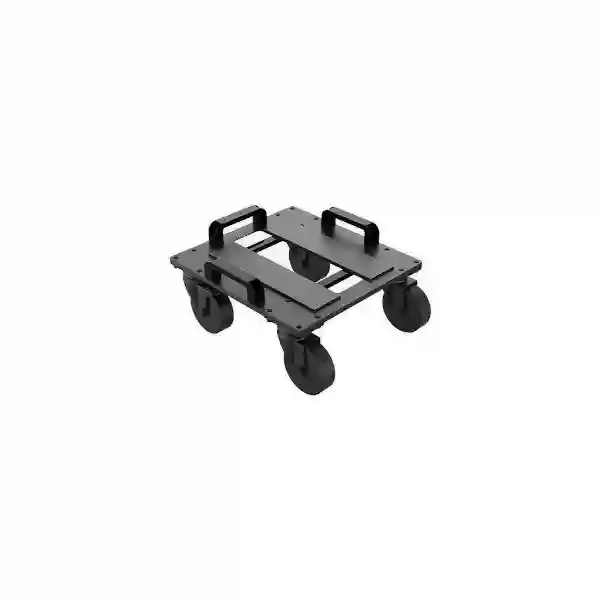
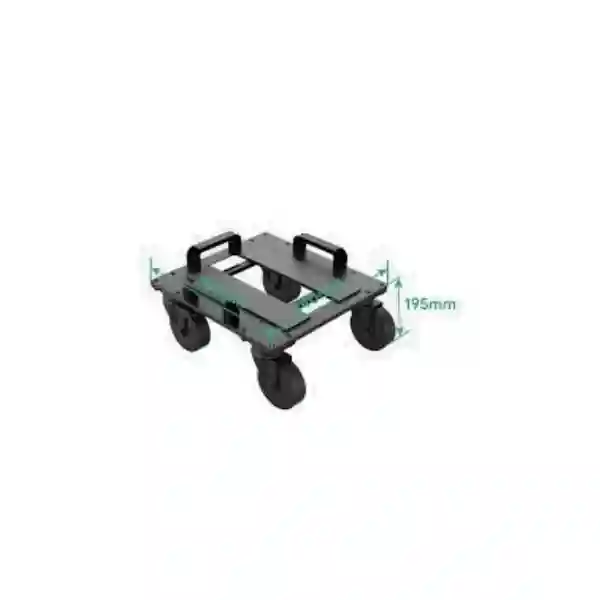
The Yealink MB-Cart is designed for organisations that need to move a Yealink MeetingBoard safely between rooms, floors or collaboration areas without treating the display as a permanently fixed installation. Yealink positions the MB-Cart as a reliable swivel-caster transport accessory that makes MeetingBoard movement easier while supporting a bearing load of up to 250 kg. Its compact design occupies less than 0.07 cubic metres when stored, helping teams keep the accessory available without dedicating excessive storage space.
For buyers in Tanzania, the practical value is flexibility. A single MeetingBoard may need to serve a boardroom in the morning, a training area later in the day and a project space for an internal workshop. The MB-Cart helps organisations approach that requirement as a planned mobility workflow rather than improvised manual handling. Before ordering, customers should confirm the exact MeetingBoard model, deployment method, movement route, doorway clearances, floor conditions and whether the MB-Demokit will also form part of the transport plan.
Built for MeetingBoard mobility
Swivel-caster movement helps organisations reposition MeetingBoard systems for flexible room use, shared collaboration environments and deployment activity.
Up to 250 kg bearing capacity
Yealink states a load-bearing capacity of up to 250 kg, providing a robust transport platform for compatible MeetingBoard handling scenarios.
Compact storage
The cart is designed for storage in less than 0.07 m³, useful where meeting-room accessories must stay available but unobtrusive between moves.
What is the Yealink MB-Cart?
The MB-Cart is a Yealink accessory for transporting MeetingBoard equipment. Yealink describes it as a pair of reliable swivel casters intended to make MeetingBoard movement easier and more secure. It is not a conferencing endpoint, camera, speaker, controller or display by itself. Its value comes from helping teams move compatible MeetingBoard equipment with less disruption, especially when collaboration hardware must be shared across rooms or repositioned during installation, events, training sessions or facility changes.
Official Yealink information identifies the product SKU as MB-Cart and part number 3311063. Yealink also states compatibility with the MB-Demokit for synchronised transport solutions. Because MeetingBoard deployments can differ by generation, display size, mounting method and accessory configuration, buyers should confirm the complete equipment list before relying on any transport arrangement. A quotation request should therefore identify the MeetingBoard model, how often it will be moved, the travel path and whether the requirement is for routine internal movement, deployment activity or protected transport preparation.
Customers planning broader meeting-room environments can review FourTeck Tanzania’s integrated IT and collaboration solutions, explore the business technology shop for related equipment, or review technology planning and integration services when the cart is part of a larger conferencing project.
Verified Yealink MB-Cart specifications
| Item | Verified information |
|---|---|
| Product | Yealink MB-Cart |
| Purpose | Transport accessory for Yealink MeetingBoard |
| Mobility | Swivel-caster design |
| Bearing capacity | Up to 250 kg |
| Storage volume | Less than 0.07 m³ |
| Compatible transport accessory | MB-Demokit |
| Official SKU | MB-Cart |
| Official part number | 3311063 |
Who should consider the MB-Cart?
The MB-Cart is most relevant where a MeetingBoard is not expected to remain permanently in one location. That can include corporate training teams sharing equipment between rooms, schools and universities using the same collaboration display across teaching spaces, hotels and conference venues rearranging meeting environments, project offices that change layouts frequently, and organisations preparing MeetingBoard systems for controlled deployment or relocation. The accessory can also be useful for integrators and IT teams that want a purpose-built way to move equipment rather than relying on ad hoc handling.
The buying decision should remain tied to the operating environment. Smooth flooring, thresholds, ramps, lifts, corridors, door widths and turning space all affect how easily large collaboration equipment can be moved. The MB-Cart may reduce handling effort, but it does not remove the need for safe movement procedures, appropriate staffing and careful route planning. Organisations should also distinguish between internal rolling movement and protected transport between buildings or sites; those are different requirements and may require different accessories or packaging.
Yealink MB-Cart Tanzania
For Tanzanian organisations investing in collaboration technology, the Yealink MB-Cart can help turn a MeetingBoard into a more flexible shared asset. Many businesses do not operate with identical meeting rooms. A headquarters may include an executive boardroom, a training room, open collaboration space and temporary project areas, while a school or training centre may need to move the display between classrooms. In these situations, the ability to reposition a MeetingBoard can reduce the pressure to duplicate high-value collaboration equipment in every space. The MB-Cart is particularly relevant when the business requirement is mobility rather than permanent wall mounting.
Procurement should start by confirming the exact MeetingBoard model and the expected movement pattern. A cart chosen simply because the product name appears compatible is not enough; the team should document how far the unit will be moved, how frequently, whether lifts or ramps are involved, where the cart will be stored and who will be responsible for handling it. Where the MB-Demokit is also being considered, that requirement should be stated during quotation so the complete transport workflow can be reviewed together. Buyers should also identify any accessories attached to the MeetingBoard, because cameras, trays, controllers and cables can change the practical handling arrangement.
In Tanzania, conferencing projects often sit within a wider IT environment. Meeting quality depends on reliable network connectivity, suitable internet capacity, room acoustics, camera positioning and the collaboration platform in use. The cart does not solve those technical dependencies, but it can support a room strategy where the display itself must remain movable. For example, a training organisation may position the MeetingBoard close to learners during an interactive session, then move it to a presentation area later. A corporate team may use the same device for project workshops and formal calls, provided the network, power and room setup are prepared for both locations.
When requesting a Yealink MB-Cart quotation in Tanzania, include the MeetingBoard model, quantity, primary city, installation status and whether movement is within one building or forms part of a larger deployment. This allows the supplier to distinguish an accessory-only request from a broader collaboration project. FourTeck Tanzania can also help buyers think through related display, conferencing, network and infrastructure requirements so the mobility plan fits the complete meeting-room environment rather than being treated as an isolated purchase.
Yealink MB-Cart Dar es Salaam
Dar es Salaam organisations frequently operate across offices, training facilities, hotels, education campuses and project environments where room usage changes throughout the day. In that context, the Yealink MB-Cart can support a practical shared-room strategy. Instead of fixing a MeetingBoard permanently to one wall, a business can plan controlled movement between suitable spaces. This is especially useful for teams that hold executive meetings, workshops, customer presentations and hybrid calls in different rooms but want to standardise on one familiar collaboration platform.
A Dar es Salaam procurement team should evaluate the physical route before ordering. Large collaboration displays need predictable clearance, and buildings may have narrow doorways, lift limitations, floor transitions or raised thresholds. The MB-Cart’s swivel-caster design supports manoeuvrability, but safe movement still depends on the building. The organisation should define which rooms are approved for use, where the cart is parked when not required, how cables are disconnected and reconnected, and whether accessories remain attached during movement. Creating a simple movement procedure can protect both the equipment and the people handling it.
For businesses using Microsoft Teams, Zoom or other collaboration workflows through their MeetingBoard environment, moving the hardware is only one part of readiness. Each destination room should also have suitable network coverage, power access, lighting and acoustics. If one room has strong wired connectivity and another relies on congested wireless networking, user experience may vary even though the MeetingBoard is the same. A mobile display strategy therefore works best when IT teams validate each intended location as a collaboration zone rather than assuming mobility alone guarantees meeting quality.
Buyers in Dar es Salaam should request the MB-Cart by its exact model name and provide the MeetingBoard model in the enquiry. It is also useful to state whether the purchase is for an existing system or a new rollout. For deployment projects, including information about the number of rooms and expected usage frequency makes it easier to recommend whether one movable MeetingBoard is operationally sensible or whether additional fixed systems would provide a better user experience.
Yealink MB-Cart Mwanza
In Mwanza, the Yealink MB-Cart can be useful for organisations that want to extend the value of a MeetingBoard across multiple internal spaces without treating every room as a permanently equipped video conferencing suite. Corporate offices, healthcare administration teams, colleges, training providers, NGOs and project organisations may all have occasions where the same interactive collaboration display needs to support different groups. The ability to move the unit can help maximise utilisation when room schedules are planned carefully.
The strongest use case is not simply “moving a screen.” A MeetingBoard may carry cameras, audio components, touch interaction and collaboration software that users depend on for hybrid meetings. Moving it therefore requires attention to the complete workflow. IT staff should decide how the system will be powered down or placed into the appropriate state before movement, how cables will be secured, who is authorised to move it and how it will be reconnected at the destination. If the route crosses uneven surfaces or building transitions, those physical conditions should be reviewed before routine movement is adopted.
The MB-Cart’s stated bearing capacity of up to 250 kg provides significant load support, but procurement teams should still confirm the exact MeetingBoard configuration rather than interpreting capacity as universal compatibility with any display product. Yealink markets the MB-Cart specifically around MeetingBoard transport. If an organisation has a mixed fleet of displays from several manufacturers, each device should be checked against its own mounting and mobility requirements rather than assuming the Yealink cart is a generic trolley for all large-format screens.
For Mwanza buyers, a useful quotation request includes the exact MeetingBoard model, current mounting arrangement, planned movement frequency, building type and any requirement for the MB-Demokit. If the MeetingBoard is part of a new collaboration rollout, network readiness, room acoustics and user training should be considered at the same time. That broader planning helps the business get value from mobility without introducing inconsistent meeting experiences between rooms.
Yealink MB-Cart Arusha
Arusha has a broad mix of corporate offices, tourism and hospitality operations, education facilities, NGOs, event venues and project organisations. These environments can create a genuine need for flexible collaboration spaces. The Yealink MB-Cart supports that kind of mobility by providing a purpose-built way to move compatible MeetingBoard equipment. For a hotel or conference venue, the MeetingBoard may need to serve different meeting rooms according to event schedules. For an NGO or project office, the same system may move between coordination meetings, training sessions and stakeholder presentations.
The procurement question should focus on operational value. If the MeetingBoard will rarely move, a fixed stand or wall solution may be simpler. If the device will regularly serve multiple rooms, mobility becomes more important. Teams should map the movement route and consider turning radius, corridor width, storage location and user responsibility. Even a robust cart works best when movement is controlled. Clear internal ownership also helps prevent the system being left in an unsuitable room, disconnected incorrectly or moved while accessories and cables remain unsecured.
For hybrid collaboration, each room should be assessed for lighting, background noise, echo, power and network quality. A movable MeetingBoard can deliver consistent endpoint functionality, but the room itself still affects participant experience. In hospitality environments, this is particularly important because temporary layouts may change frequently. In education or training spaces, seating patterns may differ from formal boardroom arrangements. The deployment plan should therefore identify the intended room scenarios and confirm that participants can see, hear and interact with the MeetingBoard appropriately in each one.
Arusha buyers should include the MeetingBoard model, quantity of carts required, expected movement frequency and whether the equipment is already deployed. If the requirement includes additional Yealink collaboration accessories, those should be listed in the same quotation request. A consolidated specification reduces ambiguity and helps the project team evaluate how the cart fits with the complete collaboration solution rather than treating it as a standalone logistics accessory.
Yealink MB-Cart Dodoma
In Dodoma, government-related offices, institutions, training environments, corporate branches and professional organisations may need collaboration technology that can adapt to changing room requirements. The Yealink MB-Cart is useful where an organisation already uses or plans to use a MeetingBoard and wants the option to move it between approved spaces. Rather than equipping every room identically, some teams may choose a shared-device approach when utilisation patterns and room schedules allow it.
A shared-device approach should be designed carefully. The MeetingBoard needs consistent access to network services, power and the collaboration platform in each room. Users also need a predictable setup so they do not spend meeting time reconnecting cables or troubleshooting room-specific differences. One practical method is to standardise connection points in the intended rooms, label them clearly and document the steps for moving and recommissioning the device. The MB-Cart provides mobility, while the surrounding IT design provides repeatability.
Procurement teams should also review storage and security. Yealink highlights the cart’s compact storage volume, which can be valuable where back-of-house or equipment-room space is limited. However, the cart should still be stored somewhere protected from obstruction and unnecessary handling. If the MeetingBoard itself is moved into secure rooms or public-facing spaces, the organisation should define who is authorised to relocate it and whether it remains attended. Those procedural details often matter as much as the accessory specification when high-value collaboration equipment is shared.
When requesting pricing for the Yealink MB-Cart in Dodoma, include the exact MeetingBoard model, the number of units, intended use and whether the MB-Demokit is being considered. If the need is part of a broader meeting-room project, provide room counts and expected user groups. That information helps distinguish between a simple accessory supply request and a collaboration design requirement where mobility, networking and room readiness should be reviewed together.
Yealink MB-Cart UAE
The Yealink MB-Cart is relevant to UAE organisations that manage flexible meeting environments, executive briefing spaces, training centres, hospitality venues and project offices. Where MeetingBoards are used across multiple rooms, a dedicated transport accessory can support more predictable movement than improvised handling. Yealink’s stated 250 kg bearing capacity and swivel-caster mobility position the MB-Cart for controlled internal transport of compatible MeetingBoard systems, while its compact storage design helps when the accessory must be kept nearby between moves.
UAE projects often place strong emphasis on fit-out quality and room aesthetics, so mobility planning should include more than the cart itself. Power points, network outlets, cable management and parking locations should be considered during workspace design. If a MeetingBoard is expected to move between a training room and executive meeting room, both spaces should support an orderly setup with minimal loose cabling. Facilities and IT teams should also agree on movement procedures so responsibility is clear and the equipment is not relocated without checking the route or destination readiness.
For multi-site organisations, it is important to separate internal room mobility from inter-office transportation. The MB-Cart is designed around MeetingBoard movement, while transport between buildings may require protective packaging, handling plans and other equipment. Where the MB-Demokit is relevant, it should be specified as part of the intended transport workflow. Procurement teams should therefore describe the exact movement scenario rather than using a broad phrase such as “mobile stand” or “transport trolley.”
UAE customers planning wider collaboration and infrastructure projects can also review FourTeck UAE IT and collaboration solutions. For an MB-Cart quotation, include the MeetingBoard model, quantity, existing mounting configuration and whether installation or room-readiness support is required. That information supports a more accurate recommendation and avoids mixing up the MB-Cart with other Yealink floor stands or mounting accessories.
Yealink MB-Cart Uganda
For organisations in Uganda, the Yealink MB-Cart can support a collaboration strategy where one MeetingBoard is shared between multiple suitable rooms. Corporate teams, institutions, schools, NGOs, training facilities and distributed project organisations may benefit when a display is needed for different groups at different times. Instead of repeatedly lifting or improvising movement, the MB-Cart provides a purpose-built swivel-caster solution designed specifically around MeetingBoard transport.
The business case depends on usage. If a MeetingBoard remains in a primary boardroom almost all the time, mobility may not be a priority. If the organisation runs training sessions, executive meetings and cross-functional workshops in different locations, a cart can make the equipment more usable across the day. The buyer should compare the cost and operational convenience of a shared movable MeetingBoard with the alternative of several fixed systems. User scheduling, room availability and movement frequency should all be considered.
Network design remains important. A MeetingBoard moved to a different room still depends on suitable connectivity and collaboration services. Each intended location should be checked for reliable network access, internet performance, power and room acoustics. It is also useful to standardise cable management and connection procedures, because the fastest way to undermine a mobile-room concept is to make every move require ad hoc reconfiguration. Clear setup instructions can reduce user frustration and shorten meeting preparation time.
Uganda customers can review the broader FourTeck Uganda IT and communications portfolio when the MB-Cart forms part of a wider deployment. A quotation request should specify the MeetingBoard model, intended city, quantity and whether the requirement is only for the cart or also includes collaboration-room design, networking or other Yealink accessories.
Yealink MB-Cart Kampala
Kampala businesses increasingly use flexible meeting areas, training rooms and hybrid collaboration spaces that may not justify permanently installing a full conferencing system in every room. The Yealink MB-Cart can support a shared-equipment model by helping teams move a MeetingBoard to the room where it is needed. That can be valuable for professional services firms, education providers, NGOs, hotels and corporate offices with variable room schedules.
Before adopting a mobile setup, facilities and IT teams should inspect the movement path. Doorways, corridors, lifts, floor transitions and storage areas can determine whether regular movement is practical. The cart’s swivel casters improve manoeuvrability, but the complete loaded system still requires careful handling. Organisations should identify authorised users, define how accessories are secured and ensure cables are disconnected before movement. If the MeetingBoard is frequently moved, a short written procedure can reduce accidental damage and inconsistent setup.
The intended rooms should also be made “MeetingBoard ready.” This can mean ensuring dependable network connectivity, suitable power, appropriate lighting and enough space around the display for safe use. A training room may need different positioning from a boardroom because users may stand, interact with the touchscreen or rearrange seating. Planning those scenarios in advance helps the organisation benefit from mobility while preserving a professional meeting experience.
For Kampala procurement, include the exact Yealink MeetingBoard model and quantity of MB-Carts required. State whether the cart will be used for daily movement, occasional reconfiguration or deployment activity. Also mention whether the MB-Demokit is part of the requirement. These details make it easier to quote the correct accessory and discuss any related room or collaboration requirements without making assumptions about compatibility.
Yealink MB-Cart Arua
In Arua, organisations may use collaboration technology across training rooms, administrative areas, education spaces and project offices where room resources need to be shared efficiently. The Yealink MB-Cart can support this by enabling controlled MeetingBoard movement without making the display permanently tied to one room. For organisations with limited specialist conferencing spaces, a movable MeetingBoard can provide a flexible way to support remote meetings, presentations and interactive sessions across several approved locations.
The key planning task is to make every intended destination usable. Mobility is valuable only when the device can be connected and used reliably after it arrives. IT teams should check network availability, power, room acoustics and available floor space. Where internet connectivity is variable, the organisation should test the conferencing experience in each room before making the mobile workflow part of normal operations. A strong cart cannot compensate for poor room connectivity or unsuitable audio conditions.
Safe handling also deserves attention. The MB-Cart is designed for MeetingBoard transport and carries a high stated load capacity, but users should not treat that as permission for careless movement. Routes should remain clear, and the team should avoid moving the equipment with loose cables or unsecured accessories. Where the MeetingBoard must cross more difficult surfaces, the organisation should evaluate whether the route is appropriate or whether the equipment should remain within a controlled part of the building.
Arua buyers requesting a quotation should provide the MeetingBoard model, required quantity and a brief description of how the cart will be used. If the organisation needs help choosing between a mobile and fixed deployment, include the number of rooms and how often they are used. That allows the supplier to discuss the operational trade-off rather than quoting an accessory without understanding the underlying collaboration requirement.
Yealink MB-Cart Mbarara
The Yealink MB-Cart can be a practical addition for Mbarara organisations that want one MeetingBoard to serve several collaboration environments. Universities, training providers, healthcare administration teams, businesses and project offices may run meetings in different rooms depending on attendance and purpose. A mobile MeetingBoard setup can help increase utilisation while keeping the user interface and collaboration experience consistent across those sessions.
That flexibility should be balanced against operational discipline. Each move creates a transition point where cables, accessories and room setup must be handled correctly. Organisations should decide whether the MeetingBoard will be moved with specific accessories attached or removed, where cables will be stored and how users confirm that the destination room is ready. The MB-Cart supports physical movement, but the organisation needs a repeatable setup process if it wants the same meeting experience every time.
For education and training use, movement can also support different teaching styles. A MeetingBoard may be positioned for interactive instruction in one session and moved to a formal presentation area for another. Room layout, viewing distance and safe circulation around the display should be considered. In healthcare administration or corporate offices, privacy and room access may also influence where the device is permitted to operate. These considerations should be included in the deployment plan rather than addressed only after equipment arrives.
Mbarara procurement teams should identify the MeetingBoard model and explain whether mobility is occasional or routine. If routine, note any challenging route conditions such as thresholds or narrow corridors. If the requirement includes new MeetingBoard hardware, conferencing licences, network upgrades or room accessories, list those together so the complete environment can be assessed. This creates a clearer buying process and reduces the chance of purchasing the right cart for the wrong operational design.
Yealink MB-Cart Gulu
For businesses and institutions in Gulu, the Yealink MB-Cart may be useful where collaboration resources are shared across offices, training rooms and multipurpose spaces. A MeetingBoard is a substantial collaboration endpoint, and the MB-Cart provides a purpose-designed way to move it when room requirements change. This can help organisations make better use of a single system when schedules do not require simultaneous MeetingBoard use in several rooms.
A mobile deployment should begin with room planning. Each target room should offer enough space for the display, suitable viewing angles and safe access around the equipment. Network connectivity and power should be predictable. If one room is regularly used for external calls while another is mainly for internal workshops, the organisation should verify that the MeetingBoard’s placement and the room acoustics work for both scenarios. Mobility is most valuable when the endpoint can be moved without sacrificing meeting quality.
Facilities teams should also decide where the cart and MeetingBoard are stored when not in use. Yealink highlights compact cart storage, but the full system still needs a suitable location. The movement path should be kept clear, especially around doors and high-traffic areas. Teams should avoid improvised transport over surfaces that are not appropriate for the loaded setup. If the organisation requires movement between buildings, it should discuss that separately from routine room-to-room relocation.
For a Gulu quotation, state the MeetingBoard model, number of carts required, current mounting method and movement scenario. If the unit is part of a broader collaboration project, include room sizes, participant counts and preferred meeting platform. That additional context helps the supplier understand whether the cart is the only requirement or one element of a larger meeting-room design.
Yealink MB-Cart Kenya
Kenyan organisations with flexible offices, training centres, universities, hospitality facilities and regional project teams may find the Yealink MB-Cart useful when a MeetingBoard needs to serve several spaces. The accessory supports a mobility-first approach rather than a permanent fixed installation. For organisations trying to maximise the use of collaboration equipment, a shared MeetingBoard can be efficient when meeting schedules allow the endpoint to be moved without creating conflicts.
The buying decision should compare mobility benefits with room-readiness requirements. A cart can make the MeetingBoard easier to reposition, but every intended room still needs dependable connectivity, suitable power and an appropriate physical layout. In a modern office with hot-desking and adaptable collaboration areas, those requirements can be incorporated into the workplace design. In older buildings, the team may need to test routes and rooms more carefully before deciding that frequent movement is practical.
For training centres and universities, the cart can support changing class sizes and interactive sessions. For hotels and conference venues, it can help allocate collaboration equipment according to event bookings. For corporate offices, it can enable one high-value MeetingBoard to serve workshops, executive discussions and project rooms. In every case, safe handling procedures should be documented. The MeetingBoard should not be moved with unsecured cables, and authorised users should understand how to prepare it before relocation.
Kenya buyers can explore FourTeck Kenya collaboration and IT solutions when the MB-Cart is part of a broader project. For a quotation, include the exact MeetingBoard model, quantity and intended use. If deployment includes multiple rooms, state how many and what functions they serve. This helps align the accessory purchase with the overall meeting-room strategy.
Yealink MB-Cart Kuwait
The Yealink MB-Cart is relevant for Kuwait organisations that operate flexible boardrooms, training centres, executive briefing areas or project spaces where a MeetingBoard may need to move between rooms. Instead of treating the collaboration display as fixed furniture, the cart supports a managed mobility strategy. That can be useful where room functions change frequently or where one MeetingBoard is shared across departments.
Workplace design matters. Modern offices may include smooth flooring and wide circulation areas that make cart movement straightforward, while other spaces may include thresholds, carpets or narrow corridors that require additional consideration. Procurement teams should assess the complete route and verify that lifts, doors and storage areas can accommodate the loaded system. The MB-Cart’s swivel casters support manoeuvring, but route suitability remains the responsibility of the deployment team.
Meeting-room readiness should be standardised wherever possible. A mobile MeetingBoard performs best when each destination offers reliable network connectivity, power access and predictable room conditions. Organisations should avoid a setup where the device can physically reach multiple rooms but requires substantial IT reconfiguration each time. Standard cable positions, labelled outlets and documented startup procedures can make the mobile workflow easier for users and support teams.
Kuwait buyers should request the MB-Cart using the exact product name and provide the MeetingBoard model. If the organisation needs the MB-Demokit or additional Yealink room accessories, those should be identified at the same time. It is also useful to say whether the MeetingBoard is already deployed or part of a new purchase, because a new project can include room planning and mobility considerations from the beginning rather than retrofitting them later.
Yealink MB-Cart Ghana
In Ghana, the Yealink MB-Cart can help organisations that want to share MeetingBoard collaboration technology across multiple internal spaces. Corporate offices, education organisations, training providers, NGOs and professional services firms may all have rooms that are not used at the same time. A movable MeetingBoard can help improve equipment utilisation when the organisation has clear scheduling and handling procedures.
The strongest deployment approach begins with intended use cases. If the MeetingBoard will move between an executive room and a training space, the two rooms may have different seating, lighting and acoustic conditions. IT teams should test both settings and define the preferred equipment position in each. Floor markings, cable labels or documented room layouts can make repeat setup easier. These details help convert the cart from a simple transport accessory into part of an organised collaboration workflow.
Organisations should also consider how often movement will occur. Occasional relocation for special events has different operational demands from several moves every day. Frequent movement increases the importance of route quality, trained handlers and consistent cable management. The cart’s 250 kg stated bearing capacity provides substantial support, but the deployment team should still avoid exceeding manufacturer guidance or assuming compatibility with unrelated display products. The MB-Cart should be treated as a Yealink MeetingBoard transport accessory.
For Ghana procurement, provide the exact MeetingBoard model, quantity, location and expected movement pattern. If the equipment is part of a new meeting-room project, include room sizes and collaboration-platform requirements. This gives the supplier enough context to discuss the cart alongside any necessary conferencing, network or display infrastructure rather than presenting the accessory in isolation.
Yealink MB-Cart Nigeria
Nigerian enterprises, universities, training organisations, professional firms and hospitality venues may use collaboration technology across many types of meeting environments. The Yealink MB-Cart can support that flexibility by helping a MeetingBoard move between approved rooms. This may be particularly useful in organisations where one premium collaboration display must serve several departments or where large training and presentation spaces are reconfigured frequently.
A mobile approach should be built around reliability. Every destination room should have the connectivity and power required for the MeetingBoard, and users should not need specialist intervention after every move. IT teams can reduce friction by standardising connection points, documenting room setups and controlling which rooms are included in the mobile workflow. Where network quality differs between rooms, the organisation should resolve that inconsistency before relying on the MeetingBoard for important hybrid meetings.
Facilities management is equally important. Large collaboration equipment should move only along suitable routes with adequate clearance. If offices span several floors, lift dimensions and access procedures should be checked. If carpeting, ramps or uneven transitions are involved, the team should assess whether regular movement remains safe and practical. The MB-Cart supports mobility, but good handling practice and route planning protect the investment over time.
Nigeria buyers should include the MeetingBoard model and intended usage when asking for a quotation. State whether the MB-Cart is needed for a new MeetingBoard project, an existing installation or controlled deployment activity. If several branch locations are involved, specify where each cart will be used. This information supports accurate planning and prevents a simple accessory enquiry from overlooking important differences between sites.
Yealink MB-Cart Seychelles
For organisations in Seychelles, space efficiency can be an important consideration in offices, hotels, conference venues, education facilities and administrative environments. The Yealink MB-Cart can support a flexible collaboration strategy where a MeetingBoard is shared between rooms rather than permanently installed in only one location. Yealink’s compact storage design for the cart itself may also be useful in facilities where equipment storage needs to remain organised and space-conscious.
Hospitality and event environments can be particularly suitable use cases because meeting spaces may change configuration according to customer requirements. A MeetingBoard can be positioned for a hybrid workshop, moved for an internal planning session and then returned to a storage or staging area. To make this practical, venue teams should define safe movement routes, ensure power and network availability in approved rooms and train staff on how to prepare the equipment before relocation.
For island businesses with distributed teams or external partners, consistent video collaboration can reduce unnecessary travel, but the endpoint is only one part of the experience. Internet quality, Wi-Fi design, room acoustics and lighting continue to matter after the MeetingBoard is moved. The organisation should therefore validate each intended room for real conferencing use rather than evaluating only whether the cart physically fits through the door.
Seychelles buyers should request the Yealink MB-Cart by exact model name and identify the associated MeetingBoard. If the requirement includes MB-Demokit compatibility, state that in the enquiry. For new projects, sharing room dimensions, seating patterns and collaboration-platform preferences can help build a more complete recommendation. This is especially useful where one system is expected to serve both formal meetings and flexible event configurations.
Buying guidance: MB-Cart or fixed MeetingBoard installation?
Choose mobility when the same MeetingBoard genuinely needs to serve multiple rooms and those rooms can be prepared for consistent use. Choose a fixed installation when one room owns the device, movement would be rare or the building makes relocation difficult. In some organisations, both approaches can coexist: a permanently installed MeetingBoard may serve the main boardroom while another MeetingBoard on a mobile setup supports training, workshops and overflow requirements.
The right choice should consider utilisation, user convenience, room schedules, movement risk and the cost of duplicated equipment. A cart is not automatically the cheaper or better option if repeated movement causes setup delays. Conversely, buying several full conferencing systems may be unnecessary if rooms are rarely used at the same time. A simple utilisation review can help determine which model is more practical.
Quotation checklist for Yealink MB-Cart
✓ Exact Yealink MeetingBoard model and screen size
✓ Number of MB-Carts required
✓ Whether the MeetingBoard is new or already deployed
✓ Primary city and deployment location
✓ Frequency and distance of expected movement
✓ Requirement for MB-Demokit or other Yealink accessories
Frequently asked questions
What is the Yealink MB-Cart used for?
It is a Yealink transport accessory designed to help move MeetingBoard equipment more easily and securely between suitable locations.
How much weight can the MB-Cart support?
Yealink states a bearing capacity of up to 250 kg.
Is the MB-Cart compatible with MB-Demokit?
Yes. Yealink states that the MB-Cart is compatible with MB-Demokit for synchronised transport solutions.
Does the MB-Cart replace a permanent floor stand?
Not necessarily. The MB-Cart is intended for transport and mobility. The best deployment method depends on how often the MeetingBoard moves, the room layout and the mounting strategy.
What should I provide when asking for a quote?
Provide the MeetingBoard model, quantity, deployment city, movement scenario and whether you also need MB-Demokit or other conferencing accessories.
Can the MB-Cart be used in training rooms and multipurpose spaces?
Yes, those are practical examples of environments where MeetingBoard mobility can be valuable, provided the rooms, route and handling procedures are suitable.
Decision recap
The Yealink MB-Cart is a specialised mobility accessory for MeetingBoard environments. Its strongest benefits are straightforward: swivel-caster movement, up to 250 kg bearing capacity, compact storage below 0.07 m³ and compatibility with the MB-Demokit. The product makes the most sense when a MeetingBoard is expected to move between rooms or be handled as part of a controlled deployment process.
Before buying, confirm the MeetingBoard model and validate the route, destination rooms and handling procedure. For businesses that need wider collaboration planning, FourTeck Tanzania can help connect the accessory requirement with room layout, networking, displays and video conferencing infrastructure.
Consultation panel
Tell us which Yealink MeetingBoard you use, where it is installed and how you plan to move it. A useful enquiry includes the model, quantity, city, movement frequency and any related accessories. That information helps determine whether the MB-Cart fits the intended workflow and whether other deployment considerations should be addressed before purchase.
For related technology selection, use the FourTeck Tanzania shop and services pages above to explore conferencing and infrastructure requirements as part of the same project.



Reviews
There are no reviews yet.