
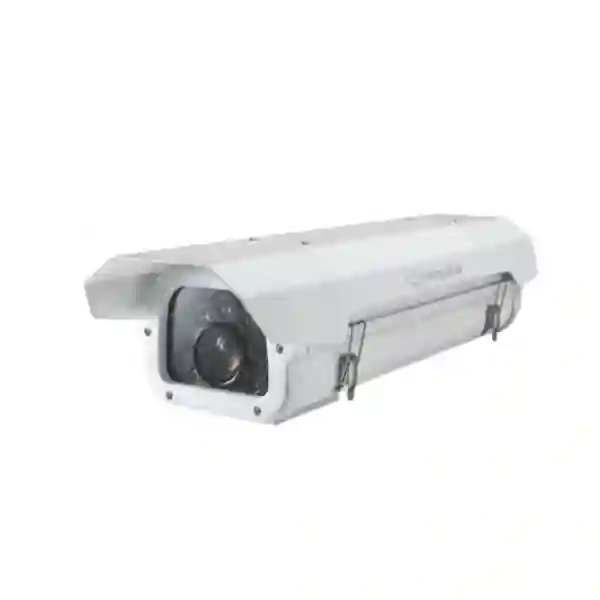
Vehicle entry and parking access | Tanzania
Hanwha Vision TNO-6070RHLP 2MP License Plate Recognition Camera
The Hanwha TNO-6070RHLP helps businesses assess a dedicated plate-capture camera for controlled vehicle approaches. Its published specification combines 2MP imaging, a 12–50 mm varifocal lens, infrared visibility up to 25 metres and licence-plate recognition under a stated 25-metre, 30 km/h operating envelope. The right purchase depends on lane geometry, local registration formats, event integration and a successful practical test.
Request a model-specific technical assessment and quotation before finalising the design.
Imaging
2MP CMOS
Varifocal lens
12–50 mm
Stated plate range
Up to 25 m
Stated vehicle speed
Up to 30 km/h
Infrared visibility
Up to 25 m
Project fit
Controlled vehicle approaches
What the camera is designed to do
The TNO-6070RHLP is not simply a general-purpose camera placed near a gate. Hanwha Vision identifies it as a licence plate recognition camera in its smart-parking line, with imaging, lens selection and infrared capability intended for observing vehicle plates at defined approach points. This distinction matters because a successful car-park project usually requires a legible plate image, a consistent vehicle path and an agreed business process after a plate is detected. A wide scene photograph alone does not prove that a number plate can be read reliably.
For a prospective buyer, begin with the business decision rather than the camera count. Do you need an operator to review a vehicle, a searchable history of entries and exits, or a system that decides whether a barrier should open? Those goals demand different components and integration checks. This page explains the verified camera capabilities, the limits of manufacturer figures, and practical questions to resolve before building a complete vehicle-access workflow in Tanzania.
Who should consider this model
A focused plate-capture camera can be useful at a residential compound entrance, an office or commercial property with managed parking, a warehouse gate, a visitor entrance, or a small controlled driveway. The common feature is a predictable path through which vehicles travel slowly enough for the camera’s stated recognition range. In each case, the buyer needs to know which lane is being observed, which direction of travel matters, and what should happen when a plate is absent, obscured or read incorrectly.
This camera is less naturally suited to a broad open yard where vehicles can approach from many angles, or a fast roadway where traffic cannot be slowed. It should not be presented as a universal highway enforcement unit. Where a site has several uncontrolled lanes, sharp turns, motorbikes crossing the target area, or a need to recognise plates at higher speeds, an alternative camera design or multiple capture positions may be more appropriate. Define the use case first and match the equipment second.
Verified technical snapshot
Hanwha’s official listing describes a 2MP CMOS imaging platform, a 12–50 mm varifocal lens with approximately 4.16-times adjustment, an approximately 20-degree field-of-view specification, and infrared reach of up to 25 metres. The same listing states plate recognition up to 25 metres where vehicles travel at up to 30 km/h. Treat all quoted maxima as manufacturer figures for planning and evaluation rather than promises that any local installation will reproduce those results.
The published product family uses an integrated camera housing, so its physical form differs from a compact indoor dome. Site drawings should account for a stable mount, a clear view of the approach, a protected cable route, access for maintenance, and sufficient clearance around the assembly. Exact power input, current consumption, dimensions, connector details, operating-temperature limits and supplied mounting accessories should be verified against the precise installation documentation and current procurement configuration instead of being guessed from a related Hanwha model.
Why two megapixels can be appropriate for a licence-plate view
Camera resolution tells only part of the story. A 2MP sensor can produce a useful plate image when the lens is adjusted so that the target plate occupies enough of the frame and the scene is captured with suitable shutter, exposure and focus settings. An extremely wide scene may show more surroundings, yet devote too few pixels to the vehicle registration characters. A narrowly framed lane can be more valuable for plate capture than a much wider overview at the same resolution.
When reviewing the design, ask the integrator to provide actual still frames of moving vehicles at the intended working distance. Check whether letters, digits, plate edges and reflective surfaces are legible in bright daylight and darkness. Also ask how the image will be stored and retrieved. If the project needs to observe driver behaviour, pedestrians and the surrounding roadway, a separate overview CCTV camera may complement the plate-focused camera better than asking one optical view to serve both roles.
Understanding the 12–50 mm lens
The verified 12–50 mm varifocal lens gives an installer room to adjust how much of the approach lane occupies the image. In simple terms, a longer setting narrows the captured scene and enlarges distant subjects; a shorter setting widens coverage while showing each plate smaller. The correct choice is determined at the actual mounting distance and road geometry. Lens adjustment should not be based only on the longest distance shown on a product brochure.
A practical commissioning exercise starts with a representative vehicle stopped and moving at several points in the capture zone. Adjust the framing until plates are readable without cutting off the front or rear of vehicles likely to use the lane. Then repeat with different vehicle heights and plate positions. The lens setting must allow for normal lateral movement within the lane, not just a perfectly centred demonstration car. Final focus should be rechecked after the mount is secured.
Interpreting the 25-metre recognition figure
The advertised maximum recognition distance of 25 metres is an upper boundary in the manufacturer’s published description. It is not a claim that every licence plate will be recognised at every point inside a 25-metre circle. Angle, plate dimensions, contrast, weather, glare, camera settings and the actual recognition software all affect usable results. A camera can produce an image at the stated distance without delivering a correctly parsed registration string in every circumstance.
For an entry gate, it may be preferable to design a shorter, well-controlled capture zone with the vehicle centred and moving predictably. Identify the start and end of the intended zone on a site plan. The acceptance test should specify a measurable success criterion for the plates that matter to the customer, using real arrivals rather than a single parked demonstration vehicle. If the needed distance exceeds the verified operating envelope, reconsider the mounting point or equipment choice.
Understanding the speed limit in the product claim
Hanwha describes the TNO-6070RHLP as capable of plate recognition for vehicles travelling at up to 30 km/h under the stated product conditions. That figure has direct consequences for projects with open approaches, downhill entry lanes or drivers who enter without slowing. A speed printed in a specification should never be treated as a traffic-control instruction or a guarantee at all lighting levels. Faster motion and unpredictable vehicle positions can complicate image capture and recognition.
A design for slow access lanes can use layout, operating procedures and appropriate traffic management to keep vehicles moving through a defined observation area. Any physical speed-control measures must be assessed independently for site safety and local requirements. Test ordinary daytime and night-time traffic rather than assuming that a laboratory or brochure threshold automatically translates into consistent local results. If the desired application involves higher-speed capture, compare a product explicitly rated for that operating condition.
Infrared performance after dark
Hanwha lists an infrared visibility range of up to 25 metres for this model. Infrared illumination can support night-time imaging, but it is not the same thing as an unconditional night-time character-recognition guarantee. Vehicle headlamps, retroreflective plates, headlights pointed towards the lens, rain and differences in plate finishing may cause overexposure or loss of detail. The useful infrared setting is therefore one part of a complete night commissioning exercise.
Installers should inspect both dark and illuminated plates while vehicles enter and leave at realistic speeds. Check the position of nearby floodlights, gate lighting and reflective signs. Changes to exposure, mounting direction and capture distance may improve results more than adding unrelated lighting. A test should include the specific plate format used by the fleet or visiting vehicles, and capture samples should be retained for comparison. Buyers should not assume that the infrared range alone establishes recognition accuracy.
Plate recognition versus reading a video frame
There are two distinct questions in a plate project: can the camera capture an image of the registration clearly, and can the proposed software convert that image into an accurate text event? A plate may be perfectly legible to a security guard on a monitor yet fail a particular automated recognition workflow. Conversely, a recognition event may be generated but associated with an unhelpful vehicle overview or insufficient audit context. Both imaging and data outputs deserve separate acceptance criteria.
Hanwha identifies the TNO-6070RHLP as a plate-recognition product, but local plate-font support, character sets, country configurations, databases and exact event interfaces should be confirmed for the firmware and software stack being proposed. In Tanzania, verify performance on the registration styles and mounting positions found in the real vehicle population. Do not assume that successful testing with a foreign sample plate means a production system will handle every local plate type or use case.
Approach angle, height and camera placement
Camera geometry is one of the largest controllable influences on plate capture. A lens pointed sharply across a lane may see plates at a severe angle; a high installation may introduce steep vertical perspective. The right mount is usually the one that gives a clear, repeatable view while protecting equipment from collisions and tampering. Without an installation drawing and a trial image, no universal mounting height or sideways offset should be promised for this exact model.
A useful survey records the lane width, approach direction, proposed pole or wall position, nearest and farthest capture points, vehicle mix and all likely obstructions. Include trucks with high bumpers, passenger cars with low plates and vehicles using different sides of the lane. Leave sufficient access for installation and adjustment, and ensure the camera does not create a hazard or block signs. A sample view from the proposed mounting position is worth more than a generic coverage illustration.
Single-lane entry design
For one controlled entrance, decide whether the required image is of the front plate, rear plate or both. The answer changes where the camera should face and whether one capture position is enough. A gate controller may also need a sensor or another means of knowing that a vehicle is physically present. The camera should not be assumed to replace all vehicle detectors or safety devices. A barrier that acts on the wrong event can disrupt operations or create a dangerous situation.
Map the full sequence from vehicle arrival to operator review or authorised entry: vehicle reaches the capture zone, an image is obtained, a registration is checked if supported, a decision is made, and the final action is recorded. Confirm who can override an incorrect recognition, how a guest vehicle is handled and what happens if the network is unavailable. This makes the camera one component of a dependable operational process rather than an isolated purchase.
Separate entry and exit lanes
Properties that use distinct entry and exit paths need a clear record of which direction each event represents. A single camera facing the entrance should not be assumed to capture departing vehicles equally well. Multiple lanes can introduce different distances, approach angles and lighting conditions even when they share the same gatehouse. A site survey should check each direction and lane independently and specify the expected image and event naming for operational review.
When the customer wants a vehicle-stay history, matching entry and exit records becomes an application-level requirement. It depends on timestamp quality, identification consistency, the handling of duplicate readings, and the rules for missed events. A camera specification does not, by itself, promise a parking-duration database, automated billing or an occupancy count. These functions need an agreed design and testing in the intended access-control or parking-management platform.
Commercial offices and managed visitor parking
At office sites, the main need may be a controlled list of staff vehicles combined with a simple visitor process. A plate capture can assist a guard who is checking arrivals, but visitors may use hired cars, temporary registrations or vehicles not previously registered in the system. Operators need a legitimate way to manage exceptions without preventing normal business. A camera should support a clear security workflow, not make the organisation depend on a perfect automated match.
Before purchasing, determine whether the system must display a live image at reception, notify a guard, search historical entries or integrate with existing access credentials. Confirm how long records need to be available and who is authorised to view them. Also plan for drivers who cannot stop in the ideal position or whose plates are dirty or obstructed. These decisions affect software, staffing and privacy controls as much as optical hardware.
Residential compounds and gated properties
For a gated residential property, plate recognition may form one part of vehicle-entry logging, guest review or a pre-approved resident access process. Daily traffic patterns can be very different from office parking: school runs may create short peaks, delivery vehicles may arrive without notice, and visitors may use a resident’s vehicle. The design should avoid forcing people to reverse or stop in an unsafe position just to obtain an image.
Define the difference between a recognised plate and an authorised vehicle. A recognised registration string is not proof of who is driving, that the plate is legitimate, or that access should always be granted. A residents’ list can become outdated as cars are sold or plates change. Plan for manual checks, temporary permissions and safe passage for emergency vehicles. Clear notices and responsible handling of images are especially important where surveillance affects residents, workers and visitors.
Warehouses, loading bays and industrial sites
Vehicle movement at a warehouse can involve long trucks, trailers, dusty plates, unusual mounting heights and loading queues that move irregularly. The TNO-6070RHLP’s stated 30 km/h operating speed may be compatible with some controlled gates, but the actual camera position and target plate visibility need examination. A truck can obscure the camera’s view of the next vehicle, and a trailer registration may not match the tractor unit that approached the entrance.
Write down which vehicle identifier the operation needs and why. Security may want an image for review; logistics may need to associate a visit with an order, vehicle booking or driver authorisation. Those information links cannot be inferred from the camera name. Include daytime dust, evening headlamps and rain in sample testing. If vehicles are likely to stop at inconsistent distances, consider changing the lane layout or capture strategy before accepting an equipment recommendation.
Network video and ONVIF interoperability
The model has an ONVIF declaration covering Profiles S, G, T and M for a specified firmware version documented in January 2023. That declaration lists supported H.264 and H.265 streaming functions and certain network, event and analytics interfaces. This provides useful evidence for evaluating third-party video-platform integration, but it does not mean that every recorder, client, firmware version or analytic function will be compatible. An integration must be checked against the exact equipment and configuration proposed.
A particularly important limitation appears in the same declaration: the listed ONVIF Profile M feature set does not declare licence-plate metadata or an ONVIF licence-plate recognition rule. Therefore, do not promise that a third-party VMS will automatically receive plate text simply because it can display the camera’s video. Check whether the required recognition events use vendor-specific interfaces, an additional application or supported export methods, and demonstrate the complete event path before purchase.
Choosing a recorder or video-management system
A network video recorder can store footage, yet a successful ANPR project may also require searchable plate text, snapshots, event timestamps, user permissions and a retention policy. Some recorders handle video streams without recognising or indexing plate values. Others may require a compatible analytic licence or server component. It is important to separate a video’s ability to play from a software platform’s ability to display, search and act on a registration event.
Ask the supplier to show the real workflow: capture a plate, search for that exact registration, inspect the associated image, export an authorised record and recover correctly after a temporary connection loss. Validate how many cameras and simultaneous users the chosen recorder supports under the intended resolution and frame rate. Agree on storage duration and a sensible bandwidth allowance based on measured streams, not a fabricated universal storage figure.
Barrier control and access-system integration
It is tempting to treat a licence plate camera as a complete automatic gate. In practice, barrier operation requires a decision process, safe gate hardware and a confirmed communication path between all components. A plate match might be one input to an access-control application, but it should not bypass vehicle safety sensors, emergency release procedures or the property’s agreed visitor rules. The camera model number alone does not establish compatibility with a particular barrier controller.
Before approval, document the whitelist or permission source, event transport, handling of unknown vehicles, fallback mode during outages, and audit trail for every barrier action. Test the difference between a valid plate, a partially read plate and a false match. If the buyer only wants security footage and a human guard will open the gate, keep the solution simple rather than adding unnecessary automation. Any barrier integration should be demonstrated as a complete system.
Planning power and connectivity
Every IP camera depends on a stable electrical and network installation. Obtain the exact power requirements from the current TNO-6070RHLP installation documents and confirm the chosen source, protection and connector arrangement. Avoid assuming that a power specification from another Hanwha camera applies here. In a gate environment, include surge protection, reliable cable termination and an accessible service plan appropriate for the site. A stable mount cannot compensate for intermittent power.
The network design should specify where video and event data travel, which switch ports are reserved, and how the system behaves if an uplink is disconnected. A facility with weak internet can still be designed around suitable local systems, but cloud functions, remote viewing and offsite notifications may depend on reliable connectivity. Confirm each feature against the chosen software rather than presenting it as an inherent property of the camera.
Weather, dust and environmental exposure
Outdoor entry points face direct sun, rain splash, airborne dust and accumulated grime. The integrated housing is intended for the camera assembly, but a buyer should confirm the exact environmental rating and approved mounting accessories in the current manufacturer documentation before signing off the site design. An installation’s durability also depends on the quality of its brackets, cable glands, enclosures and protective measures, not merely the appearance of the housing.
Location decisions should consider water runoff, vegetation growth, accidental impact and the practicality of cleaning the viewing window. If the camera looks directly at sunrise or sunset, changing the position may reduce glare more effectively than attempting to solve every issue in software. Plan accessible maintenance without obstructing a live vehicle lane. The equipment specification, actual exposure and installation method must be assessed together, particularly where the camera will operate without daily staff attention.
Daytime commissioning tests that matter
An acceptance test should represent typical operations rather than ideal photographs. Choose a sample of common vehicle types and plate formats, then capture arrivals at the nearest, centre and farthest intended points. Test vehicles travelling at the expected approach speed and slightly off the exact lane centre. Record unreadable frames and reasons where possible. A measured pass or fail against the agreed operational requirement is more useful than the statement that the camera was successfully switched on.
Include high contrast and low contrast plates, direct and indirect sunlight, and a range of vehicle body colours. Check whether an operator can read the captured image and whether the configured recognition path returns a correct text value. This helps isolate optical problems from software recognition issues. Save agreed example images for future comparison after camera maintenance, lens changes or firmware updates. No recognition percentage should be advertised unless it is actually measured on the intended site.
Night commissioning and headlight glare
Night tests should use moving vehicles with their real headlamps on. A parked vehicle under a convenient external light does not recreate the exposure conditions of an arriving car. Test the manufacturer’s infrared capability within the intended capture zone and check whether reflective plate surfaces are excessively bright or characters are blurred. Rain, mist and wet road surfaces can alter reflections, so a second test after a change in conditions may be valuable.
Consider traffic from both directions if the camera can see outgoing headlights or other bright sources. Ask the installer to explain what exposure, focus or positioning changes were made and why. A useful sign-off includes both raw stills and the corresponding recognition events, where supported by the selected application. If the images look legible but events are missing, the integration or recognition configuration deserves investigation instead of immediately replacing the camera.
Tanzanian vehicle registration formats
A model sold as a licence plate recognition camera is not automatically proven to recognise every country’s registration format. Language, character arrangement, plate material, spacing and mounting position can differ across vehicle populations. For a Tanzania deployment, request a demonstration using the actual local plate styles relevant to the facility. The test should cover commercial vehicles and visitor vehicles where those groups form a significant part of expected traffic.
Confirm which country profiles or recognition libraries are supported on the proposed firmware and application, and whether these require separate configuration or licensing. Document how the system handles motorcycles, temporary plates, damaged plates or plates that differ from the common format. A failed match should result in an agreed exception process, not an unsupported assertion that all local plates are compatible. This is a pre-purchase verification requirement rather than a claim of certified Tanzania-specific plate recognition.
Data protection and responsible use in Tanzania
Images of vehicles and registration records can be linked to individuals, travel patterns or access decisions. An organisation planning a plate database should assess whether and how Tanzanian personal-data protection requirements apply to its intended processing. Tanzania’s Personal Data Protection Commission publishes guidance on controller and processor registration and responsible use of surveillance systems. A lawful deployment involves more than installing a technically functional camera.
Define a clear purpose, give appropriate notices, limit who can access plate histories, and set a justified retention and deletion process with guidance from the organisation’s compliance advisers. Store credentials securely and maintain records of who retrieved sensitive footage. Avoid capturing neighbouring properties or unrelated public areas without a lawful basis. If plate information is shared with a third party, review the contractual and legal arrangements before enabling that flow. This guidance is general and should be matched to the actual organisation and current regulatory obligations.
Cybersecurity and administration
A network camera should be treated as an IT endpoint. During commissioning, change any default credentials where applicable, create role-based access, review supported authentication options and disable unnecessary remote exposure. Keep an inventory that records the device model, serial number, firmware version, IP address and responsible administrator. Separate camera traffic from public guest networks wherever the site’s network architecture permits.
Any update plan must rely on firmware approved for the exact model and integration environment. A software update can change interfaces or behaviour that a connected recorder expects, so record a tested rollback or recovery procedure when supported. Review time synchronisation, administrator access logs and safe remote support procedures. Do not assume that a video stream using a standards-based profile automatically makes the installation secure. Security is a property of the whole deployed system, including the network and people managing it.
Storage, searches and audit quality
Decide in advance whether the facility needs continuous video, event snapshots, a plate event index or a combination. Continuous video consumes storage differently from selected event images, and a text-only plate log may lack the visual evidence needed to resolve disputes. The correct approach follows the actual security and operational purpose. A storage estimate should use the configured resolution, compression, frame rate, scene activity, schedule and retention period of the installed system.
Test whether searches remain usable when vehicles arrive close together, when a plate is partially obscured and when two cameras report the same event. Establish a procedure for correcting or annotating incorrect matches without secretly changing source records. Operators need permissions appropriate to their role, not blanket access to all retained history. System design should also define how footage is backed up where needed and how authorised exports are documented.
Maintenance and ongoing reliability
Even a well-positioned plate camera benefits from periodic inspection. Dirt on the viewing surface, a shifted bracket, a changed lighting fixture or vegetation entering the frame can reduce image quality after the installation initially passes testing. Create a simple visual check using a vehicle at the normal capture point. Compare the new image with the commissioned reference and inspect both daylight and dark conditions when there is reason to suspect a change.
Review alerts for disconnected cameras and failed recording rather than discovering a problem only after an incident. Ensure replacement and cleaning activities can be carried out safely around moving vehicles. After any major adjustment, run at least a shortened acceptance test to confirm that registration characters remain legible and any required event interface still functions. Confirm support arrangements and replacement part availability through the seller before making them part of an operational service commitment.
What to include in a supplier quotation
A useful quotation identifies the precise camera model and revision, the mounting solution, power provision, network cabling, protection accessories, recorder or application, any recognition and integration licences, and the work required for commissioning. It should identify assumptions that could change after the physical site survey. Ask whether the proposed equipment is supplied with the accessories needed for the selected mount; an image of the camera does not prove every installation accessory is included.
Request clarity on who performs plate tests, how acceptance is measured, how many lanes are covered and which party integrates the barrier or VMS. Document warranty terms, lead time, current firmware support, local sourcing and support responsibility only when confirmed in a written offer. No Tanzania price, stock status, tax amount, delivery period or FourTeck service coverage is asserted on this page, because those details must be verified for the actual purchase.
How this camera compares with a general CCTV camera
A general overview camera is often selected for a broad field of view, movement around the entrance and context for incidents. A plate-oriented camera is selected for a specific object: the registration plate during a relatively brief passage. Those jobs have different framing priorities. Adding a powerful lens to a broad surveillance camera does not automatically make it a tested plate-recognition system, and selecting an LPR model does not remove the need for wider-area observation.
For a controlled vehicle gate, the ideal design may combine a plate view with an independent overview view. That allows staff to see the full vehicle and surroundings while the plate image is optimised for reading. The value of the combination depends on site size, operational risk and budget, not a universal rule requiring two cameras. The decision should be explained through actual sample imagery and the intended event workflow.
When an alternative model may be better
Consider other solutions when the required distance is beyond the manufacturer’s stated range, the normal vehicle speed exceeds the stated operating envelope, or traffic approaches from several unpredictable directions. The same applies where plate recognition is required across many lanes, where road enforcement evidence is needed, or where the system must support a country-specific event interface that this proposed configuration cannot demonstrate. These are not small settings issues that should be ignored in a tender.
Hanwha offers other parking and vehicle-imaging products, but similar model names are not interchangeable. In particular, do not use specifications published for the TNO-6071RHLP, TNO-6081RLP or other variants as evidence about the TNO-6070RHLP. Ask for a side-by-side evaluation based on the current manufacturer documentation, verified local plate recognition and the actual lane plan. A technically better match is one that meets the defined acceptance criteria with fewer untested assumptions.
A practical procurement and deployment sequence
Begin with a short requirements brief: number of lanes, entry and exit directions, average and highest operating speeds, capture distances, hours of operation, target vehicle types and the result expected after recognition. Next, complete a mounting and network survey with photographs of the approach. Use those facts to decide whether this exact camera’s published envelope is plausible before discussing a final installation or integration price.
Then obtain manufacturer-backed technical data and a written compatibility statement for each required system component. Carry out a live sample test on local plates, approve the lens position and lighting settings, and check the recording or event path from end to end. Only after the customer accepts the results should the installer freeze the operational configuration and provide training. Keep a record of acceptance images, network settings, administrator responsibilities and a maintenance schedule for future troubleshooting.
Site-survey questions to send with an enquiry
Provide the approximate distance from the proposed mount to the vehicle’s plate, lane width, likely mounting height, approach direction and whether the vehicle stops at a gate. Add photos taken during daytime and after dark if the site’s conditions are significantly different. Describe whether plates must be captured at the front, rear or both ends of a vehicle. These details allow a supplier to flag an unrealistic optical requirement before equipment is ordered.
Also specify whether a live operator, video archive, searchable plate database or automatic barrier decision is required. List existing NVR, VMS or barrier equipment by model and software version, and state whether the project must integrate with a visitor or parking database. Ask for explicit written confirmation of Tanzania plate compatibility, current product availability, exact power needs and any software licences. An informed request is more likely to produce a comparable quotation than a model number alone.
Frequently asked questions
Is the TNO-6070RHLP a thermal camera?
No. Hanwha Vision places this model in its vehicle licence-plate recognition range and describes a 2MP CMOS imaging system with a 12–50 mm lens and infrared illumination. Infrared illumination used to light a visible-light camera’s scene is different from thermal imaging that detects heat signatures. Buyers searching for a thermal perimeter camera should evaluate a different product category rather than assuming that the letter sequence in this model number identifies a thermal sensor.
Can it recognise Tanzanian number plates automatically?
The official product description confirms a plate-recognition purpose, but it does not by itself establish support for every Tanzanian registration format or the exact recognition application being proposed. Ask for proof using actual local plates, representative vehicles and normal operating conditions. Confirm whether the recognition text is available in the required software. A recognition result from another country’s demonstration cannot substitute for local acceptance testing.
Will the camera reliably read plates at 25 metres?
The manufacturer lists recognition up to 25 metres, which should be treated as a maximum stated capability rather than a universal guaranteed result. Practical range depends on framing, angle, plate size, scene lighting, vehicle movement and the recognition configuration. An installer should demonstrate the proposed capture distance and record passing and failing examples. If consistent results are required, a shorter and more controlled capture zone may be preferable.
Can it work with vehicles moving at 60 km/h?
The manufacturer’s specific published speed figure for this model is up to 30 km/h under its stated conditions. The 60 km/h requirement falls outside that published figure. It would be inappropriate to promise suitability without a new design review or manufacturer confirmation. If normal traffic cannot be slowed, ask for a camera and software solution explicitly intended for the higher-speed environment, and confirm performance using real movement tests.
Does it have infrared for night-time capture?
Yes. Hanwha’s product description lists an infrared visibility range of up to 25 metres. Night-time recognition still needs checking because bright vehicle headlamps, reflective plates, rain and difficult angles may affect exposure and legibility. Test with vehicles driving through the actual lane after dark. Keep the infrared specification separate from any statement about a guaranteed recognition percentage, which has not been established for this site.
Will my current NVR show recognised plate numbers?
A supported video stream is not proof of plate-text integration. The model’s January 2023 ONVIF declaration lists video profiles but does not declare licence-plate metadata through its Profile M feature list. The desired events may require a supported vendor interface or application. Ask the supplier to demonstrate a captured plate appearing as searchable text in the exact recorder or VMS version you use, not merely displaying a live picture.
Can I connect it directly to a boom barrier?
Do not assume that a camera alone provides safe, authorised barrier operation. A complete solution may need a compatible controller, recognition software, an access list, vehicle presence and safety equipment, and a documented fallback for failed reads or network outages. Ask the integrator to show a full test that includes allowed and denied vehicles and safe barrier behaviour. The barrier brand and controller version need explicit verification.
Is it suitable for two lanes at once?
The manufacturer’s published information does not justify a general promise that this exact model will read every vehicle in two independent lanes. Reliable operation depends on vehicle positions, lane spacing, view geometry and recognition software. Request a demonstration that matches the actual site. Two independently framed cameras may be more appropriate where vehicles can obscure each other or approach from different angles. The number of cameras should follow measured results, not an assumed coverage claim.
What does the 12–50 mm lens change?
The varifocal adjustment changes how closely the camera frames the vehicle approach. Longer focal lengths usually give a narrower view that can make a distant plate occupy more image pixels, while shorter settings capture a wider scene. The installer should choose a setting that keeps all expected plate positions legible throughout the target zone, then lock and recheck focus. A lens setting copied from a different gate may be unsuitable.
What needs to be confirmed before ordering in Tanzania?
Confirm the exact model, its current availability, current manufacturer documentation, power and mounting requirements, expected recognition distance, speed, local plate format support, storage and integration software, and the installation responsibilities. Request a written commercial offer for any accessories, licences and support. No stock level, Tanzania price or delivery deadline is assumed here. The most important evidence is a successful test with real vehicles at the intended entrance.
How should plate data be protected?
First decide why vehicle records are collected and how long they are genuinely needed. Provide suitable notices, limit system access and maintain a defensible retention and deletion process. Review applicable requirements of Tanzania’s Personal Data Protection Commission and obtain local professional advice where needed. Restrict remote access to authorised staff, secure credentials and document third-party sharing. A camera can capture useful evidence without making every possible use of that evidence appropriate or lawful.
What happens if recognition fails?
The operational design should specify a safe exception path, such as review by an authorised operator, instead of depending on a perfect automated match. Failures can result from dirt, damage, glare, unusual fonts, partially obscured plates or network issues. Agree on what the gate, software and recorder should do when the plate is unknown, when a reader reports conflicting results and when connectivity is lost. Test those cases before commissioning.
Plan a verified licence-plate camera deployment
Send the approximate capture distance, lane photographs, expected vehicle speeds and existing gate or recording equipment for a technical review. Ask for confirmation of Tanzania plate compatibility, manufacturer-supported interfaces, available accessories and commercial terms for the exact Hanwha TNO-6070RHLP configuration. No product-stock or service promise is implied until confirmed in writing.
Request a site-based specification and quotation from FourTeck Tanzania.




Reviews
There are no reviews yet.