
Industrial safety-area surveillance • Product reference
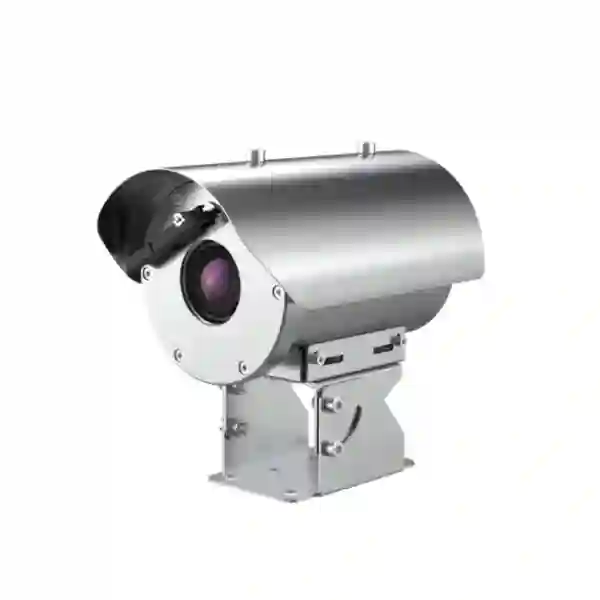
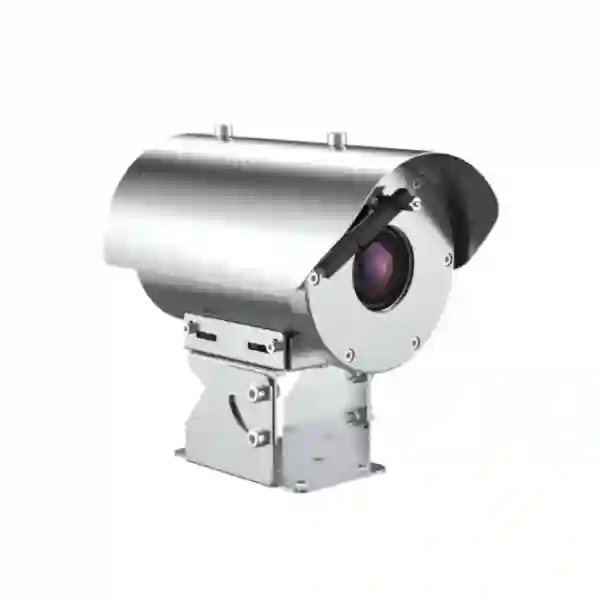
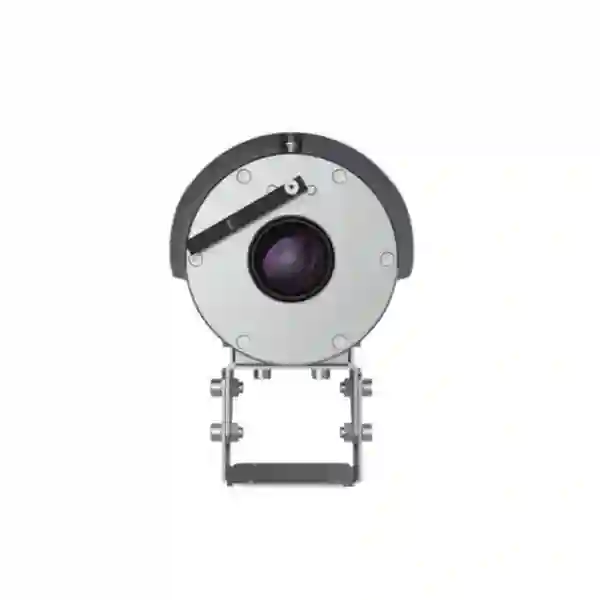
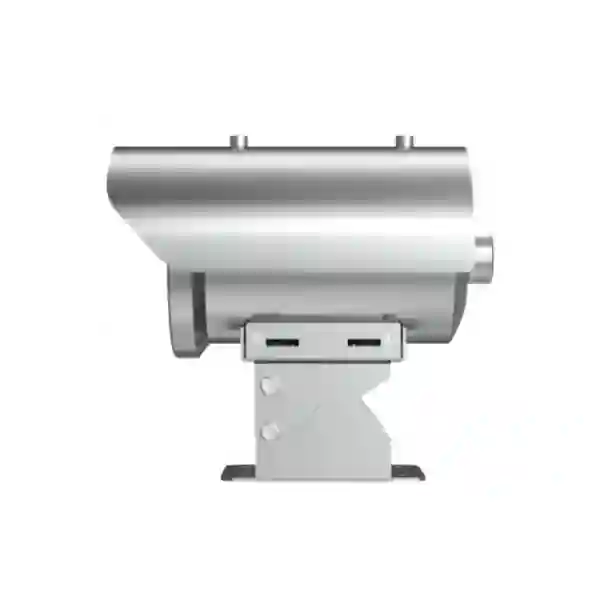
Hanwha TNO-6321E 2MP Explosion-Proof Camera
The Hanwha TNO-6321E explosion-proof camera combines 2MP Full HD image capture, 32× optical zoom and a 316L stainless-steel enclosure for technically demanding surveillance applications. It is relevant to industrial buyers in Tanzania who need to assess a camera for an appropriately classified hazardous location. The right selection requires certificate verification, suitable power and cable-entry design, realistic scene coverage and a clear maintenance plan.
Important lifecycle notice: Hanwha Vision lists this exact model as discontinued. Confirm sourcing, current support or a correctly certified replacement before proceeding.
Request a technical suitability or replacement review through FourTeck Tanzania.
Key specifications at a glance
| Brand / model | Hanwha Vision TNO-6321E |
|---|---|
| Device type | Explosion-proof network surveillance camera |
| Maximum resolution | 1920 × 1080 (2MP) |
| Imaging sensor | 1/2.8-inch CMOS |
| Lens / zoom | 4.44–142.6 mm / 32× optical |
| Horizontal field of view | Approximately 61.8° to 2.19° |
| Video codecs | H.265 / H.264 / MJPEG |
| Image functions | Day/night ICR, 120 dB WDR, defog |
| Enclosure | 316L stainless steel, built-in wiper |
| Published ratings | IP67 / IK10 |
| Power input | 24 VAC |
| Network support | Ethernet; ONVIF S, G and T |
| Manufacturer lifecycle | Discontinued |
Different published documentation revisions do not agree on every infrared, electrical or mechanical detail. Use the current correct manufacturer documentation for the exact device before installation design.
Choose the camera for the site, not the catalogue
The Hanwha TNO-6321E is a 2MP explosion-proof network surveillance camera intended for installations where equipment selection must account for potentially explosive atmospheres. It is not an ordinary outdoor CCTV product with a decorative metal cover. The important starting point is a documented site requirement, including its hazardous-area classification, the scene to be observed and the responsible engineering approval.
Industrial security buyers typically need dependable observation of specific assets, access points or work areas. This model offers Full HD video, a long optical zoom range and a protected stainless-steel enclosure. Those properties may be useful, but none independently proves that the camera is appropriate for a particular tank farm, processing unit, loading area or other facility.
Hanwha Vision currently identifies this exact model as discontinued. Treat the information here as a technical product reference and replacement-planning guide. Before committing to procurement, request confirmation of the available product, its documentation and the support arrangements for the proposed installation.
Identify the actual surveillance objective
Write down what operators must understand from the image before selecting any camera. They may need to notice entry into an area, observe equipment movement, verify an access event or retain a visual record for later investigation. Each task creates a different requirement for image detail, scene width, lighting and recording quality.
A wide image helps establish context but makes distant objects occupy fewer pixels. A narrow image can reveal more detail about a selected target while excluding activity elsewhere. If the same location requires both wide coverage and close identification at the same time, more than one viewpoint may be necessary.
State the expected distances, relevant objects and acceptable blind spots in the specification. Discuss them with the site’s security and engineering teams before choosing a camera quantity or location. A well-defined objective is more useful than buying a device solely because it has an impressive zoom specification.
Full HD imaging and sensor basics
Hanwha specifies a 1/2.8-inch CMOS image sensor with maximum resolution of 1920 by 1080 pixels. This is 2MP Full HD imagery, which can suit many fixed surveillance tasks when the selected field of view places sufficient image detail on the target. Resolution alone does not tell a buyer how much useful evidence the recording will contain.
Actual results depend on the field of view, subject distance, shutter behaviour, image compression, mounting stability and lighting. A well-positioned 2MP camera can be more useful for a defined task than a higher-resolution camera aimed too broadly or obstructed by industrial structures.
During the survey, identify the smallest relevant visual detail and measure the viewing distance. Test the proposed scene framing against that requirement. Do not claim that a particular face, registration mark or equipment label will be recognisable without validating it under representative site conditions.
The role of the 32× optical zoom lens
The TNO-6321E has a documented 4.44–142.6 mm lens with 32× optical zoom. Optical zoom changes the image magnification through the lens instead of merely enlarging stored pixels. This can be useful when a protected camera must be mounted away from the activity being monitored.
At a shorter focal length the camera takes in a relatively wide scene. Increasing the focal length concentrates attention on a smaller area. That narrower view can assist inspection of a distant point, but it reduces surrounding coverage and can make structural vibration or atmospheric distortion more visible.
Choose the final zoom setting against the site’s operational objective. For a fixed installation, record the framing used at commissioning and define who is permitted to change it. If operators need to switch between several critical targets, assess whether multiple fixed cameras or a properly specified PTZ design offers more reliable coverage.
Use field-of-view figures intelligently
Hanwha publishes an approximate horizontal field of view of 61.8 degrees at wide angle and 2.19 degrees at maximum telephoto. These numbers help an engineer estimate how much of a scene can fit into the image at a chosen distance. They are not evidence of guaranteed detection, recognition or identification.
Pipework, columns, platforms and vehicles can block a camera even if the calculated angle appears sufficient. The drawing should therefore include the mounting height and direction, obstructing structures and the expected movement of machinery or people. Check the relevant view both during normal operations and when the site is busy.
Where small details matter, assess pixel density and image quality at the actual target distance. Where awareness matters, preserve surrounding context. A single camera’s field of view cannot deliver simultaneous close detail and a broad overview without a suitable system design.
Separate optical zoom from camera movement
Zoom adjusts the image framing; pan and tilt reposition the viewing direction. The TNO-6321E should not be treated as a general-purpose PTZ camera merely because its lens has a powerful optical zoom range. A fixed viewpoint is often a deliberate benefit for continuous observation of one defined position.
A PTZ alternative can give operators directional control or programmable patrol views, but it may leave one location unobserved while pointing elsewhere. That trade-off matters where continuous footage from a critical access point or asset is part of the requirement.
Compare candidate products against simultaneous coverage needs, operator workload, hazardous-area suitability and mounting complexity. A suitable fixed camera can be preferable to an unnecessarily mobile unit. Equally, a single fixed view is not a cost-saving substitute for an engineered multi-camera coverage plan.
Low-light performance and night monitoring
Hanwha lists minimum illumination values of 0.05 lux in colour and 0.005 lux in black and white under specified test conditions. Automatic day/night operation is also documented. These figures describe a capability under stated exposure and aperture assumptions, not a promise of a clear picture of rapidly moving subjects in darkness.
Industrial sites can contain shadows under structures, strong floodlights, reflective metal, moving vehicle lights and changing illumination during shift work. Exposure settings that brighten a dark scene can increase motion blur. Cameras should therefore be tested against the actual target, lighting and expected movement.
Documents issued during different periods show differences in infrared-related specifications for this model. Do not assume a particular built-in IR range or power demand without confirming the exact unit and authoritative revision. If night coverage is essential, include the verified lighting plan in the equipment specification.
Wide dynamic range in mixed lighting
The TNO-6321E includes a 120 dB wide dynamic range feature. This can be valuable where bright and dark areas appear together, such as a doorway opening into strong daylight or a vehicle passing under a lit canopy. Wide dynamic range can help balance those parts of the picture, depending on configuration.
The camera also documents digital noise reduction and defog processing. These functions may improve apparent image quality in certain conditions. They do not eliminate the effects of dense smoke, physical obstructions, a dirty camera window or optical detail that was never captured.
Acceptance testing should use sample images from the periods that matter to the site. Compare visibility of the required activity at dawn, midday and night, and examine bright-light reflections. Tune settings with the operational goal in mind rather than pursuing a visually attractive image that hides relevant detail.
Compression and practical network planning
Hanwha lists H.265, H.264 and MJPEG video options together with WiseStream II. These technologies offer choices for video quality, recorder interoperability and network bandwidth. H.265 may improve storage efficiency in a given deployment, but the savings depend on motion, scene complexity and configured settings.
Moving steam, equipment vibration, fine detail and changing industrial lighting can make a scene more demanding to compress than a quiet office corridor. A storage estimate should therefore use representative content and the selected resolution, frame rate, codec and bitrate approach.
Account for simultaneous operator viewing, recording streams, any remote access links and network resilience. Confirm that the installed recorder can decode the chosen stream profiles. Avoid designing an entire network around a single theoretical bitrate or an assumed efficiency percentage.
Choose a suitable frame rate
The model’s published specifications include up to 60 frames per second under the relevant H.265 and H.264 operating conditions. A high frame rate may improve the temporal detail of rapid movement, but it can also increase network and storage requirements. Not every security task needs the maximum setting.
For a slowly changing equipment scene, lower frame rates may be adequate. Where a short action or fast vehicle movement needs review, frame rate becomes more significant. Even then, the shutter setting and available light influence whether individual frames remain sharp.
Define how the footage will be reviewed. The live monitoring stream may differ from the recorded stream, and exported clips may be processed differently by the video management system. Test the whole workflow, not just the camera preview.
Analytics for operator awareness
Hanwha documents motion detection, virtual line functions, virtual-area rules, defocus detection, tampering detection and other analysis features. Such events can help a security team focus on activity in a defined part of the picture or find a time period in recorded footage.
Analytics should be tested in the real environment. Shadows, spray, machinery, steam, changing light and vibration may create unwanted alerts. A virtual line also needs careful placement so that expected movement and relevant intrusions are not confused.
Define who receives each event, what response is required and how false alarms will be measured. Face detection should not be described as identity recognition. These video analytics are operational aids, not certified safety systems or substitutes for fire and gas protection.
Alarm interfaces and connected actions
Hanwha specifies an alarm input and output as well as event-related network functions. These may support security workflows such as flagging an incident for review, sending an authorised notification or interacting with compatible monitoring equipment. Exact integration must be verified against the selected firmware and recorder.
Do not assume a camera alarm connection is suitable for a safety shutdown circuit or other safety-rated function. A hazardous installation requires a documented electrical and functional design, and safety-critical controls need equipment selected for that purpose.
During commissioning, test each alarm source, recording action and operator notification. Also test disconnection and restoration of the network. A successful design makes clear what happens when an event is detected, who is accountable for responding and how footage can be retrieved later.
The value and limits of 316L stainless steel
Hanwha identifies stainless steel grade 316L as the housing material. It is a relevant choice for many industrial environments where material durability and corrosion resistance are important. A stainless enclosure also gives a strong mechanical starting point for an exposed installation.
Material selection still depends on site conditions. Chemical exposure, airborne salts, cleaning agents and deposits can affect even stainless-steel components. The camera body, fasteners, bracket and supporting structure should be assessed together, particularly where the installation will be difficult to inspect.
Do not describe 316L as immune to all corrosion. Establish a cleaning and maintenance schedule appropriate to the actual environment. When comparing a replacement, include enclosure material and approved mounting hardware in the assessment rather than examining imaging performance alone.
Interpret IP67 and IK10 correctly
The manufacturer’s documentation lists IP67 and IK10 ratings for the TNO-6321E. IP67 relates to specified ingress-protection tests, while IK10 relates to resistance to mechanical impact under the relevant classification method. These are useful characteristics when assessing exposed industrial equipment.
Neither rating automatically applies to an improvised cable entry, mounting bracket or modified enclosure. The complete installed assembly must preserve the necessary protection concepts and comply with the manufacturer’s instructions. Weather resistance should also not be confused with hazardous-area explosion protection.
Check the suitability of the proposed location, any washdown activity, accidental impact risks and required service access. A camera may be rugged while its cable path or supporting installation remains vulnerable. Good engineering considers the weak points of the whole system.
What explosion-proof actually means
The term explosion-proof refers to equipment designed and certified under specified protection concepts for use in defined potentially explosive atmospheres. It does not mean that a camera can stop every explosion, detect a gas leak or be installed in any industrial area without evaluation.
Hanwha publishes explosion-protection markings and certification information for this model, including ATEX and IECEx references. The specific certificate scope, gas or dust conditions, temperature requirements and installation limitations must be checked against the site’s approved hazard classification.
A responsible engineer should evaluate the exact unit and full installation, including cable-entry parts, supply arrangements and maintenance instructions. The product’s international markings do not, by themselves, establish Tanzanian regulatory approval for a particular site.
Matching equipment to the classified area
Before equipment is ordered, obtain the approved hazardous-area classification drawing and determine exactly where the camera will be mounted. Conditions can vary within one facility, and equipment acceptable in one position may not be acceptable near a different process or material.
Review the relevant equipment markings, ambient temperature range, protection concept, gas or dust hazard and any stated restrictions. The classification review should cover attachments and accessories as well as the principal camera enclosure.
Keep the manufacturer certificate documents and installation instructions in the project file. Do not change an enclosure opening or substitute an ordinary weatherproof component without approval. A classified-area installation is an engineered system, not simply a collection of individual catalogue products.
Explosion-proof video is not fire or thermal detection
The TNO-6321E is presented as a visible-light 2MP network camera. Its purpose is to deliver a video image, not to measure temperatures or identify combustible gases. The equipment’s explosion-protection classification should not be confused with a flame detector, thermal instrument or gas alarm.
Video can help staff understand activity remotely and document incidents. It may show visible consequences of an event, but it is not an adequate replacement for a certified safety protection system or a site-specific emergency procedure.
If the requirement includes thermal hotspots, process temperature measurements, leak detection or automatic protective actions, treat those as separate specifications. Choose the relevant instruments and maintain clear responsibility for each monitored risk.
24 VAC power design
Hanwha documents 24 VAC as the power input for the TNO-6321E. Buyers should not assume an ordinary Power over Ethernet supply will run the camera. The electrical design must include a correctly selected power source, cable sizing and suitable isolation or protection.
Published documentation from different periods does not agree on some maximum power and physical details. For procurement and installation calculations, request the authoritative documentation applying to the exact unit or replacement. An unverified older datasheet may produce an incorrect transformer or backup-power choice.
The supply arrangement also needs to meet the site classification and applicable installation procedures. Where video is operationally important during a power loss, consider backup supply and failure notifications as part of the system design.
Cable entries and electrical installation
An enclosure’s certificate does not make every cable gland or termination suitable. Cable entry, conduit, sealing, bonding and earthing details must be selected according to the relevant protection method and the manufacturer’s instructions. These details may be central to maintaining the safety of the installed equipment.
Plan the cable route to reduce exposure to mechanical damage, vibration and difficult maintenance areas. Check how the network cable and 24 VAC supply will be connected and isolated. Unapproved modifications to the enclosure should not be treated as routine site work.
Installation and inspection should be carried out by appropriately competent personnel using the approved design. The goal is a camera whose enclosure and connections remain suitable after installation, cleaning, inspection and eventual replacement.
Mounting and vibration control
A long optical zoom magnifies the visible effects of small camera movements. A mounting point that looks stable during a brief inspection may vibrate when pumps, compressors or vehicles are operating. At maximum telephoto, such movement can interfere significantly with usable detail.
Choose a structurally suitable support and an approved bracket for the exact camera configuration. Verify weight, dimensions, fixing loads and environmental exposure from the applicable technical documents, particularly because older and newer sources differ on some mechanical specifications.
Assess the view from the final installed height. Handrails, pipes, cable trays and moving equipment can obstruct a scene. Also leave a safe maintenance method for inspections and cleaning. A mounting design must balance picture quality, mechanical integrity and access.
Built-in wiper and visibility maintenance
Hanwha lists a built-in wiper for the TNO-6321E. It can be useful when moisture accumulates on the camera’s viewing surface. However, industrial deposits, dirt and chemical residue may still affect the picture, and a wiper does not remove all contamination.
Create a maintenance routine that includes window condition, visibility, bracket integrity and the surrounding cable installation. Where the camera is inside a classified area, all servicing must follow the relevant work procedures and manufacturer requirements.
Capture a baseline image after commissioning and compare future images against it. A device can appear online while its picture deteriorates slowly enough to go unnoticed. Periodic visual checks protect the original monitoring objective.
Integration with an NVR or VMS
Hanwha documents Ethernet connectivity, RTSP and ONVIF Profiles S, G and T. These standards can help with integration into a network video recorder or video management platform. Nevertheless, standards support does not ensure that every vendor-specific event or configuration option will operate identically.
Confirm the installed VMS version, firmware, supported codecs, stream profiles, licensing and alarm requirements. A live picture is only one part of compatibility; playback, searches, export, time synchronisation and security permissions should also work as intended.
For a replacement, document the existing workflows before changing hardware. A new camera may need different credentials, certificates, stream settings or event mapping. Include operator acceptance testing in the handover.
Cybersecurity and a discontinued camera
An IP camera is a network endpoint that requires appropriate access control, credential management and oversight. Hanwha’s published information includes security functions such as HTTPS communication, authentication and logging. These features help only when the wider installation is configured and maintained correctly.
Limit access to authorised networks and users, apply suitable account policies, and remove unnecessary exposure of device services. Keep a record of firmware versions and administrative responsibility. Test recovery procedures without exposing sensitive credentials in ordinary quotation correspondence.
Because Hanwha lists this model as discontinued, verify the actual status of firmware and vulnerability support. A camera that still streams video is not necessarily a suitable long-term choice for a new security-sensitive installation. Lifecycle support should be an explicit selection criterion.
Recording strategy and evidence handling
Decide how much footage must be kept and why. Retention requirements can depend on operating policy, incident-response needs and applicable legal obligations. Then calculate capacity using actual selected stream settings and representative scene activity rather than assuming one fixed data rate for every 2MP camera.
Decide whether video should be captured continuously or when an event occurs. Event-only recording can reduce storage but may miss activity that was not detected or triggered correctly. Critical situations may require a different policy.
Test retrieval and export before the system is accepted. Staff must know how to find an event, review the time stamps and produce footage using authorised procedures. Recording is useful only when the relevant material survives and can be accessed.
Design for the actual Tanzanian site
Tanzanian industrial sites differ in climate, layout, electrical reliability and operating constraints. A coastal location may raise corrosion questions, while another facility may present dust, strong sunlight, washdown activity or difficult maintenance access. The exact conditions at the proposed camera position should guide material and environmental decisions.
Document local temperature exposure, contaminants, lighting, rain, electrical supply and network distance. Compare the findings against the applicable camera documentation and the site’s engineering standards. Avoid assuming that a published outdoor rating automatically resolves every environmental challenge.
No claim is made here about a local certification, stock position, installation service area or warranty offered in Tanzania. Those commercial and regulatory details require independent confirmation for the specific project and quotation.
Commissioning tests worth documenting
Begin commissioning with approval of the hazardous-area design, installation method and actual hardware identity. After qualified personnel have completed the approved mechanical and electrical work, verify network access, camera configuration and safe operating conditions.
Use the intended viewing position to confirm target detail, field of view and any zoom setting. Repeat checks under relevant light and operating conditions. Test recording, time synchronisation, alarms, network interruption and restoration, operator permissions and evidence export.
Record the configuration and the acceptance results. Include daytime and night-time sample images if both matter. A clear handover makes faults easier to investigate and reduces confusion if the discontinued model must later be replaced.
Deciding whether to retain an installed unit
Not every existing discontinued camera needs immediate removal. The decision should consider whether the device still meets the surveillance objective, remains appropriate for its classified location and is supportable within the organisation’s maintenance and cybersecurity policies.
Before diagnosing a camera failure, check the power supply, network link, recorder configuration, lens view and connected equipment. An apparently dead camera may be affected by infrastructure, while a device that displays video may still have a deteriorated image or unsupported firmware.
Develop a replacement plan when repair parts, security support or certified equivalent hardware cannot be confirmed. Keep the system’s hazardous-area documentation and installation drawings available so that a new selection can be assessed properly.
Comparing a new explosion-proof replacement
A successor should not be chosen by megapixels alone. Compare the protection marking and certificate scope, operating conditions, lens range, target detail, illumination, mounting interface, cable entries, electrical supply and system integration. An attractive modern feature may not compensate for a mismatch in hazardous-area suitability.
Assess whether the proposed equipment will preserve the intended field of view, fit the existing support and work with the recorder. Confirm the manufacturer lifecycle and relevant software support. If the design changes, allow for necessary engineering review and re-commissioning.
Do not assume that similarly named Hanwha products are drop-in replacements or that an alternative is approved for a Tanzanian facility. Request exact model documents and a clear statement of what changes, including any accessory, electrical and maintenance implications.
How to write a useful technical enquiry
Specify whether the request concerns a failed TNO-6321E, spares, a supported alternative or a completely new camera location. Include the approved area classification, the camera-to-target distance, required viewing width, day and night lighting and any special environmental exposure.
Provide the existing video management system, power arrangement, mounting requirements and relevant manufacturer nameplate details when available. A simple site sketch can be helpful if it can be shared appropriately. Do not include passwords or restricted network information in an ordinary enquiry.
Ask for confirmation of suitable equipment, certification documentation, lifecycle support, accessory compatibility and current commercial terms. In particular, do not assume that a discontinued model is available for immediate order. The project engineer should review the proposed solution before approval.
Final purchase and approval checklist
Before proceeding, verify the classified-area drawing, exact camera configuration and applicable certificates. Confirm that the equipment’s protective characteristics and environmental operating range are suitable. Ensure that every cable-entry and mounting component is part of an approved installation design.
Check the viewing objective, pixel density, night-lighting performance, camera stability, network compatibility, retention requirements and power budget. Assign responsibility for cybersecurity, inspections and alarm response. State the acceptance tests and required evidence before installation.
For this discontinued model, obtain a written procurement and support position or choose a separately assessed current alternative. A quotation should describe the actual goods and conditions being offered; a generic model-number listing is not proof of availability, compliance or suitability.
Frequently asked questions
Is the TNO-6321E discontinued?
Yes. Hanwha Vision’s official product page identifies this model as discontinued. That does not prove whether a particular supplier has remaining stock, but new-project sourcing and ongoing support must be confirmed. A supported alternative may be a better choice where long-term maintenance is important.
What resolution does it provide?
The manufacturer specifies up to 1920 by 1080 pixels, commonly called 2MP Full HD. Whether the resulting image is sufficient depends on distance, zoom setting, lighting and target detail. Verify the actual surveillance task rather than assuming that a resolution label alone guarantees identification.
How far can its 32× zoom see?
The 32× figure describes the lens’s optical zoom range, not a guaranteed viewing or identification distance. Performance depends on target size, field of view, illumination, atmosphere and mounting stability. A camera-placement assessment can determine whether the required detail is available at the actual distance.
Does this camera detect explosions or gas?
No. Its explosion-proof classification concerns the device’s protective equipment design. It supplies visible surveillance video and related event features. It is not a flame detector, gas sensor, emergency shutdown device or certified thermal measurement instrument.
Can it be installed in any hazardous area?
No. The camera’s exact protection markings, certification documents, ambient limits and installation requirements must match the site’s classified area. Competent engineers need to review the entire installation, including cable entries and accessories, before approval.
Does it include infrared night illumination?
Some published specification revisions differ about infrared illumination and other mechanical or electrical details. Confirm the exact camera revision and the authoritative manufacturer document before relying on a particular IR feature or distance. Night performance should be tested against the intended environment.
Is the power input PoE?
The published power input is 24 VAC. Do not assume that a standard PoE port provides camera power. Verify the exact applicable power demand and supply design, especially where older technical documents differ from newer product information.
Does the camera support H.265?
Yes. Hanwha lists H.265, H.264 and MJPEG. The preferred codec depends on recorder compatibility, bandwidth and the required recording quality. Use representative scene footage to plan storage rather than assuming a fixed compression saving.
Can I connect it to a third-party VMS?
Hanwha documents Ethernet, RTSP and ONVIF Profiles S, G and T. These offer useful interoperability options, but live view, events, recording, playback, exports and secure access must be tested with the exact management software and firmware in use.
What is the purpose of IP67 and IK10?
They refer to documented ingress and impact protection classifications. They do not replace a site-specific corrosion assessment, explosion-protection review or properly engineered installation. Cable glands, brackets and connections must also be assessed for the intended location.
Is the stainless housing corrosion-proof?
The manufacturer specifies 316L stainless steel, which can be beneficial in many industrial environments. It is not immune to every contaminant or corrosion mechanism. Consider the site exposure, cleaning chemicals and inspection schedule for the complete assembly.
Can the camera measure temperature?
No radiometric temperature-measurement function is established for the TNO-6321E. It is a visible-light surveillance camera. If numerical temperature alarms or hotspot detection are required, evaluate appropriately specified thermal or process instrumentation separately.
Is a PTZ the same as this camera?
No. The TNO-6321E offers optical zoom but should not be treated as a general-purpose pan-and-tilt camera. A PTZ changes viewing direction; a fixed camera preserves one selected viewpoint. Choose according to simultaneous coverage and operator requirements.
What should be included in a replacement review?
Provide the existing unit details, hazardous-area classification, required scene coverage, lighting, power, mounting and recording-system information. Ask for an exact current model and its certification, lifecycle and installation documents. Do not assume an alternative is a direct mechanical or electrical replacement.
Is it certified for a specific site in Tanzania?
This content does not claim site-specific Tanzanian approval. Published international protection documents may support an engineering assessment, but the local project classification and any applicable approval requirements must be verified by responsible qualified personnel.
Can I order it immediately from FourTeck Tanzania?
No live stock or ordering availability has been verified. Because the manufacturer labels the model discontinued, obtain a specific sourcing confirmation or request an appropriately certified current alternative. Commercial terms, delivery and warranty must be confirmed in the actual quotation.
Request an industrial camera quotation or replacement review
Tell FourTeck Tanzania whether you are replacing an installed TNO-6321E or planning a new surveillance position. Include the hazardous-area classification, field of view, existing mounting and video system information. Ask for written confirmation of suitable available equipment and the exact applicable documentation. Purchase and installation should follow competent site engineering review.
Contact FourTeck Tanzania using its established enquiry channel.
All technical and environmental limits require confirmation for the exact hardware revision and proposed installation. No Tanzania-specific approval, inventory, pricing, installation coverage or delivery time is asserted.




Reviews
There are no reviews yet.