
AI thermal monitoring · Radiometric condition insights
Hanwha TNO-C3030TRA Radiometric AI Thermal Camera
Evaluate the Hanwha TNO-C3030TRA thermal camera for a defined perimeter, asset condition or temperature-monitoring requirement in Tanzania. Its 384 × 288 thermal detector, 9.7 mm fixed lens, up to 30 fps output and AI person/vehicle analytics offer a useful combination when coverage and measurement conditions are properly planned.
Request a project-specific quotation and technical review. Price, availability, delivery, support and import documentation require separate confirmation.
Key specifications at a glance
Technical values are model-specific manufacturer specifications. They should be interpreted with the installation, measurement method and system integration requirements in mind.
What this camera is designed to solve
Facilities teams often need to watch areas that are difficult to illuminate while also noticing unusual temperature changes. The TNO-C3030TRA brings thermal video, AI-based object classification and radiometric condition monitoring into one compact fixed-view camera. It can support a perimeter event workflow and a separate equipment-temperature workflow, provided each use case is planned and tested. The right starting point is not a claimed surveillance distance; it is the object size, scene geometry and decision an operator must make.
For a Tanzanian industrial yard, utility enclosure or production facility, begin by identifying one operational question per camera position. Is a person entering a restricted lane, is a vehicle crossing an exclusion line, or is a particular equipment surface becoming unusually warm? These questions need different fields of view, alarm thresholds, recording policies and operator responses. A project-specific review will reveal whether this single model can perform both jobs from one mounting point or whether separate views are sensible.
Thermal imaging and radiometry are different functions
A thermal image depicts differences in infrared energy rather than visible colour and detail. That makes the camera useful when white-light illumination is unavailable or undesirable, but it does not provide the same identification cues as a conventional daytime camera. Radiometry adds temperature-related readings that can be associated with a spot or a defined region. The two functions can complement one another, yet neither replaces site inspection, engineering judgement or appropriate protective devices.
Treat a thermal intrusion alert and a high-temperature alert as different classes of information. A person-classification event may send an operator to a video view; a temperature trend may trigger a maintenance investigation. Neither event alone proves what caused it. Reflections, distance, emissivity, weather, surface conditions and surrounding heat sources can influence the thermal picture. Responsible deployment includes thresholds, verification steps and a documented human response rather than relying on a single alert as conclusive evidence.
Understand the actual thermal resolution
The sensor is an uncooled microbolometer with 384 × 288 native thermal elements. Hanwha also lists 768 × 576 output, but a larger output frame does not transform the underlying detector into a higher-native-resolution sensor. This distinction matters when selecting a camera for small, distant objects. What determines useful target detail is the combination of detector, optics, distance, object dimensions and viewing angle, not the number shown on a display alone.
The stated thermal sensitivity is NETD at or below 30 mK, with a 17 micrometre pixel pitch and a spectral range of 8–14 micrometres. NETD describes the camera’s ability to distinguish small thermal differences under specified conditions; it is not a statement that every object temperature can be measured to that precision. Buyers should keep sensitivity, spatial detail and absolute temperature accuracy as separate specification questions and test the actual critical target in a representative scene.
Plan around the fixed 9.7 mm lens
The 9.7 mm fixed-focus lens provides an approximately 38-degree horizontal and 29-degree vertical angular field of view. That coverage can be attractive for a defined access corridor, equipment bay or portion of a yard. It is not a zoom lens that can continuously change framing after installation. Before selecting a pole or wall, draw the scene and identify the near edge, far edge and most important inspection surface.
The manufacturer lists a minimum object distance of 2.8 metres. Very close equipment inspection should therefore not be assumed to work merely because the camera can be mounted beside a machine. Similarly, a wide view may make a distant person occupy too few thermal pixels for dependable classification. Use the camera position, lens geometry and target size together, and request an on-site or representative-view validation wherever the consequences of a missed event are significant.
Do not confuse detection, recognition and identification
Hanwha provides theoretical DRI figures based on Johnson’s criteria. They are useful for early optical planning but not a promise of real-world AI performance at a specified distance. Detection means noticing the presence of a target; recognition and identification demand progressively more information. Weather, atmospheric effects, thermal contrast, object orientation, crowding and background activity can make field results different from tabulated optical calculations.
For procurement, specify the operational result rather than simply asking for the longest published range. A boundary event might require that an approaching person be reliably noticed within a particular zone, while a safety process could require a supervisor to verify a situation using another view. Identify the farthest critical point, the smallest relevant target and acceptable false-alarm behaviour. Then arrange testing that records both detected events and relevant misses under actual site conditions.
AI person and vehicle classification
The built-in analytics identify person and vehicle object classes. In suitable scenes this can help operators focus on relevant moving targets instead of treating every change in the image as equivalent. Virtual-line functions cover crossing and direction; virtual-area functions include entering, exiting, intrusion and loitering. These features can support a more structured alarm policy when the detection region is carefully drawn and the site’s normal operating patterns are understood.
AI classification has limits. Animals, crowded traffic, reflections from hot surfaces, occlusion and extreme viewing positions may still complicate detection. A software category is not identity verification, and it does not automatically establish permission to enter. During commissioning, test employees, vehicles, maintenance activity and expected background movement. Adjust region boundaries and event rules against observed results, and keep a second verification method when an alert could trigger a serious operational response.
Build a useful virtual-line policy
Virtual-line alarms are most valuable when the crossing direction and protected boundary match an actual business rule. Rather than drawing a line across an entire busy image, identify the gate, route or restricted transition that deserves attention. Consider whether movement in both directions matters and whether legitimate service vehicles should routinely pass. A concise event name and camera location help the receiving operator interpret a notification without losing time finding the affected scene.
Plan the response as carefully as the detection. Decide whether an alert should notify a guard, mark a recording, activate an output or provide a cue to another camera. The model lists PTZ preset handover as an event action, but that does not make the TNO-C3030TRA itself a motorised pan-tilt-zoom camera. A PTZ response requires compatible external equipment and configured integration. Confirm those dependencies before including automatic tracking or handover in a project specification.
Use area analytics without overwhelming operators
Virtual-area events such as intrusion, enter, exit and loitering can be tailored to equipment rooms, vehicle holding areas and controlled yards. The value comes from clearly defining what is abnormal at a particular location. A warehouse loading lane may have legitimate movement throughout a shift, whereas a fenced service compound may require review of any entry outside scheduled operations. Time-based rules should reflect real site processes instead of a generic alarm profile.
More alerts do not necessarily mean better protection. Review the most frequent triggers during a trial and remove zones that repeatedly generate unhelpful notifications. Set up a consistent naming convention for zones and cameras so events can be audited later. Where environmental or operational conditions create unavoidable background activity, pair analytics with operator checks or complementary sensors. Record the decisions behind threshold and zone changes to make future tuning more reliable.
Radiometric temperature range and accuracy
Hanwha specifies a temperature detection range of −40°C to 550°C. Its stated temperature accuracy is ±2°C at or below 150°C and ±15% above 150°C. These are manufacturer specifications, not a guarantee that a particular distant object will be measured precisely without suitable configuration. The operating environment of the camera is different from the temperature range of objects it can monitor, a distinction especially important near hot industrial plant.
Consider what temperature difference actually matters. If an equipment alarm must distinguish a subtle change near a narrow maintenance limit, the conditions for repeatable measurement are critical. Surface finish, emissivity, viewing angle, moisture, reflected heat and the proportion of the region occupied by the target all affect interpretation. Confirm the measurement method with the equipment owner and compare camera readings with an appropriate reference process during commissioning before setting a threshold that initiates action.
Ten temperature regions for targeted observation
The TNO-C3030TRA supports up to ten polygonal temperature regions of interest, alongside spot temperature readings. Regions can be arranged around relevant surfaces rather than treating the entire image as a single temperature. This is useful when a scene contains multiple machines, connections or material areas with different normal behaviour. The available conditions include above, below, increase and decrease, supporting more nuanced operational monitoring than one fixed high-temperature alarm.
Design each region to capture a stable target. Avoid including a moving background, sky, reflective roof or neighbouring machine unless that context is specifically part of the measurement objective. Create a naming scheme such as equipment identifier, monitored surface and alarm purpose. A good region layout is understandable to a maintenance technician who did not configure the camera. Establish which alert is advisory, which requires prompt inspection and which demands action from a separate engineered safety system.
Electrical asset monitoring scenarios
Thermal condition monitoring may be useful for selected external surfaces on electrical assets when appropriate safe sightlines are available. The camera can help make unusual thermal patterns visible for investigation, but it cannot see through metal doors, solid enclosures or obstacles. It also does not eliminate the need for authorised inspection, safe work procedures and dedicated electrical protection. A permanent thermal view should complement, not replace, the site’s established maintenance programme.
Positioning matters as much as sensor specification. A conductor, enclosure or bus connection that occupies only a tiny portion of the image may be unsuitable for meaningful temperature trending. Ask the electrical team to identify accessible, safe and repeatable target surfaces and their expected operating conditions. Record equipment load, seasonal heat, ventilation changes and maintenance history when interpreting alerts. Avoid presenting the camera’s temperature measurement as an automatic diagnosis of a loose connection or impending failure.
Mechanical equipment and process observation
Motors, bearings, drives and process equipment sometimes develop thermal patterns that prompt maintenance investigation. A fixed thermal camera can support repeat observations of a selected area when the object remains in view and operating states are understood. This is especially relevant when operators cannot constantly stand beside equipment. However, temperature by itself cannot reveal every mechanical fault, and some failures occur without a distinctive external thermal signature.
Define a baseline under normal operation before enabling consequential alarms. Compare readings from similar loads and duty cycles rather than assuming one temperature limit applies to all machinery. Consider whether moving parts, guards, insulation or changing product flow obscure the critical surface. A useful alert should carry enough context for the technician to decide what to examine next. Keep vibration, electrical and other condition-monitoring data in the maintenance decision process wherever appropriate.
Warehouse and yard security
Thermal monitoring can support observation of yards, external storage lanes, entrances and other areas where visible-light coverage is difficult at night. Because the camera works with thermal patterns, it does not depend on scene lighting in the same way as an ordinary colour camera. This can make it valuable as one layer of a security system where unwanted movement has to be detected before a detailed visual assessment is possible.
Plan the camera alongside fencing, access control, lighting, guard procedures and any conventional cameras used for identification. Thermal images alone may not show facial features, clothing colour, number plates or small printed markings. For a mixed-use loading site, carefully distinguish expected truck movement from restricted-area entry. A realistic security design states what the thermal camera will detect, what another device or person will verify, and how the evidence will be retained and reviewed.
Production, agriculture and processing environments
Industrial and agricultural processors may have hot equipment, conveyors, storage areas and changing product temperatures that suggest radiometric monitoring opportunities. The camera can be considered where a fixed, non-contact view of a surface provides useful operational information. It is not automatically suitable for measuring the internal temperature of food, a sealed package or the core of a bulk material. Those tasks may require contact probes or another validated measurement technique.
In processing facilities, steam, dust, condensation and frequent cleaning can alter what a thermal sensor sees even when the housing is environmentally rated. Identify the actual observation window and whether the monitored surface remains consistently exposed. Keep product-quality and regulatory measurements on their independently validated processes. A camera alert can be a useful indicator for investigation without being presented as proof that a batch is safe, unsafe, compliant or non-compliant.
Tank-level analytics are a specific capability
The manufacturer’s listed normal analytics include tank-level detection. This is a potentially useful option in suitable thermal scenes where the contents and container create a discernible pattern. It should not be interpreted as a universal liquid-level sensor or a guarantee that every tank design is compatible. The physical vessel, insulation, wall material, contents and environmental conditions all influence whether a visible thermal boundary exists.
Before proposing the camera for level monitoring, obtain representative images across the expected fill range, time of day and operating temperatures. Compare the result with the plant’s established level indication. Clarify whether the requirement is an operator advisory or a control-system input with safety implications. For critical overfill protection or process interlocks, use appropriately engineered and validated instruments rather than assuming a video analytics function can take their place.
Installation and camera alignment
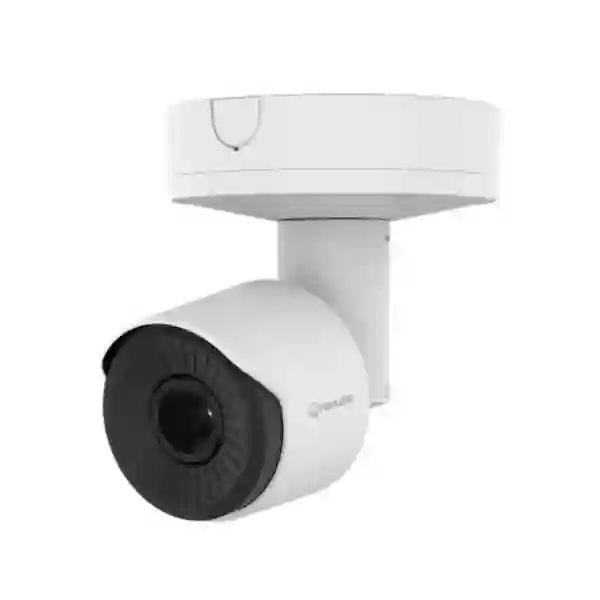
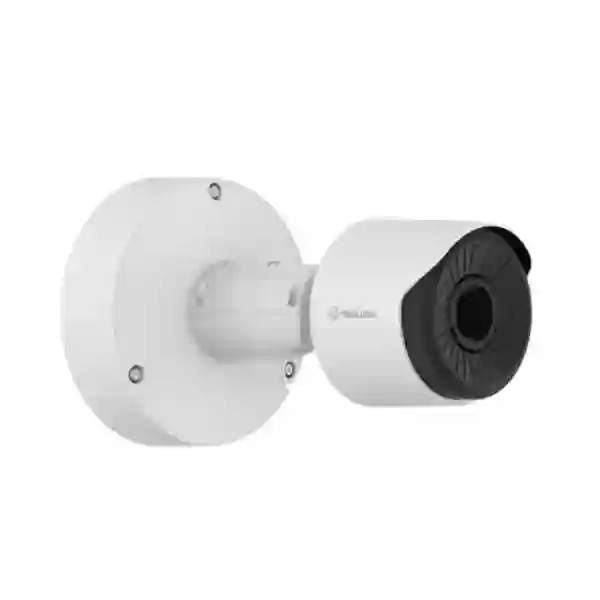
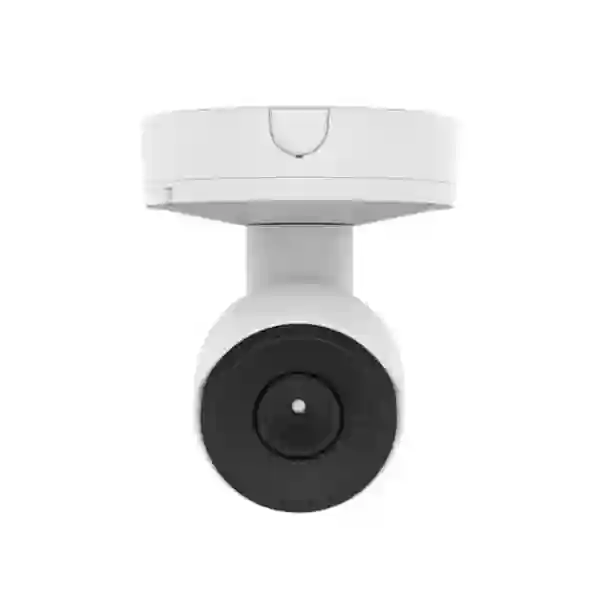
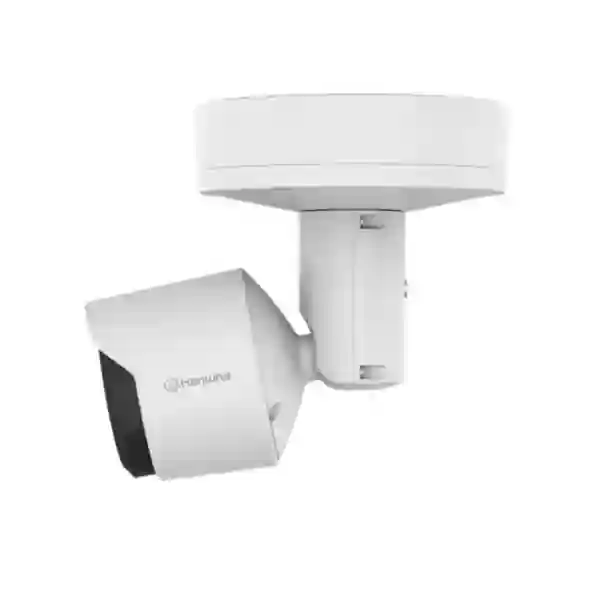
The housing is a compact white bullet form factor intended for a fixed camera position. The manufacturer lists adjustable pan, tilt and rotate ranges for mechanical aiming, not powered remote pan or optical zoom. Use a secure bracket and mounting surface with adequate load capacity, proper cable protection and a view that avoids routine obstructions. The camera’s 1.7 kg stated weight should inform mechanical support and access planning.
Position the unit so the critical scene remains usable during routine operation, not only on an empty-site inspection. Check sightlines with gates open and closed, vehicles parked, machinery operating and normal personnel movement. Verify access for cleaning, service and safe isolation. Be cautious around reflective or very hot objects, and avoid unnecessary exposures to conditions outside the specified operating environment. Document the final angle and region outlines so changes can be compared at later visits.
Power planning for Tanzanian facilities
Hanwha lists IEEE 802.3af Class 3 Power over Ethernet or 12 V DC input. The manufacturer’s maximum figures are approximately 10.8 W on PoE and 9.4 W on 12 V DC. These numbers help size supply equipment, but a complete installation also includes switches, recording systems, network devices and possible surge-protection hardware. Do not size an uninterruptible power system from the camera load alone.
Where electricity quality or outages could interrupt monitoring, decide how much backup runtime the site actually requires. Confirm the total load, battery condition, PoE switch budget and network path under a power-failure scenario. Outdoor cable routes should be designed for the local conditions and applicable installation standards. Commissioning should include a controlled restart and evidence that alarms, time synchronisation and recording resume as expected after power is restored.
Network and video integration
The camera includes a shielded Ethernet interface and common IP networking capabilities. Hanwha specifies ONVIF profiles S, G, T and M, as well as SUNAPI and an open platform. These interfaces can help integration planning, but a listed protocol is not a promise that every third-party recorder will support every analytic event or radiometric value. Integration tests should cover the exact VMS, firmware, event subscription and recording workflow intended for the site.
Before purchase, document the required live view, playback, metadata, event logging, operator permissions and storage retention. Confirm whether the receiving system can present temperature information or only conventional video. When connecting to an existing system, test the workflow end to end rather than checking only that the stream opens. A successful project proves that an operator can receive an alarm, view the relevant scene and retrieve an appropriate record without workarounds.
Codecs, bandwidth and recording
Support for H.265, H.264 and MJPEG allows different compatibility and bandwidth choices. Hanwha also lists WiseStream II and WiseStream III smart codec options and multiple-stream profiles. These capabilities support system design flexibility, but actual bandwidth and storage use depend on selected resolution, frame rate, compression settings, movement in the scene and recording schedule. A nominal codec name alone does not establish a retention estimate.
For a deployment plan, sample real footage during quiet and active periods and calculate recording needs from measured bitrates, retention goals and redundancy requirements. A lower bitrate may reduce storage requirements but can also affect inspection detail or event review. Record the chosen stream settings and confirm that the VMS preserves the evidence the customer actually needs. Where the security team requires high temporal detail, test the consequences of changing the camera’s maximum 30 fps setting.
Edge storage and resilience
The unit lists one microSD, SDHC or SDXC slot with a maximum supported capacity of 1 TB. Edge storage may contribute to a resilience strategy, subject to how the recording system and camera are configured. A card slot is not a substitute for a documented retention policy, backup procedure or evidence-export workflow. Its usefulness depends on media quality, event settings, storage wear and the application that reads recordings.
Agree in advance which footage must be recoverable after a network interruption and who is responsible for checking it. A deliberate test can show whether local recording continues as intended and whether central playback or recovery is supported by the selected system. Keep sensitive footage access-controlled, and plan secure removal or disposal of storage media. The physical camera should not be treated as the only copy of essential incident evidence.
Alarm outputs and event delivery
Hanwha lists two configurable alarm input/output ports and event actions including e-mail notification, image upload, triggered recording, alarm output, PTZ preset handover and MQTT publication. The value of these functions depends on the wider equipment and services configured to receive the message. An event may be technically generated but operationally useless if no one is assigned to assess it or if a network service fails.
Create a simple response matrix for temperature warnings, perimeter intrusion and device faults. Include the recipient, verification method, expected response, escalation path and recordkeeping requirement. Test a scheduled event and a simulated network disconnection, then verify that operators can recognise the difference. Avoid claiming an emergency alert service, automatic dispatch or guaranteed event delivery unless the specific end-to-end service has been confirmed and contractually provided.
Cybersecurity belongs in the specification
The manufacturer lists signed and encrypted firmware, secure boot, HTTPS, IEEE 802.1X options, a trusted platform module and local storage encryption features. These are useful building blocks, not a guarantee that an installed camera is secure without administration. Network configuration, account policy, patching, device isolation and access review are still necessary. Cybersecurity is especially important where a device sits near operational technology or records sensitive business activity.
Ask the project team to assign responsibility for credentials, firmware approval, certificate management and event logs. Place camera traffic in an appropriate network segment, restrict unnecessary services, and use authenticated management access. Document the software version used at acceptance testing and how updates will be assessed. Do not connect the camera directly to critical industrial controllers merely because a protocol appears in a specification; review the intended architecture and security boundaries first.
Outdoor resistance and environmental boundaries
Hanwha identifies IP66 and IP67 ingress ratings, IK10 impact resistance and NEMA 250 Type 4X environmental classification for the product. These ratings support outdoor suitability in appropriate installations, but they do not mean every installation detail is protected. Cable entries, brackets, seals, added adapters and power accessories need their own suitable specification. The manufacturer’s operating temperature range is −40°C to +60°C, with non-condensing humidity conditions.
For warm, humid or coastal sites in Tanzania, examine corrosion exposure, drainage, maintenance access and the condition of all connectors. The camera should be installed according to its approved instructions, with the protective enclosure maintained as designed. A weatherproof housing does not make the video path immune to rain, heat haze, airborne particles or obstructions. Review the visibility of the scene in adverse conditions and establish a cleaning and inspection routine.
Measurement limitations that affect decisions
Thermal cameras do not generally see through ordinary walls, and common glass can obstruct long-wave thermal observations. A reflective surface may show energy from other objects rather than its own temperature in the expected way. An image that appears uniformly hot does not necessarily establish uniform material temperature. When making a measurement claim, identify the actual surface being observed and the conditions under which a reading can be interpreted.
Atmospheric moisture, distance, emissivity and changing operating conditions also matter. If the application requires temperature information for a small bolt or narrow conductor far away, confirm that enough detector pixels cover the target. Do not rely solely on a colour palette, which is a display choice rather than a calibrated temperature statement. The radiometric feature should inform a qualified workflow, especially when an incorrect interpretation could interrupt production or create a safety risk.
Thermal camera versus visible-light CCTV
A conventional visible-light camera is generally preferable when colour, readable markings or detailed visual identification are central to the task. A thermal camera serves a different purpose: distinguishing thermal patterns and detecting relevant activity when scene illumination is limited. The TNO-C3030TRA should therefore be viewed as a complementary sensing option, not a universal replacement for colour CCTV. A combined design may make it easier to detect an event and then verify it.
During specification, list the exact evidence the site will need after an alarm. If the security team must identify a vehicle registration, retain a suitable visible-light view of that route. If maintenance personnel need a repeatable heat pattern, prioritise the measured surface and stable sightline. Purchasing a more expensive sensing technology is not the objective; making the required operational decision with confidence is. Compare options using target outcomes and realistic scene testing.
Choosing among related thermal camera options
Similar-looking thermal cameras may differ in lens angle, frame rate and the application of radiometric features. A narrower field of view can increase target size at distance while reducing the width of scene covered. A wider lens can observe more of a yard but reduce detail on small distant objects. For the TNO-C3030TRA, the fixed 9.7 mm lens and 30 fps capability are defining points that should be compared with the actual project brief.
Do not substitute a related model solely because the housing or product-family name appears similar. Confirm the exact manufacturer model, intended regional variant and relevant technical document before specifying accessories or software settings. A different frame-rate variant may also be affected by different export or documentation arrangements. Request confirmation of the exact device and any applicable shipment requirements rather than assuming regional procurement rules are identical.
A practical Tanzania procurement checklist
A sound quotation request states the exact model, required quantity, intended mounting locations and whether the primary purpose is perimeter analytics, temperature condition monitoring or both. Include the approximate monitoring distances, target dimensions, ambient conditions and available network infrastructure. A photo or sketch of each observation point can be more useful to the technical team than a long generic feature list. Identify whether the project is an addition to an existing surveillance platform.
Ask for confirmation of item availability, current price, installation accessories, compatible recording platform, commercial terms and any required import documents. These are quotation-stage questions, not facts that should be inferred from this product description. Where the system will be installed in Tanzania, verify who will perform commissioning, support and maintenance under the actual order. Keep purchase approval dependent on documented fit, not a presumed promise of stock or service coverage.
Acceptance testing before the system is handed over
An acceptance plan should test at least one real example of every event type that the site intends to use. For perimeter analytics, walk or drive through the relevant region at representative speeds and angles, including normal authorised movements. For radiometry, test a known target under defined conditions and record the difference between camera and reference readings. A screenshot alone is insufficient if the business objective depends on reliable notification and later retrieval.
Capture the chosen firmware version, network addressing, stream settings, recording results, region coordinates, temperature thresholds and operator response process. Retest after substantial changes to equipment position or surroundings. The customer should receive a simple as-built record that allows future technicians to understand why each setting was chosen. Any performance conditions not established by testing should remain open items rather than being presented as completed guarantees.
Maintenance and ongoing performance
A thermal installation benefits from periodic review of lens cleanliness, mounting stability, cable seals, recorded footage and analytics relevance. New obstacles, parked equipment, vegetation growth or changed operating processes may invalidate assumptions made at commissioning. Temperature baselines may also change with production loads and equipment upgrades. A maintenance visit should therefore examine data quality and the appropriateness of alarm zones, not simply check that a live picture is visible.
Define responsibility for reviewing recurring alerts, investigating false positives, updating firmware and confirming continued storage integrity. Keep a record of approved configuration changes and test a sample event after maintenance. Where the camera supports essential operational monitoring, schedule an alternative method during planned downtime. A sustainable system balances technical features with procedures that people can consistently carry out, and reports unresolved limitations clearly to decision-makers.
A clear pathway from specification to decision
The most useful next step is to turn the camera’s capabilities into a site-specific checklist. State what must be detected, what must be measured, the target size and range, who receives alarms, which network or video system is involved and how performance will be accepted. These details make the quotation and technical discussion faster and reduce the risk of buying a camera that is impressive on paper but poorly matched to the actual scene.
FourTeck Tanzania can be approached for a project-specific quotation and technical fit discussion, with product availability, commercial terms and service scope to be confirmed rather than presumed. The Hanwha TNO-C3030TRA thermal camera may be a strong candidate for selected thermal observation tasks, but the final selection should follow lens planning, measurement validation, integration checks and approval of the complete deployment design.
Pre-order decision checklist
- Define the target object, intended action and actual observation distance.
- Check thermal target size and lens coverage with representative footage.
- Validate temperature regions, emissivity assumptions and reference readings.
- Test the intended VMS, storage, alarms and operator workflow.
- Confirm power, outdoor mounting, cable routing and maintenance responsibilities.
- Verify quote, local commercial terms, documentation and deployment scope.
Frequently asked questions
Does the TNO-C3030TRA work in complete darkness?
It measures long-wave infrared energy instead of depending on visible scene illumination, so it can form thermal images in darkness. That does not mean conditions never affect the image. Rain, obstructions, reflective surfaces, unusual temperature contrast and distant small targets may reduce usefulness. For incident identification, plan a complementary visible-light view where colour or fine detail is required.
Can it detect both people and vehicles?
Hanwha lists AI person and vehicle classification, with virtual-line and virtual-area event functions. Performance is scene-dependent, so classification should be validated at the intended distance and camera angle. A classification does not identify an individual, read a vehicle plate or determine whether a person is authorised to be present. Build an operator-verification step into the incident response.
Is the thermal image really 768 × 576?
The manufacturer specifies a 384 × 288 native uncooled thermal detector and also lists 768 × 576 as an available output resolution. The larger output should not be described as an independent high-resolution sensor. For procurement, assess the target’s actual pixel coverage and image utility at the expected distance. Native detector detail and displayed video dimensions answer different questions.
What is the temperature measurement range?
The documented radiometric detection range is −40°C to 550°C. This is the range for monitored target temperatures, not the allowable ambient temperature surrounding the camera. Hanwha separately lists an operating environment from −40°C to +60°C. Temperature readings need correct conditions, appropriate target placement and validation against the equipment or process requirement before being used to make operational decisions.
How accurate are the temperature readings?
Hanwha states ±2°C accuracy for temperatures at or below 150°C and ±15% for temperatures above 150°C. Field readings are also affected by surface properties, distance, reflections, target size and setup. Never equate the camera’s thermal sensitivity specification with absolute measurement accuracy. For a critical alarm threshold, verify the reading method and compare it with a suitable reference under representative operating conditions.
How many temperature zones can be configured?
The camera supports up to ten polygonal radiometric regions of interest, plus spot temperature reading. Regions can be used to focus on selected equipment surfaces and conditions such as above, below, increasing or decreasing temperature. An effective zone should cover a stable, sufficiently visible target and exclude irrelevant background. Plan operator action and confirmation procedures for each threshold rather than treating every trigger as an emergency.
Is the camera suitable for outdoor installation?
The manufacturer’s specification includes IP66/IP67, IK10 and NEMA 250 Type 4X classifications. Correct mounting, cable protection and sealing remain essential. Outdoor suitability also depends on the intended operating temperature, power supply, maintenance access and site exposure. Weather can influence thermal scene quality even when the enclosure is protected. Confirm all accessories and installation practices for the exact environment.
Can the camera be powered over Ethernet?
Yes. Hanwha lists IEEE 802.3af Class 3 PoE and 12 V DC input for the model. The published maximum power demand is approximately 10.8 W with PoE. The complete switch and backup-power design should include all connected equipment, not only the camera. Check electrical protection, cable route, available PoE budget and recovery after a power interruption before handover.
Will it work with an existing VMS or recorder?
The published interfaces include ONVIF S, G, T and M, plus Hanwha SUNAPI. These are valuable starting points, but detailed compatibility depends on the recorder software, version, firmware and required data. Test live view, recording, analytics notifications and access to radiometric information in the exact receiving system. Do not assume support for every feature simply because a vendor lists ONVIF.
Can it recognise faces or read vehicle registration plates?
This radiometric thermal model is not presented as a colour identification or licence-plate-reading camera. Thermal images usually do not provide the colour and fine visible detail needed for those purposes. If a security workflow requires identity verification or plate evidence, include an appropriate conventional camera and test the combined view. Distinguish thermal event detection from the separate requirement to identify who or what caused the event.
Is this a fire alarm or safety shutdown device?
No such suitability should be assumed from the radiometric functions alone. The camera can support temperature-condition monitoring and warnings when correctly configured, but a certified fire detection, suppression or process shutdown system has separate requirements. Do not design a life-safety or critical protection function solely around a video-temperature event without documented engineering validation and applicable approvals for the complete system.
What information should be sent to request a quote?
Provide the precise Hanwha TNO-C3030TRA model, intended quantity, primary use case, target distances, relevant surface temperatures, mounting conditions, desired recorder or VMS, power arrangement and approximate network layout. Explain whether temperature alerts, person/vehicle classification or both are required. Ask for written confirmation of price, stock, applicable shipment documentation, installation scope and warranty terms before making a purchase decision.
Request a model-specific technical quotation
Share your intended application, approximate target distances, current recording platform, mounting conditions and any required temperature thresholds. Ask FourTeck Tanzania to confirm whether the TNO-C3030TRA matches the site plan and to provide current commercial terms. This review should happen before relying on any critical surveillance or maintenance outcome.
Next step: Request a quotation and deployment-fit review from FourTeck Tanzania.




Reviews
There are no reviews yet.