
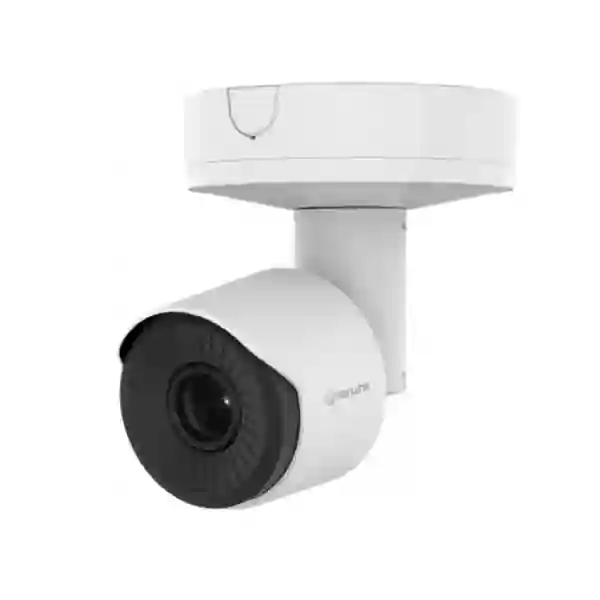
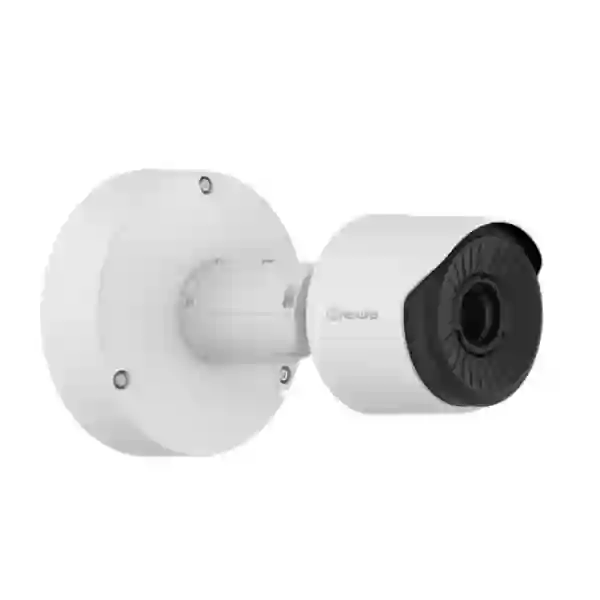
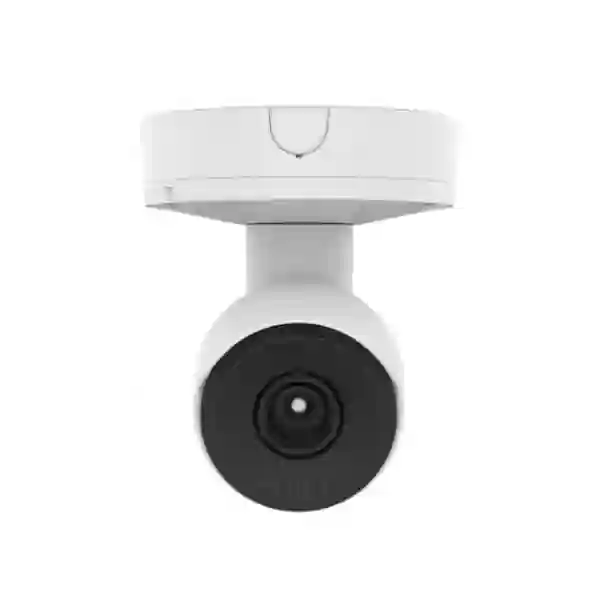
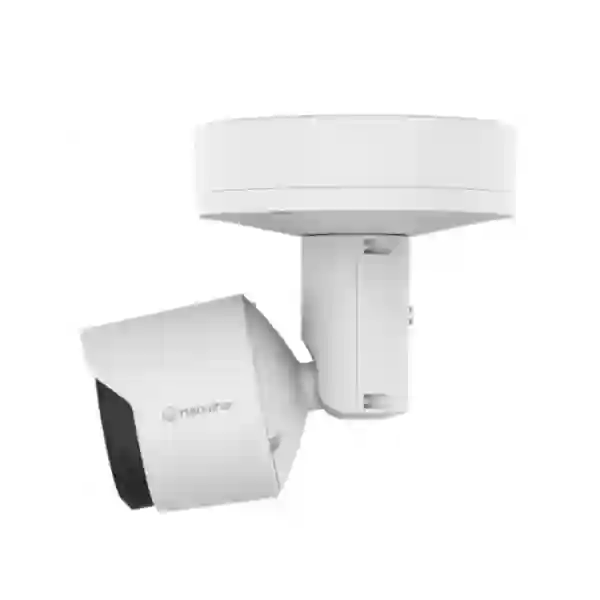
AI THERMAL NETWORK SECURITY CAMERA
Hanwha TNO-C3040T Thermal Camera
See the security event, not just the darkness. The Hanwha TNO-C3040T thermal camera is a fixed 13 mm, 30 fps AI surveillance model for monitored boundaries and restricted-area approaches. It supports heat-based imaging, on-camera person and vehicle classification, and defined alarm zones so an operator can focus on relevant movement.
For Tanzania projects, choose the viewing geometry, recording arrangement, electrical protection and response workflow together. Request a scope-based quotation after confirming the intended detection distance and site conditions; availability and pricing require separate confirmation.
Core features at a glance
Why this thermal camera belongs in a perimeter security plan
The Hanwha TNO-C3040T thermal camera is intended for security teams that need to notice people and vehicles where ordinary visible-light imaging becomes difficult. An industrial fence, a warehouse boundary, a utility compound or an unlit access corridor can present very different scenes between daytime and nighttime. This camera uses differences in emitted thermal energy rather than depending on visible lighting to produce a monitoring image. For a buyer planning a layered system, that means thermal detection can extend awareness of activity in dark areas without relying on floodlighting every part of a site.
The important purchasing question is not simply whether a thermal camera can see in darkness. It is whether its field of view, useful detection distance, analytics rules and integration methods suit the specific perimeter. The TNO-C3040T combines a 384 by 288 thermal sensor with a fixed 13 mm lens and edge-based person and vehicle classification. It can generate alerts from selected virtual lines and areas. It does not replace access control, patrol procedures or a detailed visible-light identification camera. The most effective design assigns it a defined detection role and specifies how operators will verify and respond to an event.
Quick product overview for technical buyers
The model is a fixed-lens network thermal bullet camera in Hanwha Vision’s QVGA AI thermal range. Its native detector is an uncooled microbolometer with 384 by 288 sensing elements and 17 micrometre pixel pitch. Hanwha lists thermal sensitivity of no more than 20 mK at 25 degrees Celsius and F1.0, an 8 to 14 micrometre spectral range, and a fixed athermalized 13 mm F1.0 lens. The specified horizontal angle is 28.5 degrees, with a vertical angle of 21.4 degrees. These numbers should be considered together, not as isolated measures of performance.
The model supports up to 30 frames per second with H.265, H.264 or MJPEG encoding. Hanwha lists 384 by 288 and 768 by 576 output resolutions; the larger stream dimensions do not turn the detector into a native 768 by 576 sensor. AI functions include classification of people and vehicles, object detection, virtual line crossing, direction, loitering, intrusion, enter and exit events. Buyers should confirm that the expected event rules and recording workflow are configured in the selected software. Physical deployment uses PoE or 12 VDC and a weather-resistant enclosure.
How thermal imaging changes night monitoring
A conventional colour network camera gathers reflected visible light. It may provide excellent contextual detail when lighting and optics are suitable, but it needs enough illumination or an additional infrared source to produce a useful night scene. Thermal imaging works differently: a warm person, a moving vehicle or another object may appear as a thermal contrast against its environment. This can make targets noticeable even in complete darkness. It can also help when a scene contains distracting shadows, headlights or uneven lighting that complicate visual observation.
Thermal contrast is not constant. Ambient temperature, humidity, rain intensity, fog density, background heat, distance and the subject’s surface temperature all influence the final image. A person standing against a sun-warmed surface may be less distinct than the same person against a cooler background. Thermal cameras do not literally see through solid walls or standard window glass. Heavy precipitation can reduce effective range. Use the technology to improve detection opportunities, not as a promise that every target will be visible in every atmosphere and at every distance.
The 13 mm fixed lens and what coverage means
The TNO-C3040T uses a 13 mm fixed, athermalized lens with a 28.5 degree horizontal field of view. A wider field helps cover a broader scene at a given distance, while a narrower field generally presents more pixels across distant objects. Site designers must balance those requirements. A camera pointed along a fence line may need to watch an extended corridor, whereas a camera watching a gate approach may need more coverage across the road and adjacent pedestrian movement. One installation angle cannot be assumed suitable for both.
The specified minimum object distance is 5 metres. For a near-field position, evaluate whether that limit affects the first part of the monitored area. Because focus is fixed, the installation should be planned around the defined operating envelope rather than an expectation of remote lens zoom or autofocus. The mechanical pan, tilt and rotation ranges in the specification relate to installation adjustment; they do not make this a motorized PTZ camera. For very long corridors, a different focal-length member of Hanwha’s QVGA thermal family may be more appropriate after an actual coverage calculation.
Understanding detection, recognition and identification
Thermal camera distance claims are meaningful only when their criteria are clear. Hanwha’s model specification gives Johnson-criteria planning figures for a person of approximately 454 metres for detection, 113 metres for recognition and 57 metres for identification. For a vehicle it lists approximately 1,159 metres, 290 metres and 145 metres respectively. These are model-specific theoretical reference figures based on target dimensions and pixel coverage; they should not be treated as guaranteed operational results across every site or weather condition.
Detection means the image may contain enough target information to notice that something is present. Recognition and identification are stricter visual thresholds, but even thermal identification criteria must not be confused with reading a person’s face, uniform details or a number plate. A security operator may learn that a human-shaped target crossed a protected strip without gaining an evidential facial image. During design, define what response is needed at each distance, test representative targets at their expected positions, and consider a paired visible-light camera where colour, clothing, registration plates or other identifying details are needed.
AI classification: person and vehicle
The on-camera AI engine can classify people and vehicles, helping rules distinguish relevant objects from some of the background movement that affects traditional motion-based alarms. At a warehouse boundary, for example, the site might care more about a person approaching an access fence than vegetation swaying behind it. At a service road, vehicle-related alerts may have a different priority from pedestrian movement. Classification gives the operator a useful starting point for event filtering and video review instead of treating every changed pixel as an equivalent incident.
Classification is not infallible. Very small distant targets, overlapping subjects, unusual postures, occlusion, image conditions and thermal background changes can still create missed detections or unexpected events. The analytic outcome depends on target size in pixels and on the camera’s mounting and scene design. Before acceptance, test real people, vehicles and expected nuisance sources in day and night conditions. Decide which events deserve immediate notification and which should merely be recorded for review. Good alert quality comes from useful virtual areas and sensible operational procedures, not from an AI checkbox alone.
Virtual lines, intrusion zones and loitering rules
A virtual line is useful when the site needs a clearly defined boundary. For example, a line drawn across a restricted approach can trigger on crossing and, where configured, direction. A virtual intrusion area can define the section of ground where entry is not expected; enter and exit rules help differentiate a subject moving into or out of a zone. Loitering rules can be used where a person remaining near a sensitive location matters more than a routine brief movement. The TNO-C3040T supports these AI-based event types, so buyers can design rules around actual operating requirements.
A practical design begins with an annotated site plan and a description of normal activity. Identify authorised workers, scheduled vehicles, loading zones and places where occasional movement is acceptable. Then place virtual lines and areas away from unavoidable background motion and uncertain edges. Test at different distances and evaluate the alerts in the chosen video management system. If a site has frequent legitimate movement, use schedules, guard verification or differentiated priorities instead of making every event critical. The objective is an actionable alarm stream that the response team can sustain over time.
Perimeter security around industrial and commercial facilities
Large premises often have distinct risk zones: a public entrance, an active loading yard, a fence line, an outdoor materials store and an area with restricted maintenance access. A fixed thermal camera may be valuable at locations where meaningful early detection is more important than colour imagery. The TNO-C3040T can monitor a selected sector and supply analytics events for follow-up. It is especially relevant where permanent visible illumination is undesirable, impractical or insufficient for the intended detection task.
However, a single camera should not be used as a blanket promise of complete perimeter security. Buildings, equipment, vegetation, terrain changes and parked vehicles create blind spots. Multiple cameras may be required for overlap, and thermal imagery may need to be combined with conventional IP video, suitable access control and a documented alarm response. The 13 mm lens determines the field of view, so coverage drawings should show the planned mounting height, distance to each target zone and the minimum acceptable detection standard. Evaluate the system as a complete security process rather than as a standalone device.
Utility compounds, energy sites and infrastructure
An electricity compound, communications site, water-treatment perimeter or equipment yard can require monitoring in darkness without adding intrusive lighting. A thermal camera can support awareness of approaching people and vehicles, particularly at controlled outer boundaries. The fixed 13 mm field can suit some medium-range sectors, subject to site dimensions and the expected target pixel size. The camera’s protective housing and network interfaces are relevant where the installation is outdoors and monitoring data must be transported to an equipment room or central security desk.
Thermal surveillance must be distinguished from calibrated temperature measurement. The TNO-C3040T is primarily a thermal security camera, not a substitute for a verified radiometric instrument used to measure equipment surface temperature or to certify a fire-alarm function. The published feature set includes region-of-interest condition monitoring, but no assumption should be made that this provides accurate absolute temperature readings. If the project requires detecting equipment overheating, validating a temperature threshold or meeting a specialist safety standard, specify an appropriately documented radiometric or safety system separately.
Warehouse yards, logistics routes and overnight operations
Logistics facilities can experience a mix of authorised truck movements, pedestrian activity, temporary obstructions and long periods of quiet. Thermal imaging can help a guard identify the arrival of an unexpected object near a fence or outside an authorised route after dark. AI person and vehicle categories offer a way to distinguish the type of moving target. Virtual line and area events may be assigned to different response procedures for boundary intrusion, loitering near stored assets and unplanned vehicle movements.
The layout must respect the reality of a working yard. Parked trailers can hide pedestrians, vehicle engines create strong heat sources, and frequent lawful traffic can generate too many alerts if the monitored zone is broad. Position the camera so that it observes predictable paths with clear lines of sight. Schedule analytics where schedules make operational sense, but avoid silencing a critical access route solely to reduce notifications. For investigations, an integrated visible camera can provide context such as vehicle colour or plate information that the thermal sensor is not intended to capture.
Tanzania deployment: climate and environmental planning
For a Tanzania project, assess the actual site conditions instead of relying on a generic outdoor-camera label. Coastal exposure, airborne dust, intense rain, humidity and solar heating can each affect hardware placement or image performance. Hanwha specifies IP66 and IP67 ingress protection, IK10 impact resistance, NEMA 4X enclosure characteristics and an operating temperature range from minus 40 to plus 60 degrees Celsius. Those specifications support evaluation for demanding sites, but they do not mean that an installation is automatically immune to flooding, corrosion, surge damage or poor mounting.
Inspect the mounting surface, cable entry, drainage path and exposure to sustained sun or salt-laden air. Follow the manufacturer’s mounting and sealing instructions and select suitable brackets, conduits and network protection for the actual location. Consider how warm surfaces and heavy precipitation affect thermal contrast during expected alert times. Request a demonstration with the proposed height and viewing direction where a project has an unusually long range, dense vegetation or heavy industrial background heat. Local deployment suitability must be established for the site; the camera’s rating is a starting point, not a substitute for a survey.
Network design and video transport
The camera uses a metal-shielded RJ-45 interface supporting 10, 100 and 1000BASE-T network connectivity. Video can be encoded with H.265, H.264 or MJPEG, and the published streaming capability includes multiple profiles. These options allow integrators to choose between efficient continuous recording, compatible viewing streams and event review settings. The effective load will depend on configured resolution, frame rate, scene activity, codec, quality and number of concurrent clients. No universal bandwidth figure can be promised without a defined encoding profile.
Place the camera on an appropriate security network, preferably isolated from ordinary guest and office devices by suitable segmentation and access control. Confirm switch port capacity, cable length, network resilience and how video is transported to the recorder or management platform. A remote compound may depend on a wireless or backhaul link; in that case investigate real upstream capacity, latency, packet loss and downtime during poor weather or power events. Recording during link loss, event retrieval and administrative access deserve explicit tests before project sign-off.
Video management system and recorder compatibility
Hanwha lists ONVIF Profiles S, G, T and M as well as its SUNAPI interface and Open Platform support. This makes the camera a candidate for integration with supported network video recorders and video management systems. In practical terms, an operator may want live viewing, scheduled or continuous recording, event-driven playback, people and vehicle alert handling and coordinated response through another camera. Those are system-level workflows, and the selected recorder or software must support the particular functionality needed.
Do not assume that a generic ONVIF connection transfers every analytic event, metadata field or advanced setting automatically. Compatibility varies by VMS version, device firmware, licensing and integration method. Before ordering, confirm the exact device profile, streaming codec, accepted resolution and frame rate, event mapping, storage behaviour and retention requirements. Test authentication and time synchronisation too. If a project uses an existing Hanwha ecosystem, document how its specific recorder or management software will handle AI events and what software or licences, if any, must be added to achieve the planned workflow.
Edge storage and recording resilience
The published specification provides one microSD, SDHC or SDXC card slot with capacity up to 1 TB. Edge storage can be useful where a central connection is interrupted or where the security team wants local event evidence, subject to configuration and storage media suitability. The camera also lists NAS recording as an event action. Edge recording should be designed with a clear retention policy, not treated as a permanent replacement for a centrally managed evidence store. Recording duration will depend on compression, quality settings, scene activity, event frequency and the card itself.
Choose storage media suited to repeated video writes and confirm support for the selected capacity before installation. Configure the card, test actual event capture and confirm that important video remains accessible through the approved workflow. Consider how recorded material will be collected if the camera is damaged, stolen or offline. For critical areas, plan redundant recording where justified. Include data retention, access logging, clock accuracy and deletion procedures in operating instructions. The maximum supported card capacity is an interface specification, not a guarantee of a particular number of recording days.
Power requirements and site electrical design
The TNO-C3040T supports IEEE 802.3af Class 3 Power over Ethernet or 12 VDC input. Hanwha lists maximum consumption of 10.8 W on PoE and 9.4 W on 12 VDC. A suitable PoE switch can simplify cabling by supplying data and electrical power through a single network run, but the power budget must account for the whole switch and every connected device. The design also needs cable quality, appropriate length, grounding and protective practice, rather than assuming that an ordinary indoor cable run is sufficient outdoors.
At an exposed perimeter, determine where power comes from and what happens during an outage. A UPS for network switches, recorder and communications may support continuity, but its required capacity must be calculated from real connected loads and the expected runtime. Plan surge and lightning risk mitigation to local site requirements with qualified electrical expertise. A metal-shielded connector contributes to the product’s rugged design but does not replace a complete protection scheme. Commission both normal power and restart scenarios, confirming that event rules, storage and remote connectivity recover as intended.
Cybersecurity controls and administration
The device specification includes secure boot, signed and encrypted firmware, HTTPS and SRTP support, IEEE 802.1X network authentication, IP-based access control, logs and encrypted storage functions. The product documentation also describes a secure element with FIPS 140-3 Level 3 and Common Criteria EAL6+ security credentials. These are useful technical capabilities for projects that treat video systems as part of their wider IT environment. They do not remove the need for correct administrator practices or prove compliance with every project’s security policy.
At handover, change default access arrangements, provision named accounts where supported, set strong credentials, disable unneeded services and confirm firmware status using the official manufacturer support process. Limit management access to authorised systems, use network segmentation, maintain secure time sources and protect backup configuration files. Document how firmware is reviewed, approved and updated. Test audit events and recovery procedures in the actual VMS. Where a customer has procurement or regulatory requirements, assess them separately; do not infer local Tanzanian certification or a complete end-to-end security guarantee from the component’s published features.
Outdoor mounting, housing and maintenance
The camera has a white aluminium enclosure, with manufacturer dimensions of approximately 93.8 mm in diameter by 233.5 mm in length and a product weight of about 1.73 kg. Its physical form is suited to fixed outdoor viewing with the appropriate mounting arrangement. The published mechanical pan, tilt and rotation adjustment ranges assist installers during alignment. Plan the position so that routine inspections can be conducted without unsafe access and so that the selected bracket and surface can withstand environmental and mechanical loads.
Before mounting, identify where water may collect, whether the cable entry faces weather, and whether the field of view will later be blocked by vegetation, vehicles or new construction. Clean and inspect the relevant external surfaces in accordance with manufacturer instructions; never assume chemical cleaning agents are suitable for a thermal window. Include periodic checks of seals, fasteners, image condition, clock accuracy, storage health and event delivery. If an installation will be exposed to vandalism, assess mounting height and surrounding physical security even though the housing has an IK10 impact rating.
Thermal sensitivity, palettes and operator interpretation
Hanwha specifies NETD of no more than 20 mK at 25 degrees Celsius and F1.0. NETD is a measure of how small a thermal difference a sensor can distinguish under defined conditions; a lower value generally indicates greater sensitivity to subtle contrast. It should not be interpreted as temperature-measurement accuracy. In a live scene the apparent image depends on processing, contrast settings, lens, atmospheric conditions and the target. Thermal resolution and scene geometry also matter. The number alone cannot establish a guaranteed detection distance.
The camera provides several display palettes, including white-hot, black-hot and other colourised views. A palette changes how thermal information is presented to the operator; it does not convert the image into a true visible-light colour photograph or add new sensor detail. Compare palettes during setup so guards can read the intended scene quickly. Standardise the chosen operational view and provide example clips showing people, vehicles, ordinary equipment heat and environmental changes. Train operators to confirm an event before escalation and to understand why one warm object may appear very different as weather or background temperatures change.
What the camera cannot replace
A dedicated thermal unit should be evaluated for its correct role. The TNO-C3040T is not a conventional full-colour identification camera and is not a motorised patrol PTZ device. The native detector is QVGA, even though a larger output frame is available. A distant detection event does not prove that a person’s face, a registration number or fine clothing detail can be established. Nor does a thermal image allow vision through an opaque building surface. These limitations matter when security operations require evidential identification or detailed verification of an incident.
It is also not safe to treat an AI thermal surveillance unit as a life-safety fire detector or a calibrated industrial thermometer without a separate documented suitability and approval assessment. If a facility must monitor electrical overheating, flame conditions, machinery temperature or a legally specified alarm process, a radiometric or purpose-built system may be required. Buyers should compare total system architecture rather than only device brochures. In many projects the correct answer is complementary fixed thermal detection, visible-light verification, appropriate recording and a trained response process.
How to compare the TNO-C3040T with other lenses
Hanwha’s QVGA AI thermal family includes alternative focal lengths for different monitoring distances. The TNO-C3040T specifically combines the 13 mm option with up to 30 fps. That combination may be suitable where a broader sector and smooth moving-target video are needed. A longer focal length can offer more target pixels at a distance but reduces the viewed area. It may be preferable for a narrow, distant boundary, whereas a 13 mm model could provide a more practical scene at a closer gate approach.
The choice should follow a coverage survey rather than an assumption that a longer lens is automatically better. Compare the horizontal coverage at the target line, the nearest location that must be monitored, obstructions, expected people or vehicle sizes and the response that each analytic event should trigger. Also distinguish the 30 fps model from the 8 fps TNO-C3042T; the similar model codes are not interchangeable when the project specifies frame rate, procurement conditions or export documentation. Confirm the exact part before preparing a purchase order.
Questions to answer during the site survey
A useful survey records camera positions, target corridors, nearest and farthest required zones, lighting, obstructions, ambient heat sources and network routes. Define whether the goal is a person approaching a fence, a vehicle crossing an access track, loitering near equipment or a combination of events. Set performance expectations separately for detection, operator assessment and forensic identification. Include representative targets and realistic movement directions. If an event must be delivered to a remote control room, document how that communication path will remain usable in ordinary site failures.
The survey should also record mounting height, bracket suitability, cable penetration, lightning exposure, UPS provision, Wi-Fi or backhaul dependence where relevant, local maintenance access and emergency response. Have the prospective operator explain what should happen when an alert arrives and how authorised movements will be handled. A practical acceptance plan might include night walking tests, vehicle movement at agreed distances, false-alarm observations and verification of recordings after link interruption. The result should be a measurable system scope rather than a vague assurance that thermal cameras improve security.
Installation and commissioning workflow
Start with a site design that identifies the required detection corridor and equipment location. Verify the camera model, approved power supply and mounting hardware. Mount the device according to manufacturer guidance, apply appropriate weatherproof cable practices and connect the camera to a prepared network segment. Set address management, secure administrative accounts, time synchronisation and the required recording profile. Confirm that the viewed area includes the actual target ground rather than only a visually convenient portion of the scene.
Next establish the intended virtual lines, intrusion areas and event schedules. Connect the device to the chosen VMS or recorder and test its supported analytic event integration. Compare daytime and night scenes and validate likely nuisance conditions such as moving vegetation, warm vehicles and routine staff activity. Confirm event notifications, recording playback, local-storage behaviour, restart after power loss and access by authorised operators. Document the settings, firmware version, installation photos, coverage drawing and test results. A completed commissioning report should explain any limitation still present and how the customer plans to manage it.
Maintenance and lifecycle management
Security performance can decline without anyone noticing if the viewing scene changes or a network problem prevents alerts from reaching the control room. Set a maintenance schedule based on site criticality. Review image framing, check for new obstructions, inspect weatherproofing, confirm fasteners and observe whether alerts are actually reaching the monitoring workflow. Check free storage capacity and relevant recorder health messages. Where there is severe dust, salt exposure or ongoing construction, the appropriate inspection interval may be shorter than at a sheltered site.
Software and security maintenance deserve equal attention. Keep an inventory of each installed device and its exact model, firmware, network address and configuration owner. Review manufacturer notices and release information through an authorised maintenance process; test updates before rolling them into sensitive operations where practical. Revalidate analytics after material changes in scene layout, site activity or camera firmware. If a site introduces a new gate, fence, truck route or operating schedule, revisit the original coverage and alarm design. A thermal camera remains useful when it is managed as an operational system, not forgotten after installation.
Procurement and total project cost considerations
The equipment price is only one part of the project cost. A proper quote may need camera quantity, mounting equipment, protected outdoor cabling, power supplies or PoE switches, UPS capacity, network links, recording storage, VMS integration, licences where applicable, installation labour, testing and ongoing maintenance. For a remote location, communications and resilient power may have a greater effect on project success than minor differences between two camera bodies. Request an itemised scope so that system exclusions are visible.
Verify regional availability and the exact model configuration before committing to a delivery schedule. The TNO-C3040T is the 30 fps variant, which can have different procurement or export considerations from lower-frame-rate models. Do not substitute another model silently in a quote. This listing does not assert a local Tanzania price, in-stock status, warranty term or lead time. Ask for written confirmation of those commercial details and for the proposed system’s compatibility with existing recording infrastructure. A quote is most useful when it explains what the supplied camera will cover and what additional equipment is required.
Practical acceptance tests before operational handover
Acceptance testing should reflect the buyer’s stated security objective. For a restricted pedestrian corridor, have a person cross the planned virtual boundary at several representative distances, moving both toward and across the field. For a vehicle area, test the intended sizes, directions and traffic patterns. Review the actual alarm event at the receiving software, not only the visible bounding box on the camera. Measure whether the operator receives enough information to make a reasonable response decision, and record exceptions.
Repeat important tests at night and under differing ordinary environmental conditions when possible. Check the effect of parked objects, warm machinery, sun-heated walls, windblown material and authorised activity. Verify that a loss of network connectivity produces the expected behaviour and that recovered recordings can be inspected. Review cybersecurity handover, credential ownership and the ability to restore configuration after replacement. A sign-off record should identify successful tests, limitations, training delivered and any follow-up work. Performance observations are valid for the tested site conditions and should not be marketed as universal guarantees.
Privacy, governance and responsible operation
Thermal imaging remains part of a surveillance system and should be managed with appropriate governance. Define the areas that legitimately need monitoring, who can view images, how evidence is stored and the operational reasons for collecting it. A facility may be able to avoid intrusive lighting or some identifiable visual detail by using thermal detection in selected zones, but that does not mean privacy requirements disappear. Assess local laws and customer policies separately, especially when public areas, employees or visitors may be recorded.
Use available privacy masking and access control functions where they help implement the site’s approved policy. Decide how long recordings are retained, who can export footage, what access events are logged and how suspected incidents are escalated. The manufacturer lists up to six rectangular privacy-mask zones. Check their behaviour in the actual viewing and export workflow before relying on them. Inform operators that AI categories are not statements about a person’s identity or intention. Keep a human review step for consequential security decisions.
Verified technical specifications
The following figures summarise the manufacturer-published specification for this exact model. Values may change with product revisions. Detection distances are reference criteria rather than guaranteed outcomes at every site.
| Manufacturer / model | Hanwha Vision TNO-C3040T |
|---|---|
| Product type | Fixed network thermal bullet camera with AI analytics |
| Thermal sensor | Uncooled microbolometer, 384 × 288 native |
| Thermal pixel pitch | 17 μm |
| Video output sizes | 384 × 288; 768 × 576 |
| Thermal sensitivity | NETD ≤20 mK at 25°C, F1.0 |
| Lens / focal length | Fixed, athermalized 13 mm F1.0 |
| Field of view | 28.5° horizontal; 21.4° vertical; 35.5° diagonal |
| Minimum object distance | 5 m |
| Maximum frame rate | 30 fps (H.265/H.264/MJPEG) |
| AI object types | Person, vehicle |
| Analytics examples | Line crossing, direction, intrusion, loitering, enter/exit |
| Network / interoperability | RJ-45 10/100/1000BASE-T; ONVIF S/G/T/M; SUNAPI |
| Local storage | One microSD/SDHC/SDXC slot, up to 1 TB |
| Power | 802.3af Class 3 PoE or 12 VDC |
| Power consumption | PoE max. 10.8 W; 12 VDC max. 9.4 W |
| Protection | IP66/IP67, IK10, NEMA 4X; other specified environmental standards |
| Operating range | −40°C to +60°C, 0–95% RH non-condensing |
| Dimensions / weight | Ø93.8 × 233.5 mm; about 1.73 kg |
| Published DRI: person | Detect 454 m; recognise 113 m; identify 57 m (Johnson criteria) |
| Published DRI: vehicle | Detect 1,159 m; recognise 290 m; identify 145 m (Johnson criteria) |
Frequently asked questions about the TNO-C3040T
Is the TNO-C3040T a thermal or an ordinary CCTV camera?
It is an IP thermal surveillance camera. Its uncooled microbolometer senses thermal radiation rather than producing an ordinary reflected-light colour scene. It is useful for detecting people and vehicles in dark areas, but it should be paired with a visible-light camera when facial or plate detail is important.
What is the native thermal resolution?
The detector is 384 by 288, with 17 micrometre pixels. The manufacturer also lists a 768 by 576 video output mode. That larger output format should not be confused with a native sensor containing four times as many thermal measurement points.
Does it work without lights at night?
Thermal imaging does not need visible scene illumination to form a thermal image, so it can support monitoring in darkness. The range and image contrast still depend on environmental conditions, target temperatures, distance and obstructions. Field testing is important.
Can it identify a person’s face or read a vehicle plate?
It is not designed as a facial-detail or number-plate camera. The AI engine classifies object types, including person and vehicle. Where identity or fine visible detail is required, combine thermal detection with an appropriately specified optical camera and recording system.
What lens does this exact model use?
The TNO-C3040T has a fixed 13 mm athermalized F1.0 lens, with a published horizontal field of view of 28.5 degrees. It is not a remotely zooming optical lens. Coverage should be established by the target dimensions and mounting geometry.
How fast is the video?
The published maximum frame rate is 30 fps with H.265, H.264 and MJPEG encoding. This is the TNO-C3040T variant; the closely named TNO-C3042T is an 8 fps model. Check the exact code when ordering.
Does it support people and vehicle analytics?
Yes. The manufacturer lists AI object detection and person/vehicle classification, together with line-crossing, direction, intrusion, enter, exit and loitering event types. Actual event delivery depends on camera configuration and integration with the monitoring software.
Can it be powered by PoE?
Yes. The specification lists IEEE 802.3af Class 3 PoE or 12 VDC. The maximum published consumption is 10.8 W on PoE. Confirm switch budget, cable design, backup power and any additional protections for the site.
Is it suitable for outdoor conditions?
The published enclosure specification includes IP66, IP67, IK10 and NEMA 4X characteristics and a rated operating range from minus 40 to plus 60 degrees Celsius. Professional mounting, sealing, surge planning and maintenance are still necessary in harsh locations.
Does the camera have a memory card slot?
Yes. The manufacturer lists one microSD, SDHC or SDXC slot supporting up to 1 TB. The actual recording duration depends on stream settings, scene complexity, recording schedules and media choice. Storage and recovery should be tested during commissioning.
Is this a temperature-measuring or fire-alarm camera?
It is primarily designed for thermal surveillance and person/vehicle detection. Do not assume calibrated absolute-temperature measurement or certified fire detection from the product name. Check a separate radiometric or life-safety product specification where those functions are required.
Can the camera connect to an existing VMS or NVR?
It supports common network-video methods, including ONVIF Profiles S, G, T and M, as well as Hanwha interfaces. Verify exact recorder firmware, codec acceptance, event metadata support, storage behaviour and any VMS licensing before treating the integration as fully compatible.
How far away can it detect someone?
Hanwha lists a theoretical person-detection distance of about 454 metres under Johnson criteria and different, shorter figures for recognition and identification. These are reference values, not a promise for a Tanzania site. Realistic performance requires scene-specific testing.
How do I obtain a Tanzania quotation?
Request a project-specific quotation stating quantity, exact model code, monitoring distance, site environment, recorder or VMS, power arrangements and required installation services. Pricing, stock, delivery, warranty and site support should be confirmed in writing rather than assumed from this information page.
Request a TNO-C3040T project quotation
Planning thermal perimeter monitoring in Tanzania? Share the site type, camera quantity, intended target distances, preferred recording platform, network conditions and power arrangements. A suitable proposal should confirm the exact camera model, coverage assumptions, equipment scope and integration requirements before any commercial commitment.
Request written confirmation of availability, pricing, warranty, lead time and installation scope. The TNO-C3040T is the 30 fps version with a 13 mm fixed lens; specify the complete model code on the enquiry.




Reviews
There are no reviews yet.