
Hanwha Vision • Industrial AI Surveillance • Tanzania
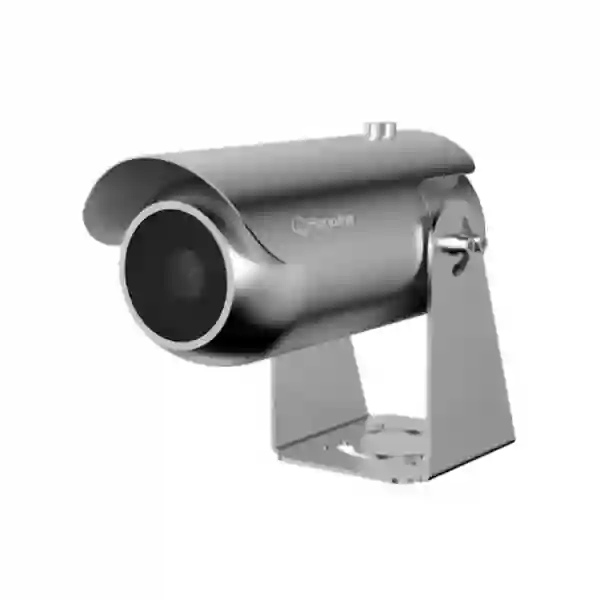
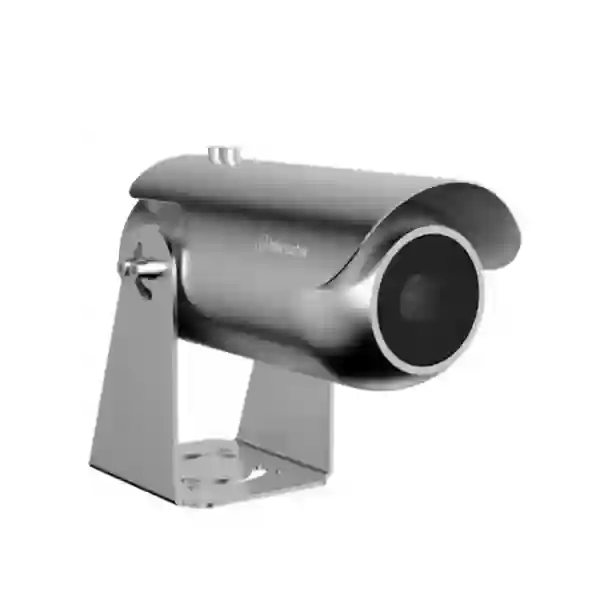
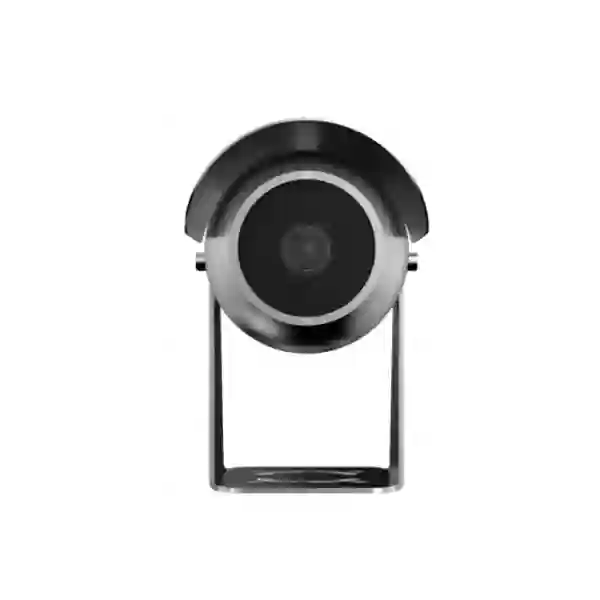
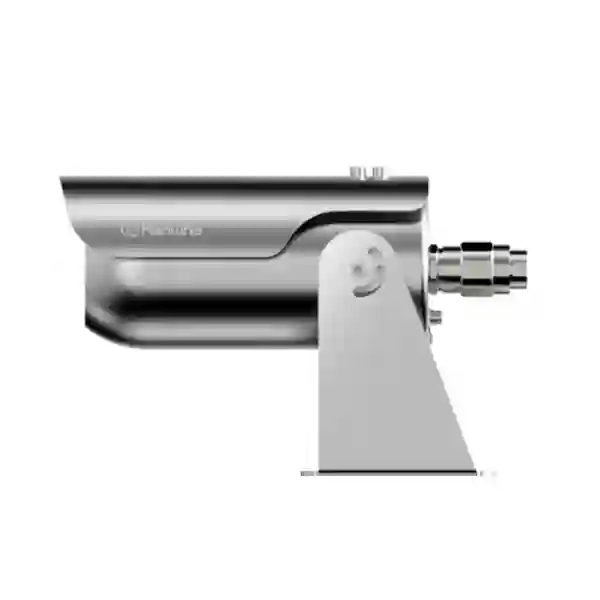
Hanwha TNO-C8083EG Explosion-Proof 5MP AI Camera
Specify the Hanwha TNO-C8083EG explosion-proof camera when a classified industrial location requires a carefully engineered, fixed-view IP surveillance solution with high-resolution video and AI-based people and vehicle analytics. The next step is to match the camera’s exact certification, installation instructions and optical coverage to your site’s hazardous-area assessment—not simply to order by megapixels.
5MP image • 3.2–10.2mm motorised varifocal lens • IECEx / ATEX • IP66 / IK10 • IEEE 802.3af PoE
Key specifications at a glance
| Brand / exact model | Hanwha Vision TNO-C8083EG |
|---|---|
| Device type | Compact fixed explosion-protected AI IP camera; visible-light imaging |
| Imaging | 1/2.8-inch CMOS; up to 2592 × 1944 (5MP) |
| Video | H.265 / H.264 / MJPEG; up to 30fps with stated codec settings |
| Lens | 3.2–10.2mm motorised varifocal; approx. 95°–29° horizontal FoV |
| AI functions | Person / vehicle classification; line and area rules; counting and heatmap functions |
| Protection | Manufacturer lists IECEx, ATEX, IP66 and IK10; verify certificate for installation |
| Housing | STS316L stainless steel; about Ø110.5 × 316.2mm and 4.77kg |
| Power | PoE IEEE 802.3af Class 3; max. 9.5W |
| Operating environment | −30°C to +55°C, 0–95% RH non-condensing |
| Connectivity | Ethernet 10/100BASE-T; ONVIF S/T/M; SUNAPI |
| Procurement | Price, local stock, delivery and warranty subject to quotation |
What is the Hanwha TNO-C8083EG?
The Hanwha TNO-C8083EG explosion-proof camera is a compact fixed IP surveillance camera created for locations where flammable gases, vapours or combustible dust may make ordinary electronic equipment unsuitable. It combines a 5-megapixel colour imaging system, motorised varifocal lens and on-camera AI analytics with an explosion-protected stainless-steel enclosure. For a Tanzanian industrial buyer, the first question is not simply whether the image is sharp. It is whether the exact equipment marking, installation method and operating characteristics fit a formally assessed hazardous location. Ask for the relevant certification documents and site classification before specifying equipment.
This is a visible-light camera, not a thermal imager or a fire, gas or temperature detector. It can provide visual context and configurable security events; it does not replace gas sensing, fire detection, process safety systems, barriers or human emergency procedures. Its AI functions classify people and vehicles in video and help operators locate relevant events. Those capabilities are valuable for perimeter observation, controlled access and industrial movement monitoring, but they are not proof that every incident will be detected. Frame the deployment around observable risks and measurable viewing objectives rather than claims of automatic site safety.
Who should consider this model?
Site security managers, engineering consultants, plant operators and integrators may consider this model when a camera must be located in or close to a classified industrial area. Possible projects include refineries, fuel processing and storage interfaces, chemical production, pharmaceutical processing areas, selected mining-surface installations and power-related facilities where a hazardous-area assessment calls for appropriately marked equipment. The camera’s compact construction may be useful when conventional large explosion-protected housings present mounting or access difficulties. Every example remains conditional: the presence of an industrial activity alone does not establish a zone or prove that this camera is permitted at a particular point.
A procurement team should involve at least the site’s hazardous-area specialist, electrical installer, security designer and network administrator. The specialist confirms the gas or dust environment and acceptable equipment category; the designer confirms what must appear in the footage; the installer checks mechanical support, glands and certified wiring arrangements; the IT team approves the streaming and cybersecurity design. If these decisions are postponed until the camera arrives, the project may encounter costly redesign. A well-scoped enquiry should therefore include a zone drawing, approximate mounting height, viewing distance, lighting description and preferred recording platform.
Explosion protection: read the marking, not only the headline
Hanwha Vision lists IECEx and ATEX explosion-protection credentials for the TNO-C8083EG, alongside other regional certifications. The manufacturer’s published classification includes gas and dust protection markings. These are much more specific than a broad label such as ‘industrial CCTV’ or ‘explosion-proof’. They distinguish types of atmosphere, protection method, equipment protection level and permissible temperature characteristics. For design approval, the project engineer should examine the certificate and current model documentation, including any special conditions of use, rather than infer suitability from the product title or an online summary.
Gas group, dust group and temperature class can determine whether equipment is appropriate even when the zone appears to match. A site may have several differently classified areas within one plant, so the same camera need not be suitable at every location. Ambient temperature, surrounding process equipment and possible dust accumulation also matter. Do not interpret the product’s stainless-steel construction or its IP66 weather rating as an alternative to explosion-protection certification. Different standards address different failure modes, and all applicable requirements must be satisfied together.
The supplied and current certificates should be reviewed as a matched set with the exact TNO-C8083EG model designation, relevant enclosure configuration and installation instructions. Technical documents for similar models such as TNO-C8083E or TNO-C8083ER must not be treated as interchangeable without manufacturer confirmation. Project documentation should record the exact model ordered, certificate reference, permissible accessories, gland arrangement and selected mounting location. This creates a defensible basis for site acceptance, later maintenance and future changes to equipment or hazardous-area classification.
How to interpret gas and dust zones
Industrial hazardous-area classifications describe how likely a potentially explosive atmosphere is to occur and how long it may persist. For gas or vapour, Zone 0 denotes frequent or sustained presence, Zone 1 occasional presence under normal operation, and Zone 2 infrequent presence for short periods. Dust areas use Zones 20, 21 and 22 in a broadly parallel way. A Gb marking is commonly associated with equipment for suitably assessed Zone 1 gas applications and a Db marking with suitably assessed Zone 21 dust applications. These are general relationships, not a site-specific authorisation for this product.
Only competent personnel should decide whether a location, gas group and temperature requirement match the certificates. A terminal, bund, pump gallery and adjacent road can occupy different classifications even when they appear physically close. Outdoor airflow and distance from potential releases can alter a classification; conversely, enclosed process spaces may introduce additional constraints. Request the site’s approved classification drawings and engineering sign-off. Never select a hazardous-area camera solely by guessing that any oil, gas or chemical premises must be Zone 1, or that a lower-numbered zone automatically covers all other deployment considerations.
Image resolution and optical coverage
The camera uses a 1/2.8-inch CMOS sensor with a maximum 2592 × 1944 image, giving a useful balance between scene context and detail for a fixed security viewpoint. Hanwha Vision specifies up to 30 frames per second in H.265 or H.264 under the stated regional video settings. The specification for MJPEG differs: at the full 5MP resolution its maximum is lower. This matters when a legacy recorder or viewing application requests MJPEG instead of the modern video codecs. Always review the exact resolution, frame-rate and compression combination that the chosen recording system can ingest.
The 3.2–10.2mm motorised varifocal lens offers approximately 3.2× optical adjustment. Its published horizontal field of view extends from around 95 degrees at the wide end to 29 degrees at the tele end. That range helps an installer choose between a broader overview and a tighter view of a defined target area without replacing the lens. It is not an automatically tracking PTZ camera. The bracket position is fixed, and lens adjustment cannot compensate for a camera that is mounted behind an obstruction or pointed at the wrong traffic path.
Use the wide setting where the requirement is situational awareness across a loading interface, approach road or process perimeter. Use the narrower setting when a smaller entry, gate or transfer point needs more pixels per metre. A wide scene can show more activity but make a distant person appear small; a narrow scene can preserve detail but leave blind spots. Ideally the designer should mark real viewing targets on a site plan and record the proposed mounting angle, target distance, focal-length setting and expected viewing conditions before installing.
Translate DORI figures into a usable design
Hanwha provides EN 62676-4 DORI reference distances for the model. In the published figures, detection at the wide setting is approximately 42.7 metres and at the tele setting approximately 186.9 metres; identification reference distances are much shorter, approximately 4.3 and 18.7 metres respectively. These figures describe standardised pixel-density thresholds under assumed conditions. They do not promise that a particular subject will be identified at those ranges in rain, glare, poor illumination or a crowded scene. They are planning indicators rather than standalone proof of forensic performance.
A practical CCTV specification should state whether the objective is to detect the presence of an object, observe its behaviour, recognise a known subject or capture detail suitable for an identification task. The lens, angle, image sampling and lighting must then support that objective. Put the chosen view through an on-site acceptance test, preferably with representative subjects and vehicles at actual operating distances. If the recording will support investigations, assess the exported video too: what operators see in a live preview may differ from what the recorder retains after compression or bandwidth adaptation.
AI person and vehicle classification
The TNO-C8083EG uses onboard AI to distinguish people and vehicles from other motion sources. The manufacturer lists vehicle-type attributes including car, bus, truck, motorcycle and bicycle, together with DetectionShot thumbnails. This can help operators triage footage around plant roads, material-handling routes and restricted access areas. AI classification is more purposeful than a motion alarm that triggers for every moving object, yet it remains dependent on visibility, scene composition, camera position and configuration. Treat outputs as decision-support signals, not conclusive evidence of a specific incident.
The AI event options include object detection, virtual-line crossing with direction, and virtual-area behaviours such as loitering, intrusion, entry and exit. These allow site teams to define rules for an asset boundary or traffic corridor. For example, an intrusion rule might notify the control room when a person enters a prohibited service walkway. A line-crossing rule might highlight vehicles moving against the intended flow near a gate. Configure each rule to reflect an actual operational process; an excessive number of broad events can overwhelm operators and reduce the usefulness of legitimate alerts.
Hanwha also describes AI-based people counting, queue management, heatmaps and vehicle counting. Such analytics may help operational analysis where the scene and camera angle are appropriate. They do not automatically produce a complete workforce attendance record, a certified traffic count or a safety compliance report. Validate the counting line or area against real activity and check privacy requirements for monitoring staff or visitors. For high-consequence actions, use operator confirmation or another approved control rather than allowing a camera event alone to initiate a process intervention.
Design alerts that security teams can act on
Define every alert in plain operational language before choosing the menu option. ‘Person enters pump access zone after controlled access is closed’ is easier to test than ‘smart intrusion’. Document the watched area, authorised movements, event hours, expected operator response and escalation owner. Create a baseline of normal activity that includes maintenance, cleaning, shift change and scheduled vehicle movements. With this context, camera analytics can reduce search effort and support timely review without pretending to know why a person or vehicle was present.
A commissioning plan should include both expected events and reasonable nuisance triggers. Test a person crossing the defined line, a permitted vehicle passing nearby, an operator standing at the boundary and a scene with rain or moving vegetation where relevant. Record whether each event was generated and whether the receiving VMS displayed it correctly. Reassess settings after major changes to lighting, nearby equipment or the view. Keep a documented fallback for times when poor visibility or network outages prevent reliable video assessment.
Image quality in challenging industrial light
Industrial sites contain intense contrasts: sunlit concrete beyond a shaded gantry, reflective metal next to dark pipelines, and bright vehicle headlights behind workers. Hanwha specifies 120dB wide dynamic range, together with backlight compensation and image-processing features. These functions help manage contrast but cannot recover details that were never captured. Camera direction, the sun’s path and temporary work lights should still be considered before mounting. A test image at one time of day cannot prove performance across every shift or season.
Automatic day/night switching with an infrared-cut filter enables different imaging behaviour as illumination changes. Hanwha’s published minimum illumination values are 0.07 lux for colour and 0.007 lux for black and white under specified test conditions. These numbers should not be read as a guarantee of recognisable footage in every dark location. The exact EG manufacturer’s product specification consulted does not establish a built-in infrared illuminator, so a proposal must not assume one is supplied. Confirm available light and any separately certified lighting strategy.
Dust, condensation, vibration, water droplets and dirty windows can also reduce useful image detail. At a processing facility, schedule lens-window inspection according to contamination risk and access restrictions. Position the camera to reduce spray or direct glare where practicable. If supplementary lighting is needed in a hazardous area, it must be selected and installed under its own applicable approvals. Security image enhancement is never a substitute for safe access, housekeeping or explosion-protection measures.
A compact stainless-steel enclosure
The published body dimensions are approximately 110.5mm in diameter and 316.2mm in length, with a listed mass of 4.77kg. Hanwha describes an STS316L stainless-steel housing that can be easier to accommodate than a bulky conventional explosion-protected assembly in constrained spaces. Nevertheless, 4.77kg is a significant supported load once the mounting bracket, cable arrangement, vibration and maintenance access are considered. The structure and fasteners should be engineered for the actual environment. Compact does not mean a camera can simply be fixed to any available pipe or railing.
IP66 indicates protection against dust ingress and powerful water jets under defined tests; IK10 indicates a specified level of impact resistance. Neither rating makes equipment maintenance-free or confirms resistance to every industrial chemical. Chemical exposure, corrosion, salt-laden air and washdown practices must be assessed against materials and seals. STS316L is a useful material specification, not a blanket guarantee of suitability for all corrosive substances or cleaning agents. Obtain manufacturer’s environmental guidance where exposure is unusually aggressive, and inspect mounting hardware as well as the camera body.
Temperature and environmental boundaries
Hanwha lists operation from -30°C to +55°C with 0–95% relative humidity, non-condensing, and gives a startup condition above -30°C. This broad envelope can support many outdoor or industrial locations, but the air temperature next to a hot process line may be much higher than the weather report. Measure or calculate the actual local ambient conditions around the enclosure. Consider reflected solar heat, enclosed roof spaces and potential exposure to steam. The project’s explosion-protection temperature restrictions must also remain satisfied.
Humidity and weather suitability require attention to how cables enter the unit and how condensation is prevented. A correctly rated housing can still be compromised by unsuitable cable installation, damaged seals or poor maintenance. Design for water runoff and avoid exposing the connection path to avoidable pooling or mechanical strain. If the environment includes extreme vibration, high-pressure cleaning, chemical splash or unusual dust deposits, obtain a written assessment of the installation conditions rather than assuming a general outdoor rating covers them.
Power over Ethernet and electrical planning
The model uses IEEE 802.3af Class 3 Power over Ethernet, with a manufacturer-listed maximum consumption of 9.5 watts and a typical value of about 5.3 watts. This can simplify the camera’s ordinary network power design, but PoE is not permission to run standard network accessories into a hazardous area. The powered port, network switch location, cable route, barrier requirements where applicable and cable entry system must be reviewed as part of the certified installation. Plan the complete electrical path rather than stopping at the camera’s PoE label.
Where an installation spans a long distance, calculate the actual copper cable length and voltage or power budget, as well as the network uplink capacity. The camera’s Ethernet port is 10/100BASE-T, but overall performance depends on the recorder, switching equipment and network architecture. Additional components such as fibre converters or surge-protection devices are not automatically covered by the camera certificate. Use equipment suitable for the relevant location and meet earthing, bonding, lightning protection and isolation requirements specified by the responsible engineer.
PoE switch capacity should include all simultaneous cameras and appropriate headroom, not merely one unit’s typical wattage multiplied by the proposed quantity. For example, a facility planning a multi-camera perimeter should assess maximum device demand, uplink traffic and power-backup duration together. Critical recording may require a protected network path and UPS arrangements in a suitable location. Determine whether footage needs to continue during a site power disturbance, and test the complete system against that objective. Never infer backup capability from the camera’s low electrical consumption.
Network compatibility and video management
The TNO-C8083EG lists ONVIF Profiles S, T and M plus Hanwha SUNAPI. This can support integration planning with appropriately compatible video management systems and recorders, but an ONVIF profile on a datasheet does not guarantee that every analytics event or metadata field works in every third-party application. Basic live video, recording, event subscriptions, time synchronisation and analytic search may each have different implementation requirements. Confirm the exact recorder or VMS version, firmware build and licensed features through interoperability testing.
The device supports H.265, H.264 and MJPEG video, multiple profiles and unicast or multicast streaming. A control room may need a high-quality recording profile and a lighter live display profile; remote viewing over constrained links may need separate bitrate limits. Hanwha lists up to five stream profiles for the model. Design these around the number and purpose of consumers rather than choosing the highest setting universally. Confirm that the system can export footage in a usable form and that users understand how recorded events, timestamps and metadata are retrieved.
Where multiple facilities are linked to a central security operation, segment the camera network and decide which streams should cross the wide-area link. A live feed may be manageable while continuous full-resolution recording over that same connection is not. Local recording architecture, storage retention and service continuity should be specified independently. The product listing should not imply built-in edge-card recording, two-way audio or physical alarm terminals when those features have not been verified for this exact version. Ask the integrator to document all required interfaces before approving the bill of materials.
Cybersecurity for a high-value industrial network
Hanwha specifies protections including secure boot, signed or encrypted firmware, IEEE 802.1X network authentication, HTTPS, protected media transport, access controls and audit logging. These features are valuable building blocks, but security comes from how the camera and the wider system are managed. Use unique administrator credentials, defined user roles, approved firmware, appropriate time synchronisation and access rules limited to necessary hosts. Do not expose the camera directly to the public internet merely to make remote viewing convenient.
Industrial security teams should define who can change analytics, export footage, manage firmware and access historical logs. Separate the surveillance environment from sensitive plant-control systems unless an approved integration architecture explicitly requires connectivity. Maintain an inventory of device models and firmware versions, document configuration backups, and agree how firmware updates are tested. A feature such as encrypted transport may require corresponding recorder support and correct configuration. Seek verification from the receiving VMS rather than assuming protection is active because the manufacturer lists it.
An incident response plan should also cover lost video, authentication failures, suspicious configuration changes and equipment replacement. Preserve relevant logs and evidentiary recordings under the organisation’s data-handling process. Camera cybersecurity and personnel privacy are related operational responsibilities: share live feeds and exports only with authorised staff, set an appropriate retention policy and consider privacy masking where the field of view might include unrelated areas. These policies should reflect applicable requirements determined by the organisation and its advisers, not claims of automatic compliance.
Bandwidth, recording and storage decisions
The storage requirement for a 5MP camera varies with scene movement, compression, selected frame rate, quality settings and whether continuous or event-based recording is required. A busy vehicle corridor with changing light can produce a different bitrate from a quiet fixed scene even when nominal settings match. H.265 and Hanwha’s WiseStream III compression can support efficient video management, yet no specific saving percentage should be promised without a test. Request sample recordings from the intended scene and measure actual bitrate during representative operations.
Retention planning should cover ordinary footage and incident-preservation needs separately. A project team may want a defined number of days online plus a policy for retaining evidence associated with particular events. Build the storage estimate from measured bitrate, cameras, hours recorded and retention, then add appropriate capacity and resilience allowances. Verify what happens if the VMS loses contact with a camera, a disk fails or the uplink is saturated. These conditions matter more to operational value than a generic claim that a high-resolution camera can record all day.
Set the recording profile according to its purpose. Higher resolution, frame rate and image quality can improve particular tasks but increase bandwidth and storage. A security operator viewing multiple camera tiles may need a lower-bitrate secondary stream, while post-incident analysis may require the original high-quality feed. Document the settings so the system can be audited and reproduced after replacement. When AI events trigger special recording or bookmarks, confirm exactly what the VMS stores before relying on those records for incident reviews.
A disciplined installation and commissioning process
Start with a site survey and the hazard classification. Record the exact location, access restrictions, proposed field of view and support structure. The electrical and hazardous-area team should review the enclosure marking and installation instructions before any drilling, cable termination or bracket modification. Specify compliant mounting accessories and approved cable-entry arrangements for the particular installation. Do not modify the explosion-protected housing or substitute parts simply because they physically fit. Only appropriately competent personnel should install and inspect equipment in classified locations.
Next, plan the surveillance objective at working distances. Confirm camera height, the relationship to process equipment, normal vehicle paths, obstructions and seasonal lighting. Place the camera where a safe maintenance route is available and where necessary cleaning can be performed without unplanned exposure. Review mechanical vibration, water flow and potential accidental impact. A successful plan often includes a marked photograph or drawing with the intended target area and expected lens setting, making installation decisions visible to the customer before work begins.
Commissioning should cover safe energisation, network discovery, image adjustment, user access, firmware baseline and event configuration. Test both normal and adverse operational cases, and capture representative images at each required target distance. Verify the physical enclosure and gland inspection process with the competent installer. The handover pack should contain as-built location drawings, documented certificates or references, configuration records, asset identifiers, agreed analytics rules and a maintenance schedule. These records make the installation easier to support and reduce ambiguity during later site changes.
Tanzania purchasing and project considerations
For projects in Tanzania, the procurement question should be framed around the actual industrial site and end-user specification rather than a broad national compliance claim. Confirm the project’s accepted hazardous-area standard, inspection regime, electrical design requirements and any local approvals that apply. The camera’s international certifications do not by themselves establish that every Tanzanian regulatory or contractual requirement has been satisfied. Local acceptance should be determined by the customer, relevant authorities and qualified engineering advisers on the basis of the final installation and documentation.
A Tanzania quotation request should identify the planned quantity, required viewing purpose, exact site conditions, mounting needs, compatible recording platform and whether the hazardous-area study is available. Ask separately about local product availability, lead time, import arrangements, taxes, warranty terms and any installation or service options; none should be assumed from the specification. If a project is at the early design stage, seeking a technical suitability review before requesting a final purchase price can prevent the selection of a model that does not suit the classified location.
Where reliable network connectivity or power continuity is a concern, document the site’s own infrastructure and service expectations. Do not assume every remote industrial location has the same network, climate or support arrangements. Consider a protected local recording plan if the external link is unreliable, and verify environmental conditions at the camera mounting point. The project should make provision for safe inspection access and routine cleaning. These practical questions help convert a technically attractive camera into a manageable, supportable surveillance installation.
How it compares with ordinary outdoor CCTV
A conventional outdoor IP camera may offer strong image quality at a much lower level of mechanical and certification complexity. However, weatherproofing and impact resistance alone do not establish suitability for a classified explosive atmosphere. If a survey confirms that the intended location is unclassified, a non-explosion-protected model might be a sensible alternative. If the location is classified, the relevant hazardous-area requirements lead the selection. In other words, the decision begins with the risk assessment and required certification, not a simple megapixel comparison.
Compared with a separate camera placed inside a large certified housing, an integrated compact design can reduce the space that must be reserved and may simplify parts of the mechanical arrangement. Nevertheless, integrated equipment also has specific manufacturer maintenance restrictions and replacement implications. Compare complete installed systems, including approved accessories, cable entry, safe working access and lifetime support. Avoid treating the value of the TNO-C8083EG as simply its 5MP resolution: the specialist enclosure and combination of visual analytics are what distinguish its intended use.
Important product boundaries and buying trade-offs
Choose this camera for a fixed view that needs explosion-protected visual surveillance, not for every industrial video requirement. It does not replace a dedicated thermal camera where temperature anomalies or heat signatures are the main objective. It is not a remotely moving PTZ unit for tracking objects across wide areas. Do not assume it includes built-in infrared lighting, onboard SD storage or audio functions unless current exact-model documentation explicitly confirms them. A product may be technically advanced but still be the wrong choice for a dark, obstructed or rapidly changing target area.
AI analytics should not be presented as a life-safety interlock, process-control device or fire detection system. People and vehicles may be missed when they are small, obscured or outside the configured region; alerts may require calibration for site conditions. Certification suitability and electrical installation rules remain independent from image analytics. Consider whether the project needs multiple camera views, separate certified illumination, alternative sensors or a specialised industrial integration instead of asking a single camera to perform every task.
Maintenance and long-term support
Establish a preventive-maintenance programme appropriate to the classified site. The visual window, mounting hardware, cable fittings and enclosure condition should be inspected by qualified personnel according to the manufacturer’s instructions and the site’s permit-to-work requirements. Keep cleaning methods compatible with specified materials and local safety procedures. Never open or alter explosion-protected equipment outside the permitted procedure. If a seal, fitting or structural part is damaged, seek a properly documented repair path rather than an improvised substitution.
Video performance also needs periodic review. Verify that the scene is still in focus, critical targets remain visible, analytics regions correspond to real paths and timestamps agree with the recording system. Compare incident searches and routine operator feedback against the original acceptance goals. After plant modifications or traffic-flow changes, review the sightline and hazardous-area drawings again. Maintain firmware and configuration records, and check whether proposed updates affect VMS interoperability. These steps protect the practical value of the investment over time.
A replacement strategy should address both the recording system and the certified camera assembly. Record the installed model, certificate version, accessory details, network configuration and approved spare parts. The model identifier is not itself a warranty promise, stock guarantee or service commitment for Tanzania. Ask the supplier to confirm the commercial and technical support terms for the actual purchase. Good documentation reduces repeat site surveys when the plant expands, an enclosure needs replacement or a security event requires a clear explanation of how footage was produced.
What to provide when requesting a quotation
The most useful quotation begins with the application, not just the product code. Provide a zone or hazardous-area classification, gas or dust characteristics where available, ambient temperature range, and the required number of camera viewpoints. Include the site plan or a few annotated photographs if your procurement process permits. Indicate whether the camera will cover a doorway, industrial roadway, controlled tank-farm boundary or another defined target. State the minimum object detail needed and the realistic day and night lighting conditions.
Also provide the VMS or NVR brand and version, network and PoE details, estimated cable distances, retention target and any need for event-based searches. List the available mounting structures and any preferred engineering standards. If installation is being quoted, make the division of responsibility for design, hazardous-area sign-off, equipment supply, commissioning and maintenance explicit. Ask the proposed supplier to identify what is included and excluded rather than accepting an unspecified ‘complete CCTV’ description.
An informed quote request should ask for the exact Hanwha TNO-C8083EG product, current manufacturer documentation, applicable certificate references, compatible accessories and clearly stated commercial terms. FourTeck Tanzania can be contacted through the site’s normal enquiry route to request product information or a quotation. Availability, delivery, price, import charges, warranty, installation and other services require confirmation for the individual request. Do not send sensitive plant layout files through an unverified public channel; use an approved procurement or secure engineering process.
Frequently asked questions
Is the TNO-C8083EG a thermal camera?
No. It is a 5MP visible-light network camera in an explosion-protected enclosure. It does not measure temperature or provide a thermal image. If a project needs hot-spot detection, heat signatures or temperature-based alarms, the design team should evaluate a dedicated thermal or other appropriate sensing system instead. Explosion protection concerns safe equipment use in specified hazardous atmospheres; it is not the same as thermal imaging.
Can the camera be installed in Zone 1 or Zone 21?
The manufacturer’s published IECEx and ATEX protection designations include equipment protection levels commonly associated with particular gas and dust hazardous zones. That is a starting point, not installation approval. An authorised specialist must compare the exact certificate, gas or dust group, temperature limits, manufacturer conditions and the site’s classification. The final decision depends on the entire installed system, including cable entry and accessories.
Does the camera work in complete darkness?
The published minimum-illumination figures describe sensitivity under defined conditions, not guaranteed identification in total darkness. The exact EG manufacturer’s specification reviewed here does not verify an integrated IR illuminator. Confirm light levels and any approved supplementary illumination before the camera is specified for night-only duty. An industrial site may have changing lighting during shutdowns, so testing should include the least illuminated operational state.
What is the maximum resolution and frame rate?
The manufacturer specifies up to 2592 × 1944 pixels, or approximately 5MP. It also lists up to 30fps for H.265/H.264 under stated video settings, while MJPEG has an additional limitation at full 5MP resolution. The final frame rate must be confirmed for the desired codec, regional configuration and recorder. Choose settings against the intended task and retention requirements.
Can it detect people and vehicles automatically?
Yes, the model’s onboard AI supports classification of people and vehicles and related event rules. It can help filter searches and alerts within correctly configured viewpoints. The system is not infallible, however: occlusion, scene geometry, light and motion can influence results. Commission and periodically test analytics against real activity, with operator review for consequential security responses.
Can I connect it to an existing NVR or VMS?
The published interface list includes ONVIF Profiles S, T and M as well as Hanwha SUNAPI. Compatibility must still be checked with the exact recorder or VMS release and feature licence. Live video support does not automatically prove that every AI metadata field, event subscription or search function will be available. Ask for a proof-of-integration test when analytics interoperability is part of the project’s success criteria.
What power source does the camera need?
Hanwha specifies IEEE 802.3af Class 3 Power over Ethernet and up to 9.5 watts consumption. The supply and network route must be engineered with the hazardous-area installation rules, switch power budget and continuity requirements in mind. Ordinary PoE switches or accessories must not be assumed safe for classified spaces. Electrical suitability belongs to the complete certified arrangement.
Is an IP66 camera automatically explosion-proof?
No. IP66 describes ingress protection under specified testing, while explosion-protection standards address ignition risk in hazardous atmospheres. IK10 likewise relates to impact resistance. These are separate characteristics. Purchase decisions for a classified area must be grounded in actual Ex certificates and installation requirements rather than an outdoor waterproof rating alone.
How far can it identify a person?
Hanwha publishes DORI planning values based on standardised pixel density. For the model, the listed identification reference distance ranges from roughly 4.3 metres at the wide end to 18.7 metres at the tele end. Actual usable evidence depends on lighting, movement, camera angle, compression and target appearance. Test the real mounted view before committing to an identification performance claim.
Can this camera replace gas or fire alarms?
No. Its video analytics can support security observation, but the camera is not described by Hanwha as an approved gas detector, flame detector, emergency shutdown controller or process safety interlock. Industrial alarm and emergency systems require their own correctly engineered sensing, controls and certification. Camera footage may provide additional context for trained staff without replacing these protections.
Can I buy this exact model for a Tanzania project?
This content provides technical product information for a Tanzania-focused enquiry; it does not establish local stock or an authorised delivery arrangement. Submit the model number, required quantity, project site conditions and documentation needs through FourTeck Tanzania’s normal commercial process. Ask for confirmation of price, availability, lead time, warranty terms, import arrangements and any applicable support or installation scope before ordering.
What details help a supplier select the correct camera?
Share the formal area classification, gas or dust group, operating environment, mounting position, target distance, day and night lighting, PoE/network architecture and chosen recorder. Also identify whether the objective is general detection, event notification or close-up evidence. An engineering review can determine if the TNO-C8083EG suits the duty or whether a different lens, viewpoint, certified lighting arrangement or camera category is required.
Request technical suitability and a Tanzania quotation
For a well-scoped enquiry, provide the exact TNO-C8083EG model, quantity, classified-area details, intended viewing distance, mounting environment, network or VMS platform and required documentation. Ask FourTeck Tanzania for confirmation of commercial availability and terms. The camera should only be specified for a hazardous location after the responsible qualified team confirms the certificate and complete installation design. A preliminary enquiry is not a safety approval or a promise of stock.
Next step: request product information or a quotation through FourTeck Tanzania’s normal enquiry channel.




Reviews
There are no reviews yet.