
Industrial video surveillance | Tanzania product enquiry
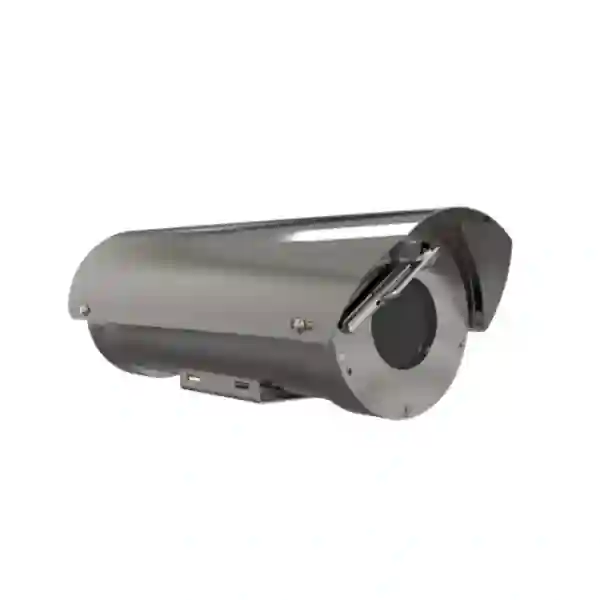
Hanwha TNO-X6320E1WT2-C Explosion-Proof Zoom Camera
Full HD imaging, 32× optical zoom, built-in wiper and 24 VAC power for carefully assessed industrial hazardous-area projects.
Product at a glance
The Hanwha TNO-X6320E1WT2-C is a fixed-direction, explosion-proof network zoom camera for industrial surveillance projects that require documented equipment selection. Its full-HD imaging, autofocus, intelligent analytics and integrated wiper can help teams observe a defined area, but correct certification, electrical design, physical placement and network integration must be confirmed before installation. This page explains practical buying considerations for a Tanzania project and deliberately does not claim local stock, local regulatory authorization or a guaranteed delivery period.
| Model | TNO-X6320E1WT2-C |
|---|---|
| Manufacturer | Hanwha Vision |
| Camera type | Explosion-proof fixed zoom network camera |
| Image | 1920 × 1080; up to 60 fps (60 Hz spec) |
| Optical lens | 4.44–142.6 mm; 32× optical zoom |
| WDR | 150 dB |
| Video formats | H.265, H.264, MJPEG |
| Storage | 2 × microSD slots, up to 256 GB each |
| Network | RJ-45 10/100BASE-T; ONVIF S/G/T |
| Power | 24 VAC; up to 37 W |
| Housing | 316L stainless steel; integrated wiper |
| Size and weight | 176 × 154 × 480 mm; 15 kg |
| Certification and ambient | Confirm exact -C approval, markings and temperature limits before design approval |
What is this exact Hanwha camera?
The Hanwha TNO-X6320E1WT2-C is a fixed-position explosion-proof network camera with a motorized optical zoom lens. Its purpose is to provide detailed video observation from a suitably engineered enclosure where a conventional CCTV camera may be inappropriate because the location has a classified atmosphere. The camera provides full-colour and black-and-white imaging, network video streaming, analytic event functions and an external wiper. The combination is intended to help an industrial security or operations team review distant activity without replacing the whole camera to change the lens view.
This is not a thermal imager and is not a freely rotating pan-tilt-zoom unit. Its 32× optical zoom changes image magnification within the installed pointing direction; mechanical aiming and coverage must still be planned. Explosion-proof construction also does not eliminate the need for correct equipment selection, qualified installation, appropriate electrical protection and a site-specific hazardous-area assessment. FourTeck Tanzania buyers should evaluate the complete installation, rather than viewing the camera body as an isolated commodity.
Where the camera could fit
Candidate deployments include oil and gas facilities, fuel-handling areas, chemical processing plants, selected industrial storage sites and other premises where an engineer has identified a classified atmosphere and a need for visual surveillance. The suitability of any particular camera depends on the exact gas or dust grouping, temperature class, applicable certification scheme, environmental conditions, installation method and governing project specification. An example industrial use case does not mean every location within that industry is an approved installation location.
For a facility operator, the practical objective may be to observe an access point, a fixed pump assembly, a safety-critical process corridor or a distant equipment bay. A consultant may instead be trying to specify a camera that fits both surveillance criteria and hazardous-area documentation. The useful starting point is therefore a location-by-location schedule: purpose, target scene, mounting distance, power source, communication path, classification and approval evidence.
Explosion-proof does not mean universally approved
An explosion-proof camera is engineered around a defined protective concept and the approvals applicable to particular configurations. It should not be selected using a generic explosion-proof label alone. Hanwha’s public specifications reference cLC CSA and cLCus Class I/Division 1 information for this product family. A purchasing decision must still check the exact -C variant, certified model designation, nameplate, certificate schedule and allowed accessories against the site’s specified jurisdiction and classification.
Ask the project safety engineer or electrical designer to confirm the hazardous-area designation and any required regional acceptance before procurement. Do not infer ATEX or IECEx approval from another variant, another Hanwha product, a broad catalog list or a similarly named part. Also verify that installation accessories and cable glands meet the applicable system requirements. A camera whose optical specifications are ideal can still be the wrong purchase when its certified installation conditions do not match the site.
How to interpret hazardous-area documentation
A proper equipment schedule identifies more than the words hazardous area. It records the classification method in use, whether gas or dust hazards are present, the relevant group and temperature considerations, the needed protection level and the ambient conditions to be used for design. These values are normally produced through the facility’s classification and engineering process, not chosen by the CCTV installer. The camera selection can then be assessed against those documented requirements.
Request a copy of the certificate and manufacturer installation instructions for the supplied assembly. Read any conditions relating to enclosure integrity, cable-entry orientation, gland type, conductor termination, earthing, maintenance, seals and permitted opening procedures. Confirm that the markings on the delivered product match the quotation. For a Tanzanian industrial project, the responsible project team should also determine which approval framework and acceptance documents the site owner or relevant authority requires; a foreign certification reference alone should not be represented as blanket local approval.
Full HD image quality and frame rate
The manufacturer’s current product information specifies a maximum 1920 × 1080 image and H.265/H.264 frame rates up to 60 fps on a 60 Hz setup, or 50 fps on a 50 Hz setup. That creates options for observing motion in equipment zones and reviewing short events, although actual usable detail depends on lens settings, focus, exposure, compression, illumination, mounting vibration and scene complexity. A high frame rate is not a substitute for a correctly framed subject or adequate light.
The right recording setting is not automatically the highest available. If the purpose is general situational awareness, a lower frame rate might suit retention and bandwidth objectives. If the requirement is to study fast-moving mechanical activity, a higher frame rate may offer useful temporal detail, but shutter settings and lighting must be tested together. Define what the observer must recognize, at what distance, under what lighting and for how long recordings must remain available.
32× optical zoom explained
The specified focal range is 4.44–142.6 mm, giving 32× optical zoom. At the wide end, operators can frame a broader area; at the telephoto end, they can inspect a narrower segment within the camera’s fixed viewing direction. Hanwha lists an approximate horizontal field of view from 61.8 degrees down to 2.19 degrees. This is useful when a distant valve bank or entrance requires detailed attention, but an extremely narrow field can leave surrounding activity outside the image.
Zooming optically preserves more real scene detail than simply enlarging existing pixels digitally. However, greater magnification also makes small movements in the mount, atmospheric haze, heat shimmer and inadequate focus more noticeable. A project should evaluate the actual observation distances and required pixel detail rather than treating 32× as a guarantee of identifying every object. Consider whether one fixed zoom view is sufficient or whether separate cameras are needed for simultaneous overview and close observation.
Coverage geometry and camera positioning
Before a mounting position is approved, prepare sample scene views at the intended focal settings. A broad overview can help supervisors understand equipment context, while a tight view may show a component or controlled access point. One camera cannot maintain a full wide-area image and a completely different tight view at the same instant. Where both views are operationally necessary, the design may need multiple cameras, a multi-sensor alternative or a genuinely controllable positioning system.
Assess height, viewing angle, reflections, fixed obstacles, process pipework and the position of likely human activity. Check line-of-sight disruptions caused by parked vehicles, containers and changing plant structures. Allow sufficient distance for the camera’s minimum object focus and avoid selecting a position that places the target behind glare-producing surfaces. Even well-rated enclosure materials cannot fix poor surveillance geometry. Capture a commissioning image at each agreed zoom setting and keep those reference frames with the system documentation.
Day, night and low-light imaging
Hanwha specifies day/night operation using an automatic infrared-cut filter, with quoted minimum illumination of 0.05 lux in colour and 0.005 lux in black-and-white under the stated exposure test conditions. Those laboratory-type figures should not be interpreted as a guarantee of a usable recording of every scene at those light levels. Real installations differ in movement, light direction, lens position, exposure time, pollution, reflections and image-noise settings.
The model should not be marketed as a thermal camera or assumed to include a built-in long-range infrared illuminator. Determine whether existing plant lighting is adequate and whether additional lighting is safe and permitted for the classified area. Check how nighttime illuminance changes during planned shutdowns, storms or emergency power operation. A night test with expected targets moving through the field is more meaningful than reading a minimum-lux figure alone.
Wide Dynamic Range for high-contrast scenes
The 150 dB Wide Dynamic Range specification can help camera operators manage scenes containing very bright and dark portions, such as a shaded equipment shelter facing strong daylight. Hanwha also lists highlight compensation, backlight compensation, noise reduction and defog processing. These functions are useful configuration tools, but their effectiveness depends on the specific scene and chosen camera settings. Strong direct sunlight, reflective steel, dense rain and severe airborne contamination may still challenge visibility.
During commissioning, test both daytime contrast and nighttime artificial lighting. Pay particular attention to bright vehicle headlights, security floodlights, welding illumination seen from safe observation zones and reflections from wet metal. Avoid promises of readable identification in all conditions. The preferred acceptance test should use representative footage, the intended monitoring display and a documented success criterion. Preserve comparison clips where multiple image-processing configurations are trialled.
Integrated wiper and viewing-window care
The TNO-X6320E1WT2-C includes a wiper intended to assist with water removal from its viewing window. For an outdoor industrial camera, this can be a useful feature when rain and surface contamination interfere with observation. The wiper is not a substitute for planned maintenance, and it should not be assumed to remove every deposit, such as hardened residue, grease or aggressive process contaminants. Use it in accordance with manufacturer operation and cleaning instructions.
Determine whether the camera will face wind-driven rain, dust accumulation, salt spray or airborne plant residue. The mounting direction, sheltering arrangement and maintenance access can influence how often the window needs attention. Avoid cleaning methods or chemicals that could damage the window, seals or approved enclosure finish. Where washer systems or special accessories are proposed, verify exact compatibility and hazardous-area suitability separately instead of assuming that every catalog accessory can be attached to this model.
Intelligent video analytics as operational support
Hanwha lists several analytic event types, including motion, tampering, fog and shock detection, virtual-area activity, virtual-line crossing and face detection. These features may be useful for drawing attention to selected activity near a fixed gate, protected process approach or controlled equipment zone. The camera can create events that assist monitoring staff, but rules must be configured against the real scene. A detected event is not inherently proof of a safety violation or unauthorized activity.
Design each rule around a concrete question: Which movement is relevant? Which direction should trigger a review? What is the minimum object size or view duration? Who receives the alert, and what should they do? Evaluate normal operational motion, weather and nighttime changes that could generate nuisance alarms. Analytics in this product should not be described as an independently certified industrial safety system, process shutdown device or substitute for specialist gas detection and safety instrumentation.
Analytics limitations and privacy decisions
Automatic scene analysis can reduce the effort of reviewing every minute of video, but it can miss events or produce false alarms. Low light, obstructions, zoom changes, reflective surfaces and environmental contamination can all alter what the camera sees. Establish a test procedure with representative people, vehicles or process-related movement where doing so is safe. Keep a record of the rules enabled and the owner responsible for reviewing performance after scene changes.
Hanwha lists privacy masking functions. Those controls may help restrict visibility of areas not needed for the operational purpose, but the business remains responsible for privacy policy, access governance and proper handling of recordings. Define authorized users, retention periods, incident escalation and audit expectations before the system goes live. Avoid using face-detection features as if they inherently provide identity verification or permission to undertake any particular biometric processing.
H.265, H.264, MJPEG and network capacity
The camera supports H.265, H.264 and MJPEG video formats, with multiple streaming profiles. Hanwha lists WiseStream II and variable or constant bitrate options for supported codecs. These capabilities offer flexibility for balancing monitoring quality, network capacity and recording storage. Actual bitrate depends on the configured resolution, frame rate, image quality, motion, compression mode and scene complexity, so no universal daily storage amount should be promised for this exact installation.
Build the network budget using a test stream from a comparable scene or a conservative engineering calculation. Include simultaneous live viewing, recording, remote access and any event snapshots. Consider what happens during network congestion or when a camera switches between expected lighting conditions. Verify that the recorder and client software can decode the selected stream and that any required live viewing latency is acceptable. If connection bandwidth is limited, separately configure main recording and lighter monitoring streams where supported.
On-camera storage and recording continuity
Hanwha’s product specification lists two microSD, microSDHC or microSDXC slots with a maximum of 256 GB per slot, giving up to 512 GB in total. Edge storage can be valuable in a layered recording design, but it should not automatically be treated as a complete substitute for central recording or a guaranteed backup. The way footage is saved, retained and recovered depends on configuration, card type, event rules, network state and applicable software behavior.
For a critical site, document whether local storage is intended for primary recording, event footage, buffering or recovery after temporary communication loss. Verify supported card characteristics, maintenance needs, write endurance and the camera’s actual recording workflow. Confirm that incident retrieval can be performed by authorized staff without compromising the enclosure or hazardous-area rules. A successful deployment includes evidence that footage can be played back, exported and correlated with the site’s required incident records.
ONVIF and VMS/NVR interoperability
Hanwha lists ONVIF profiles S, G and T, RTSP networking and its SUNAPI interface. These standards and interfaces provide potential integration paths for recorders, video management systems and supervisory applications. They do not mean every camera function, wiper control, analytic event or edge-storage workflow will be supported by every third-party platform. Feature-level interoperability must be checked against the intended VMS version, recorder model and firmware.
Build a compatibility matrix before ordering. Test discovery, authentication, live streams, time synchronization, analytics subscriptions, event recording and playback. If operators need to invoke the wiper remotely or change zoom and focus, verify those specific controls rather than relying on a generic ONVIF supported label. Plan for firmware lifecycle, update procedures and recovery from loss of communications. A network integration test in the workshop can prevent costly configuration changes after the camera has been installed in a restricted process area.
24 VAC power design
This particular model is specified for 24 VAC input with a maximum power consumption of 37 W. It should not be ordered on the assumption that a standard PoE network switch will power it. The site electrical designer must select and locate a suitable supply and protective arrangement, considering actual cable run, voltage drop, power continuity, the hazardous-area requirements and the manufacturer’s instructions. All supply-side hardware must be suitable for the installation environment.
In the design review, check where the transformer or approved power equipment will be installed, how maintenance staff can isolate it and what happens during a utility interruption. Confirm grounding and bonding requirements, surge protection and the routing of signal and supply cables according to the governing rules. Do not derive a cable size or breaker rating solely from the published maximum wattage. The complete electrical design should be reviewed and signed off by appropriately qualified personnel before installation.
Network connection and cabling
Hanwha specifies an RJ-45 10/100BASE-T Ethernet connection. The cable route can be as important as the camera itself in a hazardous-area project. Account for permissible entry methods, physical protection, electromagnetic interference, lightning exposure, distance to network equipment and access restrictions around process structures. Where a different transport medium is needed, assess the complete approved system rather than assuming this exact model has a built-in fibre interface.
The network designer should identify camera VLANs or segmentation, permitted destinations, NVR reachability, monitoring workstations and any remote support requirements. Outdoor transitions deserve appropriate surge-management and environmental treatment. Confirm the cable gland, sealing and strain-relief details with the certified housing documentation. Installers must not improvise unapproved drilling, thread changes or cable entry modifications. Document each network endpoint and label it in a way that operations staff can trace without unnecessarily exposing confidential credentials.
Network security and controlled administration
The published specifications include HTTPS, digest-based authentication, 802.1X network authentication options, IP-based access restrictions and logging. These are useful tools when designing a protected surveillance network, but the security of the final system depends on configuration and maintenance. Establish unique administrator credentials, individual operator access where supported, secure time settings, backup procedures and an approved account-offboarding process. Avoid sharing the primary camera password across multiple contractor teams.
Restrict management interfaces to authorized networks, disable unused services where appropriate and use encrypted protocols when supported by the deployed software. Check firmware availability and compatibility through the vendor’s official support process before scheduling changes. Record firmware versions and change approvals. A remote-viewing requirement should be solved through a managed, reviewed architecture rather than exposing device administration directly to the public internet. Run regular access reviews and test the incident recovery procedure before commissioning is declared complete.
Stainless-steel housing and mechanical constraints
The current Hanwha product page specifies stainless STS316L construction, dimensions of approximately 176 × 154 × 480 mm and a product weight of 15 kg. That mass matters when selecting mounting structures, fixing systems and access equipment. It is not appropriate to assume that a general consumer CCTV bracket is suitable. A mounting engineer should evaluate loads, vibration, environmental exposure, service access and compatibility with the exact enclosure.
Stainless steel is valuable in many demanding industrial settings, but corrosion performance is still dependent on the specific contaminants, cleaning practices, dissimilar-metal interfaces and local environment. Evaluate the mounting location for salt exposure, industrial deposits and water trapping. Do not assume that the camera can be opened, drilled, welded or altered like an ordinary mechanical box. Any intervention affecting the certified enclosure should follow the manufacturer’s documented process and the site’s permit-to-work requirements.
Weather resistance and operating temperatures
Hanwha’s current model page references IEC 60529 IP66 and IP67 ratings; other regional product literature also discusses IP68 in this family. Procurement should confirm the precise IP markings applicable to the supplied assembly rather than casually combining every rating found across marketing material. In particular, an ingress-protection claim does not define hazardous-area acceptance or prove resistance to every chemical used on an industrial site.
There is an important temperature-document discrepancy for the TNO-X6320E1WT2-C: the current online manufacturer model page reports an operating range extending to +60 °C, while the manufacturer’s regional catalog material for the exact item describes an upper value of +40 °C. Both sources indicate a low-temperature variant, but the engineering team should not use the higher limit for approval without resolving the conflict. Request the current signed datasheet, applicable certificate schedule and model nameplate for the exact delivered configuration; use the governing approved limits in the final design.
Fixed zoom versus a PTZ camera
A fixed zoom camera and a pan-tilt-zoom camera serve different coverage strategies. This TNO model offers powerful optical magnification but is not described by Hanwha as a motorized pan-and-tilt device. It is a candidate for watching a chosen direction and selecting the appropriate magnification within that view. When a security operator must continuously sweep large areas or redirect the image between widely separated process units, a suitable certified PTZ product may be a better architectural choice.
Conversely, an appropriately located fixed camera can provide a predictable view that does not depend on operators keeping a movable camera pointed in the right direction. For incident review, consider what footage the organization needs when nobody is actively controlling a camera. Compare coverage continuity, mechanical complexity, cost of mounting, integration requirements and maintenance access. The best answer may include a fixed overview camera plus a specialist close-up view, rather than relying on a single high-magnification device to perform both tasks.
Industrial application: process approach routes
An operator may need visibility of the approaches to protected valves, instrument shelters or restricted maintenance areas. The camera can be assessed for a fixed observation angle, while its optical zoom can be used to examine a smaller feature within that angle. Determine whether the image is intended for real-time awareness, retrospective incident analysis or access control review. Each purpose requires a different acceptance test.
Keep the installation separate from process safety obligations. Camera footage can inform human review but should not be treated as an engineered safety instrument without a separately verified safety application. Check whether temporary equipment, workers wearing personal protective equipment, shadows or overnight lighting would prevent the intended observation. A site walk with security, operations and electrical staff helps identify these constraints before cable routes and mounting steel are finalized.
Common industrial scenarios
Oil and gas observation
Define a fixed pump or process-corridor view. Confirm hazardous classification and the exact -C certificate before using optical zoom to inspect a chosen part of the scene. Decide whether operators need continuous overview footage or periodic close inspection.
Fuel storage and transfer
Map vehicle movements, lighting and obstructions, then design the fixed view around the monitoring objective. Consider the wiper’s maintenance benefit while confirming the site’s electrical and enclosure requirements. Never equate this camera’s analytics with process safety shutdown functions.
Chemical processing
Assess the actual gases, dusts, cleaning agents and corrosion conditions. Use approved documents to resolve area suitability, environment limits and cable entries. Keep maintenance access and window cleaning in the original placement decision rather than treating them as future afterthoughts.
Restricted plant access
Place a camera to observe a defined approach or entrance, then test virtual-line events and resulting recording workflows. Confirm that people moving under normal operating conditions will not cause unacceptable nuisance alerts. Establish rules for who may view the footage.
Coastal industrial infrastructure
Review salt exposure, structural loads and safe cleaning practices. The stainless housing may be useful, but don’t assume it eliminates corrosion evaluation or special mounting requirements. Verify stable network and 24 VAC power to the actual device location.
Critical equipment bay
Set the scene and magnification according to the equipment detail a supervisor needs to observe. Document accepted daytime and nighttime views. If several distant assets require simultaneous observation, consider additional cameras rather than expecting one fixed zoom device to cover everything.
Industrial application: loading and fuel-handling facilities
Some fuel-handling operations may have classified areas, vehicle movements and bright outdoor light in a single monitoring scene. A fixed explosion-proof zoom camera may be considered for a properly classified viewing location where the enclosure’s certificate matches the application. The 150 dB WDR, zoom, day/night features and wiper offer a set of tools for testing visibility in such an environment. None of these functions makes the camera universally suitable for every fuel terminal or loading bay.
During the site design, map where trucks, personnel, hoses and structural elements can block the field. Decide what the camera must show before loading begins, during activity and after the vehicle departs. Include the actual night-lighting conditions and maintenance access in the trial. Verify all electric and network connections through the required hazardous-area procedures. If a design relies on observing multiple simultaneously active lanes, evaluate whether additional fixed viewpoints are necessary.
Industrial application: chemical and coastal environments
Chemical-processing plants and marine-influenced sites can expose equipment to humidity, deposits and cleaning chemicals. The stainless-steel construction may be attractive, but final suitability needs a materials review that considers site-specific exposure and cleaning agents. A published IP rating should not be used to imply unlimited chemical resistance. The camera’s physical location may also be influenced by how often the viewing window needs safe access for inspection.
In a coastal or port-adjacent Tanzanian industrial setting, plan a documented external cleaning approach, suitable fasteners and separation of incompatible metals when required by engineering. Confirm that any wash-down practice is allowed by the manufacturer and the site’s safety rules. If the camera must be mounted close to corrosive exhaust or direct spray, ask the designer to review an alternative position before specifying protective accessories whose approval is unverified.
Choosing this model for a Tanzania project
For a Tanzania enquiry, the strongest initial quotation request identifies the exact site purpose, rather than asking only for the camera price. Supply the model string TNO-X6320E1WT2-C, the quantity, required delivery point, specification documents, expected deployment date and whether the project is for new installation, expansion or replacement. Include the site’s hazardous-area classification and the certification documents the consultant or owner requires the contractor to supply.
Confirm whether the procurement team needs camera bodies, approved mounting hardware, power equipment, cabling, network recording hardware, software licences, spares or commissioning services quoted separately. These components should not be assumed to be included with the camera. FourTeck’s product-content page does not establish local stock, Tanzanian registration, pricing, lead time or warranty. A project-specific written offer is needed to confirm commercial terms, technical scope and responsibilities before an order is placed.
Pre-installation engineering survey
A thorough survey should identify the camera’s required field of view, height, target distance, physical access, safe maintenance route and mounting structure. Record existing network cabinets, power supplies, cable trays and pathways along with the relevant hazardous-area boundaries. An engineer should determine whether the proposed equipment position can be safely and legally serviced without entering a restricted process zone at inappropriate times.
Ask which site drawings are current and whether hot-work, electrical isolation or access permits are required. Identify possible vibration from nearby machinery and potential movement of the camera structure. Review daytime and nighttime lighting separately. Record the evidence needed for site acceptance, including footage examples and the exact identification, recognition or general-observation task. This preparation prevents a technically capable camera from being installed where its zoom cannot provide useful, stable images.
Commissioning and acceptance sequence
Commissioning should start with a check that the delivered model and markings match the purchase order and the approved hazardous-area design. Before connecting the unit, inspect the enclosure, cable entries, hardware and documented installation requirements. The appropriate specialist should sign off the electrical connection, isolation and protective measures. No informal field modification should be used to solve a fit problem on a certified housing.
Next, verify the 24 VAC input under expected operating conditions, then network addressing, secure access, time synchronization and recording path. Set a suitable image profile and test wide and telephoto views under representative lighting. Test the wiper only as instructed. Exercise agreed analytics rules, playback, retention, alarm response and recovery after a planned interruption. Capture a record of settings, software versions, acceptance footage and unresolved limitations. Hand over documented maintenance and escalation responsibilities to the site owner.
Video retention and operational governance
A camera specification should be linked to the organization’s footage-retention objectives. Determine how long recordings must be retained, whether all footage or only selected events are needed, and who is permitted to view or export clips. Those decisions influence NVR sizing, backup architecture, bandwidth and account permissions. Do not assume that the presence of two microSD slots satisfies a facility’s retention policy or disaster-recovery needs.
Set out a clear incident process: who identifies an event, how footage is preserved, how timestamps are verified and how material is transferred to authorized recipients. Test restoration after power or network loss, and document the limits of any event-triggered recording. For sites with an unreliable communication route, plan resilience deliberately rather than treating an intermittently reachable camera as fully monitored. This is especially important where security and operational teams share a common surveillance system.
Maintenance access and lifecycle planning
The long-term cost of a specialist enclosure includes safe access, inspection, window cleaning, firmware management and eventual replacement. A wiper can help retain an unobstructed view during certain conditions, but it does not eliminate inspection schedules. Agree on who may enter the area, which permits are required, what work can be done while energized and which tasks require a full safe isolation. Follow the manufacturer’s procedures and the facility’s safety-management system.
Keep a record of the model suffix, serial number, installed firmware and the associated certificate. Store the final configuration, network diagram, accepted viewing angles and commissioning footage in controlled project records. Schedule periodic checks of the mount, enclosure condition, visibility, recording health, analytic rules and user access. Reassess the camera when process equipment moves or lighting changes. If a specialist part fails, confirm the approved replacement and maintenance method instead of substituting a visually similar component.
Quotation and product-scope checklist
A high-quality request for quotation should ask suppliers to identify exactly what is being supplied and what remains outside scope. Request the model and suffix, product origin information when needed, current technical documents, certificate references, compatible accessories, power requirements, installation materials, software assumptions and any permitted service constraints. Ask the vendor to state commercial conditions rather than relying on generic web descriptions.
Where the quote includes installation, define who performs the area survey, electrical design, cable-entry work, structural mounting, network integration, acceptance testing and training. Clarify who provides the VMS/NVR, client workstations, storage media and cybersecurity controls. Record how nonconformities will be handled before work begins. Buyers should also ask for a list of any technical assumptions requiring site confirmation; this often provides more decision value than a bare price without engineering scope.
Technical decision: select, compare or redesign
Choose this candidate when a fixed field of view, substantial optical zoom, full-HD network video and a wiper are desirable, and when the certification and installation constraints can be verified for the site. Compare alternative models if the deployment needs higher pixel resolution over a large scene, integrated thermal measurement, continuous motorized panning, a different power architecture or a different certified hazardous-area regime. The camera is not automatically the best option simply because it has a rugged enclosure.
If the scene requires simultaneous broad coverage and fine detail, first redesign coverage rather than assuming maximum zoom will provide both. If the communication plan is fibre-only at the device position, confirm whether an approved external network architecture is possible or another exact model is required. If the temperature documentation cannot be reconciled for the site’s highest ambient condition, suspend model approval until authoritative evidence resolves it.
What the technical handover should contain
A professional handover is more than a live picture on a screen. It should include the exact part identification, enclosure marking photographs, relevant certificate and installation records, a signed inspection record and an updated as-installed drawing. Add the configured image settings, focus and zoom positions, event schedules, network information held securely, recording destination and acceptance-test outcomes. Make clear which configuration changes require re-approval by site engineering.
Operations personnel should receive concise instructions for routine viewing, reporting an obscured lens, retrieving footage and escalating faults. Maintenance teams should have the permitted inspection and cleaning practices, safe-isolation references and responsible contacts. The IT team should know the approved firmware and account-control process. A structured handover ensures that each team understands the parts of the system it owns without creating unsafe informal workarounds.
Operational checks after a plant change
Process sites evolve. New equipment, temporary storage, modified walkways and new lighting can degrade a camera view even when the camera itself is fully functional. Review the camera after relevant construction, shutdown activity or changes to the classification boundary. A previously acceptable viewpoint may no longer show the intended target, and an old analytics rule can become noisy or ineffective when the scene changes.
Where a plant change affects cable routes, power systems, mounting structure or environmental exposure, have the responsible engineers determine whether the original design remains valid. Do not relocate or rewire an explosion-proof device without reviewing the applicable certification and installation documents. Periodically confirm that the recorded time, playback function and access permissions still satisfy the site’s current operating procedures.
Practical buyer comparison questions
When comparing the Hanwha TNO-X6320E1WT2-C with alternatives, ask whether the monitoring task values a long zoom range more than additional megapixels, whether a fixed direction is acceptable, and whether the protective certification is correct for the specific hazardous area. A camera designed for normal outdoor use may be less expensive but is not automatically interchangeable in a classified location. Conversely, the most sophisticated specialist enclosure may be unnecessary if the proposed position is demonstrably outside the classified area and a different compliant architecture is justified.
Compare whole-life requirements rather than only catalogue features: safe access, service downtime, compatible mounting, local network capacity, storage cost, software integration, equipment documentation and availability of authorized technical support. Confirm where the final system will be managed and how camera faults will be detected. These questions tend to expose costly specification gaps early.
Frequently asked questions
Is the TNO-X6320E1WT2-C a thermal camera?
No. Hanwha describes it as an explosion-proof visible-light network zoom camera with a CMOS imaging sensor. Thermal imaging measures emitted infrared radiation in a different manner. If thermal inspection or temperature measurement is required, specify that function separately and verify any associated hazardous-area approval.
Can it pan and tilt like a PTZ camera?
The published model is a fixed-position zoom camera, not a general-purpose motorized pan-and-tilt camera. Its optical zoom and focus can be adjusted within the direction in which it is installed. A site needing wide-area repositioning should evaluate an appropriately certified PTZ model or multiple fixed viewpoints.
Does the camera support standard PoE power?
No PoE power input is specified for this exact variant. Hanwha lists 24 VAC input and maximum consumption of 37 W. The power supply, cabling, protective equipment and installation method must be designed for the actual site and checked against the approved manufacturer instructions.
What is the maximum resolution and frame rate?
The camera supports Full HD 1920 × 1080 video and up to 60 fps with H.265/H.264 in the manufacturer’s 60 Hz specification; the 50 Hz specification is up to 50 fps. The practical configuration depends on recording objectives, selected codec, lighting, exposure and platform compatibility.
Does 32× zoom mean the camera can see any distance?
No. Zoom changes the field of view, but usable detail still depends on the target size, range, illumination, focus, vibrations, atmospheric conditions and the resolution needed for the surveillance task. Use design calculations and real scene tests to determine the correct placement.
Does it include a wiper?
Yes. Hanwha lists an integrated wiper and water-removal support. It may help clear rain from the viewing window, but it does not eliminate the need for safe cleaning and maintenance. Washer accessories and other attachments require separate exact-model compatibility and certification checks.
Which recording formats are supported?
Hanwha specifies H.265, H.264 and MJPEG streaming. It also lists ONVIF profiles S, G and T, RTSP and multiple streams. Confirm that the intended recorder or video-management software supports the actual features and event workflows you need.
How much memory-card storage is available?
The current manufacturer page lists two microSD/SDHC/SDXC slots supporting up to 256 GB each, or up to 512 GB total. Verify card type, recording mode and recovery behavior. Total card capacity does not establish a guaranteed number of recording days.
Is the camera suitable for all explosion-risk locations in Tanzania?
No equipment should be described that way. Approval requires a match between exact product markings, certificate conditions, site classification, environmental limits and applicable project or regulatory requirements. The responsible designer should confirm acceptance in the intended jurisdiction before procurement.
What is its operating-temperature range?
Published Hanwha materials for this exact model conflict on the upper limit: a current model page lists +60 °C while regional catalog materials specify +40 °C. Do not adopt the higher value for design without receiving and checking the current approved documentation and the supplied model’s certification/nameplate.
Is a local Tanzanian price or stock status confirmed?
No Tanzania price, stock status, delivery time or warranty is verified for this listing. Request a written, model-specific quotation that also identifies any mounting accessories, power hardware, integration items and services required for the project.
What should be included in a quotation request?
Include the exact model, quantity, site purpose, deployment location, required hazardous-area documentation, planned power and network approach, integration platform, accessories, requested delivery terms and any installation scope. Ask for compliance evidence and an explicit list of exclusions and engineering assumptions.
Request a configuration-specific industrial camera quote
Ask FourTeck Tanzania about a project quotation for the Hanwha TNO-X6320E1WT2-C. Include your quantity, viewing objective, hazardous-area requirements, technical approval documents, 24 VAC power plan, recorder/VMS and installation scope. Confirm the temperature-rating discrepancy and exact -C certification before purchase. Price, stock, delivery, warranty and installation services will need written confirmation; no specific local commercial commitment is made by this page.
Next step: request a technical review and written quotation.




Reviews
There are no reviews yet.