
Hanwha Vision • Industrial Surveillance • Tanzania
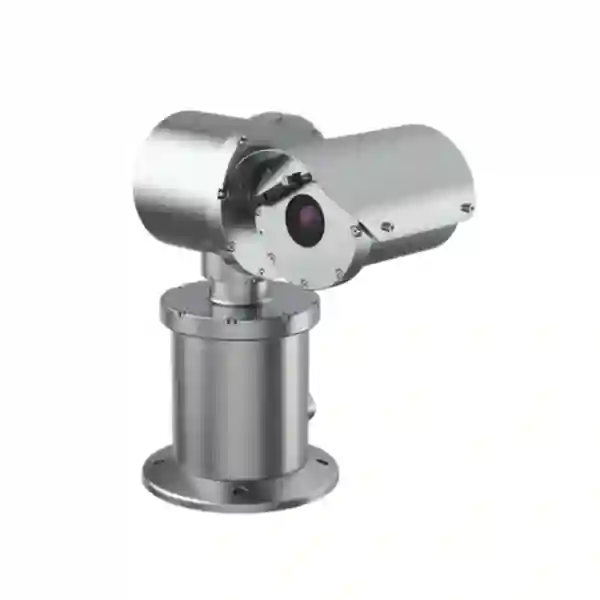
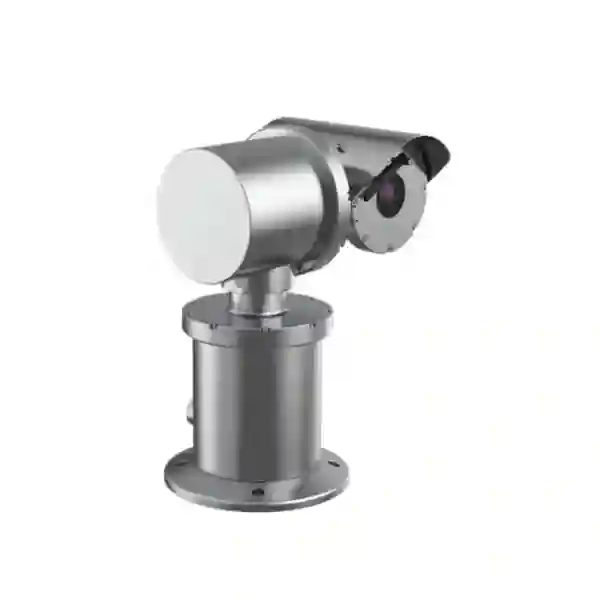
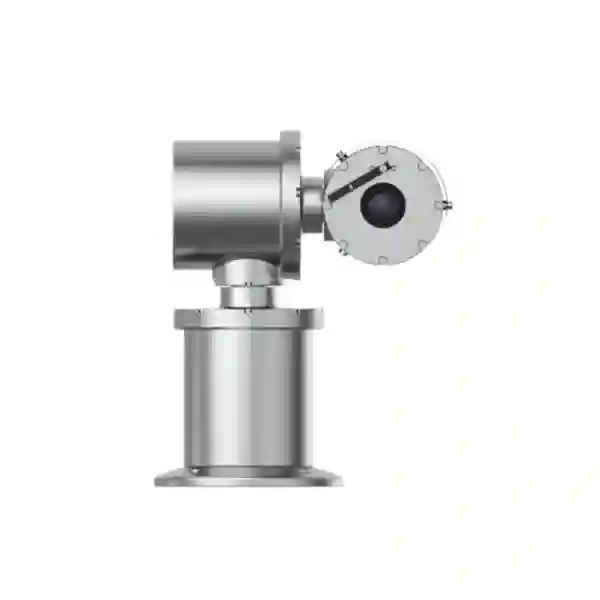
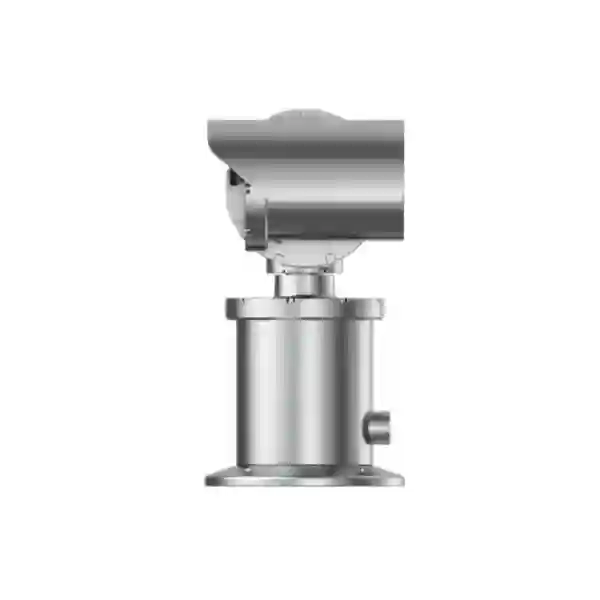
Hanwha TNU-6324E 2MP Explosion-Proof PTZ Camera
Designed for project-led visual monitoring in appropriately classified hazardous environments, with 32x optical zoom, a 316L stainless-steel body, continuous pan and integrated window wiper.
Request a specification review and project-based quotation before purchasing.
Quick reference for procurement
| Camera type | 2MP visible-light explosion-proof PTZ network camera |
|---|---|
| Imaging / resolution | 1/2.8-inch CMOS; up to 1920 × 1080 |
| Maximum video frame rate | Up to 60 fps in supported H.265/H.264 configurations |
| Optical zoom | 32x; 4.44–142.6 mm lens |
| Positioning | 360° endless pan; 180° tilt range; presets |
| Image enhancement | Auto day/night (ICR), 120 dB WDR, defog, stabilisation |
| Enclosure | 316L stainless steel; built-in wiper |
| Environmental / impact | IP67; IK10; published −40°C to +60°C operating range |
| Video / interoperability | H.265, H.264, MJPEG, WiseStream II, ONVIF S/G/T |
| Hazardous-area documentation | Manufacturer lists IECEx and ATEX markings; verify exact certificate and site classification |
| Weight | Approximately 36 kg |
| Electrical supply | Confirm on current revision and delivered nameplate; do not assume PoE |
Summary only. Final selection requires the current model-specific manufacturer documentation, delivered unit nameplate and site-specific engineering approval.
Overview: a camera for demanding industrial observation
The Hanwha TNU-6324E is an explosion-proof 2MP network PTZ camera for operators who must observe plant areas where hazardous gases or combustible dust may be present. It combines full-HD video, a 32x optical zoom lens, remote pan-and-tilt control and a corrosion-resistant stainless-steel enclosure. For a Tanzania industrial project, its value is not simply the ability to make an image: it is the opportunity to place an appropriately specified camera closer to a process while maintaining the required hazardous-area design approach. Request a project-based quotation after your site classification and viewing requirements have been reviewed.
This model is a specialist device rather than an ordinary security camera with a protective cover added afterwards. It should be selected alongside the hazardous-area classification, camera mounting position, power infrastructure, network path and recording platform. A project engineer should compare the unit’s exact certification markings with the permitted equipment category and temperature requirements for the installation point. The camera can contribute video evidence and operator awareness, but it does not replace gas detection, process interlocks, emergency shutdown systems or a formal risk assessment. Its effectiveness depends on correct selection and installation, not on a product badge alone.
At-a-glance technical specification
The model uses a 1/2.8-inch CMOS imaging device and provides up to 1920 × 1080 resolution. Hanwha lists up to 60 frames per second with H.265 or H.264, and MJPEG is also supported. Its motorised optical system spans 4.44–142.6 mm, equivalent to 32x optical zoom, and the camera can pan continuously through 360 degrees while tilting through a 180-degree range. These specifications suit tasks that move between a wide-area operational view and detailed observation of a particular valve, access point or equipment location, provided the scene has suitable illumination and the required image detail has been checked.
Core protective and operational features include a 316L stainless-steel body, an integrated window wiper, IP67 ingress protection and IK10 impact resistance. The official manufacturer information identifies IECEx and ATEX hazardous-area certifications, as well as product-specific marking details. The unit supports H.265, H.264, MJPEG, WiseStream II, ONVIF profiles S, G and T, and network security features. Its listed operating temperature is −40°C to +60°C, under the published environmental conditions. Specifications can vary with revision and regional configuration; approved project documentation and the actual product nameplate must govern the final installation.
What the explosion-proof designation means
In purchasing discussions, explosion-proof is sometimes mistaken for a promise that equipment is safe in every hazardous location. That is not how hazardous-area engineering works. A certification applies to defined types of potentially explosive atmospheres, equipment protection concepts and temperature classifications. The TNU-6324E carries manufacturer-listed gas and dust markings, but engineers still have to compare those markings with the local classification dossier, applicable standards and installation method. The permitted use of an enclosure cannot be inferred just because a nearby piece of equipment is also certified. The hazardous substances and surrounding conditions matter.
Before preparing a camera schedule, ask the responsible engineer for the zone classification, gas or dust group, required equipment protection level, ambient temperature range and cable-entry specification. A proposed position may appear visually ideal while failing the equipment selection check. Conversely, an approved location may need a longer lens view, extra lighting or a different support arrangement to see the operational target. Compliance documents should be checked for the exact model and delivered variant, rather than assuming certificates covering a similar camera or family automatically transfer. Local acceptance and regulatory requirements must be verified for the specific project in Tanzania.
Explosion protection is different from weather resistance
IP67, IK10 and explosion protection address different questions. IP67 is an ingress-protection classification for water and dust under defined test conditions; IK10 concerns impact resistance; hazardous-area certification concerns the design requirements associated with specified explosive atmospheres. A camera may have strong outdoor protection and still be unsuitable for a classified hazardous zone. Similarly, an explosion-protected device still requires assessment of chemical exposure, vibration, installation orientation and maintenance access. These distinctions help prevent expensive specification mistakes during tender evaluation and can make acceptance discussions more precise.
For marine-facing industrial estates, processing locations or exposed plant structures, stainless-steel construction may be valuable, but it should not be described as immune to corrosion. Grade 316L can improve material suitability in certain aggressive environments, yet fasteners, glands, brackets and other components must be selected as a system. The lens window and wiper are maintenance items exposed to the same local conditions as the enclosure. An engineer should examine the complete installed assembly rather than relying on the body material alone. The most resilient installation is one where the protective housing, cable route, mounting and servicing plan all support the same environmental design.
Full-HD imaging: when 2MP is the right choice
The camera’s full-HD resolution is a deliberate design consideration. A 1920 × 1080 image can provide useful monitoring of movement, process status and equipment conditions without producing the same pixel count as a higher-resolution model. That can be appropriate when operators need responsive video, dependable framing and reliable control from a central room. However, resolution alone does not tell a buyer whether a distant label, face or gauge will be legible. Pixel density at the target, field of view, movement, light, compression and display conditions all influence whether the image answers the operational question.
For example, identifying whether a valve handle has changed position may require a different framing plan from reading a small instrument value. A full-HD sensor paired with optical zoom can be useful when the operator can direct the camera toward a limited target, but a continuously recorded overview may not retain the same detail as a close-up. Define the required observation tasks before the purchase order is issued. A meaningful design review should distinguish detection, observation, recognition and identification requirements, and should test each task at the real viewing distance. If forensic identification across a large fixed scene is mandatory, consider whether more cameras or a different resolution strategy is necessary.
How the 32x optical zoom helps operators
The 4.44–142.6 mm motorised lens changes the actual optical field of view rather than simply enlarging already captured pixels. At the wide end, staff can establish context around a structure or access route. At the narrow end, the same camera can inspect a more specific area. Hanwha lists a horizontal field-of-view range of approximately 61.8° to 2.19° in its current support specifications. That flexibility is valuable for sites where a single camera must cover several inspection points from a safe or convenient mounting position. It does not mean every distant object will be clear in every atmospheric condition.
Before choosing a pole or platform, calculate the target width at representative distances and confirm the expected pixels on the object of interest. Heat shimmer, rain, haze, vibration and poor lighting can affect images regardless of optical magnification. At long focal lengths, small mounting movement becomes more noticeable, so structural rigidity and image stabilisation settings deserve attention. A camera at maximum zoom also sees a narrow area; someone watching a specific component may temporarily lose awareness of nearby activity. Operators therefore need a rational preset plan and, where necessary, complementary fixed overview cameras.
Remote movement, presets and patrol coverage
The positioning mechanism supports endless 360-degree pan and a 180-degree tilt range, making the camera useful where an operator must inspect multiple directions. The manufacturer lists up to 300 presets along with swing, group, trace, tour, auto-run and scheduling options. Presets can map routine inspection tasks to recognisable viewpoints, helping different control-room shifts review the same physical areas. A well-designed tour might move between a pump discharge, a loading interface and an entry route, but the order and dwell time should follow actual operational priorities rather than an impressive demonstration of camera movement.
A moving PTZ camera cannot look everywhere simultaneously. If an incident happens outside the current field of view, the recording may not show it until the lens returns. This is a practical limitation in perimeter designs, safety-sensitive areas and scenes where continuous evidence is important. Define a default home position, document important presets and establish who may take manual control during an event. Review whether the video management system can preserve sensible priorities between scheduled tours, analytics events and operator commands. Where continuous coverage is required, pair the PTZ device with fixed cameras or other suitable monitoring equipment.
Day, night and available-light performance
The TNU-6324E provides automatic day/night operation using an infrared-cut filter mechanism. The manufacturer specifies minimum illumination values of approximately 0.05 lux in colour and 0.005 lux in black-and-white under stated test conditions. Those figures indicate low-light capability but should not be read as guarantees of useful detail at every focal length or shutter setting. Real scenes contain shadows, movement and variable lighting that can make a technically visible image inadequate for a particular security or operations task. A camera test at the proposed installation point is much more useful than comparing minimum-lux numbers alone.
Importantly, the TNU-6324E should not be described as having an integrated infrared illuminator. The similarly named TNU-6324ER is a distinct IR-equipped model in the manufacturer lineup, so the suffix matters when ordering. If the target scene is unlit, establish whether existing lights are sufficient or whether a separately engineered lighting solution is needed and approved for the hazardous environment. Do not attach an ordinary lamp or unapproved accessory in a classified area. Lighting design should also consider glare from shiny tanks, changing work practices, operator visibility and the effect of artificial light on the intended video evidence.
Wide dynamic range and difficult industrial scenes
Industrial cameras often face bright doors, backlit vehicles, reflective pipes and dark machinery in a single picture. The TNU-6324E includes manufacturer-listed 120 dB wide dynamic range, backlight compensation, highlight compensation and digital noise reduction. These are tools for balancing challenging scenes, not guarantees that every reflective or high-contrast target can be measured visually. The camera also includes defog and digital image stabilisation functions. Which settings work best depends on the scene, the mounting position and what the operator must see. Defaults chosen for one process area may be inappropriate in another.
Commissioning should cover typical daylight, night shifts and transitional conditions such as dawn, dusk or the opening of a brightly lit vehicle bay. Compare settings while a real target is present, not only while viewing empty machinery. Stabilisation can help with some visible shake, but it cannot substitute for a sufficiently rigid mount. Noise reduction and compression may improve the perceived image while concealing fine moving details, so a careful test should inspect live video and recorded playback. Keep approved reference screenshots of successful settings and document why exposure, WDR and frame rate were selected.
316L stainless steel, window cleaning and outdoor exposure
The enclosure is manufactured from 316L stainless steel and has a built-in window wiper. These details are relevant at facilities where dust, spray and general industrial contamination can degrade visibility. A wiper can help remove water and suitable surface deposits from the viewing window, but it does not remove the need for inspection or guarantee that every residue can be cleared remotely. The window can become contaminated by oil, salt deposits or dried process material that requires an approved cleaning procedure. Long service intervals should never be assumed solely because a camera includes a mechanical wiper.
IP67 ingress protection and IK10 impact classification add useful environmental context, but every cable entry, bracket and seal must preserve the intended protection of the installed equipment. Maintenance staff should have safe access without interrupting critical process operations or violating hazardous-area work controls. Plan the height and orientation so that servicing is possible under an approved procedure. Local environmental conditions, including rainfall, airborne dust and heat loading, should be examined at the actual site. These are installation inputs, not a claim that the model is uniquely certified for every Tanzanian industrial environment.
Video streaming formats and network integration
The camera supports H.265, H.264 and MJPEG encoding, with WiseStream II available for bitrate management. Hanwha lists an RJ-45 10/100BASE-T Ethernet connection and multiple streaming profiles. This allows an engineer to plan separate streams for high-quality recording, live monitoring and lower-bandwidth remote viewing where the video management system supports that arrangement. H.265 can reduce bandwidth for many scenes compared with older approaches, but the savings are content-dependent. Moving foliage, steam, rain, a busy loading bay or heavy video analytics activity may change the resulting bitrate and storage demand.
ONVIF profiles S, G and T and Hanwha’s SUNAPI interface are listed by the manufacturer, providing useful starting points for integration discussions. Nevertheless, saying that a camera supports a standard is not the same as proving every feature will operate in a particular third-party VMS. Before buying, confirm live view, PTZ control, preset calls, event handling, recording and user permissions with the exact software version. Test both the control-room workstation and the recording server. A mixed-brand site may need configuration decisions that do not arise when all equipment is managed through one vendor’s platform.
Planning bandwidth, retention and recorded quality
Recording design begins with the question of what an incident investigation must reconstruct. Establish the required recording days, target frame rate, resolution, compression format and expected scene activity. A single low-motion scene may need much less storage than a camera watching a continuously moving loading area. The number of simultaneous viewers also affects the network plan, as live monitoring can add traffic unless multicast or other supported distribution methods are configured correctly. The manufacturer lists up to ten streaming profiles, but an installation should not assume every possible profile needs to run simultaneously.
Specify network headroom for unusual conditions rather than sizing every link to a convenient average bitrate. Assess switch capacity, fibre uplinks, route redundancy where required and the effects of network outages on recording continuity. Storage calculations should account for actual measured bitrates, event recording settings and any organisational retention policy. During acceptance tests, replay video recorded during an active period and check that fine details remain useful at the chosen compression settings. A smooth live preview can be misleading if the recorder uses a more compressed profile or if the wrong stream is being archived.
Network hardening and access control
The product’s documented security functions include HTTPS, IEEE 802.1X network authentication, IP-based access control, digest authentication, encrypted firmware and event or access logs. These are building blocks for a secure design, rather than a substitute for one. Cameras may sit on networks that connect operational facilities to corporate systems, which makes account ownership, segmentation and update procedures important. Prefer a dedicated video network or carefully controlled network segment, with restricted management access and defined paths to authorised recording servers. Disable unused services where the documented configuration allows it.
At commissioning, change initial credentials, create role-appropriate accounts and confirm that time settings, logging and administrative responsibilities are recorded. Establish a firmware assessment process appropriate to the operator’s change-control requirements, using the exact model and approved files. Network teams should document switch ports, IP addressing, firewall rules and recovery procedures. Where remote support is needed, use a secure organisation-approved access method rather than exposing the camera directly to the public internet. Cybersecurity is a lifecycle activity: periodically audit access rights, inspect event logs and verify that the device remains within the supported configuration.
Video analytics: useful events, not automatic safety decisions
Hanwha lists motion detection, tampering, fog detection, face detection, virtual-area events and virtual-line functions among the TNU-6324E’s available analytics. These functions can help draw attention to activity or scene changes, depending on the enabled feature and the chosen software configuration. They are not presented here as certified safety functions, and their performance cannot be guaranteed in every environment. Steam, vibrating structures, insects, moving shadows and lighting changes can trigger unwanted events. Analytics should be tested under site conditions and used to support human response, not to replace process protection systems.
A useful deployment begins with a specific operational question: should the control room be notified if someone enters a defined walkway, if a view is obstructed or if a camera stops communicating? From that question, engineers can select detection zones, schedules, alarm routing and escalation procedures. Review privacy and organisational policies before enabling functions that may involve people. Operators need to know what an alert signifies, what it does not establish and which other systems should be checked. Recording an alarm without an assigned response creates little value, so the notification workflow deserves as much design attention as the detection rule.
Practical monitoring for terminals and transfer areas
Bulk handling sites and transfer areas can present several visual tasks from one mounting location: checking line-of-sight conditions, observing a transfer connection, monitoring movement near a designated route and assessing activity after an operational alarm. A controllable zoom camera can help a trained operator shift between these tasks without entering an exposed area simply to obtain a visual impression. The suitability of the explosion-protected enclosure depends on the actual site classification, and no specific plant or industry is implied to be automatically compatible. Site drawings and classified-area documentation should drive the camera schedule.
An operator workflow might begin with a standard overview, move to an equipment preset when a process alarm occurs, and return to a home view when inspection is complete. Such a workflow should be tested against recording requirements so that essential evidence is not lost while the camera is looking elsewhere. If a tank farm or transfer corridor needs continuous coverage, supporting fixed cameras may be necessary. Consider whether haze, dust and lighting at the proposed distance will allow the desired assessment. The aim is to help staff make better-informed decisions, not to claim that a camera can identify every hazardous condition visually.
Process plants, manufacturing and maintenance observation
An industrial processing facility may want to see a pump station, inspect visible pipework conditions or verify that an access route is clear before authorised work proceeds. For those tasks, the TNU-6324E offers remote positioning and optical zoom in a purpose-designed enclosure. The camera may reduce the need for some routine visual approaches to difficult locations, but it cannot certify equipment integrity or replace a physical inspection. Leaks, invisible vapours, abnormal heat and mechanical faults are not necessarily detectable in ordinary visible-light video. Define the exact indication the operator expects to observe and the action to follow.
Maintenance planning should include a map of presets with human-readable names, an owner for each setting and a process for keeping them current as equipment changes. A relocated pipe or new scaffold can block a previously useful view. Coordinate camera movement with the control room so that inspection tasks do not interfere with simultaneous security monitoring. For an enclosed production process, check whether reflections, airborne particles or local obstruction will make the proposed view ineffective. The right camera position may be a compromise between certified installation location, safe service access and meaningful video coverage.
Energy, utilities and remote industrial locations
Power infrastructure, industrial utility systems and remote facilities often have long distances between the control room and the equipment requiring observation. Network PTZ technology can bring selected visual checks to an operations desk, while 32x optical zoom allows a narrow target to be framed from a suitable position. However, a useful image still depends on the physical network path, lighting and mounting stability. Remote sites may be especially affected by intermittent connectivity and access constraints. The design therefore needs to consider communications availability, local recording architecture and approved maintenance procedures from the outset.
Where cameras are positioned near hazardous process equipment, the same classification review applies regardless of whether the broader facility is described as a power site or a utility station. The equipment marking must suit the exact location. Check network link budgets, the availability of reliable power, surge protection and the maintenance team’s ability to reach the camera safely. Assess how operators will know when a video feed is unavailable and what alternate procedure they will follow. These operational details can have more impact on project success than a small difference in published image specifications.
Structural mounting, dimensions and access
The manufacturer lists the unit at approximately 36 kg, with published dimensions of about 611 × 438 × 235 mm. That is a substantial industrial assembly, not a lightweight dome camera. A structural engineer or competent installer should consider the weight, mounting geometry, dynamic loading, local wind conditions and the strength of the supporting structure. Attachment details and any compatible accessories should come from the current installation documentation. Avoid assuming that an existing CCTV pole or wall bracket will support the load merely because it has adequate height or provides a convenient view.
Mounting position should allow the complete pan-and-tilt sweep without mechanical collision or unwanted obstruction. Plan safe access for installation, window cleaning and future service, especially in elevated or classified locations. The camera’s weight affects transport, lifting plans and the selection of temporary access equipment. Cable routing must avoid pinch points during movement and preserve the enclosure’s certified entry arrangement. Before work begins, coordinate the installation with facility permit systems, isolation procedures and any restrictions on work near live processes. A detailed site survey can reveal preventable issues before lifting equipment and contractors are mobilised.
Electrical design: confirm the supplied revision
Do not assume that a conventional Ethernet network camera can be powered by PoE. The TNU-6324E needs an electrical design based on the correct manufacturer’s documentation for the exact delivered unit and market configuration. Published documentation revisions show differences in how supply requirements are presented, so the voltage, current, maximum demand and protective arrangements should be confirmed against the approved datasheet and nameplate before wiring is finalised. Electrical work in a classified area requires careful coordination with the site’s responsible engineers and the applicable installation standards.
Include power provision, cable sizing, isolation, earthing or bonding requirements, suitable protection and any required backup arrangement in the project bill of materials. Verify the authorised cable-entry components rather than selecting ordinary glands for convenience. A network cable entering a special enclosure can be a certification-sensitive part of the installation, even when the data interface itself is standard Ethernet. During acceptance, document the measured supply, network link and recovery after an approved power interruption. Avoid making a purchasing decision solely from a reseller’s abbreviated power specification when primary documents for another revision describe a different arrangement.
Integration into the control room
Many projects require live images at a security desk while operational personnel retain access to selected camera viewpoints. Define those roles in advance. The control-room design should make it easy to select camera presets, recognise the current viewing direction and return to a known position after manual movement. An operator may need a wide view for context and a zoomed view for confirmation; the interface should make that distinction clear. If several teams can steer the same PTZ device, agree on who has priority during an incident, planned inspection or emergency response.
Integration testing should include camera discovery, recording, playback, event delivery, time synchronisation and recovery from network interruption. ONVIF support provides a foundation, but firmware, VMS and feature configurations can affect the actual outcome. Confirm any integration claim with the specific deployment software rather than assuming that all analytics, events or PTZ functions are universally available. Recording servers and monitoring stations should use consistent timestamps to help investigators correlate video with access, process and alarm logs. An effective system is one in which operators can quickly find a relevant view and trust the evidence they retrieve.
Commissioning and acceptance testing
Acceptance criteria should be written before installation. Start with the target scenes: which object must be visible, from which position, under which lighting conditions and at what level of detail? Next, verify the hazardous-area documentation, mechanical installation, electrical supply, cable entries and network configuration. Then test pan and tilt limits, optical zoom, preset accuracy, wiper operation and the recording path. The manufacturer lists preset functionality, but the useful measure is whether each project-defined preset consistently frames its intended target after normal movements and a controlled restart.
Test at least one scene in conditions representative of the site’s difficult period, not only during a bright midday demonstration. Use an agreed target or operational reference and inspect the recorded output at the monitoring workstation. Review alarm messages, authorised user access, timestamp accuracy and the practical procedure for a camera outage. Keep configuration backups and a commissioning record with the final camera location, circuit, network details and preset names. A successful acceptance process demonstrates that the delivered installation satisfies agreed requirements; it is not simply evidence that the device powers on and the lens rotates.
Maintenance, inspection and lifecycle management
The operating environment can change after handover. Dust accumulation, heavy rainfall, coating work, vibration and new structures may affect video quality or obstruct a target. Create a maintenance schedule based on the site’s risk assessment, manufacturer guidance and observed conditions. Typical activities to evaluate include cleaning the viewing window by an approved method, checking the wiper, inspecting visible seals and mounting components, reviewing image quality and confirming that presets still show their intended areas. Any inspection or opening procedure involving explosion-protected equipment must follow the relevant safety requirements and approved documentation.
Routine reviews should also check firmware status, network health, access rights and the ability to retrieve recordings. Record maintenance actions so that operators can correlate a changed image or a period of lost video with known work. If the camera must be removed, preserve configuration details and inspect the replacement’s exact certification and compatibility before installation. Spare-part assumptions should be checked with the manufacturer or authorised supply chain, and no claim is made here about local spare stock or service times. A strong lifecycle plan treats the camera as one component of a maintained industrial surveillance system.
Choosing between this model and related equipment
The TNU-6324E is the visible-light explosion-proof PTZ model identified here. A closely named product, TNU-6324ER, is described separately by Hanwha as an IR explosion-proof camera. These products should not be treated as interchangeable merely because their model numbers look similar. If there is no sufficient site illumination, an IR-capable design may deserve evaluation, subject to the required certification, distance and image objectives. A fixed explosion-protected camera may be more appropriate when the main requirement is an uninterrupted view rather than remotely controlled coverage.
Selection should begin with the observation requirement and the classified-area specification, followed by a check of resolution, optical reach, lighting, viewing frequency and recording needs. A higher-resolution camera may be preferable for certain evidence tasks, but it will not automatically solve a narrow-field or low-light problem. Likewise, a camera with a thermal sensor addresses different needs from a standard visible-light model, and no thermal imaging capability is claimed for the TNU-6324E. Ask the project team to compare product variants using the latest primary datasheets and documented application tests rather than generic ‘best camera’ rankings.
What to include in a Tanzania project enquiry
A useful quotation request should identify the model Hanwha TNU-6324E, project type, quantity, expected operating environment and installation location. Include the classified-area details or state that they are still under engineering review. Provide approximate viewing distances, the objects or processes to observe, desired recording period and whether existing video management equipment must be reused. Describe site lighting during day and night operations, the preferred mounting structure and the available network and power infrastructure. This information helps avoid proposals that look complete on price but omit essential design checks.
Ask for confirmation of the exact product variant, applicable certification documentation, current electrical requirements, compatible mounting and cable-entry accessories, VMS integration scope and deliverables for acceptance testing. If an installation or support service is required, request its scope as a separate commercial item instead of assuming it is included with the camera. FourTeck Tanzania can be approached for product information and a project-specific quotation; no statement is made here about current stock, lead time, pricing, formal authorisation, installation coverage or warranty terms. Those details should be confirmed in a written offer before procurement.
Frequently asked questions
Is the Hanwha TNU-6324E a thermal camera?
No. It is a visible-light 2MP CMOS network PTZ camera. Thermal imaging and low-light visible-light imaging are different technologies. If the objective is to assess heat patterns, an appropriate thermal device and its certification need separate evaluation.
Does this model have built-in infrared illumination?
Do not assume so. The TNU-6324E is the non-IR variant, while Hanwha identifies the TNU-6324ER as a related IR model. Check actual night lighting and choose an approved lighting or camera solution for the installation.
Can it be installed in any hazardous area?
No. The listed IECEx and ATEX markings are specific. A competent project engineer must match the exact certificate and delivered marking to the gas or dust group, zone, temperature requirements and installation arrangements.
Can the camera read a gauge from far away?
It may be able to show a gauge when positioned and zoomed appropriately, but legibility cannot be guaranteed from optical zoom alone. Test target dimensions, distance, lighting, viewing angle, vibration and recorded-image quality against the intended task.
Is it appropriate for outdoor industrial use?
The published IP67, IK10, stainless-steel construction and operating-temperature specifications support consideration for demanding outdoor environments. Actual suitability still depends on corrosion exposure, mounting, cable entries, servicing and the classified-area requirements.
How much storage does 24-hour recording need?
There is no defensible universal figure without a bitrate and retention design. Storage depends on resolution, frame rate, scene movement, codec, quality settings, recording schedule and redundancy. A site test should establish realistic sizing.
Will it work with an existing video management system?
The camera lists ONVIF profiles S, G and T plus SUNAPI support. These are useful integration starting points, but the exact VMS version should be tested for live view, PTZ, presets, events, recording and account permissions.
Can one PTZ camera replace several fixed cameras?
Sometimes one PTZ unit offers valuable inspection flexibility, but it can only view its current direction at a given moment. Where permanent simultaneous evidence is required, additional fixed viewpoints may remain essential.
Is PoE enough to power the TNU-6324E?
Do not plan power on that assumption. Confirm the supply specification for the exact delivered revision against current manufacturer documentation and the device nameplate. Electrical and hazardous-area installation must be professionally engineered.
What does the integrated wiper do?
It helps clear suitable water or deposits from the viewing window. It does not eliminate maintenance or guarantee that sticky, oily or hardened contamination will be removed without approved manual cleaning.
Which details should accompany a quotation request?
Share the model, quantity, hazardous-area classification, installation location, target distance, required image detail, available lighting, recording platform, mounting plan and any necessary engineering or installation services. Request a written specification and accessory confirmation.
Does this page confirm stock or pricing in Tanzania?
No. No current stock level, Tanzania-shilling price, delivery time or warranty term has been verified for the target listing. Ask for a written quotation and confirm all commercial conditions before ordering.
Request a Hanwha TNU-6324E project quotation
Tell FourTeck Tanzania about the camera quantity, hazardous-area classification, mounting location, power arrangements, network platform and visibility targets. Ask the team to confirm the precise supplied variant, certificate documentation, accessories and commercial terms before an order is placed.
Next step: send your technical requirements to FourTeck Tanzania for review.




Reviews
There are no reviews yet.