
Hanwha Vision | Specialised IP surveillance
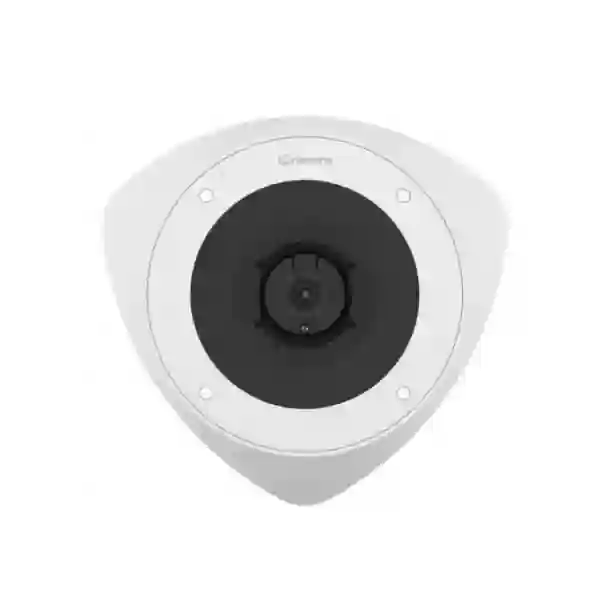
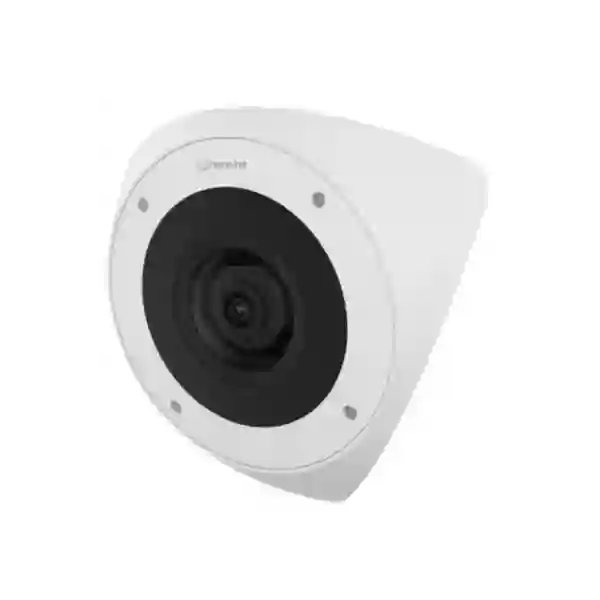
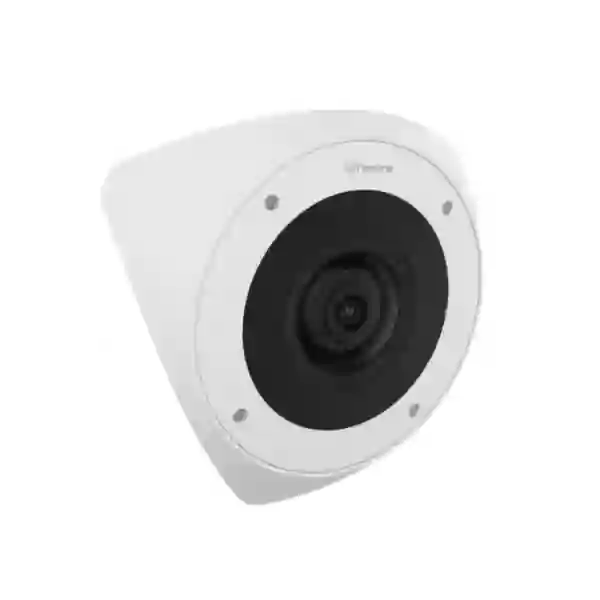
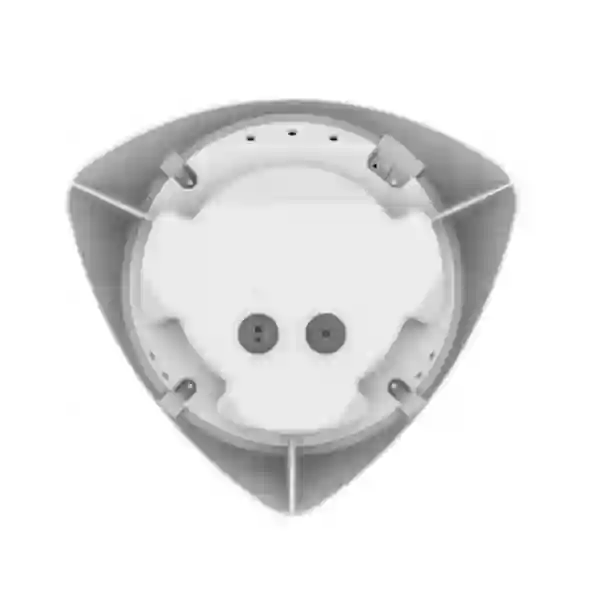
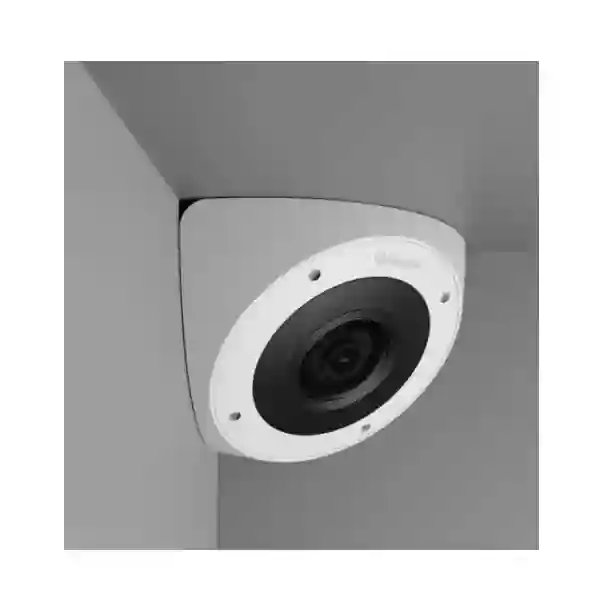
Hanwha TNV-7011RC 3MP Anti-Ligature Corner Camera
A protected corner-mount network camera with 3MP imaging, fixed 2.8mm optics, discreet infrared, PoE and video analytics. Designed for carefully assessed supervised settings where mounting safety and dependable observation both matter.
Important procurement note: Hanwha Vision identifies TNV-C7013RC as the replacement. Confirm whether this older model is specifically required, and request a suitability and compatibility review before ordering.
A clear buying answer for Tanzania projects
This camera is most relevant where a protected corner viewpoint, low-light observation and reduced exposed projections are part of the safety and security brief. It is not a generic dome-camera substitute: placement, observation objectives, privacy, recorder compatibility and the full physical installation must be assessed together. For an existing system, verify the exact model being replaced. For new projects, investigate the manufacturer’s successor and current support path before committing to the discontinued unit.
The sections below explain confirmed technical capabilities, practical limitations, likely integration checks and useful questions to ask during quotation. No stock level, selling price, local service promise or regulatory approval for Tanzania is assumed. A reliable choice begins with the room and workflow, not the model number alone.
Specifications at a glance
| Image | 1/2.8-inch CMOS; maximum 3MP (2048 × 1536); up to 30fps |
|---|---|
| Lens and view | Fixed 2.8mm F2.0; 102° H / 75° V / 129° diagonal |
| Night viewing | 940nm IR; nominal IR viewable length 10m |
| Video | H.265 / H.264 / MJPEG; WiseStream II; 120dB WDR |
| Monitoring features | Motion, tampering, defocus, shock and other video/audio analytics |
| Recording | One microSD/SDHC/SDXC slot; maximum card capacity 256GB |
| Connection | RJ-45 Ethernet 10/100BASE-T; ONVIF Profiles S, G, T |
| Power | 802.3af PoE or 12V DC; maximum 12W PoE |
| Enclosure | Anti-ligature corner design; IK10+, IP66, IP6K9K |
| Lifecycle | Discontinued; manufacturer identifies TNV-C7013RC as replacement |
Specifications are manufacturer-stated and are subject to configuration and installation conditions. Confirm the exact delivered revision before procurement.
Best-fit decision snapshot
Consider this design when
A risk-assessed room needs a corner-form housing, fixed broad view, discreet infrared and documented IP-video integration.
Review alternatives when
The brief needs optical zoom, extensive AI classification, long-distance identification or a currently marketed hardware platform.
Verify before purchase
Model lifecycle, room safety, mounting geometry, NVR compatibility, recording, audio policy, power and maintenance access.
Choosing the right camera for a vulnerable corner
A security camera in a supervised room is not selected in the same way as a general-purpose camera overlooking an office doorway. The mounting position can become a point of physical interference, the room may have limited surfaces, and staff may need an unobstructed view of activity while still respecting privacy and site procedures. The Hanwha TNV-7011RC addresses that specialised brief with a corner-mount body designed to reduce exposed attachment opportunities, a fixed wide-angle lens and a protected enclosure. It should be assessed against an actual room plan, not chosen by resolution alone.
For a Tanzania-based buyer, the first question is whether this precise older model is required for a matching installed estate or whether a currently marketed alternative will be a better long-term fit. Hanwha Vision labels the TNV-7011RC discontinued and points to the TNV-C7013RC as the replacement model. That status does not establish whether any individual supplier has units; it does mean a purchase should begin with explicit confirmation of what can be supplied, how it will be supported and which hardware revision will be delivered.
Start with the required scene, the physical risks, the monitoring objective, recording responsibilities and the existing video platform. Document where staff need to detect movement, observe behaviour or identify a person, then test the lens view from the intended fixing point. A camera can have strong impact resistance yet still fail the operational brief if an open door hides the relevant area, reflected infrared washes out the picture, or the recorder cannot use the requested stream or events.
What a corner-mount design changes
A corner camera is intended to sit at the junction of room surfaces rather than projecting into the space like a typical wall-mounted bullet camera. In environments where exposed projections and attachments are a concern, the geometry of the entire installed assembly matters. The enclosure helps address that concern, but fasteners, cable routes, sealant, adjacent fittings and the finished wall surface remain part of the risk assessment. Never assume that a product’s advertised anti-ligature design alone makes a complete room safe.
The fixed viewpoint also shapes the monitoring experience. A corner position often allows a useful diagonal view across a room, but it can introduce near-field blind spots immediately below the housing or behind furniture. Measure sight lines from the actual mounting height and do a live test before finalising the camera count. A second view may still be necessary in complicated layouts. The objective is usable operational coverage, not simply the widest possible published angle.
Corner placement deserves coordination with facilities and safeguarding teams. Camera access, cleaning methods, visual privacy expectations, emergency-room fixtures and future furniture changes can all affect the finished result. If the project has a formal anti-ligature or clinical risk-management standard, assess the complete installation against that specific standard; the camera specification is only one input.
Anti-ligature form factor and impact resistance
Hanwha describes this unit as having an anti-ligature design for correctional and behavioural-health applications. In practical purchasing terms, that is a design intention, not a blanket certification of room-level safety. Ask the project team to review all edges, interfaces and exposed hardware after the camera is installed. Also consider deliberate attempts to pull, cover, scratch or strike the camera. The overall wall condition and mounting substrate are as important as the finish of the metal enclosure.
The manufacturer lists IK10+ impact resistance, which is a significant specification for a security camera exposed to contact or attempted interference. The rating should not be interpreted as a guarantee that no deliberate damage is possible. Confirm the appropriate test interpretation, approved fixing method and inspection routine for your project. An enclosure that withstands impact does not prevent loss of a usable picture when the lens window is deliberately obscured.
Specify a service method before procurement. Staff should know how to identify looseness, altered image framing, seal damage or repeated tamper alerts, and who is authorised to work on the unit. Recording clear maintenance observations is especially useful in controlled environments because it distinguishes a genuine incident from a recurring installation fault.
Typical locations and practical suitability
The strongest use case is a compact controlled space where security teams value discreet infrared, reduced exposed projections and observation from an upper corner. Examples may include designated rooms in correctional or secure-care facilities, provided the responsible operator authorises the surveillance design and the completed installation meets the site’s policies. The name of an application is not a substitute for a professional assessment of personal safety, consent and monitoring obligations.
For a corridor, reception point or large industrial yard, a different camera format may offer better reach, mounting freedom or subject detail. The 2.8mm lens offers a broad field but cannot be optically zoomed to frame a distant subject. In brightly lit entrances, window glare and backlighting matter; in small rooms, blind spots, audio rules and night illumination may be the central questions. Match the camera to the scene’s real constraints rather than treating every IP camera as interchangeable.
Where a facility combines ordinary public space and sensitive rooms, develop a separate camera schedule for each zone. That schedule can state purpose, authorised viewers, retention, field of view, audio setting and incident-response ownership. Such a matrix makes technical selection easier and helps avoid an unnecessarily intrusive deployment.
3MP resolution: what it does and does not mean
The TNV-7011RC uses a 1/2.8-inch CMOS image sensor and supports up to 2048 × 1536 pixels, commonly described as 3MP. Hanwha lists up to 30 frames per second across its supported resolutions and principal video codecs. Those figures describe potential image output; they do not independently guarantee that a face or event will be sufficiently clear at every distance. Lens angle, subject size, illumination, compression and the recorder’s chosen profile all affect the material that operators eventually review.
For evidence-oriented recording, inspect sample video at the farthest point of interest and during the most difficult expected lighting. A live preview may appear satisfactory while recorded material is substantially more compressed or uses fewer frames. Test the exact export path and playback software too. If your primary purpose is identification at a doorway, use that target distance to assess effective pixel density, rather than assuming a 3MP camera can identify people across an entire room.
Resolution should be discussed with storage and network design. Raising frame rate and quality generally increases data requirements, while reducing them may make a brief incident harder to interpret. Establish the minimum acceptable recorded detail with the security lead and record the selected profile in commissioning notes.
Fixed 2.8mm lens and wide-angle planning
The lens is fixed at 2.8mm with an F2.0 maximum aperture. Hanwha states a horizontal viewing angle of approximately 102°, vertical 75° and diagonal 129°. These are useful starting points for room coverage planning, but the actual visible area depends on the installed camera position. With a fixed focal length, you cannot later obtain optical zoom just by changing a software setting. If the subject looks too small at the required distance, the camera or mounting plan may need to change.
The published mechanical tilt adjustment is 30° to 60°. This is not a motorised pan-tilt-zoom camera and should not be proposed as one. Plan cable exit, fixing geometry and aiming access so the final image reaches the intended floor and doorway regions. Review both landscape orientation and supported hallway-view rotation where appropriate. An attractive field of view on a drawing must still be confirmed with a real test image in the finished space.
Wide lenses can make the centre of the scene look more distant than expected. Check whether lens distortion correction helps your operators, and remember that correcting distortion may alter the apparent edges of the frame. Where more precise detail is necessary, consider complementary coverage instead of overselling digital enlargement of existing pixels.
Low-light coverage and 940nm infrared
The camera incorporates infrared illumination specified at 940nm, with Hanwha advertising an IR viewing distance of up to 10m. This wavelength is often selected where a less conspicuous emitter is desirable, but real night-image quality still depends on the room’s finishes, humidity, subject contrast and distance. A published IR reach is not an identification guarantee at that distance. Test with room lights off, typical furniture in place and any doors in their usual operating positions.
The manufacturer’s feature summary lists 0.3 lux colour sensitivity at F2.0 and a zero-lux black-and-white scenario with infrared. Its detailed table also distinguishes low-light measurement conditions, so avoid using the headline zero-lux claim to imply high-quality imaging without illumination or setup checks. Dark paint, glossy tiles, reflective equipment or glass can influence exposure. A very bright nearby surface may cause the background to appear darker than expected.
IR night testing should include movement, not only static scenes. Check whether a moving subject remains clear, whether a nearby wall creates flare and whether clothing colours appear sufficiently distinguishable in monochrome footage. Where colour evidence in darkness is necessary, this design may require an alternative lighting or camera strategy.
WDR and challenging room lighting
Hanwha specifies a 120dB wide dynamic range function, together with backlight compensation and other exposure controls. These functions are useful when a doorway opens into strong daylight or a room combines bright windows and shadowed corners. WDR attempts to preserve details across parts of a scene with very different brightness. It does not remove every reflection or guarantee readable faces under all lighting, and the final result depends on camera configuration and the activity being recorded.
For example, a subject near a bright doorway may need a different exposure trade-off from a subject against a uniformly illuminated internal wall. Test both positions at realistic times of day. Operators should compare what is visible in the live stream and in the recorded stream because the recording profile and display can alter perceived quality. Check the appearance of movement while WDR is active; high-contrast still frames alone are not a complete performance test.
The camera also lists noise reduction, digital image stabilisation, defog and highlight compensation features. They are adjustment tools, not substitutes for sensible lighting and mounting. Record the configuration that gives staff a consistent interpretation of the scene.
H.265, H.264 and MJPEG stream choices
This model supports H.265, H.264 and MJPEG. Codec selection affects compatibility, image quality, bitrate and the ease of decoding on older recording systems. H.265 may help conserve bandwidth and storage in a compatible end-to-end system, while H.264 remains a useful option for some legacy installations. MJPEG has specific integration uses but can be less efficient for continuous high-frame-rate recording. Always confirm which codecs your exact network video recorder, VMS and remote viewing clients support.
Hanwha also lists WiseStream II technology and multiple streaming profiles. This makes it possible to plan different streams for recording and live viewing, subject to the recorder and client settings. In an environment with limited uplink capacity, a lighter live-view stream may improve the operator experience without unnecessarily reducing the main recorded image. However, a secondary stream should never be mistaken for proof of evidence quality.
Write down resolution, frame rate, bitrate mode, compression, audio policy and expected simultaneous users for each use. Test the proposed values on the installed network, not just in a lab. Include peak activity and remote playback in the test plan to catch bottlenecks before handover.
microSD and recording resilience
The camera includes one microSD/SDHC/SDXC slot with a manufacturer-stated maximum card capacity of 256GB. That can support an edge-recording strategy in an appropriately configured system, but the card is not automatically a substitute for a central recorder or a resilient archival process. Select storage media for the workload, set overwrite and event policies deliberately, and test what happens if the network connection to the main recording platform is interrupted.
The number of days on a memory card is not a fixed property of the camera. Retention depends on actual average bitrate, recording schedule, activity, audio use, card capacity and filesystem overhead. A simple planning estimate can be calculated from expected bitrate, but project approval should use measurement from representative real footage. Overly optimistic retention assumptions can lead to missing evidence when it is most needed.
If an installation relies on both local and central recording, make clear which system owns incident retrieval and where the definitive copy is stored. Test retrieval after simulated link loss, assess clock synchronisation and make card-health inspection part of scheduled maintenance. A recording feature has value only when the operator can reliably find and export the required clip.
Analytics for awareness, not automatic conclusions
The TNV-7011RC supports a range of video analytics including tampering, motion, defocus and certain virtual line or area events. Manufacturer specifications also include audio-related detection, sound classification and shock detection. These functions can help direct staff attention toward activity requiring review, but an alert alone cannot establish intent, medical status or the cause of a sound. Position cameras and tune rules using typical behaviour in the actual room, then confirm that alerts are actionable.
A virtual line near a doorway may create a helpful event when someone crosses a defined boundary; a careless line through a busy portion of the image may generate repeated notifications. Likewise, lens-cover tampering and scene changes can be important, but frequent nuisance alerts may desensitise operators. Set responsibilities for response, escalation and audit. Review sample events during commissioning and after room-layout changes.
An analytics feature should be included in the proposal only when the selected NVR or VMS can receive and interpret it through the intended integration route. Different platforms expose different event classes. Test on the precise software version that will operate the system and document any features not supported in that environment.
Audio capabilities and privacy decisions
Hanwha lists a built-in microphone, selectable microphone or line input and audio output functionality. This can be useful for certain approved monitoring workflows, but audio in sensitive environments requires a separate decision rather than automatic activation. The presence of a microphone does not establish that audio recording is legally appropriate for every room, and recording the image may be justified where recording speech is not.
The project owner should document whether audio is necessary, who can listen, whether live monitoring differs from recording, what notices or approvals are required, and how data access is controlled. These questions are especially important in care and correctional settings where individuals may have limited ability to choose their environment. Consult local legal and institutional requirements rather than making assumptions from a product specification.
If sound is not part of the approved operational purpose, verify that it is disabled at the camera and recorder. Confirm the exported evidence does not silently include an audio channel. If audio is authorised, test intelligibility, event timing and role-based access alongside the video system’s retention and deletion rules.
Alarm input, output and event workflows
The detailed manufacturer specification includes one alarm input and one alarm output, plus event actions such as notifications and recording triggers. These interfaces can be valuable when a camera participates in a larger security workflow, but they should be designed as part of a documented system rather than improvised as a simple wiring shortcut. Determine what each alarm signal means, which device controls the response and what behaviour should occur during a power or network interruption.
For an incident-review workflow, events must be useful after the moment has passed. Define how an alarm is time-stamped, where associated video is stored and how staff acknowledge or close an event. Check that a trigger does not accidentally overwrite required material or flood an inbox with low-value messages. Also distinguish the camera’s local event handling from any independent safety-critical alarms that may be required by the facility.
Video analytics and alarm contacts should not replace dedicated life-safety, clinical or emergency communication systems. Their role is to add security context within the limits of the installed platform, tested wiring and procedures.
PoE, 12V DC and reliable power
Power can be supplied by IEEE 802.3af PoE or 12V DC. Hanwha publishes up to 12W consumption using PoE and up to 11W from 12V DC, with lower typical values under its stated test conditions. Use the maximum power figures when checking capacity, and allow for the rest of the network equipment on the same switch. A camera receiving sufficient power in a brief office test might still be vulnerable to a weak cable run or a heavily loaded switch.
Network-connected security equipment is only as resilient as its supporting infrastructure. Identify the relevant switch, patch panel, network route and backup-power arrangement before installation. If continuous monitoring is required during power interruptions, the camera, switch, recorder and monitoring workstation all need an appropriate continuity plan. Do not interpret PoE support as an inherent battery backup feature.
For Tanzania projects, consider the real condition of the electrical and network installation at the specified property without assuming a particular local outage pattern. Grounding, cable workmanship, protected pathways and surge-risk assessment should follow the site engineer’s plan and applicable rules. Test restart and recording recovery after controlled power interruptions.
Network and recorder interoperability
The unit connects through a 10/100BASE-T RJ-45 Ethernet interface and supports ONVIF Profiles S, G and T according to the manufacturer, along with Hanwha’s SUNAPI and an open-platform interface. Those standards make compatibility discussions more concrete but are not a promise that every third-party recorder exposes every camera feature. Basic video, metadata, audio, event handling, time synchronisation and edge-recording controls should each be checked separately.
A purchasing team often receives the statement that a camera is ‘ONVIF compatible’ without a detailed integration list. Ask for the intended recorder or VMS brand, software version and license requirements, then verify the combination in practice. Test live viewing, recording, event notification, search, playback, export and user permissions. A system that shows a live picture but cannot retrieve events is not yet a verified operational solution.
Where the proposed setup includes remote monitoring, plan secure access from the outset. The manufacturer describes optional direct cloud connection with a gateway for this older model; do not promise built-in cloud service or local hosting. The suitability of remote features depends on the separate platform, connectivity and security design.
Cybersecurity and account management
The technical specification lists HTTPS and SRTP secure communication options, IP-based access control, IEEE 802.1X network authentication and logging capabilities. These are components of a security design, not proof that the deployed camera is protected by default. Confirm firmware provenance, supported update availability, password policy and network segmentation before connecting it to a production environment. The discontinued lifecycle makes that verification more important for a new long-term deployment.
Limit administrative access to designated personnel and use separate accounts or roles where the platform supports them. Avoid exposing a camera’s management interface directly to the public internet. Keep time settings accurate, review event and access logs, and establish a process for disabling former staff accounts. Test whether the recorder maintains secure connections using the approved configuration.
Camera hardening should not be treated as a one-time checkbox. Assign an owner for firmware review, credential changes, incident handling and periodic access audits. If the required cybersecurity features or update support cannot be confirmed for the exact device version, that uncertainty should affect the procurement decision.
Ingress protection and environmental fit
Hanwha specifies IP66, IP6K9K and IK10+ on the TNV-7011RC. These ratings can inform selection where dust, moisture and impact are genuine design concerns. They should nevertheless be read alongside the installation manual, the chosen fixing arrangement and the site’s cleaning practices. An enclosure rating does not automatically validate every detergent, disinfectant, chemical environment, sealing detail or mounting orientation.
The stated operating range is -10°C to +55°C with 0–90% non-condensing relative humidity. Check the actual microenvironment of the intended location, particularly around roofs, sun-exposed surfaces, wet-room cleaning activities and poorly ventilated spaces. Local conditions can vary significantly within a building, so a generic national climate label is not a substitute for a site measurement or engineering judgement.
After mounting, inspect cable entry points and finishes against the manufacturer instructions. Cleaning personnel should have a documented method that preserves the viewing window and does not loosen the housing. Any installation intended for specialised high-pressure cleaning or other unusual exposure deserves a specific suitability review.
Site survey: the questions worth measuring
Before a quotation becomes a camera schedule, document room dimensions, ceiling height, wall materials, desired observation points, lighting, existing cables and the physical risk profile. Photograph the proposed corner and mark the features that could create a blind spot or reflective surface. This is particularly important in small rooms: a few centimetres of mounting difference may affect what staff can see of a doorway or the area nearest the camera.
Determine the required recording outcome in plain language. Is the aim to establish that somebody entered, observe a person’s actions, or support identification at a defined location? These are different image-quality objectives. Review the manufacturer’s DORI planning distances only as a starting point; test the actual pixel density and activity at the chosen distances. Site conditions, recording compression and staff response procedures govern whether the result is useful.
The survey should also record the location of the PoE source, cable length, recorder, clock service, maintenance access and any required outage protection. A complete survey prevents a technically attractive camera from being installed in a way that undermines its main purpose.
Installation and commissioning sequence
A sound installation starts with confirming the exact model and approved mounting instructions, then checking the structure and cable route. Fit the housing using the specified hardware and sealing method, connect power and network services, and complete the camera’s initial secure setup. Aim the lens while the room is configured as it will normally be used, not when it is empty and unusually bright. Document the finished mounting and any alterations from the original drawing.
During commissioning, record the camera’s network identity, firmware version, clock configuration, recording profile, event rules, privacy masks and audio setting. Validate day and night video, WDR behaviour, the intended viewing distances, network recovery and a representative recording export. If video is routed through a third-party recorder, check that platform’s actual handling of the source stream and events. A screenshot of the live picture alone is insufficient evidence of a completed test.
Handover should explain how the authorised operator checks image health, responds to tamper alarms and retrieves footage. Include an agreed schedule for safe access and inspection. The installer should not introduce avoidable projections, exposed cable loops or unreviewed fixtures in a space where the anti-ligature form factor was part of the purchasing rationale.
Storage planning and evidence workflow
The camera can provide a high-detail stream, but the recorder’s configuration determines what is retained. Establish whether recording is continuous, scheduled, triggered by events or a combination. Calculate capacity using realistic video activity and the selected codec and bitrate. Include multiple cameras, spare capacity, database overhead, export needs and any mandated retention period. Do not quote a number of recording days simply from the headline 256GB edge-storage limit.
Where evidence may be used for formal review, the operational process matters as much as image quality. Define who can search footage, who may export it, how access is recorded and how copies are protected. Test the export format and timestamp accuracy using a sample incident. Assign clear responsibility for deletion or archiving when the approved retention period ends. The goal is a controlled workflow, not indefinite recording by default.
The system should continue to meet the purpose after small changes: a new switch, a software update, revised user roles or a furniture rearrangement. Include these triggers in a periodic acceptance review so a technically functional camera does not gradually become operationally ineffective.
Image privacy controls and operational safeguards
Hanwha lists configurable privacy masking, including multiple polygonal areas. A mask can help exclude a portion of an image that is not needed for the approved surveillance purpose, but it should be evaluated carefully against the actual software behaviour. Confirm whether masked regions remain excluded from all stored streams, remote views and exports. Test after firmware or recorder configuration changes and document the agreed coverage with the facility owner.
Privacy decisions also include where the camera is mounted and who can access its output. Avoid capturing neighbouring areas or sensitive activities without an approved operational requirement. In health-related settings, a privacy review should consider dignity, safeguarding, authorised monitoring hours and response policy. In correctional settings, monitoring should be tied to the applicable institutional rules and accountability framework. The camera’s features cannot make these decisions on behalf of the organisation.
Provide operators with a clear explanation of the system’s limitations. Privacy masking may make an event impossible to review in a deliberately excluded area, while a wide-angle camera may capture more context than a team initially expects. Agree the balance before deployment rather than changing it informally after incidents.
Understanding the DORI planning figures
Hanwha publishes DORI distance estimates under EN 62676-4 conventions: approximately 33.2m for detection, 13.3m for observation, 6.6m for recognition and 3.3m for identification at the wide setting. These are planning categories based on pixel-density thresholds, not a universal promise that an investigator can recognise a face at those distances. The difference matters when a procurement specification uses the word ‘identify’ without defining scene conditions and acceptance criteria.
For a practical review, mark the actual person positions in the room and capture the intended recorded profile. Examine facial angle, movement blur, shadows and obstructions. A side-facing or masked subject may provide little usable identity detail even within a nominal planning distance. A carefully positioned camera with appropriate lighting may be more valuable than higher resolution from an unsuitable location.
Use the DORI figures to start a conversation about measurable outcomes, then agree the project-specific pass or fail tests. Include real playback, not only a theoretical field-of-view diagram.
Important limitations to disclose
The TNV-7011RC is a fixed-lens camera with a specialised corner-oriented housing. It is not a PTZ device and is not designed to provide optical zoom on demand. Its maximum edge-storage card rating is 256GB, and the published 10m IR distance is a nominal viewable-length figure. The camera may be a poor choice if the brief calls for long-range identification, adjustable optical framing, built-in high-capacity archive storage or broader coverage than its fixed viewpoint can reasonably provide.
Its built-in analytics are not equivalent to a modern model’s AI-based object classification, and any third-party VMS integration must be tested rather than assumed. Installation in a controlled environment does not eliminate the need for human judgment, physical observation or dedicated safety systems. Audio capability may be unsuitable for some rooms even when video is authorised.
Most importantly, Hanwha Vision currently marks this product discontinued. A new specification that requires the exact old model may increase future sourcing and support complexity. Confirm the project’s underlying requirements before asking for a model-specific replacement; sometimes the better procurement outcome is to specify functional performance and verify a suitable current model.
Discontinued status and the TNV-C7013RC successor
Hanwha Vision identifies TNV-C7013RC as the replacement for TNV-7011RC. The newer model is also a 3MP anti-ligature corner camera, but it is not identical. Published successor highlights include a 2.39mm fixed lens, a wider 128° horizontal field of view, Wise IR with a nominal 15m viewing length, a microSD capacity of up to 1TB and AI-based analytics. These are manufacturer features, not proof that a successor will be drop-in compatible at an existing site.
An upgrade needs a physical and operational comparison. Recheck mounting dimensions, fixing surfaces, cable exit, power, recorder compatibility, viewing geometry and event rules. A wider lens can show more of a room but make a distant subject smaller in the final image; a different set of analytics may require new integration testing. Confirm whether the current recorder can decode the new model’s preferred streams and whether the intended monitoring workflow will remain consistent.
For an organisation expanding an existing estate, identify whether matching old recordings, accessories or established operating procedures justify sourcing the older unit. If not, assess the successor first. Avoid treating a manufacturer’s replacement designation as an automatic guarantee of electrical, mechanical, software or contractual interchangeability.
Comparing original and successor fairly
Both the TNV-7011RC and TNV-C7013RC are associated with specialised corner observation, but the relevant choice depends on the room and platform. The original’s 102° horizontal view may frame subjects differently from the successor’s 128° view. The original lists 10m infrared and up to 256GB microSD; the successor lists 15m Wise IR and up to 1TB microSD. A larger specification figure may be useful, but the buyer still needs representative recording and image tests.
A buyer should compare the actual detection and recognition objectives, not just the number of advertised technologies. For example, AI analytics may reduce particular unwanted events in a suitable configuration, but the recipient VMS must support the event data needed by the operator. Likewise, additional local storage does not independently establish an evidence-retention policy. Keep lifecycle status and firmware maintenance visible in the selection criteria.
For a retrofit, request side-by-side technical approval from security operations, IT, facilities and the people responsible for the room’s safety policy. Their acceptance is more reliable than relying on an untested promise of drop-in replacement.
Tanzania procurement and site-readiness checklist
A buyer seeking this model for a Tanzania project should identify whether the requirement is a single replacement unit, a multi-room rollout or a redesign. Provide the exact model, quantity, room drawings, current recorder and desired monitoring outcomes when requesting a quotation. Because the manufacturer has discontinued the original, request confirmation of the exact product status and any proposed successor before approving a bill of materials. This content does not assert a local price, stock position or delivery time.
Clarify responsibilities for shipping, site access, installation, testing, documentation and ongoing maintenance through the project quotation. Do not assume that a manufacturer rating amounts to Tanzanian regulatory approval, a local installation licence or a particular warranty. Any compliance question should be checked against the current rules and contractual scope that apply to the actual installation. If a supplier proposes a different model, insist on a transparent comparison rather than accepting a broad statement that it is ‘equivalent’.
Prepare a review pack showing camera count, mounting locations, power and network design, retention targets, privacy decisions, incident response and acceptance tests. That pack allows the buyer to compare valid alternatives on outcomes rather than only unit price.
Questions for your integrator before ordering
Ask your integrator to show the actual camera viewpoint, the expected minimum subject detail and the proposed recordings under difficult lighting. Request a list of accessories and mounting materials included in the offer. Confirm whether PoE power comes from an existing switch and whether the site’s structured cabling is suitable. Have them explain how the camera’s network address, permissions and event notifications will be managed over time.
Ask for the exact NVR or VMS versions that have been tested with the model being supplied. Include video codecs, recording, playback, event receipt, audio, export and user access in the acceptance scope. If the camera belongs in a high-risk room, request a documented review of exposed fixings, service access, cleaning and enclosure integrity. These details can decide whether a seemingly inexpensive camera becomes an expensive installation problem.
Finally, require a clear statement on discontinued product status, supply source, support route and replacement options. An offer for remaining inventory is a different decision from choosing a current platform for a long-service deployment.
Maintenance after installation
Maintenance should confirm that the image still serves the approved purpose. Review the lens window, housing, fastening points, cable entries, network link, time accuracy and recorded image at appropriate intervals. Compare new frames with the accepted commissioning view to catch gradual drift, tampering or furniture changes. In a sensitive room, follow the organisation’s safe-access procedure and coordinate any required temporary monitoring alternative.
A lens cover may be physically intact but dirty enough to compromise night recording, while a camera may respond to ping tests but fail to send useful events to the recorder. Include real playback and an event test in the inspection checklist. Keep an audit trail of configuration and firmware changes. When the device has been discontinued, review support information more deliberately and plan for a supported replacement rather than assuming that updates will continue indefinitely.
Unexpected faults should prompt structured checks: power, network, clock, recording profile, IR reflection, event configuration and VMS connectivity. Avoid factory resets without a backed-up configuration and a recovery plan.
How to decide whether this model is right
The camera may be an appropriate reference design when a project requires a protected corner form factor, a wide fixed view, discreet IR capability and integration into a conventional IP-video system. It is especially worth examining where exposed projections are a known concern. Its particular combination of anti-ligature design, IK10+ rating, PoE and network-streaming features addresses a real specialised need; the suitability of the finished installation remains a matter for the responsible design team.
It may be the wrong purchase for a new site if a longer-range lens, PTZ operation, different night-time colour requirements, extensive AI classification or a currently marketed hardware platform is essential. It may also be inappropriate when legal, privacy or safeguarding conditions do not support the planned surveillance use. In those cases, revisit the requirements before any order. A disciplined selection process is preferable to choosing an impressive specification sheet that fails the operational brief.
For buyers who specify the discontinued TNV-7011RC, the next step is a model-aware review of availability and the TNV-C7013RC alternative, followed by a site survey and a documented compatibility check.
Frequently asked questions
Is the Hanwha TNV-7011RC still a current model?
No. Hanwha Vision’s official product information identifies TNV-7011RC as discontinued and names TNV-C7013RC as its replacement. That manufacturer lifecycle label does not tell you whether an individual supplier can source older units. Ask for an exact model and availability confirmation, and consider the consequences for future firmware, spares and standardisation before choosing it for a new rollout.
What resolution and lens does the camera have?
It supports a maximum 2048 × 1536 image, commonly called 3MP, and uses a fixed 2.8mm F2.0 lens. The published horizontal viewing angle is 102°. It is intended for a fixed corner viewpoint, not optical zoom or motorised pan and tilt. Confirm the required image detail with actual test footage at the specified subject distance.
Can it see in a completely dark room?
The camera has 940nm infrared illumination with a nominal range of up to 10m. Its low-light mode is intended to support monochrome images when visible light is very limited. Results depend on surface reflections, distance, motion and image settings, so a lights-off test is essential. Do not treat a nominal IR distance as a guarantee of evidential identification.
What does anti-ligature design mean for this installation?
Hanwha describes the housing as anti-ligature for specialised supervised environments. This refers to the camera’s physical design intent; it does not make the whole room anti-ligature or replace the organisation’s safety assessment. Fasteners, cable routes, adjoining surfaces, installation workmanship and maintenance access need review under the site’s applicable procedures.
Can it connect to a third-party NVR?
The published network specifications include ONVIF Profiles S, G and T and conventional IP video codecs. Those capabilities support interoperability planning, but individual recorders vary. Ask the integrator to demonstrate live view, recording, playback, search, events, export and user permissions on the exact NVR or VMS version intended for service.
Is PoE supported?
Yes. Hanwha lists IEEE 802.3af PoE and 12V DC power options. The quoted maximum consumption is 12W on PoE and 11W on 12V DC. Verify the switch budget, cabling, backup power and any site-specific electrical protection as part of system design. PoE alone does not provide outage continuity.
How much video fits on a microSD card?
The manufacturer states support for one microSD/SDHC/SDXC card up to 256GB. Retention duration cannot be inferred from card capacity alone because bitrate, resolution, frames per second, recording schedule and event activity change storage demand. Calculate capacity using real expected settings and test recorded playback before relying on local storage.
Is audio recording automatically appropriate?
No. The presence of a built-in microphone and audio interfaces is a technical capability, not an authorisation to record conversations. The project owner should decide and document the monitoring purpose, applicable legal and institutional requirements, access controls, notices where needed and retention rules. Disable audio unless it is approved for the particular space.
Does IK10+ mean it cannot be damaged?
No. IK10+ is a published impact-resistance specification, not an indestructibility guarantee. Deliberate lens obstruction, unsuitable fixings, repeated abuse or compromised seals can still affect performance. A complete design includes installation review, tamper monitoring and scheduled inspection.
What replacement does Hanwha recommend?
The manufacturer identifies TNV-C7013RC as the successor. Published features include a 3MP image, a 2.39mm fixed lens, 128° horizontal view, nominal 15m Wise IR, AI-based analytics and up to 1TB microSD support. These differences require a compatibility and site-coverage review; do not assume the newer camera is a drop-in replacement.
Is the camera suitable outdoors or for washdown areas?
The stated ratings include IP66 and IP6K9K, and the published operating range is -10°C to +55°C under specified humidity conditions. These figures help assess environmental suitability but do not validate every cleaning chemical, mounting detail or local condition. Check the installation manual and the site’s exposure and cleaning requirements before specifying it.
How should a Tanzania buyer request a quotation?
Supply the exact model, number of cameras, intended application, drawings or photographs, power and network arrangements, current recorder model, retention needs and required commissioning scope. Ask whether the offer concerns the discontinued TNV-7011RC or the TNV-C7013RC successor. Request written confirmation of supply terms, compatibility and site responsibilities rather than assuming stock, price or delivery. No Tanzania stock or pricing claim is made here.
Request a model-aware camera quotation
Share your site requirements, recorder details, quantity and whether you need a like-for-like TNV-7011RC replacement or an assessment of TNV-C7013RC. Ask for confirmation of exact supply, suitable integration, mounting and commissioning scope before purchase.
Request product and compatibility details
No availability, price, delivery time or installation service is guaranteed by this product information.




Reviews
There are no reviews yet.