

Hanwha Vision · IP Audio · Tanzania project enquiries
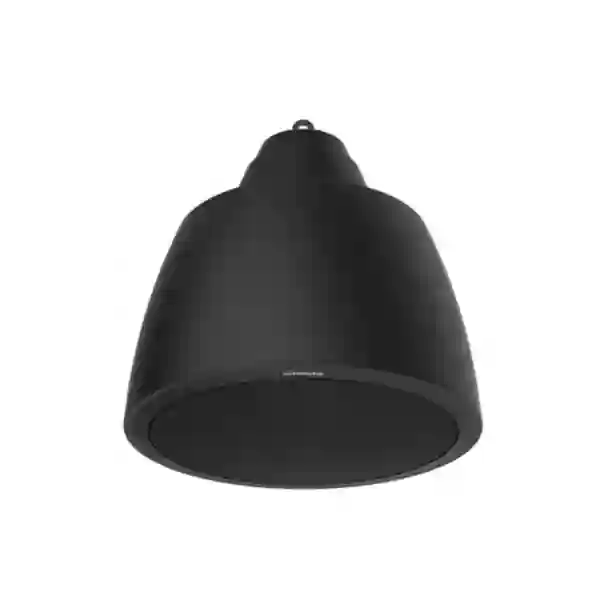
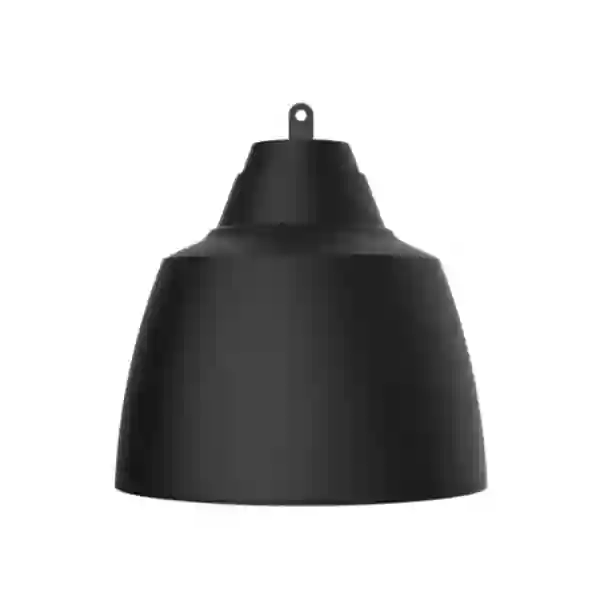
Hanwha SPA-P100B IP Pendant Speaker — Black
Network paging and recorded announcements for spaces that benefit from suspended speaker placement. This model combines a 10 W amplifier, PoE/PoE+ power, two-way audio, scheduled messaging and SIP-oriented integration.
Quick fit: where this model makes sense
Consider this IP pendant speaker if your organisation needs controllable indoor announcements in a room with an exposed or otherwise unsuitable flush ceiling, and you have a suitable Ethernet and PoE infrastructure. It may be useful for live paging, scheduled operational messages and background audio, subject to the chosen controller. Before ordering, verify the required announcement languages, acoustic coverage, suitable suspension details and integration with the existing phone or security platform.
The critical limitations are practical. The 101 dB headline is the specified maximum under PoE+ rather than basic PoE. Swahili is not listed among native text-to-speech languages. The manufacturer provides no IP weather-protection rating for this model. FourTeck can review your equipment list and requirements for a project-specific proposal; this page does not claim local stock, a listed Tanzanian price or guaranteed integration.
Manufacturer-published specifications at a glance
Key specifications for the exact SPA-P100B black variant. Confirm current documentation and intended system configuration before procurement.
| Product | Black IP pendant speaker |
|---|---|
| Amplifier | Built-in 10 W Class D |
| Maximum SPL | 97 dB (PoE); 101 dB (PoE+) |
| Frequency range | 130 Hz–20 kHz (−10 dB) |
| Sensitivity | 91 dB (1 W) |
| Speaker assembly | Two-way; 8-inch LF and 2-inch HF |
| Network | 10/100 Base-T Ethernet |
| Power | IEEE 802.3af PoE / IEEE 802.3at PoE+ |
| Storage | 1 GB internal; microSDHC up to 32 GB |
| Protocols / interfaces | SIP, P2P-SIP, SUNAPI, ONVIF Profile S |
| Contact I/O | One dry-contact input; one normally open output |
| Dimensions / weight | 269 mm diameter × 256 mm height; 2.1 kg |
| Operating conditions | −20°C to +50°C; 10–85% RH, non-condensing |
| Ingress protection | No IP rating published (IP code N/A) |
Choosing a pendant speaker for an IP audio project
The Hanwha SPA-P100B IP pendant speaker is intended for projects where announcements need to reach people across a room but conventional flush ceiling speakers are unsuitable. A pendant enclosure hangs below the structure, making it worth considering beneath exposed services, industrial-style ceilings and other interiors where the acoustic source needs to sit closer to the listening area. The black finish provides a distinct choice when a pale ceiling accessory would be visually intrusive. It is a network speaker, not an ordinary passive loudspeaker: deployment planning must cover an Ethernet link, PoE power, addressing and the intended audio control platform.
Start the buying decision with the operational requirement, not the specification headline. Decide whether staff will make live calls, whether messages must play automatically at set times, whether background music is needed, and whether an existing voice or security platform should trigger audio. Then consider the size, shape and noise level of the listening zone. A single speaker may be adequate for one defined area while a large or divided property may need several endpoints. A good quotation should therefore describe the room, the desired announcements and the equipment already in place before it specifies a quantity.
Product identity and verified configuration
SPA-P100B identifies the black model in Hanwha Vision’s IP pendant speaker family. The unit incorporates a 10 W Class D amplifier and a two-way speaker assembly described by the manufacturer as an 8-inch low-frequency driver with a 2-inch high-frequency driver. Its Ethernet interface is 10/100 Base-T. Manufacturer specifications list a frequency range of 130 Hz to 20 kHz, measured at the stated minus 10 dB criterion, and sensitivity of 91 dB at one watt. These figures help a system designer compare configurations, but they are not a substitute for checking intelligibility in the proposed room.
The manufacturer also lists approximately 2.1 kg weight and dimensions of 269 mm diameter by 256 mm height. These physical details matter before the contractor chooses a suspension point, structural fixing and access route for cabling. The product supports PoE and PoE+, networked audio functions, local storage and dry-contact interfaces. The presence of a feature does not necessarily mean it is enabled in an existing third-party system without configuration. Treat the speaker as one component of a planned audio solution, and verify how the other components will send, prioritise and monitor messages.
Audio clarity, output and practical coverage
Hanwha rates the maximum sound pressure level at 97 dB with PoE and 101 dB with PoE+. These are manufacturer maximum figures under test conditions; they are not guaranteed sound levels at every listener position. The difference is especially important when someone quotes the higher number without identifying the power standard. Audience distance, room reflections, ambient machinery, furnishings and speaker placement all affect how well a message is understood. A nearby speaker at a moderate level can be more effective than one distant source driven loudly in a reverberant space.
For speech-oriented projects, test sample announcements rather than judging the installation using music alone. Walk to the edges of the planned listening area, listen during normal occupancy, and ask whether names, numbers and instructions remain intelligible. In a shop or visitor area, the lowest-level zone may be more revealing than the loudest point. In a warehouse, background noise can fluctuate substantially across a shift. The manufacturer’s frequency range and coverage-pattern data are useful inputs to planning, but real-room confirmation is the responsible way to choose position, speaker count and volume.
PoE versus PoE+: make the power requirement explicit
The SPA-P100B accepts IEEE 802.3af Type 1 Class 3 PoE and IEEE 802.3at Type 2 Class 4 PoE+. With either supported approach, power and data reach the speaker over the network connection rather than through a separate local mains adapter. That simplifies the endpoint cabling plan, but the switch or injector must actually supply a compatible power class. An unused Ethernet port does not necessarily supply power, and a switch advertised as PoE may have limited total output available across its ports. Confirm the power source before installation.
When an application depends on the manufacturer’s 101 dB maximum figure, design around the PoE+ condition rather than assuming basic PoE gives identical output. A site containing multiple speakers also needs a total switch-power calculation, with appropriate capacity for other cameras, telephones and network devices already using the same switch. Check the manufacturer’s permitted cabling and switch requirements, and arrange reliable backup power where public announcements must continue through brief power interruptions. A UPS and resilient network design may be appropriate, but any uptime requirement should be engineered for the whole system, not promised on the basis of the speaker alone.
Network design and connectivity planning
This is an IP device with 10/100 Base-T Ethernet, so procurement needs a functioning network path as well as the physical speaker. The project team should determine whether the audio endpoints will use a dedicated VLAN or an existing managed network segment, who will assign addresses, and where configuration and monitoring access will live. Confirm whether the solution depends on DHCP, DNS, NTP or specific routes to a paging controller. The published protocol list includes IPv4 and several common network services, but it does not by itself establish that every enterprise authentication or encryption requirement will be supported.
Before buying a quantity for a building, ask the network administrator to confirm port availability, PoE budget, cable routes and policy for device-to-device or controller-to-speaker traffic. Multicast audio, where used by the wider system, may also require deliberate switch and routing configuration. Plan around actual topology rather than an assumption that all devices sharing an internet connection can talk to each other. A laboratory setup with the intended switch model, firmware and control software is particularly valuable when the building uses segmentation, restrictive firewalls or a centrally managed corporate network.
SIP paging and telephone-system integration
The manufacturer lists SIP and P2P-SIP among the supported IP audio capabilities, making the SPA-P100B relevant when a business wants announcements initiated through compatible voice equipment. The manufacturer’s interoperability notes mention testing with examples of SIP clients and an Asterisk-based PBX environment. That establishes a starting point for an integration discussion, not a blanket guarantee for every SIP trunk, hosted PBX, call server or firmware release. The project team should establish which device originates the call, how the speaker receives it, and what happens if more than one person tries to page simultaneously.
Confirm signalling settings, supported codecs, DTMF needs and the handling of ring, auto-answer and disconnect behaviour within the chosen system. Hanwha lists PCMU, PCMA and specified Speex codecs for its documented voice integration; the wider PBX may support additional codecs that are not relevant to this endpoint. Test the exact call flow in advance, including audio level, timing, access permissions and recovery after the network disconnects. If a telephone-system supplier describes a product as compatible, request the tested configuration and software versions so the Tanzania installation can be planned around evidence instead of marketing shorthand.
SUNAPI, ONVIF and platform interoperability
Hanwha specifies SUNAPI via an HTTP API and ONVIF Profile S under system integration. These interfaces can be relevant to a larger site where administrators want speakers to respond to authorised events or work alongside other connected devices. Their presence does not automatically mean that a particular video management system, camera or controller will expose every audio command through its own user interface. ONVIF Profile S is a specific profile and should not be interpreted as proof that all paging, scheduling, music and text-to-speech functions can be remotely controlled in the same way.
Before specifying integration, write a small acceptance matrix: the source event, the desired audio action, the interface used, the expected response and the method for testing failure. For example, an operator may want one selected zone to play a recorded message when a verified event occurs. That use case requires confirming the actual API commands, permissions, audio source and any controller configuration. If the speaker will be part of an existing Hanwha-based deployment, check the current integration documents for the exact controller and software versions. Do not buy the product solely because two vendors both use the phrase IP audio.
Text-to-speech and language suitability in Tanzania
Built-in text-to-speech can be useful when announcements change frequently and staff do not want to record a new voice message each time. Hanwha lists English in US and UK variants, German, French, Spanish and Russian as supported TTS languages for this model. Swahili is not included in that published list. For Tanzanian premises where visitors or employees need Kiswahili announcements, avoid stating that the device generates Swahili speech natively. Language capability is a decisive requirement, especially for safety, queue management and customer instructions.
A practical alternative may be to prepare professionally recorded Swahili audio files and validate their playback in the selected scheduling or event workflow. However, whether a proposed workflow supports the right files, triggers and priority rules must be demonstrated with the exact firmware and system configuration. Consider bilingual messages where suitable, but do not assume that a longer announcement will remain understandable if the environment is noisy. Ask decision-makers to provide sample message text in the actual language used on site and include a listening test with the intended audience before sign-off.
Scheduled announcements and timed operations
The SPA-P100B includes a scheduler function in its published feature set. This makes scheduled audio an important discussion for shops, offices, campuses and facilities that have repeating daily routines. Examples include an opening notice, a planned closing reminder or an ordinary operational announcement at an agreed time. A scheduler is only as useful as the accuracy of its clock, the format of its audio and the ability of staff to maintain its timetable. The full system should also deal correctly with weekends, holidays and any change to the local operating schedule.
A commissioning plan should define which person may edit a schedule, where the audio files are stored, how messages are approved and what happens if a scheduled announcement conflicts with a live page. Check the controller and device documentation for priorities and limitations rather than inventing them. If the business operates in Tanzania, ensure that the system clock and time-zone configuration are deliberately checked during setup. Where multiple speakers serve different departments, validate each target zone individually: a correct recording sent to the wrong area is still an operational error.
Background music without confusing it with paging
Background music support is listed by the manufacturer, and it may suit customer-facing areas that require music between ordinary announcements. Yet music distribution and operational paging have different design requirements. Music calls for a comfortable, even listening experience while intelligible announcements need speech to be clearly recognisable over the ambient programme. A speaker can perform both functions only within the limits of the configured audio workflow. The system designer must confirm how sources are selected, how volume is controlled and what takes priority when staff initiate a page.
During a demonstration, play the normal background programme, then issue a test message from the actual paging source. Measure whether listeners can understand the complete sentence at typical positions and whether the programme returns as intended afterwards. The availability of background music is not permission to distribute copyrighted content, and the organisation remains responsible for appropriate licensing. It is also sensible to agree on operating hours and volume policies so adjacent workspaces, neighbours or customer service points are not disturbed. Verify those operational details before promising a seamless music-and-paging experience.
Local storage and supported media formats
The SPA-P100B has 1 GB of internal storage and a microSDHC card slot with manufacturer-listed support up to 32 GB. These features can be useful for recorded messages and local audio workflows, but storage capacity alone does not tell the buyer how many usable announcements the configured application will hold. Hanwha lists WAV and MP3 support, mono or stereo, with bit rates from 64 to 320 kbps and sample rates from 16 to 48 kHz. File naming, encoding and scheduling compatibility should be tested using the real files intended for deployment.
For a multi-location or multi-department operation, prepare a controlled audio library rather than letting individual users upload unreviewed recordings. Each message can have a clear purpose, language, version, owner and review date. Test the recording at a practical loudness and keep an approved backup of the original file. If the speaker is expected to operate temporarily without a controller, confirm that the desired functions are actually supported under that condition; the existence of internal storage should not be treated as a guarantee of independent failover. The quotation can also identify whether any approved memory card is included or must be acquired separately.
Two-way audio and listening considerations
Hanwha includes two-way audio in the key features for the SPA-P100B. This may interest facilities that want an audio exchange rather than one-direction announcements, but two-way operation depends on compatible calling or control equipment and correct configuration. The official technical table also refers to embedded microphone functions under a sound-level meter heading. That should not be transformed into an unsupported claim that the unit performs every type of talkback or recording service. Define the intended conversation workflow in concrete terms before selecting this as the primary endpoint.
In an occupied business, communication and monitoring functions also raise practical policy questions. Decide who is allowed to initiate a call, who can hear a response, whether recordings are made elsewhere and how staff and visitors will be informed where necessary. The speaker’s own feature list does not resolve privacy or recordkeeping obligations. For a receptionist-to-floor or control-room-to-area use case, demonstrate a complete call through the chosen application and check speech quality in both directions. If noise or echo makes the return path unreliable, address the acoustic and workflow limitations before accepting the design.
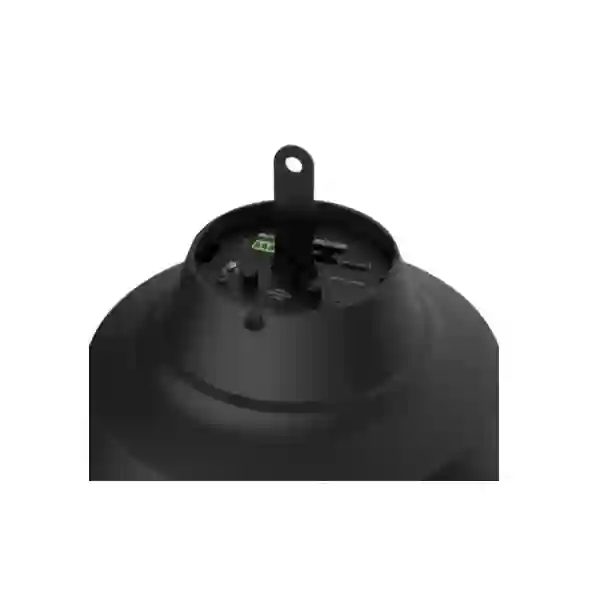
Dry contacts, relays and event workflows
Hanwha publishes one dry-contact input channel and one normally open dry-contact output channel for this model, together with a built-in relay feature. Dry contacts are relevant when the speaker must form part of a wider control arrangement, for example receiving an approved trigger or signalling an external controller. They are not a substitute for a properly engineered electrical control circuit. The manufacturer page does not, by itself, justify switching mains loads or treating the relay as a certified fire-alarm output, and installers should consult the applicable electrical and manufacturer instructions for the exact connection.
Before wiring anything, identify the signal voltage and current limits in current installation documentation, the device responsible for generating each event, and the desired state after a power or network failure. Draw the interface in a simple schematic so everyone can agree on the signal direction. During testing, trigger the event several times and verify that it results in the intended message or indicator only in the selected area. Do not create life-safety dependencies on an unapproved design. If a customer requests emergency notification integration, require a separate qualified assessment of the complete approved system and applicable local requirements.
Mounting, suspension and cable management
The pendant form factor can solve a placement problem where a ceiling tile or flush mounting surface is unavailable. It also creates a responsibility to secure a suspended object safely above occupants. The listed 2.1 kg weight is an equipment value, not a complete structural load assessment. A competent installer should check the ceiling substrate, approved fixings, suspension method, cable protection and access for future service against the latest manufacturer installation instructions. A decorative cable route should not be assumed to serve as a safety suspension unless explicitly permitted by the manufacturer.
Site planning should include the speaker’s size, ceiling height, likely clearance below it, nearby lighting and ventilation systems, and the path back to the PoE switch. In an exposed-ceiling shop, aligning multiple pendants may be as important visually as their audio spacing. In a service area, make sure the unit is not within reach of equipment, moving stock or elevated maintenance work. Before drilling, confirm the actual structure and avoid hidden services. Photograph or document the installed position and port assignment to simplify fault diagnosis and future renovation.
Environmental limits and indoor suitability
The manufacturer specifies an operating temperature of minus 20 to plus 50 degrees Celsius and non-condensing relative humidity from 10 to 85 percent. These figures are equipment operating limits; they do not establish weatherproofing. The manufacturer shows the IP code as not applicable, so the product page should not advertise this pendant speaker as having an IP-rated outdoor enclosure. In Tanzania, project planners should consider hot spaces, open-sided premises, humidity, dust, roof leaks and any exposure to cleaning spray before choosing a position.
A sheltered room can still have challenging conditions if its roof becomes very hot or if moisture condenses during changes in ventilation. For each location, document the expected temperature, potential water exposure, dust and cleaning method. If the installation genuinely requires rain, washdown or substantial dust protection, ask for a separately verified suitably rated product rather than stretching this model’s specification. Protect cabling and network equipment from the same environmental risks. Physical suitability must be verified before selecting audio features; a speaker that cannot safely survive its mounting location is not a reliable choice.
Retail and showroom scenarios
A retail project may use a pendant IP speaker for clear operational messages in an open-plan customer area, with separate scheduling of opening or closing announcements. The suspended design can align with visible ceiling structures and place the source below busy overhead services. However, a long narrow store and a compact square showroom have different acoustic needs. Map entrances, payment points, staff counters and any high-noise demonstration area before deciding on the number of speakers or their positions. Avoid selecting a count only from floor area.
For customer-facing audio, test voice intelligibility at the entrance, along aisles and near checkout while the store is operating normally. If music is part of the plan, establish how staff will interrupt it and what level is acceptable. If both English and Swahili messages are required, use recordings that have been checked by the business; do not rely on undocumented Swahili text-to-speech capability. The procurement request should describe preferred finish, speaker location, user permissions, announcement schedule and the existing IT switch. This gives a supplier enough context to discuss an appropriate design rather than simply pricing a box.
Office buildings and shared workplaces
In offices, an IP pendant speaker may be considered for shared circulation areas, open social spaces or large rooms that do not have a suitable flush ceiling. Use cases might include planned workplace notices, general paging or information for visitors. The acoustic challenge is often not raw volume but avoiding disturbance to nearby meeting rooms and focused work areas. Decide where announcements must be audible and where they should not be intrusive. A detailed zone plan is more helpful than a single setting that broadcasts everywhere at once.
A responsible office deployment also clarifies operating permissions. Reception may need a limited set of routine messages while facilities personnel may need access to another set. If live paging originates from a PBX, test the intended extension and call flow with the actual handset or softphone. Include troubleshooting information for the IT team so network or SIP problems can be distinguished from a defective speaker. Where several tenants share infrastructure, agree on who owns each switch port, device configuration and schedule. Planning this governance early avoids confusion after an otherwise successful installation.
Education and multi-room facility considerations
Schools, training centres and other multi-room sites may be interested in scheduled audio for ordinary announcements and coordinated day-to-day communication. In such settings, timing and zone accuracy are as important as loudness. Different rooms can have very different acoustic characteristics, and pupils or visitors may rely on different languages. A proposal should specify the exact spaces to cover, the speaking language, the listener groups and whether the system needs local or central control. No individual network speaker guarantees an entire campus-wide communications service on its own.
Trial one representative teaching space, a corridor and any large communal area before choosing a common mounting rule. Check that staff can hear announcements over normal activity without excessive volume, and ensure the appropriate controller manages the intended message scope. Separate routine notifications from any regulated emergency or evacuation systems unless the full architecture has been specifically reviewed and approved for that role. If staff expect a timetable bell or spoken schedule, test both the clock handling and file playback with real site messages. Record the acceptance criteria so a later expansion follows the same standard.
Hospitality, reception and public-facing spaces
Hotels, conference venues and reception areas may value discreet networked audio for welcome messages, queue guidance or normal operational paging. The pendant format is relevant when the ceiling is open or unusually high and a visible suspended speaker works with the interior design. The black colour can suit some darker ceiling treatments, but architectural preference should not override speech coverage. Guest and visitor spaces also require restrained volumes and careful consideration of where audio will carry beyond the intended room.
An effective hospitality plan describes when announcements occur, who approves their wording, and whether background music or another source needs to yield during a live message. For a multilingual audience, provide tested prerecorded recordings where the built-in TTS list does not meet the required languages. Check whether the existing audio controller can choose the correct area without broadcasting to neighbouring meeting rooms. Before purchase, arrange a demonstration that recreates the actual sources and use cases. A clear user procedure can matter more to daily service quality than an impressive technical feature list.
Industrial and warehouse indoor applications
A warehouse or covered operations area may have exposed structure suited to pendant mounting, but its acoustic and environmental demands can be severe. Forklifts, ventilation, packaging machinery and variable occupancy create noise that may mask speech. Metal surfaces and large open spans can produce reverberation, making a distant loudspeaker hard to understand even if it seems loud. Conduct a noise and coverage assessment with the site in operation. Consider speaker position relative to aisles and workstations instead of relying on one high-output unit to fill the entire building.
This model’s lack of a published ingress-protection rating is particularly important when an industrial area contains airborne dust, water exposure or frequent pressure cleaning. The operating temperature range likewise cannot be treated as proof of suitability for every workshop. If the area is dry, within limits and safe for suspended installation, the network features may still make it a candidate for routine paging. Test the required messages from the genuine paging source, check the switch-power plan and include a maintenance access strategy. For sites where instructions are safety critical, use the appropriate professionally engineered and approved communication system.
Security events and ordinary operational notifications
A connected speaker can be part of a wider security or facilities workflow where an operator wants an audible message after a verified incident. With SUNAPI, ONVIF Profile S and dry-contact capabilities listed, the SPA-P100B invites discussion about event-driven audio. Yet the full workflow is never proven by the speaker feature list alone. The video platform, event logic, controller, endpoint configuration and staff procedure must all work together. Specify the initiating condition and distinguish a routine deterrence message from a life-safety alarm or mandatory evacuation function.
A useful test plan covers false events, repeated events, speaker availability, message priority and recovery after the network fails. Confirm who can change the wording and whether the event log contains sufficient detail for maintenance. If a customer wants integration with cameras, avoid assuming that all camera or management software supports the same audio actions just because it has a compatible protocol on paper. Ask for a tested integration record or run a pilot using the intended hardware. Design the response around the facility’s policies and applicable approval requirements, not a generic promise of automated security.
Network security and access management
IP audio endpoints deserve the same care as other network-connected business equipment. Hanwha lists role-related password protection, digest authentication mechanisms and user access logging in its published specification. These features are useful only when an administrator configures them appropriately and manages credentials. Change initial credentials according to the current manufacturer procedure, restrict access to authorised operators, and document who is responsible for firmware and configuration. Do not assume that every security feature available on one Hanwha speaker family is necessarily present in the exact SPA-P100B software version.
The site IT team should decide whether the audio network is segregated from public Wi-Fi and how configuration interfaces are reached. Apply appropriate firewall rules and avoid uncontrolled internet exposure. Check available firmware documentation, maintenance processes and authorised update methods before deployment. After an update, repeat any critical SIP, scheduling or API tests because an endpoint can remain visible on the network while part of an integration stops working as expected. Maintain a simple asset record containing model, location, network identifier, administrator and approved configuration backup location, without publicly exposing sensitive passwords.
Commissioning and acceptance tests
A well-planned commissioning process turns specification claims into site-specific evidence. Begin with physical inspection: correct model, undamaged enclosure, safe suspension, appropriate Ethernet termination and a PoE source of the intended class. Confirm that the endpoint appears on the approved network and that authorised staff can reach the configuration interface. Then test the actual audio sources separately: a live SIP page, a scheduled recording, a stored file and any API-triggered message needed by the customer. Record which functions work on which controller and firmware versions.
Continue with listening tests across the planned coverage area at normal occupancy and normal ambient noise. Verify the distinction between PoE and PoE+ if maximum level matters for the design. Test failure and recovery: a switch reboot, a temporary network disconnection, and restoration of the normal audio schedule. Also confirm that a message intended for one zone does not play in an adjacent zone. Close the project only after staff demonstrate they can issue, cancel or maintain the announcements for which they are responsible. Deliver a concise handover record instead of relying on undocumented verbal instructions.
Long-term operation and preventative maintenance
Once deployed, a network speaker becomes part of both the facilities and IT maintenance programmes. The customer should identify a primary owner for the audio schedule and a technical owner for network settings, credentials and updates. Periodically play an approved test message and confirm that the audio remains clear at normal listening locations. The manufacturer’s product page describes monitoring functions including connection verification, logging and a graphic-level speaker test tool, but the availability of central alerts depends on the chosen management system and configuration.
Keep a record of changed schedules, approved message files, firmware updates and service incidents. If a site changes its floor plan or adds new equipment, revisit speaker placement because shelving, partition walls and background noise can change coverage. Establish a safe way to inspect the suspended hardware without putting staff or visitors at risk. When troubleshooting, distinguish a missing audio source, a failed network port, insufficient PoE power, a controller configuration fault and an actual speaker failure. This sequence makes support more efficient and helps protect the original project investment.
Comparing pendant, ceiling, wall and horn formats
Selecting the SPA-P100B is partly about selecting the right physical speaker format. A pendant speaker can suit open ceilings and high structural voids when a suspended source helps position sound nearer to listeners. A flush ceiling speaker may be less visually intrusive under suitable finished ceilings. A wall speaker can offer another mounting route when suspension is inconvenient, while a properly specified horn speaker may be more suitable for a particularly noisy or exposed area. These are planning distinctions rather than claims that any one product family is always better.
Compare candidate models using verified ingress protection, sound output, coverage pattern, network support, mountability and the messages people must understand. A black indoor pendant should not be substituted for an outdoor-rated device simply because the audio level looks comparable in a brochure. Likewise, do not treat the amplifier wattage of unlike enclosures as a direct measure of speech intelligibility. For a mixed-use property, different areas may call for different speaker types under one carefully reviewed audio architecture. The buyer should ask for a documented rationale behind each selected form factor and location.
What to include in a Tanzania quotation request
A useful request for quotation names the Hanwha SPA-P100B IP pendant speaker and gives an approximate quantity, but it should also describe the intended business outcome. Include the room type, floor plan if available, ceiling height, ambient noise conditions, preferred black finish and whether the area is fully sheltered. Specify whether the organisation needs live paging, scheduled messages, music, two-way communication or event-triggered audio. Explain which languages listeners need and whether an existing PBX, video platform or other control system will be involved.
Add the proposed switch model or PoE/PoE+ availability, network administrator contact, desired zone layout and access arrangements for installation. If the project already has a SIP platform, identify the vendor and software version so compatibility can be checked. Ask the supplier to distinguish the speaker itself from cables, switches, mounting materials, controllers, configuration and any services proposed. Local price, stock, warranty terms, delivery and installation coverage should be confirmed in the issued quotation rather than inferred from an overseas product listing. Keep acceptance tests and handover documentation in the project scope where they are required.
A careful purchasing decision, not just a model match
For buyers comparing quotations, the lowest unit price is not necessarily the lowest total implementation cost. An offer that excludes compliant PoE switching, safe suspension materials, controller integration or commissioning may require significant additional spending before any announcement can be heard. Ask each bidder to identify assumptions and exclusions so the proposals are comparable. Confirm the supplied colour and exact model as well as the quantity, especially where related white variants or other IP speaker form factors are available.
The decision should also address long-term operation. Who will own the schedule, approve multilingual recordings, manage credentials, support the PBX connection and update firmware? How will the organisation check audio quality after room layouts change? If a proposed design depends on continuous network availability, ask how power interruptions and controller outages are handled. For Tanzania projects, avoid relying on unsupported promises of local service, approvals or stock. Request written details for the exact offer. A transparent, tested architecture provides a stronger basis for purchasing than a list of unqualified compatibility claims.
Frequently asked questions
Is the SPA-P100B a passive speaker or a network speaker?
It is an IP pendant speaker with its own built-in 10 W Class D amplifier and Ethernet interface. It is not specified as a conventional passive speaker intended to be attached directly to a standard 100 V public-address amplifier. A working configuration normally involves supported network power, endpoint setup and an audio source or controller. Confirm the full system design for the proposed use case.
Does the black SPA-P100B support PoE and PoE+?
Yes. Hanwha specifies support for IEEE 802.3af PoE and IEEE 802.3at PoE+. Its stated maximum sound pressure level differs: 97 dB on PoE and 101 dB on PoE+. Check both the individual switch port and the total power budget for all connected devices. The higher number should not be promised for a deployment powered only by basic PoE.
Can this speaker automatically speak Swahili text?
Swahili is not in the manufacturer’s published built-in text-to-speech language list for this model. English variants and several European languages are listed. A project that needs Kiswahili should investigate tested prerecorded audio files or another validated speech-generation workflow, with the required controllers and licensing checked separately. Do not assume that a Swahili sentence pasted into the TTS interface will be spoken correctly.
Can staff page the speaker from their existing office phones?
Potentially, when the existing equipment and configuration provide an interoperable SIP paging workflow. Hanwha lists SIP and several tested client examples, but that does not prove plug-and-play operation with every hosted or on-premises PBX. Confirm the selected PBX, its firmware or service version, audio codec, authentication, auto-answer behaviour and paging permissions before placing the order.
Is the SPA-P100B suitable for outdoor installation?
The manufacturer does not publish an IP weather-protection rating for this model and lists the IP code as not applicable. Do not describe it as waterproof, rainproof or suitable for exposed outdoor installation. Review the operating environment, expected humidity, dust and cleaning exposure. For an exposed area, select a separately verified appropriately rated solution.
Can it play recorded announcements on a schedule?
Scheduling, audio playback and local storage are among Hanwha’s listed features. The unit includes 1 GB internal memory and a microSDHC slot listed for cards up to 32 GB. Check the supported file format, message-management process, clock and control workflow in a pilot. The exact behaviour during competing messages or network outages should be tested rather than assumed.
Does ONVIF Profile S mean every security platform can play audio through it?
No. ONVIF Profile S and SUNAPI are published integration interfaces, but the available commands and actual user-facing functions depend on the other equipment and its software. Ask the platform supplier to identify the supported actions, authentication requirements and tested versions. If audible event responses are important, demonstrate the complete event-to-message sequence before ordering.
How many SPA-P100B speakers are needed for one room?
There is no reliable universal quantity per square metre based on the model name alone. The room’s size, height, acoustic treatment, background noise, intended message level and speaker positions affect coverage. Provide a plan and arrange a listening or design review. Consider several correctly positioned speakers rather than assuming a single high-output unit can provide intelligible speech everywhere.
Is a Tanzania price, warranty or stock position confirmed here?
No local unit price, stock availability, delivery date, installation coverage or warranty term is established by this description. Request a current written quotation for the exact black model, including any required networking and mounting accessories. A distributor’s price or stock position in another country cannot be used as evidence of availability for the Tanzania listing.
What should a buyer verify before approval?
Confirm exact model and colour, desired audio use cases, message languages, PoE class and power budget, mounting environment, control platform, network policy, system integration tests and acceptance criteria. Ask for itemised scope details and identify responsibility for commissioning and maintenance. That pre-purchase check is especially important if the project involves several zones or any operationally critical notifications.
Request a project-specific SPA-P100B quotation
Tell FourTeck how many areas you want to cover, the approximate room dimensions, ceiling conditions, required announcement languages, and whether you intend to use SIP paging, scheduled recordings or security-system events. Include your switch and controller details where available. These facts help determine whether this model and the proposed system arrangement suit your needs.
Ask for confirmation of the exact model, accessories, technical compatibility, itemised scope, current Tanzania pricing and availability before ordering. A written quotation and system review are the appropriate next steps.




Reviews
There are no reviews yet.