
Fortinet Cybersecurity Products
Fortinet cybersecurity products cover secure networking, next-generation firewall protection, wired and wireless access, centralized management, security analytics, identity, endpoint protection, email security, application protection, secure access service edge and security operations. For a business buyer in Tanzania, the practical question is not simply which Fortinet product has the longest feature list. The useful question is which combination fits the organization’s internet links, users, branches, applications, remote-access requirements, operational skills, security policies and future growth.
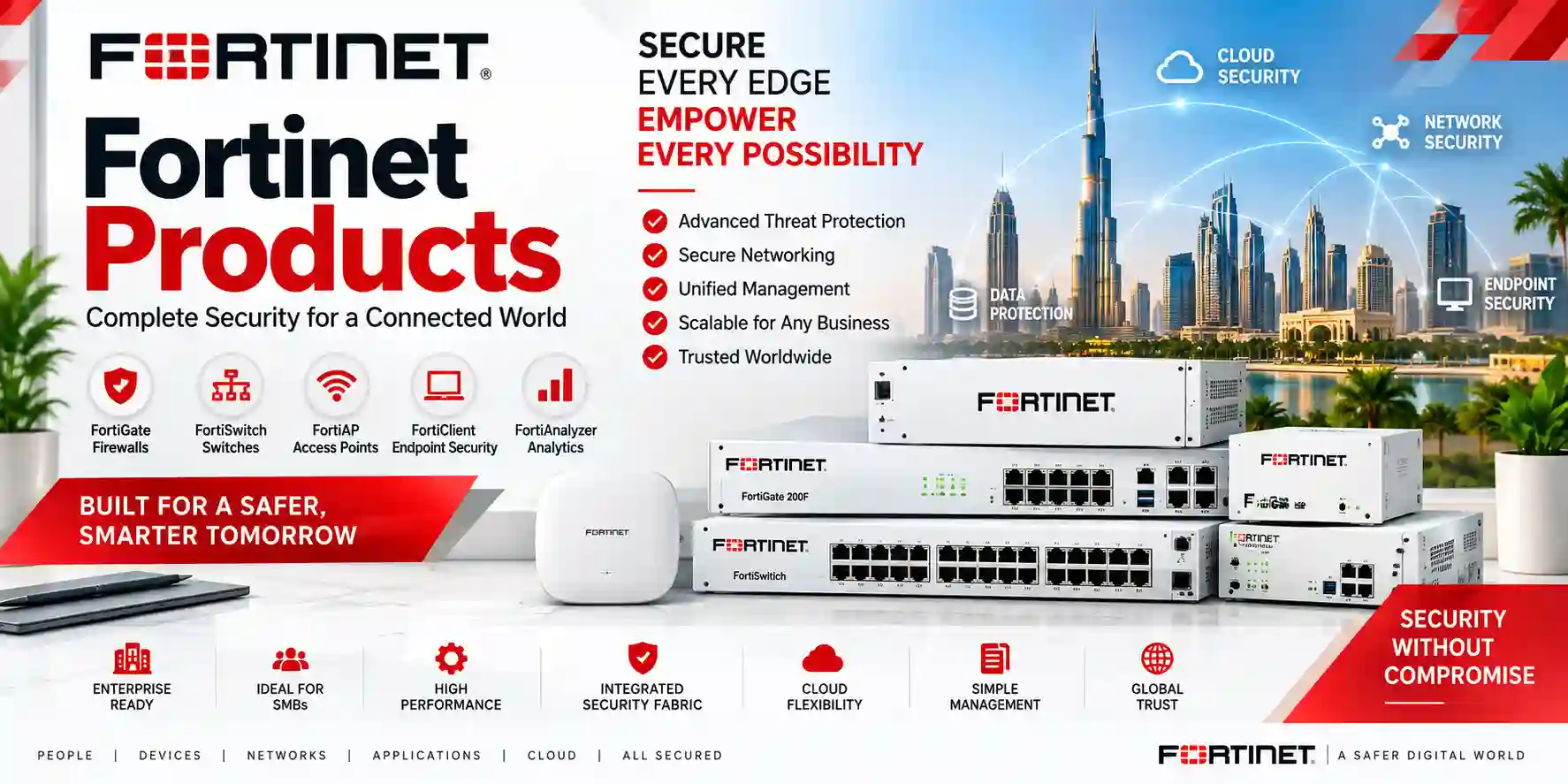
Fortinet’s current portfolio includes FortiGate next-generation firewalls for physical, virtual and cloud environments; FortiSwitch for secure Ethernet switching; FortiAP for enterprise wireless; FortiManager for centralized network and security management; FortiAnalyzer for consolidated security telemetry, analysis and automation; FortiSASE and FortiClient for secure access and endpoint-related use cases; FortiAuthenticator and FortiToken for identity and multi-factor authentication; FortiNAC for network access control; FortiWeb for web application and API protection; FortiMail for email security; and additional security-operations products such as FortiEDR, FortiSIEM, FortiSOAR, FortiSandbox and FortiDLP. Product editions, licenses, subscriptions, cloud options and availability should always be confirmed for the exact requirement and procurement date.
What Fortinet Cybersecurity Products Solve
A modern security environment rarely has one perimeter. Users work from offices, homes and mobile locations. Applications may sit in a local data center, a hosted platform, SaaS services or public cloud. Branches need secure connectivity, wireless access and consistent policy. Security teams need logs and context rather than disconnected alerts. Fortinet’s portfolio is structured around these different layers, with products designed to work together through the Fortinet Security Fabric while also supporting many third-party integrations.
For buyers, that breadth creates both opportunity and a sizing challenge. A FortiGate may address firewall, VPN, SD-WAN and security-inspection requirements at an edge, while FortiSwitch and FortiAP can extend a secure network to wired and wireless users. FortiManager can help administrators manage policy across multiple Fortinet devices, and FortiAnalyzer can consolidate telemetry for visibility, investigation and response. Organizations with hybrid workforces may evaluate FortiSASE and FortiClient, while FortiAuthenticator, FortiToken and FortiNAC can support identity and access-control objectives. Application owners may need FortiWeb, email administrators may evaluate FortiMail, and security operations teams may consider FortiEDR, FortiSIEM, FortiSOAR, FortiSandbox or FortiDLP. The architecture should therefore start from risk and operational requirements, then map those needs to product families.
Fortinet Product Families at a Glance
FortiGate
Next-generation firewall platform for branch, campus, data-center, virtual and cloud use cases. Current Fortinet positioning includes integrated SD-WAN and zero-trust access capabilities alongside network security controls.
FortiSwitch
Secure Ethernet switching for access, campus and data-center environments. FortiSwitch can be managed independently or integrated with FortiGate and FortiManager using Fortinet management options.
FortiAP
Business wireless access points for indoor, outdoor and specialized deployments. Management choices can include FortiGate, FortiSASE and FortiEdge Cloud depending on design and model support.
FortiManager
Centralized management for larger or distributed Fortinet environments, helping teams standardize policy, automate repetitive administration and coordinate secure networking across sites.
FortiAnalyzer
Security telemetry, analytics and operations platform that consolidates network, endpoint and cloud data, with built-in automation and threat-intelligence capabilities in current Fortinet releases.
FortiSASE & FortiClient
Cloud-delivered secure access and endpoint-agent capabilities for hybrid users, including zero-trust and secure web access functions depending on the selected service and edition.
FortiAuthenticator & FortiToken
Identity, authentication and multi-factor authentication capabilities for controlled access to business resources, with integration options for directory and network environments.
FortiNAC
Network access control for visibility, policy enforcement and automated response across connected IT, IoT, operational-technology and other networked device categories.
FortiWeb
Web application and API security platform available in multiple deployment forms, with protection capabilities for application-layer threats, bots, API risks and other public-facing application concerns.
FortiMail
Email security for threats such as phishing, impersonation, business email compromise and account takeover, with options for on-premises and cloud-oriented email environments.
FortiEDR, FortiSIEM & FortiSOAR
Endpoint detection and response, security information and event management, and orchestration/automation capabilities for organizations developing more structured security operations.
FortiSandbox, FortiDLP & FortiDDoS
Specialized products for sandbox analysis, data-loss prevention and distributed-denial-of-service protection. Suitability depends on threat model, data sensitivity and service-availability needs.
How to Select the Right Fortinet Products
Product selection should begin with measurable requirements. For FortiGate, internet bandwidth is only one input. Security inspection, encrypted traffic, VPN usage, branch count, expected concurrent users, high-availability design, physical interfaces, routing needs and future growth all influence sizing. For FortiSwitch, buyers should consider port count, PoE demand, uplink capacity, access-layer versus core requirements and how switching will be administered. FortiAP planning depends on coverage, user density, building materials, client capability, wired backhaul and the selected management architecture.
Management and operations matter just as much as hardware. A single-site environment may be administratively simple, while multiple offices can benefit from standardized templates, centralized management and consolidated logging. The decision to add FortiManager, FortiAnalyzer, FortiSIEM or other operational platforms should reflect the number of devices, reporting expectations, compliance needs, incident-response workflow and the skills available to administer the environment.
Licensing must be treated as part of the architecture rather than an afterthought. Fortinet products can have hardware, support, security-service, cloud-service or user-based licensing components depending on the product family and edition. Buyers should request the exact part numbers, term lengths and included services in the quotation and confirm renewal responsibilities. When replacing an existing Fortinet deployment, provide the current model, current support status, desired migration window and required features so the replacement can be evaluated against actual usage rather than model-name similarity.
Integration, Management and Security Operations
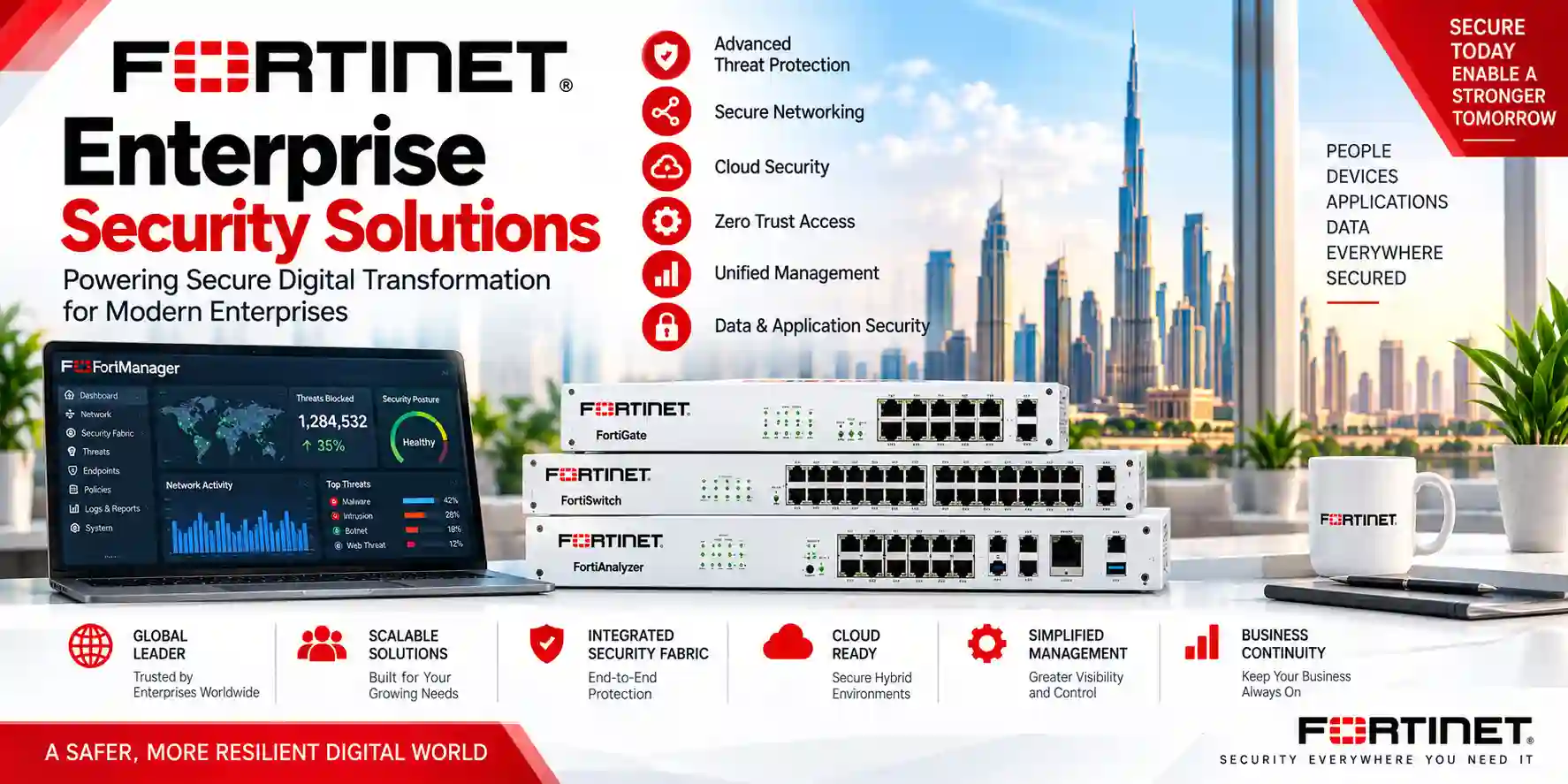
One reason organizations evaluate a broad Fortinet portfolio is the possibility of managing network, access and security functions as connected layers instead of isolated appliances. FortiGate, FortiSwitch and FortiAP can be combined in secure-network designs. FortiManager can provide centralized policy and network management, while FortiAnalyzer can consolidate telemetry and support investigation and automated response. FortiAuthenticator and FortiNAC can add identity and network-access context, and endpoint or cloud-delivered products can extend policy beyond the office edge.
Integration should still be designed deliberately. A single-vendor ecosystem does not remove the need for change control, backups, least-privilege administration, logging strategy, segmentation, resilient internet links and tested recovery procedures. Organizations should document which platform owns each policy, where logs are retained, which events are monitored, who approves security changes and how a failed change is rolled back. That operational discipline often determines whether a technically capable platform remains manageable after deployment.
Fortinet Procurement and Quotation Checklist
Fortinet Cybersecurity Products Tanzania
Organizations evaluating Fortinet cybersecurity products in Tanzania often need to connect product selection with real operating conditions rather than choosing a firewall or security service in isolation. A headquarters environment, a branch, a warehouse, a hospitality site, a school, a professional office and a distributed enterprise can all have different traffic patterns and risk priorities. For a Tanzania deployment, begin with the applications that must remain available, the users who require access, the internet connections available at each site, the systems that should be separated and the level of centralized management the IT team needs. This makes it easier to decide whether the project starts with FortiGate alone or should include FortiSwitch, FortiAP, FortiManager, FortiAnalyzer, identity controls, endpoint protection or other Fortinet components.
For branch and multi-site environments, the quotation should identify the primary and backup connectivity plan, site-to-site VPN or SD-WAN requirements, critical SaaS applications and any services that are hosted locally. Buyers should also document remote-access users, guest Wi-Fi requirements, IP cameras, voice systems and servers because these can influence segmentation and policy. Where a site already uses Fortinet, the current device model, firmware train, active subscriptions and existing configuration can help define a migration path. Where the environment is new, a simple logical diagram showing internet links, VLANs, server resources and user groups can make the proposal substantially clearer.
Fourteck Tanzania’s own service guidance emphasizes firewall sizing by users, internet bandwidth, enabled inspection services, VPN requirements and growth, while its broader technology portfolio covers switching, wireless, servers, cabling and related infrastructure. Buyers can review Fourteck Tanzania services to understand how security connects with network and infrastructure planning, browse the Tanzania technology shop guide for category-level buying considerations, and use the Tanzania contact page to submit the user count, internet speed, branch count and security requirement for a quotation discussion.
A Tanzania Fortinet procurement plan should also account for lifecycle responsibilities. Confirm which subscriptions are required on day one, who will register and renew them, where configuration backups will be stored, who will monitor alerts and how changes will be approved. If centralized reporting is important, define retention and reporting needs before selecting the logging platform. If business continuity matters, discuss high availability, redundant internet, spare power capacity and maintenance windows before hardware is ordered. This approach turns “buy Fortinet in Tanzania” from a product-search question into a structured security architecture decision.
Fortinet Cybersecurity Products Dar es Salaam
For businesses evaluating Fortinet cybersecurity products in Dar es Salaam, the requirement often spans more than internet-edge firewalling. Corporate offices, retail operations, logistics sites, professional services, hospitality properties and organizations with multiple branches may need secure internet access, controlled guest networks, branch connectivity, remote-user access and visibility into traffic and security events. A useful Dar es Salaam assessment therefore begins with the number of users and devices, business-critical applications, available internet links, existing routers or firewalls and the systems that need stronger separation. FortiGate can form the security edge, while FortiSwitch and FortiAP may be considered when the project also includes secure wired and wireless access.
A practical buying conversation should distinguish between raw connectivity and inspected traffic. If a site expects to use intrusion prevention, web controls, application inspection, encrypted-traffic inspection, VPN or other security services, the chosen FortiGate should be evaluated for the complete service mix rather than an internet-speed headline alone. Branches may also require multiple WAN links or secure tunnels to a head office, cloud platform or data center. If the organization manages several FortiGate devices, FortiManager can be assessed for centralized policy administration, while FortiAnalyzer can be assessed for consolidated logs, analytics and security operations. The correct combination depends on operational scale, reporting expectations and the team responsible for daily administration.
Dar es Salaam projects can also involve legacy network equipment or phased modernization. In that situation, map current VLANs, IP ranges, public services, VPN peers and security rules before migration. Identify changes that can be made during business hours and those that require a controlled maintenance window. If switching or wireless is being refreshed at the same time, verify PoE requirements, uplink capacity, access-point placement, guest policies and device-management responsibilities. Fourteck Tanzania’s solution approach page explains its emphasis on connected technology architecture rather than independent device purchases, which is especially relevant when firewall, Wi-Fi, switching and server requirements overlap.
Before requesting a Dar es Salaam quotation, prepare the current model numbers, internet speeds, approximate user and device counts, number of sites, VPN needs, intended security services and preferred support term. If the requirement is a replacement, include the current Fortinet support status and the features actively used today. If the deployment is new, provide a simple network diagram and the expected growth over the next few years. This information helps the supplier quote the right product family and licensing path without relying on assumptions about business size or location.
Fortinet Cybersecurity Products Mwanza
Organizations looking for Fortinet cybersecurity products in Mwanza may be planning a new branch, upgrading an existing network or trying to standardize security with a head office elsewhere in Tanzania. In each case, the best starting point is the business workflow. Identify which cloud applications are essential, whether local servers or surveillance systems are present, how many users connect through wired and wireless networks and whether the site must remain operational when one internet link fails. FortiGate can provide a controlled policy point for internet and inter-site traffic, while FortiSwitch and FortiAP can be evaluated when the branch also needs a managed LAN and wireless platform.
For a Mwanza branch that reports to a central IT team, consistency may be more valuable than adding many local features. Standardized VLANs, naming conventions, VPN policies, administrator roles and configuration backups make remote support easier. FortiManager may be appropriate when the organization needs to deploy and maintain policy across many Fortinet devices, while FortiAnalyzer can help consolidate logs and events. If the branch has limited local IT resources, the design should favor operational simplicity: documented interfaces, clear failover behavior, limited administrator privileges and a defined escalation path for configuration changes. Security architecture should make routine support easier, not create a system that only one engineer understands.
Connectivity planning is particularly important for any site outside the main headquarters. Where more than one WAN circuit is available, define what should happen when the preferred path degrades or fails. Decide which applications receive priority, whether VPN tunnels should move automatically and how remote administrators will regain access after a failover. Secure SD-WAN capabilities in FortiGate can be considered for multi-link branch designs, but the final policy should be based on measured service quality and business priorities. If public-facing services exist, document them separately and avoid exposing internal systems by convenience. Where remote users need access, define authentication and authorization before enabling VPN or zero-trust access.
A useful Fortinet quote for Mwanza should therefore include more than a box and a price. It should identify the proposed product family, required subscriptions, management approach, power and rack needs, integration with existing switching and Wi-Fi, migration assumptions and any optional centralized-management components. Buyers can use the Fourteck Tanzania integrated technology overview to see how firewall decisions relate to servers, switches, Wi-Fi, cabling and other infrastructure before submitting an exact requirement.
Fortinet Cybersecurity Products Arusha
Fortinet cybersecurity product planning in Arusha can serve many different operating models: offices that rely heavily on cloud platforms, hospitality and visitor-facing environments that need separation between staff and guest access, educational or institutional networks with many users, and businesses that connect to other sites in Tanzania or abroad. Rather than starting from a model number, define the security zones. Staff devices, guest Wi-Fi, servers, building systems, cameras, payment-related devices and administrator interfaces should not automatically share the same trust level. FortiGate can enforce policy between these zones, while FortiSwitch and FortiAP can extend the design into wired and wireless access where appropriate.
Guest connectivity deserves special attention in environments where visitors regularly use the network. A guest SSID should be designed with intentional isolation and internet-only access where that matches policy. Staff wireless may need access to internal applications or printers, while operational devices may need narrowly defined communication paths. FortiAP can be managed through supported Fortinet platforms, and FortiSwitch can provide VLAN and PoE capabilities for access points and other devices. The architecture should define who manages SSIDs, authentication, VLAN mappings and changes after installation, because a secure design can weaken over time if ad-hoc exceptions are added without documentation.
For organizations with multiple properties or branches, centralized visibility becomes a separate requirement from firewalling. FortiManager can support consistent configuration and policy administration across Fortinet environments, while FortiAnalyzer can consolidate telemetry and reporting. If administrators require stronger identity controls, FortiAuthenticator and FortiToken may be considered for multi-factor authentication use cases. The specific licenses and deployment form should be confirmed against the current product documentation and the organization’s identity systems. If remote employees or travelling staff need access to internal applications, FortiSASE or FortiClient-related options may also be relevant depending on the security model.
Before purchasing Fortinet products in Arusha, prepare a site inventory showing users, devices, access points, switches, internet circuits, remote users and important applications. Include any guest-network, payment, conferencing, CCTV or server requirements that will influence segmentation. Fourteck Tanzania lists Arusha contact details on its verified contact page; use the enquiry form to share the operational requirement and request a quotation based on the complete architecture rather than only a firewall name.
Fortinet Cybersecurity Products Dodoma
Buyers researching Fortinet cybersecurity products in Dodoma may be responsible for offices, institutions, professional environments or distributed operations where secure access and predictable administration matter as much as internet speed. A strong starting point is to classify systems by criticality. Which applications must remain available throughout the working day? Which data requires restricted access? Which user groups need remote connectivity? Which devices should never communicate directly with user workstations? These questions determine the network zones and policies that the Fortinet architecture must support. FortiGate can enforce network security and secure connectivity, while additional Fortinet products can be added when the project includes switching, wireless, identity or centralized security operations.
For environments that require formal change control or reporting, log and management design should be planned before deployment. Decide how long logs must be retained, who reviews alerts, how administrators authenticate and how configuration backups are handled. FortiAnalyzer can be evaluated for consolidated telemetry, analysis and security workflows, and FortiManager can be evaluated for central policy and device administration. These platforms are most useful when the organization defines a clear operating model around them. Buying a management appliance without assigning responsibility for templates, approvals, alert review and maintenance will not automatically improve security.
Identity is another important layer. If the organization wants stronger assurance for administrators, remote users or application access, FortiAuthenticator and FortiToken can form part of the discussion. For endpoint protection and response, FortiClient and FortiEDR address different needs and should be compared according to the required endpoint controls, response workflow and licensing model. If sensitive web applications are hosted, FortiWeb may be relevant for application and API protection; if email threats are a priority, FortiMail can be considered. The objective is not to deploy every Fortinet product, but to choose controls that correspond to actual attack paths and operational requirements.
A Dodoma quotation request should include the current network map, approximate user count, internet bandwidth, number of branches, VPN requirements, server and cloud dependencies, expected logging needs and desired subscription term. Fourteck Tanzania’s verified contact page includes Dodoma contact information, while its broader services page explains the relationship between firewalls, switches, Wi-Fi, servers and other business systems. Using those resources can help procurement teams turn a generic Fortinet request into a more complete bill of materials and implementation plan.
Fortinet Cybersecurity Products UAE
Organizations sourcing Fortinet cybersecurity products in the UAE often evaluate a broad set of requirements ranging from branch firewalls and secure wireless to data-center security, cloud connectivity, centralized management and license renewal. The same buying discipline applies regardless of company size: identify users, applications, traffic patterns, internet links, VPN and SD-WAN requirements, security inspection, logging and future growth before selecting a FortiGate. If the project also includes LAN modernization, FortiSwitch and FortiAP can be evaluated as part of the architecture so VLANs, PoE, wireless policies and firewall segmentation are planned together rather than added independently.
UAE buyers frequently compare appliance supply with wider lifecycle services such as license renewal, migration, configuration and centralized management. Current Fortinet products can include support and security-service subscriptions, and exact bundle contents vary by product family and term. A quotation should therefore show the precise hardware part number, support or security-service part numbers, subscription term, deployment assumptions and any optional accessories. Renewal projects should include the serial number or current support details where appropriate, but procurement teams should avoid assuming that a previous bundle name automatically maps to the same current package without verification.
For multi-site organizations, FortiManager and FortiAnalyzer may be considered to reduce operational fragmentation. FortiManager centralizes management and policy orchestration across supported Fortinet devices, while FortiAnalyzer consolidates telemetry and supports security analysis and automation. Hybrid-work use cases can extend the conversation toward FortiSASE and FortiClient. Application security can involve FortiWeb, email protection can involve FortiMail, and organizations building a security-operations program may evaluate FortiEDR, FortiSIEM, FortiSOAR or FortiSandbox. Each addition should have a clear owner, workflow and measurable security objective.
For Fourteck-connected UAE enquiries, the verified Fourteck Fortinet UAE specialist site provides FortiGate, FortiSwitch, FortiAP, FortiManager, FortiAnalyzer, renewal and Secure SD-WAN guidance. Tanzania-based organizations with UAE procurement teams can use that regional resource to coordinate requirements while keeping the technical design aligned with the Tanzania site. This is useful when a group wants consistent firewall policy, license terms and product standards across different countries without assuming that every site has identical bandwidth, infrastructure or operational constraints.
Fortinet Cybersecurity Products Uganda
Businesses evaluating Fortinet cybersecurity products in Uganda can approach the project as a combination of secure connectivity, branch standardization and lifecycle management. A small office may initially need a FortiGate with appropriate security services and VPN, while a larger organization may also need FortiSwitch, FortiAP, centralized management, logging, endpoint protection or identity controls. The right architecture depends on the number of sites, local applications, cloud usage, user count and the business impact of connectivity or security downtime. A product list becomes more useful when every item is linked to a specific requirement.
For a company with branches across Uganda, document which services are centralized and which are local. Site-to-site VPN or SD-WAN policy can then be designed around business traffic rather than generic tunnel creation. Remote-user access should be separated from branch connectivity and protected with suitable authentication. If guest Wi-Fi, CCTV, voice or operational devices share the same physical network, VLAN and firewall policy should be used to reduce unnecessary trust. FortiSwitch and FortiAP can support a more integrated secure-network approach when their management and compatibility fit the project.
Centralized operations can become important as the number of devices grows. FortiManager can support common configuration and security policy, while FortiAnalyzer can consolidate logs and help security teams investigate events across sites. Organizations should decide whether logs are retained locally, centrally or in a cloud-oriented service, and should define who reviews alerts. If the business wants stronger identity controls, FortiAuthenticator and FortiToken can be assessed. If users regularly work away from offices, FortiSASE and FortiClient may be relevant depending on the access model and subscription selected.
Fourteck maintains a verified Uganda regional website that covers business connectivity, networking and security-related solutions. A cross-border organization can use the Uganda and Tanzania Fourteck channels to discuss a common architecture while allowing each site to be sized for its actual internet, user and infrastructure conditions. When requesting pricing, provide model or requirement details, user count, internet speed, branches, VPN expectations and required license term so the quote can be matched to the real environment.
Fortinet Cybersecurity Products Kampala
Fortinet cybersecurity product selection in Kampala often begins with the office edge but should quickly expand to the rest of the network architecture. A FortiGate firewall can control internet access, VPN and segmentation, yet the security outcome also depends on switch configuration, wireless design, endpoint security, authentication and monitoring. A Kampala business planning a new office should therefore inventory wired devices, wireless users, IP phones, cameras, servers and cloud applications before deciding how many network zones are required. This avoids creating a flat network that later becomes difficult to secure.
For established offices, migration planning is equally important. Capture the current WAN configuration, public IPs, NAT rules, VPN peers, DHCP scopes, VLANs, static routes and exceptions before replacing a firewall. Identify policies that are still required and remove obsolete rules during the design phase rather than carrying configuration clutter into the new environment. If the organization has several branches, determine whether policy should be standardized centrally with FortiManager and whether logs should be consolidated with FortiAnalyzer. A controlled migration is easier when configuration ownership and rollback steps are clear before the maintenance window begins.
Kampala organizations with remote workers may also evaluate FortiClient, FortiSASE, MFA and zero-trust access. The correct option depends on whether users need full network access, access only to selected private applications, secure internet access while travelling or endpoint-security functions. Identity should be linked to user roles rather than shared credentials. Where email remains a major attack vector, FortiMail may be relevant, and where the organization hosts public web applications, FortiWeb can address web and API security concerns. Security operations teams can add tools such as FortiEDR or FortiSIEM only where there is a workflow to monitor and respond to alerts.
A complete Kampala RFQ should include the existing network drawing, current firewall model, approximate users and devices, internet bandwidth, number of sites, expected VPN users, wireless requirements and any logging or compliance needs. The objective is to receive a bill of materials that includes the right licenses and management tools instead of a generic appliance recommendation. Multi-country groups can use the verified Uganda Fourteck site for regional communication and the Tanzania site for Tanzanian project coordination while preserving common technical standards.
Fortinet Cybersecurity Products Arua
Arua organizations searching for Fortinet cybersecurity products may have a different design priority from a large headquarters: reliability and remote manageability can be as important as feature depth. If local technical resources are limited, the security platform should be documented so a remote team can understand WAN links, VLANs, VPNs, firewall rules, administrator access and failover behavior. A FortiGate deployment can provide network security and encrypted connectivity, while FortiSwitch and FortiAP can be considered when the site requires centrally controlled wired and wireless access. The final design should avoid unnecessary complexity that makes troubleshooting difficult when support is remote.
Connectivity resilience should be planned explicitly. Where two internet paths are available, define which applications should use each link and what should happen when the preferred service fails. Test DNS, VPN and cloud-application behavior during failover rather than assuming that traffic will move correctly. Secure SD-WAN functions in FortiGate can support policy-driven multi-link designs, but the business should still define priorities, thresholds and fallback behavior. If the branch hosts local servers or cameras, make sure internal access continues safely even when external connectivity changes.
Remote management must also be protected. Administrative interfaces should not be exposed broadly to the public internet, shared administrator accounts should be avoided and multi-factor authentication should be considered for privileged access. Configuration backups should be stored in a controlled location, and firmware changes should follow a maintenance process. If the Arua site is part of a wider organization, FortiManager can support standardized configuration and FortiAnalyzer can give the central team consolidated visibility. Those platforms become especially useful when local branches need common policy without every change being recreated manually.
When preparing a Fortinet quotation for Arua, include details that reflect remote-site reality: internet providers and speeds, approximate users, critical applications, desired redundancy, remote-support method, power and rack constraints, required Wi-Fi coverage and any local servers or surveillance systems. Ask the supplier to distinguish mandatory components from optional management or security additions. That makes budgeting easier and provides a phased path where the site can start with the highest-priority controls and expand without redesigning the entire network.
Fortinet Cybersecurity Products Mbarara
For Fortinet cybersecurity products in Mbarara, buyers should connect security requirements with the actual devices and applications at the site. Branch offices, educational environments, healthcare facilities, retail operations and warehouses can all have different combinations of staff workstations, guest wireless, cameras, IP phones, cloud systems and local servers. A good design starts by identifying which groups need to communicate and which should be separated. FortiGate can provide the policy boundary, and FortiSwitch or FortiAP can help extend segmentation into the access network when a Fortinet secure-network design is appropriate.
Sizing should account for security features that will be enabled. Intrusion prevention, web and application controls, VPN, encrypted-traffic inspection and other services consume resources differently from basic forwarding. Rather than matching the appliance only to the advertised internet circuit, document the traffic profile and growth expectation. If the branch uses cloud applications heavily, consider peak usage and video collaboration. If surveillance or backup traffic crosses the same links, separate or prioritize traffic so security does not create an avoidable bottleneck.
Operational processes should be included in the design. Decide who receives alerts, who approves firewall changes, how often configuration backups are taken and how license renewals are tracked. If multiple Mbarara or Uganda sites are managed by one team, FortiManager can reduce repetitive policy work and FortiAnalyzer can centralize security telemetry. If the business handles sensitive user or customer information, identity and endpoint controls may deserve equal attention. FortiAuthenticator, FortiToken, FortiClient, FortiEDR and FortiDLP address different parts of that problem, so the appropriate combination should follow the data and access workflow.
A procurement request should include quantities and site information for every product layer, not just the firewall. Specify required switch ports, PoE devices, wireless coverage, remote users, VPN tunnels and logging expectations. Ask for the exact subscription term and renewal date so ongoing costs are visible before approval. Where the organization already has Fortinet products, identify which licenses are active and which management tools are already in use; this can prevent duplicate purchases and help new equipment fit the established operating model.
Fortinet Cybersecurity Products Gulu
Organizations evaluating Fortinet cybersecurity products in Gulu can benefit from a branch-security design that is simple to operate and easy to standardize. Start by listing business-critical applications, internet dependencies, user groups and connected devices. A FortiGate can protect the WAN edge and create secure links to other sites, while FortiSwitch and FortiAP can support managed LAN and wireless access if the organization wants a more integrated Fortinet network. The network should separate staff, guests, cameras, voice and management traffic where these groups have different trust requirements.
For a remote or regional branch, supportability should influence the architecture. Clear interface labels, consistent VLAN numbers, documented IP addressing and standardized firewall objects can make troubleshooting faster for a central team. Configuration backups should be available before any change, and remote-access paths should be tested after WAN or firewall modifications. If the branch has a backup internet circuit, define a specific failover policy rather than leaving behavior to default routing. Secure SD-WAN features can be evaluated where application-aware path selection or multiple WAN links are part of the requirement.
Security monitoring also needs a realistic owner. A branch firewall can produce many logs, but value comes from reviewing meaningful events. FortiAnalyzer can help consolidate telemetry for organizations with multiple Fortinet devices, and FortiManager can help standardize policy. Larger security programs may add FortiSIEM, FortiSOAR, FortiEDR or FortiSandbox, but these should be tied to an incident-response workflow. If no team is available to investigate alerts, the design should prioritize controls that can be administered consistently and produce actionable information rather than deploying tools only because they are available.
A Gulu quotation request should include exact site conditions: users, internet bandwidth, branch-to-head-office connectivity, Wi-Fi coverage, number of PoE devices, remote-management requirements and desired support term. Ask for a clear distinction between hardware, subscriptions, cloud services and implementation. That makes it easier for procurement and IT teams to compare total lifecycle cost and to understand which elements must be renewed. For regional coordination, the Fourteck Uganda site can complement the Tanzania Fourteck channel when a company is standardizing security across East African branches.
Fortinet Cybersecurity Products Kenya
Fortinet cybersecurity products in Kenya are commonly evaluated for branch security, secure internet access, SD-WAN, wired and wireless networking, centralized administration and license renewal. A buyer should resist selecting a FortiGate simply because a model is popular in the market. The appliance should be sized for the organization’s actual internet bandwidth, inspected traffic, VPN usage, users, interfaces, expected growth and high-availability needs. If the project includes LAN or Wi-Fi modernization, FortiSwitch and FortiAP can be considered alongside the firewall so segmentation and management are consistent across the network.
Kenyan organizations with several locations may benefit from a standardized branch template. Define common VLANs, security zones, naming conventions, VPN architecture and administrator roles that can be reused while allowing site-specific differences. FortiManager can support centralized policy and device management, and FortiAnalyzer can provide consolidated logging and analysis. This approach is useful for organizations that want the same security intent in Nairobi, Mombasa or other locations without assuming that each branch has the same number of users or the same internet circuits.
Procurement should also consider subscriptions and product lifecycle. Ask for exact support and security-service terms and verify whether the quote is hardware-only or includes the required services. Where an existing FortiGate is being replaced, provide the current device model, configuration scope, subscriptions and expected cutover window. If endpoint protection or remote access is part of the project, compare FortiClient, FortiSASE and FortiEDR according to the specific endpoint and access requirements. For public applications, FortiWeb may be relevant; for email security, FortiMail may be considered; for more advanced security operations, FortiSIEM, FortiSOAR or FortiSandbox can be assessed.
Fourteck’s verified Kenya regional website includes firewall security and enterprise networking in its business technology portfolio. A Tanzania-based group with Kenyan branches can use both regional sites to coordinate product standards and bill-of-materials discussions. The strongest RFQ will include user count, internet speed, branches, VPN and SD-WAN expectations, switch and AP quantities, logging requirements and desired license terms, allowing the final recommendation to be based on architecture rather than geography alone.
Fortinet Cybersecurity Products Kuwait
Organizations seeking Fortinet cybersecurity products in Kuwait may be comparing new FortiGate appliances, license renewals, branch connectivity, secure Wi-Fi or broader security operations. The technical process should start with the current environment: internet bandwidth, number of users, WAN links, VPN peers, public-facing services, critical applications and existing security subscriptions. This information helps distinguish a straightforward hardware replacement from a redesign that also needs switching, wireless, centralized management, endpoint protection or application security.
License renewal deserves its own review. Fortinet products can combine support and security services in different packages, and the exact entitlement depends on product family, edition and term. Buyers should request the exact renewal part number and confirm what the subscription includes rather than relying on informal labels. If the existing appliance is approaching replacement, compare renewal cost and remaining support life against a migration to a current platform. The migration plan should preserve required policies, VPNs and objects while removing obsolete rules that no longer reflect the business.
For organizations with many devices or sites, FortiManager and FortiAnalyzer can be evaluated for centralized management and consolidated security telemetry. A Kuwait head office that manages branches elsewhere may want standardized policies across countries, but every site should still be sized for its own bandwidth and user profile. If secure remote work is important, FortiSASE and FortiClient may be relevant. If public applications or email are major risks, FortiWeb and FortiMail address those layers. Security operations teams can consider FortiEDR, FortiSIEM, FortiSOAR or FortiSandbox when they have clear monitoring and response workflows.
A useful Kuwait RFQ should separate one-time hardware from recurring services and identify any installation, migration or policy-review work. Include the number of sites, desired subscription term, high-availability requirement and expected growth. If the project connects to Tanzania, Kenya, Uganda or the UAE, define a common baseline for firmware, administrator access, VPN topology and logging so different country deployments remain understandable to the same IT team. Regional standardization is most effective when it sets consistent principles without forcing identical hardware into sites with different workloads.
Fortinet Cybersecurity Products Ghana
Buyers researching Fortinet cybersecurity products in Ghana can structure the requirement around business services and risk rather than individual appliances. Determine which users and systems depend on the internet, which branches need secure connectivity, what remote-access methods are used and which devices require network separation. FortiGate can protect and connect the network edge, while FortiSwitch and FortiAP can support secure wired and wireless access. Additional Fortinet products should be added only when they address a defined need such as centralized management, stronger identity, application protection, endpoint response or security analytics.
For multi-site organizations, a standard architecture can reduce support effort. Reusable VLAN structures, firewall object naming, VPN templates and administrator roles make it easier for a central team to understand every branch. FortiManager can help manage policy and configuration across supported Fortinet devices, and FortiAnalyzer can consolidate security telemetry. If there is a security operations team, it should define alert triage and escalation before enabling large volumes of events. Reporting requirements should include retention period, access permissions and whether reports are for technical investigation, management visibility or compliance evidence.
A Ghana procurement plan should also consider power, rack space, switching capacity and internet resilience. Security devices are part of infrastructure and should be protected by appropriate power arrangements and documented cabling. If a branch uses many cameras, access points or IP phones, PoE budgets and uplinks need to be included in the switch design. If two internet circuits are available, decide whether they are for failover, load distribution or application-specific routing. FortiGate Secure SD-WAN capabilities can be considered when multiple links need policy-driven use.
The verified Fourteck Ghana website provides a regional path for IT product and solution enquiries. Companies with operations in both Ghana and Tanzania can use the regional Fourteck sites to discuss common product standards while allowing the final design to reflect local users, connectivity and infrastructure. Before asking for price, prepare a concise requirement that lists current equipment, bandwidth, users, sites, desired security services, license term and any migration constraints.
Fortinet Cybersecurity Products Nigeria
Fortinet cybersecurity product selection in Nigeria can span small branch firewalls, enterprise campuses, data centers, remote-work security and security operations. The size of the market does not change the core engineering principle: model selection should follow the workload. For FortiGate, capture internet and private-WAN speeds, users, encrypted traffic, security inspection, VPN, interfaces, routing, high availability and future growth. For FortiSwitch, define port density, PoE demand and uplinks. For FortiAP, map physical coverage, user density and management. Each layer should connect to a single network and security design rather than a collection of separate purchases.
Large or distributed organizations may need more operational structure. FortiManager can centralize configuration and policy management, while FortiAnalyzer can consolidate telemetry, analytics and automation. FortiSIEM and FortiSOAR may be evaluated where the security operations team needs multi-source correlation and response workflows. FortiEDR can strengthen endpoint detection and response, FortiSandbox can analyze suspicious content and FortiDLP can address sensitive-data movement. These products solve different problems, so an enterprise bill of materials should show which risk or workflow each platform addresses and who will administer it.
Identity and remote access can be another major workstream. FortiAuthenticator and FortiToken can support authentication and MFA, while FortiSASE and FortiClient can support secure access for hybrid users depending on the selected service. Where public web applications are exposed to the internet, FortiWeb can provide application and API security capabilities. Email-focused risks can be addressed with FortiMail. A layered design is most effective when identity, endpoint, network, application and monitoring controls share clear policies and escalation responsibilities.
Fourteck’s verified Nigeria regional website offers a regional channel for IT and security discussions. Organizations coordinating Nigeria and Tanzania sites can use consistent security principles—such as VLAN separation, MFA, centralized logging and documented change control—while sizing hardware and subscriptions independently for each location. A complete RFQ should include user counts, sites, connectivity, applications, current security tools, desired Fortinet products, license terms and deployment expectations so procurement can compare proposals on equal scope.
Fortinet Cybersecurity Products Seychelles
Organizations looking for Fortinet cybersecurity products in Seychelles may prioritize secure connectivity, remote administration and resilience across offices, hospitality properties, professional environments or distributed facilities. The design should begin with the services that cannot tolerate interruption. Identify internet circuits, cloud applications, local servers, payment-related systems, guest Wi-Fi, surveillance and remote users. A FortiGate can secure the network edge and provide encrypted connectivity, while FortiSwitch and FortiAP can be considered where the LAN and WLAN are part of the same modernization project.
In island or remote-site contexts, operational simplicity is valuable. The network should use clear addressing, documented VLANs, protected administrator access and tested configuration backups. If a site has more than one WAN connection, failover behavior should be tested before the design is considered complete. Secure SD-WAN may be suitable when links need policy-based steering, but business priorities still have to be defined: which applications are most important, which traffic can tolerate a slower backup path and how remote support will connect during a failure.
Centralized management can reduce the need for repeated local configuration. FortiManager can support policy administration across multiple supported Fortinet devices, and FortiAnalyzer can centralize logs and telemetry. If an organization manages several properties or offices, these tools can help maintain consistent policy while local switches and access points serve different building layouts. Strong identity controls should protect remote administration, and the organization should define a renewal calendar for security subscriptions so services do not lapse unexpectedly.
A Seychelles procurement request should describe the site environment in practical terms: user count, internet speeds, remote users, guest networks, local servers, critical cloud services, branch links and power or rack limitations. Ask for licensing and support terms separately from hardware so the lifecycle cost remains visible. If the organization is part of a wider East African or Gulf-managed group, it can standardize firewall policy, management and logging across countries while still selecting the FortiGate, FortiSwitch, FortiAP and subscription combination that fits each site’s actual workload.
Related Fourteck Tanzania Resources
The Tanzania Fourteck website currently exposes a compact set of verified top-level resources rather than separate indexed pages for every Fortinet product family. These links are useful for placing the Fortinet requirement in the wider network and infrastructure context:
Firewall, networking, Wi-Fi, servers and lifecycle guidance for projects where Fortinet must integrate with wider IT infrastructure.
Shop Buying Guide
Category-level procurement guidance covering firewalls, switches, wireless and other business technology dependencies.
About Fourteck Tanzania
Explains the site’s solution-led approach to combining security, connectivity, computing and lifecycle planning.
Contact & Quotation
Use the verified enquiry form to send model, quantity, bandwidth, user and deployment requirements.
Tanzania Technology Overview
Shows how cybersecurity connects with switching, Wi-Fi, servers, structured cabling and other workplace systems.
Regional Fourteck Network
Organizations operating across more than one country can use verified Fourteck regional sites as additional enquiry paths. The purpose is coordination, not an assumption that every country has identical stock, licensing or deployment conditions. Use the regional site that matches the project location, then provide the exact technical requirement.
Fortinet Cybersecurity Products FAQ
Which Fortinet product should a small or growing business start with?
Start with the risk and connectivity requirement rather than a product count. Many organizations begin by evaluating FortiGate for the internet edge and then add FortiSwitch, FortiAP, endpoint, identity or centralized management only when those needs are part of the scope. The correct FortiGate model should be sized for inspected traffic, users, VPN, interfaces, WAN links and growth rather than a generic business-size label.
What is the difference between FortiManager and FortiAnalyzer?
FortiManager focuses on centralized network and security management, policy, provisioning and orchestration across supported Fortinet environments. FortiAnalyzer focuses on consolidated telemetry, analytics, reporting, threat investigation and security operations. Organizations may use one or both depending on device count, management workflow and logging requirements.
Can FortiGate, FortiSwitch and FortiAP be managed together?
Fortinet supports integrated secure-network architectures in which FortiGate, FortiSwitch and FortiAP can be managed through Fortinet platforms. Exact management options vary by product and deployment, so confirm the intended FortiGate, FortiSwitch, FortiAP and management versions before ordering.
Do Fortinet products require subscriptions?
Licensing varies by product family. Some solutions combine hardware with support or security-service subscriptions, while cloud and user-based products can use subscription licensing. A quotation should list exact part numbers, service inclusions and term length so the buyer understands what must be renewed.
How should a FortiGate firewall be sized?
Consider internet bandwidth, security inspection, encrypted traffic, VPN users and tunnels, routing, interfaces, high availability, branch count and expected growth. Raw firewall throughput alone is not enough because enabled security services change the workload.
What Fortinet products support remote and hybrid users?
FortiSASE and FortiClient are important products in Fortinet’s secure-access portfolio. FortiAuthenticator and FortiToken can add identity and MFA capabilities. The correct design depends on whether users need secure internet access, private-application access, VPN, endpoint controls or a combination of these functions.
Which Fortinet products protect applications and email?
FortiWeb is Fortinet’s web application and API security platform, while FortiMail addresses email threats including phishing, impersonation and business email compromise. Their deployment and licensing options differ, so application architecture and email platform should be documented before selection.
What information should I send for a Fortinet quotation?
Send the current model if replacing equipment, number of users and sites, internet bandwidth, VPN and SD-WAN needs, switch and wireless requirements, required security services, logging expectations, preferred subscription term and installation or migration requirements. For renewals, include the product and entitlement information required to identify the correct service.
Decision Recap
Fortinet offers a broad cybersecurity portfolio, but the best procurement decision is usually a focused combination of products tied to clear responsibilities. Use FortiGate where network security and secure connectivity are required, add FortiSwitch and FortiAP where the access network is part of the design, and consider FortiManager and FortiAnalyzer when centralized administration and telemetry are operational priorities. Extend into identity, endpoint, SASE, email, application security or SOC products only where the threat model and workflow justify them.
Before approval, verify the exact current model, subscription, support term, management compatibility and deployment form against Fortinet documentation and the supplier quotation. Document who will administer the environment, where configurations and logs will be stored, how renewals will be tracked and how changes will be tested. That turns the purchase into a manageable security platform rather than a collection of licenses and appliances.
Consultation Panel: Prepare a Better Fortinet Quote
Send Fourteck Tanzania your approximate users, internet speed, number of branches, current firewall model, VPN or SD-WAN requirement, desired Fortinet product families and subscription term. For switching and wireless, add port counts, PoE devices, floor plans or coverage requirements. For FortiManager, FortiAnalyzer or security operations tools, include the number of devices, log-retention requirement and the team that will manage the platform. Clear inputs make it easier to compare suitable options and avoid purchasing capacity or licenses that do not match the project.