
FourTeck Tanzania · Fortinet selection guidance
Fortinet Product Selector and Buying Guide
Choosing a Fortinet platform should begin with the traffic you need to protect, the security services you intend to enable, the interfaces your network actually requires, the number of sites and remote users you must connect, and the growth you expect during the appliance lifecycle. This guide turns those inputs into a practical selection process for FortiGate next-generation firewalls and related Fortinet security services.
The fastest useful answer is this: do not select a FortiGate only from headline firewall throughput or employee count. Start with internet and inter-VLAN traffic, encrypted inspection, IPS and threat-protection performance, VPN demand, port types, high availability, logging, management, subscriptions and future capacity. Fortinet currently groups FortiGate hardware broadly around entry-level branch, mid-range campus and high-end data-center needs, with physical, virtual and service-based deployment choices depending on the environment.
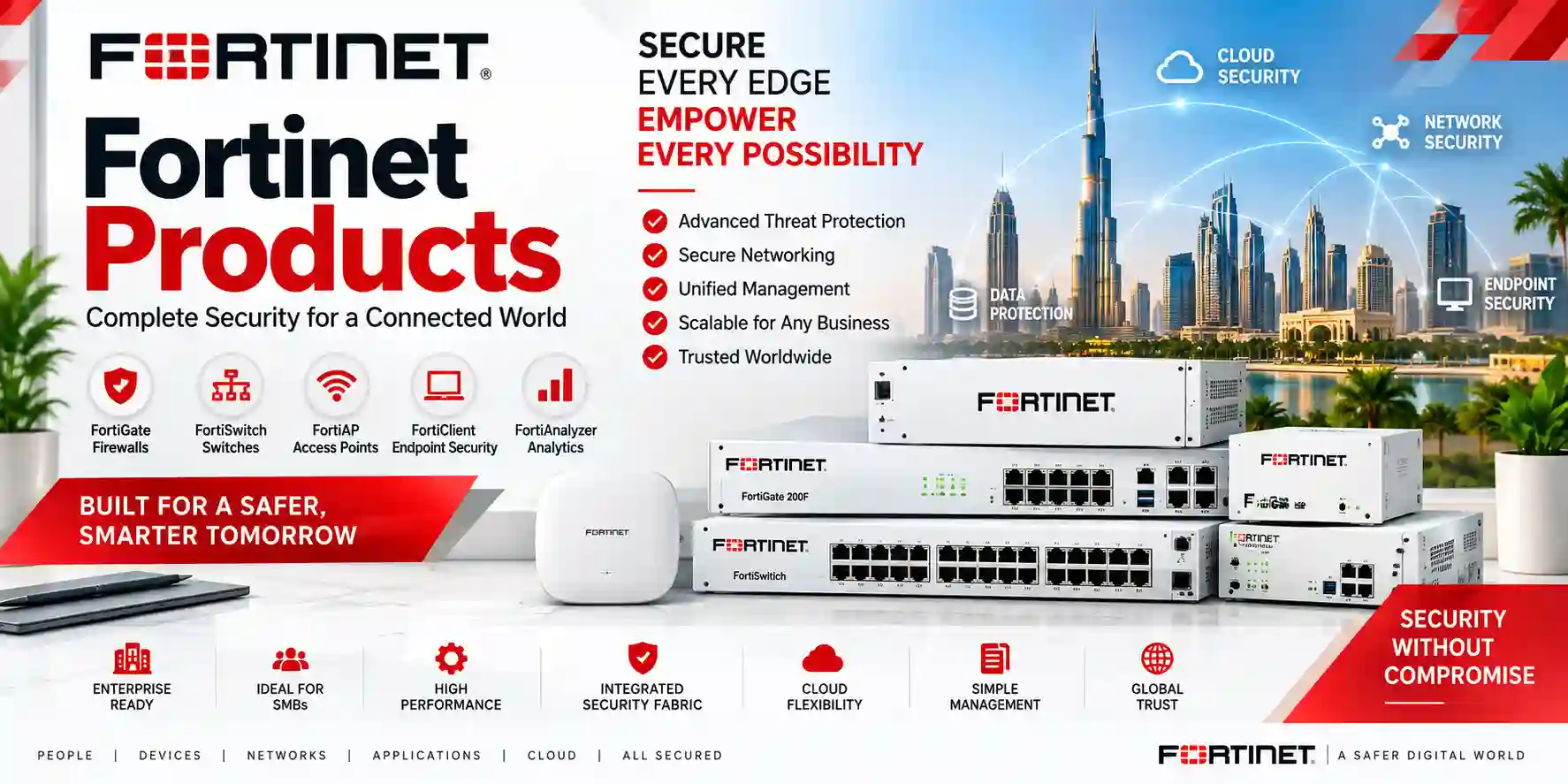
FortiGuard subscriptions
Deployment checklist
Regional buying guide
FAQs
How to use the Fortinet product selector
A sound Fortinet selection starts with the protected workload rather than a preferred model number. Record the speed of every internet circuit, the amount of east-west traffic that may cross security zones, whether you will inspect encrypted traffic, the number of site-to-site and remote-access VPNs, and whether the firewall will also provide SD-WAN, segmentation, application control or web security. Then identify interface requirements such as copper, fiber, multi-gigabit or higher-speed uplinks. Finally, include resilience requirements such as high availability, dual power options where relevant, logging, centralized management and the expected bandwidth increase over the next several years.
1. Measure protected traffic
Document real WAN bandwidth, internal routed traffic and peak utilization. If security inspection is expected on most internet traffic, size against the relevant inspected-security figure rather than raw stateful firewall throughput.
2. Define security services
List the controls that will actually be enabled: IPS, antivirus, application control, web and DNS filtering, sandboxing, DLP or other FortiGuard services. The bundle should match the risk profile rather than being chosen by label alone.
3. Count interfaces and zones
Check WAN ports, LAN uplinks, fiber requirements, server or DMZ connections, management ports and expected segmentation. A model can have sufficient throughput yet still be unsuitable if the physical connectivity does not fit the architecture.
4. Add operational headroom
Allow for new users, cloud traffic, additional sites, faster ISP circuits, more VPN use and deeper inspection. Headroom should be purposeful: enough to avoid an early refresh without paying for capacity the organization is unlikely to use.
Quick selector: current FortiGate branch and lower mid-range options
Fortinet’s current public NGFW portfolio lists the following entry and lower mid-range models with published threat-protection figures. These values are useful for first-pass comparison, but final sizing should always use the latest model data sheet, the exact FortiOS feature set, expected SSL inspection, traffic profile and required margin. Performance values are not a user-count guarantee.
Important: this table is a selector aid, not a substitute for an engineering design. Final recommendations should verify the exact current data sheet, interface count, SSL inspection requirements, session behavior, VPN load, high-availability plan and subscription scope.
FortiGuard subscriptions: ATP, UTP and Enterprise Protection
Fortinet currently presents FortiGuard services as individual services or building-block bundles. Advanced Threat Protection provides core protection services such as IPS, antivirus, sandbox detection, application control and inline CASB. Unified Threat Protection adds broader web and network security controls including URL and DNS filtering and anti-botnet protection. Enterprise Protection adds additional services for a wider attack surface, including capabilities such as DLP, attack-surface monitoring, AI-based inline malware prevention and IoT-related visibility. OT-specific protection is treated separately. The right choice depends on which threats, applications, data and compliance concerns the organization must address.
ATP
Consider ATP when the requirement centers on foundational network and file threat protection. Confirm whether the absence of broader web/DNS controls in the bundle creates a gap for the intended use case.
UTP
Consider UTP when web, DNS and anti-botnet controls are part of the security baseline in addition to ATP services. This is often a more natural fit for general business internet protection.
Enterprise Protection
Consider Enterprise Protection when the organization needs a broader set of security services across data, SaaS, devices and attack-surface visibility. Check whether any OT-specific or NOC/SOC services must be added separately.
Small business, branch, campus or data center?
For a small office, the selector should prioritize realistic inspected throughput, simple interface needs, secure remote access and manageable licensing. A branch with two internet providers may also need SD-WAN policies and failover behavior. A campus edge adds denser user traffic, more segmentation, faster uplinks and potentially high availability. Data-center roles can introduce much larger east-west traffic volumes, internal segmentation, higher-speed interfaces and far stricter resilience requirements.
The model family therefore follows the architecture. A physically small branch appliance should not be stretched into a role that requires far more inspected bandwidth or high-speed interfaces, while a large platform should not be purchased simply because it has impressive headline specifications. The aim is an appliance and subscription combination whose operating range matches the design.

Deployment and procurement checklist
A purchase request should describe the environment clearly enough that the model can be validated before a quotation is finalized. The following questions are more useful than asking for “a Fortinet firewall” without context.
What are the current and planned WAN speeds? Is traffic symmetrical? How much routed internal traffic crosses security zones?
Will IPS, antivirus, web filtering, DNS security, application control, SSL inspection, DLP or sandboxing be enabled?
How many site-to-site tunnels, remote users and simultaneous encrypted sessions are expected during peak periods?
Which copper and fiber ports, uplink speeds, WAN handoffs, DMZ connections and management interfaces are required?
Is one appliance acceptable, or is an HA pair required? Are dual ISPs, redundant switches, power protection or spare optics part of the design?
Where will logs go? Is centralized management needed? Who owns firmware, backups, renewals, policy review and incident response?
Related FourTeck Tanzania resources
Fortinet selection rarely stands alone. The firewall depends on the switching, wireless, server, cabling, power and operating practices around it. The FourTeck Tanzania technology overview explains the broader integrated approach, while the business technology shop guide covers product selection by compatibility, capacity and lifecycle. Review FourTeck Tanzania services when deployment, configuration or project coordination is required, and read about FourTeck Tanzania for the solution-led design approach. When the requirement is ready for sizing, use the Tanzania contact page to provide bandwidth, users, sites, VPN demand and preferred subscription term.
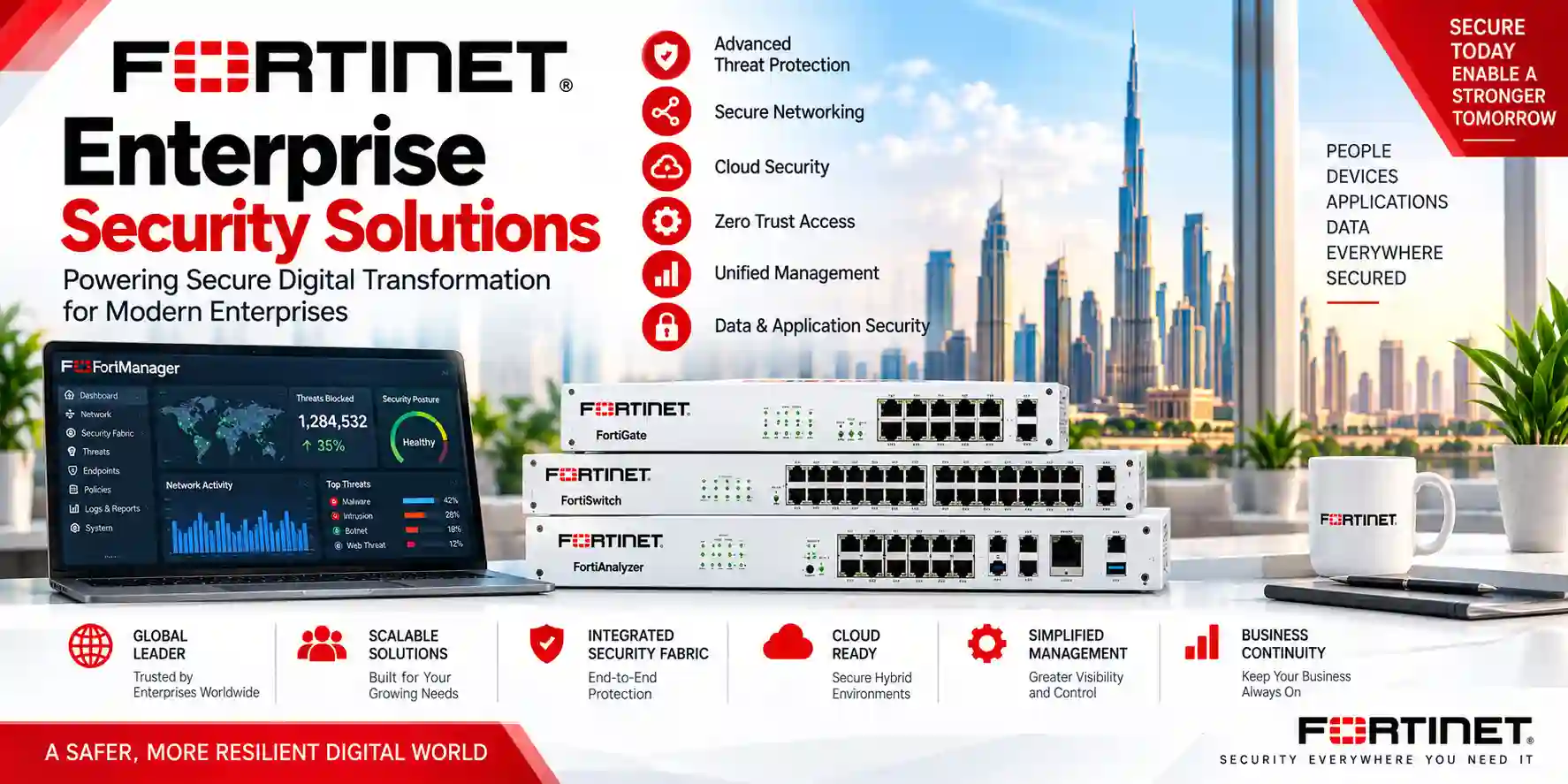
Enterprise selection needs architecture, not a user-count shortcut
A larger organization may have hundreds of employees but modest internet use, or a much smaller team running cloud, data-transfer and remote-access workloads that require significantly more inspected throughput. User counts can provide context, but traffic type, encryption, session behavior, security services, routing, interfaces and resilience are better engineering inputs. For multi-site environments, centralized logging and policy management may also be as important as the appliance itself.
Regional Fortinet product selector and buying guidance
The following regional sections focus on practical buying questions rather than making claims about stock, delivery times or local service coverage. Use them as a procurement framework, then confirm exact product availability, commercial terms, warranty, lifecycle and licensing in the final written quotation.
Fortinet Product Selector and Buying Guide Tanzania
For a Fortinet purchase in Tanzania, begin by mapping the security requirement to the network rather than starting with a model name. A company with one Dar es Salaam office and a single ISP has a different design from a nationwide organization with branches, cloud applications, site-to-site VPNs and centralized IT. Capture each internet circuit, the number of protected network segments, critical applications, remote users and any server or public-facing services. If the firewall will enforce web security, IPS, antivirus and encrypted inspection, select from the performance figures that reflect those services rather than raw firewall throughput.
Tanzania procurement teams should also document the physical environment. Confirm rack space, power protection, cooling, copper or fiber handoffs, switch uplink speeds and whether a second appliance is required for high availability. If a site expects faster connectivity during the firewall’s useful life, include that planned bandwidth in the sizing conversation. A model that is adequate for today’s uninspected traffic can become a constraint when SSL inspection, new cloud applications or additional branches are introduced.
Licensing should be quoted as part of the operational security design. Decide whether foundational ATP controls are enough, whether UTP’s web and DNS capabilities match the business baseline, or whether Enterprise Protection is justified by wider data, SaaS and attack-surface requirements. Clarify support term, renewal planning, logging, administrator ownership, firmware policy and backup procedures. The objective is a Fortinet configuration that procurement can understand and the technical team can operate. For a complete Tanzania request, include exact site count, bandwidth, VPN expectations, preferred subscription term, HA requirement and the desired go-live window so the quotation can distinguish hardware, subscriptions, implementation and any optional services.
Fortinet Product Selector and Buying Guide Dar es Salaam
Dar es Salaam buyers often need a selector that works for a wide range of site types: headquarters, branch offices, retail locations, professional offices, hospitality environments, warehouses and technology facilities. Rather than treating all of these as “office firewall” projects, list what traffic crosses the security boundary and what failure would mean operationally. A headquarters with ERP, cloud collaboration and remote branches may justify high availability and stronger logging. A compact branch may value straightforward SD-WAN failover, secure VPN and a manageable subscription package.
Connectivity design matters just as much as security capability. Confirm how many WAN links will terminate on the FortiGate, whether the providers deliver copper or fiber handoffs, and whether the internal switching layer can support the selected uplink speeds. If multiple internet circuits are planned, define whether they are for failover only, active utilization or application-aware SD-WAN. Document public IP requirements, inbound services, voice or video dependencies and any guest wireless networks that should be separated from business systems. These inputs determine policy and port needs before the order is placed.
For procurement, ask for the exact model, subscription bundle, term, support level, included accessories, power requirements and any optics or transceivers needed. Avoid comparing quotations only by the appliance model because one proposal may include FortiGuard and support while another may not. If migration from an existing firewall is required, include policy count, VPN tunnels, object cleanup, maintenance window and rollback expectations. The strongest buying decision is the one that connects the FortiGate to a documented architecture, realistic security services and a clear renewal plan instead of relying on a generic user-count recommendation.
Fortinet Product Selector and Buying Guide Mwanza
For organizations selecting Fortinet equipment in Mwanza, resiliency can be a useful starting point because business continuity depends on more than the firewall appliance. Identify the primary and secondary connectivity options available to each site, then decide how the FortiGate should behave when a link changes quality or fails. If branch operations depend on cloud systems, voice, payment platforms or remote access to a head office, the SD-WAN and VPN design may be as important as the maximum throughput figure.
A Mwanza deployment should also consider the LAN that sits behind the firewall. Count VLANs, servers, wireless networks, cameras and IP phones if those devices will be segmented or routed through the FortiGate. This can create internal security traffic that is not visible when sizing only from the ISP connection. Where security inspection applies to inter-zone flows, the appliance must have capacity for that traffic as well. Check interface type and speed against the switch design so the firewall does not become the narrowest link in a faster local network.
When requesting a quotation, separate must-have features from future options. State whether the site needs site-to-site IPsec, remote-access VPN, dual WAN, SSL inspection, application control, web and DNS filtering, central reporting or high availability. Include the target subscription term and ask how renewals will be handled. If the organization has branches elsewhere in Tanzania, consider standardizing policy structure, object naming, VPN conventions and logging across sites even when different FortiGate sizes are used. Standard architecture makes later troubleshooting and expansion more predictable without forcing every location to buy the same appliance.
Fortinet Product Selector and Buying Guide Arusha
Arusha businesses may combine office users with hospitality, travel, education, NGO, professional-service or multi-site operational requirements. These environments can place unusual demands on internet security because guest traffic, staff devices, cloud applications and remote administration may share the same physical infrastructure. A good Fortinet selector should therefore begin with trust zones: which users and devices should communicate, which must remain isolated, and which services require secure access from outside the site.
Guest Wi-Fi is a good example. It should not be treated as simply another SSID if business systems, cameras or administrative devices share the network. The firewall and switching design can separate traffic through VLANs and policy, while web or DNS services can be applied according to the organization’s requirements. If the site also uses cloud-managed applications or remote support, confirm whether encrypted inspection and logging are needed and how certificates and privacy expectations will be handled operationally.
For buying decisions, check the complete bill of materials: FortiGate appliance, chosen FortiGuard bundle, FortiCare support, rack or mounting accessories where required, compatible optics, power protection and any centralized management or analysis components. If a branch must stay connected during an ISP interruption, state the intended backup-link type and failover behavior. If seasonal or event-driven traffic can create peaks, use realistic peak bandwidth rather than quiet-period averages. This approach helps Arusha buyers compare proposals on architecture and lifecycle value instead of only the initial hardware price.
Fortinet Product Selector and Buying Guide Dodoma
Dodoma procurement can involve offices, institutions, project sites and multi-department networks where policy clarity is especially important. Before selecting the FortiGate, document the business systems that require protection, the user groups that need access, any public services and the network segments that should remain isolated. A firewall sized only for internet traffic can be undersized if it also handles substantial internal segmentation, VPN concentration or encrypted inspection between security zones.
Operational ownership should be decided before purchase. Identify who will approve firewall changes, review logs, perform firmware updates, maintain configuration backups and manage subscription renewals. If several sites will be administered centrally, consider whether centralized policy management and analytics belong in the solution. These decisions affect licensing and architecture even when the selected FortiGate appliance itself remains the same. They also reduce the risk that advanced security features are purchased but never tuned or monitored.
A strong request for quotation should contain the exact required interfaces, WAN speeds, security services, VPN counts, expected growth, desired availability level and subscription term. Where high availability is required, account for both appliances and the surrounding redundant network design rather than viewing HA as a checkbox on a single firewall. Confirm that upstream and downstream switches, power and cabling do not create a single point of failure. This gives Dodoma buyers a clearer basis for technical comparison and helps keep the commercial scope aligned with the actual deployment.
Fortinet Product Selector and Buying Guide UAE
For UAE deployments, the same sizing principles apply but regional organizations may also need to standardize Fortinet policy across headquarters, branches, data centers and cloud-connected environments. Begin with the application path: internet-bound traffic, private WAN traffic, inter-site VPNs, cloud workloads and internal segmentation can each place different demands on the firewall. Where inspection is enabled broadly, select from threat-protection and SSL-inspection performance rather than raw packet-forwarding figures.
Enterprises should also decide whether the FortiGate is acting only as an edge firewall or as part of a wider Security Fabric deployment with FortiSwitch, FortiAP, FortiAnalyzer, FortiManager or other Fortinet components. That choice affects management, logging, licensing and operational responsibilities. For organizations coordinating procurement in the Emirates, the FourTeck Fortinet UAE specialist site can be used as a regional reference point when discussing Fortinet requirements.
Commercially, compare quotes on equal terms: exact model, hardware generation, FortiGuard bundle, support level, license duration, optics, installation scope and migration work. If an HA pair is required, confirm whether both appliances are licensed consistently and how upgrades will be performed. For cloud or virtual use cases, validate the appropriate virtual-machine or cloud licensing model separately from hardware appliance assumptions. A well-structured UAE purchase request should make the design intent visible so that vendors are pricing the same scope rather than presenting superficially similar but technically different offers.
Fortinet Product Selector and Buying Guide Uganda
Uganda organizations selecting Fortinet should first identify whether the firewall is for a single site, branch rollout or shared architecture across several locations. A branch standard can be valuable when it defines common VLANs, VPN templates, logging and security services while allowing different appliance sizes according to each location’s bandwidth. This avoids the common mistake of forcing identical hardware into sites with very different traffic patterns.
Connectivity resilience deserves explicit design. If a site has two internet links, define whether both should carry traffic or one is only for backup, which applications should prefer each path, and how quickly sessions should recover when path quality changes. Secure SD-WAN capabilities can support these objectives, but the policy must be planned. VPN tunnels, DNS behavior, public services and remote users also need testing during failover rather than being assumed to follow automatically.
For procurement in Uganda, include the target security bundle and renewal term in every comparison. If your organization also operates in neighboring markets, use a consistent technical bill of materials and policy standard where possible. The FourTeck Uganda site provides a regional FourTeck reference for technology requirements. Ask for a quotation that distinguishes the appliance, FortiGuard services, FortiCare support, any management or analytics components, installation, migration and optional support so the total scope remains transparent.
Fortinet Product Selector and Buying Guide Kampala
Kampala networks can range from small professional offices to larger headquarters, financial, education, retail and service environments with significant cloud dependency. The selector should therefore begin with actual application behavior. If video conferencing, SaaS, cloud backup and web applications dominate the WAN, encrypted traffic inspection can be a major sizing factor. If the site hosts services internally, inbound inspection, DMZ design and segmentation become equally important.
A Kampala head office that aggregates VPNs from branches should not be sized like a standalone office with the same internet circuit. Tunnel count, encrypted throughput, routes, branch traffic and centralized security policy can raise the load substantially. If high availability is required, plan the surrounding switches and ISP handoffs so that a firewall pair can actually remove a single point of failure. Resilience is an end-to-end design property rather than a feature of two appliances alone.
When comparing Fortinet proposals, require vendors to state the exact FortiGate model, FortiGuard bundle, support term and included services. Ask whether configuration migration, VPN recreation, testing and administrator handover are part of the quoted work. If the organization expects bandwidth upgrades, new branches or more SSL inspection, request enough performance headroom for those documented plans. This gives Kampala buyers a defensible selection process based on protected traffic, architecture and lifecycle rather than a generalized statement that one model supports a certain number of users.
Fortinet Product Selector and Buying Guide Arua
For Arua deployments, simplicity and recoverability can be just as important as feature depth. A branch firewall should be sized for the protected workload, but it should also be possible for administrators to restore configuration, troubleshoot connectivity and replace failed components without an unnecessarily complex design. Start with a clear inventory of WAN links, VLANs, local servers, cloud applications, VPN peers and critical devices so the configuration remains understandable.
If remote IT teams will manage the site, plan secure administrative access and logging from the beginning. Decide where configuration backups are stored, how firmware updates are scheduled, what monitoring is required and how a loss of the primary WAN will affect management access. Dual-WAN designs should be tested for DNS, VPN and application behavior rather than only checking that general web browsing continues. These operational details often determine whether a branch is easy or difficult to support after installation.
Arua buyers should avoid overcomplicating the bill of materials. Choose the FortiGuard bundle that maps to the controls the organization will actually use, and document any services that require separate licensing. Request a full quotation covering appliance, subscription, support, accessories and implementation scope. If the branch is part of a larger Uganda network, use repeatable naming and policy templates so that central administrators recognize the configuration immediately. Consistency provides real operational value even when the Arua site uses a smaller FortiGate than the main office.
Fortinet Product Selector and Buying Guide Mbarara
Mbarara organizations planning a Fortinet purchase should separate internet security from internal network design. The firewall may protect the WAN edge, but business devices can include POS terminals, staff computers, guest Wi-Fi, cameras, phones and local servers that should not all share the same trust level. Define VLANs and access rules first, then determine how much of that inter-zone traffic the FortiGate will inspect. This can materially affect the required capacity.
For growing branches, consider the next network change as part of today’s selector inputs. A second ISP, faster fiber link, new warehouse, more wireless clients or additional cameras may increase both traffic and interface requirements. If the current switch supports faster uplinks than the firewall, check whether the selected FortiGate can connect without creating a bottleneck. Similarly, if the site plans more remote users or inter-branch VPNs, include those encrypted workloads in the design rather than treating them as future unknowns.
Commercial evaluation should include lifecycle and renewals. Ask for the subscription start date, term and scope to be clear in the quotation, and make sure procurement understands which security functions depend on active FortiGuard services. Confirm the current hardware lifecycle before selecting older generations simply because they are familiar. A balanced Mbarara purchase should provide enough capacity for realistic growth, the interfaces required by the network, security services that match the risk, and an operating plan that local or central IT teams can maintain.
Fortinet Product Selector and Buying Guide Gulu
Gulu buyers can make Fortinet selection easier by creating a one-page site profile before asking for models. Include current ISP bandwidth, backup connectivity, approximate devices, critical applications, local servers, VLANs, VPN peers, public services and the security controls required. This avoids proposals that rely on assumptions about user count and helps vendors size the FortiGate around a defined workload.
Where the site depends on centralized resources, test the failure scenarios that matter. What happens if the primary internet circuit fails? Can the backup path still reach branch VPNs? Does cloud authentication continue? Are inbound services expected to remain reachable? Should voice traffic receive preferred treatment? The firewall can support routing, VPN and SD-WAN policy, but resilience needs to be designed around application priorities. This is especially important when a smaller branch has limited on-site IT support and must be recoverable remotely.
For a Gulu quotation, ask for model and subscription options with clear reasons for any step-up in appliance class. A more capable model may be justified by faster inspected traffic, additional interfaces, HA, growth or VPN concentration; it should not be justified by vague claims. Request documentation of what is included in configuration and handover, including policy backups and administrator access. This procurement discipline makes it easier to compare competing proposals and later expand the network without losing track of why the original Fortinet architecture was selected.
Fortinet Product Selector and Buying Guide Kenya
Kenya deployments often involve organizations with multiple offices, internet-heavy cloud usage and regional links, so Fortinet selection should distinguish branch, headquarters and data-center roles. A branch may need compact secure SD-WAN, a headquarters may aggregate VPN and enforce broader policies, and a data-center firewall may handle high-volume internal segmentation. Using one sizing rule across all three can create either bottlenecks or unnecessary cost.
For headquarters and campus environments, check interface density and speed carefully. Faster access and core switching can push firewall uplinks beyond standard 1 GbE designs, while high availability can require duplicate physical connections and switch capacity. If the FortiGate will inspect encrypted traffic at scale, use the appropriate SSL and threat-protection benchmarks from the latest official data sheet. Include logging and centralized policy management requirements if the business has several Fortinet sites.
Regional procurement teams can coordinate with the FourTeck Kenya site when a Kenyan technology requirement is part of a wider East African project. Keep the buying document consistent across countries: exact model, subscription tier, support term, HA quantity, optics, implementation, migration and renewal responsibility. A standardized format lets management compare total scope while engineering teams still choose different FortiGate sizes according to local bandwidth and security demands.
Fortinet Product Selector and Buying Guide Kuwait
For Kuwait projects, Fortinet selection should be tied to the building and network architecture as well as the cybersecurity policy. Offices with high-speed fiber, cloud-heavy workloads and large wireless populations may need more inspected throughput than their employee count suggests. Industrial, logistics or mixed IT/OT environments can introduce additional segmentation and protocol requirements that should be documented before the firewall and FortiGuard services are chosen.
Where multiple WAN services are available, define SD-WAN objectives in measurable terms: application steering, packet-loss or latency thresholds, failover expectations and whether both links should be active. If remote users connect through the firewall, state the expected concurrent population and authentication approach. For high-availability designs, verify that switching, power and WAN handoffs are redundant enough for the pair to provide meaningful resilience rather than simply duplicating the firewall appliances.
The commercial request should make subscription and support scope explicit. Compare ATP, UTP and Enterprise Protection based on the controls required by the organization, then add any specialized services separately. Confirm model lifecycle and the latest official specifications before purchase, particularly if a quotation contains older hardware generations. Finally, document implementation, testing, migration and handover requirements so that the quoted solution can be evaluated as an operating security platform, not just a hardware shipment.
Fortinet Product Selector and Buying Guide Ghana
Ghana buyers can reduce Fortinet sizing uncertainty by using a structured traffic and security worksheet. Record each site’s internet speed, important cloud services, VPN connectivity, server exposure, guest traffic and internal segmentation. Then mark which traffic requires IPS, antivirus, web filtering, DNS security and encrypted inspection. This turns a broad product search into a capacity requirement that can be checked against current Fortinet specifications.
For multi-site businesses, decide whether policies will be maintained separately or managed centrally. Central management and analytics can improve consistency, but they also introduce licensing, design and operational considerations that should be budgeted from the beginning. If a headquarters concentrates VPNs from several branches, size that role separately from the branch appliances. A branch may only protect local internet traffic, while the central device can carry aggregated encrypted traffic and more complex policy.
Organizations working with FourTeck across West Africa can reference the FourTeck Ghana site for regional technology coordination. Procurement documents should show the exact model, number of appliances, FortiGuard tier, FortiCare term, accessories, optics, installation and renewal responsibilities. Avoid approving a proposal that leaves the subscription scope ambiguous, because the difference between hardware-only and a security-services bundle can materially change what the firewall can deliver operationally.
Fortinet Product Selector and Buying Guide Nigeria
Nigeria enterprises can have significant scale differences between branches, campuses and central facilities, making role-based Fortinet sizing especially important. Create separate profiles for small branches, large branches, headquarters and data centers instead of assigning models from a single user-count table. Each profile should define protected bandwidth, VPN behavior, interface needs, security inspection, availability and expected growth. This keeps purchasing standards consistent without forcing the same hardware everywhere.
For internet-heavy organizations, encrypted traffic is a key design input. Web and SaaS applications are predominantly encrypted, so a policy that includes deep inspection can require far more processing than a basic stateful firewall configuration. Use official threat-protection and SSL-inspection figures for the precise model under consideration and test policy impact where possible. If business applications are latency-sensitive, include them in acceptance testing rather than assuming any model with sufficient aggregate throughput will behave identically.
For coordinated regional requirements, the FourTeck Nigeria site provides a FourTeck reference for Nigerian technology discussions. A strong quotation request should distinguish hardware, FortiGuard, FortiCare, management, analytics, installation and optional support. Ask vendors to identify assumptions such as expected bandwidth, HA mode and VPN count. When those assumptions are visible, technical teams can challenge them before purchase and procurement teams can compare proposals on a genuinely equivalent basis.
Fortinet Product Selector and Buying Guide Seychelles
Seychelles deployments can place a premium on efficient branch design, secure remote administration and predictable recovery because sites may be distributed and support access may vary. Start with the business services that must remain available: internet access, cloud applications, voice, reservations or transaction systems, remote management and any site-to-site connectivity. The FortiGate should be selected for those protected workloads rather than simply for the number of people at the location.
If a property or office uses guest Wi-Fi alongside staff systems, cameras, access control or back-office servers, segmentation should be part of the firewall design. Check whether traffic between those zones passes through the FortiGate and whether security inspection is applied, because internal flows can add to the load. Dual-WAN resilience should include application behavior, VPN continuity and DNS design. A backup circuit provides little value if critical services do not recover cleanly when the path changes.
For procurement, favor configurations that are maintainable. Document administrator access, secure remote support methods, configuration backups, firmware policy, renewal dates and the process for restoring service after a hardware change. Ask for the exact appliance, license term, support level, accessories and implementation scope. If the site belongs to a larger regional organization, use common policy names, VPN standards and documentation so central teams can support Seychelles alongside other branches without learning a unique configuration model for every location.
Fortinet buying decisions by requirement
Small office
Prioritize realistic inspected throughput, sufficient ports, secure remote access, manageable subscriptions and simple operations. Do not oversize from raw firewall throughput alone.
Multi-branch
Add SD-WAN, site-to-site VPN, central logging, policy consistency and failure testing. Headquarters and branches should be sized for their different roles.
Campus
Check higher-speed interfaces, east-west segmentation, user density, HA, inspection performance and integration with switching and wireless architecture.
Data center
Model internal segmentation traffic, high-speed interfaces, resilience, encrypted flows, policy scale and management requirements before narrowing the FortiGate family.
Fortinet product selector FAQs
Which FortiGate model should I buy?
Choose the model that meets your inspected-security throughput, SSL inspection, interface, VPN, HA and growth requirements. Employee count can be a secondary context signal, but it should not replace traffic and feature-based sizing.
Should I size by firewall throughput or threat-protection throughput?
If the firewall will run advanced security services, use the performance figure that most closely represents those enabled services. Raw firewall throughput is not a realistic sizing target for a deployment that will perform IPS, malware protection, application control and other inspection.
What is the difference between ATP, UTP and Enterprise Protection?
ATP provides core threat-protection services. UTP builds on that foundation with broader web and DNS security. Enterprise Protection extends the bundle further into areas such as DLP, inline malware prevention, attack-surface services and IoT-related visibility. Confirm the current bundle contents before purchase because service packaging can evolve.
How much performance headroom should I allow?
There is no universal percentage. Build headroom from documented growth: planned ISP upgrades, more sites, more encrypted inspection, higher VPN use, new cloud applications and additional internal segmentation. This produces a more defensible margin than applying a generic multiplier.
Do I need two FortiGates for high availability?
An HA design typically uses two compatible appliances, but meaningful resilience also depends on redundant WAN handoffs, switching, power and cabling. Buying two firewalls alone does not remove every single point of failure.
Can FortiGate handle dual internet links?
FortiGate supports secure SD-WAN and multi-WAN architectures. The design should specify whether links are active or standby, how applications are steered, what path-health conditions trigger changes and how VPN or public services behave during failover.
What information should I send for a Fortinet quote?
Send current and planned internet speeds, user and device context, site count, VPN requirements, security services, interface needs, HA requirement, preferred subscription term, existing firewall model if replacing one, and any required installation or migration scope.
How do I compare two Fortinet quotations?
Normalize the scope first. Check exact hardware model, quantity, generation, FortiGuard bundle, support level, term, optics, accessories, implementation, migration, logging or management components, warranty/support conditions and renewal assumptions. Two quotes with the same appliance can still represent very different solutions.
Quotation checklist
Before requesting pricing, collect enough information for the seller and technical team to evaluate the same design. A useful quotation brief should include:
- Exact number of sites and the role of each site.
- Current and planned ISP bandwidth for every WAN connection.
- Required security services, including whether SSL inspection is planned.
- Site-to-site VPNs, remote-access users and any cloud connectivity.
- Copper, fiber and uplink-speed requirements.
- High-availability, dual-WAN and power-resilience requirements.
- Preferred FortiGuard and FortiCare term, plus renewal planning.
- Existing firewall, policy and migration scope if replacing another platform.
- Logging, centralized management, analytics and retention requirements.
- Target project schedule and any maintenance-window constraints.
Decision recap
The right Fortinet product is the one that fits the architecture you actually intend to run. Start with traffic, inspection, VPN, interfaces and resilience; then compare the current FortiGate family and validate the exact data sheet. Choose FortiGuard services according to required controls rather than bundle name alone. Include management, logging, support and renewals in the commercial evaluation so the purchase reflects lifecycle cost and operational responsibility.
If you already know the model, request a quotation with the exact appliance and subscription term. If you do not know the model, send the sizing inputs instead. FourTeck can use those inputs to narrow the options and explain which technical constraint drives the recommendation. This keeps the selection process transparent and easier for both procurement and IT teams to review.
Need help turning requirements into a Fortinet shortlist?
Prepare your WAN speeds, sites, VPN requirements, security services, interfaces and preferred subscription term. For regional projects, FourTeck also maintains technology sites for Uganda, Kenya, Ghana and Nigeria, helping multi-country teams keep requirement formats consistent while still sizing each site correctly.