
FourTeck Tanzania · Fortinet selection and procurement guidance
Fortinet Appliance Comparison Guide
Choosing a Fortinet appliance is not a matter of matching a model number to an internet speed. A useful comparison starts with the security services that will actually be enabled, the amount of encrypted traffic to inspect, the number and type of interfaces required, VPN and SD-WAN usage, branch or campus architecture, high-availability expectations, logging, management, subscriptions and expected growth. This guide turns Fortinet’s current FortiGate portfolio into a procurement framework for Tanzania and regional organisations.
Direct answer: how should you compare Fortinet appliances?
Compare FortiGate appliances first by the workload they must secure, then by the performance metric that represents that workload. Fortinet publishes raw firewall throughput, IPS throughput, NGFW throughput, threat-protection throughput, SSL inspection, VPN capacity, session limits and interface details across its product matrix. Raw firewall throughput is useful for routing and packet-forwarding context, but it can overstate the capacity available when multiple security controls are active. For a normal business edge, threat-protection and NGFW figures are usually more relevant starting points because they reflect inspection functions working together.
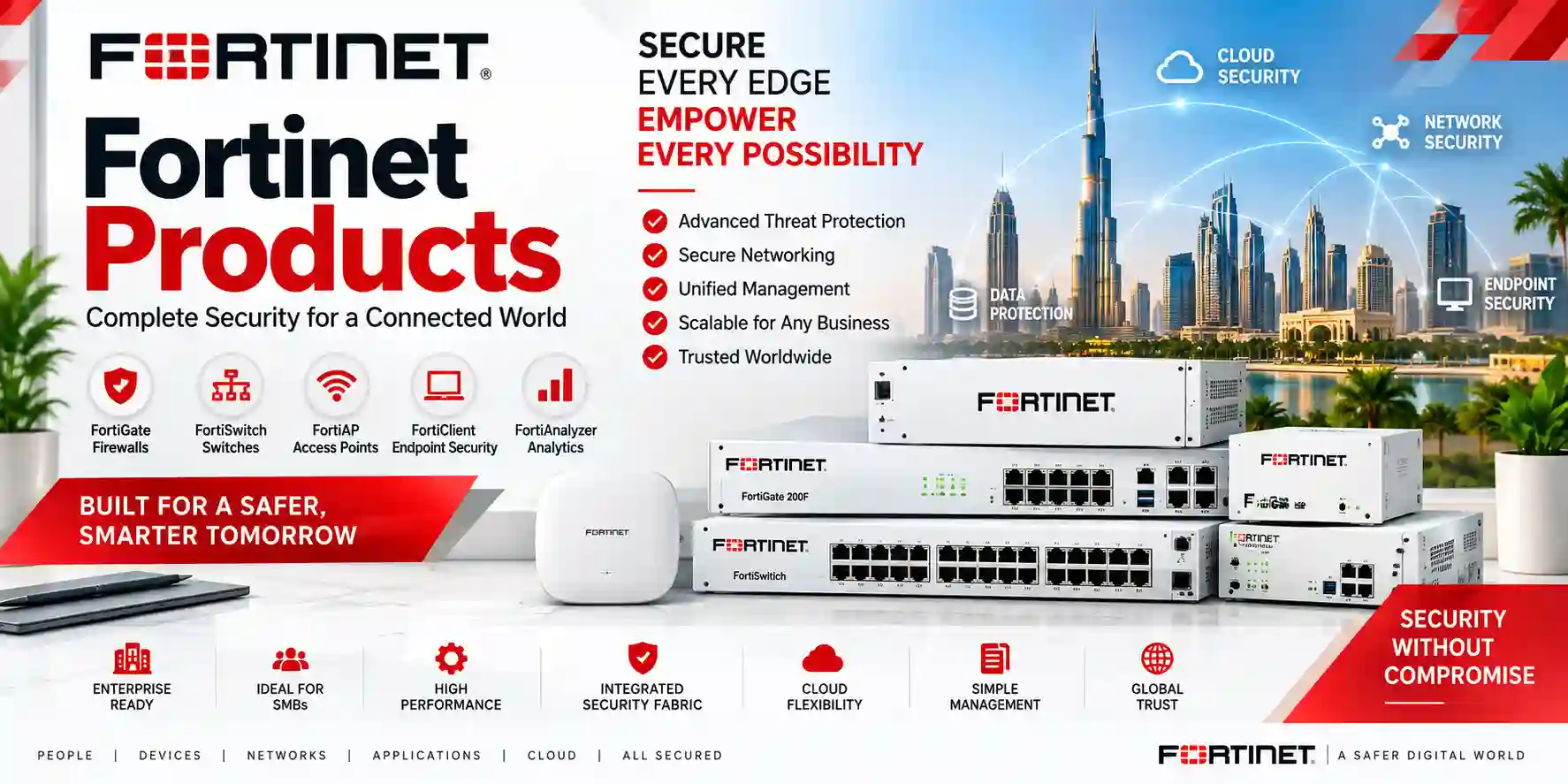
Current Fortinet product pages group appliances broadly into entry-level branch, mid-range campus and high-end data-centre classes. As of the current 2026 portfolio, Fortinet lists models such as the 30G, 40F, 50G, 60F, 70G, 70F, 80F and 90G for compact environments; the 120G, 200G, 400G, 400F, 700G and 900G in higher-capacity ranges; and larger systems such as the 1000F, 1200G, 1800F, 2600F, 3000G, 3500G, 3800G and 7000F family for demanding enterprise and data-centre use. Availability, lifecycle and exact ordering options can change, so any final bill of materials should be checked against the latest Fortinet datasheet and ordering guide before purchase.
Fortinet also notes that features can differ by hardware model, especially among entry-level platforms, and some functions can be exposed differently in the GUI or CLI. That is why a comparison should include the exact model, FortiOS release, port requirements, local storage variant, redundant-power requirement, Wi-Fi variant if applicable, and subscription bundle rather than assuming every FortiGate has identical hardware capabilities.
Current FortiGate appliance comparison snapshot
The table below uses Fortinet’s current published threat-protection figures as a simple cross-family reference. These figures are not a guarantee of performance in every deployment; security profiles, traffic mix, encryption, firmware, packet sizes, logging and configuration all influence observed results. Use the table to identify a shortlist, then validate the detailed datasheet for the exact appliance.
| FortiGate model | Published threat protection | Practical comparison direction | Questions to validate |
|---|---|---|---|
| 30G | 500 Mbps | Compact branch / small site shortlist | Ports, inspected bandwidth, VPN load, growth |
| 40F | 600 Mbps | Established small-office / branch platform | F-series fit versus newer G-series options |
| 50G | 1.1 Gbps | Current compact G-series alternative | WAN speed, SSL inspection, interface count |
| 60F | 700 Mbps | Small-to-growing branch comparison point | Security headroom, VPN concurrency, lifecycle |
| 70G | 1.3 Gbps | Higher-capacity compact G-series branch | Port layout, multi-WAN, segmentation |
| 80F | 900 Mbps | Busy branch / office comparison point | Current ordering status and newer alternatives |
| 90G | 2.2 Gbps | High-performance branch / growing edge | 10GE needs, SSL inspection and SD-WAN load |
| 120G | 2.8 Gbps | Larger office / campus edge shortlist | 10GE uplinks, HA, more segments and users |
| 200G | 6 Gbps | Mid-enterprise / aggregation or larger edge | High-speed interfaces, HA, VPN hub scale |
| 400G | 13 Gbps | Campus / enterprise edge | 25GE/10GE architecture, resiliency, growth |
| 700G | 26 Gbps | Large enterprise / demanding campus | Sessions, east-west policy and core integration |
| 900G | 30 Gbps | High-capacity enterprise edge | Redundant design, interface speed and logging |
Do not size from user count alone
Two companies with 100 users can require very different appliances. A cloud-heavy office with TLS inspection, multiple VPN tunnels, video meetings and large software downloads generates a different load from a lightly connected branch using a few SaaS applications. User count is helpful context, but internet speed, encrypted traffic, security profiles, concurrent sessions, application mix, branch links and growth determine the real requirement.
Plan the license with the appliance
FortiGuard services are part of the security outcome. Fortinet currently offers a-la-carte services and bundle levels such as Advanced Threat Protection, Unified Threat Protection and Enterprise Protection. The service mix can include IPS, malware protection, antivirus, sandboxing, application security, web and DNS controls and other services depending on bundle. Confirm exact entitlement and term for the selected SKU.
A five-step FortiGate selection method
1. Define the protected edge. Record internet circuits, WAN handoffs, LAN segments, server zones, guest networks, public services, remote users and branch links. 2. Define the inspection policy. Decide where IPS, antivirus, application control, web filtering, DNS filtering and TLS inspection will be used. 3. Measure real traffic. Capture peak WAN demand, business-hour concurrency and expected growth rather than relying on contracted bandwidth alone. 4. Check hardware. Validate copper and fiber ports, 10GE or faster interfaces, transceivers, local storage, rack format and redundant power. 5. Check operations. Decide whether central management, analytics, logging, high availability, configuration backup and lifecycle support are required.
This workflow is more reliable than choosing the cheapest device that exceeds today’s raw internet bandwidth. A procurement team can use it to create a comparison sheet that places technical capacity, subscriptions and implementation scope on the same page.
FortiGate features that change the comparison
Secure SD-WAN
Fortinet positions Secure SD-WAN as integrated with FortiGate. Compare the number of WAN links, SLA monitoring, application steering, branch overlays and central visibility expected in the design.
IPsec VPN
Branch connectivity can be CPU- and crypto-intensive. Check IPsec throughput, tunnel scale, routing, redundancy and whether the appliance will act as a branch spoke or a central VPN hub.
TLS inspection
Encrypted traffic inspection can materially change practical capacity. Confirm the official SSL inspection metric and design certificate deployment and exemptions carefully.
Segmentation
More VLANs and security zones can increase policy complexity. Map users, servers, voice, CCTV, guest Wi-Fi, IoT and management traffic before choosing interfaces and switching architecture.
High availability
Critical sites may need two appliances, redundant links and redundant power. Compare HA interfaces, power options, rack space and failover testing requirements before ordering.
Management & analytics
A single device may be managed locally; multi-site environments can justify FortiManager or analytics tooling. Include log-retention and visibility requirements in the architecture.

F-series versus G-series: compare the actual model, not the letter
The portfolio now contains both established F-series models and newer G-series appliances. A letter alone should not drive procurement. Compare the published performance, port density, hardware architecture, lifecycle status, support options, storage variant and pricing for the exact models under consideration. For example, an organisation evaluating a familiar 60F or 80F may also want a quotation for a current G-series model with similar deployment scope, while a large enterprise can still find F-series appliances in current higher-capacity categories.
Migration also matters. Replacing an existing FortiGate is not simply a physical swap. Review interface mappings, VLANs, zones, objects, routes, VIPs, policies, VPNs, SD-WAN rules, certificates, authentication, logging and firmware compatibility. A slightly larger appliance can be sensible when the migration accompanies a bandwidth upgrade, added TLS inspection or more branch tunnels, but unnecessary oversizing ties up budget without improving a weak design.
Tanzania FourTeck resources to use with this comparison
Start with the FourTeck Tanzania technology overview to place the firewall in the wider network architecture. The page explains why firewalls, switches, Wi-Fi, servers, IP telephony and physical-security systems should be planned together rather than as isolated purchases.
The FourTeck Tanzania shop and buying guide is useful for procurement preparation because it covers compatibility, capacity, infrastructure, management and lifecycle checks across business technology categories, including firewalls.
For implementation discussions, review FourTeck Tanzania services, which provides context for design, installation, configuration and support planning around a broader IT project.
If the project combines firewall procurement with other systems, the FourTeck Tanzania company overview helps buyers understand the integrated solution scope rather than treating the FortiGate as a stand-alone line item.
When the shortlist is ready, use the Tanzania contact page to share bandwidth, site count, VPN needs, preferred license term and deployment scope for a quotation discussion.
Regional Fortinet appliance comparison and procurement guidance
The same FortiGate can be used in many countries, but the buying conversation changes by site type, connectivity, procurement process, support model and regional architecture. The sections below keep the technical principles consistent while addressing different planning priorities. They do not claim local stock, offices, same-day delivery, guaranteed service coverage or vendor authorisation in any location; those items should be confirmed during quotation.
Fortinet Appliance Comparison Guide Tanzania
For Tanzania buyers, a Fortinet appliance comparison should begin with the site’s real connectivity profile and the systems that depend on it. A head office using cloud ERP, Microsoft 365, video meetings, remote-access services and multiple branch VPNs needs more inspection and session headroom than a small office whose internet use is mainly email and browser traffic. Record the primary and backup internet links, current peak utilisation, expected bandwidth upgrades and the percentage of encrypted traffic. Then compare FortiGate models using threat-protection, SSL-inspection and VPN figures instead of choosing from raw firewall throughput.
Tanzania projects also benefit from infrastructure-aware sizing. If the same network carries IP cameras, VoIP, Wi-Fi, business systems and guest traffic, define VLANs and routing before selecting the firewall. This clarifies how many physical and logical interfaces are required and whether the FortiGate will route between internal zones or primarily protect the internet edge. For sites with two internet providers, include secure SD-WAN or failover requirements in the comparison. For organisations with branches, determine whether the appliance is a spoke, a hub or both, because central VPN aggregation can require materially more capacity than a single-site deployment.
Procurement should separate hardware, security subscription, support term, transceivers or accessories, implementation and renewal expectations. FortiGuard bundle names can look similar while including different services, so compare exact entitlements and years rather than only total quote value. Ask whether local storage is required for logging, whether an HA pair is needed, and whether central management is justified. Power quality, UPS runtime, rack ventilation and cabling are also practical considerations for dependable operation.
A strong Tanzania quotation request therefore states users, sites, internet speeds, inspection policy, VPN topology, required ports, HA expectations, preferred subscription term and growth horizon. FourTeck can use that information to compare compact G-series appliances, established F-series devices and larger campus or enterprise models on a like-for-like basis. Buyers can also review the FourTeck Africa technology site when a Tanzania deployment is part of a wider regional programme.
Fortinet Appliance Comparison Guide Dar es Salaam
Dar es Salaam organisations often operate dense business networks where internet access, cloud applications, remote users, IP telephony, Wi-Fi and surveillance converge at one location. The firewall therefore becomes both a security control and a traffic-engineering point. When comparing Fortinet appliances for a Dar es Salaam office, start by measuring busy-hour WAN demand and identifying critical applications. A business with frequent international SaaS use and video conferencing may value inspection headroom and link resilience more than a simple port-count comparison.
Commercial buildings can also introduce design details that influence appliance choice. A multi-floor office may use fiber uplinks, several VLANs and managed switches; a warehouse may add large camera networks and operational devices; a hospitality site may separate staff, guest and management traffic. Determine whether inter-VLAN policy enforcement will occur on the FortiGate and whether 10GE or faster uplinks are required. This avoids selecting a firewall that has enough nominal security performance but an unsuitable interface layout for the switching design.
Internet continuity is another useful comparison point. If the site has two circuits, specify whether the goal is simple failover, active load sharing, application-aware steering or branch SD-WAN. A FortiGate can support integrated secure SD-WAN, but the final design depends on how links are monitored, which applications are prioritised and how VPN paths fail over. For remote access, include authentication and user-group requirements rather than treating VPN as an unlimited generic feature.
For procurement teams in Dar es Salaam, request model, subscription and implementation options in separate lines. Ask for the selected FortiGuard bundle, term, appliance variant, required SFP/SFP+ modules, rack accessories, HA quantity and configuration scope. This makes quotations easier to compare and reduces the risk of choosing a lower price that excludes required security services. A well-prepared requirement can also reveal when a compact appliance is sufficient and when a 90G, 120G, 200G or larger platform deserves consideration for longer-term headroom.
Fortinet Appliance Comparison Guide Mwanza
Mwanza businesses comparing Fortinet appliances should place resilience and operational simplicity alongside performance. A branch, distributor, healthcare facility, education site or regional office may rely heavily on cloud services and secure access to systems hosted elsewhere. If the network must remain useful during ISP instability, compare FortiGate models with a clear multi-WAN design in mind: number and type of WAN ports, support for the required handoffs, SD-WAN policy complexity and how VPN connectivity will behave during link changes.
Sizing should reflect the inspected traffic that matters to the business. Define expected use of IPS, malware protection, application control, DNS or web security and TLS inspection. If encrypted inspection will cover most user traffic, check the official SSL inspection performance for the shortlisted models. If only selected categories are inspected, document exclusions and privacy requirements. This matters because a raw firewall throughput figure can be many times higher than practical security-service capacity.
Mwanza procurement may also involve equipment that must integrate with an existing rack, switch stack or branch standard. Record copper and fiber interface requirements, VLAN count, PoE switching dependencies, addressing, rack space and UPS capacity. A FortiGate with the right security rating but the wrong physical ports can add unplanned transceivers or switch changes. If the site will be administered remotely, include configuration backup, logging, monitoring and secure administrator access in the design from the beginning.
For a multi-site company, compare not only the appliance at Mwanza but also how it will fit the central design. A branch 50G, 70G or 90G may be reasonable in one scenario, while a busier regional hub can justify 120G or above; the correct choice depends on measured traffic and topology. Standardising FortiOS policy naming, VPN templates and subscription terms across sites can make ongoing support easier even when each branch uses a different size appliance.
Fortinet Appliance Comparison Guide Arusha
Arusha organisations can include hospitality, tour operations, professional services, education, NGOs and regional offices, and these environments often mix employee, guest and operational networks. A Fortinet appliance comparison should therefore test segmentation requirements early. List the user LAN, guest Wi-Fi, servers, voice, CCTV, building systems and management network, then define which groups need to communicate. The firewall model must have enough performance for the traffic that crosses these security boundaries and enough interface flexibility for the chosen switching design.
Guest access can create a different traffic pattern from a conventional office. Many transient devices, encrypted browsing, streaming and software updates can increase sessions and bandwidth without increasing the number of employees. Do not size only by payroll headcount. Use peak concurrent clients, internet utilisation and security policy as the main inputs. If guest traffic will be isolated but not deeply inspected, document that difference. If business applications require strict inspection, protect the capacity reserved for those flows.
Remote and branch connectivity is another comparison area. A tour or hospitality group may link properties, reservation systems or back-office services. An NGO may need secure connections to headquarters and remote staff. Compare IPsec VPN throughput, tunnel topology and central management needs. For dual-ISP designs, map the preferred path for business-critical applications and how failover should behave. The firewall can participate in SD-WAN, but success depends on link measurement and policy rather than simply turning the feature on.
When requesting a Fortinet quote in Arusha, include the target lifecycle. A three- or five-year security term changes the total cost picture and should be compared with renewal expectations. Ask for the exact appliance and bundle names, not just “Fortinet firewall with license.” Confirm whether an HA pair, local storage or central logging is needed. This produces a clearer comparison between 40F/60F-era options and newer G-series choices, and between compact branches and higher-capacity 120G or 200G designs.
Fortinet Appliance Comparison Guide Dodoma
Dodoma buyers planning Fortinet security for offices, institutions or branch networks should treat documentation and repeatability as part of appliance selection. A firewall that is technically fast enough but poorly aligned with the organisation’s standard can create unnecessary support work. Begin with a network diagram showing WAN links, internal zones, servers, guest access, remote users and connected sites. Then compare the shortlist against the organisation’s policy and monitoring requirements.
Where data access and continuity are important, include high availability in the comparison before purchase. An HA design can require two identical appliances, suitable interfaces between cluster members, redundant switching paths and potentially redundant power. The cost and rack requirements are therefore different from a single-device quote. If the site cannot justify full HA, a second internet link and tested configuration backups can still improve recoverability, but they solve different failure scenarios.
Security-service performance should be tied to policy. Fortinet publishes threat-protection figures across the current appliance family, but a Dodoma deployment may also need to check IPS, NGFW, SSL inspection and IPsec metrics. If large cloud applications, remote backups or software distribution are expected, note those traffic peaks. If many internal networks are routed through the firewall, include east-west traffic in the capacity estimate rather than considering internet traffic alone.
For procurement, a structured bill of materials should show appliance, FortiGuard subscription, FortiCare or support coverage, accessories, optics, implementation, migration and documentation. Confirm firmware and feature compatibility before moving an existing configuration from an older appliance. A disciplined comparison can identify whether a compact G-series model is sufficient, whether a 90G or 120G offers more appropriate headroom, or whether a larger 200G-and-above design is justified by interfaces, VPN aggregation or enterprise inspection demand.
Fortinet Appliance Comparison Guide UAE
UAE Fortinet comparisons frequently span small branch offices, headquarters, retail networks, warehouses, hospitality sites and data-centre edges, so the range of suitable appliances can be broad. Begin with the business role of the firewall: internet edge, SD-WAN branch, VPN hub, campus segmentation point, data-centre perimeter or a combination. Each role places different emphasis on interfaces, sessions, encrypted inspection, VPN capacity and redundancy. A compact desktop unit can be efficient for a branch, while a headquarters may require multiple 10GE or faster links, HA and much greater threat-protection headroom.
The UAE market also contains many multi-site organisations. If one security standard will be deployed across Dubai, Abu Dhabi, Sharjah and other locations, compare appliances as a family rather than independently. Define a small-branch profile, standard-branch profile, large-office profile and data-centre profile, then map current FortiGate models to each after measuring bandwidth and inspection needs. This allows consistent policies and subscriptions without forcing every location to buy the same hardware.
For procurement, compare like for like. A hardware-only price is not equivalent to a quote that includes a multi-year FortiGuard bundle, support, configuration, migration and HA accessories. Ask for exact terms and verify that the included security services match the policy. The FourTeck Fortinet UAE specialist site can support regional research where the project is centred on Fortinet security in the Emirates.
UAE deployments should also be assessed for growth. A branch moving from 500 Mbps to multi-gigabit internet, adding SSL inspection or becoming a VPN hub can outgrow an initially adequate model. Conversely, buying a large enterprise appliance for a simple branch can waste budget. Compare current official data, confirm lifecycle and ordering status, and size with a realistic buffer tied to a documented growth plan rather than an arbitrary percentage.
Fortinet Appliance Comparison Guide Uganda
Uganda buyers comparing Fortinet appliances should pay close attention to branch connectivity, ISP diversity and the practical support model for geographically distributed sites. A network with a Kampala head office and branches elsewhere can use FortiGate appliances in a hub-and-spoke or SD-WAN design, but the hub must be sized for aggregate VPN traffic and the security services applied to that traffic. A model selected only for local internet use may become undersized when it starts terminating many branch tunnels.
Create a branch template that records primary and secondary links, expected throughput, local applications, cloud traffic, VLANs, guest Wi-Fi and required inspection. This allows each site to be mapped to a FortiGate class without relying on rough employee counts. Compact 30G, 50G, 70G and 90G appliances can be evaluated for smaller sites, while 120G, 200G or larger models can be shortlisted for heavier offices and hubs when official performance and interfaces match the design.
The subscription comparison is equally important. Determine whether the organisation needs basic support and selected services or a broader FortiGuard bundle. Check the exact term and included features, because web security, DNS controls, malware protection, IPS, cloud management and other capabilities can differ by bundle. For a multi-site rollout, aligning renewal dates may simplify administration, but the commercial feasibility should be confirmed in the quotation.
Uganda projects that are part of a regional rollout can use the FourTeck Uganda site for market-specific discussion while keeping architecture standards aligned with Tanzania and other countries. The useful comparison is not “which FortiGate is strongest,” but which exact appliance provides the required inspected throughput, ports, VPN capacity, manageability and lifecycle for each site without unnecessary complexity.
Fortinet Appliance Comparison Guide Kampala
Kampala organisations often need a firewall to coordinate internet security, branch VPN, cloud applications, guest access and internal segmentation at the same time. That makes the comparison more demanding than a single-purpose branch. Measure peak traffic on all internet links, estimate the portion subject to full inspection and identify whether branch traffic is inspected at the branch, at the Kampala hub or at both. This policy decision directly affects the model required at headquarters.
A headquarters comparison should include interface architecture. If the core switching layer operates at 10GbE or faster, verify that the shortlisted FortiGate provides the required port types and quantities. If there are DMZs, servers, wireless controllers, voice systems or security platforms, decide whether those connect directly to the firewall or through VLAN trunks. Local storage variants can matter where on-appliance logging is desired; otherwise, central logging may be preferred. Neither approach should be assumed without an operational requirement.
Kampala procurement teams should ask vendors to show the exact performance metric used to justify a model. A claim that a device is suitable for “500 users” is not enough. Ask for official threat-protection, NGFW, SSL inspection and VPN data and relate them to measured traffic. Also confirm whether the comparison includes redundancy. An HA pair can protect against appliance failure, while dual WAN protects against circuit failure; both may be necessary in a critical environment.
Finally, plan the migration path. Existing firewall rules often contain obsolete objects, temporary exceptions and unused VPNs. Moving them unchanged to a new FortiGate can carry old problems forward. A Kampala refresh is a good time to clean policies, document NAT, validate remote access and standardise naming. This can make the new platform easier to operate regardless of whether the final choice is a 90G, 120G, 200G or higher enterprise model.
Fortinet Appliance Comparison Guide Arua
For Arua sites, Fortinet appliance selection can place extra emphasis on branch resilience, remote manageability and avoiding unnecessary complexity. If the location depends on access to applications hosted at a main office or in the cloud, document what must remain available when the primary internet link degrades. A secondary link can improve continuity, but the firewall comparison should confirm how failover or SD-WAN rules will handle VPN traffic, DNS, voice and critical SaaS applications.
A smaller site does not automatically require the smallest appliance. Security-service load, camera traffic, guest networks and remote-access needs can increase demand. Conversely, a branch with modest inspected bandwidth and few segments may not benefit from a large rack appliance. Compare compact FortiGate models by threat-protection capacity, interface count and SSL inspection, then leave realistic headroom for future bandwidth changes. If the site is part of a standardised fleet, also consider the operational value of using the same model family as similar branches.
Remote administration should be built into the requirement. Define secure administrator access, configuration backup, logging, alerting and who is authorised to make policy changes. If central management is used, confirm the license and platform design. If not, ensure local FortiGate management can be performed safely without exposing administration to the public internet. UPS protection and stable rack placement also matter because a security appliance cannot protect traffic when power or cabling is unreliable.
Arua procurement requests should list the expected WAN handoff, LAN uplink type, user and device ranges, business applications, VPN endpoints, subscription term and installation scope. This gives suppliers enough information to compare 30G/50G/70G/90G-class branch options or recommend more capacity when justified. It also allows quotations to separate hardware from FortiGuard services, support and configuration, reducing surprises at renewal time.
Fortinet Appliance Comparison Guide Mbarara
Mbarara businesses may be comparing Fortinet for a regional office, retail operation, education environment, healthcare site, hospitality property or a branch connected to headquarters. The most reliable comparison begins with what the site must secure and what happens when connectivity fails. Identify cloud-dependent processes, VPN applications, payment or ERP traffic, voice, guest Wi-Fi and surveillance. This produces a traffic-priority map that can guide SD-WAN and firewall policy design.
If multiple internet links are available, determine whether they will be active/backup or actively used together. FortiGate Secure SD-WAN can steer traffic according to link health and policy, but the appliance still needs sufficient capacity for inspection across the combined links. Do not size from only the primary circuit. Also consider how many VPN tunnels will remain active and whether branch traffic is direct-to-internet or sent to a central site for inspection.
Physical design can distinguish models that look similar on a performance table. Check RJ45, SFP and SFP+ quantities, PoE dependencies on separate switches, rack or desktop format and whether redundant power is required. If the site expects a future switch upgrade to 10GbE, an appliance with suitable uplinks may avoid an early replacement. If there is no need for those interfaces, paying for them may not be the best use of budget.
For Mbarara procurement, compare the total lifecycle rather than year-one cost. A FortiGuard term, support coverage, possible renewal, implementation and future central-management requirements can exceed the significance of a small difference in appliance price. Ask for a clear bill of materials and verify the current Fortinet datasheet before approval. This makes it easier to distinguish between a compact branch purchase and a platform intended to become a regional aggregation point later.
Fortinet Appliance Comparison Guide Gulu
Gulu organisations can use a Fortinet appliance comparison to formalise security requirements before requesting prices. Start with an inventory of users and devices, but move quickly to network behaviour: contracted and observed internet bandwidth, encrypted traffic, cloud applications, VPN tunnels, CCTV, wireless guests and server access. This avoids the common mistake of treating an employee count as a complete sizing method.
For a branch environment, review how much protection will run locally. If IPS, malware protection, application control, DNS or web filtering and TLS inspection are enabled on most traffic, compare official inspected-performance metrics. If the branch sends traffic through a headquarters tunnel, include IPsec overhead and the capacity of the central appliance. The weakest point in a multi-site design can be the hub rather than the branch itself.
Operational simplicity is valuable when technical staff are not always on site. Plan remote monitoring, secure administrator access, backups and change control. A well-documented compact FortiGate can be easier to support than an oversized appliance with poorly understood policies. If the site has dual internet links, create simple health checks and failover rules first; more complex application steering can be added when there is a defined business reason.
A Gulu quotation request should therefore describe the site as a workload, not just a location. Include link speeds, network segments, uplink media, desired security services, VPN topology, subscription years, expected growth and whether configuration or migration is required. Compare available 30G through 90G branch options where appropriate, and move to 120G or larger platforms when security performance, interfaces or aggregation duties justify the increase. Always verify current ordering status and final specifications before approval.
Fortinet Appliance Comparison Guide Kenya
Kenya Fortinet projects can range from a single office firewall to multi-branch retail, logistics, education, healthcare and enterprise networks. For a fair appliance comparison, define standard site profiles and map each profile to measured security requirements. A small branch may need compact interfaces and around one gigabit of inspected capacity; a busy headquarters may need many times that, multiple high-speed uplinks and an HA pair. Using profiles prevents procurement from choosing one model for every site simply for convenience.
Connectivity choices should be part of the model review. Nairobi headquarters and regional branches may use different internet providers and circuit sizes, but central policy can still be standardised. If Secure SD-WAN is planned, record underlay links, SLA targets, application priorities and VPN overlays. Compare the appliance’s security capacity to the combined active links rather than a single circuit, and check central hub capacity if many branches will aggregate there.
Kenya buyers should also compare FortiGuard bundles and support terms consistently across vendors. The same FortiGate hardware can be quoted with different service levels and contract periods, which makes headline pricing misleading. A useful evaluation sheet lists appliance, bundle, term, support, optics, HA quantity, installation, migration and renewal assumptions separately. If the organisation already operates Fortinet, include configuration migration and policy cleanup rather than assuming an automatic conversion is risk-free.
For Kenya-specific enquiries, the FourTeck Kenya site provides a regional starting point. Across countries, the core comparison remains the same: choose enough inspected performance and correct interfaces for the real workload, validate official Fortinet data for the exact model, and include lifecycle and operations in the decision instead of treating the firewall as a one-time hardware purchase.
Fortinet Appliance Comparison Guide Kuwait
Kuwait organisations comparing Fortinet appliances can benefit from separating branch, headquarters and data-centre requirements. A small branch might prioritise compact hardware, dual WAN and secure access, while a corporate headquarters can require 10GbE or faster interfaces, high availability, large VPN capacity and extensive TLS inspection. A data-centre perimeter introduces even higher session rates, east-west segmentation and redundancy expectations. Place the intended role before the model number in every comparison.
High-speed internet availability can make raw firewall throughput especially misleading. When a circuit is multi-gigabit, confirm the FortiGate’s threat-protection, NGFW and SSL-inspection performance for the security policy that will be used. A model that routes traffic at very high speed can still become the bottleneck when deep inspection is active. Include expected growth and simultaneous VPN traffic, but avoid adding arbitrary capacity without evidence.
Kuwait procurement should verify exact hardware variants and accessories. Large appliances may require specific optics, rack power and redundant PSU planning; compact models can have different port mixes and storage variants. If two devices will form an HA pair, budget and cable for the cluster from the start. Centralised management or logging should also be listed as a separate architecture component where required rather than assumed to be included with every firewall purchase.
Regional buyers can use the FourTeck Kuwait site for country-focused enquiries. A good Fortinet comparison in Kuwait should make the business case visible: the selected appliance needs to protect the intended bandwidth with the intended services, connect to the existing network without awkward workarounds, support the required resilience model and remain commercially supportable for the planned lifecycle.
Fortinet Appliance Comparison Guide Ghana
Ghana buyers assessing Fortinet should begin with the network’s business dependencies. If an office relies on cloud accounting, collaboration, ERP, online transactions and remote administration, the firewall needs reliable security and enough inspection capacity to avoid becoming a bottleneck. A branch with light use has a different requirement from a headquarters that also terminates site-to-site VPNs and controls internal segmentation. Write those roles into the comparison so each appliance is evaluated against the right workload.
Connectivity resilience deserves explicit attention. Where two internet circuits are used, decide whether both carry traffic or whether one is standby. For SD-WAN, identify which applications need preferred paths and how link quality is measured. The combined active bandwidth, plus security inspection and encryption, should influence the model. For branches, compact G-series options can be compared with established F-series appliances; for aggregation and larger sites, 120G, 200G and higher platforms may be appropriate when official metrics support the requirement.
Operational factors can be as important as peak throughput. Check whether the IT team needs local logs, central analytics, remote backups, policy templates or consistent VPN configurations across sites. If the appliance will be placed in a shared rack, confirm power, cooling and cable management. If there is no local technical team, keep the design understandable and document recovery procedures. Complexity should be added only when it solves a real availability or security need.
For Ghana procurement, insist on a clear breakdown of hardware, subscription, support term, optics, implementation and renewal assumptions. Compare exact FortiGuard bundles rather than generic “UTM license” descriptions. A structured quote can reveal whether a lower hardware price actually omits required services. Before purchase, confirm current Fortinet lifecycle, firmware support and specifications for the selected model, especially if evaluating older F-series stock against newer G-series platforms.
Fortinet Appliance Comparison Guide Nigeria
Nigeria Fortinet comparisons can involve very different network scales, from a single Lagos branch or professional office to nationwide retail, financial, education, logistics and enterprise environments. Do not use one generic sizing rule across these scenarios. Build a traffic and risk profile for each site: active users and devices, internet links, cloud applications, remote access, branch VPN, public services, internal zones and expected security inspection. Then map current FortiGate models to those requirements.
For organisations with many branches, central aggregation is a critical design point. A headquarters appliance may terminate dozens or hundreds of IPsec tunnels and carry traffic from multiple regions. Compare VPN throughput, sessions, interface speeds, routing scale, HA and central management needs. The branch appliance may be modest, but the hub cannot be sized as if it serves only local users. If branches use direct internet breakout with security enforced locally, the performance distribution changes again.
Power and physical infrastructure should also be included in the comparison. An HA pair of larger appliances can require redundant power feeds, UPS capacity, rack space and cooling. Smaller desktop models still benefit from clean power and secure placement. For multi-gigabit designs, confirm the switch and optics on both sides of the firewall rather than discovering after purchase that uplinks are mismatched.
Commercially, Nigeria buyers should compare the same subscription term and service scope across offers. Hardware-only and multi-year security bundle quotes are not directly comparable. Ask for exact FortiGuard services, support coverage and renewal basis. Include migration and policy cleanup where an old firewall is being replaced. A transparent model-to-workload comparison helps prevent both under-sizing, which can reduce inspected performance, and over-sizing, which increases cost without fixing architecture or policy problems.
Fortinet Appliance Comparison Guide Seychelles
Seychelles organisations comparing Fortinet appliances may place particular value on reliable remote administration, link resilience and right-sized hardware because sites can be distributed and support visits may require more planning. Begin by identifying which business applications are cloud based, which services remain on site and what connectivity must survive an ISP issue. For hospitality, professional services and multi-property environments, guest networks and operational systems can produce traffic patterns that differ significantly from office headcount.
Dual-WAN or SD-WAN design should be decided before final appliance selection. If two circuits are used simultaneously, size for the combined inspected throughput and expected failover condition. If one circuit is only backup, still validate that routing, NAT, VPN and DNS behaviour are tested during failover. For inter-island or remote-site connectivity, document VPN topology and whether each branch connects directly to a central site or uses cloud services independently.
Physical and operational simplicity can reduce risk. Compact FortiGate appliances can suit small sites when the official security-performance and interface requirements are sufficient. Larger offices or central gateways may need 90G, 120G, 200G or higher-capacity models. Compare rack versus desktop deployment, fiber uplinks, local storage and HA only where the requirement exists. A simpler well-documented platform can be more dependable than a feature-rich design that nobody maintains.
Seychelles procurement should also plan subscription continuity. FortiGuard services and FortiCare terms should be visible in the bill of materials, with renewal dates recorded during handover. If multiple properties are deployed together, align naming, configuration backup, policy templates and monitoring where practical. The final model choice should be based on measured traffic, inspection policy, interfaces, VPN and resilience—not on a generic “users per firewall” chart or the assumption that the largest available appliance is automatically the safest choice.
Regional FourTeck network for multi-country Fortinet projects
Organisations standardising Fortinet across borders can coordinate architecture while handling local commercial requirements separately. Alongside Tanzania, the FourTeck network includes Kenya FourTeck, Uganda FourTeck, Fortinet UAE, Kuwait FourTeck and FourTeck Africa. These links are useful when a common FortiGate standard is being evaluated for more than one country.
A regional standard should define design principles—inspection baseline, VPN architecture, policy naming, logging, admin security, subscription level and backup process—while allowing each site to use an appliance sized for its own bandwidth and interfaces. Standardisation should simplify operations, not force unnecessary hardware uniformity.
FortiGuard subscription comparison
Fortinet’s current FortiGuard security bundle comparison shows that core threat-prevention functions such as IPS, advanced malware protection, antivirus, botnet protection and related services can be available across multiple bundle levels, while broader web, DNS, IoT, data-loss-prevention, security-rating and enterprise functions vary. The right bundle depends on policy, not simply company size. A business that already has dedicated controls elsewhere may need a different FortiGate subscription mix from one that expects the firewall to provide a wider set of security functions.
Advanced Threat Protection
Review when the priority is core threat controls such as IPS and malware defenses. Confirm exact current entitlement for the chosen term and appliance.
Unified Threat Protection
Review when broader web and content-security controls are required in addition to core threat prevention. Validate the current bundle table before ordering.
Enterprise Protection
Review when the organisation requires the broader enterprise service set. Compare functionality against existing security tools to avoid unnecessary overlap.
Quotation checklist: information to send before asking for a FortiGate price
Fortinet appliance comparison FAQs
Which FortiGate model should a small business compare first?
Start with current compact branch models whose threat-protection performance, ports and subscription options meet the measured requirement. Fortinet currently lists models including 30G, 40F, 50G, 60F, 70G, 70F, 80F and 90G in its entry-level range. The right shortlist depends on inspected bandwidth, VPN, interfaces and growth rather than employee count alone.
Should I compare raw firewall throughput or threat protection?
Use raw firewall throughput for context, but use threat-protection, NGFW and SSL inspection figures when those services represent the planned workload. These figures are closer to how the appliance behaves when security functions are active.
Is a G-series FortiGate always better than an F-series model?
Not as a universal rule. Compare exact models, official performance, interfaces, lifecycle, availability, features, storage and cost. Fortinet’s current portfolio includes both F- and G-series appliances across different capacity ranges.
Do I need a FortiGuard subscription?
A FortiGate can provide core firewall functionality, but FortiGuard subscriptions provide security services and support entitlements depending on the bundle. If the business expects IPS, malware protection, web or DNS controls and other current services, confirm the correct subscription rather than treating licensing as optional detail.
How much spare performance should I buy?
Use a documented growth model rather than a fixed percentage. Consider planned internet upgrades, TLS inspection expansion, more branches, added cloud traffic and new VPN users. The objective is sufficient headroom for credible growth without paying for capacity that has no foreseeable use.
What should be checked before migrating an old firewall to FortiGate?
Inventory interfaces, VLANs, objects, NAT, routes, security policies, VPNs, certificates, users, authentication, public services, logging and remote access. Remove obsolete rules where possible, confirm firmware compatibility and create a rollback plan. Migration is an opportunity to simplify policy rather than copy every legacy configuration unchanged.
Decision recap
A reliable Fortinet comparison has six layers: workload, inspected performance, interfaces, resilience, subscriptions and operations. Start with the network you actually have, including peak traffic and security policy. Shortlist current models using official Fortinet metrics. Confirm physical ports and power. Decide whether the site needs dual WAN, SD-WAN or HA. Compare exact FortiGuard bundles and support terms. Finally, define how the configuration will be managed, logged, backed up and renewed.
This method works whether the shortlist contains a compact 30G or 50G, a branch-focused 70G or 90G, a 120G or 200G for a larger edge, or a high-capacity enterprise and data-centre appliance. It also makes vendor quotations easier to evaluate because every option is tied to the same documented requirement.
Consultation panel: prepare a model comparison that procurement can approve
Send the site list, internet circuits, approximate peak traffic, VPN topology, required security services, uplink types, HA requirement and preferred subscription term. A structured requirement allows FortiGate options to be compared on the same technical and commercial basis. For Tanzania enquiries, the FourTeck Tanzania contact page is the direct place to begin a local project discussion.