
FortiGate Firewall Product Range
FortiGate is Fortinet’s next-generation firewall platform for securing users, applications, branch networks, campuses, data centers, cloud-connected environments and distributed business operations. The current portfolio extends from compact branch appliances through mid-range campus systems to high-end data-center platforms, allowing buyers to match security inspection, connectivity, VPN, segmentation and growth requirements to an appropriate appliance class rather than selecting a firewall by raw internet speed alone.
This guide is written for organizations evaluating the FortiGate firewall product range in Tanzania and connected regional markets. It explains how the range is structured, what to compare before purchasing, where FortiGuard security services and FortiCare support fit, and how to prepare a useful quotation request. Product specifications, subscriptions and availability can change by exact model and order term, so final procurement should always be based on the current Fortinet datasheet and a confirmed commercial quotation.
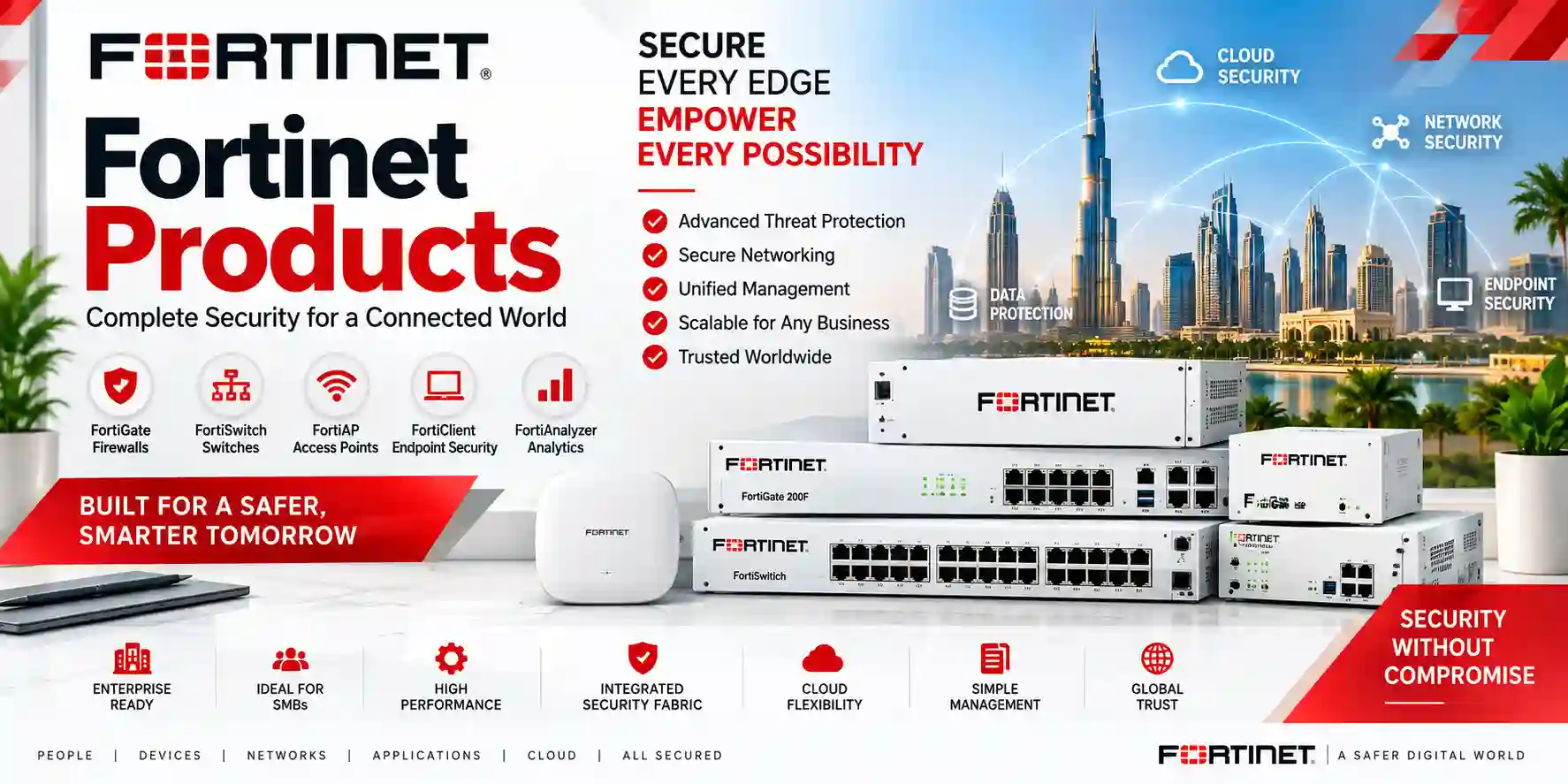
Compact FortiGate models for small offices, distributed branches, retail, clinics, schools and controlled edge deployments.
Higher-capacity appliances for larger offices, campuses, multi-department sites and enterprise edge requirements.
High-performance platforms for large enterprises, data centers, service-provider environments and heavy inspection workloads.
FortiGate can be deployed as hardware appliances as well as virtual and cloud-oriented firewall options for hybrid architectures.
What is the FortiGate firewall product range?
Fortinet currently presents FortiGate NGFW appliances in three broad hardware groups: high-end systems for data-center use, mid-range systems for campus and enterprise edge deployments, and entry-level appliances for branch and smaller-site requirements. Fortinet also offers FortiGate-as-a-Service and virtual or cloud deployment choices. This portfolio approach matters because a firewall for a ten-person branch and a firewall protecting a high-throughput data center may run the same FortiOS family but have very different interface density, hardware acceleration, concurrent-session capacity, inspection performance, redundancy options and physical form factor.
FortiGate appliances use Fortinet purpose-built security processors and FortiOS to combine networking and security functions. Depending on the model, configuration and licensed services, organizations can use capabilities such as firewall policy enforcement, intrusion prevention, application control, web filtering, malware protection, IPsec VPN, secure SD-WAN, network segmentation, routing and integration with broader Fortinet management and security products. Buyers should separate platform capability from licensed service entitlement: the hardware provides the platform, while specific FortiGuard services and FortiCare support terms are purchased according to the required bundle and duration.
For Tanzania buyers, a useful starting point is to define the real traffic profile before discussing a model. Count users and devices, record primary and backup WAN speeds, identify cloud applications, estimate VPN demand, decide whether encrypted traffic will be inspected, list required VLANs, note current switches and wireless systems, and decide how long the appliance is expected to remain in service. Fourteck’s Tanzania integrated IT and security services page explains the wider planning relationship between firewalls, switching, Wi-Fi, servers, voice and other infrastructure, while the Fourteck Tanzania technology shop provides broader buying guidance for business technology categories.
Current FortiGate families: a practical portfolio view
Fortinet’s current NGFW portfolio includes newer G-series appliances alongside established F-series platforms. The table below is a buying-orientation guide based on Fortinet’s current product grouping; it is not a substitute for the exact datasheet of the model being quoted. Threat-protection figures vary significantly across models, and requirements such as interface type, onboard storage, PoE, high availability, virtual domains or specialized deployment options must be checked against the exact SKU.
| Portfolio class | Representative current models | Typical planning context | What to confirm |
|---|---|---|---|
| Entry-Level / Branch | 30G, 40F, 50G, 60F, 70F, 70G, 80F, 90G | Small offices, branch sites, retail, clinics, schools, controlled remote locations | Inspected throughput, WAN/LAN ports, VPN load, local logging needs, growth headroom |
| Mid-Range / Campus | 120G, 200G, 400F, 400G, 700G, 900G | Larger offices, campus edges, headquarters, multi-department environments, heavier VPN and security inspection | 10/25/40/100G connectivity as applicable, HA design, SSL inspection, segmentation scale, central management |
| High-End / Data Center | 1000F, 1200G, 1800F, 2600F, 3000G, 3200F, 3500G, 3800G, 4200F and larger chassis-class systems | Large enterprise cores, data centers, high-volume internet edges, service-provider or hyperscale-style security requirements | Interface modules, transceivers, rack/power requirements, redundancy, session scale, decryption, routing and HA architecture |
Fortinet’s published portfolio shows threat-protection performance ranging from hundreds of megabits per second on compact branch systems to well above 100 Gbps on selected high-end G-series models. That range illustrates why model selection must be tied to enabled security services and real traffic, not only the ISP speed. A site with a 1 Gbps internet circuit can still require more headroom if it has heavy encrypted traffic inspection, many VPN tunnels, large east-west flows, multiple WAN links or future bandwidth upgrades.
How to size a FortiGate before requesting a quote
A correct FortiGate recommendation begins with the traffic that will be inspected. Raw firewall throughput represents only one performance dimension. In a production security policy, an organization may enable IPS, application control, antivirus, web filtering, DNS security, SSL inspection, IPsec VPN and other services at the same time. The more security processing required, the more important it becomes to compare the relevant inspected-throughput figures on the exact datasheet.
User count is also only an indicator. Fifty users in a light office environment can create less traffic than twenty users transferring large design files, operating cloud backups, running video collaboration and maintaining multiple VPN connections. Device count may exceed user count because phones, cameras, printers, servers, wireless access points, building systems and IoT endpoints also generate traffic or require segmentation.
For practical sizing, send the current and planned WAN bandwidth, approximate users and devices, number of branches, site-to-site VPN requirement, remote-access method, expected security services, number of VLANs, interface speeds, redundancy expectations and any compliance or logging needs. This information helps narrow the range from an appropriate branch class to a campus or data-center class without guessing.

FortiGuard, FortiCare, management and lifecycle planning
FortiGate procurement is not only a hardware decision. FortiGuard AI-powered Security Services provide subscription-based security capabilities that can include threat intelligence, intrusion prevention, web and DNS filtering, malware protection and other services depending on the selected bundle. FortiCare provides support and service entitlements according to the chosen level and term. Bundle names and inclusions can evolve, so the quotation should identify the exact services, duration and support level rather than using a generic phrase such as “licensed firewall.”
For one or two appliances, local FortiOS management may be sufficient for some organizations. Larger environments can benefit from FortiManager for centralized configuration and policy administration and FortiAnalyzer for logging, analytics, reporting and investigation. Multi-site buyers should also define who owns firmware planning, configuration backups, administrator access, log retention, policy reviews, certificate management and subscription renewals after deployment.
Lifecycle planning should begin before purchase. Record the appliance serial numbers, support expiration dates, security-service renewals, configuration backup location and change-management process. If the organization already uses Fortinet in another market, standardizing policy names, VPN templates and management practices can simplify operations. Buyers with UAE requirements can review the dedicated Fortinet UAE and FortiGate resource for regional product, renewal and deployment context.
FortiGate integration: firewall, switching, Wi-Fi and branch connectivity
FortiGate can serve as more than an internet perimeter device. In a segmented business network, it can enforce policy between VLANs, secure branch-to-branch connections, steer WAN traffic using secure SD-WAN functions, provide VPN termination and form part of a wider Fortinet Security Fabric deployment. FortiSwitch and FortiAP can be integrated into Fortinet-managed network designs, while FortiManager and FortiAnalyzer can add centralized operational control and visibility.
Integration should still be designed around the existing environment. A replacement firewall may need to preserve public IP mappings, VLAN gateways, dynamic routing, VPN tunnels, voice rules, CCTV access, cloud allowlists and third-party integrations. A clean migration plan documents the current state, removes obsolete rules where appropriate, tests critical applications and includes a rollback path. The goal is not simply to copy every legacy rule into a new appliance; it is to preserve required business access while reducing unnecessary exposure.
FortiGate Firewall Product Range Tanzania
Organizations evaluating the FortiGate Firewall Product Range Tanzania typically need a platform that can serve very different environments: a compact branch with one internet connection, a growing headquarters using multiple WAN links, a campus with segmented departments, a warehouse connecting operational systems, or a data-center edge handling heavy application traffic. Tanzania buyers should therefore begin with the operating environment and security policy rather than choosing a familiar model number. Current Fortinet options range from compact entry-level 30G, 40F, 50G, 60F, 70G, 80F and 90G-class appliances through mid-range 120G, 200G, 400G and larger platforms, with high-end systems extending into the 1000F, 1200G, 3000G, 3500G, 3800G and chassis categories. The exact fit depends on inspected throughput, interfaces, VPN demand and resilience.
For Tanzania deployments, connectivity planning should account for the actual ISP handoff, public addressing, backup-link design and any branch-to-head-office traffic. If the business uses dual internet links, the firewall design can consider failover or SD-WAN policy so essential applications have an alternative path when the primary link is degraded. Security zones can separate staff, servers, guest Wi-Fi, CCTV, IP telephony and management traffic, reducing unnecessary communication between systems. Where cloud applications, Microsoft 365, ERP, hosted voice, online banking or remote access are business-critical, policy design should consider both security and application continuity.
Procurement teams should request a quotation that clearly identifies the hardware model, exact bundle, support term, accessories, transceivers if required, installation scope and renewal responsibility. Availability should be confirmed at the time of quotation rather than assumed from an online product list. For a new deployment, also share rack conditions, UPS availability, core-switch uplink speed, desired high-availability architecture and whether centralized logging is required. Existing FortiGate users should include their current model, FortiOS version and subscription expiration date when planning an upgrade or renewal.
Fourteck Tanzania can be approached with a defined user count, WAN speed, branch count, VPN requirement and security objective so the model discussion starts with measurable needs. A Tanzania project may also include switching, wireless, servers, CCTV or voice infrastructure, and those dependencies are worth documenting before final firewall selection. This prevents the firewall from becoming an isolated purchase and gives the buyer a clearer path for segmentation, failover, management and future expansion.
FortiGate Firewall Product Range Dar es Salaam
FortiGate Firewall Product Range Dar es Salaam requirements can vary sharply between a professional office, logistics company, hospitality property, financial-services environment, education site, healthcare organization, retail operation and multi-floor corporate headquarters. In a dense business environment, internet connectivity may be fast enough that an older firewall appears to be the performance bottleneck only after IPS, application control or encrypted traffic inspection is enabled. Buyers should therefore compare Fortinet’s threat-protection and NGFW performance figures for the exact appliance, not only the headline stateful-firewall throughput. This is particularly important when a site relies on cloud applications, large file transfers, video meetings and remote users at the same time.
A Dar es Salaam head office may also have more network zones than a small branch. Separate VLANs can be used for employees, guests, IP phones, cameras, servers and management interfaces, with the FortiGate enforcing traffic policy between zones where appropriate. If the site operates internet-facing services or VPN gateways, the design should define public IP use, NAT, certificate requirements and allowed inbound access. For companies with branches elsewhere in Tanzania or East Africa, site-to-site IPsec VPN or secure SD-WAN can provide a consistent approach to connectivity while allowing local internet breakout where appropriate.
Physical planning is equally important. Confirm rack space, ventilation, power protection and the type of uplinks connecting the firewall to the core or distribution switches. Larger FortiGate models may need fiber or higher-speed interfaces, and high-availability pairs require duplicated connectivity and a design that avoids shared single points of failure. If existing switches are limited to 1 Gbps while the new firewall has multi-gigabit or 10G capability, the bottleneck may move elsewhere unless the LAN architecture is reviewed.
For procurement, send the approximate user count, internet links, critical applications, VPN users, branch connections and security-service expectations. If the requirement is a migration, provide the current firewall model, interface map, VLANs and major VPNs. This gives the quotation process enough context to compare an entry-level, mid-range or larger FortiGate class without over-sizing or leaving too little performance headroom for future growth.
FortiGate Firewall Product Range Mwanza
FortiGate Firewall Product Range Mwanza planning often starts with business continuity as much as security. A regional office, healthcare site, education campus, warehouse, tourism operation or distribution branch may depend on cloud applications and headquarters systems even when local IT staff are limited. A FortiGate can combine security policy, VPN connectivity and WAN path control in one platform, but the value depends on a design that is simple enough to operate. For a smaller site, compact appliances in the entry-level FortiGate range may provide the required capability; larger sites should be evaluated against inspected traffic, interface needs and remote-access demand.
Where two internet connections are available, a Mwanza site can be designed for controlled failover rather than leaving users dependent on one circuit. The firewall can monitor link condition and use SD-WAN or routing policies to steer traffic, but the exact setup should reflect application sensitivity. Voice, video meetings, payment systems, ERP sessions and ordinary web browsing can have different tolerance for latency or path changes. The design should also decide whether branch traffic returns to a head office for inspection or exits locally under a centrally governed policy.
Security segmentation is useful when a site has a mix of office users, Wi-Fi clients, CCTV cameras, IP phones and operational devices. Placing every device on one flat network makes troubleshooting and security control harder. VLANs and firewall policies can limit unnecessary traffic while preserving approved services such as camera viewing, printing, directory access or application connectivity. If the site has guest Wi-Fi, isolating guests from business systems should be part of the design rather than a later correction.
When requesting a FortiGate quote for Mwanza, include the current WAN speed, expected upgrade path, number of staff and devices, remote and site-to-site VPN needs, number of VLANs, required ports and preferred subscription term. Also indicate whether the appliance must fit a desktop environment or rack, whether local logs are important, and whether the site will be managed centrally. These details make it easier to compare models by operational fit instead of simply choosing the lowest-cost appliance.
FortiGate Firewall Product Range Arusha
FortiGate Firewall Product Range Arusha buyers may include hospitality businesses, tour operators, professional firms, schools, NGOs, healthcare providers, branch offices and organizations supporting operations across northern Tanzania. Many of these environments combine staff networks with guest or public access, cloud applications, payment systems, CCTV, voice and remote connectivity. A next-generation firewall can provide a central security policy point, but a good design begins by identifying which groups of users and devices should communicate with one another and which internet services are essential to the business.
Hospitality and guest-facing environments require especially careful segmentation. Guest Wi-Fi traffic should be kept separate from internal administration, finance, property systems and camera networks. If multiple access points and switches are part of the site, firewall selection should consider not only internet throughput but also how much inter-VLAN traffic may need inspection. A network with hundreds of guest devices can create many concurrent sessions even when average bandwidth appears moderate, so session capacity and realistic traffic peaks belong in the sizing discussion.
For organizations connecting Arusha with Dar es Salaam, Nairobi, Kampala or other regional offices, VPN and SD-WAN planning can standardize branch connectivity. The exact architecture should decide where internet breakout occurs, how routes fail over and how administrative access is controlled. Centralized logging can help an IT team review events across multiple sites, while FortiManager may simplify policy administration when several FortiGate appliances must follow a common standard.
A useful quotation request should include user count, guest-network size, WAN links, VPN sites, expected security services, critical cloud applications and future growth. For a replacement project, export or document the current policies and identify obsolete rules before migration. This reduces the temptation to copy years of accumulated configuration into the new firewall. The selected FortiGate should provide enough inspected-performance headroom for the desired security profile while matching the site’s interface, rack and power conditions.
FortiGate Firewall Product Range Dodoma
FortiGate Firewall Product Range Dodoma planning can serve government-linked offices, education, professional services, NGOs, healthcare sites, branch operations and growing commercial organizations that need consistent policy and secure access to central applications. For these buyers, the firewall should be selected around business systems and data flows. A modest office using mostly web applications may need a different appliance class from a site that terminates many VPN tunnels, runs local servers, inspects encrypted traffic and supports several segmented departments.
Before choosing a model, map the network zones and identify critical dependencies. Users may require access to cloud services, centralized databases, remote desktops, voice platforms, shared storage or government portals. Cameras and access-control devices may need to reach local servers without unrestricted access to the user network. Guest wireless should have an internet-only policy. These relationships can be translated into VLANs, routes and firewall policies so security follows the organization’s operating model rather than an arbitrary port-by-port configuration.
Resilience should be discussed early. If the site has two WAN providers, decide whether the secondary link is only for failover or whether both links will carry traffic. If uptime requirements are higher, consider whether a high-availability FortiGate pair is justified and whether switches, power and ISP termination are also redundant. Buying two firewalls does not create full resilience if both depend on one switch, one UPS or one provider handoff.
For a Dodoma quotation, provide internet bandwidth, users, device count, branch or remote VPN needs, desired inspection services, logging expectations and the period for FortiGuard/FortiCare coverage. If the organization expects rapid growth, mention planned bandwidth increases and additional sites. The final recommendation should compare current FortiGate models using the specific datasheet metrics that match the workload, leaving enough capacity for normal peaks and the security features that will actually be enabled.
FortiGate Firewall Product Range UAE
FortiGate Firewall Product Range UAE requirements can range from small branch offices and retail outlets to regional headquarters, campuses, data centers and cloud-connected enterprise environments. The UAE market often includes high-bandwidth internet connections, multi-site operations, hybrid cloud use and demanding application performance, which makes inspected-throughput sizing particularly important. An appliance that can pass a fast internet link with simple firewall rules may deliver a different result when IPS, application control, antivirus, web filtering and SSL inspection are active together. Buyers should therefore compare Fortinet’s current threat-protection and NGFW metrics for the exact model under consideration.
The current portfolio provides many possible steps between compact branch appliances and large data-center systems. Entry-level G-series and F-series products can suit controlled office edges, while 120G, 200G, 400G and larger mid-range systems provide more headroom and connectivity options for campus or enterprise use. High-end models such as the 1200G, 3000G, 3500G and 3800G address much heavier traffic and interface requirements. The best choice should be driven by a documented traffic model rather than an assumption that a newer or larger model is automatically preferable.
UAE deployments also commonly require attention to branch connectivity, remote access, centralized policy and logging. Where an organization operates offices across Dubai, Abu Dhabi, Sharjah or other Emirates, FortiManager and FortiAnalyzer can be evaluated alongside the firewall estate. Multi-WAN secure SD-WAN can help route applications across available links, while IPsec VPN can interconnect sites or cloud environments. High-availability design should include upstream and downstream network redundancy, not only the firewall pair.
Procurement teams coordinating UAE and African sites can use a consistent model-selection worksheet so every location reports users, bandwidth, VPN, interfaces, security services and support terms in the same format. The dedicated Fourteck Fortinet UAE site provides regional context for FortiGate products, renewal and deployment planning. Availability, delivery and service scope should still be confirmed for each quotation and destination.
FortiGate Firewall Product Range Uganda
FortiGate Firewall Product Range Uganda buyers often need practical security for headquarters, branches, NGOs, healthcare, education, finance, retail, logistics and hospitality environments spread across different site sizes. A compact FortiGate can be appropriate for a branch with limited users and modest WAN capacity, while a headquarters may require a larger model for higher inspected throughput, more VLANs, VPN concentration and redundancy. Standardizing on one vendor does not mean every branch should use the same appliance; it means the architecture, policy naming and management practices can be made consistent while model capacity matches each site’s workload.
A common Uganda use case is secure connectivity between Kampala and regional branches. Site-to-site IPsec VPN can create encrypted links, while secure SD-WAN can help organizations use multiple internet circuits and define application-aware path preferences. The design should include failure behavior: which applications remain available if one ISP fails, whether voice or transactional traffic receives priority, and whether branch internet access continues locally if a central site is unreachable.
Segmentation can reduce risk at mixed-use sites. Staff devices, guest Wi-Fi, CCTV, IP phones, servers and operational systems should not automatically share unrestricted access. The FortiGate can enforce policies between zones where the network is designed accordingly. For organizations with limited local administration, centralized configuration and logging may reduce operational complexity, especially when multiple branches use similar templates.
When requesting a Uganda quote, identify each site rather than sending one total user count for the whole organization. List WAN links, approximate users and devices, VPN connections, desired FortiGuard services, interface needs, high-availability requirements and expected growth. Fourteck’s Uganda regional technology site can be used for Uganda-specific project context. Product availability and final service scope should be confirmed at the time of quotation.
FortiGate Firewall Product Range Kampala
FortiGate Firewall Product Range Kampala discussions frequently center on busy head offices, service companies, finance teams, NGOs, hospitals, schools, retailers and organizations coordinating branches across Uganda. Kampala sites can accumulate complex networks over time: multiple internet providers, old routers, separate Wi-Fi systems, IP phones, cameras, servers and ad-hoc VPNs. A firewall refresh is an opportunity to document those dependencies and simplify the architecture before migrating policies into a new FortiGate.
For a headquarters, determine whether the firewall will only protect internet traffic or also route and inspect traffic between internal zones. If the latter, east-west traffic can become a significant part of the workload. Server VLANs, user networks, guest wireless, CCTV and management zones may each need different access rules. The core switch design should be reviewed at the same time so inter-VLAN traffic takes the intended security path without creating unnecessary bottlenecks.
VPN planning should distinguish between site-to-site connections and user remote access. Branch tunnels may run continuously and carry ERP, file, voice or cloud-related traffic, while individual users may connect intermittently. Authentication methods, certificate lifecycle, split tunneling policy and access restrictions should be documented. Where many FortiGates are deployed across branches, centralized configuration can reduce policy drift and make upgrades easier to coordinate.
A Kampala procurement team should ask for a comparison based on threat-protection capacity, interfaces, VPN and session scale, storage or logging requirements, support term and subscription bundle. Also include planned bandwidth upgrades and expected branch growth. The aim is to choose enough headroom for the period the appliance will remain in service without buying capacity that has no operational purpose. Final specifications should be taken from Fortinet’s current datasheet for the exact model and SKU in the quotation.
FortiGate Firewall Product Range Arua
FortiGate Firewall Product Range Arua requirements may be shaped by branch operations, healthcare, education, NGOs, logistics, cross-border activity and organizations that need dependable access to systems hosted elsewhere. For a regional site, simplicity and remote manageability can be as important as maximum performance. A compact FortiGate may provide firewall, VPN and SD-WAN functions in one appliance, reducing the number of separate edge devices, but the model still needs enough capacity for security inspection and future WAN upgrades.
Connectivity resilience should be mapped to what the branch actually needs. If two WAN links are present, the firewall can use health checks and policy to decide when traffic moves to the backup. If only one fixed connection is available, an alternative link design may be considered separately from the firewall purchase. Critical traffic such as ERP, payment or voice should be identified so failover policy can prioritize business continuity rather than treating every application identically.
Arua sites may also need secure access back to Kampala or another headquarters. IPsec VPN can protect that connection, but performance depends on both ends of the tunnel and the available WAN capacity. It is useful to document which subnets and applications should cross the VPN instead of routing unnecessary traffic through headquarters. This can preserve bandwidth while maintaining centralized access control for important systems.
For quotation preparation, provide approximate user and device counts, WAN speed, branch VPN destination, guest Wi-Fi requirements, CCTV or voice networks, desired security subscriptions and who will administer the firewall. If central monitoring is required, say so at the beginning because logging and management can affect the overall solution. The final FortiGate choice should balance inspected throughput, port layout, operating simplicity and realistic expansion rather than relying only on a generic small-business label.
FortiGate Firewall Product Range Mbarara
FortiGate Firewall Product Range Mbarara buyers may be planning security for universities, healthcare, retail, hospitality, agriculture-related businesses, branch offices and growing regional enterprises. These environments can have a mixture of office users, guest devices, cameras, point-of-sale systems and remote access needs. A suitable FortiGate should provide enough security inspection for peak traffic while offering the interfaces and policy flexibility needed to keep these network groups separated.
Education and hospitality networks are good examples of why session count matters. Many individual devices can create simultaneous connections even when each device uses modest bandwidth. Web filtering, application control and malware protection may be important, but the subscription bundle should be selected intentionally based on the services the organization will use. A buyer should ask the quotation to state the FortiGuard service term and FortiCare support rather than assume every FortiGate includes the same entitlement indefinitely.
For branch connectivity, secure SD-WAN can combine routing decisions with security policy, while VPN can provide encrypted connections to other offices. The site should define the traffic that needs central access and the traffic that can use local internet breakout. If the organization has two ISPs, link quality metrics and failover behavior should be tested during deployment. A backup link that exists only on paper is not useful unless routing, DNS and critical applications work when the primary path fails.
Mbarara procurement teams can improve quotations by sharing a simple network diagram with WAN links, core switches, VLANs, servers and branches. Include current pain points such as slow inspection, VPN instability, lack of reporting or difficult policy management. This context helps determine whether the requirement belongs in Fortinet’s entry-level branch class or should move into a larger mid-range platform. Final model selection should be checked against the current official Fortinet datasheet.
FortiGate Firewall Product Range Gulu
FortiGate Firewall Product Range Gulu planning can focus on organizations that need secure regional connectivity without maintaining a large local security team. Branches, healthcare, education, NGOs, retail and logistics operations may require protected internet access, site-to-site VPN and controlled remote administration. A compact FortiGate can suit many such locations, but selecting the smallest available model without reviewing inspection load can create a premature upgrade requirement if bandwidth or device count increases.
Start by identifying the site’s internet service and expected growth. If the current WAN is modest but the organization expects a faster circuit during the firewall’s service life, size with that upgrade in mind. Next, identify security services. IPS and malware inspection create a different processing profile from basic NAT and routing. SSL inspection can add further demand. The relevant Fortinet performance metric should therefore correspond to the intended policy rather than the most favorable headline number.
The firewall can also provide a clean boundary between staff, guest Wi-Fi, cameras and operational devices. Where local switches support VLANs, these groups can be segmented and permitted only the access they require. Remote management should use strong administrator controls and restricted source access. Configuration backups, firmware planning and subscription renewal dates should be owned by a named IT role so the device remains maintainable after installation.
For a Gulu quote, share users, devices, WAN, VPN destination, required VLANs, branch applications and any need for dual WAN or LTE/5G-related backup through separate connectivity equipment. If several regional branches are being standardized, provide the profiles for small, medium and large branches rather than forcing one model everywhere. This creates a repeatable architecture while allowing the FortiGate capacity to match each location’s actual traffic and operational importance.
FortiGate Firewall Product Range Kenya
FortiGate Firewall Product Range Kenya buyers may be evaluating security for Nairobi headquarters, Mombasa logistics operations, campuses, healthcare, finance, retail chains, manufacturing sites and distributed branches. The same FortiOS platform can span many appliance classes, which is useful for organizations standardizing policy across locations. However, a branch appliance and a headquarters firewall should still be sized independently using inspected traffic, VPN, interfaces and high-availability requirements.
A Kenya head office with large cloud usage, multiple ISP links and many remote users may need a mid-range or larger FortiGate, especially when SSL inspection and IPS are expected across high traffic volumes. A small branch may be better served by a compact G-series or F-series appliance with appropriate FortiGuard services. For multi-site environments, secure SD-WAN can help apply consistent WAN steering policies, while FortiManager and FortiAnalyzer can simplify centralized administration and visibility.
Network integration should include switches, Wi-Fi, cameras, servers and voice systems. If the firewall becomes the gateway for several VLANs, internal traffic patterns matter as well as internet use. Retail branches may need POS isolation, guest Wi-Fi separation and VPN access to central systems. Logistics sites may need warehouse networks, cameras and operational applications. Healthcare and education can create large numbers of devices and complex access policies. These factors affect both performance and policy design.
Regional procurement teams can review the Fourteck Kenya technology site when coordinating Kenyan requirements. For a meaningful FortiGate quote, provide site locations, user/device counts, WAN capacities, branch VPNs, desired FortiGuard services, logging needs and installation scope. Price should be compared on a like-for-like basis that includes the exact hardware, subscription term, support and required accessories.
FortiGate Firewall Product Range Kuwait
FortiGate Firewall Product Range Kuwait planning may cover professional offices, retail, healthcare, education, hospitality, warehouses, industrial environments and regional businesses with links to UAE or African operations. High-quality business internet can expose the limits of an undersized firewall when deeper inspection is enabled. The sizing process should therefore focus on threat-protection capacity, encryption, VPN load and interface speed instead of treating the ISP bandwidth as the only performance requirement.
Small branches can consider compact FortiGate appliances where port count and inspected throughput are sufficient. Larger Kuwait offices may need 10G interfaces, greater concurrent-session capacity or stronger SSL inspection headroom, which can move the requirement into the 120G, 200G, 400G or larger classes. Data-center and high-throughput environments should be treated as architecture projects that include redundant power, high availability, switching, transceivers and routing, not just a single firewall purchase.
Licensing and renewal should be part of the commercial plan from day one. Confirm which FortiGuard services are included, how long the term runs and what FortiCare support level is quoted. Multi-branch organizations should keep a central renewal register so security services do not expire unnoticed. If FortiManager or FortiAnalyzer is planned, include those components in the initial architecture because management and log retention can affect deployment choices and budgets.
A Kuwait quotation request should identify current firewall, WAN links, users, VPN, required segmentation, cloud applications, logging expectations and future growth. If the buyer operates in several countries, standardize the information collected from every branch. This makes it easier to compare appliance classes and create a consistent support model. Availability, shipment, warranty handling and implementation scope should be confirmed for the exact destination and order rather than inferred from a product page.
FortiGate Firewall Product Range Ghana
FortiGate Firewall Product Range Ghana requirements can range from small Accra offices to financial services, education, healthcare, hospitality, logistics, mining-related operations and multi-site enterprises. The choice between a compact branch appliance and a larger campus or enterprise system should be based on the security workload. Organizations that inspect encrypted web traffic, maintain many VPN tunnels or segment several internal networks may require more headroom than their internet speed alone suggests.
For branch networks, the FortiGate can combine internet policy, VPN, routing and secure SD-WAN. This can simplify the edge, but the design should document which functions are business-critical and who will manage them. A branch relying on headquarters for ERP or file access needs reliable VPN behavior. A hospitality or public-facing site may need strict separation between guest and corporate traffic. A healthcare or finance environment may require more detailed logging and access controls. These are architecture decisions first and product decisions second.
Physical and operational conditions should be included in the purchasing brief. Confirm rack availability, UPS protection, cooling, ISP handoff type and switch uplink speeds. If the new firewall uses higher-speed fiber interfaces, include compatible optics and cabling where required. For high availability, ensure upstream and downstream networks can support redundant paths. Centralized management can be useful when many locations must follow a common policy standard.
For a Ghana quote, provide a list of sites, users, devices, bandwidth, VPN requirements, critical applications, expected FortiGuard services and desired support term. If replacing an older firewall, include a summary of current rules, NAT, VPN and routing so migration complexity is visible before implementation. This creates a more accurate commercial scope and helps identify whether a current entry-level, mid-range or high-end FortiGate is appropriate.
FortiGate Firewall Product Range Nigeria
FortiGate Firewall Product Range Nigeria planning can support organizations from compact branch offices to large enterprise and data-center networks. Financial services, oil and gas, education, healthcare, e-commerce, professional services, logistics, manufacturing and retail can all have very different traffic patterns. A high user count does not automatically require the largest appliance, and a small user count does not always mean a small firewall; encrypted traffic, cloud workloads, VPN concentration, server publishing and east-west segmentation may dominate the requirement.
Multi-WAN connectivity is common in business environments where resilience is important. FortiGate secure SD-WAN capabilities can help select links based on policy and measured performance, but link diversity should be real. Two circuits using the same upstream dependency may not provide the resilience expected. During design, identify the applications that must survive a link failure, the traffic that can be deprioritized and the DNS or routing changes required when paths switch.
Large Nigerian enterprises may need centralized control over many FortiGate devices. FortiManager can support policy and configuration administration, while FortiAnalyzer can provide centralized logs, reports and event visibility. High-end FortiGate models can address heavy data-center and enterprise traffic, but such deployments require detailed design for interfaces, routing, HA, power and inspection. Smaller branches can use compact appliances while still participating in a standardized security architecture.
Procurement should compare exact SKUs, FortiGuard bundle terms, FortiCare level, accessories and implementation scope. Avoid comparing a hardware-only quote with a bundled quote as though they are equivalent. Provide WAN capacity, user/device counts, VPNs, public services, VLANs, security services and expected growth to obtain a model recommendation. Availability, delivery, warranty and local implementation should be confirmed on the formal quotation for the relevant Nigerian destination.
FortiGate Firewall Product Range Seychelles
FortiGate Firewall Product Range Seychelles buyers may include hospitality groups, resorts, professional services, government-related organizations, healthcare, retail and distributed businesses where dependable internet security is closely tied to operational continuity. In island environments, WAN resilience and remote manageability can be particularly important planning themes. A compact FortiGate may suit a small property or office, while larger hospitality or enterprise sites may require more session capacity, VLAN segmentation, VPN and centralized logging.
Hospitality networks benefit from clear separation between guests, staff, property systems, payment networks, cameras and management devices. The firewall can enforce policies between these zones when the switching architecture is designed appropriately. Guest traffic can be given internet access without visibility into internal systems, while administrative networks receive only the access required for business applications. Where multiple properties connect to a central office, VPN and secure SD-WAN can provide a repeatable connectivity approach.
Because support access may sometimes be remote, documentation should be treated as part of the deployment. Record WAN settings, VLANs, administrator roles, VPN peers, policy purpose, firmware version, backup location and subscription dates. If dual WAN is used, test actual failover and recovery. If a high-availability pair is justified, verify redundant switching and power paths so the design does not retain avoidable single points of failure.
A Seychelles quotation should include site type, user/device count, guest-network scale, internet links, branch or property VPNs, security-service expectations, interface requirements and the level of remote management required. Procurement teams should also identify whether the firewall is being purchased as hardware only or as part of a complete FortiGuard and FortiCare term. Final product, delivery and support arrangements should be confirmed for the exact order and destination.
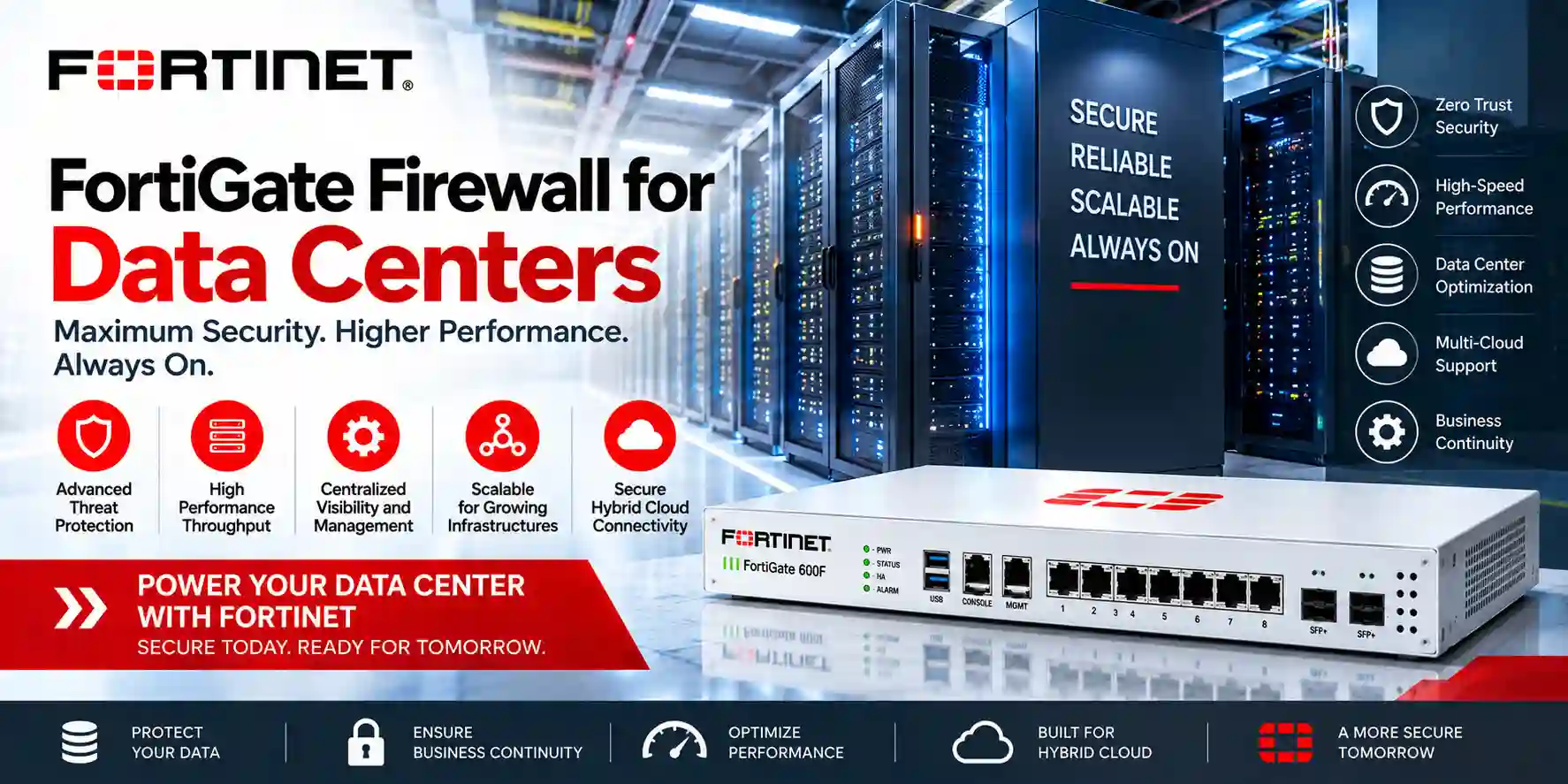
Data-center and high-availability planning
High-end FortiGate deployments need a different procurement process from a small office firewall. Interface speeds, optics, routing, redundancy, rack power, cooling, upstream switching, concurrent sessions, decryption, virtual domains and management architecture can all influence the design. An HA pair should be considered as part of a redundant path, not simply as two appliances connected to the same single switch and power source.
For organizations building regional standards, document several approved firewall profiles: small branch, large branch, headquarters and data center. Each profile can define minimum inspected throughput, WAN count, interface type, logging, management and subscription term. This approach allows local sites to select from a controlled architecture while avoiding a one-model-fits-all policy.
Related regional FortiGate planning resources
Organizations coordinating East African projects can use the Fourteck Kenya site for Kenyan technology requirements and the Fourteck Uganda site for Uganda projects. These regional references are useful when procurement teams want to keep firewall sizing and network standards aligned across neighboring markets while still confirming local delivery and service scope independently.
For the UAE, the Fortinet UAE resource focuses specifically on FortiGate firewalls, licensing, renewal and deployment topics. Tanzania buyers can use the Tanzania shop guidance and Tanzania services overview to connect the firewall requirement to switching, Wi-Fi, servers, voice and other site infrastructure.
FortiGate quotation checklist
Approximate staff, guest devices, phones, cameras, servers and other connected endpoints.
Current and planned WAN speeds, provider handoffs, public IP requirements and backup links.
IPS, web filtering, malware protection, application control, DNS security and SSL inspection expectations.
Site-to-site tunnels, remote users, cloud VPNs, branch count and secure SD-WAN requirements.
Copper/fiber ports, 1/10/25/40/100G needs as applicable, redundant design and rack conditions.
Required FortiGuard services, FortiCare support level, preferred duration and renewal ownership.
Decision recap: choose by inspected workload, not model popularity
The best FortiGate for a site is the one that supports the required security services, traffic peaks, VPN load, interfaces and expected growth with appropriate operational headroom. Entry-level models are designed for branch and smaller environments; mid-range appliances extend capacity and connectivity for campus and enterprise edge use; high-end systems address data-center and very high-throughput requirements. The current Fortinet portfolio contains both F-series and newer G-series products, so buyers should compare current datasheets and lifecycle position when selecting a new deployment.
A complete purchase decision includes hardware, FortiGuard services, FortiCare support, accessories, deployment, management and renewal. Requesting these elements in one structured quotation makes commercial comparisons clearer and reduces the risk of discovering missing subscriptions or infrastructure requirements after purchase approval.
FortiGate Firewall Product Range FAQs
Which FortiGate is suitable for a small business?
Small businesses commonly begin by comparing entry-level FortiGate models such as current 30G, 40F, 50G, 60F, 70G, 80F and 90G-class appliances. The correct choice depends on inspected throughput, users and devices, WAN speed, VPN, interface count and enabled security services. A model should be selected from the exact current Fortinet datasheet rather than from user count alone.
What is the difference between F-series and G-series FortiGate models?
F-series and G-series refer to different generations and model families within the FortiGate portfolio. Newer G-series products use updated Fortinet security processor architectures on supported models and are expanding across branch, campus and high-end ranges. Exact performance, ports and features vary by model, so comparisons should use the official datasheets rather than assuming every G-series unit is a direct replacement for a similarly numbered F-series product.
Do I need FortiGuard services with a FortiGate?
FortiGate hardware provides the firewall platform, while FortiGuard subscriptions provide security services according to the selected bundle and term. Organizations that require continuously updated threat protection such as IPS, filtering and malware-related services should plan the relevant FortiGuard subscription. The exact bundle contents should be confirmed in the quotation.
What is FortiCare?
FortiCare is Fortinet’s support and service offering. Support level and entitlement depend on what is purchased. A quotation should identify the FortiCare term and level alongside the appliance and FortiGuard services so the buyer understands the complete lifecycle coverage.
Can FortiGate use two internet connections?
Many FortiGate models can support multiple WAN connections subject to their available interfaces and configuration. Secure SD-WAN and routing policies can be used for failover and path selection. The design should define link monitoring, application priorities and failure behavior, and the exact model should provide sufficient ports and performance.
Can FortiGate connect branch offices?
Yes. FortiGate can support site-to-site IPsec VPN and secure SD-WAN architectures for branch connectivity. The design should account for the number of sites, VPN throughput, routing, WAN capacity and whether branches are managed centrally.
How do I choose between 90G, 120G, 200G and larger models?
Compare the current official datasheets for threat-protection throughput, interfaces, concurrent sessions, VPN performance and other requirements relevant to the deployment. The step between models should reflect measured workload, expected growth and needed connectivity rather than model number alone.
Should a FortiGate be deployed in high availability?
High availability can be appropriate where firewall downtime is unacceptable, but an HA pair is only one part of resilience. Power, switches, ISP links and upstream/downstream paths should also be designed to avoid single points of failure. The business impact of downtime should justify the additional hardware and architecture.
Can FortiGate protect cloud and virtual environments?
Fortinet offers FortiGate virtual and cloud deployment options in addition to physical appliances. The appropriate approach depends on the cloud platform, workload architecture, licensing model, network paths and how policies need to integrate with on-premises security.
What information should I send for a FortiGate Tanzania quotation?
Send the site location, user and device counts, internet speed, number of WAN links, branch/VPN requirements, security services to be enabled, VLANs, interface needs, high-availability requirement, current firewall if replacing one, desired support term and installation scope. This enables a more accurate model and bundle discussion.
Consultation panel: prepare a clean FortiGate requirement
A productive FortiGate discussion starts with a short technical brief rather than a model guess. State what the firewall must protect, how much traffic it must inspect, how many sites it must connect, which services must remain available during a WAN failure and who will manage the platform after deployment. If you already have a FortiGate, include the current model, firmware family, configuration complexity and subscription expiration date.
For greenfield networks, describe the planned switching, Wi-Fi, servers, voice, CCTV and cloud services so segmentation and interface requirements can be designed together. For migration projects, document NAT, VPN, routing and critical access rules before cutover. This creates a safer path to selecting the right FortiGate class and obtaining a quotation that includes the hardware, service bundle and deployment components needed for the real environment.