
FortiGate Cloud Firewall Solutions
FortiGate Cloud Firewall Solutions extend Fortinet next-generation firewall protection into public cloud, private cloud, hybrid and multi-cloud environments. FortiGate VM is designed to run as a virtual firewall across major cloud providers and virtualized data centers, helping security teams apply familiar FortiOS-based controls to workloads that no longer sit behind a physical perimeter. For cloud-native architectures, Fortinet also offers FortiGate Cloud-Native Firewall options that reduce appliance-management overhead while preserving cloud-oriented network security controls. The right choice depends on where workloads run, how traffic moves, which teams own the cloud environment, the licensing model preferred by procurement and the level of routing, VPN, segmentation and centralized policy control required.

What FortiGate Cloud Firewall Solutions Solve
Cloud adoption changes the location of the perimeter but does not remove the need for traffic control, segmentation, threat prevention, encrypted connectivity, logging and consistent policy. A company may have applications in an AWS VPC, databases in Azure, development workloads in Google Cloud, ERP integrations in OCI and users connecting from Tanzanian offices over public internet or private links. Treating each cloud as an isolated security domain can create duplicated rules, inconsistent visibility and difficult incident response. FortiGate VM is designed to provide FortiGate next-generation firewall capabilities inside cloud and virtual networks so organizations can apply a more consistent security model across distributed infrastructure.
Fortinet officially positions FortiGate VM for public and private cloud deployments with capabilities that can include NGFW inspection, VPN, routing, Secure SD-WAN, segmentation, policy enforcement, automation and integration with cloud-native networking services. Deployment choices include bring-your-own-license, on-demand cloud marketplace models and flexible consumption approaches such as FortiFlex, depending on platform and commercial requirements. Because cloud firewall sizing is affected by inspection requirements, traffic paths, high-availability design, cloud instance choice and licensing, a quotation should begin with architecture details rather than only a request for the lowest-cost virtual appliance.
Cloud NGFW Protection
Apply FortiGate firewall policy and FortiGuard-enabled security services to cloud traffic flows where the selected license and architecture support them. This can help protect internet-facing applications, workload-to-workload traffic and connections between cloud and on-premises environments.
Hybrid Connectivity
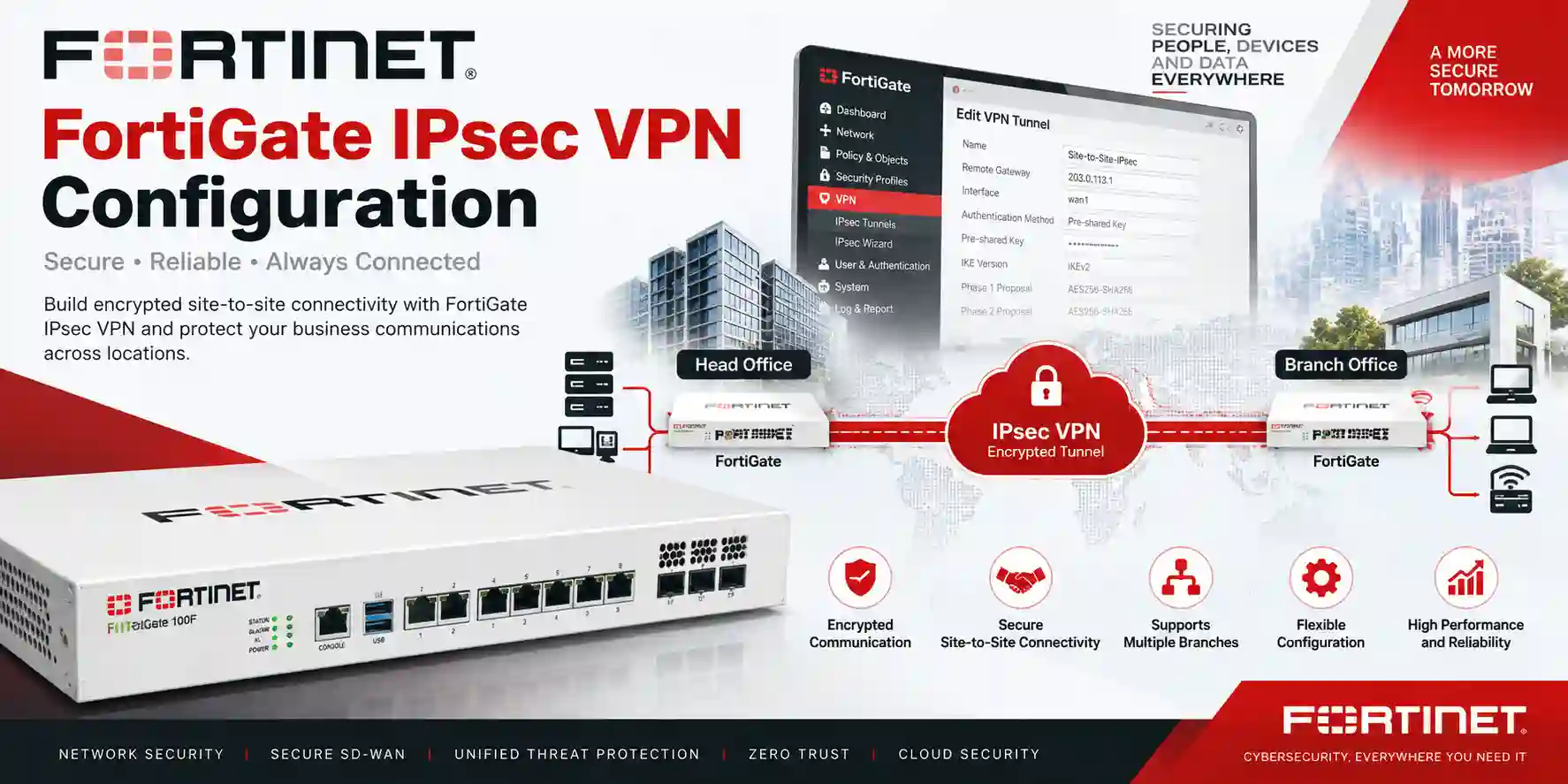
FortiGate VM can participate in secure connectivity designs using IPsec VPN, routing and SD-WAN capabilities. This is useful when branches, data centers, cloud networks and remote users need controlled access to applications distributed across several locations.
Consistent Policy
Organizations already using FortiGate on premises can extend familiar FortiOS policy concepts into cloud environments. Consistency can simplify operations, but rules should still be adapted to cloud routing, identity, availability zones, application architecture and provider-native controls.
Automation & Integration
Fortinet documents automation through APIs, infrastructure-as-code workflows and integration with major cloud networking and security services. Automation should be governed with version control, tested templates and change approval so rapid deployment does not create rapid misconfiguration.
FortiGate VM, FortiGate CNF and Deployment Choice
FortiGate VM is a virtualized next-generation firewall that suits organizations needing detailed network control, routing, VPN, NAT, SD-WAN and FortiOS-based policy within cloud or virtual infrastructure. Fortinet lists FortiGate VM support across major public clouds including AWS, Microsoft Azure, Google Cloud and Oracle Cloud Infrastructure, with private-cloud and virtualization options also available. It is especially relevant for lift-and-shift projects, hybrid architectures, security hubs, segmented application networks, cloud VPN gateways and environments where networking and security functions are intentionally converged.
FortiGate Cloud-Native Firewall is aimed at cloud-native operating models where teams prefer a service-oriented firewall approach with less underlying appliance administration. The selection is not simply “VM versus cloud native.” Procurement should map application architecture, north-south and east-west traffic, scaling expectations, cloud-provider integration, high availability, logging, management, automation, inspection depth and cost model. Customers planning related physical firewall, network and cloud integration can also review FourTeck Tanzania’s business IT and security services, which explains how firewall, networking and other infrastructure requirements can be designed as one operational system.
Cloud Platform Compatibility and Integration
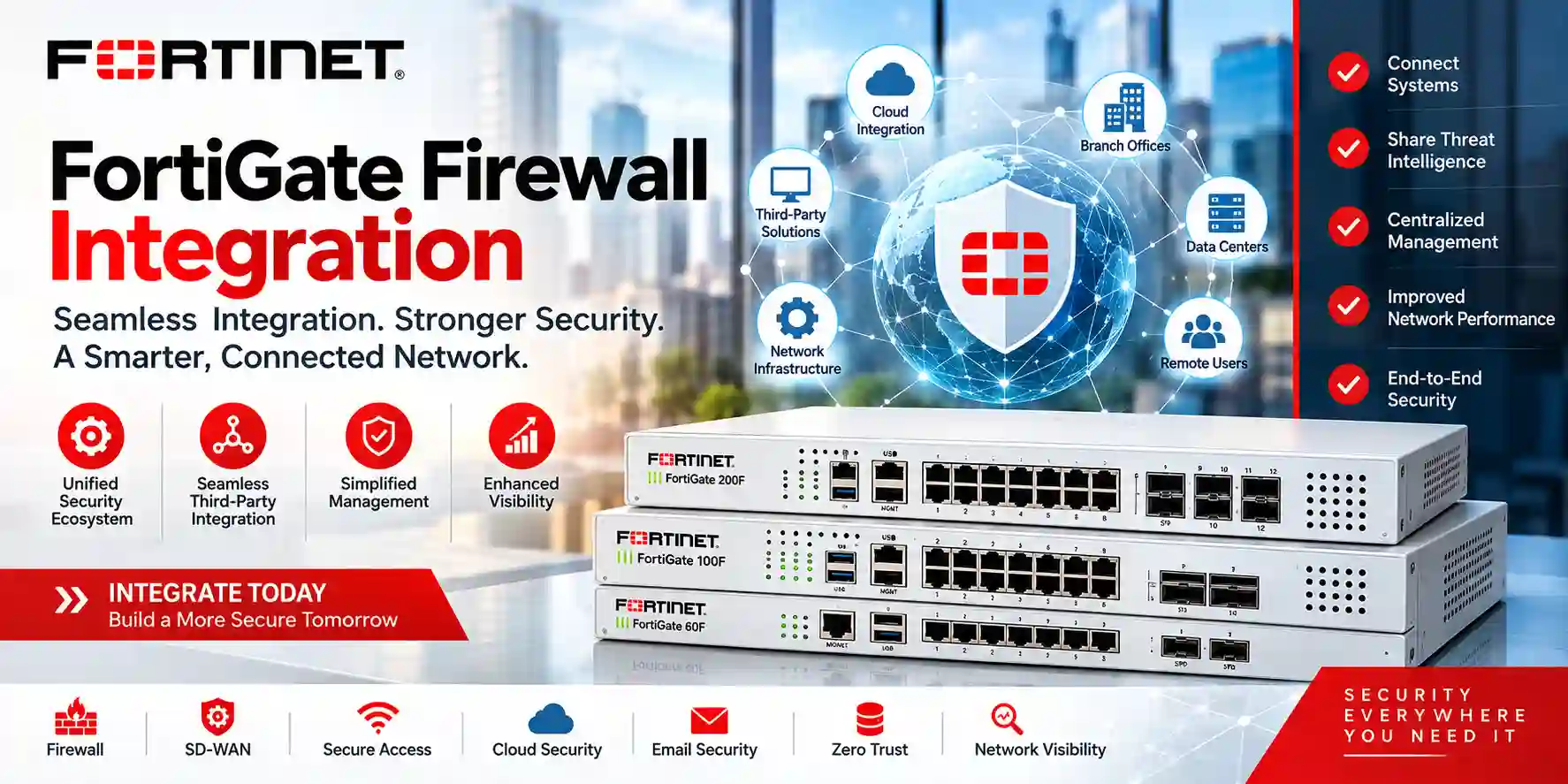
On AWS, FortiGate VM can be deployed into VPC architectures and integrated with services such as AWS Transit Gateway and Gateway Load Balancer in supported designs. On Microsoft Azure, Fortinet documents integration with Azure networking constructs including VNets, routing, load balancing and availability-zone approaches. Google Cloud deployments can extend FortiGate security into VPC networks and hybrid cloud connectivity, while OCI deployments can use FortiGate VM to secure Oracle cloud networks and applications. Exact reference architecture, availability model and instance compatibility should always be checked against current Fortinet and cloud-provider documentation before implementation.
Private-cloud deployments may use hypervisors and virtualization platforms supported by the selected FortiGate VM release. This makes the product relevant to organizations that are modernizing from traditional virtualization toward public cloud without wanting entirely different security operations in every environment. Centralized management and analytics can be added with FortiManager and FortiAnalyzer where the architecture and licenses require them. Integration planning should also cover DNS, identity services, SIEM or SOC workflows, cloud-native logging, certificate handling, backup and configuration recovery.
For customers who need to review broader firewall, switching, wireless, server or connectivity dependencies before cloud migration, the FourTeck Tanzania technology overview provides context on how firewalls fit with LAN, Wi-Fi, servers, VPN and multi-site infrastructure.
Licensing, Subscription and Cost Planning
Cloud firewall cost is normally a combination of Fortinet licensing or marketplace consumption, cloud compute resources, storage, traffic processing, data transfer and any additional management or security services. Fortinet supports different commercial paths such as bring-your-own-license, marketplace consumption and FortiFlex usage-based licensing for relevant deployments. The best model depends on whether the organization has predictable long-term demand, temporary projects, variable workloads, committed cloud spend, existing Fortinet entitlements or centralized procurement standards.
A useful quotation therefore includes cloud provider, region, expected throughput, number of protected networks, high-availability requirement, security services required, VPN counts, logging retention, centralized management, expected growth and the preferred purchasing model. Buyers should not compare quotes only by VM license name. Two deployments with the same headline product can have very different cloud infrastructure costs and operational responsibilities. Renewal planning should also confirm FortiGuard services, support entitlement and any marketplace billing dependencies so protection does not lapse unexpectedly.
FortiGate Cloud Firewall Buying and Sizing Checklist
Document internet traffic, east-west workload traffic, VPN traffic, peak patterns, encrypted inspection expectations and the security services that will be enabled. Raw firewall throughput alone is not sufficient for sizing.
Identify VPCs or VNets, subnets, availability zones, route tables, load balancers, transit networks, public endpoints and private connectivity. Security insertion points should follow the real traffic path.
Define who owns firewall policy, cloud networking, automation, logs, alerts, backups and incident response. Clear operational responsibility is as important as product selection.
Compare BYOL, marketplace and flexible consumption options using realistic cloud compute and traffic assumptions. Include HA and management services in the cost model.
FortiGate Cloud Firewall Solutions Tanzania
Organizations in Tanzania are increasingly connecting office networks, cloud applications, remote users and regional branches through infrastructure that may span several providers. A FortiGate cloud firewall project should begin by mapping where business systems actually run and which traffic flows require inspection. A company may keep core ERP or databases in a hosted environment, use Microsoft 365 and SaaS applications, operate workloads in AWS or Azure, and maintain physical FortiGate appliances at offices. FortiGate VM can create a consistent policy point inside the cloud, but the design should account for latency, internet routes, private connectivity, VPN topology, cloud availability zones and the inspection load created by enabled security services. Tanzania buyers should therefore prepare an architecture brief before requesting a license or virtual appliance quote.
For Tanzanian procurement teams, one practical concern is avoiding a mismatch between the FortiGate VM license, the cloud instance and the actual workload. A firewall sized only from nominal internet bandwidth may be inadequate when east-west application traffic, encrypted inspection, IPS, VPN and high availability are added. Conversely, overprovisioning can increase both licensing and cloud infrastructure costs. A useful sizing exercise records users, cloud regions, protected subnets, expected throughput, application sensitivity, VPN tunnels, remote-access requirements, log retention and growth. The design should also define whether policy will be managed locally or through FortiManager and whether analytics or reporting will be centralized through FortiAnalyzer. Customers can use the FourTeck Tanzania shop and solution catalog as a starting point for related network-security procurement discussions.
Tanzania projects may also involve hybrid connectivity between cloud workloads and offices in Dar es Salaam, Mwanza, Arusha, Dodoma or other locations. In those cases, the cloud firewall is only one part of the architecture. ISP diversity, physical firewall capacity, IP addressing, DNS, VLANs, endpoint access and failover design influence the user experience. A phased rollout can reduce risk: establish the cloud security zone, validate routing and logging, migrate a controlled application group, test failover and recovery, then expand. Procurement documents should state that final compatibility, license entitlement, cloud instance support and service availability must be verified against current Fortinet and cloud-provider documentation at the time of deployment.
FortiGate Cloud Firewall Solutions Dar es Salaam
Dar es Salaam businesses often operate the most interconnected part of a Tanzanian organization: headquarters users, internet-facing applications, supplier portals, branch VPNs, remote access and cloud services can all converge around the same security architecture. For a FortiGate cloud firewall design, the first question is whether cloud traffic should be inspected at the cloud edge, through a centralized security VPC or VNet, through an on-premises firewall, or by a combination of those models. Backhauling all traffic through a physical office may simplify one policy path but can add latency and create a dependency on local connectivity. Placing FortiGate VM inside the cloud can keep inspection closer to workloads while still supporting centrally governed security. The optimal approach depends on the application flows and the business requirement, not on a fixed template.
Companies with multiple sites should document branch-to-cloud and branch-to-head-office routes separately. Secure SD-WAN and IPsec capabilities can be useful when a FortiGate estate is already deployed, but routing, failover timers, cloud route tables, tunnel redundancy and asymmetric traffic must be designed carefully. For hosted customer portals, ERP integrations or collaboration systems, availability should include more than two firewall instances; the cloud architecture may also need load balancers, multiple zones, health checks and tested failover. Security operations teams should know where logs are stored, who receives alerts and how a failed automation or policy push can be rolled back. These details are especially important when the cloud environment is managed by a separate DevOps team.
When requesting a Dar es Salaam quotation, include the cloud provider, intended region, protected networks, estimated throughput, user count, branches, VPN requirements, high-availability target, security subscriptions and management platform. Also identify whether the project is a new cloud build, a migration from another firewall or an extension of existing FortiGate policy. If broader LAN, Wi-Fi, server or physical firewall work is involved, FourTeck Tanzania’s technology services page explains the surrounding infrastructure considerations that should be coordinated with the cloud design.
FortiGate Cloud Firewall Solutions Mwanza
Mwanza organizations evaluating cloud security may be trying to connect a regional office to centrally hosted applications without making every service depend on a single local network path. FortiGate VM can support a design in which workloads are protected in the cloud while office firewalls establish controlled VPN or SD-WAN connectivity to those services. This can be useful for companies with headquarters elsewhere, organizations opening new branches, and teams moving line-of-business applications from local servers to hosted infrastructure. The architecture should still begin with application dependency mapping: which systems require direct internet access, which need branch connectivity, which should remain private, and which user groups are permitted to reach them. Cloud firewall policy should follow those business rules rather than simply reproduce an old on-premises rule base.
Connectivity resilience is a major planning factor. If cloud applications become critical to daily work, the branch’s primary and backup internet options matter as much as the virtual firewall. A technically correct cloud firewall cannot compensate for an unavailable access circuit. Buyers should document ISP links, expected failover behavior, public-IP requirements, DNS dependencies and whether tunnels need to terminate directly on FortiGate VM. For applications that exchange large data sets, bandwidth and cloud egress charges should be included in cost planning. Security inspection also consumes compute resources, so the design should model peak traffic rather than average usage. High availability should be tested under realistic conditions, including tunnel recovery and routing convergence.
Mwanza procurement teams can improve quotation accuracy by sharing current network diagrams, cloud tenant details, subnet plans and existing Fortinet license information. If a partner or cloud team manages part of the environment, clearly divide responsibilities for firewall policy, cloud routing, backups, upgrades and incident response. The final bill of materials may include FortiGate VM licensing, FortiGuard services, cloud compute, centralized management and implementation work. Each element should be itemized so the organization understands recurring and variable costs before rollout.
FortiGate Cloud Firewall Solutions Arusha
Arusha businesses in hospitality, professional services, education, logistics and regional operations may rely on cloud applications while also supporting guest networks, staff systems, payment workflows, remote access and connections to other sites. In this environment, the FortiGate cloud firewall should be designed as part of an end-to-end trust model. Segmentation can separate public-facing services from internal application tiers, while VPN and routing controls can limit which office networks can reach sensitive workloads. Organizations already using FortiGate appliances may benefit from familiar policy concepts across physical and virtual environments, but cloud policy should be reviewed for cloud-specific objects, dynamic addresses, automation and service integration rather than copied line for line.
For hospitality or customer-facing operations, availability and latency are practical buying concerns. A cloud-hosted reservation, finance or collaboration system must remain reachable when local connectivity changes. Where two internet links are available, Secure SD-WAN can be considered at the branch while FortiGate VM secures cloud-side traffic. The design should document tunnel redundancy, provider failover, DNS behavior and whether applications are reachable through private or public paths. For public web applications, a cloud firewall may be one layer among load balancing, WAF, endpoint, identity and application-security controls. FortiGate VM should not be treated as a substitute for every cloud security function; it should be placed where network-layer inspection and policy enforcement add measurable value.
Arusha buyers should ask for a deployment plan that names the cloud platform, regions, FortiGate VM licensing model, high-availability pattern, security subscription, management method and handover responsibilities. Include a test plan for application access, VPN failover, logging, policy rollback and backup. If the project also includes office switching, wireless or physical firewall upgrades, coordinate those changes so the cloud migration does not introduce avoidable outages. Documentation should remain with the customer and clearly identify cloud resources, firewall objects, routes, VPN peers and renewal dates.
FortiGate Cloud Firewall Solutions Dodoma
Dodoma organizations considering cloud-hosted systems often need a security design that remains understandable to both infrastructure teams and governance stakeholders. FortiGate VM can provide a dedicated policy enforcement point for cloud networks, but the deployment should be based on a documented security-zone model. Separate internet-facing services, administrative networks, application tiers, databases, development environments and management interfaces according to actual risk and access needs. Use the cloud provider’s native segmentation together with FortiGate policy rather than relying on one control layer alone. Where government, education or regulated workloads are involved, internal security, data residency and compliance requirements should be reviewed by the customer before selecting cloud regions or moving information.
A strong Dodoma procurement specification should define operational evidence as well as technical features. Ask how firewall logs will be retained, who can change policy, whether configuration backups are automated, how software updates are scheduled and what evidence is available after an incident. FortiManager and FortiAnalyzer can be relevant when multiple FortiGate instances need coordinated management and reporting, but they introduce their own licensing and architecture decisions. Cloud-native logging and SIEM integrations may also be part of the final design. Avoid duplicating tools without a clear use case; every component should solve a defined operational requirement and have an owner.
For quotation, provide estimated traffic, number of cloud environments, VPN peers, branch locations, inspection requirements, high availability, cloud provider and intended purchasing model. If workload demand varies significantly, compare long-term BYOL planning with marketplace or flexible consumption models using actual cost assumptions. Include cloud compute and data-transfer charges alongside the Fortinet license so decision-makers see the complete operating cost. A pilot environment can validate routing, logging and application compatibility before production workloads are migrated.
FortiGate Cloud Firewall Solutions UAE
UAE organizations frequently operate hybrid environments that connect offices, data centers and workloads hosted across AWS, Microsoft Azure, Google Cloud or Oracle Cloud Infrastructure. FortiGate VM can be deployed within these cloud networks to provide FortiOS-based firewall controls close to applications while maintaining secure connectivity to physical FortiGate estates. The design should decide whether FortiGate VM acts as a centralized transit firewall, protects individual application segments, terminates VPN connections, participates in SD-WAN, or combines several of those roles. Cloud routing and availability-zone architecture are critical because a firewall cannot inspect traffic that does not traverse it. Reference designs should therefore be checked against current Fortinet and cloud-provider guidance for the selected region and service.
Commercial planning in the UAE may involve marketplace procurement, private offers, BYOL or FortiFlex depending on the platform and customer agreement. Organizations with committed cloud spend should compare whether marketplace purchase fits procurement policy, while enterprises with standardized Fortinet licensing may prefer a centrally managed entitlement model. The security bundle should match the inspection services actually required. High availability, FortiManager, FortiAnalyzer, logging and cloud infrastructure costs should be included in the same financial model so the apparent firewall price is not separated from its operating environment. Renewal ownership is also important when cloud and security purchases are handled by different departments.
For buyers coordinating Fortinet requirements in the Emirates, the verified FourTeck Fortinet UAE resource covers FortiGate, license renewal, Secure SD-WAN, management and cloud-security enquiries. A cloud firewall quotation should still include the provider, cloud region, VPC or VNet layout, traffic profile, HA requirement, VPN counts and operational ownership. Where UAE and Tanzania sites share applications, consistent naming, policy standards and documentation can make cross-border operations easier without forcing both locations into an identical network design.
FortiGate Cloud Firewall Solutions Uganda
Uganda enterprises adopting cloud infrastructure may need to secure a mix of local office systems, SaaS applications, public-cloud workloads and regional links. FortiGate VM can serve as a cloud-side NGFW where workloads need network inspection, segmentation, VPN termination or consistent FortiGate policy. Before choosing a license, map the traffic flows between users, branches and cloud services. Some application traffic may stay entirely inside the cloud, while other sessions cross an IPsec tunnel from Kampala or regional offices. Those paths affect both firewall sizing and cloud data-transfer cost. If a company already uses FortiGate appliances on premises, common policy concepts can simplify administration, but cloud-native route tables and security groups still need their own design and change control.
For regional organizations, resilience should include the access network as well as the virtual firewall. Two FortiGate VM instances in high availability do not help users if a branch has only one unstable route to the cloud. Where business impact justifies it, evaluate multiple ISP paths, SD-WAN policy, redundant VPNs and application failover. Logging is another frequent gap: security events may be visible on the firewall but not retained long enough for investigation. Determine whether logs will be stored in FortiAnalyzer, a cloud logging service, SIEM or a combination, and document who monitors them. The monitoring design should prioritize actionable events rather than simply collecting everything.
Uganda procurement requests should include cloud provider, region, expected throughput, protected applications, number of branches, user count, VPN requirements, security services and subscription term. Ask vendors to separate Fortinet license cost from cloud compute and implementation so comparisons remain meaningful. If workloads may later move between clouds, include portability and policy-management requirements early. A phased implementation with test workloads can validate network routes, application dependencies and operational procedures before production cutover.
FortiGate Cloud Firewall Solutions Kampala
Kampala headquarters and large offices often become the connectivity hub for branch networks, remote users and cloud services. Moving selected applications to the cloud can reduce dependence on local server infrastructure, but it changes how traffic should be secured. A FortiGate cloud firewall can protect workloads directly in AWS, Azure, Google Cloud or OCI while the Kampala site connects through controlled VPN or SD-WAN paths. This avoids forcing every cloud session through a physical perimeter when direct cloud access is more efficient, yet it preserves a dedicated inspection and policy layer near the workloads. The final design should be based on application flows, identity and trust boundaries rather than on the assumption that all traffic belongs in one centralized tunnel.
For multi-branch organizations, consider a hub architecture only when it matches scale and failure requirements. A centralized FortiGate VM security hub can simplify policy and logging, but it also becomes an important dependency. High availability across zones, tested route failover and defined recovery procedures are essential. Cloud route tables, transit gateways, load balancers and FortiGate policy must be configured as one system. Asymmetric routing can break stateful inspection, so network diagrams should show both forward and return paths. If the environment uses infrastructure-as-code, firewall and cloud network changes should be versioned and reviewed to reduce accidental exposure.
A Kampala buyer preparing a quote should provide a current topology, cloud account structure, subnet plan, internet speeds, VPN tunnel count, user groups, public-facing applications, high-availability target and log-retention need. Ask how the proposed solution will be upgraded without unnecessary downtime and how backups will be tested. If migration is from another vendor, include rule cleanup and object normalization instead of importing years of unused policy. A cleaner rule base improves auditability and makes later cloud expansion easier.
FortiGate Cloud Firewall Solutions Arua
Arua organizations connecting to cloud-hosted applications may have different priorities from a major metropolitan data center. Reliability of local internet access, straightforward support procedures and predictable operating costs can be more important than building a highly complex multi-cloud architecture. FortiGate VM can still be useful when cloud workloads need dedicated firewall inspection, VPN termination or segmentation, but the design should remain proportionate to the business need. Begin by identifying which applications are critical, whether they are public or private, who accesses them and how much downtime the organization can tolerate. If most users only consume SaaS services, a separate cloud firewall may not be required for every application; it is most valuable where the organization controls cloud networks and workload traffic.
When a branch in Arua connects to a FortiGate VM through IPsec, the project should validate internet stability, public-IP behavior and failover. Dynamic internet addressing or carrier-grade NAT can affect tunnel design. Remote management must also be protected: administrative access to the cloud firewall should be restricted, authenticated and logged. Backups, license records and cloud credentials should be owned by the customer rather than relying on undocumented technician knowledge. If centralized management is justified, it can reduce the need for direct device administration, but it should not create more components than the team can realistically operate.
Quotation preparation for Arua should state the cloud platform, protected network, approximate throughput, number of users, branch connectivity, desired security functions, subscription term and implementation responsibility. Ask for recurring costs to be distinguished from one-time configuration or migration charges. Plan a simple acceptance test covering user access, blocked traffic, VPN recovery, logging, backup and documented administrator handover. A well-documented modest design is generally more maintainable than an elaborate architecture that local and central teams cannot troubleshoot confidently.
FortiGate Cloud Firewall Solutions Mbarara
Mbarara businesses may use cloud services to connect growing branch operations, retail systems, professional applications or shared business platforms without maintaining all infrastructure locally. FortiGate VM can protect a cloud landing zone that serves several sites, providing firewall policy, segmentation, VPN and routing where these functions are required. The landing-zone design should classify workloads by sensitivity and exposure. Internet-facing services should not share unrestricted paths with management networks or databases. Where native cloud controls already provide basic filtering, FortiGate should be introduced for the additional inspection, policy consistency or connectivity functions that the organization actually needs, not simply because another site uses the same product.
A common growth problem is creating VPNs one at a time without a scalable routing plan. As sites are added, overlapping IP ranges, static routes and inconsistent policies become difficult to manage. Mbarara organizations planning expansion should standardize address ranges, branch naming, tunnel conventions and security zones before rollout. Secure SD-WAN may help manage multiple links, while FortiGate VM can serve as a cloud security point; however, the branch and cloud configurations need coordinated routing. The design should also identify which traffic should go directly to SaaS services and which should traverse the cloud firewall, because unnecessary hairpinning can add delay and cost.
For procurement, document the number of current and planned sites, ISP speeds, cloud networks, expected traffic, critical applications, high availability, license preferences and monitoring needs. Ask for a migration sequence that protects business continuity. New tunnels and policies can be staged before cutover, then validated with selected users. After deployment, keep an updated diagram, route table, VPN inventory, license record and backup procedure. Those records support troubleshooting and future expansion far better than relying on the memory of the original installer.
FortiGate Cloud Firewall Solutions Gulu
Gulu organizations considering a move from locally hosted applications to public cloud should treat the firewall project as part of migration planning rather than a final security add-on. Before workloads are moved, define cloud subnets, administrative access, application tiers, backup paths and branch connectivity. FortiGate VM can then be inserted at intentional inspection points. For example, it may protect north-south internet traffic, provide secure connectivity to an office or separate shared services from application networks. The exact role should be clear because every extra traffic hop adds design and cost considerations. A cloud firewall that is deployed without route control can sit idle while traffic bypasses it, so network architecture must be validated first.
Remote operations are another important consideration. If central IT manages the firewall from Kampala, Tanzania or another region, administrative connectivity and support procedures should work even during a branch outage. Use restricted management paths, multifactor authentication where supported in the chosen operational model, named administrator accounts and centralized logs. Automation can speed deployment, but templates should be tested and versioned. A mistaken cloud route or policy can affect multiple services at once, so change control and rollback instructions should be documented before production go-live. Maintenance windows should include both firewall software and any dependent cloud components.
A Gulu quotation should identify whether the requirement is cloud-only, hybrid or multi-site. Include the provider, region, expected users, bandwidth, VPN peers, public services, security inspection, HA, logging and subscription term. If the design includes disaster recovery, specify recovery objectives and whether a second cloud region or separate environment is required. Do not assume that adding another FortiGate VM automatically provides disaster recovery; application data, DNS, routing and credentials must also be recoverable. A practical acceptance checklist should verify security policy, application reachability, failover, backup and operational ownership.
FortiGate Cloud Firewall Solutions Kenya
Kenyan enterprises often operate cloud-connected environments that span Nairobi headquarters, regional branches, data centers and SaaS or public-cloud services. FortiGate VM can support a consistent firewall policy model in AWS, Azure, Google Cloud or OCI while physical FortiGate appliances secure offices and data centers. The architecture should decide whether cloud traffic is centralized through a security hub or inspected within individual application environments. A central hub can simplify management and shared services, but it requires robust routing and high availability. Application-specific firewalls can provide stronger isolation but increase operational overhead. Security and cloud teams should jointly select the model based on organizational scale, account structure and workload ownership.
Kenya procurement teams should compare total cloud firewall economics rather than license price alone. Marketplace billing can simplify procurement for some organizations, while BYOL or FortiFlex may suit others. Compute instance size, HA, cloud data processing, log storage and inter-region transfer can materially affect the operating cost. If the project protects payment, customer or regulated data, compliance requirements should be defined before deployment so logging, segmentation and retention are built into the design. FortiGate security services should be selected according to threat-inspection requirements, not by defaulting to the largest bundle without assessing need.
Where Kenya and Tanzania operations share applications, standardization can help. Common firewall object naming, VPN templates, policy review methods and documentation make regional support easier, while each country site can retain different bandwidth, ISP and application requirements. A quotation should include current network diagrams, cloud regions, expected throughput, branch count, VPNs, remote users and management tools. Migration should include a rollback path and test window. Organizations can also coordinate specialist Fortinet questions through the verified regional resources linked from the Tanzania site, while confirming exact commercial and implementation arrangements for each market before purchase.
FortiGate Cloud Firewall Solutions Kuwait
Kuwait organizations with cloud-hosted business applications may need a firewall architecture that connects local offices to workloads while preserving centralized policy and visibility. FortiGate VM can be deployed in major public clouds or virtualized environments and used for NGFW inspection, VPN, routing and segmentation according to the chosen configuration. The project should identify cloud availability zones, internet gateways, private connections, transit networks and application tiers before firewall placement is decided. A virtual firewall should sit on the real traffic path, with return routing designed to maintain state. This is especially important in architectures that use cloud load balancers or multiple gateways, where asymmetric traffic can cause unexpected session behavior.
Operational planning should cover local and regional support responsibilities. Determine who approves security policies, who owns the cloud route tables and who can modify infrastructure-as-code templates. If FortiManager is used for central management, define administrative domains and workflow; if cloud-native automation is used, maintain version control and testing. Logging should be sized for the information needed by security operations and compliance rather than retained indefinitely without purpose. FortiAnalyzer or SIEM integration can be evaluated based on reporting, investigation and audit needs. Backup and recovery should include firewall configuration as well as the cloud environment that directs traffic through it.
A Kuwait quotation should separate licensing, subscriptions, cloud compute and implementation. Include the provider, region, instance architecture, throughput, security inspection, VPNs, HA, management and expected contract term. Buyers should verify the current Fortinet support matrix for selected cloud instance types and software releases before deployment. If the organization operates across Kuwait, UAE and East Africa, standard policy frameworks can reduce administrative complexity, but local connectivity, regulation and cloud-region selection should remain market-specific decisions.
FortiGate Cloud Firewall Solutions Ghana
Ghana businesses moving ERP, customer portals, collaboration systems or development workloads into public cloud should decide how cloud traffic will be inspected before migration. FortiGate VM can provide a virtual NGFW layer inside the cloud environment and support secure connectivity back to offices or data centers. The design should define separate zones for public services, internal applications, databases and management. Native cloud security groups can enforce basic access boundaries while FortiGate provides the deeper network security and centralized policy functions the organization requires. Using both layers intentionally creates defense in depth; duplicating rules without ownership can instead create troubleshooting complexity.
Branch connectivity is often part of the same project. If offices in Accra or other locations need private access to cloud workloads, plan redundant VPN or private connectivity where justified by business impact. Secure SD-WAN can be considered for dynamic path selection, but application performance should be measured before and after migration. Cloud regions may be physically distant from users, so latency-sensitive applications should be tested. Security inspection adds processing overhead, which is another reason to use realistic traffic tests instead of relying only on vendor maximum figures. Monitoring should include tunnel status, firewall resource utilization, blocked threats and application availability.
Ghana procurement teams should send a structured requirement that lists cloud provider, expected traffic, applications, branch count, VPNs, public services, security subscriptions, HA and logging. Ask whether pricing is BYOL, marketplace or flexible consumption and what cloud resources are not included in the Fortinet license. Renewal dates and administrative ownership should be documented from day one. For organizations with operations across Ghana, Nigeria, Tanzania or Kenya, a shared naming and documentation standard can make regional security operations more consistent even when each country has a different connectivity design.
FortiGate Cloud Firewall Solutions Nigeria
Nigeria enterprises may operate at a scale where cloud security must handle multiple business units, branch networks, internet-facing services and large user populations. FortiGate VM can be used to build cloud security hubs, inspect application traffic, terminate VPNs and apply standardized policy across cloud networks. At enterprise scale, the design should consider account or subscription structure, centralized transit, route propagation, east-west segmentation and the separation of development, test and production. A single flat cloud network protected by one large rule base can become difficult to govern. Security zones and ownership boundaries should mirror the organization’s application and risk structure.
High availability should be designed according to both firewall and cloud-provider behavior. Multiple FortiGate instances, availability zones, load balancers, route automation and health checks may be needed depending on the reference architecture. Failover must be tested with real application sessions and VPN tunnels, not assumed from diagram redundancy. Logging volume can also be substantial; retention, analytics and SIEM integration should be sized for investigation and compliance needs. Where encrypted traffic inspection is required, performance and certificate-management implications should be validated before production. FortiGuard security services and the FortiGate software release should be aligned with current vendor recommendations.
For Nigerian procurement, ask suppliers to provide an architecture-linked bill of materials rather than a standalone virtual firewall license. The quotation should explain licensing model, cloud instance assumptions, HA, security bundle, management, logging, implementation and ongoing renewal. Organizations with regional branches can benefit from FortiManager-based policy governance or another centralized process, but local internet conditions and applications should still influence branch design. Migration from another firewall should include rule rationalization, object cleanup and staged testing. The goal is a maintainable security architecture, not simply a larger virtual appliance.
FortiGate Cloud Firewall Solutions Seychelles
Seychelles organizations in hospitality, financial services, professional services and distributed operations may depend heavily on cloud applications while working from island locations where connectivity planning has direct business impact. FortiGate VM can secure workloads in a public-cloud environment and establish controlled VPN paths back to local networks. Because user experience depends on the full route from the islands to the cloud region, application latency, ISP diversity and failover should be tested early. A technically strong firewall design cannot remove geographic latency or replace resilient connectivity, so cloud region selection and application architecture are part of the same decision.
For hospitality groups or multi-property organizations, a central cloud security hub may support common applications and policy while each property maintains its own local network segmentation. Site-to-site VPN and SD-WAN can be evaluated for interconnection, but guest internet traffic may follow a different path from business systems. Avoid sending unnecessary traffic through the cloud firewall when no security or application requirement justifies it. This keeps architecture simpler and can reduce data-processing costs. Remote administration should use restricted access, named accounts and reliable logging, especially when day-to-day support is performed from another country.
A Seychelles quotation should identify the cloud provider and region, application list, bandwidth, properties or sites, VPN requirements, security services, HA target and management approach. Cost comparison should include recurring Fortinet entitlement, cloud compute, traffic charges and logging. If the business has disaster-recovery goals, define where backup applications and data will run and how DNS and routing will move users during an outage. Test the recovery process rather than assuming the second environment will work when needed. Clear handover documentation is particularly valuable when multiple service providers contribute to connectivity, cloud and security operations.
Related FourTeck Resources
A cloud firewall works best when the surrounding network is designed with the same care. Review the FourTeck Tanzania technology solutions overview for integrated networking and security context, the FourTeck Tanzania services page for solution-planning scope, and the Tanzania shop for current product-category discovery. UAE and regional teams that require Fortinet-focused information can also consult the Fortinet UAE specialist page. These links help customers connect cloud firewall requirements with physical firewalls, switching, VPN, Wi-Fi and wider infrastructure planning.
For a project enquiry, use the verified FourTeck Tanzania contact page and include the cloud provider, region, number of protected networks, traffic estimate, user and branch counts, VPN requirement, desired security services, high-availability target and preferred licensing model. Sharing these details reduces guesswork and allows the quotation discussion to focus on architecture and commercial fit.
Quotation Checklist for FortiGate Cloud Firewall Solutions
AWS, Azure, Google Cloud, OCI or private cloud; target region; accounts or subscriptions; VPC/VNet and subnet layout.
Peak and average throughput, east-west traffic, internet traffic, VPN traffic and encrypted inspection expectations.
NGFW inspection, IPS, web filtering, application control, malware protection, segmentation, remote access and required logs.
HA, availability zones, redundant tunnels, load balancers, failover targets, backup and disaster-recovery expectations.
FortiManager, FortiAnalyzer, cloud-native logging, SIEM integration, administrator workflow and change control.
BYOL, marketplace, FortiFlex or other supported model; subscription term; support and FortiGuard service requirements.
FortiGate Cloud Firewall FAQs
What is FortiGate VM?
FortiGate VM is Fortinet’s virtualized FortiGate next-generation firewall. It brings FortiOS security and networking capabilities into public cloud and virtualized private-cloud environments, allowing organizations to protect workloads, create secure connectivity, segment networks and apply FortiGate policy without a physical appliance in the cloud.
Which cloud platforms support FortiGate VM?
Fortinet documents FortiGate VM deployments across major public clouds including Amazon Web Services, Microsoft Azure, Google Cloud and Oracle Cloud Infrastructure, as well as supported virtualization and private-cloud platforms. Exact instance support and deployment patterns should be checked in current Fortinet documentation for the software release and cloud region being used.
Can FortiGate VM connect a Tanzania office to cloud workloads?
Yes, FortiGate VM supports secure connectivity use cases including IPsec VPN and routing. The complete design should consider the office firewall, ISP links, cloud route tables, redundancy, addressing and application requirements. VPN functionality alone does not guarantee availability, so access-circuit and failover planning should be included.
Is FortiGate VM the same as FortiGate Cloud-Native Firewall?
No. FortiGate VM is a virtual machine firewall with broad FortiOS networking and security capabilities. FortiGate Cloud-Native Firewall is designed for a more cloud-native service model with reduced infrastructure-management overhead. The better fit depends on network control, scaling, operational ownership and cloud architecture.
How is FortiGate cloud firewall licensing purchased?
Fortinet supports several licensing and consumption approaches for FortiGate VM, including bring-your-own-license, cloud marketplace options and FortiFlex in applicable deployments. The total cost should include cloud compute, traffic, storage and management components in addition to the firewall entitlement.
How should a FortiGate VM be sized?
Sizing should consider peak throughput, enabled security inspection, encrypted traffic, VPN use, session load, cloud instance type, high availability and growth. Use current Fortinet sizing documentation and realistic traffic measurements. Do not select a VM only from raw firewall throughput or user count.
What information should I send for a FortiGate cloud firewall quote?
Send the cloud provider and region, number of VPCs or VNets, expected throughput, user and branch counts, VPN requirement, public applications, desired security services, high-availability target, logging or management requirements and preferred licensing model. A current diagram is extremely useful when available.
Decision Recap
Choose FortiGate Cloud Firewall Solutions when the project needs controlled network security inside public cloud, private cloud, hybrid or multi-cloud infrastructure and when FortiGate’s routing, VPN, segmentation, policy and threat-inspection capabilities match the workload. Decide between FortiGate VM and cloud-native options according to operating model, network control and scaling needs. Size the deployment from real traffic and enabled security services, not from a generic user count. Design high availability as part of the cloud architecture, validate both forward and return routing, and include management, logging and recovery in the same plan.
For Tanzania buyers, a useful next step is to prepare one page of technical requirements and a simple network diagram before requesting pricing. That document should state the cloud provider, intended region, protected applications, current firewall estate, branch connectivity, VPNs, security services, HA, logging and licensing preference. It gives suppliers enough context to discuss the correct FortiGate VM tier and commercial model without inventing assumptions.
Plan Your FortiGate Cloud Firewall Deployment
Send your cloud architecture, traffic expectations, VPN and branch requirements, security-service needs and preferred licensing model for a structured FortiGate cloud firewall discussion. FourTeck can use those details to help define the quotation scope and related network-security requirements while final product compatibility, cloud availability and licensing are verified against current vendor documentation.