
FortiGate Firewall with Integrated Wi-Fi
For organisations that want firewall protection and local wireless access from a compact security platform, Fortinet offers FortiWiFi variants within several FortiGate product families. A FortiWiFi appliance combines the FortiOS security and networking platform with a built-in wireless radio on supported models, while standard FortiGate appliances can manage separate FortiAP access points through the integrated wireless controller. That difference matters during procurement: “FortiGate with Wi-Fi” should be translated into the correct FortiWiFi model, region code, security subscription and deployment design before an order is approved.
FourTeck Tanzania helps businesses plan Fortinet firewall requirements around real internet bandwidth, active security inspection, number of users, VPN traffic, WAN resilience, wireless coverage, guest access, VLAN design, FortiGuard services and future growth. This page explains how to choose an integrated-Wi-Fi Fortinet firewall without assuming that one radio or one model fits every building.
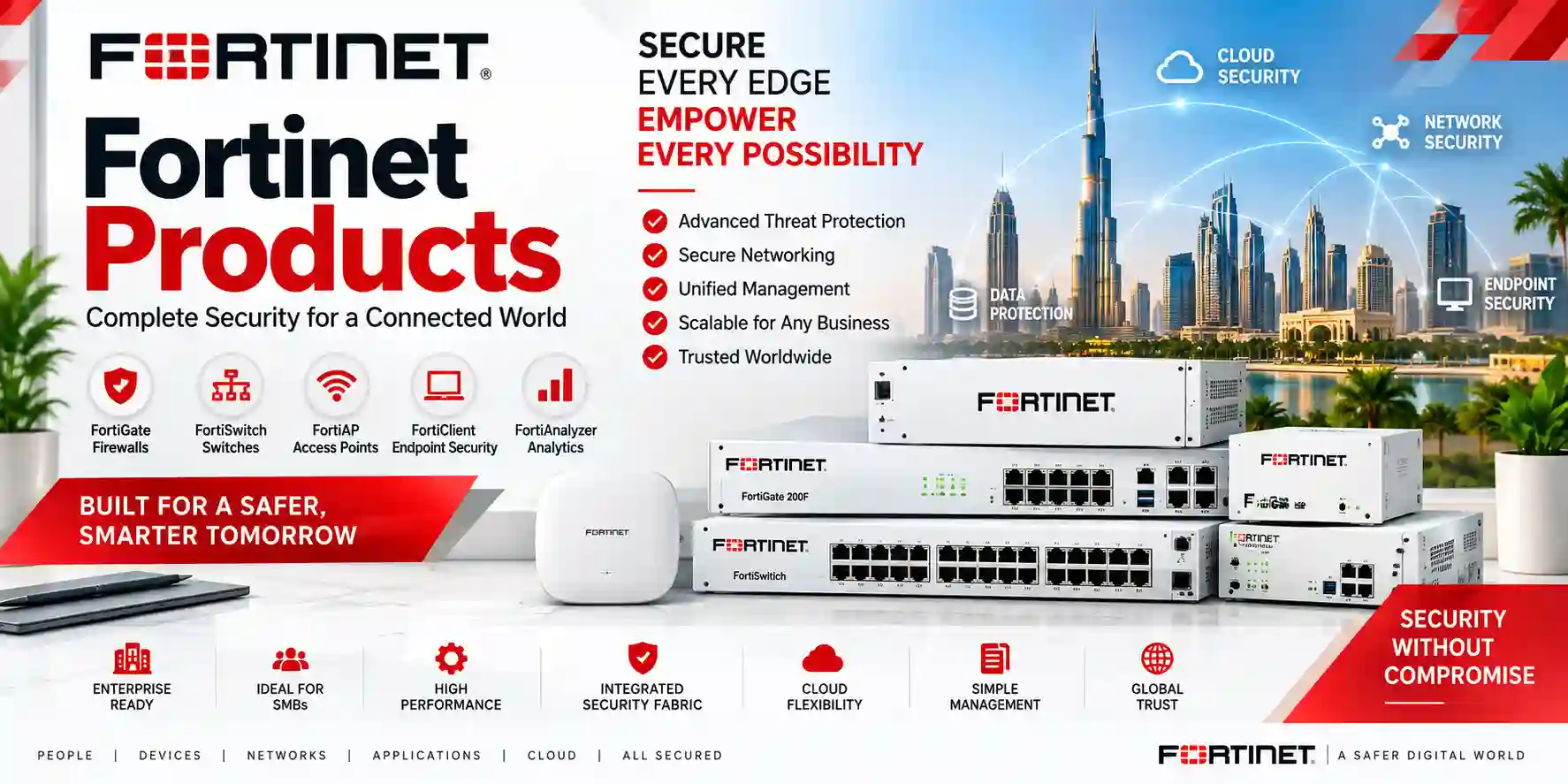
What does “FortiGate Firewall with Integrated Wi-Fi” mean?
The search phrase is common, but Fortinet’s product naming is more precise. Fortinet calls its firewall appliances with built-in wireless radios FortiWiFi. They belong to FortiGate/FortiWiFi families and run FortiOS, but the FortiWiFi hardware variant adds integrated wireless capability. A standard FortiGate appliance may still control FortiAP access points through FortiOS, yet it does not necessarily contain a Wi-Fi radio. For a small branch, clinic, shop, professional office or reception area, an integrated-radio FortiWiFi can reduce the number of separate boxes. For larger, multi-room or multi-floor environments, a FortiGate with distributed FortiAP access points may provide a more scalable wireless architecture. The correct choice is therefore a design decision, not merely a model-name preference.
NGFW security
FortiOS provides firewall policy, application visibility, routing, VPN and security inspection functions, while FortiGuard services extend protection according to the subscription purchased.
Built-in wireless
FortiWiFi variants include a model-specific local radio, useful where one appliance can reasonably cover the intended area. Wireless generation, antenna arrangement and regional radio code vary by model.
Secure SD-WAN
Supported FortiGate/FortiWiFi families integrate SD-WAN with security so multiple WAN paths can be monitored and steered according to business policy when the site has more than one connection.
VPN and segmentation
IPsec connectivity, VLAN-based segmentation and policy enforcement can help separate staff, guests, servers, voice devices, cameras and operational systems when the wider switching design supports that structure.
Current FortiWiFi families and how to think about model selection
Fortinet publishes FortiWiFi variants across multiple compact branch families. Current Fortinet material references FortiWiFi 30G, FortiWiFi 50G, FortiWiFi 70G and FortiWiFi 80F-2R variants, while FortiWiFi 40F and 60F families also remain part of the supported low-end portfolio in current FortiOS guidance. The important procurement rule is to confirm the exact model, regional wireless code, interface requirement, storage variant where applicable, FortiOS support branch and subscription bundle rather than assuming that every FortiWiFi has the same radio, throughput or lifecycle.
| Family example | Typical decision context | What to verify before purchase |
|---|---|---|
| FortiWiFi 30G | Compact branch or small-office security where integrated Wi-Fi can cover the intended local area. | WAN speed, security profile, radio code, VPN requirement, subscription, supported FortiOS and growth headroom. |
| FortiWiFi 40F / 60F | Established compact FortiWiFi families for branch environments that need combined firewall and wireless capability. | Lifecycle planning, exact wireless specification, security-service throughput, support term and whether separate FortiAPs would be better. |
| FortiWiFi 50G / 70G | Newer G-series branch options where current-generation hardware and Wi-Fi-capable variants are part of the requirement. | Exact interfaces, regional radio variant, FortiGuard bundle, security inspection load, local coverage and central management plan. |
| FortiWiFi 80F-2R | Larger branch requirements where additional network headroom may be needed while retaining integrated wireless capability. | Traffic mix, inspected throughput, WAN redundancy, interface needs, radio capability and whether distributed APs are preferable for coverage. |
A model should be sized against the traffic the firewall will actually inspect. Raw stateful firewall throughput is not the same as performance with intrusion prevention, malware scanning, application control, web filtering and encrypted traffic inspection enabled. Wireless coverage must also be treated separately from firewall capacity. A powerful firewall can still provide poor Wi-Fi if it is installed inside a metal cabinet, placed at one end of a long office, hidden behind dense walls or expected to cover several floors. When the building needs more than one practical radio location, use the FortiGate/FortiWiFi wireless controller with appropriately placed FortiAPs rather than forcing one integrated radio to do an unsuitable job.
Business benefits of an integrated firewall and Wi-Fi design
The strongest reason to choose a FortiWiFi appliance is architectural simplicity at a site that is genuinely small enough for one integrated radio. The firewall, routing, WAN policy, VPN, local wireless and security controls can be managed in one FortiOS environment. This can reduce separate power adapters, patch leads and management interfaces compared with installing an independent consumer wireless router behind a business firewall. It also makes it easier to define staff and guest SSIDs that map to intended network policies rather than leaving wireless users on an unstructured flat LAN.
The benefit is not “free Wi-Fi” or unlimited coverage. The benefit is integration. A branch can establish clear security zones, use a business firewall as the internet edge, connect to headquarters through IPsec, apply FortiGuard security services according to its licensed bundle and provide local wireless access without a separate controller appliance. For organisations already using Fortinet, the same security vocabulary can extend across wired, wireless and branch connectivity.
Integrated models can also simplify temporary branches, project offices, small clinics, compact retail outlets, service counters and remote administration points. However, if the site grows, the design should be able to add FortiAP access points, managed switching and additional VLANs. Buying for simplicity today should not create a dead end tomorrow.

Deployment, compatibility and wireless planning
An integrated Wi-Fi firewall belongs at the intersection of three design problems: internet security, internal network segmentation and radio coverage. Treating only one of those problems creates avoidable weaknesses. The firewall should be positioned and sized for security inspection, but the integrated antenna also needs a sensible radio location. The LAN should support VLANs if staff, guest, voice, CCTV or server traffic must be separated. WAN handoffs should be understood before configuration, especially where an ISP router performs NAT or where two providers are used for resilience.
1. Map the users and applications
Document users, laptops, phones, cameras, printers, payment systems, servers, cloud applications, guest devices and remote-access requirements. User count alone does not describe the workload.
2. Measure the WAN requirement
Record primary and backup internet speeds, public-IP needs, ISP handoff type, latency-sensitive applications and projected upgrades. Size security throughput to the service level actually enabled.
3. Plan the radio location
Check walls, floors, shelving, equipment rooms, neighbouring networks and user density. If the firewall must live in a poor RF location, use separate FortiAP access points instead of compromising coverage.
4. Define segmentation
Create an addressing and VLAN plan for staff, guest, servers, voice, cameras and management where required. Then map wireless SSIDs and switch ports to the intended segments.
5. Confirm licensing
A hardware-only appliance and a FortiGuard/FortiCare bundle are different purchases. Confirm security services, support level, subscription duration and renewal responsibility before approval.
6. Test failure scenarios
For dual-WAN or branch VPN designs, test link failure, recovery, tunnel routing, DNS behaviour and business applications. A green dashboard is not a substitute for an end-to-end user test.
FortiGuard services, FortiCare and subscription planning
FortiWiFi hardware provides the FortiOS platform, but many advanced security capabilities rely on active FortiGuard services and support entitlements. Buyers should ask exactly what a quotation includes instead of treating “licensed firewall” as a sufficient description. Different offers can contain different security bundles, service terms and FortiCare support periods even when the appliance model is identical. Renewal dates and responsibilities should be recorded at procurement time so the organisation does not discover an expired service only when a security change or support case is needed.
The correct subscription depends on the organisation’s risk profile and use case. A small office may require intrusion prevention, malware protection, web or DNS security and application control. Another site may need more advanced security services, central logging or management. A branch standard should define which protections are mandatory across all locations and which are optional according to local function. Procurement teams should compare quotations on the same term length and the same bundle before judging price.
Firmware planning is also part of lifecycle management. The fact that a model can run a given FortiOS version does not mean every organisation should upgrade immediately. Changes should be evaluated against deployed VPNs, wireless behaviour, authentication, integrations and vendor guidance. Configuration backups, administrator access, change records and rollback planning are practical controls that matter long after the initial purchase.
When integrated Wi-Fi is the right choice — and when separate FortiAPs are better
Choose a FortiWiFi integrated-radio design when
The site is physically compact, the firewall can be placed in a useful radio position, wireless demand is moderate, one coverage zone is realistic, the organisation wants a small appliance footprint, and the network can benefit from one FortiOS policy environment for WAN, firewall and local Wi-Fi. Examples can include a small professional office, compact branch, clinic reception, service counter, kiosk office or short-term project location.
Choose FortiGate plus FortiAP when
The building has several rooms or floors, dense user areas, difficult construction materials, outdoor zones, roaming requirements, a large guest population or high wireless capacity needs. Separate APs let the firewall stay in the rack while radios are installed where users actually need coverage. Fortinet’s integrated wireless controller can manage FortiAPs without requiring the firewall itself to provide the only radio.
Related FourTeck Tanzania resources
A firewall purchase touches the wider network, so the following verified Tanzania resources are useful during planning. The FourTeck Tanzania technology overview explains how security, switching, wireless, voice and infrastructure fit together. The Tanzania business technology shop gives product-category buying guidance, while the FourTeck Tanzania services page covers design, configuration and supporting IT work. Buyers who want to understand the company’s integrated approach can review About FourTeck Tanzania, and quotation discussions can be started through the verified Tanzania contact page.
For a concrete wired-FortiGate reference, the FortiGate 30G Tanzania product page demonstrates how a compact FortiGate is sized around inspected traffic, VPN and subscriptions; it is useful when comparing a wired appliance plus separate FortiAPs against a FortiWiFi variant. The network may also carry business voice endpoints such as the Grandstream GXP1625 Tanzania IP phone, which illustrates why firewall rules, switching, VLANs and wireless design should be coordinated rather than purchased as isolated components.
Regional procurement and deployment guidance
The same FortiWiFi product family can be used in many markets, but site conditions, connectivity, procurement processes and support expectations differ. The sections below address those differences without assuming local stock, delivery times, office presence or service coverage that has not been confirmed.
FortiGate Firewall with Integrated Wi-Fi Tanzania
Tanzania organisations looking for a FortiGate firewall with integrated Wi-Fi are usually trying to solve two problems at once: improve internet security and simplify wireless access at a compact site. Fortinet’s FortiWiFi variants can address that requirement when the office, clinic, branch, retail outlet, school administration point, small hospitality property or project location can realistically be served by one local radio. The first buying step is to define the site rather than jump straight to a model. Record the primary and backup internet connections, number of users, cloud applications, VPN dependencies, guest users, printers, phones, cameras and any local servers. Then determine whether staff and guest traffic need separate SSIDs and VLANs, whether remote users need secure access, and whether the branch must connect to another office through IPsec.
Tanzania deployments should also treat power, equipment placement and internal cabling as part of the firewall design. A FortiWiFi appliance installed in an enclosed rack may be excellent for security yet poorly located for wireless coverage. If the building has thick walls, several floors, long corridors or dense user zones, a wired FortiGate with separate FortiAP access points may provide a better result. If the site is compact, the integrated radio can reduce equipment count while still using FortiOS policy to separate business and guest traffic.
For procurement, ask for the exact FortiWiFi model and regional wireless code, the FortiCare support term, the FortiGuard security bundle and the implementation scope as distinct items. Do not assume that hardware price includes all security services, installation, migration or future renewal. A useful quotation request should include city, number of locations, internet speeds, expected growth, VLANs, IPsec tunnels, required security services and whether the project is new or replacing an existing router or firewall. The FourTeck Tanzania contact page provides the verified route for submitting those requirements.
FortiGate Firewall with Integrated Wi-Fi Dar es Salaam
Dar es Salaam businesses often operate in environments where cloud applications, online payments, voice, video meetings, CCTV viewing and guest internet share the same WAN edge. An integrated FortiWiFi can suit a compact office or branch, but the urban site should be sized for traffic intensity rather than only employee headcount. A small team that uses heavy cloud backup, frequent video calls and encrypted business applications can place more demand on security inspection than a larger team performing light web and email activity. Ask what security profiles will run continuously and size the appliance using the relevant inspected-performance guidance for the exact model.
Where a business has two internet links, FortiOS secure SD-WAN can be part of a resilience design. The company should decide which applications prefer which link, what constitutes a failed or degraded circuit, and how long-lived sessions behave during a path change. Public-IP dependencies, cloud allow-lists and inbound services should also be documented. These decisions matter for retail systems, VPNs, hosted business applications and voice services. The firewall cannot make a weak backup circuit equal to the primary circuit, so priority traffic should be identified in advance.
Wireless placement deserves equal attention in Dar es Salaam offices with partitioned rooms, reinforced concrete or equipment closets. If the firewall must sit near an ISP handoff in a poor RF position, use FortiAPs for user coverage and treat the FortiGate as the control and security point. For a single open-plan office, a FortiWiFi variant may be more economical in space and management. A quotation should specify whether configuration includes SSIDs, guest isolation, VLANs, WAN failover, IPsec VPNs, security profiles, administrator hardening, configuration backup, testing and documentation. Clear scope makes it easier to compare proposals and prevents a “hardware-only” price from being mistaken for a complete deployment.
FortiGate Firewall with Integrated Wi-Fi Mwanza
Mwanza branch networks may serve professional offices, trading operations, hospitality sites, clinics, education facilities, service counters and warehouses. For these environments, a FortiWiFi appliance can provide a compact security edge when one wireless coverage point is sufficient. The procurement conversation should begin with connectivity. Identify whether the branch uses fibre, fixed wireless, an ISP router or multiple providers, and record the real handoff presented to the firewall. If the internet service is delivered through another router, clarify NAT, public addressing, DHCP and failover behaviour before the FortiWiFi is staged.
Branches that connect back to a Dar es Salaam or regional head office should plan IPsec addressing carefully. Overlapping private networks create avoidable routing problems, particularly when several sites have been built independently over time. A standard branch template can define unique local subnets, VLAN IDs, tunnel names, policy naming, DNS, NTP, administrator access and configuration-backup procedures. That template can then be adapted to each site’s WAN details while keeping the security architecture understandable.
For wireless use, decide whether the integrated radio is for staff, guests or both. Guest users generally need internet access without reaching internal devices, cameras, printers or management interfaces. If the location has a public waiting area and separate back office, map the wireless design to those trust zones rather than using one shared password for everyone. Procurement teams in Mwanza should ask for the exact appliance variant, radio region, security subscription, FortiCare term and implementation responsibility. If installation is remote, define who connects the WAN, local switch and power, who can provide console access if required, and how acceptance testing will be completed. This makes the branch deployable instead of merely deliverable.
FortiGate Firewall with Integrated Wi-Fi Arusha
Arusha businesses in tourism, hospitality, professional services, NGOs, education, healthcare and retail often need both staff connectivity and controlled guest internet. This makes the firewall-and-Wi-Fi boundary especially important. A FortiWiFi appliance can be effective in a compact site where the firewall can be placed centrally enough for useful radio coverage. In a lodge, larger hospitality property, multi-room office or building with outdoor areas, separate FortiAPs are usually the more scalable architecture because radios can be installed where users actually are while FortiGate keeps policy and security control.
Guest access should be separated from operational systems. Payment terminals, staff devices, cameras, property-management systems, voice endpoints and infrastructure interfaces should not automatically share the same trust level as visitor phones and laptops. VLANs and firewall policies can create those boundaries when the switching environment supports them. The wireless SSID is only the user-facing name; the real security design is the mapping from SSID to network segment, DHCP scope, routing and firewall policy.
Arusha sites should also plan for seasonal or event-driven changes in user density. A network that is comfortable during normal occupancy may behave differently during conferences, peak tourism periods or training sessions. Wireless capacity and WAN bandwidth should therefore include realistic busy periods. If multiple internet services are available, SD-WAN policy can prefer one path and use another during impairment, but the backup link must be sized for the critical applications expected to remain usable. When requesting a quotation, include floor layout, expected Wi-Fi zones, typical and peak users, WAN speeds, guest requirements, VPN connectivity, security services and whether existing switches support the intended VLAN design. This information helps distinguish a suitable integrated FortiWiFi deployment from a FortiGate-plus-FortiAP design.
FortiGate Firewall with Integrated Wi-Fi Dodoma
Dodoma organisations may require structured security for administrative offices, professional firms, educational facilities, project teams, NGOs and branch locations. An integrated FortiWiFi can provide a compact edge platform, but the project should start with policy requirements. Identify which users and systems need internet access, which networks need to communicate with each other, which applications require site-to-site connectivity and who is allowed to administer the firewall. A flat internal network is easy to create but difficult to govern as more devices are added.
For environments with change-control, reporting or formal IT procedures, documentation should be part of the deployment scope. Record the exact model, serial and support registration process, interface assignments, WAN settings, VLANs, wireless SSIDs, IP ranges, security profiles, VPN peers, administrator roles and configuration backup location. If the organisation has central IT outside Dodoma, consistent naming and remote-management rules make troubleshooting easier. FortiManager or other central tools may be considered for broader multi-site administration where appropriate, but the requirement should be defined rather than added automatically.
Integrated Wi-Fi should be selected only after checking physical placement. If the firewall lives in a locked comms room with poor propagation, a FortiAP in the occupied area can provide better wireless while preserving FortiGate control. If the office is compact and open, FortiWiFi may reduce equipment count. Buyers should also review future WAN growth; selecting a model that already operates near the expected inspected-traffic ceiling leaves little headroom for bandwidth upgrades or additional security services. A Dodoma quotation should therefore include current and expected internet speed, users, remote-access method, branch VPNs, wireless coverage area, required subscription term and whether installation, policy migration, testing and handover are included.
FortiGate Firewall with Integrated Wi-Fi UAE
UAE buyers often compare compact FortiWiFi appliances for branch offices, clinics, retail sites, service locations, professional practices and project offices where high-speed internet is available but floor area is modest. The main sizing risk is assuming that a small user count automatically means a small firewall. A ten-person office on a fast fibre circuit with heavy cloud traffic, encrypted inspection and multiple security profiles can need more headroom than a larger office with lighter usage. Compare models using the security functions that will actually run, and confirm the exact FortiWiFi radio variant rather than purchasing a similarly named wired FortiGate by mistake.
UAE organisations with branches in Tanzania, Kenya, Uganda or other markets can benefit from standardised FortiOS templates. Keep site addressing non-overlapping, define common security objects, use consistent tunnel naming, document administrator access and align subscription terms where practical. A standard does not require identical hardware everywhere; a larger site can use a higher-capacity FortiGate while a compact site uses FortiWiFi, provided the policy architecture remains coherent.
For UAE-specific Fortinet resources, the verified FourTeck Fortinet UAE site covers FortiGate, FortiWiFi, FortiGuard, FortiCare, SD-WAN, VPN and related deployment topics. Procurement teams should still request current availability, bundle, support term and implementation scope at quotation time rather than relying on old web pricing. If a device is staged in one country for deployment in another, confirm regional wireless code, power accessories, registration details and who will perform final WAN configuration and acceptance testing. Cross-border standardisation works best when those operational details are resolved before shipment.
FortiGate Firewall with Integrated Wi-Fi Uganda
Uganda organisations evaluating an integrated Fortinet firewall typically need secure internet, branch VPN, guest wireless separation and manageable policy at locations that may not have a full-time network engineer. FortiWiFi can be a good branch standard when each site is physically compact and has similar security needs. The standard should include more than the appliance model: define FortiOS release policy, address structure, WAN naming, VLANs, SSIDs, IPsec parameters, security profiles, administrator roles, backup procedure and logging expectations.
Connectivity differs from site to site, so the WAN portion of the template should remain flexible. One branch may use fibre, another fixed wireless, and another a primary link with cellular or alternate-provider backup. Secure SD-WAN can apply common business priorities across those links, but monitoring targets and thresholds should be tested locally. If bandwidth is constrained during failover, reserve capacity for essential applications instead of allowing guest traffic or large updates to consume the backup circuit.
Wireless needs should also be confirmed per branch. A single FortiWiFi radio may work well for a front office, clinic, small school administration block or compact retail store, while a warehouse or multi-floor building will usually need distributed access points. The FourTeck Uganda site provides a regional route for related IT requirements. When comparing Uganda quotations, separate the hardware, FortiCare, FortiGuard services, configuration, installation and documentation. Ask vendors to quote the same subscription duration and scope so totals are comparable. If several units are being deployed, request a repeatable staging process and a site-specific parameter sheet for WAN addresses, local networks and tunnel endpoints.
FortiGate Firewall with Integrated Wi-Fi Kampala
Kampala offices may combine cloud productivity, accounting, business voice, online payments, CCTV, remote users and guest Wi-Fi behind one internet edge. That makes segmentation more important than a simple “inside versus outside” firewall model. Staff laptops, guest devices, cameras, voice endpoints and servers do not all require the same access. A FortiWiFi deployment can map wireless networks to separate VLANs and enforce policy between them, provided the switches and addressing plan are configured consistently.
The firewall should be sized against WAN capacity and security inspection, while the radio should be sized against coverage and client density. These are related but different questions. An appliance can have enough security throughput yet still be poorly located for Wi-Fi, or it can have strong local coverage while lacking headroom for a future internet upgrade. A Kampala site survey should therefore note firewall location, wall materials, occupied zones, peak wireless users and existing access points. Where users roam across a large area, FortiAPs provide a cleaner growth path than relying on one integrated radio.
For dual-WAN environments, test real failover behaviour. Cloud sessions, VPN tunnels and voice calls may respond differently when the public source address changes. Document which applications must continue, how DNS behaves and what the backup link can support. If the branch connects to Tanzania or another country, ensure subnets do not overlap and IPsec routes are explicit. A strong Kampala quotation request should include user count, link speeds, critical applications, security services, wireless area, guest requirements, VPN peers and implementation scope. Comparing proposals on those inputs is more useful than comparing appliance prices without knowing whether one quote includes only hardware and another includes a multi-year security bundle and deployment work.
FortiGate Firewall with Integrated Wi-Fi Arua
Arua branches can place a premium on simplicity and remote manageability, especially when the main IT team is based elsewhere. A FortiWiFi can consolidate the firewall and local wireless functions at a compact site, but remote support becomes much easier when the configuration follows a standard. Interfaces should have meaningful names, policies should have descriptions, local subnets should fit an organised addressing plan, and backups should be stored centrally. Temporary troubleshooting rules should be removed after the problem is resolved so the branch does not accumulate undocumented exceptions.
Link quality may matter more than nominal bandwidth. If the branch has a secondary connection, secure SD-WAN can monitor link health and steer important traffic, but the policy should reflect what the backup path can really carry. Business systems, voice and head-office connectivity may deserve priority while guest browsing, large file downloads or software updates are restricted during failover. The branch should be tested by disconnecting the primary link and observing the user experience, not simply by checking that both WAN interfaces show “up.”
Physical placement is particularly relevant when support is remote. A firewall tucked into an enclosed metal cabinet can reduce the usefulness of integrated Wi-Fi; in that case, use a separately placed FortiAP and keep the security appliance in the protected equipment area. For an Arua procurement request, include WAN technology, static or dynamic addressing, user count, local switch details, Wi-Fi coverage area, central-office networks, VPN requirements and the FortiGuard services required. If staging will be done remotely, assign responsibilities for cabling, power, ISP handoff, console access, cutover and acceptance testing. Clear responsibility reduces the chance that a technically suitable appliance arrives but cannot be commissioned efficiently.
FortiGate Firewall with Integrated Wi-Fi Mbarara
Mbarara organisations planning branch growth should select FortiWiFi with lifecycle capacity in mind. A site may begin with a modest internet link and a handful of users, then add cloud applications, CCTV, IP phones, more staff and faster broadband. If the initial firewall is sized with almost no security-performance headroom, the organisation may face an early replacement when traffic grows. Compare expected future inspected traffic, not only today’s basic routing demand, and review whether a newer FortiWiFi family provides a better long-term fit.
The integrated radio should also be evaluated for expansion. One Wi-Fi point may be enough for a small front office, but an expanded branch with meeting rooms, storage areas or multiple floors may require FortiAPs. Choosing FortiWiFi does not prevent later AP expansion because FortiOS includes wireless-controller capabilities; the important step is to design VLANs, switching and addressing so new APs can be added without rebuilding the entire LAN.
For a multi-branch company, Mbarara can use the same baseline security architecture as Kampala or Tanzania while retaining local WAN settings. Define common staff and guest segmentation, administrator policy, DNS, NTP, logging, IPsec standards and change-control practice. Procurement should request the hardware model, regional wireless variant, FortiCare term, FortiGuard package, staging, configuration and documentation separately. If the site replaces an older firewall or ISP router, provide the current model and known dependencies such as static routes, port forwards, VPN peers and whitelisted public IPs. This allows the implementation team to prepare a migration instead of discovering critical settings during the cutover window.
FortiGate Firewall with Integrated Wi-Fi Gulu
Gulu branches that depend on cloud applications can benefit from a security design that remains understandable even when local IT resources are limited. FortiWiFi can reduce device count in a compact location by combining firewall and wireless functions, but operational discipline still matters. Use strong administrator controls, keep configuration backups, document WAN and LAN settings, schedule firmware changes and review rules periodically. A simple platform can still become difficult to support if years of undocumented changes accumulate.
If internet continuity is important, a second connection can be incorporated into secure SD-WAN policy. The branch should define essential applications and test how they behave when one link fails. A backup circuit with lower capacity may need policy that restricts non-essential traffic. Monitoring should detect not only complete link loss but also degraded performance when appropriate. For IPsec-connected branches, routing should account for which WAN is active and how tunnels recover after a path change.
Wireless design should reflect the building rather than the appliance specification alone. An integrated radio can serve a compact office, but a long building, courtyard, warehouse or multi-floor site generally benefits from distributed APs. Confirm PoE switching and cabling if FortiAPs may be added later. For a Gulu quotation, state whether the project is standalone or part of a wider branch network. Provide internet speeds, local users and devices, central networks, required VPNs, Wi-Fi areas, security-service expectations and deployment method. If installation will be remote, define who performs physical connections and how the team will verify staff access, guest isolation, VPN connectivity, WAN failover and management access before sign-off.
FortiGate Firewall with Integrated Wi-Fi Kenya
Kenya businesses can use FortiWiFi for compact offices and branches that need business-grade security with local wireless access, but the correct model can vary widely between a small professional office and a high-traffic commercial branch. Start with the busiest expected traffic profile, the security functions to be enabled and the wireless environment. Major-city fibre services can create a sizing challenge: a branch may have more WAN bandwidth than a small security appliance can inspect with every advanced service enabled. Leave headroom for growth rather than buying against a single best-case throughput number.
For organisations with several Kenyan locations, standardise the configuration logic. Use predictable network ranges, staff and guest VLANs, naming, logging, administrator roles and IPsec templates. Where connectivity differs across locations, adapt the WAN details while preserving the broader policy structure. If one branch requires distributed Wi-Fi, use FortiAPs under FortiGate control instead of forcing the same integrated-radio topology everywhere. Architecture consistency is more valuable than identical hardware.
The verified FourTeck Kenya site provides a regional path for firewall and networking discussions. Buyers coordinating Kenya and Tanzania projects should share both sites’ internet speeds, users, applications and tunnel requirements so address planning and branch security can be aligned. A Kenyan quotation should identify the FortiWiFi model, radio region, FortiCare term, FortiGuard bundle and implementation scope. Ask whether the price includes staging, VPN configuration, SSIDs, VLANs, migration, testing and documentation. Confirm current availability and delivery terms at quote time instead of assuming online information is current for every city or quantity.
FortiGate Firewall with Integrated Wi-Fi Kuwait
Kuwait offices considering FortiWiFi often value compact deployment, central policy and secure connectivity for cloud applications, branch systems and remote users. The integrated-radio option can fit a small office suite or branch where coverage is straightforward. Larger offices, warehouses and multi-zone facilities should normally separate the firewall location from wireless access-point placement so radio coverage can be engineered independently. FortiGate can still provide the wireless-controller role while FortiAPs are positioned around the site.
Fast internet services make inspected-throughput planning important. Security services such as IPS, malware protection, application control, web filtering and encrypted traffic inspection consume processing resources. Procurement should therefore compare the relevant security performance of candidate models and allow capacity for peak periods and future WAN upgrades. If multiple circuits are used, secure SD-WAN can steer business traffic according to policy, but link monitoring, source-IP dependencies and failover testing should be defined during implementation.
The FourTeck Kuwait site is a verified regional resource for networking and cybersecurity enquiries. A Kuwait FortiWiFi quotation should state whether the buyer needs hardware only, a specific FortiGuard service bundle, FortiCare support, installation, configuration, VPN setup, SSID/VLAN design, migration or ongoing support. Confirm the exact regional wireless variant and accessories, especially when equipment is sourced for a project that will ultimately be deployed in another country. For multi-country organisations, standardise naming, policy objects, tunnel architecture and renewal records so the security estate remains manageable even when individual branch models differ.
FortiGate Firewall with Integrated Wi-Fi Ghana
Ghana businesses with compact branches can consider FortiWiFi when they want local wireless and Fortinet security in one desktop platform. The appliance should be treated as an infrastructure component rather than a replacement for all wireless planning. A single integrated radio may fit a small office, clinic, retail unit or service branch; a larger property with multiple user zones should use distributed access points. Before selecting a model, document users, WAN speed, security services, VPNs, guest access, cameras, phones and expected expansion.
For branch-to-head-office connectivity, IPsec design should use non-overlapping networks and clear routing. If Ghana sites connect to regional offices in Tanzania, Nigeria, Kenya or the UAE, central IT should own the address plan and tunnel standards before local installations begin. This prevents duplicate subnets and inconsistent firewall rules from complicating later expansion. If multiple WANs are available, SD-WAN policy can prioritise business services, but the backup path should be tested under the actual traffic it is expected to carry.
The verified FourTeck Ghana site can support regional technology enquiries. A useful Ghana quotation should separate the FortiWiFi hardware, wireless region code, FortiCare, FortiGuard bundle, configuration and implementation. Ask whether migration from an existing router or firewall is included and provide any current port forwards, VPN peers, public services and static routes. For sites without local technical staff, define remote-staging and acceptance procedures, including who connects power and WAN, how console access can be provided if needed and which tests must pass before the project is signed off.
FortiGate Firewall with Integrated Wi-Fi Nigeria
Nigeria organisations operating offices, retail branches, clinics, logistics locations and professional-service sites may use FortiWiFi to consolidate security and local wireless in smaller premises. The biggest purchasing mistake is to choose solely by user count or raw firewall throughput. Review the internet service, cloud usage, encrypted traffic, VPN load, security profiles and expected growth. A compact appliance should have enough headroom for the services that will actually be enabled, especially when the site may receive a faster WAN circuit during the firewall’s lifecycle.
Power and network continuity should be planned alongside the firewall. The FortiWiFi, switches, ISP equipment and any dependent access points should be included in the power-protection discussion because keeping the firewall powered is not enough if the rest of the network goes down. For branches with multiple internet services, secure SD-WAN can contribute to resilience, but application priorities and link-health checks should be documented. Failover should be tested with real business workflows such as cloud login, VPN, voice or payment systems where relevant.
The FourTeck Nigeria site is a verified regional resource for related IT enquiries. Nigerian buyers should request the exact FortiWiFi model, regional wireless code, FortiCare support, FortiGuard services, subscription term and implementation scope. If the office requires more than one wireless coverage point, ask for a FortiGate/FortiWiFi plus FortiAP design rather than adding an unmanaged consumer extender after deployment. For multi-site rollouts, use repeatable configuration templates and site parameter sheets so every branch differs only where it should: WAN addressing, local subnets, user capacity and physical coverage.
FortiGate Firewall with Integrated Wi-Fi Seychelles
Seychelles organisations in hospitality, professional services, retail, administration and distributed operations may value compact security equipment where space and support logistics are important. FortiWiFi can fit smaller offices or back-office locations that need a secure internet edge and local wireless from one appliance. Hospitality properties, however, frequently have broader guest-coverage requirements that exceed what one integrated radio should be expected to deliver. In those cases, use FortiGate for security and control while deploying FortiAP access points across the actual coverage zones.
Procurement planning should include the full lifecycle because replacement parts, support coordination and subscription renewals can be more disruptive when projects depend on cross-border supply. Confirm the exact model, wireless region, FortiCare support and FortiGuard service term before shipment. Keep configuration backups and documentation accessible to authorised staff, and identify who can provide local hands if remote engineers need a cable moved, console connected or power cycled. These operational details can be as important as the initial specification.
Connectivity may include a mix of business internet services, and a resilient branch can use multiple WAN paths where available. Secure SD-WAN policy should reflect the capacity and cost of each link, prioritising critical business applications when a backup path is constrained. For guest Wi-Fi, isolate visitor traffic from management, staff, cameras, voice and back-office systems. When requesting a Seychelles quotation, provide the site type, floor plan or approximate coverage area, users, expected guest demand, internet speeds, VPN requirements, security services, switch environment and installation method. That detail helps determine whether an integrated FortiWiFi is appropriate or whether a separate FortiAP design offers a cleaner long-term result.
Regional FourTeck network for multi-country projects
Organisations managing Fortinet projects across several markets can use FourTeck’s verified regional sites to route related enquiries. Alongside Tanzania, resources are available for FourTeck Kenya, FourTeck Uganda, Fortinet UAE by FourTeck, FourTeck Kuwait, FourTeck Ghana and FourTeck Nigeria. These links are useful for organisations trying to keep firewall policy, licensing, branch VPNs and procurement documentation consistent across countries while still adapting each site to local connectivity and building conditions.
Quotation checklist for FortiGate Firewall with Integrated Wi-Fi
A clear quotation request reduces model confusion and makes supplier offers easier to compare. Provide the following information in one message or requirements document:
FortiGate firewall with integrated Wi-Fi FAQs
Does every FortiGate firewall include built-in Wi-Fi?
No. Fortinet uses the FortiWiFi name for models that include an integrated wireless radio. Standard FortiGate appliances can provide an integrated wireless-controller function for managing FortiAP access points without containing a local Wi-Fi radio themselves. Always confirm the exact hardware variant before ordering.
Is FortiWiFi better than FortiGate plus FortiAP?
They solve different physical designs. FortiWiFi can be efficient for a compact site where one radio location is enough. FortiGate plus FortiAP is generally more flexible for larger, multi-room, multi-floor, outdoor or high-density environments because access points can be placed where coverage and capacity are needed.
Which FortiWiFi model should a small business buy?
Choose after reviewing internet speed, enabled security services, number and type of users, VPN traffic, interfaces, wireless coverage, expected growth and support lifecycle. Current Fortinet material includes FortiWiFi variants across several compact 30G, 50G, 70G and 80F families, with other supported F-series models also in the installed base. A model number should follow the requirement, not replace the sizing process.
Does FortiWiFi support guest Wi-Fi separation?
FortiOS can be used to create separate wireless networks and apply firewall policy, but the complete design also depends on VLANs, addressing, DHCP, switch configuration and the intended access rules. Guest users should normally be isolated from business resources and infrastructure management.
Do I need FortiGuard and FortiCare?
The appliance can operate as hardware running FortiOS, but many advanced security capabilities depend on FortiGuard subscriptions, while FortiCare provides support entitlements according to the purchased level. The correct bundle depends on the security requirement. Ask for the hardware, security services, support and subscription term to be itemised.
Can FortiWiFi use two internet connections?
Supported FortiGate/FortiWiFi families include secure SD-WAN capabilities that can be used with multiple WAN paths, subject to the interfaces and design of the exact model. A resilient configuration still requires proper link health checks, routing, business-priority rules and failover testing.
Can an integrated FortiWiFi cover an entire building?
Possibly for a small open site, but not as a general rule. Coverage depends on placement, construction materials, floor count, interference, client density and the model’s radio characteristics. Larger sites should be designed with separate FortiAP access points placed according to coverage and capacity needs.
What information gives me a more accurate FortiWiFi quote?
Send the city, number of sites, internet bandwidth, users, wireless coverage area, current firewall or router, number of WAN links, VLANs, VPN requirements, desired security services, subscription term and whether you need supply only or a complete migration and installation. These details make it easier to identify the correct FortiWiFi or FortiGate-plus-FortiAP design.
Decision recap
Choose a FortiWiFi appliance when the site is compact, a single integrated radio can provide realistic coverage, and the organisation values one FortiOS environment for firewall, SD-WAN, VPN, segmentation and local wireless. Choose a standard FortiGate with separate FortiAP access points when wireless coverage, roaming or capacity requires multiple radio locations. In both cases, select the firewall model from inspected traffic, WAN growth, VPN demand and security services rather than raw throughput alone.
The purchase should include a clearly defined appliance variant, regional wireless code where applicable, FortiGuard services, FortiCare support, subscription term and implementation scope. That makes price comparisons meaningful and gives the technical team a deployable solution instead of an incomplete hardware line item.
Plan the right FortiWiFi or FortiGate + FortiAP architecture
Share your location, internet speed, users, wireless coverage area, VPN requirement, security services and current network. FourTeck Tanzania can use those inputs to structure a quotation around the correct Fortinet model family, support term, FortiGuard bundle and deployment scope without assuming that every branch needs the same hardware.