
Fortinet thin-edge branch security for distributed organizations
FortiBranchSASE Branch Security Solutions
FortiBranchSASE is designed for locations where an organization needs dependable branch connectivity and consistent security control, but where deploying and maintaining a full firewall security stack at every small site may add unnecessary cost and operational complexity. Fortinet positions FortiBranchSASE as part of the FortiExtender family and as a thin-edge extension of the Fortinet Security Fabric. The devices can integrate with FortiOS through FortiSASE or through a remote FortiGate, allowing branch traffic and policy to be handled through a centralized security architecture rather than relying on independent security administration at each small location.
For Tanzanian organizations with retail outlets, field offices, project sites, clinics, service counters, temporary facilities, warehouses, remote work locations or small branches, this architecture can be relevant when the local network is comparatively simple but the security requirement is not. FourTeck helps buyers move from the product name to a practical design: which sites are true thin-edge candidates, which require local segmentation, how internet connectivity should be planned, whether FortiSASE-managed or FortiGate-managed operation fits the environment, which subscription elements are required, and what information should be included in a quotation.
What FortiBranchSASE is designed to solve
A conventional branch-security design often starts with a firewall appliance at every location. That remains appropriate when a branch needs local security inspection, complex segmentation, extensive routing, resilient local services or other functions that should continue even when cloud connectivity is constrained. A thin edge solves a different problem. It is intended for smaller locations where local networking is relatively simple and where security enforcement can be centralized. Fortinet documentation describes FortiBranchSASE as suitable for small networks where it may be unnecessary or cost-prohibitive to install a full firewall appliance. The branch retains the connectivity needed for users and devices, while security can be delivered through FortiSASE or a remote FortiGate/FortiOS environment.
This approach can simplify rollout across many small sites because the design goal is consistency. Fortinet highlights centralized control and configuration, split-tunnel capabilities, zero-touch provisioning options and unified management. In a FortiSASE-managed design, the SASE service can provide cloud-delivered security and management for the thin edge. In a FortiGate-managed design, a remote FortiGate can manage FortiBranchSASE in LAN-extension mode. The correct choice depends on topology, application flows, resilience requirements, existing Fortinet investments, operating model and subscription strategy.
The key planning point is that FortiBranchSASE should not be treated as a generic replacement for every branch firewall. A branch that needs meaningful local east-west segmentation, complex local policy or a richer security stack may be better served by an appropriately sized FortiGate. A microbranch with a flatter network, moderate bandwidth, centralized applications and a desire for simpler remote administration may be a stronger fit for thin-edge architecture. FourTeck can help document those differences before procurement so that hardware and subscriptions align with the intended design.
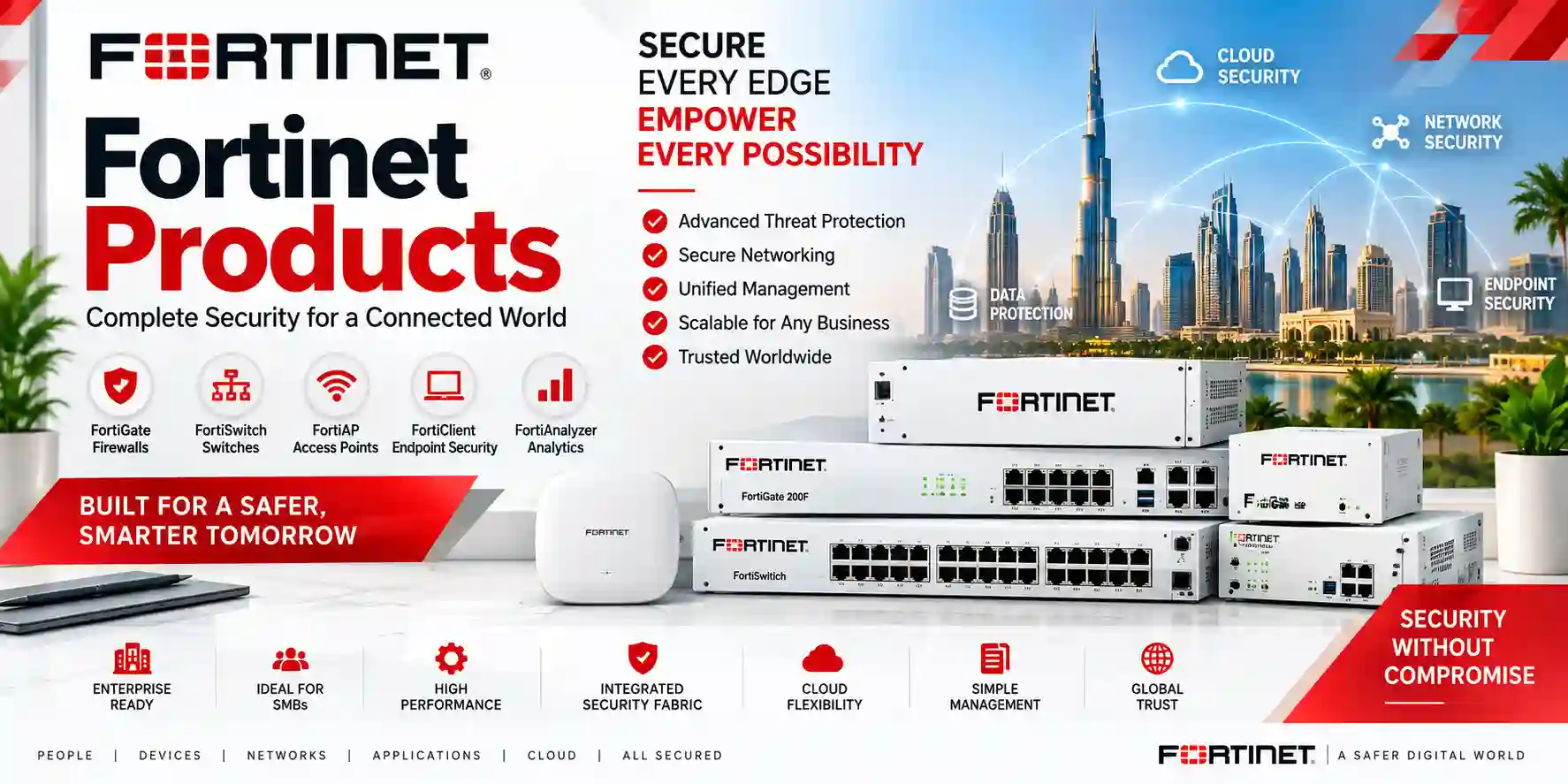
Fortinet product portfolio reference image. Final FortiBranchSASE design should be based on verified current hardware, firmware, subscription and topology requirements rather than on a generic portfolio illustration.
Verified FortiBranchSASE capabilities and current model context
Thin-edge connectivity
FortiBranchSASE is part of the FortiExtender family and connects thin-edge locations to security delivered through FortiSASE or a remote FortiGate. This is relevant where the branch needs secure connectivity but not a complete local firewall stack.
Centralized management
Fortinet highlights centralized configuration, policy consistency and unified management for distributed thin-edge locations. That can reduce branch-by-branch administrative variation when many sites follow a standard architecture.
Zero-touch deployment options
FortiBranchSASE can participate in Fortinet zero-touch onboarding workflows. This is useful when equipment must be shipped to a branch and activated with less on-site technical effort, subject to the selected design and prerequisites.
FortiSASE integration
In FortiSASE thin-edge use cases, branch traffic can be steered to FortiSASE security points of presence for policy enforcement. This can protect users and devices where installing endpoint software is not practical.
Fortinet’s current FortiSASE product information lists FortiBranchSASE-10F-WiFi, FortiBranchSASE-20G and FortiBranchSASE-20G-WiFi as SASE branch models, alongside FEX-200F within the FortiExtender thin-edge portfolio. Product families, firmware compatibility and ordering structures can change, so a quotation should verify the currently orderable hardware and subscription combination. Fortinet documentation also notes that FortiSASE thin-edge use requires a FortiSASE subscription for the edge device. For the FortiBranchSASE models above, Fortinet publishes subscription-bundle ordering guidance. FourTeck therefore recommends confirming both hardware and recurring subscription requirements before purchase rather than budgeting only for the appliance.
FortiSASE-managed or FortiGate-managed branch security?
| Decision area | FortiSASE-managed thin edge | Remote FortiGate-managed thin edge |
|---|---|---|
| Primary control point | FortiSASE portal and cloud-delivered security architecture. | A remote FortiGate/FortiOS environment using LAN-extension mode. |
| Typical planning priority | Cloud-delivered security, centralized policy and simplified thin-edge onboarding. | Extension of an existing FortiGate-centric operating model or architecture. |
| Key commercial check | FortiSASE subscription bundle, term, features and site quantities. | Hardware support and the FortiGate environment used to manage the branch. |
| Best-fit question | Can the site operate as a relatively simple thin edge with security enforced centrally? | Does the organization already operate a FortiGate-centered network and want to extend that control? |
Neither management mode should be selected only because it sounds simpler. The branch topology, internet path, local applications, traffic steering, Wi-Fi needs, business continuity expectations, segmentation, identity controls and operational ownership should be reviewed together. A design workshop can also identify branches that should remain full FortiGate sites while other smaller locations adopt FortiBranchSASE. Mixed designs are often more practical than forcing every location into one hardware profile.
Branch deployment, licensing and quotation planning
A FortiBranchSASE quotation should begin with topology rather than quantity. List each branch, number of users, wired and wireless devices, expected internet bandwidth, critical applications, private-resource access, SaaS use, guest access, local servers or printers, cellular or secondary connectivity needs, and whether the site requires local segmentation. That information helps determine whether a branch is actually a thin-edge candidate and which device variant is relevant.
Subscription planning is equally important. FortiSASE-managed thin-edge designs require the appropriate FortiSASE subscription for each edge device, and Fortinet ordering guidance provides bundles for specified FortiBranchSASE models. Buyers should verify the desired subscription term, support level and security capabilities instead of assuming that the hardware purchase alone activates cloud-delivered protection. Renewal dates should be documented so a distributed deployment does not become a collection of independently expiring subscriptions.
For deployment, organizations should confirm internet reachability, addressing, DHCP and DNS dependencies, access to the FortiSASE or managing FortiGate environment, firmware requirements, branch user migration, cutover window and rollback plan. Where zero-touch provisioning is used, the shipment and authorization workflow should be tested with a pilot site before a large rollout. A small pilot exposes practical issues such as local ISP behavior, cabling, Wi-Fi coverage, power, device placement and user application dependencies without disrupting many branches at once.
FourTeck Tanzania’s broader business technology shop guidance is useful when a branch project also includes switches, wireless access points, structured cabling, IP phones or other infrastructure. The FourTeck Tanzania solution overview explains how networking, security and workplace systems should be planned together, while the About FourTeck Tanzania page provides additional context on the integrated-technology approach.

Regional planning for distributed FortiBranchSASE deployments
The sections below address the regional search and procurement questions organizations commonly raise when standardizing branch security across Tanzania and other operating markets. They do not claim local inventory, guaranteed delivery, a local office, vendor authorization or on-site support in every listed location. Availability, commercial terms, licensing, taxes, import requirements, support scope and installation logistics should be confirmed during quotation. The technical design should stay consistent enough to support centralized policy while still respecting local connectivity, power, building and operational conditions.
FortiBranchSASE Branch Security Solutions Tanzania
For organizations planning FortiBranchSASE in Tanzania, the most useful starting point is to classify branch locations by what they actually need to do. A head office, data center or large operational site may require local FortiGate security, multiple VLANs, local servers, complex routing and deeper resilience. A smaller sales office, retail point, clinic, customer-service site, temporary project office or lightly staffed branch may be a better thin-edge candidate when its local network is simple and most security can be delivered through FortiSASE or a remote FortiGate. This classification prevents overbuying at tiny sites while also avoiding under-sizing locations that genuinely need a full local security platform.
Tanzania deployments should also account for differences in internet service, link stability and power conditions from one site to another. A cloud-delivered branch-security design still depends on dependable connectivity, so the quotation process should record the primary ISP, available bandwidth, static or dynamic addressing, any secondary link, use of cellular connectivity, latency-sensitive applications and the effect of an internet outage on local operations. Where a site handles payments, voice, CCTV, cloud applications or business-critical workflows, those traffic types should be considered before choosing steering and failover behavior. Power protection, clean cabling and suitable equipment placement remain important because a centralized security design does not remove physical infrastructure dependencies.
For Tanzanian procurement teams, it is sensible to request one bill of materials that separates branch hardware, FortiSASE subscription components, support, installation or configuration services, any switching or Wi-Fi requirements, and optional resilience items. Confirm the term and renewal basis for subscriptions, the current Fortinet product status and the firmware path recommended for the chosen management model. A pilot at one representative site can validate onboarding, cloud access, private application reachability, Wi-Fi behavior and administrative visibility before broader rollout. FourTeck’s Tanzania technology services page is a useful related resource because branch security often needs coordination with switching, wireless, cabling and lifecycle support rather than a hardware-only purchase.
FortiBranchSASE Branch Security Solutions Dar es Salaam
Dar es Salaam organizations often operate a mixture of headquarters, customer-facing branches, warehouses, showrooms, clinics, retail locations and service counters. That mix makes branch classification especially important. A corporate head office may need a full FortiGate-centered design with local segmentation and resilient local services, while small satellite locations can be evaluated for FortiBranchSASE thin-edge deployment. The advantage of establishing this architecture deliberately is that security policy and branch onboarding can become more consistent without assuming every site deserves identical hardware. Administrators can spend more time managing policy and less time maintaining unrelated point configurations at small locations.
Connectivity planning should document the actual ISP service at every Dar es Salaam location, because two sites in the same city can have different bandwidth, public-addressing and failover options. Cloud applications, voice, payment systems and remote access to head-office resources should be listed by business priority. If a branch loses its primary connection, the organization should already know which services must continue, whether an alternative link is available and how users should be informed. Where FortiBranchSASE is connected to FortiSASE, administrators should also consider which traffic is steered for centralized security inspection and whether the site needs direct access to any local resource. Thin-edge does not mean “no design”; it means the local site is intentionally simplified while security and policy remain centrally controlled.
For quotations in Dar es Salaam, include branch count, estimated users and devices per site, Wi-Fi requirements, internet speeds, applications, private-resource access, guest-network needs, planned rollout sequence and desired subscription term. If sites are being opened frequently, zero-touch provisioning may be valuable, but it should first be tested in a realistic pilot. Physical factors such as rack or shelf space, clean power, UPS coverage and cabling should be confirmed as part of the handover checklist. Buyers can use the verified FourTeck Tanzania contact page to provide these details and request a structured branch-security discussion rather than a generic price-only response.
FortiBranchSASE Branch Security Solutions Mwanza
Mwanza branch-security projects can include regional offices, distribution operations, retail outlets, clinics, hospitality sites, financial service points, education locations and field-support facilities. The FortiBranchSASE question is not simply whether a location is “small”; it is whether the branch can function as a relatively simple thin edge while relying on centralized security. A ten-user branch with several local server segments may need more local control than a larger site whose users work almost entirely in SaaS applications. FourTeck therefore recommends documenting traffic flows and local dependencies instead of sizing only by headcount.
For Mwanza, the connectivity review should consider both normal user traffic and operational services. Point-of-sale terminals, cloud ERP, video meetings, IP telephony, surveillance, printers and device-management traffic can react differently to latency or link loss. If the thin-edge branch is expected to steer traffic to FortiSASE, the primary internet link becomes a major part of the security architecture. Where a backup connection is commercially and technically appropriate, the design should specify how failover is detected and which applications take priority. Where no backup is planned, business owners should understand what becomes unavailable during an outage. That conversation is essential for avoiding a technically secure design that does not meet operational expectations.
Procurement teams in Mwanza should also ask for clear separation between hardware, subscriptions, support and implementation work. Verify the current FortiBranchSASE model appropriate to wired or Wi-Fi requirements, the FortiSASE subscription bundle and term, firmware prerequisites, onboarding method and management responsibility. If the project includes branch Wi-Fi, switches or new cabling, include them in the same design review so a shortage of PoE, ports or physical infrastructure does not delay commissioning. A staged rollout normally provides better risk control than activating every site at once: pilot one branch, record lessons, update the deployment template, then expand to the next group with consistent documentation.
FortiBranchSASE Branch Security Solutions Arusha
Arusha has organizations with very different branch profiles, including hospitality, travel, professional services, education, healthcare, retail and regional operations. For these environments, FortiBranchSASE can be assessed when the business has small sites that need protected internet and access to corporate resources but do not justify a complete local firewall stack. A hospitality booking office or compact service desk may have a different design from a property with guest networks, operational systems, cameras and several local VLANs. The latter may require stronger local segmentation or a full FortiGate branch architecture. The goal is to select the edge model according to actual trust zones and application flows, not according to a single site-size label.
Arusha projects should pay particular attention to guest, employee and operational traffic when those categories coexist. A thin-edge location that is intended to be flat should not be forced to handle segmentation complexity it was not designed for. If multiple trust zones are required, the architecture should explicitly show where enforcement occurs and whether local FortiGate capability is necessary. Where the branch can remain simple, centralized security through FortiSASE can provide a more consistent operational model. Administrators can use centralized configuration and policy while branch staff focus on normal operations rather than security-device administration.
When requesting an Arusha quotation, identify the number of sites, user count, wired devices, Wi-Fi users, business applications, guest-access requirement, local resources, primary and backup connectivity, expected growth and desired support model. Subscription renewal dates should be standardized where possible so procurement does not manage many unrelated expiry cycles. Include physical checks for equipment location, power protection and cabling. If the organization operates branches across Tanzania, use one deployment template that documents naming, IP addressing, onboarding, verification tests and escalation contacts. This creates a repeatable rollout while still allowing each Arusha site to reflect its connectivity and business-specific requirements.
FortiBranchSASE Branch Security Solutions Dodoma
Dodoma organizations evaluating FortiBranchSASE may include administrative offices, professional services, education, healthcare, NGO operations, branch offices and distributed public-facing locations. The main architectural decision is whether each site is a true thin edge. Small locations with straightforward user-to-cloud and user-to-corporate traffic can be candidates for centralized security, while sites with local applications, multiple internal security zones or complex routing may need an on-site FortiGate. This distinction is important because thin-edge simplicity is valuable only when it matches the branch’s actual operating model.
A Dodoma design workshop should map what happens during normal operation and during connectivity loss. List applications that use the public internet, applications hosted at headquarters or cloud data centers, SaaS platforms, identity dependencies, DNS and DHCP requirements, printers or local devices, and any voice or video traffic. Then identify which of those services require centralized inspection through FortiSASE and which need direct or private access. If a site depends heavily on cloud-delivered services, internet resilience becomes part of business continuity as well as cybersecurity. A secondary link, when available and justified, should be planned with clear routing and failover behavior rather than simply connected as an afterthought.
For procurement in Dodoma, request a bill of materials and services that shows the FortiBranchSASE hardware, FortiSASE subscription term, support, onboarding, configuration, optional Wi-Fi or switching, and any implementation or documentation work. Ask how the proposed model aligns with the current Fortinet portfolio and whether firmware compatibility has been checked for the chosen management approach. Where many branches are involved, validate one or two representative sites first. Successful commissioning should include user internet access, private application access, policy enforcement, logging visibility, Wi-Fi behavior where applicable, resilience testing and administrative handover. Those verification steps turn a product purchase into a supportable branch standard.
FortiBranchSASE Branch Security Solutions UAE
Organizations with operations in both Tanzania and the UAE often want one branch-security standard that can be managed across countries. FortiBranchSASE can support that goal for small and remote sites when the network remains appropriate for thin-edge design. A regional architecture should define which locations use FortiBranchSASE, which retain FortiGate appliances, how FortiSASE subscriptions are assigned, what management team owns policy and how exceptions are documented. The objective is not identical hardware everywhere; it is consistent design logic. Headquarters, data centers and larger branches can keep stronger local controls while microbranches use centralized security where appropriate.
In the UAE, branch networks may support retail, logistics, professional services, hospitality, construction, temporary project offices and distributed service points. Connectivity options can be strong, but performance planning should still consider the path to FortiSASE security points of presence, application destinations and private resources. Businesses should verify latency-sensitive services, voice, video, payment traffic and SaaS workflows during a pilot. If a branch has significant local east-west traffic or several security zones, it may be a better FortiGate candidate. Where the site is simple, FortiBranchSASE can reduce the amount of local security infrastructure that needs branch-level administration.
Regional buyers can also use the verified FourTeck Fortinet UAE specialist site to review related Fortinet firewall, SD-WAN, licensing and branch-security topics. When requesting a multi-country quotation, separate hardware quantities by country, identify subscription terms, specify delivery destinations, define installation expectations and record who will perform remote authorization and acceptance testing. Taxes, import requirements, availability and local service scope should be confirmed rather than assumed. A centralized technical standard combined with country-specific commercial planning makes a cross-border rollout easier to govern.
FortiBranchSASE Branch Security Solutions Uganda
For organizations operating across Tanzania and Uganda, FortiBranchSASE can be evaluated as part of a common regional branch-security standard. The first task is to categorize Ugandan sites by network complexity. Simple locations with centralized applications and limited local segmentation may fit thin-edge security, while larger offices, warehouses or facilities with several trust zones may need FortiGate. Maintaining this distinction across both countries helps the IT team avoid unnecessary variation while respecting differences in site size, connectivity and operational criticality.
Uganda deployments should document internet service and resilience per site rather than assume the same conditions apply nationally. The branch-security plan should identify cloud applications, private resources, local devices, guest traffic, voice, surveillance and any service that must continue during a link interruption. FortiSASE-managed thin edges depend on connectivity to centralized security services, so a business-continuity conversation is necessary before rollout. Where secondary connectivity is included, the implementation should define testing and failover expectations. Where it is not included, the business should understand the expected impact of an outage.
The verified FourTeck Uganda regional site can support related IT and networking enquiries for customers with Ugandan operations. For a FortiBranchSASE quotation, provide the number of Ugandan branches, user and device counts, Wi-Fi needs, internet speeds, required access to Tanzania or other regional resources, subscription term and implementation responsibility. A shared naming and documentation standard across Tanzania and Uganda can simplify support. The same commissioning checklist should be used at every site: verify onboarding, internet access, private applications, security policy, logging, wireless operation where applicable and the process for remote troubleshooting.
FortiBranchSASE Branch Security Solutions Kampala
Kampala is likely to contain a mix of headquarters, larger branches and small customer-facing sites for organizations operating in Uganda. That makes it a good place to apply a tiered edge strategy. A central office can retain a FortiGate and richer local policy, while smaller branches can be assessed for FortiBranchSASE when they require protected internet and corporate access without significant local security complexity. The design should define how those two edge types interact so administrators have consistent policy intent and predictable monitoring even though the hardware profile differs.
For Kampala branches, application mapping should come before hardware selection. Identify whether users primarily access SaaS, a local data center, private cloud services, Tanzania-hosted applications or public web resources. Note any branch printers, cameras, payment terminals, IP phones and Wi-Fi devices that cannot run endpoint agents. FortiSASE thin-edge architecture can be useful for these unmanaged or non-agent-capable devices because traffic can be secured through the branch edge rather than requiring software on each endpoint. Still, if the branch requires several local trust zones, east-west inspection or complex routing, the suitability of a thin edge should be reconsidered.
A Kampala rollout should also define who owns first-line troubleshooting. Branch staff may only need to confirm power, cables and ISP status, while centralized administrators handle policy and authorization. This division of responsibility is one of the operational benefits of a standardized thin-edge design. Procurement should make subscription terms, support, hardware quantities and deployment services explicit. When multiple sites are planned, run a pilot in a representative Kampala branch and record a repeatable installation guide covering device placement, uplink connection, authorization, test cases, documentation and escalation. That guide can then be reused for other Ugandan cities with site-specific connectivity notes.
FortiBranchSASE Branch Security Solutions Arua
Arua branch deployments can be especially sensitive to the practical relationship between security design and connectivity. FortiBranchSASE is useful only when the branch can reliably reach the centralized security or management environment required by the chosen architecture. Before ordering, organizations should document the ISP options available at each Arua site, normal and worst-case bandwidth, whether a backup connection is realistic, and which business functions are lost if connectivity fails. A thin edge can simplify local IT, but it does not remove the need for WAN planning.
The branch profile should also be reviewed carefully. A small office with laptops, a few phones, printers and cloud applications may align well with centralized security. A logistics or operational site with local servers, several device networks, surveillance and industrial or specialized equipment may require stronger local segmentation or a different Fortinet edge. Device count by itself is not enough. The architecture needs to show local trust zones, traffic direction and application dependencies. Where FortiBranchSASE is appropriate, centralized policy can reduce the amount of branch-specific security configuration that must be maintained.
For an Arua quotation, provide site addresses at the commercial stage, expected user and device counts, Wi-Fi requirement, internet details, private resources, cloud applications, critical operational services and the desired subscription period. Ask the supplier to identify any assumptions about connectivity and any prerequisites for zero-touch or remote onboarding. During installation, verify power quality and UPS coverage, cable labeling, physical protection of the device and the ability of local staff to perform basic checks. Acceptance testing should include normal internet traffic, private application access, security-policy enforcement, management visibility and a simulated loss of the primary link when a backup service is part of the design.
FortiBranchSASE Branch Security Solutions Mbarara
Mbarara businesses and regional organizations may use branch networks for retail, service delivery, healthcare, education, logistics, hospitality and administrative operations. FortiBranchSASE can be considered when these sites have modest local networking requirements but still need centralized security and protected access to business applications. A small branch with cloud applications may gain operational simplicity from thin-edge management, while a site with local servers, several VLANs or extensive east-west traffic may still need a FortiGate. That architectural choice should be made before a model or subscription is selected.
Connectivity review should include both performance and reliability. A branch that uses cloud ERP, video meetings, voice, file synchronization and security inspection can consume bandwidth differently throughout the day. The design should consider whether all traffic is steered through FortiSASE, which private resources are required, and what happens when the ISP link degrades. If the branch uses cellular or another secondary path, test the actual application experience during failover rather than assuming the backup is equivalent to the primary circuit. This is particularly important when cloud-delivered security is central to the architecture.
Procurement in Mbarara should bundle technical clarity with commercial clarity. Ask for exact hardware quantities, subscription type and duration, support terms, onboarding scope, installation responsibility and any dependent infrastructure. If Wi-Fi is part of the branch, confirm whether the selected FortiBranchSASE variant or related architecture satisfies wireless requirements and site coverage; do not assume one integrated radio solves every floor plan. Documentation should identify device names, branch identifiers, uplink details, authorized administrators, renewal dates and the result of acceptance tests. A disciplined record makes future support easier for regional IT teams that may not visit the site frequently.
FortiBranchSASE Branch Security Solutions Gulu
Gulu branch-security planning should begin with a realistic inventory of the site. Record users, laptops, phones, printers, cameras, wireless clients, local servers, operational devices and the applications each group uses. That inventory helps determine whether the branch can remain a simple thin edge or whether it needs local security functions. FortiBranchSASE is strongest when the site can be kept intentionally straightforward and centrally managed. Adding local complexity without revisiting the architecture can undermine the operational advantages that motivated thin-edge deployment.
WAN design deserves equal attention. If FortiSASE provides cloud-delivered security, the link from Gulu to the service becomes part of the protection path. The business should know the primary ISP characteristics, whether a secondary connection exists, and which applications are sensitive to delay or loss. If connectivity varies, a pilot should test real user workflows at normal and busy periods. Voice and video may expose latency or jitter before normal web browsing does, while large synchronization tasks may consume bandwidth in ways that affect other applications. Those observations can influence traffic policy and the decision to upgrade connectivity before wider rollout.
For quotation preparation, specify site count, user and device totals, required wired ports, Wi-Fi expectations, private application destinations, SaaS platforms, subscription term, support requirement and desired deployment schedule. Where remote installation is planned, confirm who will connect and power the device, who authorizes it centrally and what evidence is required for acceptance. A simple branch checklist can include photos of installed equipment, cable labels, uplink details, serial records, management status and test results. The purpose is to make the Gulu site supportable from a regional operations team rather than dependent on one person’s local knowledge.
FortiBranchSASE Branch Security Solutions Kenya
Kenyan organizations with Tanzanian operations may want one security architecture for offices and branches across East Africa. FortiBranchSASE can form the thin-edge layer of such a standard, while FortiGate remains appropriate for larger or more complex sites. The design should define objective criteria for each edge type, such as number of security zones, local application dependency, routing complexity, bandwidth, resilience and need for local inspection. This avoids country-by-country product decisions that create unnecessary operational fragmentation.
For Kenya, branch locations may include Nairobi offices, retail points, logistics sites, service centers or remote project locations with different connectivity profiles. The architecture should document the internet link, cloud and private applications, expected traffic, Wi-Fi, local devices and any backup path. If the same FortiSASE tenant and policy framework is used regionally, administrators should still test performance and application behavior from representative Kenyan sites because physical network paths and ISP conditions differ from Tanzania. Centralized policy simplifies governance, but end-user experience remains dependent on actual connectivity.
The verified FourTeck Kenya regional site provides a local entry point for related firewall, networking and business-technology enquiries. Multi-country procurement should separate quantities, delivery destinations, taxes and installation scope while keeping the technical specification consistent. Request clear FortiSASE subscription terms and record renewal ownership. A regional pilot strategy can start with one Tanzania and one Kenya branch so the team validates policy, private-resource access, cloud applications and support workflow across both markets before committing to a large deployment.
FortiBranchSASE Branch Security Solutions Kuwait
Kuwait branches can be included in the same FortiBranchSASE standard used for East African operations when the organization has a regional IT model. The value comes from consistent architecture and administration, not from assuming that all markets have identical connectivity or business conditions. Small sales offices, service points, temporary project locations and remote work sites can be assessed for thin-edge security, while major offices may retain FortiGate for local segmentation and advanced control. A written site-classification standard helps procurement and IT make repeatable choices as the organization grows.
Performance validation should include the actual applications used by Kuwait branches and the path to FortiSASE or private resources. Cloud ERP, Microsoft 365, collaboration, voice, web applications and regional data-center traffic can have different sensitivity to latency and routing. A pilot branch can confirm that security inspection, authentication, private access and user experience meet expectations before a broader order is placed. If the site has local operational networks or several guest and staff segments, check whether a full FortiGate is more appropriate than a thin edge.
Customers can reference the verified FourTeck Kuwait regional site for related technology enquiries. A Kuwait quotation should show hardware, FortiSASE subscription, support, deployment scope, logistics and any local integration separately. For cross-border projects, align naming conventions, policy templates, documentation and renewal dates with the Tanzania deployment where practical. Consistent administration reduces the support burden even when commercial orders are placed per country. Availability, delivery, tax treatment and on-site service coverage should always be confirmed during the commercial process instead of inferred from the presence of a regional website.
FortiBranchSASE Branch Security Solutions Ghana
Ghana can be incorporated into a regional FortiBranchSASE strategy for organizations that operate distributed offices across Africa. The same basic design discipline applies: identify which locations are thin edges, which need FortiGate, and which business applications depend on local or cloud connectivity. A branch with simple internet and private-application access may benefit from centralized FortiSASE security, while a site with extensive local segmentation, servers or operational technology may require a richer on-premises security design. Standardizing the decision criteria is more useful than standardizing a single appliance everywhere.
For Ghanaian sites, document ISP bandwidth, addressing, backup options, SaaS usage, private-resource access, guest traffic, voice, video and non-agent devices such as printers or other embedded systems. Thin-edge security can be valuable because those devices benefit from network-level enforcement without needing endpoint software. However, the business should still plan what happens during an internet outage and whether critical local services must remain accessible. A branch that cannot tolerate loss of centralized connectivity may need additional resilience or a different edge profile.
The verified FourTeck Ghana regional site can be used for related Ghana enquiries. For a multi-country quotation, provide separate delivery locations and quantities but maintain one shared technical schedule describing models, subscription term, onboarding, policy, acceptance tests and documentation. Renewal planning is particularly important when many branches are added over time; aligning terms where possible can simplify budget and lifecycle management. A representative Ghana pilot should validate user experience, private access, security inspection, management visibility and remote-support procedures before the design is replicated.
FortiBranchSASE Branch Security Solutions Nigeria
Nigeria’s scale and geographic diversity can make centralized branch-security operations attractive for organizations with many small locations. FortiBranchSASE can be evaluated for microbranches, service counters, retail points and remote offices that have relatively simple local networks. Larger regional offices or sites with multiple internal security zones can remain on FortiGate. A tiered architecture gives the IT team a consistent set of patterns instead of treating every branch as a custom project. That is especially useful when branches open, move or close frequently.
The WAN assessment is critical. Each Nigerian site should have documented bandwidth, ISP type, addressing, backup-link availability, latency-sensitive applications and expected cloud traffic. If security is enforced through FortiSASE, a weak internet connection can affect both performance and access, so a pilot should measure real workflows rather than relying only on advertised circuit speeds. Sites with payment, voice, collaboration, video surveillance or heavy cloud synchronization may need traffic prioritization or stronger connectivity. Where branch continuity requirements are high, the design should define the role of secondary links and how failover is tested.
The verified FourTeck Nigeria regional site provides a related regional contact point for IT requirements. Nigeria quotations should separate hardware, FortiSASE subscriptions, support, deployment, logistics and optional network components. For a regional standard spanning Tanzania and Nigeria, use the same device naming, policy template, rollout checklist and renewal records. Acceptance testing should confirm central management visibility, security policy, internet access, private applications, user experience and backup connectivity where included. Commercial availability and local implementation scope should be verified for the specific project.
FortiBranchSASE Branch Security Solutions Seychelles
Seychelles organizations may have compact offices, hospitality properties, service locations or island-based operations where branch simplicity and centralized management are attractive. FortiBranchSASE can be evaluated for sites that need protected connectivity without substantial local security complexity. The decision should consider local segmentation, application hosting, guest access, operational systems and resilience. A small office using cloud applications can be a strong thin-edge candidate, while a hospitality or operational environment with several trust zones may need a FortiGate or a more detailed branch architecture.
Connectivity planning is particularly important for island environments because the user experience and centralized security path depend on available WAN services. Document the primary service, backup options, latency-sensitive applications, cloud platforms, voice or collaboration, and any critical private resources. If a property or site continues local operations during an internet interruption, identify which services must remain available and where their security enforcement occurs. A thin-edge design should not be chosen solely to reduce hardware if it creates an unacceptable dependency for critical local workflows.
For a Seychelles quotation, supply site count, user and device quantities, Wi-Fi needs, application list, ISP details, private-resource destinations, subscription term and desired support model. Logistics and deployment responsibilities should be explicit because remote installation may require coordination between local staff and a centralized security team. A pilot site can confirm onboarding, cloud security, private access and the practical support process before other islands or locations are added. If the organization also operates in Tanzania, the same policy and documentation template can be reused while connectivity and commercial assumptions remain location-specific. This balance gives regional IT a consistent operating model without ignoring the conditions of each site.
Related FourTeck Tanzania resources for branch projects
Firewall and security planning
The FourTeck Tanzania services page explains firewall sizing, segmentation, remote access and lifecycle considerations that help determine whether a site should use FortiBranchSASE or a full firewall.
Product and infrastructure selection
The Tanzania technology shop guide covers switches, Wi-Fi, firewalls and supporting infrastructure that may form part of a complete branch bill of materials.
Integrated solution context
The FourTeck Tanzania home page shows how cybersecurity, LAN, Wi-Fi, voice and other systems interact when planning a business site.
Project enquiries
Use the Tanzania contact and quotation page to provide branch counts, users, bandwidth, locations and desired deployment scope for a more useful proposal.
Company approach
The About FourTeck Tanzania page provides background on the integrated IT, telecom and security approach used when a branch project spans several technologies.
FortiBranchSASE quotation checklist
Frequently asked questions about FortiBranchSASE
Is FortiBranchSASE a FortiGate replacement?
Not universally. FortiBranchSASE is designed for thin-edge use cases where a small site can rely on centralized security delivered through FortiSASE or a remote FortiGate. Branches that need significant local segmentation, complex routing, local inspection or richer on-site security functions may be better served by FortiGate. The correct choice depends on topology and business requirements.
Which FortiBranchSASE models are currently referenced by Fortinet?
Fortinet’s current FortiSASE product information lists FortiBranchSASE-10F-WiFi, FortiBranchSASE-20G and FortiBranchSASE-20G-WiFi as SASE branch models. FEX-200F is also listed in the FortiExtender thin-edge portfolio. Ordering status and compatibility should be verified at quotation time because portfolios and firmware evolve.
Does a FortiBranchSASE deployment require a FortiSASE subscription?
For FortiSASE-managed thin-edge deployment, Fortinet documentation specifies a FortiSASE subscription for the thin-edge device, and ordering guidance provides subscription bundles for specified FortiBranchSASE models. The exact bundle, term and support components should be confirmed in the commercial proposal.
Can FortiBranchSASE be managed by FortiGate instead of FortiSASE?
Yes. Fortinet documentation describes FortiBranchSASE integration with FortiOS through either FortiSASE or remote FortiGate devices. In the FortiGate-managed approach, LAN-extension mode is used. The design and provisioning workflow differ from the FortiSASE-managed path, so the management model should be selected before deployment.
What information is needed for a FortiBranchSASE quote in Tanzania?
Provide branch count, site locations, users and devices per site, internet bandwidth, backup connectivity, Wi-Fi needs, cloud and private applications, local segmentation, existing Fortinet environment, desired subscription term, deployment schedule and support expectations. This allows the proposal to distinguish thin-edge branches from sites that may require FortiGate.
Why pilot FortiBranchSASE before a multi-site rollout?
A pilot validates real internet conditions, onboarding, FortiSASE or FortiGate management, policy enforcement, private-resource access, Wi-Fi behavior, user experience and support procedures. It also reveals practical installation issues that can be corrected in the rollout template before many branches are affected.
Decision recap: when FortiBranchSASE fits a branch
FortiBranchSASE is most compelling when an organization has small or remote locations that need protected connectivity, centralized administration and access to cloud or corporate resources, but do not need a full local firewall security stack. It can reduce branch-level management complexity by extending Fortinet’s centralized FortiSASE or FortiGate control model to the thin edge. The value increases when many sites follow a repeatable design and can be onboarded through a controlled deployment process.
It is less appropriate to force a thin-edge design onto a branch that needs substantial local segmentation, independent local security enforcement, complex routing or extensive on-site services. Those locations should be evaluated for FortiGate or another suitable branch architecture. FourTeck can help map the site inventory, classify branch types, verify current Fortinet product and subscription requirements, and structure a quotation that includes hardware, licenses, connectivity dependencies and implementation scope.
Regional FourTeck network references
Organizations coordinating security across several countries can also use FourTeck’s regional websites as commercial and project-contact references. For East Africa, see FourTeck Kenya and FourTeck Uganda. For Fortinet-specific UAE topics, see the Fortinet UAE specialist site. For West African requirements, see FourTeck Ghana and FourTeck Nigeria. These links are useful when a Tanzanian branch standard is part of a wider regional security program and commercial coordination is required in more than one market.
Plan FortiBranchSASE around your real branch network
Share your site list, users, devices, internet connections, applications, Wi-Fi requirements and existing Fortinet environment. A useful FortiBranchSASE proposal should explain why each branch is a thin-edge candidate, how it will be managed, which subscription is required, what infrastructure depends on it and how the rollout will be tested. This creates a more reliable basis for procurement than comparing hardware names alone.
FourTeck can help review the requirement, distinguish FortiBranchSASE sites from FortiGate sites, and prepare a phased branch-security scope for Tanzania and regional operations.