
FortiEdge Cloud Network Management
FortiEdge Cloud gives organizations a hosted management platform for standalone FortiAP wireless access points, FortiSwitch Ethernet switching and FortiExtender 5G/LTE WAN-edge devices. Fortinet documents the platform as a unified environment for configuration management, monitoring, zero-touch deployment, reporting and analytics, with the ability to scale from a small number of devices to thousands across multiple sites.
For Tanzania businesses, the practical value is operational consistency. IT teams can standardize device onboarding, keep distributed sites visible from one cloud interface and reduce the need to maintain a separate onsite management server for standalone LAN and WAN-edge deployments. FourTeck can help buyers define the FortiAP, FortiSwitch, FortiExtender and license quantities needed for a new deployment or a staged transition.
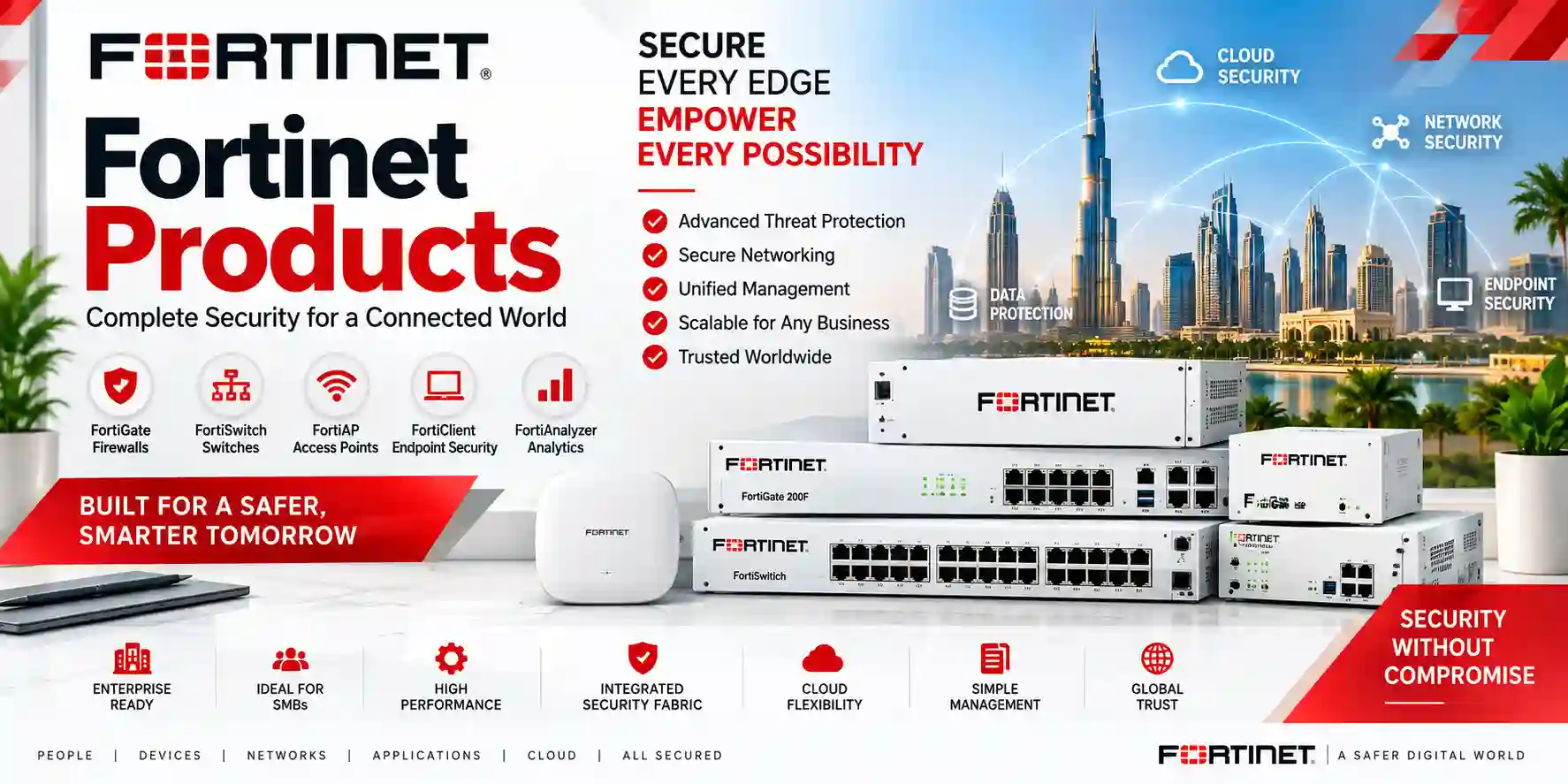
FortiEdge Cloud works with Fortinet Secure LAN Edge and WAN-edge product families. Exact device support and subscription requirements should be checked against the current Fortinet compatibility and licensing documentation before procurement.
What is FortiEdge Cloud?
FortiEdge Cloud is a cloud-hosted network management platform from Fortinet for standalone FortiAP, FortiSwitch and FortiExtender deployments. In Fortinet’s current documentation, the platform provides centralized configuration and monitoring across one or many sites and can be used for environments that do not place a FortiGate at every location. This makes it relevant to retail branches, hospitality properties, education campuses, warehouses, offices, temporary project locations and other distributed networks where local switching, wireless and cellular connectivity need consistent administration.
The platform is not simply a remote login screen. It covers the operational lifecycle: device inventory, onboarding, configuration, dashboards, status, reports, analytics and device-level management. Fortinet also documents REST API access for configuration and monitoring workflows. For FortiSwitch, current releases include zero-touch configuration functions that can apply templates and firmware actions when eligible devices are deployed or at scheduled times. For FortiAP, the platform supports centralized wireless configuration and visibility. FortiExtender management brings cellular WAN-edge devices into the same broad cloud-management approach.
FortiEdge Cloud should be evaluated as part of a network architecture rather than purchased as an isolated software line. The design still depends on access-point quantity, switch port and PoE demand, VLAN architecture, WAN links, internet reachability, firmware compatibility, security requirements and license level. FourTeck can help translate those engineering inputs into a bill of materials and an implementation scope for Tanzania and regional deployments.
Centralized Management
Manage supported standalone FortiAP, FortiSwitch and FortiExtender infrastructure from a hosted interface instead of treating every site as a separate management island.
Zero-Touch Workflows
Fortinet documents zero-touch options for streamlining deployment, including configuration templates and scheduled actions for supported FortiSwitch environments.
Monitoring & Analytics
Dashboards, reporting and analytics help operations teams understand device state, network conditions and usage without visiting every branch for routine checks.
Scalable Licensing
Fortinet offers a free service tier with limits and paid management licenses that unlock broader device scale, advanced functions, longer log retention and FortiCare support.
Verified FortiEdge Cloud platform facts
Standalone FortiAP, FortiSwitch and FortiExtender deployments are the core documented FortiEdge Cloud management scope.
Fortinet states that the platform can manage from a handful of devices to thousands of devices across multiple sites.
Configuration management, monitoring, reporting, analytics, device inventory and REST API functions are documented in the current platform materials.
A limited freemium tier exists; paid licensing expands management capabilities and is associated with advanced features, longer log retention and support benefits.
Where FortiEdge Cloud fits in a Fortinet network
FortiEdge Cloud is particularly useful when FortiAP, FortiSwitch or FortiExtender devices operate as standalone infrastructure and require centralized cloud administration. Fortinet also supports architectures in which LAN equipment is managed through FortiGate. These are different operating models, and the right choice depends on whether the site has an onsite FortiGate, how policy is structured and how the organization wants management responsibilities divided.
For a branch network without an onsite FortiGate, FortiEdge Cloud can provide the management plane for supported access points, switches and extenders. Fortinet’s Secure LAN ordering guidance also describes a transition path in which equipment can initially be managed with FortiEdge Cloud and later moved under FortiGate management if the architecture changes. This matters for organizations that want to refresh switching or wireless now but may add a FortiGate later.
A procurement discussion should therefore begin with the intended management model. If the requirement is primarily FortiGate policy and firewall lifecycle management, other Fortinet management products may be more appropriate. If the requirement is centralized management of standalone FortiAP, FortiSwitch and FortiExtender devices, FortiEdge Cloud is the relevant Fortinet platform to evaluate.
Licensing, subscription and procurement guidance
FortiEdge Cloud has both limited free access and paid management licensing. Fortinet’s current licensing FAQ states that no paid subscription is required for the basic service, but enterprise configuration capabilities and other advanced functions require FortiEdge Cloud licensing. The public service information also differentiates the free tier from licensed service by device scale, management depth, log retention and support. Buyers should not assume that every capability shown in a product demonstration is included in the free tier.
The commercial bill of materials is device-family dependent. Fortinet publishes Advanced Management licensing for FortiAP, FortiSwitch and FortiExtender families, and the correct line item depends on the exact hardware series and subscription duration. A FortiSwitch 100-series management license is not interchangeable with a license intended for higher FortiSwitch tiers, and the FortiAP and FortiExtender families have their own licensing structures. This is why a quotation should include exact device models, quantity, requested term and required management feature level.
Renewal planning matters as well. Fortinet documents that when a paid FortiEdge Cloud subscription expires, service falls back to the freemium capability set rather than stopping the forwarding function of the underlying network devices. The management features available to administrators become limited, so renewal dates should be tracked as part of operations. For procurement teams, a clear quote should separate hardware, FortiEdge Cloud licensing, FortiCare or support entitlements where applicable, installation, configuration, testing and documentation.
Related FourTeck Tanzania resources
For a broader view of how cloud management connects to the rest of the site, start with the FourTeck Tanzania technology overview, which explains the relationship between networking, Wi-Fi, security, voice and infrastructure. The Tanzania technology shop provides procurement guidance across firewalls, switches, access points and business IT categories, while the FourTeck Tanzania services page covers planning, integration and lifecycle support.
Organizations evaluating a complete Fortinet branch architecture can also review the FortiGate 30G Tanzania product page for a compact firewall example. The FourTeck Tanzania approach page explains the company’s integrated technology perspective, and the Tanzania contact page is the local enquiry route for requirement discovery and quotations.
The current Tanzania shop also includes the Grandstream GXP1625 Tanzania page, useful when a wider office project combines cloud-managed LAN infrastructure with IP telephony endpoints. These verified pages are linked because FortiEdge Cloud projects frequently touch switching, wireless, security, communication and implementation planning rather than remaining isolated software purchases.
Regional FourTeck network resources
For organizations coordinating technology across several markets, related FourTeck resources include FourTeck Kenya, FourTeck Uganda, FourTeck Africa, FourTeck Ghana and the FourTeck Firewall Dubai specialist site. These links are useful for multi-country procurement and adjacent network-security planning, while exact commercial terms and local deployment scope should always be confirmed for each market.
FortiEdge Cloud Network Management Tanzania
FortiEdge Cloud Network Management Tanzania is relevant to organizations that need consistent administration of FortiAP, FortiSwitch and FortiExtender infrastructure across offices, branches, hospitality properties, education facilities, warehouses, retail sites and other distributed locations. The central question for a Tanzania deployment is not simply whether cloud management is available; it is whether the organization can standardize the network enough for centralized management to produce operational value. Device models, firmware, VLAN design, naming conventions, SSIDs, switch profiles, WAN-edge policy and administrator roles should be planned as one operating model.
A Tanzania project can start small. A business may initially manage a few wireless access points and one switch at a compact office, then add more branches as the network expands. Fortinet documents the platform as scalable from a handful of devices to thousands across multiple sites, which means the management approach can remain consistent while the hardware footprint grows. The practical benefit is repeatability: new sites can follow established templates instead of being configured from scratch with different naming, security settings and operational practices each time.
Connectivity to the Fortinet cloud must also be considered. Local devices still depend on stable internet and correct upstream firewall or routing conditions for cloud communication. This does not mean the branch stops forwarding local traffic whenever administrators cannot reach the portal, but management visibility, synchronization and configuration workflows depend on cloud reachability. Organizations using primary and backup internet should document how management traffic behaves during failover and should test device reconnection after provider changes.
For procurement, provide FourTeck with the exact FortiAP, FortiSwitch and FortiExtender models already owned or planned, site count, desired license term, expected log retention, administrator structure and implementation scope. If equipment is being purchased at the same time, include port count, PoE requirements, wireless coverage needs, LTE/5G requirements and future growth. This makes the quotation useful as a complete cloud-managed network plan rather than a software-only line item with missing hardware or deployment dependencies.
FortiEdge Cloud Network Management Dar es Salaam
FortiEdge Cloud Network Management Dar es Salaam suits businesses that operate headquarters, branch offices, retail locations, hospitality properties, professional services firms, logistics facilities and other connected environments where wireless, switching and cellular connectivity need to be visible to a small IT team. In a busy commercial site, the challenge is often not lack of equipment but inconsistent administration. One floor may have a newer switch, another may have separately configured access points and a backup 5G connection may be managed through a different interface. Centralized cloud management can reduce that fragmentation when the supported Fortinet device families are standardized.
Dar es Salaam deployments should begin with network inventory. Record each FortiAP, FortiSwitch and FortiExtender model, serial registration status, firmware level, current configuration ownership and physical location. Then define site and device naming that will still make sense after expansion. A name such as “AP-1” is difficult to troubleshoot across ten branches; a structured label that reflects city, building, floor and device role makes dashboards and reports more useful. VLANs and SSIDs should follow the same logic so that central templates do not create accidental inconsistency.
Wireless environments in Dar es Salaam can also vary widely between glass offices, concrete multi-floor buildings, hotels, warehouses and retail spaces. FortiEdge Cloud can centralize configuration and monitoring, but it does not replace RF design. Access-point quantity and placement should still be based on coverage, user density, wall materials, interference and application demand. Likewise, switch selection must reflect PoE demand and uplink capacity. If cameras, phones and FortiAPs all use the same PoE switches, the power budget and port plan should be sized before deployment.
When requesting a Dar es Salaam quote, include whether the project is a new rollout, a migration from individually managed devices or an expansion of an existing FortiEdge Cloud account. State the number of sites, APs, switches and extenders, current internet links, planned subscription term and whether FourTeck should assist with registration, templates, SSIDs, VLANs, switch profiles, firmware alignment, testing and documentation. A detailed scope helps separate cloud licensing from the engineering work needed to make centralized management effective.
FortiEdge Cloud Network Management Mwanza
FortiEdge Cloud Network Management Mwanza can help organizations manage distributed LAN and WAN-edge infrastructure where local technical staff may not be present at every branch. A retail business, healthcare facility, hotel, logistics operator, education organization or regional office may need dependable Wi-Fi, managed switching and cellular backup while central IT remains in another city. Cloud management can give that central team a common view of supported Fortinet devices and a structured method for applying configuration rather than relying on ad hoc remote sessions to each location.
The design should distinguish between management availability and data-plane resilience. FortiEdge Cloud provides the management service, but local network architecture still determines whether users remain productive during an ISP problem. If Mwanza sites use FortiExtender for LTE or 5G connectivity, the WAN plan should define when cellular is primary, backup or out-of-band connectivity. Data allowances, signal quality, antenna placement and provider coverage are operational considerations separate from the cloud-management subscription. FortiEdge Cloud can provide visibility into supported extender functions, but the physical connection must still be engineered for the site.
Switching is similarly site-specific. A branch with IP cameras, VoIP phones and access points can exhaust a PoE budget before it runs out of ports. A warehouse may need fiber uplinks or ruggedized equipment where environmental conditions demand it. The management platform cannot compensate for undersized hardware. Before onboarding devices, document port use, PoE requirements, uplink paths, VLANs and any locally attached systems such as NVRs or servers. This produces cleaner monitoring and makes future troubleshooting easier because the cloud view corresponds to a documented physical design.
For Mwanza procurement, provide the exact site count and hardware inventory, indicate whether equipment is already registered in FortiCloud and specify the desired management features. If the organization expects future branches, include that growth in the licensing discussion rather than buying only for today. FourTeck can use this information to prepare a structured bill of materials covering devices, management licensing and implementation activities without assuming stock, delivery time or subscription terms that have not been confirmed.
FortiEdge Cloud Network Management Arusha
FortiEdge Cloud Network Management Arusha is a practical option for hospitality groups, tour operators, NGOs, education sites, professional offices, healthcare organizations and branches that need centralized administration of Fortinet wireless, switching and cellular edge devices. Many of these environments combine staff access, guest Wi-Fi, operational devices, cameras and cloud applications. Central management is most valuable when those different traffic classes are deliberately separated and the configuration can be repeated across several sites without depending on a technician to recreate settings manually.
Hospitality is a good example. Guest SSIDs may need different access policy from staff networks, and operational systems such as front-desk terminals, VoIP, CCTV or building devices should not automatically share the same trust zone. FortiEdge Cloud can help administrators maintain wireless and switch configuration across supported devices, but the VLAN and upstream routing architecture must be planned first. If a FortiGate is present at the site, the organization should also decide whether the LAN will remain standalone under FortiEdge Cloud or transition to FortiGate-managed Secure LAN, because the management model affects implementation choices.
Arusha properties can also have large physical areas, outdoor spaces or separate buildings. Wireless coverage planning should account for distance, construction materials, outdoor environmental requirements and client density. A cloud dashboard cannot correct poor AP placement. Similarly, backbone links between buildings should be sized for the combined traffic of users, cameras and business systems. Where FortiExtender is considered, cellular signal and data-plan design should be validated in the actual installation area rather than assumed from general coverage.
A useful Arusha quotation should list every location, intended FortiAP and FortiSwitch count, any FortiExtender requirement, desired license duration, guest-access needs, administrator roles and deployment responsibilities. If the customer wants templates, zero-touch workflows or standardized branch builds, those objectives should be stated before equipment is ordered. FourTeck can then align procurement and configuration around a repeatable operating model rather than treating each AP or switch as a separate purchase.
FortiEdge Cloud Network Management Dodoma
FortiEdge Cloud Network Management Dodoma can support government-facing contractors, professional organizations, education institutions, NGOs, branch operations and businesses that want repeatable administration of Fortinet LAN and WAN-edge devices. In these environments, change control and documentation may matter as much as initial deployment. A cloud-managed platform gives administrators a consistent place to view supported device status and configuration, but governance should define who can make changes, how configuration is approved and how emergency access is handled.
Role design deserves attention before rollout. Fortinet documents account, organization and role-based access concepts across its cloud-management environment. A growing organization should avoid sharing one administrator credential between every technician. Instead, access should reflect operational responsibilities, and two-factor authentication should be enabled where supported. This improves accountability and reduces the risk that a credential used for a minor branch change also provides unrestricted access to every managed site. Administrative procedures should also cover staff changes, periodic access review and safe handling of API credentials if REST integrations are used.
Dodoma deployments should also include recovery planning. Keep an inventory of device serials, configuration ownership, subscription dates and the local contact who can physically reach each site. Cloud management reduces routine travel, but some faults still require hands-on checks such as power, cabling, optics, PoE load, antenna position or hardware replacement. Clear site documentation allows central IT and local personnel to work together. If a switch or AP is replaced, the team should know how the replacement will be registered, licensed and associated with the correct network.
When requesting a FortiEdge Cloud quote for Dodoma, specify whether the priority is centralized monitoring, configuration standardization, zero-touch branch rollout, extended log retention, support entitlement or all of these. Include existing devices and firmware, planned expansion and any compliance or reporting expectations. FourTeck can then separate confirmed Fortinet licensing from local implementation tasks such as onboarding, template creation, administrator setup, testing and handover documentation.
FortiEdge Cloud Network Management UAE
FortiEdge Cloud Network Management UAE can be relevant to multi-branch retailers, hospitality groups, professional offices, warehouses, service companies and regional headquarters that need centralized management of standalone FortiAP, FortiSwitch and FortiExtender deployments. UAE sites often have high-speed internet and dense application use, so the design should distinguish between cloud-management capacity and the forwarding capacity of the underlying LAN. Central visibility is valuable, but it does not remove the need to size switches, uplinks, PoE budgets and wireless coverage correctly.
For organizations operating both the UAE and Tanzania, FortiEdge Cloud can support a common administrative approach if the hardware families and management model are compatible. Standard site templates can define naming, SSIDs, VLAN mapping, switch configuration conventions and administrator roles, while site-specific values such as IP subnets, ISP details and local device quantities remain variable. This is more maintainable than allowing every country office to develop unrelated configuration standards. Central operations can then compare device state across regions using the same terminology and escalation process.
Data residency, security policy and corporate governance should be reviewed as part of any cloud-management project. Fortinet operates regional cloud instances and publishes information about data separation in its FortiEdge Cloud materials. Procurement and security teams should verify the currently applicable region, contractual terms and organizational policy before deployment, especially where internal rules restrict where management data or logs may be processed. These considerations are governance questions rather than reasons to assume a particular design automatically fits every business.
A UAE quotation should identify device families, quantity, subscription level, desired term, number of networks or sites and whether the customer needs only licensing or complete deployment assistance. For cross-border organizations, it is also useful to state which team will own the FortiCloud account, how administrators in each country will be delegated and whether the same templates will be reused in Tanzania, Kenya, Uganda or other markets. FourTeck can then plan the management architecture together with the physical network rather than quoting a cloud service without operational context.
FortiEdge Cloud Network Management Uganda
FortiEdge Cloud Network Management Uganda can help organizations that operate several branches but have a small centralized IT team. Retail networks, education groups, clinics, NGOs, hospitality businesses and service organizations may need uniform wireless and switching standards in Kampala and additional regional locations. FortiEdge Cloud provides a way to manage supported standalone FortiAP, FortiSwitch and FortiExtender devices without deploying a separate management server at every site, which can simplify operations when the equipment estate is standardized.
The first design task is deciding which configuration should be common and which should remain local. SSID naming, administrator roles, firmware policy, switch port conventions and monitoring standards can often be standardized. IP addressing, ISP details, VLAN IDs, guest-network rules and cellular settings may differ by branch. A good template strategy separates these two categories so that centralization does not force every site into an identical technical design where local conditions are different. This becomes increasingly important as the branch count grows.
Uganda sites using FortiExtender should evaluate cellular connectivity as an engineering component. Signal quality, carrier performance, antenna placement, data-plan limits and failover behavior can vary by location. FortiEdge Cloud can centralize monitoring and configuration for supported extenders, but it cannot guarantee carrier availability. The WAN architecture should define what happens when the primary link fails, how much traffic is allowed on cellular backup and which applications receive priority. Testing should include a real failover event rather than relying only on configuration review.
For procurement, provide a branch list, current and planned Fortinet devices, desired subscription level, license term and operational goals. If the customer wants remote rollout with minimal onsite configuration, state that zero-touch deployment is a priority so supported workflows can be designed correctly. FourTeck Uganda resources can complement Tanzania planning for organizations with sites in both countries, but each location’s power, internet, cabling and service conditions should be validated separately before a common hardware standard is approved.
FortiEdge Cloud Network Management Kampala
FortiEdge Cloud Network Management Kampala is well matched to organizations whose central IT function is based in the capital while branches operate elsewhere. A Kampala head office can use cloud management to view supported FortiAP, FortiSwitch and FortiExtender devices across distributed locations, reducing the need for technicians to travel simply to check status, change a wireless setting or confirm device health. The value increases when site configurations are documented and standardized enough that the central dashboard reflects a predictable network architecture.
Kampala headquarters often host more users and business systems than regional branches, so the design should not assume that every site needs the same switch or access-point model. A common management platform can still be used while hardware scales by site. The head office may need higher-capacity switches, more PoE, faster uplinks and denser Wi-Fi, while a small branch may need only a compact switch and a few APs. Standardization should focus on management principles and configuration intent rather than forcing identical quantities or hardware tiers everywhere.
Change management is another benefit of centralization. Before deployment, define how firmware updates are tested, who approves broad configuration changes and how rollback or troubleshooting will be handled. Fortinet documents scheduled and zero-touch functions for supported scenarios, but automation should be introduced carefully. A template that works for one branch can create widespread disruption if pushed without validating model support, VLAN assumptions or upstream dependencies. Pilot changes on a representative site and keep configuration records aligned with the cloud platform.
A Kampala quotation should therefore include both product and operations requirements: device counts, supported models, license term, site hierarchy, administrator roles, logging expectations and onboarding scope. If an existing FortiCloud account already contains devices, mention how assets are registered and who owns the account. FourTeck can then plan migration or onboarding without creating duplicate ownership, and can define whether the engagement covers only licenses or also configuration templates, testing, documentation and administrator handover.
FortiEdge Cloud Network Management Arua
FortiEdge Cloud Network Management Arua can be valuable for remote or regional sites that need professional network administration without a full onsite network team. Businesses, NGOs, education organizations, healthcare operations and service branches may depend on Wi-Fi, switching and cellular connectivity while engineering expertise is concentrated in Kampala or another hub. A cloud-managed model lets central administrators work from a consistent interface, but successful remote operations still depend on careful local installation, documentation and physical resilience.
Power and environmental planning are especially important for sites where a technician cannot arrive immediately. Switches, APs and extenders should be connected to suitable power protection, installed with proper ventilation and mounted where cabling is secure. If the network loses power repeatedly, cloud alerts will show devices offline but will not solve the electrical cause. UPS sizing should reflect the desired runtime for network equipment, and local staff should know basic checks such as confirming power, link lights and cable condition before a central team begins deeper troubleshooting.
For WAN resilience, FortiExtender may provide cellular connectivity where appropriate, but the branch should be surveyed for signal and data-plan suitability. If cellular is backup, test whether required cloud applications, VPNs and management sessions can operate within the available bandwidth. If the device is used as primary access, consider monthly data use and application behavior. Central management can help monitor supported extender functions, yet the service quality remains dependent on the carrier and radio environment.
Arua procurement should therefore include more than license quantity. Provide the site layout, WAN options, power conditions, number of users, AP count, switch ports, PoE devices and any need for cellular backup. State whether remote deployment is expected and whether local hands will be available for installation. FourTeck can use these details to align FortiEdge Cloud management with the physical network, reducing the risk of buying a centralized management service for hardware that has not been designed for reliable remote operation.
FortiEdge Cloud Network Management Mbarara
FortiEdge Cloud Network Management Mbarara can support growing branch networks that want the same operational standards as a larger head office. Retail, hospitality, healthcare, education and distribution organizations may start with a modest site and later add more access points, PoE devices or secondary internet. Cloud management is useful because the administration model can remain consistent as the local network grows, provided hardware compatibility and licensing are reviewed when new devices are added.
Capacity planning should begin with the switch layer. Count wired users, access points, cameras, IP phones and other PoE endpoints, then reserve ports for realistic growth. Calculate PoE budget rather than assuming every PoE-capable port can deliver maximum power simultaneously. If the site expects new Wi-Fi generations or faster clients, check whether uplink and access-port speeds provide enough headroom. FortiEdge Cloud can manage supported FortiSwitch units, but physical limitations such as insufficient power or uplink bandwidth still determine user experience.
Wireless management should similarly be based on a site plan. A single AP placed centrally may cover a small open office, while a hotel, school or warehouse requires a different RF strategy. Use cloud visibility to monitor device health and client behavior, but treat it as part of an engineering process that includes placement, channel conditions and wired backhaul. For guest access, define separation from business systems and ensure VLANs are carried consistently through switches and the upstream router or firewall.
For Mbarara quotations, list existing devices and any hardware planned for the next expansion stage. State whether advanced FortiEdge Cloud features, longer log retention or support are required and choose a license duration that aligns with the organization’s budgeting cycle. If the network will later transition to a FortiGate-managed Secure LAN architecture, mention that future direction during design. This allows FourTeck to consider a staged approach rather than creating a management model that has to be rebuilt when the branch architecture changes.
FortiEdge Cloud Network Management Gulu
FortiEdge Cloud Network Management Gulu is relevant to organizations that want to maintain professional network standards at a regional site while central IT remains elsewhere. Education, healthcare, NGOs, hospitality, branch offices and service facilities can use supported Fortinet switching, wireless and cellular devices while administrators maintain visibility through the cloud. The main operational advantage is consistency: device configuration, naming and monitoring can follow a defined template instead of relying on local one-off changes that become difficult to audit later.
A Gulu rollout should include a simple support playbook. Document who receives alerts, which problems can be handled remotely and which require local intervention. Cloud tools may show that an AP is offline, but someone may still need to inspect its cable or PoE source. A switch may report a link issue that is ultimately caused by damaged patching. FortiExtender may be reachable but provide poor throughput because of signal conditions. Combining central visibility with practical onsite procedures turns cloud management into a support system rather than merely a dashboard.
Configuration standards are equally important. Define management access, SSIDs, VLANs, switch profiles, firmware policy and backup procedures before adding several branches. Where Fortinet’s zero-touch capabilities are used, validate the template on the exact supported model and avoid including commands that could produce restart loops or unintended behavior. Automation should reduce repetitive work, not bypass change control. Keep a record of which template version is active at each site and how local exceptions are documented.
A Gulu procurement request should state the site role, device quantities, current internet connection, expected users, PoE endpoints, wireless coverage needs and desired cloud-management level. If the branch depends on cellular backup, include that requirement and the planned FortiExtender model. FourTeck can then prepare a more complete solution that addresses hardware, management licensing and deployment tasks together, while commercial availability, delivery and final subscription terms are confirmed at quotation stage rather than assumed in advance.
FortiEdge Cloud Network Management Kenya
FortiEdge Cloud Network Management Kenya can support organizations with offices, retail sites, logistics locations, hospitality properties and distributed branches that use Fortinet Secure LAN Edge and FortiExtender devices. Kenya-based operations may have a Nairobi headquarters and additional sites with very different user counts and connectivity. A centralized platform can provide a common management layer while allowing each site to use appropriately sized switches, access points and WAN-edge devices rather than forcing one hardware profile on every branch.
For East African companies operating in both Kenya and Tanzania, the strongest benefit comes from shared standards. Device naming, administrator roles, firmware practice, wireless SSID structure, switch profile conventions and support escalation can be designed once and adapted to local requirements. This reduces training overhead and makes it easier for a regional IT team to interpret dashboards across countries. It also supports procurement because new sites can start from a documented reference architecture rather than compiling an unrelated product list each time.
Cross-country consistency should not erase local engineering. Internet performance, building construction, available fiber, cellular coverage, power quality and service-provider handoff can differ significantly. A Nairobi office in a modern commercial building and a remote operational site may both use FortiEdge Cloud but require different AP density, switch form factors and backup connectivity. Site survey and capacity planning remain essential. Central management makes those designs easier to operate after deployment; it does not replace them.
When requesting a Kenya-related quotation, provide device family and model, quantity, number of sites, desired licensing term and whether the requirement includes only licenses or full implementation. If Tanzania and Kenya will share one operational standard, define account ownership and administrator responsibilities early. The FourTeck Kenya site provides a regional contact point for related IT requirements, while the Tanzania team can coordinate the local branch scope. Procurement should still verify final license eligibility, commercial terms and device compatibility for every country-specific deployment.
FortiEdge Cloud Network Management Kuwait
FortiEdge Cloud Network Management Kuwait can suit businesses that operate distributed offices, retail outlets, warehouses, hospitality facilities or regional branches and want cloud control over supported Fortinet access points, switches and extenders. In Kuwait, organizations may have reliable high-bandwidth internet at principal sites, but the LAN can still become difficult to manage if wireless and switching configurations are inconsistent between branches. FortiEdge Cloud gives administrators a centralized way to monitor and configure compatible standalone devices while keeping the management service hosted.
High-speed WAN connectivity makes LAN bottlenecks more visible. A branch with a fast ISP connection can still experience poor performance if access switches have congested uplinks, PoE capacity is insufficient, AP placement is weak or guest and business traffic are not separated. Before adopting centralized management, map the underlying network and correct structural issues. Cloud visibility can then help maintain the environment rather than merely revealing repeated faults caused by undersized infrastructure.
Organizations with both Kuwait and East African offices should also define how cloud accounts and administrative roles will be handled. A regional IT team may need broad visibility, while local technicians receive access only to specific sites. Procurement should confirm the current Fortinet organization and licensing options that fit that governance model. If REST API integration is planned for monitoring or automation, protect API credentials and apply the same change-control discipline used for interactive administration.
A Kuwait quotation should state the exact managed device families, models, quantity, number of sites, log-retention expectations and subscription duration. Include implementation tasks such as device registration, template creation, firmware alignment, SSID configuration and documentation if required. The FourTeck Kuwait website can support related regional enquiries, while multi-country organizations can coordinate the Tanzania component through FourTeck Tanzania. Final commercial availability and service scope should be confirmed in the actual quotation.
FortiEdge Cloud Network Management Ghana
FortiEdge Cloud Network Management Ghana is appropriate for organizations that want to centralize management of supported Fortinet LAN and WAN-edge devices across Accra operations, regional branches, retail sites, education environments, hospitality properties or other distributed locations. The platform can reduce the operational burden of administering individual devices one by one, especially where a central team needs visibility across several networks. The business case becomes stronger when hardware standards and configuration practices are consistent enough to benefit from common templates and centralized reporting.
A Ghana deployment should begin by deciding which network functions are mission-critical and how failures are escalated. If Wi-Fi supports point-of-sale, guest services or mobile work, AP placement and redundancy deserve careful planning. If switches power phones, cameras and APs, the PoE budget and UPS strategy become operational dependencies. If FortiExtender is used for cellular connectivity, validate signal quality and provider performance at each site. FortiEdge Cloud helps administrators see and manage supported devices, but the physical architecture still determines resilience.
Licensing should also be treated as a lifecycle item. Track activation dates, device assignments and renewal dates in the same asset register used for hardware. Fortinet states that paid subscriptions unlock broader functionality and that expired paid licensing falls back to the limited free capability set. An organization should know in advance which monitoring, configuration or support functions would be reduced if a renewal is missed, rather than discovering the difference during an operational incident.
For Ghana procurement, provide the site list, existing and proposed Fortinet devices, desired management tier, number of administrators and implementation responsibilities. If the company also has Tanzania operations, decide whether both countries will share naming, templates and operational ownership. The FourTeck Ghana site can support related regional technology enquiries. FourTeck Tanzania can then align the Tanzania branch scope without assuming identical internet, power or installation conditions across both markets.
FortiEdge Cloud Network Management Nigeria
FortiEdge Cloud Network Management Nigeria can support large distributed organizations as well as smaller businesses that want one cloud platform for supported FortiAP, FortiSwitch and FortiExtender deployments. Retail chains, banks and financial service branches, education groups, healthcare networks, logistics firms, hospitality companies and professional organizations may have many locations with different local conditions. Centralized management can simplify visibility and configuration, but the network design should still account for connectivity diversity, power resilience and branch scale.
Power planning is particularly important in any environment where network equipment may experience frequent interruption. A cloud-managed switch that loses power remains offline regardless of management sophistication. UPS systems should be sized around switches, routers, AP injectors and extenders that need to remain available during short interruptions. Configuration should also be backed by clear restart and recovery procedures. If the branch uses dual WAN or cellular backup, the failover design should be tested after power recovery because link order and provider readiness can affect reconnection.
At larger scale, site hierarchy and administrator roles become major design topics. An enterprise may need a central operations team, regional administrators and read-only visibility for support or audit personnel. The cloud account structure should reflect that model without sharing credentials. If automation or APIs are introduced, changes should be logged and controlled just like GUI changes. Centralization creates efficiency, but it can also increase the impact of a configuration mistake if governance is weak; staged deployment and template validation are therefore essential.
A Nigeria quotation should specify the number of sites, device quantity by model family, licensing term, log-retention requirement, administrator model and rollout schedule. For large branch programs, identify a pilot site and define acceptance criteria before mass deployment. The FourTeck Nigeria site can assist with regional requirements, while Tanzania deployments should retain their own site survey and procurement assumptions. A shared management platform is most effective when it supports common standards without ignoring local infrastructure realities.
FortiEdge Cloud Network Management Seychelles
FortiEdge Cloud Network Management Seychelles can be useful for resorts, hospitality groups, professional offices, service businesses and distributed facilities that need centralized control of supported Fortinet Wi-Fi, switching and cellular-edge equipment. Island and multi-property environments can make onsite troubleshooting expensive or slow, so centralized visibility can reduce routine travel when the fault is configuration-related or when administrators simply need to verify device state. The architecture should nevertheless assume that some incidents will require local physical support.
Hospitality wireless needs special planning because guest density, room construction, outdoor areas and shared public spaces create different RF conditions. FortiEdge Cloud can centralize AP configuration and monitoring, but the correct number and placement of FortiAP units still depends on survey data and expected occupancy. Guest traffic should be separated from business systems, and the switch layer must carry the corresponding VLANs reliably. PoE capacity, uplink speed and UPS coverage should be calculated before the AP count is finalized.
Connectivity resilience may also influence the design. If a property has limited primary internet paths, FortiExtender can be considered for eligible cellular use cases where coverage and data plans make sense. Cloud management can simplify monitoring of supported extenders, but cellular should be treated as a finite and location-dependent resource. Define which applications are permitted during backup operation so guest streaming or bulk updates do not consume bandwidth needed for reservations, payments, voice or essential business communication.
For Seychelles procurement, include each property or site, building layout, expected users, AP count, switch port and PoE requirements, WAN design and desired FortiEdge Cloud subscription term. Clarify whether the project includes only license supply or also remote staging, configuration templates, device onboarding, testing and documentation. For organizations with Tanzania operations, a common management standard can simplify regional support, but hardware selection and installation should remain site-specific because building design, connectivity and logistics differ substantially between the two markets.
Deployment and migration checklist
List exact FortiAP, FortiSwitch and FortiExtender models, serial registration, firmware and site assignment. Confirm current support in the Fortinet documentation before finalizing the bill of materials.
Confirm whether devices will remain standalone under FortiEdge Cloud or whether some sites will be managed through FortiGate. Avoid mixing models without a documented reason.
Create naming, VLAN, SSID, switch and administrator conventions that can be reused. Keep site-specific values separate so templates remain portable.
Choose the appropriate management license by device family and subscription term. Track activation and renewal dates alongside hardware assets.
Confirm DNS, upstream firewall rules, internet reachability and failover behavior needed for cloud communication. Test from each deployment environment.
Onboard a representative site, test monitoring, configuration and recovery, then expand. Validate zero-touch or scheduled workflows on the exact device models before broad use.
Quotation checklist for FortiEdge Cloud
For an accurate FortiEdge Cloud quotation, provide the information that affects licensing and deployment. This avoids receiving an incomplete price for software that does not match the hardware estate or project scope.
- Country, city and site list.
- Exact FortiAP, FortiSwitch and FortiExtender models and quantities.
- Whether devices are new, existing or being migrated from another management method.
- Desired subscription duration and advanced management requirements.
- Expected log-retention and support requirements.
- Number of administrators and any delegated access needs.
- Wireless SSIDs, VLANs, switch profiles and standard templates required.
- Internet connectivity, backup WAN and FortiExtender use cases.
- Implementation scope: licensing only, onboarding, configuration, migration, testing, documentation or training.
- Target rollout schedule and the preferred pilot location.
FortiEdge Cloud FAQs
What devices does FortiEdge Cloud manage?
Fortinet documents FortiEdge Cloud as a unified management platform for standalone FortiAP, FortiSwitch and FortiExtender deployments. Exact model support can change by release, so current compatibility should be checked before procurement.
Does FortiEdge Cloud require a FortiGate?
No. One of the core use cases is management of standalone FortiAP, FortiSwitch and FortiExtender deployments without an onsite FortiGate managing those devices. Fortinet also supports FortiGate-managed Secure LAN architectures, so the management model should be chosen deliberately.
Is there a free FortiEdge Cloud tier?
Yes. Fortinet publishes a limited freemium service. Paid licensing expands device scale and advanced management capabilities and provides benefits such as longer log retention and support according to the current service terms.
What happens when a paid FortiEdge Cloud license expires?
Fortinet states that the subscription falls back to the freemium capability set. The underlying network continues operating, but access to paid service capabilities becomes limited. Renewal planning is therefore important for administrators who depend on advanced functions.
Can FortiEdge Cloud be used for zero-touch deployment?
Fortinet documents zero-touch deployment and provisioning capabilities. Current FortiSwitch documentation includes zero-touch configuration workflows that can apply supported templates and firmware actions. Exact behavior depends on the device and software release, so pilot testing is recommended.
Can FortiEdge Cloud manage multiple sites?
Yes. Fortinet positions the platform for deployments ranging from a small device count to thousands of devices across multiple sites. Site hierarchy, administrator roles and standardized templates become increasingly important as scale grows.
Does FortiEdge Cloud provide an API?
Fortinet documents REST API capabilities for configuration and monitoring. Organizations integrating the API should protect credentials, use role-based access and apply change-control practices because automation can affect multiple devices quickly.
What information should I send for a FortiEdge Cloud quote?
Send exact Fortinet device models and quantities, number of sites, current management method, desired subscription duration, log-retention needs, administrator structure, deployment scope and any requirement for templates, onboarding, migration or testing. This allows the quotation to address both licensing and implementation.
Decision recap
FortiEdge Cloud is the Fortinet platform to evaluate when the requirement is centralized cloud management of standalone FortiAP, FortiSwitch and FortiExtender infrastructure. Its value is strongest when an organization has multiple devices or sites and wants repeatable deployment, configuration, monitoring and reporting without installing a separate onsite management platform at each location.
Before buying, confirm device compatibility, decide the management model, design the physical LAN correctly, choose the appropriate licensing level and define how administrators will operate the service. A cloud dashboard does not replace sound switching, Wi-Fi, WAN and power design; it makes a well-designed network easier to operate at scale.
Plan your FortiEdge Cloud deployment with FourTeck
Send your FortiAP, FortiSwitch and FortiExtender inventory, branch count and management goals. FourTeck can help structure the licensing and implementation requirement for Tanzania and coordinated regional projects, including device onboarding, standard templates, network design dependencies and quotation preparation.