
FortiAnalyzer Security Analytics and Log Management
FortiAnalyzer is Fortinet’s security analytics and centralized log-management platform for organizations that need a clearer view of security events across networks, endpoints, applications and cloud-connected environments. It brings log collection, reporting, analytics, threat detection, incident investigation and security-operations automation into a common platform so security teams can move from scattered event records to structured, searchable and actionable security information.
For Tanzania buyers, the most important decision is not simply which FortiAnalyzer appliance or license to order. The real design work starts with daily log volume, number of Fortinet and third-party sources, retention targets, compliance expectations, analyst workflows, branch architecture, availability requirements and preferred deployment model. FourTeck can help turn those operational inputs into a quotation and deployment plan that is easier to compare, implement and expand.
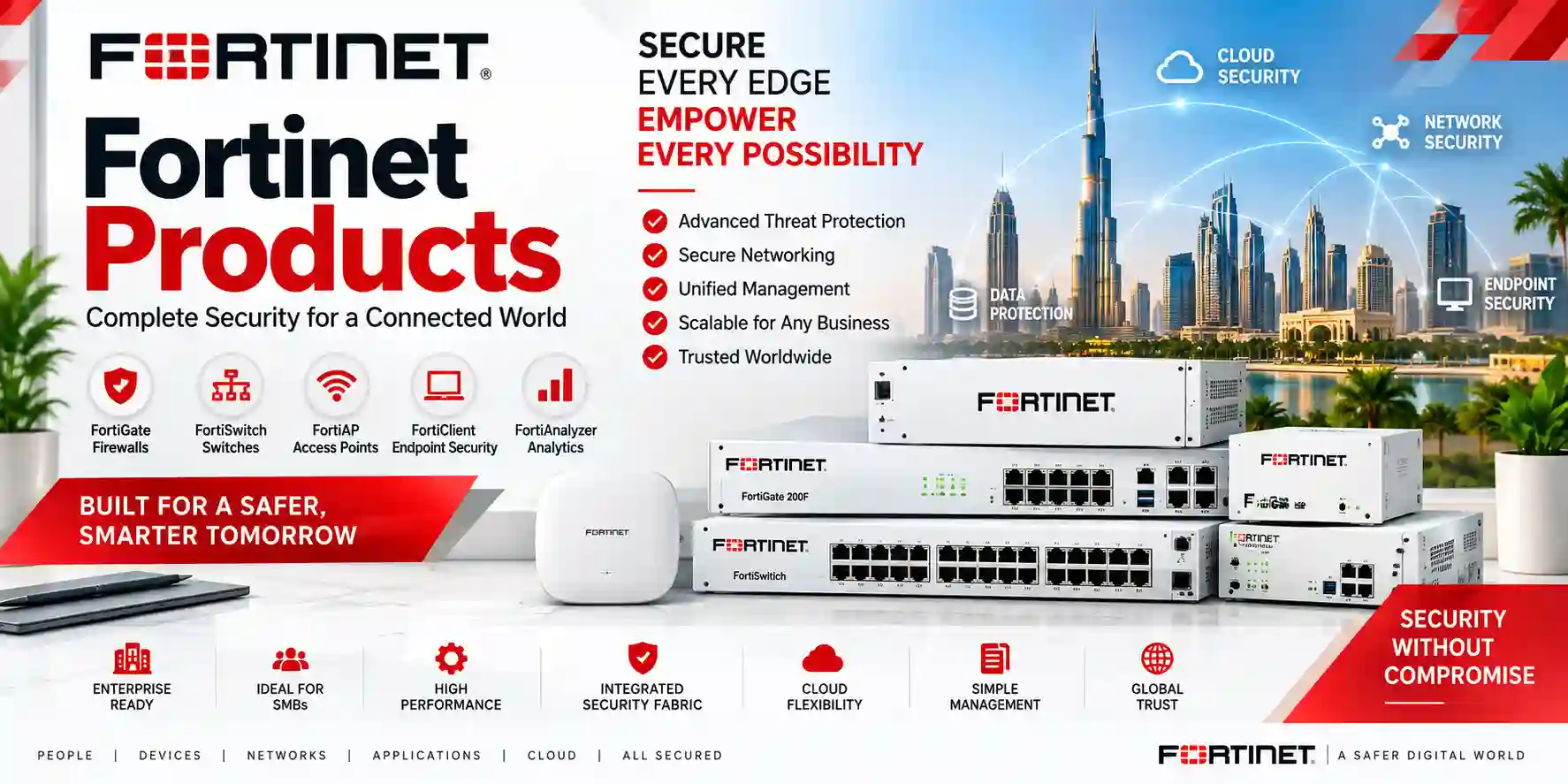
What FortiAnalyzer does
FortiAnalyzer collects and organizes logs and telemetry from Fortinet products and supported third-party systems, then makes that information available for analysis, reporting, correlation and investigation. Fortinet describes the platform as a unified security data lake with built-in analytics, native threat intelligence, automation and security-operations capabilities. Current FortiAnalyzer positioning also includes integrated SIEM, SOAR and XDR functions, with FortiAI-assisted workflows available according to the installed software, service entitlements and licensing.
In practical terms, FortiAnalyzer can help a security team answer questions such as: Which FortiGate is generating repeated critical events? Which user or host appears across several suspicious indicators? Are branch firewalls logging consistently? What happened before and after an incident? Which reports should be scheduled for management or audit teams? How long must searchable analytics data remain online, and when can older records move into archive retention? These questions make FortiAnalyzer a security-operations platform rather than merely a storage destination.
FortiAnalyzer capabilities for security and network teams
Unified log visibility
Centralize logs, incidents, configurations and alerts from Fortinet Security Fabric components and supported external sources so analysts work from a more consistent evidence base.
Threat analytics and correlation
Use correlation, anomaly detection, threat intelligence and risk-based prioritization to connect events that may be difficult to interpret when devices are reviewed separately.
Reporting and retention
Create operational and security reports while applying data-retention policies that distinguish searchable analytics data from compressed archive records.
SOC automation
Use event handlers, playbooks, connectors, APIs and automation content to reduce repetitive analyst work and create more consistent response processes.
Multi-site administration
Administrative Domains can separate device groups, business units, customers or environments while keeping centralized visibility appropriate for multi-site or service-provider designs.
Flexible deployment
FortiAnalyzer is available in physical appliance, virtual-machine and cloud-delivered forms. The right option depends on control, scale, storage, availability and operational preferences.
How FortiAnalyzer handles security data
FortiAnalyzer separates the log lifecycle into searchable analytics data and compressed archive retention. New logs are received, stored and indexed so they can be used in FortiView, incident workflows, event views and reports. When data ages according to the configured policy, it can be removed from the analytics database while remaining compressed in archive storage until the retention period expires. Archived logs can be re-imported when deeper historical investigation is required. This distinction is important when sizing storage because a business may need a shorter period of instantly searchable analytics data but a much longer period of retained evidence.
FortiAnalyzer can also operate in Analyzer and Collector roles. Analyzer mode provides the main analytics and security-operations functions. Collector mode is designed to receive logs and forward them toward an Analyzer, which can be useful in larger distributed architectures where organizations want local log buffering, tiered retention or scalable ingestion. A multi-site design should consider WAN reliability, daily log volume, acceptable buffering time, branch criticality and how quickly analysts need to search data generated at remote locations.
A procurement request should therefore include more than device count. Estimate logs per day, identify required retention, list source types, define how many administrators or SOC analysts will use the system, state whether multi-tenancy or ADOM separation is needed, and describe any high-availability or disaster-recovery objectives. These inputs have a direct impact on architecture, storage and licensing.
FortiAnalyzer deployment choices
| Option | Best considered when | Planning points |
|---|---|---|
| Physical appliance | The organization wants dedicated hardware and predictable platform resources. | Rack, power, storage capacity, redundancy, retention and lifecycle support. |
| Virtual machine | The business already operates suitable virtualization or private-cloud infrastructure. | CPU, memory, storage performance, hypervisor compatibility, VM licensing and future scale. |
| Public-cloud VM | Security analytics must align with public-cloud infrastructure or distributed operations. | Cloud compute cost, storage cost, licensing method, region, log transport and availability design. |
| FortiAnalyzer Cloud / SaaS | The buyer prefers a cloud-delivered service and wants to reduce local platform management. | Entitlement model, supported log sources, storage allowance, retention, internet dependency and service scope. |
Buying guidance: size for logs, retention and workflows
FortiAnalyzer sizing should begin with the amount of security data the environment generates. Daily log volume is more meaningful than simply counting firewalls because two organizations with the same number of FortiGate devices can produce very different volumes depending on user activity, enabled security profiles, interface traffic, VPN use, web filtering, application control, DNS security and the verbosity of event logging. Third-party syslog and API-fed sources can add further load.
Retention is the second major factor. Separate the number of days that analysts need fast, indexed access from the number of days records must remain stored for operational, legal or compliance reasons. Longer analytics retention requires more database capacity, while long archive retention increases overall storage. Organizations should also decide whether old logs need to be searchable immediately or whether re-importing archived data for occasional investigations is acceptable.
Finally, define the workflow. A reporting-only deployment has different priorities from an active SOC that uses correlation, incident queues, automation playbooks, FortiAI assistance and third-party connectors every day. When requesting a FourTeck quotation, include the expected security-operations use case so the commercial offer can reflect the required capability and service entitlements rather than a generic license description.
Related FourTeck Tanzania resources
FortiAnalyzer works best when it is designed as part of the wider network and security environment. Start with the FourTeck Tanzania technology overview to understand how firewall, switching, Wi-Fi, servers and security systems are planned together. The Tanzania IT and security services page explains the broader design, deployment and support approach, while the Tanzania technology shop provides buying guidance across core business categories.
Organizations building a Fortinet Security Fabric can also review the FortiGate 30G Tanzania product page for an example of a FortiGate edge firewall that can feed security logs into a broader Fortinet analytics architecture. The current Tanzania product archive shows available listed products, and the Grandstream GXP1625 Tanzania page illustrates how voice endpoints become part of the same branch network whose traffic, segmentation and security events may ultimately be monitored through Fortinet infrastructure.
For background on FourTeck’s integrated approach, see About FourTeck Tanzania. When your log volume, retention target and deployment preference are clear, use the verified FourTeck Tanzania contact page to request a commercial proposal.
Quotation checklist for FortiAnalyzer
FortiAnalyzer Security Analytics and Log Management Tanzania
FortiAnalyzer Security Analytics and Log Management Tanzania is relevant to banks, professional services firms, telecom-related businesses, hospitality groups, education organizations, healthcare providers, NGOs, retail chains, industrial operators, technology companies and public-sector environments that already depend on Fortinet security or need centralized visibility across distributed networks. The platform can consolidate logs from FortiGate, FortiMail, FortiClient, FortiWeb, FortiManager, FortiSandbox and other supported products, while also accepting supported third-party information through methods such as syslog, APIs and connectors. This gives security teams a central place to investigate patterns that are difficult to identify when each device is reviewed independently.
For Tanzanian organizations, architecture should be based on how the business actually operates. A company with one headquarters firewall and modest retention has a very different requirement from a group with branches in Dar es Salaam, Mwanza, Arusha and Dodoma. Multi-site deployments may need a consistent naming standard, ADOM strategy, device authorization process, log-forwarding design and central reporting model. Branch connectivity also matters. If remote sites have variable WAN quality, the design should consider how logs are buffered, what happens during connectivity interruptions and whether Collector roles or distributed architecture are appropriate.
Procurement teams should define retention before asking for price. Many buyers initially request “one year of logs” without separating searchable analytics from compressed archive storage. That can produce either an unnecessarily expensive design or insufficient capacity. A clearer requirement states how many days analysts need instant search and reporting, how many additional days must remain archived, whether historical logs may be re-imported when needed and what daily data volume is expected. If actual measurements are unavailable, existing FortiGate or SIEM statistics can be used to build a planning estimate that should later be validated.
FourTeck can help Tanzania buyers structure the bill of materials around deployment mode, log volume, storage, analytics functions, security automation, FortiCare and any required service subscriptions. The aim is to quote a platform that matches the operational need rather than simply selecting the smallest or largest appliance. Organizations can also coordinate FortiAnalyzer with firewall architecture, WAN design, switching, Wi-Fi and server infrastructure through the wider FourTeck Tanzania portfolio. A well-planned deployment provides stronger evidence for investigations, more consistent reports, clearer threat visibility and a foundation that can scale as additional branches and Fortinet devices are added.
FortiAnalyzer Security Analytics and Log Management Dar es Salaam
FortiAnalyzer Security Analytics and Log Management Dar es Salaam is particularly useful for organizations whose headquarters, data center, large branch or primary operations team is located in the country’s busiest commercial environment. A Dar es Salaam network can contain several internet circuits, FortiGate firewalls, VPN connections, cloud applications, branch tunnels, Wi-Fi systems, business servers and user endpoints. Each security device produces events, but individual device dashboards do not always show how activity is connected. FortiAnalyzer creates a centralized analytical layer where teams can compare events, identify recurring indicators and report on security activity across the wider environment.
Headquarters environments often need stronger role separation than smaller branches. Network administrators may require operational reports while SOC analysts need incident queues and threat investigation tools, and auditors may require scheduled reports without full administrative access. Role-based administration and ADOM planning should therefore be discussed before deployment. If the organization supports several business units or subsidiaries, segmentation of administrative visibility can reduce unnecessary access while preserving centralized oversight. This is also relevant for managed service providers that need structured separation between customer environments.
Dar es Salaam buyers should also decide where FortiAnalyzer will run. A physical appliance may suit an organization with a controlled data-center rack and clear hardware lifecycle processes. A VM may be preferred where virtualization is already standardized. Public-cloud deployment can align with cloud-first operations, while FortiAnalyzer Cloud may reduce local infrastructure responsibilities where the entitlement model fits the FortiGate estate. Each option has different implications for storage, compute, internet dependency, support and operational ownership, so price comparisons should use the same architecture assumptions.
When requesting a quote, include the number of FortiGate and other Fortinet devices, expected GB/day, retention period, compliance reporting needs, third-party sources and whether advanced automation or FortiAI-assisted operations are required. If the Dar es Salaam site is also the collection point for branches, identify every remote location and the expected WAN behavior. FourTeck can then align FortiAnalyzer planning with the broader Tanzania network and cybersecurity services so the analytics platform is integrated with the security architecture rather than deployed as an isolated reporting server.
FortiAnalyzer Security Analytics and Log Management Mwanza
FortiAnalyzer Security Analytics and Log Management Mwanza can support regional offices, logistics operations, healthcare environments, education institutions, hospitality businesses, trading companies and branches that need centralized security visibility even when local IT resources are limited. The advantage of FortiAnalyzer is that the branch does not need to depend only on manual firewall checks. Security events can be forwarded to a central analytics platform where administrators compare activity across locations, investigate recurring threats and identify whether an event is unique to Mwanza or part of a pattern also appearing elsewhere in the organization.
For a Mwanza site, WAN planning is important because security logging relies on connectivity to the selected FortiAnalyzer destination. If the platform is hosted centrally in Dar es Salaam, in a private cloud or in a public-cloud environment, the project should confirm how logs traverse the network, how much bandwidth they consume and what happens if the site loses its primary link. FortiAnalyzer Collector architecture can be considered for larger distributed environments where buffering or tiered log handling is required, but the additional components should be justified by log volume and operational need rather than added automatically.
Retention should reflect the branch’s risk and business requirements. A small branch may not need months of instantly searchable analytics data, but it may still require longer archived records for audit or investigation. That distinction can reduce storage pressure without sacrificing the ability to preserve historical evidence. Security teams should also define which events deserve immediate attention. Authentication failures, malware events, IPS detections, VPN changes, administrator actions and repeated policy violations may need different alert priorities than routine traffic events.
A useful Mwanza quotation should therefore describe branch role, FortiGate model, internet link, expected daily logs, central-office connectivity, retention targets and reporting requirements. If several regional branches will be managed together, standardize device names, time synchronization, log settings and administrative access so analysts can compare sites consistently. FourTeck can help coordinate the analytics requirement with firewall, switching and WAN design, ensuring that FortiAnalyzer receives the data needed for meaningful reporting while avoiding unnecessary log noise that consumes storage without improving security decisions.
FortiAnalyzer Security Analytics and Log Management Arusha
FortiAnalyzer Security Analytics and Log Management Arusha is well suited to organizations where business networks combine staff devices, guest access, hospitality systems, payment-related traffic, IP cameras, remote workers, branch VPNs and cloud services. Tourism and hospitality environments can be especially diverse because guest connectivity and internal operations share infrastructure but should not share the same trust level. FortiGate can enforce segmentation, while FortiAnalyzer provides the historical and analytical view needed to understand how those policies are being used and whether suspicious behavior crosses expected boundaries.
Arusha organizations should decide what questions their reports must answer. Management may want a periodic summary of detected threats and bandwidth usage. IT teams may need device-health and VPN reports. Security staff may need detailed incident timelines and indicators of compromise. Compliance teams may require evidence that logs are retained and administrative activity is traceable. Designing reports around these audiences produces more value than simply enabling every available template. It also helps the project determine how long data must remain indexed for quick access.
If the organization has several hospitality properties, offices or service locations, ADOMs and standardized policies can create a more orderly multi-site environment. Each site should follow common logging settings, NTP configuration, naming conventions and device authorization procedures. Consistency is important during an incident because analysts need to know that an event timestamp from one branch can be compared reliably with events from another. Poor time synchronization or inconsistent log settings can make incident reconstruction unnecessarily difficult.
When requesting FortiAnalyzer pricing for Arusha, provide Fortinet device counts, anticipated growth, estimated GB/day, analytics retention, archive retention and whether third-party sources must be included. State whether the requirement is appliance, virtual machine or cloud-delivered service, and identify any need for high availability. FourTeck can then review the FortiAnalyzer requirement alongside firewall and network architecture, helping the organization avoid a common mistake: purchasing adequate storage but leaving reporting, automation and event priorities undefined until after deployment.
FortiAnalyzer Security Analytics and Log Management Dodoma
FortiAnalyzer Security Analytics and Log Management Dodoma can help government-related organizations, NGOs, education institutions, professional offices, project teams and distributed enterprises establish a more structured security-monitoring process. These environments may have formal reporting needs, restricted administrator roles or audit requirements that make centralized logs more valuable than device-by-device review. FortiAnalyzer can collect events into a consistent platform, create scheduled reports and provide historical context when teams need to investigate an unusual login, policy change, malware alert or VPN incident.
A Dodoma deployment should begin with data ownership and retention. Identify which business or regulatory policies define how long security records must be kept. Then separate the requirement into fast analytics retention and longer archive storage. Some organizations need immediate search across several months; others only need recent data indexed while older records are preserved for occasional retrieval. The choice affects storage and performance, so it should be documented before the platform is ordered.
Administrative design is equally important. FortiAnalyzer can support multiple administrators and structured domains, but the organization should define who may add devices, change retention settings, create automation, view sensitive logs and export reports. A strong design avoids shared administrator accounts and makes operational ownership clear. If FortiAnalyzer is integrated with other Fortinet products, version compatibility and product-support matrices should be checked before deployment, particularly during major firmware upgrades.
For quotation preparation, Dodoma buyers should state whether FortiAnalyzer will serve only one site or receive logs from branches in other cities. Include estimated data volume, reporting needs, FortiCare expectations, third-party integrations and required deployment assistance. If the organization wants automated response playbooks or SIEM/SOAR functions, describe those use cases so the quote can account for appropriate licensing and implementation effort. A careful scope creates a platform that supports investigation and governance instead of becoming an expensive log repository that few people use.
FortiAnalyzer Security Analytics and Log Management UAE
FortiAnalyzer Security Analytics and Log Management UAE is relevant to organizations that operate high-bandwidth offices, multi-branch FortiGate environments, cloud workloads and formal cybersecurity operations across Dubai, Abu Dhabi, Sharjah and other Emirates. A UAE deployment may generate large volumes of security telemetry because of high-speed internet circuits, encrypted application traffic, branch VPNs and extensive use of cloud services. FortiAnalyzer sizing should therefore be based on measured log volume and retention rather than simply on the number of firewalls.
For companies that also operate in Tanzania, a common Fortinet analytics architecture can simplify cross-country monitoring. Device naming, ADOM structure, report templates, time synchronization and administrator roles can follow shared standards even when each country uses different internet providers and firewall models. The organization should also decide whether logs remain within each country or are centralized in one regional platform. That decision may depend on internal policy, regulatory obligations, latency, bandwidth and operational ownership, so it should be resolved during design rather than after devices begin forwarding data.
FortiAnalyzer is available as an appliance, VM and cloud-delivered option, which gives UAE buyers flexibility to align with data-center or cloud strategies. Public-cloud deployment requires attention to compute, storage and egress costs in addition to FortiAnalyzer licensing. FortiAnalyzer Cloud can reduce local infrastructure management but uses a specific entitlement model that should be checked against the FortiGate estate. Physical appliances may remain attractive where dedicated hardware and local control are important.
FourTeck maintains a dedicated Fortinet UAE resource covering FortiGate, FortiAnalyzer, FortiManager and related Fortinet solutions. For a combined UAE and Tanzania requirement, share the number of devices in each country, estimated logs per day, preferred data location, retention policy, SOC workflow and reporting expectations. This enables the project to be scoped as a regional security-operations architecture rather than separate appliances that later require manual consolidation.
FortiAnalyzer Security Analytics and Log Management Uganda
FortiAnalyzer Security Analytics and Log Management Uganda can help organizations with head offices, branches, retail sites, institutions and service locations centralize the evidence generated by their Fortinet security devices. A distributed company may have FortiGate firewalls in Kampala and regional locations, each with different WAN links and user populations. Without centralized analytics, administrators can spend significant time connecting to individual devices and may miss patterns that only become obvious when events from several sites are correlated.
The architecture should consider how branch logs reach the Analyzer. A central Uganda deployment, a regional Tanzania platform, a public-cloud VM or a cloud-delivered FortiAnalyzer service can all be valid depending on policy and operational needs. For remote sites with less predictable links, determine whether local buffering is sufficient and whether a Collector role is justified. The goal is not to complicate the environment but to prevent temporary WAN interruptions from creating avoidable gaps in visibility.
Uganda buyers should also plan how reports will be used. A security team may need incident and threat reports, while operations teams need VPN availability, web usage or device status. Senior management may only need concise risk summaries. Building a report catalogue before go-live prevents FortiAnalyzer from producing a large number of generic reports that are never reviewed. The same planning applies to alerts and automation: identify a small set of high-value events and response workflows first, then expand after the team understands normal network behavior.
For organizations operating in both Uganda and Tanzania, FourTeck’s Uganda IT solutions site can support regional coordination while the Tanzania site remains the reference for the local project. Include branch count, expected log data, device models, retention periods, user roles and licensing preferences in the quotation request. Standardized configuration across countries can make investigations and reporting more consistent without assuming that every branch must use identical hardware.
FortiAnalyzer Security Analytics and Log Management Kampala
FortiAnalyzer Security Analytics and Log Management Kampala is a strong fit for corporate headquarters, financial-services environments, technology firms, NGOs, healthcare organizations, education institutions and multi-branch operations that require a centralized view of firewall and security events. Kampala sites often act as the network hub for regional branches, which means the Analyzer may receive traffic and log data from several FortiGate devices over site-to-site VPN or managed WAN connectivity. The central architecture should be sized for peak log ingestion as well as average daily retention.
A head-office deployment should establish clear operational ownership. Network engineers may manage FortiGate policy, while a security team reviews incidents in FortiAnalyzer. FortiManager may be used for centralized configuration, and FortiAnalyzer for logs, analytics and incident workflows. These tools complement each other, but responsibilities should be documented so staff know where configuration changes occur and where investigation records are maintained. Integration does not remove the need for governance.
Kampala organizations with formal audit requirements should define which reports must be retained, who may export them and how long security logs remain searchable. If external auditors or internal risk teams need evidence periodically, scheduled reports can reduce manual preparation. However, the business should verify that every required field is actually present in the logs being collected. A report cannot reconstruct detail that source devices were never configured to send.
When requesting FortiAnalyzer pricing for Kampala, provide the quantity of FortiGate, FortiMail, FortiWeb, FortiClient or other relevant sources, estimated GB/day, required analytics retention, archive period, anticipated growth and whether third-party syslog data must be ingested. Describe any automation requirement, including whether playbooks should trigger notifications, create tickets or interact with supported connectors. A clear use-case list allows the implementation team to prioritize the functions that provide practical value instead of treating every FortiAnalyzer feature as equally important on day one.
FortiAnalyzer Security Analytics and Log Management Arua
FortiAnalyzer Security Analytics and Log Management Arua can be valuable for regional branches that need central security oversight without requiring a full local SOC. In a remote branch, the key objective is usually consistent visibility. The firewall should send logs according to a common standard, the branch clock must remain synchronized, administrator access should be controlled and configuration changes should be traceable. FortiAnalyzer allows a central team to review these events alongside data from other sites, which reduces dependence on local manual checks.
Connectivity design deserves special attention. If the Arua branch reaches FortiAnalyzer over an internet VPN, MPLS, SD-WAN or another WAN service, the project should document what happens when that path is unavailable. Depending on the architecture, the source device or Collector can buffer logs for later forwarding, but capacity and recovery behavior should be validated. The organization should also prioritize which log categories are essential. Excessive debug or low-value event logging can consume bandwidth and storage without improving threat detection.
Regional branches often benefit from standardized dashboards and alerts. A central team might track critical IPS events, malware detections, repeated failed VPN logins, administrator changes and connectivity failures across all branches. The same dashboard can reveal whether an issue is local to Arua or appears in multiple locations. This reduces investigation time and helps the central team decide when a pattern deserves escalation.
An Arua quotation should include the local FortiGate model, WAN type, central Analyzer location, expected log volume, retention requirement and any need for remote deployment assistance. If the site has limited on-site technical staff, define who will authorize the firewall, verify log reception, confirm time synchronization and test branch connectivity. FourTeck can help structure the work so the analytics service becomes part of the standard branch build, giving regional offices consistent visibility without requiring each location to maintain its own analytics appliance.
FortiAnalyzer Security Analytics and Log Management Mbarara
FortiAnalyzer Security Analytics and Log Management Mbarara can help growing branches move from reactive firewall administration to more organized security monitoring. A branch may begin with one FortiGate, a few VLANs and a site-to-site VPN, but over time it can add guest Wi-Fi, cameras, servers, cloud applications and more users. That growth increases the number of events generated and makes it more difficult to understand incidents by reviewing only the local firewall dashboard. Central analytics preserves historical context as the branch becomes more complex.
For Mbarara, a common design is to send logs to a central FortiAnalyzer managed by the organization’s headquarters or regional IT team. The branch should follow the same logging profile, time synchronization and naming standards as other locations. Consistency is more important than making every branch identical. A small branch may generate less data and need fewer local resources, but the logs should still use the same event definitions and administrative processes so central dashboards remain meaningful.
Storage planning should include future growth. If a branch expects faster internet, more users or additional Fortinet products, its log volume will increase. Procurement teams should avoid sizing the central platform with no headroom. At the same time, they should avoid paying for large unused capacity based on vague assumptions. Historical measurements from existing firewalls provide the best starting point, followed by a growth allowance based on actual expansion plans.
A practical FortiAnalyzer request for Mbarara should state whether the goal is reporting, incident investigation, SOC automation or a mixture. It should list critical reports, retention expectations, branch count and the administrators who will use the system. If playbooks or third-party integrations are required, identify them early because they may affect licensing and implementation effort. With this information, FourTeck can help create a more complete proposal that includes the analytics platform, support terms and deployment services needed to make the branch visible to the wider security team.
FortiAnalyzer Security Analytics and Log Management Gulu
FortiAnalyzer Security Analytics and Log Management Gulu can support institutions, logistics operations, NGOs, regional offices, healthcare organizations and commercial branches that want centralized security visibility without placing complex analytics infrastructure at every site. The local FortiGate and other supported Fortinet devices can generate the raw evidence, while a central FortiAnalyzer provides search, correlation, reports and incident workflows. This model allows the branch to remain operationally simple while still contributing to an enterprise-wide security view.
Remote branches should pay attention to the quality and availability of the WAN path used for log forwarding. If the link is intermittent, the design should confirm how much data can be buffered and how quickly missed logs are forwarded once connectivity returns. The team should also ensure that a backup WAN or SD-WAN change does not inadvertently block the log destination. Security logging is easy to overlook during failover testing because users may regain internet access while monitoring traffic remains broken.
Operationally, Gulu sites benefit from central alerting rather than local alert fatigue. The branch does not need to receive every event. Instead, the central security team can define critical thresholds, suppress known low-value noise and create a consistent escalation process. FortiAnalyzer’s analytics and automation functions can support this approach, especially where analysts need to compare the same detection across multiple sites or enrich an incident with threat intelligence.
When preparing a quotation, list the branch FortiGate, expected daily traffic, major security services, VPN relationship to headquarters, log-retention target and whether the branch must retain any local copy. If the overall organization includes Tanzania and Uganda, use common device naming and report categories so analysts can compare data across countries. The design should remain flexible enough to add future sites without rebuilding the entire logging architecture. Capacity planning, standardized configuration and clear support ownership are more valuable than simply purchasing a large storage appliance.
FortiAnalyzer Security Analytics and Log Management Kenya
FortiAnalyzer Security Analytics and Log Management Kenya is relevant to organizations with FortiGate-based branch networks, enterprise security operations, cloud-connected offices and compliance requirements. Nairobi headquarters and regional branches may generate significant logs from firewall policy, VPN traffic, threat inspection, user authentication and applications. Centralizing this information helps analysts compare events across sites and reduces the time spent switching between individual firewall dashboards.
For companies that operate in both Kenya and Tanzania, FortiAnalyzer can become a shared analytics layer when data-location policy, connectivity and governance permit it. A regional architecture should define how devices are grouped, which administrators can view each country’s data and how reports are segmented. Administrative Domains can help create separation, but the design should be documented in advance so the platform does not become a confusing mixture of customers, business units and sites.
Kenya deployments should also consider integration with FortiManager when both centralized configuration and centralized analytics are required. FortiManager is primarily concerned with policy and device administration, while FortiAnalyzer focuses on logs, reporting, incidents and security analytics. Organizations often benefit from both, but they should avoid assuming one product replaces the operational role of the other. Licensing and version compatibility should be checked against the exact Fortinet environment.
FourTeck’s Kenya IT solutions site provides a regional point of reference for organizations coordinating East African technology projects. For FortiAnalyzer sizing, share estimated GB/day, retention, number of FortiGate devices, third-party sources, required reports and whether advanced automation is needed. The result should be a transparent bill of materials covering platform, support, storage and services, allowing procurement teams to compare offers on the same assumptions rather than comparing only headline product prices.
FortiAnalyzer Security Analytics and Log Management Kuwait
FortiAnalyzer Security Analytics and Log Management Kuwait can support organizations that need structured logging and threat visibility across corporate offices, branches, data-center services and cloud workloads. High-speed internet and extensive use of SaaS applications can create large volumes of security events, so platform selection should be based on actual log generation and retention rather than on user count alone. A relatively small office can still produce substantial logs if advanced inspection, VPN, DNS security and application control are enabled across most traffic.
Kuwait buyers should define whether the priority is operational reporting, audit evidence, SOC investigation, automation or all of these. The answer influences which FortiAnalyzer capabilities are most important and which service subscriptions may be required. For example, an organization that only needs scheduled reports may not require the same workflow design as a SOC that expects alert correlation, playbooks and FortiAI-assisted investigation. Clear use cases prevent the project from being oversized in one area and underspecified in another.
If FortiAnalyzer is deployed as a VM or in a public cloud, compute and storage resources must be planned alongside the software license. Public-cloud costs are separate from Fortinet licensing and should be included in the total cost comparison. If the organization chooses a physical appliance, rack space, power, redundancy and lifecycle support become more important. FortiAnalyzer Cloud may suit businesses that prefer service delivery, but entitlement, supported sources and storage allowances must be confirmed against the exact environment.
FourTeck’s Kuwait technology site can support organizations coordinating requirements across Kuwait and Tanzania. A regional request should identify data-location expectations, how branches connect, required retention and which team owns daily monitoring. Standard report templates, ADOM naming and log policies can be reused across countries while still respecting different local network designs. This creates a consistent operating model without forcing every site into the same hardware specification.
FortiAnalyzer Security Analytics and Log Management Ghana
FortiAnalyzer Security Analytics and Log Management Ghana is suitable for organizations that want a centralized security record across FortiGate firewalls, remote-access services, cloud connectivity and other Fortinet Security Fabric components. Multi-branch companies can use FortiAnalyzer to move from separate device logs toward a shared analytical view, while security teams can apply consistent reports and incident processes across offices. This is especially useful when headquarters needs to supervise smaller locations without requiring a dedicated security analyst at every branch.
A Ghana deployment should start by measuring or estimating daily log volume. Firewalls with extensive web filtering, application control and intrusion prevention can produce more records than simple edge gateways. Third-party syslog sources, endpoint telemetry and other integrations add further data. Retention decisions then determine storage: recent events can remain indexed for fast analytics, while older records can move into archive storage according to policy. Defining both numbers produces a much clearer sizing request than stating only that “long-term logs” are required.
Organizations should also document how incidents are handled. Who reviews alerts? Which events create a ticket? Who is allowed to run a playbook or block an indicator? How are false positives closed? How is evidence exported for management or audit? FortiAnalyzer provides tools that can support these workflows, but successful implementation depends on ownership and operating procedures as much as on software features.
For businesses coordinating Ghana with Tanzania or other African operations, consistent ADOM naming, report categories and administrative roles can simplify support. FourTeck can help scope FortiAnalyzer together with the wider FourTeck Africa technology portfolio. Include device counts, data volume, branch list, retention, automation objectives and preferred deployment model in the request. This enables a proposal that reflects real operational requirements rather than assuming the same design is appropriate for every country or every FortiGate estate.
FortiAnalyzer Security Analytics and Log Management Nigeria
FortiAnalyzer Security Analytics and Log Management Nigeria can support large distributed organizations, financial services, logistics groups, manufacturing environments, technology providers, education networks and multi-location enterprises that need security analytics across a broad Fortinet estate. In a country where one organization may operate several offices and WAN technologies, centralized logs help the security team maintain a consistent evidence trail even when branches use different connectivity providers and local network designs.
Scale planning is especially important for organizations with many FortiGate devices. Log volume grows with traffic, security services and reporting detail, so architecture should be based on daily ingestion rather than simply the number of branches. Large environments may use Analyzer and Collector roles to distribute log reception and buffering while centralizing analytics. Such designs should be justified by measured data rates, WAN topology, resilience objectives and the geographic distribution of security operations.
Security teams should also decide how much automation to enable. FortiAnalyzer supports playbooks, connectors and automated response functions, but every automated action should have a defined trigger, owner and rollback process. Beginning with alert enrichment and ticket creation may be appropriate before moving to more disruptive response steps. FortiAI-assisted workflows can improve analyst productivity where the appropriate service is licensed, but organizations should still maintain human review and documented procedures for important decisions.
A Nigeria procurement request should specify appliance, VM or cloud preference, estimated GB/day, analytics retention, archive retention, number of ADOMs, high-availability requirements and FortiCare expectations. Include the list of third-party sources and any need for regulatory reports. If the same company operates in Tanzania, align naming conventions and incident categories so regional teams can compare events consistently. A shared design standard can reduce support complexity even when each country’s platform is sized independently.
FortiAnalyzer Security Analytics and Log Management Seychelles
FortiAnalyzer Security Analytics and Log Management Seychelles can help hospitality groups, financial organizations, professional services, government-related institutions and distributed island operations centralize security visibility across Fortinet firewalls and connected infrastructure. Remote or island locations often have limited local IT teams, so centralized logging provides a practical way for a regional security team to monitor events without requiring an analyst at each site. FortiAnalyzer can preserve historical context, schedule reports and help investigators trace activity across several devices.
Connectivity reliability is a key design factor. A site may depend on one primary internet path and a secondary service for resilience. If security logs are forwarded to a FortiAnalyzer hosted outside the local site, failover testing should confirm that the log destination remains reachable after WAN changes. It is possible for user internet access to recover while management and logging routes remain broken. Monitoring should therefore include the health of the logging pipeline itself, not only the branch firewall’s external connectivity.
Seychelles organizations should also consider data-retention needs carefully. Hospitality and regulated sectors may have internal policies requiring records for extended periods, but keeping all data indexed for the full duration can be inefficient. FortiAnalyzer’s separation between searchable analytics and archived logs allows a tiered approach where recent data remains immediately available and older records are preserved in compressed form. The retention policy should be agreed with security, audit and legal stakeholders before storage is purchased.
For quotation purposes, provide the number of sites and Fortinet devices, estimated daily logs, internet topology, central SOC location, retention periods and required reports. If the platform will be administered from Tanzania, the UAE or another regional office, define access roles and support responsibilities. A well-planned FortiAnalyzer deployment gives geographically distributed organizations a common security record, reduces manual device-by-device reporting and makes future branch expansion easier because each new FortiGate can be added to an established monitoring framework.
FortiAnalyzer FAQ
What is FortiAnalyzer used for?
FortiAnalyzer is used to centralize security logs and telemetry, create reports, investigate events, correlate threats and support automated security operations across Fortinet Security Fabric environments and supported third-party sources.
Is FortiAnalyzer only a log server?
No. Log storage is a core function, but current FortiAnalyzer capabilities also include security analytics, event correlation, SIEM, SOAR and XDR functions, automation playbooks, threat intelligence integration and FortiAI-assisted operations depending on software version and licensing.
What is the difference between FortiAnalyzer and FortiManager?
FortiManager is primarily used for centralized Fortinet device configuration and policy management, while FortiAnalyzer is primarily focused on logs, reporting, analytics, incidents and security operations. Many multi-site organizations use both products together.
Can FortiAnalyzer be deployed as a virtual machine?
Yes. FortiAnalyzer is available in physical-appliance and virtual-machine forms, including supported public-cloud deployments. FortiAnalyzer Cloud also provides a cloud-delivered option with its own entitlement model.
How should FortiAnalyzer be sized?
Sizing should consider sustained log ingestion or GB/day, analytics retention, archive retention, number and type of data sources, high availability, ADOM requirements, reporting load, SOC workflows and expected growth. Device count alone is not enough.
Can FortiAnalyzer receive third-party logs?
Fortinet documents support for third-party data ingestion through mechanisms such as syslog, APIs, alert-ingestion services and supported connectors. Exact parser and integration support should be confirmed for the products and FortiAnalyzer version in your environment.
What are Analytics and Archive logs?
Analytics logs are indexed and immediately available for searches, dashboards and reports. Archive logs are compressed for retention and are not immediately available to analytics until they are re-imported. Separating the two helps organizations balance fast search with long-term storage.
Does FortiAnalyzer support multi-tenancy?
Administrative Domains can separate device groups and administrative scope, which is useful for business units, distributed environments and managed-service use cases. The exact ADOM entitlement and scale should be checked against the selected license or appliance.
What information should I send for a FortiAnalyzer quote?
Send the number and type of Fortinet devices, estimated GB/day, retention targets, third-party log sources, preferred deployment model, ADOM needs, reporting requirements, availability objectives, automation use cases and preferred support term. These inputs help produce a more accurate bill of materials.
Decision recap
Choose FortiAnalyzer when the organization needs centralized Fortinet security logs, stronger historical visibility, scheduled reporting, threat investigation, incident correlation or security-operations automation. The correct deployment is determined by data volume and operating model, not by product name alone. Appliance, VM and cloud approaches can all be appropriate when they match the organization’s infrastructure, storage, resilience and governance requirements.
Before procurement, document the sources that will send logs, estimated GB/day, analytics retention, archive retention, branch list, administrator roles and reporting objectives. Then decide whether the project needs only centralized reporting or deeper SIEM/SOAR/XDR workflows. This creates a clearer commercial comparison and gives the implementation team a practical definition of success.
Plan your FortiAnalyzer deployment with FourTeck
FourTeck can help translate your Fortinet estate, log volume, retention policy, branch topology and security-operations goals into a structured FortiAnalyzer requirement. We can assist with solution sizing discussions, deployment-model selection, integration planning, quotation preparation and coordination with the wider firewall and network architecture.
For the most useful consultation, provide current FortiGate and Fortinet product models, estimated log volume, desired retention, number of locations, existing management tools, compliance or reporting needs and whether you prefer appliance, virtual machine or cloud delivery. Exact prices, availability, warranty, service coverage and delivery timing should be confirmed at quotation stage rather than assumed from a generic product description.