
Fortinet Security Operations • Tanzania
FortiSandbox Advanced Threat Protection
FortiSandbox Advanced Threat Protection is designed for organizations that need a deeper answer to a difficult security question: what should happen when a file, document, URL or payload does not match a known threat signature but still looks suspicious? FortiSandbox combines AI-powered pre-execution inspection, machine-learning analysis and controlled dynamic detonation to classify unknown content, expose evasive malware behavior and return threat intelligence that security teams and connected Fortinet products can use for faster prevention and response. For Tanzanian businesses evaluating advanced malware analysis, FortiSandbox can be considered as a dedicated appliance, virtual platform, hosted offering or SaaS option depending on security architecture, operational ownership, data-handling preferences and scale.
What is FortiSandbox Advanced Threat Protection?
FortiSandbox is Fortinet’s advanced sandboxing platform for discovering suspicious and previously unknown threats that can evade conventional signature-based defenses. Fortinet’s current FortiSandbox 5.2 documentation describes the platform as a zero-day malware behavior analysis system that integrates with products including FortiGate, FortiMail, FortiClient, FortiWeb, FortiADC and FortiProxy. The practical value is not simply that suspicious content is opened in an isolated environment. FortiSandbox uses multiple analysis stages so lower-risk files can be classified quickly while content requiring deeper scrutiny can be examined behaviorally. This layered approach is useful in environments where malware arrives through email attachments, web downloads, uploaded files, endpoints, network shares, public applications or other business workflows.
Fortinet positions FortiSandbox 5.2 around AI-driven static inspection, dynamic behavioral validation, expanded threat visibility and faster investigation. Current Fortinet material also describes a redesigned threat dashboard, richer threat-intelligence workflows, attack-chain visibility, automated indicator validation and support for additional analysis scenarios such as embedded URLs and multi-stage content. These capabilities matter most when they are connected to an operational process. A security team still needs to decide which traffic or files are submitted, where verdicts are consumed, how high-risk detections are escalated, whether automated blocking is appropriate and how retained analysis data fits internal policy. FourTeck therefore approaches FortiSandbox buying as an architecture and workflow decision rather than only a license or appliance order.
Unknown-threat analysis
Analyze files and suspicious objects that do not yet have a reliable known-malware signature, helping security teams reduce the blind spot between familiar malware and new or evasive variants.
AI plus behavior
Use machine-learning-driven inspection for rapid classification and dynamic execution when deeper behavioral evidence is required, instead of treating every submitted object in exactly the same way.
Fabric-connected response
Return verdicts and threat intelligence to supported Fortinet security controls so sandbox findings can contribute to prevention, investigation and coordinated response workflows.
Why organizations add sandboxing to an existing security stack
Traditional antivirus and reputation systems remain important because they can identify large volumes of known malicious content quickly. Their limitation is structural: a genuinely new file may not yet have a known signature or reputation score. Sophisticated attackers also use obfuscation, packed code, macros, scripts, multi-stage download chains and other techniques intended to hide malicious intent long enough to reach a user or workload. Sandboxing adds another layer by studying file structure and, when needed, observing behavior in a controlled environment. This is especially relevant to organizations that receive a large number of documents from customers, suppliers, job applicants, partners or public portals, because the security team cannot assume that every unknown attachment is safe simply because it is not yet flagged as known malware.
The strongest use case appears when sandbox verdicts are connected with other controls. A suspicious email attachment can be assessed before delivery, an unknown web download can be analyzed before the user accesses it, or endpoint and network systems can receive intelligence that helps them recognize subsequent occurrences. The objective is to shorten the interval in which an unknown threat remains unknown. For procurement teams, this means a FortiSandbox project should be evaluated together with the systems that will submit content and the systems that will consume the result. The correct question is not only “Which FortiSandbox model should we buy?” but also “Which threat flows do we need to inspect, where should verdicts be enforced, what response must happen, and who will operate the platform after deployment?”
FortiSandbox 5.2 capabilities that matter to security teams
AI-powered fast inspection
FortiSandbox applies pre-execution analysis to classify many files without waiting for full detonation. This helps reserve more resource-intensive behavioral scanning for content that needs deeper inspection.
Dynamic behavioral analysis
Suspicious files can be executed inside isolated analysis environments so the platform can observe process behavior, embedded actions, network activity and other indicators that are difficult to judge from file reputation alone.
Threat intelligence context
Current releases enrich suspicious-file reporting with FortiGuard threat intelligence and indicator validation, helping analysts move from a raw verdict toward a clearer investigation and response decision.
MITRE ATT&CK mapping
Threat behavior can be viewed through MITRE ATT&CK mappings, giving security teams a common framework for understanding observed tactics and techniques rather than relying only on a malware family name.
Multi-stage analysis
FortiSandbox 5.2 expands analysis for embedded and chained content, supporting investigations where the initial object is only the first step in a longer malicious delivery sequence.
Flexible deployment
Fortinet offers hardware, virtual, hosted and SaaS approaches. The best choice depends on inspection volume, data location, control requirements, available infrastructure and operational responsibility.
FortiSandbox deployment options: hardware, VM, hosted platform or SaaS
Deployment model has a direct effect on architecture, administration, procurement and data handling. Fortinet lists FortiSandbox as available through on-premises hardware, virtual appliances, hosted platform options and SaaS services. These are not interchangeable buying decisions. An on-premises appliance can appeal to organizations that want direct control over analysis infrastructure and local processing. A virtual appliance can suit organizations that already operate supported virtualization platforms and want deployment flexibility. Hosted or SaaS options can reduce the amount of local infrastructure that must be maintained, but customers should still review connectivity, service dependencies, data-handling requirements and subscription terms before purchase.
| Option | Common fit | Questions before quoting |
|---|---|---|
| Hardware appliance | Organizations wanting dedicated on-premises sandbox resources and direct infrastructure control. | Expected file volume, rack/power, interfaces, redundancy, VM capacity, support term and integration sources. |
| Virtual appliance | Data centers and private-cloud environments with suitable compute, storage and virtualization capacity. | Hypervisor or cloud platform, allocated resources, license structure, Windows/Universal VM needs and growth plan. |
| Hosted/PaaS | Teams that want dedicated hosted sandbox resources without maintaining a local appliance. | Service scope, report centralization, connectivity, regional policy and operational ownership. |
| SaaS | Distributed organizations seeking cloud-delivered sandbox analysis with minimal local infrastructure. | Supported integrations, subscription bundle, data policy, internet dependency and desired inline or detection workflow. |
Fortinet Security Fabric integration and connected threat workflows
FortiSandbox becomes more useful when it is designed as part of an end-to-end security workflow. Fortinet identifies integrations with FortiGate, FortiMail, FortiWeb, FortiClient, FortiEDR, FortiNDR, FortiProxy, FortiSIEM, FortiSOAR, FortiADC and other Security Fabric components. Each integration serves a different threat path. FortiGate can contribute network-edge and file-inspection use cases. FortiMail can submit suspicious email content. FortiWeb can help protect web applications where uploaded or delivered files require deeper inspection. Endpoint security products can contribute visibility closer to user devices. SIEM and SOAR platforms can help security operations teams correlate verdicts and automate response actions. The correct design depends on where your unknown-threat exposure is highest.
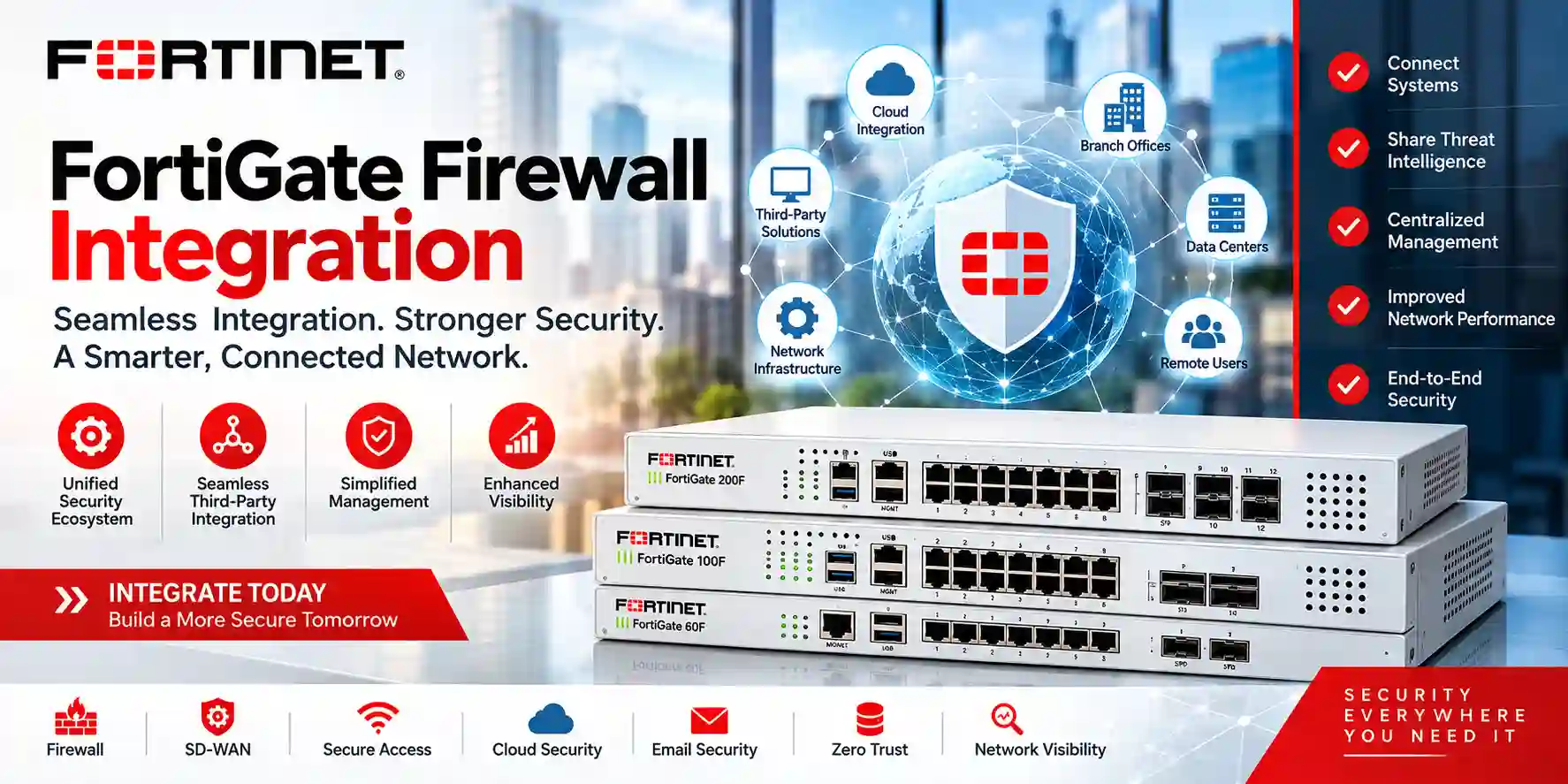
For buyers already using FortiGate, the existing firewall estate is a logical starting point for a FortiSandbox discussion. Inventory the firewall models, software versions, inspection profiles, active FortiGuard services, traffic paths and any existing cloud sandbox functions. Then identify the specific gap that deeper sandboxing is intended to address. A small office primarily concerned with common internet malware may have a different requirement from a bank, managed service provider, university, government environment or large enterprise handling high volumes of externally supplied documents. Tanzania customers can review an existing firewall option on the FortiGate 30G Tanzania product page as an example of how firewall procurement fits into a broader Fortinet security architecture; FortiSandbox selection itself should be matched to the actual enterprise threat-analysis requirement rather than to that firewall model alone.
Use cases for FortiSandbox Advanced Threat Protection
Secure email attachments
Organizations that receive invoices, tenders, CVs, contracts, shipping documents and customer files can use sandboxing to add behavioral analysis to suspicious attachments before users interact with them.
Protect web downloads
Unknown files downloaded from websites or shared services can be analyzed as part of a broader secure web and network protection workflow, reducing reliance on reputation alone.
Investigate endpoint detections
Security teams can use sandbox analysis to understand suspicious files that appear at endpoints, supporting better containment and triage decisions when the initial alert does not tell the full story.
Strengthen SOC workflows
Analysts can combine file verdicts, indicators, behavior information and ATT&CK mapping with other security telemetry, helping reduce time spent manually reconstructing what a suspicious object attempted to do.
Protect public applications
Organizations accepting user uploads through web portals can evaluate sandboxing alongside application security controls where untrusted documents or other objects enter business workflows.
Support IT and OT environments
Fortinet positions FortiSandbox for enterprise IT, operational technology and SOC use cases. OT deployments require particularly careful review of availability, integration and change-control requirements.
Sizing, licensing and procurement guidance
FortiSandbox procurement should begin with workload, not a model number. Estimate how many files and URLs may require analysis, where those objects originate, whether inspection is inline or asynchronous, what latency is acceptable, which operating systems and file types matter, how many integrated systems will submit content, and how much growth should be expected during the planned lifecycle. For virtual deployments, calculate compute and storage resources together with license requirements. Fortinet documentation indicates that VM solutions can use stackable licensing and that current FortiSandbox VM deployments can require a FortiSandbox VM unit license, FortiGuard subscription and Universal VM subscription depending on the chosen architecture. Because licensing changes with platform and version, buyers should confirm the exact current orderable items rather than copying a historical SKU from an old datasheet.
Hardware selection needs the same discipline. Fortinet currently documents models including FortiSandbox 500G, 1500G and 3000G alongside earlier platforms that may still appear in installed environments. Model status, appliance capacity, VM entitlement and support availability should be verified at quotation time. A replacement or expansion project should also identify whether existing licenses can be reused, whether new virtual-machine entitlements are required and how migration will affect integrations. Avoid basing a procurement decision on headline throughput without understanding the mix of static and dynamic analysis. A platform handling many easily classified files behaves differently from one receiving a high proportion of complex documents that require full behavioral detonation.
For a cleaner buying process, separate the quote into platform, licenses/subscriptions, support, implementation, optional integration work and any training or operational assistance. This makes renewal planning easier and reduces ambiguity over what is included. FourTeck Tanzania’s business technology shop guidance explains the same capacity-and-compatibility approach across security products, while the FourTeck Tanzania services page gives context for integration, deployment and lifecycle planning beyond a standalone product purchase.
What to verify before deployment
- Submission paths: document which FortiGate, FortiMail, endpoint, application, file-share, API or third-party sources will submit content and whether every source is supported by the selected FortiSandbox version.
- Network design: confirm management, analysis and integration interfaces, routing, DNS, NTP, proxy requirements, firewall rules and internet dependencies before installation.
- Data handling: decide whether samples may leave the organization, where reports are retained, which administrators can access them and whether a cloud, hosted or local model aligns with policy.
- Virtual environments: check the operating systems and VM images required for realistic behavioral analysis, plus the resources and licenses needed to maintain them.
- Response workflow: define who receives high-risk detections, how false positives are reviewed, what is blocked automatically, and when an analyst or incident-response team becomes involved.
- Monitoring and reporting: determine whether FortiSandbox will be used independently or integrated with FortiAnalyzer, FortiSIEM, FortiSOAR or other monitoring systems for centralized operations.
- Lifecycle: include firmware policy, subscription renewal, backup, high availability where required, capacity review and platform replacement in the operating plan.
FortiSandbox Advanced Threat Protection regional buying and deployment guidance
The following regional sections focus on real procurement and deployment questions rather than repeating the same location keywords. Availability, support entitlement, licensing, delivery method and implementation scope should always be confirmed for the specific project before purchase.
FortiSandbox Advanced Threat Protection Tanzania
Organizations evaluating FortiSandbox Advanced Threat Protection Tanzania typically have one of three drivers: they already operate Fortinet security products and want deeper analysis for unknown files; they are strengthening a security operations process and need more actionable evidence from suspicious content; or they are planning a broader cybersecurity refresh in which sandboxing must work with network, email, endpoint and application controls. For national deployments, the first task is to map where potentially dangerous files enter the business. That may include user email, public web portals, shared cloud storage, USB or endpoint activity, vendor downloads, customer submissions and branch traffic. Once those entry points are known, the project can determine which objects should be submitted to FortiSandbox and which enforcement point should act on the resulting verdict.
Tanzania environments can range from a single headquarters to distributed operations spanning offices, branches, campuses, hospitality sites, logistics facilities and regional service locations. A centralized FortiSandbox deployment may be attractive when several sites already route security events through a shared Fortinet architecture, but cloud or hosted options may reduce local infrastructure for organizations with smaller technical teams. The decision should account for internet reliability, data-handling policy, available virtualization resources, expected sample volume and the need for local control. Where inspection must remain available during an upstream connectivity interruption, that operational requirement should be discussed before choosing a cloud-dependent design. Where a SaaS model is preferred, network resilience and subscription continuity become part of the security architecture.
For procurement, Tanzania buyers should request the exact FortiSandbox platform or service, current license and support term, required VM or analysis entitlements, integration scope and implementation assumptions in writing. Do not accept a generic “FortiSandbox license” line if the actual deployment architecture is not defined. Organizations already using FortiGate should include firewall models, FortiOS versions and active security services in the quote request. Email-security users should identify FortiMail deployment details, and SOC teams should list existing logging or automation tools. FourTeck can help structure this discovery process so technical teams and procurement teams are evaluating the same scope before the order is approved.
FortiSandbox Advanced Threat Protection Dar es Salaam
FortiSandbox Advanced Threat Protection Dar es Salaam is particularly relevant to organizations that operate headquarters, shared services, customer-facing platforms, logistics systems, financial applications or regional IT operations from the city. These environments often receive a high mix of external content: vendor documents, customs or shipping paperwork, customer attachments, recruitment files, partner spreadsheets, software downloads and web uploads. The risk is not limited to obviously executable files. Modern attack chains can hide malicious instructions inside familiar business formats or use a seemingly harmless document to retrieve a second-stage payload. A sandbox project should therefore begin with the document and download workflows that matter most to the organization rather than applying the same inspection policy indiscriminately to every traffic path.
Dar es Salaam deployments may also be the natural aggregation point for branch traffic. If a business has remote sites elsewhere in Tanzania, centralizing advanced analysis can reduce the need to operate a separate sandbox at every location. The architecture still needs to consider WAN design, failover, bandwidth, latency and what happens if a branch temporarily loses connectivity to the central analysis service. A security team should decide whether suspicious content is blocked until a verdict is returned, allowed with later remediation, or handled differently according to risk category. Those are business decisions as much as technical ones because they affect user experience and operational continuity.
A Dar es Salaam quotation should identify daily or peak file volume, existing Fortinet products, network topology, required integrations, whether inline protection is needed, desired retention and reporting, and who will administer the platform. Large organizations with established SOC processes may value integrations with FortiSIEM or FortiSOAR, while smaller teams may place greater emphasis on clear dashboards and manageable alert volume. FourTeck’s role can include helping the buyer convert these operational questions into a bill of materials and deployment scope. Current pricing, stock, lead time and support eligibility should be confirmed at quotation stage rather than assumed from an older project or another country.
FortiSandbox Advanced Threat Protection Mwanza
FortiSandbox Advanced Threat Protection Mwanza can support organizations that need enterprise malware analysis without building a large security-operations team at every site. Regional offices, healthcare providers, education environments, mining-related businesses, professional services and distributed enterprises may all handle externally supplied files that cannot be trusted solely because an antivirus engine does not recognize them. In these environments, the most practical design is often one in which advanced analysis is centralized and branch users receive protection through existing network, email or endpoint controls. The project should map exactly how suspicious content from Mwanza reaches the sandbox and how a malicious verdict is enforced back at the user or gateway.
Connectivity is a design input rather than an afterthought. If FortiSandbox is hosted centrally in another city, country or cloud platform, the organization should test the effect of WAN latency and internet interruptions on the selected inspection mode. For some workflows, asynchronous analysis may be acceptable because files can be investigated after initial delivery. For higher-risk workflows, the business may want the file held until a verdict is available. These choices determine how visible sandbox latency becomes to users. They also influence whether local caching, redundant paths or a different deployment model should be considered. The goal is to gain deeper security without creating unpredictable delays for normal business activity.
Mwanza buyers should also pay attention to administration. FortiSandbox can generate detailed technical evidence, but a small IT team needs a response procedure that is simple enough to follow under pressure. Define severity thresholds, escalation contacts, evidence retention, endpoint isolation steps and the process for releasing a false positive. If the platform is integrated with FortiGate, FortiMail or endpoint products, confirm the exact software versions and supported connection method before ordering. A complete quotation should distinguish the FortiSandbox entitlement from implementation and ongoing support so the organization understands what is purchased, what must be configured and what responsibilities remain with the internal team.
FortiSandbox Advanced Threat Protection Arusha
FortiSandbox Advanced Threat Protection Arusha can be evaluated by hospitality groups, travel businesses, international organizations, education institutions, professional offices and enterprises that exchange large amounts of external documentation. Arusha-based teams may receive booking files, supplier documents, conference material, application forms, invoices and attachments from partners working across different countries. That variety makes behavioral analysis useful because the trust level of external content can differ significantly even when the file format appears ordinary. A practical FortiSandbox design should focus on the channels where untrusted documents are most likely to reach users and where a successful compromise would have the greatest operational effect.
Hybrid work and visiting users can add another layer. Staff may access cloud applications from the office, home or travel locations, while guests and contractors use networks that should not have the same trust level as managed corporate devices. FortiSandbox does not replace identity, endpoint security or segmentation, but it can strengthen the way unknown files are assessed inside a broader layered design. If the organization already uses FortiGate for segmentation and secure internet access, FortiSandbox can be considered for deeper content analysis. If email is the primary exposure, integration with the mail-security layer may deserve priority. The project should avoid enabling features simply because they exist; each integration should correspond to a specific threat path and response workflow.
For Arusha procurement, prepare a short security profile before requesting a price. Include the number of users and sites, expected traffic sources, Fortinet products already deployed, current mail and endpoint platforms, preferred on-premises or cloud model, any data-residency concerns and the desired support term. If the business has seasonal peaks, events or conference periods that increase file and email volume, mention that too. Sizing for the average day alone can understate demand. FourTeck can use this information to discuss deployment and licensing options without making unsupported assumptions about local stock or delivery time.
FortiSandbox Advanced Threat Protection Dodoma
FortiSandbox Advanced Threat Protection Dodoma is relevant to administrative, education, public-sector, professional and enterprise environments where cybersecurity decisions must be documented clearly for both technical and procurement stakeholders. Sandboxing can be particularly valuable when a business process involves opening files from many external parties and when the cost of an unknown malware event is high. The technology should be positioned as one control inside a layered security architecture rather than as a substitute for endpoint protection, secure email, strong authentication, backups or network segmentation. This distinction is important for budgeting because the organization can then identify which existing control is strong, which gap remains and why advanced malware analysis is being added.
A Dodoma deployment should include governance around sample handling and response. Decide whether potentially sensitive documents may be submitted to a cloud service or whether analysis should stay on premises. Define which administrators can view analyzed content, how reports are retained and how incident evidence is exported. If the project serves multiple departments, agree on ownership before implementation. A sandbox can generate an accurate malicious verdict, but operational value depends on somebody being responsible for acting on it. Response may involve blocking the file, isolating an endpoint, updating firewall controls, searching for related indicators or contacting the affected user. Clear ownership prevents a technically strong tool from becoming only another dashboard.
Procurement teams in Dodoma should ask vendors to separate factual Fortinet licensing from implementation scope. The quote should identify the selected deployment model, support entitlement, subscription period, number or type of analysis VMs where applicable and any integration services. It should also state the assumptions used for sizing. If a tender or internal approval requires a detailed statement of work, include configuration, testing, documentation, administrator handover and acceptance criteria. FourTeck can assist with translating the technical requirement into a procurement-friendly scope while current commercial terms remain subject to the final supplier quotation.
FortiSandbox Advanced Threat Protection UAE
FortiSandbox Advanced Threat Protection UAE projects often involve larger hybrid environments in which users, applications and data are distributed across offices, data centers and public cloud services. A UAE organization may already operate multiple FortiGate clusters, centralized logging, secure email, endpoint security and cloud workloads. In that context, FortiSandbox should be scoped as a threat-analysis service within a broader security architecture. The first decision is which systems need to submit files and which systems should consume the verdict. The second is whether analysis should be on premises, virtualized, hosted or SaaS. Security policy, internal compliance, throughput, analyst workflow and the location of sensitive documents can all affect that choice.
Enterprises with established SOC teams may place greater emphasis on threat-intelligence enrichment, ATT&CK mapping, integration with SIEM/SOAR workflows and repeatable automation. A smaller organization may care more about straightforward protection and low administration overhead. The same product family can therefore be deployed very differently. When evaluating a hardware appliance, confirm capacity against expected file volume and dynamic-analysis rate. For virtual deployments, confirm the hypervisor or cloud environment, assigned compute/storage and license requirements. For SaaS, review service dependencies, data-handling policy and the security controls that will submit content. If inspection is inline, measure acceptable delay and document fail-open or fail-closed behavior according to business risk.
Commercially, UAE buyers should request exact orderable items, contract term, support coverage and renewal path. FortiSandbox product generations change, so a quote copied from an earlier project may contain a model or bundle that no longer matches the current requirement. Organizations running regional operations can also standardize FortiSandbox policies while adapting deployment details to local connectivity and regulation. For additional regional Fortinet sandbox context, FourTeck maintains a FortiSandbox support guidance page for Africa, which can help multi-country teams frame common integration, licensing and operational questions before requesting country-specific commercial confirmation.
FortiSandbox Advanced Threat Protection Uganda
FortiSandbox Advanced Threat Protection Uganda can support distributed businesses that want stronger analysis of unknown malware across headquarters and branch networks. Banks, universities, healthcare organizations, NGOs, logistics companies, retail groups and professional services may all handle untrusted files from outside the organization. The technical challenge is not only detecting a suspicious object but creating a consistent response across locations that may have different connectivity and IT staffing. A centralized FortiSandbox design can help standardize advanced analysis, while branch firewalls, mail systems or endpoints enforce the result. Before selecting that architecture, the business should confirm how samples travel to the analysis service and what happens when a branch connection is unavailable.
Uganda projects should also distinguish cloud sandboxing from dedicated FortiSandbox infrastructure. Cloud services can simplify deployment, particularly for organizations with smaller data centers, but they create dependence on internet availability and should be reviewed against data-handling policy. An on-premises or virtual platform can provide more local control but requires compute, storage, power, updates and operational ownership. The best option depends on risk and capability rather than on organization size alone. A medium-sized business receiving high-risk files may justify a stronger dedicated workflow, while a large organization with a mature cloud-first policy may prefer a hosted approach.
For procurement, Uganda buyers should supply an inventory of FortiGate, FortiMail, FortiClient and any security-monitoring products that may integrate with the sandbox. Include user count, site count, expected file volume, internet links and the incident-response team responsible for alerts. Ask the quotation to show license period, renewal, deployment work and support separately. This creates a clearer total-cost picture and makes future renewal easier. Avoid claims of local stock or immediate delivery unless the current quote specifically confirms them, because availability can vary by model, license and regional channel at the time of order.
FortiSandbox Advanced Threat Protection Kampala
FortiSandbox Advanced Threat Protection Kampala is often most relevant where the capital hosts the organization’s primary internet edge, email infrastructure, security team or data-center resources. Centralizing advanced malware analysis in Kampala can allow branches to benefit from a common detection workflow without operating independent sandbox platforms at each location. This approach works best when the network design provides reliable paths for sample submission and verdict distribution. Security architects should identify which traffic is inspected at the branch, which content reaches the central sandbox, and whether a file must wait for a verdict before it is delivered to the user.
Kampala-based enterprises may also operate public portals, payment-related systems, partner integrations and large email environments. These services can create different sandbox use cases. A public upload portal may require suspicious-file analysis close to the application-security layer. Email threats may be better addressed through FortiMail integration. User downloads may be tied to FortiGate, proxy or endpoint workflows. Instead of sending every possible object through one generic policy, a mature design applies deeper analysis where risk is highest and maintains acceptable user experience. FortiSandbox 5.2’s faster dynamic scanning and enriched threat intelligence can support that goal, but sizing should still reflect the organization’s real file mix and peak activity.
A Kampala request for quotation should therefore include more than a product name. Provide integration sources, approximate file volume, current Fortinet software versions, preferred deployment model, any high-availability requirement, retention expectations and whether SOC automation is in scope. If the organization already has FortiAnalyzer, FortiSIEM or FortiSOAR, state the desired role of each platform so implementation effort is not underestimated. Commercial terms should identify subscriptions and support separately from professional services. FourTeck can help structure these questions into a solution discussion without assuming that every customer needs the same appliance size or license bundle.
FortiSandbox Advanced Threat Protection Arua
FortiSandbox Advanced Threat Protection Arua should be planned with branch simplicity and connectivity resilience in mind. Organizations operating near regional trade and transport corridors may exchange documents with many suppliers, customers and external partners, while local IT staffing can be lean. Advanced sandboxing can add protection against unknown malicious files, but a branch deployment should not become more complicated than the team can support. In many cases, the sensible approach is to connect Arua users and security gateways to a centrally managed analysis service rather than installing a dedicated sandbox appliance at the branch. The final design depends on traffic flow, file volume and the reliability of the connection to that central service.
The business should define what happens during connectivity loss. If every suspicious file must be held until a cloud or remote sandbox returns a verdict, an outage can interrupt user workflows. If files are allowed and analyzed later, the response plan must be capable of finding and containing a threat after delivery. These are risk choices that should be documented before implementation. A tiered policy may use stricter handling for executables, scripts or external email attachments while allowing lower-risk business content to follow a different process. The exact rule set should reflect the organization’s applications and security policy, not a generic template.
For an Arua quote, include the branch’s FortiGate model if one is deployed, current WAN links, expected user count, principal file sources and the central security platform that will receive alerts. If the organization has several similar regional branches, request a design that can be replicated consistently rather than treating Arua as a one-off configuration. Standard naming, logging and escalation processes make future troubleshooting easier. Procurement should confirm whether the selected FortiSandbox service or central appliance has enough capacity for all branches together and should include growth rather than sizing only for the first site.
FortiSandbox Advanced Threat Protection Mbarara
FortiSandbox Advanced Threat Protection Mbarara can fit regional business environments where one location supports multiple operational teams, campuses or branches. Healthcare, education, agriculture-related enterprises, professional services and regional corporate offices may receive many external documents while operating with smaller security teams than a national headquarters. The sandboxing requirement should therefore focus on reducing uncertainty around unknown files without generating an alert workload that overwhelms administrators. Integration with existing Fortinet controls can help because malicious verdicts may be enforced by the same systems already protecting email, network or endpoint traffic.
Mbarara deployments should prioritize visibility and escalation. Administrators need to know where a suspicious sample originated, which user or device was involved, what FortiSandbox observed and what action has already been taken. FortiSandbox reporting and threat-intelligence features can contribute this evidence, but operational procedures determine whether it is used effectively. Define who reviews high-severity findings, when an endpoint is isolated, when the help desk contacts a user and how the security team checks for the same indicator elsewhere. If the organization relies on a remote central SOC, confirm how alerts and reports are shared and whether the SOC has the permissions required to investigate.
Commercial planning should also reflect regional growth. If Mbarara is one of several sites, the chosen sandbox capacity should consider combined traffic from all submitting locations. A quote can include phased deployment, but the architecture should identify the long-term target from the beginning. Ask for current license and support terms, integration work, administrator handover and any recurring subscription separately. If cloud analysis is selected, include internet redundancy in the operational review. If a virtual appliance is selected, include compute, storage, backup and platform administration. These dependencies should be visible in the project budget instead of appearing after the product is purchased.
FortiSandbox Advanced Threat Protection Gulu
FortiSandbox Advanced Threat Protection Gulu is most useful when it solves a specific operational risk: unknown content reaching users or systems through email, web, shared files or external partners. Organizations in education, healthcare, non-governmental work, public services and regional business operations may not have dedicated malware researchers on staff, so the security platform needs to provide evidence that a general IT team can understand and escalate. FortiSandbox can analyze suspicious content and provide verdicts, indicators and behavior information, but the local process should remain simple: identify the threat, contain the affected path, verify whether other devices saw the same object and document the incident.
A Gulu site connected to a larger enterprise network can often consume sandbox protection centrally. This may reduce local hardware and maintenance while keeping policy consistent. The tradeoff is dependence on connectivity to the analysis service. Architecture should consider whether the branch has redundant links and how long users can reasonably wait for inline verdicts. If the business mainly needs post-delivery investigation rather than inline blocking, the latency requirement may be less strict. If the site handles sensitive or high-risk documents that must be blocked before opening, stronger connectivity and failover planning become more important.
Before requesting FortiSandbox pricing for Gulu, document current security controls and pain points. Is the main concern malicious email? Unknown downloads? Files arriving through removable media? A central web application? Each answer points to a different integration. Also confirm who will operate the sandbox after deployment; a local IT generalist, remote SOC or managed service team may need different dashboard, logging and escalation arrangements. Procurement should ask for a scope that includes testing of the actual high-risk workflow, not only confirmation that the appliance or service is reachable. A successful acceptance test should demonstrate that a safe test object can be submitted, classified and reported through the intended operational path.
FortiSandbox Advanced Threat Protection Kenya
FortiSandbox Advanced Threat Protection Kenya is relevant to organizations with high volumes of digital transactions, cloud applications, partner integrations and cross-border operations. A Nairobi-centered enterprise, for example, may support branches across the country and elsewhere in East Africa while exposing users to email attachments, customer uploads, software packages and third-party documents. Sandboxing can help identify previously unseen malware that slips past signature-based tools, but the architecture needs to scale across those multiple channels. Security teams should prioritize the flows that contain the most untrusted content and connect FortiSandbox verdicts to enforcement points that can act quickly.
Kenya projects can also benefit from thinking about SOC maturity. A mature security operations team may want FortiSandbox intelligence integrated with SIEM and orchestration tools so analysts can correlate file behavior with endpoint, identity and network events. A smaller organization may rely more heavily on native Fortinet integration and concise operational playbooks. Both approaches can be valid. The key is that the selected platform, service and licensing model match the team’s ability to operate them. Buying a large on-premises sandbox without sufficient administrative capacity can create unnecessary complexity, while relying only on a basic cloud workflow may not satisfy organizations that require detailed local analysis and data control.
For Kenyan procurement, include user and site counts, existing Fortinet estate, preferred deployment model, anticipated file sources, expected support term and any data or compliance constraints. If the organization already has a regional architecture covering Tanzania, Uganda or other markets, use the same security policy framework where practical while validating country-specific commercial and connectivity conditions. A regional standard can simplify reporting and incident response, but each site may still need different WAN, retention or integration settings. Current availability and pricing should be confirmed through a project quotation; they should not be inferred from another market’s stock or license terms.
FortiSandbox Advanced Threat Protection Kuwait
FortiSandbox Advanced Threat Protection Kuwait can be considered by organizations that handle sensitive business data, industrial operations, financial services, government-related workflows or large enterprise networks. These environments may require stronger control over where suspicious samples are processed and who can access analysis results. An on-premises or private virtual deployment may therefore be attractive where internal policy favors local processing, while hosted or SaaS options may suit organizations that prioritize operational simplicity. The decision should be made through a documented data-handling review rather than by assuming one deployment model is universally more secure.
Kuwait enterprises with FortiGate, FortiMail, FortiWeb or endpoint products should identify the exact threat path they want FortiSandbox to strengthen. Email-borne threats may justify mail integration first. Organizations exposing public web services may focus on uploaded-file analysis. Industrial or OT environments should apply particularly cautious change management because availability and predictable behavior are often more important than aggressive inline blocking. Fortinet positions FortiSandbox for IT and OT use cases, but each industrial environment should validate traffic flows and response actions before enabling automated controls that could affect production systems.
A Kuwait quotation should specify the product generation, licenses, support term and deployment scope. If a hardware appliance is proposed, confirm interface requirements, power, rack placement and resilience. If a virtual appliance is proposed, confirm the underlying virtualization platform and allocated resources. If a SaaS service is proposed, confirm connectivity and policy prerequisites. Larger customers may also request a proof-of-concept or controlled evaluation using representative test files and integration points before final acceptance. The objective should be to demonstrate how the chosen FortiSandbox architecture reduces unknown-threat exposure in the customer’s real environment, not only that the product can detect a generic laboratory sample.
FortiSandbox Advanced Threat Protection Ghana
FortiSandbox Advanced Threat Protection Ghana can serve enterprises that want to add advanced unknown-malware analysis to existing firewall, email, endpoint or security-operations controls. Financial services, mining, education, healthcare, government-related organizations and professional businesses often exchange high-value documents with external parties. A malicious file disguised as a normal business document can bypass user suspicion and may not be recognized by traditional signatures when first encountered. Sandboxing creates a controlled way to inspect suspicious content before or alongside user access and can return intelligence that strengthens future detection.
Ghana deployments should be designed around the organization’s central IT model. If Accra hosts shared security infrastructure for other sites, a central FortiSandbox platform may analyze content from multiple branches. If the organization is highly cloud-oriented, SaaS or hosted sandboxing may reduce local infrastructure. Either approach requires a clear network path for submissions and a response process for malicious verdicts. Teams should also decide whether analysis is primarily preventive, investigative or both. Preventive inline workflows place more pressure on latency and availability. Investigative workflows can tolerate more delay but depend on strong correlation and endpoint response after a threat has already reached the environment.
When preparing a Ghana quote, include the current email platform, firewall estate, endpoint tools, site count and expected incident-response process. Ask whether the proposed FortiSandbox configuration supports the software versions already deployed. Include subscription renewal and support in the total-cost view. If the organization has compliance or internal policy requirements around sample retention, state them before design. A technically appropriate solution may change when sensitive files cannot be submitted to an external cloud. FourTeck can help organize these inputs into a commercial request without presenting unverified stock, delivery or authorization claims.
FortiSandbox Advanced Threat Protection Nigeria
FortiSandbox Advanced Threat Protection Nigeria can be relevant to large, high-volume digital environments where unknown files move through email, financial services, e-commerce, telecom, professional services, public applications and distributed enterprise networks. Scale becomes a major planning factor. A security architecture supporting Lagos, Abuja and other sites may submit far more content than a single-office environment, and the proportion of files requiring dynamic detonation can vary by business process. Buyers should therefore avoid sizing solely by user count. File volume, content type, integration source, peak transaction periods and desired inline behavior all influence capacity.
Nigeria organizations with a mature SOC may want FortiSandbox to enrich broader investigations rather than operate as an isolated malware appliance. Threat indicators, behavior reports and ATT&CK mappings can be combined with endpoint, identity and network telemetry to improve triage. Automated workflows can also shorten response time, but automation should be introduced carefully. A false positive that blocks a business-critical document can be disruptive, while a delayed response to a true positive can allow malware to spread. Policy should define which verdicts trigger automatic blocking, which require analyst validation and how exceptions are reviewed.
Commercially, a Nigeria FortiSandbox project should separate capacity, license, support and professional-services assumptions. If high availability or geographic redundancy is required, state it explicitly. If samples must stay within a controlled environment, discuss on-premises or private deployment. If the business prefers a service model, validate cloud dependency and data policy. Multi-country enterprises can use the same core sandbox policy across Nigeria, Ghana, Kenya, Tanzania and other markets, but regional bandwidth and governance differences should be recorded. Request current orderable items and lead-time confirmation at quote stage rather than reusing historical FortiSandbox part numbers.
FortiSandbox Advanced Threat Protection Seychelles
FortiSandbox Advanced Threat Protection Seychelles can support organizations in hospitality, tourism, finance, professional services and public-sector environments that rely heavily on email, online bookings, external partners and cloud applications. Island operations can make connectivity strategy particularly important. A SaaS sandbox may be operationally simple, but the business should consider the effect of an internet interruption on file inspection. A local virtual or appliance-based deployment can reduce reliance on external connectivity for analysis but introduces local compute, power, cooling, maintenance and update responsibilities. The right choice depends on service availability requirements and internal operational capability.
Hospitality and tourism organizations often exchange documents with guests, agents, suppliers and recruitment candidates. This creates a wide trust boundary and a steady flow of external content. Sandboxing can add a deeper decision point for suspicious attachments and downloads, but it should be integrated with the controls users already experience. If email is the principal channel, secure-email integration may produce more value than a broad network policy. If public booking or customer portals accept uploaded documents, application-security integration may be the priority. The project should identify these workflows so implementation targets real exposure instead of enabling every available integration without a clear purpose.
For Seychelles procurement, ask for a design that accounts for bandwidth, redundancy, support access and remote administration. If local technical staffing is limited, clarify which tasks can be managed remotely and which require onsite intervention. Licensing, renewal and support terms should be explicit because a subscription lapse can affect security capability. If sensitive customer or financial documents are analyzed, define data-handling and access policies before selecting a hosted service. FourTeck can help structure the technical and commercial discovery process, while current model availability, pricing and delivery arrangements remain subject to the final confirmed quotation.
Related FourTeck resources for a complete Fortinet project
FortiSandbox is usually purchased as part of a wider security architecture. Use the following verified FourTeck pages to continue planning without treating sandboxing as an isolated product.
Tanzania business technology shopUse capacity, compatibility and lifecycle guidance when comparing security hardware, licenses and related infrastructure.
FortiGate 30G TanzaniaSee a current FortiGate product example when planning how firewall security can connect with wider Fortinet services.
FortiSandbox support guidance for AfricaReview regional support, licensing and integration considerations for broader Africa requirements.
Contact FourTeck TanzaniaSend the deployment model, user/site scope, existing Fortinet products and quotation requirements for a more precise discussion.
FortiSandbox FAQs
What is FortiSandbox used for?
FortiSandbox is used to analyze suspicious and unknown content using AI-powered inspection and dynamic behavioral analysis. It helps identify zero-day, evasive and previously unseen malware and can share verdicts or threat intelligence with supported Fortinet security products.
Does FortiSandbox replace antivirus or endpoint security?
No. Sandboxing complements existing security controls. Antivirus remains efficient for known threats, while sandboxing adds deeper analysis for suspicious or unknown objects. Endpoint, identity, network segmentation, backups and other controls remain important.
Can FortiSandbox integrate with FortiGate?
Yes. Fortinet documents FortiGate as one of the Security Fabric products that can integrate with FortiSandbox. The exact workflow depends on FortiOS and FortiSandbox versions, licenses and the inspection design, so compatibility should be verified before deployment.
Can FortiSandbox analyze email attachments?
Yes. Secure email is a common sandbox use case, and FortiSandbox can integrate with FortiMail so suspicious email content can be analyzed as part of a coordinated threat-protection workflow.
Is FortiSandbox available as hardware and virtual software?
Yes. Fortinet currently provides multiple deployment models, including hardware appliances, virtual appliances, hosted platform options and SaaS services. The correct option depends on scale, infrastructure, data policy and operational ownership.
What is new in FortiSandbox 5.2?
Fortinet describes FortiSandbox 5.2 as adding faster dynamic analysis, a modernized dashboard, expanded threat intelligence, improved attack-chain visibility, enhanced image and content analysis, stronger platform security and additional integration and automation capabilities.
How should we size FortiSandbox?
Sizing should consider file and URL submission volume, peak load, percentage of content requiring dynamic analysis, integration sources, inline latency requirements, number of analysis VMs, deployment type and expected growth. User count alone is not enough.
Does FortiSandbox need a subscription?
Subscription and licensing requirements depend on the deployment model. Fortinet documentation for current virtual deployments references FortiSandbox VM unit licensing, FortiGuard subscription and Universal VM subscription. Exact orderable items should be confirmed for the selected platform and term.
Can FortiSandbox support SOC investigations?
Yes. Threat dashboards, job details, indicators, FortiGuard enrichment and ATT&CK mappings can support analyst investigations. Integration with SIEM or SOAR platforms can further connect sandbox findings to broader security operations.
What should I send FourTeck for a FortiSandbox quote?
Send your country and site count, existing Fortinet products, software versions if known, preferred hardware/VM/cloud approach, expected file sources and volume, required integrations, support term, data-handling constraints and whether implementation services are needed.
FortiSandbox quotation checklist
A complete request helps avoid mismatched models and incomplete license quotations. Include the following information when possible:
Country, number of sites, data-center or cloud platforms, and whether a central SOC operates the solution.
FortiGate, FortiMail, FortiClient, FortiWeb, FortiEDR, FortiNDR, FortiAnalyzer, FortiSIEM or FortiSOAR models and versions where known.
Email attachments, web downloads, endpoint files, public uploads, network shares, APIs or other content sources.
Approximate file/URL submissions, peak periods, branch contribution and expected growth.
Hardware, virtual, hosted or SaaS, plus any data-location or sample-retention requirements.
Supply only, configuration, integration, testing, documentation, administrator handover and ongoing support expectations.
Decision recap: when FortiSandbox is a strong fit
FortiSandbox is a strong candidate when your organization already has capable baseline security but still needs a better way to identify unknown or evasive file-based threats. It is especially relevant when external documents are frequent, when email or web channels carry sensitive business workflows, when public applications accept untrusted files, or when a SOC needs richer evidence for malware investigation. The product’s value increases when verdicts can be connected to prevention and response systems instead of remaining isolated inside the sandbox dashboard.
The buying decision should therefore balance three areas: detection requirement, deployment architecture and operating model. Define the threat channels first. Choose hardware, VM, hosted or SaaS according to data policy, scale and infrastructure. Then define who will review findings and how connected controls respond. This sequence avoids overbuying and helps procurement compare quotations on a like-for-like basis. For Tanzania enquiries, use the verified FourTeck Tanzania contact page to share your current environment and project scope.
Plan a FortiSandbox Advanced Threat Protection deployment with clearer technical scope
Share your existing Fortinet environment, sites, file-analysis requirement, preferred deployment model and support term. FourTeck can help organize the requirement for quotation, licensing review and integration planning. No stock, price, delivery date, warranty scope or authorization status should be assumed until it is confirmed in the current commercial proposal.