
FORTINET SECURITY OPERATIONS • MANAGED FIREWALL • MDR
Fortinet Managed Security Services
Fortinet Managed Security Services can help organisations extend security operations without assuming that every monitoring, firewall-management or endpoint-response requirement belongs to the same service. Fortinet currently offers distinct expert-led services such as FortiGuard SOC-as-a-Service for continuous security monitoring and triage, FortiGuard Managed Detection and Response for supported FortiEDR and FortiXDR environments, and Managed FortiGate Service for ongoing FortiGate network-security operations. The right combination depends on the assets you need monitored, the actions you expect the provider to perform, your existing Fortinet products, your internal IT responsibilities and the licenses attached to those systems.
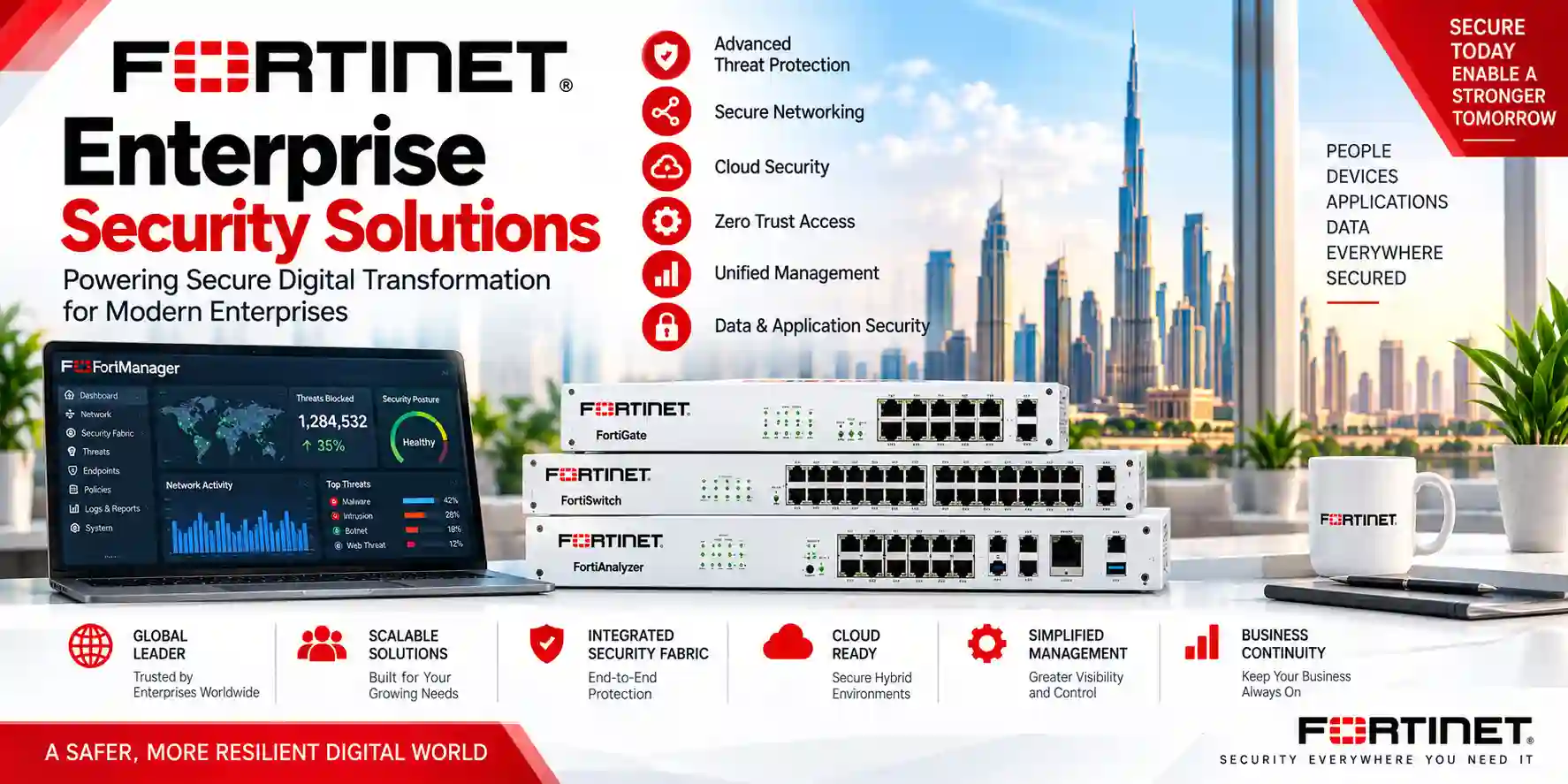
What are Fortinet Managed Security Services?
The phrase “Fortinet Managed Security Services” is best treated as an umbrella buying intent rather than as a single universal subscription. Fortinet publishes several managed and expert-led offerings that address different operational problems. FortiGuard SOCaaS provides 24×7 security monitoring, alert triage, expert investigation and incident escalation through a cloud-based SOC service. FortiGuard MDR is designed for customers using FortiEDR and FortiXDR and adds continuous monitoring, alert analysis, threat hunting and response activity around endpoint detections. Managed FortiGate Service focuses on FortiGate operations, including provisioning, configuration and policy changes, security best-practice alignment, system hardening and ongoing device management. These services can complement one another, but they have different prerequisites, licenses, operational boundaries and responsibilities.
For a buyer in Tanzania, the practical starting point is not “which managed service is best?” but “which security tasks should be continuously handled, which assets generate the relevant telemetry, and which actions should remain with the internal team?” A company may want after-hours monitoring of FortiGate events, but still keep approval of firewall rules inside its IT department. Another organisation may need endpoint detections investigated around the clock because its internal team cannot maintain a 24-hour SOC. A multi-site business may be more concerned with consistent FortiGate policy, SD-WAN changes, secure remote access and branch configuration. The commercial scope should map these needs to the correct Fortinet service instead of bundling unrelated capabilities under one label.
FortiGuard SOCaaS
24×7 managed security monitoring, alert triage, incident escalation, portal visibility and expert guidance for supported Fortinet and multivendor data sources according to the subscribed service and onboarding scope.
FortiGuard MDR
Endpoint-focused managed detection and response for supported FortiEDR and FortiXDR environments, with continuous monitoring, analyst review, threat hunting and response activity aligned with the agreed risk profile.
Managed FortiGate
Fortinet-delivered FortiGate operations covering device provisioning, configuration and policy change management, hardening and related network-security operations. Fortinet documents this service as remote-only and separate from network design or migration services.
Choose the managed service by operational outcome
| Need | Relevant Fortinet option | Planning question |
|---|---|---|
| Continuous SOC monitoring and triage | FortiGuard SOCaaS | Which Fortinet or third-party log sources must be onboarded, and who receives escalations? |
| Endpoint threat investigation and response | FortiGuard MDR | Are endpoints already protected by the supported FortiEDR/FortiXDR platform and correctly licensed? |
| Ongoing FortiGate operations | Managed FortiGate Service | Which devices, policies, SD-WAN, VPN and change-management responsibilities are in scope? |
| Incident readiness or response support | FortiGuard incident response and readiness services | Do you need preparedness work, active-incident assistance, forensics or post-incident improvement? |
A quotation should state exactly which of these outcomes is included. “Managed security” is too broad on its own. The proposal should identify the monitored assets, management platform, escalation workflow, operating hours, customer responsibilities, change controls, subscription term, renewal dependencies, reporting, data-retention assumptions and any local implementation tasks that sit outside the vendor-managed service.
How FourTeck Tanzania can help scope the requirement
FourTeck Tanzania’s public service pages position the business around technology planning, product selection, integration, lifecycle support and coordinated network-security projects. For a Fortinet managed-services requirement, that translates into a practical pre-sales and deployment conversation: inventory the existing FortiGate, FortiEDR, FortiXDR, FortiAnalyzer or related environment; identify the business risks driving continuous monitoring; separate vendor-delivered managed service from partner-led design and implementation; and confirm which licenses or subscriptions are required before a commercial proposal is approved. FourTeck should not be assumed to replace the published Fortinet service scope, and the exact operational responsibility must be written into the quotation.
This distinction is especially important for Managed FortiGate. Fortinet documents the service as remote and states that network design, planning and migration are outside the managed service itself. Those tasks may require a Fortinet partner or professional services engagement. Therefore, a customer replacing another firewall platform, redesigning VLANs, moving to SD-WAN or building new site connectivity should treat migration engineering and the ongoing managed service as two related but separate workstreams. For SOCaaS and MDR, onboarding also requires correct asset, identity, licensing and telemetry preparation. A clear implementation plan prevents gaps between what the service monitors and what the customer expects it to protect.
Fortinet managed-security buying checklist
1. Asset scope
List FortiGate appliances or VMs, endpoints, cloud services, branch locations, third-party sources and critical applications that need monitoring or management.
2. Response responsibility
Define who may contain an incident, change a firewall policy, isolate an endpoint, approve emergency work or communicate with business owners.
3. Licensing
Confirm the exact subscription and entitlement for each monitored or managed asset. Do not assume an existing FortiCare or FortiGuard bundle automatically includes every managed service.
4. Escalation
Identify primary and backup contacts, severity routing, after-hours contacts, approved communication channels and what evidence should accompany an escalation.
5. Change control
Document standard, emergency and planned changes so managed firewall operations do not conflict with application owners, maintenance windows or compliance procedures.
6. Reporting
Agree which dashboards, incident summaries, service reviews, hardening recommendations and audit evidence are needed by IT, management and risk stakeholders.
Related FourTeck Tanzania resources
The Tanzania website currently exposes a limited set of distinct public pages rather than seven separate Fortinet product-category URLs. The most relevant verified same-domain resources are therefore used without inventing additional paths.
Overview of the integrated IT, cybersecurity, networking, server, collaboration and infrastructure approach that managed security must fit into.
Useful for deployment planning, lifecycle support, documentation, network-security work and multi-service project coordination around a Fortinet environment.
Explains buying considerations for firewalls, networking, licensing, capacity, compatibility and supporting infrastructure before quotation.
Provides context on FourTeck Tanzania’s outcome-led technology planning approach and the relationship between security, networks, endpoints and lifecycle operations.
Use the contact page to share Fortinet device models, user and site counts, current licenses, monitoring needs, desired service term and implementation timeline.
Regional FourTeck network for multi-country requirements
Organisations operating across several countries may need a consistent Fortinet architecture while keeping procurement, logistics and onsite implementation aligned with each market. Verified FourTeck network sites include FourTeck Kenya for Kenya technology projects, FourTeck Uganda for Uganda requirements, FourTeck Africa for broader regional infrastructure planning, Fortinet UAE for Fortinet-focused UAE enquiries, FourTeck Kuwait, FourTeck Ghana, and FourTeck Nigeria. These regional links do not mean that one country’s commercial terms, licensing, onsite coverage or service availability automatically apply in another country; each quotation should confirm local scope.
Fortinet Managed Security Services Tanzania
Businesses evaluating Fortinet Managed Security Services in Tanzania often have a mixed requirement: protect the internet edge, support remote users, monitor security events after normal office hours, reduce the workload on a small internal IT team and keep firewall configurations consistent as the company grows. The first design task is to separate these needs into operational categories. FortiGuard SOCaaS is relevant when continuous security monitoring, triage and escalation are central. FortiGuard MDR is relevant when supported FortiEDR or FortiXDR endpoint environments require expert monitoring and response. Managed FortiGate is relevant when the daily operational burden is concentrated on FortiGate configuration, policy changes, secure SD-WAN, VPN or related network-security administration. A Tanzanian organisation may need one of these services or a coordinated combination, but the purchase should be based on the defined outcome rather than the broad managed-services label.
For Tanzania procurement, the quotation should include the exact Fortinet device models or virtual appliances, current FortiOS versions, active FortiCare and FortiGuard subscriptions, endpoint platform details, existing logging destination, branch count, internet circuits, VPN topology and any compliance or audit expectations. If the environment already has FortiAnalyzer or FortiManager, document how those systems are used today and whether they remain part of the future operating model. If the project includes a firewall migration, new VLAN design or routing changes, those engineering tasks should be scoped separately from a remote managed FortiGate subscription because Fortinet’s published service boundaries exclude network design, planning and migration. This distinction makes commercial comparison clearer and reduces surprises during onboarding.
Tanzania organisations should also plan the human workflow around the technology. Name the people who can approve emergency firewall changes, receive high-severity incident calls, validate business impact and coordinate remediation with application owners. Decide what happens if an alert occurs outside local business hours and whether remote containment can be performed immediately or requires customer approval. Review data-handling, log-retention and escalation requirements before committing to a service term. FourTeck Tanzania can help convert these questions into a procurement checklist, align the Fortinet services with network and endpoint dependencies, and prepare a quotation discussion around licenses, implementation and lifecycle support. Availability, service coverage and onsite work should always be confirmed for the specific Tanzanian project rather than assumed from global vendor capabilities.
Fortinet Managed Security Services Dar es Salaam
Dar es Salaam organisations may operate headquarters, branch offices, warehouses, hospitality properties, professional-services environments or customer-facing sites that depend heavily on internet connectivity. In these environments, managed Fortinet services can be valuable when security operations need to continue beyond the working day or when firewall changes must be handled consistently across multiple locations. A head office with several internet links, remote-access users, cloud applications and site-to-site VPNs may benefit from clear separation between network operations and SOC monitoring. Managed FortiGate can address defined FortiGate operational tasks, while SOCaaS can focus on event monitoring, triage and escalation. If endpoints are protected by the required FortiEDR or FortiXDR platform, MDR can add endpoint-focused investigation and threat hunting.
A Dar es Salaam deployment should begin with a topology review. Document primary and backup internet circuits, public-facing services, branch tunnels, VLANs, data-centre or server dependencies, Wi-Fi networks, critical applications and any FortiSwitch or FortiAP components managed through the FortiGate environment. This helps determine whether the managed service needs to include only the edge firewall or also operational functions such as secure SD-WAN, remote access and LAN-edge integration. The customer should identify maintenance windows and change-approval rules so a routine policy update does not unexpectedly interrupt payment systems, ERP access, voice services, cloud applications or branch connectivity. Where new equipment is being installed, plan rack power, UPS protection, cabling and out-of-band recovery access before onboarding the service.
Procurement teams in Dar es Salaam should ask for a bill of scope rather than a vague “24/7 cybersecurity” statement. The proposal should state which devices are covered, which Fortinet entitlement applies, what monitoring or management actions are included, how incidents are escalated, and what work remains the customer’s responsibility. It should also distinguish Fortinet-delivered remote managed service from any FourTeck-led onsite installation, migration, training or network redesign. For companies with additional sites elsewhere in Tanzania, the Dar es Salaam environment can become the reference architecture: standardized naming, VPN policy, logging, access control, administrator roles and documentation can make later rollouts easier. A well-defined managed-security design is therefore not only about outsourcing tasks; it creates a repeatable operating model that internal IT staff, the vendor service and implementation partners can all understand.
Fortinet Managed Security Services Mwanza
For organisations considering Fortinet Managed Security Services in Mwanza, the main value can be operational consistency when local teams are small or when the site is part of a wider network. A branch, warehouse, healthcare facility, education environment or regional office may have a FortiGate protecting internet access and VPN connectivity but rely on a central IT team elsewhere for policy and security oversight. Managed FortiGate can be evaluated for defined device-management tasks, while SOCaaS can add continuous monitoring and expert triage for supported telemetry. This separation is useful because a firewall configuration service and a security-monitoring service solve different problems. Buyers should decide whether the priority is device administration, threat detection, endpoint response or a coordinated combination.
Mwanza site planning should account for connectivity resilience and remote-support practicality. If a location relies on more than one internet service, document failover or SD-WAN behaviour, the applications that must remain reachable, and how VPN tunnels should react when the primary link fails. If the site has IP cameras, Wi-Fi, voice systems or servers, confirm how those systems depend on firewall policies and VLANs. A security service cannot compensate for undocumented addressing, weak cabling or unstable power, so infrastructure basics remain important. UPS runtime for the firewall and core switch, configuration backups, administrator access, spare interfaces, accurate diagrams and controlled remote-management paths can materially improve supportability.
When requesting a Mwanza quotation, provide the exact FortiGate model, license status, number of internet links, approximate users, remote-access count, branch VPN requirements and whether endpoint security is based on Fortinet. Explain who currently responds to alerts and what gaps exist after hours. If the organisation needs firewall migration from another vendor, ask for that work as a separate implementation scope before managed operations begin. If FortiGuard SOCaaS is being considered, identify the assets and log sources that should be monitored and the people who should receive escalations. FourTeck Tanzania can use these inputs to build a more precise requirement and avoid overpromising local availability or onsite coverage. The objective is a maintainable service model in which the managed layer complements, rather than obscures, the responsibilities of the internal IT team.
Fortinet Managed Security Services Arusha
Arusha businesses evaluating Fortinet managed security may include tourism and hospitality operators, institutions, professional firms, branch offices and organisations with distributed sites or remote workers. Their security requirements can be very different even when they use the same FortiGate family. A hospitality site may prioritise segmentation between guest, staff and operational networks, while a professional office may focus on secure remote access and protection of cloud applications. An organisation with several properties may need consistent site-to-site VPN and SD-WAN policies. Managed FortiGate is relevant when ongoing FortiGate administration is the burden; SOCaaS is relevant when continuous monitoring and alert escalation are the gap; MDR is relevant when supported FortiEDR or FortiXDR endpoints need expert monitoring and response.
The Arusha procurement conversation should therefore start from risk and operations rather than a product bundle. Identify which systems are business-critical, which users connect remotely, which network segments carry guest or unmanaged devices, and who can approve urgent changes. If a security alert points to suspicious traffic from a server, the service desk needs to know who owns that server and whether isolation is permitted. If a firewall rule must be changed during a busy operating period, the change process must account for service impact. Managed security is most effective when escalation contacts, asset ownership, maintenance windows and recovery steps are documented before the first incident.
For an Arusha site that is being newly built or upgraded, separate project delivery from ongoing managed operations. Network design, firewall sizing, segmentation, migration, cabling, Wi-Fi planning and power protection may need engineering work before the environment is ready for a vendor-managed service. The quotation should also identify subscription duration, renewal dependencies, FortiCare or FortiGuard requirements and any onboarding prerequisites. FourTeck Tanzania can help collect the technical inputs, coordinate the network-security discussion and connect the requirement with broader infrastructure such as switching, wireless and servers. Buyers should verify local installation and support arrangements for the specific project instead of assuming that a global 24×7 vendor service automatically includes onsite engineering in Arusha.
Fortinet Managed Security Services Dodoma
Dodoma organisations may have formal procurement, governance and documentation requirements that make service definition especially important. Fortinet Managed Security Services should be specified in terms of measurable scope: monitored devices, managed devices, service hours, escalation contacts, reporting, change procedures, customer responsibilities and license dependencies. FortiGuard SOCaaS can provide around-the-clock monitoring and expert triage for supported onboarded assets, while Managed FortiGate addresses defined FortiGate operational activities. FortiGuard MDR focuses on supported FortiEDR and FortiXDR endpoint environments. These capabilities should not be merged into a single statement unless the quotation actually includes each required entitlement and the associated onboarding work.
For government, institutional, education or enterprise environments in Dodoma, the internal approval model matters as much as the technology. Security teams should define whether the managed service is permitted to implement emergency controls, whether changes need ticket approval, how administrator accounts are governed, and how incident evidence is shared with designated stakeholders. If the organisation has audit requirements, ask what reports can be exported and which event, change and service records will be available. If logs include sensitive operational data, review retention and data-handling expectations with the relevant compliance and legal stakeholders. The technical service should fit the organisation’s governance model rather than forcing the organisation to improvise procedures after onboarding.
A Dodoma deployment may also involve multiple buildings or future branch expansion. Standardising the baseline can make growth easier: consistent FortiOS versions, object naming, administrator roles, VPN templates, network segments, security profiles and logging destinations help central teams compare sites. If a new firewall is replacing a legacy platform, include discovery, migration, testing and rollback planning as a separate project before ongoing management starts. FourTeck Tanzania can support the requirement-definition and procurement process and can help connect firewall, switching, server, endpoint and remote-access dependencies. Buyers should ask for clear exclusions as well as inclusions so they understand where Fortinet’s remote managed service ends and where local implementation, onsite troubleshooting or customer-side remediation begins.
Fortinet Managed Security Services UAE
Organisations searching for Fortinet Managed Security Services in the UAE may be dealing with multi-branch estates, hybrid cloud workloads, high-speed internet, remote users, FortiGate clusters, secure SD-WAN and a need for continuous security operations. The managed-service design should still begin by separating operational layers. Managed FortiGate is appropriate when the requirement centres on FortiGate configuration, policy management, provisioning and hardening. SOCaaS addresses continuous monitoring, alert triage, expert escalation and security-operations support. MDR addresses endpoint detections in supported FortiEDR and FortiXDR environments. A customer can combine these, but each has different licensing and onboarding requirements and should be itemised in the commercial proposal.
UAE buyers often need clear integration with existing enterprise processes. If the organisation already uses a SIEM, ticketing platform or central change-management workflow, document how Fortinet alerts and requests will enter that process. If firewall changes are subject to a change advisory board, confirm lead times for routine and emergency work. For high-availability FortiGate deployments, ask how failover states, firmware maintenance and configuration validation are handled. For cloud workloads, identify whether the managed scope includes virtual FortiGate instances and how cloud-native routing, identity and security controls interact with the firewall. The result should be a service architecture that is understandable across network, security, cloud and compliance teams.
FourTeck’s verified Fortinet UAE specialist site can be used for Fortinet-focused regional enquiries. For a UAE quotation, provide the number and model of FortiGate devices, virtual appliances, branch sites, internet links, VPNs, cloud environments, endpoint-security platform, logging architecture and current subscription status. State whether the project requires new hardware, migration, redesign, managed operations or security monitoring. Those categories should be priced and scheduled separately when appropriate. Managed security can reduce operational burden, but the most successful engagements are those in which the customer retains clear ownership of business risk, approvals and application knowledge while the managed service supplies defined technical operations and expert security capacity.
Fortinet Managed Security Services Uganda
Uganda businesses considering Fortinet Managed Security Services may be looking for a practical way to support distributed offices without maintaining a full internal security operations team. A FortiGate estate can protect internet access and branch connectivity, but the operational workload continues after installation: rules change, remote users are added, VPNs need troubleshooting, subscriptions renew and security events require attention. Managed FortiGate can be evaluated when device operations are the main challenge. SOCaaS can add continuous monitoring and expert triage for supported onboarded sources. MDR can extend endpoint security operations for supported FortiEDR or FortiXDR environments. A clear scope prevents the customer from expecting a firewall-management subscription to behave like a complete SOC service.
For Uganda deployments, start with a site and connectivity inventory. Document headquarters and branches, internet providers, VPN topology, public IP requirements, remote users, critical applications and the current process for configuration changes. If branches have different link quality or use failover connections, define which applications should be prioritised and how alarms should be handled when connectivity degrades. If the environment includes FortiSwitch or FortiAP integrated through the FortiGate, note those dependencies because LAN-edge changes can affect user connectivity even when the firewall itself is healthy. Stable power, UPS coverage, rack organisation and accurate device records also make remote management more reliable.
FourTeck’s verified Uganda technology site provides a regional path for Uganda enquiries. When requesting a managed-security quotation, state whether the customer wants monitoring only, operational management, incident-response guidance, endpoint response, or a combination. Include current Fortinet license expiry dates and clarify who will own renewals. Ask how alerts are escalated to local or central IT contacts and what happens when action is required outside business hours. Onsite installation, migration and physical troubleshooting should be confirmed separately for the particular site. This approach gives procurement teams a service description they can compare objectively while giving technical teams a workable escalation and responsibility model.
Fortinet Managed Security Services Kampala
Kampala organisations often combine a central office with satellite branches, remote staff, cloud applications and third-party service connections. That creates a security environment in which the FortiGate is important but not sufficient on its own. Managed FortiGate can help with ongoing firewall and network-security operations when the internal team wants defined expert support for policy, configuration and device management. FortiGuard SOCaaS is suited to continuous monitoring and triage where after-hours visibility is the concern. FortiGuard MDR adds endpoint-focused monitoring and threat response when the organisation uses the supported FortiEDR or FortiXDR platform. Selecting the right service begins with the operational gap, not the city or company size.
A Kampala security assessment should identify internet gateways, server networks, guest Wi-Fi, staff networks, voice systems, critical SaaS platforms and remote-access paths. It should also review whether old firewall rules remain active, whether administrator access is restricted, whether configuration backups are current and whether security logging is useful for investigation. These are practical prerequisites for managed operations. If a SOC receives an alert but the asset owner, IP address or application role is unknown, response becomes slower. If firewall objects have inconsistent names across branches, change management becomes harder. Standardisation therefore has direct security value as well as support value.
For Kampala procurement, ask the supplier to describe the onboarding sequence. A useful plan should cover device registration, license validation, user and administrator roles, log forwarding where required, contact setup, alert tuning, testing and a clear “service ready” point. If the project includes migration from another firewall or major network redesign, keep that work in a separate implementation phase before handover to ongoing management. Organisations with regional operations can also align the Kampala configuration with Tanzania or Kenya branches so VPN naming, policy conventions and reporting are easier to manage. The final contract should state the service boundary explicitly: what the managed team can change, what requires customer approval, what onsite work is excluded, and which business decisions remain with the customer.
Fortinet Managed Security Services Arua
Arua organisations looking at Fortinet Managed Security Services may benefit most from remote operational consistency, particularly when specialist security staff are based elsewhere. A branch can have a properly sized FortiGate and still face challenges if nobody routinely reviews changes, monitors security events or maintains documentation. Managed FortiGate can provide a structured route for defined firewall operations, while SOCaaS can provide continuous security monitoring and escalation for supported sources. MDR is a separate endpoint-focused service for supported FortiEDR or FortiXDR deployments. The scope should reflect the site’s actual risk and connectivity profile rather than copying a package designed for a much larger headquarters.
Remote manageability becomes especially important when travel to the site is not immediate. The organisation should maintain accurate diagrams, serial numbers, license dates, ISP details, administrative ownership and configuration backups. Power protection for the firewall and core switch can prevent avoidable outages, and a documented recovery method helps if a configuration change interrupts access. If the site uses two internet links, define which one supports failover and whether VPN tunnels should automatically re-establish. If local users depend on cloud applications, voice or remote databases, identify the traffic that needs priority. These infrastructure details help a managed service distinguish a security incident from a local connectivity or power problem.
When requesting an Arua quotation through the Uganda or regional FourTeck channel, provide the site size, FortiGate model, internet links, approximate user count, VPN requirements, remote-access users and current subscriptions. If the organisation expects 24×7 monitoring, specify which alerts matter and who should receive them. If it expects the provider to make containment or firewall changes automatically, ask for that responsibility to be stated explicitly instead of assumed. Local installation, replacement logistics and onsite troubleshooting should be confirmed as separate practical items. A well-scoped managed-security service does not remove the need for local operational ownership; it gives the organisation an expert remote layer with defined responsibilities, escalation paths and reporting that can be integrated into the wider IT process.
Fortinet Managed Security Services Mbarara
Mbarara businesses may use Fortinet security at a regional office, retail operation, institution, healthcare environment, hospitality property or branch network. Their managed-security requirement should be right-sized to that operating model. An organisation that mainly struggles with FortiGate updates, configuration changes, VPN support and rule consistency may evaluate Managed FortiGate. One that already manages its firewall but lacks around-the-clock event monitoring may focus on SOCaaS. A company with supported FortiEDR or FortiXDR on endpoints may consider MDR for endpoint threat monitoring, hunting and response. Treating these as separate service layers makes it easier to build a commercial scope that matches actual staffing gaps.
Before onboarding, Mbarara sites should review basic operational hygiene. Verify that the FortiGate is registered correctly, supported subscriptions are active, firmware is within the organisation’s approved lifecycle policy, administrators are named individually, configuration backups are available, and unnecessary exposed management interfaces are removed. Document VLANs, DHCP scopes, VPN peers and critical destination addresses. If the site depends on a central ERP, hospital system, finance application or cloud platform, note how the traffic flows so change requests can be tested against real business requirements. A managed provider works more effectively when the network is understandable and responsibilities are documented.
Procurement should also consider growth. If the Mbarara location may add users, wireless networks, cameras or a second internet circuit, discuss that roadmap before finalising the service. The FortiGate model and subscriptions should have enough practical headroom, and the managed scope should explain how new assets or branches are added. Ask whether reporting can separate this site from other Uganda locations and how local incidents are escalated to a central team. The FourTeck Uganda site can serve as a regional enquiry route, while the exact onsite and commercial arrangements should be verified for the project. The aim is not to outsource every security decision; it is to establish a controlled operating model in which expert services handle agreed tasks while business owners retain clear authority over risk and critical application decisions.
Fortinet Managed Security Services Gulu
Gulu organisations assessing Fortinet Managed Security Services should begin by identifying which security activities are difficult to sustain with the available internal team. A branch may have competent local IT support but no one monitoring alerts at night. Another may have a central security team but too many FortiGate changes across sites. SOCaaS can address continuous monitoring and expert triage for supported onboarded telemetry, while Managed FortiGate can address defined firewall and network-security operations. MDR applies to supported FortiEDR and FortiXDR endpoint environments. The service choice should therefore follow the operational problem, and the quotation should describe the chosen Fortinet entitlement rather than simply promise generic “managed cybersecurity.”
Gulu site readiness can make or break remote service quality. Keep an up-to-date network diagram, identify the ISP handoff, document the IP addressing and VPN tunnel configuration, maintain configuration backups and confirm that critical network equipment has appropriate power protection. If the firewall controls access for cameras, Wi-Fi, business systems and VoIP, note those dependencies so routine policy changes are assessed for impact. A managed service can handle defined technical operations, but it still needs accurate information from the site. Where local connectivity is intermittent, distinguish availability alarms from genuine security indicators and design failover where the business case justifies it.
For a Gulu quotation, provide the exact model and license term, number of users, branch links, remote workers, current security profiles, endpoint-security platform and desired reporting. Ask who owns FortiGuard subscription renewal and what happens if a license expires. Define whether alerts should go to a local administrator, Kampala head office or a regional security team. If the site is part of a multi-country organisation, standard templates can help keep naming, VPNs and security policy aligned with Tanzania or Kenya locations while still allowing site-specific differences. Any onsite implementation, hardware replacement or physical troubleshooting should be confirmed separately. Managed security delivers the most value when it creates predictable operations, not when it hides unclear roles behind a service label.
Fortinet Managed Security Services Kenya
Kenya organisations may be evaluating Fortinet Managed Security Services for head offices, branch networks, data-centre connections, cloud workloads, retail estates or remote workforces. The service architecture should distinguish between firewall operations, SOC monitoring and endpoint response. Managed FortiGate is focused on FortiGate operational management, including provisioning, configuration and change processes. FortiGuard SOCaaS provides continuous monitoring, triage, escalation and expert security-operations support for supported sources. FortiGuard MDR provides endpoint-focused monitoring and response for supported FortiEDR and FortiXDR environments. A mature environment may use more than one of these services, but the licenses, onboarding steps and responsibilities should be documented separately.
Kenya procurement teams should define the estate in measurable terms: device models, branches, WAN links, internet bandwidth, VPN users, cloud networks, endpoint count and critical applications. If the organisation uses secure SD-WAN, identify application-steering rules and the consequences of a link failure. If FortiGate clusters protect data-centre or cloud workloads, document high-availability and maintenance requirements. If security events need to feed an existing SIEM or ticketing workflow, specify the integration and ownership of incident tickets. The managed service should fit the customer’s existing operations rather than create a parallel process that staff do not follow.
FourTeck’s verified Kenya technology site can be used for Kenya-related project enquiries. Buyers should request separate line items where needed for hardware, licenses, migration, network redesign, onsite installation and ongoing managed service. This makes total lifecycle cost clearer and avoids confusing a recurring operational subscription with one-time implementation work. Organisations operating in both Kenya and Tanzania can benefit from shared standards for FortiGate policy naming, VPN templates, administrator roles, logging and documentation, while still checking local commercial and support arrangements. The goal is a security operating model that scales across sites without assuming every location has the same users, bandwidth, risk profile or onsite support needs.
Fortinet Managed Security Services Kuwait
Kuwait businesses looking for Fortinet Managed Security Services may have high-capacity internet, multiple sites, cloud applications and strict expectations for availability. Those requirements make clear service boundaries essential. Managed FortiGate can be evaluated when FortiGate administration and change management are the primary operational burden. FortiGuard SOCaaS can provide continuous monitoring, alert triage and expert escalation for supported sources, while FortiGuard MDR addresses endpoint threat monitoring and response for supported FortiEDR or FortiXDR deployments. A customer may purchase more than one managed layer, but the proposal should identify each service by name and list its prerequisites instead of presenting an undefined “managed SOC and firewall” package.
For Kuwait environments, include business-continuity considerations in the design. If FortiGate is deployed in high availability, document failover, upgrade windows and configuration synchronisation. If branches use SD-WAN, define performance targets for critical applications and how link incidents should be escalated. If remote access is business-critical, identify authentication dependencies and the approval process for changes. A SOC alert may require rapid action, but that action can affect production systems, so the customer should define what can be done automatically and what needs explicit approval. The managed service is stronger when technical response authority is agreed before an incident.
The verified FourTeck Kuwait site provides a regional route for Kuwait technology enquiries. Procurement teams should provide current Fortinet models, license status, branch count, cloud presence, endpoint platform, logging approach and desired contract term. If the project includes migration from another firewall vendor, major routing changes or new segmentation, treat that as implementation work before managed operations. Ask for renewal ownership, reporting cadence, escalation methods and clear exclusions. This structured approach helps compare suppliers on scope rather than on broad claims and ensures that the managed layer supports the organisation’s own governance, risk and change-control processes.
Fortinet Managed Security Services Ghana
Ghana organisations considering Fortinet Managed Security Services may want to strengthen monitoring and operations without expanding an internal security team for every shift. A practical design can combine local ownership of business systems with expert remote services for clearly defined tasks. FortiGuard SOCaaS is appropriate where 24×7 monitoring, analyst triage and escalation are required for supported data sources. Managed FortiGate addresses operational management of FortiGate environments. FortiGuard MDR addresses supported FortiEDR and FortiXDR endpoint detections. These services are complementary but not interchangeable, so the quotation should map each requirement to its relevant service and license.
A Ghana deployment should document the network before onboarding. List FortiGate models, branch VPNs, remote users, security profiles, internet links, cloud connections and critical services. Review which devices produce useful logs and whether time, DNS and identity information are consistent enough to support investigation. For managed firewall work, identify how changes are requested and approved. For SOC monitoring, identify the contacts who can act on an escalation. For endpoint MDR, confirm that the required endpoint platform is already deployed correctly and that responsibility for remediation is understood. These operational details are as important as the product name because they determine whether an alert leads to a timely business response.
FourTeck’s verified Ghana technology site provides a regional enquiry route. Buyers should request a complete quotation breakdown for subscriptions, implementation, any hardware changes and ongoing services. If a customer is standardising Ghana and Tanzania sites, use common policy naming, VPN conventions, administrator roles and documentation wherever practical, but do not assume service availability, pricing or onsite coverage are identical between countries. For future growth, ask how additional devices and branches are onboarded and whether reporting can separate locations. A managed-security project should leave the customer with clearer control and documentation, not less visibility into who manages which security responsibility.
Fortinet Managed Security Services Nigeria
Nigeria organisations may need Fortinet Managed Security Services across complex estates that include headquarters, regional offices, remote users, cloud services and many internet connections. In that situation, the phrase “managed security” should be decomposed into measurable functions. Managed FortiGate can reduce the operational load of firewall configuration and change management. FortiGuard SOCaaS can provide continuous monitoring and expert triage for supported onboarded sources. FortiGuard MDR can provide endpoint-focused monitoring, hunting and response for supported FortiEDR or FortiXDR environments. Depending on the organisation, these services may be purchased independently or coordinated, but each should have a clear entitlement and responsibility model.
Large or multi-site Nigerian environments should standardise before they scale. Use consistent object names, policy templates, logging settings, administrative roles and VPN conventions so branch differences are intentional rather than accidental. Document which locations have dual internet links, which applications require low latency, which sites host servers and which users require remote access. When the managed team receives a change request, it should be possible to understand the business impact quickly. When the SOC escalates an incident, the customer should know which application owner or site contact is responsible. Without those foundations, managed services can generate tickets but still leave the organisation uncertain about the correct response.
The verified FourTeck Nigeria site provides a regional path for technology enquiries. When preparing a quotation, separate one-time transformation work from recurring managed service. Firewall migration, network redesign, hardware refresh, segmentation and onsite implementation can require dedicated project engineering before the managed state begins. Ask the supplier to state licensing terms, service hours, escalation processes, renewal ownership, reporting and exclusions. Organisations with cross-border operations can use a common Fortinet architecture across Nigeria, Ghana, Kenya or Tanzania, but each market should confirm logistics and onsite support independently. The strongest managed-security arrangement gives the central team better consistency while preserving local business context and documented authority for high-impact changes.
Fortinet Managed Security Services Seychelles
Seychelles organisations evaluating Fortinet Managed Security Services may place particular value on remote expert coverage because travel, island geography and specialist staffing can make onsite response harder to scale. Managed FortiGate can support defined remote operations for FortiGate devices, while FortiGuard SOCaaS can provide continuous security monitoring and expert triage for supported sources. FortiGuard MDR can provide endpoint-focused managed detection and response for supported FortiEDR or FortiXDR environments. The best fit depends on whether the primary pain point is firewall administration, after-hours detection, endpoint response or a coordinated combination. The commercial scope should be precise because not every managed Fortinet service includes the same actions.
Remote-service readiness is particularly important. Keep configuration backups, network diagrams, ISP details, support contacts, license dates and asset ownership up to date. If the site has more than one internet connection, verify failover and remote-management behaviour before an incident. If the firewall also controls hotel guest networks, staff systems, payment connectivity, surveillance or building systems, document segmentation clearly so an emergency security change does not unnecessarily disrupt unrelated services. Stable UPS-backed power for the core network and a practical local hands-and-eyes plan can complement the remote managed layer when physical intervention is required.
For a Seychelles quotation, provide the exact FortiGate or virtual appliance models, number of sites, internet links, endpoint platform, current subscriptions and the hours in which local staff can respond. Ask how high-severity alerts are communicated and what happens if the managed team recommends an action that requires physical access. If a new deployment or migration is needed, separate that implementation scope from the recurring service because network design and migration are not automatically part of Managed FortiGate. Regional coordination through FourTeck Africa may help with the broader technology discussion, but service availability and logistics for Seychelles should be confirmed for the specific project. The objective is a resilient operating model in which remote expertise and local operational readiness reinforce one another.
Licensing, onboarding and renewal guidance
Managed-security licensing should be checked against the exact service and asset. Fortinet publishes SOCaaS as a subscription with entitlements that vary by monitored product and service type. Some Fortinet subscriptions can include SOCaaS coverage, while other products require an add-on. Managed FortiGate uses service SKUs tied to FortiGate model codes, and FortiGuard MDR is associated with supported FortiEDR and FortiXDR environments. Because these commercial structures can change, the quotation should identify the exact current SKU, term and prerequisite for the specific device or user population instead of relying on a generic license name.
Onboarding should be treated as a project milestone. Confirm registration, entitlements, organisation and identity setup, portal access, monitored assets, log forwarding where required, escalation contacts, change procedures and a service-ready test. For SOCaaS, the organisation should plan which threat use cases matter and which assets must provide telemetry. For Managed FortiGate, confirm which devices and operating tasks are in scope. For MDR, confirm endpoint coverage and the response actions agreed for the risk profile. Renewals should be recorded before expiry because a managed-security design can depend on several overlapping subscriptions.
Frequently asked questions
Is Fortinet Managed Security Services one product?
No. Buyers commonly use the phrase as an umbrella term. Fortinet publishes distinct managed offerings such as FortiGuard SOCaaS, FortiGuard MDR and Managed FortiGate, each with a different purpose, license and operational boundary.
Does SOCaaS manage my firewall configuration?
SOCaaS is primarily a managed security-monitoring and triage service. Ongoing FortiGate configuration and change management belong to the Managed FortiGate service or another agreed management scope. Where both are subscribed, the services can work together.
Who is FortiGuard MDR designed for?
Fortinet describes MDR for customers using its supported FortiEDR and FortiXDR advanced endpoint security platforms. It adds 24×7 monitoring, analyst review, proactive threat hunting and response activity around endpoint detections.
Does Managed FortiGate include onsite installation?
Fortinet documents Managed FortiGate as a remotely delivered service and states that onsite installation and cabling are not included. Network design, planning and migration are also documented as separate activities that may require a partner or professional services engagement.
What should I send for a quotation?
Send the FortiGate or endpoint platform details, model numbers, quantities, sites, user count, internet links, VPN requirements, current subscriptions and expiry dates, logging environment, desired managed tasks, escalation contacts and target contract term. If migration or redesign is required, describe that separately.
Can I use managed services with several countries?
A common Fortinet architecture can support standardisation across countries, but licensing, commercial terms, deployment logistics and onsite support should be verified market by market. Do not assume one country’s service conditions automatically apply to another.
Quotation checklist for Fortinet Managed Security Services
A useful quotation request should include the information below. The more specific the input, the easier it is to distinguish required licenses from optional features and to separate one-time implementation from recurring service.
- Exact FortiGate models, virtual appliances, FortiEDR/FortiXDR platform and relevant Fortinet products.
- Site count, user count, endpoint count, internet circuits, VPN peers and remote-access users.
- Current FortiCare, FortiGuard, SOCaaS, endpoint or management subscriptions and expiry dates.
- Required service: SOC monitoring, FortiGate management, endpoint MDR, incident readiness or a combination.
- Required operating hours, severity escalation, emergency contacts and approval process.
- Existing FortiManager, FortiAnalyzer, SIEM, ticketing or cloud-management integrations.
- Migration, redesign, new hardware, SD-WAN, segmentation or high-availability work that must be completed before managed operations.
- Required reports, audit evidence, service reviews and data-handling expectations.
- Locations where onsite installation or physical support may be required.
Decision recap
Choose FortiGuard SOCaaS when the central requirement is continuous monitoring, triage and expert escalation. Choose FortiGuard MDR when supported FortiEDR or FortiXDR endpoints need managed detection, threat hunting and response. Choose Managed FortiGate when the main need is ongoing FortiGate device and policy operations. Combine services only when the business requirement justifies each layer and the quotation clearly identifies the licenses, onboarding tasks, responsibilities and exclusions.
Consultation panel
For a useful consultation, send FourTeck Tanzania your current Fortinet inventory, site list, internet and VPN design, endpoint platform, license status, monitoring gaps, desired response model and project timeline. FourTeck can then help structure the requirement around the correct managed-service path and related implementation needs. Do not assume stock, onsite coverage, delivery timing, authorization status or specific commercial terms until they are confirmed in the quotation.