
Fortinet Network Security Assessment
A Fortinet Network Security Assessment gives decision-makers a structured way to understand what is actually happening across the network before committing budget to a firewall refresh, segmentation project, secure SD-WAN rollout, branch expansion or broader cybersecurity program. Rather than starting with assumptions, the engagement can examine network traffic, security controls, application use, device risk, bandwidth behavior and configuration priorities so the next security step is based on evidence.
Fortinet’s current Cyber Threat Assessment Program documentation describes short-term monitoring with Fortinet technology followed by a report and findings review. Where that assessment model is appropriate for the customer environment, it can help reveal high-risk applications, at-risk hosts, suspicious files and bandwidth patterns while giving IT and management teams a clearer remediation roadmap. Exact scope, tools, duration and commercial terms should always be confirmed for the specific project.
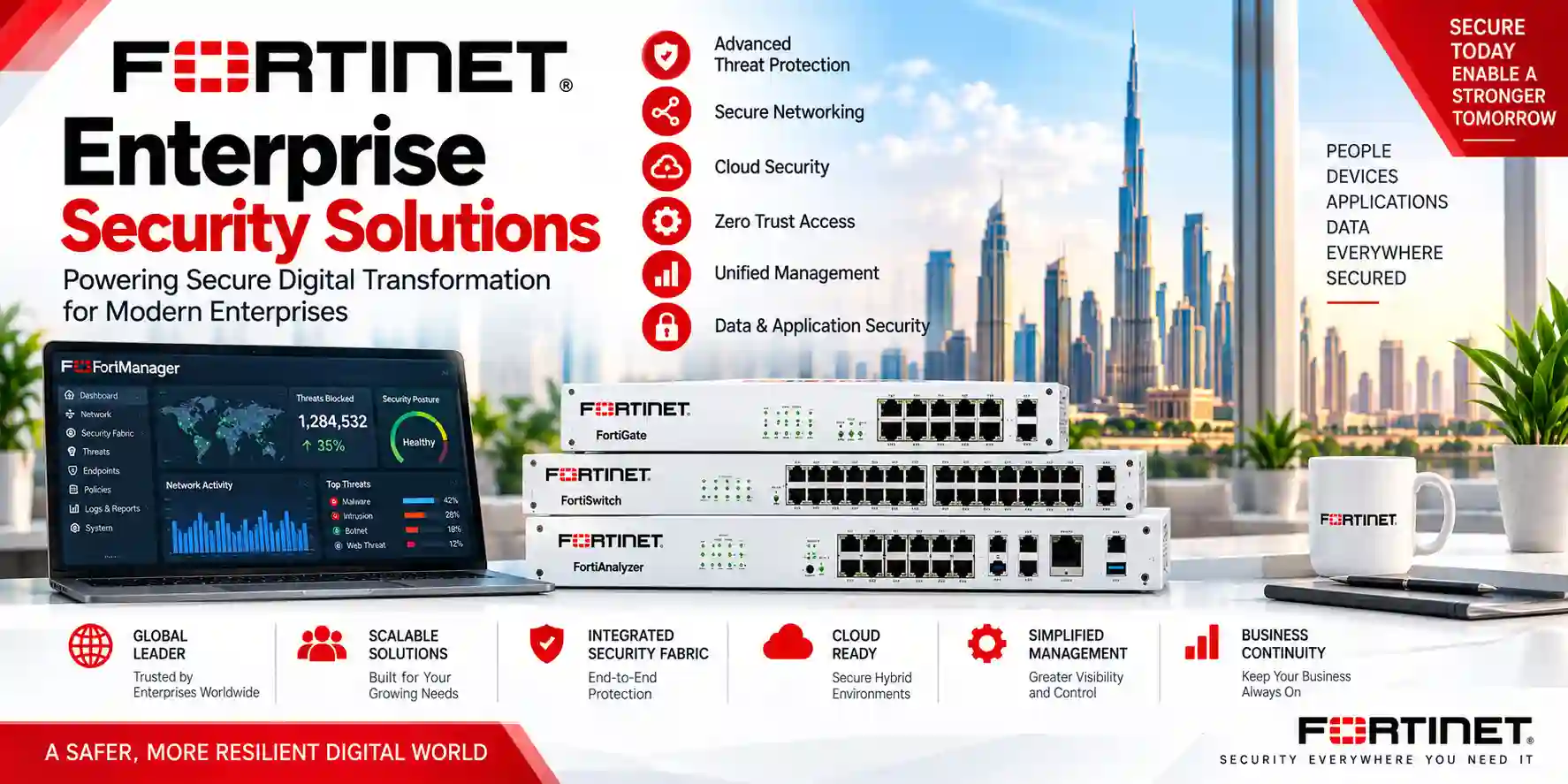
Direct answer: what does a Fortinet Network Security Assessment do?
It creates a practical view of current network risk and control effectiveness. Depending on the agreed scope, the assessment can focus on firewall visibility, application behavior, potentially risky hosts, suspicious files, internet and WAN utilization, security-policy hygiene, segmentation, remote access, branch connectivity and readiness for a Fortinet architecture. Fortinet’s documented NGFW assessment approach typically places a FortiGate behind an existing gateway firewall as a listening device, gathers log information for approximately a week and then reviews findings. This is useful when an organization wants to validate existing controls without beginning with a disruptive replacement project.
For a customer, the most valuable output is not simply a score. It is a prioritized decision set: what should be investigated first, which controls need tightening, whether current firewall sizing matches real traffic, where visibility is missing, which applications deserve policy attention, and whether planned security spending addresses the highest-impact gaps. FourTeck can use the discovery stage to help translate technical observations into procurement, configuration and migration questions that management and IT teams can act on.
Assessment areas that matter to business networks
Firewall effectiveness
Review whether present controls are giving sufficient inspection and visibility for internet-facing traffic, branch connections and internal security boundaries. The aim is to identify where current policy or architecture leaves avoidable exposure.
High-risk applications
Application visibility can highlight business, collaboration, remote-access, peer-to-peer and other traffic that deserves review. Risk is interpreted in context rather than treating every unfamiliar application as malicious.
At-risk hosts
Host behavior, browsing destinations and application activity can help identify devices that deserve investigation. Findings should be correlated with endpoint, identity and operational context before remediation decisions are made.
Suspicious files and traffic
Observed traffic can be evaluated for suspicious or malicious patterns so the organization knows where preventive controls, investigation processes or user protections may need strengthening.
Bandwidth and utilization
Hourly and application-level utilization helps IT teams discuss firewall sizing, WAN capacity, traffic prioritization, update windows and whether planned SD-WAN or dual-link designs match real usage.
Configuration posture
For existing FortiGate environments, Security Rating and related Fortinet capabilities may help reveal best-practice gaps, unused rules or configuration issues. Availability depends on FortiOS version, model and relevant licensing or entitlement.
A practical assessment workflow
Identify sites, internet links, critical applications, existing firewalls, remote-access methods, cloud services, sensitive segments, operational constraints and the business decisions the assessment must support.
Choose an approach that fits the environment. A Fortinet CTAP-style assessment can use a FortiGate as a listening device behind the current gateway, while existing FortiGate estates may use configuration and Security Rating evidence where supported.
Observation should cover representative business activity rather than an unusually quiet period. Fortinet’s NGFW assessment material describes approximately one week of log collection, although the actual engagement must be agreed in advance.
Translate findings into immediate fixes, policy changes, validation tasks, architecture decisions and procurement actions. The final discussion should separate urgent security work from longer-term modernization so budget can be phased sensibly.
What to prepare before requesting an assessment
| Input | Why it matters | Useful detail |
|---|---|---|
| Network diagram | Defines observation points and security boundaries. | WAN links, VLANs, DMZs, branches, data center and cloud connections. |
| Business-critical applications | Prevents the review from focusing only on generic internet traffic. | ERP, payment, collaboration, voice, customer portals and line-of-business systems. |
| Existing firewall details | Helps assess current capabilities and upgrade constraints. | Vendor, model, software version, subscriptions, HA status and support lifecycle. |
| User and device estimates | Supports capacity and segmentation discussions. | Staff, guest devices, servers, IoT/OT, cameras, phones and remote users. |
| Known pain points | Makes the final report more decision-oriented. | Slow links, VPN instability, risky apps, alert overload, policy sprawl, limited logging or recurring incidents. |
How the assessment connects to Fortinet architecture decisions
An assessment is often most useful when it supports a specific decision. A business evaluating FortiGate may want evidence about peak throughput, active applications, encrypted traffic requirements, VPN demand, branch growth and the number of security services that will be enabled concurrently. A distributed organization may focus on secure SD-WAN, dual internet links, centralized policy and consistent branch controls. A company with existing FortiGate appliances may be more interested in policy hygiene, logging, segmentation, firmware planning, Security Rating findings and whether FortiManager or FortiAnalyzer would improve operational control.
The result should therefore avoid the trap of recommending technology before understanding the operating environment. Fortinet tools can provide substantial visibility, but the final design still depends on business priorities, risk tolerance, compliance obligations, application sensitivity and available operational skills. FourTeck’s role can include helping customers convert these technical inputs into a clear scope for firewall sizing, subscriptions, centralized management, VPN, branch security, segmentation and implementation planning.
Fortinet Network Security Assessment regional guidance
The same assessment method should not be copied blindly from one market to another. Site topology, branch count, internet availability, cloud dependence, operational staffing and procurement structure can change the priorities. The following regional sections focus on distinct planning questions without claiming an office, local stock, guaranteed on-site service or guaranteed assessment availability in any location.
Fortinet Network Security Assessment Tanzania
For organizations in Tanzania, a Fortinet Network Security Assessment is most valuable when it connects security visibility with the practical realities of business growth. A head office may be supporting cloud productivity platforms, finance systems, customer portals, IP telephony, CCTV, wireless users, remote access and several branch links at the same time. An assessment should therefore start with the business applications and network paths that cannot tolerate disruption. It can then examine which applications dominate traffic, where inspection is weak, whether remote-access policies are appropriately controlled, and whether the current firewall and WAN design match the organization’s real workload.
Tanzanian buyers planning a FortiGate project should use assessment evidence to improve sizing and licensing conversations. User count alone is not enough. The team should consider internet capacity, encrypted traffic, active security profiles, VPN concurrency, branch-to-head-office traffic, logging, future growth and whether high availability is required. Where existing FortiGate devices are already deployed, configuration posture and Security Rating findings may be relevant, subject to the supported model, FortiOS release and entitlement. This helps separate a simple hardware refresh from a broader requirement for policy cleanup, segmentation or centralized management.
Procurement teams can also use the assessment to define a cleaner request for quotation. Instead of asking only for “a Fortinet firewall,” the RFQ can state the number of sites, current link speeds, expected growth, required VPN use, desired logging period, branch connectivity, support term and security services under consideration. That gives suppliers a stronger basis for comparison and reduces the chance of selecting an appliance that is under-sized or bundled with services that do not match the intended use.
For broader technology planning, customers can review FourTeck Tanzania as a starting point for network, security and infrastructure discussions. The assessment itself should remain evidence-led: observe, validate, prioritize and then decide which Fortinet controls or architecture changes are justified.
Fortinet Network Security Assessment Dar es Salaam
Dar es Salaam organizations often have a concentration of users, business systems and external connectivity in one primary office while also supporting warehouses, retail locations, remote teams or up-country branches. For these environments, a Fortinet Network Security Assessment should first map the traffic that crosses the internet edge and the traffic that moves between internal segments. The objective is to understand whether the security architecture reflects how the business now operates, not how it operated when the firewall was originally installed.
A useful review can look at application visibility, high-risk or unexpected applications, at-risk hosts, suspicious files, bandwidth peaks and repeated traffic patterns that may warrant policy changes. It should also ask whether user, server, guest, voice, camera and management networks are appropriately separated. If a company is considering more cloud services, the assessment can identify whether current internet links, inspection capacity and policy design are ready for additional direct-to-cloud traffic. If the business depends on multiple ISPs, the findings can inform whether secure SD-WAN or dual-WAN policies should be part of a later project.
For procurement, Dar es Salaam buyers should document the existing firewall model, current subscriptions, software version, number of branches, remote-access method, major SaaS applications and critical published services. This information helps make the assessment review practical and gives the technical team a stronger basis for deciding whether the next action is remediation, license renewal, appliance replacement, high availability, centralized logging or a phased architecture redesign.
The final report should be discussed with both technical and business stakeholders. A network team may focus on policies and interfaces, while management needs to understand business exposure, operational impact, sequencing and budget. A good assessment bridges those viewpoints and turns raw observations into a short list of actions with clear owners and priorities.
Fortinet Network Security Assessment Mwanza
For businesses operating in Mwanza, the assessment conversation can be particularly useful when the network supports a mix of office users, field operations, logistics, hospitality, healthcare, education, retail or branch connectivity. These environments can accumulate security exceptions over time as new applications, remote workers, cameras, Wi-Fi networks and third-party services are added. A Fortinet Network Security Assessment gives the IT team a structured opportunity to review which traffic is expected, which traffic is surprising and which controls have become too broad or difficult to maintain.
Bandwidth evidence is also important. If peak utilization is driven by backups, video, software updates, collaboration platforms or guest usage, the response may not be a larger firewall alone. The business may need traffic prioritization, schedule changes, separate guest policies, additional link capacity or secure SD-WAN. An assessment that shows the timing and type of demand helps avoid buying decisions based on a single speed-test result. It also supports more realistic planning for VPN, inspection and future branch connectivity.
Where there is an existing FortiGate deployment, the team can review whether current policies remain necessary, whether logging is sufficient for troubleshooting and incident review, whether administrative access is appropriately protected, and whether segmentation aligns with the organization’s current systems. Fortinet Security Rating may add configuration-focused evidence on supported environments, but the exact checks available depend on the platform, software version and licensing. These technical findings should be validated before any change is applied.
For an RFQ or remediation plan, Mwanza buyers can list current sites, WAN providers, business-critical applications, user groups, expected expansion, remote-access needs and any recurring security or performance issues. This converts a broad “security upgrade” request into a more focused project with measurable objectives and clearer acceptance criteria.
Fortinet Network Security Assessment Arusha
Arusha businesses may depend on a combination of office connectivity, cloud services, reservation or customer-management platforms, payment services, guest Wi-Fi, voice systems and distributed operations. In this context, a Fortinet Network Security Assessment should focus not only on whether the internet edge is protected, but also on how different user communities and devices are separated. Guest access, employee access, servers, cameras, point-of-sale devices and administrative interfaces should not automatically share the same trust level simply because they use the same building network.
Application-level visibility can help the organization distinguish normal business traffic from unnecessary or higher-risk activity. At-risk host findings can direct administrators toward endpoints or devices that need deeper checking. Suspicious file observations can highlight where anti-malware, sandboxing or endpoint investigation may be required. Bandwidth evidence can show whether the firewall and WAN links are coping with busy periods, and whether cloud application performance problems are actually caused by link saturation, policy design or something else.
The assessment should also look forward. If a company plans a new branch, remote workforce expansion, second internet connection or migration to a FortiGate platform, the findings can inform the design. IT can use actual traffic and application evidence to define expected throughput, VPN requirements, segmentation and logging. Procurement can then request a package that includes the right security services and support term rather than selecting hardware in isolation.
For Arusha organizations with seasonal or event-driven traffic, timing matters. The observation period should represent typical business activity and, where possible, include a meaningful operating window. If traffic is unusually low during assessment, the result should be interpreted cautiously. The goal is a representative picture that improves security decisions, not a report that creates false precision.
Fortinet Network Security Assessment Dodoma
Organizations in Dodoma that manage administrative, professional, education, healthcare, NGO or multi-site environments can use a Fortinet Network Security Assessment to clarify which controls are essential and which security changes should be sequenced first. The starting point should be the information and services that matter most to the organization: identity systems, business applications, public-facing services, internal databases, cloud platforms, remote access and connections to other offices. Once those priorities are mapped, traffic observations and configuration evidence can be interpreted in business context.
A common problem in long-running firewall environments is policy accumulation. Temporary rules become permanent, broad access stays in place after a project ends, and logging may not be enabled consistently. An assessment can flag areas that deserve policy review, but changes should be tested carefully because an apparently unused rule may still support an infrequent business process. The remediation plan should identify rule owners, business purpose and rollback requirements before tightening production access.
If Dodoma sites depend on secure connections to Dar es Salaam or other regions, branch traffic and VPN design should be included in the scope. The review can ask whether tunnels are stable, whether routing is understandable, whether backup links are available, whether administrative access is restricted, and whether central logging gives enough visibility during incidents. These questions help determine whether a future design should remain simple site-to-site VPN, move toward secure SD-WAN or add centralized management.
When the assessment supports a procurement exercise, decision-makers should request clear assumptions. A recommended FortiGate model should be justified by real traffic, active security functions, expected growth and resilience requirements. Subscriptions, support, implementation and renewal terms should be separated so the organization understands the ongoing operating commitment as well as the initial purchase.
Fortinet Network Security Assessment UAE
For organizations with operations in the UAE, a Fortinet Network Security Assessment can be valuable when headquarters, cloud workloads, remote staff and international branches all depend on the same security policy framework. The review should map data flows between office networks, internet services, data centers, cloud platforms and branches so that management understands where traffic is inspected and where visibility is limited. This is especially useful before consolidating firewalls, adopting secure SD-WAN, expanding hybrid work or connecting a UAE head office to East African operations.
High-volume environments should pay close attention to encrypted traffic, session demand, VPN concurrency and peak-hour utilization. Hardware selection needs to reflect the security services that will actually be enabled, not headline firewall throughput alone. If the business is moving from a legacy platform to FortiGate, the assessment can help identify policy complexity, unusual applications and critical services that must be preserved during migration. This supports cleaner cutover planning and reduces the chance that undocumented rules are discovered only after deployment.
Existing Fortinet customers can use the project to examine configuration posture, administrative controls, logging, segmentation and central operations. Depending on the environment, FortiManager, FortiAnalyzer and Security Rating may be relevant to the improvement plan. However, tool availability, feature support and licensing should be checked against the deployed model and FortiOS release rather than assumed.
Businesses coordinating a UAE security project can also review FourTeck Firewall Dubai for firewall-focused planning. The assessment output should still remain vendor-data-driven: define findings, confirm their operational impact, identify remediation choices and then select the architecture and support scope that fit the business.
Fortinet Network Security Assessment Uganda
Ugandan organizations with branches, distributed users or regional links can use a Fortinet Network Security Assessment to create a common baseline before standardizing security. Instead of treating every location as an independent firewall project, the assessment can identify the shared requirements: internet protection, VPN, remote access, application control, segmentation, secure Wi-Fi, logging and centralized policy. It can also identify where sites differ enough to need separate sizing or resiliency decisions.
For a multi-branch network, the traffic path is important. Some applications may be accessed directly from the internet, others may traverse a head office, and still others may run in a cloud platform or data center. Observing application and bandwidth patterns helps determine whether backhauling still makes sense or whether selected traffic should use direct internet access under consistent security controls. This evidence can contribute to a later secure SD-WAN discussion without assuming that SD-WAN is automatically the right answer.
Security teams should also examine the quality of operational visibility. If incidents are difficult to investigate because logs are distributed or short-lived, the remediation roadmap may need to include centralized reporting and management rather than only a firewall appliance change. Likewise, if remote-access policies have grown organically, the assessment can identify which user groups and applications need continued access and where stronger identity or segmentation controls should be considered.
For Uganda-specific Fortinet product context, buyers can review FourTeck Uganda. A quotation should be based on the actual site count, WAN capacity, user and device profile, required inspection features, license term and support expectations identified during discovery.
Fortinet Network Security Assessment Kampala
Kampala organizations often operate the most connected part of a wider Ugandan network, with head-office users, cloud applications, data services, branch VPNs and remote access converging at one location. A Fortinet Network Security Assessment for this environment should determine whether the central firewall is carrying traffic that still belongs there and whether the security controls can keep up with current application use. It is common for the network design to remain static while SaaS adoption, video collaboration, cloud backups and remote work increase significantly.
The assessment can provide useful evidence about application mix, high-risk applications, device behavior and hourly bandwidth demand. This supports practical questions such as whether the internet edge needs more capacity, whether traffic should be prioritized, whether branch links need a different design, and whether certain applications should be restricted or moved to dedicated policies. Suspicious or malicious findings should trigger validation and investigation, not automatic assumptions about the cause.
Kampala teams that already use FortiGate should include configuration governance in the scope. Firewall rule naming, object hygiene, administrative access, log coverage, VPN definitions and firmware support can all affect day-to-day security. If the organization manages several FortiGate devices, the assessment may reveal that operational consistency is the bigger issue and that centralized management or reporting deserves attention.
The final remediation plan should distinguish quick wins from projects that require budget or change windows. Quick wins might involve policy documentation, removal of confirmed obsolete rules, stronger admin controls or improved logging. Larger actions could include appliance refresh, high availability, network segmentation, secure SD-WAN, centralized management or a revised remote-access design. This sequencing makes the assessment useful to both IT operations and management.
Fortinet Network Security Assessment Arua
For Arua sites, the assessment may need to focus more strongly on branch resilience, remote administration and the dependency on centralized services. A branch that uses cloud applications, head-office systems, VoIP and remote support can be significantly affected by link instability or a poorly structured failover design even if the firewall itself is healthy. The assessment should therefore include connectivity behavior and business dependency, not just threat events.
Traffic visibility can help determine which applications are essential at the branch and which ones consume capacity without supporting core operations. This is important when WAN bandwidth is constrained or variable. Policy-based prioritization, scheduled updates, guest-network controls or a second link may improve the experience more effectively than a larger firewall alone. If a second link is available or planned, secure SD-WAN can be evaluated as one possible architecture, but the decision should follow evidence about application paths and failover needs.
Remote administration also deserves attention. Branch devices should not depend on broad management exposure. The assessment can review how administrators reach the firewall, whether management interfaces are appropriately limited, how configuration backups are handled, and whether central logging provides enough information when a remote site has a problem. These operational controls matter because a branch may not have dedicated security staff on site.
Arua procurement planning should include the branch’s actual user count, peak throughput, VPN requirements, local network segments, critical cloud applications, Wi-Fi needs and expected growth. If the branch must remain connected during ISP interruptions, resilience requirements should be stated explicitly. This gives the supplier a clear target for appliance sizing, subscription selection and deployment design instead of relying on generic small-office assumptions.
Fortinet Network Security Assessment Mbarara
Mbarara organizations can use an assessment to understand whether the security model still matches the way users, branches and services connect today. A growing business may have started with one internet line and a simple firewall policy, then added guest Wi-Fi, IP phones, cameras, cloud applications, remote staff and branch tunnels. Each addition changes the attack surface and the operational demands on the firewall. The assessment should identify where trust boundaries need to be clearer and where monitoring should improve.
Application analysis can reveal both legitimate business dependencies and traffic that deserves restriction or investigation. Host-level risk indicators can point the IT team toward devices requiring deeper endpoint review. Bandwidth evidence helps separate security issues from capacity issues. For example, user complaints about slow cloud systems may be associated with a saturated link, unprioritized backups or guest traffic rather than a firewall fault. This distinction matters before approving new hardware.
If FortiGate is already in place, policy cleanliness and lifecycle planning should be part of the review. The team should know which subscriptions are active, when support terms expire, which FortiOS train is being used, whether the model supports the required features, and whether configuration backups and logs are retained appropriately. Security Rating can contribute additional posture information on supported systems but should be treated as one evidence source rather than a complete audit by itself.
The final plan for Mbarara should state which findings require immediate remediation, which can be scheduled during normal maintenance, and which justify a separate project. That creates a practical bridge from security assessment to budget planning and gives decision-makers a clear reason for each requested change.
Fortinet Network Security Assessment Gulu
For businesses and institutions in Gulu, a Fortinet Network Security Assessment can help determine whether branch and internet security controls provide enough visibility for present-day operations. The scope should begin with critical services and users: which systems must remain available, which users require remote access, what cloud platforms are used, whether guest or public networks exist, and how the site connects to other locations. These questions ensure that the assessment reflects business risk rather than producing a generic technical checklist.
Where bandwidth is a planning concern, the assessment can capture application and hourly utilization patterns. This data supports decisions about link upgrades, backup links, traffic prioritization and future firewall sizing. It can also identify applications that are consuming capacity unexpectedly. The technical team should validate whether these applications are approved, business-required, personal use or potentially risky before changing policy.
Security architecture at a Gulu branch should also account for supportability. If the local site has limited IT resources, configuration consistency, centralized logging, remote troubleshooting and secure administration become important design criteria. A future Fortinet deployment may therefore be evaluated not only on security functions but on how easily policies can be managed across multiple sites. This is where centralized management or reporting can become relevant as the network grows.
Procurement should translate the findings into a defined scope: expected traffic, number of users and devices, VLANs, VPN tunnels, security profiles, subscription term, support needs, resilience requirements and implementation responsibilities. A well-defined request makes it easier to compare proposals and avoids selecting a firewall solely because its entry price or raw throughput appears attractive.
Fortinet Network Security Assessment Kenya
Kenyan organizations evaluating Fortinet can use a network security assessment to connect firewall decisions with actual application, branch and cloud usage. A multi-site company may have different demands in a head office, retail branch, warehouse and remote worker environment, so the assessment should avoid treating every site as a smaller copy of the largest location. Instead, it should capture each site’s traffic profile, business dependencies, VPN use, internet links and resilience requirements.
For a head office or data-center edge, the review may emphasize high traffic volumes, encrypted application inspection, published services, segmentation, centralized logging and high availability. For smaller branches, the focus may be secure internet access, direct-to-cloud applications, site-to-site connectivity, guest access and simplified management. Application visibility and bandwidth observations can help determine whether a secure SD-WAN design, branch firewall refresh or centralized policy platform is justified.
The assessment should also help licensing decisions. FortiGate capabilities depend on the selected appliance, FortiOS release and active security subscriptions. Buyers should define which protections are required and for how long rather than assuming every bundle provides the same operational outcome. If the organization requires detailed historical reporting or centralized policy across several devices, FortiAnalyzer or FortiManager may need to be evaluated separately.
Kenya buyers can review Fortinet solutions from FourTeck Kenya for product and deployment context. The strongest RFQ will combine assessment findings with explicit requirements for users, bandwidth, branches, VPN, logging, security services, support period and expected growth.
Fortinet Network Security Assessment Kuwait
A Kuwait-based organization may use the assessment to validate a mature perimeter, plan a FortiGate migration or standardize security across sites that connect to GCC and international operations. The discovery stage should map internet gateways, data center links, cloud connectivity, remote access, branch VPNs and any externally published services. This gives the technical team a clear view of where traffic is currently inspected and where inconsistent controls or duplicated security layers may exist.
In higher-capacity environments, performance planning should account for the security functions that will run concurrently. Encrypted traffic inspection, IPS, application control, VPN, logging and threat services can influence sizing. An assessment can supply evidence about session behavior, bandwidth peaks and application mix so a future FortiGate recommendation is based on realistic workload assumptions. Where availability requirements are high, the design discussion should also include high availability, redundant links and maintenance procedures.
Operational governance can be as important as hardware. The assessment should ask how rules are requested and approved, how obsolete rules are removed, how admin access is controlled, where logs are stored, and how incidents are investigated. If several firewalls are managed independently, the cost and risk of inconsistent changes may justify centralized policy management or analysis. These are architecture decisions that should follow the findings rather than being added automatically.
For procurement, Kuwait teams should document exact subscription terms, support coverage, implementation scope, migration responsibilities and renewal expectations. If the project serves branches in East Africa, the RFQ should also describe cross-region VPN or SD-WAN requirements so the solution can be evaluated as one network rather than as unrelated country purchases.
Fortinet Network Security Assessment Ghana
For organizations in Ghana, a Fortinet Network Security Assessment can support a structured review before investing in new perimeter, branch or cloud connectivity controls. The assessment should identify critical business services, active user groups, internet links, remote-access requirements and existing security devices. This creates a baseline for interpreting application activity, host risk, suspicious traffic and bandwidth demand in a way that reflects the organization’s real operating priorities.
Businesses with a mixture of office, retail, logistics, hospitality, education or service locations should pay special attention to segmentation. Employee devices, guest users, cameras, point-of-sale systems, voice equipment and servers may require different trust levels. If all of these assets share broad access, the remediation plan can prioritize network separation and tighter policies. The assessment can also identify where logging is insufficient to confirm what happened during a security or performance event.
If a FortiGate refresh is being considered, Ghana procurement teams should request sizing based on real traffic and enabled security functions. A model that is adequate for basic routing may not meet the same performance target when inspection, VPN and multiple security services are active. The assessment can help define expected throughput, number of users, WAN links, VPN tunnels and the need for growth headroom. This is more reliable than choosing a model by user count alone.
The report should end with a prioritized action list and clear dependencies. Some findings may be addressed through configuration and process changes; others may need new subscriptions, logging capacity, network redesign or hardware. Separating these categories lets management phase spending and verify each improvement rather than treating the assessment as a one-time compliance exercise.
Fortinet Network Security Assessment Nigeria
Nigeria-based enterprises can use a Fortinet Network Security Assessment to evaluate complex networks with multiple internet links, distributed offices, cloud services, remote users and high application diversity. The assessment should begin by defining the most important business transactions and data flows, because the technical risk of a traffic pattern depends on what system it reaches and who is using it. This prevents the report from becoming a long list of events without business context.
Application visibility can support policy cleanup and capacity planning. If collaboration, video, cloud backup or software distribution drives significant bandwidth, the network team can decide whether to prioritize, schedule or route the traffic differently. High-risk applications and at-risk host indicators should be investigated to determine whether they represent approved activity, user behavior, misconfiguration or a genuine threat. The assessment is a starting point for validation, not a substitute for incident response when compromise is suspected.
For large or multi-branch FortiGate estates, management consistency is another assessment topic. The team should review rule standards, object naming, admin access, firmware alignment, log retention and change control. If policies vary significantly between sites, centralized management may offer more value than simply upgrading appliances. Likewise, centralized analytics can become important when security staff need to correlate events across several locations.
A Nigerian procurement package should state the number and type of locations, WAN speeds, expected inspection services, resilience requirements, VPN demand, subscription term, support expectations and migration scope. Where the business has regional links to Ghana, Kenya, Tanzania or the GCC, those flows should be included in the architecture discussion so firewall sizing and routing are based on the complete operating model.
Fortinet Network Security Assessment Seychelles
In Seychelles, organizations may place particular emphasis on internet resilience, cloud dependency, hospitality or service networks, remote administration and the operational impact of an outage. A Fortinet Network Security Assessment should therefore document which business functions depend on each link and which systems must remain reachable during a failure. This creates a basis for evaluating not only threat protection but also whether the firewall and WAN design support continuity objectives.
Guest networks and public-facing services should be included where relevant. Hotels, service providers and customer-facing businesses may support large numbers of unmanaged devices that should not share trust with administrative or back-office systems. The assessment can help identify whether segmentation is adequate and whether internet usage patterns justify separate policy, bandwidth controls or dedicated paths. Suspicious traffic or at-risk devices should be investigated without assuming that every anomaly represents compromise.
Remote support design also matters. If systems are administered from another island, country or central office, management access should be restricted and auditable. The assessment can review VPN use, administrative exposure, log availability and configuration-backup practices. If the organization plans a FortiGate refresh, these operational requirements should be included alongside throughput and security-service needs so the design remains manageable after installation.
For procurement, Seychelles buyers should define resilience requirements explicitly: whether dual WAN is required, what failover behavior is expected, which applications receive priority, how long logs must be retained, what remote-access methods are permitted and how support will be coordinated. This level of clarity helps a supplier propose a solution that reflects both cybersecurity and service-continuity priorities rather than offering a generic appliance bundle.
Assessment outputs that support a decision
Observed security concerns, risky applications, device indicators, suspicious traffic and control gaps that need validation or remediation.
Application and bandwidth patterns that support firewall sizing, WAN planning, traffic-priority and secure SD-WAN discussions.
Policy, segmentation, logging, administration and lifecycle items that should be reviewed in the current environment.
A better-defined scope for appliance size, subscriptions, management, reporting, VPN, resilience, implementation and support.
Quotation checklist for Fortinet Network Security Assessment
Fortinet Network Security Assessment FAQs
Is a Fortinet Network Security Assessment the same as a penetration test?
No. Fortinet’s documented Cyber Threat Assessment approach focuses on observing network activity and reporting on security, applications, hosts and performance. A penetration test is a different engagement designed to actively test weaknesses under an agreed methodology and authorization. If penetration testing is required, it should be scoped separately.
Does the assessment require replacing the current firewall?
Not necessarily. Fortinet describes an NGFW assessment that can place a FortiGate behind the existing edge firewall as a listening device. The exact topology must be agreed for the customer environment and should not be assumed to fit every network.
How long should monitoring run?
Fortinet’s current NGFW assessment material describes collecting log data for approximately one week. The actual period should represent normal business activity and be confirmed during scoping, especially for environments with seasonal or infrequent workloads.
Can it help size a FortiGate?
Yes, the traffic and application evidence can improve sizing discussions by showing real utilization and business use. Final sizing must still consider the security services to be enabled, encrypted traffic, VPN demand, sessions, growth, resilience and vendor specifications for the candidate model.
What is Fortinet Security Rating?
Security Rating is a Fortinet capability that can assess configuration posture and highlight best-practice or compliance-related checks in supported FortiGate environments. Feature availability depends on model, FortiOS version, topology and licensing, so it should be verified against the deployed environment.
Will the assessment prove that the network is secure?
No assessment can prove the absence of all risk. It provides evidence about the scope and observation period that was reviewed. Findings should be combined with vulnerability management, endpoint security, identity controls, patching, incident readiness and other appropriate security processes.
Can branch offices be included?
Yes, where technically and operationally appropriate. The scoping phase should identify which branch links and locations need evidence, whether traffic is centralized or direct to the internet, and whether each site requires separate observation or can be evaluated through centralized logs.
What should management receive at the end?
Management should receive a concise explanation of material findings, business impact, remediation priorities, dependencies and next steps. Technical teams may need deeper details, but the executive view should make it clear why each action matters and whether it is urgent, planned or optional.
Decision recap
Choose a Fortinet Network Security Assessment when you need evidence before changing firewalls, redesigning WAN connectivity, expanding branches, improving segmentation or formalizing Fortinet operations. The most useful engagement begins with explicit business questions, observes representative traffic, validates technical findings, and ends with a prioritized action plan. It should not be treated as a generic scan or a guarantee that every security weakness has been found.
For FourTeck, the assessment is a bridge between discovery and design. Share the current network, sites, link speeds, critical applications, firewall platform, subscriptions, VPN use, growth plans and known pain points. From there, the project can be scoped around the evidence required to support a clearer Fortinet architecture, migration or remediation decision.
Plan the assessment around the decision you need to make
Tell FourTeck whether the immediate goal is firewall validation, FortiGate sizing, migration planning, branch security, secure SD-WAN readiness, policy cleanup, segmentation, logging or a wider security architecture review. A focused objective keeps the assessment actionable and helps the final recommendations align with your procurement and implementation timeline.