
Fortinet Network Architecture and Design
A strong Fortinet network design starts with the business architecture, not with a firewall model number. Fourteck helps organizations translate users, applications, sites, internet links, security zones, cloud access, branch connectivity and operational requirements into a practical Fortinet-based design that can be documented, deployed, managed and expanded.
Fortinet describes its Security Fabric as broad, integrated and automated, and its Secure SD-WAN approach converges networking and security on FortiGate. A project can therefore connect edge security, routing, VPN, SD-WAN, switching, wireless access, visibility and centralized management into one coordinated architecture where those capabilities fit the environment.
Direct answer: what does Fortinet network architecture and design involve?
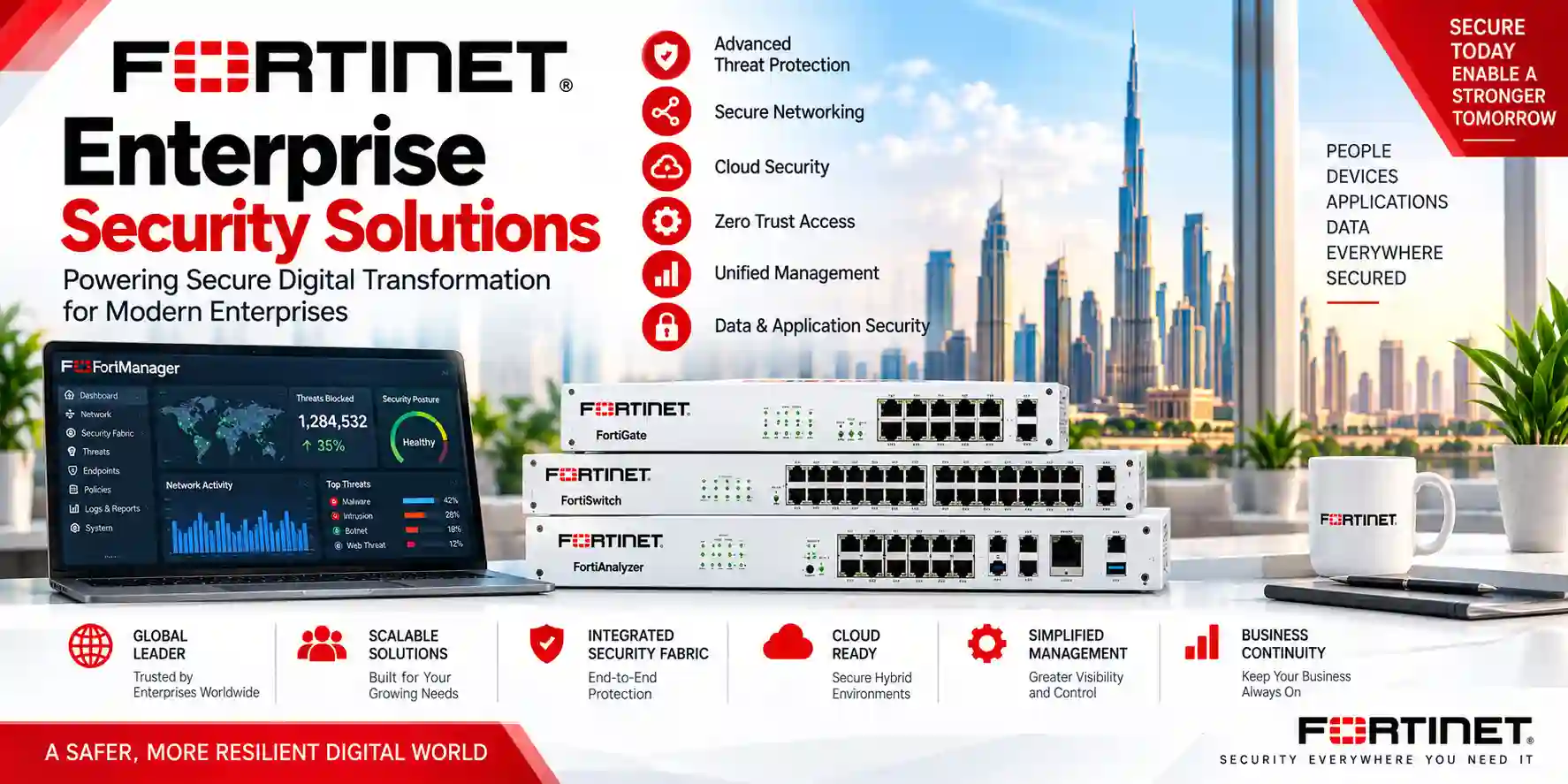
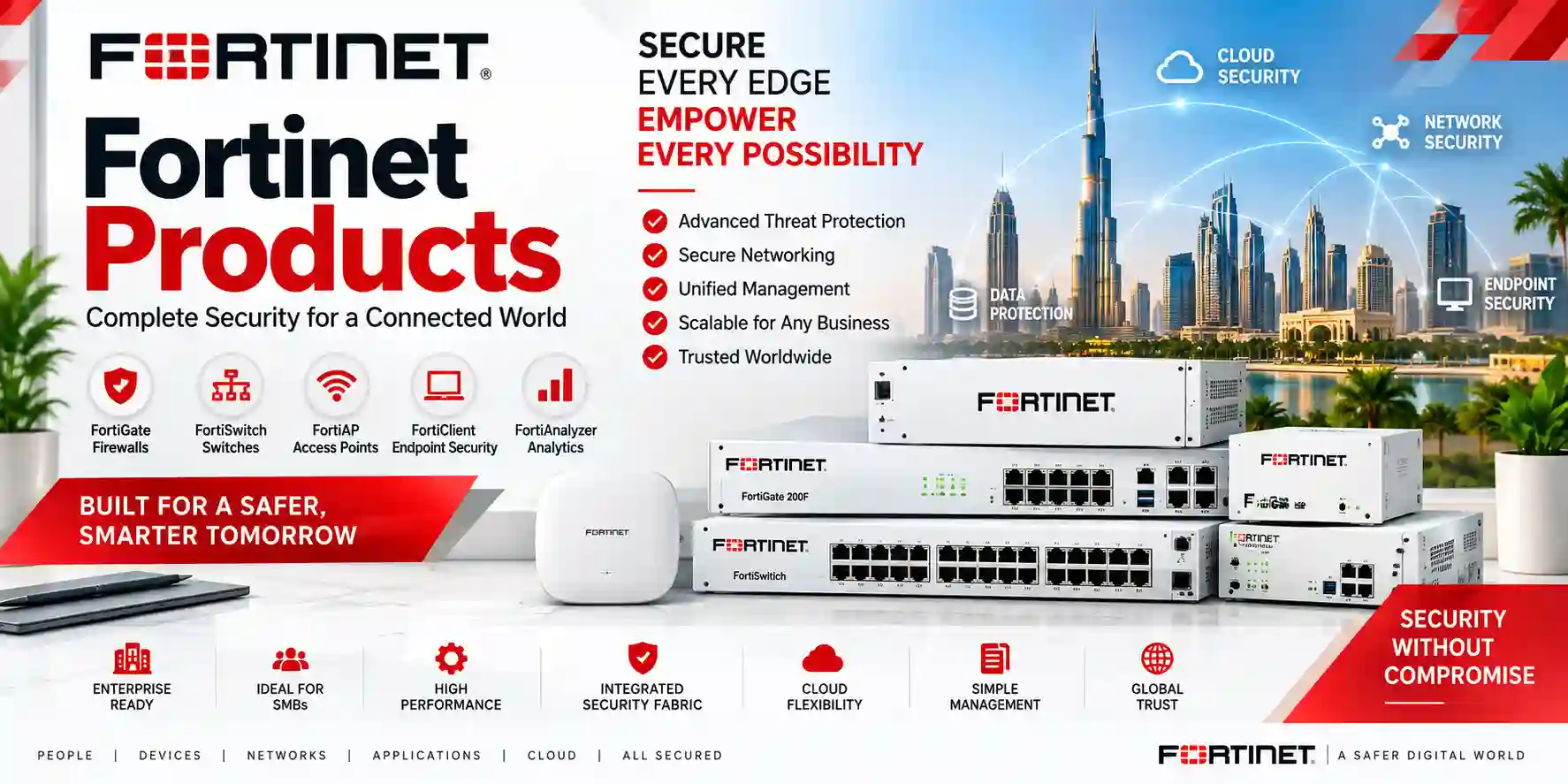
Fortinet network architecture and design is the process of defining how Fortinet security and networking components should protect, connect and manage users, devices, applications, branches, data centers and cloud services. Depending on the requirement, the architecture can use FortiGate for next-generation firewall, routing, VPN and Secure SD-WAN functions; FortiSwitch and FortiAP for managed LAN and wireless access; FortiManager for centralized configuration and policy administration; FortiAnalyzer for logging, analytics and reporting; and other Security Fabric components for broader security use cases. The correct design is determined by topology, traffic, inspection requirements, availability targets, segmentation, remote access, WAN conditions, management model and expected growth rather than by a fixed product bundle.
Architecture scope: from internet edge to campus, branch and cloud
Fortinet documentation presents secure networking as an integrated approach in which security and connectivity are designed together. This matters because firewall policy, SD-WAN path selection, switching, wireless access, identity, cloud connectivity and logging can influence one another. A useful architecture therefore maps the whole traffic journey: where users connect, what they need to reach, which trust boundary applies, how traffic is inspected, what happens if a link fails, how branches communicate, where logs are retained and how administrators make controlled changes.
1. Secure edge
Define internet ingress and egress, firewall policy, NAT, published services, VPN, inspection, high availability and the security services that will actually be enabled.
2. WAN and branches
Assess broadband, private WAN and cellular transports, then define SD-WAN health checks, application steering, overlays, branch standards and failover behavior.
3. LAN and Wi-Fi
Map access, aggregation and core needs; VLANs; PoE; uplinks; wired and wireless segmentation; guest access; IoT or operational devices; and management boundaries.
4. Operations
Plan FortiManager, FortiAnalyzer or other operational tooling according to site count, administrative roles, logging objectives, reporting, change control and troubleshooting workflows.
Verified Fortinet building blocks commonly used in network designs
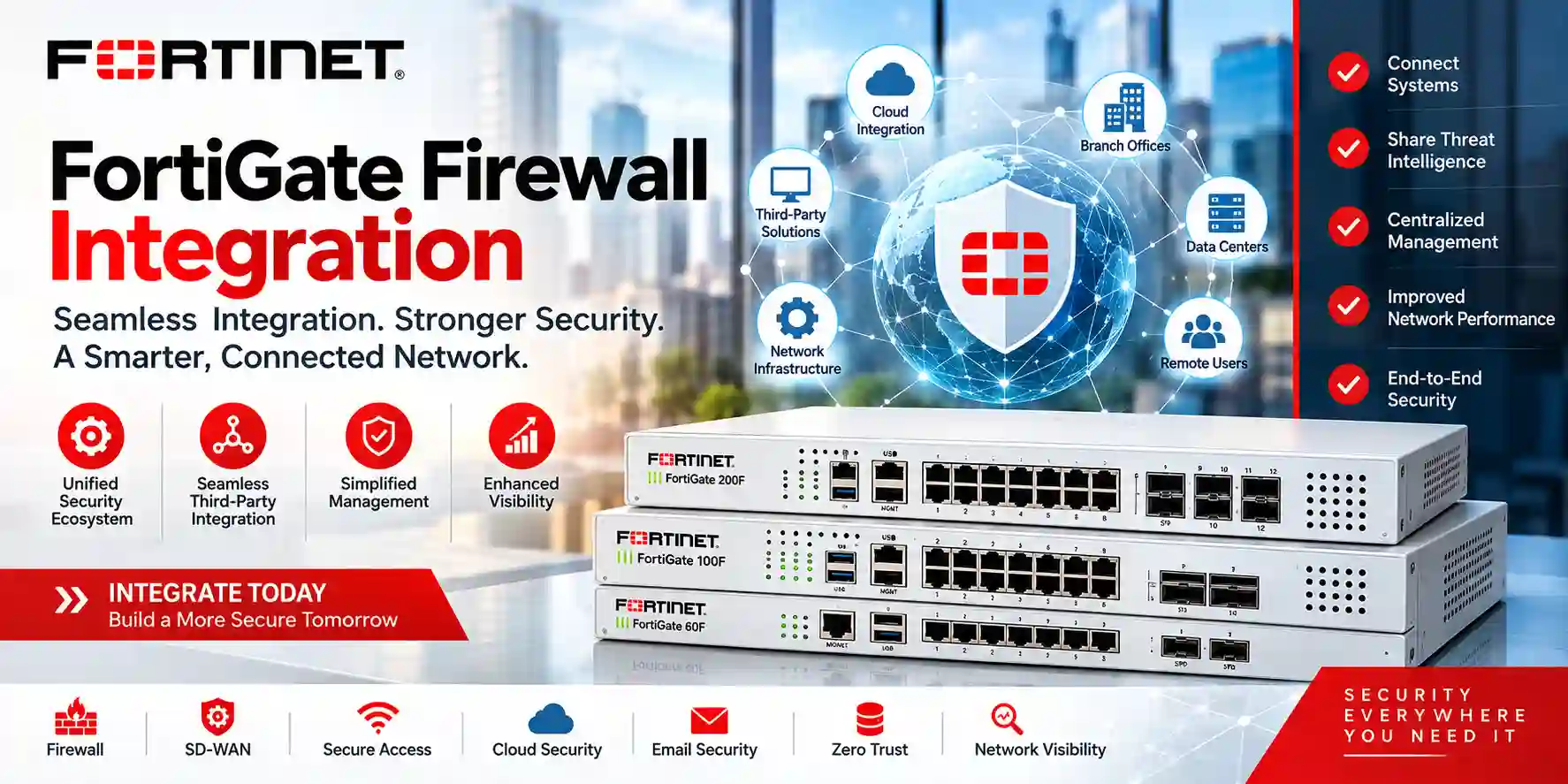
Fortinet’s current Secure SD-WAN material states that networking and security functions can run on FortiOS with centralized management, while its reference architectures show FortiGate devices at sites and describe centralized management and analytics with FortiManager and FortiAnalyzer. Fortinet’s SD-Branch documentation also extends the design toward FortiSwitch and FortiAP for wired and wireless access. These are vendor-documented architectural relationships; the exact appliances, licenses and deployment model still require project-specific validation.
A design can therefore be built around FortiGate at the edge, with secure overlays between sites, application-aware steering across multiple transports, segmentation inside the LAN, policy consistency, and centralized visibility. For hybrid and cloud-heavy environments, the discussion can also include SASE, zero-trust access patterns and cloud connectivity. Those additions should be driven by where users and applications live, not by a desire to add every available product.
A practical Fortinet network design methodology
Fortinet reference material emphasizes that architecture guidance is a starting point for designing a scalable, redundant and secure solution rather than a substitute for project-specific engineering. Fourteck follows the same practical principle: first describe the requirement, then map technology to it. The steps below keep technical design tied to operational outcomes.
Discover
Document sites, users, critical applications, internet links, cloud services, server networks, guest access, remote workers, security concerns, existing hardware, address plans, current pain points and growth expectations.
Classify
Group traffic and assets by business role and trust level. Typical design questions include which systems require isolation, which users need remote access, what can communicate between VLANs and which flows must be logged or inspected.
Engineer
Create logical and physical topology, segmentation, routing, WAN, VPN, resilience, management and logging design. Size components from real traffic and enabled security services rather than raw interface speeds alone.
Validate
Review failure scenarios, migration sequence, policy dependencies, compatibility, licensing, change windows and acceptance tests. A pilot or staged rollout can reduce risk in complex multi-site environments.
Segmentation, resilience and traffic engineering
Segmentation is one of the most important architectural decisions because it limits unnecessary communication and gives policy meaning. User devices, servers, voice systems, cameras, guest Wi-Fi, building systems, management interfaces and other device classes do not all need the same access. A Fortinet design can use VLANs, routed interfaces, firewall policy and, where appropriate, broader identity or zero-trust controls to separate these roles. The goal is not to create dozens of segments without purpose; it is to create boundaries that correspond to actual business and security requirements.
Resilience is broader than high availability at the firewall. It can include dual WAN transports, redundant edge devices, resilient switching uplinks, alternate paths, power protection, configuration backup, centralized monitoring and a documented recovery process. Secure SD-WAN can add intelligent path selection and link-health awareness, but a good design still needs defined behavior for outages. Which applications may use the backup link? What should happen if latency rises? Is a cellular connection reserved for critical applications? Which sites need dual hubs? These questions turn resilience from a marketing feature into an operational plan.
Traffic engineering also needs to reflect real application behavior. Collaboration, voice, ERP, cloud applications, backups, software updates and surveillance traffic have different characteristics. Monitoring latency, jitter and packet loss can inform steering decisions, while QoS and traffic shaping may protect critical services during congestion. The design should make these priorities explicit and test them under realistic load.
Centralized management, visibility and lifecycle operations
Multi-site architecture becomes difficult to operate when every firewall, switch and access point is managed as an isolated device. Fortinet documentation positions FortiManager for centralized deployment, configuration and management, while FortiAnalyzer supports analytics, logging and reporting. Whether both are required depends on scale, reporting needs and operational maturity, but the design should define management from the beginning. Administrative roles, approval workflows, policy packages, backups, templates, monitoring, log retention and reporting are part of the architecture, not tasks to solve after deployment.
Lifecycle planning is equally important. Firmware compatibility, subscription renewals, configuration backup, policy review, certificate management, hardware replacement and branch expansion all affect long-term reliability. A design package should therefore include diagrams, interface and VLAN tables, IP plans, routing notes, VPN relationships, security zones, management addressing, device naming and test criteria. Clear documentation shortens troubleshooting and reduces dependence on individual memory.
Operational simplicity should be measured by how safely routine tasks can be performed. Adding a branch, changing an allowed application, onboarding a new VLAN or troubleshooting a poor WAN path should follow a known method. When the architecture is standardized, the team can repeat patterns without cloning mistakes. Standardization also helps procurement because the organization can define branch profiles and approved design variants rather than starting every site from zero.
Internal Fourteck Tanzania resources related to the architecture
A network architecture project touches multiple technology categories. These verified Fourteck Tanzania pages provide useful context for procurement, implementation and related systems.
Overview of integrated IT, networking, cybersecurity, collaboration and infrastructure planning that can sit around a Fortinet design.
Explains the outcome-led approach to discovery, integration, deployment planning and lifecycle thinking used for technology projects.
Useful for identifying related firewall, switching, wireless, server and infrastructure requirements before a final bill of materials is prepared.
Provides broader project, deployment, configuration and support context for a network architecture engagement.
An example FortiGate product page for buyers evaluating a specific firewall model within a properly sized architecture.
Shows a voice endpoint that can depend on VLAN, PoE, QoS and firewall policy, illustrating why network design must account for connected business systems.
Use the verified Tanzania contact page to share site count, user numbers, bandwidth, current network details and security objectives for architecture scoping.
Regional Fourteck network resources
Organizations operating across markets may need consistent design standards while handling procurement and implementation through the most relevant regional resource. Verified Fourteck network sites include Fourteck Uganda for Uganda technology requirements, Fortinet UAE by Fourteck for Fortinet-focused UAE enquiries, Fourteck IT Solutions Africa for broader African infrastructure context, Fourteck Ghana for Ghana requirements, Fourteck Nigeria for Nigeria technology projects, and Fourteck IT Services UAE for UAE IT service requirements. These links support regional coordination; they do not imply identical service scope in every market.
Regional Fortinet network architecture planning
Fortinet Network Architecture and Design Tanzania
For a Tanzania-wide Fortinet architecture, the useful starting point is to classify the organization by topology rather than by industry label. A company may have one head office, a head office plus branches, multiple warehouses, a campus, remote operational sites, cloud-hosted applications or a mixture of these. Each pattern creates different questions about edge security, WAN resilience, segmentation and management. The design should document internet circuits at each site, business-critical applications, remote access needs, internal trust zones, server or cloud destinations, wireless networks and the operational team that will manage the environment after handover.
Tanzania projects also benefit from realistic resilience planning. If a site needs two internet connections, the design should define whether both are active, whether one is backup, which applications can use each path and how degraded performance is detected. Fortinet Secure SD-WAN can provide application-aware steering and link monitoring, but the engineering decision still depends on available transports and business priorities. Branch VPN overlays should use a topology that matches the number of sites, communication patterns and failure requirements instead of automatically selecting the most complex option.
Inside the LAN, users, guest Wi-Fi, IP phones, cameras, servers and management interfaces should not be treated as one undifferentiated network. A practical segmentation plan creates a small number of meaningful zones, then applies policy according to required communication. For organizations with several Tanzania locations, FortiManager and FortiAnalyzer can be considered for centralized configuration, change consistency, logging and reporting. Procurement should follow the architecture: confirm interfaces, throughput under the intended security services, VPN needs, high-availability requirements, switch PoE demand, wireless coverage, subscriptions and growth. This approach produces a Fortinet bill of materials that is traceable to an actual design rather than a list of unrelated devices.
Fortinet Network Architecture and Design Dar es Salaam
Dar es Salaam organizations frequently evaluate network architecture in the context of headquarters, customer-facing offices, branches, warehouses or data-intensive business operations. The design conversation should therefore begin with how the main site connects to the rest of the organization. A head office may host shared services, identity systems, local servers, voice platforms, security monitoring or internet breakout. If everything is concentrated there, an outage can affect many users. If services are distributed to cloud platforms, the WAN and security design should avoid unnecessary backhaul and keep policy consistent across local and remote access.
A Fortinet architecture for Dar es Salaam can combine FortiGate at the edge with segmented LANs, secure VPN, SD-WAN and centralized management when the requirement justifies it. The right firewall model depends on inspected throughput, user and device volume, VPN sessions, interface requirements and expected growth. The switching layer should be planned at the same time because access points, phones, cameras and other devices may depend on PoE and VLAN design. For larger offices, uplink capacity and redundancy can become more important than simply adding more access ports.
The practical design deliverable should include current-state and target-state diagrams, an IP and VLAN plan, firewall zones, WAN links, routing decisions, VPN relationships, management addressing, log destinations and acceptance tests. Migration planning matters as much as architecture because a live business may need to move from an existing router or firewall without extended disruption. A staged cutover can validate internet access, internal routing, DNS, VPN, cloud applications and voice or collaboration traffic before older equipment is removed. Procurement teams can then request a quote using the documented quantities, subscription requirements, optics, cabling, rack space, UPS capacity and installation scope instead of comparing incomplete firewall-only quotations.
Fortinet Network Architecture and Design Mwanza
For Mwanza, a valuable Fortinet design is one that remains understandable when connectivity options, site layouts or branch requirements change. Organizations may have a main office and smaller operational locations, or a single site with several internal systems that need secure separation. The architecture should identify which services must remain available when an internet link is unstable, which traffic can use an alternate path, and which systems are local enough to continue operating without cloud connectivity. These decisions influence whether the project needs a second WAN connection, SD-WAN policies, local DNS or application dependencies, and stronger redundancy at the edge.
Segmentation should reflect business function. Finance, general users, guest Wi-Fi, IP cameras, voice, servers and administrator interfaces can be separated when policy requirements differ. FortiGate can provide routed security boundaries, while managed switching and wireless components can carry the corresponding VLANs through the access network. The design should also review PoE budget, fiber or copper uplinks between areas, rack capacity and UPS runtime because network availability depends on supporting infrastructure as much as on the firewall.
For multi-site environments, consistent configuration becomes a support advantage. A Mwanza branch should use the same naming, address conventions, security-zone logic and documentation style as other locations while allowing site-specific differences. Centralized Fortinet management can reduce repetitive administration when there are enough sites to justify it, but the organization should still define who can approve changes, who receives alerts and how configurations are backed up. Buying decisions should follow this operating model. A smaller branch may need a different FortiGate and switch profile from a head office, yet both can fit the same architecture. That balance between standardization and right-sizing makes expansion easier and keeps future troubleshooting from becoming a collection of unique exceptions.
Fortinet Network Architecture and Design Arusha
An Arusha Fortinet architecture should be designed around service continuity, user mobility and the mix of internal and internet-facing applications. Offices, hospitality-related operations, education, professional services and other organizations can all have very different traffic patterns, so architecture should not start from a generic “users per firewall” rule. Discovery should identify peak internet utilization, cloud platforms, collaboration traffic, guest access, remote workers, site-to-site communication, security logging requirements and any operational technology or IoT devices that need isolation.
Wireless design is often tightly linked to firewall architecture. Staff, guests and operational devices may share the same physical access-point system while requiring different network policies. FortiAP and FortiSwitch can participate in a Fortinet SD-Branch design, but the project still needs radio planning, PoE capacity, wired uplinks and logical segmentation. Guest internet access should be isolated from business resources, and management interfaces should sit in a controlled administrative zone. For sites that depend heavily on cloud applications, the WAN plan should evaluate more than bandwidth: latency, jitter, packet loss and failover behavior can determine whether a secondary circuit improves user experience.
A well-documented Arusha project should also define the operational lifecycle. Firmware changes need compatibility review; FortiGuard or support subscriptions need renewal tracking; configuration backups need ownership; and security policies need periodic cleanup. FortiAnalyzer can support log visibility and reporting, while FortiManager can help standardize configuration in larger deployments. The architecture should state why each management component is included and what problem it solves. Quotation preparation should then include the firewall platform, support and security services, switching or wireless components, optics, licenses where required, rack and power dependencies, configuration work, migration, testing and documentation. This prevents a low headline price from hiding missing infrastructure or operational requirements.
Fortinet Network Architecture and Design Dodoma
For Dodoma, network architecture discussions often benefit from an explicit focus on policy, administration and resilience because many organizations need technology that can be operated by more than one stakeholder. The design should separate business requirements from product selections: which services are critical, which data or systems need stronger controls, who is allowed to administer the network, how remote access is approved, what logs must be available for troubleshooting, and how long an outage can be tolerated. Once those answers are clear, Fortinet components can be mapped to the requirement.
At the edge, FortiGate can combine firewalling, routing, VPN and SD-WAN capabilities. Internally, separate security zones can reduce unnecessary lateral access between user groups, server systems, cameras, guest networks and management interfaces. If a site uses two carriers or adds cellular backup, SD-WAN policies can be designed around application priority and measured link health rather than simple round-robin use. If multiple offices need connectivity, secure overlays can be planned with a topology appropriate to the number of sites and the desired resilience.
For ongoing administration, a Dodoma organization should decide whether device-by-device management remains practical or whether centralized tooling is warranted. FortiManager can support consistent policy and configuration workflows, and FortiAnalyzer can centralize logs and reporting. Those platforms should be sized and licensed according to actual deployment requirements. Documentation should include configuration standards, diagrams, IP addressing, VPN relationships, firewall-policy ownership and a tested backup process. Procurement can then evaluate quotations against an architecture rather than against brand names alone. The right proposal is one that includes the dependencies needed for the design to work: compatible transceivers, PoE switching, wireless access, subscriptions, cabling, rack and UPS considerations, migration effort, testing and handover. This makes the project easier to approve and easier to support after installation.
Fortinet Network Architecture and Design UAE
A UAE Fortinet architecture may need to serve headquarters, branches, cloud-heavy users, data-center services and hybrid workers within the same policy model. The key design task is to avoid building separate security islands for office, WAN, remote access and cloud connectivity. Fortinet’s Secure Networking and Security Fabric approach can support convergence, but successful deployment still depends on clear trust boundaries, routing design, availability requirements, logging and operational ownership.
For multi-branch organizations, Secure SD-WAN can be used to steer applications across broadband, private WAN or cellular transports according to health and policy. The underlay should be assessed for bandwidth, latency, jitter, loss and commercial constraints, while the overlay should reflect branch-to-hub, branch-to-branch and cloud communication needs. High availability at major sites may require redundant FortiGate appliances and resilient upstream and downstream connections. Campus environments can extend architecture into FortiSwitch and FortiAP, giving wired and wireless users policy-aligned segmentation and centralized visibility where appropriate.
Management design is particularly important as the number of devices grows. FortiManager can centralize configuration and policy administration; FortiAnalyzer can support logging, analytics and reports. A mature architecture also documents administrative roles, approval workflows, configuration backup, firmware strategy, certificate lifecycle and monitoring. UAE procurement teams comparing Fortinet proposals should request the complete solution scope: hardware, subscriptions, support, management platforms, optics, licenses, migration, professional services and acceptance testing. Fourteck’s verified Fortinet UAE resource can be used for regional Fortinet enquiries, while architecture decisions should remain tied to the actual environment rather than a generic bundle. This approach helps regional organizations standardize design principles while preserving the performance and resilience required by each site.
Fortinet Network Architecture and Design Uganda
For Uganda, the architecture should distinguish between nationwide standardization and site-specific constraints. A head office, sales branch, warehouse, project office or remote location can share the same Fortinet security principles without using identical hardware. The common design can define standard security zones, VPN methods, branch naming, logging, administrator roles and baseline policies. Site profiles can then adjust the number of WAN links, firewall size, switch ports, wireless capacity and resilience to match local use.
FortiGate can provide the secure branch edge, routing and Secure SD-WAN functions, while a standardized overlay can connect sites to hubs or cloud services. The project should document how traffic behaves when the preferred path fails and whether backup links have enough capacity for all applications. In some branches, it may be better to restrict backup usage to voice, key cloud applications and management traffic rather than allowing every workload to consume the alternate circuit. That behavior belongs in the design and in the test plan.
Within each Uganda site, segmentation should keep guest access, general users, servers, voice and cameras separated when their trust requirements differ. FortiSwitch and FortiAP can support an integrated branch design, but the physical layer still needs proper cabling, PoE and uplink planning. Centralized operations can become valuable as the network expands; FortiManager and FortiAnalyzer may reduce configuration drift and improve visibility. Procurement teams should include support subscriptions, required security services, deployment labor, configuration backup and documentation in the scope. The verified Fourteck Uganda website provides a regional route for broader technology discussions, while cross-border organizations can use the same architecture standards across Uganda and Tanzania without assuming that carrier choices or site conditions are identical.
Fortinet Network Architecture and Design Kampala
A Kampala design often serves as the policy anchor for organizations with multiple Uganda locations, making it important to define how headquarters and branch traffic should interact. The central site may host servers, internet breakout, monitoring or shared applications, but modern cloud use can make forced backhaul inefficient. A Fortinet architecture should therefore identify which applications should exit locally, which should traverse secure overlays to central resources and which require special inspection or routing. This produces more precise SD-WAN and firewall policies than treating every destination the same.
At the campus or office layer, wired and wireless access should be designed as one system. VLANs can separate departments, guest traffic, voice, cameras or management networks, and FortiGate policies can control communication between those zones. FortiSwitch and FortiAP can be integrated into a Secure SD-Branch design where appropriate. The network should be sized for peak user and application demand, not only for average internet utilization. Access-point count, PoE budget and switch uplinks are especially important when Wi-Fi, IP telephony and video systems share infrastructure.
For a growing Kampala deployment, centralized management should be considered before the number of devices becomes difficult to control. Standard templates can make branch rollout more predictable, while centralized logging can shorten security investigation and performance troubleshooting. The architecture should define policy ownership, backup routines, firmware processes and naming conventions. Procurement should request model and licensing details together with assumptions: inspected throughput, number of users, VPN demand, expected branch count, high-availability needs and retention requirements. That makes competing proposals easier to compare. The strongest design is not the one with the largest appliance; it is the one that can explain how each component supports a defined business and operational requirement, how failures are handled, and how the environment will be maintained after the installation team leaves.
Fortinet Network Architecture and Design Arua
For Arua, a Fortinet design should emphasize simplicity, remote manageability and clearly defined fallback behavior. Smaller or geographically distributed sites can become expensive to support if every location uses a unique network layout. A repeatable branch profile can reduce that complexity: one standard for VLANs, one method for management access, one VPN approach, one naming convention and one documented process for bringing a new site online. Hardware can still be right-sized to the local number of users and applications.
WAN design deserves particular attention because branch productivity may depend on cloud applications or communication with a central site. If multiple transports are available, Fortinet Secure SD-WAN can monitor path quality and steer applications, but the architecture should specify the thresholds and priorities. A backup path should be tested to confirm that DNS, VPN, business applications and management traffic continue to work. Where bandwidth is limited, non-critical traffic such as large updates or backups may need different policy during failover.
Remote operations should also account for support access. Centralized Fortinet management can help teams push consistent changes, monitor status and retain logs without relying on local hands for routine administration. The branch itself should still have clear documentation covering ports, cabling, IP addresses, WAN details, administrator contacts and recovery steps. On the LAN, segmentation can separate staff, guest Wi-Fi, cameras and voice so that adding one new system does not create unnecessary access to the rest of the network. When requesting a quotation for an Arua site, include the WAN interfaces, switch and PoE requirements, access-point quantity assumptions, security subscriptions, UPS and rack needs, and any remote deployment or handover requirements. This turns the procurement process into a validation of the design rather than a search for a firewall with an attractive headline specification.
Fortinet Network Architecture and Design Mbarara
A Mbarara Fortinet architecture can be built around a practical branch model that balances security, connectivity and operational effort. The discovery stage should identify the users and devices at the site, which applications are hosted locally or in the cloud, whether the branch needs direct internet access, which central services it must reach, and what happens during a carrier outage. These inputs determine the edge design more accurately than selecting an appliance by user count alone.
If the site has two WAN links, Secure SD-WAN policies can steer business applications according to link performance and availability. The design should document service-level measurements, preferred paths and failover rules. VPN overlays to a head office or regional hub should be planned around actual communication needs. For example, a branch that mostly consumes cloud services may not need all internet traffic backhauled through headquarters, while a branch that accesses central applications may require resilient tunnel paths and more careful routing.
Inside the location, staff, voice, guest access, cameras and administrative interfaces may benefit from separate VLANs and firewall policy. If FortiSwitch and FortiAP are used, integration can simplify visibility, but switch capacity, PoE and wireless coverage still require site-specific calculation. Management should include configuration backup, monitored WAN status and consistent logging. When the organization has multiple branches, centrally managed templates can reduce configuration drift and make Mbarara easier to support from the same operational model used elsewhere. A complete procurement request should include bandwidth, user and device counts, required VPN and inspection features, switch port and PoE demand, wireless scope, subscriptions, power and rack dependencies, migration, testing and documentation. This prevents the branch from receiving an isolated firewall purchase that later exposes missing cabling, wireless, licensing or management requirements.
Fortinet Network Architecture and Design Gulu
For Gulu, a resilient Fortinet branch design should make both normal operation and failure operation explicit. Network diagrams often show the preferred path but omit what happens when an ISP, firewall, switch uplink or power source fails. A stronger design maps these dependencies and defines which failures the solution is expected to tolerate. This does not always mean duplicating every component; it means understanding the business impact and investing in redundancy where it changes the operational outcome.
FortiGate can act as the secure edge and SD-WAN node, with VPN overlays linking the site to other branches or shared services. Where two transports are present, health checks can help select a better path for critical applications. The design should avoid ambiguous behavior by documenting route priorities, SD-WAN rules and tunnel relationships. At the LAN layer, segmentation should keep operational devices and guest access from sharing unrestricted trust with business endpoints. FortiSwitch and FortiAP can extend the Fortinet architecture through wired and wireless access where appropriate, while local physical design must still account for uplinks, PoE, rack power and coverage.
Central visibility is useful when the Gulu site is part of a larger network. Administrators should be able to see link health, device status, security events and configuration changes without traveling to the branch for routine tasks. FortiManager and FortiAnalyzer can support those goals at scale. A handover pack should include WAN information, topology, VLANs, management addresses, VPNs, credentials process, backup method and test results. Procurement should verify the support and security subscriptions attached to the selected devices and distinguish one-time hardware from recurring services. By connecting commercial scope to the architecture, the organization can evaluate whether a proposal includes the tools and services needed to operate the site, not just the equipment required to power it on.
Fortinet Network Architecture and Design Kenya
A Kenya Fortinet architecture should be planned for the organization’s actual mix of metropolitan offices, branches, cloud applications, data-center workloads and remote users rather than from a generic regional template. A business with many branches needs repeatable standards and centralized visibility; a single large campus may need more attention to segmentation, uplinks, wireless density and high availability; a cloud-first organization may focus on internet path quality, secure access and SASE integration. These different profiles can all use Fortinet technology, but they require different architecture decisions.
For branch connectivity, Secure SD-WAN can combine multiple underlays and steer traffic based on application and link health. The design should record which carrier circuits exist at each site, whether local internet breakout is permitted, how cloud and private applications are reached, and how failover is tested. IPsec overlays and dynamic routing can support larger topologies, but complexity should be justified by scale and resilience needs. At the campus edge, FortiGate, FortiSwitch and FortiAP can support coordinated wired, wireless and security policy, while VLANs should correspond to real trust boundaries such as users, guests, servers, voice, cameras or management.
Operations should be designed as carefully as traffic flow. FortiManager can support multi-device policy and configuration workflows, while FortiAnalyzer can centralize logs and analytics. The organization should define administrators, approval controls, firmware process, backups, monitoring and reporting. Kenya procurement should include all of these operational requirements in the request for quotation, together with security subscriptions, support terms, transceivers, access switching, wireless components, rack and power dependencies, professional services and documentation. If the business also operates in Tanzania or Uganda, a shared architecture standard can simplify support while site profiles preserve local differences. Standardization is most valuable when it defines the principles and templates, not when it forces every branch to buy identical hardware regardless of workload.
Fortinet Network Architecture and Design Kuwait
A Kuwait Fortinet architecture can involve high-bandwidth office connectivity, branch operations, cloud services, remote access and strict expectations for availability. The design should therefore separate capacity planning from security planning while making both work together. Internet bandwidth is not the same as required firewall performance once IPS, application control, web security, SSL inspection or VPN are enabled. Selection should be based on the traffic mix and security services the organization intends to operate, with growth headroom that is realistic rather than excessive.
For resilient WAN design, Secure SD-WAN can monitor link quality and steer applications between available transports. The architecture should define business-critical application classes, preferred paths and behavior during degradation. Branch overlays can be built to connect offices with hubs, data centers or cloud services, and larger environments may use dynamic routing and redundant hubs. These features should be documented so the operating team understands how traffic moves during normal and failure conditions. Campus architecture can extend segmentation into FortiSwitch and FortiAP, separating staff, guest, voice, security and management traffic while preserving centralized policy.
Kuwait deployments should also consider management and logging early. FortiManager can help administer multiple FortiGate devices consistently, and FortiAnalyzer can provide centralized analytics and reporting. The organization should decide log-retention goals, administrator roles, change approval, configuration backup and firmware strategy before production. Procurement should list hardware, subscriptions, support, licenses, optics, cabling, professional services, migration and testing separately enough to see what is included. If a proposal mentions high availability, confirm that the related switching, WAN connections and power design do not leave an obvious single point of failure. Architecture quality comes from the complete dependency chain, not merely from two firewall appliances installed side by side.
Fortinet Network Architecture and Design Ghana
For Ghana, network architecture should help organizations move from isolated security purchases toward a coordinated operating model. A FortiGate firewall can protect the edge, but its value improves when the network behind it has defined zones, the WAN design has clear failover, remote access follows policy, and logs are available for troubleshooting and security review. The architecture should therefore begin with users, applications, data flows, sites, internet services, existing switching and wireless infrastructure, and the team responsible for support.
Where businesses have multiple Ghana locations, a repeatable branch blueprint can simplify deployment. Each profile can define interface use, VLANs, VPN, SD-WAN, addressing, security policy and management while allowing different device sizes based on bandwidth and user count. Secure SD-WAN can help use multiple transports intelligently, and Fortinet reference architectures support scalable overlays for multi-site environments. The chosen topology should match the number of branches and communication pattern rather than introduce dynamic routing solely because it is available.
LAN and wireless architecture should consider PoE, uplink capacity, guest isolation and operational device segmentation. FortiSwitch and FortiAP can integrate with a Fortinet branch architecture, while FortiManager and FortiAnalyzer can support centralized operations for larger networks. Procurement should include the recurring cost of support and security services, not only appliance purchase. Buyers should also request documentation, configuration backup and acceptance testing in the project scope so that the environment can be maintained after deployment. The verified Fourteck Ghana site provides a regional resource for broader technology requirements. For organizations spanning Ghana and East Africa, common architecture templates can make security policy and support more consistent while allowing local connectivity, hardware sizing and project logistics to remain specific to each market.
Fortinet Network Architecture and Design Nigeria
A Nigeria Fortinet architecture can become complex quickly when an organization combines large offices, distributed branches, internet-facing applications, cloud workloads and remote users. The most effective way to control that complexity is to define layers and standards. The edge layer handles internet and external connectivity; the WAN layer connects branches and clouds; the access layer connects users and devices; the security model defines segmentation and inspection; the management layer defines how configurations and logs are controlled. Each layer should have clear dependencies and ownership.
FortiGate can provide next-generation firewall, routing, VPN and Secure SD-WAN capabilities, making it suitable as a converged branch or edge platform where sizing is appropriate. For many branches, SD-WAN overlays and standardized templates can reduce operational variation. Link-health measurements should influence application steering, and failover should be tested with actual critical services. In larger offices, FortiSwitch and FortiAP can form part of the secure access architecture, with VLANs and policies separating user groups, guests, voice, cameras, servers and administrative networks.
Centralized management and analytics become more valuable as the estate grows. FortiManager can help standardize policy and deployment, while FortiAnalyzer can support logging and investigation. The architecture should also define backups, administrator roles, firmware lifecycle, certificate handling and a change process. Nigeria procurement teams should ask vendors to state the assumptions behind their design: bandwidth, inspected throughput, user and device count, VPN scale, high availability, management licenses and subscription terms. This makes it easier to identify omissions and compare proposals fairly. The verified Fourteck Nigeria website provides regional context for wider IT requirements. A multi-country organization can use the same architecture governance across Nigeria and Tanzania while keeping carrier selection, branch sizing and rollout sequencing specific to each country.
Fortinet Network Architecture and Design Seychelles
For Seychelles, network design can benefit from a strong focus on operational simplicity and dependency mapping. An island or multi-property organization may rely heavily on internet connectivity, cloud applications, guest services, voice, surveillance and centralized administration. The architecture should identify what continues to operate locally when external connectivity is unavailable and what requires a secure path to another site or cloud platform. This helps determine whether the project needs redundant WAN links, local services, SD-WAN policies or alternate access methods.
FortiGate can serve as the security and connectivity edge, while network segmentation separates staff, guests, operational devices, cameras, servers and management. Hospitality or customer-facing environments may need particularly clear guest isolation and bandwidth policy, but the same principle applies to any business that supports different user groups on shared infrastructure. FortiSwitch and FortiAP can extend the Fortinet architecture into wired and wireless access when appropriate, with PoE, uplink capacity and coverage planned from the physical site rather than from generic ratios.
Remote manageability is valuable when specialist support is not physically present at every site. Centralized management and logging can provide configuration consistency, health visibility and faster troubleshooting, while detailed documentation gives local staff a clear reference for cabling, ports, WAN connections and recovery steps. The design should also include configuration backup and a practical spare or replacement strategy based on the organization’s tolerance for downtime. Procurement should capture subscriptions, support, optics, rack and UPS needs, implementation, migration, test procedures and documentation. For organizations with regional offices in East Africa or the Gulf, a shared Fortinet architecture can reduce operational variation while each Seychelles site retains the WAN, capacity and resilience choices that match its own environment.
Architecture quotation checklist
For a faster and more accurate Fortinet architecture quotation, share enough information to explain both capacity and design intent. Useful inputs include:
Fortinet network architecture FAQ
What is the difference between buying a FortiGate and designing a Fortinet architecture?
Buying a FortiGate provides a platform. Architecture defines how that platform fits WAN links, routing, segmentation, VPN, users, applications, switching, wireless access, management, logging, resilience and operational processes. The model should be selected after those requirements are understood.
Can Fortinet Secure SD-WAN use multiple internet links?
Yes. Fortinet documents Secure SD-WAN capabilities for intelligent steering across multiple transports with health monitoring. The design still needs to define link roles, performance thresholds, application priorities, failover behavior and whether backup capacity is sufficient for critical traffic.
Do all Fortinet networks need FortiManager and FortiAnalyzer?
No. Their value increases with scale, policy consistency, logging, analytics and operational requirements. A design should justify centralized management and analysis according to device count, reporting needs, administrative workflow and support model.
How should a FortiGate be sized?
Sizing should consider the internet and internal traffic that will cross the firewall, the security services that will be enabled, encrypted traffic inspection, VPN load, interface requirements, user and device scale, high availability, logging and expected growth. Raw firewall throughput alone is not a complete sizing method.
Can FortiSwitch and FortiAP be part of the same architecture?
Yes. Fortinet’s SD-Branch architecture can extend from FortiGate into FortiSwitch and FortiAP. The project still needs site-specific LAN and wireless engineering for ports, PoE, uplinks, VLANs, coverage, capacity and device placement.
What information should be collected before a network design workshop?
Collect topology diagrams if available, site list, WAN circuits, IP addressing, firewall and switch models, wireless information, critical applications, server and cloud destinations, remote-access requirements, user and device counts, compliance needs, recent pain points, growth plans and the people responsible for network operations.
How do I compare two Fortinet architecture quotations?
Compare assumptions before comparing total price. Check inspected throughput, subscriptions, support duration, HA scope, management platforms, switch and Wi-Fi dependencies, optics, cabling, migration, configuration, documentation and testing. Two quotes with similar firewall models can differ significantly in completeness.
Decision recap
A Fortinet architecture should be selected by design fit rather than by brand recognition or appliance size. Start with sites, users, applications and trust boundaries. Define WAN underlays and failover. Create meaningful segmentation. Decide how branches and cloud services connect. Size FortiGate for the security features that will actually run. Plan wired and wireless access, management, analytics and documentation. Then map the approved architecture into hardware, licenses, subscriptions and implementation scope.
For organizations expanding across Tanzania or multiple countries, standardize the architecture principles and branch profiles, not necessarily every appliance model. This creates a network that can grow without becoming a collection of unrelated configurations. Fourteck can use the discovery information to help structure a Fortinet design discussion and prepare a requirement-aligned quotation.
Plan a Fortinet architecture consultation
Share your current topology, site list, WAN links, user numbers, critical applications, existing Fortinet or non-Fortinet equipment, security concerns and growth plans. Fourteck can help organize these inputs into a practical architecture discussion covering FortiGate, Secure SD-WAN, segmentation, branch connectivity, FortiSwitch, FortiAP, FortiManager, FortiAnalyzer and related security controls where appropriate.