
Fortinet Firewall Installation
A FortiGate installation should turn a security appliance into a controlled network boundary: internet links are mapped correctly, administrative access is protected, users and systems are segmented, firewall policies are explicit, VPN requirements are tested, security services are matched to the selected subscription, and the final configuration is documented for ongoing administration.
FourTeck Tanzania approaches Fortinet firewall installation as a network-design and security-policy project rather than a simple rack-and-power task. The correct scope depends on the exact FortiGate model, FortiOS release, bandwidth, users, applications, remote-access demand, branch topology, existing switches and wireless networks, public IP arrangements, logging expectations and growth plan.
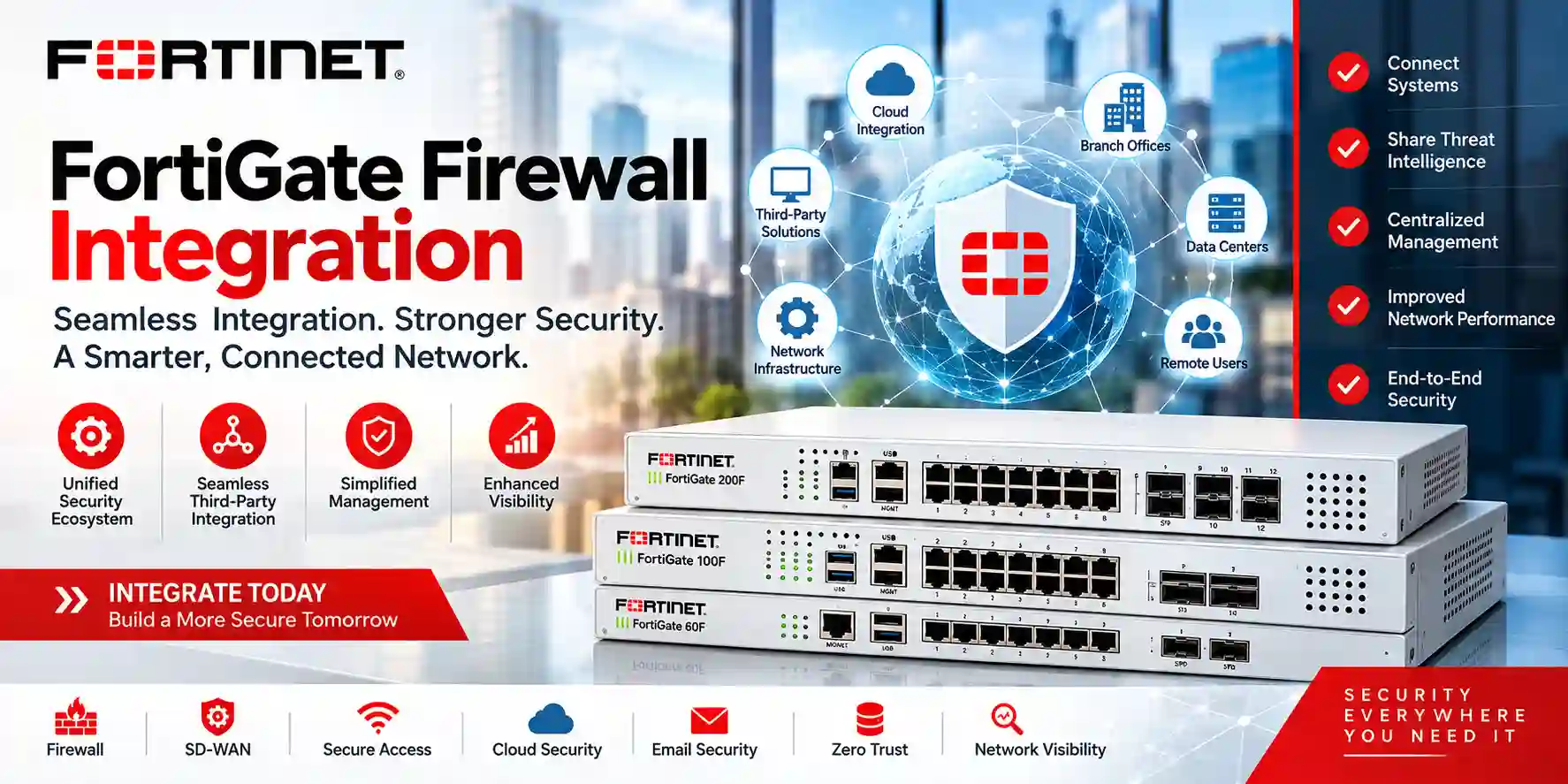
What does Fortinet Firewall Installation include?
A practical Fortinet firewall installation can include discovery, appliance placement, initial FortiGate access, interface and route planning, internet connectivity, FortiGuard connectivity, administrator hardening, firmware review, network objects, VLAN or zone design, firewall policies, NAT, DNS dependencies, web and application controls where licensed, intrusion-prevention profiles where licensed, IPsec VPN, supported remote-access methods, dual-WAN or Secure SD-WAN requirements, logging, alerts, backup, testing and operational handover. Not every project needs every function. The scope should be based on the business services that must work and the risks that must be controlled.
Fortinet documentation for current FortiOS releases treats initial deployment as a sequence: establish management access, complete setup, configure basic settings, register the device, create firewall policy and back up the configuration. Fortinet also advises reviewing default administrative settings early and backing up configuration before firmware changes. Those principles matter because a newly connected firewall is exposed to the internet as soon as its WAN interface becomes reachable. A sound deployment therefore limits administrative services, uses appropriate authentication controls, applies only necessary policy, verifies time and name resolution, and avoids opening management interfaces without a defined reason.
Installation should also account for the wider network. A FortiGate can sit at the edge of a simple office, connect a head office to branches through IPsec, participate in Secure SD-WAN, segment internal networks or support virtual and cloud environments. The design changes according to topology. A small branch may need a few clearly defined LAN, guest and voice segments. A larger site may need server zones, user networks, wireless VLANs, surveillance networks, partner access, site-to-site VPNs and central logging. The point is to design the firewall around traffic flows rather than accumulate rules without a model.
FortiGate installation workflow: from requirement to handover
Record current firewall or router details, WAN circuits, public IPs, LAN subnets, VLANs, DHCP, DNS, static routes, remote users, branch tunnels, exposed services, cloud applications, authentication dependencies and change-window limits.
Check the exact FortiGate model, interfaces, supported features, FortiOS target version, FortiCare status and FortiGuard services required by the design. Sizing should be based on enabled inspection and VPN demand, not raw firewall throughput alone.
Define who needs to reach what, from which network, using which service, and whether inspection, authentication, logging or NAT is required. Grouping objects and naming rules clearly makes later administration easier.
Configure management access, hostname, time, interfaces, routes, administrator settings, certificates where needed, firmware path and backups before production cutover. Keep a rollback copy of the previous environment when migrating.
Move WAN and LAN links according to the approved plan, then test internet access, business applications, DNS, inbound services, VPNs, inter-VLAN permissions, blocked flows, logs, authentication and failover behaviour where redundant connectivity is part of the design.
Provide the configuration backup, logical topology, interface map, policy intent, VPN peer details, administrator process, renewal notes and a list of assumptions or follow-up actions. Documentation is part of the security control, not an optional extra.
Security configuration areas that deserve deliberate decisions
FortiGate is a next-generation firewall platform, but effective protection depends on which features are licensed, enabled and correctly tuned for the environment. Firewall policies should follow intended business flows; administrator access should be restricted; interfaces should expose only necessary management services; segmentation should separate systems with different trust levels; and logging should provide enough evidence to troubleshoot incidents and policy problems.
VPN design deserves the same care. Fortinet documents site-to-site IPsec as a method for connecting private networks across public internet links, and FortiOS supports remote-access use cases as well. In practice, the installation needs to define peer addresses, routing, authentication, permitted subnets, DNS behaviour, user groups, multi-factor requirements where applicable, split or full tunnel intent, and how access is revoked. A tunnel being “up” is not sufficient validation; users must be able to reach only the resources they are supposed to reach.
For dual-internet environments, Secure SD-WAN can combine networking and security functions on FortiGate. The project should define which circuits are members, what health measurements matter, which applications or destinations should prefer which path, what happens during degradation, and how return-path behaviour affects published services and VPNs. Resilience is not achieved simply by plugging in a second ISP; routing and policy must reflect the desired failure behaviour.
VPN, remote access and branch connectivity
Remote and branch connectivity often becomes the most operationally visible part of a firewall deployment. Before configuration, identify remote-user groups, branch networks, partner networks, cloud destinations, address overlaps, public-IP constraints and authentication sources. For site-to-site IPsec, both peers need compatible phase-one and phase-two settings and coherent routes. For remote users, policy should reflect the least access needed for their role and should be tested from an external network rather than assumed to work because the local configuration appears complete.
When a business has several branches, naming conventions become important. Tunnels, address objects, routes, policies and monitoring entries should be named so an administrator can understand which location and purpose they serve. Standard patterns also reduce configuration drift when new sites are added. Where central management is appropriate, FortiManager can be considered for multi-device policy administration; FortiAnalyzer can be considered when central logging, analysis and reporting requirements justify it.

FortiGate sizing, licensing and procurement guidance
A request for “a Fortinet firewall” is not enough to choose a model. Procurement should include the internet bandwidth, expected growth, number and type of users, concurrent sessions, VPN users, branch tunnels, security inspection features, SSL inspection intent, WAN count, interface media, high-availability requirement, logging architecture and whether switching or wireless management will be integrated. Performance figures vary by model and test profile, so the quotation should use the relevant Fortinet datasheet rather than assumptions drawn from a different appliance.
Licensing also needs to be explicit. FortiGate hardware can be purchased with different FortiCare and FortiGuard service options, and exact entitlements vary by bundle, term and product. An installation scope should state which services are expected to be active and what happens if a required subscription is not included. Renewal dates should be recorded at handover so security services and support do not become an unexpected operational issue later.
For a clean quotation, provide the current firewall model if replacing one, WAN speeds, number of sites, approximate user and device count, important applications, remote-access population, branch VPN requirements, public services, preferred support term, expected installation window and delivery location. This is more useful than requesting a model solely by user count. The FourTeck Tanzania shop guidance also recommends matching firewalls to bandwidth, VPN demand, enabled security services and growth rather than comparing only headline throughput.
Related FourTeck Tanzania resources
Use this when the firewall project is part of a wider office, branch, server, Wi-Fi, CCTV or communication deployment that needs coordinated infrastructure planning.
Review broader network, firewall, switching, wireless, server and lifecycle services when the FortiGate change affects more than the perimeter device.
Use the company profile for background when procurement teams need context before opening a solution discussion.
Send bandwidth, users, branches, current firewall, VPN requirements and timeline so the discussion can begin with useful project information.
Fortinet Firewall Installation Tanzania
Fortinet Firewall Installation Tanzania is most useful when it begins with the organisation’s traffic flows rather than with a generic template. Tanzanian businesses may be replacing an ISP router, upgrading an older firewall, creating a secure boundary for a new office, connecting branches, separating guest and corporate networks, or improving control over remote access. Each scenario produces a different policy set. A useful discovery exercise records internet links, public addresses, internal subnets, VLANs, DHCP and DNS responsibilities, business applications, external services, VPN peers, wireless networks, cameras, voice systems, servers and cloud dependencies. That information reduces the chance that a cutover blocks an application that was never documented.
The deployment should then translate the requirement into a manageable FortiGate design. Management interfaces and administrator access should be limited to what administrators actually need. WAN and LAN interfaces, default routes, DNS and time should be established deliberately. Policy objects should use clear names, and firewall rules should be specific enough that another administrator can understand why they exist. If the organisation needs web filtering, IPS, antivirus or other FortiGuard security functions, the quotation and implementation should confirm that the necessary subscriptions are active rather than assuming every feature is available by default. Firmware planning should follow the selected FortiOS branch and Fortinet-supported upgrade path, with a configuration backup prepared before changes.
Connectivity is another major Tanzania buying concern. A site with one ISP has a different availability profile from a site using two links or a combination of fixed and wireless connectivity. FortiGate Secure SD-WAN can support multi-link designs, but the installation still needs explicit health checks, preferred paths and failure behaviour. Site-to-site IPsec can connect branches over public networks, while remote-access options can support authorised staff outside the office. These functions should be tested against real applications, not only tunnel status. Organisations with cloud workloads or regional sites should also document routing ownership so traffic does not take an unexpected path.
For procurement, Tanzania buyers can improve quotation accuracy by sending the current firewall model, approximate users and devices, internet bandwidth, branch count, remote-user requirement, public applications, inspection needs, preferred subscription period and project location. FourTeck Tanzania’s network and cybersecurity service guidance reinforces the value of considering firewall, switching, Wi-Fi, servers and other connected systems together. A firewall project is easier to maintain when its assumptions, backup, interface map, policy purpose and renewal information are delivered as part of handover.
Fortinet Firewall Installation Dar es Salaam
Fortinet Firewall Installation Dar es Salaam frequently involves busy head offices, branches, professional-service environments, retail operations, education facilities, hospitality sites and organisations that depend heavily on internet access for cloud applications and communication. The useful starting point is not the physical firewall location but the service map: which users depend on Microsoft 365 or other SaaS platforms, which servers must be reachable internally, which devices belong to guest or operational networks, and which systems need inbound access. A network audit should capture existing routers, switches, wireless infrastructure, server networks, voice platforms, CCTV networks and any public-facing services before the FortiGate becomes the default path for traffic.
Dar es Salaam projects may also have tight change windows because internet downtime interrupts many business processes at once. A controlled migration should therefore stage configuration in advance, verify public IP details with the ISP, preserve the old firewall configuration, document cable and interface mapping and define a rollback point. The new FortiGate should be tested first for basic routing and DNS, then for required application access, then for blocked traffic and security profiles. If the site publishes services, inbound NAT and policy must be tested from an external connection. If users connect remotely, the VPN should be validated from outside the office with the correct user group and resource permissions.
Where multiple links are used, the design should state whether the goal is failover, load distribution, application preference or all three. FortiGate Secure SD-WAN can make path selection more intelligent, but the policy needs measurable objectives such as latency, packet loss or service reachability. Public services and VPN peers may also depend on a specific ISP address, so the failover plan should acknowledge those dependencies. If the office contains separate departments, guest Wi-Fi, IP phones, cameras or servers, VLAN segmentation can reduce unnecessary lateral access and make firewall policy easier to understand.
FourTeck Tanzania’s verified contact information includes Dar es Salaam, and organisations can use the Tanzania contact page to start a firewall discussion. For a faster technical review, include the exact FortiGate model if already purchased, the ISP handoff type, internet speed, current LAN ranges, switch environment, number of remote users, required branch tunnels and desired installation window. That information allows the project to be scoped around real dependencies instead of using a one-size-fits-all checklist.
Fortinet Firewall Installation Mwanza
Fortinet Firewall Installation Mwanza should account for the difference between a single-site perimeter firewall and a branch that must stay connected to systems hosted elsewhere. Many organisations evaluating a FortiGate for Mwanza will need to decide whether applications live locally, in a Dar es Salaam head office, in a data centre, in public cloud platforms or in a mixture of locations. That answer affects routing, VPN architecture, DNS, bandwidth priorities and the impact of an internet outage. Before deployment, document which services must remain available locally, which require branch-to-head-office connectivity and which can use the public internet directly.
A branch-focused design benefits from disciplined segmentation. User devices, guest wireless, payment or operational systems, IP cameras and voice devices should not automatically share unrestricted access because they happen to connect to the same switches. VLANs can create logical boundaries, and FortiGate policy can define which segments may communicate. This makes troubleshooting clearer and can reduce the blast radius of a compromised endpoint. The switch configuration, DHCP scopes and wireless SSIDs must be coordinated with the firewall so a VLAN exists consistently from access layer to security policy.
Mwanza projects can also benefit from a practical resilience discussion. If the business depends on cloud applications, voice-over-IP, remote ERP access or VPN-connected systems, identify what happens when the primary link degrades. A second WAN circuit can improve resilience only when its routing, health checks and business priorities are configured and tested. Some applications tolerate a path change easily, while established VPN sessions or inbound services may need additional planning. The installation should therefore include a failure test when multi-WAN is part of the approved scope, followed by restoration testing when the primary circuit returns.
For quotation preparation, buyers in Mwanza should provide the number of users and networked devices, link speeds, whether the site is independent or connected to other offices, the applications that matter most, current VLANs, existing VPNs, any static public IP requirement and the security services expected from the FortiGate. Do not choose a model solely because another branch uses it; traffic mix and inspection load can differ. A clean handover should include configuration backup, interface labels, VPN details, policy notes, administrator process and subscription information so local or central IT staff can operate the firewall after installation.
Fortinet Firewall Installation Arusha
Fortinet Firewall Installation Arusha can serve organisations whose networks combine office users, hospitality or guest access, business applications, cameras, conferencing, voice and cloud services. The important design question is how these different traffic types should interact. Guest wireless generally needs internet access without trusted LAN access. Cameras may need to reach a recorder but not user workstations. Voice devices may require predictable network performance. Servers may need tightly controlled inbound and outbound access. A FortiGate can enforce these boundaries when the underlying VLAN and switching design is clear.
Installation planning should begin with an address and dependency inventory. Record LAN and wireless networks, gateway addresses, DHCP servers, DNS servers, network printers, local servers, application ports, public IPs, remote branches and any third-party support connections. If an existing router or firewall also provides DHCP, DNS forwarding or VPN services, those functions must either move to the FortiGate or remain elsewhere by design. Missing one of these hidden responsibilities is a common reason migrations appear successful at first but create user problems later.
Security policy should be readable. Instead of broad rules that allow entire networks to reach everything, define traffic by source, destination, service and purpose. Apply inspection profiles according to risk and licensing, and log traffic where visibility is operationally useful. Administrator access should be limited, credentials should be protected, and remote management should not be exposed casually. Firmware version selection also deserves attention: review Fortinet release notes and supported upgrade paths rather than installing whichever image happens to be newest without checking compatibility and maturity for the environment.
Arusha buyers should also plan the handover. A firewall that only its installer understands becomes difficult to support. The finished project should identify WAN circuits, VLANs, interface roles, static routes, VPN peers, policy intent, published services, administrator contacts, backup location and renewal dates. If the organisation expects growth, include expected new users, sites or applications so the FortiGate model and interface design are not immediately constrained. FourTeck Tanzania lists Arusha on its verified contact page, but availability, scope and project timing should still be confirmed through a formal enquiry rather than assumed from location alone.
Fortinet Firewall Installation Dodoma
Fortinet Firewall Installation Dodoma is relevant for offices and institutions that need structured perimeter security, controlled access between departments, secure connectivity to other sites and reliable administration. The design should begin with business services and trust boundaries. Staff networks, server networks, guest access, building systems, surveillance, voice and management devices may all have different security requirements. Mapping those groups before configuration gives the firewall policy a clear purpose and reduces the temptation to create broad temporary rules that later become permanent.
For a new site, the FortiGate can be designed together with switching and wireless from the beginning. VLAN numbers, IP ranges, DHCP scopes, switch trunks and SSIDs can be planned so users join the correct security zone automatically. For an existing site, the installation may need to preserve current IP addressing to reduce disruption. In that case, the migration plan should identify which functions currently reside on the old router or firewall and move them carefully. Transparent mode may be relevant to some complex environments, while NAT mode is common at internet edges; the correct operating mode should follow the actual topology and Fortinet guidance.
Branch connectivity is another common requirement. Site-to-site IPsec can connect Dodoma users to resources at another office over the internet, but the tunnel must be designed together with routing and policy. Overlapping subnets, asymmetric routes and undocumented static routes can create difficult faults. The deployment should also decide how internet-bound traffic leaves the branch: locally through the FortiGate, centrally through another site, or according to SD-WAN policy. Each option has performance, resilience and security implications.
Procurement teams can make the implementation smoother by treating installation, subscriptions, accessories and documentation as one scope. Confirm whether rack mounting, transceivers, patch leads, spare power, HA links or console access are required for the chosen model. Record FortiCare and FortiGuard terms rather than leaving renewal ownership unclear. FourTeck Tanzania lists Dodoma on its contact page, and enquiries should include the deployment address, exact model if known, WAN details, users, VLANs, branches, VPN needs and planned change window. That creates a more useful basis for a quotation than a request that only says “install Fortinet firewall.”
Fortinet Firewall Installation UAE
Fortinet Firewall Installation UAE often sits within mature business environments where internet security, branch connectivity, cloud applications, remote access and compliance visibility need to coexist. A deployment should start by separating commercial questions from technical ones. Commercially, confirm the exact FortiGate model, subscription bundle, support term and accessories. Technically, document WAN circuits, routing, VLANs, security zones, cloud destinations, remote users, VPN peers, public applications and logging requirements. This avoids situations where hardware is delivered correctly but the project scope does not include a feature or service the business expected.
UAE organisations with multiple offices may use FortiGate for site-to-site VPN or Secure SD-WAN. The useful design question is not simply whether two links exist, but how applications should use them. Voice and interactive applications may prefer the path with better latency and packet loss; bulk traffic may tolerate a different path; some public services or VPN peers may depend on a particular public address. Health checks, routing rules and failover behaviour should be documented and tested. Centralised administration can also become relevant when several FortiGates need consistent policy and logging.
Migration deserves careful preparation, especially where the existing firewall contains years of accumulated rules. Copying every old rule into the new FortiGate can preserve unnecessary access. Instead, map rules to business owners, remove obsolete objects where approved, preserve essential NAT and VPN settings, and test application dependencies. Fortinet provides migration resources and administration guidance, but the final policy must reflect the customer’s real environment. Firmware and feature choices should be matched to the exact FortiOS version and appliance.
For UAE-specific Fortinet product, renewal and deployment information, buyers can review FourTeck Fortinet UAE, which covers FortiGate, FortiGuard, FortiCare, VPN, Secure SD-WAN, FortiManager and FortiAnalyzer topics. Cross-regional teams coordinating Tanzania and UAE sites should standardise naming, VPN parameters, logging conventions and renewal records while still allowing each branch to use the model and bandwidth design appropriate to its workload. A standard architecture is useful; forcing every location into an identical appliance regardless of traffic is not.
Fortinet Firewall Installation Uganda
Fortinet Firewall Installation Uganda should be planned around whether the firewall protects a single site, a headquarters, a branch network or a distributed organisation. The first task is to understand where applications and users are located. If business systems run in a central office, remote sites may need dependable IPsec tunnels. If most applications are cloud based, local internet breakout with appropriate inspection may reduce unnecessary backhaul. If the organisation mixes cloud and private applications, routing and SD-WAN policy should distinguish them clearly. This application map influences both model sizing and configuration.
Network segmentation is particularly valuable in sites that combine staff Wi-Fi, guest Wi-Fi, servers, cameras, voice systems and operational devices. The FortiGate can enforce communication between zones, but the switch and access-point configuration must carry the same VLAN design. Installation therefore includes more than configuring a WAN port: it may require validating switch trunks, access VLANs, DHCP scopes, wireless SSIDs and gateway assignments. A change in the firewall can expose weaknesses in the rest of the network if those dependencies are not documented.
For secure administration, review which interfaces permit HTTPS, SSH, ping or other management protocols and restrict them to the required sources. Use named administrator accounts and strong authentication practices appropriate to the organisation. Keep configuration backups before significant changes and record the FortiOS release. If a firmware upgrade is part of the project, check the supported upgrade path and release notes first, then test critical functions after the upgrade. This is especially important when the firewall terminates VPNs or controls business-critical inbound services.
Regional buyers can use FourTeck Uganda for Uganda-focused IT and network enquiries. For a firewall quotation, send the exact location, users and devices, ISP links, bandwidth, current firewall, required VPNs, VLAN design, security inspection needs and expected project date. If the same company operates in Uganda and Tanzania, also provide the inter-site application flows and whether each country needs independent internet breakout. That makes it possible to design the VPN and policy model as one regional architecture rather than two unrelated installations.
Fortinet Firewall Installation Kampala
Fortinet Firewall Installation Kampala can involve dense office networks where users depend on cloud applications, local servers, business Wi-Fi, VoIP and remote collaboration throughout the day. For these environments, firewall sizing should consider inspected traffic rather than the nominal ISP speed alone. Enabling intrusion prevention, web filtering, antivirus, application control, SSL inspection or VPN changes the workload on the appliance. The correct FortiGate model should therefore be selected from the relevant datasheet and expected feature set, with capacity for realistic growth instead of a purely theoretical user count.
Policy design should also be organised for daily administration. Create logical address groups for departments or server zones, use service groups where appropriate, name rules by purpose and avoid broad “any-to-any” access unless there is a documented temporary reason. Logging should allow administrators to answer practical questions: which user or device attempted a connection, which policy matched, what destination was involved and whether the traffic was allowed or blocked. When security profiles are enabled, logs can also help distinguish a connectivity fault from a security action.
Kampala branches that connect to remote offices should document tunnel ownership. An IPsec VPN requires matching parameters on both sides, but operational success also depends on routes, selectors, NAT exemptions where applicable, DNS and firewall policy. If multiple tunnels or WAN links exist, route preference must be clear. Testing should include representative services such as file access, ERP, remote desktop, VoIP or web applications according to the approved scope rather than a simple ping test.
Another useful step is to define the post-installation change process. Who may add rules? Who approves a new inbound service? Where is the configuration backup stored? Who tracks FortiGuard and FortiCare renewal? How are firmware changes scheduled? A FortiGate can remain technically functional while its policy quality deteriorates through unmanaged changes. A clear handover therefore protects the investment. Kampala buyers should provide a current network diagram or even a simple written list of WAN, LAN, VLAN and VPN details during quotation so the installation scope reflects the environment accurately.
Fortinet Firewall Installation Arua
Fortinet Firewall Installation Arua is often best treated as a branch-security project rather than a smaller copy of a headquarters design. The branch may have fewer users, but it can still depend on central applications, internet services, cloud platforms, IP telephony and remote support. The firewall should therefore be sized for its real traffic and security functions while the configuration remains consistent with the wider organisation. Standard naming, IPsec parameters, policy templates and logging conventions help central IT teams support the branch without turning every site into a unique environment.
Connectivity planning should consider what the branch can do during a WAN outage. If local users need only cloud services, a backup internet link may provide substantial resilience. If critical applications are hosted in another city, the backup path also needs a functioning VPN or SD-WAN route. If a public static IP is required for a tunnel, changing to a backup provider may affect peer configuration. These details should be worked through before installation. A second link that has never been failover-tested is not a reliable continuity plan.
Physical and operational constraints matter too. Confirm stable power, rack or shelf placement, ventilation, cable labelling and access to the ISP handoff. Record which FortiGate ports connect to WAN, LAN, switch trunks, HA peers or management networks. If the branch uses VLANs, make sure the switch tagging matches the firewall subinterfaces. If DHCP is provided by FortiGate, document scopes, exclusions and reservations; if DHCP is provided elsewhere, confirm the relay or routing path. Small configuration details often have a larger effect on branch usability than advanced features.
For security, limit administration to approved sources and avoid exposing management services unnecessarily to the public internet. Use VPN or other controlled management methods where appropriate, and keep a backup that can be restored if a future change fails. The handover should include branch contacts, ISP details, interface map, subnets, tunnel names and escalation information. Buyers in Arua should communicate whether the site is standalone or part of a Uganda/Tanzania regional network, because inter-site requirements influence routing, VPN design and the most useful support model.
Fortinet Firewall Installation Mbarara
Fortinet Firewall Installation Mbarara should begin by identifying the business processes that the network must protect without interrupting. A firewall sits directly in the path of internet and inter-site traffic, so an apparently small policy change can affect cloud systems, payment services, remote support, email, collaboration or branch applications. The implementation plan should list critical services, their destinations and ports where known, required user groups, expected traffic direction and any time-sensitive functions. This makes acceptance testing measurable: the project team can prove that required flows work and that prohibited flows remain blocked.
Where the existing network has grown organically, installation is a useful opportunity to simplify. Old subnets, duplicate DHCP scopes, unused port forwards, temporary VPNs and broad access rules may have accumulated over time. They should not automatically be migrated. Instead, classify each item as required, obsolete, unknown or pending validation. Unknown rules deserve investigation before deletion, but they also should not become permanent on the new FortiGate simply because nobody remembers their purpose. This approach produces a cleaner policy base and easier future troubleshooting.
If the Mbarara site uses separate staff, guest, voice or surveillance networks, document the intended communication between them. Guest devices normally should not reach internal business resources. Cameras may need recorder and management access without broad internet reach. Voice devices may need DNS, NTP, call-platform and management services. Server access can be limited by department or application. The FortiGate can express these controls clearly when VLANs and objects are named consistently. Security profiles should then be applied according to the traffic and licensed capabilities, not as a generic blanket setting.
The final phase should include operational readiness. Store an encrypted or otherwise appropriately protected configuration backup, record FortiOS version, note support and subscription dates, and identify who receives security or availability alerts. If multiple branches are administered centrally, consider whether FortiManager or FortiAnalyzer fits the organisation’s scale and reporting needs. Buyers requesting a quote should include network diagrams where available, but a concise list of WAN links, LAN ranges, users, VPNs, VLANs and business-critical applications is enough to start a useful scoping discussion.
Fortinet Firewall Installation Gulu
Fortinet Firewall Installation Gulu can be designed for a new branch, an upgrade from basic routing, or a security refresh where an existing firewall no longer matches the organisation’s connectivity and inspection requirements. A new branch offers the cleanest design opportunity because addressing, VLANs, wireless networks and firewall policy can be planned together. An upgrade requires more discovery because the existing edge device may provide hidden services such as DHCP, static routes, DNS forwarding, port translation, VPN termination or policy-based routing. Those functions must be identified before cutover.
For distributed organisations, Gulu can be treated as part of a standard branch architecture. Standardisation may include a common naming convention, consistent VLAN purpose, approved outbound security profiles, central administrator groups, log destinations and repeatable IPsec settings. However, the FortiGate model should still reflect the branch’s actual bandwidth, users and services. Standardising the configuration does not mean every site needs the same hardware size. A small office and a regional hub can share policy principles while using different appliances.
WAN resilience should be based on application need. If the branch has two internet connections, define which one is preferred and which applications should move when service quality degrades. FortiGate Secure SD-WAN can evaluate path health and steer traffic, but the design must decide what counts as an unhealthy path and how quickly changes should occur. If remote access or site-to-site VPNs depend on public IP addresses, those dependencies also need a continuity plan. Testing should include a real circuit failure when feasible, not just a configuration review.
Security handover is especially important when day-to-day administration will be performed remotely. Restrict management access, use appropriate administrator privileges, document the recovery process and keep console information available to authorised staff if the firewall becomes unreachable. Record interface labels and physical cabling so someone on site can identify the correct port without guessing. Gulu buyers should include whether installation support needs to be on site, remote or coordinated with local hands when requesting a proposal; the delivery model should be confirmed commercially rather than assumed.
Fortinet Firewall Installation Kenya
Fortinet Firewall Installation Kenya is commonly evaluated alongside firewall supply, licence terms, VPN connectivity and ongoing support. Procurement teams should separate these components clearly. Hardware identifies the appliance. FortiCare and FortiGuard subscriptions define support and security-service entitlements. Installation covers the engineering work needed to integrate the device. Ongoing administration covers later policy changes, monitoring, troubleshooting and renewals. A quotation that names each component reduces ambiguity and makes it easier to compare offers without assuming that every FortiGate bundle includes the same services.
Technical scoping should start with inspected throughput requirements, internet links, users, site count, VPN demand, public services and segmentation. Kenya organisations with headquarters and branches may use IPsec or Secure SD-WAN for inter-site connectivity. The design should decide whether branches access the internet locally or backhaul traffic, how cloud applications are routed and how failover works. If the organisation already uses MPLS, leased lines or other private connectivity, FortiGate may participate in a hybrid design where public broadband provides additional paths. Routing should be documented carefully to avoid asymmetric traffic.
Migration from another firewall is also a frequent requirement. The goal should not be a blind rule-for-rule conversion. Review objects, NAT, VPNs and policies by purpose, validate owners for inbound services and remove obsolete entries with approval. The FortiGate configuration should use meaningful names and structured groups so future changes remain manageable. Before production, back up the current environment, document a rollback plan and test DNS, business applications, VPNs, published services and security profiles after cutover.
For multi-country buyers, FourTeck Africa provides a regional reference for FortiGate product and support enquiries across African markets. Kenya teams coordinating with Tanzania should share the same branch inventory, naming and VPN standards where practical. A quotation request should include user count, bandwidth, branches, required security subscriptions, preferred term, current firewall and installation expectations. Prices, stock and delivery should be requested as current commercial information rather than assumed from an older webpage or another country.
Fortinet Firewall Installation Kuwait
Fortinet Firewall Installation Kuwait should be scoped with attention to exact appliance, subscription and network requirements because a “FortiGate installation” can range from basic internet-edge replacement to a complex high-availability, multi-WAN and VPN project. The design begins with topology: ISP circuits, public IPs, LAN and server networks, DMZs, branch links, cloud environments and remote users. Once those flows are known, the project can define routing, security zones, policy, NAT, VPN, logging and management access in a way that matches the actual environment.
For organisations using two or more links, Secure SD-WAN can combine path selection with FortiGate security. The installation should define performance objectives and business priorities rather than enabling SD-WAN without policy. Some applications may need stable source addresses, some may be sensitive to latency and packet loss, and some can use whichever circuit is available. Health checks should test meaningful destinations, and failover should be validated under controlled conditions. The design should also identify what happens when the preferred circuit returns so traffic does not flap unnecessarily between paths.
Administrative hardening is a critical early step. Review default administrator settings, change credentials, limit management protocols on interfaces, restrict access by source where appropriate, use secure certificates and authentication practices, and keep management separate from normal user traffic when the environment supports it. Firmware should be chosen according to supported FortiOS guidance, with release notes and upgrade paths reviewed. A backup should be taken before significant firmware or policy changes, including relevant certificates when required for recovery.
Kuwait procurement teams should request a proposal that states model, interfaces, accessories, subscription bundle, support term, installation scope, testing, documentation and any post-cutover support. If the project connects Kuwait with UAE, Tanzania or other regional offices, include the subnets and public IP details for each peer, plus any overlap that may require design work. This enables the FortiGate VPN and routing plan to be prepared before the change window. Regional availability and installation arrangements should be confirmed during quotation and should not be inferred from the existence of a FourTeck regional website alone.
Fortinet Firewall Installation Ghana
Fortinet Firewall Installation Ghana is useful for businesses that need a more structured security boundary than a basic internet router can provide. The project should define internet access, user groups, servers, guest networks, branches, remote workers and public-facing applications before policy is built. This matters because firewall configuration is fundamentally an access-control model: traffic should be allowed for a documented business reason and inspected according to the organisation’s security requirement. Starting from broad access and trying to tighten it later often leaves unnecessary rules in place.
Ghana organisations replacing an existing firewall should inventory NAT and inbound services carefully. A port forward may support a web application, VPN gateway, mail service, camera platform or vendor support connection. Each should be confirmed with a service owner and tested externally after migration. Where possible, expose only the required service and source range instead of publishing an entire host. If an application can be reached through VPN or another controlled access method rather than public exposure, that option should be evaluated as part of the design.
Remote access and branch VPNs should include authentication, permitted networks, DNS and routing decisions. Fortinet documents IPsec as a secure tunnel technology for connecting users and private networks over public internet infrastructure. In deployment, the tunnel is only one layer; firewall policy still defines which resources may be used. Organisations should also decide how VPN users are removed when staff leave or partner access ends. Access lifecycle is as important as initial connectivity.
For Ghana-focused regional enquiries, buyers can review FourTeck Ghana. A firewall request should state whether the requirement is product supply, installation, migration, licence renewal, support or a combination. Include the exact location, WAN bandwidth, user and device count, security services, VPN requirements and desired project timing. For regional groups with Tanzania operations, keep naming, policy documentation and renewal records consistent enough that security teams can understand both environments without assuming the networks are identical.
Fortinet Firewall Installation Nigeria
Fortinet Firewall Installation Nigeria can range from an SME edge deployment to a large multi-site design with branch VPNs, SD-WAN, segmented internal networks and central logging. The starting point is capacity and application mapping. Count users and devices, but also identify internet speed, encrypted traffic, remote users, cloud applications, exposed services, east-west segmentation needs and expected growth. Firewall performance varies according to the security functions enabled, so the model should be selected using the correct Fortinet datasheet and the intended inspection profile rather than relying only on maximum firewall-throughput figures.
Large or distributed environments should also decide where policy is managed and where logs are retained. A few standalone devices may be manageable individually. A larger estate can justify central management and analysis tools when they reduce policy inconsistency and make reporting more useful. If FortiManager or FortiAnalyzer is part of the design, define its reachability, administrator roles, backup and retention requirements from the beginning rather than adding it after every branch is configured differently.
Nigeria deployments that replace another firewall should include a formal migration workbook. List interface mappings, address objects, NAT, site-to-site tunnels, remote-access groups, static routes, certificates, authentication integrations and policies. Mark each item for migrate, redesign or retire. Build the FortiGate configuration in a staging environment where possible, then use a maintenance window with a documented rollback plan. After cutover, test representative users, branch connectivity, public services and blocked scenarios. A successful migration is one in which business traffic works and the security intent remains understandable.
For Nigeria-focused business technology enquiries, FourTeck Nigeria is a verified regional FourTeck site. Buyers should request current commercial information for stock, delivery, support terms and installation arrangements because these can vary by model and project. Multi-country organisations linking Nigeria with Tanzania should share site inventories and routing requirements during design. If identical subnet ranges already exist in both countries, identify that before VPN configuration, because overlapping addresses can require translation or network redesign.
Fortinet Firewall Installation Seychelles
Fortinet Firewall Installation Seychelles should be planned with strong attention to resilience and remote manageability because island operations may place a premium on predictable connectivity and clear recovery procedures. The firewall design should identify every internet circuit, public IP dependency, internal subnet, branch or partner VPN, cloud application and remote administrator path. If the organisation relies on a single physical site, the ability to restore configuration and reach the device safely after a change becomes especially important. Console access, documented cabling and a tested backup procedure can reduce recovery time if remote management is unavailable.
For hospitality, professional services, retail or other environments that mix staff and guest connectivity, segmentation is a major design requirement. Guest Wi-Fi should be isolated from business systems; operational devices should have only the access they require; servers should sit behind explicit policy; and management networks should not be treated like ordinary user networks. A FortiGate can control the boundaries, but the switch and wireless configuration must support the same VLAN structure. Installation should therefore verify the full path from endpoint to firewall rather than treating switching as someone else’s problem.
Dual-WAN can provide additional resilience where suitable connectivity is available, but the business should decide whether the second circuit is for standby, active use or application-specific routing. FortiGate Secure SD-WAN can steer traffic using health information, yet the configuration must account for source IP changes, VPN peers and published services. Test failover deliberately and record the result. If a service cannot survive a circuit change because a third party allows only one public IP, document that limitation rather than presenting multi-WAN as universal continuity.
Seychelles buyers should request an installation quotation with enough technical detail to distinguish product delivery from engineering. Include appliance model if known, subscriptions, WAN type, user count, VLANs, VPNs, desired security services, public applications, rack or power constraints and whether remote or on-site assistance is required. The service arrangement should be confirmed for the project rather than assumed. Where a regional organisation also operates in mainland Africa, FourTeck Africa can provide a regional reference point for coordinating FortiGate product and support discussions.
Fortinet firewall installation FAQ
What information is needed before installing a FortiGate firewall?
Provide the exact model if known, current firewall or router, ISP circuits and public IPs, bandwidth, LAN subnets, VLANs, DHCP and DNS details, users and devices, branch VPNs, remote users, public services, cloud dependencies, security features required and the acceptable maintenance window. Existing configuration backups and a network diagram are especially useful.
Can FortiGate connect two offices securely?
Yes. Fortinet documents site-to-site IPsec VPN for connecting private networks across public internet links. The installation still needs matching VPN parameters, routes, address ranges and firewall policies on both sides. Overlapping subnets and dynamic public IPs may require additional design.
Does FortiGate support dual internet links?
FortiGate Secure SD-WAN supports multi-link routing and path steering. A practical installation should define link health checks, preferred applications or destinations, failover behaviour and any public-IP dependencies. Two connected circuits do not automatically create reliable failover until the routing and policy are tested.
Should the firewall firmware be upgraded during installation?
It depends on the installed and target FortiOS versions, model support and project requirements. Fortinet recommends reviewing release notes and supported upgrade paths and backing up the configuration before firmware changes. The selected release should be validated against required features and integrations rather than upgraded blindly.
Can an existing firewall configuration be migrated?
Yes, but migration should be reviewed rather than treated as a mechanical copy. Inventory routes, NAT, address objects, VPNs, policies, certificates and authentication dependencies. Remove obsolete items with approval, document redesigned rules and maintain a rollback plan for the production cutover.
How do I choose the correct FortiGate model?
Use the relevant Fortinet datasheet and size for internet bandwidth, enabled inspection services, encrypted traffic, users and devices, VPNs, WAN links, interfaces, HA requirements, logging and future growth. Do not select a model solely from raw firewall throughput or a simple user-count rule.
What should be delivered after installation?
A useful handover includes a tested configuration, protected backup, interface map, LAN and VLAN details, VPN summary, policy purpose, administrator process, firmware version, subscription information, known limitations and the results of agreed acceptance tests. Documentation helps the next administrator understand the design.
Quotation checklist for Fortinet Firewall Installation
Decision recap
A Fortinet firewall installation is ready to quote when the organisation can describe the traffic it must protect, the links it must use, the sites and users it must connect, and the security services it expects to enable. The appliance model, subscription and implementation scope can then be matched to those requirements. The strongest deployment is not the one with the most rules; it is the one whose rules have clear owners and purposes, whose management access is controlled, whose VPN and failover behaviour has been tested, and whose configuration can be understood and restored by authorised administrators.
If the requirement is still at an early stage, start with the network basics: internet bandwidth, users, locations, current firewall, VLANs, important applications, remote users and desired security outcomes. FourTeck Tanzania can use that information to begin a product and installation discussion without assuming a model before the workload is understood.
Consultation panel: prepare your FortiGate requirement
Send the site location, number of users, ISP details, existing firewall, branch count, VPN requirement, important applications, network segments and target timeline. If you already own the FortiGate, include the exact model and FortiOS version. If you need the appliance as part of the project, include expected bandwidth, inspection services and support term so the model and licence discussion can be based on measurable requirements.
For broader regional projects, FourTeck’s verified regional websites include Uganda, Ghana, Nigeria, FourTeck Africa and Fortinet UAE. Use these regional references when a single organisation is coordinating firewall procurement or policy standards across several countries.