
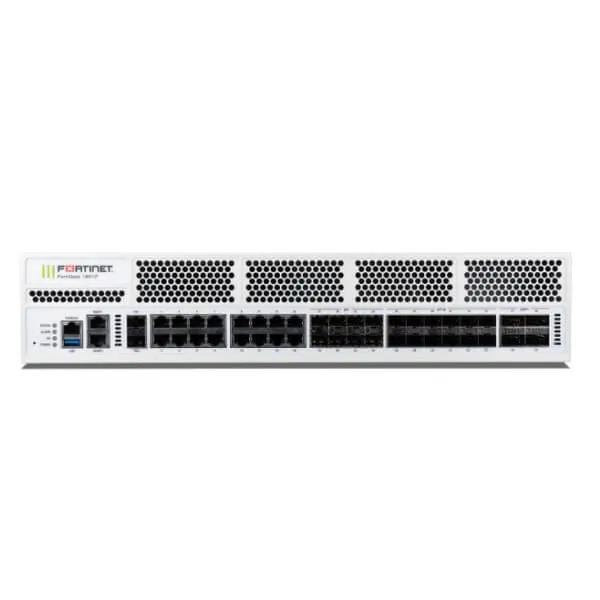
FortiGate 1801F (FG-1801F) Tanzania
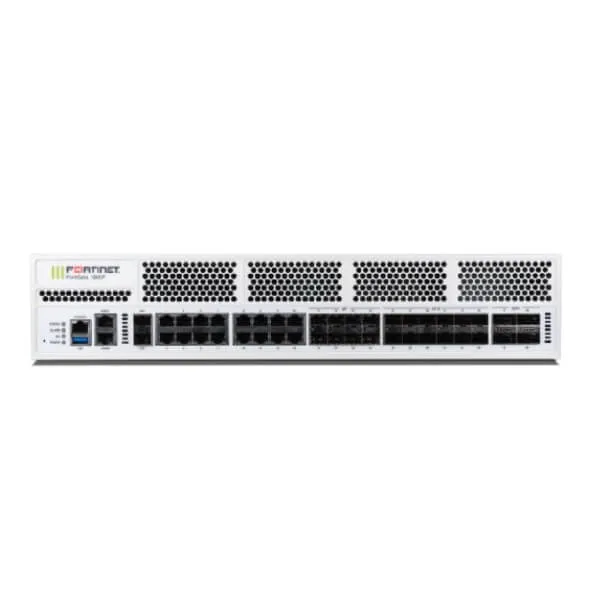
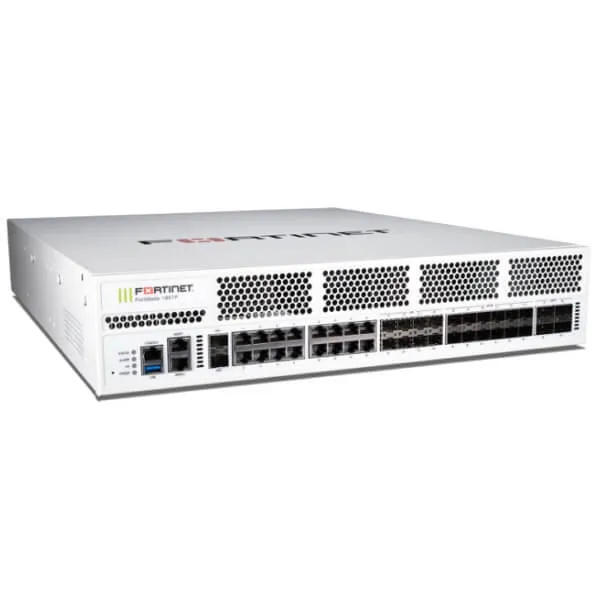
FortiGate 1801F is designed for organizations that need high-capacity next-generation firewalling at enterprise edges, data centers, large campus networks and high-throughput internal segmentation points. For Tanzanian buyers, the useful starting point is not the headline firewall rate alone: sizing should account for the security services that will be enabled, encrypted traffic, VPN demand, interface speeds, redundancy, session scale and growth. The FG-1801F adds onboard NVMe storage to the FortiGate 1800F platform, making the exact model important when preparing a bill of materials.
IPv4 firewall throughput at 1518-byte UDP packets; actual application performance depends on traffic mix and enabled services.
Fortinet-published IPS throughput for enterprise traffic mix, useful when sizing inspection-heavy deployments.
NVMe SSD onboard storage differentiates the FG-1801F from the storage-free FG-1800F.
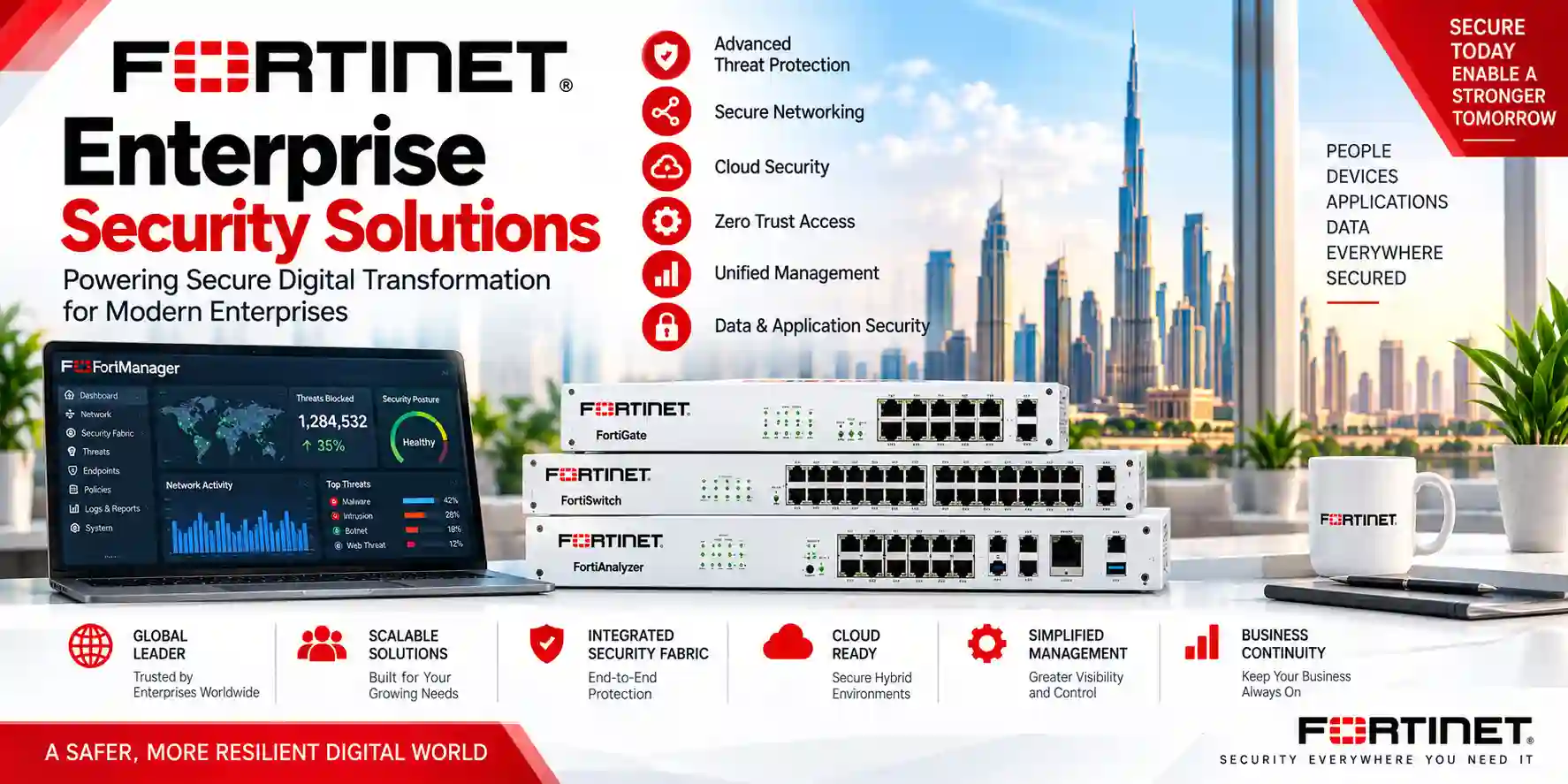
Verified FortiGate 1801F specifications
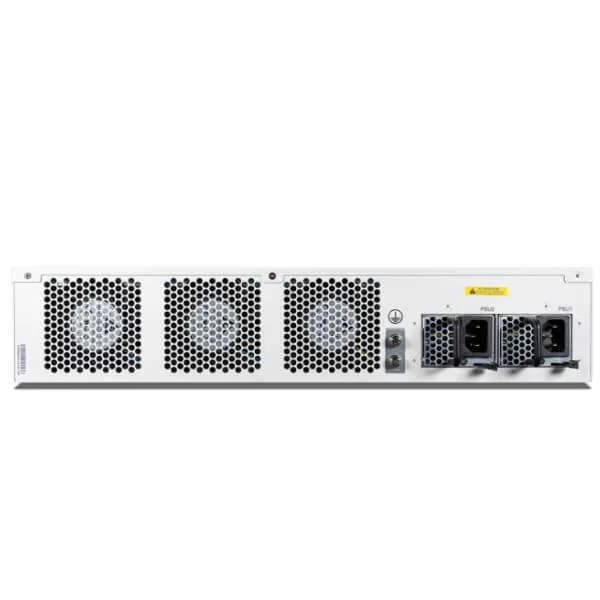
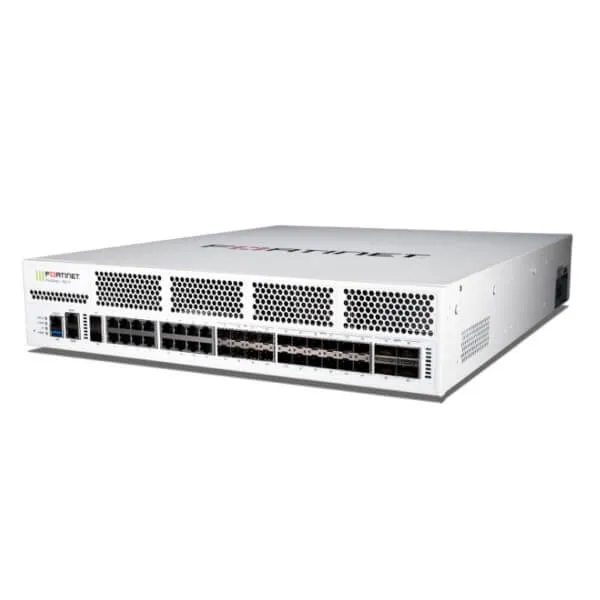
Fortinet’s current FortiGate 1800F Series data sheet lists the FG-1801F with 16 hardware-accelerated GE RJ45 data ports, eight hardware-accelerated GE SFP slots, twelve hardware-accelerated 25GE SFP28/10GE SFP+/GE SFP slots, four hardware-accelerated 100GE QSFP28/40GE QSFP+ slots, two GE RJ45 management ports and two 10GE SFP+/GE SFP high-availability slots. It also provides USB and console connectivity, TPM, two included short-range 10GE SFP+ transceivers and 2 × 960 GB NVMe SSD storage. The appliance is a 2RU rack-mount platform with dual hot-swappable AC power supplies for 1+1 redundancy by default.
Published enterprise-traffic-mix figures include 22 Gbps IPS throughput, 17 Gbps NGFW throughput and 15 Gbps threat-protection throughput. Firewall throughput is listed at 198/197/140 Gbps for 1518/512/64-byte UDP traffic, with 3.22 microsecond firewall latency and 210 Mpps packet throughput. These are laboratory specifications rather than a guarantee for every production workload. Procurement teams should therefore map the intended FortiGuard services, SSL inspection, VPN traffic, application mix and growth plan before selecting the appliance.
Architecture, interfaces and deployment fit
Fortinet documentation identifies an NP7 network processor in the 1800F/1801F architecture, with supported traffic capable of hardware offload through the integrated switch fabric. FortiOS documentation also describes the high-speed interface groups and the ability of interfaces 37–40, on supported FortiOS releases, to operate as 40GE QSFP+ or 100GE QSFP28. This flexibility can matter at aggregation, data-center edge and high-capacity internet handoff points. Interface planning should be completed before transceivers and fiber are ordered because connector type, optic reach, switch compatibility and port-speed grouping can affect the final design.
For related planning, review FourTeck Tanzania’s integrated IT and security overview, business technology shop, deployment and support services and quotation contact page. The shop also provides related FortiGate choices including FortiGate 30G, FortiGate 31G and FortiGate 40F for smaller branch requirements. These smaller appliances are not substitutes for the FG-1801F; they are useful references when a project includes both a central high-capacity firewall and distributed branch sites.
FortiGate 1801F Tanzania
Organizations evaluating FortiGate 1801F in Tanzania are typically dealing with requirements where firewall selection affects more than internet access. A large head office, data center, service platform, campus, financial environment, hospitality group or multi-site enterprise may need high-speed uplinks, segmented networks, site-to-site VPNs, remote access, intrusion prevention and centralized security policy. The FG-1801F should therefore be evaluated as part of the complete network architecture. Start with peak internet and private-WAN bandwidth, expected east-west traffic, encrypted application flows, concurrent sessions, remote users and the inspection services that must remain enabled during busy periods.
Tanzania procurement should also include the physical environment. The appliance is a 2RU rack unit, so rack depth, airflow, cooling, power distribution and UPS capacity matter. Dual power supplies can support a resilient design only when the upstream power paths are also planned correctly. Fiber and copper handoffs should be mapped before ordering optics. Where 25GE, 40GE or 100GE connectivity is required, confirm the neighboring switch or router interfaces and supported transceiver standards. If high availability is required, define whether the project includes two appliances, duplicated upstream/downstream links and the addressing needed for failover.
Licensing is another procurement line, not an afterthought. FortiGate hardware can be paired with FortiGuard security services and FortiCare support according to the organization’s protection and support requirements. The correct quotation should state the exact hardware SKU, service bundle, subscription term and any required accessories rather than presenting a single ambiguous firewall price. For a Tanzania quotation, provide current bandwidth, desired security functions, number of sites, VPN requirements, interface types and expected growth. FourTeck’s Tanzania contact team can use that information to frame a more meaningful requirement.
FortiGate 1801F Dar es Salaam
For FortiGate 1801F projects in Dar es Salaam, enterprise edge and data-center connectivity are common design contexts to consider. Businesses may aggregate high-speed internet circuits, private links, cloud connectivity, branch VPNs and internal security zones at a central facility. In this situation, firewall sizing should be based on the traffic that must be inspected, not simply the nominal ISP circuit. A design with multiple high-capacity uplinks can require careful route policy, SD-WAN decisions, application control and failure testing so that a secondary path can carry the expected workload if the primary path becomes unavailable.
The FG-1801F’s mix of GE copper, GE SFP, 25GE-capable SFP28 and 100/40GE-capable QSFP interfaces provides flexibility, but the physical network must match it. Procurement teams should document whether each link terminates on an ISP device, core switch, server fabric, DMZ switch or HA peer. Optic type and fiber reach need confirmation before purchase. For a central rack, power and cooling deserve equal attention: firewall availability is weakened if both power supplies ultimately depend on one unprotected feed or if the rack lacks adequate airflow.
Dar es Salaam buyers should prepare a quotation brief that distinguishes the base appliance from security subscriptions, support, optics, installation and HA requirements. If migrating from another firewall, include current rule count, NAT policies, VPNs, public services and authentication dependencies. This gives engineers a clearer basis for migration planning and change windows. FourTeck Tanzania’s services overview explains the broader approach to design, configuration and lifecycle support, while the contact page lists Dar es Salaam as one of its office locations and provides the central enquiry route.
FortiGate 1801F Mwanza
A FortiGate 1801F requirement in Mwanza should be justified by traffic scale, security inspection demand and the role of the site in the wider organization. A regional hub, industrial operation, large campus or business that concentrates branch traffic may need a different firewall architecture from a conventional office. Begin by identifying which traffic crosses the firewall: internet browsing, cloud applications, server access, site-to-site VPNs, voice, video, backups, partner connections and inter-VLAN flows can all create different patterns. Peak demand and failure scenarios matter more than average utilization.
Where the Mwanza site links multiple locations, resilience planning should consider more than two internet cables. Decide which applications must fail over, whether inbound services need continuity, how VPN tunnels will re-establish and whether routing policies should prefer specific carriers or paths. Security zones can separate users, servers, guest networks, operational devices and management networks so that access is explicit rather than broadly trusted. The FG-1801F has substantial session and throughput capacity, but policy quality and network design determine how effectively that capacity is used.
Procurement should include rack space, suitable UPS protection, cooling, fiber patching and compatible optics. The 2RU form factor and high-speed interfaces make physical preparation important. If the appliance will connect to an existing core, confirm whether that core supports the required 10/25/40/100GE modes. For organizations standardizing multiple sites, the central platform can be paired with appropriately sized branch FortiGates rather than duplicating a high-end model everywhere. The FourTeck Tanzania shop provides smaller FortiGate references that can help structure a hub-and-branch bill of materials.
FortiGate 1801F Arusha
For Arusha organizations considering FortiGate 1801F, the decision should connect security capacity to business continuity. Hospitality groups, regional headquarters, education environments, larger enterprises and multi-property operations can have many users and devices sharing internet and private connectivity. Guest networks, corporate endpoints, servers, cameras, voice systems and building or operational devices should not automatically occupy the same trust zone. A next-generation firewall can become the enforcement point between these areas when the VLAN and routing design is planned deliberately.
The FG-1801F supports high interface density and high-speed uplinks, which can be useful when a site has several core, server, WAN or DMZ connections. However, the project should specify how those ports will be used. List each required interface, its speed, media type, VLAN role and redundancy partner. This avoids ordering a powerful appliance while overlooking optics, patch leads or switch-side capacity. If encrypted traffic inspection is expected, sizing should reflect the intended inspection policy and certificate-management approach rather than assuming raw firewall throughput represents the final production rate.
Arusha procurement teams should also decide whether they need a single appliance or an HA pair, the required FortiGuard services, support term and migration assistance. FourTeck Tanzania’s verified contact page identifies an Arusha office and uses the central enquiry channel for product and project discussions. Include current firewall model, internet links, approximate users/devices, VPNs, public-facing services and growth expectations when requesting a quote. That information supports a capacity-focused discussion rather than a generic hardware offer and helps identify related switching, fiber, rack and UPS dependencies before installation.
FortiGate 1801F Dodoma
FortiGate 1801F deployments in Dodoma may be relevant to large administrative, institutional, campus or enterprise networks where security policies must be applied across substantial traffic volumes. The first design task is to identify security boundaries: internet edge, public services, user networks, server segments, management networks and partner connections often require different policy. A firewall should make these boundaries easier to understand and audit, not turn them into one large rule set. Documenting address objects, application dependencies and ownership before migration can reduce disruption.
High availability can be important where network downtime affects many users. If two FG-1801F appliances are planned, the surrounding network should also be reviewed for single points of failure. Dual power supplies are most useful when fed from appropriately resilient power infrastructure. Multiple switch uplinks need a topology that behaves predictably during device or link failure. VPN and routing behavior should be tested during failover rather than assumed. Change windows should include rollback plans and validation of critical services after cutover.
For procurement in Dodoma, ask for a quotation that itemizes hardware, security subscriptions, support, transceivers and professional services where required. Confirm AC or DC model requirements rather than treating them as interchangeable. The FG-1801F base AC appliance and FG-1801F-DC are distinct orderable variants. FourTeck Tanzania’s contact page identifies Dodoma among its office locations. Supplying bandwidth, interface, VPN and policy information with the enquiry can make the resulting technical discussion much more specific.
FortiGate 1801F UAE
Organizations sourcing FortiGate 1801F for the UAE may be planning data-center edges, large headquarters, service-provider environments or regional hubs with high-capacity connectivity. The platform’s 25GE and 100/40GE interface options can fit modern aggregation designs, while Fortinet’s published enterprise-mix performance figures provide a starting point for sizing inspection workloads. Buyers should still model their own application mix, encrypted traffic, VPN demand and service bundle. For UAE-specific procurement and regional coordination, the broader FourTeck UAE technology site and Fortinet UAE specialist site provide relevant network context.
A UAE design may also need to coordinate multiple carrier handoffs, cloud connections and branch tunnels. Documenting routing and security intent before installation is particularly useful in complex environments. If SD-WAN is part of the architecture, define application steering, health checks and failover behavior. If the firewall protects public applications, include NAT, load-balancer dependencies, DNS changes and certificate requirements in the migration plan. Where the appliance sits in a data center, confirm rack power, cooling, fiber standards and cross-connect details early.
Quotation comparison should use the same scope across suppliers: exact FG-1801F hardware, FortiGuard bundle and term, FortiCare level, optics, accessories and services. A low hardware-only figure is not directly comparable with a bundled multi-year security and support quotation. The goal is a bill of materials that matches the intended operating model and makes renewals visible from the start.
FortiGate 1801F Uganda
For Uganda deployments, FortiGate 1801F can be considered where a central enterprise site, data center or national hub needs high-throughput security and substantial interface capacity. A good design starts by separating central-site requirements from branch requirements. The hub may terminate many VPNs and enforce shared security services while branches use smaller appliances sized to local internet and user demand. This approach can support consistent policy without over-sizing every site. FourTeck’s Uganda regional site can provide regional context for broader technology requirements.
When the Uganda site carries traffic for multiple offices, session scale, VPN throughput, routing and failure behavior should be included in sizing. Security inspection should be evaluated with the intended FortiGuard services enabled. The 1801F’s onboard NVMe storage is an exact-model distinction and should be reflected in procurement documentation so the appliance is not confused with the FG-1800F. Likewise, AC and DC variants should be specified explicitly.
Before ordering, map high-speed ports to the existing switching environment and confirm optics. Include rack depth, UPS, power feeds and cooling in the implementation checklist. If replacing an older firewall, export and review policies rather than automatically reproducing years of accumulated rules. Migration is an opportunity to remove unused objects, validate public services and document business owners for critical access. A structured quotation should identify hardware, licenses, support and deployment scope separately.
FortiGate 1801F Kampala
Kampala organizations evaluating FG-1801F may need a high-capacity perimeter for headquarters, financial operations, data-center services, campus environments or multi-branch networks. The key sizing question is how much traffic requires security processing at peak periods. Internet bandwidth is only one component: internal segmentation, remote access, site-to-site VPN, server publishing and cloud connectivity may all traverse the platform. Establishing traffic flows before selecting subscriptions and interfaces gives a more realistic architecture.
For multi-carrier designs, define whether links are active/active, primary/backup or application-steered. Test what happens to VPNs and important SaaS applications during a circuit failure. If the appliance will connect to 25GE or 100GE infrastructure, confirm compatible switch ports, optics and fiber. High-speed interfaces are valuable only when the rest of the path can use them. For HA pairs, plan redundant paths around the firewalls so that a single switch or power event does not defeat the design.
Kampala procurement should include the subscription lifecycle. Security services and support terms affect both capability and ongoing cost, so decision makers should see these lines clearly in the quotation. Record renewal dates and support ownership at handover. Organizations coordinating Kampala with Tanzania or other East African sites can benefit from consistent naming, VLAN, VPN and policy standards, while still sizing each appliance to its local workload.
FortiGate 1801F Arua
For an Arua requirement, the first question is whether FG-1801F capacity is appropriate for the actual site role. A high-end platform can make sense for a central aggregation or unusually demanding environment, but a conventional branch may be better served by a smaller FortiGate. Sizing should be evidence-based: collect internet speed, user/device counts, VPN traffic, protected server traffic, security services and projected growth. This avoids buying solely by model prestige and helps procurement align capital cost with operational need.
If Arua is part of a larger distributed organization, architecture may place advanced central services at a Kampala, Tanzania or regional hub while the local site uses a branch appliance. Conversely, a facility that aggregates many remote links or protects high-volume applications could justify greater capacity. The FG-1801F’s diverse interface set supports flexible handoffs, but every required optic and fiber connection should be validated against the neighboring device.
Operational planning should cover configuration backups, firmware management, administrator access, logging and support escalation. A firewall remains effective only when its policies and software are maintained. For remote sites, clear documentation becomes especially valuable because troubleshooting may involve several teams. Record WAN addressing, VPN peers, port mappings, HA state, license information and critical application dependencies. Procurement should also account for rack, power and environmental requirements rather than treating the firewall as a standalone desktop device.
FortiGate 1801F Mbarara
Mbarara buyers should evaluate FortiGate 1801F against the role of the site in the enterprise network. Where a location hosts central applications, aggregates branch traffic or operates as a large campus, firewall capacity may need to accommodate both north-south internet traffic and internal segmentation. Security zones can help separate business users, servers, guest access, surveillance, operational systems and management interfaces. The policy model should grant only the access each zone requires and should remain understandable to administrators after deployment.
Connectivity resilience may be a major design consideration. With multiple WAN services, define health checks, route preference and application behavior during failover. A second ISP does not automatically provide continuity if DNS, VPN, public IP or routing dependencies are ignored. For critical services, test failure scenarios before the system is considered complete. If the FG-1801F is deployed as an HA pair, the adjacent switches and power paths should be designed so the pair can actually survive the intended failures.
The procurement package should identify exact interface needs, optics, subscription term and support. The FG-1801F includes onboard storage, while the closely related FG-1800F does not, so model verification at purchase and delivery is important. Document serials, licenses and renewal dates during handover. For regional standardization, use consistent object naming and VPN conventions across Mbarara, Kampala and other sites, while allowing bandwidth and hardware size to differ according to local demand.
FortiGate 1801F Gulu
A FortiGate 1801F project in Gulu should begin with a workload and topology review. Large organizations can accumulate security appliances through piecemeal growth, leaving separate devices for VPN, filtering, segmentation and internet routing. Consolidation may simplify operations, but only when throughput, interfaces and failure domains are planned carefully. List every current network connection and the security function attached to it before designing the replacement.
The 1801F offers high-speed connectivity and substantial published firewall capacity, but production sizing should focus on the services actually used. IPS, threat protection, application control and encrypted traffic inspection create different processing demands. VPNs also need realistic peak estimates. If branches depend on the Gulu site, account for their aggregate traffic and the effect of a primary-link outage. Monitoring should make it possible to distinguish ISP problems, firewall policy issues and downstream LAN congestion.
Physical readiness includes a suitable 2RU rack position, power, UPS and cooling. High-speed fiber links need compatible optics at both ends. Procurement should confirm whether the requested appliance is AC or DC and whether an HA pair is part of the scope. Support and subscription terms should be recorded as lifecycle items rather than discovered near expiration. Good handover documentation should include diagrams, interface descriptions, policy conventions, VPN peers, backup procedures and escalation contacts.
FortiGate 1801F Kenya
For Kenya, the FG-1801F is relevant to enterprise and data-center security designs that require high throughput, high port density and flexible high-speed interfaces. Nairobi or regional hubs may combine carrier internet, private connectivity, cloud access and branch VPNs at one security edge. The model should be sized with the intended inspection profile, not by raw firewall throughput alone. FourTeck’s Kenya regional site provides a regional path for organizations coordinating technology requirements across East Africa.
Multi-country companies can gain operational value from consistent FortiGate standards. Common naming for address objects, VPNs, VLANs and security zones makes troubleshooting easier across Kenya, Tanzania and Uganda. Standardization should not mean identical hardware everywhere: a central FG-1801F may coexist with smaller branch appliances. Capacity, ISP speed, local services and growth should determine each model.
Kenya procurement should identify hardware SKU, FortiGuard service bundle, support term, optics and installation scope. If 100GE or 25GE connectivity is planned, validate switch compatibility and fiber type. For migrations, inventory NAT, VPN, authentication and public services before cutover. For HA, test link, device and power failures and document expected convergence. This makes the firewall purchase part of an operationally supportable architecture rather than a standalone appliance acquisition.
FortiGate 1801F Kuwait
Kuwait organizations considering FortiGate 1801F may be designing high-capacity enterprise edges, data-center segments or regional connectivity hubs. The platform’s high-speed ports make it suitable for architectures where conventional 1GE/10GE firewalls would create interface constraints. Nevertheless, the required FortiGuard inspection, VPN traffic and encrypted application mix should drive sizing. The FourTeck Kuwait site can be used for region-specific technology enquiries.
Environmental and rack planning are important for a 2RU high-performance appliance. Confirm power feed type, UPS capacity, rack depth and cooling. Dual power supplies should connect into an appropriately resilient power design. For fiber uplinks, specify the intended port speed, transceiver, connector and reach. If a design uses 100GE interfaces, ensure the switch or router on the other end supports the selected mode and optic.
Procurement teams should compare complete bills of materials. A base appliance quotation is not equivalent to one that includes multi-year FortiGuard and FortiCare coverage. Define support expectations, security services and subscription period before comparing price. If an HA pair is required, include both appliances and duplicated connectivity in the design. During migration, document public IP changes, VPN peers and authentication dependencies so that the cutover plan addresses external systems as well as the firewall itself.
FortiGate 1801F Ghana
FortiGate 1801F in Ghana can serve high-capacity enterprise, campus and data-center security requirements where multiple network zones and high-speed links converge. Start with a traffic-flow inventory that identifies internet, private WAN, cloud, VPN, public-server and internal segmentation traffic. This reveals whether the appliance is primarily an internet edge, a segmentation firewall or both. The FourTeck Ghana site provides a regional route for related technology planning.
For a central Ghana deployment, policy design should separate administrative access from ordinary user traffic and define clear zones for servers and public services. Logging and monitoring requirements should be agreed early, especially where audit or incident-response teams need searchable records. The FG-1801F’s onboard NVMe storage is a model-specific hardware feature, but logging architecture should still be selected according to retention and operational requirements rather than assumed from local storage alone.
Quotation requests should include bandwidth, high-speed interface needs, security subscription requirements, HA preference and VPN scale. Confirm optics and switch-side compatibility before ordering. For an HA pair, include redundant links and power in the project plan. If Ghana is one node in a multi-country network, consistent VPN naming, address planning and documentation can simplify support across the wider FourTeck regional footprint while allowing each site to use hardware sized for its workload.
FortiGate 1801F Nigeria
Nigeria deployments can involve large user populations, multi-site enterprises, data centers and high-bandwidth carrier connectivity, all of which make disciplined firewall sizing important. FG-1801F provides a strong high-capacity platform, but design should distinguish raw firewall forwarding from inspected application traffic. Estimate IPS, NGFW and threat-protection demand using peak production patterns, and include VPN and internal segmentation where those flows traverse the firewall. The FourTeck Nigeria site offers a regional technology enquiry path.
Large networks should avoid a flat trust model. User, server, guest, management, public-service and operational zones can be governed with explicit policies. When the firewall becomes a central enforcement point, high availability and adjacent network resilience become important. Test what happens when an ISP, switch link, power feed or firewall node fails. A documented failover result is more useful than simply checking an HA box in a design.
For procurement, specify the exact FG-1801F variant, security bundle, support term and accessories. Validate 25GE/40GE/100GE optics against the network fabric. If migrating many VPN peers or published services, prepare a staged change plan and notify external parties when IP or certificate changes are required. Record licensing and renewal ownership during handover so the security platform remains supported after the initial project.
FortiGate 1801F Seychelles
A FortiGate 1801F requirement in Seychelles should be assessed against the scale and criticality of the environment. Larger hospitality groups, service organizations, data centers or central multi-property networks may need high-capacity security, but smaller sites should not be over-sized without evidence. Document users, devices, internet links, private connectivity, VPNs and security services first. For island and multi-property operations, WAN resilience and remote manageability can be as important as peak throughput.
If the firewall aggregates several properties or business units, use clear network segmentation so that guest, corporate, server, surveillance and management traffic do not share unnecessary trust. Define which services must continue during a carrier outage and how secondary paths will be used. Remote administration should be protected with controlled management access and strong authentication practices. Configuration backups and diagrams are particularly useful when support may involve remote teams.
Procurement planning should account for logistics without making assumptions about stock or delivery. Confirm the exact appliance, subscription term, support level, optics, rack requirements and power environment in the quotation. If high availability is required, include two appliances and the surrounding redundant links. For regional organizations connecting Seychelles with Tanzania, UAE or African offices, common VPN and documentation standards can reduce support complexity even when connectivity and hardware size differ by location.
Licensing, FortiGuard and lifecycle planning
The FG-1801F should be purchased with a clear view of the security services and support lifecycle required by the organization. Fortinet offers FortiGuard security services and FortiCare support options; exact bundles and terms can change, so the quotation should identify the current service SKU rather than relying on a generic phrase such as “full license.” Decide which inspection functions are operational requirements, how long the initial term should run and who will own renewal tracking. If hyperscale firewall functionality is part of the design, Fortinet’s data sheet notes that it requires a hyperscale firewall license, so this should be confirmed as a separate requirement.
Firmware management is also part of lifecycle planning. Production upgrades should consider release notes, supported upgrade paths, HA behavior, backups and maintenance windows. Configuration backups should be stored securely and tested as part of operational procedures. Administrators should review policies periodically so temporary rules do not become permanent without justification. Capacity trends can help determine whether future internet upgrades or additional segmentation will require design changes.
Related FourTeck resources
For regional projects, FourTeck maintains specialist and country resources including Fortinet solutions in the UAE, firewall solutions in Dubai, FourTeck Uganda, FourTeck Kenya and FourTeck Africa. These links are useful when one organization is coordinating firewall standards across several countries. Within Tanzania, the technology shop, services page, FortiGate 30G, FortiGate 31G, FortiGate 40F and quotation page support broader solution planning.
Quotation checklist for FG-1801F
Before requesting a quote, prepare: exact model and quantity; AC or DC requirement; single unit or HA pair; internet and private-WAN bandwidth; number and speed of copper/fiber links; required 1/10/25/40/100GE optics; approximate users and devices; site-to-site and remote-access VPN requirements; public services and NAT; intended FortiGuard security services; support term; rack, UPS and power information; existing firewall model; migration scope; and target implementation window. This information helps separate the base appliance from subscriptions, accessories and professional services and makes supplier quotations easier to compare.
FortiGate 1801F FAQs
What is the difference between FortiGate 1800F and 1801F?
The key hardware distinction in Fortinet’s current data sheet is onboard storage: FG-1800F lists no onboard storage, while FG-1801F lists 2 × 960 GB NVMe SSD. Core platform performance and interface specifications are presented together for the series.
What is the published threat-protection throughput?
Fortinet lists 15 Gbps threat-protection throughput for the 1800F series under its defined enterprise traffic mix test conditions. Production performance depends on configuration and traffic.
Does FG-1801F support 100GE interfaces?
Current Fortinet documentation describes four 100GE QSFP28/40GE QSFP+ slots. FortiOS documentation notes support for configuring interfaces 37–40 for 40GE or 100GE on supported releases. Confirm software version, optics and neighboring equipment for the intended deployment.
Should I buy one FG-1801F or an HA pair?
That is a business-continuity decision. If firewall downtime is unacceptable, evaluate an HA design together with redundant power, switches, links and carrier paths. Two firewalls alone do not remove every single point of failure.
What information is needed for a Tanzania quotation?
Provide quantity, bandwidth, users/devices, VPN requirements, desired security services, interface speeds, HA preference, existing firewall, support term and installation scope. FourTeck Tanzania’s contact page specifically recommends sharing firewall bandwidth, VPN, branch and security-service requirements.
Decision recap and consultation
FortiGate 1801F is a high-capacity enterprise NGFW platform with onboard NVMe storage, high-speed interfaces and Fortinet-published performance aimed at demanding enterprise and data-center use. A sound purchase decision should validate inspected throughput, interface media, HA, subscriptions, power, cooling and migration requirements. For Tanzania projects, send the current topology and intended outcome so the discussion can focus on fit, not just the model number.



Reviews
There are no reviews yet.