
FortiWiFi 80F (FWF-80F) Tanzania
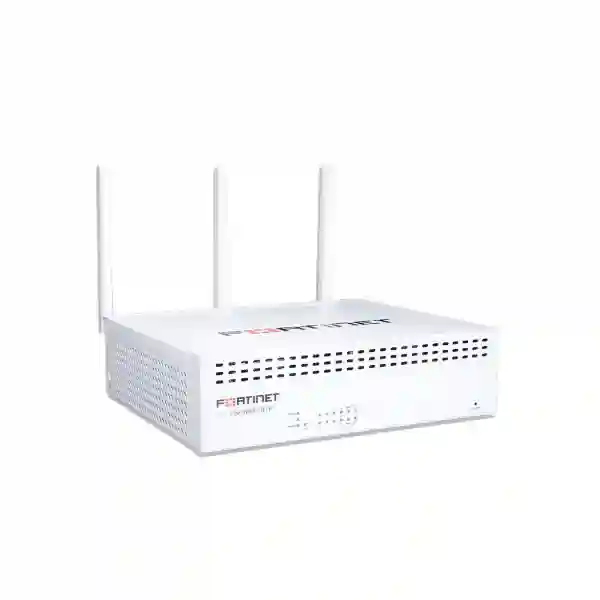
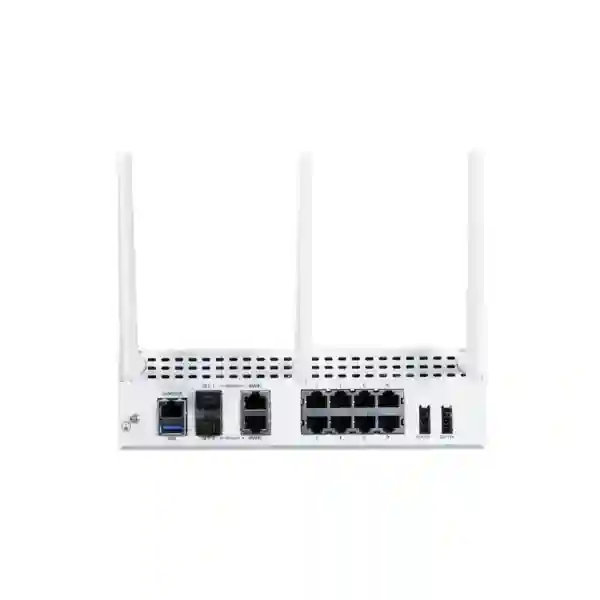
Fortinet FortiWiFi 80F (FWF-80F) is a compact secure-branch platform for organizations that want next-generation firewall protection, secure SD-WAN and integrated wireless capability under FortiOS. The 80F family is positioned by Fortinet for distributed enterprise sites and converged networking and security. For Tanzanian buyers, the practical value is consolidation: internet-edge security, policy control, VPN connectivity, WAN optimization and wireless access can be planned around one security platform instead of separate point products. FourTeck can help organizations define the appliance, FortiGuard security subscription, deployment scope and renewal requirements that belong in a complete quotation.
Verified 80F Series Performance
Fortinet publishes up to 1.4 Gbps IPS throughput, 1 Gbps NGFW throughput and 900 Mbps threat-protection throughput for the FortiGate/FortiWiFi 80F series. Real deployment performance depends on enabled services, traffic mix, inspection policy, firmware and configuration, so sizing should be based on the intended security profile rather than headline firewall throughput alone.
Converged Security and Networking
The 80F family uses FortiOS to combine firewalling, SD-WAN and security functions. This can simplify branch design where IT teams need policy consistency across internet access, application traffic, VPNs and security inspection. Integrated wireless capability in the FortiWiFi model also makes the FWF-80F particularly relevant to compact offices and branches.
FortiGuard and Security Fabric
FortiGuard AI-powered security services and the Fortinet Security Fabric extend the platform beyond basic packet filtering. Buyers should identify which protection services, subscription term and management requirements are needed before ordering, because hardware-only and security-bundle comparisons do not represent the same operational outcome.
FortiWiFi 80F Features and Buying Considerations
A secure branch design begins with the traffic that must be inspected, not simply the nominal ISP speed. Organizations should document user count, concurrent sessions, encrypted application traffic, site-to-site VPN requirements, remote-access requirements, WAN links, wireless coverage expectations and the security services they plan to enable. Fortinet positions the 80F family as a converged NGFW and secure SD-WAN platform, and the FWF variant adds integrated WiFi. This makes it useful where a branch needs a compact security appliance and does not require a separate wireless architecture for every coverage zone.
For procurement, compare the exact FWF-80F model and subscription bundle on the quote. Related 80F-family variants can have different hardware options, so specifications from another 80F, 81F, PoE, DSL, storage or cellular variant should not automatically be attributed to the FWF-80F. A disciplined bill of materials should state the appliance, support and FortiGuard term, any accessories, required transceivers, external access points if used, and professional configuration scope.
Related FourTeck Security Resources
For broader regional procurement and security planning, explore FourTeck Tanzania for the local technology portfolio, FourTeck Fortinet UAE resources for Fortinet-focused solution context, FourTeck Uganda for Uganda procurement enquiries, FourTeck Kenya for Kenya technology requirements and FourTeck Africa for multi-country project planning. These links are useful when a rollout spans more than one market and the bill of materials needs consistent security, licensing and deployment assumptions.
FortiWiFi 80F (FWF-80F) Tanzania
Organizations searching for FortiWiFi 80F Tanzania are commonly trying to solve more than a firewall purchase. They may be replacing an aging perimeter appliance, connecting branches, introducing secure SD-WAN, improving wireless security, or standardizing Fortinet across several offices. The FWF-80F is relevant to this type of requirement because the 80F family brings networking and security into FortiOS while the FortiWiFi version includes wireless capability. This can reduce the number of separate systems that a smaller branch must deploy and manage.
For Tanzania deployments, start with the real internet and application profile. Record primary and backup WAN links, expected encrypted traffic, cloud applications, VPNs, guest access, business WiFi, voice traffic and any applications that require predictable latency. Security services consume resources differently from basic stateful firewalling, so a buyer should size for the inspection features that will actually remain enabled. Fortinet’s published 80F-series figures include 1.4 Gbps IPS, 1 Gbps NGFW and 900 Mbps threat protection; these are useful reference points, but they are not a promise of identical production throughput in every configuration.
A Tanzania quotation should also separate appliance cost from subscriptions and implementation. Ask for the exact FortiGuard bundle and term, support coverage, configuration scope, VPN migration needs, policy migration, wireless requirements and any additional FortiAP or FortiSwitch components. For organizations with several sites, document whether centralized administration or reporting is required. A clear scope makes it easier to compare quotations on equivalent terms and reduces the risk of discovering after purchase that a required security service or deployment task was not included.
FortiWiFi 80F (FWF-80F) Dar es Salaam
Businesses evaluating FortiWiFi 80F in Dar es Salaam often operate in environments where internet access, cloud applications, branch connectivity and wireless users all meet at the same edge. Offices, professional services firms, trading companies, hospitality operations, logistics businesses and distributed organizations may need a platform that can enforce consistent policy without adding separate appliances for every networking function. The FWF-80F can be considered where integrated WiFi and a compact secure edge align with the site design.
Before requesting a quote, map the Dar es Salaam site’s WAN design. If two internet services will be used, define whether the objective is failover, load distribution, application steering or a combination. Secure SD-WAN can be planned around application and link behavior, but the desired policy should be agreed before configuration. Also identify VLANs for staff, guest, voice, servers or operational devices. Segmentation requirements affect switch design, firewall policy and wireless SSIDs, and therefore belong in the design stage rather than being added as an afterthought.
Wireless coverage should be treated separately from firewall sizing. Integrated wireless capability may suit a compact office, while larger floors, difficult building materials or multiple coverage zones may call for dedicated FortiAP access points controlled within a broader Fortinet architecture. A useful Dar es Salaam procurement request should include floor or coverage expectations, user count, ISP speeds, VPN requirements, subscription term and whether installation, migration and post-deployment documentation are required. That information enables a more meaningful FWF-80F quotation than requesting hardware price alone.
FortiWiFi 80F (FWF-80F) Mwanza
For Mwanza organizations, the FortiWiFi 80F can fit branch and small-to-midsize site requirements where network security and connectivity need to be administered as one operational platform. Typical planning questions include how to protect internet access, connect to a headquarters or cloud environment, separate guest and business traffic, and maintain connectivity when one WAN service is unavailable. The 80F family supports Fortinet’s secure networking approach through FortiOS, while the FWF model adds integrated wireless functionality.
A Mwanza deployment should be sized around business continuity. Identify which applications must remain reachable during an ISP disruption and whether a secondary WAN link will be installed. For a site-to-site VPN, document the remote peer, routing approach, protected subnets and expected traffic. For remote users, document the access method and identity requirements. These details influence configuration effort and help the integrator avoid broad rules that are difficult to maintain. Security policy should follow business flows: users should reach the applications they need, while unnecessary lateral access can be restricted.
When comparing FortiWiFi 80F offers in Mwanza, verify that each quotation uses the same model, subscription term and service scope. A lower hardware-only figure is not directly comparable with a package containing FortiGuard services, support and configuration. Buyers should also ask how firmware updates, configuration backups, renewals and incident changes will be handled after installation. Planning these operational responsibilities early can be more valuable than focusing only on initial appliance specifications.
FortiWiFi 80F (FWF-80F) Arusha
Arusha businesses may consider the FortiWiFi 80F for offices, hospitality administration, professional services, branch operations and other sites that need secure internet, VPN connectivity and managed wireless access. The integrated form factor can be attractive where rack space and device count should remain modest, but selection still depends on traffic inspection, coverage and growth requirements. Fortinet’s 80F family is built around converged NGFW and SD-WAN functions rather than treating WAN routing and security as unrelated systems.
For sites serving visitors or contractors, guest wireless design deserves special attention. Guest traffic should be planned so it does not automatically gain access to internal business networks. Staff, voice, operational systems and guest devices may need separate network segments and different security policies. If the premises are larger than the integrated radio can appropriately cover, dedicated FortiAP units may be a better architectural choice. The firewall can still remain the security policy point while wireless coverage is expanded appropriately.
An Arusha quotation request should specify ISP bandwidth, expected users, number of network segments, VPN tunnels, wireless coverage, security inspection requirements and desired subscription duration. If replacing an existing firewall, include the current network diagram or at least the WAN, LAN, VLAN, VPN and public-service information. Migration planning should include a configuration window and validation checklist so essential applications, DNS, internet access, VPNs and wireless services can be tested systematically after cutover.
FortiWiFi 80F (FWF-80F) Dodoma
The FortiWiFi 80F can support Dodoma organizations seeking a compact platform for secure branch networking, particularly when policy control, VPN, secure SD-WAN and wireless connectivity need coordinated administration. Offices with cloud applications and distributed teams benefit from documenting application flows before deployment. The objective is not simply to place a firewall between users and the internet; it is to define how trusted, guest, server, voice and remote traffic should be handled and inspected.
For organizations connecting Dodoma to another Tanzanian site, a site-to-site VPN design should document both endpoints, addressing, routing, redundancy and the applications carried across the tunnel. Where two WAN links are available, SD-WAN policies can be planned around availability and application needs. Monitoring should also be considered: operations teams need enough visibility to distinguish an ISP issue from a policy, DNS, VPN or application problem. FortiOS provides the common operating environment for the 80F family and can help standardize administration across Fortinet deployments.
Procurement teams should request the exact FWF-80F model and clarify FortiGuard services, support term and professional services. If the organization expects growth, discuss expected user and traffic increases rather than buying solely for today’s minimum requirement. Wireless expansion, additional branch tunnels, stronger inspection policy and higher ISP speeds can all change capacity needs. A properly scoped quote should therefore reflect both current requirements and a reasonable planning horizon without making unsupported assumptions about future demand.
FortiWiFi 80F (FWF-80F) UAE
UAE buyers considering the FortiWiFi 80F often need a compact security platform for branches, retail locations, project offices and distributed business sites. The key design question is whether integrated wireless, NGFW and SD-WAN capabilities match the site’s operational model. For a single compact office, consolidation can simplify the edge. For a larger environment, the FWF-80F may serve as the security gateway while dedicated FortiAP and FortiSwitch infrastructure handles wider access requirements.
Multi-country companies can also use a standardized Fortinet architecture to reduce variation between branches. Standardization should cover naming, VLANs, security policies, VPN templates, logging, firmware management and subscription renewal dates. It is still important to size each site individually because ISP bandwidth, user count and inspection needs differ. The published 80F-family security-performance figures are useful for model comparison, but deployment design should consider the complete policy set and encrypted traffic profile.
When sourcing FWF-80F for UAE or export-linked projects, ask for a quotation that clearly identifies hardware, FortiGuard subscription, support and implementation. Do not assume that every 80F-family SKU has identical ports or options. Confirm the exact bill of materials before purchase. Organizations coordinating UAE and East African sites can use the FourTeck Fortinet UAE resource alongside Tanzania project planning to keep product and subscription discussions aligned.
FortiWiFi 80F (FWF-80F) Uganda
Uganda organizations searching for FortiWiFi 80F may be planning branch security, replacing legacy firewalls or building VPN connectivity to regional offices. The appliance family is relevant where secure networking and security functions need to converge under FortiOS. The integrated WiFi variant can reduce device count for compact premises, although coverage and radio design should still be validated against the building rather than assumed from the firewall model alone.
For Uganda projects, identify primary and backup internet services and determine how traffic should behave when link quality changes. Secure SD-WAN planning can include failover and application-aware decisions, but business priorities must first be documented. A finance application, voice service and general browsing traffic may not have the same tolerance for latency or packet loss. The configuration should reflect these differences and maintain a clear security boundary between business segments.
A complete Uganda procurement request should list users, WAN speeds, network segments, VPNs, security services, WiFi expectations and subscription duration. If multiple sites will use Fortinet, centralized operational requirements should be included. Buyers can review FourTeck Uganda for regional technology enquiries while maintaining a consistent bill of materials with Tanzania and other branch locations. Consistency simplifies renewal planning and configuration governance, provided each site remains correctly sized.
FortiWiFi 80F (FWF-80F) Kampala
In Kampala, the FortiWiFi 80F is a candidate for branch and office environments that want integrated wireless plus Fortinet’s NGFW and secure SD-WAN platform. Businesses increasingly depend on SaaS, cloud portals, internet-based communications and remote connectivity, so firewall selection should account for inspected traffic rather than raw internet access alone. The 80F family provides a compact platform intended for distributed enterprise use cases.
Kampala deployments with two ISPs should define the desired resilience model. Simple failover is different from actively using both links, and application steering introduces additional policy decisions. Document which traffic should prefer which link and what should happen when quality falls below acceptable thresholds. VPN design must also account for WAN failover if branch connectivity to another site is critical. Testing these conditions during implementation is important because a configuration that works during normal operation may behave differently when a WAN link disappears.
For wireless, determine whether integrated coverage is sufficient or whether dedicated access points are required for multiple floors, higher client density or broader premises. Keep guest access isolated from internal resources and align wireless identities with the organization’s security policy. A Kampala quote should therefore cover the complete branch requirement: FWF-80F, subscription, any access points or switches, configuration, VPN setup, testing and documentation. This creates a more useful procurement baseline than comparing appliance prices without deployment context.
FortiWiFi 80F (FWF-80F) Arua
Arua businesses evaluating FortiWiFi 80F may prioritize resilient internet access, secure connectivity to a central office and straightforward management for a site with limited on-premises IT resources. Consolidating firewall, SD-WAN and integrated wireless functions can make operational sense in a compact branch, but the design should still separate security zones and define who is responsible for ongoing administration.
Start with a simple site inventory: internet circuits, switches, wireless users, wired endpoints, servers, cameras or operational devices, printers, voice systems and any remote applications. Group devices according to trust and business purpose rather than placing everything on one flat LAN. Segmentation can limit unnecessary access and make policy troubleshooting clearer. If a VPN connects Arua to another office, document the exact networks and services that should cross the tunnel instead of allowing unrestricted site-to-site traffic by default.
Procurement should also consider lifecycle tasks. FortiGuard subscriptions, support, firmware maintenance, configuration backups and renewal dates need ownership. Ask the supplier to identify what is included in the initial quotation and what will require renewal. Where the site depends heavily on internet services, include WAN failover testing and recovery procedures in the deployment checklist. The goal is a maintainable security platform whose configuration and commercial terms are understood after installation, not merely a device that passes traffic on day one.
FortiWiFi 80F (FWF-80F) Mbarara
For Mbarara organizations, the FortiWiFi 80F can be considered when a branch requires secure internet access, wireless connectivity and VPN or SD-WAN features in a compact Fortinet platform. Selection should be based on security services and expected traffic, particularly if web filtering, intrusion prevention, application control or other inspection functions will be enabled together. Security throughput references are more relevant to these designs than basic firewall throughput alone.
A useful Mbarara design exercise is to identify business-critical applications and their dependencies. Cloud systems may depend on DNS, identity providers and specific internet destinations; voice may be sensitive to delay; remote access may require identity and endpoint controls; and guest WiFi should remain separate from internal systems. Translating these requirements into explicit policy makes the configuration easier to audit and support. Where a secondary ISP is available, decide which applications require continuity and test failover rather than assuming it will behave as expected.
When requesting a FortiWiFi 80F quotation, provide the intended subscription term and implementation requirements. Ask whether configuration includes VLANs, VPNs, SD-WAN, wireless SSIDs, security profiles, logging and documentation. If an existing firewall is being replaced, include migration requirements and any public-facing services that depend on NAT rules. Clear inputs reduce scope ambiguity and help procurement teams compare proposals on the same technical basis.
FortiWiFi 80F (FWF-80F) Gulu
Gulu branch environments may use the FortiWiFi 80F as a compact secure edge where wired users, wireless users and WAN connectivity need coordinated security policy. The FortiWiFi variant is especially relevant where integrated wireless can satisfy a modest coverage requirement, while Fortinet’s broader ecosystem allows dedicated wireless and switching components to be introduced when the site expands.
For a branch connected to headquarters, determine whether the VPN carries all internet traffic back to the central site or only private application traffic. That choice affects bandwidth, routing and security design. If local internet breakout is used, the branch firewall must enforce appropriate security policy locally. Secure SD-WAN can also be relevant when more than one WAN connection is available, but link-selection policy should be based on application requirements and tested failure scenarios.
Operational simplicity should be part of the purchase decision. Document administrator access, backup procedures, firmware policy, alerting and subscription renewal ownership. For Gulu sites without a dedicated security administrator, remote management arrangements should be clearly defined and protected. A complete bill of materials should state the exact FWF-80F, FortiGuard and support term, optional networking components and professional services. This avoids confusing a bare appliance quote with a deployable security solution.
FortiWiFi 80F (FWF-80F) Kenya
Kenya organizations evaluating FortiWiFi 80F may need a repeatable branch design for Nairobi and other business locations, or a standardized platform shared with East African operations. FortiOS convergence can help organizations use a common policy approach across firewalling and SD-WAN. Integrated wireless can suit compact branches, while larger locations may use dedicated FortiAP infrastructure alongside the firewall.
For regional standardization, create a baseline configuration but avoid treating every site as identical. Define common objects, security profiles, VPN standards, administrator controls and logging expectations, then adapt WAN, addressing and capacity to each branch. This balances consistency with local requirements. If Kenya and Tanzania offices exchange traffic, document the inter-site applications and expected bandwidth so VPN policy can be limited to required business flows.
A Kenya procurement request should specify subscription duration, security services, WAN interfaces, wireless requirements, VPN scope and implementation responsibilities. Organizations coordinating East African purchases can consult FourTeck Kenya for Kenya requirements and FourTeck Tanzania for Tanzania requirements. Keep model and license identifiers explicit across quotations so hardware and subscriptions are not mixed between FortiGate, FortiWiFi or other 80F-family variants.
FortiWiFi 80F (FWF-80F) Kuwait
Kuwait buyers may consider the FortiWiFi 80F for secure branches, project offices and distributed sites where firewall, SD-WAN and wireless functions benefit from a common Fortinet operating environment. Compact hardware can simplify smaller locations, but deployment design should still account for internet bandwidth, security inspection, VPNs, network segmentation and wireless coverage.
Where a Kuwait site connects to regional offices, build the VPN and routing plan around actual application flows. Define whether branches communicate directly, through a hub, or through cloud services. For dual-WAN sites, establish whether the secondary circuit is backup-only or actively used. These choices affect SD-WAN policy and testing. Security inspection should be aligned with organizational risk and application needs, and performance should be evaluated with the intended services enabled.
Commercially, request an itemized quotation showing the exact appliance, FortiGuard services, support duration and implementation. If the equipment is part of a multi-country rollout, align renewal dates where practical and maintain a record of license ownership and device assignment. This makes future renewal and support easier. Buyers should also distinguish between integrated WiFi requirements and larger wireless deployments that may require separate access points, surveys and switching capacity.
FortiWiFi 80F (FWF-80F) Ghana
For Ghana businesses, the FortiWiFi 80F can support branch security strategies that combine internet-edge protection, secure WAN connectivity and wireless access. It may be relevant to organizations standardizing Fortinet across several locations or replacing separate routing and firewall functions with a converged platform. The 80F family is positioned for distributed enterprise sites, making branch requirements central to its use case.
A Ghana deployment should begin with capacity and segmentation. List ISP bandwidth, user count, concurrent business applications, VPN traffic and the security services expected to run. Then define networks for staff, guests, voice, servers and operational devices where appropriate. This provides a clearer basis for firewall policy and wireless SSIDs. If the business expects growth, include a reasonable forecast of additional users, WAN bandwidth and branches so the selected design is not immediately constrained.
For procurement, insist on exact model identification and a clearly named FortiGuard subscription. Ask what configuration, migration, testing and documentation are included. A quote should also identify optional components instead of silently assuming they are included. Multi-country organizations can coordinate Ghana requirements with broader FourTeck Africa planning so security standards, renewal processes and deployment documentation remain consistent across regional sites.
FortiWiFi 80F (FWF-80F) Nigeria
Nigeria organizations evaluating FortiWiFi 80F may have demanding branch-connectivity requirements, including multiple internet links, cloud applications, VPN connectivity and segmented wireless networks. The Fortinet 80F family combines NGFW and secure SD-WAN functions, while the FWF model adds integrated wireless capability. This can make it a useful candidate for compact offices where consolidation is desirable.
With multiple WAN links, define the business objective before configuration. A backup circuit can protect availability, while active use of multiple circuits can improve utilization and allow application steering. The policy should identify critical applications and acceptable failover behavior. VPN architecture should also be designed for link changes where necessary. During acceptance testing, simulate WAN failure and confirm that DNS, VPN, cloud applications and essential business traffic recover as intended.
Nigeria procurement teams should compare equivalent bundles and terms. Hardware-only pricing should not be compared directly with a solution that includes FortiGuard security services, support and professional implementation. Request a detailed bill of materials and confirm the exact FWF-80F model. If a branch requires more wireless coverage than an integrated radio can provide, include appropriate FortiAP design rather than trying to solve a coverage problem through firewall selection alone. This keeps security sizing and radio planning as related but distinct design tasks.
FortiWiFi 80F (FWF-80F) Seychelles
Seychelles organizations can consider FortiWiFi 80F for compact offices, hospitality administration, service businesses and branch locations that need secure internet, VPN connectivity and wireless access. Integrated functionality can be useful where space and operational simplicity matter, but site layout and coverage still determine whether built-in WiFi is sufficient. Larger or multi-building environments may require dedicated access points and switching infrastructure.
Connectivity resilience can be particularly important for organizations dependent on cloud applications and remote systems. Document primary and secondary WAN options, critical applications and the expected behavior during a link outage. Secure SD-WAN policy can then be designed around those requirements. If the site connects to an overseas headquarters, specify VPN bandwidth expectations and whether business internet traffic exits locally or through the remote site. This affects both routing and capacity planning.
A Seychelles quote should identify the appliance, security subscription, support term, wireless scope and deployment services. Ask for configuration documentation and a renewal schedule so the organization understands ongoing responsibilities. If equipment is procured as part of a regional project, maintain consistent naming and license records across countries. Standardization can simplify support, but each site should still be validated for its own ISP speeds, user count, inspection policy and wireless environment.
Deployment, Licensing and Integration Guidance
FortiWiFi 80F deployment should be treated as a security project rather than a simple hardware replacement. Capture the current WAN configuration, LAN addressing, VLANs, DHCP, DNS dependencies, public IP services, NAT, VPNs, administrator accounts and security policies. Decide which rules should be migrated and which obsolete rules can be removed. For new installations, create a policy matrix showing source, destination, application or service and business reason. This produces a cleaner rule base than opening broad access first and trying to restrict it later.
FortiGuard services should be selected according to required protection and support outcomes. Subscription bundles and commercial packaging can change, so the exact current bundle should be confirmed on the quotation rather than inferred from an older product page. Similarly, firmware compatibility and lifecycle decisions should be validated against current Fortinet documentation at deployment time. Buyers should keep entitlement, renewal dates and support ownership documented alongside the device inventory.
Quotation Checklist
For an accurate FortiWiFi 80F quotation, provide: exact site location and deployment count; primary and backup ISP speeds; approximate user and device count; required VLANs or network segments; site-to-site and remote-access VPN requirements; integrated WiFi coverage expectations; security services required; preferred FortiGuard and support term; existing firewall migration requirements; public IP or inbound-service rules; switch and access-point requirements; centralized management or reporting needs; installation window; documentation expectations; and whether the project spans Tanzania or additional countries.
FortiWiFi 80F Frequently Asked Questions
What is the difference between FortiGate 80F and FortiWiFi 80F?
The FortiWiFi version adds integrated wireless capability to the 80F platform family. Exact hardware specifications and variant options should always be checked against the specific model and current Fortinet data sheet before ordering.
What performance does Fortinet publish for the 80F series?
Fortinet publishes 1.4 Gbps IPS, 1 Gbps NGFW and 900 Mbps threat-protection throughput for the FortiGate/FortiWiFi 80F series. Production results vary with configuration, traffic and enabled security functions, so these figures should be used as vendor reference specifications rather than guaranteed site throughput.
Does FWF-80F need a FortiGuard subscription?
The appliance can be quoted with different FortiGuard and support options depending on the required security services and term. Confirm the exact bundle in the commercial quotation so the intended protection and renewal responsibilities are clear.
Can the FortiWiFi 80F be used with two internet connections?
The 80F family supports secure SD-WAN use cases. A dual-WAN design should define failover, application steering and VPN behavior before implementation and should be tested under simulated link failure.
Is integrated WiFi enough for a large office?
Not necessarily. Wireless coverage depends on building layout, materials, client density and performance requirements. Larger sites may need dedicated FortiAP access points even when the firewall itself includes wireless capability.
Decision Recap
Choose the FortiWiFi 80F when its verified 80F-family security performance, FortiOS feature set, secure SD-WAN role and integrated wireless capability align with the site’s real traffic and coverage needs. Confirm the exact FWF-80F SKU, subscription, support term and deployment scope before ordering. For larger wireless environments, treat access-point design separately. For multi-site projects, standardize policy and lifecycle management while sizing each location individually.
Plan Your FortiWiFi 80F Deployment
Share your ISP bandwidth, user count, VPN requirements, security services, WiFi coverage and preferred subscription term with FourTeck. A structured requirement helps produce a clearer bill of materials and a deployment plan that reflects the actual branch rather than a generic appliance-only quote.


Reviews
There are no reviews yet.