
FortiAP FAP-443K Tanzania
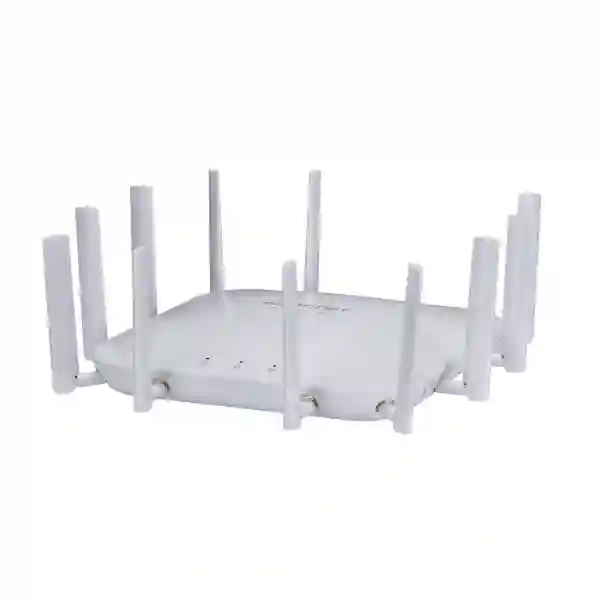
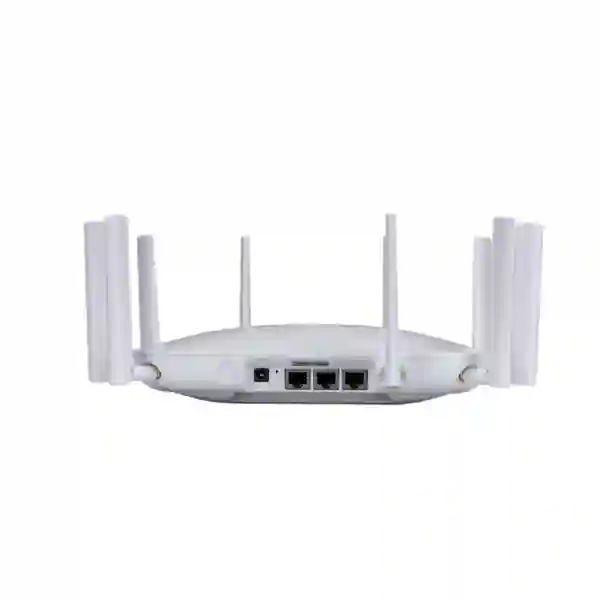
FortiAP FAP-443K is an enterprise-class indoor Wi-Fi 7 access point for organizations planning high-capacity wireless networks with flexible external antenna design. Fortinet specifies four radios plus BLE, 4×4 operation, access across 2.4 GHz, 5 GHz and 6 GHz, a dedicated scanning radio, and 10 Gigabit Ethernet connectivity. It is particularly relevant to offices, campuses, hospitality properties, education environments, healthcare facilities and high-density business spaces where RF planning, security integration and future wireless capacity matter. Use of 6 GHz is subject to regional regulatory approval, so a Tanzania deployment should validate permitted spectrum and the intended Fortinet software environment before final configuration.
Buyer Snapshot
Choose the FAP-443K when the project calls for Wi-Fi 7, 4×4 enterprise capacity and external antennas rather than the internal-antenna design of the FAP-441K. Plan the AP together with compatible switching, PoE, cabling, antenna choices, FortiGate or supported management architecture, client capabilities and local 6 GHz rules.
What the FortiAP FAP-443K Delivers
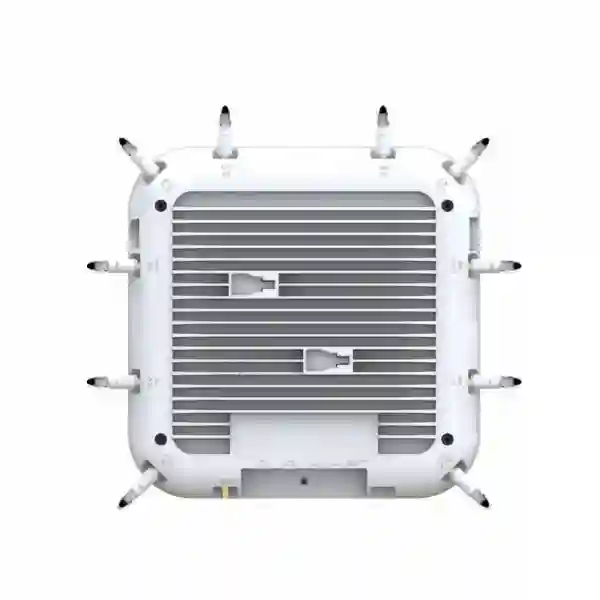
The FAP-443K belongs to Fortinet’s K-series Wi-Fi 7 portfolio and is positioned for demanding indoor wireless deployments. Its external-antenna format gives network designers more flexibility when coverage patterns, ceiling heights, room geometry or specialized RF objectives make an integrated antenna less suitable. Fortinet lists four radios and four spatial streams, with 2.4 GHz, 5 GHz and 6 GHz client access plus scanning capability. The platform also includes BLE/Zigbee functionality for supported beacon, location and IoT-oriented use cases. This combination makes the product more than a simple speed upgrade: it can form part of a security-led wired and wireless architecture where RF visibility, segmentation, authentication and centralized policy are planned together.
Wi-Fi 7
802.11be capabilities for modern enterprise wireless, including Multi-Link Operation on supported bands, clients, security settings and firmware.
4×4 Radios
Fortinet specifies 4×4 operation across the primary access radios, supporting demanding capacity and performance planning.
External Antennas
External antenna connectors distinguish FAP-443K from the internal-antenna FAP-441K and make antenna selection an important design step.
10GbE
High-speed wired uplink capability helps prevent the LAN edge from becoming an unnecessary constraint in high-capacity WLAN designs.
Verified Technical Highlights
| Wireless generation | Wi-Fi 7 / 802.11be |
| Deployment | Indoor enterprise access point |
| Radio design | Four radios plus BLE; access on 2.4 GHz, 5 GHz and 6 GHz with scanning capability |
| Spatial design | 4×4 MU-MIMO class |
| Antenna format | External antennas; antenna selection must be matched to project RF requirements |
| Wired uplink | 10 Gigabit Ethernet capability |
| IoT radio | BLE / Zigbee support |
| 6 GHz | Supported by the product; use is subject to regional regulatory authority approval |
| MLO | Supported on 5 GHz and 6 GHz with supported FortiAP firmware, clients and WPA3/OWE configuration; 2.4 GHz on FAP-443K does not support Wi-Fi 7 MLO |
Deployment, Compatibility and Buying Guidance
A Wi-Fi 7 purchase should begin with the environment rather than a headline data rate. Determine floor area, construction materials, expected concurrent devices, application mix, roaming patterns, guest traffic, voice/video requirements and the proportion of Wi-Fi 7 capable endpoints. The FAP-443K can be an excellent fit where external antennas are desirable, but antenna type, orientation and placement directly affect the RF result. A professional survey and post-install validation are sensible for high-density, multi-floor or RF-challenging locations.
The wired network must also be considered. High-capacity access points can expose bottlenecks in older access switches, uplinks and cabling. Review multigigabit/10GbE needs, PoE requirements, switch power budget, VLAN design, DHCP, authentication, firewall policy and internet capacity. Where the AP is managed through FortiGate, confirm the intended FortiOS and FortiAP firmware pairing using Fortinet’s current compatibility matrix. Fortinet recommends matching compatible versions where available, which helps reduce feature mismatch and troubleshooting complexity.
Wi-Fi 7 Multi-Link Operation is another feature that requires design awareness. Fortinet documentation states that K-series models support MLO from relevant FortiAP releases, while the FAP-443K uses its 5 GHz and 6 GHz radios for MLO rather than 2.4 GHz. Supported security modes and capable client devices are also required. For a quotation, provide the number of APs, floor plans if available, preferred management architecture, existing FortiGate and FortiSwitch models, cabling details, antenna requirements, user density and whether 6 GHz is intended.
FortiAP FAP-443K Tanzania
Organizations evaluating FortiAP FAP-443K Tanzania are usually planning more than a routine access-point replacement. The model makes sense when the wireless roadmap includes Wi-Fi 7 clients, higher density, greater spectrum flexibility and a security architecture that can integrate wireless access with Fortinet controls. Tanzania deployments can range from headquarters and financial offices to hotels, universities, healthcare sites, logistics facilities and technology-focused enterprises. Each has different coverage and capacity priorities, so AP quantity should be determined from site conditions rather than a generic square-metre rule. Concrete walls, glass, shelving, floor separation and neighboring RF activity can all change the result.
For Tanzania procurement, ask for a complete bill of materials rather than the AP alone. Because the FAP-443K is an external-antenna model, confirm compatible antennas and mounting needs. Review the switch port and power design, uplink speeds, cabling, FortiGate/FortiAP software compatibility and any management or support requirements. If 6 GHz is part of the business case, confirm current Tanzania regulatory permissions before designing around that band. The AP still offers 2.4 GHz and 5 GHz operation, but regulatory status should never be assumed from product capability alone.
A Tanzania buyer should also separate wireless capacity from internet bandwidth. Wi-Fi 7 can improve local wireless efficiency and client performance, but cloud experience still depends on WAN capacity, latency, firewall inspection and upstream services. For multi-site businesses, consistent SSID, VLAN, authentication and security policy planning can make branch operations easier. FourTeck can use your site count, client profile, floor layout and existing Fortinet environment to prepare a more meaningful quotation and deployment discussion.
FortiAP FAP-443K Dar es Salaam
FortiAP FAP-443K Dar es Salaam projects often involve dense commercial environments: corporate offices, hotels, education sites, healthcare buildings, retail complexes and multi-tenant premises. In these locations, wireless design should consider not only coverage but contention from neighboring networks and the concentration of users in meeting rooms, training spaces, reception areas and event zones. The external-antenna design can help an RF engineer shape coverage for specific layouts, but it also means antenna selection cannot be treated as an afterthought.
For a Dar es Salaam office refresh, inventory existing client devices before assuming every user benefits immediately from Wi-Fi 7. Newer laptops and phones may exploit advanced features while older clients continue using earlier Wi-Fi generations. A staged migration can therefore be sensible: deploy an infrastructure platform with headroom, then allow endpoints to evolve naturally. Where voice, video conferencing and cloud applications are business-critical, validate roaming, airtime utilization and WAN performance as part of acceptance testing.
Procurement teams should request the AP, antennas, mounting components, suitable switching and support as one coordinated design. Confirm whether existing FortiSwitch ports provide the required uplink and power characteristics, and whether the current FortiGate software release supports the intended FortiAP firmware. If the building has several floors or unusual construction, provide drawings for survey planning. This approach turns a product quote into a deployable wireless plan and reduces the risk of discovering cabling, PoE or coverage limitations after equipment arrives.
FortiAP FAP-443K Mwanza
FortiAP FAP-443K Mwanza buyers may be supporting offices, hospitality sites, education campuses, healthcare operations, distribution facilities or growing regional businesses that rely heavily on cloud applications. The first design question is whether the project needs high-capacity indoor coverage and external antenna flexibility. If the answer is yes, the FAP-443K provides a modern Wi-Fi 7 platform, but the actual deployment still depends on physical layout, endpoint density and the wired network behind each AP.
Warehouses and mixed office-storage environments deserve special attention because shelving, stock and changing floor conditions affect radio propagation. Hotels and education environments may have a different challenge: many simultaneous devices and frequent roaming. External antennas can be valuable where designers need more control over the RF pattern, yet the chosen antenna must be compatible and appropriate for the band and intended placement. A quotation should therefore include antenna planning instead of treating antennas as generic accessories.
Mwanza organizations planning a Fortinet architecture can also align the WLAN with VLAN segmentation, guest access, staff authentication, firewall rules and centralized visibility. The AP should be viewed as one layer in that design. Share the current firewall, switching, cabling and authentication environment when requesting pricing. This gives the supplier enough context to identify dependencies, check firmware compatibility and avoid an incomplete bill of materials. For 6 GHz, validate regulatory permission before committing the design to that spectrum.
FortiAP FAP-443K Arusha
FortiAP FAP-443K Arusha is relevant to hospitality, tourism operations, conference venues, schools, professional offices and enterprises that want a high-capacity indoor wireless platform. Hospitality WLANs are especially sensitive to room layout, wall construction, guest density and expectations for video, voice and cloud services. A powerful access point cannot compensate for poor placement, so survey-led planning remains important even when adopting Wi-Fi 7.
The FAP-443K’s external antennas can support specialized RF designs where integrated antennas are not ideal. That flexibility is useful only when the antenna system is selected correctly. Procurement should identify mounting height, intended coverage direction, cable considerations and room geometry. In a conference environment, capacity planning may be more important than broad coverage because hundreds of endpoints can gather in a limited area. In offices, predictable roaming and secure segmentation may take priority.
Arusha buyers should also review the complete network path. Wi-Fi 7 traffic reaches the LAN through high-speed Ethernet, so switching and cabling should be assessed for the desired performance level. Power budget must be checked across all planned AP ports. If FortiGate will manage the WLAN, use Fortinet’s current compatibility guidance to align FortiOS and FortiAP releases. For guest networks, define isolation, authentication and internet policy early. These details make quotations more accurate and deployment smoother.
FortiAP FAP-443K Dodoma
FortiAP FAP-443K Dodoma deployments can suit government-related offices, institutions, universities, professional services and growing businesses that require secure, scalable indoor wireless access. A Wi-Fi refresh is an opportunity to rethink segmentation and operational visibility rather than simply replacing older radios. Staff, guests, managed devices, IoT endpoints and administrative systems can have different access requirements, and the wireless design should map those requirements to SSIDs, VLANs, authentication and firewall policy.
The model’s 4×4 radio architecture and Wi-Fi 7 capability provide substantial headroom, while external antennas support RF customization. However, capacity depends on channel planning, client capabilities and environmental conditions. The 6 GHz band can provide additional spectrum where legally permitted, but Fortinet explicitly makes its use subject to regional regulatory approval. A Dodoma project should therefore confirm the regulatory position and supported client ecosystem rather than treating 6 GHz as guaranteed.
When requesting a quote, include building drawings, AP quantity estimates, user counts, application priorities and existing Fortinet hardware. If the organization already uses FortiGate and FortiSwitch, note exact models and software versions so compatibility and port requirements can be reviewed. New deployments should budget for survey, installation, configuration and testing where appropriate. This process is especially useful for multi-building environments, where consistent configuration and documented RF planning can reduce future troubleshooting effort.
FortiAP FAP-443K UAE
FortiAP FAP-443K UAE projects may involve modern offices, hospitality, retail, education and high-density enterprise spaces where Wi-Fi 7 is being introduced alongside multigigabit switching. The external-antenna format is useful for projects requiring deliberate RF pattern design. UAE buyers should verify the correct regional SKU, approved antenna combinations, local spectrum rules and support requirements before ordering. This is particularly important for 6 GHz, because product capability and regulatory permission are separate questions.
In a new office fit-out, coordinate the wireless design with structured cabling and switching before ceilings close. Confirm cable category and length, PoE power availability, uplink capacity and AP mounting locations. In an upgrade, assess whether existing switch ports and cabling can support the performance expected from a Wi-Fi 7 platform. Client readiness should also be reviewed: a mixed estate will include devices using different Wi-Fi generations, so test representative endpoint types.
Regional organizations operating between the UAE and East Africa may benefit from standardizing SSID naming, segmentation, authentication and management practices while still respecting each country’s regulatory requirements. For UAE Fortinet planning, visit FourTeck’s Fortinet UAE resource for the regional Fortinet context. Cross-border standardization should focus on architecture and operational consistency, not assumptions that radio settings are identical in every jurisdiction.
FortiAP FAP-443K Uganda
FortiAP FAP-443K Uganda can support enterprises, schools, hospitality properties, clinics, NGOs and multi-site organizations planning high-capacity indoor wireless. A procurement request should state whether the project is a greenfield installation, an upgrade from older FortiAPs or part of a broader FortiGate/FortiSwitch rollout. That distinction affects software compatibility, switching, cabling and migration planning.
For sites with many users, capacity planning should examine where people actually gather rather than distributing APs uniformly. Meeting areas, lecture rooms, restaurants and shared workspaces can require more capacity than corridors or low-occupancy rooms. The FAP-443K’s external antennas offer design flexibility, but they must be selected for the actual RF objective. 6 GHz should be validated against Ugandan regulatory requirements and client support before it becomes a core design assumption.
Organizations with operations in both Tanzania and Uganda can benefit from a consistent Fortinet framework while keeping country-specific radio settings and procurement requirements separate. Explore FourTeck Uganda when coordinating a Ugandan requirement. Provide site count, floor plans, user density, current firewalls, switches and expected deployment timing to support a realistic bill of materials and implementation discussion.
FortiAP FAP-443K Kampala
FortiAP FAP-443K Kampala requirements are commonly driven by office growth, hotel modernization, education connectivity and the increasing number of wireless-first business devices. Central business locations can also experience substantial neighboring RF activity, making channel planning and survey work important. Wi-Fi 7 provides new capabilities, but disciplined RF engineering remains essential to convert them into predictable user experience.
Kampala buyers should identify high-density zones, guest areas, executive spaces, meeting rooms and any locations that need directional or specialized antenna patterns. The FAP-443K is specifically the external-antenna model in its class, so antenna choice should be part of the original design. Where the organization uses cloud calling or video meetings, roaming, latency and WAN quality should be tested alongside raw wireless throughput.
For Fortinet-managed deployments, document the existing FortiGate model and FortiOS version. Fortinet publishes compatibility matrices and recommends aligned releases where available. Also review switch uplink speed and PoE budget before purchase. A good Kampala quotation should therefore include more than quantity and unit price: it should establish AP model, antennas, mounting, switching dependencies, management method, support needs and configuration scope.
FortiAP FAP-443K Arua
FortiAP FAP-443K Arua can be considered for institutions, NGOs, hospitality facilities, healthcare sites and regional offices that need a modern indoor wireless platform with room for future client growth. In distributed operations, reliability and manageability can be more valuable than chasing maximum laboratory throughput. The network should therefore be designed for clear segmentation, stable coverage and straightforward remote administration.
Before specifying a 4×4 Wi-Fi 7 AP, examine the endpoint mix and actual application needs. If users rely on cloud systems, video, file synchronization and real-time collaboration, local wireless capacity is one part of the experience; WAN bandwidth and latency remain important. For sites where internet links are constrained, traffic policy and application prioritization may be as important as AP performance. The FAP-443K can provide a strong WLAN foundation while the wider network design addresses these dependencies.
External antennas allow coverage to be adapted to building conditions, but procurement must include compatible antenna components and installation planning. For 6 GHz, confirm local rules and client support. For centralized management, verify FortiAP/FortiOS compatibility before rollout. Arua projects connected to larger Kampala or regional networks should document SSIDs, VLANs and authentication consistently so remote IT teams can operate sites with less configuration drift.
FortiAP FAP-443K Mbarara
FortiAP FAP-443K Mbarara is a potential fit for growing campuses, hospitals, hotels, offices and businesses where wireless capacity is becoming strategic infrastructure. Modern WLANs support far more than laptops: phones, tablets, scanners, IoT equipment and guest devices all compete for airtime. Designing around user groups and applications helps determine whether a high-capacity 4×4 Wi-Fi 7 platform is justified and where each AP should be placed.
In healthcare and education environments, security segmentation deserves early attention. Staff, students, guests, medical devices or administrative systems should not automatically share the same trust level. Fortinet architecture can combine wireless access with policy controls, but the VLAN, authentication and firewall design needs to be defined. The dedicated scanning capability of the FAP-443K also supports the broader objective of RF visibility while access radios serve clients.
A Mbarara procurement checklist should cover antennas, mounting, switching, PoE, cabling, management, software compatibility and support. If multiple APs are planned, obtain floor plans and identify high-density areas before finalizing quantity. Confirm 6 GHz regulatory conditions rather than assuming availability. These steps make the purchase easier to defend internally because the quotation reflects a complete technical requirement rather than an isolated access-point SKU.
FortiAP FAP-443K Gulu
FortiAP FAP-443K Gulu deployments can serve education, NGO, healthcare, hospitality and enterprise locations seeking a scalable indoor wireless platform. For organizations operating several sites, standardizing on a Fortinet wireless architecture can simplify templates and operational processes, while each site still receives its own RF plan. The FAP-443K’s external antennas make site-specific design particularly important because antenna choice influences coverage shape and installation.
Wi-Fi 7 adoption should be tied to lifecycle planning. Even if only part of the current device fleet supports the newest capabilities, infrastructure may remain in service for years while endpoint capability increases. At the same time, avoid oversizing purely for specification appeal. Validate density, application demand and wired capacity. A 10GbE-capable AP connected to an unsuitable switch port or limited cabling cannot deliver the intended end-to-end design.
Gulu buyers should provide the intended number of users, building type, current network equipment and management preference when requesting a quotation. Include guest access and remote support requirements. If 6 GHz or MLO is important, verify the regulatory and client prerequisites. This produces a deployment plan that balances new wireless capabilities with practical infrastructure, security and operational needs.
FortiAP FAP-443K Kenya
FortiAP FAP-443K Kenya is relevant to enterprises modernizing office, campus, hospitality and high-density wireless networks. The buying decision should compare the external-antenna FAP-443K with other FortiAP form factors based on RF needs rather than simply selecting the highest specification. Where internal antennas provide adequate coverage, another model may simplify installation; where specialized patterns or antenna placement are required, the FAP-443K provides greater flexibility.
Kenyan organizations operating multiple branches can plan wireless alongside FortiGate security and FortiSwitch access. Standardized SSIDs and segmentation can reduce administrative complexity, while site surveys account for differences in construction and density. Review current FortiOS/FortiAP compatibility before adding new K-series APs to an existing controller environment. Also verify switch power and uplink requirements for each planned AP.
For Kenya-specific Fortinet procurement context, see FourTeck Fortinet Kenya. A useful quotation request includes quantity, city, floor plans, antenna requirements, user count, client types, existing Fortinet hardware and target implementation schedule. As with every market, 6 GHz usage should be validated against applicable local regulation rather than inferred from the access point’s technical support.
FortiAP FAP-443K Kuwait
FortiAP FAP-443K Kuwait can support modern offices, retail, hospitality, healthcare and education sites that require high-density indoor Wi-Fi and external antenna options. Buildings with dense construction or specialized spaces benefit from deliberate RF planning. The AP’s Wi-Fi 7 capabilities can provide a strong foundation for newer clients, while backward compatibility considerations and the actual device population should shape expectations.
Kuwait procurement should confirm the exact regional hardware requirement, antenna set, mounting, switching and support package. If the organization already operates FortiGate, capture model and firmware details for compatibility review. If it uses another management approach supported by Fortinet, define that before purchase. 6 GHz availability and permitted channel use must follow local regulatory requirements, and the wireless design should be configured accordingly.
For organizations coordinating technology across Kuwait and East Africa, use common security and operational standards but preserve country-specific RF settings. Visit FourTeck Kuwait for Kuwait-focused procurement coordination. The most useful RF design data includes floor plans, ceiling height, wall materials, user density and application priorities; this information supports better antenna and AP placement decisions.
FortiAP FAP-443K Ghana
FortiAP FAP-443K Ghana can be evaluated for corporate offices, hotels, schools, healthcare sites and high-density indoor environments planning a wireless lifecycle upgrade. Wi-Fi 7 is most valuable when deployed as part of a balanced architecture: capable clients, adequate switching, sound RF planning, secure authentication and sufficient WAN capacity. Buying only the AP without reviewing these dependencies can leave performance on the table.
The external-antenna design is a key selection factor. It can support more deliberate coverage patterns, but requires correct antenna selection and installation. Ghana buyers should also verify local 6 GHz rules before designing around that band. If MLO is required, ensure compatible clients, supported FortiAP software and the appropriate security configuration are part of the rollout plan.
Regional groups can use consistent WLAN policy concepts across sites while adapting channel plans and radio settings to local conditions. For Ghana coordination, visit FourTeck Ghana. A procurement request should identify whether the APs are for a new network or an existing Fortinet environment, because integration and migration requirements can materially affect the bill of materials and project effort.
FortiAP FAP-443K Nigeria
FortiAP FAP-443K Nigeria is suited to organizations evaluating high-capacity indoor wireless for headquarters, campuses, hotels, healthcare, education and technology-led workplaces. In large offices, the challenge is often uneven density rather than simple coverage. Boardrooms, collaboration zones, training rooms and shared spaces may need more capacity than lightly occupied areas. RF design should therefore model client concentration and application behavior.
Power and wired uplink planning are essential when moving to enterprise Wi-Fi 7. Review switch capabilities, port speeds, PoE budget and structured cabling. If existing FortiGate infrastructure will manage the APs, confirm compatible software releases. For external antennas, define the desired coverage pattern and mounting constraints. For 6 GHz, confirm Nigerian regulatory permissions before enabling or depending on the band.
Organizations with sites in Nigeria and East Africa can standardize security policy and documentation while adapting RF settings per country. See FourTeck Nigeria for regional procurement context. When requesting pricing, include quantity, city, deployment type, current network hardware and whether installation, survey or configuration support is required. This reduces ambiguity and helps procurement compare complete solutions rather than unit prices alone.
FortiAP FAP-443K Seychelles
FortiAP FAP-443K Seychelles can be considered for hospitality, resorts, offices, education and premium guest environments where wireless quality has a direct impact on customer and employee experience. Hospitality projects often combine guest rooms, restaurants, lobbies, meeting spaces and operational areas, each with different density and construction characteristics. External antennas can provide useful RF flexibility, but the WLAN should be designed from site plans and survey information.
For island deployments, procurement planning should be especially complete before equipment is dispatched. Confirm AP quantity, antennas, mounts, switch capacity, PoE, cabling, spares strategy, software compatibility and configuration scope. This minimizes the risk of missing accessories or discovering infrastructure limitations during installation. If 6 GHz is intended, verify local regulatory approval and endpoint support first.
Guest networks should be separated from operational systems, with authentication and policy chosen for the business requirement. Staff mobility, voice applications and back-office devices may need different treatment from guest internet. The FAP-443K provides a capable wireless platform, while the quality of the overall result depends on RF engineering, security design, WAN performance and operational management. Share these requirements with FourTeck when requesting a Seychelles quotation so the discussion covers the complete solution.
Related Fortinet Planning for Tanzania
A FortiAP project usually intersects with firewall, switching and security-subscription decisions. FourTeck’s Tanzania resources can help buyers consider the wider architecture. Review the FourTeck Tanzania technology portfolio when planning complementary network infrastructure. FortiAPs are often deployed with FortiGate policy control and suitable access switching, so confirm the complete topology before procurement. If your organization operates across Africa, FourTeck Africa provides a broader regional coordination path for multi-country requirements.
Quotation Checklist
Site & Users
Share city, floor plans, floor count, wall types, ceiling heights, user/device estimates, high-density zones and important applications.
Existing Network
List FortiGate and FortiSwitch models, software versions, available PoE, switch port speeds, cabling and current WLAN equipment.
Required Scope
Specify AP quantity, external antenna requirements, survey, installation, configuration, guest access, authentication, support and target rollout date.
FortiAP FAP-443K FAQ
Is FortiAP FAP-443K a Wi-Fi 7 access point?
Yes. Fortinet lists the FAP-443K as an indoor Wi-Fi 7 access point with 4×4 radio capability and external antennas.
Does the FAP-443K support 6 GHz?
The hardware supports a 6 GHz radio, but Fortinet states that use of the 6 GHz band is subject to regional regulatory authority approval. Confirm the rules for the deployment country before relying on 6 GHz.
What is the difference between FAP-443K and FAP-441K?
Both are high-performance indoor Wi-Fi 7 models in the same class, but the key physical distinction is antenna format: FAP-441K uses internal antennas while FAP-443K is designed for external antennas. Choose according to RF design and installation needs.
Does FAP-443K support Multi-Link Operation?
Yes, on supported FortiAP software and compatible client/security configurations. Fortinet documents MLO support on the FAP-443K’s 5 GHz and 6 GHz radios; its 2.4 GHz radio does not support Wi-Fi 7 MLO.
Can an existing FortiGate manage the FAP-443K?
It depends on the FortiGate model, FortiOS release and FortiAP firmware. Check Fortinet’s current compatibility matrix before purchase or upgrade. Fortinet recommends matching compatible releases where available.
What information should I send for a Tanzania quote?
Send quantity, deployment city, building/floor details, user and device estimates, current firewall and switches, required antennas, management preference and whether survey, installation or configuration is needed.
Decision Recap
The FortiAP FAP-443K is best evaluated as an enterprise wireless design component rather than a standalone commodity AP. Its Wi-Fi 7 radios, 4×4 architecture, external antennas, 10GbE connectivity and scanning capability make it appropriate for demanding indoor deployments, but the result depends on correct antenna selection, RF placement, switching, PoE, cabling, firmware compatibility, client capability and regulatory conditions. For Tanzania buyers, the most productive next step is to share site information and the existing network environment so the quotation can include the right dependencies.
Plan Your FortiAP FAP-443K Deployment
Contact FourTeck with your AP quantity, location, floor plan, user density, current Fortinet equipment and antenna requirements. The sales discussion can then cover product selection, compatible components, availability, quotation and deployment scope without making assumptions about your site.



Reviews
There are no reviews yet.