
FortiSwitch FS-1048E Tanzania
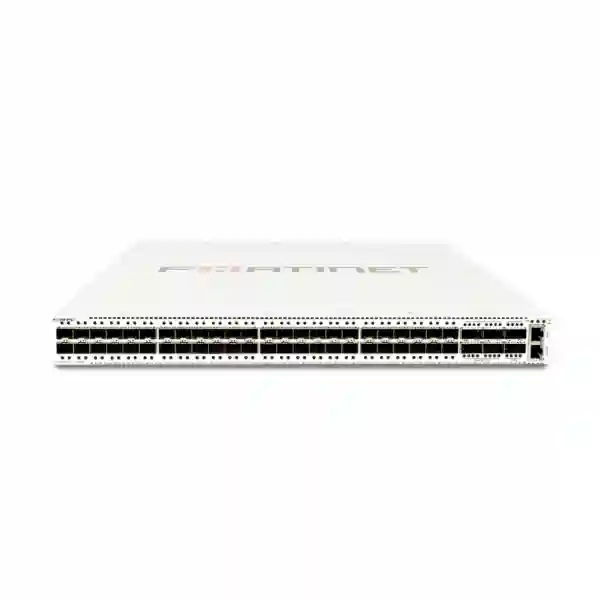
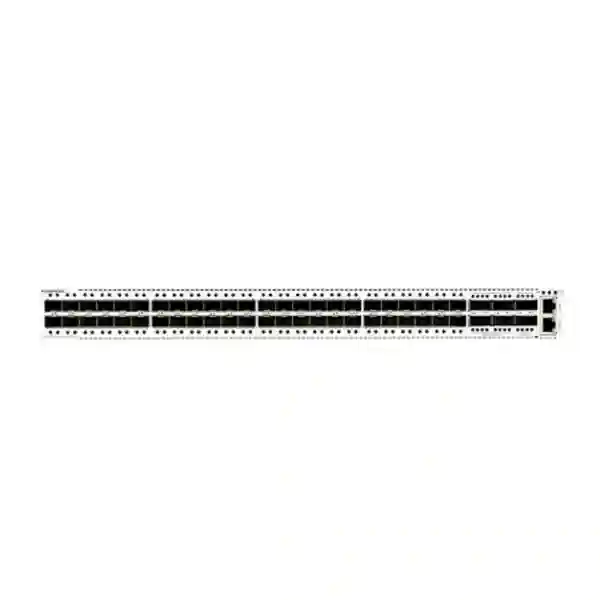
Build a high-capacity enterprise aggregation, campus-core or data-center switching layer around the FortiSwitch FS-1048E. This 1RU platform combines forty-eight 1/10GbE SFP/SFP+ interfaces with high-speed QSFP connectivity that can be used as six 40GbE ports or four 100GbE ports. Fortinet publishes a duplex switching capacity of 1.76 Tbps and packet forwarding performance of 1,518 Mpps for the model, positioning it for networks where fiber density, uplink bandwidth, routing capability and operational integration matter more than basic access switching.
Dense SFP/SFP+ connectivity for fiber aggregation and high-speed server, distribution or network-device links.
Use the high-speed interface group for backbone, core, spine or inter-switch connectivity according to the supported port mode.
Fortinet specifies 1,760 Gbps duplex switching capacity for FS-1048E.
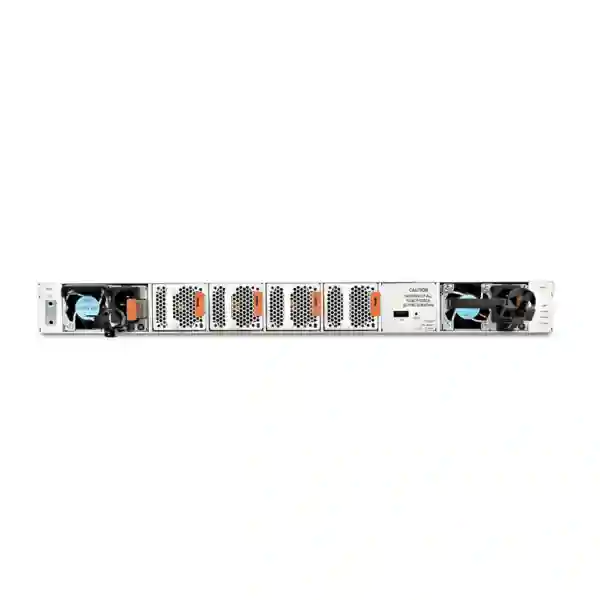
A rack-efficient format for enterprise campus and data-center switching designs.
FortiSwitch FS-1048E Overview
The FS-1048E belongs to Fortinet’s campus-core and data-center switching family. Its interface mix makes it especially relevant when an organization needs to consolidate many 10GbE fiber connections and then move aggregated traffic toward faster 40GbE or 100GbE network layers. Rather than treating the switch as a generic forty-eight-port device, planners should evaluate it as part of an end-to-end topology: the quantity and type of optical transceivers, fiber media, link distances, redundancy model, routing requirements, FortiGate integration, rack power and cooling all influence the final bill of materials.
For Tanzanian organizations modernizing a data center or campus, this distinction matters. A high-density fiber switch may connect virtualization hosts, storage networks, distribution switches, security appliances or other core infrastructure. Each workload has different traffic patterns. The design therefore needs enough bandwidth not merely for today’s average utilization but also for failure scenarios, backup windows, replication, east-west application traffic and future expansion. FS-1048E gives network architects a dense set of 1/10GbE interfaces and faster uplink options from which to build that architecture.
Verified Technical Highlights
| Specification | FortiSwitch FS-1048E |
|---|---|
| Network interfaces | 48 × 10G/1G SFP+/SFP plus 6 × 40G QSFP+ or 4 × 100G/40G QSFP28/QSFP+ |
| Service port | 1 × 10/100/1000 service port |
| Console | 1 × RJ-45 serial console |
| Form factor | 1RU rack mount |
| Switching capacity | 1,760 Gbps duplex |
| Packet forwarding | 1,518 Mpps, 64-byte packets |
| MAC address storage | 144K |
| VLANs | 4K |
| IPv4 / IPv6 routing | Supported; feature availability and licensing should be validated for the intended software release and deployment mode |
Where FS-1048E Fits
The most natural roles are enterprise aggregation, campus core, data-center top-of-rack or leaf switching, and high-bandwidth interconnection between network zones. The forty-eight SFP/SFP+ slots provide flexibility for fiber-heavy designs, while the faster QSFP interfaces can connect upstream cores, spines or other high-capacity systems. Because physical port count alone does not determine suitability, project teams should map actual endpoints, required optics, oversubscription targets and resiliency requirements before ordering.
FortiSwitch FS-1048E Tanzania
For organizations in Tanzania, FS-1048E can serve as the high-speed switching foundation for enterprise campuses, private data centers, service environments and centralized IT facilities that have outgrown conventional Gigabit aggregation. A procurement exercise should begin with a port map rather than a product count. List every existing and planned 1GbE or 10GbE optical connection, identify which links must be redundant, document fiber type and distance, and then identify the required 40GbE or 100GbE uplinks. This prevents a common procurement problem in which the chassis is selected correctly but transceivers, fiber assemblies or uplink topology are incomplete.
Tanzania deployments may also involve geographically distributed branches feeding centralized applications. In that scenario, the FS-1048E is normally evaluated at the aggregation or core layer rather than as a branch access switch. Teams can combine it with appropriate Fortinet security and access technologies while keeping routing boundaries, segmentation and failure domains explicit. Organizations already standardizing on Fortinet should decide whether centralized FortiGate/FortiLink operations are appropriate for the topology or whether a standalone switching model better matches operational responsibilities. Feature support can vary by FortiSwitchOS release and licensing, so advanced routing requirements should be confirmed against current Fortinet documentation before the configuration is finalized.
Quotation preparation should include the required number of switches, power design, rack space, transceiver types, fiber patching, target software release, management method, support term and any advanced feature requirements. This creates a procurement package that can be checked technically before commercial ordering. For related security planning, see FourTeck Tanzania technology solutions and discuss the complete topology rather than purchasing switching capacity in isolation.
FortiSwitch FS-1048E Dar es Salaam
Dar es Salaam organizations evaluating FS-1048E are often dealing with concentrated enterprise infrastructure: headquarters networks, server rooms, colocation footprints, financial systems, hospitality platforms, education campuses and other environments where multiple network segments converge. The design question is not simply whether forty-eight ports are enough. It is whether the combination of 10GbE density and 40/100GbE uplink capacity aligns with the traffic paths that matter during peak operation and during a link or device failure.
A practical design starts by separating north-south traffic from east-west traffic. Server-to-server, virtualization, backup and storage flows can consume substantial capacity even when internet usage is moderate. Uplinks should therefore be sized against application and replication patterns rather than only WAN bandwidth. Redundant switching should also be considered for systems that cannot tolerate a single chassis failure. When two switches are planned, document how servers, firewalls, routers and downstream switches connect to both devices and how routing or link aggregation behaves during failover.
Optics selection deserves equal attention. FS-1048E uses SFP/SFP+ and QSFP-family interfaces, so the project bill of materials must specify compatible transceivers and matching fiber media. Distance, connector type and the equipment at the far end of each link must be known before optics are selected. FourTeck can use these project details to structure a quotation request and help customers avoid treating the switch and its optical connectivity as separate decisions.
FortiSwitch FS-1048E Mwanza
In Mwanza, enterprises planning centralized IT facilities, industrial networks, healthcare systems, education environments or multi-building campuses can evaluate FS-1048E where high-speed fiber aggregation is required. A key planning exercise is to distinguish access-layer requirements from core-layer requirements. User desks, cameras and standard access points generally connect through access switches, while FS-1048E is better considered where many higher-speed switch, server or infrastructure links converge.
For a multi-building design, document fiber routes and link distances before choosing optics. A logical diagram should show the VLANs or routed networks that cross each uplink, which services must remain reachable during maintenance, and whether the network requires separate paths. This design information is especially valuable when deciding how many 10GbE connections should be aggregated into the core and which services justify 40GbE or 100GbE connectivity. The FS-1048E has substantial switching capacity, but effective architecture still depends on balanced link design and failure planning.
Procurement teams should request a complete technical bill of materials rather than a chassis-only price. Include switch quantity, optics, fiber accessories, rack and power considerations, support coverage and configuration requirements. If FortiGate integration is part of the architecture, document the intended management mode and security policy boundaries. This gives technical and purchasing teams a shared specification and reduces changes after equipment arrives.
FortiSwitch FS-1048E Arusha
Arusha businesses and institutions considering the FS-1048E may be supporting hospitality operations, large campuses, regional offices, data-intensive applications or consolidated server infrastructure. In these environments, network availability can depend as much on topology as on switch performance. A single high-capacity switch can simplify aggregation, but critical services may require redundant switching, dual power paths and diverse fiber routes. Those requirements should be captured before procurement.
The forty-eight 1/10GbE optical interfaces are useful where an organization wants to consolidate multiple distribution or server connections. The QSFP connectivity provides faster paths for core or spine interconnection. Planners should calculate oversubscription and determine whether traffic is expected to remain mostly local, traverse security appliances, or move between buildings and data-center zones. This allows uplink capacity to be allocated intentionally rather than simply using the fastest ports without a traffic model.
Management is another selection factor. Fortinet supports integrated networking approaches, but specific features and advanced routing capabilities should be verified for the exact FortiSwitchOS version and licensing model planned for the project. Documenting operational ownership—who manages VLANs, routing, security policy and monitoring—helps determine the most appropriate deployment model. FourTeck can use this information when preparing a solution-oriented quotation for an Arusha project.
FortiSwitch FS-1048E Dodoma
For Dodoma organizations, including institutions and enterprises building resilient central networks, the FS-1048E can be evaluated for aggregation and core switching where dense optical connectivity is needed. Procurement should begin with service requirements: how many departments, buildings, server clusters and network zones need high-speed connectivity, which applications are critical, and what level of maintenance downtime is acceptable. These answers shape the switch count and topology more effectively than port count alone.
The FS-1048E supports a high-density 10GbE fiber layer with 40GbE or 100GbE options for higher-capacity links. That can simplify the transition from older aggregation designs to faster campus or data-center architectures. However, migration planning should account for existing transceivers and legacy interfaces. Not every older endpoint will connect directly at the desired speed, so compatibility should be validated link by link. Where a phased migration is required, document temporary interconnection needs and avoid assuming that every existing optical module can simply be moved to the new platform.
A strong quotation request should specify the target topology, optics and fiber details, support expectations and management approach. For government, education and enterprise procurement processes, this also creates a clearer technical schedule against which vendor responses can be compared without relying on marketing descriptions.
FortiSwitch FS-1048E UAE
UAE projects often combine dense data-center infrastructure with multi-site enterprise networks, making high-speed aggregation and clear lifecycle planning important. FS-1048E can be evaluated where forty-eight 1/10GbE fiber ports and faster QSFP uplinks fit the required topology. Project teams should identify whether the switch is intended for a leaf, top-of-rack, aggregation or campus-core role and then size uplinks against the actual traffic profile.
For cross-region organizations operating in both Tanzania and the UAE, standardization can simplify configuration practices, spares planning and staff training. Standardization should still be based on workload fit: access switching, high-density aggregation and data-center switching are different roles. Organizations can review the wider FourTeck UAE technology portfolio when coordinating infrastructure requirements across locations. A shared bill-of-material template can capture switch hardware, optics, cabling, support and configuration assumptions for each site.
Advanced routing, FortiLink management and software-dependent features should be checked against the current Fortinet release used by the organization. This is particularly important when a standardized architecture spans different maintenance windows or upgrade schedules. Technical validation before procurement helps prevent a hardware choice from becoming constrained later by an unverified software assumption.
FortiSwitch FS-1048E Uganda
Uganda enterprises considering FS-1048E can use the platform as part of a high-speed core or data-center design where many 10GbE fiber connections need to converge. The switch should be specified alongside its optical ecosystem. Every link requires a compatible module, appropriate fiber and a matching interface at the remote endpoint. A port schedule that records those details is one of the most useful documents for procurement and deployment.
Organizations operating across East Africa can also benefit from consistent network design principles. The FourTeck Uganda site provides a regional point of reference for technology requirements, while Tanzania projects can be coordinated around the same architectural documentation. Consistency does not mean every site needs the same switch; it means VLAN conventions, uplink design, management practices, support planning and security boundaries can follow a repeatable framework.
When comparing quotations, ensure that the scope is equivalent. One proposal may include optics and support while another may show only the base appliance. The technical schedule should make these differences visible. Confirm product lifecycle, current software compatibility and any required licenses at the time of purchase rather than relying on an older project specification.
FortiSwitch FS-1048E Kampala
Kampala data centers, headquarters and large enterprise campuses may require a switching layer that can aggregate numerous fiber links without consuming excessive rack space. FS-1048E offers a 1RU format and high interface density, but rack efficiency should be considered together with power, cooling and cable management. Forty-eight fiber connections plus QSFP uplinks can create substantial patching density, so front-of-rack organization and labeling are important operational considerations.
A network architect should document which links are Layer 2 trunks, routed interfaces or members of link aggregation groups. The design should also define how failures are detected and how traffic reconverges. Where dynamic routing is required, confirm exact protocol and licensing support for the intended software release. Where FortiGate management is planned, validate the FortiLink design and supported scale. These checks convert a generic product selection into a deployment-ready specification.
For procurement, request pricing against a complete port and optics matrix. Include spare optics where operational policy requires them and specify support terms separately. This approach gives Kampala IT teams a clearer total project view than comparing base switch prices alone.
FortiSwitch FS-1048E Arua
Arua organizations evaluating high-capacity network infrastructure should first confirm whether their requirement is truly a core or aggregation requirement. FS-1048E is designed around fiber and high-speed switching; it is not a substitute for a conventional copper access switch serving ordinary endpoints. Where a site has multiple distribution switches, server systems or fiber-connected facilities, however, a dense SFP/SFP+ platform can provide a cleaner aggregation point.
Resilience planning is particularly important for sites where replacement logistics may take time. Rather than making unverified assumptions about stock or delivery, the architecture itself can reduce risk through redundant devices, dual paths and appropriate spares. The exact level of redundancy should reflect business impact and budget. Critical services may justify dual core switches and dual-connected infrastructure, while less critical networks may accept a simpler design.
Before requesting a quotation, record interface speeds, fiber distances, required uplinks, rack power, management method and support expectations. That information lets the supplier identify missing components and provides a better basis for technical review. Availability and lead time should always be confirmed at quotation stage because they can change.
FortiSwitch FS-1048E Mbarara
Mbarara enterprises, universities, healthcare facilities and multi-building organizations may consider FS-1048E when network growth creates a need for consolidated high-speed fiber aggregation. A useful first step is to measure current port utilization and traffic, then forecast growth. This avoids buying solely on theoretical capacity and helps identify whether the organization needs more 10GbE ports, faster uplinks, additional redundancy or a combination of all three.
The switch’s 40GbE/100GbE connectivity can be used to create higher-capacity paths, but the far-end device must support the intended interface and optics. Compatibility checks should include transceiver type, fiber standard, link distance and port configuration. For existing networks, migration sequencing is equally important: moving distribution switches or servers in controlled groups can reduce disruption compared with a single large cutover.
A procurement document should identify both mandatory and optional items. Mandatory items might include chassis, required optics and support; optional items could include spare optics, professional configuration or additional redundancy. This structure helps decision makers understand which costs are essential to make the network function and which improve resilience or operational convenience.
FortiSwitch FS-1048E Gulu
Gulu network projects that centralize servers, applications or multiple building links can evaluate FS-1048E as a fiber aggregation platform. The high port density can reduce the number of separate aggregation devices required, but consolidation also increases the importance of redundancy. A failure-domain review should identify what services would be affected by the loss of a switch, uplink or power source and then determine whether the business case supports duplicate components.
Network segmentation should be planned before migration. Define VLANs, routed boundaries and security inspection points, then map them to physical and logical interfaces. If the organization uses FortiGate security appliances, decide where routing and policy enforcement should occur and validate the intended FortiLink or standalone design. Avoid assuming that a feature seen in a general FortiSwitch family description applies identically to every software version and deployment mode.
For commercial evaluation, compare equivalent scopes and request written confirmation of current availability, support options and included accessories. Product pages can describe technical capability, but stock, price and delivery conditions are transaction-specific and should be verified when the order is being planned.
FortiSwitch FS-1048E Kenya
Kenya is a relevant regional market for organizations operating interconnected East African infrastructure. FS-1048E can support high-density 10GbE aggregation where enterprises, campuses and data-center environments need faster core connectivity. Multi-country organizations should create a standard architecture document that separates global design standards from site-specific requirements. That allows Tanzania and Kenya deployments to share operational practices without forcing identical hardware where capacity needs differ.
The FourTeck Kenya technology site can be used for regional coordination. For an FS-1048E project, the key inputs remain the same: endpoint count, link speed, optics, fiber distance, routing design, redundancy, software requirements and support. If a cross-border organization plans to hold spares, standardizing transceiver families and documenting firmware compatibility can simplify operations.
Commercial teams should request a current quote for each project rather than extrapolating pricing from another country or an older purchase. Taxes, logistics, currency and availability can differ. A technically complete bill of materials provides the stable reference point even when commercial conditions change.
FortiSwitch FS-1048E Kuwait
Kuwait enterprises evaluating high-speed Fortinet switching can consider FS-1048E for core and data-center roles requiring dense 10GbE fiber and faster backbone links. Environmental and facility planning should accompany network design. Rack power, cooling, airflow, cable management and redundant power architecture influence operational reliability just as much as interface capacity.
For organizations coordinating infrastructure between Kuwait and East Africa, the FourTeck Kuwait site offers a regional reference point. A common design template can specify naming conventions, VLAN standards, monitoring, configuration backup and change control while leaving capacity decisions to each site. FS-1048E should be selected where its interface profile matches those local requirements.
When building the quotation, specify whether 40GbE or 100GbE connectivity is planned, because that affects optics and topology. Confirm current support and licensing requirements for advanced features, and request written commercial terms for the actual transaction. This avoids carrying assumptions from a technical datasheet into procurement areas that change over time.
FortiSwitch FS-1048E Ghana
Ghana enterprise networks can use a high-density switch such as FS-1048E when server, distribution and backbone links increasingly move to 10GbE fiber. The design should establish expected traffic flows and determine whether uplinks need 40GbE or 100GbE capacity. Backup, replication and virtualization traffic can create short periods of very high utilization, so capacity planning should examine peak behavior rather than only average monitoring data.
For regional project coordination, FourTeck Ghana can support the broader conversation around enterprise infrastructure. A project specification should clearly state the required switch model, quantity, optics, fiber media, support term and management design. If the switch will participate in dynamic routing, identify required protocols and verify feature support against the current Fortinet documentation and license level.
Procurement should also distinguish new project capacity from growth reserve. Leaving sensible spare ports can make expansion easier, but excessive unused capacity may not be economical. A documented three-to-five-year growth assumption helps technical and finance teams evaluate that trade-off consistently.
FortiSwitch FS-1048E Nigeria
Nigeria has large enterprise and data-center environments where dense high-speed switching can be central to application performance. FS-1048E provides the interface mix for aggregating numerous 10GbE links and connecting them through faster QSFP interfaces. The switch should be assessed within the full architecture, including firewalls, routers, server fabrics, storage traffic and downstream switching.
Multi-site organizations can reference FourTeck Nigeria for regional technology planning. When standardizing, maintain a configuration baseline but validate each site’s physical media and capacity. A 10GbE optical link may use different optics depending on distance and fiber plant, and the bill of materials must reflect those details.
Availability, price and delivery time should be requested for the specific project rather than assumed from online listings. Technical teams should focus the product specification on verified capabilities and required accessories, while commercial teams confirm transaction-specific terms at quotation stage. This separation makes procurement clearer and reduces the risk of outdated web information influencing a live project.
FortiSwitch FS-1048E Seychelles
Seychelles organizations planning core infrastructure may place particular value on careful lifecycle and resilience design because island logistics can make unplanned replacement more disruptive. FS-1048E can consolidate high-speed fiber links in a compact rack footprint, but business continuity should be designed into the topology rather than assumed from the hardware alone. Consider redundant switching, dual uplinks, spare optics and configuration backups according to the criticality of the environment.
Optical planning is especially important. Record the distance and fiber type for every link and choose compatible modules only after confirming both endpoints. Where 40GbE or 100GbE is used, document whether the link is direct, broken out or connected through another switching layer. Clear labeling and port documentation simplify future maintenance and reduce dependence on institutional knowledge.
For procurement, request current availability and logistics terms at the time of quotation. The technical specification should remain independent of assumptions about stock. This lets the organization evaluate alternative timelines or redundancy strategies without changing the core network requirement.
Integration, Routing and Management Planning
Fortinet positions FortiSwitch within its security-driven networking architecture, including FortiGate-managed deployments through FortiLink and standalone management options across the family. For FS-1048E, the current campus-core/data-center documentation lists IPv4/IPv6 routing and a range of Layer 3 capabilities, while some advanced functions can depend on licensing and software. Because operational behavior can change between software releases, the project team should validate the exact feature matrix for its planned FortiSwitchOS release before treating a protocol as a contractual requirement.
A good architecture document states where default gateways live, where security inspection occurs, how VLANs are extended, which routing protocols are used, how management access is protected and how configurations are backed up. It should also specify monitoring requirements and time synchronization. These details make the switch easier to operate after installation and give implementation teams clear acceptance criteria.
Optics and Fiber Selection
The FS-1048E is fundamentally an optical-interface platform, so transceiver planning is part of the product decision. Do not choose an SFP, SFP+, QSFP+ or QSFP28 module solely because the connector fits. Confirm the supported module, required speed, wavelength, fiber type, distance and remote endpoint. Existing fiber infrastructure should be audited before procurement, particularly when older multimode fiber or legacy equipment is involved.
Create an optics matrix with one row per link. Record source port, destination device, destination port, required speed, distance, fiber type, connector and proposed transceiver at both ends. This simple document can prevent mismatched optics and also makes spare planning straightforward. Where breakout configurations or mixed port modes are contemplated, confirm support in current Fortinet documentation before ordering cables or modules.
Quotation Checklist for FortiSwitch FS-1048E
✓ Required FS-1048E quantity and redundancy model
✓ 1/10GbE optical port count
✓ 40GbE or 100GbE uplink requirement
✓ Transceiver types and quantities
✓ Fiber type, distance and connectors
✓ Rack, power and cooling requirements
✓ FortiGate/FortiLink or standalone management plan
✓ Required routing protocols and advanced features
✓ Target software release
✓ Support term and service expectations
✓ Installation/configuration scope
✓ Current availability and commercial terms to be confirmed
FortiSwitch FS-1048E FAQ
How many 10GbE ports does FS-1048E provide?
Fortinet specifies 48 SFP/SFP+ interfaces supporting 1GbE/10GbE connectivity. The final optical link capability depends on compatible transceivers and the device at the far end.
Does FS-1048E support 100GbE?
Yes. Fortinet lists a high-speed interface configuration supporting four 100GbE/40GbE QSFP28/QSFP+ ports; the platform can alternatively expose six 40GbE QSFP+ ports according to the documented port mode.
What is the switching capacity?
The current Fortinet data sheet specifies 1,760 Gbps duplex switching capacity and 1,518 Mpps packet forwarding for 64-byte packets.
Is FS-1048E suitable for ordinary desktop access?
Its fiber-focused high-speed interface profile is primarily aligned with aggregation, campus-core and data-center roles. Desktop access requirements are normally evaluated against access-switch models with the required copper and PoE capabilities.
Can FS-1048E be used with FortiGate?
FortiSwitch platforms support Fortinet integrated management approaches including FortiLink. Validate the intended FortiGate model, software versions, scale and feature requirements against current Fortinet compatibility documentation during design.
How do I request FS-1048E pricing in Tanzania?
Prepare the required quantity, optics, uplink speeds, support term and deployment scope, then request a current project quotation. Pricing and availability should be confirmed for the specific transaction.
Decision Recap
Choose the FortiSwitch FS-1048E when the project calls for a dense 1/10GbE fiber aggregation layer, fast 40GbE or 100GbE connectivity, rack-efficient deployment and integration with an enterprise switching architecture. Before purchase, validate optics, topology, routing and management requirements against the current Fortinet release. The strongest quotation is a complete solution bill of materials rather than a chassis-only request.
Plan Your FS-1048E Deployment
Share your current network diagram, desired port speeds, fiber distances, uplink requirements and redundancy objectives with FourTeck. This information can be used to structure a technically clearer quotation for the FortiSwitch FS-1048E and associated connectivity. No stock, price or delivery claim is implied until confirmed in a current quotation.



Reviews
There are no reviews yet.