
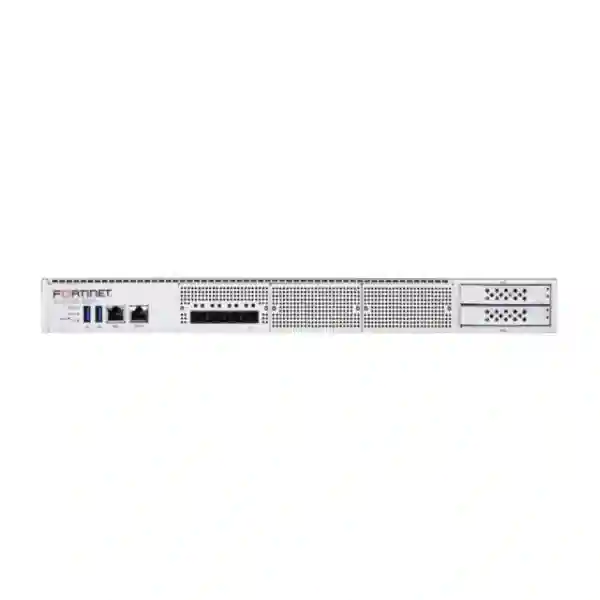
FortiNAC FNC-M-550F Tanzania
FortiNAC FNC-M-550F is a dedicated FortiNAC Manager appliance designed to centralize administration of distributed Control and Application servers. Fortinet positions the FNC-M-550F for multi-site environments with multiple FortiNAC appliances, with support for managing up to 100 CA servers. For Tanzanian enterprises, universities, financial organizations, healthcare groups, government environments and other distributed networks, the product is relevant when network access control has grown beyond a single CA server and operational teams need a coordinated management layer.
Central management role
FNC-M-550F is the Manager component of a distributed FortiNAC architecture. It should not be confused with a CA appliance: CA servers perform Control and Application functions, while the Manager coordinates a deployment containing multiple CA servers.
Scale for distributed NAC
Current Fortinet ordering material describes the F-series Manager as supporting up to 100 CA servers. Actual architecture should still be validated against site count, latency, endpoint licensing, resilience objectives and the FortiNAC software release selected for deployment.
Procurement planning
A complete bill of materials can require CA appliances or VMs, endpoint entitlements, FortiCare, optics, rack accessories and implementation services in addition to the Manager. Buyers should request a topology-led quotation rather than treating FNC-M-550F as a standalone NAC solution.
Verified FNC-M-550F hardware highlights
| Role | FortiNAC Manager / Control Manager |
| Processor | AMD EPYC 7413, 24 cores, 2.65 GHz base frequency |
| Memory | 32 GB DDR4 |
| Storage | 2 × 960 GB SSD |
| Interfaces | 1 × GbE RJ45 and 4 × 10GbE SFP+ |
| Manager scale | Up to 100 CA servers in current Fortinet ordering information |
FortiNAC FNC-M-550F Tanzania
Organizations evaluating FortiNAC FNC-M-550F in Tanzania are typically planning a distributed network access control architecture rather than a single-site appliance purchase. The key design question is how many FortiNAC CA servers must be coordinated and where those servers will sit in relation to campuses, branches, data centres and critical network segments. FNC-M-550F provides the management layer for this model, giving administrators a central point from which a larger FortiNAC environment can be operated. Procurement teams should document the number of locations, estimated endpoint population, existing switching and wireless infrastructure, authentication services, segmentation goals and desired availability model before requesting a commercial proposal.
For Tanzania deployments, it is useful to separate hardware sizing from licensing. The Manager’s ability to coordinate CA servers does not replace endpoint entitlements, and a distributed design may require several CA appliances or virtual instances. Buyers should also confirm the FortiNAC software train, FortiCare term, high-availability requirements and any transceivers required for 10GbE connectivity. If the environment integrates FortiGate, FortiSwitch, FortiAnalyzer or other security systems, include those versions and topology details in the design review. This reduces the risk of comparing quotations that contain different license tiers or incomplete infrastructure.
FourTeck can use the quotation stage to structure requirements around topology rather than an isolated SKU. A useful request includes site count, expected growth, current NAC architecture, desired redundancy, network management addressing, rack and power constraints, endpoint licensing expectations and implementation scope. Customers can also review broader FourTeck Tanzania technology solutions and FortiNAC FNC-M-550F Africa guidance when planning multi-country requirements.
FortiNAC FNC-M-550F Dar es Salaam
Dar es Salaam organizations often operate headquarters, data-centre and branch connectivity that makes centralized NAC management relevant. When evaluating FNC-M-550F, begin with the architecture: identify each CA server, the networks it controls, inter-site connectivity and the administrative teams responsible for access policy. The Manager is intended to coordinate multiple FortiNAC CA systems, so a single-site environment that fits comfortably on one CA should first be assessed to determine whether a Manager is actually required.
Enterprises with multiple offices, campuses or operational sites should document WAN latency and resilience requirements between the Manager and managed systems. Fortinet documentation notes that distributed configurations install endpoint license entitlements on the Control Manager, making license planning an important part of the design. Procurement should therefore capture concurrent endpoint requirements, desired license capabilities and support term alongside hardware. This is particularly important where an organization is expanding in phases and expects additional CA servers later.
A Dar es Salaam quotation request should state rack environment, power design, preferred interface media, high-availability requirement and whether professional deployment assistance is required. The FNC-M-550F includes high-speed SFP+ interfaces, so optics and cabling should be specified rather than assumed. Organizations building a broader Fortinet architecture can review FourTeck Fortinet solution resources for related security concepts while keeping the final Tanzanian bill of materials tied to verified project requirements.
FortiNAC FNC-M-550F Mwanza
For Mwanza enterprises and institutions, FNC-M-550F becomes relevant when NAC administration spans several operational locations or multiple CA servers. A regional business may have a primary IT environment in Mwanza with branches, warehouses, clinics, campuses or remote facilities connected over WAN services. Central management can simplify the operational model, but the design must account for the placement and sizing of the CA layer that actually handles Control and Application functions.
Before procurement, inventory switching, wireless, identity and endpoint environments and identify which devices must be visible, profiled or controlled. Record expected growth instead of sizing only for today. The Manager platform can coordinate a large number of CA servers, but the capacity of each CA and the endpoint license quantity remain separate design considerations. Buyers should also define whether the deployment needs high availability. Fortinet documents FNC-M-550F pairs as a supported Manager HA example on appropriate FortiNAC releases, subject to version and configuration requirements.
Mwanza customers requesting a quote should provide site count, CA count, endpoint estimates, desired license tier, software version, support duration and implementation expectations. If existing firewalls, switches or analytics platforms are part of the project, list model and version details so integration can be reviewed. Avoid basing procurement on an internet price because support, licensing, logistics and project scope can materially change the complete solution. The objective should be an equal-scope bill of materials that technical and procurement teams can compare confidently.
FortiNAC FNC-M-550F Arusha
Arusha organizations with hospitality, education, services, government, healthcare or multi-branch operations may need consistent access-control administration across networks that serve very different device populations. FortiNAC FNC-M-550F is designed as the centralized Manager in distributed FortiNAC architectures. Its value is therefore tied to multi-CA coordination rather than endpoint enforcement by itself.
Planning should begin by grouping locations according to operational criticality and connectivity. Identify where CA servers will reside, whether sites need local survivability, what latency exists between systems and which administrative workflows must be centralized. Endpoint licensing should be calculated using the chosen FortiNAC licensing model and verified during quotation. Organizations should also confirm whether physical appliances or virtual CA servers better match their infrastructure standards.
For an Arusha procurement exercise, request a design review that includes Manager redundancy, CA placement, 10GbE connectivity, rack space, power, software version alignment, backup procedures and FortiCare. Fortinet’s F-series appliances use FortiNAC-OS and expose limited ports by default, so deployment teams should plan required management and application access deliberately rather than broadly opening services. This supports a cleaner security posture and makes implementation requirements visible before the purchase order is finalized.
FortiNAC FNC-M-550F Dodoma
In Dodoma, organizations evaluating centralized network access control may include public institutions, enterprises, educational environments and distributed administrative networks. FNC-M-550F can form the management tier when several FortiNAC CA systems need unified oversight. Buyers should distinguish this role clearly in tender documents so bidders do not substitute a CA appliance for the Manager or omit the CA layer entirely.
A well-defined specification should describe current and planned sites, endpoint counts, switch and wireless estate, identity sources, network segmentation requirements, guest or contractor access workflows and desired response capabilities. These inputs determine the wider FortiNAC solution and license selection. The Manager hardware itself is only one component. Where resilience is important, document whether Manager high availability is required and confirm compatible software versions and architecture with current Fortinet guidance.
Dodoma procurement teams should ask suppliers to itemize hardware, licenses, FortiCare, optics, accessories and professional services. This makes commercial comparisons more meaningful and exposes missing components before award. Include any requirements for configuration documentation, knowledge transfer and post-deployment support in the scope rather than assuming they accompany the appliance. For broader regional projects, FourTeck Africa provides a useful route for discussing multi-country coordination while Tanzania remains the primary deployment context.
FortiNAC FNC-M-550F UAE
UAE buyers considering FNC-M-550F commonly need a management layer for distributed FortiNAC deployments across offices, campuses, data centres or operational sites. The architecture should be defined before the commercial request: how many CA servers exist or are planned, where they are located, what endpoint licenses are required and whether the Manager must be deployed as an HA pair.
Because the FNC-M-550F is a physical management appliance, procurement should include rack, power and interface requirements. Its published hardware includes an AMD EPYC 7413 processor, 32 GB DDR4 memory, two 960 GB SSDs and GbE/10GbE connectivity. These specifications should be treated as platform characteristics rather than a substitute for solution sizing. CA capacity and endpoint licensing must be designed independently.
Organizations coordinating Tanzania and UAE infrastructure can use FourTeck UAE for regional technology discussions while keeping each country’s logistics and commercial terms explicitly confirmed in the quotation. Include software versions, support duration, implementation scope and required documentation. This is particularly useful for multinational IT teams that want consistent NAC architecture but need procurement packages appropriate to each operating market.
FortiNAC FNC-M-550F Uganda
Uganda deployments can benefit from a centralized FortiNAC Manager when network access control is distributed across multiple CA servers. Enterprises with branches, campuses or operational facilities should first map the topology and decide which sites require local CA resources. FNC-M-550F then provides the management layer for coordinating those systems.
The procurement process should capture endpoint quantities, license tier, CA model or VM sizing, WAN characteristics and resilience requirements. Fortinet’s current material states support for up to 100 CA servers, making the appliance suitable for architectures that may expand significantly, but the correct design still depends on the number and capacity of CA servers. Endpoint entitlements in distributed configurations also need to be planned at the Manager level.
For cross-border East African projects, buyers can review FourTeck Uganda for Uganda-focused coordination. A complete request should identify whether installation, migration, configuration, testing and administrator training are required. Stock and delivery should be confirmed at quotation time rather than assumed from product-page publication.
FortiNAC FNC-M-550F Kampala
Kampala headquarters environments frequently concentrate IT administration while serving multiple branches or facilities. FNC-M-550F fits this pattern when several FortiNAC CA servers need centralized management. Design teams should document the relationship between headquarters, data-centre and remote CA instances and verify that management traffic, latency and security policies meet the requirements of the selected FortiNAC release.
A Kampala bill of materials should not stop at the Manager SKU. Include CA appliances or VMs, endpoint licenses, support contracts, optics and any HA components. Define which teams will administer NAC and whether centralized policy workflows need separation of responsibilities. Integration requirements with identity systems, switches, wireless infrastructure and security analytics should also be recorded for technical review.
When comparing proposals, ensure every bidder has priced the same license tier, support duration and implementation scope. Ask for assumptions to be written into the quotation. This avoids apparent price differences caused by omitted services or different endpoint quantities. Multi-site projects should also document future expansion so the initial architecture does not create unnecessary redesign when additional CA servers are introduced.
FortiNAC FNC-M-550F Arua
Arua organizations connecting remote operations to a central IT function should evaluate FNC-M-550F based on architecture rather than city size. The Manager is useful where FortiNAC is distributed across multiple CA systems and administrators require consolidated oversight. Smaller deployments using one CA may not need a dedicated Manager, so topology validation is an important first procurement step.
Connectivity between locations deserves particular attention. Record WAN links, expected latency, redundancy and maintenance windows. Determine whether CA resources need to remain close to local networks and how administrators will securely reach the Manager. FortiNAC-OS appliances limit listening services by default, and additional access is enabled according to required functions, so deployment plans should identify necessary ports rather than relying on broad firewall rules.
Quotation requests should include endpoint estimates, current network infrastructure, license expectations, HA requirement and support term. Where logistics or installation services are required for Arua, request those as explicit commercial lines and confirm them before ordering. This keeps the public product description factual while allowing the final proposal to reflect actual delivery and project conditions.
FortiNAC FNC-M-550F Mbarara
Mbarara enterprises, universities, healthcare networks and distributed businesses may use FortiNAC to improve visibility and control over devices connecting to wired and wireless networks. FNC-M-550F addresses the management requirement when the architecture contains several CA servers. It is therefore most relevant to organizations planning distributed NAC at meaningful scale.
During design, separate three questions: how many CA servers are required, how many endpoints must be licensed and whether centralized Manager redundancy is needed. Each question affects the bill of materials differently. Include growth estimates and planned sites so the design is not limited to the first deployment phase. If existing CA systems are already installed, capture their model, software release and license status before adding a Manager.
Mbarara buyers should request a documented topology and itemized quotation. The scope can include rack installation, base configuration, CA onboarding, policy migration, testing and knowledge transfer where required. Do not assume these services are included with hardware. A clear acceptance plan helps technical teams verify that the Manager can communicate with intended CA systems and that operational responsibilities are understood before production use.
FortiNAC FNC-M-550F Gulu
For Gulu deployments, centralized NAC management can be valuable when an organization has multiple sites with separate CA resources but wants coordinated administration. FNC-M-550F is Fortinet’s physical F-series Manager for this purpose. Its published scale of up to 100 CA servers provides room for substantial distributed architectures, though actual solution design must account for the CA and endpoint layers separately.
Network teams should prepare an inventory of managed locations, switch infrastructure, wireless networks, identity sources and endpoint categories. Identify critical sites that may need HA and define recovery expectations. If the Manager itself requires redundancy, validate the current FortiNAC release and matching Manager architecture before purchase. Software compatibility should be checked as part of implementation planning, not after delivery.
Procurement documentation should specify support duration, required optics, rack and power details, implementation services and endpoint license quantities. For projects involving remote locations, state any logistics expectations explicitly and obtain a dated confirmation in the quotation. This prevents a general product page from being mistaken for a promise of local inventory or a fixed delivery schedule.
FortiNAC FNC-M-550F Kenya
Kenyan organizations operating several FortiNAC CA systems can use FNC-M-550F as the centralized management tier. Multi-campus education, financial services, healthcare, manufacturing and distributed enterprise environments are examples where consistent NAC administration may need to span many locations. The key qualification is the architecture, not the industry label.
Before requesting pricing, document the current and target CA count, endpoint population, license requirements, network topology and high-availability objectives. Confirm whether physical CA appliances, virtual CA servers or a mixture is planned and review compatibility with the chosen software release. For cross-country groups, keep Tanzania and Kenya bills of materials distinct where logistics, support or implementation scope differs.
Customers can use FourTeck Kenya for Kenya-focused requirements. A useful procurement package asks for hardware, licenses, FortiCare, optics and professional services as separate lines. It should also state the expected project milestones and technical acceptance criteria without assuming stock, delivery or installation commitments until they are confirmed commercially.
FortiNAC FNC-M-550F Kuwait
Kuwait enterprises considering FNC-M-550F should assess whether their FortiNAC environment is distributed enough to require a dedicated Manager. The appliance is designed to coordinate multiple CA servers, providing a central management layer for larger NAC architectures. A single CA deployment should be reviewed before adding Manager hardware unnecessarily.
For larger projects, document endpoint licensing, CA sizing, network latency, security zones and HA requirements. The physical platform’s 10GbE SFP+ connectivity can support high-speed management infrastructure, but required transceivers are a separate procurement consideration and should be listed explicitly. Rack and redundant power planning should likewise be confirmed in the data-centre design.
Regional buyers can consult FourTeck Kuwait for Kuwait-specific project coordination. Ask for a current quotation that identifies support term, license quantities and implementation scope. This is preferable to relying on third-party online prices that may represent different regions, service levels or commercial conditions.
FortiNAC FNC-M-550F Ghana
Ghana deployments with multiple FortiNAC CA servers can use FNC-M-550F to centralize management across sites. Organizations should determine whether their NAC design is truly distributed, how CA resources map to branches or campuses and how endpoint licensing will be allocated. This produces a more accurate architecture and avoids purchasing a Manager without the surrounding components needed for operation.
Technical planning should cover software version alignment, management addressing, WAN connectivity, identity integrations and high availability. Where FortiAnalyzer or other Fortinet systems are used, include versions in the project discovery so integration can be reviewed against current documentation. Buyers should also define operational ownership and escalation procedures for NAC policy changes.
For Ghana-specific procurement, FourTeck Ghana can support regional requirement discussions. Request an itemized proposal and confirm logistics, support and services in writing. The product page should be used as a technical starting point, while the formal quotation establishes project-specific commercial commitments.
FortiNAC FNC-M-550F Nigeria
Nigeria’s large distributed enterprises can have strong use cases for centralized NAC administration across many branches, campuses or operational facilities. FNC-M-550F is designed for the Manager role in such FortiNAC architectures and supports up to 100 CA servers according to current Fortinet ordering information. The figure describes Manager scale; it does not replace endpoint or CA capacity planning.
Organizations should map sites, endpoint populations, CA placement and WAN dependencies before procurement. Define which locations require local CA services, which systems need HA and what recovery objectives apply. Endpoint licensing and FortiCare should be selected for the actual design. If a phased rollout is planned, include future CA additions so the initial topology supports expansion cleanly.
Nigeria-focused requirements can be discussed through FourTeck Nigeria. Ask for a bill of materials that separates hardware, licenses, support, optics and services, and request current availability rather than assuming inventory from web listings. Clear scoping is especially important for large tenders where different bidders may otherwise interpret the NAC architecture differently.
FortiNAC FNC-M-550F Seychelles
Seychelles organizations with networks spread across properties, islands or operational locations may need centralized oversight while maintaining appropriate local network control. FNC-M-550F can serve as the management tier when multiple FortiNAC CA servers are deployed. The decision should be based on topology, endpoint licensing and operational requirements rather than geography alone.
Connectivity resilience is a key planning topic for distributed environments. Document WAN paths, latency, maintenance windows and recovery procedures. Determine where CA systems should be placed and how the Manager will be protected. If HA is required, validate the selected FortiNAC software release and Manager pairing requirements. Include secure management access and necessary network ports in the implementation plan.
A Seychelles quotation should explicitly cover freight assumptions, support term, endpoint entitlements, optics, rack requirements and professional services where needed. Do not assume a published product page represents local stock or a delivery commitment. For wider African coordination, FourTeck Africa can provide a regional discussion point for multi-country architectures.
Deployment and integration planning
FortiNAC-F appliances run FortiNAC-OS. Fortinet’s installation guidance states that hardware appliances initially expose SSH on Ethernet port1 and that additional access is enabled as features are configured. This makes firewall and management-plane planning an intentional part of deployment. Administrators should identify required inter-server communication, management access and integration flows, then permit only what the design requires.
For distributed configurations, Fortinet documentation identifies the Control Manager as the managing server for endpoint license entitlements. This is an important procurement and operational detail: the FNC-M-550F hardware purchase should be aligned with the endpoint license model and the number of managed CA systems. License tier, quantity, term and support should be confirmed on the final quote.
High availability should be specified when business continuity requires Manager redundancy. Current Fortinet documentation includes FNC-M-550F / FNC-M-550F as a supported HA pairing example under applicable releases. Cluster and HA requirements vary by software version, so implementation teams should validate the exact release before committing a design.
Quotation checklist for FortiNAC FNC-M-550F
List all sites, existing and planned CA servers, software versions, WAN relationships and desired Manager placement.
Provide endpoint quantities, desired FortiNAC capabilities, license model and support term so quotations use the same scope.
State whether Manager HA, redundant CA systems or specific recovery objectives are required.
Confirm rack, power, interface media, SFP+ optics and cabling rather than assuming accessories are included.
FortiNAC FNC-M-550F FAQs
What is the FNC-M-550F used for?
It is the physical FortiNAC Manager appliance used to centrally manage distributed FortiNAC Control and Application servers.
How many CA servers can FNC-M-550F manage?
Current Fortinet ordering information states support for up to 100 CA servers. Validate the intended topology and current software release during design.
Is FNC-M-550F a CA server?
No. It is the Manager. FortiNAC CA appliances or supported virtual CA systems provide Control and Application server functions.
Does the appliance include all FortiNAC endpoint licensing?
Do not assume so. Endpoint entitlements and support should be scoped and quoted for the selected deployment and license model.
What should I send for a Tanzania quotation?
Provide site count, CA count, endpoint estimates, existing network environment, desired licensing, HA requirement, support term, optics needs and implementation scope.
Decision recap
Choose FNC-M-550F when the design requires a physical FortiNAC Manager for centralized administration of multiple CA servers. Validate CA sizing, endpoint licensing, software compatibility, HA, interfaces and support as parts of the complete architecture. For Tanzania procurement, request a project-specific bill of materials and current commercial confirmation rather than relying on generic online pricing or availability.
Plan your FortiNAC deployment with FourTeck Tanzania
Share your site topology, CA requirements, endpoint estimates, current infrastructure and resilience goals. FourTeck can use these inputs to prepare a more precise FNC-M-550F requirement and quotation scope without assuming unverified stock, delivery or licensing.




Reviews
There are no reviews yet.