
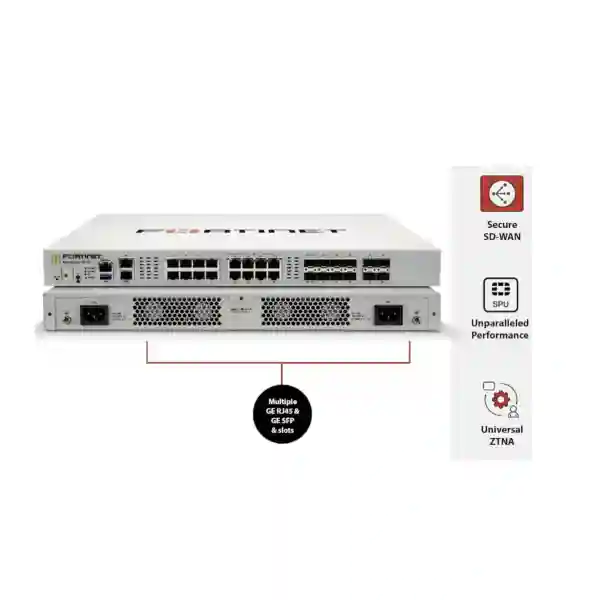
FortiGate 200G Series
FortiGate 200G Series is designed for organizations that need a strong security and networking foundation at the campus edge, headquarters, large branch or distributed enterprise gateway. Fortinet combines next-generation firewall controls with Secure SD-WAN, VPN, segmentation and FortiGuard security services in a platform accelerated by its SP5 security processor. For Tanzanian buyers, the practical decision is not simply whether the appliance has a high headline throughput figure; it is whether the selected model, subscription, interfaces, inspection profile and deployment architecture match real traffic, encrypted application use, WAN design, resilience requirements and future growth.
Verified performance
Fortinet publishes up to 39 Gbps IPv4 firewall throughput for the 200G Series, 9 Gbps IPS throughput, 7 Gbps NGFW throughput and 6 Gbps threat-protection throughput in its current product material. It also lists up to 11 million concurrent TCP sessions and high-speed IPsec VPN performance. These figures are vendor test results and should be interpreted with the applicable test conditions rather than treated as a guarantee for every production network.
200G or 201G?
The two models share the core security and networking platform. The important procurement distinction is local storage: FortiGate 200G has no onboard storage while FortiGate 201G includes a 480 GB SSD. Organizations that want local log retention should evaluate that difference alongside FortiAnalyzer, FortiGate Cloud or external logging plans rather than choosing solely by appliance name.
Connectivity
The series provides a mix of GE RJ45, multi-gigabit 5/2.5/1 GE RJ45, GE SFP and 10GE SFP+ connectivity, plus dedicated management and HA interfaces. This mix makes the platform relevant where internet edge security must coexist with faster campus uplinks, fiber distribution, FortiLink and modern access-layer designs.
What the FortiGate 200G Series solves
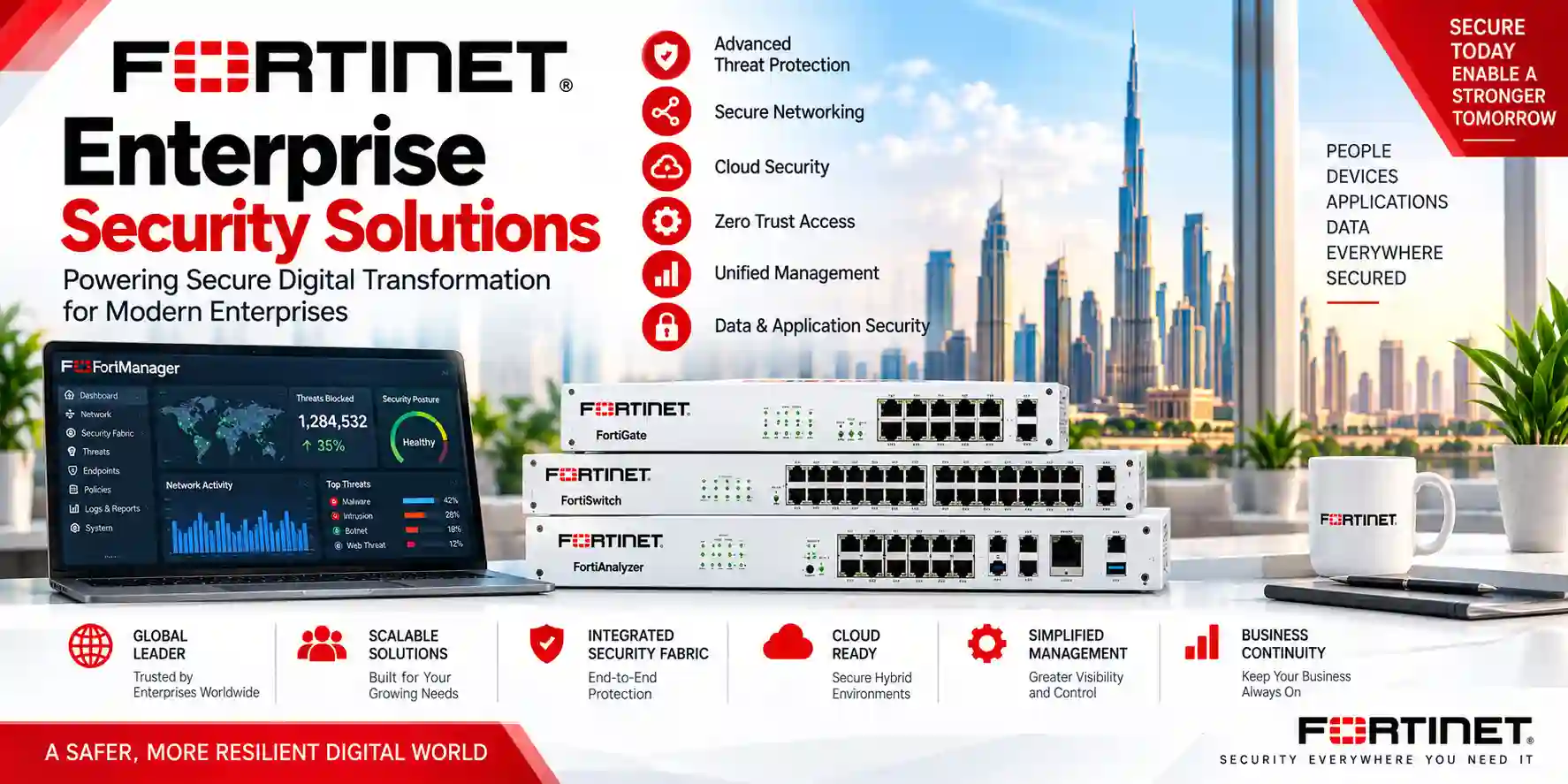
A growing enterprise network can accumulate separate products for firewalling, VPN, application control, branch routing, WAN failover and threat prevention. The FortiGate 200G Series is intended to converge many of those edge functions under FortiOS and the wider Fortinet Security Fabric. That can simplify policy design when the organization wants consistent controls between users, applications, internet links, remote sites and cloud-connected resources. Secure SD-WAN can steer traffic across multiple WAN paths, IPsec can connect sites, segmentation can limit unnecessary lateral access, and FortiGuard services can add inspection capabilities such as malware prevention, DNS filtering and other subscribed security functions.
Sizing still matters. Buyers should document internet bandwidth, expected growth, number of users and devices, east-west versus north-south traffic, VPN volumes, encrypted traffic, application mix, security inspection requirements, high-availability expectations and logging strategy. A firewall that looks oversized on raw throughput can become appropriate once deep inspection, redundancy and growth are considered; the reverse is also true. Procurement should therefore start with a traffic and policy profile, not a model-number assumption.
Technical planning snapshot
| Series models | FortiGate 200G and FortiGate 201G |
| Firewall throughput | Up to 39 Gbps for 1518/512-byte UDP tests; vendor conditions apply |
| IPS / NGFW / Threat Protection | 9 Gbps / 7 Gbps / 6 Gbps published values |
| Concurrent TCP sessions | Up to 11 million |
| Interfaces | GE RJ45, 5/2.5/1 GE RJ45, GE SFP and 10GE SFP+ options, plus management/HA |
| Storage distinction | 200G: no onboard storage; 201G: 480 GB SSD |
Secure networking, VPN and integration
FortiGate 200G Series can sit at the intersection of security and network operations. For a campus, that can mean protecting internet access while connecting distribution switches and wireless infrastructure. For a distributed business, it can mean SD-WAN policy across multiple carriers with encrypted site-to-site tunnels. For a headquarters, it can mean segmentation between user, server, voice, guest, operational and management networks. The correct design depends on topology and risk rather than a universal template.
Organizations planning multi-WAN can review FourTeck guidance around Fortinet security solutions in Tanzania and use the project discussion to define carrier diversity, failover behavior, application steering and monitoring. Regional projects can also reference FourTeck Uganda, FourTeck Kenya, FourTeck Ghana and FourTeck Nigeria when procurement spans those markets. These links provide regional context; availability and project scope should be confirmed for each requirement.
FortiGate 200G Series Tanzania
In Tanzania, FortiGate 200G Series is relevant to organizations modernizing a headquarters perimeter, campus network, large branch, education environment, hospitality operation, financial-services edge, healthcare network or multi-site enterprise. A useful procurement process begins by separating internet-edge capacity from security-inspection capacity. If an organization has one or more high-speed internet circuits, the design team should identify which traffic will receive IPS, application control, malware inspection, web controls or SSL inspection and which traffic follows different policy. That produces a more realistic sizing basis than comparing ISP bandwidth directly with the raw firewall number.
Tanzanian networks may also need to accommodate more than one carrier for resilience. FortiGate Secure SD-WAN can be evaluated for path selection, failover and application-aware steering, while IPsec VPN can connect branches or partner locations. Where uptime is important, procurement should examine a high-availability pair, power design, upstream and downstream switch redundancy, transceiver requirements and whether both WAN circuits remain physically diverse. The appliance alone cannot remove single points of failure elsewhere in the network.
Subscription planning is another important part of the bill of materials. FortiGuard service bundles and FortiCare support options should be matched to the security functions and support expectations of the organization. Buyers should confirm the exact bundle, term and renewal plan at quotation time rather than assuming every appliance quote includes the same services. Logging should also be decided early: the 200G has no onboard storage, while the 201G adds a 480 GB SSD, and centralized logging may be handled with FortiAnalyzer, cloud services or another approved destination. For a Tanzania quotation, provide expected bandwidth, users, sites, VPN requirements, interface types, security services, HA requirement and preferred subscription term so the solution can be scoped around the real network.
FortiGate 200G Series Dar es Salaam
Dar es Salaam organizations often concentrate head-office users, internet-facing services, cloud connectivity and branch aggregation at one primary site. In that pattern, the FortiGate 200G Series can be evaluated as a campus or enterprise-edge security platform rather than simply a branch firewall. The design should map business-critical flows first: ERP and SaaS access, voice and video, remote-user connectivity, site-to-site VPN, public services, guest networks and administrative traffic. Each flow may need a different combination of security inspection, bandwidth priority, route selection and logging.
For businesses using two or more internet services, Secure SD-WAN can support policy-driven use of available links, but successful deployment depends on clear health checks and business rules. Teams should decide what happens when latency rises without a complete outage, which applications prefer a particular path, how inbound services are handled and how failover is tested. A design workshop should also identify whether the firewall connects directly to ISP equipment, a core switch stack, a data-center segment or a dedicated DMZ architecture. The 200G Series offers multi-gigabit and fiber interfaces that can be useful where campus access speeds have outgrown traditional 1GbE boundaries.
Procurement teams in Dar es Salaam should request a complete scope rather than only an appliance line. That scope can include the exact 200G or 201G model, FortiGuard services, FortiCare level, optics or transceivers, rack and power considerations, HA quantity, implementation, migration, policy conversion, VPN setup, testing, documentation and administrator handover. If local log storage is a decision factor, compare the 200G with the 201G before purchase. Where centralized reporting is preferred, include the intended logging platform in the architecture. This approach gives finance, IT and security teams a clearer basis for comparing quotations and avoids discovering missing licensing or deployment components during cutover.
FortiGate 200G Series Mwanza
For Mwanza businesses, the FortiGate 200G Series can fit environments where a regional hub connects branches, warehouses, operational sites, guest access and cloud applications through a shared security edge. The important sizing question is how much inspected traffic will cross the appliance at peak periods. User count alone can be misleading because a smaller workforce using cloud backup, collaboration, large file transfers, CCTV access and encrypted SaaS can create a heavier traffic profile than a larger office using lighter applications.
A Mwanza deployment may also prioritize WAN continuity. When multiple carriers or access technologies are available, SD-WAN policy can be planned around application importance rather than a simple primary/backup arrangement. Teams can define thresholds for latency, packet loss and jitter, then test how business applications behave during path changes. Site-to-site IPsec tunnels can connect remote facilities, while segmentation can separate corporate users from guests, servers, IoT or operational systems. Each segment should have explicit access rules instead of broad internal trust.
Before requesting a FortiGate 200G quote for Mwanza, document interface media and speed at both the WAN and LAN sides. The platform offers copper multi-gigabit and fiber connectivity, but optics, cabling and upstream equipment must match the intended link type. Decide whether a single appliance is acceptable or whether HA is required, and consider power resilience for the firewall, switches and ISP equipment as one system. Licensing should be selected according to required FortiGuard functions and support coverage. For organizations with audit or reporting obligations, define log retention and destination before deciding between the 200G and storage-equipped 201G. A well-formed bill of materials should therefore combine hardware, services, connectivity accessories and implementation scope rather than treating the firewall as an isolated purchase.
FortiGate 200G Series Arusha
Arusha has organizations with varied connectivity patterns, including hospitality, tourism, education, professional services, NGOs and multi-site enterprises. In these environments, FortiGate 200G Series can be considered when the security gateway must handle substantial encrypted internet use, multiple network zones, remote connectivity and high availability. Hospitality and guest-heavy environments, for example, should distinguish guest internet policy from staff, finance, management and operational networks. An enterprise office may instead emphasize SaaS performance, branch VPN and protection of internal applications.
The 200G Series should be sized around enabled inspection. Fortinet publishes separate firewall, IPS, NGFW and threat-protection figures because each workload exercises the platform differently. A buyer planning extensive encrypted-traffic inspection should therefore discuss that traffic profile explicitly. The same applies to VPN: determine how many remote and site-to-site connections are expected, their aggregate throughput, authentication design and whether business continuity requires alternate WAN paths. FortiOS can bring these functions into one operating environment, but policies still need careful design and ongoing administration.
For Arusha procurement, ask for a configuration that identifies model, subscription bundle, term, support, optics, HA, implementation and documentation. If the firewall will manage or integrate with FortiSwitch and FortiAP infrastructure, include the existing and planned access-layer design so port and topology choices are validated. If centralized security operations are required, consider how logs and events will be collected and retained. The 201G’s local SSD can be relevant, but centralized logging may remain preferable depending on compliance and operational requirements. A migration plan should inventory existing NAT, security rules, objects, VPNs, routing, certificates and public services, then schedule validation and rollback steps. This reduces the risk of treating firewall replacement as a simple hardware swap when it is actually a policy and network change.
FortiGate 200G Series Dodoma
Dodoma organizations evaluating FortiGate 200G Series may include government-adjacent institutions, education, enterprises and distributed operations that need a secure central gateway. The platform is suited to designs where security and routing functions need to coexist at the edge, but the procurement case should be based on measurable requirements. Start with current and planned ISP bandwidth, peak utilization, number of sites, VPN traffic, applications, server exposure, remote access, network segments and security services. Then add growth margin appropriate to the organization’s refresh cycle.
Resilience deserves particular attention. A firewall HA pair can reduce appliance-level risk, but true service continuity also depends on redundant switching, power, carrier paths and configuration discipline. If two WAN services enter through the same physical route or share upstream infrastructure, dual links may not provide the expected diversity. Secure SD-WAN can automate path selection based on measured link quality, while IPsec can protect inter-site traffic. These capabilities should be tested under realistic failure scenarios before production acceptance.
For policy governance, teams should define who can create, approve and review firewall rules, how temporary access is removed, and how logs are retained. FortiGuard subscriptions should align with the inspection features the security policy requires. Procurement should also distinguish the FortiGate 200G from 201G based on logging needs: the 201G adds onboard SSD storage, while either model can participate in a centralized logging architecture. When requesting a Dodoma quotation, include desired support term, deployment assistance, migration scope, HA requirement, interface speeds and media, VPN requirements and any Fortinet ecosystem integration. This produces a quote that can be evaluated technically rather than comparing appliance prices that may contain different services or subscription terms.
FortiGate 200G Series UAE
UAE buyers often evaluate FortiGate 200G Series for headquarters, campuses, regional hubs and multi-branch environments where internet bandwidth and cloud use are substantial. A regional headquarters may terminate many branch VPNs, provide secure access to cloud applications and host public-facing services while also supporting high-speed wired and wireless networks. In that context, the 200G Series’ combination of high-speed interfaces, NGFW controls and Secure SD-WAN can be relevant, but the architecture should be built around traffic flows and security policy rather than the maximum published throughput.
Organizations with several carriers can use SD-WAN design to classify applications, monitor link health and select paths based on service quality. This can be particularly useful for voice, collaboration and cloud applications that react poorly to latency or packet loss. High availability should be considered for critical sites, along with redundant power and switch paths. Where a campus is adopting faster access technologies, the 5/2.5/1 GE copper and 10GE SFP+ options can help prevent the firewall edge from becoming an interface bottleneck, provided the connected infrastructure and optics are correctly matched.
UAE procurement frequently involves detailed bills of materials and subscription choices. Buyers should identify whether they need FortiGuard security services, FortiCare support, centralized management, centralized analytics, local storage or a combination. The 201G provides a 480 GB SSD, whereas the 200G does not include onboard storage. Project quotations should identify exact hardware and service terms, optics, installation, migration, testing and handover. For regional context, FourTeck’s Fortinet UAE resource can support product exploration. Availability, pricing and deployment commitments should be confirmed for the specific project rather than inferred from a general product page.
FortiGate 200G Series Uganda
In Uganda, the FortiGate 200G Series can support enterprises that are consolidating internet security, branch connectivity and application-aware WAN controls. A Kampala headquarters may have very different requirements from a regional operation, so a national deployment should establish standard policy while allowing site-specific bandwidth and topology. The 200G can serve as a central or larger-site appliance where traffic volumes and inspection needs justify its capacity, while smaller locations may use other FortiGate models under a common FortiOS operational model.
For distributed Ugandan networks, site-to-site IPsec and Secure SD-WAN are often important design topics. Teams should inventory each circuit, expected performance, addressing, routing and critical applications. They should also decide whether failover is sufficient or whether active use of multiple links is desired. Security segmentation can separate users, servers, guest access and specialized devices, reducing unnecessary lateral reach. Where remote administration is required, management access should be tightly controlled and integrated with the organization’s authentication and operational procedures.
A Uganda quotation should clearly identify 200G versus 201G, subscription services, support term, transceivers, HA, implementation and logging. The local-storage difference between the models can matter, but log-retention requirements should drive the decision rather than storage alone. Centralized analysis may be appropriate for organizations operating many sites. Buyers can use FourTeck Uganda for regional context and should provide a requirement sheet covering bandwidth, users, sites, VPN, interfaces and inspection features. This makes it easier to determine whether the 200G Series is appropriately sized and whether related Fortinet components should be included in the architecture.
FortiGate 200G Series Kampala
Kampala organizations may deploy the FortiGate 200G Series at a corporate headquarters, data-center edge, university campus, financial-services location or other high-traffic site. The product’s role should be defined precisely: internet perimeter, branch aggregation, internal segmentation, SD-WAN hub, VPN concentrator or a combination. Each role changes the traffic profile. A VPN hub, for example, may process large amounts of encrypted inter-site traffic, while a campus perimeter may emphasize web, SaaS and SSL inspection.
Interface planning is particularly important when a firewall sits between high-speed campus switching and internet services. The 200G Series includes multi-gigabit copper and 10GE fiber-capable interfaces, but port availability must be mapped to WAN, LAN, HA, FortiLink and DMZ requirements before purchase. If HA is planned, duplicate connectivity and compatible upstream/downstream switching should be included. If public services are hosted, NAT and DMZ design should be documented, and change windows should include external DNS or ISP dependencies where relevant.
For Kampala buyers, the commercial comparison should normalize what each quotation includes. One quote may be hardware only, while another may bundle FortiGuard services, FortiCare, implementation or accessories. Ask suppliers to state exact model, service bundle, term and implementation scope. Logging requirements should also be explicit: FortiGate 201G adds onboard SSD storage, while FortiGate 200G relies on external or cloud logging for retained logs. Before migration, export and review existing firewall rules, routes, VPNs, objects and certificates, remove obsolete policy where practical and agree acceptance tests. This disciplined process helps turn a firewall purchase into a controlled security upgrade rather than a hurried replacement.
FortiGate 200G Series Arua
Arua deployments can have a different operational profile from capital-city headquarters. Organizations may be connecting a regional hub to central applications, cloud platforms or multiple remote facilities, making WAN stability and secure inter-site connectivity central to the firewall design. FortiGate 200G Series can be evaluated where the regional site carries significant aggregate traffic or acts as a consolidation point. The decision should be based on measured throughput and security services rather than assuming that every branch needs the same model.
Where two connectivity options exist, SD-WAN can help monitor link quality and direct applications according to policy. A resilient design should document what happens during total failure, partial degradation and recovery. IPsec VPN can protect traffic between Arua and other locations, while segmentation can separate administrative, guest, server and operational zones. Remote management should use secure access controls, and configuration changes should follow an approval and backup process so support teams can recover quickly from mistakes.
Procurement for Arua should account for the full deployment environment: rack space, power protection, cabling, optics, upstream switches, ISP handoffs and remote support procedures. If the site is expected to retain logs locally, the 201G’s onboard SSD may be relevant; if logs are forwarded centrally, the 200G may fit the logging architecture differently. FortiGuard services and FortiCare should be selected based on required security controls and support expectations. A quotation request should specify WAN bandwidth, expected growth, number of users and devices, VPN topology, inspection functions, HA requirement and implementation needs. These details allow the project to be evaluated as an end-to-end network security requirement rather than an appliance-only purchase.
FortiGate 200G Series Mbarara
For Mbarara enterprises, education environments, healthcare organizations and regional operations, FortiGate 200G Series may be appropriate when the security edge must handle a large number of users, applications or branch connections. The first design step is to understand where traffic originates and terminates. Cloud-heavy businesses may send most traffic to the internet, while a regional hub may exchange substantial traffic with a central data center over VPN. Security inspection, not just link speed, determines how hard the firewall works.
Network segmentation can be particularly useful where different departments or device classes share infrastructure. Instead of allowing broad communication between internal VLANs, policies can permit only required services and log important events. Secure SD-WAN can complement this by controlling how traffic exits across available WAN links. If voice and collaboration are business critical, link-quality measurements and failover behavior should be tested under load. If remote users need access, authentication and endpoint requirements should be planned alongside the VPN configuration.
Mbarara buyers should request a bill of materials that includes the correct model and all required service terms. FortiGate 200G and 201G share core performance, but the 201G includes local SSD storage. The value of that storage depends on the logging design, retention requirement and whether a centralized analytics platform is used. HA should be considered for sites where firewall downtime has high business impact, but it should be paired with redundant switching and power where feasible. Include installation, configuration migration, testing, documentation and administrator training in the project discussion if those services are required. A clear scope makes future renewals easier because the organization understands which FortiGuard and support services are attached to the appliance.
FortiGate 200G Series Gulu
Gulu organizations considering FortiGate 200G Series should begin with operational continuity and secure connectivity requirements. A regional facility may rely on cloud applications, central ERP, voice services and VPN access to headquarters. The firewall therefore becomes part of the business-availability path as well as the security stack. Capacity planning should account for normal and peak traffic, security inspection, VPN encryption, software updates, backup windows and growth over the expected hardware lifecycle.
If multiple internet links are available, FortiGate Secure SD-WAN can be designed to use them according to application and health criteria. This is more useful when the organization defines measurable service expectations instead of configuring generic failover. Site-to-site IPsec can secure connections to Kampala or other locations, while policy segmentation can isolate guest, corporate and infrastructure networks. Administrators should also plan how firmware, configuration backups and security-policy reviews will be managed, especially if technical support is centralized away from the site.
A Gulu project should include practical infrastructure checks. Confirm rack format, cooling, power protection, cable and transceiver requirements, WAN handoff types and LAN uplink speeds. Determine whether HA is necessary and whether the surrounding network can support redundant paths. For logging, choose between the 200G without onboard storage and the 201G with a 480 GB SSD based on operational and compliance needs, while considering centralized log retention. FortiGuard and FortiCare terms should be specified in the quotation. Providing these details at the start helps prevent mismatches between the appliance ordered and the interfaces, licenses or resilience design needed at deployment time.
FortiGate 200G Series Kenya
Kenyan organizations can evaluate FortiGate 200G Series for enterprise campuses, headquarters, larger branches and SD-WAN hubs. Nairobi and other major business centers often combine high-speed fiber, cloud services, collaboration platforms and distributed sites, which makes encrypted traffic and WAN policy important sizing factors. The 200G Series offers a mix of multi-gigabit copper and 10GE-capable fiber interfaces, helping it connect into faster campus designs when the surrounding switches and optics are selected correctly.
For a multi-site Kenyan business, the firewall can participate in a standardized FortiOS design with IPsec tunnels and Secure SD-WAN policies. A central team can define common security objects and segmentation principles while adapting bandwidth and interfaces by site. High availability may be appropriate at a headquarters or shared-services location. As with any HA design, both appliances need appropriate connections and the architecture should remove other single points of failure where the business case requires it.
Commercial evaluation should compare like with like. Confirm whether a quotation is for hardware only or includes FortiGuard services, FortiCare, installation, migration, optics and other accessories. Decide whether local logging is required; the 201G includes a 480 GB SSD while the 200G does not. For centralized visibility across many sites, discuss a suitable log and management architecture. Buyers can visit FourTeck Kenya for regional product context. When requesting a quote, provide bandwidth, user/device count, number of sites, VPN and SD-WAN needs, security services, HA preference and expected subscription term so the proposed solution can be matched to the actual network.
FortiGate 200G Series Kuwait
Kuwait enterprises evaluating FortiGate 200G Series may be refreshing an internet edge, consolidating branch connectivity or upgrading a campus to support higher-speed access. The platform’s SP5-based acceleration and FortiOS feature set make it relevant where security inspection and networking need to operate together. However, published performance should be interpreted in context: raw firewall, IPS, NGFW and threat-protection measurements represent different workloads, so the design should use the figure closest to the intended policy mix.
A Kuwait headquarters with redundant internet links can evaluate Secure SD-WAN for application steering and link-quality monitoring. Critical sites can consider HA, but the project should also include redundant power and network paths where appropriate. Multi-gigabit copper ports can support faster local connections, while SFP/SFP+ interfaces can integrate with fiber-based distribution. Port mapping should be completed before ordering so WAN, LAN, HA, DMZ and FortiLink requirements do not compete unexpectedly for interfaces.
Licensing and logging are key procurement topics. FortiGuard services add subscribed security capabilities, and FortiCare options define support coverage. Buyers should ask for exact service bundle and term in writing. The 201G adds a 480 GB SSD for local storage, while the 200G has no onboard storage; either can be part of a centralized logging strategy depending on requirements. For multi-year projects, include renewal planning so security subscriptions do not become an afterthought. A complete quotation should cover hardware, services, optics, implementation, migration, testing and documentation as required. This creates a transparent comparison between proposals and reduces the chance of missing components during deployment.
FortiGate 200G Series Ghana
Ghanaian businesses can consider FortiGate 200G Series when a central site needs substantial firewall capacity, encrypted VPN connectivity and advanced inspection. A headquarters in Accra or a regional hub may aggregate branch traffic, cloud access and public services, creating several distinct security zones. The design should document these zones and the permitted flows between them. Segmentation is most effective when policies are explicit and reviewed, rather than simply creating VLANs without access-control discipline.
Secure SD-WAN can support organizations with multiple carriers or geographically distributed sites. Policy can consider application type and measured link health, while IPsec secures traffic between locations. For performance planning, document peak internet use, expected VPN load, SSL inspection, IPS and other enabled services. Fortinet’s published throughput figures provide useful reference points, but production results depend on traffic and configuration. Organizations should therefore build sizing around their own workload and growth assumptions.
For procurement, compare FortiGate 200G and 201G according to logging needs as well as price. The 201G includes onboard SSD storage; the 200G does not. Decide whether logs need to remain locally available or be forwarded to a central analytics or cloud service. HA, power resilience, optics and implementation should be included where required. FourTeck Ghana provides regional context for Ghana projects. A quotation request should state bandwidth, site count, users and devices, security services, VPN topology, interface requirements and subscription term. This information helps technical and procurement teams evaluate the full solution rather than comparing incomplete hardware-only offers.
FortiGate 200G Series Nigeria
Nigeria’s large enterprise and distributed-business environments can create demanding security-edge requirements. FortiGate 200G Series may be considered for headquarters, campuses and aggregation points where multiple internet links, branch VPNs, cloud applications and high user counts converge. The product should be sized using expected inspected throughput and session behavior, not merely the advertised ISP rate. Large SaaS and collaboration deployments can create extensive encrypted traffic, while branch aggregation can add significant IPsec load.
For multi-carrier environments, Secure SD-WAN can apply policy to path selection and monitor service quality. Teams should identify which applications need low latency, which can tolerate failover delays and how inbound services behave if a link changes. High availability can reduce appliance-level downtime at critical sites, while network segmentation can separate users, servers, guest networks and specialized devices. These capabilities are most effective when accompanied by documented change control, monitoring and regular policy review.
Nigeria procurement should normalize licensing and support when comparing quotes. Confirm exact FortiGuard bundle, FortiCare term, model, optics, HA quantity and implementation scope. If local storage matters, FortiGate 201G includes a 480 GB SSD while 200G has no onboard storage. Centralized logging can still be desirable for multi-site operations. FourTeck Nigeria can be used for regional product context. A strong RFQ should provide bandwidth, locations, user/device counts, application priorities, VPN and SD-WAN requirements, desired security controls and renewal term. That gives suppliers enough information to build a technically comparable proposal rather than guessing at the required bundle.
FortiGate 200G Series Seychelles
Seychelles organizations may place a particularly high value on reliable connectivity because cloud applications, remote services and inter-site links can be central to day-to-day operations. FortiGate 200G Series can be evaluated for larger hospitality, government, financial, education or enterprise networks where firewalling, VPN, segmentation and WAN control need to work together. The appropriate model depends on traffic and security policy; a large appliance should not substitute for a clear design.
Where multiple internet connections are available, Secure SD-WAN can monitor path health and steer traffic according to business priorities. Organizations should test failover with real applications, because DNS, active sessions, inbound services and VPN routing can behave differently during a link transition. Segmentation is also useful for separating guest Wi-Fi, staff, servers, payment-related systems, building technology and management networks where applicable. Access between zones should follow least-necessary connectivity and be logged according to policy.
A Seychelles quotation should include more than the appliance. Confirm exact 200G or 201G model, FortiGuard services, FortiCare support, subscription term, optics, HA requirements, configuration and migration services. The 201G’s onboard SSD may help where local storage is required, while centralized logging can support longer-term visibility and multi-site operations. Infrastructure planning should consider rack, cooling, protected power, ISP handoffs and spare connectivity components appropriate to the organization’s support model. Providing a detailed requirements sheet allows the solution to be scoped around actual bandwidth, applications, users, VPNs and security controls, reducing the risk of discovering licensing or interface gaps after the hardware arrives.
Selection and quotation checklist
For an accurate FortiGate 200G Series proposal, provide: current and planned internet bandwidth; number of users and devices; number of branches; expected IPsec and remote-access use; required security inspection; SSL inspection expectations; public-facing services; VLAN and segmentation plan; WAN carrier count; SD-WAN requirements; required copper and fiber interfaces; high-availability requirement; local versus centralized logging preference; FortiGuard services; FortiCare term; migration requirements; and desired documentation or training. Also identify existing firewall vendor and model if configuration migration is required.
Do not assume that a hardware SKU includes every security service. FortiGuard subscriptions and FortiCare support should be confirmed in the quote, along with the service term. Likewise, optics and transceivers should be matched to the connected equipment and fiber type. If the project uses an HA pair, validate the quantity of accessories and network ports required for both appliances.
Decision recap
FortiGate 200G Series is positioned for mid-range and campus-edge secure networking where organizations need substantial firewall performance, advanced threat inspection, high session scale, VPN and SD-WAN capabilities. Choose between 200G and 201G primarily with logging architecture in mind: the 201G adds local SSD storage. Then validate subscription services, interface media, HA, centralized management and analytics, and implementation scope. The right purchase is the complete architecture and service combination that fits the network, not simply the appliance with the largest published throughput.
Frequently asked questions
What is the difference between FortiGate 200G and 201G?
They share the core 200G Series platform and published performance. The key hardware distinction is storage: 200G has no onboard storage, while 201G includes a 480 GB SSD. Logging requirements should therefore be part of model selection.
Is FortiGate 200G suitable for Secure SD-WAN?
Yes. FortiOS integrates Secure SD-WAN capabilities. A production design should define WAN links, health checks, application policies, routing and failover behavior according to the organization’s requirements.
How should I size a FortiGate 200G deployment?
Use inspected traffic requirements rather than raw internet speed alone. Consider IPS, threat protection, encrypted traffic inspection, VPN, users, sessions, applications, growth, HA and logging. Vendor test figures are reference points, not guarantees for every configuration.
Does FortiGate 200G include FortiGuard services automatically?
The required FortiGuard and FortiCare services depend on the SKU or bundle being quoted. Buyers should confirm exact subscription services and term on the proposal instead of assuming all quotes include identical coverage.
What should be included in a migration project?
A migration scope can include inventory of rules, objects, NAT, routing, VPNs and certificates; target policy design; configuration build; testing; cutover and rollback planning; documentation; and administrator handover. Exact services should be agreed before purchase.
Plan the FortiGate 200G Series around your network
Share your bandwidth, site count, user/device estimate, WAN design, VPN needs, inspection requirements, preferred subscription term and HA expectations. FourTeck can use that information to frame the product and licensing discussion around the actual project rather than an appliance-only request.



Reviews
There are no reviews yet.