
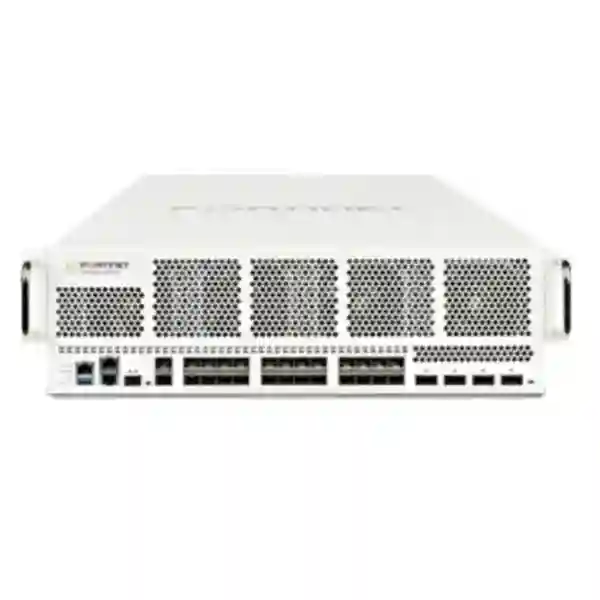
FortiGate 6000 Series Tanzania
FortiGate 6000 Series is a high-performance Fortinet next-generation firewall platform intended for demanding enterprise edge, data-center and hybrid IT security architectures. The current Fortinet FortiGate 6000F family combines FortiOS, purpose-built security processing, high-speed network interfaces and FortiGuard security services to support organizations that need substantial inspection capacity without separating networking and security into disconnected systems. For Tanzanian enterprises evaluating perimeter modernization, data-center consolidation, encrypted traffic inspection, segmentation, VPN capacity or high-throughput internet security, the key purchasing question is not simply which firewall has the largest headline number. The correct decision depends on traffic profile, enabled security controls, interface speeds, session demand, resilience design, logging, subscriptions and expected growth.
What the FortiGate 6000F family is built for
Fortinet positions the FortiGate 6000F Series for high-performance security-driven networking across data centers, enterprise edges and hybrid IT environments. It supports converged networking and security through FortiOS and works with FortiGuard security services and the wider Fortinet Security Fabric. This makes the platform relevant when an organization needs to inspect large volumes of north-south traffic, apply security controls to encrypted flows, consolidate security functions, establish high-capacity VPN connectivity or protect environments where ordinary branch-class appliances may not provide sufficient scale.
Verified model range and performance context
Fortinet’s published FortiGate 6000F data identifies 6001F, 6300F/6301F and 6500F/6501F variants. Published IPS, NGFW and threat-protection figures differ by model and test methodology, so procurement should compare the exact model against the intended enabled features rather than treating firewall throughput as an application guarantee. Fortinet lists multiple 40/100 GE QSFP28, 1/10/25 GE SFP28, 1/10 GE SFP+ and GE RJ45 connectivity options across the family, making physical interface planning an important part of design validation.
FortiGate 6000 Series features that matter in procurement
A high-end firewall purchase should be evaluated as an architecture decision. FortiOS provides the common operating environment for firewall policy, routing, VPN, SD-WAN and security controls. Fortinet’s purpose-built Security Processing Units are designed to accelerate networking and security workloads, while FortiGuard services add threat intelligence and security capabilities according to the selected service package. Zero Trust Network Access capabilities can also form part of a broader access-control strategy. For a buyer, these functions matter because the security profile actually enabled in production affects required capacity. A network carrying substantial TLS-encrypted application traffic, for example, should be sized around inspection objectives and application behavior rather than raw Layer-3 forwarding alone.
The 6000F family is also relevant to high-speed aggregation environments. Organizations using 25G, 40G or 100G network infrastructure need to check transceiver types, fiber standards, port allocation, link aggregation, upstream switching and redundancy before purchase. A bill of materials should therefore include more than the firewall chassis. Depending on the design, it can include optics, subscriptions, centralized management or analytics, support entitlements, rack and power planning, and migration services. This approach reduces the risk of receiving the appliance while still lacking a required interface component or license.
FortiGate 6000 Series model selection
| Model family | Published IPS | Published NGFW | Published Threat Protection | Selection note |
|---|---|---|---|---|
| 6001F | 51/17/170 Gbps | 45/15/150 Gbps | 30/10/100 Gbps | Validate Fortinet test profiles and workload assumptions. |
| 6300F / 6301F | 110 Gbps | 90 Gbps | 60 Gbps | Suitable for evaluation where higher inspection capacity is required. |
| 6500F / 6501F | 170 Gbps | 150 Gbps | 100 Gbps | For especially demanding environments; size from measured traffic and growth. |
Performance values above reflect Fortinet-published data and should be interpreted using the vendor’s test conditions. Real deployments vary according to FortiOS release, packet size, enabled security profiles, traffic mix and configuration.
Deployment, integration and sizing guidance
Start sizing with measured data. Record current and projected internet bandwidth, east-west and north-south traffic, peak sessions, new sessions per second, VPN users and tunnels, application mix, encrypted traffic percentage, security profiles, routing requirements and growth horizon. Document whether the appliance will sit at the internet edge, data-center perimeter, inter-zone boundary or another strategic enforcement point. This distinction affects interface requirements and the amount of traffic that may cross the firewall even when internet bandwidth is comparatively modest.
High availability should be designed before procurement. Buyers should identify the required failure model, redundant upstream and downstream paths, maintenance expectations and power feeds. HA does not remove the need for sound switch and routing design: a resilient firewall pair can still depend on a single upstream circuit or single switch unless the surrounding architecture is also engineered for continuity. Change windows, configuration backup, rollback planning and policy migration should be included in the implementation plan.
Centralized operations may also influence the bill of materials. FortiManager can be considered where administrators need centralized policy and device management, while FortiAnalyzer can support centralized logging, visibility and analytics. Exact licenses, capacities and retention requirements should be validated for the planned deployment. FortiGuard subscriptions should likewise be selected according to the security controls the organization intends to operate, rather than purchased by product name alone.
FortiGate 6000 Series Tanzania
Organizations in Tanzania evaluating the FortiGate 6000 Series are typically addressing high-capacity security requirements rather than a simple branch firewall replacement. A sound procurement process begins with the architecture: identify internet and private-WAN links, data-center interconnects, cloud connectivity, critical application paths, remote-access requirements and segmentation boundaries. The FortiGate 6000F family can then be mapped to the required security inspection level and interface density. This prevents a common sizing error in which an appliance is chosen from ISP bandwidth alone while internal traffic, encrypted sessions or future consolidation creates a much larger inspection requirement.
Tanzanian enterprises should prepare a technical requirement sheet before requesting a quotation. Include the number and speed of physical links, required 10/25/40/100GbE interfaces, fiber and transceiver details, HA requirements, FortiGuard service objectives, centralized management needs, logging and retention expectations, VPN requirements, routing protocols and anticipated three-to-five-year growth. Where the firewall protects a data center, also document virtualization platforms, public-facing applications, upstream providers and any internal segmentation that will traverse the appliance. These details allow a supplier to quote a more complete solution rather than a bare appliance.
For security operations, consider how the new firewall will fit existing monitoring and incident-response workflows. Decide who will review alerts, maintain policies, approve changes and renew subscriptions. If the organization already uses Fortinet products, Security Fabric integration and common FortiOS operations may influence the design. If it uses a mixed-vendor environment, interoperability testing and staged migration become especially important. Procurement teams can explore the broader FourTeck Tanzania technology portfolio when planning complementary network and security components, while the FourTeck Fortinet specialist resource provides additional Fortinet-focused context across the wider FourTeck network.
FortiGate 6000 Series Dar es Salaam
Dar es Salaam organizations often operate the country’s most bandwidth-intensive commercial environments, including corporate headquarters, service providers, financial operations, logistics businesses, large campuses and data-center-connected enterprises. For these buyers, FortiGate 6000 Series evaluation should focus on the concentration of traffic at the enterprise edge and the impact of security inspection on high-speed links. If multiple internet providers terminate at a central location, document each circuit separately and decide whether routing, SD-WAN or other path-control functions will be handled on the firewall. This determines both capacity and operational design.
A Dar es Salaam deployment may also aggregate connectivity from branches elsewhere in Tanzania. In that scenario, IPsec VPN throughput, tunnel counts, routing convergence and segmentation policies can matter as much as internet firewalling. Map traffic flows from branch offices to local applications, cloud services and the public internet, then determine which flows require full inspection. Where sensitive applications are hosted centrally, design security zones and access rules around business functions instead of reproducing an old flat network. The objective is to use the firewall as a deliberate enforcement point rather than simply inserting a faster device into the same topology.
Quotation requests should identify rack space, power design, interface optics, HA topology, subscription term and management platform requirements. Avoid assuming that a 100GbE-capable interface automatically means every inspected workload will run at that rate; security performance depends on the enabled feature set and traffic characteristics. A proof-of-concept or carefully modeled sizing exercise can be valuable when migrating from another high-end platform. Include migration of address objects, NAT rules, VPNs, routing, authentication dependencies and logging integrations in the project scope. This produces a realistic implementation plan and helps minimize disruption during cutover.
FortiGate 6000 Series Mwanza
For enterprises in Mwanza, the FortiGate 6000 Series can be considered where a regional operation has grown beyond conventional mid-range firewall capacity or where a central site aggregates substantial branch, data-center or service traffic. The first step is to separate genuine high-end requirements from general firewall needs. Measure peak throughput with security enabled, concurrent sessions, VPN demand and interface speeds. A 6000F-family appliance is designed for substantial environments, so correct sizing may reveal that a different FortiGate family is more appropriate for smaller sites while the 6000F remains the central security platform.
Organizations connecting Mwanza facilities to Dar es Salaam, cloud platforms or international services should document latency-sensitive applications and traffic paths. Secure SD-WAN, routing and VPN functions can help consolidate networking and security, but design choices should reflect the available carriers and redundancy objectives. If the site has two or more WAN connections, define whether the requirement is simple failover, active-active use, application-aware path selection or a combination. Security policy should remain consistent when traffic changes path, and monitoring should make link and tunnel health visible to administrators.
Procurement should also plan the operating lifecycle. Identify who will manage FortiOS upgrades, review security profiles, maintain certificates, monitor FortiGuard subscription status and test backups. High-end hardware does not replace these processes. For distributed Tanzanian networks, centralized management can reduce configuration drift and make policy governance easier, subject to the chosen management architecture and licensing. When requesting a FortiGate 6000 Series quotation for Mwanza, provide a topology diagram and traffic estimates along with required support and subscription terms. This gives the solution designer enough context to validate model selection and identify associated optics, licenses and services.
FortiGate 6000 Series Arusha
Arusha organizations considering FortiGate 6000 Series may include large hospitality groups, regional headquarters, institutions, service operators and enterprises with substantial connectivity to multiple sites. The security requirement should be framed around business continuity and application access. Inventory critical services, determine where they are hosted and identify which user groups, branches, partners or remote workers require access. This provides the basis for firewall zones, VPN architecture, authentication and inspection policies. It also helps distinguish traffic that must remain local from traffic that should traverse a central security stack.
For high-capacity environments, encrypted traffic deserves explicit attention. Modern business applications use TLS extensively, and inspection requirements can materially change firewall sizing. Decide which categories of traffic require SSL inspection, what certificate deployment is feasible, and what privacy or application compatibility exceptions may be necessary. These decisions should be made through organizational policy and testing rather than simply enabling the strongest inspection profile everywhere. Fortinet publishes distinct threat-protection and NGFW performance metrics, which is why the exact security workload matters when comparing 6000F variants.
Arusha buyers should also assess growth and consolidation. If the organization plans to centralize multiple security functions or bring additional branches onto the platform, capacity should be evaluated over the intended service life. At the same time, avoid excessive oversizing without a documented need. A clear requirement sheet covering WAN capacity, internal uplinks, interface media, HA, VPNs, subscriptions, management and logging makes commercial comparisons more meaningful. For complementary regional planning, organizations with cross-border operations can also review FourTeck Kenya solutions for neighboring-market technology requirements while maintaining Tanzania-specific procurement and implementation planning.
FortiGate 6000 Series Dodoma
In Dodoma, a FortiGate 6000 Series project may be relevant to large institutional, enterprise, campus or data-center environments where network security must handle substantial traffic and strict segmentation. Start by identifying trust boundaries: internet edge, server networks, user networks, partner connectivity, administrative zones and remote access. A firewall architecture is easier to govern when zones reflect organizational functions and policy intent. Documenting these boundaries also clarifies whether traffic will traverse the FortiGate once or multiple times, which affects sizing.
Resilience planning should include more than appliance HA. Map power sources, switches, routers, WAN circuits and physical paths. Decide the acceptable outage during maintenance and failure, and test routing behavior when links or nodes become unavailable. For environments with formal change control, include staging, peer review, configuration backup and rollback procedures. If the FortiGate will replace an existing firewall, perform rule-base cleanup before migration so obsolete policies are not automatically carried into the new platform. This can improve both security posture and operational clarity.
A Dodoma procurement request should state whether centralized management, analytics and long-term log retention are required. It should also define the FortiGuard security services expected during the subscription period. Buyers should request the exact model, term and included services in the quotation rather than comparing totals without line-item equivalence. Hardware, subscriptions, support, optics and implementation can have different lifecycle considerations. By documenting these elements early, technical and procurement teams can evaluate proposals against the same architecture and avoid ambiguity after purchase.
FortiGate 6000 Series UAE
UAE enterprises evaluating FortiGate 6000 Series often operate high-bandwidth data centers, large campuses, cloud-connected networks and multi-site environments. The same sizing discipline applies: inspect real traffic, security services and interface requirements rather than choosing by headline firewall throughput. High-speed 25/40/100GbE connectivity can make the family relevant where aggregation links or data-center fabrics demand substantial port capacity. The design should specify transceiver standards, switch interoperability, routing and redundancy before the bill of materials is finalized.
For hybrid-cloud architectures, map application paths between on-premises infrastructure, cloud environments, branches and internet services. Determine where security policy should be enforced and whether traffic patterns could create unnecessary backhaul. FortiOS networking and security capabilities can support consolidated designs, but the topology should still be optimized for the organization’s applications and operational model. Where centralized administration is required, evaluate FortiManager and FortiAnalyzer requirements separately, including capacity and licensing appropriate to the environment.
Organizations sourcing in the UAE can review FourTeck UAE technology solutions and the specialist FourTeck firewall resource for Dubai when coordinating regional firewall requirements. For multinational companies operating between the UAE and Tanzania, keep the architecture consistent where useful but validate each site’s circuits, regulatory requirements, application paths and support model independently. A standard security policy framework can reduce complexity, while local interface and capacity needs may still differ substantially.
FortiGate 6000 Series Uganda
Ugandan enterprises considering the FortiGate 6000 Series should begin with the central security role the appliance will perform. If it protects a large data center or aggregates many branch tunnels, collect peak and average traffic figures from the existing environment and forecast growth. If it is intended for an enterprise internet edge, quantify encrypted traffic and the security services that will be enabled. These details allow the 6001F, 6300F/6301F and 6500F/6501F options to be evaluated using relevant Fortinet-published metrics.
For multi-site organizations, routing and VPN design deserve equal attention. Document branch prefixes, overlapping networks, dynamic routing requirements, partner connections and failover behavior. If secure SD-WAN is part of the architecture, define application steering goals and link health criteria before deployment. This makes the implementation testable and avoids relying on generic default policies. Where administrators operate devices across several countries, centralized management can support governance, but roles and approval processes should still be defined.
Cross-border organizations can consult FourTeck Uganda technology solutions for Uganda-specific requirements while using the Tanzania page for Tanzania procurement context. In a quotation request, include model sizing inputs, HA, support term, FortiGuard services, optics and implementation expectations. Comparing equivalent scopes is particularly important for high-end firewalls because a quote that omits subscriptions or required interfaces may appear lower while not representing the complete deployed solution.
FortiGate 6000 Series Kampala
Kampala is a natural aggregation point for many Ugandan enterprise networks, so a FortiGate 6000 Series design may need to handle traffic from headquarters, branches, data centers and cloud services simultaneously. Build a traffic matrix showing source zones, destination zones, expected throughput and required security inspection. This is more useful than a single bandwidth figure because internal and VPN traffic can add significant workload beyond the public internet circuit.
For organizations with high-speed campus or data-center switching, validate the exact 10/25/40/100GbE connectivity required. Check optical modules, fiber type, port counts and switch configuration. If link aggregation is used, consider both aggregate capacity and failure behavior. Security policy should be tested under realistic application traffic, particularly when SSL inspection, IPS and other threat-prevention controls are enabled. Published performance numbers are useful for model comparison, but production sizing should include operational headroom and future growth.
Kampala procurement teams should ask for a line-item bill of materials that separates appliances, support, subscriptions, management components, optics and professional services. Define whether migration from an existing firewall is included and how configuration conversion will be validated. A controlled cutover plan should specify testing for internet access, critical applications, VPNs, DNS, authentication, routing and logging. This level of preparation turns the firewall purchase into a manageable infrastructure project rather than a hardware-only transaction.
FortiGate 6000 Series Arua
Arua deployments should be assessed according to actual scale. The FortiGate 6000 Series is a high-performance platform, so not every regional site will require it directly. A large organization may instead place a 6000F-family firewall at a central data center while connecting Arua through an appropriately sized branch platform. This architecture can provide centralized security and management benefits while matching hardware to each site’s workload. The correct topology depends on application hosting, WAN design and business-continuity requirements.
If a high-capacity appliance is genuinely required in Arua, collect detailed traffic and interface information. Identify local and upstream connections, peak encrypted traffic, VPN requirements, session demand and planned growth. Determine whether the firewall will also perform routing, SD-WAN or segmentation functions. Avoid combining roles without understanding the resulting traffic path, because the same packet may traverse multiple security zones and increase inspection load.
Operational planning is equally important. Define remote management security, administrator roles, configuration backup, firmware lifecycle and alert handling. If on-site access may be limited during an incident, out-of-band management and resilient connectivity deserve consideration as part of the wider network design. Procurement documentation should clearly identify the required subscription and support term, not simply the appliance model. This helps ensure that security services remain aligned with the intended operating model after deployment.
FortiGate 6000 Series Mbarara
Mbarara enterprises with regional operations can evaluate the FortiGate 6000 Series as part of a central security architecture when traffic volumes and inspection requirements justify a high-end platform. Start with a capacity baseline and identify which security features are mandatory. IPS, application control, antivirus, web filtering and SSL inspection each serve different policy goals, and the combined profile matters when selecting a model. The design should therefore be linked to security policy rather than a generic desire for the fastest appliance.
Connectivity resilience is another planning area. If the site uses multiple carriers, define failover and path-selection requirements and test how sessions behave during circuit changes. For site-to-site VPNs, specify tunnel topology and routing. A hub-and-spoke design, full mesh or regional hub architecture will have different scaling and operational implications. The firewall should be sized for the traffic that actually traverses these tunnels and for the cryptographic workload required.
When preparing a quotation, include physical and logical requirements: rack environment, power, HA, port speeds, optics, FortiGuard term, support, management, logging and migration. Ask that model and service descriptions be explicit so technical teams can validate them before purchase. After deployment, establish a routine for policy review, software updates, subscription monitoring and configuration backup. High-end firewall performance delivers value only when the platform is maintained as an active security control throughout its lifecycle.
FortiGate 6000 Series Gulu
For Gulu, the first design question is whether the site itself needs a FortiGate 6000 Series or whether it should connect securely to a central 6000F platform elsewhere. Distributed enterprises often benefit from using firewall sizes appropriate to each location while applying consistent policies and centralized operations. If Gulu hosts a major data center, service platform or aggregation point, however, high-end inspection and interface capacity may justify direct evaluation of the 6000F family.
Document critical application dependencies before designing security zones. Business systems may rely on identity services, DNS, databases, cloud APIs or partner networks that are easy to overlook during migration. Create a test plan for these dependencies and stage policy changes where possible. If SSL inspection is introduced or expanded, test representative applications and certificate deployment before broad enforcement. This reduces the chance that a technically correct security control disrupts an application that uses certificate pinning or another incompatible behavior.
Gulu buyers should also consider operational reach. Centralized logging and management can help teams monitor distributed devices, but resilient connectivity and secure administrator access remain essential. Define escalation procedures for hardware, configuration and security incidents. A complete quotation should identify appliance model, subscriptions, support, interfaces and any implementation services. Keeping these components visible helps procurement compare proposals on equivalent terms and makes renewal planning easier later.
FortiGate 6000 Series Kenya
Kenyan organizations evaluating FortiGate 6000 Series may operate high-capacity enterprise edges, data centers, carrier-connected environments or regional headquarters. The platform’s high-speed interfaces and security processing make it relevant to demanding workloads, but sizing should be driven by measured inspection requirements. Collect traffic statistics over representative business cycles rather than relying on a single snapshot. Include seasonal peaks, backup windows, software distribution, cloud synchronization and other events that may create short but significant bursts.
Regional companies connecting Kenya and Tanzania should decide whether security policies will be centrally standardized, locally administered or managed through a hybrid operating model. Standard objects, naming conventions and policy templates can simplify governance, while local routing and ISP configurations remain site specific. For inter-country VPNs, document expected throughput, redundancy and failover. If applications are hosted in one country and consumed in another, latency and path stability should be considered alongside firewall capacity.
Procurement can be coordinated with FourTeck Kenya for Kenya-specific technology needs. A complete high-end firewall request should state the required FortiGuard services, support duration, HA design, port and optic requirements, centralized management and analytics, and implementation scope. This creates a technically comparable quotation and reduces ambiguity around what is included. The same discipline is useful for multinational rollouts: maintain a common security architecture where practical while sizing every location from its own workload.
FortiGate 6000 Series Kuwait
Kuwait enterprises considering FortiGate 6000 Series can use the platform in high-capacity perimeter, data-center and hybrid network designs where security inspection and high-speed interfaces are central requirements. Before choosing a model, define the role of the firewall and quantify both current and planned traffic. If the environment includes 40GbE or 100GbE links, validate how many ports are needed and whether traffic will be aggregated, routed or segmented through the appliance. This is essential for accurate interface and optic planning.
Encrypted traffic inspection should be included in capacity discussions. Organizations should define policy for TLS inspection, certificate handling and exceptions, then test important applications. FortiGuard services can provide security capabilities as part of the selected subscription, but the exact service package should be matched to organizational requirements. Where multiple FortiGate devices are operated, centralized management and analytics can be evaluated separately for operational consistency and logging.
For Kuwait-specific sourcing and broader technology requirements, organizations can review FourTeck Kuwait. Procurement teams should request a detailed bill of materials with exact appliance models, subscription terms, support, optics and services. For regional companies operating in both Kuwait and East Africa, a common Fortinet architecture can simplify skills and policy governance, but capacity, circuits and deployment conditions should be validated independently at each site.
FortiGate 6000 Series Ghana
Ghanaian enterprises evaluating the FortiGate 6000 Series should identify whether their requirement is primarily internet-edge protection, data-center segmentation, VPN aggregation, high-capacity secure networking or a combination. Each role produces a different traffic profile. A data-center firewall may inspect substantial internal traffic even if the public internet circuit is smaller, while a VPN hub may require significant cryptographic capacity and tunnel scale. Build the sizing model around these real functions.
The physical network design should be captured at the same time. List switch interfaces, VLANs, routing protocols, transceiver types and redundancy. If the firewall replaces an existing platform, export or document current policies and identify obsolete rules before migration. Policy cleanup can reduce risk and make the new configuration easier to audit. Plan for testing of business applications, VPNs, authentication, DNS, logging and monitoring during the cutover window.
Organizations can consult FourTeck Ghana technology solutions for Ghana-focused requirements. When comparing quotations, verify that subscriptions, support terms, optics and implementation services are equivalent. A high-end firewall purchase should also include a renewal and maintenance plan so the organization understands recurring service requirements and operational responsibilities after the initial project is complete.
FortiGate 6000 Series Nigeria
Nigeria’s large enterprise, financial, service-provider and data-center environments can generate the kind of traffic volumes for which FortiGate 6000 Series evaluation is relevant. A rigorous sizing exercise should capture peak throughput, concurrent sessions, connections per second, VPN demand, SSL inspection and enabled threat-prevention profiles. Where multiple business units or tenants share infrastructure, segmentation and policy scale should also be documented. These factors help determine whether a 6001F, 6300F/6301F or 6500F/6501F configuration aligns with the workload.
High availability and network resilience should be tested as complete systems. Redundant firewalls do not guarantee continuity if both depend on the same switch, carrier or power path. Model component failures and define expected routing behavior. For internet-facing applications, also plan DDoS strategy, upstream provider coordination and application-layer protections as separate architectural considerations where required; a firewall should not be treated as the only control for every threat scenario.
Nigeria-specific technology requirements can be explored through FourTeck Nigeria. A quotation request should include exact port and optic requirements, HA, FortiGuard services, support, management, logging and migration. For organizations spanning Nigeria and Tanzania, standardized FortiOS operating practices can simplify training and policy governance, but each deployment should be sized from local traffic and connectivity rather than copied from another country’s bill of materials.
FortiGate 6000 Series Seychelles
Seychelles organizations evaluating FortiGate 6000 Series should first confirm whether the scale of the central network justifies a high-end platform. Large hospitality groups, service providers, government-scale networks or data-center operations may have substantial aggregation and security requirements, while individual sites may be better served by smaller appliances connected to a central security architecture. Matching platform size to role helps control complexity while preserving a consistent security model.
Connectivity architecture is especially important where international links, multiple local sites and cloud applications intersect. Document each WAN path, VPN requirement and critical application dependency. If link redundancy is available, define failover behavior and how security sessions will be handled. For high-speed internal networks, specify interface media and port counts. If SSL inspection is required, include it in performance planning and application testing rather than assuming raw firewall throughput represents inspected capacity.
A complete Seychelles quotation should identify the exact model, FortiGuard service term, support, optics, HA components and implementation expectations. Buyers should also define remote management, logging and incident escalation because operational access can be as important as hardware performance. For multinational organizations, centralized management can support consistent policy, while local site requirements remain distinct. The goal is a documented architecture that can be supported over time, not simply acquisition of a high-capacity appliance.
Security services, licensing and renewal planning
FortiGate appliances can be paired with FortiGuard security services and Fortinet support offerings. The exact bundle and term should be selected against required controls and verified at quotation time because commercial packages can change. Procurement teams should avoid assuming that every security service is permanently included with the hardware. Ask for line-item descriptions and renewal dates. Where a multi-year term is selected, align it with budgeting and hardware lifecycle planning.
Licensing decisions should also reflect operating capability. Enabling a security service without assigning responsibility for alert review, policy tuning and incident response can limit its value. Define who owns each security function, how alerts are escalated, and how false positives or application exceptions will be managed. For larger environments, centralized management and analytics may help maintain consistency, but they should be sized and licensed according to the number of devices, logging rate, retention and administrative workflow.
FortiGate 6000 Series quotation checklist
Current and future bandwidth, IPS/NGFW/threat-protection requirements, SSL inspection scope, sessions, VPN traffic and application mix.
10/25/40/100GbE requirements, optics, fiber type, HA, redundant switches, carriers, routing and power architecture.
FortiGuard services, support term, FortiManager/FortiAnalyzer needs, logging retention, migration, testing, training and renewal planning.
FortiGate 6000 Series FAQs
Which models are in the FortiGate 6000F Series?
Fortinet’s current published 6000F data identifies 6001F, 6300F/6301F and 6500F/6501F variants. Exact hardware, storage and performance characteristics should be checked against the current Fortinet data sheet when preparing a purchase.
Is FortiGate 6000 Series suitable for a data center?
Fortinet positions the 6000F family for demanding enterprise edge, data-center and hybrid IT security use cases. Suitability for a specific data center depends on traffic, inspection, interface, session, resilience and operational requirements.
How should we size a FortiGate 6000F?
Use measured peak traffic and forecast growth, then account for the actual security profiles, SSL inspection, VPN workload, sessions, connections per second, port speeds and HA design. Compare these requirements with Fortinet’s published metrics and test conditions.
Does the 6000F support high-speed interfaces?
Fortinet publishes multiple 40/100 GE QSFP28, 1/10/25 GE SFP28, 1/10 GE SFP+ and GE RJ45 interface options for the family. Exact port availability should be confirmed for the selected model.
What information is needed for a quotation?
Provide the deployment role, bandwidth and traffic profile, required security services, SSL inspection scope, interface speeds and media, HA, VPN, routing, FortiGuard term, support, management, logging and migration requirements. This enables a more complete bill of materials.
Decision recap
FortiGate 6000 Series should be selected through workload-based sizing. The family is intended for high-performance environments and offers substantial security inspection capability and high-speed connectivity, but the correct model depends on the features enabled in production. Treat interface optics, subscriptions, management, analytics, HA and migration as parts of the solution rather than afterthoughts. For Tanzania, build the requirement from real traffic and business continuity needs, then request a line-item quotation that technical and procurement teams can validate together.
Plan your FortiGate 6000 Series deployment
Prepare your current topology, internet and private-WAN capacities, security requirements, interface speeds, HA expectations and subscription term before contacting FourTeck. A detailed requirement allows model selection and quotation scope to be discussed around your actual environment instead of generic assumptions.



Reviews
There are no reviews yet.