
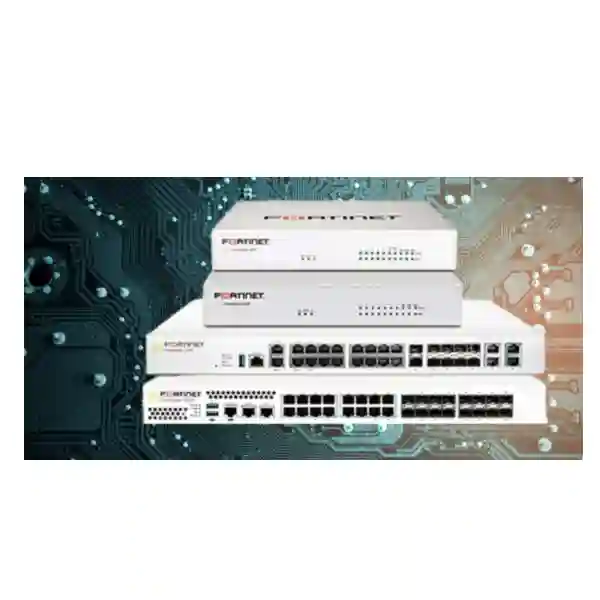
FortiSwitch 400 Series Tanzania
FortiSwitch 400 Series is a Fortinet secure switching family for organizations that need a managed LAN foundation for users, phones, cameras, wireless access points, servers and other connected devices. Fortinet documents its FortiSwitch portfolio as supporting FortiGate-integrated management through FortiLink as well as standalone and dedicated management approaches. For a Tanzania project, the practical task is to select the correct 400 Series model and architecture for port density, PoE demand, uplink capacity, segmentation, resilience and operational management rather than purchasing on port count alone.
FortiSwitch 400 Series overview
Fortinet positions its switching portfolio for secure access and campus environments. Current FortiSwitchOS documentation identifies 4xx models including FS-424E, FS-424E-POE, FS-424E-FPOE, FS-424E-Fiber, FS-M426E-FPOE, FS-448E, FS-448E-POE and FS-448E-FPOE. Exact interfaces, PoE budgets, feature support and lifecycle status must be checked against the chosen model and current Fortinet documentation before ordering. This matters because a family name describes a product class, not one universal hardware specification.
A secure switching design can combine VLANs, access controls, authentication, link aggregation and other switching functions with centralized operational visibility. Fortinet documentation also describes security functions such as 802.1X, DHCP snooping, dynamic ARP inspection, IP source guard and related controls across supported FortiSwitch models; model-level feature matrices should be used during final design. For businesses already using FortiGate, FortiLink can make switching part of a broader Fortinet-managed network.
Secure LAN access
Plan user and device connectivity with VLAN separation, authentication and policy-aligned access controls. A design should map departments, guest traffic, voice, cameras, wireless infrastructure and management traffic before switch configuration begins.
FortiGate integration
FortiSwitch can be managed through FortiGate in supported FortiLink deployments, giving organizations a coordinated way to operate security and switching. Compatibility and software versions should be validated for the selected appliances.
PoE planning
PoE-capable variants can support endpoints such as IP phones, cameras and wireless access points. Calculate endpoint power demand and reserve headroom rather than assuming every PoE switch has the same budget.
Choosing a FortiSwitch 400 Series model
Start with an endpoint schedule. Count wired users, phones, cameras, access points, printers, controllers and spare ports. Separate devices that need PoE from devices that only need data. Then document uplink destinations, fiber requirements, expected traffic, rack location, redundancy requirements and growth. If a switch serves multiple floors or a dense access layer, uplink capacity can be as important as the number of access ports.
Procurement should also confirm transceiver compatibility, rack and power requirements, FortiOS/FortiSwitchOS compatibility, required subscriptions or advanced feature licensing where applicable, and the exact support entitlement. Avoid selecting a model from an old datasheet without checking current Fortinet lifecycle and software documentation.
Related Tanzania network solutions
A switch is one layer of the network. Review FourTeck Tanzania integrated IT solutions for the overall architecture, the Tanzania technology shop for related products, and IT integration services when deployment and configuration are part of the requirement. The Tanzania portfolio also covers firewall and VPN design, managed switching, business Wi-Fi, structured cabling, fiber, racks and UPS infrastructure, all of which influence a reliable FortiSwitch deployment. For multi-market requirements, customers can also review FourTeck Uganda, FourTeck Kenya, FourTeck UAE, FourTeck Ghana and FourTeck Nigeria.
FortiSwitch 400 Series Tanzania
For Tanzania organizations, FortiSwitch 400 Series planning should begin with the physical and operational realities of the site. A head office may need dense desk connectivity, IP telephony and multiple access points; a hotel may combine guest Wi-Fi, staff systems, cameras and back-office applications; a warehouse may emphasize cameras, wireless handheld devices and long fiber runs. These workloads should not be placed on a switch design without documenting VLANs, PoE demand, uplinks and failure impact.
Businesses evaluating FortiSwitch 400 Series in Tanzania should provide a port schedule, current firewall model, number and type of access points, camera count, IP-phone count, fiber requirements, rack details and expected expansion. Where FortiGate integration is intended, software and FortiLink compatibility should be checked before procurement. The bill of materials may also require compatible optics, patch panels, fiber accessories, UPS capacity and rack organization. A quotation is more accurate when these dependencies are identified early.
For distributed Tanzania operations, standard templates for VLAN IDs, switch naming, uplinks, management addressing and port descriptions can make support easier. Documentation should record which ports serve critical systems and how switches connect upstream. This is especially valuable when branches are expanded gradually. The objective is a maintainable LAN rather than a collection of unmanaged additions.
FortiSwitch 400 Series Dar es Salaam
Dar es Salaam businesses often operate environments where office users, meeting rooms, voice, surveillance and wireless services share the same structured cabling plant. A FortiSwitch 400 Series project should therefore distinguish endpoint categories and traffic needs before hardware selection. Dense offices may prioritize access-port capacity and resilient uplinks, while warehouses, hospitality properties and commercial facilities may place greater emphasis on PoE endpoints and fiber links between areas.
For an upgrade, audit the existing rack, patch panels, copper categories, fiber terminations and power protection. Replacing a switch without correcting poor cabling or undocumented uplinks can preserve the original problems. If FortiGate is already deployed, assess whether FortiLink management fits the desired operating model. Record the required switch software, transceivers and configuration dependencies before implementation.
A Dar es Salaam quotation request should state device counts, required PoE classes where known, number of floors or racks, uplink distances, redundancy objectives and expected growth. This lets the design focus on the appropriate FortiSwitch variant instead of assuming that every 400 Series unit is interchangeable.
FortiSwitch 400 Series Mwanza
Mwanza deployments can include offices, education sites, healthcare environments, hospitality properties, retail operations and industrial or logistics facilities. The correct switching design depends on how these sites use the network. Camera-heavy environments require attention to continuous traffic and PoE; Wi-Fi deployments require adequate powered ports and uplinks; offices may need voice VLANs, user segmentation and dependable access to business applications.
Before choosing a FortiSwitch 400 Series model, map the existing network topology and identify single points of failure. Consider how the switch connects to the firewall, servers, wireless infrastructure and remote buildings. Fiber type and optic compatibility should be confirmed for longer links. UPS runtime and rack ventilation also matter because a central access switch can affect many users if power or environmental conditions are poor.
For procurement, specify the exact model only after technical requirements are validated. Fortinet documentation should be checked for current supported features and software. This approach helps Mwanza buyers avoid purchasing excess capability in one area while missing a necessary PoE, uplink or management requirement elsewhere.
FortiSwitch 400 Series Arusha
Arusha organizations in hospitality, tourism, professional services, education and other sectors may need a LAN that supports both operational systems and guest-facing connectivity. A switching plan should keep those traffic groups logically separated and make capacity decisions based on real endpoint counts. Guest wireless, business applications, cameras and IP phones have different security and performance expectations even when they share the same physical switch infrastructure.
FortiSwitch 400 Series can form part of a Fortinet-centered network where supported FortiGate integration is useful for centralized operation. The design still requires disciplined planning: define VLANs, authentication requirements, PoE consumption, uplink capacity, management access and recovery procedures. For multi-building properties, fiber topology and protection of intermediate racks deserve particular attention.
When requesting a quotation in Arusha, include the number of endpoints per area, expected wireless access points, surveillance devices, phones, uplink media and any existing Fortinet equipment. This makes it possible to evaluate model fit and supporting accessories without relying on generic assumptions.
FortiSwitch 400 Series Dodoma
Dodoma offices and institutions planning network modernization should treat switching as an infrastructure decision with a multi-year impact. Port count is only the starting point. The network may need separate zones for users, servers, voice, cameras, wireless clients, building systems and management. Each zone affects access policy, troubleshooting and how traffic moves toward the firewall or core.
A FortiSwitch 400 Series deployment should document current and future endpoint numbers, PoE requirements, rack locations, fiber uplinks and availability goals. If the site already uses FortiGate, evaluate supported FortiLink integration and software compatibility. If a standalone or dedicated management approach is preferred, define how configuration backup, monitoring and administrative access will be handled.
Procurement teams should request a bill of materials that distinguishes the switch appliance from optics, patching, support, licensing where applicable, installation and configuration. Clear scope reduces ambiguity when comparing quotations and helps the technical team understand what remains to be supplied locally.
FortiSwitch 400 Series UAE
UAE projects often involve multi-floor offices, hospitality, retail, logistics, campuses and branch networks where switching standards need to remain consistent across locations. For organizations operating between Tanzania and the UAE, a common Fortinet switching and firewall architecture can simplify documentation when it is appropriate for both sites. Standardization should cover naming, VLAN design, management, software baselines and approved optics rather than forcing identical hardware quantities everywhere.
FortiSwitch 400 Series selection should be based on the endpoint mix and topology at each UAE site. Determine powered endpoint demand, access-port count, uplink speeds, fiber distances and redundancy. Validate model-specific Fortinet features instead of assuming that every family member has the same capabilities. Procurement should also confirm support and lifecycle status at the time of purchase.
Cross-border IT teams benefit from a repeatable commissioning checklist covering firmware, FortiLink or management settings, VLANs, authentication, port descriptions, monitoring and configuration backups. This reduces configuration drift and makes remote troubleshooting more predictable.
FortiSwitch 400 Series Uganda
Uganda organizations evaluating FortiSwitch 400 Series can use the same requirement-led approach: map users and devices first, then select hardware. Branch offices may need straightforward secure access switching, while larger campuses may need multiple access switches, fiber aggregation and redundancy. Cameras, phones and access points add PoE demand that should be calculated rather than estimated.
For companies with Tanzania and Uganda operations, standardized Fortinet architecture can help IT teams maintain consistent VLAN and security policies where business requirements align. FortiGate-managed FortiSwitch deployments can provide a coordinated operating model, subject to model and software compatibility. Documenting switch names, uplinks and endpoint roles is essential for cross-site support.
A Uganda quotation should identify site count, endpoint totals, existing firewall infrastructure, fiber requirements and support expectations. For regional information, use FourTeck Uganda alongside the Tanzania project team when coordinating requirements across markets.
FortiSwitch 400 Series Kampala
Kampala offices, commercial properties and institutions may need switching for high concentrations of users and IP endpoints. A 400 Series design should consider how access switches connect to the firewall or upstream network and whether uplinks can carry peak traffic without becoming bottlenecks. Voice, video meetings, cloud applications, Wi-Fi and surveillance can create very different traffic patterns.
PoE planning is particularly important when phones, cameras and access points share a switch. Record the power requirement of each endpoint and allow appropriate headroom. For security, define user and device access methods, VLANs and management restrictions. Fortinet documentation should be consulted for model-specific support of features such as 802.1X and other access controls.
During procurement, separate mandatory requirements from future options. This helps avoid oversizing while preserving practical expansion capacity. Include optics, rack accessories, patching and UPS requirements in the same design review so the switch can be installed as a complete system.
FortiSwitch 400 Series Arua
For Arua sites, maintainability can be as important as raw switching capability. A network that is well labeled, documented and remotely manageable can reduce troubleshooting time when technical resources are not permanently located at the site. FortiSwitch 400 Series should therefore be considered together with the firewall, WAN connection, UPS, rack and structured cabling.
Define which services are critical and what happens if an uplink or switch fails. Smaller sites may prioritize a simple topology and spare capacity, while operational facilities may require stronger redundancy planning. If PoE endpoints are present, calculate the power budget and consider which devices must remain available during short power interruptions.
For a quotation, provide photographs or documentation of existing racks where practical, along with port counts, cable types and uplink distances. The goal is to select the right FortiSwitch configuration and accessories without introducing unsupported assumptions about the site.
FortiSwitch 400 Series Mbarara
Mbarara businesses planning LAN upgrades should assess both current usage and likely growth. Adding wireless access points, cameras or IP phones can quickly consume ports and PoE capacity. A structured endpoint inventory helps determine whether a FortiSwitch 400 Series model fits the access layer and what uplinks are needed to connect it to the wider network.
Segmentation should be planned before migration. Separate business users, guests, voice, surveillance and management traffic according to operational and security requirements. If FortiGate is part of the architecture, supported FortiLink management can connect switch administration with the Fortinet security environment. Compatibility should be verified for the exact hardware and software versions.
Installation planning should include labeling, configuration backup, UPS protection and acceptance testing. Test endpoint connectivity, VLAN placement, PoE operation and uplinks before the legacy network is removed. A documented handover makes future changes safer.
FortiSwitch 400 Series Gulu
Gulu deployments can benefit from a design that minimizes unnecessary complexity while preserving centralized visibility. Start with a clear topology showing internet/firewall connectivity, switches, wireless access points, cameras, phones and servers. This exposes dependencies and helps determine which links are critical.
When considering FortiSwitch 400 Series, confirm whether the site needs PoE variants, fiber connectivity, specific uplink capabilities or advanced features. Do not rely on the series name alone for specifications. Fortinet model documentation and compatibility information should be reviewed before finalizing the bill of materials.
For sites supported remotely, consistent naming, management addressing and port descriptions are valuable. Keep configuration backups and a simple port map. These operational practices often have as much impact on support quality as the hardware choice itself.
FortiSwitch 400 Series Kenya
Kenya organizations and regional groups with Tanzania operations may want a consistent secure switching standard across branches. FortiSwitch 400 Series can be evaluated as part of that standard, with model selection adapted to each location. A Nairobi office and a Tanzania warehouse may share management principles but require different port density, PoE and fiber designs.
Create a standard architecture document defining VLAN purposes, switch naming, management access, uplink conventions, firmware governance and monitoring. Where FortiGate and FortiLink are used, record approved compatibility combinations. This reduces the risk that branches drift into different configurations over time.
Regional procurement should also distinguish hardware, support, subscriptions where applicable, optics and implementation services. FourTeck Kenya can be used for Kenya-specific requirements while Tanzania FourTeck coordinates the Tanzania side of a multi-country project.
FortiSwitch 400 Series Kuwait
Kuwait projects requiring secure enterprise access switching should evaluate FortiSwitch 400 Series against endpoint density, PoE, uplink and management requirements. In office and commercial environments, switches may support business workstations, phones, wireless infrastructure, cameras and building systems simultaneously. Segmentation and documentation help keep these services manageable.
If a company operates in Kuwait and Tanzania, repeatable configuration standards can simplify support. The same design principles can be used while allowing each location to choose hardware capacity appropriate to its site. Fortinet model and software compatibility should always be validated independently for each deployment.
A procurement request should specify the desired operating model, whether FortiGate integration is planned, the number of copper and fiber connections, PoE requirements and support expectations. This creates a clearer basis for quotation than a request for a generic 400 Series switch.
FortiSwitch 400 Series Ghana
Ghana businesses considering FortiSwitch 400 Series should begin with a network assessment that identifies endpoint roles and traffic paths. The switch may serve as the access point for users, wireless APs, cameras and phones, making it important to design VLANs and uplinks around business functions rather than simply filling ports sequentially.
For Fortinet environments, FortiGate-integrated management through FortiLink can be considered where supported. Organizations should validate exact model features, FortiOS/FortiSwitchOS compatibility and any licensing requirements. A consistent management strategy is especially helpful for businesses with branches in Ghana and Tanzania.
Include structured cabling, optics, rack space and power protection in the project scope. These supporting elements determine whether the selected switch can be deployed reliably. FourTeck Ghana provides a regional path for Ghana requirements while the Tanzania site remains focused on Tanzania projects.
FortiSwitch 400 Series Nigeria
Nigeria enterprises and multi-site organizations may require switching architectures that scale across branches while maintaining clear security boundaries. FortiSwitch 400 Series can be assessed for secure access roles, but the exact model should follow the endpoint schedule, PoE requirements and uplink design. Large deployments should also define configuration standards before hardware rollout.
Power resilience is an important infrastructure consideration for any critical switching environment. Determine which network services need UPS-backed continuity and size supporting power equipment according to the complete rack load, not the switch alone. Likewise, fiber and copper cabling should be tested and labeled so faults can be isolated quickly.
For regional organizations operating between Nigeria and Tanzania, use consistent VLAN, naming and management conventions where appropriate. FourTeck Nigeria can support Nigeria-focused procurement discussions while Tanzania FourTeck addresses the Tanzania deployment scope.
FortiSwitch 400 Series Seychelles
Seychelles businesses in hospitality, professional services and distributed property environments may need switching that supports guest connectivity, operational systems, surveillance and staff networks. A FortiSwitch 400 Series design should separate these requirements logically and account for the physical distances between network rooms, buildings or property areas.
Fiber uplinks may be relevant where copper distance limits or bandwidth requirements make them appropriate. Confirm optic compatibility and environmental conditions before procurement. PoE requirements should be calculated for wireless access points, cameras and phones, and the rack should have suitable power protection and ventilation.
For organizations linking Seychelles operations with Tanzania or other regional offices, documentation and standard configuration templates make cross-site support more efficient. Hardware selection can vary while management and security principles remain consistent.
Deployment and integration checklist
Before installation, confirm the approved topology, VLAN plan, management IP addressing, FortiGate/FortiLink compatibility where used, FortiSwitchOS baseline, uplink interfaces, optic models, PoE calculations, rack position and UPS capacity. During commissioning, label uplinks and endpoint ports, test VLAN membership, verify powered endpoints, confirm redundancy behavior where configured, save configuration backups and update the network diagram.
Security configuration should reflect the organization’s access policy. Fortinet documentation describes capabilities including 802.1X and network access controls on supported platforms. Whether those controls are appropriate depends on identity infrastructure, endpoint types and operational readiness. Introduce authentication in a controlled way so essential devices such as printers, phones, cameras and building systems are not unintentionally disconnected.
FortiSwitch 400 Series quotation checklist
For a useful quotation, provide: target country and city; number of sites; current FortiGate model if any; required access ports; number of PoE endpoints; endpoint types; expected fiber and copper uplinks; rack details; redundancy requirement; existing switch models; wireless AP count; camera count; IP-phone count; server or storage connections; required support term; installation/configuration scope; and expected growth. If the exact model has already been specified by an approved network design, include the complete Fortinet model identifier rather than only “400 Series.”
Frequently asked questions
Can FortiSwitch 400 Series be managed by FortiGate?
Fortinet supports FortiGate-integrated FortiSwitch management through FortiLink for compatible deployments. Confirm the exact switch model and FortiOS/FortiSwitchOS compatibility before implementation.
Does every FortiSwitch 400 Series model have PoE?
No. The 4xx family includes different variants, including PoE-designated models. Use the exact model datasheet and ordering information to confirm ports, PoE capability and power budget.
What information is needed to choose a model?
Provide endpoint and PoE counts, uplink requirements, fiber distances, management preference, redundancy needs, existing Fortinet equipment and growth expectations. These factors are more useful than port count alone.
Can FortiSwitch be used without FortiGate?
Fortinet documents standalone and other management options in addition to FortiGate integration. Select the management model that matches the organization’s architecture and operational requirements.
Decision recap
FortiSwitch 400 Series is best evaluated as part of a complete LAN design. Confirm the exact model, access and PoE requirements, uplinks, Fortinet integration, software compatibility, optics, rack infrastructure and support scope before ordering. FourTeck can use this information to prepare a more precise Tanzania or multi-region switching proposal.

Reviews
There are no reviews yet.