
Grandstream GXP2170 Tanzania
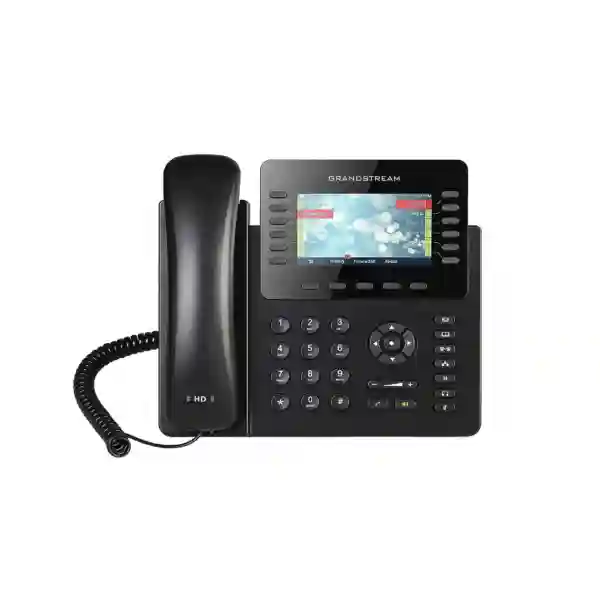
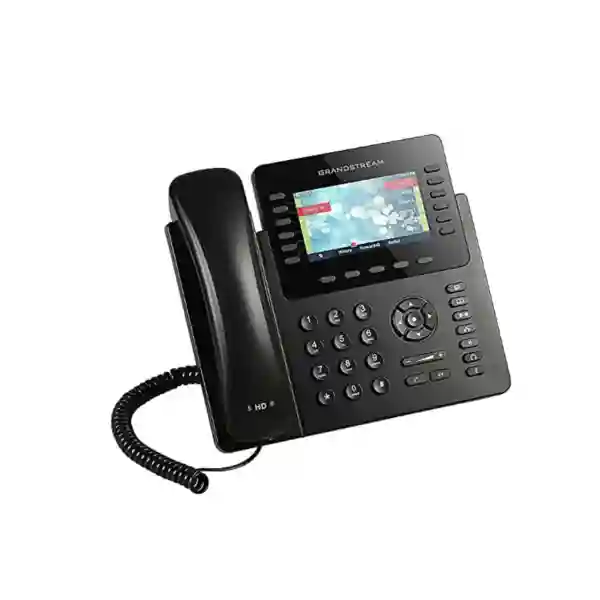
The Grandstream GXP2170 is a high-end enterprise IP phone built for people who manage frequent calls, multiple extensions and busy communication workflows. It combines 12 line keys with up to 6 SIP accounts, a 4.3-inch 480 x 272 colour LCD, 48 digitally programmable BLF or speed-dial positions, HD audio, integrated Bluetooth, dual Gigabit Ethernet ports and Power over Ethernet. For Tanzanian offices that want an executive-class desk phone without moving to a touchscreen platform, the GXP2170 provides a familiar key-driven interface with substantial call-control capacity.
FourTeck can help organisations evaluate the GXP2170 as part of a broader IP telephony design covering handsets, SIP accounts, network readiness, PoE switching, PBX compatibility, extension planning, call routing and user requirements. A quotation should be based on the actual deployment rather than the handset alone, because the value of a business phone depends on how well it fits the PBX, LAN, user roles and expected call volume.
Suitable for users who need access to several call appearances, identities or routed extensions from one desk.
Provides fast visibility and one-touch access for monitored extensions, common contacts and frequently used call functions.
Dual switched 10/100/1000 Mbps Ethernet ports help maintain desktop network performance, while integrated PoE can simplify cabling when a compatible PoE switch is available.
Built-in Bluetooth can support compatible headsets and mobile-device workflows, while wideband audio is designed to improve voice clarity.
What the Grandstream GXP2170 is designed to solve
High-call-volume users often need more than a basic SIP handset. Reception teams may monitor many extensions; sales desks may switch between several lines; supervisors may want visible BLF status; executive users may need a professional desk phone with headset support; and administrators may require programmable keys for call transfer, park, pickup and speed dial. The GXP2170 addresses those requirements with a combination of physical line keys, on-screen programmable positions and expansion capability.
The phone supports up to four GXP2200EXT expansion modules, allowing larger BLF and speed-dial environments where many users or departments must be monitored. This can be relevant for front desks, hotels, clinics, schools, enterprise offices, multi-department companies and customer-service operations. The GXP2170 also supports 5-way voice conferencing, a full-duplex speakerphone, programmable soft keys and a range of SIP telephony functions such as hold, transfer, forwarding, call pickup, call park and hot desking.
For deployment teams, automated provisioning is particularly important. Grandstream documents support for TR-069, encrypted XML configuration files and zero-configuration provisioning with Grandstream UCM IP PBX systems. This can reduce repetitive manual setup in multi-phone deployments when the surrounding infrastructure is correctly planned.
Verified Grandstream GXP2170 feature summary
4.3-inch 480 x 272 TFT colour LCD for line information, menus, directories and programmable keys.
Dual auto-sensing Gigabit Ethernet ports with integrated IEEE 802.3af Power over Ethernet.
12 line keys, up to 6 SIP accounts, 5 context-sensitive soft keys and 5-way conferencing.
Up to 48 digitally programmable on-screen BLF or speed-dial positions with support for expansion modules.
HD handset and full-duplex speakerphone with wideband codec support including G.722.
Support includes TLS, SRTP, 802.1X and encrypted configuration capabilities, subject to correct network and PBX configuration.
Technical specifications and deployment considerations
| Lines / SIP accounts | 12 lines, up to 6 SIP accounts |
| Display | 4.3-inch 480 x 272 TFT colour LCD |
| Ethernet | Dual 10/100/1000 Mbps auto-sensing switched ports |
| Power | Integrated 802.3af PoE; Grandstream also specifies a universal power adapter in the package |
| Wireless peripheral support | Integrated Bluetooth |
| Headset / expansion | RJ9 headset interface with EHS support for compatible headsets, USB, expansion-module port |
| Provisioning | TFTP, FTP/FTPS, HTTP/HTTPS, TR-069 and encrypted XML configuration options |
| Security | TLS, SRTP, 802.1X, user/admin passwords and encrypted configuration support |
Compatibility should be checked against the intended SIP platform before purchasing a large quantity. Although the GXP2170 is designed for broad SIP interoperability, features such as BLF behaviour, remote provisioning, directory integration, voicemail indicators, security options and advanced call functions depend on PBX capabilities and configuration.
Who should consider the GXP2170?
The strongest fit is a desk-based user who handles many calls and benefits from seeing or reaching multiple extensions quickly. Typical roles include receptionists, executive assistants, office administrators, sales coordinators, call-routing supervisors, dispatch desks and managers with several line appearances. The 48 digital BLF or speed-dial positions can make daily work faster where employees repeatedly transfer calls or need presence visibility.
For lighter office users who only need one or two SIP accounts, a smaller handset may be more economical and simpler to manage. For users who require video, Android applications or a large touchscreen, a different Grandstream series may be a better technical fit. The GXP2170 is therefore best evaluated as a purpose-built high-call-volume voice endpoint rather than as a universal phone for every employee.
Before specifying the model, review how many SIP identities each user needs, whether BLF monitoring is required, whether PoE is available, whether headsets are used, what PBX platform is deployed, whether remote provisioning is important and whether expansion modules will be needed. This role-based approach usually produces a more cost-effective handset mix across an organisation.
Grandstream GXP2170 Tanzania
For organisations in Tanzania, the GXP2170 is particularly relevant where a business is replacing analogue extensions, standardising SIP handsets or upgrading busy desks within an existing VoIP environment. Tanzania deployments can range from a few executive phones in a small office to structured multi-site systems linking head office, branches, warehouses and customer-service points. In those environments, the phone’s 12 line appearances and 6 SIP accounts can help a user separate departments, direct numbers, queues or service identities while keeping them accessible from one device.
Network readiness should be reviewed before rollout. The handset provides dual Gigabit Ethernet and integrated PoE, so it can share a network connection with a nearby computer while receiving power from a compatible PoE switch. This can reduce local power adapters and simplify cabling, but the LAN should still be designed for voice traffic. VLAN planning, QoS, switch capacity, DHCP, DNS, NTP, firewall policies and WAN quality can all influence call reliability. Where offices use internet-based SIP trunks, bandwidth, latency, jitter and failover planning should be considered alongside the endpoint purchase.
Procurement teams in Tanzania should also consider how the phones will be provisioned and supported over time. A small deployment may be configured manually, while larger fleets benefit from templates and automated provisioning. If the organisation already uses a Grandstream UCM PBX, zero-configuration features may simplify onboarding. For other SIP platforms, the configuration method should be tested with a pilot handset before a wider rollout. Headset requirements, extension-module needs, security settings and directory integration should be included in the design rather than added after deployment.
When requesting a quotation, provide the approximate number of users, PBX platform, SIP trunk arrangement, desired call features, switch/PoE environment, branch locations and whether installation or configuration assistance is required. This allows a more useful recommendation than asking only for a handset price. FourTeck can also help evaluate related IP telephony components and cross-region requirements through the broader FourTeck Africa technology portfolio when a project extends beyond one country.
Grandstream GXP2170 Dar es Salaam
Dar es Salaam businesses often operate in communication-heavy environments where reception, sales, logistics, hospitality, professional services and customer-support staff handle repeated inbound and outbound calls. The GXP2170 can suit these high-activity desks because users can access multiple line appearances, monitor extensions through BLF, assign frequent contacts to speed dial and connect a compatible Bluetooth or EHS headset. For a busy front desk, the difference between a basic phone and a higher-capacity model is not simply the number of SIP accounts; it is the speed with which staff can identify, transfer and manage calls throughout the day.
A Dar es Salaam deployment should be planned around the office network. In multi-floor offices or shared buildings, confirm that switch ports support the required VLAN and PoE configuration and that the uplink can handle concurrent voice traffic. Dual Gigabit ports are useful when the phone and desktop computer share one wall outlet, but voice quality still depends on correct QoS and stable upstream connectivity. Businesses using cloud PBX or remote SIP servers should examine ISP reliability and consider WAN redundancy where telephony is operationally important.
The GXP2170 is also a good candidate for mixed handset environments. An organisation does not need to place this model on every desk. Receptionists, supervisors and executives may receive the GXP2170 while lower-volume users use simpler SIP phones. This reduces unnecessary cost while preserving advanced call control where it delivers the most value. If extension modules are needed for a large reception or operator position, the requirement should be identified during procurement so desk space, power and key layout can be planned.
For quotation preparation in Dar es Salaam, include user roles, required line keys, number of monitored extensions, headset preferences, PBX model, SIP provider, PoE-switch availability and whether the office needs configuration or migration support. This lets the proposed design address the complete voice workflow rather than treating the GXP2170 as an isolated device.
Grandstream GXP2170 Mwanza
Mwanza organisations evaluating the Grandstream GXP2170 may include regional offices, trading companies, hotels, healthcare facilities, educational institutions, transport operators and businesses that coordinate staff across several locations. In these environments, a high-end IP phone can support faster call handling by placing frequently used extensions, departments and contacts within immediate reach. The GXP2170’s 48 digital BLF or speed-dial positions are useful where a user repeatedly checks availability before transferring callers or needs one-touch access to operational teams.
For sites where the phone network must remain easy to manage, standardisation matters. Using consistent SIP account naming, VLAN settings, firmware levels, dial plans and programmable-key layouts can make support easier as new users are added. Grandstream’s provisioning options allow administrators to move away from individually configuring every handset. A pilot setup should confirm the exact template and PBX interaction before mass deployment, especially for features such as BLF, call pickup, voicemail indication and remote directories.
Infrastructure in Mwanza should be assessed at the same time as handset selection. If PoE is already available, the GXP2170 can be powered through the Ethernet connection; if it is not, planners should decide whether to use supplied power adapters or upgrade switching. The dual Gigabit interface helps avoid creating a network bottleneck for a connected workstation, while QoS can help prioritise RTP voice traffic. For multi-branch businesses, WAN design and SIP routing may be more important to user experience than the endpoint model itself.
A useful Mwanza quotation request therefore includes the number of phones, expected call volume, existing PBX, extension numbering, internet links, switch models, PoE requirements, headset needs, branch connectivity and rollout schedule. FourTeck can use this information to help determine where the GXP2170 is appropriate and where another handset class may be more efficient.
Grandstream GXP2170 Arusha
Arusha has a diverse business environment that includes tourism, hospitality, NGOs, professional services, education, regional administration and companies serving clients across East Africa. Communication desks in these organisations may need to manage several departments, external numbers and internal extensions at once. The GXP2170 provides a practical high-capacity interface for that use case, with 12 line keys, 6 SIP accounts, programmable soft keys and a large set of digital BLF or speed-dial positions.
Hospitality and service-oriented businesses can benefit from visible extension status and fast transfers, while offices working with distributed teams may value multiple SIP identities or call appearances. Integrated Bluetooth allows compatible wireless headsets, which can be useful for staff who move around a desk area while remaining on calls. The full-duplex speakerphone and 5-way conferencing also support small collaborative discussions without requiring a separate conference device for every conversation.
When deploying in Arusha, network planning should include PoE budgets, switch-port configuration, VLANs and WAN performance. If a business uses a hosted PBX outside the site, internet resilience should be evaluated because endpoint quality cannot compensate for unstable upstream connectivity. If the PBX is local, administrators should confirm SIP interoperability, codec policy, security configuration and backup arrangements. For organisations with seasonal staff or changing teams, hot-desking and template-based provisioning may simplify user changes.
Procurement should focus on user roles rather than purchasing one model across all desks. GXP2170 units can be reserved for reception, management, coordination and other high-volume positions, while simpler phones serve lower-usage staff. A quotation request should specify the number of high-call-volume users, PBX platform, branches, desired headset type, BLF requirements, PoE availability and whether installation assistance is required.
Grandstream GXP2170 Dodoma
In Dodoma, the GXP2170 can fit government-adjacent organisations, administrative offices, professional firms, educational institutions, healthcare providers and growing private businesses that need structured internal communication. The model is most useful where employees must handle several lines or monitor many extensions, because its key layout is designed around active call control rather than basic single-line calling.
For administrative teams, programmable BLF and speed-dial positions can reduce the time needed to locate departments and transfer calls. Six SIP accounts allow the phone to register multiple identities where the PBX design requires them, and the 4.3-inch colour screen provides a clearer interface than entry-level desk phones. Bluetooth support gives users more flexibility with compatible headsets, while the RJ9 interface and EHS capability may support selected wired or electronic-hook-switch headset deployments.
A Dodoma installation should still begin with network verification. Confirm that the switch supports the required PoE standard and has enough available power budget, especially if many phones are installed on one switch. Configure voice VLANs and QoS where appropriate, ensure DHCP and DNS services are dependable and keep NTP available for correct time and logs. Where the phone connects through a routed or firewall-controlled environment, SIP and RTP policies must be planned carefully rather than opened broadly.
For larger projects, automated provisioning can improve consistency and reduce support effort. Define firmware, account, security and key-layout standards before rollout, then test them on a small number of devices. A strong request for quotation should include extension count, user roles, site count, switching environment, PBX or cloud platform, desired call features, security expectations and support scope.
Grandstream GXP2170 UAE
For UAE businesses, the GXP2170 remains relevant in offices that prefer a dedicated enterprise desk phone for high-call-volume roles. Reception, administration, trading, real estate, hospitality, logistics and professional-services teams often need quick transfers, line visibility and headset support. The 12-line design, 6 SIP accounts and 48 digital BLF or speed-dial positions provide a dense call-control interface without requiring a touchscreen workflow.
UAE deployments are frequently integrated with central IP PBX, hosted communications or multi-site networks. Procurement teams should confirm whether the GXP2170 will register directly to the PBX, operate through an SBC or firewall, or participate in a larger managed voice architecture. Security settings such as TLS and SRTP should be configured end to end where supported; enabling a feature on the handset alone is not enough if the SIP platform or trunk does not use the same method.
The dual Gigabit ports can be useful in modern offices where a single structured-cabling outlet serves both the handset and a workstation. PoE can simplify installation by eliminating local power bricks at each desk, provided the switch has sufficient power capacity. For high-density floor deployments, voice VLANs, QoS, LLDP and consistent provisioning should be considered part of the design.
Customers planning a UAE rollout can also review the specialist FourTeck Grandstream UAE resource for broader regional Grandstream solution context. When requesting a quote, specify quantity, PBX platform, user roles, BLF count, headset requirements, PoE environment and installation scope so the proposed solution can be matched to the deployment.
Grandstream GXP2170 Uganda
Ugandan businesses considering the GXP2170 often have the same core requirement: a reliable desk endpoint for users who manage several active lines and frequent transfers. Banks, hotels, clinics, schools, NGOs, distributors, logistics operators and professional offices may all have reception or coordination desks where a larger number of programmable keys directly improves daily workflow. The GXP2170’s 48 digital BLF and speed-dial positions make it easier to organise those contacts than on a basic two-line phone.
A Uganda deployment should be designed around the PBX and WAN environment. If the organisation uses a central PBX in Kampala with branches elsewhere, remote handsets may connect over VPN, routed private links or the public internet depending on the architecture. Administrators should evaluate latency, jitter, packet loss, firewall policy and failover rather than assuming that a high-end handset alone guarantees call quality. Voice VLANs and QoS are also useful where data and voice share the same access network.
For multi-site rollouts, standard provisioning is important. Keep configuration templates consistent across sites while allowing branch-specific account, dial-plan and emergency-routing settings. Where supported by the PBX, central directories and BLF mappings can reduce support workload. Headset options should be tested with the chosen models, particularly if users rely on electronic hook-switch control.
Organisations can review FourTeck Uganda for broader regional technology solutions. A practical quote request should include phone quantity, office locations, PBX details, line counts, BLF needs, PoE-switch information, SIP trunking arrangement and desired support services.
Grandstream GXP2170 Kampala
Kampala is a strong use case for an executive-class SIP phone because many organisations centralise their reception, sales, administrative and support functions in busy urban offices. A GXP2170 at these desks can provide quick access to multiple SIP identities, monitored extensions and frequent contacts. Users who repeatedly place calls on hold, transfer between departments or supervise several line appearances can benefit from the model’s call-focused layout and programmable keys.
For a typical Kampala office, PoE can simplify the desktop by allowing one Ethernet cable to carry both power and network service. The second Gigabit port can connect a workstation so voice and data share one structured-cabling point. The network should still be segmented and prioritised appropriately; unmanaged congestion can affect RTP voice traffic even when endpoints are Gigabit capable. Businesses with cloud PBX services should also assess internet redundancy when telephony is business-critical.
A central office can use the GXP2170 as part of a tiered endpoint strategy. Reception, operations and senior staff may use high-end models while lower-volume desks receive simpler phones. This approach keeps the user experience aligned with job requirements and avoids over-specifying every extension. Expansion modules can be considered for operator positions that need more visible contacts than the built-in 48 digital keys provide.
Before ordering for Kampala, confirm PBX interoperability, SIP account count, call features, voice VLAN settings, QoS, PoE budget, headset requirements and remote-provisioning method. A pilot unit can validate these details before a larger purchase and reduce deployment risk.
Grandstream GXP2170 Arua
For Arua organisations, the GXP2170 can be useful where a regional office needs professional IP telephony and a small number of staff handle most inbound communication. A reception or coordination desk can use BLF indicators to see whether extensions are busy, speed dial to reach regular contacts and multiple line appearances to separate departments or services. This can make a significant difference in offices where one person routes calls for a larger team.
Connectivity planning deserves particular attention in regional deployments. If the PBX is hosted in another city or country, call quality depends on the WAN path. The IT team should measure latency, jitter, packet loss and stability and decide whether the office requires a backup internet connection. SIP security policies and firewall rules should be deliberately configured, while firmware and credentials should be managed consistently across all endpoints.
The GXP2170’s integrated PoE can simplify installation where a managed PoE switch is already available. Where it is not, the included power adapter can be used, but administrators should decide whether the long-term standard is centralised PoE or local power. Centralised PoE may offer cleaner cabling and, when switches are backed by UPS systems, can help keep phones powered during short utility interruptions.
Arua buyers should provide the number of users, PBX location, WAN design, SIP provider, switch details and required call features when asking for a quotation. This allows the proposed handset mix and network recommendations to reflect the actual operating environment rather than relying on a generic product list.
Grandstream GXP2170 Mbarara
Mbarara businesses and institutions can use the GXP2170 for senior staff, reception teams and operational desks that need rapid call handling. The phone’s six SIP accounts are useful where separate numbers, departments or services must be presented on one handset, while 12 line keys provide convenient call appearances. For users who regularly transfer calls across teams, programmable BLF positions can reduce menu navigation and make the phone feel more like a dedicated operator console.
The value of these features depends on correct PBX configuration. BLF subscriptions, call pickup, park keys and shared line appearances should be mapped according to the organisation’s call flow. If users are moving from an analogue PBX, the migration plan should include extension numbering, voicemail, hunt groups, reception workflows and staff training. Simply replacing a handset without reviewing those processes can leave useful GXP2170 capabilities underused.
On the LAN, PoE, VLAN tagging and QoS should be planned before installation. The phone supports Gigabit pass-through to a workstation, making it practical where desk cabling is limited. For internet-hosted SIP, upstream performance and failover are equally important. If an organisation has several branches, consistent templates and remote provisioning can reduce the need for site-by-site manual changes.
A Mbarara quotation request should identify expected call volume, user roles, number of monitored extensions, PBX platform, internet design, switch infrastructure and support expectations. That information helps determine whether every user needs the GXP2170 or whether a mixed handset strategy will provide better value.
Grandstream GXP2170 Gulu
In Gulu, the GXP2170 can support organisations that need structured call handling across offices, departments or field-coordination teams. It is particularly suitable for users who sit at a fixed desk and need to manage several extensions quickly. The combination of multiple SIP accounts, 48 digital BLF or speed-dial keys and 5-way conferencing can support a front office, supervisor or coordinator without requiring a PC-based softphone for every action.
Where a Gulu site connects to a PBX in Kampala or another location, the WAN connection becomes part of the voice system. IT teams should treat SIP and RTP as business traffic that needs stable latency and predictable routing. A backup link may be appropriate where telephone availability is important, and QoS policies should be consistent across routers and switches rather than configured only at the handset.
The device’s automated provisioning options can also help organisations with limited local IT staff. Once a tested template is created, accounts, keys, security settings and firmware can be managed more systematically. Remote provisioning should be secured and restricted to trusted management paths. Default credentials should be changed, and TLS/SRTP should be considered where supported by the full SIP infrastructure.
Gulu procurement teams should ask not only for the phone quantity but also for configuration scope, PBX integration, headset compatibility, PoE requirements and user training. That wider specification produces a clearer project cost and reduces the chance of missing supporting equipment during rollout.
Grandstream GXP2170 Kenya
Kenyan organisations searching for the Grandstream GXP2170 often compare the phone for reception, executive, sales and support use. Its strongest advantage is the density of call controls available on one conventional desk handset: 12 line keys, up to 6 SIP accounts, 48 digital BLF or speed-dial positions and optional expansion modules. This makes it better suited to heavy telephony roles than an entry-level phone with only a few programmable keys.
For businesses with offices in Nairobi and branches in other counties, the endpoint design should be standardised with the PBX architecture. Administrators should define account templates, branch dial plans, emergency routing, VLANs, QoS and provisioning methods before ordering a large batch. Where a central PBX serves remote branches, test the WAN path under real traffic conditions and determine whether local survivability or backup connectivity is required.
The GXP2170 works well in a role-based phone portfolio. High-call-volume staff can receive the GXP2170 while general users receive simpler Grandstream phones. This gives organisations the advanced functions where they matter without adding unnecessary endpoint cost everywhere. Expansion modules should be reserved for desks that truly need more monitored contacts, such as large receptions or operator stations.
For regional planning and broader product context, customers can review FourTeck Kenya. A complete quotation request should specify quantity, PBX make and model, SIP trunking, user roles, BLF requirements, headset type, PoE-switch capacity, branch locations and configuration or installation needs.
Grandstream GXP2170 Kuwait
Kuwait businesses can consider the GXP2170 for high-call-volume desk users in trading, hospitality, logistics, healthcare, corporate offices and professional services. The handset provides a practical balance between enterprise call control and a conventional physical-key interface. Users can access multiple line appearances, monitor extensions and use programmable speed-dial positions without depending on a touchscreen or desktop application for common actions.
In larger offices, PoE and Gigabit connectivity help integrate the phone into structured LAN designs. Network engineers should verify PoE budgets, voice VLANs, LLDP behaviour, QoS policy and uplink capacity. Where the GXP2170 shares a desk connection with a workstation, the dual Gigabit ports help preserve network performance, but proper switching and segmentation remain important for predictable voice quality.
For cloud or hosted PBX deployments, confirm that the service supports the desired SIP features and provisioning workflow. BLF, directories, secure SIP and advanced call functions can vary by platform. A short pilot is useful before a large rollout, especially if the organisation expects remote provisioning, EHS headset control or customised soft keys. Security settings should be coordinated across phone, PBX and network rather than enabled independently.
Customers planning a Kuwait project can also review FourTeck Kuwait for local solution context. When requesting a GXP2170 quotation, include the number of phones, SIP environment, headset preference, PoE infrastructure, branch count and support scope so the proposal can be aligned with the actual deployment.
Grandstream GXP2170 Ghana
In Ghana, the GXP2170 can serve organisations that are moving to SIP telephony or expanding an existing VoIP platform. Busy corporate desks often need immediate access to colleagues, queues and departments, making the 48 programmable BLF or speed-dial positions one of the model’s most useful capabilities. Managers and receptionists can organise keys around the way calls actually move through the business rather than relying on repeated menu navigation.
The phone’s dual Gigabit Ethernet interfaces and PoE support make it suitable for structured office networks. Administrators should still verify switch power budgets, voice VLANs and QoS, particularly when many endpoints share the same access layer. If the site depends on hosted SIP services, internet performance should be monitored and backup connectivity considered where telephone downtime would affect operations.
From a management perspective, automated provisioning can reduce deployment effort across multiple offices. Standard templates for firmware, SIP accounts, security and key layouts help maintain consistency. If the PBX is not a Grandstream UCM system, test provisioning and feature interoperability before scale-up. Headset models should also be verified if users need Bluetooth or EHS functionality, as peripheral compatibility can vary.
For broader regional assistance, visit FourTeck Ghana. A useful GXP2170 quotation request should include user count, call-flow requirements, PBX platform, site locations, PoE availability, SIP trunk details and installation expectations so the handset choice can be evaluated as part of the complete telephony system.
Grandstream GXP2170 Nigeria
Nigerian businesses with high call volumes can use the GXP2170 in reception, sales, executive, dispatch and support roles where several extensions must be visible and reachable throughout the day. Twelve line keys and six SIP accounts give the device enough capacity for complex call appearances, while 48 digital BLF or speed-dial positions help users monitor colleagues or launch frequent calls with fewer steps.
Power and network architecture should be considered together. PoE can simplify desk cabling and, when the PoE switch is connected to a UPS, can help maintain phone power through short interruptions. However, a powered phone is only useful if the PBX, router, switches and WAN links are also available. Business continuity planning should therefore include the complete voice path, not only the endpoint.
For multi-branch Nigerian organisations, standard configuration templates and secure remote provisioning can reduce support effort. Administrators should define extension plans, codec policy, security settings, BLF layouts and firmware standards centrally. Hosted PBX users should test the exact platform for feature compatibility and assess internet path quality at each branch before widespread deployment.
Customers can review FourTeck Nigeria for broader regional solution information. When preparing a quotation, provide quantity, city or branch distribution, PBX details, PoE-switch information, desired headsets, call-routing requirements and whether configuration, migration or deployment support is needed.
Grandstream GXP2170 Seychelles
Seychelles organisations, particularly hotels, resorts, service businesses, public-facing offices and multi-department enterprises, may require a dependable desk phone for reception and administration. The GXP2170 is well suited to these concentrated high-call-volume roles because it provides many programmable contacts and line appearances in one device. A receptionist can monitor departments, transfer guests or customers efficiently and maintain direct access to frequently called numbers.
Hospitality-style environments should plan the handset within the complete PBX call flow. Reception requirements, room or department extensions, hunt groups, voicemail, night service and emergency routing should all be defined before endpoint programming. BLF keys can then be arranged around actual operational priorities rather than filled generically. Where expansion modules are needed, desk layout and user workflow should be tested before purchasing multiple units.
Network design remains important, especially where sites depend on limited WAN links or connect several buildings. Voice VLANs, QoS and PoE should be engineered deliberately. The GXP2170’s dual Gigabit ports allow a workstation to share the same structured cabling point, while PoE can reduce local adapters. If hosted SIP is used, internet resilience and firewall policies should be included in the project plan.
A Seychelles quotation request should state the number of GXP2170 phones, PBX platform, extension plan, hotel or business workflow, switch and PoE environment, headset needs and support requirements. This helps ensure the phone is supplied as part of a usable communications design rather than as a stand-alone device.
Compatibility, PBX integration and provisioning
The GXP2170 is a SIP-based phone and Grandstream states broad interoperability with SIP/NGN/IMS platforms. Even so, organisations should verify the exact feature set they need with their chosen PBX. Basic registration and calling may work while advanced functions such as shared line appearance, BLF, call park, remote directories or encrypted provisioning require additional configuration. A controlled pilot is the safest way to validate the complete workflow.
When used with Grandstream UCM systems, zero-configuration provisioning can simplify setup. In other environments, TR-069, HTTP/HTTPS, FTP/FTPS, TFTP and encrypted XML configuration methods can support remote deployment depending on administrator policy. Configuration servers should be protected, access credentials should be unique and firmware should be kept within a supported release strategy.
For network security, TLS and SRTP can help protect signalling and media when the PBX and SIP service support the same settings. 802.1X may be useful in networks that enforce authenticated access. These features should be treated as parts of an overall security architecture rather than marketing checkboxes. Firewall rules, certificates, credentials, management interfaces and remote-access policies all need coordinated administration.
Buying guidance: how to decide if the GXP2170 is the right phone
Choose the GXP2170 when the user genuinely needs high line capacity, extensive BLF or speed-dial access, a large colour display, headset flexibility and strong physical call controls. It is especially compelling for people whose job involves routing and coordinating calls rather than simply making occasional calls.
Consider a simpler phone if the user only needs one SIP account, a few line keys and basic calling. Consider a different class of device if the user needs video, Android applications or a large touchscreen. This role-based evaluation avoids spending more than necessary while still giving power users the features that improve productivity.
Also check lifecycle and platform strategy. If an organisation is building a new voice environment, compare current endpoint families, support requirements and long-term replacement plans before standardising. The GXP2170 remains a feature-rich GXP-series phone, but procurement should always consider the wider communications roadmap rather than a model name in isolation.
Quotation checklist for Grandstream GXP2170
For a more accurate recommendation and quote, prepare the following information:
- Number of GXP2170 phones required and total extension count.
- PBX platform, firmware or hosted-voice provider.
- Number of SIP accounts and line appearances required per user.
- BLF, speed-dial, call park, pickup and reception requirements.
- PoE switch availability, switch model and power budget.
- Voice VLAN, QoS and WAN/internet architecture.
- Headset preferences, Bluetooth needs and EHS requirements.
- Branch locations, remote users and VPN/SBC design if applicable.
- Need for installation, provisioning, migration, user training or ongoing support.
Frequently asked questions
How many SIP accounts does the Grandstream GXP2170 support?
The GXP2170 supports up to 6 SIP accounts and 12 line keys or line appearances. The exact way those accounts and keys are used depends on the PBX configuration.
Does the GXP2170 support PoE?
Yes. Grandstream specifies integrated IEEE 802.3af Power over Ethernet. A compatible PoE switch can power the phone through the Ethernet cable.
Does the GXP2170 have Bluetooth?
Yes. Integrated Bluetooth is provided for compatible Bluetooth headsets and supported mobile-device integration.
Can the GXP2170 be used for a reception desk?
Yes. Its line capacity, BLF or speed-dial keys and expansion-module support make it well suited to reception and operator-style roles, provided the PBX is configured for the required call flow.
How many BLF or speed-dial positions are available?
The phone provides up to 48 digital on-screen BLF or speed-dial positions. It can also support up to four GXP2200EXT expansion modules for larger monitored-contact requirements.
Does the GXP2170 work with third-party SIP PBXs?
Grandstream positions the GXP2170 for broad SIP interoperability. For business deployments, test the exact PBX for registration, BLF, provisioning, directories, secure SIP and any other advanced features you intend to use.
Is the GXP2170 suitable for every employee?
Not necessarily. Its strongest value is for high-call-volume roles. Lower-volume users may be better served by simpler SIP phones, while touchscreen or video requirements may point to other product families.
What information should I provide for a Tanzania quote?
Provide quantity, PBX platform, SIP provider, user roles, line and BLF requirements, PoE environment, branch locations, headset needs and whether you need configuration, installation or migration assistance.
Decision recap
The Grandstream GXP2170 is best suited to users who need many lines, many programmable contacts and frequent call-control functions from a physical desk phone. Its 12 line keys, 6 SIP accounts, 48 digital BLF or speed-dial positions, 4.3-inch display, Gigabit Ethernet, PoE, Bluetooth, HD audio and expansion support make it a strong fit for reception, administration and executive roles.
A successful purchase depends on more than the handset specification. Validate the PBX, SIP service, network, PoE design, headset compatibility, provisioning method and user workflow before large-scale deployment. For Tanzania projects, FourTeck can help structure the requirement and prepare a solution-focused quotation based on the actual environment.
Plan your GXP2170 deployment with FourTeck Tanzania
Share your phone quantity, current PBX, user roles and network environment so the deployment can be evaluated for compatibility, PoE, provisioning, call routing and user requirements. This is especially useful for businesses replacing analogue phones, building a new IP PBX system or standardising handsets across branches.
FourTeck can help you build a practical bill of materials around the endpoint rather than quoting the phone in isolation. That approach makes it easier to account for switches, headsets, PBX integration, extension modules and configuration work from the beginning.



Reviews
There are no reviews yet.