
Grandstream GHP631W Compact Hotel Phone with Color LCD
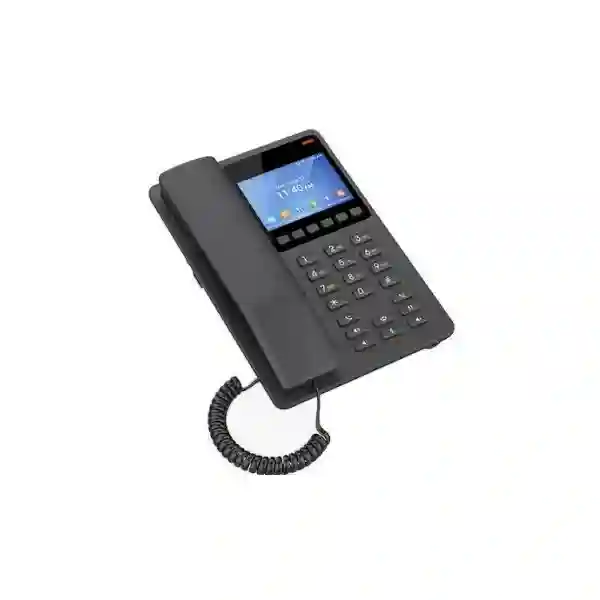
The Grandstream GHP631W is a hospitality-focused SIP phone designed for guest rooms and other managed environments where administrators need a simple endpoint for users and a practical way to deploy many phones consistently. The GHP631W combines a 3.5-inch high-resolution color screen, two SIP accounts and two lines, integrated dual-band 2.4 GHz and 5 GHz 802.11a/b/g/n/ac/ax Wi-Fi 6, programmable service functions, ten speed-dial keys, three-way voice conferencing and support for the full-band Opus codec. It also works with Grandstream Device Management System, or GDMS, for centralized provisioning, configuration and monitoring. For Tanzanian hotels, serviced apartments, hospitals, dormitories and similar projects, the main procurement question is not simply whether the phone can make SIP calls. The more useful question is how the model will fit the property’s PBX, wireless design, room workflow, power plan, numbering scheme and ongoing administration.
What the Grandstream GHP631W is designed to solve
Guest-room telephony has different priorities from a conventional executive desk phone. A hotel may need a clear display, straightforward calling, fast access to reception and service destinations, predictable room-to-room dialing, centralized configuration and a form factor that works on a bedside table or wall. The GHP631W is designed around those requirements. Its programmable and speed-dial keys can be mapped to frequently used services according to the property’s call plan, while the color LCD gives the endpoint a familiar visual interface. Two SIP accounts and lines allow administrators to design practical extension behavior without turning the guest device into an unnecessarily complex office handset.
The integrated Wi-Fi 6 radio is particularly relevant where a property wants a wireless endpoint option in rooms or locations where adding a dedicated Ethernet drop is difficult or undesirable. Wireless convenience does not remove the need for network planning. Voice traffic still depends on adequate signal, channel design, capacity, roaming behavior, segmentation and stable access to the PBX or SIP service. Where Ethernet is available, the GHP631W also includes a 10/100 Mbps network interface, while the Wi-Fi version is powered by the appropriate power adapter or USB Type-C power method described by Grandstream. Buyers should confirm the planned powering method, room outlet availability and cable management before ordering a large quantity.
Color guest interface
A 3.5-inch 480 × 320 color LCD gives users a clearer visual interface than screenless hospitality endpoints and helps administrators present calling information in a compact room phone format.
Wi-Fi 6 connectivity
The GHP631W integrates dual-band 2.4 GHz and 5 GHz 802.11a/b/g/n/ac/ax Wi-Fi 6. This can simplify placement when the wireless LAN is engineered for voice and reliable room coverage.
Centralized management
GDMS can be used to provision, configure, monitor and manage Grandstream endpoints centrally, which is useful when a property has many rooms and wants consistent settings.
Hospitality-focused controls
Six programmable keys and ten speed-dial keys can support property-specific service access such as reception, housekeeping or other internal destinations when configured in the PBX and endpoint plan.
Verified feature overview
| Display | 3.5-inch high-resolution 480 × 320 color LCD |
| SIP | 2 SIP accounts / 2 lines |
| Wireless | Integrated dual-band 2.4 GHz and 5 GHz 802.11a/b/g/n/ac/ax Wi-Fi 6 |
| Audio | HD speaker, full-band Opus codec and three-way voice conferencing |
| User keys | 6 programmable keys and 10 speed-dial keys |
| Management | Grandstream Device Management System support for provisioning and management |
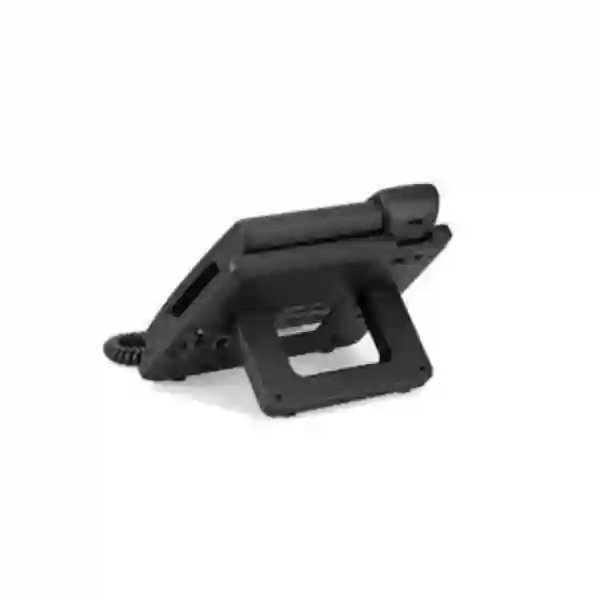
| Installation | Desktop or wall mounting |
| Network | One 10/100 Mbps Ethernet interface plus integrated Wi-Fi on GHP631W |
Grandstream also documents enterprise-oriented security mechanisms for the GHP63x family and a jitter-resilience algorithm intended to maintain voice quality under packet-loss conditions. These capabilities are useful, but they should not be treated as a substitute for a properly engineered network. A hospitality deployment still benefits from stable LAN/WLAN design, appropriate VLANs and QoS where required, secure administration, controlled firmware management and a well-tested call flow before rooms are handed over to operations.
Deployment planning for hotels and managed properties
Before ordering, define the PBX platform, SIP registration method, extension numbering, emergency and service dialing rules, reception behavior, speed-dial destinations, voicemail expectations and guest privacy requirements. Next review the physical environment. Confirm whether each room will use Wi-Fi or Ethernet, where power is available, whether wall mounting is required, how cables should be concealed, and whether the phone location provides reliable wireless coverage. For Wi-Fi deployments, perform coverage and capacity planning in the rooms rather than assuming that a guest Wi-Fi signal is automatically suitable for voice endpoints.
The GHP631W can also fit hospitals, dormitories, apartments and other managed accommodations, but the configuration should reflect the environment. A hospital bedside phone may prioritize simple extension calling and predefined service destinations. A serviced apartment may need reception, security and facility-management shortcuts. A dormitory may require a tightly controlled outbound-dial plan. The endpoint should therefore be treated as one part of the communications design rather than an isolated retail purchase.
Grandstream GHP631W Tanzania
For buyers evaluating the Grandstream GHP631W in Tanzania, the strongest use case is a managed property that wants a compact SIP endpoint with a color display and integrated Wi-Fi 6 rather than a general-purpose office desk phone. Hotels, serviced apartments, lodges, residences, hospitals and institutional accommodation can use a centrally managed room-phone design to simplify extension behavior and make frequently used services easier to reach. The model’s two SIP lines, programmable controls, speed-dial capability and GDMS support can help a technical team standardize room settings across a deployment, provided the PBX, wireless LAN and operational call flows are planned first.
A Tanzania procurement exercise should start with quantity and site topology. Establish the number of guestrooms or endpoints, whether there are multiple buildings, the expected ratio of wired to wireless phones, and whether the PBX is located on site, in a data centre or delivered through another architecture. Review the property’s Wi-Fi coverage at actual phone positions and not only in guest seating areas. Walls, room geometry, corridor placement and access-point design can affect voice reliability. If voice and guest internet share infrastructure, network segmentation and traffic policy deserve attention so that room phones remain manageable and are not exposed as ordinary guest devices.
Power planning is also important. The GHP631W Wi-Fi model is commonly deployed with its supported power method rather than relying on PoE like the non-W variants. Confirm the correct power accessories, wall sockets and cable routing for every room. For a large rollout, administrators should prepare provisioning templates, extension naming conventions, firmware policy and a room-to-extension register before installation. This reduces repetitive manual setup and makes later troubleshooting easier.
For broader purchasing context, the FourTeck Tanzania technology shop explains how IP phones, networking and related infrastructure should be selected with compatibility and deployment dependencies in mind. Buyers planning an integrated project can also review FourTeck Tanzania services for voice, Wi-Fi and infrastructure planning. A quotation request should include phone quantity, PBX platform, expected SIP configuration, power plan, mounting preference and any required room-service key mapping so that the proposed bill of materials can be checked before purchase.
Grandstream GHP631W Dar es Salaam
Dar es Salaam properties often combine high guest turnover, mixed building types and demanding connectivity requirements, making room-phone planning a network project as much as a handset purchase. The Grandstream GHP631W can be considered for hotels, serviced apartments, hospitals and managed residences that want a Wi-Fi 6 hospitality phone with a color LCD and centralized endpoint management. For city properties with many rooms, a structured rollout plan matters because repetitive configuration errors become expensive when they are multiplied across dozens or hundreds of endpoints.
Begin by mapping the PBX call plan to the guest experience. Decide how guests reach reception, operator, housekeeping, security, restaurant or other internal services. Confirm which destinations deserve one-touch or speed-dial treatment and which calls require normal dialing. Test external calling rules and any restrictions before mass provisioning. If the property uses a Grandstream communications platform or another standards-based SIP environment, verify the exact interoperability and configuration requirements in the chosen system rather than assuming every optional function will behave identically on every PBX.
For wireless placement, evaluate radio conditions in a representative sample of rooms on each floor. A phone on a bedside table may experience a different signal path from a laptop used near a window or corridor. Concrete walls, lift cores, service areas and neighbouring wireless networks can affect performance. Where the property already has business Wi-Fi, review whether a dedicated voice SSID or VLAN, suitable QoS policy and controlled device onboarding are appropriate. The GHP631W’s dual-band Wi-Fi 6 capability gives design flexibility, but stable voice still depends on signal quality and well-managed RF conditions.
Procurement teams in Dar es Salaam should request an itemized quotation that separates handsets, power accessories, mounting items, PBX work, network changes and configuration services. This makes comparison clearer than evaluating only the phone unit price. If the property is also refreshing switches, access points or cabling, the project should be coordinated so that room telephony is tested against the final network. The FourTeck Tanzania solution overview provides useful context for planning voice together with networking and other site technologies.
Grandstream GHP631W Mwanza
Organizations sourcing the Grandstream GHP631W in Mwanza may be planning a new hotel opening, a refurbishment of an existing guest-room telephone system, or a gradual migration from analog extensions to IP telephony. The GHP631W is suited to environments where the endpoint needs to remain straightforward for guests while administrators want modern SIP provisioning, a color display and Wi-Fi connectivity. Its value increases when the deployment is standardized: the same room-service labels, extension pattern and software policy can be reused across rooms rather than configured ad hoc.
A Mwanza project should assess the full voice path. Confirm the PBX, SIP trunk or external calling arrangement, local extension numbering, internet dependency and network resilience. If the PBX or voice service is reached across a WAN, test how the system behaves during congestion or connectivity loss and decide whether any local fallback is required. Voice quality is influenced by latency, jitter and packet loss throughout the path, so a modern phone alone cannot fix an unstable upstream network. Grandstream includes Opus support and jitter-resilience capabilities, yet administrators should still prioritize sound network engineering.
Where Wi-Fi is preferred, perform room-by-room or representative RF validation. Access points placed mainly for lobby and guest internet coverage may not provide consistent signal in every room position. Separate operational devices from open guest access where appropriate and use secure credentials and management controls. For Ethernet-connected rooms, confirm port availability and patching. For the GHP631W specifically, check the planned power arrangement at each room because the Wi-Fi variant’s powering approach differs from the PoE-oriented non-W models in the family.
Buying teams should also plan spares and documentation. A sensible handover package can include the extension list, room mapping, configuration template, administrator access process, firmware baseline and notes explaining how a replacement handset is enrolled. This is particularly helpful for properties with limited on-site telephony specialists. When requesting pricing, provide the total room count, expected installation phases, mounting requirements and whether the quote should include network assessment, PBX configuration or only product supply. Clear scope makes it easier to compare options and avoids discovering missing accessories during installation.
Grandstream GHP631W Arusha
Arusha has a strong hospitality profile, and many properties need room technology that is simple for guests yet manageable for operations teams. The Grandstream GHP631W fits that design objective by combining a compact black hospitality-phone form factor with a color LCD, SIP calling, programmable functions, speed-dial keys and Wi-Fi 6 connectivity. It can be considered for hotels, safari-lodge administration areas, serviced accommodation, hospitals and other controlled environments where the phone is expected to connect guests or occupants with internal services without presenting the complexity of a feature-heavy office desk set.
For an Arusha hotel rollout, map the phone configuration to the guest journey. Reception, reservations, housekeeping, restaurant, security and emergency procedures may each require different call treatment. The endpoint’s programmable and speed-dial capabilities can support quick access, but the final behavior depends on the PBX configuration and the property’s operating procedures. Labels should be consistent with the physical room directory and staff training. If guests are international, clear naming and an uncluttered dial plan can reduce confusion more effectively than adding unnecessary features.
Network planning should include the realities of multi-building properties. Lodges, villas, garden rooms and separate accommodation blocks may use wireless bridges, fibre uplinks or distributed access points. Do not assume a single WLAN design is suitable for both guest internet and managed voice endpoints. Validate signal at the final phone location, verify backhaul stability, and define which network segment the phone will use. Administrators should also consider how firmware and configuration updates will be applied when devices are spread across several buildings.
Before purchase, check the quantity of phones, expected spares, power sockets, mounting surfaces and cable routing. If a room renovation is underway, coordinate outlet placement and network design before furniture is finalized. A late decision can lead to visible cables or awkward phone locations. For projects that combine room phones with Wi-Fi, switching or PBX changes, the FourTeck Tanzania services overview is relevant because it treats voice and networking as connected systems rather than separate purchases.
Grandstream GHP631W Dodoma
In Dodoma, the Grandstream GHP631W can suit hospitality, institutional accommodation, healthcare and managed residence projects that need a compact SIP phone with a color display and modern Wi-Fi support. Government-related accommodation, business hotels, training centres and institutional facilities may place particular value on repeatable configuration and simple user interaction. The phone’s GDMS support can help administrators standardize provisioning across many units, while two SIP lines and programmable functions provide enough flexibility for typical room-service and internal calling workflows.
The purchasing process should begin with requirements rather than a model count. Identify how many endpoints are needed now, anticipated expansion, whether each phone will connect over Wi-Fi or Ethernet, and what PBX platform is in use. Confirm whether the property requires room-to-room calling, restricted outbound access, centralized reception, voicemail, wake-up workflows or other PBX-dependent functions. Some requirements are implemented primarily in the phone system rather than the handset, so the endpoint and PBX should be evaluated together.
For Wi-Fi installation, avoid using coverage maps prepared only for guest browsing as the sole evidence that voice devices will perform well. Voice endpoints need consistent connectivity at a fixed physical location for long periods. Test representative rooms, corridors and building sections, review 2.4 GHz and 5 GHz behaviour, and verify that authentication and network policies are compatible with managed endpoints. The GHP631W supports current Wi-Fi standards, but channel planning, interference and backhaul remain important.
Operational planning matters after installation. Create a room-extension register and documented procedure for replacing a phone without manually rebuilding all settings. Keep administrator credentials protected, maintain a known firmware baseline, and schedule configuration backups where the surrounding PBX platform supports them. When requesting a Dodoma quotation, include the exact phone quantity, room types, wall or desktop mounting choice, network status, power availability and any deployment services required. This allows suppliers and integrators to identify dependencies early and helps procurement teams distinguish the handset cost from the wider communications project.
Grandstream GHP631W UAE
For UAE hospitality and managed-property projects, the Grandstream GHP631W offers a compact Wi-Fi 6 SIP endpoint that can be deployed where a color display, centralized provisioning and customizable service access are more important than the broad feature set of an executive office phone. Hotels, serviced apartments, staff accommodation, hospitals and residential developments may consider the model when the network and PBX architecture already supports SIP endpoints and a consistent room-device policy is required.
A UAE project often involves structured design reviews across IT, facilities, operations and fit-out contractors. The room phone should be included early enough for power outlets, wall mounting, bedside placement and network coverage to be coordinated with the furniture and interior plan. If wireless deployment is selected, an RF survey or predictive design should be validated against real room construction and final access-point locations. Dense urban properties can also experience a busy radio environment, so using Wi-Fi 6 does not remove the need for channel, power and capacity planning.
PBX integration should be tested on a pilot group before full rollout. Validate SIP registration, caller ID, service shortcuts, transfer behavior, voicemail or message indication where used, time settings and any property-specific call restrictions. The phone offers two SIP lines, ten speed-dial keys and programmable controls, giving administrators a practical base for guest-facing workflows. GDMS can support centralized deployment management, which is valuable when many endpoints must share a controlled template.
For regional project coordination, buyers can review the broader FourTeck UAE technology portfolio when the requirement also includes PBX, networking or related infrastructure. Quotations should state whether they include only hardware or also provisioning, PBX configuration, wireless validation, installation, labeling, testing and handover. Procurement teams should avoid assuming stock status, warranty terms or lead times until these are confirmed in the current quotation because those commercial conditions can vary by project and date.
Grandstream GHP631W Uganda
Uganda buyers evaluating the Grandstream GHP631W may be planning a hospitality upgrade, a new lodge or hotel, a hospital room-phone solution or another managed-accommodation deployment. The model’s integrated Wi-Fi 6, 3.5-inch color display, two SIP lines and centralized GDMS capability make it suitable where administrators want a modern IP endpoint that remains simple for the end user. It is especially relevant when cabling every room is impractical but the existing wireless network can be designed to carry managed voice reliably.
A good Uganda deployment should define connectivity per site. Urban hotels may have dense wireless coverage, while lodges or campuses can spread rooms across multiple buildings with different backhaul links. In both cases, test the phone at the intended location. A strong Wi-Fi symbol on a laptop does not guarantee consistent SIP performance for a fixed room device. Review wireless security, VLAN design, DHCP, DNS, PBX reachability and internet dependency. If the PBX is remote, WAN quality and resilience become part of the voice-service design.
Operational teams should decide how guest service keys will be configured and maintained. One-touch access to reception or another service is only useful when the mapped extension remains correct and staffed according to the property’s operating model. Establish naming standards and a change-control process for configuration updates. GDMS can help centralize management, but the organization still needs ownership of templates, credentials and device records.
For Uganda-specific coordination, the FourTeck Uganda site provides regional context for IP telephony, networking and related business technology. When seeking a GHP631W quote, provide the number of rooms, whether the project is new build or retrofit, PBX brand and version, network connection preference, mounting style and required programming. This lets the project team separate standard phone capability from site-specific integration work and reduces the risk of procurement gaps.
Grandstream GHP631W Kampala
Kampala hotels, apartments, hospitals and institutions can consider the Grandstream GHP631W when they need a guest-facing SIP phone with wireless flexibility and centralized administration. The phone is designed to be compact and approachable while still supporting core IP-telephony functions such as two SIP accounts, two lines, programmable controls, speed-dial destinations and three-way audio conferencing. The color LCD can make information easier to read, and Wi-Fi 6 can help in retrofit situations where dedicated room Ethernet is unavailable or costly to add.
In a multi-floor Kampala property, wireless engineering should be treated as a prerequisite, not an afterthought. Test rooms with doors closed and with the phone positioned where it will actually sit. Review signal strength, interference, channel reuse and access-point loading across busy periods. Voice devices should use secure network access and a controlled configuration rather than sharing the same open environment as transient guests without segmentation. Where fixed Ethernet is available, the decision between wired and wireless can be made room by room according to reliability, installation cost and operational simplicity.
The phone should also be tested against the PBX before bulk purchase. Confirm registration, codec policy, caller ID, service-key mapping, hold and transfer behavior, voicemail-related functions if used, and time synchronization. If the organization plans centralized provisioning, create a small pilot template and verify it on multiple handsets. Once validated, the same approach can be scaled more confidently across floors or buildings.
Commercial comparison should extend beyond unit price. Ask whether the quotation covers the correct power accessories, mounting requirements, configuration, installation and testing. Clarify what is included in any support scope and whether network remediation would be separately charged. Current stock, delivery and warranty conditions should be confirmed at quotation time rather than assumed from general product information. For a property combining phone replacement with PBX or wireless upgrades, regional technical planning is more useful than purchasing the endpoint in isolation.
Grandstream GHP631W Arua
In Arua, the Grandstream GHP631W may be useful for hotels, lodges, hospitals and managed accommodations that want a modern SIP room phone without a complicated user interface. The integrated dual-band Wi-Fi 6 radio can be attractive for retrofit projects, while the color display and programmable service functions can support a clear guest experience. The most successful deployment, however, depends on whether the surrounding network and PBX are ready for IP voice.
Sites outside large metropolitan cores may place greater emphasis on connectivity resilience and straightforward local administration. If the phone registers to a remote PBX or cloud service, evaluate how WAN interruptions affect internal and external calling. Depending on the broader solution, organizations may choose an on-site PBX, a remote system or another architecture. The GHP631W itself is a SIP endpoint, so the design decision should be based on the property’s operational requirements, available links and support model rather than on the handset alone.
Wireless coverage should be verified across the accommodation area. Building materials, distance between structures and outdoor transitions can produce uneven RF conditions. If rooms are distributed across separate blocks, confirm backhaul between access points or switches and ensure the phone network remains segmented and manageable. For small properties, a well-planned network can be simple, but it should still document SSID, addressing, PBX reachability and administrator access.
Procurement teams should prepare a compact scope before requesting prices: number of phones, required spare quantity, PBX details, room numbering, desired service shortcuts, Wi-Fi or Ethernet preference, power availability and mounting type. This scope allows a supplier to identify compatible supporting components and gives the buyer a better basis for comparing proposals. Do not rely on generic promises about local stock, same-day delivery or support coverage; ask for those items explicitly in the current commercial response so that expectations match the actual project.
Grandstream GHP631W Mbarara
Mbarara hospitality and healthcare projects can use the Grandstream GHP631W as part of an IP-based room communications system where simple calling, color-screen usability and wireless deployment flexibility are priorities. The endpoint supports two SIP accounts and two lines, and its programmable and speed-dial controls can be configured around a property’s internal services. This makes it appropriate for room-level tasks, but the exact guest experience is determined by the PBX dial plan and the administrator’s configuration.
For a retrofit in an operating hotel, consider installation disruption. Wi-Fi can reduce the need for new data cabling in some rooms, yet each phone still requires a reliable power arrangement and secure network access. Survey a sample of rooms before choosing a wireless-only strategy. If existing access points were installed mainly for occasional browsing, their placement and capacity may not be ideal for fixed voice endpoints. Where network upgrades are needed, coordinate them before the handset rollout so configuration and testing can happen once.
For new-build accommodation, include telephony in the design stage. Decide where the phone will be placed, whether it will be wall-mounted or desktop, and how guests will access charging, lighting and bedside controls without cable conflicts. Ensure that service-key labels match the property’s operational terminology. Standardizing these details early allows installers to repeat the same setup throughout the building and makes the finished rooms look more consistent.
After deployment, administrators should maintain a current device list and room mapping. A failed or relocated handset should be replaceable without guesswork. Centralized management through GDMS can help, but property IT staff still need a documented process for device enrollment, firmware approval and credential control. A quotation for Mbarara should therefore identify both products and services: phones, accessories, network work, PBX configuration, installation, testing and handover as applicable. This makes lifecycle costs more visible and helps management approve the correct scope.
Grandstream GHP631W Gulu
The Grandstream GHP631W can be considered in Gulu for hotels, institutional residences, medical facilities and other managed environments that need a compact SIP endpoint with modern wireless connectivity. Its combination of a 3.5-inch color screen, two SIP lines, programmable functions, ten speed-dial keys, GDMS support and Wi-Fi 6 provides a practical foundation for room telephony. The endpoint is designed to keep the user experience simple while giving administrators the tools to standardize configuration across many devices.
Project planning should focus first on the voice architecture. Identify the PBX, external calling method, extension structure and service destinations. Decide whether guests can dial other rooms directly, whether outbound calls are restricted, and how reception or security should be reached. These are policy and PBX questions that affect how the GHP631W is configured. A pilot installation is valuable because it gives hotel operations and IT teams a chance to test the workflow before settings are replicated across the property.
If wireless networking is used, check signal quality and stability at the exact installation locations. Voice devices are always-on managed endpoints, so they benefit from a network that is separate from uncontrolled guest access and has consistent DHCP, DNS and routing. In multi-building sites, verify the uplinks between buildings and protect the network against avoidable single points of failure where practical. If internet outages are common, understand which calls depend on the external link and which can remain local to the PBX.
When comparing suppliers, ask for the exact model number GHP631W rather than a generic GHP63x reference, since the W suffix identifies the wireless variant and the 631 design corresponds to the black version in this family. Confirm included accessories, power method, quantity, current commercial warranty terms and expected delivery in writing. If configuration or installation is required, define who supplies the PBX credentials, network information and room list. Good documentation makes future support easier and prevents a replacement device from becoming a small integration project.
Grandstream GHP631W Kenya
Kenya’s hotel, serviced-apartment, healthcare and institutional markets can use the Grandstream GHP631W where a wireless-capable room phone is preferred over a standard office handset. The GHP631W combines a compact hospitality form factor with a color screen, Wi-Fi 6 and SIP calling. Central management through GDMS is particularly relevant for properties with a large room count because configuration consistency, firmware control and endpoint records can be more important operationally than the feature list of a single handset.
For urban hotels and apartment projects, review Wi-Fi density and segmentation. Guest networks often carry many personal devices with unpredictable traffic, while room phones need stable and controlled access. A dedicated voice VLAN or managed SSID can improve administration, but the final design depends on the property’s network equipment and security architecture. Test the PBX path under realistic load. Where multiple branches or properties share a centralized PBX, WAN performance and failover policy should also be included in the design.
The endpoint can support service-oriented calling through programmable controls and speed dials, but hotels should decide which destinations are genuinely useful. Reception, concierge, housekeeping or another internal service may be suitable, while too many options can make a guest phone confusing. Keep labels and phone-directory information aligned. Use the color screen as part of a clear interface rather than treating it as an invitation to add unnecessary complexity.
For Kenya-specific technology coordination, buyers can review FourTeck Kenya when a project includes IP telephony, PBX, Wi-Fi or network infrastructure. A purchase request should state exact quantities, site location, PBX platform, preferred connection method, room mounting style and whether commissioning is required. Current price, availability and warranty terms should be confirmed in the quotation because they are commercial details that can change. This procurement discipline is especially important when the handset is one component in a larger hotel opening or renovation schedule.
Grandstream GHP631W Kuwait
For Kuwait hotels, serviced residences, hospitals and accommodation facilities, the Grandstream GHP631W offers a guest-room SIP endpoint with Wi-Fi 6, a color LCD and centralized management support. It can be considered where a project requires a modern hospitality phone but wants to avoid the footprint and feature complexity of a full executive desk model. Two SIP lines, programmable keys and speed-dial functions provide a useful base for internal service access and room calling.
New-build and refurbishment projects should coordinate the endpoint with interior design and MEP planning. Determine whether the phone will sit on a bedside table, desk or wall. Verify nearby power, cable routing and any USB Type-C powering plan allowed by the installation design. If the property expects to use Wi-Fi instead of a room Ethernet port, make sure access-point placement and channel planning are finalized before handover. High device density and neighbouring WLANs can influence radio conditions even when modern Wi-Fi standards are supported.
The PBX pilot should test practical guest workflows, not just SIP registration. Verify how the phone displays incoming and outgoing calls, how service keys behave, whether the selected codecs and dial plan are appropriate, and how the endpoint reacts after a reboot or network interruption. Confirm time synchronization and any message or mute indicators used by the operating team. Once the test room is accepted, document the template and use centralized provisioning for the wider rollout where appropriate.
Procurement documentation should identify which scope belongs to the handset supplier and which belongs to the PBX, network or fit-out contractor. This prevents missing tasks between vendors. A complete quotation can show hardware quantities, accessories, configuration, installation, testing and handover separately. Buyers should also confirm current lead time, commercial warranty and support conditions instead of relying on general online statements. The objective is a room-phone deployment that is simple for guests, repeatable for installers and supportable by the property’s IT team after opening.
Grandstream GHP631W Ghana
In Ghana, the Grandstream GHP631W can support hotels, resorts, serviced accommodation and healthcare environments that are moving toward IP-based room communications. Its integrated Wi-Fi 6 is useful when cabling constraints make wireless placement attractive, while the color display and programmable service access can give guests a more informative interface. The phone is not a complete hotel communications solution by itself; it depends on a compatible SIP PBX, a reliable network and a deployment policy that defines how rooms are numbered and services are reached.
Properties should assess whether wireless coverage is consistent across room types. Corner rooms, stair cores, service spaces and thick walls can create differences that are not obvious from lobby Wi-Fi performance. For large sites, a predictive plan should be verified with on-site measurements. The network should also distinguish managed property devices from transient guest traffic where appropriate. Stable DNS, DHCP, time synchronization and PBX reachability are basic requirements that deserve validation before hundreds of phones are enrolled.
From an operations perspective, define a standard for every endpoint: room label, extension number, SIP account, service keys, firmware level and management group. Keep this information in a controlled register. When a room changes purpose or a phone is replaced, the administrator can then update the endpoint without relying on memory. GDMS can assist with centralized provisioning and monitoring, but process discipline remains important.
Ghana buyers should request the exact GHP631W model and confirm accessories in the commercial offer. Ask separately about PBX integration, network design, installation and testing if those services are needed. Current stock, delivery dates and warranty conditions should be confirmed at the time of purchase. If the phone is part of a wider hotel technology upgrade, sequence the work so that network and PBX readiness are completed before room handset deployment. That approach makes acceptance testing clearer and minimizes disruption to guests and operations.
Grandstream GHP631W Nigeria
Nigeria hospitality projects can use the Grandstream GHP631W as a room endpoint where Wi-Fi 6 connectivity, a color screen, SIP interoperability and centralized device management are useful. Hotels and serviced apartments with many rooms can benefit from consistent provisioning, while smaller properties may value the ability to deploy a modern IP phone without adding the complexity of a large enterprise desk model. Hospitals, dormitories and managed residences are additional environments supported by the broader GHP63x design.
Network resilience deserves particular attention in any IP-voice deployment. Determine where the PBX is hosted and what happens when an internet or WAN link fails. If the property requires internal room-to-reception calling during an external connectivity issue, the architecture should be designed accordingly. Power continuity for the PBX, access points, switches and phone power supplies may also be relevant to operational expectations. The endpoint can include useful voice-quality technologies, but it cannot compensate for a wider communications system that is unavailable.
For Wi-Fi, use a managed design rather than simply joining phones to a public guest SSID. Secure credentials, segmentation, predictable DHCP and controlled access to management interfaces are important. Test busy periods if possible because wireless performance can change as occupancy and device count rise. Where a property chooses Ethernet for some rooms and Wi-Fi for others, document the deployment pattern so future technicians know which connection method is expected in each location.
The buying checklist should include quantity, spare ratio, exact GHP631W model, power method, wall or desk mounting, PBX platform, desired service shortcuts and any rollout services. Compare quotations on total scope rather than handset price alone. A lower hardware price may not include programming, site work or testing. Conversely, a project with a strong internal IT team may require only supply and remote guidance. Define these boundaries clearly, confirm current warranty and delivery terms, and pilot the phone before a large rollout whenever the PBX or network environment is complex.
Grandstream GHP631W Seychelles
Seychelles hospitality deployments often place a premium on reliable guest experience, tidy room design and manageable multi-building infrastructure. The Grandstream GHP631W can fit those priorities as a compact black hotel IP phone with a 3.5-inch color screen, two SIP lines, programmable functions, speed-dial keys, Wi-Fi 6 and centralized management through GDMS. Resorts, villas, serviced accommodation and healthcare facilities can consider the model where SIP telephony is part of the site’s communications design.
Island and resort properties may distribute rooms across separate buildings, which makes the network path especially important. Wireless coverage can vary with construction materials, vegetation, outdoor spacing and access-point placement. If a GHP631W relies on Wi-Fi, test each building type and verify backhaul to the PBX. A good design should also consider how administrators reach and manage endpoints without exposing device interfaces unnecessarily. Segmentation and secure management are as relevant to hospitality phones as they are to other networked devices.
Operations teams should work with IT to define the service menu. Reception, guest services, housekeeping, security, spa or restaurant destinations may be appropriate, but the exact choices should reflect how the resort actually operates. The phone’s keys should simplify the guest experience rather than replicate an internal staff directory. Keep dial labels, room directories and PBX routing synchronized so that a service change does not leave outdated instructions in guestrooms.
For procurement, plan spares and replacement workflow carefully because logistics can be more important in geographically distributed markets. This does not mean assuming any specific stock or delivery promise; instead, ask the supplier to state lead times, commercial warranty, spare availability and shipment scope in the live quotation. Where multiple properties use the same model, a common configuration template can simplify support. Pilot one or more rooms, confirm wireless and PBX behavior, document the accepted setup, and then scale the deployment in stages with clear testing at each handover point.
Compatibility, PBX integration and network design
The GHP631W is a SIP endpoint, so compatibility work should focus on the exact PBX platform, firmware, account settings, codecs, dial plan and service features required by the property. Standard SIP support provides a foundation, but optional behaviors can differ between systems. Before a bulk order, validate registration, inbound and outbound calls, DTMF behavior, transfer and hold functions, service keys, time settings and any message indications that matter to the deployment. If the system uses a Grandstream PBX, centralized configuration can be streamlined; if it uses another SIP platform, pilot testing remains the safest way to confirm practical interoperability.
On the network side, the GHP631W’s Wi-Fi 6 radio supports 2.4 GHz and 5 GHz bands. The better band for a specific room depends on coverage, interference and access-point placement. Do not force a universal rule without a site survey. Where voice shares a converged network with CCTV, guest Wi-Fi, business data and other services, VLAN segmentation, QoS and uplink capacity can help keep traffic manageable. The FourTeck Tanzania integrated-technology overview is relevant because it treats IP phones, Wi-Fi, switching and security as connected parts of one infrastructure.
How to choose between GHP631W and other GHP63x variants
The GHP63x family includes GHP630, GHP630W, GHP631 and GHP631W variants. The key purchasing distinction for the W models is integrated dual-band Wi-Fi 6, while the GHP631/GHP631W designation corresponds to the black version of the color-screen design. The non-W variants are intended for wired deployments and support PoE, while the Wi-Fi models use their supported adapter or USB Type-C powering methods. This difference matters during room design: choosing a wireless model may reduce data-cabling dependence but it does not remove the need for power at the endpoint.
Buyers should choose the model around infrastructure and room aesthetics rather than assuming Wi-Fi is automatically better. If every room already has a properly patched Ethernet port with suitable PoE switching, a wired variant may provide a simpler connection path. If adding Ethernet is difficult but reliable managed Wi-Fi exists, the GHP631W can be attractive. If the property prefers a black handset to match interiors, the 631 variant family is relevant. Confirm the exact suffix and color on every quote and purchase order to prevent model substitutions that change connectivity or deployment assumptions.
Quotation checklist for Grandstream GHP631W
State total units, spare quantity, room count, building count and rollout phases.
Provide PBX brand, model or platform, software version and SIP architecture where known.
Confirm whether phones will use Wi-Fi, Ethernet or a mixed design, and whether network assessment is required.
Specify desktop or wall mounting and verify the expected power method and room outlets.
List the internal destinations that should be programmed for guest or occupant access.
Clarify whether the request is supply-only or includes provisioning, PBX work, installation, testing and handover.
Frequently asked questions
Does the Grandstream GHP631W support Wi-Fi?
Yes. The GHP631W includes integrated dual-band 2.4 GHz and 5 GHz 802.11a/b/g/n/ac/ax Wi-Fi 6. Wireless performance still depends on access-point design, signal quality, interference and network configuration.
How many SIP lines does the GHP631W support?
Grandstream specifies two SIP accounts and two lines for the GHP63x family, including the GHP631W.
Can the GHP631W be wall mounted?
Yes. Grandstream documents both desktop and wall-mounted installation options. The project should confirm the required mounting hardware and cable route before room installation.
Is the GHP631W only for hotels?
No. Grandstream positions the GHP series for hotels and also for environments such as hospitals, apartments and dormitories. The correct deployment depends on the required call workflow and network architecture.
Can administrators manage many GHP631W phones centrally?
Yes. The model supports Grandstream Device Management System for centralized provisioning, configuration, management and monitoring of Grandstream endpoints.
Does the GHP631W support three-way conferencing?
Yes. Grandstream lists three-way audio conferencing as a supported capability.
What information should I send for a quotation?
Provide quantity, project location, PBX platform, connection method, mounting preference, required service keys, power arrangement and whether installation or configuration is required. Current price, stock, warranty and delivery should be confirmed in the quotation rather than assumed.
Decision recap
Choose the Grandstream GHP631W when the requirement calls for a compact black hospitality SIP phone with a color display, Wi-Fi 6, two SIP lines, programmable service access and centralized Grandstream management. Validate the model through a pilot if the PBX is third-party or the WLAN is complex. Plan power, mounting and network access before rooms are furnished. Use standardized provisioning for multi-room deployments. Compare quotations on the complete project scope rather than handset price alone, and confirm all changing commercial conditions such as availability, warranty and delivery in the live offer.
Talk through your GHP631W project
A useful consultation starts with the number of rooms, building layout, current PBX, Wi-Fi or Ethernet preference, power availability and the guest-service calling experience you want to create. Share those details together with any expansion plan, and the endpoint requirement can be reviewed alongside the network and communications infrastructure. For broader product selection, visit the Tanzania FourTeck shop; for integrated design and deployment context, see FourTeck Tanzania services.


Reviews
There are no reviews yet.