

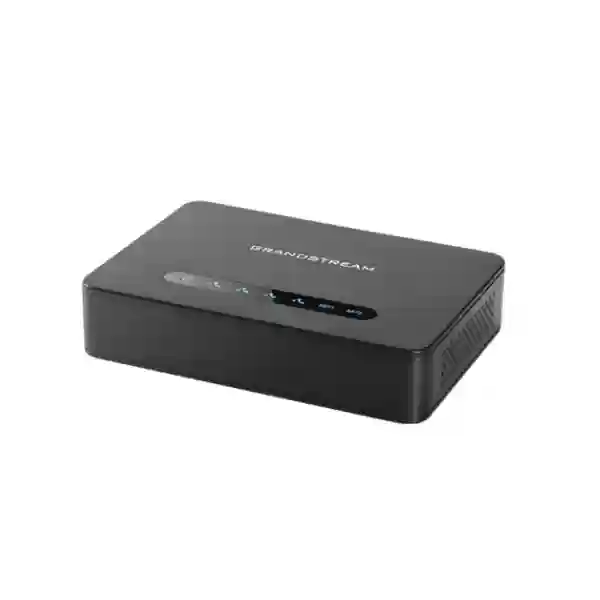
Grandstream HT814 V2
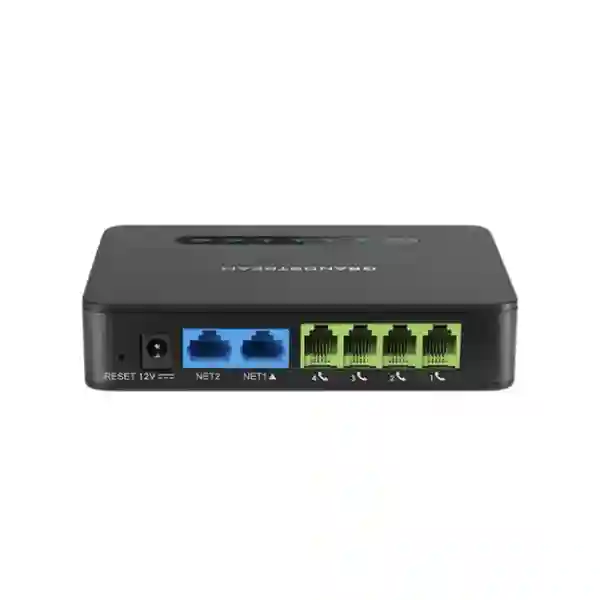
The Grandstream HT814 V2 is a four-port analog telephone adapter and VoIP gateway designed to bring analog phones, fax machines and other suitable FXS devices into a SIP-based communications environment. It provides four RJ11 FXS ports, two 10/100/1000 Mbps Ethernet ports, two SIP profiles, an integrated NAT router, secure signaling and media options, automated provisioning and practical telephony functions for business and service-provider deployments.
For Tanzania buyers, the key value is controlled migration. An organization does not always need to discard every analog handset or fax device when moving toward IP telephony. The HT814 V2 can preserve up to four analog endpoints while connecting them to a modern SIP platform, helping offices, hotels, clinics, schools, branches and service providers plan a gradual transition with a clear understanding of network, PBX and SIP compatibility.

Connect up to four compatible analog phones or fax devices through RJ11 interfaces.
Two 10/100/1000 Mbps RJ45 interfaces support network connectivity and integrated routing.
Suitable for deployments that need multiple analog extensions associated with SIP services.
Supports T.38 fax relay and G.711 pass-through options for compatible Fax-over-IP environments.
What the HT814 V2 solves
The HT814 V2 solves a common telephony problem: a business wants SIP-based calling and centralized IP PBX management, but it still has analog equipment that remains useful. Replacing every endpoint can add cost and disruption, while leaving the old analog system isolated can make administration difficult. An ATA creates the bridge. Each FXS port presents the electrical interface expected by a standard analog telephone or fax device, while the gateway converts the voice traffic into SIP sessions for transport over an IP network.
This is especially useful when a company is modernizing in phases. A reception back office, warehouse, guard point, clinic room, guest room, lift telephone interface or legacy fax device may still use analog equipment even though the main communications platform has moved to SIP. The HT814 V2 allows the organization to keep those endpoints where they remain operationally appropriate. Because the unit supports four FXS interfaces, it can be a practical middle point between a single-port adapter and an eight-port gateway.
The device is also designed with centralized administration in mind. Grandstream documents TR-069 and XML configuration provisioning, secure provisioning methods and integration with Grandstream UCM systems for Zero Configuration workflows. For larger rollouts, these features matter because manually configuring each unit becomes inefficient. A well-planned deployment should still document extension mapping, SIP credentials, VLAN or subnet placement, firmware policy, power protection and how each analog endpoint is physically labeled.
Verified Grandstream HT814 V2 features
Analog interfaces
Four RJ11 FXS ports are provided for compatible analog endpoints. Grandstream positions the model as a four-line analog telephone adapter for residential, office and commercial IP voice deployments.
Network interfaces
Two 10/100/1000 Mbps RJ45 ports are included. By default, Grandstream documentation describes NET1 as WAN using DHCP client behavior and NET2 as LAN using DHCP server behavior, with roles configurable through the web interface.
Voice and conferencing
The platform supports wideband voice codecs including G.722 and OPUS, along with three-way voice conferencing per port and familiar calling features such as hold, transfer, call forwarding, call waiting and do-not-disturb.
Security
Grandstream specifies TLS and SRTP support for protecting signaling and media, plus strong AES encryption and a unique security certificate per unit for secure device provisioning workflows.
Provisioning
Automated provisioning options include TR-069 and XML configuration files. This is valuable where many adapters must be deployed consistently rather than configured one by one.
Resilience and fax
Failover SIP server support can switch registration toward a secondary server when the primary becomes unavailable. T.38 supports Fax-over-IP, with G.711 pass-through also documented as an option.
Technical planning checklist
Before ordering or deploying the HT814 V2, identify the analog endpoints, the SIP registrar or IP PBX, the extension numbers that will map to the FXS ports, the network segment where the ATA will sit and the intended power-protection strategy. A successful ATA deployment depends on more than the adapter itself. The SIP platform must support the required registration and calling functions, the LAN must provide reliable IP connectivity, and any firewall or NAT rules must be compatible with the chosen SIP architecture.
Grandstream specifies an operating temperature range of -10°C to +55°C and relative humidity of 10% to 90% non-condensing. Installation should therefore use a suitable indoor environment with ventilation and dependable power. Firmware should be managed carefully; Grandstream documentation notes that on HT81x V2 models, once firmware 1.0.9.3 or later is installed, downgrade to 1.0.7.5 or earlier is not supported because of CPU frequency adjustments.
Related FourTeck resources
FourTeck Tanzania servicesUse the services overview when a project needs planning, installation, configuration, troubleshooting, documentation or lifecycle support around the gateway.
Tanzania business technology solutionsExplore related network switching, firewall, Wi-Fi, IP telephony and structured infrastructure planning for business sites.
FourTeck KenyaA useful regional reference for organizations coordinating telecom and IT requirements across Tanzania and Kenya.
FourTeck UgandaSupports regional planning context for organizations that operate voice and network infrastructure across Tanzania and Uganda.
Grandstream HT814 V2 Tanzania
In Tanzania, the Grandstream HT814 V2 is relevant to organizations that are modernizing voice communications while still depending on analog telephones, fax machines or other compatible FXS devices. A business may have already invested in a SIP trunk, an IP PBX or a cloud calling platform, yet still need several analog endpoints at reception, in a back office, at a guard post or in a room where replacing the existing device adds little operational value. The four FXS ports make the HT814 V2 suitable for that transitional requirement. Instead of maintaining a separate analog PBX solely for a handful of legacy lines, the adapter can connect those endpoints to an IP-based environment, subject to SIP compatibility and correct configuration. Procurement teams should confirm the exact number of analog devices, whether each needs its own extension, whether fax is part of the requirement and whether any line must support specific caller-ID behavior.
Network readiness is equally important. Tanzania deployments can range from a single office to a distributed organization with sites in several cities. The ATA needs stable LAN connectivity, appropriate IP addressing and correct firewall handling for SIP and media. Where the organization already uses Grandstream UCM, the HT814 V2 can benefit from Grandstream’s Zero Configuration workflow. In mixed-vendor environments, the safest approach is to validate SIP registration, codec support, DTMF behavior, fax requirements and failover design before rolling out large quantities. The two Gigabit interfaces and integrated NAT router provide flexibility, but the device should not be treated as a substitute for a business firewall where advanced security policy, VPN or inspection is required.
For quotations in Tanzania, provide the quantity of HT814 V2 units, number and type of analog endpoints, current PBX or hosted SIP provider, expected call volume, whether T.38 fax is needed, and whether configuration or deployment assistance is required. This information allows the project to be scoped accurately without making assumptions about local trunk compatibility, installation conditions or service availability.
Grandstream HT814 V2 Dar es Salaam
For Dar es Salaam businesses, the HT814 V2 can be useful in headquarters, branch offices, hotels, clinics, logistics operations and professional-service environments where SIP telephony is being introduced without immediately removing all analog devices. A practical example is a reception or operations office that has four existing analog phones or a combination of phones and fax equipment. Connecting those endpoints through the four FXS ports can reduce the need to maintain a separate legacy telephone system purely for a small number of lines. The design should begin with call flow: identify which extensions must ring, whether the analog phones need direct inward dialing, whether transfer and hold behavior must match the IP PBX, and whether any fax endpoint requires T.38 or G.711 pass-through testing. Those questions are more important than simply counting physical ports.
Dar es Salaam sites frequently combine internet, Wi-Fi, cameras, servers and voice on the same structured network. Voice quality can be affected when bandwidth, switching or firewall configuration is poorly planned, so the HT814 V2 should be integrated into the LAN deliberately. VLAN separation, quality-of-service policy and consistent addressing can simplify troubleshooting. If a Grandstream UCM platform is used, Zero Configuration can reduce repetitive setup. If another SIP platform is used, test registration, authentication, codecs, DTMF and NAT behavior in a pilot before large-scale deployment. The device’s failover SIP server capability can also be part of a resilience design, although the entire voice path—including internet service and PBX availability—must be considered.
A Dar es Salaam quotation request should therefore include more than the model name. State how many analog endpoints will remain, whether the project is a migration or a new installation, the PBX or SIP service already in use, and whether the site has managed switching, UPS-backed network equipment and a defined voice VLAN. That makes product selection and configuration guidance more accurate.
Grandstream HT814 V2 Mwanza
In Mwanza, organizations evaluating the Grandstream HT814 V2 may be dealing with a common mix of established analog equipment and newer IP connectivity. Offices, clinics, education environments, hospitality properties and commercial facilities can have analog handsets that remain perfectly serviceable even after the core phone system moves toward SIP. The HT814 V2 provides a controlled bridge for up to four analog endpoints, making it suitable where the requirement is larger than a one- or two-port ATA but does not justify an eight-port gateway. The purchasing decision should account for the exact endpoint type. Standard touch-tone analog phones are straightforward, while fax devices deserve specific testing because successful Fax-over-IP depends on the wider SIP and network environment as well as the adapter.
For a Mwanza branch, operational simplicity can matter as much as feature count. Remote IT teams benefit from standardized device names, extension mapping, configuration backups and a documented firmware policy. The HT814 V2 supports TR-069 and XML provisioning, which can help organizations or service providers apply consistent configuration across multiple gateways. Grandstream also supports secure signaling and media through TLS and SRTP. Those functions should be aligned with the PBX and provider settings; enabling a feature on one side alone does not automatically secure the full call path. Network teams should also verify DNS, NTP, firewall and DHCP behavior so the adapter can register reliably after power or connectivity changes.
When requesting a Mwanza quotation, include expected quantity, the number of analog lines per site, PBX model or SIP platform, any fax requirements and whether central provisioning is needed. If the deployment spans several branches, indicate whether each location follows the same network design. This allows the project to be reviewed for consistency, not only for hardware quantity.
Grandstream HT814 V2 Arusha
Arusha buyers can use the HT814 V2 in business and hospitality environments where analog endpoints remain useful alongside a modern SIP platform. Hotels and guest-facing facilities, for example, may retain analog room or service phones while the back-end communications system is upgraded. Offices may keep analog handsets in low-traffic locations while deploying IP phones to receptionists and managers. The four FXS ports make the HT814 V2 a compact way to handle a small cluster of analog devices. A correct design should not assume that every legacy phone behaves identically. Caller-ID presentation, ring cadence, DTMF, transfer behavior and fax functionality should be tested against the actual PBX and service provider.
For hospitality and multi-room environments, extension documentation is particularly important. Each FXS port should be labeled with the associated room, desk or service point, and PBX routing should reflect how staff expect calls to flow. If the ATA is centrally located, analog cable distances and existing patching should be checked before deployment. If the unit is located closer to endpoints, the network port and power source need equivalent attention. Grandstream’s dual Gigabit interfaces and integrated NAT functionality provide deployment flexibility, but the surrounding network still needs suitable switching, IP addressing, firewall policy and power protection. The device should be installed indoors within Grandstream’s specified environmental limits.
For an Arusha project quotation, identify whether the HT814 V2 is intended for an office, hotel, lodge, clinic or other environment, and list the analog devices that must be retained. Include the chosen IP PBX or SIP service, any expected fax use and the preferred provisioning method. This allows a solution to be proposed around the actual workflow rather than treating the ATA as an isolated box.
Grandstream HT814 V2 Dodoma
In Dodoma, the Grandstream HT814 V2 can support organizations that need to modernize telephone infrastructure while preserving selected analog endpoints. Administrative offices, institutions, professional firms, clinics and branch facilities may still rely on analog phones in specific rooms even when the wider communications strategy is moving toward SIP. The gateway’s four FXS ports are useful when a small group of endpoints must be maintained without keeping an entire analog PBX solely for them. Procurement teams should map each required analog line to a business purpose—reception overflow, a service desk, a fax endpoint, a security post or another operational role—then verify whether those lines require independent SIP registration or shared call handling.
A Dodoma deployment should also consider resilience. The HT814 V2 supports a failover SIP server, but voice continuity is broader than the ATA. Reliable internet, switching, power and PBX availability all contribute to successful calling. UPS protection for network equipment may be appropriate where short power interruptions would otherwise take the voice system offline. Secure configuration should include strong device credentials, controlled access to the management interface and, where supported end to end, TLS for SIP signaling and SRTP for media. For organizations with several sites, TR-069 or XML provisioning can help maintain consistent configuration and reduce manual errors during rollout.
When asking for a Dodoma quote, include the exact number of HT814 V2 units, analog endpoints per location, PBX or hosted service details, whether the network is centrally managed and whether installation or configuration is part of the scope. If fax is involved, mention the fax machine type and current service so that testing expectations can be established before deployment.
Grandstream HT814 V2 UAE
For UAE organizations, the HT814 V2 is a practical adapter where four analog endpoints must connect to a SIP-based phone system without replacing those devices immediately. Multi-branch businesses, hospitality operations, warehouses and professional offices may use analog phones for back-office, service or legacy requirements even while the primary communications platform is IP based. The device provides four FXS ports, two Gigabit network interfaces and support for two SIP profiles, giving it a balanced role between compact single-line adapters and larger-density gateways. Buyers should confirm the intended SIP trunk or PBX platform and avoid assuming that all provider-specific services are automatically compatible without testing.
UAE projects often involve standardized network and security policy across multiple premises. In that environment, configuration consistency is valuable. TR-069 and XML provisioning can support controlled deployment, while TLS and SRTP can be used where the PBX and service architecture support them. If the HT814 V2 is used with a Grandstream UCM system, Zero Configuration can simplify initial provisioning. For other platforms, a pilot deployment should verify registration, caller-ID, DTMF, codec negotiation, transfer behavior and fax. If the device’s routing function is used, network teams should document whether NET1 and NET2 are operating as WAN and LAN or have been reassigned.
For procurement, specify quantity, power-adapter requirement, analog endpoint count and whether the devices will be centrally preconfigured before distribution. Organizations spanning the UAE and East Africa can also standardize extension templates and firmware policies so that support teams troubleshoot the same baseline configuration across regions. Pricing and availability should always be confirmed at quotation time rather than assumed from older online listings.
Grandstream HT814 V2 Uganda
In Uganda, the Grandstream HT814 V2 can serve businesses that want to extend SIP telephony to analog phones and fax devices without undertaking a complete endpoint replacement at once. A company with existing analog handsets in branch offices, stores, clinics or service areas can use the four FXS ports to preserve those devices while moving call control to an IP PBX or hosted SIP service. The most important planning step is to define what each analog port needs to do. Some endpoints may only place and receive basic calls, while others may need caller ID, transfer, conference or fax functions that should be validated against the selected PBX.
For organizations operating between Uganda and Tanzania, a standardized gateway can simplify technical support. The same configuration template, naming convention and firmware policy can be adapted per site while local SIP credentials and network details remain unique. The HT814 V2’s automated provisioning capabilities are useful here because manual configuration becomes time-consuming across many branches. Security should include management access restrictions and secure signaling or media where supported. Network teams should also consider voice VLANs, QoS and firewall behavior, especially if branch connectivity carries business applications and voice over the same internet connection.
A Uganda quotation should state how many sites are involved, how many analog endpoints remain at each site, which IP PBX or SIP service is in use and whether fax must be supported. If branches have different internet connections or firewall brands, include those details. That makes it easier to identify where a pilot may be required before full deployment and helps avoid treating a four-port ATA as a universal plug-and-play replacement for every legacy line.
Grandstream HT814 V2 Kampala
Kampala businesses often combine legacy office systems with newer cloud and IP infrastructure, which is exactly the type of environment where a four-port ATA can be useful. The Grandstream HT814 V2 lets an organization retain up to four compatible analog endpoints while registering them to a SIP-based communications platform. This can be appropriate for reception overflow phones, fax equipment, common-area handsets or devices in departments that do not yet need full-featured IP phones. The gateway is not simply a port converter; it should be treated as part of the voice architecture, with extension mapping, security, network addressing and firmware management included in the deployment plan.
In a busy Kampala office network, voice can compete with file transfers, cloud applications, CCTV streams and Wi-Fi traffic. Managed switching and correct traffic policy can therefore improve stability. The HT814 V2 supports two Gigabit Ethernet ports and integrated NAT functionality, but a business should still use appropriate network and security infrastructure for the overall site. When a dedicated voice VLAN is deployed, confirm that DHCP, DNS, routing and firewall policy allow the adapter to reach its SIP registrar and provisioning services. For Grandstream UCM users, Zero Configuration can speed onboarding; for other PBX platforms, use tested templates and document all required settings.
For a Kampala purchase request, send the required quantity, analog endpoint types, PBX details and whether devices should be supplied as hardware only or prepared for deployment. If the ATA will connect fax machines, note that Fax-over-IP performance depends on the complete path, so T.38 support on the gateway should be validated with the PBX, provider and network rather than treated as a standalone guarantee.
Grandstream HT814 V2 Arua
For Arua organizations, the Grandstream HT814 V2 offers a compact way to connect a small group of existing analog devices to a SIP service or IP PBX. Branch offices and operational sites do not always need to replace every handset at the same time, especially when the analog devices are used for straightforward calling. Four FXS ports can cover a reception back office, store area, security point and another common-use location from one gateway. Before purchase, identify whether the existing devices are standard analog touch-tone phones or fax machines and whether any special signaling requirements are present. That information influences configuration and testing.
Remote-site maintainability should be part of the decision. A well-documented HT814 V2 installation should record the IP address or management method, extension assigned to each FXS port, SIP server, provisioning source and firmware baseline. Grandstream supports XML and TR-069 provisioning, which can reduce the need for repeated local configuration. The gateway also supports secure SIP and media options through TLS and SRTP where the rest of the system is configured to use them. Failover SIP server capability can improve registration resilience, but the design should also consider internet and power continuity because the adapter cannot compensate for failures elsewhere in the voice path.
When requesting an Arua quote, include the quantity of devices, number of analog endpoints per branch, target PBX or hosted service and whether remote management is required. For organizations with head offices in Kampala or Dar es Salaam, it may be useful to standardize configuration templates so branch units can be replaced or reprovisioned with minimal variation. This approach improves supportability without making unsupported assumptions about local stock or installation coverage.
Grandstream HT814 V2 Mbarara
Mbarara businesses considering VoIP migration can use the HT814 V2 to preserve four analog endpoints while consolidating call control on a SIP system. This is useful when the organization has already chosen an IP PBX but certain locations still need basic analog phones or fax capability. Instead of operating a separate analog phone platform for a small number of devices, the ATA can register those endpoints to the SIP environment. A sensible project starts by listing which phones will remain analog, what extension number each should use, whether calls need to transfer between analog and IP phones, and whether external caller ID must be displayed.
The network path is also important. The HT814 V2 includes dual Gigabit Ethernet interfaces and integrated NAT routing, but most business deployments will still rely on the site’s switch, firewall and internet connection for dependable service. Voice traffic benefits from predictable latency and packet handling, so overloaded links or misconfigured firewalls can affect call quality even when the ATA itself is operating normally. For centrally managed organizations, use provisioning templates, controlled firmware and consistent security settings. If Grandstream UCM is the PBX, Zero Configuration can reduce setup time; with third-party platforms, test in advance.
A Mbarara buyer should include quantities, analog-device types and the existing telephony platform when requesting a quotation. If several units are needed, ask whether preconfiguration or staged provisioning is part of the project scope. Where fax is essential, include the expected fax workflow and carrier details so T.38 or G.711 pass-through can be evaluated in context. This produces a better technical outcome than buying purely by port count.
Grandstream HT814 V2 Gulu
In Gulu, the HT814 V2 can support branch offices, institutions and commercial sites that need to connect several analog phones to an IP-based telephone service. The model’s four FXS ports are a good fit where a one- or two-port ATA is too small but the site does not need the density of a larger gateway. Analog devices can continue serving practical roles while the organization gains centralized SIP call control. This can be valuable during staged migration, where IP phones are introduced for users who need richer features while simple analog handsets remain in fixed service locations.
A Gulu deployment should be engineered for supportability. Label FXS ports, document extensions, store approved configurations and ensure the management interface is not exposed unnecessarily. Use strong credentials and, when supported across the entire solution, secure signaling and media. Grandstream’s provisioning capabilities can help central IT teams manage multiple units without repeated local setup. The failover SIP server feature can also be configured as part of a resilient PBX design, but continuity depends on routing, DNS, internet and power as well. UPS protection for the ATA, switch and internet device may be considered where voice must continue during short power disruptions.
For quotation planning, specify the Gulu site’s number of analog endpoints, PBX or SIP service, whether the gateway will sit behind an existing firewall and whether any endpoint is a fax machine. If the organization operates several regional branches, provide the expected total quantity so configuration can be standardized. This information helps determine not only how many HT814 V2 units are required but also how they should be prepared for a manageable rollout.
Grandstream HT814 V2 Kenya
In Kenya, the Grandstream HT814 V2 fits organizations that need four analog interfaces while adopting SIP telephony in offices, hospitality properties, clinics, branches or service environments. It can bridge traditional phones or fax devices into an IP PBX without requiring immediate replacement of every analog endpoint. Buyers should consider whether four ports are the right density. If only one device is needed, a smaller ATA may be more economical; if many analog endpoints are concentrated in one rack, a higher-port-count gateway may reduce device count. The HT814 V2 is strongest where four ports match the actual requirement and the network design benefits from its dual Gigabit interfaces and integrated routing capability.
Kenya deployments that coordinate with Tanzania branches can gain value from common configuration standards. Matching extension templates, firmware versions, SIP security policy and troubleshooting procedures makes regional support simpler. Grandstream’s TR-069 and XML provisioning options are especially useful for repeat deployments. For voice quality, confirm codec and QoS policy. G.722 and OPUS are among the supported wideband codecs, but actual codec use depends on the PBX, provider and other endpoints. Fax should be validated with T.38 or G.711 pass-through according to the carrier and PBX behavior.
A Kenya quotation should include device quantity, the IP PBX or cloud telephony platform, analog endpoint count, whether fax is required and whether configuration services are included. If the product is being purchased for multi-site rollout, list the number of branches and any network differences between them. The FourTeck Kenya regional site can provide regional context while Tanzania projects can remain coordinated through the Tanzania team.
Grandstream HT814 V2 Kuwait
Kuwait organizations can use the HT814 V2 when a SIP-based communications platform must accommodate four analog endpoints. The application may include legacy desk phones, fax machines, service phones or other compatible analog devices that remain operationally useful. The four-port density reduces the need to install several single-port adapters, while the two Gigabit Ethernet interfaces and NAT functionality offer flexible network integration. The gateway should be selected after confirming the analog requirement rather than simply because it is available; if the site needs more or fewer ports, another model in the HT series may be a better fit.
In enterprise environments, centralized management is a strong reason to choose a current-generation ATA. TR-069 and XML provisioning can help apply consistent settings, and Grandstream’s security features include TLS, SRTP and device-specific certificate mechanisms. Those capabilities should be integrated with the organization’s security standards. If SIP traffic traverses firewalls or private WAN links, document the network path and avoid ad-hoc port forwarding unless required by the architecture. Fax should be tested end to end because provider and PBX behavior influences reliability. Likewise, the failover SIP server feature works best when DNS, routing and connectivity are designed for the same resilience objective.
For Kuwait procurement, provide the quantity, PBX platform, analog-device types, desired provisioning method and whether devices must be preconfigured for site deployment. Include any cross-regional standardization requirement if the same model will be used in Tanzania, UAE or other branches. This allows configuration and documentation to be aligned from the beginning rather than reconstructed after deployment.
Grandstream HT814 V2 Ghana
For Ghana businesses, the Grandstream HT814 V2 can preserve the usefulness of analog phones while the core telephone system moves to SIP. This approach is often practical when only a few analog endpoints remain and the cost or disruption of replacement is not justified. Four FXS ports support a small cluster of devices from one gateway. Procurement teams should document whether each port will register as a separate extension or share a profile according to the PBX design, and they should confirm the feature set required by users. Basic calling is easy to describe, but business workflows may depend on transfer, hold, caller ID, conferencing or fax.
The HT814 V2 can also help service providers or organizations with several sites standardize analog-to-SIP conversion. Automated provisioning through TR-069 or XML files reduces configuration time and can make replacement units easier to deploy. Secure management practices remain important: restrict web access, use strong credentials and align TLS/SRTP settings with the central telephony platform. The device’s two Gigabit network ports and routing feature offer flexibility, but network security should still be provided by purpose-built infrastructure appropriate to the site. Voice VLANs and QoS can help when the LAN carries multiple services.
For a Ghana quotation, specify quantity, intended endpoint type, PBX or service provider, whether fax is required and whether configuration templates should be created for multiple locations. Where a mixed analog and IP phone estate is being migrated in phases, include the expected future number of analog ports. This helps determine whether the HT814 V2 remains the right density throughout the migration or whether another model should be considered.
Grandstream HT814 V2 Nigeria
Nigeria has many organizations with a blend of legacy telephony and newer IP networking, making the HT814 V2 relevant where four analog endpoints must be integrated into a SIP environment. The device can serve offices, hospitality sites, retail operations, clinics and branch facilities that want to maintain selected analog handsets or fax devices without running a separate analog PBX. The purchasing process should distinguish between a migration need and a new analog requirement. In a migration, extension mapping, old cabling and user expectations matter. In a new installation, it may be worth comparing the ATA approach with native IP phones before deciding which architecture will be easier to manage long term.
Where the HT814 V2 is appropriate, central configuration can simplify support across multiple branches. TR-069 and XML provisioning allow repeatable setup, and secure SIP signaling and media can be configured with TLS and SRTP when the wider platform supports them. The device supports two SIP profiles and four FXS ports, so design should account for how accounts are allocated. Call quality should be evaluated within the entire network path; congestion, unstable internet or incorrect firewall handling can affect voice regardless of endpoint quality. Fax should be validated against the carrier and PBX using T.38 or G.711 pass-through as appropriate.
Nigeria buyers requesting a quote should include the number of sites, units per site, PBX or hosted platform, analog endpoint count and any need for preconfiguration. If devices are being standardized across Nigeria, Ghana, Tanzania and other markets, a common configuration and documentation baseline can reduce support complexity while still allowing local SIP and network settings to differ.
Grandstream HT814 V2 Seychelles
In Seychelles, the Grandstream HT814 V2 is relevant to hospitality, office and service environments that retain analog phones while using a SIP-based communications platform. Hotels and guest facilities may have existing analog room or service phones that are simpler to keep than replace during a PBX modernization. Offices may also have fax machines or low-use analog handsets. With four FXS ports, the HT814 V2 can handle a small group of such endpoints while allowing the call-control layer to remain on an IP PBX. The decision should be driven by endpoint count and workflow rather than by the assumption that every analog phone automatically needs to be retained.
For island and multi-site operations, remote manageability can be valuable. Device configuration should be standardized and backed up so support teams can recover service without rebuilding settings from memory. Grandstream provides TR-069 and XML provisioning options, as well as a web interface and IVR menu for configuration. The gateway’s TLS and SRTP capabilities can be included in a secure SIP design when supported by the PBX. If fax is required, T.38 support is available, but end-to-end validation remains important because transport conditions and provider behavior influence fax success.
A Seychelles quotation should state the number of analog phones or fax devices, the existing or proposed PBX, the number of properties or offices and whether the devices need to be preconfigured. Hospitality buyers should also explain whether analog lines are guest-room extensions, back-office lines or service points, because numbering and call permissions can differ. This enables the HT814 V2 to be scoped as part of a manageable communications system rather than as an isolated adapter.
How to choose between HT812 V2, HT814 V2 and HT818 V2
Grandstream’s HT81x V2 family follows a straightforward port-density pattern. The HT812 V2 provides two FXS ports with dual Gigabit Ethernet, the HT814 V2 provides four FXS ports with dual Gigabit Ethernet, and the HT818 V2 provides eight FXS ports with dual Gigabit Ethernet. The best choice is not automatically the largest model. Select the device that matches the number of analog endpoints you genuinely need while allowing sensible room for growth. If a site needs only two analog lines, a four-port gateway may leave unused capacity. If seven or eight analog endpoints are required, using two HT814 V2 units may add unnecessary devices compared with an eight-port model.
Port density is only one factor. Consider where the analog cabling terminates, how many separate physical locations need adapters, how the units will be powered and managed, and whether the organization prefers redundancy across multiple smaller gateways. Centralized hotels or offices may benefit from a higher-density unit near a patch field; distributed branch locations may be easier to support with one smaller gateway per site. A quotation should therefore include topology as well as port count.
Deployment and configuration guidance
Grandstream’s quick-installation guidance describes connecting a standard RJ11 cable from an analog phone to an FXS port, connecting NET1 to a router, switch or modem, and then applying power. By default, NET1 is treated as WAN with DHCP client behavior. NET2 is treated as LAN with DHCP server behavior, although the roles can be changed in the web interface. In business environments, the final topology should be documented so future support staff know whether the ATA is operating as a simple endpoint behind an existing router or whether its integrated NAT function is being used.
Configuration can be performed through the web interface or IVR voice prompt menu, while larger deployments can use automated provisioning. Create an inventory record for every unit that includes site, MAC address or device identifier, assigned extension numbers, firmware version and provisioning profile. Avoid sharing one generic management password across all devices. If remote management is required, use controlled network access rather than exposing the management page broadly to the internet.
After registration, test inbound and outbound calls, transfer, hold, caller ID, DTMF, voicemail access, emergency or service numbers required by the organization, and any fax workflow. Test after a reboot as well as immediately after configuration. If a secondary SIP server is configured, perform a planned failover test so the organization knows what actually happens rather than assuming the feature is working.
Quotation checklist
Quantity and locations: number of HT814 V2 units and the site where each unit will be installed.
Analog endpoints: number of phones, fax machines or other compatible FXS devices that must remain in service.
PBX or SIP platform: Grandstream UCM, hosted SIP, third-party IP PBX or other registrar details.
Network design: internet connection, firewall, VLAN, DHCP, DNS and whether a voice QoS policy is already in place.
Provisioning scope: hardware only, preconfiguration, staged rollout, installation, testing or remote support requirements.
Fax requirement: whether T.38 or G.711 pass-through must be validated and what carrier or SIP service is involved.
Frequently asked questions
What is the Grandstream HT814 V2?
It is a four-port analog telephone adapter and VoIP gateway. It connects up to four compatible analog devices through RJ11 FXS ports to a SIP-based IP telephony platform and includes dual Gigabit Ethernet plus integrated NAT routing.
How many analog phones can the HT814 V2 connect?
The device has four FXS ports, so it can physically connect up to four compatible analog endpoints. The SIP account and extension arrangement depends on the chosen PBX or service configuration.
Does the HT814 V2 support fax?
Yes. Grandstream documents T.38 Fax-over-IP and G.711 fax pass-through. Successful fax operation still depends on the PBX, SIP provider and network path, so business-critical fax should be tested end to end.
Can it work with Grandstream UCM IP PBX?
Yes. Grandstream specifically documents use with the UCM series and supports Zero Configuration workflows that can simplify provisioning in compatible deployments.
Does it have Gigabit Ethernet?
Yes. The HT814 V2 includes two 10/100/1000 Mbps RJ45 network interfaces.
Does the HT814 V2 support secure SIP?
Grandstream specifies TLS and SRTP support for securing SIP signaling and media. Both sides of the deployment must be configured compatibly for these protections to be effective.
Can the HT814 V2 be centrally provisioned?
Yes. Grandstream documents TR-069 and XML configuration file provisioning. These capabilities are useful for multi-device or service-provider deployments where consistent configuration is important.
What is the difference between HT814 and HT814 V2?
The V2 generation uses updated hardware and current firmware architecture. Buyers should specify HT814 V2 clearly when requesting a quotation so that documentation, firmware and compatibility guidance are based on the correct generation rather than the older HT814.
Decision recap
Choose the Grandstream HT814 V2 when the project needs four analog FXS ports integrated with a SIP platform, dual Gigabit network interfaces, secure provisioning options, T.38 fax support and practical business telephony features. It is particularly useful during staged migration from analog to IP telephony, where selected legacy endpoints should remain in service.
Before ordering, confirm the exact number of analog devices, the SIP/PBX platform, fax requirements, network design, power protection and provisioning method. A correct design ensures the ATA becomes a manageable part of the communications system rather than a standalone device whose settings are difficult to support later.
Plan your HT814 V2 deployment with FourTeck Tanzania
Share the required quantity, current phone system, number of analog devices, SIP provider or IP PBX, fax requirement and deployment locations. FourTeck can use those details to prepare a product quotation and align the gateway with the wider voice and network requirement. Product availability, pricing, delivery scope and project services should be confirmed in the quotation rather than assumed from web listings.



Reviews
There are no reviews yet.