
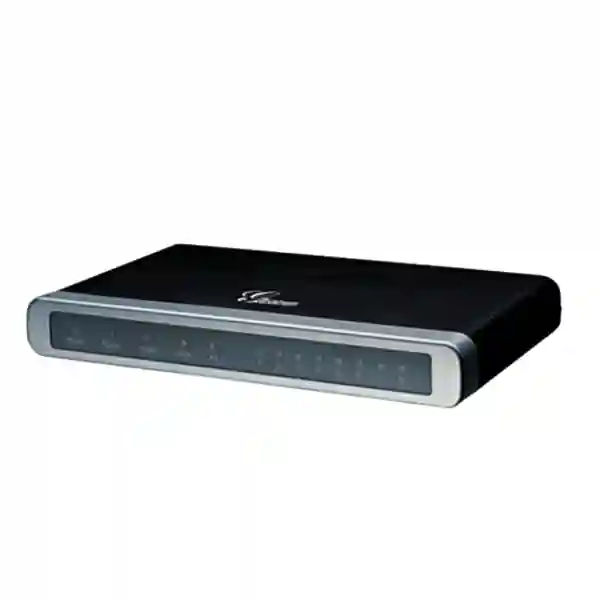
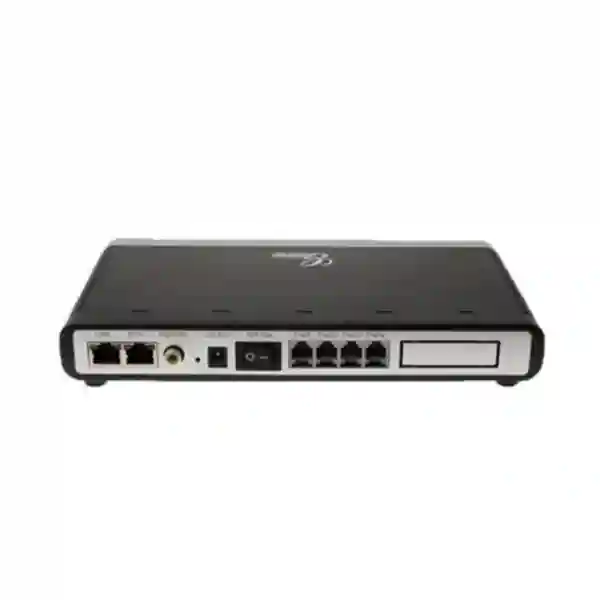
Grandstream GXW4104 4-Port FXO VoIP Gateway
The Grandstream GXW4104 is a four-port FXO VoIP gateway for organisations that need to bridge traditional public switched telephone network lines with a SIP-based IP PBX, softswitch or hosted voice platform. Instead of replacing every existing analogue line immediately, the gateway allows a business to preserve selected PSTN trunks while moving extension management, call routing and user features into an IP communications environment. This makes the GXW4104 especially relevant to migration projects, branch-office upgrades, legacy-line retention and hybrid telephony designs where analogue services still have a practical role.
What the Grandstream GXW4104 does
Grandstream positions the GXW410x series as an analog FXO gateway family that converts between SIP/RTP IP calls and traditional PSTN calls. The GXW4104 provides four FXO ports, while the related GXW4108 provides eight. In practical terms, each FXO port is intended to connect to an incoming analogue telephone line. The gateway then presents those lines to a compatible SIP environment so that an IP PBX can route calls to extensions, queues, reception groups or other destinations according to the PBX design.
This distinction matters because an FXO gateway is not the same as an FXS gateway. FXO ports receive service from analogue telephone lines; FXS ports deliver analogue station service to devices such as analogue handsets or fax machines. Buyers should therefore confirm whether the project is about bringing PSTN trunks into an IP PBX or connecting analogue endpoints to an IP network. For organisations planning a broader voice migration, Fourteck Tanzania’s integrated business technology overview explains how IP telephony, switching, firewalls and supporting infrastructure fit together instead of being treated as isolated purchases.
Preserve analogue trunks
Keep up to four existing PSTN lines available to a SIP-oriented communications environment when immediate migration of every line is not desirable or feasible.
Centralise call control
Allow the IP PBX or SIP server to handle extensions, inbound destinations, outbound routing and business call flows while the GXW4104 performs media conversion.
Support phased migration
Use hybrid voice architecture where legacy analogue lines and newer IP endpoints must operate together during a staged transition.
Verified GXW4104 technical highlights
| Area | Verified capability | Buyer relevance |
|---|---|---|
| Telephone interfaces | 4 RJ11 FXO ports | Suitable when the requirement is up to four analogue PSTN trunks. |
| Network interfaces | Dual 10/100 Mbps RJ45 ports | Supports connection to the IP network used by the PBX and voice infrastructure. |
| Signaling | SIP, including independent account handling per port | Designed for SIP PBX and softswitch environments. |
| Voice codecs | G.711, G.723, G.726, G.729A/B/E, G.728 and iLBC | Useful for interoperability and bandwidth planning across different voice systems. |
| Fax | T.38 fax relay with fax pass-through options | Relevant where analogue fax workflows still need to coexist with VoIP. |
| Quality and VLAN | DiffServ, ToS and 802.1p/Q VLAN tagging | Supports voice traffic prioritisation and segmentation in managed networks. |
| Security | SRTP media protection | Adds encrypted media capability where the wider SIP platform and configuration support it. |
| Provisioning | TFTP and HTTP provisioning | Can simplify repeatable configuration in managed deployments. |
| Power-loss behavior | PSTN failover on power failure | Useful to consider in continuity planning, while the complete site power design should still be reviewed. |
The GXW410x family is now listed by Grandstream in its product archive. That makes lifecycle validation an important part of any new quotation. A project should confirm whether the specific GXW4104 remains appropriate for the intended environment, whether a current alternative should be considered, and whether firmware, replacement and long-term support expectations are acceptable. Fourteck can help place this decision in the wider context of the customer’s IP PBX, network and analogue-line requirement rather than treating the gateway model in isolation.
Integration and deployment planning
A successful FXO gateway deployment begins with the analogue side as much as the IP side. The installer needs to identify the exact PSTN lines, how caller ID is delivered, the local call-progress tones, whether inbound and outbound routing must be separated by line, and what happens when a line is busy or unavailable. The GXW4104 then needs a clear relationship with the SIP server or IP PBX. Registration, channel mapping, dial plans, inbound destinations and outbound rules should be documented before cutover.
On the network side, voice quality depends on more than codec selection. Stable LAN connectivity, correct VLANs where used, suitable Quality of Service, DNS and addressing, firewall behavior, and reliable power all contribute to predictable calling. Fourteck Tanzania’s technology services page is relevant for organisations that need installation, configuration, testing and wider integration rather than hardware-only procurement. Buyers can also browse the Fourteck Tanzania technology shop when planning the surrounding IP telephony, switching and network components.
Lifecycle note before purchase
Because Grandstream includes the GXW410x in its product archive, procurement should confirm the business reason for choosing this model rather than assuming it is the newest option. Existing installed-base compatibility, replacement needs or a proven PBX template may justify the choice, but new projects should compare the GXW4104 with current alternatives when practical.
Who should consider the GXW4104?
Small and medium offices
Businesses retaining one to four analogue trunks while moving desk users to SIP phones or a modern IP PBX can use an FXO gateway as the bridge between the two environments.
Branch migration projects
A branch may keep existing local PSTN lines while centralising call routing, extension numbering or administration on a SIP platform.
Legacy-line retention
Where a telephone number, analogue service or operational process must remain, the gateway can connect that legacy line to the IP call-control layer.
Grandstream GXW4104 Tanzania
For organisations searching for the Grandstream GXW4104 in Tanzania, the most useful starting point is to define why analogue PSTN lines still need to remain in the voice architecture. Many businesses modernise telephony gradually rather than through an immediate all-IP replacement. A four-port FXO gateway can be relevant when the company has one to four analogue lines that still carry published numbers, incoming customer calls, backup calling or specialised workflows, while the internal extension system has moved to SIP. In this design the GXW4104 acts as the boundary between the telephone network and the IP PBX, allowing the PBX to apply call routing, user extensions and business logic to calls arriving over those legacy trunks.
A Tanzania deployment should not be based only on the number of ports. The analogue line characteristics, caller ID method, call-progress tones, PBX compatibility and dial-plan requirements must be reviewed. Network planning also matters. The voice VLAN, switch configuration, IP addressing, firewall rules and Quality of Service should be consistent with the rest of the telephony environment. Where the gateway supports business-critical inbound calls, power continuity for the gateway, switching and PBX should be considered as a complete system. The device’s PSTN failover capability is useful, but it does not replace a broader continuity plan that accounts for the rest of the communications infrastructure.
Procurement teams in Tanzania should also recognise the product lifecycle position. Grandstream currently lists the GXW410x family in its archive, so a quotation request should state whether the requirement is for replacement of an installed GXW4104, compatibility with an established configuration, or a new deployment where a current model might also be evaluated. This prevents a purchase decision from being driven by a familiar model number when the long-term requirement may be better served by another product. Fourteck Tanzania can review the gateway together with the IP PBX, endpoints and LAN design. The Fourteck Tanzania approach emphasises compatibility and lifecycle planning, which is especially relevant for archived voice hardware.
When requesting a Grandstream GXW4104 Tanzania quotation, include the number of active PSTN lines, PBX make and version, number of extensions, inbound call destination, outbound dialing requirement, caller ID expectations, fax use if any, and whether the gateway replaces an existing unit. That information allows a more meaningful review than asking for price alone. It also helps identify accessories, network work or configuration tasks that may be required around the gateway so the final deployment is usable rather than simply delivered.
Grandstream GXW4104 Dar es Salaam
Dar es Salaam buyers considering the Grandstream GXW4104 are often evaluating a practical migration problem: how to keep familiar analogue telephone lines while gaining the call-management benefits of an IP PBX. The four FXO ports make the gateway relevant to offices with a modest number of PSTN trunks, including professional firms, retailers, hospitality operations, service companies and branch offices that still receive calls on established analogue numbers. Instead of connecting those lines to a traditional PBX, the lines can terminate on the GXW4104 and be presented to a SIP platform that manages extensions, reception routing, ring groups, queues or after-hours destinations.
For a Dar es Salaam site, a useful technical survey should document each PSTN line and the business purpose it serves. One line may be a primary published number, another may be a direct departmental number, and another may exist mainly for fallback or legacy workflows. Channel mapping can then reflect actual operational priorities. The IP PBX should be configured with clear inbound and outbound rules, and test calls should verify caller ID, answer supervision, disconnect detection and audio quality. Because analogue trunks can behave differently from pure SIP trunks, tuning may be required before the system is considered ready for production use.
The surrounding network is equally important. A busy urban office may have IP phones, Wi-Fi, cloud applications, surveillance traffic and user data sharing the same infrastructure. Voice should therefore be designed with appropriate VLAN and QoS policies where required, and the gateway should have a predictable IP address and documented switch port. Power protection is worth planning because an IP PBX solution depends on several components, not only the gateway. UPS-backed switching and PBX infrastructure can help maintain service through short interruptions where that matches the site’s continuity requirements.
A Dar es Salaam procurement request should identify whether the GXW4104 is being sourced as a direct replacement or as part of a new architecture. Since the series is archived by the manufacturer, the project should verify lifecycle suitability and compare current alternatives where appropriate. Use the verified Fourteck Tanzania enquiry page to provide the model, quantity, current PBX, PSTN line count and expected call flow. This makes it easier to assess compatibility and quote the complete requirement rather than treating the gateway as a standalone box.
Grandstream GXW4104 Mwanza
For businesses in Mwanza, the Grandstream GXW4104 can be useful where a local office still depends on analogue telephone lines but wants a more manageable IP-based extension system. A four-line FXO gateway can fit a branch or headquarters environment that needs to retain existing PSTN trunks while introducing SIP desk phones, software clients or centralised IP PBX features. The key advantage is architectural: the public telephone line remains available, but call distribution can move into the PBX where administrators can control extensions, ring patterns, office-hour rules and department destinations in a more structured way.
A Mwanza deployment should begin with line discovery. Confirm how many live analogue lines exist, which numbers are customer-facing, whether any line is dedicated to fax or another service, and whether inbound caller ID must pass through to users. The GXW4104 supports four FXO connections, so buyers should leave room for realistic growth. A site already using four active trunks may want to compare the eight-port GXW4108 or a current-generation alternative instead of building a design with no expansion capacity. Port count should therefore be considered together with expected business growth and the manufacturer’s current product lifecycle.
Network quality is another practical issue. Voice packets are relatively light compared with video or large file transfers, but they are sensitive to delay, packet loss and jitter. Managed switching, sensible VLAN separation and traffic prioritisation can help when the LAN also carries other business applications. If the PBX is hosted at another location or in the cloud, the WAN path becomes part of the voice design and should be assessed for stability. The GXW4104 should be configured with appropriate SIP server settings, codecs, DTMF behavior and PSTN parameters for the environment, then tested under realistic calling conditions.
When sourcing in Mwanza, avoid treating a low unit price as the only decision factor. Configuration effort, compatibility, replacement strategy and the condition of existing lines can have more impact on the success of the project than a small difference in hardware cost. A useful quotation request should include the current PBX or intended SIP platform, number of analogue trunks, number of extensions, internet and LAN environment, and whether the project requires installation or only hardware. This enables the gateway to be evaluated as part of the complete communications system.
Grandstream GXW4104 Arusha
Arusha organisations evaluating the Grandstream GXW4104 may include hotels, tour operators, professional offices, NGOs, institutions and multi-site businesses that still receive important calls on analogue lines but want modern extension management. A hybrid arrangement can be practical when existing numbers remain familiar to customers or partners and immediate migration to another trunk type is not desirable. The GXW4104 provides the analogue-to-SIP bridge, while the IP PBX can handle internal extensions, call groups, reception logic and onward routing.
Hospitality and service-oriented environments should pay particular attention to call handling. A public number may need to ring reception first, overflow to another desk after a defined period and route differently after hours. Those behaviours belong in the PBX design, but the FXO gateway must deliver the incoming analogue call reliably and release it correctly when either party disconnects. Testing should therefore include inbound caller ID where supported by the line, busy conditions, abandoned calls, transfers, outbound dialing and power-cycle recovery. These checks are more useful than merely confirming that the gateway registers to the SIP server.
Arusha sites with distributed buildings or guest areas may also have mixed network traffic from Wi-Fi, surveillance and business systems. Voice gateway traffic should be placed on a predictable, documented network path. The GXW4104’s dual 10/100 Ethernet interfaces are appropriate to its generation, but the surrounding switch design should use modern management practices such as clear VLAN assignments, secure administration and controlled access. If the IP PBX is remote, WAN reliability and firewall configuration must be reviewed so that loss of internet connectivity does not produce unexpected call behaviour.
The manufacturer’s archive status means lifecycle planning deserves attention. A company replacing a failed unit in an established system may value exact model consistency. A new deployment may have different priorities, such as longer support runway or newer management features. The decision should therefore be based on the reason for selecting GXW4104, not simply name recognition. For Arusha projects, provide the line count, expected concurrent calls, PBX platform, site topology, business hours and desired inbound destinations so the quotation and configuration plan reflect real operational use.
Grandstream GXW4104 Dodoma
In Dodoma, the Grandstream GXW4104 can fit offices, institutions and service organisations that need to integrate up to four traditional telephone lines with an IP-based call platform. The gateway is particularly relevant where an organisation has already invested in SIP extensions or intends to modernise the internal phone system but cannot yet remove every analogue trunk. By terminating the PSTN lines on FXO ports, the business can preserve access to those lines while allowing the IP PBX to manage how calls are distributed internally.
A disciplined design starts with a call-flow map. For each incoming number, identify who should answer, whether calls should queue, what happens after hours, and whether a backup destination is required. Outbound rules should specify which users or departments may use the PSTN trunks and how the PBX selects among available lines. These decisions reduce confusion during configuration and provide clear acceptance criteria for testing. The gateway can support flexible dial plans and a range of codecs, but the PBX configuration ultimately determines how those capabilities are used in daily operations.
For institutional buyers, documentation can be as important as installation. Record the gateway IP address, administrator ownership, SIP profiles, FXO channel mapping, connected line numbers, firmware version and backup configuration. This makes future troubleshooting easier and reduces dependence on individual staff members remembering how the system was built. The equipment should also be installed in a controlled indoor environment with suitable power and network protection, consistent with the manufacturer’s guidance. Where calls are important to operations, consider UPS coverage for the gateway, switch and PBX rather than protecting only one component.
Dodoma procurement teams should also include lifecycle questions in the approval process because the GXW410x family is archived by Grandstream. Confirm the reason for selecting this model, the availability of replacement options and whether the existing PBX integration makes the GXW4104 uniquely desirable. For new systems, compare supported current alternatives before committing. A complete request should state the number of lines, existing PBX, user count, installation scope and any fax or caller ID needs so the commercial decision includes compatibility and deployment effort, not just device cost.
Grandstream GXW4104 UAE
For UAE projects, the Grandstream GXW4104 is most relevant where an existing office, branch or customer site still has analogue PSTN lines that must be connected to a SIP-based PBX. A four-port FXO gateway can be useful for replacement work, legacy integration or a staged migration where up to four analogue trunks remain part of the voice design. The buying decision should begin by confirming the service presented on those lines and the PBX platform that will receive the SIP side. The gateway itself is only one component in the path between the telephone provider and the user extension.
UAE integrators often work in environments with structured networks, managed switches and strict change control. In those deployments, the gateway should be given a documented IP configuration, placed in the intended voice VLAN where applicable and tested with the relevant firewall and PBX policies. Inbound and outbound call routing should be validated separately. If analogue lines are being retained mainly for fallback, the business should define exactly what fallback means: which users can access the lines, whether inbound calls still reach reception, and what happens when the main SIP trunk or internet path is unavailable.
The archived lifecycle of the GXW410x series makes replacement strategy especially important. Existing customer sites may need an exact GXW4104 because they already have a validated configuration template. New deployments should compare newer alternatives that may provide more current management, security or support characteristics. The Fourteck Grandstream UAE specialist site can be relevant when the project is centred on Grandstream voice equipment, while Fourteck UAE provides a broader regional technology context.
A useful UAE request for quotation should specify whether the requirement is new installation or replacement, the number of analogue lines, the PBX make and software version, the location of the PBX, extension count, expected call routing and any compliance or customer documentation requirements. This avoids purchasing a gateway that cannot be deployed as expected. It also allows the quotation to include configuration, network changes or alternative model recommendations where those are more appropriate for the project’s long-term goals.
Grandstream GXW4104 Uganda
Uganda businesses considering the Grandstream GXW4104 may be trying to preserve existing analogue trunks while standardising extensions on an IP PBX. A four-port FXO gateway can support that transition by accepting up to four PSTN lines and converting calls between the analogue and SIP/RTP domains. This can be useful for branch offices, professional firms, institutions and service organisations that have established telephone numbers or line arrangements they do not want to change immediately.
The line count should be reviewed carefully. A site with one or two lines has capacity for growth on the GXW4104, but a site already operating at four lines has no spare port. If additional lines are expected, buyers should compare the GXW4108 or a current alternative. Capacity planning should also include concurrent call expectations and the PBX’s ability to route those calls. The gateway supports multiple codecs and SIP profiles, but successful interoperability depends on matching the configuration to the PBX and local analogue line characteristics.
Regional deployments often involve multi-site standardisation. A company may want the same call flow, extension numbering and hardware approach across offices in Uganda and Tanzania. In that case, the Fourteck Uganda site provides a regional reference point while the Tanzania deployment can follow the same documentation principles. Standard templates can simplify support, but they should not ignore local line behaviour. Each site still needs its PSTN settings, caller ID handling and connectivity tested independently.
Before ordering, determine whether the GXW4104 is needed because of an installed base or because it appears in an older bill of materials. Since Grandstream archives the series, a new Uganda project should explicitly compare current models before final approval. Provide the line provider details, number of trunks, PBX platform, LAN design and required inbound destinations in the quotation request. This helps distinguish a simple replacement from a full voice migration project and reduces the risk of discovering compatibility or lifecycle concerns after procurement.
Grandstream GXW4104 Kampala
Kampala offices often have mixed generations of telephony: established analogue numbers, IP handsets, SIP trunks and users who increasingly work across branches or remotely. The Grandstream GXW4104 can serve a specific role in that mixed environment by bringing up to four analogue PSTN lines into the SIP call-control layer. It is most useful when the organisation has a clear reason to retain those lines, such as published customer numbers, staged migration or compatibility with an existing communications process.
For a busy Kampala office, inbound call handling should be designed before the gateway is configured. Reception may need calls from all four lines to enter a common queue, while another business may route each line to a different department. The PBX can implement those policies, but the FXO channels need consistent labels and mapping so administrators understand which physical line corresponds to which route. Outbound policies should likewise define which users can access PSTN trunks and whether the system should hunt across available lines when one is busy.
Network and security practices should keep pace with the voice system. Assign the gateway to a managed switch port, document its IP settings, restrict administrative access and maintain configuration backups. Where voice and data share the network, VLAN and QoS design can help protect call quality from competing traffic. If the PBX is hosted outside the office, the internet path and firewall become part of the voice dependency chain. Test calls should therefore cover normal conditions and selected failure conditions rather than only a single successful inbound call.
Kampala buyers should treat lifecycle status as a decision point. An archived model may still be appropriate when replacing a failed unit in a known design, but a fresh deployment should consider whether current hardware provides a better long-term path. A quotation should identify whether the gateway is a replacement, the current firmware and PBX platform if known, number of active PSTN lines, number of users and desired support scope. These details allow the commercial and technical teams to evaluate the complete outcome instead of supplying a model without context.
Grandstream GXW4104 Arua
For an organisation in Arua, the Grandstream GXW4104 can be considered when a smaller office or branch needs to keep existing analogue telephone lines while participating in a broader IP telephony strategy. Its four FXO ports make it appropriate to low-density trunk requirements rather than large call-centre environments. A branch can use the local analogue lines for inbound or outbound calls while the SIP PBX provides extension numbering and internal call management, helping the organisation avoid maintaining a separate legacy PBX solely for a few trunks.
The design should reflect local operational priorities. If connectivity to a central PBX is interrupted, what calling capability should remain at the branch? If the analogue lines are intended as resilience, the architecture needs a documented fallback call path rather than an assumption that the gateway alone provides continuity. Power should also be considered. The GXW4104 supports PSTN failover behavior on power loss, but switches, phones and the PBX may still depend on power. A site continuity plan should therefore define which components are protected and which services users can realistically expect during an outage.
For routine operation, the gateway should be installed indoors, labelled clearly and connected to a stable LAN. Administrators should record which physical FXO port corresponds to each telephone number and which SIP account or PBX route handles that channel. This is especially valuable at remote branches where support may be coordinated from another city. Clear documentation can reduce troubleshooting time when a line problem must be separated from a network or PBX problem.
An Arua procurement request should state the purpose of the analogue lines, expected extension count, central or local PBX location, internet dependency and whether remote support or installation is required. Because the GXW410x family is archived, buyers should also confirm whether the need is specifically for GXW4104 replacement compatibility or whether a newer gateway could be accepted. That one decision changes the procurement approach from simple part matching to lifecycle-aware solution selection and can prevent avoidable replacement work later.
Grandstream GXW4104 Mbarara
Mbarara businesses evaluating the GXW4104 are likely to benefit most when they already have analogue PSTN lines but want the flexibility of SIP extensions and IP-based call management. A four-port FXO gateway is a practical size for small branches, clinics, professional offices, retailers or service businesses that do not need a high-density trunk gateway. The device can connect the public telephone lines to an IP PBX so inbound calls reach the correct internal destinations and authorised users can place outbound calls through the retained trunks.
The project should define the role of every line before configuration. A primary number may serve reception, another may be a departmental line and another may be retained for operational backup. Mapping these purposes to physical FXO ports, SIP accounts and PBX routes produces a supportable configuration. Caller ID should be tested with the actual line service, and disconnect detection should be validated to prevent channels remaining occupied after a call has ended. Fax use, if present, should also be tested with the expected remote destinations rather than assumed to work under every network condition.
The LAN should support voice predictably. Even a small office can suffer call-quality problems if a saturated uplink, unstable switch or poorly configured router introduces packet loss or delay. Managed switching and a documented IP plan help separate telephony troubleshooting from general network problems. If the gateway registers to a remote SIP server, WAN stability and firewall behaviour need additional attention. The PBX, not the gateway alone, should also have appropriate security controls for user credentials, remote administration and exposed services.
For Mbarara procurement, include the number of active analogue lines today and the expected number over the next few years. If the business is likely to exceed four lines, another model may be more suitable. Because GXW410x is archived, new deployments should evaluate lifecycle implications and current alternatives. A good quotation request also includes the PBX model, network topology, required call features and installation scope. That context allows the supplier to identify whether the GXW4104 is genuinely the correct fit or simply the first model found in an older system design.
Grandstream GXW4104 Gulu
In Gulu, a Grandstream GXW4104 deployment can support a branch or independent office that wants to modernise internal telephony while continuing to use up to four analogue PSTN trunks. This hybrid approach is valuable when phone numbers are already known to customers or stakeholders, when a full carrier migration is not yet planned, or when analogue lines are retained as an alternate route. The gateway does not replace the PBX; instead, it connects the legacy line side to the SIP environment where the PBX manages extension behaviour and call distribution.
Smaller regional sites often benefit from simple, well-documented architecture. Avoid adding complex routing unless there is a business reason. Label each incoming line, assign a clear destination and define how outbound calls select an available channel. If the organisation has multiple branches, keep extension numbering and configuration conventions consistent so support teams can troubleshoot sites using a familiar pattern. Consistency can be more valuable than enabling every possible feature.
Resilience should be discussed in practical terms. If the WAN connection to a central PBX fails, users may lose SIP registration even though the local analogue line still exists. If power fails, the gateway’s PSTN failover feature can be relevant, but the actual user experience depends on the physical wiring and the rest of the telephony design. These scenarios should be tested where continuity is important. Local power conditions also make UPS planning for the network and call-control equipment worth considering.
A Gulu buyer should ask whether the GXW4104 is being selected for compatibility with an existing deployment or for a brand-new project. Grandstream’s archive listing means the answer affects lifecycle risk. Replacement projects may prioritise exact behaviour and minimal reconfiguration, while new projects may benefit from comparing current gateways. Include the active line count, PBX location, internet dependency, extension count, expected support model and any critical continuity requirement in the RFQ. This lets the technical review focus on whether the whole voice path will work reliably at the site.
Grandstream GXW4104 Kenya
Kenya organisations looking for a Grandstream GXW4104 may be maintaining older IP PBX installations, replacing a failed FXO gateway or integrating a limited number of analogue trunks into a SIP system. The four-port capacity is a natural fit for small offices and branches where one to four PSTN lines remain operational. The gateway can make those trunks available to the PBX while preserving modern internal features such as SIP extensions, call groups and central routing.
For Nairobi or other business locations, the technical assessment should distinguish between a replacement and a new deployment. Replacement work may need to preserve existing port mapping, IP settings and dial plans to minimise downtime. A new deployment has more freedom to compare models and redesign call flows. Because the GXW410x is listed by Grandstream in its product archive, new projects should not assume it is the preferred current option simply because it is familiar. Confirm whether the deployment benefits from matching an existing estate or whether a newer gateway is more appropriate.
Interoperability is central to the buying decision. The gateway is designed for SIP-based systems, but the specific PBX version, trunk configuration and analogue line settings still need validation. 3CX, for example, documents GXW4104 gateway configuration and emphasises local or routed network placement in its supported setup. Other PBX platforms may use different templates and routing methods. Testing should include inbound and outbound calls, caller ID, DTMF, transfers, disconnect behaviour and any fax use required by the business.
Multi-country organisations can use the Fourteck Kenya site when planning related projects in Kenya while maintaining consistent procurement and documentation practices with Tanzania. A quotation request should include the analogue line count, PBX platform, quantity, installation location and lifecycle expectations. That context allows the supplier to quote not just a gateway but the right solution for the installed voice environment.
Grandstream GXW4104 Kuwait
Kuwait projects involving the Grandstream GXW4104 are often best understood as legacy integration or replacement requirements. The gateway’s four FXO interfaces are designed to connect analogue PSTN lines to a SIP environment, so it is relevant where an office still uses a small number of traditional trunks alongside an IP PBX. This can support phased migration, retention of established telephone numbers or continuity arrangements that depend on specific analogue circuits.
Before procurement, confirm the exact line type and operational need. An FXO gateway is appropriate for network-provided analogue lines, not for connecting analogue handsets as extensions. Misidentifying FXO and FXS requirements is a common source of incorrect gateway purchases. The IP PBX architecture should also be reviewed for network placement, SIP registration, codec policy and inbound or outbound routing. Where the gateway is installed in an enterprise network, management access should be restricted and configuration backed up for future support.
Environmental and infrastructure planning should remain straightforward but disciplined. Install the device indoors, provide stable power, place it on the intended voice network and label the physical PSTN circuits. If the gateway is part of a disaster-recovery design, test the actual failure scenario instead of assuming PSTN failover alone guarantees business continuity. The availability of switches, PBX services, handsets and upstream telecom lines all influence whether calls remain possible during an incident.
Since Grandstream archives the GXW410x family, Kuwait buyers should state whether they specifically require the GXW4104 to match an installed system or are open to a current alternative. Replacement compatibility can be a valid reason to choose an older model, but a greenfield deployment should consider long-term supportability. An RFQ should include quantity, active PSTN line count, PBX platform, current gateway if replacing one, desired cutover approach and whether configuration assistance is needed. This provides enough information to distinguish a straightforward spare-unit requirement from a broader telephony redesign.
Grandstream GXW4104 Ghana
Ghana businesses evaluating the Grandstream GXW4104 can use it as a bridge between up to four analogue telephone lines and a SIP IP PBX. The device is best suited to low-density PSTN integration where the organisation still has practical reasons to keep analogue trunks. A company may be upgrading desk phones and call routing while preserving existing numbers, or replacing a previous gateway without redesigning the entire phone system. In both cases, the value of the GXW4104 comes from interoperability between legacy and IP voice domains rather than from acting as a standalone phone system.
A Ghana deployment should document line behaviour carefully. Caller ID delivery, busy tone detection, disconnect signalling and dialling patterns can vary, and the gateway’s FXO settings may need to be adjusted to match the local service. The PBX should have clear rules for how incoming calls are assigned and how outbound calls seize available PSTN channels. This configuration should be tested with real calls under normal and busy conditions so the system can be handed over with confidence.
If the organisation operates several branches, the GXW4104 can be incorporated into a standard branch telephony template, but each site should still have unique documentation for line numbers and port mapping. Network addressing, switch ports, administrator credentials and firmware should be recorded. If the central PBX is reached over a WAN, call quality and continuity depend on that link as well as the gateway. A resilient design therefore considers power, internet connectivity, switching and PBX availability together.
The archived product status means buyers should verify lifecycle fit before a new purchase. A replacement unit may be the simplest way to restore a known deployment, while a new site may be better served by a current product. Procurement teams should provide the line count, PBX model, quantity, expected support scope and reason for specifying GXW4104. That explanation helps the supplier evaluate whether exact model continuity is important or whether another gateway can meet the same business requirement with a longer support horizon.
Grandstream GXW4104 Nigeria
In Nigeria, the Grandstream GXW4104 can support organisations that need to integrate a small set of traditional PSTN lines with a modern SIP PBX. The four-port design is suited to branch offices, professional firms, hospitality sites and other businesses where analogue trunks remain part of the communications mix. Rather than maintaining a separate legacy PBX, the company can use the FXO gateway to bring those lines into a central call-control platform that manages extensions, reception routing and business rules.
Network and power resilience may be important considerations depending on the site. Voice gateways, PBXs, switches and IP phones should be considered as one service chain. Protecting only the GXW4104 with backup power will not preserve calling if the switch or PBX is unavailable. The same principle applies to network redundancy: if the SIP server is remote, the WAN link is part of the service. Projects that require analogue lines as a fallback path should define exactly how calls will be placed and received when other components fail, then test that design.
Operational support is easier when every channel is documented. Record the connected phone number, FXO port, SIP mapping, inbound route and outbound policy. Maintain a backup of the configuration and note the firmware version. If a future fault occurs, this information helps determine whether the problem is on the analogue line, gateway, LAN, WAN or PBX. For larger multi-site estates, a consistent documentation template can reduce support effort across locations.
Nigeria procurement teams should also review lifecycle. Grandstream lists GXW410x in its archive, so new projects should compare current gateway options instead of assuming an older model is automatically the best choice. Replacement projects may still benefit from exact GXW4104 compatibility. A quotation request should therefore explain the reason for the model, number of trunks, PBX platform, desired deployment date and configuration scope. This creates a clearer basis for technical validation and commercial comparison than a model-only price request.
Grandstream GXW4104 Seychelles
Seychelles organisations considering the Grandstream GXW4104 may be hotels, offices, institutions or service businesses that need to retain a small number of analogue telephone lines while operating a SIP-based internal phone system. The four FXO ports are well matched to modest trunk requirements and can help preserve established numbers or legacy services during a phased transition. The gateway’s role should remain clearly defined: it converts between PSTN analogue lines and SIP/RTP calls so the IP PBX can perform the higher-level call handling.
Island deployments can make replacement planning and spares strategy especially important. If the voice system depends on a specific gateway model, the organisation should consider how quickly a replacement could be sourced and whether a configuration backup is available. Grandstream’s archive status for GXW410x strengthens the case for lifecycle review. A business replacing an installed unit may prioritise compatibility, while a new project may prefer a current model with a longer expected support path. These are procurement decisions as much as technical ones.
The gateway should be installed in a suitable indoor communications area with stable power and network connectivity. In hospitality, inbound calls may need to reach reception reliably and outbound access may be limited by user role. In an office, different lines may correspond to departments or backup routes. The PBX should implement those rules clearly, and the gateway’s FXO ports should be labelled so support teams can identify the physical line associated with each route. Test caller ID, transfers, busy conditions and disconnect behaviour before handover.
When requesting a Seychelles quotation, include the number of analogue lines, PBX platform, expected call volume, site type, availability requirements and whether remote or on-site configuration is needed. If the gateway is part of a larger regional standard, mention related deployments so configuration can be kept consistent where practical. This information enables a more complete recommendation and helps determine whether the GXW4104 is still the right lifecycle choice for the site or whether an alternative should be proposed.
Selection guide: GXW4104 or another gateway?
Choose GXW4104 when
You have a validated requirement for one to four analogue PSTN trunks, the SIP platform is compatible, lifecycle considerations are acceptable, and exact model continuity is useful for an existing environment.
Compare alternatives when
The project is completely new, more than four lines may be required, newer management or security features are desired, or long-term product support is a major procurement criterion.
Do not use an FXO gateway when
The real requirement is to connect analogue handsets as extensions. That use case calls for FXS capability, so the line and endpoint requirement should be clarified before selecting hardware.
Related Fourteck resources for voice projects
The GXW4104 is normally part of a broader communications environment. The Fourteck Tanzania home page describes integrated IP PBX, networking and security planning. The Tanzania technology shop provides a starting point for related equipment, while the services section is relevant when configuration, installation and testing are required. Organisations operating across East Africa can also use Fourteck Kenya and Fourteck Uganda to coordinate related regional technology requirements.
These links are useful because a voice gateway decision frequently depends on other infrastructure: the IP PBX determines call control, the LAN affects voice quality, the firewall influences remote connectivity, and endpoint selection affects user experience. Reviewing the whole chain reduces the chance of buying compatible hardware that is deployed into an unsuitable environment.
Grandstream GXW4104 quotation checklist
Grandstream GXW4104 FAQs
What is the Grandstream GXW4104 used for?
It is a four-port FXO VoIP gateway used to connect analogue PSTN telephone lines with SIP-based IP PBX, softswitch or hosted voice systems. It converts calls between the traditional telephone-line side and the IP voice side.
How many PSTN lines can the GXW4104 connect?
The GXW4104 provides four RJ11 FXO ports, so it is designed for up to four analogue PSTN lines. If the project needs more capacity, the related GXW4108 provides eight ports, and current-generation alternatives should also be evaluated.
Does the GXW4104 work with SIP IP PBX systems?
Grandstream designed the GXW410x series for SIP-based IP PBX and softswitch interoperability. Compatibility still needs to be checked against the specific PBX platform, software version, network design and required call features.
Does the GXW4104 support fax?
Grandstream lists T.38 fax relay and fax pass-through capability for the GXW410x. Successful fax operation can depend on the complete network path, codec handling and remote fax environment, so it should be tested for the intended use case.
Is the GXW4104 a current Grandstream product?
Grandstream lists GXW4104/4108 in its product archive. For a new deployment, buyers should validate lifecycle suitability and compare current alternatives. Exact model replacement can still be relevant for installed systems where compatibility and minimal reconfiguration are priorities.
What is the difference between FXO and FXS?
FXO ports connect to analogue telephone lines supplied by a telephone network or PBX trunk side. FXS ports provide analogue station service to endpoints such as analogue phones. The GXW4104 is an FXO gateway, so it is intended for connecting PSTN lines rather than serving analogue handsets as extensions.
What information is needed for a quotation?
Provide the required quantity, number of analogue lines, PBX make and version, extension count, inbound and outbound routing requirements, location, fax or caller ID needs, and whether the request is for replacement or a new deployment.
Decision recap
The Grandstream GXW4104 remains relevant when a business specifically needs to connect up to four analogue PSTN trunks to a SIP environment. Its value is strongest in replacement, legacy integration and phased-migration scenarios. The most important buying questions are not simply whether the gateway has four ports, but whether the analogue line behaviour, PBX compatibility, call routing, network design and lifecycle expectations fit the project. Because the GXW410x is archived by Grandstream, new deployments should compare current alternatives before final approval.
For Tanzania, define the trunk count, PBX, extension plan and desired call flows before requesting a quote. That information allows Fourteck to assess whether GXW4104 is the right match and whether additional telephony, networking or configuration work is needed for a complete deployment.
Consultation panel
Tell Fourteck Tanzania how many analogue lines you need to connect, which IP PBX you use, whether this is a replacement or new design, and where the system will be deployed. That short project brief is usually enough to begin compatibility checking and quotation preparation without relying on assumptions about stock, delivery, support coverage or lifecycle.


Reviews
There are no reviews yet.