

Grandstream enterprise wireless networking
Grandstream GWN7672 Tanzania
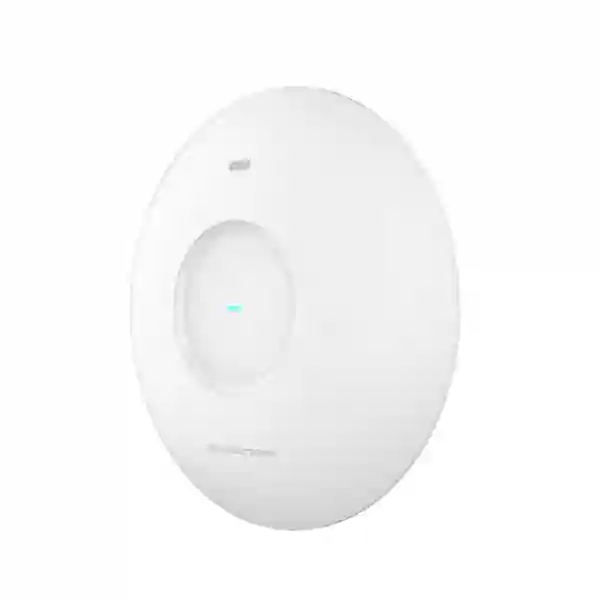
The Grandstream GWN7672 is a tri-band Wi‑Fi 7 access point built for businesses that need more wireless capacity, higher multigigabit performance and a practical path to modern 2.4GHz, 5GHz and 6GHz connectivity. Grandstream positions the GWN7672 as an enterprise-grade indoor access point for demanding medium-to-high density environments, with aggregate wireless throughput up to 11Gbps, support for as many as 384 concurrent Wi‑Fi clients and two 5GbE Ethernet interfaces for high-capacity wired connectivity.
For organisations in Tanzania, the value of the GWN7672 is not just the Wi‑Fi 7 badge. The important planning questions are whether the wired LAN can feed the access point at multigigabit speeds, whether PoE+ is available, how many users and devices will share each radio, which applications are sensitive to latency, and whether 6GHz operation is appropriate and permitted for the intended deployment. FourTeck helps buyers evaluate the access point as part of the wider network rather than as an isolated ceiling device.
IEEE 802.11be support with tri-band 2×2:2 MIMO and advanced features including Multi-Link Operation, 4K QAM, Multi-RU and preamble puncturing.
Grandstream specifies aggregate wireless throughput up to 11Gbps across the three radios, subject to client, channel, environment and regulatory conditions.
Designed to support up to 384 concurrent Wi‑Fi client devices, making capacity planning important for busy business environments.
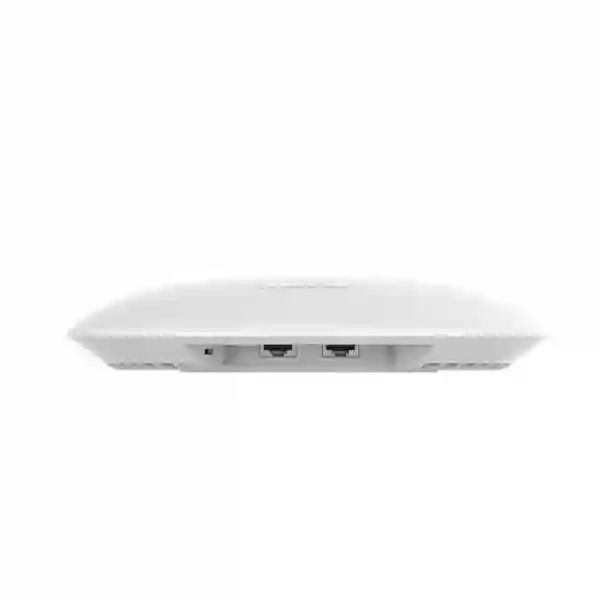
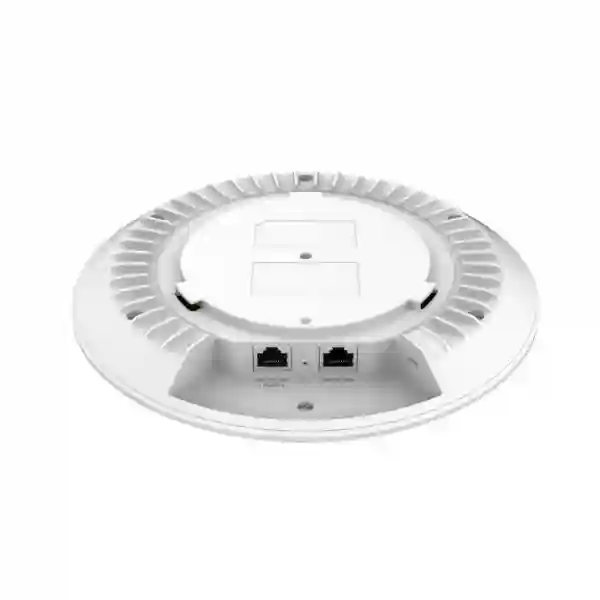
Dual 5 Gigabit Ethernet RJ45 interfaces give the AP a wired platform suited to multigigabit switching designs rather than legacy 1GbE-only networks.
What the Grandstream GWN7672 solves
Wireless networks often become unreliable not because the access point is defective, but because capacity, spectrum, uplinks and client behaviour were never planned together. A modern office may combine laptops, smartphones, collaboration systems, VoIP handsets, scanners, tablets, IoT devices and guest traffic. When many endpoints compete for airtime, adding raw internet bandwidth alone does not fix the radio layer. The GWN7672 addresses this type of requirement by combining tri-band operation with Wi‑Fi 7 capabilities intended to improve efficiency, capacity and responsiveness for compatible clients.
Its 2.4GHz radio remains useful for broad compatibility and many lower-bandwidth devices, while 5GHz continues to carry a large share of modern business traffic. The 6GHz radio adds clean spectrum possibilities for compatible devices where local regulation allows operation. Wi‑Fi 7 technologies such as Multi-Link Operation can allow compatible clients to make more effective use of multiple links, while wider channels and 4096-QAM can raise potential throughput in suitable RF conditions. These capabilities are most valuable when the rest of the design keeps up: switching, PoE, cabling, firewall performance, internet capacity and endpoint capability should all be reviewed.
Businesses considering the GWN7672 should therefore think in terms of a wireless system rather than a single AP specification. A successful deployment needs a coverage plan, expected client count, application profile, VLAN and security design, uplink strategy, management approach and maintenance process. FourTeck Tanzania presents the GWN7672 within that wider network context, which is especially important for multi-floor offices, hotels, education campuses, healthcare environments, retail sites and other spaces where wireless connectivity affects daily operations.
Grandstream GWN7672 key specifications
| Area | Verified GWN7672 specification | Planning significance |
|---|---|---|
| Wireless standard | IEEE 802.11 a/b/g/n/ac/ax/be | Supports legacy generations while introducing Wi‑Fi 7 for compatible clients. |
| Radios | Tri-band 2×2:2 on 2.4GHz, 5GHz and 6GHz | Allows segmentation of clients across three frequency bands where local rules permit. |
| Aggregate wireless rate | Up to 11Gbps | Requires realistic expectations: client capability, RF conditions and channel width affect actual throughput. |
| Clients | Up to 384 concurrent clients | Capacity should still be designed around application demand, airtime and user distribution. |
| Coverage | Up to 175 metres | Vendor maximum is environment-dependent; walls, floors, interference and client radios change practical range. |
| Ethernet | 2 × 5GbE RJ45 | Supports multigigabit access-layer designs and helps avoid a 1GbE uplink bottleneck. |
| Power | PoE+ IEEE 802.3at, maximum consumption 25W | Switch PoE budgets and cabling quality should be checked before deployment. |
| Security | WPA/WPA2, enterprise authentication options, WPA3, secure boot and device security controls | Supports modern business WLAN security designs when policies are configured appropriately. |
| SSIDs | 48 total, 16 per radio | Provides flexibility, but unnecessary SSIDs can consume airtime; use only what the design needs. |
| Management | Embedded controller, GDMS Networking and GWN Manager | Supports local, cloud and on-premises management approaches for different organisation sizes. |
Wi‑Fi 7 features that matter in business deployments
Wi‑Fi 7 is more than a faster peak data-rate specification. The GWN7672 supports Multi-Link Operation, 4K QAM, Multi-RU and preamble puncturing. In practical planning terms, these features are intended to help compatible clients use available spectrum more efficiently and maintain strong performance under demanding conditions. Multi-Link Operation is particularly important because Wi‑Fi 7 clients can use multiple links in ways designed to improve throughput, reliability or latency. That can benefit applications such as large file transfer, high-resolution collaboration, cloud workloads and other traffic that reacts badly to congestion.
The 6GHz radio is also strategically useful because it creates an additional spectrum option beyond crowded 2.4GHz and 5GHz channels. However, buyers should not assume that every existing device will use 6GHz. Older laptops, phones, scanners and IoT equipment may stay on 2.4GHz or 5GHz, and the permitted use of 6GHz varies by region. A sensible design therefore treats tri-band Wi‑Fi as a capacity tool rather than as a guarantee that every client immediately moves to the newest band.
The GWN7672 can use wide channel bandwidths, including up to 320MHz on 6GHz according to Grandstream’s specification. Wider channels can raise maximum throughput, but channel planning should account for neighbouring networks, available spectrum, client support and the need for predictable performance. In many enterprise environments, a narrower channel plan may provide better reuse and more consistent multi-AP performance than simply selecting the widest channel everywhere. Site conditions and user density should determine the final configuration.
Management, security and network integration
Grandstream provides several management paths for GWN wireless networks. The GWN7672 includes an embedded controller that can manage up to 50 local GWN access points, while GDMS Networking provides cloud-based management and GWN Manager offers an on-premises software approach for larger environments. This flexibility lets a smaller office run a compact local design while a multi-site organisation can centralise visibility and configuration. The preferred method should be decided before deployment so naming, site hierarchy, firmware policy, administrator access and backup procedures remain consistent.
Security should be designed around users and device roles. Staff, guests, voice endpoints and business devices do not necessarily need identical network access. VLAN segmentation, WPA3 where supported, enterprise authentication, controlled guest access and firewall policies can reduce unnecessary exposure between device groups. The access point also includes Grandstream platform protections such as secure boot, digital signature controls, a unique security certificate and a random default password per device. These are useful foundations, but they do not replace good network administration, credential management, firmware updates and monitoring.
The wired side is equally important. Two 5GbE ports make the GWN7672 suitable for multigigabit designs, but the access switch must provide compatible Ethernet speeds and a sufficient PoE+ budget. Cabling should be verified for the intended link rate, particularly in older buildings where existing cable runs may have been installed only with 1GbE operation in mind. For broader LAN planning, see FourTeck Tanzania’s integrated IT and networking solutions overview, which explains how Wi‑Fi, switching, firewalls and business applications fit into one infrastructure plan.
Who should consider the GWN7672?
The GWN7672 is most compelling where wireless capacity and long-term network readiness matter. Offices with collaboration-heavy teams, hospitality environments with many guest devices, education sites with dense classroom usage, clinics and healthcare facilities with mobile workflows, retail spaces with staff and customer connectivity, and branch environments consolidating cloud applications can all benefit from a carefully planned Wi‑Fi 7 deployment. The model is also relevant where organisations are upgrading to multigigabit switching and want the wireless layer to make use of faster uplinks.
It may be unnecessary for very small spaces with light traffic and mostly older client devices. In those cases, a lower-capacity access point can be more economical. The key buying decision is therefore not simply “Is Wi‑Fi 7 newer?” but “Will the users, applications, switch fabric and replacement cycle benefit from this class of access point?” A quotation should be built around coverage zones, concurrent users, endpoint mix, application types, expected growth, switching capacity and power availability.
Grandstream GWN7672 Tanzania
For Tanzanian organisations evaluating the Grandstream GWN7672, the strongest use case is a business wireless network that needs to remain useful as more Wi‑Fi 6E and Wi‑Fi 7 client devices enter the environment. Many offices still operate a mixed device population, so backwards compatibility matters. The GWN7672 supports earlier Wi‑Fi generations while adding 802.11be features for newer endpoints. This allows an upgrade project to improve infrastructure without requiring every laptop, phone or handheld device to be replaced immediately.
Procurement should begin with the site rather than with an arbitrary AP quantity. A floor plan, wall construction, ceiling height, expected user concentration and application profile all influence how many access points are appropriate. A reception area with guests, an open-plan office with cloud applications, a meeting suite using video conferencing and a warehouse with handheld scanners create different RF and capacity requirements. The vendor’s stated range of up to 175 metres is a useful technical reference, but it should not be treated as a guaranteed design radius inside real buildings. Concrete, glass, metal shelving and neighbouring radio networks can materially change coverage.
Tanzania buyers should also verify the wired foundation. Because the GWN7672 provides two 5GbE interfaces and can generate aggregate wireless rates far above 1Gbps, a legacy access switch may become the bottleneck. Multigigabit switch ports, PoE+ capacity, cable quality and firewall throughput should be checked as part of the project. If a business is modernising several locations, management through GDMS Networking or GWN Manager can make configuration consistency and remote visibility easier than treating each AP as an independent device.
FourTeck can assist with requirement definition, access-point selection, switching alignment, VLAN planning, guest and staff wireless design, installation considerations and quotation preparation. Customers can also review the FourTeck Tanzania technology shop when planning related network components. Final availability, lead time and commercial terms should be confirmed at quotation stage rather than assumed from an online listing.
Grandstream GWN7672 Dar es Salaam
Dar es Salaam businesses often operate in environments where wireless networks carry a large share of everyday work: cloud applications, video meetings, softphones, messaging, guest internet, mobile devices and operational systems. The Grandstream GWN7672 is well suited to organisations that want to refresh that wireless layer with tri-band Wi‑Fi 7 while keeping support for older clients. Medium and high-density offices, hotels, professional-services firms, retail operations, training facilities and multi-tenant spaces can use its client capacity and modern radio features as part of a structured WLAN design.
Dense commercial buildings make RF planning especially important. Nearby access points operated by other tenants can increase contention, and office interiors may contain reinforced concrete, partitions, glazing and equipment that change signal behaviour. A deployment should therefore be based on coverage and capacity zones, not just a distance figure. Meeting rooms and collaboration areas can need more airtime than corridors or storage rooms. If many users rely on video and cloud platforms at the same time, AP placement should minimise overloaded cells and roaming gaps.
The GWN7672’s two 5GbE ports are useful for modern LAN design, but they also create an infrastructure checklist. Confirm that the access switch can deliver multigigabit Ethernet where required, that its PoE+ power budget covers the planned AP count and that the copper cabling can support the intended link rate. The firewall and ISP connection should also be sized for actual business traffic. A fast wireless link does not improve an undersized internet circuit, and poorly designed guest traffic can consume bandwidth needed by business applications.
For Dar es Salaam procurement, provide floor plans, approximate user counts, current switch models, internet capacity and any existing wireless pain points when requesting a quotation. Those details allow the proposal to address infrastructure dependencies instead of quoting access points in isolation. Where the project includes branches outside Tanzania, management strategy should also be considered early so configuration, firmware and network policies stay consistent across sites.
Grandstream GWN7672 Mwanza
Organisations in Mwanza considering the GWN7672 may be planning a new office, expanding a hospitality or retail environment, modernising a campus or replacing an older Wi‑Fi system that struggles with growing device counts. The access point’s tri-band architecture is useful when a network contains a mixture of compatibility requirements and performance-sensitive clients. The 2.4GHz band can continue serving devices that need it, while 5GHz and 6GHz provide higher-capacity options for newer equipment where permitted and supported.
A common mistake in wireless purchasing is using one AP quantity for every floor or building type. Mwanza sites can include concrete structures, open halls, offices with partitions, warehouses with shelving and hospitality spaces with many individual rooms. Each of those environments affects RF propagation differently. For a stable result, access point placement should be based on both coverage and the number of active users expected in each area. High-density rooms may require more AP capacity even when signal strength is already strong.
The GWN7672 can support up to 384 concurrent clients, but that headline number should not be interpreted as a recommendation to place hundreds of heavy users on one radio cell. Real design depends on application load and airtime. A classroom doing browser-based work is different from a conference area where many users join video sessions at once. Voice and real-time collaboration also benefit from thoughtful QoS, roaming and channel planning. VLANs can separate staff, guest and device networks so access policies stay clearer.
For procurement in Mwanza, assess PoE+ switching and cabling before finalising the AP order. If the existing network is 1GbE-only, the GWN7672 can still be evaluated, but the business should understand where wired bottlenecks may limit the value of a Wi‑Fi 7 upgrade. A phased plan can coordinate AP deployment with future multigigabit switching, firewall capacity and structured cabling improvements rather than creating a mismatched network.
Grandstream GWN7672 Arusha
The Grandstream GWN7672 is relevant to Arusha organisations that need dependable indoor wireless capacity across business, tourism, education and professional environments. Hotels, lodges, conference venues and offices can generate highly variable demand: guest devices arrive and leave frequently, meeting spaces experience sudden traffic peaks, and staff applications need to remain predictable even while guest usage changes. A tri-band Wi‑Fi 7 platform gives network designers more spectrum options and modern features for capable clients, but the deployment must still be engineered around the building and user behaviour.
Hospitality environments are a good example. Guest satisfaction depends on more than a strong signal icon. Roaming between areas, internet capacity, authentication flow, room construction and the number of simultaneous devices all affect the perceived quality of Wi‑Fi. The GWN7672’s support for many clients can be useful, yet coverage through walls and between floors needs careful validation. Wider channels should not be selected blindly because channel reuse and neighbouring networks may influence overall performance.
For office and education deployments in Arusha, management is another important consideration. Grandstream’s embedded controller can manage up to 50 local GWN APs, while GDMS Networking and GWN Manager provide centralised alternatives. This makes the model suitable for organisations that want visibility across several access points without building a WLAN around manual per-device administration. Administrators can structure sites, review status and maintain configuration standards using the chosen GWN management approach.
Before ordering, list the expected number of rooms or coverage zones, peak concurrent users, application requirements, switch port speeds, available PoE+ budget and any guest-access needs. That information helps determine whether the GWN7672 is the right model and how many units are appropriate. It also helps identify related requirements such as multigigabit switches, firewall policies and uplink capacity before installation begins.
Grandstream GWN7672 Dodoma
For offices, institutions and growing organisations in Dodoma, the GWN7672 provides a current-generation wireless platform that can support both existing Wi‑Fi clients and newer Wi‑Fi 7 devices. This makes it attractive where infrastructure is expected to remain in service through several endpoint refresh cycles. Instead of replacing the WLAN every time laptop and smartphone capabilities improve, a well-designed deployment can provide a stronger foundation for future client generations while continuing to serve current equipment.
Government, education and corporate environments often value network segmentation as much as headline speed. Different user groups may require different access rights, and guest traffic should not automatically share trusted business resources. The GWN7672 supports multiple SSIDs and VLAN-aware designs that can be integrated with the wider switching and firewall architecture. However, administrators should avoid creating unnecessary SSIDs because each additional broadcast network consumes airtime. A smaller, well-defined set of wireless networks is usually easier to secure and support.
Physical installation also deserves attention. The model is intended for indoor wall or ceiling mounting, with mounting kits included. Ceiling placement can often provide more even coverage in offices, but the exact location should consider obstacles, ceiling height, cable routes and maintenance access. PoE+ simplifies power delivery by combining network connectivity and electrical power over the Ethernet cable, provided the switch has enough per-port and total power capacity.
A Dodoma quotation request is most useful when it includes building size, floor count, approximate users per zone, existing network hardware and required services such as staff Wi‑Fi, guest Wi‑Fi, voice, video conferencing or device connectivity. This enables a solution discussion around capacity and integration rather than simply comparing AP purchase prices. If the network is being built from the ground up, selecting switching and cabling alongside the access points can reduce later bottlenecks.
Grandstream GWN7672 UAE
Organisations with operations in the UAE can consider the Grandstream GWN7672 for high-capacity indoor wireless projects where multigigabit LAN infrastructure and newer client devices justify a Wi‑Fi 7 platform. Corporate offices, hospitality environments, retail sites and education spaces often require wireless connectivity that can handle dense device populations without forcing all traffic onto a single frequency band. Tri-band operation helps distribute compatible clients across 2.4GHz, 5GHz and 6GHz resources.
Regional regulatory rules remain important. Grandstream notes that not all frequency bands are usable in all regions, so 6GHz availability, channel choices and transmit-power settings should follow the applicable local regulatory domain. This is particularly relevant for multinational organisations that want to standardise one access-point family across countries. The hardware may be common, but radio configuration must still respect each deployment location.
The UAE market also includes many newer buildings with structured cabling and multigigabit switching, which can make it easier to realise the value of 5GbE AP uplinks. Older sites should still validate cable performance and PoE+ budgets before rollout. For cross-regional procurement and broader infrastructure planning, customers can review FourTeck UAE IT and networking solutions. That regional resource is useful when a Tanzania-based organisation also manages sites in Dubai or elsewhere in the UAE and wants a coordinated approach to network design.
When requesting a quote, specify the number of sites, expected AP count, current switch platform, required management model and user-density profile. A centralised GWN management strategy can be especially valuable for organisations with branches across countries because wireless policies, firmware and monitoring can be structured consistently while still allowing site-specific RF settings.
Grandstream GWN7672 Uganda
For Uganda deployments, the Grandstream GWN7672 is a strong candidate for organisations upgrading from older Wi‑Fi infrastructure to a platform designed for higher density and multigigabit networks. Its 384-client specification, tri-band radios and Wi‑Fi 7 capabilities make it suitable for offices, universities, hotels, healthcare sites and larger branch environments where the WLAN carries many business applications. The actual access-point quantity should be based on the building and traffic profile rather than maximum client count alone.
Businesses operating between Tanzania and Uganda may also value consistency. Using the same GWN family can simplify administrator knowledge, management processes and configuration standards. GDMS Networking can centralise management across many APs, while GWN Manager provides an on-premises alternative for organisations that prefer to keep the management platform under their own infrastructure control. The embedded controller can be useful for smaller standalone sites.
A deployment should confirm 6GHz regulatory availability in Uganda, switch port speeds, PoE+ capacity and cabling readiness. The access point’s 5GbE interfaces can exceed the capabilities of many older switches, so multigigabit LAN planning can be as important as the wireless upgrade. Staff, guest and device networks should also be mapped to appropriate VLAN and firewall policies. Where real-time voice or video is important, QoS and roaming behaviour deserve specific testing.
Customers managing Ugandan sites can also consult FourTeck Uganda networking and IT solutions for regional project context. For a useful quotation, provide location type, approximate floor area, peak user counts, current switching, intended applications and whether central management is required across more than one site.
Grandstream GWN7672 Kampala
Kampala offices and commercial environments can place heavy pressure on wireless networks because users increasingly depend on cloud software, video collaboration, mobile devices and guest connectivity throughout the working day. The GWN7672 provides the radio capacity and modern Wi‑Fi 7 framework needed for a more capable WLAN, but good results depend on planning around peak usage rather than average user counts. Conference rooms, training areas and shared workspaces can generate short bursts of very high demand.
In multi-tenant buildings, neighbouring networks can influence channel availability and interference. A professional WLAN design should therefore consider channel reuse, transmit power and AP placement instead of simply installing devices at equal physical intervals. 6GHz can provide valuable additional spectrum for supported clients, subject to local regulatory rules, while 5GHz remains central for broad modern-device compatibility. The 2.4GHz band should typically be reserved for devices that genuinely need its compatibility or propagation characteristics.
The wired LAN is a key part of the Kampala buying decision. Two 5GbE ports give the GWN7672 a strong uplink foundation, but the AP cannot create multigigabit wired capacity if connected to an older 1GbE switch. Organisations planning a major refresh should compare the cost of access points, multigigabit PoE+ switching, cabling validation and firewall capacity together. That produces a more realistic project budget and prevents one layer from becoming a bottleneck.
For multi-site Kampala organisations, a central management method can simplify operations. Standard SSIDs and security policies can be maintained across branches while radio settings remain site-specific. Procurement teams should request proposals that identify AP count assumptions, switch dependencies and management scope so technical responsibilities are clear before installation.
Grandstream GWN7672 Arua
In Arua, businesses and institutions considering a GWN7672 deployment should focus on resilience and maintainability as well as peak speed. A modern access point can provide substantial wireless capacity, but remote support becomes easier when the site has clear documentation, central monitoring and standardised configuration. Grandstream’s cloud and on-premises management options are therefore relevant for organisations whose network administrators are not physically present at every branch.
The GWN7672 can support up to 384 clients, yet smaller Arua sites may deploy it for headroom and lifecycle value rather than immediate high density. If a branch currently has 50 or 80 active devices but expects continued growth, Wi‑Fi 7 can provide a longer-term platform while remaining compatible with older Wi‑Fi generations. The important question is whether the rest of the network is prepared for that upgrade. PoE+ availability, switch uplink capacity and stable internet service all influence user experience.
For locations with several rooms or buildings, coverage planning should account for walls, metal roofing, shelving and other physical factors. The vendor’s up-to-175-metre coverage figure represents a maximum reference rather than a guaranteed indoor radius. In practice, several lower-power cells can provide better roaming and capacity than trying to cover an entire complex from one access point. Site survey information should guide the design whenever wireless connectivity is operationally important.
Procurement teams can improve quotation accuracy by providing floor layouts, user counts, critical applications and current switch information. If the project includes CCTV, IP phones or other PoE devices, total switch power requirements should include all endpoints, not just Wi‑Fi. This prevents a technically correct AP selection from failing because the switch’s shared power budget is insufficient.
Grandstream GWN7672 Mbarara
The Grandstream GWN7672 can suit Mbarara organisations that are consolidating more work onto wireless devices and want a higher-capacity platform for the next network cycle. Offices, education spaces, hospitality venues and healthcare environments often have diverse endpoint types, which makes tri-band operation useful. Newer Wi‑Fi 7 clients can benefit from advanced 802.11be capabilities while older devices continue using supported legacy standards.
A deployment should classify users into practical groups. Staff working on cloud applications and large files may need different performance than visitors using general internet access. Voice or video devices may be sensitive to delay and packet loss. IoT equipment may use older bands or security methods. Designing SSIDs, VLANs and access policies around these needs makes the WLAN easier to operate. The GWN7672 supports many SSIDs, but using a limited number of well-defined networks generally produces a cleaner design than broadcasting every department as a separate SSID.
The access point’s PoE+ power model simplifies installation by avoiding separate local power adapters at ceiling positions. However, the switch must provide enough total PoE budget for every connected AP and any other powered endpoints. Cable distance and quality should also be checked. When multigigabit speeds are expected, cabling that was adequate for older Ethernet installations may need testing before the project is finalised.
Mbarara buyers should ask for a solution that describes expected coverage, AP locations, switch dependencies, management method and support responsibilities. This is more useful than comparing access-point unit price alone. A well-scoped quotation can also identify where the existing firewall or WAN may constrain performance so network upgrades can be phased intelligently.
Grandstream GWN7672 Gulu
Gulu organisations planning new wireless infrastructure can use the GWN7672 as part of a scalable indoor WLAN for offices, institutions, hospitality facilities and commercial sites. The model combines tri-band Wi‑Fi 7, high client capacity and multigigabit wired connectivity, which makes it suitable where the network is expected to support increasing numbers of devices and more bandwidth-intensive applications over time.
The strongest design starts with user experience goals. If the requirement is stable cloud access across offices, the AP layout should prioritise consistent coverage and roaming. If the requirement is a training hall or event area, capacity during peak occupancy becomes more important. If guests and internal users share the same property, network segmentation and internet bandwidth controls should be planned. The GWN7672 provides the WLAN features needed for these scenarios, but policy and architecture determine how well they work in practice.
Management is also valuable for Gulu sites that are part of a wider organisation. Central visibility can reduce the need for manual local checks when an AP is offline, overloaded or misconfigured. A common template for SSIDs, security and VLAN mapping can be reused across branches while AP radio settings remain tuned for each site. This balance of standardisation and local RF optimisation makes larger deployments easier to maintain.
Before procurement, confirm how many users are expected at peak time, which devices support 5GHz or 6GHz, whether Wi‑Fi voice is important and what switching is already installed. These details influence whether the GWN7672 should be paired with multigigabit PoE+ switching immediately or introduced as part of a phased network modernisation project.
Grandstream GWN7672 Kenya
Kenyan organisations looking at the Grandstream GWN7672 can use it for enterprise wireless upgrades where Wi‑Fi 7 capacity, tri-band operation and multigigabit Ethernet align with the wider LAN strategy. Offices, hotels, schools, clinics, retail sites and distributed branch networks can all create high wireless demand, particularly as cloud applications and collaboration traffic become normal parts of everyday work.
For organisations operating in both Kenya and Tanzania, standardising on a common GWN platform can reduce operational complexity. Administrators can use consistent naming, SSIDs, VLAN mapping, security policies and firmware processes across countries, while still adapting channel plans to each site and local regulatory environment. Grandstream’s embedded, cloud and on-premises management options provide flexibility for small branches and central IT teams alike.
The Kenya procurement process should verify 6GHz rules, PoE+ switching capacity, 5GbE compatibility and structured cabling before installation. Maximum wireless throughput figures should be treated as platform capabilities rather than guaranteed application speed. Actual throughput depends on client capabilities, radio conditions, distance, channel width, interference and traffic patterns. Internet-connected applications are further limited by WAN bandwidth and firewall performance.
For regional IT planning, see FourTeck Kenya enterprise networking solutions. A useful quote request should include the site type, floor area, peak user count, existing LAN details and whether the project must integrate with other branches. This enables a proposal that covers the whole connectivity path rather than only the wireless hardware.
Grandstream GWN7672 Kuwait
The GWN7672 can be considered for Kuwait business environments that need high-density indoor Wi‑Fi and want to adopt the Wi‑Fi 7 generation. Corporate offices, hospitality sites, education environments and retail spaces can benefit from the access point’s three-radio design, 384-client capacity and multigigabit Ethernet. The model is especially relevant when organisations are refreshing switching and wireless infrastructure together rather than attaching a new AP to an unchanged legacy LAN.
Local regulatory requirements must guide radio configuration. Grandstream explicitly notes that available frequency bands vary by region, so planners should confirm which 6GHz channels and power levels are permitted for the deployment. A multinational template should therefore define security, SSIDs and management consistently while allowing RF parameters to follow each country’s rules.
Building layout is another factor. Thick walls, reflective surfaces and dense office partitions can reduce coverage or create multipath effects. The up-to-175-metre range should not be used as a direct planning radius. High-capacity wireless often performs better when AP cells are designed around realistic user density and roaming targets. Meeting rooms and crowded zones may require more access-point capacity even if they are physically close to other areas.
A Kuwait quotation should specify expected AP count, switch model, PoE+ budget, internet bandwidth, authentication method and whether central management is required. Where the GWN7672 is deployed with real-time collaboration or voice applications, QoS policy and end-to-end network performance should be reviewed so wireless improvements are not undermined elsewhere in the traffic path.
Grandstream GWN7672 Ghana
Ghana-based businesses evaluating the GWN7672 may be seeking greater wireless capacity, improved support for modern endpoints or a platform that can scale across several sites. The access point’s tri-band Wi‑Fi 7 design provides a strong technical foundation for offices, hospitality, education and other indoor environments, while compatibility with older Wi‑Fi standards helps organisations transition without replacing every endpoint at the same time.
Capacity planning should distinguish between connected devices and actively transmitting devices. A network can show a large client count while only a portion are busy, or it can have fewer users generating heavy video and cloud traffic. The GWN7672’s 384-client specification provides useful headroom, but application behaviour and airtime determine real-world performance. Site planning should therefore identify peak activity periods, not just total staff numbers.
When the AP is connected to a multigigabit PoE+ switch, the wired network can better match the capabilities of the Wi‑Fi 7 radios. If the existing switch offers only 1GbE, the deployment may still improve radio efficiency and client handling, but maximum aggregate performance will be constrained by the uplink. This is why a Wi‑Fi refresh is often a good point to review switching, cabling and firewall throughput together.
For organisations with branches in Ghana and East Africa, central GWN management can help standardise configuration and monitoring. Quote requests should identify all target countries and sites because regulatory settings, WAN conditions and support logistics may differ. The technical design can remain consistent while each site is tuned for its local environment.
Grandstream GWN7672 Nigeria
Nigeria’s large corporate, hospitality, education and multi-branch environments can create demanding wireless requirements, making the Grandstream GWN7672 relevant for projects that need high client capacity and a modern Wi‑Fi 7 platform. The access point can serve mixed client populations while providing newer devices with access to 802.11be features. This helps organisations adopt current infrastructure without forcing an immediate endpoint replacement programme.
Power and switching architecture should be included in the design. The GWN7672 uses PoE+ and can consume up to 25W, so a large AP rollout requires a switch PoE budget sized for the entire deployment. UPS protection for network switches can also be relevant where continuity matters, because an access point remains unavailable if its upstream PoE switch loses power. Redundant switching and internet links may be appropriate in sites where wireless access is business critical.
High-density deployments should avoid the assumption that one powerful AP can replace a properly distributed WLAN. More users in the same area means more airtime demand, and client radios typically transmit at lower power than infrastructure APs. Balanced cell sizes, roaming design and channel reuse can provide better service than relying on maximum range. Real-time voice and video should be tested under realistic load conditions.
For Nigerian procurement, the quote should identify building types, user concentrations, current switching, internet circuits and desired management architecture. If the organisation also operates in Tanzania, Uganda, Kenya or the UAE, a shared GWN deployment standard can simplify support while allowing country-specific wireless settings. This is particularly useful for businesses building repeatable branch-office designs.
Grandstream GWN7672 Seychelles
In Seychelles, hospitality and business environments can place unusual importance on guest experience and reliable wireless coverage. Hotels, resorts, offices and service businesses often need staff systems and guest internet to coexist without interfering with each other. The GWN7672’s tri-band Wi‑Fi 7 design can provide a high-capacity platform for such networks, particularly where newer client devices are common and multigigabit switching is available.
Hospitality Wi‑Fi should be designed around room layout, common areas and peak occupancy. Guest rooms may require more APs than open offices because walls and doors attenuate signals, while lobbies, conference areas and restaurants can create temporary density peaks. A single range figure cannot capture those variations. The GWN7672’s up-to-175-metre vendor range should therefore be treated as an environmental maximum, not a room-count estimate.
Network segmentation can separate guest traffic from business systems, and rate limits or firewall policy can help protect critical applications from uncontrolled bandwidth use. Central management is useful for properties with many APs because administrators need visibility into device status and client behaviour without checking each unit manually. Firmware and configuration standards should also be maintained so the WLAN does not drift into inconsistent settings over time.
Seychelles buyers should include switch capability, PoE+ budgets, internet bandwidth, expected guest density and any captive-portal requirements in the project brief. If multiple properties are involved, management architecture and site templates should be defined early. This ensures the access points form a supportable wireless system rather than a collection of independently configured devices.
GWN7672 installation and sizing checklist
Map offices, meeting rooms, reception areas, corridors, warehouses, guest areas and any high-density spaces. Note wall types, floor separation and obstacles that may influence RF propagation.
Use peak concurrent activity rather than total headcount. A training room full of active laptops has different capacity needs from offices where many devices remain mostly idle.
The GWN7672 provides two 5GbE interfaces. Verify switch port capability, uplinks, VLAN support and whether the LAN can move traffic without becoming the new bottleneck.
Confirm IEEE 802.3at PoE+ support and total switch power budget. Include every powered AP, phone, camera or other PoE device connected to the same switch.
Separate staff, guests and device classes according to business policy, but avoid unnecessary SSID proliferation that consumes airtime and complicates support.
Decide whether the embedded controller, GDMS Networking or GWN Manager best matches the number of sites, administrator workflow and preferred hosting approach.
How the GWN7672 compares with a basic Wi‑Fi access point
A basic access point is primarily purchased to extend wireless coverage. The GWN7672 is better evaluated as a capacity and infrastructure component. It adds a third radio band, Wi‑Fi 7 features, multigigabit Ethernet and central management options that become important when a WLAN supports large numbers of business devices. That does not automatically make it the correct choice for every small office; it makes it a more capable choice when the surrounding network and use case can exploit those capabilities.
The difference is also visible on the wired side. Connecting an 11Gbps aggregate wireless platform to an old 1GbE switch can still provide better radio features, but the uplink becomes a hard ceiling for traffic leaving the AP. A multigigabit PoE+ switch gives the access point more room to deliver concurrent traffic. This is why procurement teams should compare total project architecture instead of comparing AP prices without the switching layer.
Finally, central management changes the support model. A handful of independently configured low-cost APs may be acceptable in a very small site, but larger organisations benefit from consistent templates, monitoring and firmware control. The GWN ecosystem gives administrators several ways to centralise that work. The operational value can be as important as raw wireless throughput, especially across multiple branches.
Related FourTeck network planning
A Wi‑Fi 7 access point performs best when switching, security and structured cabling are planned as one system. For Tanzania projects, FourTeck can review existing LAN bottlenecks, PoE availability and VLAN architecture before the final AP quantity is confirmed. Where the organisation operates regionally, network standards can be reused across sites while radio configuration stays appropriate for each country and building.
The FourTeck network provides regional context through Uganda networking solutions, Kenya business IT solutions and UAE IT infrastructure solutions. These links are useful for organisations planning a standard architecture across East Africa and the Gulf rather than operating each branch as a completely separate technology environment.
Frequently asked questions about the Grandstream GWN7672
Is the GWN7672 a Wi‑Fi 7 access point?
Yes. Grandstream specifies IEEE 802.11be support and markets the GWN7672 as a tri-band Wi‑Fi 7 access point. It also supports older Wi‑Fi standards so mixed client populations can continue to connect.
How fast is the GWN7672?
Grandstream specifies up to 11Gbps aggregate wireless throughput. Actual user throughput is lower and depends on client capability, frequency band, channel width, distance, interference, traffic load, uplink speed and other environmental factors.
How many clients can the GWN7672 support?
The official specification states support for up to 384 concurrent Wi‑Fi client devices. That figure should be treated as device capacity, not a guarantee that hundreds of heavy users will all receive maximum throughput. Capacity planning should account for applications and airtime demand.
Does the GWN7672 support 6GHz?
Yes, the hardware includes a 6GHz radio. Grandstream notes that available frequency bands vary by region, so 6GHz operation and channel settings must follow the rules applicable to the deployment country.
What switch is needed for the GWN7672?
The access point supports two 5GbE RJ45 interfaces and PoE+ IEEE 802.3at. A multigigabit PoE+ managed switch is the natural match when the goal is to avoid a 1GbE uplink bottleneck. The exact switch depends on AP quantity, VLANs, uplink architecture and total PoE budget.
Can the GWN7672 be centrally managed?
Yes. Grandstream provides an embedded controller for up to 50 local GWN APs, GDMS Networking for cloud management and GWN Manager as an on-premises software management option. The right method depends on site count and administration preferences.
Is the GWN7672 suitable for hotels and offices?
It can be suitable for both, particularly where medium-to-high client density and modern wireless capacity are required. The AP count and placement should be based on the building, wall construction, user distribution, applications and roaming requirements rather than on a generic room or floor count.
Does Wi‑Fi 7 require every client device to be Wi‑Fi 7?
No. The GWN7672 supports earlier Wi‑Fi generations. Wi‑Fi 7 clients can use newer 802.11be capabilities, while older supported devices connect using the standards they understand. This makes staged endpoint upgrades possible.
Quotation checklist for Grandstream GWN7672 Tanzania
To prepare a useful commercial and technical quotation, provide the site location, floor plans if available, approximate area, peak concurrent users, number of floors, critical applications, guest-network requirements, existing access points, switch make and model, PoE availability, firewall model, internet bandwidth and any requirement for central management. For multi-site projects, include every branch that needs to be covered.
The resulting proposal can then address access-point quantity, switching dependencies, installation scope and management requirements instead of quoting hardware without context. Availability, lead time, price and final commercial terms should always be confirmed at the time of quotation.
Decision recap
Choose the GWN7672 when the project needs enterprise-grade indoor Wi‑Fi 7, tri-band capacity, support for a large client population, multigigabit Ethernet and flexible central management. It is a particularly good fit when the organisation is refreshing its network for several years of growth and expects newer Wi‑Fi clients to become increasingly common.
Do not choose it on the headline speed alone. Confirm the RF design, 6GHz regulatory conditions, switch capability, PoE+ budget, cabling, firewall and WAN. Those elements determine whether the network can translate the access point’s specifications into a reliable user experience.
For Tanzania, FourTeck can help turn the product selection into a workable deployment plan that covers AP placement, related switching, VLANs, security policies and management. That system-level approach is the best way to obtain value from a Wi‑Fi 7 investment.
Consult FourTeck about GWN7672 deployment
If you are planning a new office WLAN, replacing older access points or building a multi-site Grandstream GWN network, share the project scope before finalising the order. FourTeck can help identify whether the GWN7672 matches the required density, whether multigigabit PoE+ switching should be included and how the wireless network should integrate with guest access, business VLANs, firewalls and branch connectivity.
For related products and broader infrastructure options, review the FourTeck Tanzania shop or the FourTeck Tanzania solutions overview. A quotation can then be prepared around the real site requirement rather than a generic access-point count.


Reviews
There are no reviews yet.