
FortiGate Branch Firewall Solutions
FortiGate branch firewall solutions are designed for organisations that need to protect and connect remote offices, retail locations, clinics, schools, warehouses, hospitality sites, professional offices and other distributed business locations without creating a separate security architecture at every branch. Fortinet positions FortiGate as the security and networking foundation for Secure SD-Branch, combining next-generation firewall capabilities with Secure SD-WAN and integration with branch switching, wireless and resilient WAN options. For buyers in Tanzania, the practical value is the ability to design branch protection around real traffic, internet links, applications, users, cloud services, VPN requirements and management capacity rather than purchasing a firewall only by headline throughput.
FourTeck Tanzania helps customers turn that architecture into a procurement plan. The process can include FortiGate sizing, subscription planning, WAN design, VPN requirements, segmentation, branch standardisation, central management, logging and the surrounding network infrastructure. Availability, model lifecycle, subscription terms and final compatibility should always be confirmed for the exact quotation because Fortinet portfolios and licensing options can change over time.
What a FortiGate branch firewall solution is designed to solve
A branch is no longer a simple router connected to a few desktops. Modern sites may use SaaS applications, cloud storage, VoIP, video meetings, Wi-Fi, cameras, payment systems, IoT devices and remote administration. Fortinet’s Secure SD-Branch approach addresses this broader environment by using FortiGate at the branch edge and extending policy into wired and wireless access through FortiSwitch and FortiAP, with FortiExtender available where LTE or 5G resilience is part of the design. Fortinet also describes FortiManager as a platform for centralised provisioning and management across FortiGate and related branch devices, while FortiAnalyzer can collect traffic and security events for reporting, visibility and alerting.
For procurement teams, this means the firewall should be evaluated as part of a branch operating model. A small office with one internet circuit and basic cloud use has different needs from a busy branch with dual WAN, many VPN tunnels, local servers, guest Wi-Fi and security inspection. A multi-country organisation also needs to consider repeatable policies, naming, templates, remote troubleshooting and how new sites will be commissioned. Those operational questions often matter as much as the appliance itself.
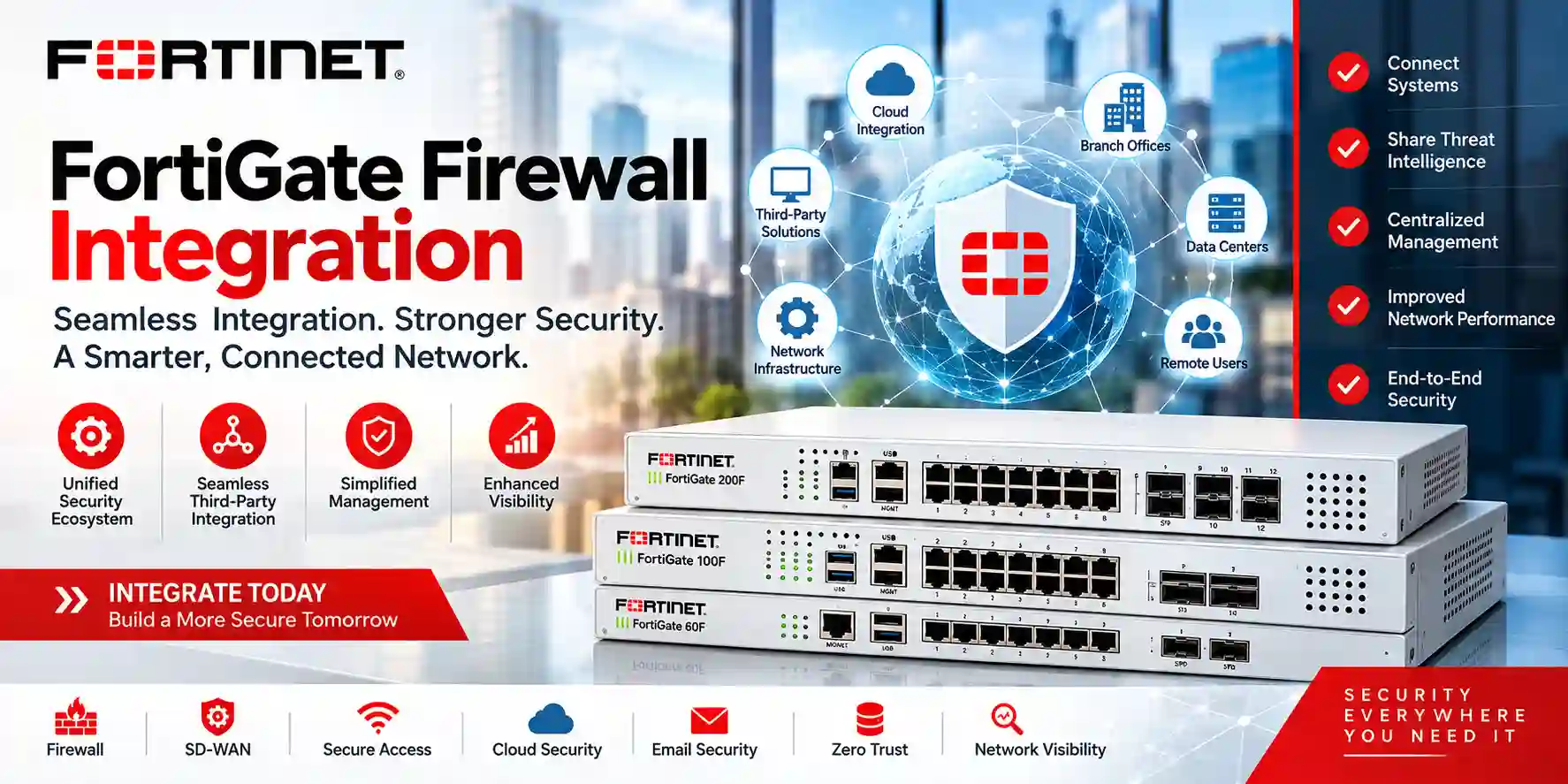
Core FortiGate branch capabilities to evaluate
Next-generation firewall
FortiGate provides the branch policy enforcement point for internet access, application control, intrusion prevention, web and DNS security functions, segmentation and other security controls when the appropriate services and configuration are in place.
Secure SD-WAN
Fortinet integrates SD-WAN with FortiOS so branches can use multiple WAN paths, monitor link quality and steer application traffic according to policy while applying security at the same edge.
VPN and secure access
Branch designs commonly need encrypted site-to-site connectivity and controlled remote access. The exact VPN or zero-trust access method should be selected according to user identity, endpoint posture, applications and the wider access architecture.
LAN and Wi-Fi integration
Fortinet’s Secure SD-Branch design can integrate FortiSwitch and FortiAP through FortiGate, helping organisations coordinate security, wired access and wireless policy rather than operating each layer as a separate island.
Central management
FortiManager is intended for centralised device and policy administration, template-driven deployment and multi-site operations. It becomes increasingly relevant as branch count, change frequency and consistency requirements grow.
Logging and analytics
FortiAnalyzer can collect and retain traffic and security events, produce reports and support alerting. Logging requirements should be planned from retention, investigation, audit and operational visibility needs.
FortiGate branch model selection and sizing
Fortinet’s current small-business and branch firewall portfolio includes models such as FortiGate 30G, 40F, 50G, 60F, 70G, 80F, 90G, 120G and 200G. That list is useful as a starting point, but it should not be treated as a universal recommendation. The correct appliance depends on the traffic that will actually cross the firewall and the security functions that will be enabled. A model that appears sufficient for raw firewall throughput can become a poor fit when the project adds encrypted traffic inspection, intrusion prevention, application control, web filtering, many VPN users, multiple WAN circuits, high session counts or future bandwidth upgrades.
| Sizing input | Why it matters | What to confirm before quote |
|---|---|---|
| Internet bandwidth | Defines the traffic ceiling the branch may need to inspect. | Current speed, planned upgrade, primary and backup links. |
| Users and devices | Influences sessions, policies, Wi-Fi, switching and growth. | Staff, guests, phones, cameras, IoT and servers. |
| Security inspection | Advanced controls consume processing capacity. | IPS, malware, web, DNS, application and encrypted inspection needs. |
| VPN and SD-WAN | Branch tunnels and path steering shape architecture. | Number of sites, tunnels, remote users and WAN circuits. |
| Interfaces and expansion | Physical design can rule out an otherwise capable model. | Copper, fibre, port speed, HA and adjacent switching. |
A useful quotation therefore starts with workload rather than model number. Where the customer already has a preferred FortiGate, FourTeck can still review whether the requested model aligns with the site profile and whether the required security services, management and support subscriptions have been included.
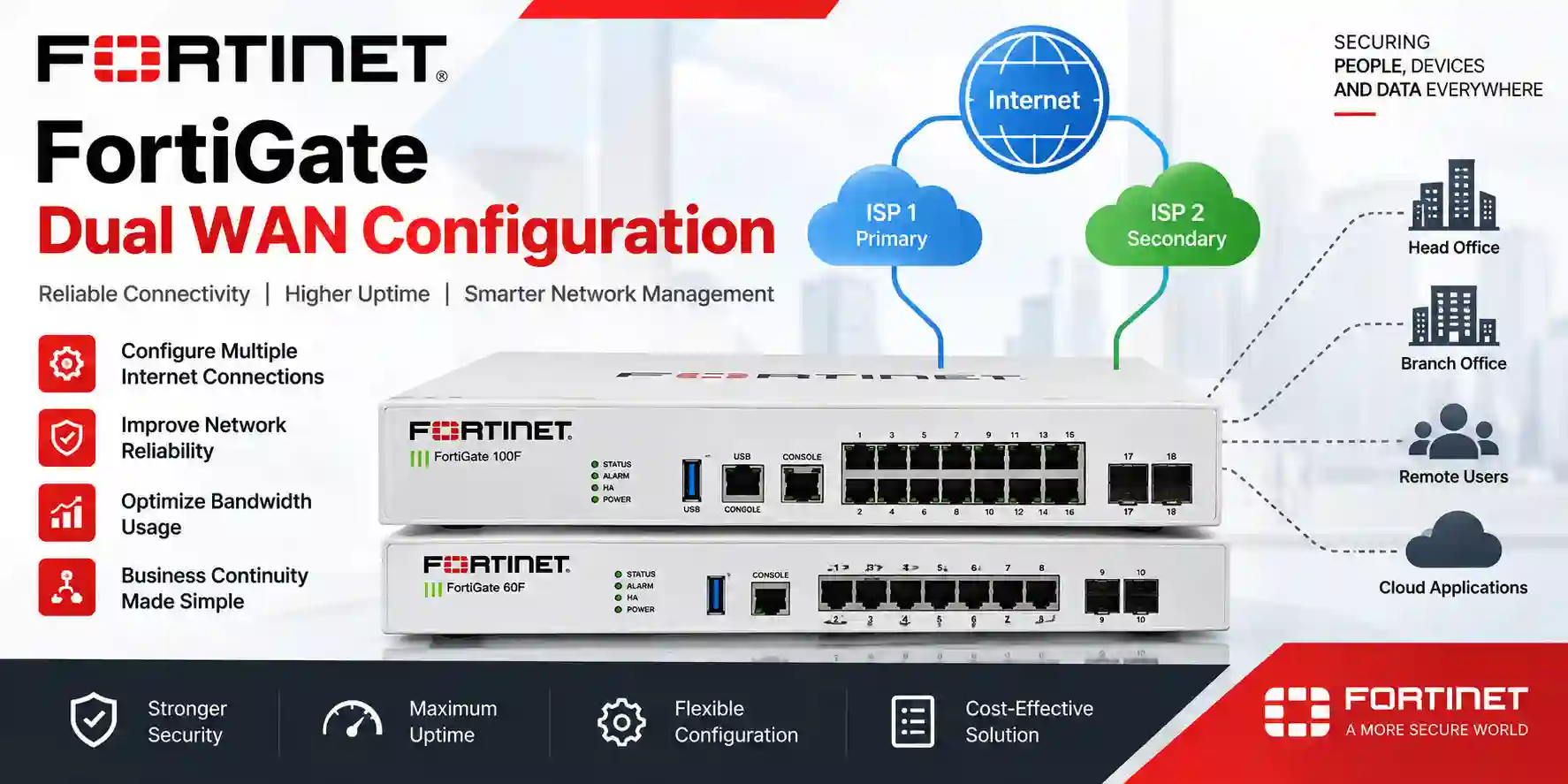
Secure SD-WAN, dual internet and branch resilience
Branch connectivity frequently depends on more than one internet service. Fortinet Secure SD-WAN can monitor multiple paths and apply traffic-steering rules so applications use links according to performance and policy. This can support a branch design that combines fibre, broadband, MPLS, LTE or 5G depending on what services are actually available at the location. The value is not simply failover. A well-designed SD-WAN policy can distinguish between business-critical traffic, cloud applications, general browsing and other flows, while the firewall continues to enforce security at the branch edge.
Resilience still needs engineering discipline. Two links from different providers may share the same physical route, power source or building entry point. An LTE backup can depend on local signal quality. Cloud applications may behave differently when public IP addresses change. VPN design, DNS, inbound services and session persistence can all influence failover behaviour. For important branches, testing should include realistic outage scenarios rather than assuming that a second circuit automatically guarantees continuity.
FortiGuard, FortiCare and lifecycle planning
A branch firewall purchase should include the lifecycle, not only the hardware appliance. FortiGate security functions can depend on FortiGuard security services, and support entitlement is associated with FortiCare offerings. The exact bundle names, service coverage and subscription periods offered for a model should be confirmed at quotation time. Procurement teams should record device serial information, registration ownership, subscription expiry, renewal responsibility and the administrator account structure so protection and support do not become uncertain months after deployment.
Firmware planning is also part of lifecycle management. Updates should be reviewed in the context of Fortinet guidance, security advisories, feature dependencies and the customer’s change process. Multi-branch environments benefit from configuration backups, standard naming, documented policy ownership and a controlled method for rolling changes from test sites to production branches. Where central management is required, FortiManager can help standardise policies and deployment workflows, while FortiAnalyzer can support central log collection and reporting. The right architecture depends on scale, retention requirements, operational staffing and whether management is on-premises, virtual or cloud-hosted.
Tanzania FourTeck resources for branch firewall projects
For broader infrastructure planning, the FourTeck Tanzania home page explains how firewall security fits with networking, Wi-Fi, servers, telephony and other business systems. The FourTeck Tanzania technology shop provides product-selection guidance across firewalls, switches, wireless access points, servers and supporting infrastructure. The technology services page is useful when a branch project requires design, integration, configuration or lifecycle support rather than a hardware-only purchase.
Customers evaluating the supplier can review About FourTeck Tanzania, while the verified FourTeck Tanzania contact page is the correct place to submit a model, quantity, branch count, internet bandwidth and security requirement for quotation. The current site exposes five genuinely distinct, relevant internal page URLs for this topic; additional product-specific Tanzania category URLs were not publicly verifiable during research, so none have been invented.
Regional FourTeck network for multi-country procurement
Organisations that operate across borders may need a consistent branch-security standard while still handling procurement and deployment country by country. FourTeck maintains verified regional or specialist websites including FourTeck Kenya, FourTeck Uganda, the specialist Fortinet UAE site, FourTeck Africa, FourTeck Kuwait, FourTeck Ghana and FourTeck Nigeria. These regional links are useful when a project spans offices in more than one market and the customer wants to coordinate requirement gathering under a common technical standard.
A multi-country standard should define what remains common—security policy principles, VPN architecture, logging, identity, branch templates and documentation—and what can vary by site, such as ISP type, interface requirements, power conditions, floor layout, local application dependencies and available support options. Standardisation is valuable when it makes operations clearer; it should not force an undersized or unsuitable branch design merely to keep every location identical.
FortiGate Branch Firewall Solutions Tanzania
Tanzania is the primary market for this page, and branch firewall planning here should begin with the diversity of business environments rather than a generic user-count rule. An organisation may be connecting a headquarters in Dar es Salaam with offices, depots, clinics, retail branches, schools or project sites elsewhere in the country. Those locations can have different internet services, link quality, power conditions, rack space and access to local IT staff. A FortiGate branch design can provide a repeatable security baseline while still allowing each branch to use the WAN links and physical interfaces that make sense for that site. The initial discovery should record current internet bandwidth, expected upgrades, staff and device numbers, cloud applications, VPN requirements, guest access, cameras, IP phones, servers and any public-facing services. This produces a more reliable sizing input than simply choosing a firewall because it is commonly used by another company of similar size.
For Tanzanian organisations with several offices, Secure SD-WAN can be considered when sites have two or more available WAN paths or when application steering is important. The design should document which traffic receives priority, what constitutes a failed or degraded link, whether branches connect directly to cloud services, and how tunnels to headquarters or data centres are built. If Wi-Fi and switching are being refreshed at the same time, FortiSwitch and FortiAP integration can reduce the number of independently managed layers. Where many FortiGates will be administered, FortiManager may help apply templates and policy consistently, while FortiAnalyzer can support central logging and reporting. These components are optional architectural choices, not automatic requirements for every small branch.
A Tanzania quotation should therefore specify the branch list, exact model or sizing inputs, required subscriptions, support term, interface needs, WAN types, VPN scope, logging expectations and installation responsibilities. Buyers should also confirm whether existing switches, access points and UPS systems remain suitable. FourTeck Tanzania’s integrated services overview is relevant for customers who want firewall selection coordinated with the wider network. The goal is a branch standard that is secure, supportable and expandable without creating unnecessary complexity at smaller sites.
FortiGate Branch Firewall Solutions Dar es Salaam
Dar es Salaam organisations often operate in highly connected business environments where branch security has to support cloud applications, voice, video, customer-facing services, Wi-Fi and constant internet use. The right FortiGate branch design should therefore be based on peak traffic and enabled inspection rather than the nominal speed of a single ISP circuit. A professional office may need secure internet breakout and remote-user access; a retail chain may require consistent security and VPN across many outlets; a warehouse or logistics site may need segmentation between office users, cameras, scanners and operational devices. If the business uses dual internet links, the design should define whether the secondary circuit is only for failover or will also carry normal application traffic. Secure SD-WAN can then be configured around measurable link health and application priorities rather than simple round-robin load sharing.
Dar es Salaam projects can also involve headquarters and branch roles within the same city. One site may host servers, central management or VPN concentration while smaller offices connect back securely. In that case, the hub firewall may need different capacity and availability features from the branch devices. The policy model should separate user groups, guest networks, voice, surveillance and administrative access so a compromise in one zone does not automatically expose every system. If FortiSwitch and FortiAP are part of the design, branch LAN and WLAN policy can be coordinated with the firewall. For larger estates, FortiManager can help reduce manual configuration drift by applying standard objects and templates across sites.
Before requesting a Dar es Salaam quotation, buyers should document site count, physical locations, internet speeds, ISP handoffs, expected failover behaviour, user totals, Wi-Fi requirements, security inspection, VPN tunnels, remote users, logging retention and any high-availability requirement. It is also useful to identify the current firewall and whether the migration must preserve public IP services, site-to-site VPNs or complex policy rules. FourTeck Tanzania’s verified contact page requests exactly this type of operational context so a quotation can be matched to the real network rather than an assumed branch profile.
FortiGate Branch Firewall Solutions Mwanza
For businesses in Mwanza, a branch firewall project may be driven by the need to connect a regional office, distribution point, healthcare facility, school, hospitality property or commercial site back to systems hosted elsewhere. The important design question is how critical the branch is when connectivity becomes unstable. A location that can continue operating locally for several hours has different resilience needs from a site where cloud ERP, payment, telephony or central applications are essential throughout the working day. FortiGate Secure SD-WAN can support multiple paths when suitable links are available, but the branch plan should first define what must stay online, which applications can tolerate delay and whether backup connectivity uses a fixed circuit or cellular service.
Security segmentation is equally important. A Mwanza branch can contain staff computers, guest devices, IP phones, printers, cameras and specialised operational equipment on the same physical premises. The firewall and managed switching design should avoid treating those devices as a single trusted group. VLANs, controlled policies and appropriate authentication can reduce unnecessary lateral access. Where local IT resources are limited, central visibility becomes valuable: administrators should be able to see tunnel status, WAN health, configuration state and security events without travelling to the branch for routine changes. FortiManager and FortiAnalyzer can be evaluated where branch count and operational requirements justify central management and logging.
Procurement should also consider power and physical installation. A firewall that is correctly sized but placed in an overheated, poorly powered or undocumented rack can still become an operational risk. Confirm UPS capacity, earthing, rack ventilation, cable labelling and the handoff from each ISP. For future growth, record whether more access points, cameras, users or internet capacity are expected within the next few years. A Mwanza quotation should therefore include not only a FortiGate appliance and subscription but also the surrounding requirements that make the branch stable. FourTeck Tanzania can use the information on its business technology shop page to coordinate firewall selection with switching, Wi-Fi and infrastructure choices.
FortiGate Branch Firewall Solutions Arusha
Arusha businesses can have branch-security requirements that combine office connectivity with hospitality, tourism, logistics, professional services, education or regional operations. These environments often depend on guest internet, cloud booking or finance platforms, voice, video meetings and secure access to head-office resources. A FortiGate branch design should distinguish business traffic from guest and unmanaged-device traffic and should define which applications are allowed to reach sensitive internal systems. If the site includes public Wi-Fi, staff Wi-Fi and operational devices, separate VLANs and firewall policies can create clearer boundaries and make troubleshooting easier than a flat network in which every device shares the same trust level.
WAN planning should also be specific to the site. Some Arusha locations may use one primary fixed connection and a cellular backup; others may have two fixed services. Secure SD-WAN is most useful when health checks, application priorities and failover behaviour are deliberately defined. For example, voice and business applications may require a low-latency path, while software updates or guest traffic can use a lower-priority link. When the branch depends on cloud services, direct internet breakout may reduce unnecessary backhaul, but security policy must still be enforced locally. Fortinet’s architecture supports distributed inspection at the branch, which can help avoid sending every internet session through a distant headquarters before it reaches a cloud application.
The quotation process should include internet bandwidth, expected concurrent users, Wi-Fi density, guest usage, site-to-site VPN, remote-user requirements, required security services and logging. Hotels and larger properties should also consider where the firewall sits relative to guest networks, staff systems, CCTV, access control and property-management infrastructure. FourTeck Tanzania’s company overview explains its integrated approach across security, networking and other business systems, which is useful when the branch firewall needs to be coordinated with more than one technology category.
FortiGate Branch Firewall Solutions Dodoma
Dodoma branch firewall projects can involve administrative offices, education, healthcare, professional services, project sites and organisations that need secure connections to headquarters or cloud platforms. A useful design starts by mapping applications and trust zones. Staff productivity systems, finance platforms, public web access, guest devices, cameras and voice services do not all require the same network permissions. FortiGate can sit at the branch edge while VLANs and firewall policies separate these functions. If remote administrators or travelling staff need access, the access method should be designed around identity, device security and least privilege rather than simply opening broad VPN access to the internal network.
For multi-site organisations, Dodoma may function as a peer branch or as a regional hub. That affects VPN topology, routing and failover design. A hub-and-spoke architecture can centralise certain services, while direct branch-to-cloud traffic may be preferable for SaaS performance. Fortinet Secure SD-WAN can support application-aware path selection, but policy should reflect real business priorities. A branch that runs critical video meetings or cloud ERP may need different performance thresholds from a site whose main traffic is web browsing and email. Central management becomes increasingly useful when IT teams must maintain many similar sites without repeated manual configuration.
The physical environment should be reviewed with the same care as software policy. Confirm rack location, cooling, UPS protection, WAN handoffs, cabling and access to the equipment. Document the current IP addressing and DHCP design before migration so the firewall change does not disrupt printers, cameras, phones or servers with fixed settings. If the branch is new, plan the firewall together with managed switching and wireless access rather than treating each purchase separately. FourTeck Tanzania’s service catalogue highlights networking, firewall, Wi-Fi and infrastructure dependencies that should be addressed in one branch implementation plan.
FortiGate Branch Firewall Solutions UAE
UAE branch environments often operate with high cloud adoption, multiple offices, remote users, guest Wi-Fi and business applications that depend on consistent internet performance. FortiGate can be used as the branch security and SD-WAN edge, while FortiSwitch and FortiAP can extend the architecture into wired and wireless access. The design should still begin with requirements rather than a model list. A compact sales office, a warehouse, a retail location and a regional headquarters have different session volumes, application mixes, interface needs and availability expectations. Where branches have more than one WAN circuit, Secure SD-WAN can monitor path quality and steer applications according to defined rules instead of relying only on static routing.
For organisations operating between Tanzania and the UAE, consistency can simplify support. Common policy objects, VPN standards, logging formats and branch templates can make the estate easier to understand even if the FortiGate model differs by site. Central administration through FortiManager may be relevant where there are many devices or frequent policy changes, and FortiAnalyzer can support consolidated logs and reporting. Subscription and support terms should be verified for each appliance and country-specific procurement path. Existing FortiGate customers should also review current licences before ordering replacement hardware so security services and support are planned as part of the migration.
FourTeck maintains a verified specialist Fortinet UAE website covering FortiGate firewalls, licence renewal, Secure SD-WAN, VPN, FortiManager, FortiAnalyzer, FortiSwitch and FortiAP. Customers coordinating a regional branch rollout can use that site alongside FourTeck Tanzania to keep the technical standard aligned while handling procurement and deployment requirements in each market. A useful UAE quotation brief should include branch locations, user totals, internet circuits, VPN topology, inspection features, required subscriptions, central management, logging and implementation scope.
FortiGate Branch Firewall Solutions Uganda
Uganda organisations planning FortiGate branch security should first decide whether each site is primarily an internet edge, a VPN-connected branch, an SD-WAN location or a combination of these roles. A company with offices in several cities may want consistent policies and central visibility, while a single remote branch may prioritise secure internet access and simple remote administration. FortiGate can support those use cases in one platform, but sizing should account for enabled security inspection, tunnel traffic, number of users, internet bandwidth and expected growth. If the branch depends heavily on cloud applications, the design should also consider direct internet breakout and how those sessions are inspected without unnecessary backhaul.
Branch networks commonly include systems with very different trust levels: staff laptops, public Wi-Fi, CCTV, IP phones, printers and operational devices. Segmentation should therefore be part of the initial design rather than added after an incident. Managed switching and wireless can enforce VLAN boundaries, while FortiGate applies policy between those networks and the internet or corporate resources. Where multiple links are available, Secure SD-WAN can be configured for failover or active use based on performance. Cellular connectivity may be useful as a backup at some locations, but signal strength, data plans and failover behaviour should be tested in the actual site.
Regional buyers can reference the verified FourTeck Uganda website for local IT solution context while using the Tanzania branch-firewall page as a technical planning guide. A Uganda quotation request should identify each branch, WAN service, firewall role, VPN requirement, user count, Wi-Fi scope, logging need and subscription term. Multi-country organisations should also decide whether central management will be hosted at headquarters, in a data centre or through an appropriate cloud-managed option. These decisions influence both the bill of materials and the operating model after deployment.
FortiGate Branch Firewall Solutions Kampala
Kampala branches can range from compact professional offices to busy commercial locations with many users, cloud applications, VoIP, guest Wi-Fi and remote access. A FortiGate deployment should therefore account for peak usage periods and the type of inspection that will be active during those peaks. It is not enough to compare the ISP speed with a firewall’s maximum firewall-throughput figure. Security services, encrypted traffic, VPN, session volume and future internet upgrades all influence model selection. A branch that supports customer-facing systems or payment traffic may also require stricter segmentation and change control than a general office with only productivity applications.
Kampala sites with two internet providers can use Secure SD-WAN to monitor the quality of each path and steer traffic according to business needs. The practical configuration should define acceptable latency, packet loss and link failure, then test how voice, video and cloud applications behave during path changes. If only one fixed circuit is available, a cellular option may provide backup resilience where technically suitable. The firewall should also protect management access so administration is not exposed directly to the internet. Remote configuration can be supported through controlled management methods and central tools instead of ad hoc access from unknown networks.
For a multi-branch organisation headquartered or concentrated in Kampala, FortiManager may be evaluated for policy templates, device configuration and deployment workflows, while FortiAnalyzer can centralise events and reporting. Smaller estates may not need both platforms immediately, but logging and backup still need a deliberate plan. Before ordering, document user count, critical applications, internet circuits, public IP services, VPN tunnels, wireless networks, cameras and any server workloads at the site. The verified FourTeck Uganda regional site provides a local route for broader networking and IT enquiries connected to this branch-security requirement.
FortiGate Branch Firewall Solutions Arua
Arua branch deployments can place a stronger emphasis on remote operability because technical staff may not be permanently located at every site. In that situation, the firewall should be selected not only for security capacity but for the broader support model. Administrators need clear configuration backups, documented WAN handoffs, predictable remote-access procedures and visibility into link status. If the organisation uses standard FortiGate templates across several locations, a new Arua branch can inherit the same baseline rules for internet access, VPN, segmentation and administrative control while still adapting to the local ISP, addressing plan and physical network.
Connectivity resilience should be assessed realistically. Where a secondary fixed circuit is not practical, a cellular backup can be considered if coverage and service quality support the required applications. Secure SD-WAN can monitor available paths, but the failover policy must reflect business priorities. A backup link may be suitable for transactions and email but not for every high-bandwidth service. Defining which traffic is essential during an outage can prevent the backup from becoming saturated immediately. The branch should also separate operational or unmanaged devices from staff systems so a compromised endpoint cannot automatically move across the whole network.
Physical deployment details can have a disproportionate effect at remotely supported sites. Power protection, rack security, cable labelling, modem placement and spare connectivity options should be documented at handover. A central team should know which ISP circuit enters which FortiGate interface and how to contact the provider during an outage. FortiManager can help with standardised remote administration when the organisation has enough branches to justify it, while FortiAnalyzer can improve visibility into security and traffic events. Buyers can use FourTeck Uganda for regional IT enquiries and coordinate the technical standard with their wider East African branch architecture.
FortiGate Branch Firewall Solutions Mbarara
Mbarara businesses planning a branch firewall should define the operational role of the location before comparing appliances. A regional office serving many users and cloud applications will need different capacity from a small satellite branch. A site with local servers or CCTV storage may have more east-west traffic and internal segmentation requirements than a cloud-only office. A FortiGate at the edge can enforce internet and inter-VLAN policy, but the overall design should also include managed switching, Wi-Fi and access controls where appropriate. This prevents a project from securing the WAN while leaving every internal device in the same unrestricted network.
If the branch communicates with headquarters or another regional site, VPN topology should be planned before deployment. The team should identify which subnets need to communicate, whether routing is static or dynamic, whether internet-bound traffic exits locally and what happens when a tunnel fails. Secure SD-WAN can use multiple WAN circuits and performance monitoring when more than one link is available. However, a good design also documents DNS behaviour, public IP dependencies and any application sessions that may not tolerate address changes during failover. Testing these details during commissioning is more valuable than relying on a diagram alone.
For ongoing support, configuration backups and change records should be maintained from day one. Multi-branch organisations can evaluate FortiManager for consistent policy and deployment workflows and FortiAnalyzer for central event visibility. Smaller customers can still benefit from disciplined local logging, alerts and scheduled reviews. A quotation for Mbarara should specify internet bandwidth, branch users, required security services, VPN scope, WAN redundancy, wireless and switching dependencies, subscription term and implementation responsibility. FourTeck’s Uganda regional website can be used for broader procurement conversations around the branch network.
FortiGate Branch Firewall Solutions Gulu
Gulu branch-security projects often benefit from a design that can be managed centrally and repaired predictably when local resources are limited. The firewall should therefore be part of a documented site standard that covers IP addressing, VLANs, WAN interfaces, VPN naming, administrator access, logging and backup. FortiGate can provide the branch security edge, while FortiSwitch and FortiAP can be incorporated if the organisation wants tighter coordination of wired and wireless access. Whether those additional components are appropriate depends on the existing LAN, budget and operational preference; they should not be added automatically if the current infrastructure already meets the requirement.
WAN design should reflect the services actually available to the location. A primary fixed connection may be combined with a secondary circuit or cellular backup, with Secure SD-WAN monitoring quality and selecting the path according to policy. The design team should decide which applications receive priority during degraded connectivity and what level of outage is acceptable before switching paths. For branch-to-headquarters connectivity, VPN tunnels should be tested under failover conditions. Remote access for staff should be separate from administrative access for the firewall itself, with identity and least-privilege controls applied to each use case.
A practical Gulu handover package should include diagrams, configuration backup, serial and subscription records, WAN provider details, port labels, VPN information and escalation contacts. This documentation helps the central IT team troubleshoot without relying on memory. If the organisation has several FortiGates, FortiManager can support template-driven administration and FortiAnalyzer can collect security and traffic events. The quotation should include the exact support and subscription term rather than assuming all services are perpetual. Buyers can use the verified FourTeck Uganda site for related network and technology requirements connected to the branch firewall rollout.
FortiGate Branch Firewall Solutions Kenya
Kenya organisations with branches across major cities and operational regions can use FortiGate to create a repeatable security edge while adapting connectivity to each site. The starting point is a branch profile: internet bandwidth, user count, cloud dependence, VPN requirement, Wi-Fi and switching environment, security inspection, expected growth and availability target. A retail outlet may need secure POS and guest separation, a logistics site may need VPN and operational-device segmentation, and a professional office may prioritise cloud performance and remote access. Those different requirements should determine the FortiGate model and subscription rather than assuming one appliance fits every location.
Secure SD-WAN becomes relevant where branches use multiple providers or need application-aware path selection. A larger Kenya estate may also benefit from FortiManager for centralised policy and FortiAnalyzer for logging and reporting. Central tools can reduce configuration drift, but they still require governance: policy ownership, change approval, backup, administrator roles and device grouping should be defined. If FortiSwitch and FortiAP are deployed, the branch can extend security and management into the access layer, which may simplify operations for organisations standardising wired and wireless networks along with firewalls.
FourTeck maintains a verified FourTeck Kenya website, and its public Fortinet content covers firewall supply, licensing guidance, deployment planning and Secure SD-WAN topics. For a regional company with Tanzania and Kenya sites, a useful approach is to standardise technical principles while allowing site-specific models and WAN options. A Kenya quotation should specify the required branch count, user and device estimates, internet circuits, VPN design, security services, management platform, logging retention and subscription duration. This prevents the bill of materials from being built around price alone and creates a clearer basis for comparing alternatives.
FortiGate Branch Firewall Solutions Kuwait
Kuwait branch firewall requirements can involve offices, retail, hospitality, logistics, healthcare and other environments that depend heavily on cloud services and reliable internet access. FortiGate can provide the branch NGFW and Secure SD-WAN edge, but model selection should account for real inspection and encrypted traffic rather than only raw firewall throughput. Where a branch has multiple internet circuits, policies can be designed around application performance, business priority and link health. For organisations with branches in several countries, consistent policy naming and VPN architecture can make the Kuwait site easier to support from a regional IT team.
The access network should be considered at the same time. Guest Wi-Fi, staff devices, IP phones, cameras and specialised equipment may all share the same premises but should not necessarily share the same trust zone. FortiSwitch and FortiAP can integrate with FortiGate in a Secure SD-Branch design, while existing third-party switching and wireless can also be retained if the architecture and policy meet requirements. Central management through FortiManager may be appropriate for multi-site customers, and FortiAnalyzer can support log retention, security reporting and investigation. Subscription coverage should be checked for the selected hardware and planned term before the order is finalised.
FourTeck’s verified Kuwait regional website provides a route for local IT and security enquiries. A well-prepared request should include each branch location, users, devices, internet links, expected failover, VPN connectivity, public services, security inspection and installation scope. If a migration is replacing an existing firewall, include current interface use, NAT, VPN and routing details so the project can plan the cutover instead of rebuilding the network from incomplete assumptions. Regional standards can then be aligned with Tanzania or UAE sites without forcing every branch to use the same physical appliance.
FortiGate Branch Firewall Solutions Ghana
Ghana branch firewall planning should begin with the role of each location and the applications it must protect. A financial office, school, hotel, distribution site and professional services branch can have similar user counts while generating very different traffic and risk. FortiGate offers a common security platform, but the correct model depends on inspection load, internet speed, VPN, WAN redundancy, interfaces and expected growth. A branch that uses cloud applications intensively may benefit from local internet breakout with security inspection at the edge, while a site that accesses central applications may place greater emphasis on stable site-to-site VPN and predictable routing.
If more than one WAN service is available, Secure SD-WAN can steer traffic based on policy and measured path conditions. That capability is most useful when the business has defined what constitutes acceptable performance for important applications. The branch network should also separate user, guest, voice, surveillance and operational devices where their access requirements differ. FortiSwitch and FortiAP can extend Fortinet policy into the LAN and WLAN, while central FortiManager and FortiAnalyzer platforms can be considered for organisations that need multi-site administration and central event visibility. These options should be sized according to estate scale and operations, not added by default.
FourTeck maintains a verified FourTeck Ghana website for regional technology enquiries. For a Tanzania-headquartered or multi-country organisation, the Ghana branch can follow the same policy framework while adapting WAN links, interface types and local infrastructure. A quotation request should include users, internet circuits, VPN topology, cloud dependencies, inspection services, Wi-Fi and switching, logging, subscription term and implementation responsibility. This detail supports a more meaningful comparison than asking only for a generic FortiGate price without the branch workload.
FortiGate Branch Firewall Solutions Nigeria
Nigeria organisations can operate large and geographically distributed branch estates, making consistency and remote manageability central parts of firewall selection. A FortiGate branch architecture can combine NGFW security, Secure SD-WAN and VPN while using central tools for policy and visibility. The technical design should group branches by profile instead of assuming every site needs identical hardware. A small satellite office, regional sales branch, warehouse and major operational centre can share a common policy framework but use different FortiGate capacities and WAN options. This reduces unnecessary oversizing while keeping the estate understandable to central IT teams.
WAN resilience should be based on local connectivity and application criticality. Some sites may combine two fixed providers, while others may use fixed plus cellular connectivity. Secure SD-WAN can monitor links and direct traffic according to performance rules, but testing should include real applications, VPN recovery and DNS behaviour. Segmentation is also important in busy branch networks where staff devices, guests, cameras, voice, printers and operational systems coexist. A compromised guest or unmanaged device should not receive unrestricted access to corporate applications merely because it is plugged into the same branch switch.
For larger estates, FortiManager can help apply consistent policy and device templates, while FortiAnalyzer can centralise traffic and security events for investigation and reporting. Procurement teams should track support and security-subscription expiry across the fleet so branches do not silently lose intended services. FourTeck’s verified Nigeria regional website supports broader IT enquiries for this market. A complete request should list branch tiers, user ranges, internet bandwidth, WAN types, VPN design, security services, management, logging and lifecycle term, allowing the bill of materials to reflect the operating model rather than a one-size-fits-all appliance list.
FortiGate Branch Firewall Solutions Seychelles
Seychelles branch firewall projects can involve hospitality, professional services, retail, tourism, government-linked services and island operations where connectivity resilience and remote support deserve careful attention. A FortiGate branch design should start by identifying the site’s primary applications and what happens when the internet circuit degrades or fails. Cloud booking, payment, voice, video or central business systems may have different tolerance for delay. If more than one WAN option is available, Secure SD-WAN can monitor path quality and steer traffic according to policy, while a cellular or alternate-provider link may be evaluated as backup where technically practical.
Guest and staff separation is especially relevant in hospitality and customer-facing environments. Guest internet should normally be isolated from internal business resources, while operational systems such as CCTV, access control, voice and property-management components can be placed in appropriate segments according to communication needs. FortiGate can enforce policy between these networks, and FortiSwitch or FortiAP can be integrated where a Fortinet access-layer design is suitable. Remote administration should be protected and documented because travelling to a site for routine policy changes may be inefficient. Central tools can therefore have greater operational value even in a relatively small branch estate.
For procurement, record the exact internet handoff, available backup connectivity, users, guest load, Wi-Fi design, VPN requirement, public IP services, security inspection and subscription term. Power protection, rack conditions and physical access should also be part of the branch checklist. FourTeck’s verified Africa regional website can support wider technology discussions where a Seychelles requirement is being coordinated as part of a multi-country deployment. The branch standard should remain technically consistent with other sites while accommodating island connectivity, logistics and support realities rather than copying another location unchanged.
Deployment, migration and configuration checklist
1. Discover
Capture users, devices, applications, internet links, VPN, public services, VLANs, routing, Wi-Fi, switching, growth and availability targets.
2. Size
Evaluate the model against enabled inspection and real traffic, not only raw firewall throughput. Include future bandwidth and interface requirements.
3. Design
Define zones, VLANs, policies, NAT, VPN, SD-WAN, authentication, logging, administrator access and integration with switching and Wi-Fi.
4. Prepare migration
Back up the old configuration, inventory public IP dependencies, document tunnels and establish a rollback path before the cutover window.
5. Test
Validate internet access, critical applications, VPN, failover, DNS, remote access, guest isolation, logging and management from approved networks.
6. Hand over
Record serials, subscriptions, admin ownership, diagrams, backups, ISP details, escalation contacts and the agreed change process.
Quotation checklist for FortiGate branch firewall solutions
A detailed quotation request helps reduce model changes and missing components. Send the information below even if some fields are approximate. FourTeck can use the answers to identify what needs further confirmation before a final recommendation.
FortiGate branch firewall FAQ
Which FortiGate is suitable for a branch office?
There is no single branch model that fits every site. Fortinet currently lists branch and SMB options including 30G, 40F, 50G, 60F, 70G, 80F, 90G, 120G and 200G. Selection should consider internet bandwidth, enabled inspection, users and devices, VPN, interfaces, WAN circuits and growth. A quotation should therefore start with requirements before finalising the appliance.
Does FortiGate include SD-WAN?
Fortinet integrates Secure SD-WAN into FortiOS on FortiGate. The business value comes from correct configuration: link-health measurements, application identification, steering rules, failover behaviour and security policy all need to be aligned with the branch’s real connectivity and application priorities.
Can FortiGate connect several branches securely?
Yes, FortiGate supports secure site-to-site connectivity and is widely used in distributed environments. The exact topology should be designed around branch count, routing, WAN links, high availability, cloud connectivity and the applications that need to communicate. Large estates can also evaluate FortiManager for central administration.
What is Fortinet Secure SD-Branch?
Secure SD-Branch is Fortinet’s architecture for converging branch security, WAN and the access layer. FortiGate provides the NGFW and Secure SD-WAN foundation, with FortiSwitch and FortiAP integration for wired and wireless networking and FortiExtender available for LTE or 5G connectivity where appropriate. The objective is coordinated security and management across the branch instead of many isolated point products.
Do I need FortiManager for branch firewalls?
Not every small deployment requires FortiManager. It becomes more valuable when organisations manage many FortiGates, need template-driven rollout, want central policy control or must reduce configuration drift. The decision should consider branch count, change frequency, staffing, governance and desired automation.
What does FortiAnalyzer add?
FortiAnalyzer collects traffic and security events from Fortinet devices, stores logs, produces reports and supports alerting. It can be useful for organisations that need stronger investigation, audit evidence, trend analysis or central visibility across branches. Retention and capacity should be sized to the customer’s reporting and compliance requirements.
Can I use two internet links on a FortiGate branch?
Yes, FortiGate Secure SD-WAN can use multiple WAN paths. A dual-WAN design should define whether links are active simultaneously or one is primarily backup, which applications receive priority, how health is measured and how VPN, DNS and public services behave during failover.
Are FortiGuard services required?
FortiGate hardware provides the platform, while many continuously updated security functions depend on FortiGuard security services and an appropriate subscription. Exact bundle names and entitlements vary by model and offer, so the quotation should state which security services and support period are included instead of assuming they are permanent.
What information should I send for a FortiGate branch quote?
Send the number of branches, users and devices, internet bandwidth, primary and backup links, required security inspection, VPN users and tunnels, interface needs, current firewall, Wi-Fi and switching environment, logging requirements, preferred support term and whether installation or migration is required. This gives a much stronger basis for sizing than a model-only request.
Decision recap: build the branch standard before choosing the box
FortiGate is a strong fit for branch environments when the organisation wants security, routing, Secure SD-WAN and policy enforcement at the same edge and can benefit from integration with Fortinet’s broader branch ecosystem. The procurement decision should still be based on verified workload. Internet speed, enabled security inspection, concurrent users, VPN, WAN resilience, interfaces, logging and expected growth determine whether a model is appropriate. A technically larger appliance is not automatically a better purchase if the project has not defined subscriptions, management, migration and long-term operation.
For multi-site organisations, standardisation should focus on repeatable security principles, templates and documentation. Different branches can use different appliance sizes while still following the same policy structure. This makes expansion easier, reduces support ambiguity and gives procurement teams a clearer way to compare costs across locations. The final bill of materials should identify the FortiGate hardware, security services, FortiCare term, optional central management or analytics, switching and wireless dependencies, installation scope and any WAN-resilience components required by the site.
Talk to FourTeck Tanzania about your FortiGate branch design
Share your branch count, user estimates, internet bandwidth, current firewall, VPN needs, cloud applications, required security controls and preferred subscription term. FourTeck Tanzania can use that information to prepare a more focused discussion around FortiGate sizing, Secure SD-WAN, licensing, switching, Wi-Fi, logging and deployment. If you already know the exact model, include the model and quantity; if you are unsure, send the workload instead and identify any planned growth or new branches.