
Fortinet branch security • Tanzania-led multi-region planning
FortiGate Firewall for Distributed Offices
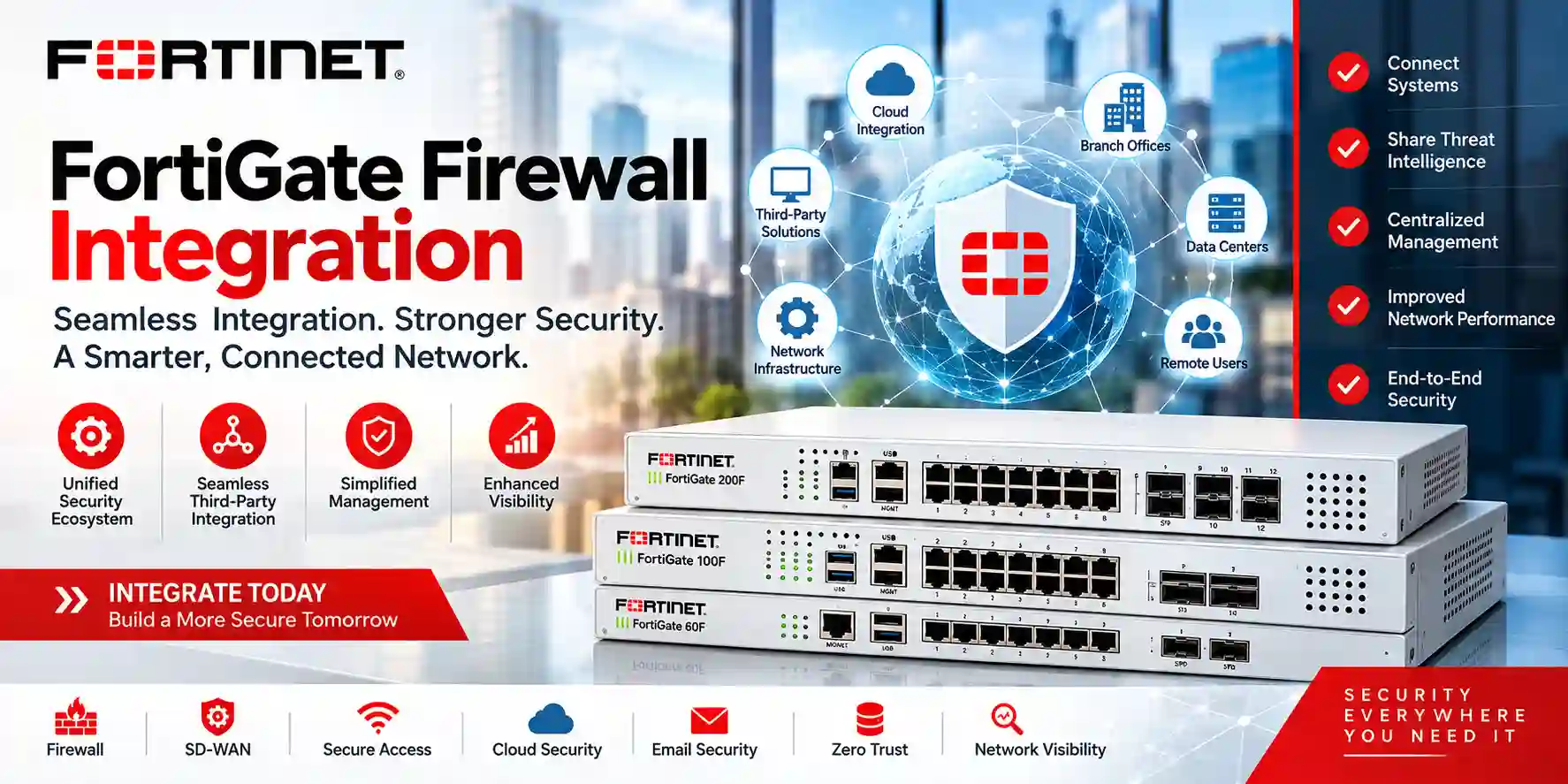
A distributed organization needs more than a firewall at every internet connection. It needs consistent security policy, dependable connectivity, controlled branch-to-branch access, predictable cloud application performance and a management model that does not force administrators to configure every office independently. FortiGate can combine next-generation firewall controls, Secure SD-WAN, routing, VPN and branch networking functions within the FortiOS platform, giving organizations a practical foundation for building repeatable branch standards while still allowing each location to use the connectivity and capacity appropriate to that site.
What does FortiGate solve in a distributed-office network?
When branch offices access cloud applications directly, connect to headquarters over public or private WAN services, support guest Wi-Fi, use IP phones and cameras, and depend on local internet breakout, the number of security and networking decisions grows quickly. Different sites may have different internet providers, bandwidth, latency, local applications and uptime requirements. A branch firewall therefore has to do more than block unwanted traffic. It should be designed as part of the WAN edge, the security policy, the VPN topology, the application-routing strategy and the operational model used by the IT team.
Fortinet documents FortiGate as the core of its Secure SD-Branch architecture. FortiGate can provide SD-WAN intelligence, security inspection and routing, while FortiSwitch and FortiAP can extend wired and wireless access within the same branch architecture. FortiExtender can be considered where wireless WAN backup is appropriate. For multi-site designs, Fortinet supports hub-and-spoke architectures, IPsec overlays and Auto-Discovery VPN options, with centralized orchestration available through FortiManager. The important purchasing point is that these capabilities must be mapped to the actual environment rather than assumed from a model name alone.
FourTeck Tanzania approaches the requirement as a branch standardization project. Start by defining site classes, critical applications, internet links, expected inspected throughput, VPN traffic, local switching and Wi-Fi needs, resilience targets, logging requirements and the people who will operate the environment. That information allows the firewall model, licensing, topology and rollout method to be selected around measurable needs. For broader network-security context, review the FourTeck Tanzania integrated IT and security overview, which explains how firewalling, switching, wireless, servers, voice and physical-security systems share the same infrastructure.
Consistent policy
Create repeatable security objects, segmentation rules and branch templates so a new location does not become a one-off configuration that is difficult to audit later.
Resilient WAN
Use multiple WAN links when business continuity justifies them, with SD-WAN health checks and traffic steering aligned to application and performance requirements.
Central operations
For many branches, centralized provisioning and policy management can reduce configuration drift and make large-scale changes easier to coordinate.
Right-sized rollout
Separate branches into practical site profiles instead of forcing the same appliance into a two-person office, a warehouse, a large branch and a regional hub.
Verified FortiGate capabilities relevant to distributed offices
Fortinet describes Secure SD-Branch as a way to converge security, WAN and LAN functions for remote branches. FortiGate provides the firewall and SD-WAN control point; FortiSwitch and FortiAP can provide wired and wireless access; and FortiExtender can add cellular connectivity where required. FortiOS also includes built-in network access control capabilities, while FortiNAC can be added when more advanced device visibility and control are required. These components should be treated as design options, not as a mandatory bundle for every site.
Fortinet’s current SD-Branch documentation explains that multi-WAN links can be monitored for failure and performance, with applications routed according to policy. Multi-site designs can use hub-and-spoke VPN overlays, and ADVPN can create direct spoke-to-spoke shortcuts when the design calls for them. Dynamic routing may be appropriate in larger environments. FortiManager provides centralized management and orchestration, including templates and zero-touch provisioning workflows, and FortiAnalyzer can be added where deeper centralized logging, analytics and reporting are required.
For customers comparing this architecture with a simple firewall-only purchase, the distinction is operational. A single-site appliance can be managed locally, while a larger branch estate benefits from decisions about centralized policy ownership, template structure, firmware governance, logging, naming standards, address objects, VPN overlays, SD-WAN rules and change control. FourTeck’s Tanzania technology services page outlines the broader discovery, design, implementation and lifecycle approach that can be applied when the firewall is part of a wider branch project.
How to size FortiGate for branch and remote-office deployments
Sizing should begin with the traffic that will be inspected, not with the advertised speed of the ISP alone. Document the current and planned internet bandwidth, the number of users and devices, expected concurrent sessions, site-to-site VPN traffic, remote-access requirements, segmentation, number and type of WAN links, and which security services will actually be enabled. Encrypted traffic inspection, intrusion prevention, application control and other advanced services can change practical performance, so the design should use vendor figures that correspond to the intended feature set and current model datasheet.
Branches should also be classified by business role. A small sales office may require simple internet security, a site-to-site tunnel and dual WAN. A retail or hospitality site may add guest access, POS or operational devices. A warehouse may need many cameras and access points but comparatively few office users. A regional hub may terminate multiple VPN overlays, host local applications or act as an aggregation point. Those differences affect interface count, throughput, resilience and management requirements. Where a compact appliance is being considered, the verified FortiGate 30G Tanzania product page is a useful reference for a current small-site FortiGate option, but suitability still depends on the site’s measured requirement.
A quotation should therefore distinguish hardware, FortiGuard or FortiCare service requirements, centralized-management components if applicable, configuration scope, VPN design, migration work, documentation and any supporting switching or wireless hardware. The FourTeck Tanzania shop guidance explains why capacity, compatibility, management and lifecycle should be checked before ordering business technology.
A practical distributed-office architecture
A repeatable FortiGate branch design normally starts with a small number of defined site profiles. Each profile specifies the expected user range, WAN options, VLANs, local services, VPN role, switch and wireless requirements, logging level, resilience target and approved policy baseline. The objective is not to make every office identical. It is to make differences intentional. A branch with one broadband circuit and modest requirements may use a simpler profile, while a revenue-critical location can justify dual links, higher-capacity hardware, high availability or additional monitoring.
For inter-site connectivity, organizations can choose a hub-and-spoke pattern when many branches primarily need access to centralized applications, or use designs that allow direct branch-to-branch connectivity where business traffic demands it. Secure SD-WAN can steer traffic according to link health and policy, helping cloud or SaaS traffic use an appropriate path instead of automatically backhauling every session through headquarters. The design should still define which applications may use local breakout, which must traverse a hub, how DNS and identity services are reached, and what happens when a preferred path fails.
On the LAN side, FortiSwitch and FortiAP can be integrated with the FortiGate branch design. That can simplify visibility and policy consistency, but the physical network still requires sound engineering: adequate PoE budget, uplink capacity, VLAN planning, wireless coverage, rack space, power protection and cable documentation. The FourTeck Tanzania solution-led approach describes why integrated design matters when firewalls, switches, access points, phones, cameras and servers operate together.
Licensing, FortiGuard services and lifecycle planning
A distributed-office project should separate the firewall appliance from the subscriptions and support services required by the chosen security design. Different FortiGate service bundles can provide different FortiGuard security functions and support entitlements, so the bill of materials should state the exact bundle, term and renewal requirement rather than use a generic phrase such as “full license.” Buyers should also identify whether FortiManager, FortiAnalyzer, FortiClient, FortiSASE, FortiNAC or other Fortinet products are required for the intended architecture instead of assuming they are included with every appliance.
Lifecycle planning matters more in distributed offices because an expired service or inconsistent software level can affect many sites. Define who owns renewals, firmware planning, configuration backups, administrator access, change approval and replacement decisions. Maintain an inventory of serial numbers, models, license expiries, WAN circuits, VPN relationships and site contacts. For centralized environments, templates and policy packages should be documented so administrators know what is common across all branches and what is site-specific.
When requesting a price, ask for the product and service term as separate, clearly identified lines. Include deployment scope, number of branches, migration constraints and expected growth. FourTeck Tanzania’s verified contact page can be used to submit a requirement for quotation planning, while the final appliance and subscription selection should be confirmed against the current Fortinet datasheet and licensing offer for the chosen model.
Regional planning: one FortiGate standard, different site realities
The regional sections below are written as procurement and design guidance, not as claims of local stock, offices or guaranteed service coverage. Each market should be assessed for available connectivity, power, site size, business-critical applications, data-handling requirements, installation logistics and support expectations before a final configuration is approved.
FortiGate Firewall for Distributed Offices Tanzania
For organizations building or expanding branch networks in Tanzania, the first decision is to create a site standard that can cope with very different operating environments. A Dar es Salaam corporate office, an inland warehouse, a hospitality site, a sales branch and a remote operational location may all be part of the same organization but may not have the same internet options, user density or tolerance for downtime. FortiGate is useful in this context because the same FortiOS architecture can support next-generation firewall policy, VPN, Secure SD-WAN and routing while allowing different appliance sizes and connectivity designs for different branches. The practical goal is a common security model with enough flexibility to fit each location.
A Tanzania rollout should begin with an inventory of every branch: users, critical applications, cloud services, local servers, cameras, phones, access points, internet circuits, public IP requirements and expected growth. Sites that depend heavily on cloud ERP, payment systems, voice or video collaboration may justify a secondary ISP or cellular backup. Other sites may accept a single WAN connection but require strong site-to-site VPN and centralized logging. Where links differ in latency or quality, SD-WAN policy can be designed around application performance rather than treating every path equally. Power protection and rack conditions also deserve attention because a well-sized firewall is still vulnerable to unstable power, poor ventilation or unmanaged cabling.
For multi-branch operations, centralized policy governance can reduce configuration drift. FortiManager may be appropriate when the organization has many similar sites or a hub-and-spoke architecture, allowing templates, policy packages and provisioning workflows to be managed centrally. Procurement teams should request a bill of materials that separates each branch profile, model, service subscription, accessories, management components and implementation scope. This gives decision-makers a clear way to compare the cost of a simple appliance purchase with the cost of a fully standardized branch-security program.
FourTeck Tanzania can discuss the requirement in the context of the wider LAN and business systems. Review the verified technology services overview for project stages that may include discovery, design, configuration and documentation. The important purchasing question is not simply “Which FortiGate is available?” but “Which branch profiles, subscriptions, WAN options and management model will keep the Tanzania estate consistent and supportable over its lifecycle?”
FortiGate Firewall for Distributed Offices Dar es Salaam
Dar es Salaam branch environments often sit at the center of a Tanzania organization’s commercial activity, which can make the firewall design more demanding than a typical small remote office. A city office may support more users, cloud applications, video meetings, IP telephony, guest Wi-Fi, CCTV and links to other Tanzania locations. The FortiGate specification should therefore be based on inspected traffic and the site’s role in the wider topology. If the Dar es Salaam office acts as a hub for VPN connections from other branches, its VPN, routing and logging requirements can be materially higher than those of a simple internet edge.
Connectivity planning should identify whether the office has one or more viable WAN providers and whether applications justify automatic failover or active use of multiple links. Fortinet SD-WAN can evaluate link performance and route traffic according to business policy, but successful deployment depends on sensible thresholds and application priorities. Voice and interactive cloud systems may be more sensitive to latency and packet loss than file downloads. Business systems hosted at headquarters may need secure overlay connectivity, while selected SaaS applications may be better served by controlled local internet breakout. These choices should be documented before the firewall policy and SD-WAN rules are built.
A larger Dar es Salaam site also benefits from segmentation. Staff, guest wireless, CCTV, servers, management interfaces, IP phones and operational devices do not necessarily need the same access. VLANs and firewall policy can create intentional boundaries, and FortiSwitch or FortiAP can be considered when the customer wants the branch access layer integrated into the Fortinet architecture. The switch design still needs adequate PoE, uplink bandwidth and physical resilience. The firewall should not be expected to compensate for an undersized or poorly documented LAN.
For procurement, provide the number of users, current and planned bandwidth, expected VPN peers, security services, required ports, HA requirement, WAN circuits and any FortiManager or FortiAnalyzer need. That creates a defensible shortlist rather than choosing a model from a headline throughput number. FourTeck’s verified Tanzania pages can then be used to align the firewall with the rest of the network and build a quotation around the complete site requirement.
FortiGate Firewall for Distributed Offices Mwanza
A Mwanza branch may serve as a regional sales, logistics, service or administrative point rather than a simple satellite office, so sizing should start with the business processes that cannot stop when connectivity changes. If the site depends on cloud ERP, inventory, voice, video or secure access to a central application, the WAN design can be as important as the firewall model. FortiGate Secure SD-WAN can use multiple links and performance-based rules, allowing a business to define which applications receive preferred paths and what happens when a link becomes unhealthy.
The branch should also be assessed for local device diversity. Warehouses and operational sites may have cameras, scanners, Wi-Fi clients, printers, access-control devices and industrial or IoT endpoints in addition to normal computers. Placing every device in one flat network makes policy and troubleshooting harder. A more maintainable design groups devices by function and applies only the access each group needs. FortiGate can enforce traffic between segments, while managed switching and correctly mapped wireless SSIDs provide the underlying separation. Where FortiSwitch and FortiAP are selected, FortiGate can participate in a broader SD-Branch architecture.
For organizations with headquarters elsewhere, Mwanza may operate as a spoke in a hub-and-spoke VPN topology. The design should document whether traffic is expected to travel only between Mwanza and a central hub, between branches directly, or to cloud workloads. Fortinet supports IPsec overlays and ADVPN for scalable multi-site designs, but the correct topology depends on actual traffic flows and operational complexity. Central management becomes increasingly useful when many sites share a standard policy, because common objects and branch templates can reduce repetitive configuration.
A quotation request should therefore include application priorities, internet choices, branch role, user and device counts, VPN expectations, subscription term and support responsibilities. This produces a solution that can be compared on architecture and lifecycle, not only on appliance purchase price. The same documented branch profile can then be reused when the organization opens another location with comparable needs.
FortiGate Firewall for Distributed Offices Arusha
Arusha businesses can include corporate offices, hospitality operations, travel-related companies, institutions and regional organizations with strong dependence on cloud services and communications. A distributed-office firewall design should reflect that mix. The branch may need secure access for staff, isolated guest connectivity, protected business systems, voice and video traffic, and VPN links to other offices. FortiGate provides a common platform for these functions, but the value comes from building policy around the site’s actual trust zones and application flows rather than applying a generic branch template without review.
Wireless and guest traffic can be particularly important in customer-facing environments. Guest users should normally be separated from corporate applications and management networks, while internal wireless should map to the same identity and segmentation strategy used by wired devices. Where a Fortinet SD-Branch design is chosen, FortiGate can integrate with FortiSwitch and FortiAP to extend policy and centralized visibility into the access layer. However, RF planning, cabling, PoE, switch capacity and physical placement remain separate engineering tasks that should be validated at the site.
For continuity, determine which functions must survive an ISP problem. Some organizations can tolerate a short outage, while reservations, payments, remote desktop, cloud contact-center tools or business communications may require faster failover. A second broadband service or wireless backup can be evaluated, and SD-WAN policies can define how traffic shifts when a link fails or degrades. The organization should test failover rather than assuming it works simply because two links are connected. Testing should include VPN recovery, DNS behavior and critical application sessions.
Arusha procurement teams should ask for clear separation between hardware, FortiGuard or support subscriptions, migration, installation, centralized management and any supporting LAN upgrades. If an existing firewall is being replaced, capture its policies, VPNs, public services and dependencies before cutover. This reduces the risk of discovering an undocumented business requirement during the migration window.
FortiGate Firewall for Distributed Offices Dodoma
Dodoma offices may serve administrative, institutional, professional-service or project functions where secure access and predictable policy are more important than maintaining a highly customized local network. This makes standardization especially useful. A FortiGate branch can be built from an approved baseline covering internet access, site-to-site VPN, remote administration, logging, DNS, segmentation and approved security profiles. Local changes should then be limited to documented items such as WAN addressing, branch subnets, user capacity and application exceptions.
A baseline becomes more valuable when an organization operates several offices because troubleshooting starts from a known design. Administrators can compare a problem site with a healthy site, and security changes can be introduced as controlled template updates rather than repeated manual edits. FortiManager is designed for centralized management and orchestration across FortiGate estates, including policy and deployment workflows. It should be evaluated when the number of branches, topology or operational complexity makes local management inefficient. Smaller estates can still be managed individually if that better fits staffing and governance.
For Dodoma, WAN resilience should be evaluated against the importance of the office. A site that mainly supports email and routine browsing has a different outage cost from a site handling time-sensitive business systems or inter-office communications. Define the maximum acceptable outage, then decide whether a secondary link is justified. If two links are available, SD-WAN can steer and fail over traffic, but link health metrics and business rules need to be tested with the applications users actually rely on.
Before ordering, confirm the firewall’s physical installation needs, power protection, required interfaces, rack or desktop placement, ISP handoff, VPN peers and subscription term. Create a handover package containing network diagrams, administrator roles, configuration backups and renewal dates. These operational details make the branch easier to support after the initial deployment and reduce dependence on individual staff members remembering how the site was built.
FortiGate Firewall for Distributed Offices UAE
Organizations linking Tanzania operations with branches or headquarters in the UAE can use FortiGate as part of a common multi-country security standard. The design should identify whether UAE sites act as hubs, peers or independent branches, which applications are hosted in each market, and whether cloud traffic should break out locally. Fortinet’s multi-site SD-Branch architecture supports hub-and-spoke VPN overlays, regional hubs and centrally orchestrated policy, which makes it suitable for organizations that want a shared technical framework without forcing every country into the same circuit or appliance size.
A UAE deployment may have high-capacity internet services and large cloud usage, but sizing still depends on inspected traffic, VPN demand, application mix and resilience. If the UAE office terminates tunnels from several countries, the hub firewall and WAN design should be sized for aggregate traffic and failure scenarios. A secondary hub or redundant architecture may be appropriate where business continuity justifies it. The design should also account for routing symmetry, DNS, identity services and the effect of directing regional traffic through a central site versus allowing local internet access.
Operationally, a multi-country estate benefits from clear ownership. Decide whether policy is governed centrally, delegated by region or split between global baseline rules and local exceptions. FortiManager can support centralized control and regional structures, but governance must still define who is authorized to change production policies and how changes are tested. Subscription and support terms should be tracked per serial number and country so renewal does not become a fragmented procurement exercise.
For UAE-specific Fortinet context, customers can review the verified FourTeck Fortinet UAE site. When the same organization also has Tanzania branches, use a shared site-profile worksheet that captures users, links, applications, VLANs, VPN role and service level for every location. This allows the technical standard to travel across borders while preserving the local differences that matter to performance and operations.
FortiGate Firewall for Distributed Offices Uganda
Uganda branch networks can benefit from the same architecture principles used in Tanzania: classify sites, document applications, understand available WAN links and apply a repeatable security baseline. FortiGate can provide NGFW policy, SD-WAN, VPN and routing in a single FortiOS-based platform, allowing an organization to standardize security even when individual offices vary in size. The branch profile should state whether the site connects only to the internet, requires persistent access to a regional hub, hosts local systems or needs direct communication with peer branches.
For businesses with sites across both Uganda and Tanzania, the WAN topology deserves early design attention. A centralized application hosted in one country may make hub-and-spoke connectivity practical, while cloud-first applications may benefit from local breakout. If branches need frequent direct communication, ADVPN or another appropriate topology can reduce unnecessary hairpinning through a distant hub, subject to the organization’s routing and security policy. These choices should be validated against latency, application behavior and operational complexity before deployment.
Branch security also needs consistency beyond the firewall. Guest wireless, staff endpoints, phones, cameras and operational devices should not automatically share one unrestricted network. VLAN and access-policy templates can define expected separation, while FortiSwitch and FortiAP can be integrated where a broader Fortinet SD-Branch architecture is useful. Remote administration should be restricted and auditable, with configuration backups and administrator roles controlled centrally where possible.
Buyers can use the verified FourTeck Uganda site for Uganda technology context while coordinating a common standard with Tanzania operations. A quotation request should list every branch, user estimate, primary and backup connectivity, VPN relationships, required subscriptions and expected growth so the appliance mix reflects real site classes rather than a single model copied everywhere.
FortiGate Firewall for Distributed Offices Kampala
A Kampala office may act as a Uganda headquarters, a major branch or a regional hub, so it should be assessed separately from smaller remote locations. If multiple Uganda branches terminate VPNs in Kampala, the firewall must be sized for aggregate encrypted traffic, internet security services and any local application access delivered through the hub. The number of physical and virtual interfaces, routing requirements and high-availability expectations can also be different from those of a small spoke site. Selecting a larger appliance solely because the office is in a capital city is not enough; the architecture and workload must justify it.
For cloud-first businesses, the Kampala firewall may allow direct SaaS access while maintaining secure overlay links to data centers or Tanzania offices. Secure SD-WAN can use multiple WAN transports and performance measurements to steer traffic, helping organizations prioritize interactive applications and maintain an alternative path when a circuit degrades. The policy should explicitly define what is allowed to break out locally and what must traverse a controlled hub for compliance or inspection. This prevents convenience-driven routing from undermining the security model.
A headquarters-style branch also needs stronger operational controls. Central logging, administrator separation, configuration backups, change records and documented firmware policy become important when many sites depend on the hub. FortiManager can coordinate policy and provisioning across branches, while FortiAnalyzer can be considered for centralized logs and analytics. Neither tool removes the need for operational ownership; the team still needs defined roles for alert review, policy changes, incident response and renewals.
Before procurement, document the Kampala site’s role in every VPN relationship, its expected internet and east-west traffic, local server dependencies, user growth, WAN redundancy and the planned branch count over the appliance lifecycle. This allows the hub to be sized with realistic headroom and prevents future branch additions from turning an initially adequate design into a bottleneck.
FortiGate Firewall for Distributed Offices Arua
Arua can represent the kind of distributed-office location where centralized IT teams need the branch to be secure and supportable without assuming that specialist staff are present on-site. That changes the priority of the design. Instead of building a configuration that requires frequent local intervention, use a documented branch profile with simple cabling, clear WAN handoffs, controlled remote management and configuration templates that can be reproduced. FortiGate is well suited to this operating model because it can combine firewalling, VPN, routing and SD-WAN functions in one platform.
Connectivity should be designed around what is actually available to the site and how much downtime the business can tolerate. If a secondary connection is practical, it can be used for failover or selected traffic. Where wired alternatives are limited, a wireless WAN option may be considered through an appropriate branch design. Fortinet’s SD-Branch guidance specifically treats link quality, uptime and backup transport as WAN-edge design questions. The implementation should test how VPN tunnels and critical applications recover when the preferred path is lost.
Remote support is easier when the site follows consistent naming, addressing and segmentation. Staff devices, guest access and operational equipment should be separated where risk and function justify it. If a local switch or access point fails, documentation should make replacement and troubleshooting understandable without reconstructing the network from scratch. Configuration backups, renewal dates and local circuit information should be stored with the site’s records.
For procurement, avoid over-specifying a remote branch merely to match headquarters. The correct appliance depends on inspected throughput, users, VPN traffic, interfaces and enabled services. At the same time, do not under-size a site simply because it has fewer employees if it carries heavy camera traffic, cloud workloads or a large VPN role. A site worksheet provides the evidence needed to balance cost, resilience and manageability.
FortiGate Firewall for Distributed Offices Mbarara
A Mbarara office may support retail, distribution, education, healthcare, professional services or regional administration, all of which create different network priorities. The FortiGate design should begin with an application map: which systems are local, which are cloud based, which are hosted at another branch, and which must remain available during a WAN problem. Once those dependencies are known, security policy, VPN topology and SD-WAN rules can be designed around business outcomes rather than generic defaults.
Multi-WAN is useful only when the organization knows what it wants the second link to accomplish. A backup circuit can provide continuity, while two active links can share or steer traffic according to application and performance. Fortinet’s Secure SD-WAN supports health measurements and policy-based path selection. For Mbarara, the configuration should define acceptable latency, loss and other performance expectations for important services, and the failover procedure should be tested during commissioning. Testing should include the site-to-site tunnel and any authentication, DNS or application dependencies that can prevent users from working even when internet access appears available.
Security segmentation should also reflect business processes. A clinical environment, for example, may have different device classes from a retail store or office. The network should identify trusted business users, guests, infrastructure management and other device groups, then permit only required communication. FortiGate can enforce those boundaries, and integrated FortiSwitch or FortiAP can be considered where the customer wants a broader Fortinet-managed branch edge.
A quotation should list WAN interfaces, expected bandwidth, user and device counts, VPN peers, security services, subscription term, logging and any central management. This helps procurement compare like-for-like offers and prevents important services from being hidden inside a vague bundle description. It also makes future expansion easier because the assumptions behind the original appliance choice are documented.
FortiGate Firewall for Distributed Offices Gulu
For a Gulu branch, dependable remote operation can be more valuable than a complicated configuration with many exceptions. Standardization should therefore be a primary design objective. Use the same naming conventions, administrator controls, VPN structure and policy baseline as comparable branches, then document only the differences that the site requires. This reduces troubleshooting time because IT staff already understand the expected architecture before they connect to the firewall.
WAN planning should be evidence based. Record the primary circuit, realistic throughput, public addressing, handoff type and known application needs. If the business requires continuity, evaluate a secondary service and decide whether it is standby-only or part of normal SD-WAN traffic steering. FortiGate can monitor link health and make path decisions, but those decisions need business rules. A backup circuit that cannot support essential VPN or cloud traffic is not a complete continuity plan, so capacity and failover behavior should be validated before handover.
The Gulu office may also need secure communication with Kampala or another hub. A hub-and-spoke VPN architecture can simplify multi-site connectivity because the branch does not need individually maintained tunnels to every other location. Where direct branch-to-branch communication is important, Fortinet supports ADVPN designs that can create dynamic shortcuts. The right approach depends on traffic flow, number of sites and the team’s ability to operate the routing design.
Procurement should include more than the box. Ask for the exact service subscription, support term, configuration scope, migration tasks, documentation and any centralized-management requirement. Confirm rack, power, UPS and cabling conditions at the site so installation is not delayed by small infrastructure gaps. A clean handover should leave the organization with a diagram, configuration backup, asset record and renewal information that can be used throughout the firewall lifecycle.
FortiGate Firewall for Distributed Offices Kenya
Companies operating in both Kenya and Tanzania often want a common branch-security standard so policies, VPNs and support procedures are easier to manage across borders. FortiGate allows different appliance sizes to run within the same FortiOS architecture, which means a small branch and a regional office can follow the same policy principles without being forced into identical hardware. Start with common standards for segmentation, internet access, logging, VPN naming, administrator roles and change control, then define the local WAN and capacity requirements for each country.
Cross-border application design is important. If business systems are hosted in Kenya, Tanzania branches may need secure VPN connectivity with predictable routing and acceptable latency. If workloads are cloud-based, local internet breakout may reduce unnecessary backhaul, provided security policy and inspection remain consistent. A regional SD-WAN design can include multiple hubs or regional gateways when the organization is large enough to justify them. The decision should be based on application flows and resilience rather than geography alone.
Operational standardization can be strengthened with FortiManager when many branches share common policies. Templates and centralized provisioning reduce repetitive configuration, while local variables can still represent site addresses, WAN details and other branch-specific values. Organizations should define whether Kenyan and Tanzanian administrators share responsibility or whether one team governs the common baseline. That governance decision affects how policy packages and exceptions should be organized.
For Kenya-specific technology context, use the verified FourTeck Kenya site. When requesting a regional quotation, submit a branch matrix covering both countries so hardware, subscriptions and implementation effort can be compared consistently. This also reveals where one market has a genuinely different requirement instead of allowing hidden differences to appear during deployment.
FortiGate Firewall for Distributed Offices Kuwait
A Kuwait branch connected to Tanzania or other regional offices should be treated as part of the same security architecture while respecting its own connectivity, user density and business role. The firewall profile should state whether the site is a small spoke, a regional hub, a customer-facing operation or a location hosting internal applications. FortiGate can support NGFW controls, VPN and Secure SD-WAN across these patterns, but the appliance and service bundle should be selected according to inspected throughput, interface needs, VPN workload and desired resilience.
Where cloud applications dominate, the organization should decide whether Kuwait traffic exits directly to the internet or travels through a central inspection point. Local breakout can improve user experience and reduce unnecessary WAN usage, while central routing may simplify some governance requirements. Secure SD-WAN allows business policy to influence path selection, but the architecture should document how security inspection is maintained at every edge. A branch should not become less protected simply because cloud traffic no longer passes through headquarters.
If the Kuwait site uses multiple high-capacity WAN links, SD-WAN policy can use both resiliency and performance information. Define which applications require preferred treatment, whether backup links are allowed to carry normal traffic, and what happens during partial degradation. The team should test not only full link failure but also conditions where a circuit remains technically up while latency or packet loss makes it unsuitable for important applications.
A regional procurement package should separate hardware, FortiGuard security services, support term, central-management software, deployment and documentation. It should also state any local installation dependencies such as rack space, power, interface media and ISP handoff. Standardizing these details across Kuwait and Tanzania makes the estate easier to audit and reduces the chance that branch differences are discovered only after equipment has been ordered.
FortiGate Firewall for Distributed Offices Ghana
Ghana branches can be incorporated into a common FortiGate operating model for organizations that want consistent security across African locations. A shared design should define baseline firewall policy, branch segmentation, VPN standards, logging, administration and subscription governance. Local branches can then vary by appliance size, WAN provider, bandwidth and resilience without creating a completely different security approach. This is especially useful for companies that acquire or open sites gradually and want each new branch to fit an established architecture.
The first technical question is where applications live. A Ghana office may use local systems, a regional data center, SaaS applications or a combination of all three. Those flows influence whether traffic should stay local, use a VPN hub or move directly between branches. Fortinet’s SD-Branch architecture supports hub-and-spoke overlays and Secure SD-WAN, giving the network team options for scaling beyond manually configured point-to-point links. The topology should remain understandable to the people who will troubleshoot it, so complexity should be introduced only when it solves a real performance or resilience requirement.
Branch segmentation should be planned alongside switching and wireless. Corporate users, guests, cameras, phones and infrastructure management may need distinct policies. A FortiGate can enforce the resulting security boundaries, while FortiSwitch and FortiAP can be integrated if a broader Fortinet access-layer design is selected. The organization should document how local IT staff and central administrators divide responsibilities, particularly for emergency changes and incident response.
For Ghana market context, the verified FourTeck Ghana site can complement Tanzania planning. A regional quote should include the exact branch list, model assumptions, subscriptions and deployment scope so procurement can compare the complete lifecycle cost instead of only the initial hardware line.
FortiGate Firewall for Distributed Offices Nigeria
Nigeria deployments can range from compact offices to large regional operations, so distributed-office planning should avoid assuming that every branch can use one standard hardware model. Instead, standardize the architecture and create multiple capacity tiers. Each tier can define target user range, expected inspected throughput, WAN count, VPN role, segmentation, logging and resilience. FortiGate’s broad appliance portfolio allows these different branch sizes to remain within the same FortiOS and management framework while matching capacity more closely to the individual site.
Large branch estates also make central management more important. A security change that must be applied manually to dozens of devices creates more opportunity for drift and inconsistency. FortiManager supports centralized policy and provisioning workflows for FortiGate, including SD-WAN and SD-Branch environments. The organization should still create governance around device groups, templates, approval and emergency changes so automation does not become an uncontrolled shortcut. Centralized logging and analytics can also be planned when incident investigation requires visibility across many offices.
WAN design should reflect each site’s business dependency. A customer-facing or transaction-heavy branch may justify multiple links and carefully tested failover, while a smaller administrative office may accept a simpler connection. Secure SD-WAN can route applications according to performance and policy, but realistic thresholds and test cases are essential. The design should also consider whether direct internet breakout is permitted and how consistent security inspection is maintained when branch traffic does not pass through a central data center.
For Nigeria-specific context, buyers can consult the verified FourTeck Nigeria site. A cross-country procurement request should use the same branch questionnaire for Nigeria and Tanzania so different hardware choices are tied to documented needs, making approval and future expansion easier to manage.
FortiGate Firewall for Distributed Offices Seychelles
A Seychelles branch may have unique connectivity economics, site scale and support logistics compared with a mainland office, so the FortiGate design should emphasize resilience and remote manageability rather than copying another country’s template without review. Begin with the availability and capacity of primary and backup connectivity, then map the applications that users must reach. If a site depends on cloud services, reservations, finance systems, voice or centralized applications, the outage tolerance for those workloads should guide whether a second WAN service or alternative backup path is justified.
Remote support becomes easier when the branch has clear documentation and a controlled configuration baseline. The firewall should have well-defined administrator access, configuration backups, standard object names, known VLANs and recorded ISP details. Where several international branches share the same FortiGate architecture, FortiManager can provide centralized policy and provisioning, helping the network team manage a Seychelles site without making routine changes locally. The organization should still plan for physical replacement and hands-on tasks that cannot be performed remotely.
SD-WAN can be useful when multiple links are available, but it should be configured according to the characteristics of those links. A backup service with higher latency or lower capacity may be suitable for business-critical applications while nonessential traffic is restricted during failover. The test plan should verify VPN recovery, DNS, application reachability and user authentication, not merely confirm that the firewall can ping an internet address. This turns failover from a checkbox feature into a measured continuity capability.
For procurement, include spare-power considerations, physical installation details, subscription terms and replacement planning because a remote branch can be harder to recover when a component fails. The objective is a branch design that the central team can understand, monitor and support with minimal ambiguity, while still using the security and connectivity functions required by the local business operation.
Related FourTeck Tanzania resources for a complete branch
Distributed-office firewall projects rarely stand alone. The LAN, wireless network, phones, cameras, servers and cabling all affect what the firewall must secure and how traffic should be segmented. The Tanzania business technology shop provides buying guidance across firewalls, switches, Wi-Fi, servers and supporting infrastructure. The FortiGate 30G Tanzania page gives a current compact FortiGate reference for smaller-site discussions where its verified capacity is appropriate.
Voice can be another branch dependency. IP phones and PBX services need correct VLAN, QoS, DNS and firewall treatment. The verified Grandstream GXP1625 Tanzania product page is an example of the desk-phone layer that may sit behind a branch firewall, illustrating why voice endpoints, PoE switching and firewall policy should be coordinated rather than purchased independently.
For solution methodology, the About FourTeck Tanzania page explains the outcome-first design approach, while the services page describes broader planning, configuration and lifecycle activities. These same-domain resources are used because they are verified and directly available on the current Tanzania site; no unverified product-category paths have been invented.
FortiGate distributed-office quotation checklist
Sites and users
List every office, estimated users and devices, business role, working hours and expected growth. Group similar branches into practical site profiles.
WAN and applications
Record primary and backup links, bandwidth, public IP needs, cloud applications, hosted services, voice, video and any traffic that must use a specific path.
Security services
Identify the FortiGuard functions, inspection, web or application controls, remote access and logging expectations so the correct performance figures and subscriptions can be evaluated.
VPN and topology
Define hubs, spokes, data centers, cloud networks and branch-to-branch flows. Note whether the design requires static IPsec, ADVPN, dynamic routing or other current Fortinet-supported architecture.
Management
State whether FortiManager, FortiAnalyzer or another centralized operations component is required, and who owns policy, firmware, backups, monitoring and incident response.
Physical dependencies
Confirm rack or desktop placement, power, UPS, cooling, interface media, switching, PoE, cabling, wireless and any existing equipment that must remain in service.
Frequently asked questions about FortiGate for distributed offices
Can one FortiGate model be used in every branch?
It can be technically possible in some estates, but it is usually better to standardize site profiles rather than force identical hardware everywhere. Branches can differ in inspected throughput, WAN links, VPN role, interface count, resilience and device density. Use the same architecture and policy principles while sizing hardware to each profile.
Does FortiGate include SD-WAN?
Fortinet documents SD-WAN capabilities within FortiOS on FortiGate. The exact features and operational design should be checked against the current FortiOS version and selected appliance. Subscription requirements apply to separate security services and support components, so the final bill of materials should state them explicitly.
When should FortiManager be used?
Fortinet recommends considering centralized management when there are many sites, shared policies or a multi-site hub-and-spoke architecture. FortiManager can help with policy management, templates, orchestration and zero-touch provisioning. A small number of simple branches may still be practical to manage individually.
Can FortiGate connect branches with IPsec VPN?
Yes. Fortinet’s SD-Branch documentation includes IPsec VPN overlays for multi-site connectivity and supports hub-and-spoke and ADVPN patterns. The correct topology depends on the number of sites, traffic flows, routing requirements and operational complexity.
How should we compare FortiGate quotations?
Compare the exact appliance, service bundle, subscription term, support entitlement, centralized-management components, accessories, implementation scope and assumptions. A lower hardware price is not directly comparable with a proposal that includes security subscriptions, deployment, VPN migration, documentation and lifecycle services.
Can FortiGate manage branch switches and Wi-Fi?
Fortinet Secure SD-Branch integrates FortiGate with FortiSwitch and FortiAP, allowing wired and wireless access to participate in the branch security architecture. Physical LAN and wireless design still need appropriate switching capacity, PoE, cabling, RF planning and segmentation.
What information is needed before requesting a FortiGate distributed-office quote?
Provide the number of branches, users and devices per site, internet bandwidth, backup links, critical applications, VPN relationships, enabled security services, expected growth, management requirements and any HA or logging needs. This information makes model and license selection substantially more accurate.
Decision recap: design the branch standard before choosing the appliance
FortiGate gives distributed organizations a common platform for firewall security, Secure SD-WAN, routing, VPN and branch integration, while FortiManager can centralize operations as the estate grows. The design task is to translate those capabilities into a small number of clear branch profiles. Define the sites, users, applications, WAN choices, resilience targets, segmentation, VPN flows, logging and management model first. Then compare current FortiGate models and subscriptions against those requirements.
FourTeck Tanzania can use that information to structure a quotation discussion and coordinate the firewall with switching, wireless, voice and other branch technologies. Use the Tanzania contact page to share your branch list and requirements. No stock, delivery time, local office, authorization status or price is assumed on this page; those commercial details should be confirmed for the specific request.
Consultation panel
Prepare one row per branch with location, users, internet links, bandwidth, critical applications, VPN destinations, VLANs, required security functions and growth. Include any current firewall models and subscription expiry dates if this is a migration. This simple worksheet allows the discussion to move quickly from a product name to a defensible multi-site architecture.
For related regional planning, FourTeck maintains verified technology sites for Kenya, Uganda, Fortinet in the UAE, Ghana and Nigeria. These links are provided for customers coordinating requirements across multiple markets.