
Industrial OT • ICS • Segmentation • Secure Remote Access
FortiGate Firewall for Industrial Networks
FortiGate firewalls can be used to protect industrial and operational technology networks where production systems, controllers, sensors, engineering workstations, cameras, remote sites and enterprise IT need controlled communication without turning the plant network into a flat, broadly trusted environment. For harsh or space-constrained locations, Fortinet also provides rugged FortiGate appliances designed for industrial deployments. The right design starts with the process network, its permitted traffic and operational constraints, then selects the firewall model, interfaces, security services and management method that fit that environment.
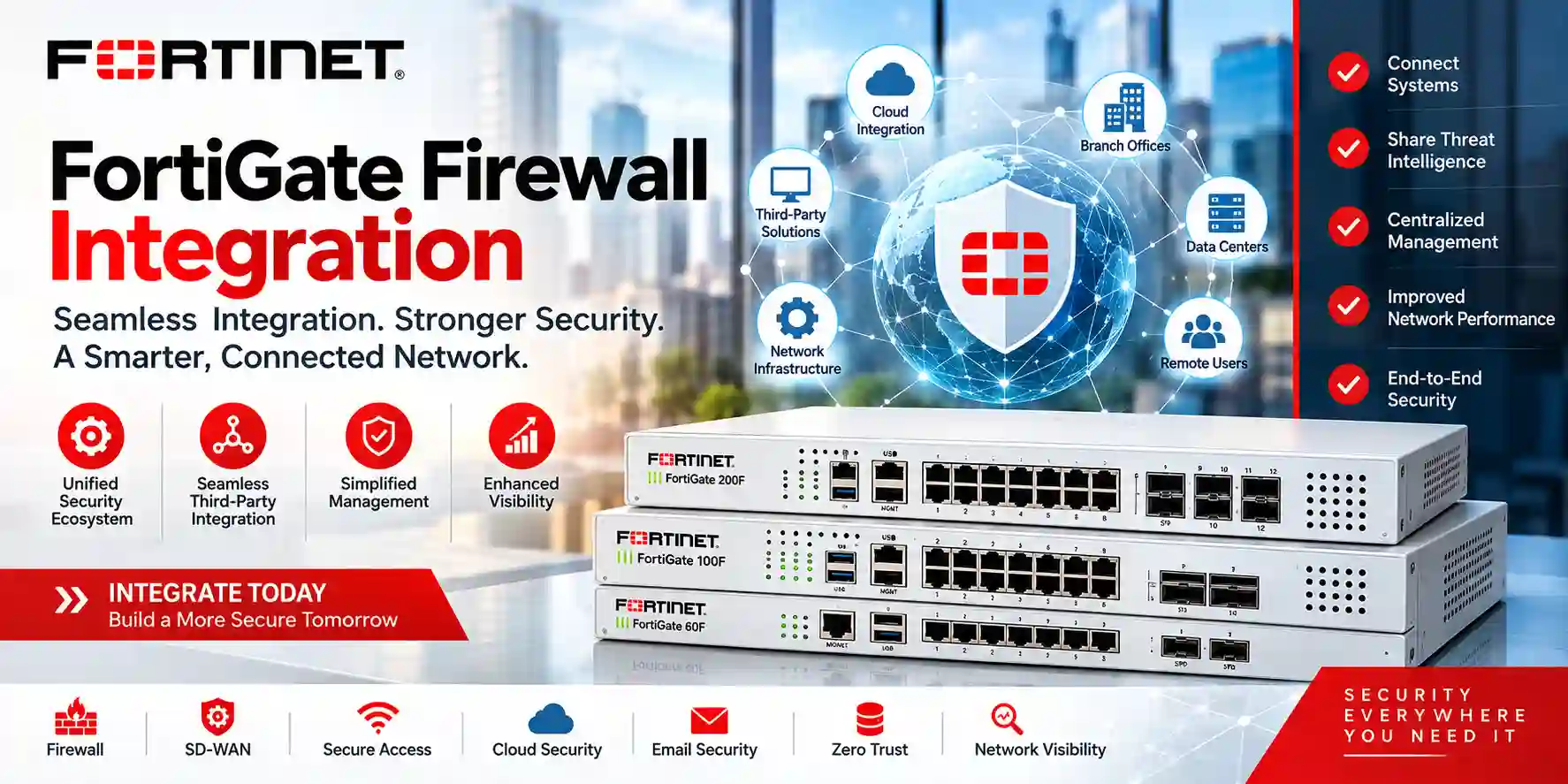
What this solution is designed to protect
Industrial networks often combine systems with very different lifecycles and risk profiles. Programmable logic controllers, remote terminal units, human-machine interfaces, historians, engineering stations, safety systems, cameras, building controls and enterprise applications may need to exchange selected data while remaining separated from unrelated traffic. A FortiGate can serve as an enforcement point between those zones, allowing the organisation to define which systems may communicate, which services are permitted and where inspection or logging should occur.
Why industrial firewall planning differs from office firewalling
An industrial firewall project must account for operational continuity, legacy protocols, maintenance windows, vendor access, cabinet conditions, deterministic communication paths and the consequences of blocking legitimate control traffic. The goal is not to apply the most aggressive inspection everywhere. It is to create a controlled architecture in which security policies are precise, changes are documented and production traffic remains understood. This usually makes asset mapping and communication-flow analysis as important as the appliance itself.
Fortinet capabilities relevant to OT and industrial environments
Fortinet positions FortiGate within a broader OT Security Platform that combines secure networking, segmentation, controlled access, threat intelligence and security operations. Rugged FortiGate models extend the firewall platform into sites exposed to temperature variation, vibration, dust or industrial cabinet constraints. FortiGate runs FortiOS and can participate in the Fortinet Security Fabric, allowing policy, visibility and management to be coordinated with other Fortinet technologies when the project requires a wider architecture.
Network segmentation
Separate enterprise IT, industrial DMZ, supervisory systems, cell or area zones, safety-related systems and remote-access paths. Rules can be written around actual application and communication requirements rather than broad any-to-any access.
FortiGuard OT Security Service
Fortinet provides specialised OT IPS and application-control signatures for industrial devices and applications. The service can also provide virtual-patching style protection when a vulnerable OT application cannot be patched immediately.
Secure remote connectivity
Industrial sites commonly require remote engineering, OEM maintenance or head-office connectivity. FortiGate can be part of VPN and zero-trust-oriented designs that limit access to approved users, destinations and services.
Rugged deployment choices
Fortinet’s Rugged portfolio includes industrial FortiGate models for challenging environments, along with rugged switches, wireless access points and cellular gateways for sites where the whole edge infrastructure needs hardened hardware.
Centralised management
Multi-site industrial organisations can plan central policy, logging, configuration backup and monitoring so remote plants and field sites are not managed as disconnected islands.
Secure SD-WAN and resilient WAN
Where industrial sites rely on several WAN paths, FortiGate can combine security with SD-WAN policy. Rugged Fortinet families also include cellular-capable options that can be evaluated for remote or mobile connectivity requirements.
FortiGate Rugged family considerations
Fortinet currently lists rugged FortiGate models across several performance and connectivity profiles, including members of the Rugged 50G, 60G, 60F, 70G and 70F families, with selected variants offering cellular connectivity or industrial connector options. Exact interfaces, environmental ratings, power input, threat-protection throughput and certifications differ by model and should be verified against the current Fortinet datasheet before procurement. This is especially important in industrial projects because a small difference in mounting, connector type, fiber requirement or power design can determine whether a firewall fits the control cabinet and operating environment.
| Selection area | Questions to confirm | Why it matters in industrial networks |
|---|---|---|
| Physical environment | Temperature, vibration, dust, cabinet space, mounting and airflow | Determines whether a standard or rugged platform is suitable. |
| Interfaces | Copper, fiber, WAN count, cellular backup and connector requirements | Industrial cabinets and remote sites often have non-office connectivity needs. |
| Inspection load | IPS, application control, SSL inspection, logging and VPN traffic | The enabled security profile affects practical sizing. |
| OT protocols | Which industrial protocols and vendor applications cross each boundary? | Policies should reflect known process communications, not generic rules. |
| Operations | Maintenance window, rollback, logging, support and change control | Security changes must not introduce uncontrolled production downtime. |
A practical OT firewall deployment sequence
A safer industrial firewall rollout normally begins with discovery. Document existing IP ranges, controllers, HMIs, servers, engineering laptops, remote-access paths, historian flows, DNS and time services, internet dependencies and third-party connections. Identify communications that are operationally required and those that exist only because the network has historically been flat. Where feasible, observe traffic before enforcing restrictive rules so the design is based on actual process behaviour.
The next stage is segmentation design. Create zones that make sense operationally: enterprise IT, industrial DMZ, supervisory systems, cell or area networks, cameras, building systems, vendor access and management. Decide where routing occurs and which communications must cross the firewall. Then build narrowly scoped rules, logging and inspection profiles. A pilot or staged cutover can reduce risk, especially when legacy devices have limited documentation.
After deployment, treat the firewall as part of the production environment. Back up configurations, record rule ownership, review administrator accounts, monitor VPNs and blocked events, track subscription renewal dates and schedule firmware work. Industrial security improves when operational teams understand why rules exist and can trace a change from business requirement to firewall policy.
Industrial use cases
Manufacturing plants
Separate production cells, supervisory systems and business users; control engineering access; monitor cross-zone traffic; and create a managed path between factory systems and enterprise applications.
Energy and utilities
Protect substations, remote sites, SCADA communications and maintenance links while planning for distributed locations, high uptime expectations and potentially harsh physical environments.
Mining and extractive sites
Create secure boundaries for remote processing, telemetry, plant systems, contractor access and site-to-head-office connectivity where environmental and WAN conditions may be challenging.
Ports and logistics
Segment warehouse systems, gate controls, surveillance, handheld devices and enterprise applications while maintaining secure connections between yards, branches and central systems.
Water and environmental systems
Protect treatment, pumping, telemetry and monitoring environments where operational devices may have long service lives and patching opportunities can be limited.
Transport and smart infrastructure
Secure distributed cabinets, roadside or station systems, cameras, field devices and control applications with policies that distinguish operational flows from general network traffic.
Licensing, subscriptions and lifecycle planning
A FortiGate purchase can include hardware, FortiCare support and FortiGuard security services depending on the bundle selected. Industrial deployments that need OT-specific IPS and application-control coverage should review the FortiGuard OT Security Service and the supporting security-services combination recommended for the chosen platform. Licensing should be decided during design rather than after installation because the security functions expected by the architecture may depend on an active subscription.
Procurement teams should also record subscription start and end dates, renewal ownership, support entitlement, firmware lifecycle, configuration backup responsibility and replacement planning. Industrial assets often operate much longer than normal office equipment, so the firewall lifecycle should include a strategy for model refresh and policy migration before hardware reaches an unsupported state.
For a current Tanzania quotation, share the site type, expected security services, required support period and whether the appliance must be ruggedized. FourTeck can then help structure the request around the hardware, subscription and deployment scope instead of treating each item as a separate afterthought.
Useful FourTeck references for planning
For local procurement and project discussion, use the FourTeck Tanzania contact page to provide the site, quantity, current network and expected deployment scope. The FourTeck Tanzania services page is relevant when the requirement includes network design, configuration, integration, documentation or support rather than hardware alone.
If the industrial project includes ordinary office branches as well as plant locations, the FortiGate 30G Tanzania page provides a local reference for compact branch firewall requirements. For hardened OT edges and remote industrial environments, the Rugged Firewalls Africa category gives broader regional context about ruggedized firewalls, segmentation and harsh-environment deployment considerations.
Organisations coordinating Tanzania and Gulf operations can also review the FourTeck Fortinet UAE resource when they want a common Fortinet procurement discussion across regional offices. Exact model choice, license bundle, stock status and delivery scope should always be confirmed for the intended destination.
FortiGate Firewall for Industrial Networks Tanzania
In Tanzania, industrial firewall requirements can appear in manufacturing, utilities, mining, logistics, agribusiness, hospitality infrastructure, transport, telecom, water, healthcare facilities and large campuses. These environments often combine office users with operational systems that have different availability and maintenance expectations. A FortiGate industrial-network design should therefore begin by identifying which systems are truly operational technology, which applications exchange data with enterprise IT and which third parties require access. This creates a practical basis for segmentation rather than applying generic rules to an unknown plant network.
For a Tanzania deployment, the physical location of the firewall matters. A unit installed in an air-conditioned server room may have different requirements from a device mounted inside a plant cabinet, utility site, warehouse area or remote field enclosure. Fortinet’s rugged FortiGate families are relevant where environmental conditions, DIN-rail style installation, industrial power or cellular resilience are part of the design. Model selection must still be based on exact datasheet specifications, interface needs and enabled inspection services. A rugged chassis alone does not guarantee that the chosen appliance has the right ports, throughput or connectivity for the project.
Tanzania buyers preparing a quotation should include internet or WAN bandwidth, number of industrial zones, estimated users, major OT protocols, VPN requirements, remote engineering access, required FortiGuard services, preferred support term, rack or cabinet conditions and expected project date. For multi-site operations, also describe whether sites must share a common policy template or central management. This information helps separate a basic branch firewall request from an OT security architecture and makes it easier to plan licensing, installation, cutover and future expansion without unsupported assumptions about stock or service coverage.
FortiGate Firewall for Industrial Networks Dar es Salaam
Dar es Salaam is a major commercial and logistics centre, so an industrial firewall request may involve port-related operations, warehouses, manufacturing facilities, logistics yards, corporate headquarters, transport systems, utilities and multi-branch organisations. The security design should distinguish business applications from operational systems while still allowing the information flows needed for inventory, ERP, maintenance, CCTV, access control or production reporting. FortiGate can be used as a policy boundary between those environments, with rules built around known services and approved communication directions.
A Dar es Salaam project may also need to connect industrial or warehouse sites to a head office. Site-to-site VPN, SD-WAN policy and central management can simplify distributed operations, but the design should account for the consequences of WAN failure. Some OT processes should continue locally even when headquarters connectivity is unavailable. Other applications may require redundant links or cellular backup. The correct firewall architecture therefore separates local production availability from enterprise connectivity and defines what happens during failover, maintenance and restoration.
Before purchasing, document the firewall installation environment, WAN providers, required copper or fiber interfaces, number of security zones, remote vendors, inspection services and logging destination. If the appliance will sit in a clean data room, a standard FortiGate may be considered; if it will be installed in a harsher operational location, a FortiGate Rugged model may be more appropriate. FourTeck can use these details to help prepare a quotation and deployment discussion while the customer retains clear control over production change windows and the validation steps needed after cutover.
FortiGate Firewall for Industrial Networks Mwanza
Mwanza industrial and infrastructure projects may involve manufacturing, processing, logistics, healthcare, education, utilities, hospitality operations and organisations supporting activity around the Lake Zone. In these environments, the firewall requirement is often less about filtering general web traffic and more about creating reliable boundaries between operational devices and ordinary user networks. A FortiGate can help establish those boundaries so engineering systems, surveillance, plant equipment and business applications communicate only through defined policies.
Remote support deserves particular attention. Industrial facilities frequently depend on equipment vendors, integrators or engineering specialists who need occasional access to controllers or management applications. Instead of leaving broad remote access active continuously, the organisation can design controlled VPN or privileged-access workflows, restrict source users and destination systems, log sessions and remove access when maintenance is complete. The precise method depends on the wider security architecture, but FortiGate can provide the network enforcement point for that approach.
For Mwanza procurement, send the current network diagram if available, identify the industrial zones and describe any branch or head-office connectivity. Include cabinet conditions, power availability, WAN resilience, interface type, VPN expectations and the FortiGuard services planned for the firewall. If the site uses legacy industrial equipment that cannot be patched quickly, discuss whether OT-specific IPS and virtual-patching controls are part of the desired strategy. The final model and subscription should then be selected from verified Fortinet specifications rather than from a generic user-count estimate alone.
FortiGate Firewall for Industrial Networks Arusha
Arusha organisations may operate hospitality properties, food and agriculture processing, logistics facilities, education campuses, healthcare environments, utilities, tourism-support infrastructure and regional offices with mixed IT and operational systems. When operational devices share switching or WAN connectivity with business users, clear segmentation helps reduce accidental access and makes troubleshooting easier. FortiGate can enforce communication rules between zones while providing VPN, routing and security inspection according to the chosen license services.
The design should also consider how maintenance is performed. If engineers need access to equipment from another site or from a service provider, define exactly which destinations and protocols are required, how users authenticate, when access is permitted and where events are logged. For systems that are sensitive to latency or connection resets, security-policy changes should be validated during agreed maintenance windows. OT environments reward gradual, documented changes more than large one-time rule cleanups.
An Arusha quotation request should explain whether the firewall is for an office data room, a production area, a utility cabinet or a remote operational site. Share required WAN links, fiber needs, cellular backup expectations, number of segments, remote-access users, central-management preference and security-subscription term. Where harsh environmental conditions are involved, review the FortiGate Rugged datasheet for the exact model instead of assuming every rugged appliance has identical ratings. The aim is a firewall that fits the physical installation, the process communications and the organisation’s support model at the same time.
FortiGate Firewall for Industrial Networks Dodoma
Dodoma industrial-network requirements may come from government-linked infrastructure, utilities, education, healthcare, logistics, manufacturing, construction support, smart-building systems and organisations operating distributed branches. These networks can contain CCTV, access control, building management, telemetry, servers and engineering systems alongside ordinary employee devices. A FortiGate deployment can create controlled zones so systems with different risk and availability profiles are not placed on one broadly trusted network.
For sites that connect back to Dar es Salaam or other branches, the firewall can also support site-to-site VPN and SD-WAN policies. The design should define which services remain local and which depend on a central system. This matters during WAN outages: a resilient architecture avoids making a nonessential remote dependency capable of stopping an operational process. Logging and central management can still provide head-office visibility while local rules preserve the traffic needed at the site.
Before requesting pricing, list the zones, WAN circuits, critical applications, expected security services, remote vendors, support term and installation conditions. If the firewall must be installed outside a normal data room, evaluate a rugged model and confirm mounting, power, environmental and interface specifications. If the site is office-like but requires OT segmentation, a standard FortiGate may still be appropriate depending on performance and ports. The buying decision should therefore be driven by actual process needs and verified model data, with a clear plan for backup, firmware maintenance and policy review after deployment.
FortiGate Firewall for Industrial Networks UAE
UAE-based organisations often manage industrial, logistics, energy, manufacturing and infrastructure operations across several countries. A FortiGate industrial-network strategy can standardise zone naming, VPN design, administrator roles, logging and security-service expectations across those sites while still allowing each location to use the model and interface set that fits its environment. This is particularly useful when a head office needs consistent visibility without forcing every plant to use identical hardware regardless of local conditions.
For UAE industrial facilities themselves, the firewall may sit between corporate IT and production networks, at an industrial DMZ, inside a remote utility environment or at a branch edge. FortiGate Rugged models are relevant where temperature, vibration, cabinet or industrial mounting requirements make standard appliances less suitable. The same project may also include rugged switching, wireless or cellular connectivity, but those components should be selected from their own verified specifications and not assumed to be interchangeable with office equipment.
Procurement teams coordinating UAE and Tanzania deployments should document the common architecture first, then record the site-specific exceptions. Confirm WAN types, VPN relationships, OT protocols, inspection policies, subscription terms, central management, support ownership and cutover windows. A shared design can simplify policy governance, but operational teams at each plant should validate permitted communication paths. FourTeck regional resources can support procurement discussions, while exact availability, delivery, licensing and installation scope should be confirmed for the individual country and model before purchase.
FortiGate Firewall for Industrial Networks Uganda
Uganda industrial firewall projects may support manufacturing, utilities, logistics, agribusiness, healthcare, education, telecom, hospitality and distributed branch networks. A common security challenge is that operational devices, cameras, building systems and office users have been added over time to the same network. FortiGate can help move such environments toward controlled segmentation, where each zone has a documented purpose and cross-zone traffic is permitted only when an operational or business requirement exists.
For remote sites, secure connectivity and resilience can be as important as inspection. A plant or field location may require site-to-site VPN, remote engineering access and more than one WAN path. Where the physical environment is demanding, FortiGate Rugged and cellular-capable variants can be evaluated, but the exact model must be selected from current datasheets according to ports, performance, environmental design and subscription requirements. Backup connectivity should also be tested under realistic conditions rather than assumed to work because a second link is present.
Uganda buyers should include the current firewall or router, user count, WAN bandwidth, industrial devices, major protocols, number of zones, remote vendors, VPN destinations and installation environment in the quotation request. Also state whether central management, FortiGuard OT Security, longer-term support or multi-site policy templates are required. This allows the firewall discussion to cover lifecycle and operations as well as initial hardware, making the final design easier to manage after commissioning.
FortiGate Firewall for Industrial Networks Kampala
Kampala organisations often combine headquarters, warehouses, production sites, healthcare environments, campuses and branch connectivity. If the operational environment is connected to business systems, the firewall can become the boundary that controls traffic between enterprise users and OT applications. Policies should be based on specific source zones, destinations, services and business purposes, with logging used to support troubleshooting and security review rather than relying on broad network-wide trust.
A Kampala head office may also serve as the management point for remote Ugandan facilities. In that case, the design can use FortiGate VPN, SD-WAN and central management capabilities to create consistent connectivity while keeping each site’s operational traffic local where appropriate. Remote support for field equipment should be limited to approved users and systems, ideally with stronger authentication and clear session ownership. Industrial availability requirements should always influence how much inspection is enabled on each path.
For procurement, describe whether the firewall sits in a data centre, office rack, industrial cabinet or remote enclosure; list all WAN and internal interfaces; and explain which security subscriptions are expected. If the site has a clean equipment room, standard FortiGate models may fit. If the appliance must tolerate harsher field conditions, review FortiGate Rugged options. Model choice should balance security load, ports, physical environment and expansion rather than simply selecting the highest advertised throughput.
FortiGate Firewall for Industrial Networks Arua
Arua and north-western Uganda can present industrial and branch-network projects where remote connectivity, field conditions and support distance are significant planning factors. A firewall at a logistics, utility, healthcare, education, telecom or operational site should be designed to function predictably even when WAN connectivity changes. FortiGate can secure the internet edge, create site-to-site VPNs and separate local zones so the loss of a remote connection does not automatically remove control over the local network.
If the appliance is installed in a field cabinet or non-office environment, physical requirements become critical. Confirm available power, grounding, mounting, temperature conditions, cable entry, fiber or copper connections and whether cellular backup is needed. FortiGate Rugged variants may be appropriate, but their exact ratings and interfaces differ by model. The procurement team should therefore match the datasheet to the site rather than treating the word rugged as a universal specification.
For secure remote maintenance, avoid permanently exposing industrial services. Use a controlled access method with defined users, destinations and time windows, and log the activity where practical. A quotation request should state the current network, industrial zones, WAN links, VPN relationships, expected FortiGuard services and the support term. Including those details gives the supplier enough information to discuss a realistic configuration and avoids discovering after delivery that a required port, subscription or environmental feature was omitted.
FortiGate Firewall for Industrial Networks Mbarara
Mbarara projects may include food and beverage processing, agribusiness, healthcare, education, logistics, hospitality, utilities and branch operations. Many of these environments use operational systems that were not originally designed to share networks with modern internet-connected applications. FortiGate can help create a security boundary between process equipment and corporate users while still allowing approved data flows such as reporting, inventory, maintenance or monitoring.
Industrial segmentation should be introduced carefully. Start by mapping the current communication paths and identifying devices that depend on fixed addresses, legacy protocols or vendor-specific behaviour. Create policies that mirror known operations before removing existing broad access. If OT-specific intrusion prevention is planned, test the inspection profiles with representative traffic and schedule changes so production teams can validate the process. The objective is to increase control without turning the firewall into an unexpected source of downtime.
Mbarara buyers should prepare a quote request with the site type, WAN speed, number of networks, industrial protocols, remote vendors, VPN requirements, logging needs and installation conditions. If the firewall must sit near production equipment, evaluate rugged FortiGate options and confirm the exact model’s power, mounting, connector and environmental details. If the device is installed in a normal rack, model choice may instead be driven mainly by interfaces, inspection performance and licensing. In both cases, document configuration backups, administrator roles and renewal dates from the beginning.
FortiGate Firewall for Industrial Networks Gulu
Gulu industrial and infrastructure security requirements can involve logistics, utilities, agribusiness, healthcare, education, telecom, warehousing and branch connectivity. A well-designed firewall does more than protect the internet connection; it can establish boundaries between operational systems, surveillance, guest networks and enterprise IT. FortiGate policies can be organised around these zones so administrators have a clearer view of which communications are expected and which attempts should be denied or investigated.
For distributed or remote operations, resilience should be part of the design. Determine whether the site needs a second wired provider, cellular failover or only a secure connection to headquarters. Also decide which applications must continue locally during a WAN outage. A rugged FortiGate with appropriate connectivity may suit some field environments, but the hardware should be chosen only after verifying site power, mounting, interface and environmental requirements. Security performance should be evaluated with the intended services enabled.
When preparing a Gulu quotation, include the operational network diagram if one exists, plus IP ranges, critical devices, remote-access users, required VPNs, WAN services, expected license term and project timeline. If the site uses legacy systems that cannot be patched quickly, discuss OT-specific IPS or compensating controls as part of the security plan. After deployment, maintain configuration backups, track changes and review firewall rules periodically so temporary project access does not become permanent unrestricted connectivity.
FortiGate Firewall for Industrial Networks Kenya
Kenya has diverse industrial, logistics, manufacturing, energy, agriculture, healthcare and infrastructure environments that can benefit from a structured OT firewall architecture. FortiGate can act as an enforcement point between enterprise IT, industrial DMZs, production zones and remote-access networks. The useful starting point is a communication map: which systems exchange data, which users maintain them, which connections leave the site and which services are truly required. This prevents the project from becoming a simple hardware replacement that leaves the original flat-network risk unchanged.
For factories and remote facilities, consider whether the installation needs ruggedized hardware. Fortinet’s Rugged portfolio is designed for challenging environments and includes firewall, switching, wireless and cellular options. Model selection must still verify environmental ratings, interfaces, power, inspection performance and licensing. For an indoor branch or office connected to a plant, a standard FortiGate may be the right choice while a rugged appliance protects the field edge. A mixed architecture can therefore be more practical than forcing one model family across every location.
Kenya procurement teams coordinating several sites should define naming standards, VPN relationships, security-service bundles, central management, logging and renewal ownership. For a quote, provide WAN bandwidth, site count, zones, required protocols, remote engineers, support term and installation environment. This allows the purchasing discussion to cover both individual appliances and the repeatable security architecture that will be used after deployment.
FortiGate Firewall for Industrial Networks Kuwait
Kuwait industrial security projects can include oil and gas, logistics, utilities, manufacturing, transport, facilities and remote operational sites. FortiGate can be placed at IT/OT boundaries, industrial DMZs, branch edges or remote cabinets depending on the architecture. Security policies should reflect the organisation’s process communications and maintenance workflow. The best result comes from identifying assets and flows before enforcing restrictive rules, particularly where legacy industrial devices are sensitive to unexpected inspection or connection changes.
Harsh-environment installations should evaluate FortiGate Rugged models and verify the exact environmental, power, mounting and interface specifications for the chosen appliance. Where remote connectivity is important, selected rugged families also provide cellular-related variants that may fit backup or field requirements. WAN resilience should be tested as an operational function, including failover, route recovery and VPN behaviour, rather than treated as a box-ticking feature.
Kuwait-based procurement teams managing Tanzania or other African projects can also use a common Fortinet policy framework across regions. Document central-management expectations, subscription bundles, administrator roles, VPN design and renewal procedures, then adapt the hardware to each physical site. For pricing, provide the destination, model class, required licenses, support term, interface needs, industrial protocols and deployment date. Availability and service scope can then be confirmed for the specific project instead of being assumed from another country’s deployment.
FortiGate Firewall for Industrial Networks Ghana
Ghana industrial firewall projects may support manufacturing, mining, ports, logistics, energy, utilities, education, healthcare and distributed enterprise sites. These environments often contain long-lived operational equipment alongside newer IP-connected systems. FortiGate can help create controlled security zones so process traffic, corporate users, cameras and remote maintenance do not all rely on the same trust level. OT-specific FortiGuard services can be considered where protocol-aware IPS and virtual patching are part of the required controls.
The deployment should be planned around operations. Identify maintenance windows, rollback steps and the personnel who can validate production systems after policy changes. If the firewall is being inserted into an existing plant network, observe traffic and document current flows before enforcing broad restrictions. If the project is new, build segmentation into the addressing and switching design from the start. This reduces future dependence on complex exception rules.
For Ghana procurement, state whether the installation is a clean data room or an industrial environment, then list WAN links, interfaces, security zones, VPNs, protocols, expected inspection services and support term. Rugged FortiGate models should be evaluated for field conditions, while standard appliances may be suitable for indoor controlled spaces. A complete request should also include logging and management expectations so the firewall can be operated consistently after handover rather than becoming an isolated device with undocumented policies.
FortiGate Firewall for Industrial Networks Nigeria
Nigeria industrial and infrastructure environments can involve energy, oil and gas, manufacturing, logistics, financial operations, telecom, utilities, healthcare and large distributed enterprises. FortiGate can support segmentation, secure WAN, VPN and threat inspection across those environments, but the security architecture should be based on actual process boundaries rather than a generic office firewall template. Identify the industrial zones, the applications that cross them and the remote users who require access before selecting the appliance.
Large or distributed organisations may benefit from central management and common policy standards across sites. This can reduce configuration drift while still allowing a plant to use rugged hardware and a head office to use a standard data-centre appliance. Where operational technology cannot be patched quickly, FortiGuard OT Security and virtual-patching style controls can be evaluated as compensating protection. These controls should complement, not replace, asset management, vendor coordination and planned maintenance.
Nigeria buyers preparing a quote should include WAN bandwidth, number of facilities, required VPN relationships, interface types, industrial protocols, logging needs, security services and support duration. For harsh or remote locations, confirm exact environmental and power specifications from the FortiGate Rugged datasheet. For high-traffic facilities, size the firewall using the inspection services that will actually be enabled. This helps procurement compare realistic configurations rather than raw firewall-throughput figures that do not represent the production security policy.
FortiGate Firewall for Industrial Networks Seychelles
Seychelles industrial-network requirements may arise in utilities, hospitality infrastructure, ports, transport, marine services, building systems, healthcare, government facilities and distributed island operations. The networks may be smaller than a large factory, but segmentation and controlled remote access are still important when operational equipment shares connectivity with staff, guests, cameras or cloud services. A FortiGate can provide the policy boundary between those functions and support secure connections to central management or external support.
Remote-site resilience is a key design consideration. The organisation should decide which services must continue when external connectivity is unavailable and which remote workflows can wait. VPN, WAN failover and local routing can be designed around those priorities. If the firewall will be installed in a plant room, outdoor-linked cabinet or other demanding environment, evaluate FortiGate Rugged options and verify their suitability for the exact physical conditions rather than assuming an office appliance will be adequate.
For procurement, include the destination island or site, WAN options, number of networks, operational devices, remote-access users, required security services, support term and installation conditions. Also specify whether central logging or management is needed from another country. These details help determine whether the project needs a compact firewall, a rugged platform, cellular resilience or additional switching and connectivity components. The final quotation should confirm the exact model, subscriptions, accessories and delivery scope before order approval.
Quotation checklist for FortiGate industrial-network projects
Frequently asked questions
Is FortiGate suitable for industrial and OT networks?
Yes. Fortinet positions FortiGate as part of its OT Security Platform and offers rugged FortiGate appliances for industrial environments. The suitability of a specific model depends on environment, ports, performance, subscriptions and the required security architecture.
What is the difference between a standard FortiGate and FortiGate Rugged?
Standard FortiGate appliances are commonly used in controlled office and data-centre environments. FortiGate Rugged models are designed for more demanding industrial and remote deployments. Exact temperature ranges, mounting, power, interfaces and certifications vary by model and should be checked in the current datasheet.
Can FortiGate help segment IT and OT?
Yes. A FortiGate can enforce policies between IT and OT zones, industrial DMZs, supervisory networks, production cells and other segments. The segmentation design should follow documented communication requirements and be validated with operational teams.
What does FortiGuard OT Security add?
FortiGuard OT Security provides specialised IPS and application-control signatures for industrial devices and applications. It can also support virtual-patching style protection when a vulnerable application cannot be patched immediately.
Can FortiGate protect remote engineer access?
FortiGate can be used in VPN and controlled-access designs for remote engineers, vendors and support teams. Access should be limited to approved identities, destinations and services, with logging and stronger authentication where appropriate.
How should I size a FortiGate for an industrial site?
Use the actual inspection load, WAN bandwidth, internal zone traffic, VPN use, required interfaces, FortiGuard services and growth plan. Industrial sites should also consider environmental conditions and whether the appliance needs a rugged design.
Do industrial FortiGate deployments need subscriptions?
Hardware can provide firewall and networking functions, while FortiGuard security capabilities and FortiCare support depend on the selected entitlement or bundle. If OT-specific IPS is required, include that need in the licensing discussion before purchase.
Can one FortiGate manage both office and industrial traffic?
It can, depending on architecture, interfaces and performance. Many organisations use separate zones and policies on the same platform, while others deploy dedicated firewalls at major OT boundaries. The right choice depends on risk, scale, availability and operational ownership.
Decision recap
Choose a FortiGate for an industrial network only after matching the appliance to three dimensions at the same time: the security architecture, the traffic and interface requirements, and the physical environment. A standard office firewall chosen only by internet speed may not suit a plant cabinet. A rugged model chosen only because it is hardened may still be wrong if it lacks required ports or inspection performance. The correct selection comes from verified model data combined with an accurate understanding of the process network.
For a stronger quotation, provide FourTeck with the site conditions, zones, WAN links, industrial protocols, VPN needs, subscription expectations and project date. The resulting discussion can then cover hardware, FortiGuard services, FortiCare, deployment, migration, testing and ongoing lifecycle needs as one coordinated industrial-security requirement.
Consult FourTeck about your industrial firewall requirement
Share the industrial site type, current network, WAN circuits, firewall or router being replaced, required segmentation, remote-access users, OT protocols, preferred support term and delivery location. This gives the sales and technical teams a useful basis for discussing a FortiGate platform without inventing specifications or assuming the same model fits every plant.