
FortiGate Firewall Migration Services
FortiGate Firewall Migration Services help organizations replace an aging FortiGate, move from another firewall platform to FortiGate, or standardize multiple sites on a newer FortiGate architecture without treating migration as a simple file copy. A production firewall can contain years of accumulated policies, address objects, NAT rules, routes, VPNs, certificates, authentication dependencies, public services and operational exceptions. The migration therefore needs discovery, configuration review, conversion or rebuild decisions, interface mapping, staging, testing, a controlled change window, rollback preparation and post-cutover verification.
Fortinet provides FortiConverter for configuration conversion from supported third-party firewalls and for FortiGate-to-FortiGate migrations. The practical project still needs engineering decisions around what should be preserved, what should be redesigned, what cannot simply be translated, and how the target appliance will be tested before users depend on it. FourTeck can help structure that migration scope for businesses in Tanzania and for regional organizations coordinating firewall changes across multiple countries.
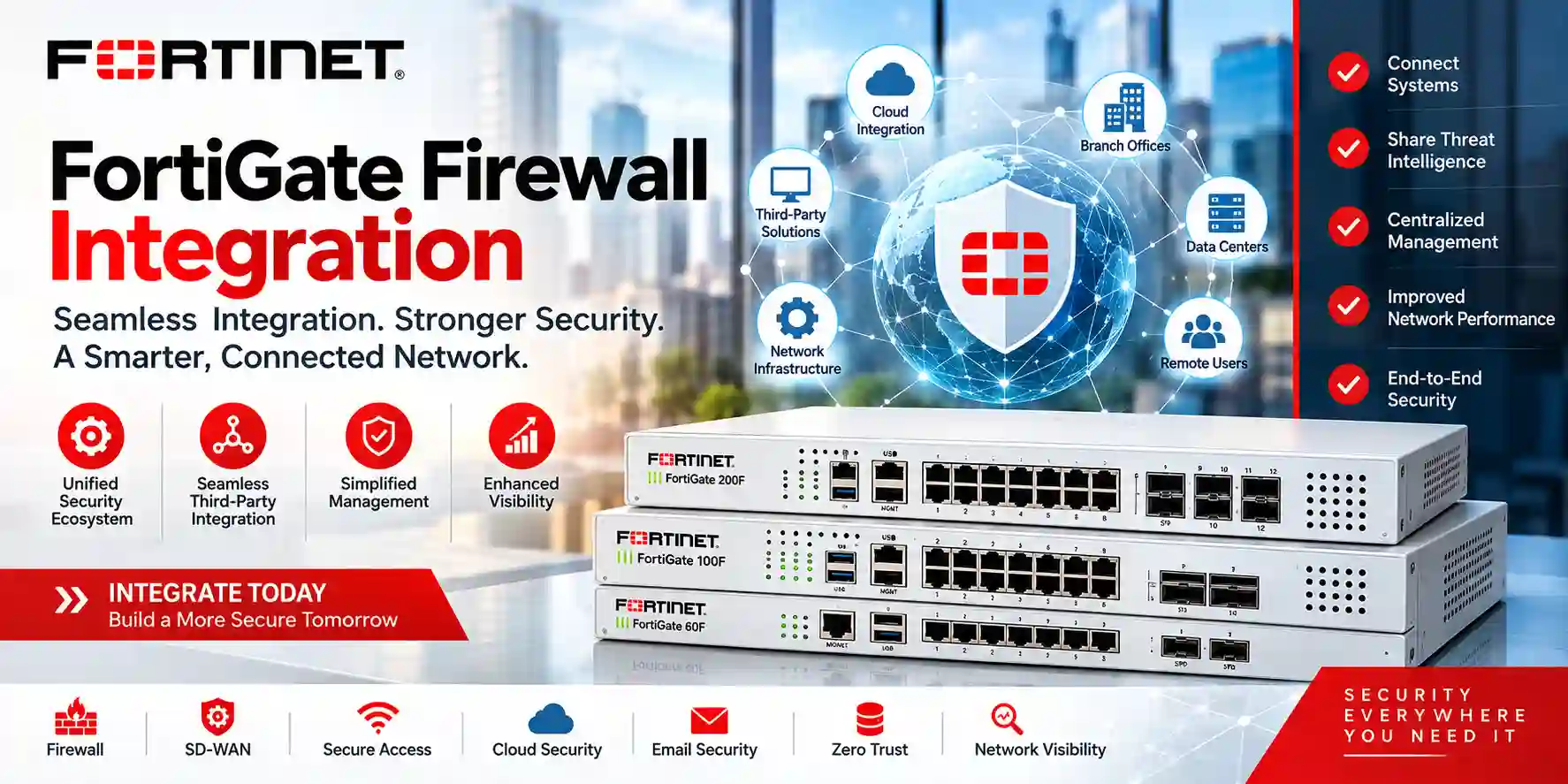
What is a FortiGate firewall migration?
A FortiGate firewall migration is the controlled process of moving required network-security functions from a source firewall to a target FortiGate. The source can be an older FortiGate or a supported third-party platform. The work normally includes inventory, source configuration backup, target sizing confirmation, configuration conversion or selective rebuild, interface and zone mapping, routing and NAT review, VPN validation, security-policy review, authentication and certificate checks, staging, test execution, change-window cutover, rollback preparation, monitoring and handover documentation. The goal is not to reproduce every historical line blindly; it is to preserve required business services and security intent on a supportable target design.
FortiGate migration service scope
1. Discovery and dependency mapping
Record the current firewall model, software version, interfaces, WAN circuits, VLANs, routing, policies, NAT, public services, VPN peers, remote access, identity sources, logging, high availability, central management and business applications that depend on the firewall. A migration plan is much safer when the team can state exactly what must work after cutover.
2. Conversion and target design
Use the appropriate Fortinet-supported conversion path where applicable, then review the result against the target FortiGate model and FortiOS design. Different hardware can use different interface names and capabilities, while third-party firewalls can express zones, NAT, policy and VPN behavior differently. Conversion is a starting point for validation, not a substitute for engineering review.
3. Staging and pre-cutover testing
Prepare the target device before the production window. Confirm management access, firmware strategy, licenses and subscriptions, interface assignments, routes, DNS dependencies, policies, VPN definitions, log destinations and administrative controls. Where the environment allows it, test representative connectivity before the final cable or routing change.
4. Cutover and rollback control
Define who changes ISP handoffs, switch uplinks, routes, public addresses, DNS, VPN peers and any adjacent systems. Keep the source firewall and configuration backup available until the success criteria are met. A rollback trigger should be objective, such as loss of a critical application, unresolved routing failure or inability to restore essential VPN connectivity within the approved window.
5. Validation and stabilization
After traffic moves to the FortiGate, validate internet access, DNS, business applications, published services, site-to-site tunnels, approved remote access, VLAN communication, security profiles, logging and monitoring. Review denied traffic and error logs carefully: some blocks indicate genuine policy enforcement, while others reveal a dependency that was missing from discovery.
6. Documentation and handover
Retain the approved configuration backup, interface map, policy notes, VPN peer list, administrator-access method, change record and test results. The handover should distinguish inherited rules from newly designed controls and identify follow-up tasks such as cleanup of temporary policies, subscription checks, monitoring adjustments or a later policy-optimization phase.
FortiConverter and migration paths
Fortinet positions FortiConverter as its configuration-migration service and toolset for moving supported legacy firewall configurations to FortiGate and for moving configurations between FortiGate models. For third-party migrations, Fortinet lists support for major platforms including Check Point, Cisco, Forcepoint, Juniper, Palo Alto Networks, SonicWall, Sophos and WatchGuard, with the exact supported features depending on the current FortiConverter conversion matrix. For FortiGate-to-FortiGate moves, current FortiOS releases can integrate the FortiConverter workflow into the FortiGate management experience when the documented account, connectivity and service requirements are met.
That does not mean every source function should be assumed to translate identically. Firewall vendors use different object models, NAT logic, policy semantics, VPN options and authentication mechanisms. The converted output should be reviewed against the target architecture, especially interface mappings, policy order, route preference, destination NAT or virtual IP behavior, IPsec parameters, certificate dependencies, administrator controls, high availability, VDOM design and any feature that depends on separate licensing. Fortinet also documents that FortiToken handling can require separate attention rather than being treated as ordinary configuration conversion.
For a same-model replacement, backup-and-restore can be appropriate when Fortinet’s model and software requirements are satisfied. For different FortiGate models, Fortinet recommends using the supported conversion process instead of manually editing a configuration and loading it onto unrelated hardware. FourTeck’s migration planning therefore starts by identifying the source and target models, the exact FortiOS releases, and the business services that must survive the change.
What should be reviewed before the migration?
| Area | Migration questions | Validation focus |
|---|---|---|
| Interfaces and zones | Which source interfaces map to target ports, VLANs, LAGs or zones? | Link state, addressing, VLAN tags, MTU, routing adjacency and management access. |
| Policies and objects | Which rules are active, obsolete, temporary or duplicated? | Policy order, source/destination, services, schedules, identity and security profiles. |
| NAT and public services | Which services rely on source NAT, destination NAT, VIPs or public IP bindings? | Inbound reachability, outbound source identity, ISP routing, DNS and third-party allowlists. |
| VPN | How many IPsec peers and remote-access workflows exist, and what depends on them? | Phase settings, routes, selectors, authentication, peer changes and application tests. |
| Authentication | Are LDAP, RADIUS, SAML, MFA, local users or tokens involved? | Reachability, certificates, secrets, group mapping, MFA behavior and administrator login. |
| Operations | Does the firewall report to FortiManager, FortiAnalyzer, SIEM, syslog, SNMP or monitoring platforms? | Logging, alerts, backups, time synchronization, administrator workflow and handover. |
Migration is a change-control project, not only a conversion task
A technically valid converted configuration can still produce an unsuccessful change if the cutover misses a business dependency. Public DNS may still point to an old address. A partner may allowlist the old source IP. A site-to-site VPN peer may be configured to accept traffic only from a specific gateway. A switch may carry a native VLAN differently from the design document. A cloud service may use the firewall’s public identity for trust. A legacy server may depend on a permissive rule that nobody remembered to document. These are operational details, not conversion syntax problems.
For this reason, the migration plan should define application owners, test owners, the approved maintenance window, the expected interruption, communication steps, rollback criteria and the exact evidence required before the old firewall is removed. High-availability migrations need an additional sequence for cluster formation, heartbeat links, synchronization and failover testing. Multi-site migrations benefit from a pilot branch, a reusable configuration template and a site-variable checklist rather than attempting every location at once.
Related FourTeck Tanzania resources
FourTeck Tanzania technology solutions
Use the main Tanzania site to review the broader relationship between firewalls, switching, Wi-Fi, servers, collaboration and physical-security systems before planning a network-edge change.
IT and network services in Tanzania
Review service planning for firewalls, cybersecurity, switching and wireless infrastructure when the migration is part of a wider upgrade rather than an isolated appliance replacement.
Tanzania technology shop
Use the shop guidance to frame firewall sizing, lifecycle, licensing, accessories and supporting infrastructure when procurement and migration need to be approved together.
FortiGate 30G Tanzania
See a current FortiGate product example and the kinds of bandwidth, VPN, subscription and remote-access questions that should be checked before selecting a migration target for a compact site.
Grandstream GXP1625 Tanzania
Voice endpoints are a useful reminder that firewall cutovers can affect SIP, DNS, VLANs, QoS and external calling paths. Review dependent IP-phone and PBX traffic when telephony crosses the firewall or site-to-site VPN.
About FourTeck Tanzania
Understand FourTeck’s integrated technology approach when the firewall migration is connected to a broader branch, office or infrastructure project.
Tanzania project enquiry
Share the source firewall, target FortiGate, WAN bandwidth, VPN dependencies, policy count, maintenance window and desired scope so the migration discussion begins with the information that affects effort and risk.
FortiGate Firewall Migration Services Tanzania
FortiGate Firewall Migration Services Tanzania are relevant to organizations replacing an old firewall, refreshing an existing FortiGate, opening a new site with a different security platform, or standardizing branch security across several locations. The project should begin with the real network rather than a generic migration checklist. Record primary and backup internet circuits, public IP addresses, LAN and server VLANs, guest networks, CCTV or IoT segments, voice services, branch tunnels, remote-user access, cloud dependencies and any inbound applications. Tanzania deployments can range from compact offices to hospitality properties, logistics sites, education environments, healthcare facilities and multi-branch businesses, so the firewall may sit in very different operational contexts. A migration that works for an office with one WAN link and a few VLANs is not automatically suitable for an organization with redundant circuits, HA appliances, many IPsec peers and public services.
For a FortiGate-to-FortiGate refresh, the first technical questions are the exact source model, target model, FortiOS releases, interface differences and licensed features. A different target model can have a different port layout, naming convention, storage capability and capacity profile. The configuration therefore needs supported conversion and review rather than an assumption that a backup can be restored unchanged. For a migration from Cisco, Palo Alto Networks, Check Point, Sophos, SonicWall, Juniper, WatchGuard or another supported platform, the emphasis shifts to how the source vendor expresses policies, NAT, objects, zones and VPNs. FortiConverter can accelerate translation, but converted rules still need to be checked against FortiGate behavior and the intended target security architecture.
Tanzania procurement should separate hardware supply from migration engineering. A FortiGate quotation may include the appliance and subscriptions but not discovery, conversion, staging, after-hours cutover, VPN coordination, rollback support or documentation unless those tasks are explicitly listed. Buyers should provide the current firewall configuration size at a high level, policy and VPN counts, number of sites, internet speeds, HA requirement, management platforms, desired FortiGuard and FortiCare terms, and the target change date. This gives the project team a better basis for deciding whether the migration can be handled as a straightforward appliance refresh or requires a deeper design and testing engagement.
FourTeck Tanzania can be used as a coordination point for the technology discussion without assuming that every site has the same cabling, power, ISP or support conditions. The most useful outcome is a migration plan that states what will be converted, what will be rebuilt, how the target will be tested, who owns each external dependency, when rollback occurs, and what evidence closes the change successfully. That structure is especially important when the firewall protects revenue-generating applications or connectivity between Tanzania branches and regional offices.
FortiGate Firewall Migration Services Dar es Salaam
FortiGate Firewall Migration Services Dar es Salaam should be planned around the high concentration of offices, retail operations, hospitality properties, logistics companies, professional services, education organizations and regional headquarters that depend continuously on internet and cloud applications. In these environments, the firewall may carry Microsoft 365 or other SaaS traffic, IP telephony, video meetings, public web services, site-to-site VPN, guest Wi-Fi, CCTV monitoring and remote administration at the same time. A change window therefore needs application-specific validation rather than a single test that confirms websites open. Before migration, identify which departments and systems require continuous access, which public services are exposed through destination NAT, which partners allowlist the current public address, and which branch links must re-establish quickly after the new FortiGate becomes active.
Dar es Salaam sites frequently have more than one connectivity option or plan to add link resilience. If the current firewall uses dual WAN, policy-based routing, SD-WAN or provider-specific NAT, the migration must preserve the intended path behavior, not just the interface addresses. Health checks, source IP changes, DNS records, upstream routing and session behavior during failover should be included in testing. Businesses that run payment applications, call systems or cloud-hosted ERP can have dependencies that react differently when traffic moves to another ISP. For this reason, a migration plan should state which applications must prefer a primary circuit, which can use either path and whether a public service remains reachable during provider changes.
A dense office network can also have many VLANs behind the firewall. Staff, guest, server, voice, camera and management networks may use different policies. When a new FortiGate is introduced, interface and VLAN mapping should be checked against the switch trunks before cutover. An apparently correct firewall configuration can still fail if the target port is connected to the wrong switch interface or the native and tagged VLAN expectations do not match. Labeling the physical handoffs and keeping a cable map with the rollback plan reduces confusion during a short maintenance window.
For quotation preparation in Dar es Salaam, provide the current and target firewall models, FortiOS version, WAN providers and speeds, public IP details, number of VLANs, approximate policy count, IPsec peers, remote-user method, HA requirement and any FortiManager or FortiAnalyzer dependency. State whether the project needs only configuration conversion or complete staging, onsite or coordinated cutover, post-change monitoring and documentation. A clear scope allows the technical team to distinguish routine migration work from complex changes involving ISP coordination, high availability or multiple business-critical services.
FortiGate Firewall Migration Services Mwanza
FortiGate Firewall Migration Services Mwanza can support branch offices, healthcare environments, trading businesses, education sites, hospitality operations, warehouses and regional facilities that need a controlled transition from an older firewall or another vendor to FortiGate. The first planning priority is connectivity reality at the site. A branch may use fiber, fixed wireless, mobile backup or a combination, and the migration design needs to match the actual ISP handoff. Record whether the provider supplies a public address directly to the firewall, uses an upstream router, requires VLAN tagging, or imposes any device registration or MAC-address expectation. These small details can determine whether the new firewall gains connectivity immediately after the physical change.
Mwanza branches connected to headquarters often depend on site-to-site IPsec for ERP, file services, identity, voice or management. The migration should inventory every tunnel, peer address, remote subnet, local subnet, proposal, route and monitoring dependency. Avoid overlapping address space when the new design is part of a wider branch standard. If the organization is moving from a policy-based or vendor-specific VPN model, confirm how the target FortiGate will route traffic after conversion. A tunnel that reports as established is not enough evidence; test the applications and routes that actually use it.
For sites with limited local IT resources, staging and remote-support preparation deserve particular attention. The target device should be prepared with a documented management path, and the cutover plan should identify who can provide console access if remote connectivity is lost. Power protection, rack position, cable labels and a known-good configuration backup are practical parts of migration readiness. If the old firewall must be restored, the team should know exactly which cables and addresses return to the previous state. This is more reliable than trying to reconstruct the old layout under time pressure.
When requesting migration assistance for Mwanza, include business hours, acceptable downtime, local contact availability, current firewall details, target FortiGate model, WAN links, VLANs, critical applications and VPN peers. Also identify whether policies should be migrated as closely as possible or whether the project includes cleanup and redesign. Some organizations prefer a conservative first change that preserves behavior and schedules policy optimization later; others use the refresh to remove unused rules and strengthen segmentation. The correct approach depends on risk tolerance, documentation quality and the time available for testing.
FortiGate Firewall Migration Services Arusha
FortiGate Firewall Migration Services Arusha are useful for hospitality properties, travel and tourism businesses, NGOs, professional offices, healthcare facilities, education organizations and branches where guest connectivity and business systems often share the same physical network infrastructure. A migration should preserve the separation between guest users, staff devices, back-office systems, cameras, point-of-sale equipment and management interfaces. Before converting the source configuration, document which VLANs and policies enforce those boundaries. If the existing firewall has accumulated broad allow rules to solve past support incidents, the migration is an opportunity to identify them, but tightening policy should be tested deliberately rather than mixed into the cutover without application-owner approval.
Hospitality and customer-facing environments need special attention to captive portals, DNS, web access, payment integrations and third-party remote support. A replacement firewall can change the public source address used by cloud systems or vendors, and a policy translation can affect services that were previously allowed by zone relationships rather than explicit rules. The discovery stage should therefore include not only firewall exports but also interviews with the teams that operate booking, payment, voice, CCTV and property-management systems. These applications may reveal dependencies that are invisible in a configuration file because the external system makes trust decisions outside the firewall.
If the Arusha site connects to Dar es Salaam or another regional office, test the site-to-site VPN with representative business traffic and not only ping. Confirm name resolution, authentication, access to required servers, voice quality where applicable and the ability of central administrators to monitor the branch. For dual-WAN sites, the change plan should also test link failure and recovery. A firewall migration is a good time to document which applications can run over a lower-capacity backup connection and which should be limited so critical traffic retains bandwidth.
A useful Arusha migration quotation should define whether FortiConverter is being used for a FortiGate-to-FortiGate move or for a supported third-party conversion, whether the target device is already procured, and whether the scope includes security-profile tuning, VPN recreation, switch changes, wireless VLAN adjustments or training. Share the expected maintenance window and local site constraints. If physical access is restricted to particular hours or depends on property operations, include those conditions in the plan so the cutover sequence reflects the business environment rather than a generic technical schedule.
FortiGate Firewall Migration Services Dodoma
FortiGate Firewall Migration Services Dodoma can help organizations modernize a security gateway while keeping formal change control, access requirements and documentation at the center of the project. Offices, institutions, NGOs, education environments, service organizations and contractors may have policies that require administrator separation, approved remote access, logging or documented configuration changes. Before a migration, record who owns the firewall, who approves changes, where backups are retained, which accounts have privileged access and which logging or monitoring systems must continue receiving events after the target FortiGate is introduced.
A FortiGate refresh can also coincide with higher internet speed, more cloud usage or a larger number of branch connections. The target device should be confirmed against inspected traffic, VPN demand, interface type, high-availability needs and expected growth rather than selected as a direct model-number replacement. If the source appliance is older, the organization may have changed significantly since it was first installed. The new migration plan should therefore ask whether every inherited rule still has a valid owner and whether the segmentation model still reflects current departments, guest access, servers, CCTV and operational devices.
For inter-office connectivity, list each tunnel and route as a testable service. A Dodoma office linked to another Tanzania location may depend on directory services, ERP, file shares, VoIP, camera viewing or centralized management over IPsec. The test plan should include those applications and record a responsible tester. Where the old firewall uses static routes that have grown over time, confirm route preference and overlapping networks before converting the configuration. Routing errors can be difficult to diagnose during a short maintenance window because the firewall may appear healthy while traffic silently follows an unintended path.
Procurement teams in Dodoma should request a migration scope that names the engineering outputs: source assessment, conversion or rebuild, target staging, interface map, policy review, VPN work, cutover assistance, rollback plan, post-change checks and final backup. If FortiCare, FortiGuard services or central management are part of the target design, include the exact subscription and registration requirements in the bill of materials. This prevents the technical team from reaching the change window with hardware in place but missing a service entitlement or management dependency required for the intended operating model.
FortiGate Firewall Migration Services UAE
FortiGate Firewall Migration Services UAE can address refresh projects for businesses with high-speed internet, cloud applications, distributed branches, remote users and data-center dependencies where the firewall replacement must be engineered around throughput and change control rather than treated as a quick appliance swap. UAE organizations may use multi-gigabit circuits, redundant WAN links, public cloud connectivity, complex NAT, multiple IPsec peers, centralized management and high-availability pairs. Before selecting the target FortiGate, confirm the security inspection profile and interfaces required for production traffic. A device that forwards raw traffic at the needed speed can still be unsuitable if the project expects extensive encrypted inspection, IPS, application control or VPN throughput at the same time.
For organizations coordinating UAE and East African sites, migration can be used to create a common branch design. Standardize naming, firmware targets, VLAN conventions, logging, IPsec templates and administrator controls while allowing hardware size and WAN details to differ by site. The FourTeck Fortinet UAE resource is relevant for FortiGate product, license and deployment context, while Firewall Dubai provides broader firewall planning information. Organizations with general UAE infrastructure requirements can also use FourTeck UAE to coordinate related IT and network needs.
A UAE cutover often involves parties beyond the firewall team. ISPs may need to confirm routed blocks or handoff details; cloud administrators may need to change routes; external partners may need to update allowlists; DNS owners may need to change public records; application teams may need to test services from outside the network. The migration runbook should assign these tasks before the maintenance window. High-availability replacements also need a clear sequence for cabling, cluster formation, synchronization, heartbeat testing and failure simulation after the production path is stable.
When requesting a UAE migration quote, state whether the source is FortiGate or another firewall vendor, the target appliance or appliance class, HA status, approximate policy and VPN counts, internet speeds, interface media, public services, central management, FortiGuard/FortiCare requirements and the approved change window. Separate one-time configuration conversion from complete migration delivery. This makes it clear whether the engagement includes engineering review, staging, onsite or remote cutover, external-party coordination, rollback support, documentation and a post-change observation period.
FortiGate Firewall Migration Services Uganda
FortiGate Firewall Migration Services Uganda can support organizations replacing branch firewalls, moving from another security platform to FortiGate, or standardizing multiple offices under a common policy model. Multi-site projects benefit from separating global standards from local variables. The standard can define administrator roles, logging, DNS, NTP, security profiles, VLAN naming, IPsec parameters and backup procedures, while each site supplies its own WAN addressing, local subnets, bandwidth and application exceptions. This makes the migration repeatable without assuming every Ugandan branch has the same connectivity or traffic profile.
The source configuration should be reviewed for hidden dependencies before conversion. Identify public services, partner allowlists, voice or PBX traffic, CCTV remote access, cloud applications, site-to-site tunnels and remote-user workflows. If the organization is migrating from a third-party firewall, compare the source zone model and NAT behavior with the intended FortiGate policy. A successful conversion preserves security intent, but differences between vendors can require design decisions after the automated translation. For example, a rule inherited from a broad zone may need a more explicit source and destination policy on the FortiGate.
Organizations operating in Uganda can also reference the FourTeck Uganda technology site for regional IT context. For the migration itself, the quotation request should include site count, source and target models, WAN types, policy count, VLANs, IPsec peers, high availability, central management and the acceptable downtime per location. If several branches are involved, identify a lower-risk pilot site and use the lessons from that cutover to refine the template before the next wave.
Post-migration validation in Uganda should include business applications rather than only network reachability. Test cloud login, branch-to-head-office systems, file access, voice, payment or operational services where relevant, DNS, remote administration and logging. If a secondary internet path exists, fail it deliberately during the test window and confirm which applications continue. Retain the old firewall and rollback information until the acceptance checks are complete. This staged approach is especially useful when a branch has limited local IT resources because it reduces the number of decisions that need to be made under outage pressure.
FortiGate Firewall Migration Services Kampala
FortiGate Firewall Migration Services Kampala are relevant to corporate offices, professional firms, retail organizations, healthcare facilities, education environments, hospitality businesses and branch networks where cloud usage and internet dependency can make a firewall change highly visible to users. The migration should begin with an application map. Ten users running payment systems, remote desktop, video meetings and large cloud synchronization can create a different risk profile from a larger office doing mostly web and email. Identify which applications are business-critical, which are latency-sensitive, and which external services rely on the current public IP or firewall identity.
Kampala environments may have several internal segments for staff, guests, servers, voice, cameras and management. If the source firewall routes between these VLANs, the target FortiGate must reproduce the required policy boundaries and switch trunk relationships. If inter-VLAN routing currently happens on a core switch, the migration team should confirm which controls remain on the switch and which move to the firewall. Mixing an architecture change with a firewall replacement can be valuable, but it expands the test scope and should be recognized in the project estimate.
For organizations with headquarters or branches outside Uganda, IPsec tunnel migration should be coordinated with the remote side. If the local public address changes, the peer may need an update at the same maintenance time. If the organization uses dynamic DNS, certificate-based authentication or specific IKE identity, include those elements in the runbook. A tunnel status indicator is only the beginning of validation; test routes, DNS, authentication and the applications that cross the tunnel. For remote users, verify the supported access design on the selected FortiGate and current FortiOS rather than assuming every legacy VPN feature works in the same way.
A Kampala migration quotation should identify whether the project is a like-for-like refresh, a capacity upgrade, a security redesign or a move from another vendor. Provide the source export and network diagram where possible, plus policy and VPN counts, WAN bandwidth, ISP handoff details, target model, subscription term, change window and rollback expectations. State who owns testing for finance, cloud applications, voice and branch connectivity. Assigning those owners before the change prevents the firewall engineer from having to guess whether an application is working correctly during the final acceptance decision.
FortiGate Firewall Migration Services Arua
FortiGate Firewall Migration Services Arua should place manageability and recovery planning at the center of a regional-site cutover. A branch that is physically distant from the main IT team needs a target firewall that can be understood and supported remotely after migration. Interfaces should be named clearly, VLANs should follow an organized address plan, policies should include meaningful comments, and configuration backups should be stored where authorized support staff can retrieve them. The migration is an opportunity to replace undocumented local exceptions with a more consistent branch standard, provided required business traffic is tested before restrictive policies are enforced.
Connectivity conditions should be recorded before the new firewall is staged. Note the ISP handoff device, addressing method, whether public IP is static or dynamic, DNS servers, link bandwidth and the availability of a backup connection. If the source firewall uses dual WAN, document how it decides a link has failed and which traffic should use the secondary path. The target FortiGate can implement health-based path decisions, but the backup circuit may have less capacity. During migration testing, verify that priority applications work under the constrained path and consider limiting guest or bulk traffic so the continuity link is not immediately saturated.
For remote support, prepare an out-of-band or local console plan whenever possible. A configuration error affecting management access can turn a remote cutover into an unnecessary site visit. The local contact should know which cable moves from the old firewall to the new one, where the console connection is available, and what conditions trigger rollback. Keep the old firewall powered and unchanged until the target passes acceptance. If the site uses an IPsec tunnel to Kampala, Tanzania or another office, confirm that the remote peer can be changed during the same window if the public identity differs.
An Arua migration request should include site photos or a simple rack diagram when physical layout may matter, plus WAN details, source firewall, target FortiGate, switch uplink, local VLANs, IPsec requirements, security services and expected downtime. Define whether the target is staged centrally and shipped to the branch or configured at the site. This affects how WAN credentials, certificates, licensing and final interface verification are handled. Clear responsibilities reduce travel, shorten the maintenance window and make rollback more predictable.
FortiGate Firewall Migration Services Mbarara
FortiGate Firewall Migration Services Mbarara can help a growing branch move to a security platform that has enough capacity for the next stage of cloud usage, user growth and inter-office traffic. Migration planning should therefore include future requirements as well as the current configuration. Record planned internet upgrades, additional cameras or access points, new cloud applications, more remote users, expected branch tunnels and any intention to introduce deeper inspection. A target appliance that barely matches today’s load can become the next bottleneck soon after the migration is complete.
Policy cleanup is another decision to make before the change. Older firewalls often contain rules created for temporary projects, departed vendors, retired servers or troubleshooting. Automatically carrying every historical object forward may preserve risk and complexity. At the same time, deleting rules during cutover without an owner review can interrupt a valid but poorly documented dependency. A practical method is to identify obviously unused or expired items during assessment, classify uncertain rules for later review, and keep the production migration focused on services that can be tested. A second optimization phase can then tighten the configuration using traffic evidence.
If the Mbarara branch connects to central services, test application performance over IPsec after the FortiGate is active. Encryption overhead, routing differences or a changed MTU can affect applications in ways that a simple ping does not show. Validate ERP transactions, file transfers, voice or other operational workflows that matter to the branch. If the network has a secondary WAN path, perform a real failover and recovery test while the migration team is available, documenting which sessions reconnect automatically and which need user action.
For pricing, provide a high-level configuration profile rather than only the product names. Include number of policies, address objects, NAT rules, VPN tunnels, VLANs, WAN links, public services and authentication integrations. Identify whether the old firewall is FortiGate or a third-party platform and whether FortiConverter is expected. If the migration includes FortiManager registration, FortiAnalyzer logging, security-service tuning or branch template development, list those tasks separately. This lets procurement compare complete implementation scopes instead of choosing a quotation that appears cheaper because important migration work was not included.
FortiGate Firewall Migration Services Gulu
FortiGate Firewall Migration Services Gulu are useful for businesses and institutions that need a standardized firewall edge at a regional location where central IT may provide most administration remotely. The target configuration should be understandable without local historical knowledge. Use consistent interface names, policy comments, address-object conventions and backup procedures. Before migration, review the source firewall for local exceptions such as temporary port forwards, remote-support rules, alternative DNS settings or static routes that were added during previous incidents. Each exception should either have a current business owner or be marked for controlled retirement.
The cutover plan should account for the local connectivity and power environment. Confirm the ISP device, cabling, UPS coverage and whether the target FortiGate can be staged while the existing firewall remains in service. A preconfigured device that has already been licensed, backed up and reviewed reduces work during the outage. However, WAN addressing and provider handoffs should still be verified at the site because assumptions from an old diagram can be wrong. If remote engineers are leading the change, make sure a local person can provide console access, move labeled cables and read indicator status when requested.
For a Gulu branch that depends on cloud applications, define what happens if the primary link fails after migration. Secure SD-WAN or link-monitoring policies can move traffic, but the secondary circuit must have enough capacity for the critical workload. Identify the applications that should remain available and those that can be deprioritized. If the branch connects to a headquarters firewall through IPsec, test tunnel re-establishment over the intended WAN paths and verify routes from both sides. This is especially important when the migration changes the source public address or the local subnet plan.
A complete migration request for Gulu should include the site role, business hours, source model, target FortiGate, FortiOS plan, WAN links, local networks, VPN peers, authentication dependencies and desired security services. State whether the organization wants a close behavioral migration first or also wants segmentation and policy redesign. For a remote site, simplicity has operational value; the best configuration is not the one with the most features enabled, but the one that meets security requirements, is properly licensed and can be supported consistently after the project team leaves the change window.
FortiGate Firewall Migration Services Kenya
FortiGate Firewall Migration Services Kenya can support organizations refreshing existing FortiGate appliances or moving branch, campus and office networks from another firewall platform to FortiGate. Kenya deployments may range from offices with high-speed fiber and extensive cloud usage to regional branches with different ISP technologies and support conditions. A multi-site company should avoid assuming that the same target model and configuration fits every location. Classify sites by inspected bandwidth, user and device load, VPN demand, number of internal zones, high-availability requirements and local public services, then select an appropriate FortiGate tier and template for each class.
Organizations coordinating Kenya and Tanzania operations can use a common migration framework: inventory, source backup, target design, conversion, peer review, staging, application test plan, change window, rollback, validation and documentation. The FourTeck Kenya site provides regional technology context for Kenyan requirements. The technical migration itself should keep local variables explicit, especially WAN addressing, DNS, carrier handoffs, branch subnets and application dependencies. This prevents a standardized template from accidentally carrying another site’s addresses or routes into production.
Third-party-to-FortiGate projects should identify the exact source vendor and software release before assuming conversion coverage. FortiConverter supports major firewall vendors, but the current conversion matrix and source features should be checked for each engagement. Policies, NAT and routing are usually central to the migration, while specialized features, certificates, authentication workflows and advanced VPN options can require additional work. The safest scope describes which configuration areas will be converted automatically, which will be rebuilt manually and which will be tested by application owners.
Kenya procurement teams should ask for the target FortiGate hardware, subscriptions, accessories and migration work as separate but connected components. Include the quantity of sites, FortiCare and FortiGuard term, central management needs, HA pairs, optics or interface requirements, policy and VPN counts, and target rollout schedule. For multiple branches, use a pilot and phased deployment rather than a single all-sites change when practical. The first migration can expose undocumented dependencies and improve the template, reducing risk and engineering time for later locations.
FortiGate Firewall Migration Services Kuwait
FortiGate Firewall Migration Services Kuwait can help businesses replace an aging perimeter firewall, increase security capacity for faster internet, standardize branch connectivity or move from another vendor to FortiGate. A Kuwait migration should start with the expected production load. High bandwidth, encrypted web traffic, cloud applications, site-to-site VPN, remote users and public services can create a materially different target requirement from the source appliance’s age or product name. Confirm inspected throughput, interface speeds, redundancy, VPN scale and the security services the organization intends to enable before finalizing the new hardware.
For organizations using dual WAN or business-critical cloud applications, document source-address behavior and external trust relationships. Payment providers, SaaS platforms, remote partners or hosted services may permit traffic only from known public addresses. When the new FortiGate changes NAT behavior or an ISP handoff changes during the refresh, these integrations can fail even though general internet browsing works. Include external allowlists, DNS and partner VPN updates in the migration runbook so they are handled as planned tasks rather than discovered after go-live.
The FourTeck Kuwait technology site can be used for broader Kuwait networking and firewall procurement context. For the migration scope, state whether FortiConverter will be used, whether the source is another FortiGate or a supported third-party platform, and whether the project includes policy cleanup, VPN recreation, certificate handling, high-availability work, central management or post-cutover monitoring. These tasks can materially change effort even when two projects use the same target appliance.
A well-defined Kuwait quotation should identify the source model and software, target FortiGate, FortiOS plan, ISP circuits, public IPs, VLANs, routes, policy and NAT counts, IPsec peers, remote-access method, FortiManager or FortiAnalyzer integration and maintenance-window constraints. Decide how the old firewall remains available for rollback and how long it will be retained after the successful change. The migration should close with a known-good backup and documented test results, not simply the observation that users can reach the internet.
FortiGate Firewall Migration Services Ghana
FortiGate Firewall Migration Services Ghana can support offices, financial and professional services, retail, education, healthcare, hospitality, logistics and branch networks that need to replace an old firewall without losing visibility into the business systems protected by it. The migration should begin by distinguishing internet-edge functions from internal segmentation. Some organizations use the firewall only between LAN and WAN, while others route multiple internal networks through it and rely on the device for server isolation, guest access, camera separation and policy between departments. The target architecture and testing effort are very different in those two cases.
When converting a source configuration, use the firewall rules as evidence of intended access but not as the only source of truth. Old configurations can contain disabled rules, duplicates, temporary access, objects with unclear names and broad services that accumulated over time. Interview application owners and review traffic logs where practical to understand which connections are still required. If the project timeline does not allow deep optimization, document uncertain rules and preserve them for the initial cutover, then schedule a separate cleanup phase after the network is stable and traffic can be observed on the FortiGate.
Ghana branches with headquarters elsewhere may depend heavily on IPsec. The migration should coordinate both tunnel endpoints when addresses, proposals or routing are changing. Confirm the remote peer has an engineer available during the cutover and that testing covers real applications. If centralized identity, DNS or management depends on the tunnel, loss of that connection can also affect administrator access to the branch. Local break-glass management and a console plan are useful safeguards.
For procurement, request a statement of work that makes configuration review, conversion, staging, cutover and post-migration validation visible rather than hiding everything under a generic installation line. Provide the source vendor, source model, target FortiGate, internet bandwidth, HA requirement, number of sites, policies, NAT entries, VLANs and VPN tunnels. Include any compliance or audit documentation expectations. The final handover should record the target configuration, change results, known exceptions, monitoring destinations and any follow-up actions so the operational team can support the firewall after the migration project is complete.
FortiGate Firewall Migration Services Nigeria
FortiGate Firewall Migration Services Nigeria can help organizations move business-critical network security to a new FortiGate while accounting for multiple internet links, distributed sites, cloud services, remote users and operational applications. For larger environments, the firewall may have hundreds of policies and objects, multiple routing domains, HA, IPsec peers, logging integrations and different administrator roles. Such a migration should be treated as a program with discovery and rehearsal rather than as a single maintenance-night activity. The team should establish a configuration freeze period or change-capture process so late edits on the source firewall are not lost after the target configuration has already been prepared.
Multi-WAN environments require careful NAT and routing review. A policy that looks correct can still send traffic with a different public source address, breaking cloud allowlists or partner connections. Document which services use each public IP, which inbound applications depend on specific addresses, how link failure is detected and whether any routes are learned dynamically. If BGP, OSPF or another routing protocol is involved, the migration test should include neighbor establishment, route count, preference and failover behavior. These are specialized tasks that should be identified in scope rather than assumed to be part of a basic firewall conversion.
Organizations migrating from a third-party firewall should also decide whether the goal is functional equivalence or a redesigned FortiGate policy model. A direct translation can accelerate the first move, while a redesign can simplify zones, objects and security profiles. The latter needs more application knowledge and acceptance testing. For business-critical sites, a phased approach can be safer: establish functional equivalence first, monitor the FortiGate, then optimize policies, inspection and segmentation under separate approved changes.
A Nigeria migration quotation should include the number of sites and HA pairs, source vendor and software, target FortiGate models, WAN speeds, routing protocols, policy and object counts, NAT complexity, IPsec and remote-access requirements, FortiManager/FortiAnalyzer use and the approved change windows. If a migration requires after-hours coordination with carriers, cloud teams or overseas VPN peers, include those dependencies. Acceptance should be based on a test matrix covering applications, VPNs, public services, logs and failover, with clear rollback thresholds and a final configuration backup after stabilization.
FortiGate Firewall Migration Services Seychelles
FortiGate Firewall Migration Services Seychelles should account for the importance of dependable remote support and well-prepared staging when travel, site access or replacement logistics can be more constrained than in a large mainland city. Hospitality properties, professional offices, government-related environments, service companies and distributed facilities may rely on the firewall for internet access, guest networks, site-to-site VPN, cloud applications, voice and camera access. Before the change, create a physical and logical inventory that can be understood by both the remote engineer and the person at the site: cable labels, ISP handoff, switch uplink, WAN addressing, VLAN list, management path and rollback cable positions.
Staging is especially valuable. Register and license the target FortiGate, confirm the intended FortiOS release, prepare the converted configuration, review interfaces, and test administrative access before the maintenance window. Where practical, keep the target offline from production but powered and ready for final WAN and LAN connection. Verify that subscriptions and time synchronization are active, because security profiles and certificate validation can depend on correct service connectivity and clock state. The migration plan should also identify whether internet access is needed during the FortiConverter process and how that requirement will be satisfied without disrupting the source environment.
For sites connected to a regional headquarters, remote peer coordination should be scheduled in advance. A public IP change, tunnel identity change or altered routing design can require action outside Seychelles. If the site has only one critical internet circuit, define the rollback point early so troubleshooting does not consume the entire maintenance window. If a backup path exists, test whether management access is possible through it and whether the bandwidth is sufficient for the essential applications that must remain operational during a primary-link problem.
A Seychelles migration enquiry should include source and target firewall details, exact site role, WAN handoff, public addressing, business hours, allowed outage, local technical contact, VPN peers, VLANs and important applications. State whether onsite work is expected or whether the project should be designed for remote staging with local hands. Clear documentation has extra value in this environment because it reduces dependence on emergency travel and gives future support engineers a reliable record of the new FortiGate architecture, subscriptions, backups and recovery procedure.
FortiGate migration quotation checklist
A useful quotation is easier to prepare when the request includes both technical complexity and commercial scope. Share as much of the following as is available; unknown items can be identified during discovery rather than guessed.
Vendor, model, software version, HA status and whether the configuration can be exported.
Selected model or expected capacity, FortiOS plan, FortiCare/FortiGuard term and HA requirement.
WAN circuits, public IPs, bandwidth, ISP handoff, VLANs, routing protocols and backup links.
Approximate policies, objects, NAT/VIPs, routes, VDOMs, SD-WAN rules and public services.
IPsec peers, remote-user method, LDAP/RADIUS/SAML, MFA and certificate dependencies.
Maintenance window, allowed downtime, onsite/remote requirement, rollback expectation and post-cutover support.
Frequently asked questions about FortiGate firewall migration
Can I restore an old FortiGate configuration directly to a different FortiGate model?
Do not assume a configuration from one model can be restored unchanged to a different model. Fortinet provides supported FortiConverter workflows for FortiGate-to-FortiGate migration because interfaces and model-specific behavior can differ. The source and target models, FortiOS versions and configuration features should be reviewed before the migration method is selected.
Can FortiConverter migrate from another firewall vendor to FortiGate?
Fortinet lists support for multiple third-party firewall vendors, including major platforms from Check Point, Cisco, Forcepoint, Juniper, Palo Alto Networks, SonicWall, Sophos and WatchGuard. Exact source versions and convertible functions should be checked against the current FortiConverter support matrix. Converted output still needs review and validation on the target FortiGate.
How much downtime does a FortiGate migration require?
There is no universal downtime figure. The interruption depends on the physical topology, WAN handoff, HA design, number of external dependencies, target staging, public IP changes, VPN peer coordination and how quickly application testing can be completed. A good project minimizes production work by completing conversion, review and staging before the approved change window.
Should old firewall rules be cleaned up during migration?
Obsolete rules should ultimately be removed, but the timing should match the organization’s risk tolerance and documentation quality. A migration can include cleanup when rule ownership is known and testing is available. For poorly documented environments, a safer plan may preserve uncertain behavior for the initial change, then use FortiGate logs and application-owner review for a controlled optimization phase.
What should be tested after the new FortiGate goes live?
Test internet access, DNS, business SaaS, internal applications, published services, site-to-site VPNs, approved remote access, authentication, VLAN communication, security inspection, logging, monitoring and any dual-WAN failover that forms part of the design. The exact checklist should be based on discovered dependencies and include named application owners where possible.
Does FortiConverter remove the need for engineering review?
No. Automated conversion reduces manual translation work, but the target configuration should still be reviewed for interface mappings, route behavior, policy order, NAT, VPN, licensing, certificates, authentication and model-specific differences. The migration also has operational tasks that no configuration converter can complete, such as application testing, ISP coordination and rollback control.
Can a FortiGate migration include high availability?
Yes, but HA increases the planning scope. Both appliances, heartbeat links, interface mapping, synchronization, power, licensing, switch connections and the failover test need to be included. The change sequence should state when the cluster is formed and how traffic will be restored if the new pair does not pass acceptance.
What information should I send for a migration quote?
Send the source firewall vendor/model/software, target FortiGate or required capacity, WAN speeds, public IP information, VLANs, approximate policy and NAT counts, IPsec peers, remote-access method, authentication integrations, HA status, central management, maintenance window, number of sites and whether you need conversion only or complete staging and cutover support.
Decision recap: build the migration around business continuity
The safest FortiGate migration is the one that makes assumptions visible before production changes begin. Confirm the target appliance and subscriptions, document the source environment, choose the supported conversion path, map interfaces and routes, review policies and NAT, prepare VPN peers, stage the target, define a real application test plan, assign owners, keep a rollback path, and retain the old firewall until acceptance is complete. Multi-site organizations should use pilot sites and repeatable templates, while complex HA or routing environments should be scoped as engineering projects rather than basic installation work.
FourTeck can help organize the migration requirement and quotation around the source firewall, target FortiGate, configuration complexity, regional site conditions and desired cutover support. The objective is a controlled transition with a supportable FortiGate configuration and clear post-migration documentation.
Prepare your FortiGate migration consultation
For the fastest technical discussion, provide the current firewall vendor and model, software version, target FortiGate if already selected, number of WAN links, internet speeds, VLANs, policies, NAT rules, VPN tunnels, remote-access method, public services, HA requirement, management platforms, preferred subscription term and target change date. If the source configuration is available, note whether it can be shared securely for assessment. If you do not yet know the target FortiGate, provide the protected bandwidth, users, devices and security services so sizing can be discussed before migration work is estimated.