
FortiGate, FortiSwitch and FortiAP Network Integration
FortiGate, FortiSwitch and FortiAP Network Integration brings firewall policy, wired switching and business Wi-Fi into a coordinated Fortinet LAN edge. Fortinet documents a FortiGate-to-FortiSwitch-to-FortiAP topology in which FortiLink provides FortiGate management of compatible FortiSwitch units, while FortiAP access points can be discovered, authorized and managed through the FortiGate wireless controller. For a business, the value is not simply that all three product families carry the same brand. The value comes from designing addressing, VLANs, access policy, PoE, uplinks, wireless profiles, firmware compatibility and operational responsibilities as one network instead of three separate purchases.
This page is written for organisations evaluating an integrated Fortinet architecture in Tanzania and connected regional markets. It does not assume a particular FortiGate, FortiSwitch or FortiAP model. The correct bill of materials depends on internet bandwidth, security inspection, number of users and devices, switch port density, PoE load, AP quantity, building layout, uplink speed, redundancy, firmware support and future growth. A useful quotation should therefore begin with the environment and required outcomes, then map those requirements to compatible Fortinet models and service terms.
What does FortiGate, FortiSwitch and FortiAP integration do?
In an integrated Fortinet LAN edge, FortiGate acts as the security and policy anchor, FortiSwitch provides managed wired access, and FortiAP provides centrally managed wireless access. Fortinet’s current documentation describes FortiLink as the method used by FortiGate to manage FortiSwitch units in FortiLink mode. Fortinet also documents the common topology in which a FortiAP is connected through a FortiSwitch, placed on an appropriate management network, discovered by FortiGate and then authorized for management. This architecture can give administrators a more connected view of the users and devices attached through wired and wireless access rather than forcing each layer to be administered as an unrelated island.
The architecture still requires engineering. The FortiGate model must support the scale of the managed switch environment and the expected security workload. FortiSwitch models must be selected for port count, uplink requirements, power budget and the endpoint mix they will serve. FortiAP models must match the wireless generation, coverage area, client density, antenna requirement, indoor or outdoor placement and the regulatory country profile required at the deployment location. Firmware combinations must be checked against current Fortinet compatibility guidance rather than assumed to work because the products share a vendor.
FourTeck Tanzania’s broader business technology services page explains why firewall, switching and Wi-Fi decisions should be coordinated with cabling, IP planning and operational support. Buyers can also review the Tanzania technology shop for category-level purchasing guidance before preparing a bill of materials.
FortiGate policy anchor
Firewall policy, routing, segmentation, VPN and supported security services can be designed around the users, applications and network zones that the LAN edge must protect.
FortiSwitch wired access
Managed switching provides endpoint connectivity, VLAN assignment, uplinks and PoE where supported. Port density and total PoE demand should be calculated before model selection.
FortiAP wireless edge
FortiAP can extend the architecture to staff, guest and device Wi-Fi. Coverage and capacity require radio planning, suitable backhaul and correct PoE rather than a simple AP-per-area rule.
FortiLink integration
FortiLink connects FortiGate management to compatible FortiSwitch units. The design should include management addressing, supported topology, redundancy goals and firmware compatibility.
A practical integration sequence
A successful project is easier when deployment follows a planned sequence. Start with the WAN and FortiGate foundation, because internet handoff, routing, DNS, administrative access and security policy become dependencies for the rest of the site. Next, define the FortiLink design and verify that the intended FortiGate and FortiSwitch software combination is supported. Connect and authorize the FortiSwitch, then build the VLAN structure required for staff, guest, servers, cameras, phones, management and other device groups. Only after that should switch ports be mapped to their intended endpoint roles.
For FortiAP deployment through a managed FortiSwitch, the AP needs appropriate Ethernet connectivity, power, a management path and discovery to the FortiGate. Fortinet’s deployment documentation shows creating or selecting an AP management VLAN, assigning that network to the relevant FortiSwitch ports and then authorizing the FortiAP from the FortiGate. Client SSIDs can then be associated with the VLAN or tunnel architecture selected for the site. The choice between local bridge and tunneled wireless traffic should be made according to topology, performance, security and operational requirements rather than copied from another organisation’s configuration.
The final stage is verification under realistic conditions. Test wired access, wireless authentication, DHCP, DNS, inter-VLAN policy, internet access, guest isolation, business applications, voice or video if used, failover if configured, and administrator visibility. Record device names, port mappings, VLAN IDs, IP ranges, SSIDs, firmware versions and backup procedures. FourTeck’s Tanzania approach page describes the value of treating interconnected systems as one design rather than as separate hardware deliveries.
Key design checks before buying FortiGate, FortiSwitch and FortiAP
| Design area | Questions to answer | Why it matters |
|---|---|---|
| FortiGate sizing | Internet speed, inspected traffic, VPN, users, devices, VLANs, branch links and growth. | Raw firewall throughput is not the same as performance with security services enabled. |
| FortiSwitch design | Port count, PoE devices, total PoE watts, uplink speed, aggregation, fiber and redundancy. | Enough ports do not guarantee enough power or uplink capacity. |
| FortiAP planning | Floor plan, wall materials, users per area, client types, applications, indoor/outdoor zones and mounting. | Coverage and capacity are different; radio planning affects both. |
| Compatibility | FortiOS, FortiSwitchOS and FortiAP versions plus model support. | Integration features can vary by release and hardware family. |
| Licensing & support | FortiCare, FortiGuard services, cloud or management requirements and term. | A hardware-only quote and a security-service bundle are not commercially equivalent. |
| Operations | Backups, logging, admin roles, monitoring, change control, documentation and renewal ownership. | A technically correct deployment still needs a maintainable operating model. |
Security segmentation across wired and wireless users
An integrated Fortinet architecture is most useful when network access is designed around trust and function. Staff, guests, servers, voice devices, cameras, building systems and administrator interfaces should not automatically exist in one unrestricted broadcast domain. VLANs can create logical separation, while FortiGate policy controls which networks may communicate and under what conditions. FortiSwitch ports can be assigned according to endpoint role, and FortiAP SSIDs can map wireless users into the appropriate policy zones.
Segmentation should remain understandable. Creating dozens of VLANs without a clear operational reason can make troubleshooting harder. Begin with meaningful security boundaries, identify the business flows that must cross those boundaries and deny unnecessary communication. If network access control, identity integration or more advanced device profiling is required, confirm the specific Fortinet products, feature entitlements and design implications separately. The integration project should solve an operational security requirement, not simply enable every feature that appears in the interface.
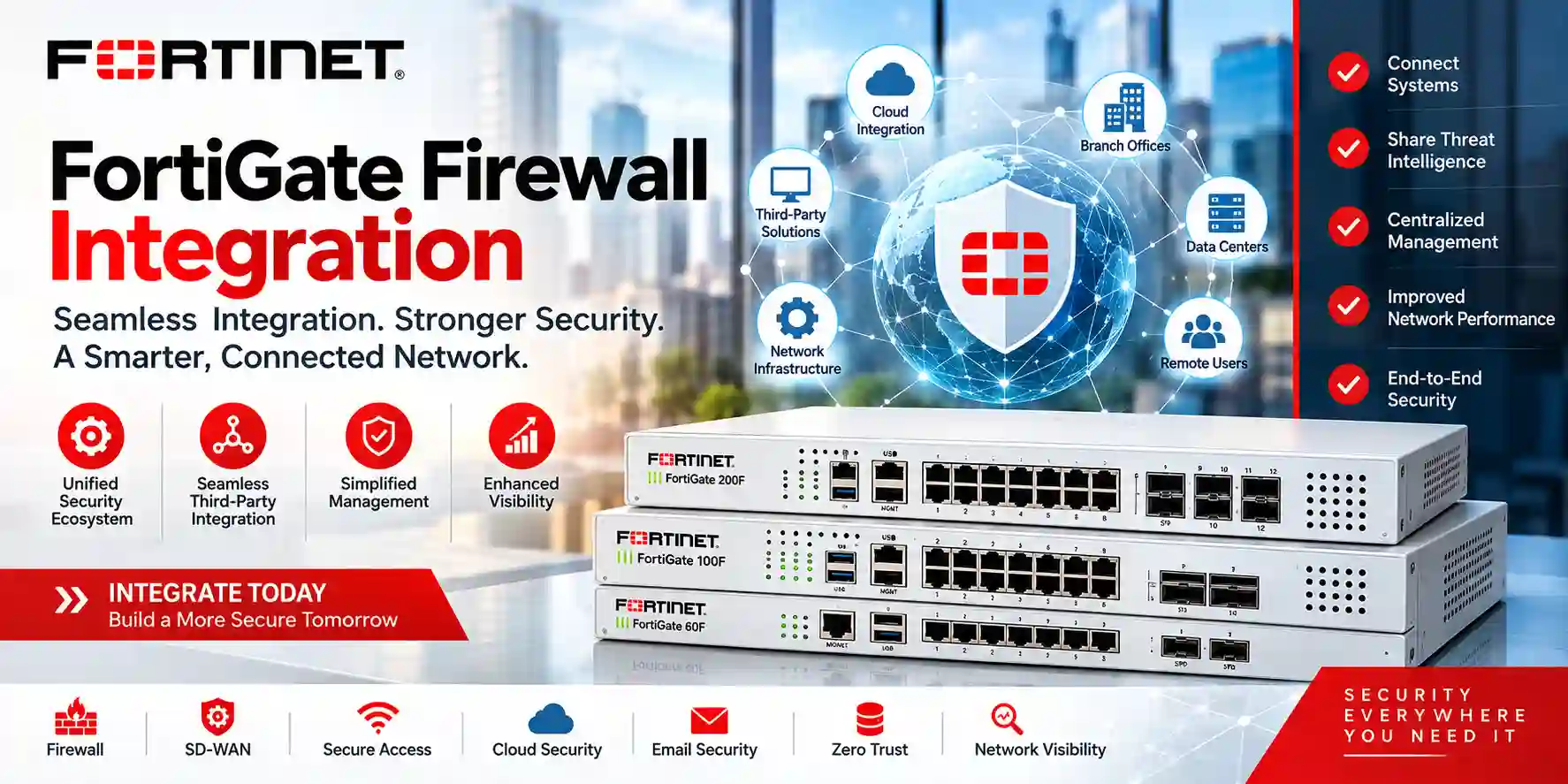
FortiGate, FortiSwitch and FortiAP Network Integration Tanzania
FortiGate, FortiSwitch and FortiAP Network Integration Tanzania is relevant to organisations that want firewall security, wired LAN access and business Wi-Fi to be operated as a coordinated environment. Tanzania projects can range from a compact office with one firewall, one access switch and a few access points to a multi-floor building, campus, hospitality property, warehouse or branch network. The correct architecture begins with the site rather than with a preset hardware bundle. User count, internet capacity, application traffic, number of wired endpoints, PoE devices, wireless client density, floor construction, branch connectivity and support expectations should all be documented before a model list is approved.
For a Tanzanian business, the integration can be especially valuable when several systems share the same network. IP phones, cameras, laptops, printers, servers and access points may all depend on the switching layer, while the firewall controls internet access and communication between VLANs. A PoE-capable FortiSwitch can simplify power delivery for compatible FortiAPs and other endpoints, but the total PoE budget must be checked against real device requirements. Wireless coverage should be planned from floor layout and user demand rather than by placing APs at equal visual intervals. Thick walls, multiple floors, meeting rooms, guest areas and outdoor spaces can change the radio design substantially.
Procurement should also distinguish the physical hardware from service entitlements and implementation. Ask for the exact FortiGate, FortiSwitch and FortiAP models; the intended FortiCare and FortiGuard terms; optics, mounting or power accessories; and the configuration scope. If the site already has Fortinet hardware, provide the existing models and software versions so compatibility can be reviewed. If the project is replacing another vendor, list existing VLANs, SSIDs, IP ranges, VPNs and critical firewall rules before migration. FourTeck Tanzania’s FortiGate 30G Tanzania page illustrates how a specific FortiGate model should be evaluated against the real network rather than treated as a generic firewall.
A complete Tanzania quotation should state whether the requirement is supply only, configuration, migration, installation, testing, documentation or ongoing support. It should also identify location, quantity and the current network condition. FourTeck’s Tanzania technology overview provides broader context for integrated network, security and infrastructure projects, while the Tanzania contact page is the verified route for submitting project details and quotation requirements.
FortiGate, FortiSwitch and FortiAP Network Integration Dar es Salaam
FortiGate, FortiSwitch and FortiAP Network Integration Dar es Salaam can support corporate offices, retail sites, hotels, clinics, education environments, logistics facilities and branch operations that depend on reliable internet and a manageable internal network. In a busy commercial site, the firewall, switch and wireless layers often carry very different traffic at the same time: cloud applications, video meetings, guest Wi-Fi, IP telephony, CCTV, file access, point-of-sale services and normal web use. An integrated design helps the technical team map those services into clear network zones and apply appropriate access policy rather than allowing every device to share one flat LAN.
Dar es Salaam deployments should pay close attention to internet design and uplink capacity. A site may have one primary connection, two independent circuits or a mix of fixed and wireless services. The FortiGate should be sized for the traffic after the intended security inspection features are considered, not only for the ISP headline speed. If multiple WAN paths are used, the project should define which applications require priority, how health is measured and what happens during a failover event. On the LAN side, access switches need sufficient uplink bandwidth so cameras, wireless users and business systems are not concentrated behind a bottleneck. Where fiber links are required between floors or racks, transceiver type and fiber infrastructure must be included in the bill of materials.
Wireless planning in Dar es Salaam should reflect the building. A glass-and-concrete office tower, warehouse, hotel, clinic and open retail space will not behave the same way. FortiAP quantity and placement should be derived from coverage and capacity objectives, expected users by area, wall construction, ceiling height and client capability. Guest Wi-Fi can be separated from staff networks, while operational devices can be placed in dedicated segments. If a FortiSwitch provides PoE to the APs, confirm the power requirement of every planned AP and leave sensible headroom for expansion. Do not assume that every PoE port can provide maximum power simultaneously without checking the switch’s total PoE budget.
For quotation preparation, provide the number of floors, approximate users, wired endpoints, AP locations, internet links, existing Fortinet equipment, required VLANs and implementation window. If the deployment must be completed with limited disruption, a staged migration can move switching and wireless segments in a controlled sequence while maintaining essential services. Documenting port assignments, SSIDs, VLANs and administrator access at handover is particularly valuable in multi-floor environments where future troubleshooting would otherwise depend on memory.
FortiGate, FortiSwitch and FortiAP Network Integration Mwanza
FortiGate, FortiSwitch and FortiAP Network Integration Mwanza is useful for businesses that need a professional network at a branch, warehouse, healthcare site, education facility, hospitality property or regional office. The practical challenge is often not the presence of network equipment but the way that equipment has been added over time. A firewall may have one addressing scheme, switches may be configured independently and wireless access points may use unrelated settings. Integration is an opportunity to document the existing environment, decide which elements should remain and build a consistent structure for wired and wireless access.
A Mwanza project should begin with a site inventory. Count physical switch ports, PoE endpoints, current access points, servers, cameras, phones and printers. Record the internet handoff, IP ranges, VLANs and any branch-to-head-office VPNs. If the site depends on business applications hosted elsewhere, identify which traffic is most sensitive to latency or disruption. The FortiGate can then be sized around real security and connectivity requirements, while FortiSwitch uplinks and FortiAP coverage can be planned around the edge load. This avoids a common procurement mistake in which the firewall is selected from internet speed, the switch from port count and the AP from advertised wireless speed without checking how the three layers interact.
Where continuity matters, power and environmental conditions should be included in the network plan. Firewalls, PoE switches and wireless infrastructure may depend on UPS support to remain available through short interruptions. The UPS must be sized for the actual equipment load and intended runtime; it should not be added as a generic accessory. Network racks should have appropriate ventilation and organised patching. If the FortiSwitch is powering several APs or cameras, a power interruption at the switch affects many edge devices at once, so the operational impact can be larger than the loss of one desktop.
For organisations connecting Mwanza to Dar es Salaam or another central site, standardisation can simplify support. Use consistent naming, VLAN roles, address-planning rules, policy templates and documentation while still allowing each branch to have the model sizes appropriate to its load. When requesting a quotation, state whether central management, VPN connectivity, dual-WAN policy, guest wireless, CCTV segmentation or voice prioritisation are part of the scope. This turns the conversation from “how much are the devices?” into “what architecture will the site operate after deployment?”
FortiGate, FortiSwitch and FortiAP Network Integration Arusha
FortiGate, FortiSwitch and FortiAP Network Integration Arusha can be applied to hospitality operations, tourism businesses, NGOs, offices, education sites, clinics, retail locations and multi-building properties that need secure wired and wireless connectivity. These environments frequently contain several trust levels. Staff computers and business systems need access to internal resources, guests normally require internet access without visibility into operational systems, cameras and building devices may need controlled communication, and administrators require protected management access. A coordinated Fortinet design can map these roles into VLANs, SSIDs and firewall policy that are easier to understand and support.
Hospitality-oriented deployments deserve careful wireless planning. Guest demand changes by time and location, and high-density areas such as conference rooms, lobbies or dining spaces can require more radio capacity than quiet corridors or back-office zones. Outdoor seating, gardens or operational areas may need different AP hardware and mounting considerations from indoor rooms. Before choosing FortiAP models, define where users need service, the expected number of clients, application mix, roaming expectations and cable routes. The wired network must support the AP backhaul, and the FortiSwitch must have the required port speed and PoE capability for the selected APs.
Arusha businesses that host guests should also design policy for privacy and operational separation. Guest wireless can be isolated from staff, cameras, point-of-sale, property systems and management interfaces. The exact captive portal, authentication or identity method depends on the required user experience and available Fortinet features, so those requirements should be specified before purchase. For staff networks, segmentation can be matched to departments or device roles where a meaningful security boundary exists. The objective is not to create unnecessary complexity but to limit communication that has no business purpose.
A useful Arusha quotation should include the floor or site plan, expected client density, current cabling, switch locations, internet services, existing VLANs and any central systems reached across VPN. If the environment operates continuously, define a migration window and testing plan that protects critical operations. After deployment, keep a record of AP names and locations, switch-port mapping, SSID-to-VLAN relationships, FortiGate policy intent and firmware versions so changes can be made deliberately rather than by trial and error.
FortiGate, FortiSwitch and FortiAP Network Integration Dodoma
FortiGate, FortiSwitch and FortiAP Network Integration Dodoma can support government-facing contractors, professional organisations, education environments, offices, healthcare sites and branch operations that want clearer network control. A structured architecture is particularly useful where change approval, documentation or access separation matter. The project should identify which devices and applications belong to each trust zone, who administers the network, which events need to be logged and how configuration backups will be maintained. Fortinet integration can provide a common operational framework, but governance decisions still need to be defined by the organisation.
Sizing in Dodoma should include lifecycle expectations. A site that is modest today may add staff, cloud applications, cameras, access control, IP phones or additional wireless users during the service life of the equipment. The FortiGate should retain performance headroom for the security services that will actually be enabled. The FortiSwitch should have enough access ports and PoE capacity for likely growth, while uplinks should not become the first bottleneck when more devices are added. FortiAP planning should include the client environment expected over the next few years instead of only today’s device count.
For regulated or policy-sensitive environments, administrative access deserves its own design. Avoid shared administrator accounts where individual accountability is required, restrict management interfaces to approved networks and maintain configuration backups before material changes. If central logging or Fortinet management platforms are part of the requirement, include them explicitly in scope because they can introduce additional licensing, sizing and deployment considerations. Security services, support terms and renewal ownership should also be recorded so the organisation does not discover later that an important subscription was quoted for a shorter period than expected.
When preparing a Dodoma request, provide internet bandwidth, user and device count, switch and AP requirements, remote-access needs, site-to-site links, logging expectations and the level of deployment assistance required. If the project is a replacement, include the old VLAN plan and firewall rule set so migration can preserve necessary business flows while removing obsolete access. The objective should be a network that can be explained, audited and expanded—not only one that is operational on installation day.
FortiGate, FortiSwitch and FortiAP Network Integration UAE
FortiGate, FortiSwitch and FortiAP Network Integration UAE is relevant to offices, retail groups, hospitality operators, warehouses, clinics and multi-site organisations that want to standardise secure wired and wireless access. UAE sites may have high-speed internet, dense client populations and strong expectations for cloud application performance. That combination makes correct sizing important. A FortiGate should not be chosen only from its basic firewall throughput, because the intended security inspection, VPN and application mix influence the capacity required. FortiSwitch uplinks and FortiAP backhaul should also be planned so the LAN can make practical use of the available WAN speed.
For businesses operating in both the UAE and Tanzania, a common Fortinet architecture can make branch standards easier to maintain. The same design principles can be used for VLAN roles, naming, administrator access, SSIDs, policy templates, backup procedures and documentation even when the hardware model differs by site size. This allows a central IT team to recognise the structure of each branch without forcing every country to use identical equipment. Address planning should be coordinated across sites so VPN networks do not overlap, and WAN policies should reflect the local ISP options and application paths.
Commercial comparison also matters. UAE quotations may be presented as appliance-only, support bundles, FortiGuard service bundles or broader implementation packages. Compare exact part numbers, subscription duration, FortiCare level, accessories, configuration and support scope rather than the first total on the page. For projects that require specialist UAE Fortinet information, the verified FourTeck Fortinet UAE resource provides region-focused Fortinet content, while FourTeck UAE covers wider networking and infrastructure requirements.
Before deployment, define whether the AP design will serve staff, guests, voice, IoT or operational devices, then map those groups to appropriate VLAN and firewall policies. Verify country code and radio configuration for wireless deployment, validate firmware compatibility and test high-demand areas before declaring the site complete. For a multi-country rollout, maintain a standard build document with site-specific variables so engineering remains consistent without hiding local differences.
FortiGate, FortiSwitch and FortiAP Network Integration Uganda
FortiGate, FortiSwitch and FortiAP Network Integration Uganda can be used by organisations that need a repeatable branch network with secure internet access, managed switching and controlled business Wi-Fi. Companies with operations in both Tanzania and Uganda can benefit from using common architecture principles across countries, particularly for IP addressing, VLAN purpose, SSID naming, VPN design and administrator access. Standardisation should not mean forcing the same appliance into every site. A Kampala headquarters and a small regional branch may need different models, while still following the same operating template.
A Uganda deployment should document the real edge environment before hardware selection. Identify internet links, business applications, remote services, local servers, phones, cameras, point-of-sale terminals and wireless client density. FortiSwitch capacity should include the total PoE demand of connected APs and other powered endpoints, with sufficient uplink performance for aggregate traffic. FortiAP quantity should be based on actual coverage and capacity goals. For distributed businesses, the design should also state whether branch traffic goes directly to the internet, through a central site or through a mixture of paths, because that decision affects firewall policy and VPN architecture.
Operations after installation are as important as deployment. Decide who can make FortiGate, FortiSwitch and FortiAP changes, where backups are stored and how firmware upgrades will be tested. Integrated management makes it easier to see more of the LAN edge from a common environment, but a poorly controlled change can also affect several network layers at once. Use naming conventions, change records and documented rollback steps for production sites. If FortiManager, FortiAnalyzer or another central platform is required, include that requirement in the design and commercial scope instead of assuming it is automatically part of the base hardware.
FourTeck’s verified Uganda technology site can support country-specific procurement discussions. For a Uganda quotation, provide quantity, city, internet bandwidth, user count, floor plan or AP areas, existing firewall and switch models, VPN requirements, licensing term and whether supply, configuration, migration or installation is required.
FortiGate, FortiSwitch and FortiAP Network Integration Kampala
FortiGate, FortiSwitch and FortiAP Network Integration Kampala can fit organisations running larger offices, customer-facing branches, hospitality environments, healthcare facilities, education sites and regional operations. Kampala networks often combine business-critical cloud services with local endpoints such as IP phones, cameras, printers, servers and access points. When these devices are added without a common plan, administrators may inherit unmanaged switches, overlapping subnets, unclear Wi-Fi ownership and firewall rules that no longer match business intent. An integration project is an opportunity to simplify that history before adding more equipment.
Begin by building a current-state map. List internet circuits, existing gateway devices, switch locations, fiber or copper uplinks, wireless coverage areas, VLANs, IP ranges and important application dependencies. Then define the desired state: which groups should be separated, where guest access is needed, whether remote sites connect by VPN, what traffic requires priority and how administrators will monitor the environment. FortiGate can become the policy anchor, but the security policy is only as useful as the network segmentation beneath it. FortiSwitch and FortiAP should therefore be configured to reflect the same operational zones rather than creating unrelated naming systems.
High-user areas deserve special wireless attention. Training rooms, waiting areas, conference facilities and open offices may generate many concurrent clients, even when the rest of the building is lightly used. AP placement should be based on coverage and capacity. The switching layer must supply appropriate PoE and backhaul, and the FortiGate must have enough headroom for the resulting traffic when security services are enabled. If the site relies heavily on video conferencing or cloud voice, test real-time traffic under load rather than assuming a successful speed test represents application quality.
For Kampala procurement, separate the network bill of materials from the service scope. Hardware, support and security subscriptions, optics, mounting, patching, installation, configuration, migration, documentation and post-deployment support may all be different commercial lines. A detailed request allows quotations to be compared fairly and reduces surprises after equipment arrives. If the project will later expand to other Ugandan cities, define a reusable branch template at the Kampala site so future deployments inherit an organised architecture.
FortiGate, FortiSwitch and FortiAP Network Integration Arua
FortiGate, FortiSwitch and FortiAP Network Integration Arua is useful for branch offices, service facilities, education environments, healthcare sites, NGOs and operational locations that need an organised network without unnecessary complexity. A smaller site may still require the same basic controls as a large headquarters: secure internet access, separation of staff and guest users, reliable Wi-Fi, protected management interfaces and encrypted connectivity to another office. The equipment scale can be smaller, but the design discipline should remain consistent.
For Arua, availability and resilience planning should be based on the real site. If there is one internet path, document what applications stop when that service is unavailable and whether a secondary connection is justified. If two links exist, define the desired failover behaviour and test it. The FortiGate can support policy-based WAN designs depending on model and configuration, but the success of a backup path also depends on ISP handoffs, addressing, DNS and the applications in use. Do not purchase dual-WAN hardware only because the firewall has multiple interfaces; define the operational goal first.
Switch and wireless design should be equally practical. Count users and endpoints, then identify which require PoE. A FortiAP connected to a PoE FortiSwitch may simplify installation, but cable quality, route length, switch power budget and mounting remain important. Where the building has thick walls or separated structures, additional APs or alternative cable paths may be needed. Avoid using radio transmit power as a substitute for good placement, because client devices also have transmission limits and may struggle to return traffic over a weak path.
Arua quotations should include the site role, device quantities, internet connection, remote-site requirements, approximate floor plan and current equipment. If the site will be supported by a central IT team, use consistent names and documentation so troubleshooting can be done remotely with confidence. A simple branch standard—with clear VLANs, approved SSIDs, restricted administrator access and current backups—can provide more operational value than an overcomplicated feature set that no one maintains.
FortiGate, FortiSwitch and FortiAP Network Integration Mbarara
FortiGate, FortiSwitch and FortiAP Network Integration Mbarara can support retail, healthcare, education, hospitality, logistics and professional offices that need a network capable of handling both users and connected operational devices. The first question should be what the site depends on. A healthcare environment may prioritise secure access to clinical or administrative systems. A hotel may prioritise guest capacity and staff separation. A retail site may depend on point-of-sale connectivity and branch VPN. A warehouse may need coverage across larger spaces and reliable connectivity for scanners or cameras. These different priorities should shape the same Fortinet product families in different ways.
Mbarara network segmentation should be based on those workflows. Business systems, guest users, cameras and management interfaces can be placed into defined network zones, with FortiGate policies allowing only required traffic. FortiSwitch ports can be organised by endpoint role and FortiAP SSIDs can extend the same segmentation to wireless users. This makes troubleshooting easier because administrators can understand why a user or device is on a particular network instead of dealing with a collection of arbitrary VLAN numbers.
Wireless projects should include the wired layer in the survey. An AP can have excellent radio capability but still perform poorly if the Ethernet uplink is slow, the switch port is misconfigured, the PoE level is insufficient or upstream bandwidth is congested. Verify the intended FortiAP power and port requirements against the selected FortiSwitch. For larger deployments, review uplink capacity between access switches and the central network. If the site uses CCTV, remember that high-resolution video may create continuous local traffic even when internet use is modest.
For a Mbarara request, supply an endpoint list, AP coverage areas, WAN details, any branch-to-head-office applications and future growth expectations. Ask the quotation to separate product, subscription and engineering scope. If the site will be deployed from a standard template, identify which parameters are site-specific—WAN addressing, local subnets, device names and AP locations—so the template remains reusable without creating duplicate addresses or undocumented exceptions.
FortiGate, FortiSwitch and FortiAP Network Integration Gulu
FortiGate, FortiSwitch and FortiAP Network Integration Gulu is appropriate for organisations that need secure branch connectivity and a manageable local network across offices, institutions, hospitality sites, clinics or operational facilities. Smaller regional sites can become difficult to support when every deployment uses different equipment, addresses and Wi-Fi names. A Fortinet-based template can create consistency while still matching each location’s scale. The FortiGate can provide a common security policy framework, FortiSwitch can create repeatable wired access and FortiAP profiles can standardise wireless service where supported.
Remote support should be designed before the site goes live. Decide how administrators will reach the FortiGate, how configuration backups are stored and what information a local contact can provide if physical troubleshooting is required. Port labels, AP names, rack photos, cable maps and a simple topology diagram can save significant time during an outage. If the site connects to a central location through IPsec or another supported VPN design, record the local and remote networks, tunnel purpose and routing dependencies. Overlapping subnets are particularly disruptive in multi-branch environments and should be avoided during the addressing plan.
Gulu deployments should also account for physical infrastructure. Network devices should be installed in an appropriate location with stable power, ventilation and protected cabling. Outdoor or semi-outdoor AP requirements should be identified separately from indoor access points. If a PoE switch powers several devices, confirm power capacity and consider the operational effect of that switch failing. Redundancy may be justified for critical environments, but it should be designed around business impact rather than added automatically to every site.
When requesting a quote, specify whether Gulu is a standalone office or part of a larger Uganda or East Africa network. Include user count, internet bandwidth, device types, AP coverage zones, existing equipment, VPN needs and service term. For multi-site projects, refer to the broader FourTeck Africa technology resource when regional coordination is part of the procurement discussion.
FortiGate, FortiSwitch and FortiAP Network Integration Kenya
FortiGate, FortiSwitch and FortiAP Network Integration Kenya can support organisations planning secure branch, campus, office, hospitality, retail and logistics networks. Kenyan businesses with operations in Tanzania can use a shared Fortinet architecture to reduce variation between sites. Common design principles can cover VLAN purposes, wireless naming, administrator roles, site-to-site connectivity, configuration backups and logging. The equipment itself should still be sized locally, because a Nairobi head office, coastal hospitality property and regional branch can have very different internet, user density and wireless requirements.
For higher-density offices, switching and AP backhaul deserve particular attention. Newer access points can serve many devices and may support higher wireless speeds, but the wired port and uplink path must be able to carry the traffic. If several APs, cameras and phones share an access switch, calculate the aggregate demand rather than evaluating each endpoint independently. PoE budget should include normal and peak requirements with allowance for growth. Where fiber uplinks are used, optics, cable type and link distances must be confirmed in the same bill of materials as the switches.
Security policy should align wired and wireless access. Staff connected to Ethernet and staff connected to Wi-Fi may need access to the same applications, while guests and unmanaged devices may require more limited permissions. FortiGate policy can control communication between segments, while FortiSwitch and FortiAP place users into the intended networks. If identity-aware access, NAC or endpoint posture is required, define those requirements explicitly because they can require additional products, configuration and entitlement beyond the basic FortiGate-FortiSwitch-FortiAP topology.
For Kenya-specific procurement, the verified FourTeck Kenya site provides a regional route for related networking requirements. A cross-border organisation should maintain a common architecture document and a separate site sheet for each location. This preserves consistency while recording the actual local ISP, WAN address, subnet allocation, AP placement, switch count and implementation contacts needed for each deployment.
FortiGate, FortiSwitch and FortiAP Network Integration Kuwait
FortiGate, FortiSwitch and FortiAP Network Integration Kuwait is relevant to corporate offices, retail chains, hospitality operations, clinics, warehouses and multi-site organisations that want secure networking and centrally managed access. Kuwait projects can involve high-bandwidth internet, dense indoor wireless demand and multiple cloud applications. The design should therefore examine the entire path from WAN to user: FortiGate inspection capacity, switch uplinks, AP backhaul, wireless channel design and client capability. A high-speed ISP service cannot compensate for an undersized switch uplink or poorly placed access points.
The environment can also affect equipment planning. Network closets need suitable cooling and power, while wireless placement should consider wall construction, glass, floor layout and crowded areas. If access points are powered by FortiSwitch, confirm the selected model’s PoE standards and total power budget against the exact FortiAP units. For offices that expect future Wi-Fi upgrades, cabling and switch port capability should be assessed now so the wired network does not require immediate replacement when AP capacity increases.
Kuwait buyers should compare quotations by scope, not only hardware price. The FortiGate may be quoted with different FortiCare or FortiGuard terms, while implementation may or may not include FortiLink configuration, VLAN design, SSID setup, policy migration, testing and documentation. Optical modules, rack accessories and mounting hardware can also be omitted from simple product quotes. Ask suppliers to identify each component clearly and state the support or subscription period so renewal planning is predictable.
For regional information, the verified FourTeck Kuwait technology site covers local business IT and networking. Organisations coordinating Kuwait and Tanzania branches can use the same naming and segmentation principles while keeping local WAN and wireless parameters separate. A quotation request should include floor plan, users, device count, required AP areas, WAN bandwidth, current network hardware and preferred implementation scope.
FortiGate, FortiSwitch and FortiAP Network Integration Ghana
FortiGate, FortiSwitch and FortiAP Network Integration Ghana can help organisations move from independently managed networking components toward a more coordinated security and access design. Offices, education sites, clinics, hospitality operations, retailers and branch networks can all benefit when wired and wireless users are placed into meaningful policy zones and the firewall is designed with visibility into those segments. The project should begin with business workflows and site conditions rather than with a generic Fortinet bundle.
Connectivity and application dependence should be documented carefully. If a Ghana branch relies on cloud ERP, voice, video meetings or remote services hosted in another country, the WAN and VPN design can become as important as the local wireless network. Where a second ISP is available, define whether it is intended for failover, active use or selected applications. FortiGate SD-WAN capabilities may be relevant depending on model and configuration, but path quality, DNS and application session behaviour still need to be considered. Test failure scenarios instead of only checking that both links can pass traffic during installation.
For the LAN, calculate switch capacity around connected systems. A site with many cameras and access points may consume significant PoE, while large local transfers or video recording can create traffic that never crosses the internet. The switching architecture therefore needs to be sized for internal as well as external demand. FortiAP placement should reflect user density and building construction, with separate attention to outdoor or difficult radio zones. Client roaming, guest access and staff authentication should be defined as use cases before SSID profiles are created.
The verified FourTeck Ghana site can be used for country-focused technology enquiries. For cross-country procurement, create one technical standard and separate commercial quotes per market where necessary. Confirm exact product models, service terms, shipment scope, installation responsibilities and support path. Avoid assuming identical stock, delivery or support conditions across Ghana and Tanzania; those details should be confirmed at quotation time.
FortiGate, FortiSwitch and FortiAP Network Integration Nigeria
FortiGate, FortiSwitch and FortiAP Network Integration Nigeria can support enterprises, professional offices, financial and service businesses, education environments, retail operations, hospitality properties and distributed branch networks. Large and diverse sites make capacity planning especially important. The network may need to serve staff laptops, IP phones, cameras, point-of-sale systems, printers, guest devices, servers and specialised operational equipment. A flat network becomes difficult to secure and troubleshoot as that device population grows, so segmentation and documentation should be part of the design from the beginning.
For multi-branch organisations, the Fortinet architecture can be standardised at the level of policy and operations. Branches can share common VLAN roles, SSID conventions, administrator profiles, logging expectations and VPN templates while using FortiGate, FortiSwitch and FortiAP models appropriate to their size. Each site should receive a unique subnet allocation and a documented WAN design. If central management through FortiManager or analytics through FortiAnalyzer is required, those platforms should be scoped separately with the number of devices, retention needs and operational team in mind.
Power continuity and physical installation should be considered alongside network features. A switch that powers APs, cameras and phones becomes a critical concentration point. UPS capacity, rack cooling, cable management and spare-port planning can have a direct effect on uptime and supportability. Wireless planning should assess client density, coverage targets and interference rather than simply purchasing more APs. In larger environments, a site survey or staged pilot can validate assumptions before full rollout.
The verified FourTeck Nigeria site supports Nigeria-focused IT discussions. A Nigeria quotation should state whether hardware is for one site or a standard branch rollout, the exact quantities, security subscription term, PoE and fiber accessories, configuration tasks, migration dependencies and documentation expectations. Commercial teams should compare complete bills of materials instead of a small set of headline devices.
FortiGate, FortiSwitch and FortiAP Network Integration Seychelles
FortiGate, FortiSwitch and FortiAP Network Integration Seychelles can be relevant to hospitality properties, offices, retail environments, professional services and multi-building sites that need secure and well-managed connectivity. Island and resort environments can introduce design considerations that are less prominent in a simple urban office. Buildings may be distributed, guest areas may extend outdoors, backhaul between structures may require careful planning and support visits may be more difficult to arrange. The architecture should therefore prioritise documentation, remote visibility and appropriate resilience from the outset.
Hospitality Wi-Fi should distinguish coverage from capacity. A guest room corridor, restaurant, conference area, poolside zone and back-office network have different usage patterns. FortiAP placement should consider client density, wall construction, environmental exposure and available cabling. Outdoor areas require hardware and mounting suitable for the intended environment. FortiSwitch placement and PoE capacity should be planned around cable distance and equipment locations, while uplinks between network areas need enough capacity for the combined traffic of users, cameras and operational systems.
Guest and operational security boundaries are also important. Guest devices generally should not be able to reach staff systems, cameras, management interfaces or building infrastructure. Staff devices may require access to business applications and printers, while specialised systems can be limited to only the services they need. FortiGate firewall policy can enforce communication between these segments when the underlying VLAN and SSID design is correct. The goal is a simple, documented policy structure that support staff can understand even when they are working remotely.
A Seychelles quotation should include property layout, number of buildings or floors, user density by area, indoor and outdoor AP requirements, internet handoff, switch locations, PoE load and any branch or cloud connectivity. Because logistics and on-site work can affect project planning, buyers should request current commercial terms and delivery scope rather than assume availability. The final handover should include network diagrams, port maps, AP locations, configuration backups and a list of subscription renewal dates so the site can be operated without depending on undocumented knowledge.
Compatibility, firmware and lifecycle planning
FortiGate, FortiSwitch and FortiAP integration should always be checked at the exact model and software-version level. Fortinet publishes compatibility information and product-specific guides because features and supported combinations can change between hardware generations and firmware releases. Before upgrading a production environment, review the supported upgrade path, release notes and compatibility matrix relevant to the deployed products. An upgrade should have a configuration backup, maintenance window, verification plan and rollback strategy appropriate to the site.
Lifecycle planning also includes subscriptions and support. FortiGuard services, FortiCare support, management tools and cloud services have their own commercial terms. Do not treat “licensed” as a sufficient description in a quotation. Record the exact service bundle, term and renewal date. For a multi-site project, aligning renewal dates can simplify administration, but commercial and deployment circumstances may make staggered terms more practical. The important point is that ownership is clear before services expire.
The current Tanzania product archive contains the available published product entries on the site, while the Tanzania shop guidance explains how to evaluate product compatibility, capacity, infrastructure and lifecycle before ordering.
Related FourTeck regional resources
Organisations coordinating technology across several countries can use FourTeck’s regional websites as procurement and solution references while keeping local technical and commercial conditions separate. FourTeck Kenya supports Kenya-focused networking and security enquiries, FourTeck Uganda covers Ugandan technology requirements, and Fortinet UAE by FourTeck provides specialist Fortinet information for UAE projects.
For wider regional work, FourTeck Africa provides an Africa-focused technology route, FourTeck Kuwait supports Kuwait requirements, FourTeck Ghana supports Ghana enquiries and FourTeck Nigeria supports Nigerian projects. These links are useful when a business wants to standardise architecture while confirming quotation, delivery and deployment details market by market.
Quotation checklist for FortiGate, FortiSwitch and FortiAP integration
Country, city, building type, floors, approximate users, device count and growth expectation.
ISP bandwidth, number of links, VPNs, public services, inspection requirements and critical applications.
Port count, PoE endpoints, total PoE demand, fiber links, uplink speed, rack and redundancy requirements.
Coverage areas, client density, indoor/outdoor zones, staff and guest SSIDs, roaming and mounting constraints.
Current firewall, switches, APs, firmware, VLANs, IP ranges, cables, optics, authentication and management tools.
Exact models, FortiCare, FortiGuard, service term, accessories, installation, migration, testing, documentation and support.
Frequently asked questions
Can FortiGate manage FortiSwitch and FortiAP?
Yes, with supported models and software combinations. Fortinet documents FortiSwitch management through FortiLink and FortiAP management through the FortiGate wireless-controller environment. Exact scale and feature support depend on the FortiGate model, FortiSwitch model, FortiAP model and firmware versions, so compatibility should be checked before purchase or upgrade.
Does every FortiAP need to connect directly to FortiGate?
No. A common Fortinet deployment places FortiAP units on a FortiSwitch managed by the FortiGate. The AP still needs the correct management connectivity, PoE or other power, discovery path and authorization. The precise topology should follow current Fortinet guidance and the requirements of the site.
Do I need a PoE FortiSwitch for FortiAP?
PoE switching is a convenient way to power compatible FortiAP models, but the required PoE standard and power draw must be checked for the exact AP. If another approved power method is used, a PoE switch may not be mandatory. When PoE is used, calculate both per-port requirements and the switch’s total PoE budget.
How many FortiAPs do I need?
There is no reliable fixed number based only on floor area. AP quantity depends on wall materials, layout, client density, application demand, radio environment, device capability, channel plan and performance target. A floor plan and expected users by area are better inputs than total square metres alone.
Can guest Wi-Fi be separated from staff networks?
Yes. A typical design uses separate SSIDs and network segments, with FortiGate policy controlling communication between them. The exact bridge, tunnel, VLAN and authentication design should match the topology and business requirement. Guest users normally need internet access without unrestricted access to internal systems.
What licensing should I include?
Licensing depends on the security, support, management and cloud features required. A quotation should clearly identify FortiCare support, FortiGuard security services and any other subscribed service by exact term. Do not assume a hardware purchase includes every service shown in product marketing.
Can existing third-party network equipment remain in the design?
Possibly. The answer depends on what functions the existing equipment performs and what level of Fortinet integration is required. Existing cabling, switches or authentication systems may be reusable when they meet technical requirements, but they should be assessed rather than assumed compatible. A phased migration can preserve useful infrastructure while moving the security and access architecture toward the desired standard.
What information should I send for a quotation?
Send the city and country, number of sites, users, devices, internet bandwidth, existing firewall and switches, required AP areas, PoE endpoints, VLANs, VPNs, preferred subscription term and whether you need supply only or also configuration, migration, installation, testing and documentation. Photos, rack details and floor plans can improve accuracy for larger projects.
Decision recap
FortiGate, FortiSwitch and FortiAP integration is not one fixed product SKU. It is an architecture that combines compatible Fortinet firewall, switching and wireless products into a planned LAN edge. The most important buying decisions are scale, compatibility, PoE, uplinks, wireless coverage, segmentation, service entitlements and the implementation model. A strong bill of materials shows why each device is present and how it connects to the rest of the environment.
Before approving a quotation, verify the exact models, firmware support, FortiCare and FortiGuard terms, optics and accessories, installation responsibility and documentation scope. If the business already has a FortiGate, FortiSwitch or FortiAP estate, include the existing models and versions in the request. If it is a new deployment, provide enough site detail to size the network around real users and applications instead of brochure specifications.
Plan your Fortinet integration with FourTeck Tanzania
Use the verified FourTeck Tanzania contact page to share your FortiGate, FortiSwitch and FortiAP requirement. Include your city, site type, users, internet speed, number of wired devices, PoE endpoints, AP coverage areas, existing Fortinet models and the scope you want quoted. If you are still defining the project, FourTeck can use those inputs to structure the discussion around compatible equipment, network design and implementation rather than guessing a bundle.
For related company information, review About FourTeck Tanzania, the integrated services portfolio and the technology purchasing guide. These pages explain the broader network, security, infrastructure and support context that can affect a Fortinet deployment.