
FortiGate deployment, policy, VPN and secure networking
Fortinet Firewall Configuration
A FortiGate becomes useful when its interfaces, routes, firewall policies, NAT, security profiles, VPNs, SD-WAN rules, administrator access, logging and operational controls are configured as one coherent system. FourTeck supports Fortinet firewall configuration for new deployments, replacements, branch rollouts, VPN projects, dual-WAN environments and existing FortiGate networks that need clearer policy, better documentation or structured troubleshooting.
The configuration approach is matched to the exact FortiGate model and FortiOS release. Fortinet documentation identifies firewall policy as the central control point for traffic through a FortiGate, while current FortiOS guidance also covers source and destination NAT, IPsec VPN, SD-WAN zones and performance SLAs, security profiles, high availability, backup, diagnostics and migration. That means a safe project should begin with the network requirement and change plan rather than copying a generic command set from another device.
What does Fortinet firewall configuration include?
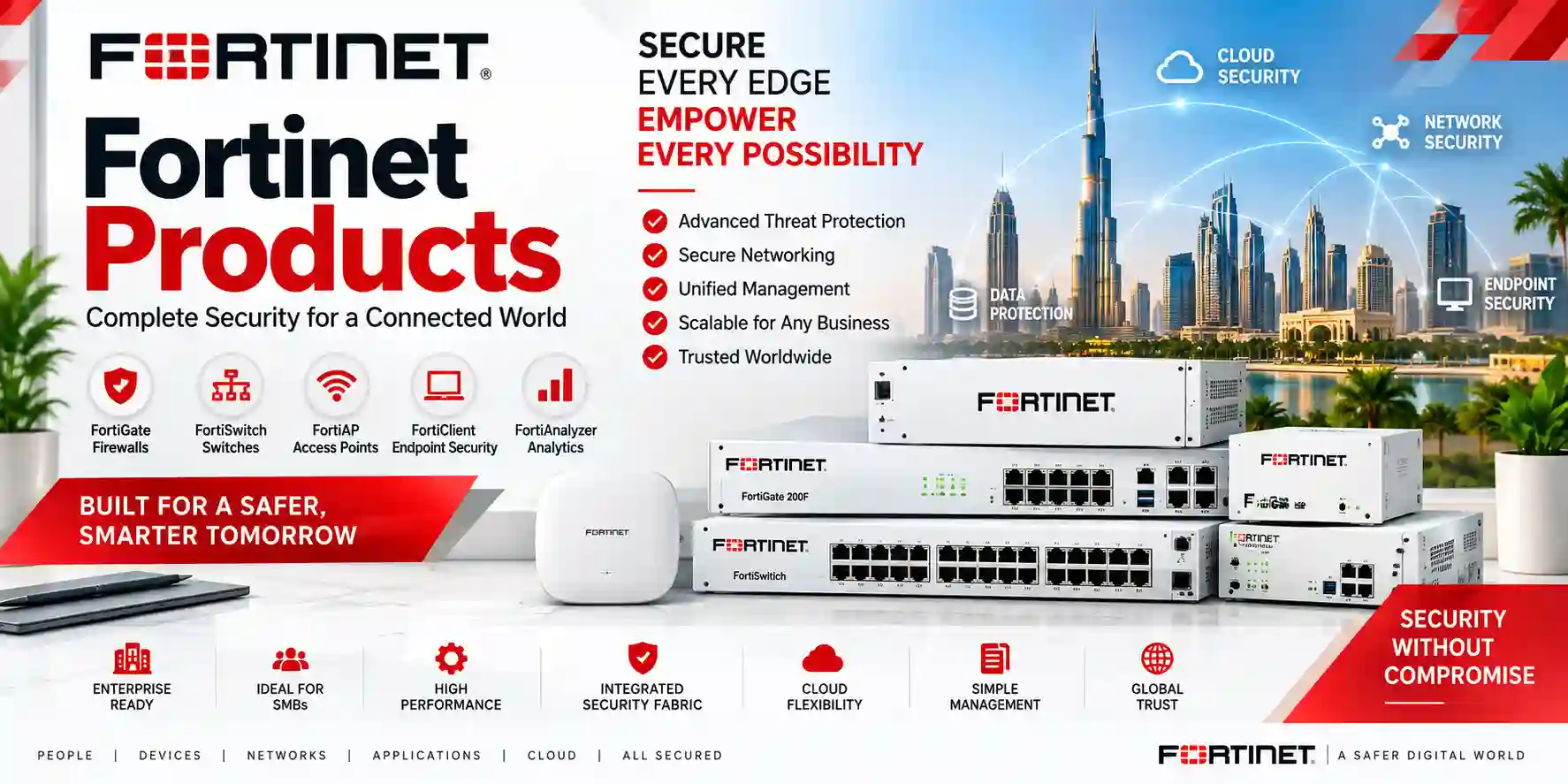
Fortinet firewall configuration is the process of turning a FortiGate appliance or virtual firewall into a controlled security gateway for a specific network. The work can include WAN and LAN interface setup, VLANs, routing, DHCP, DNS forwarding, firewall policies, source NAT, destination NAT and virtual IPs, security profiles, administrator hardening, logging, IPsec VPN, remote-access design, SD-WAN, high availability, FortiSwitch or FortiAP integration, configuration backups and troubleshooting. Not every site needs every feature, and the safest configuration is usually the smallest set of clearly documented functions that meets the business requirement.
Fortinet’s current FortiOS documentation states that traffic traversing a FortiGate must match an applicable policy. Policies evaluate factors such as interfaces, addresses, services and schedules, then apply an action and any configured security processing. This is why policy design deserves more attention than simply creating an allow rule. A good rule base uses meaningful objects and names, avoids broad permissions where narrower access is practical, logs the traffic that operations teams need to investigate, and keeps temporary changes from becoming permanent exceptions.
For businesses in Tanzania, configuration planning should also include the surrounding network. The firewall depends on usable ISP handoffs, correct IP addressing, managed switching where VLAN segmentation is required, reliable DNS and time services, suitable power protection and a realistic method for administrators to reach and support the device. FourTeck’s Tanzania services page explains the wider integration approach across networking and security, while the Tanzania technology shop provides buying guidance when a configuration project also requires firewall, switch, wireless or infrastructure hardware.
FortiGate configuration services for business networks
Initial FortiGate setup
Prepare administrator access, management restrictions, system settings, interface roles, WAN addressing, LAN networks, default routing, DHCP where required, DNS behavior, time synchronization, registration considerations and a configuration backup before production policies are built.
Firewall policy and NAT
Create address objects, service objects, zones and policy rules around actual application flows. Configure source NAT for outbound connectivity and destination NAT or virtual IP rules only where an internal service genuinely needs controlled inbound reachability.
IPsec VPN configuration
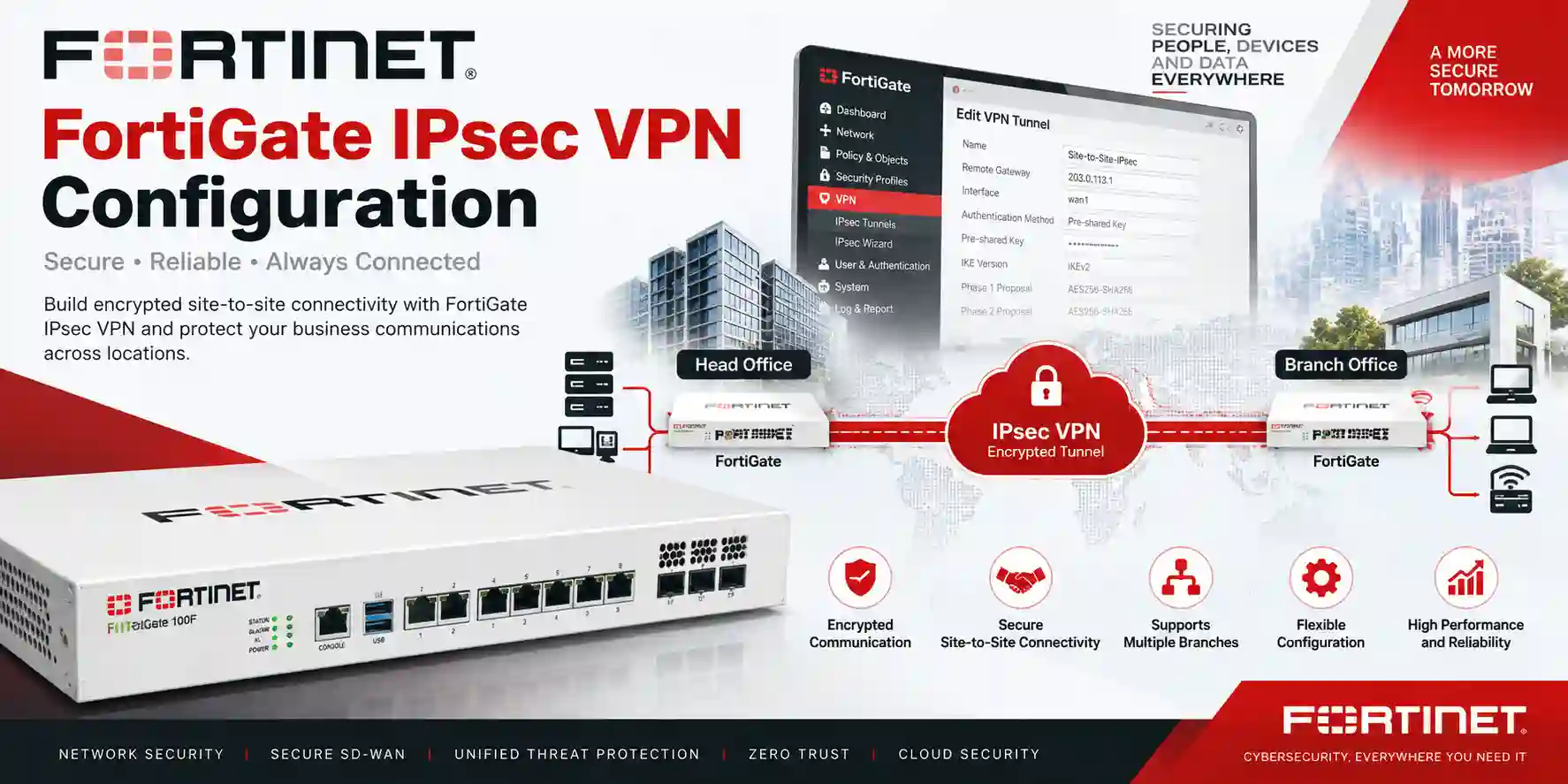
Design site-to-site or supported remote-access IPsec connectivity with non-overlapping networks, authentication, proposals, routes, policies, NAT decisions, monitoring and failover behavior documented before cutover.
Secure SD-WAN and dual WAN
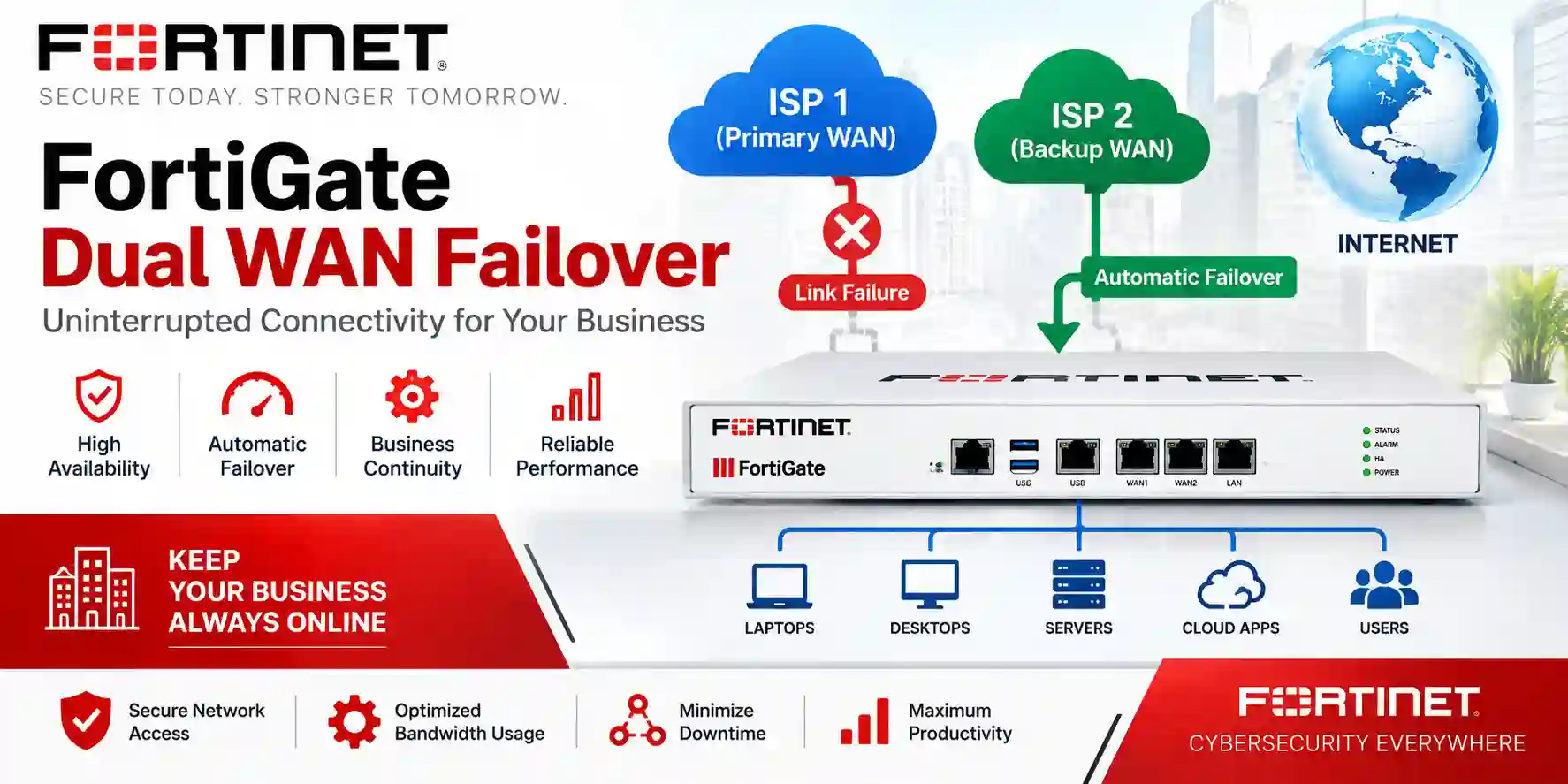
Add eligible WAN links to SD-WAN zones, define performance SLAs and traffic-steering rules, align routing and firewall policy with the zone design, and test actual failure and recovery rather than assuming a backup circuit will behave as expected.
Security profiles
Apply FortiGuard-backed inspection services that are available under the organization’s active entitlement and appropriate to the policy, such as intrusion prevention, web or DNS security, antivirus, application control and inspection settings, while considering performance and certificate requirements.
Migration and cleanup
Review an existing firewall, remove obsolete objects, translate required flows, plan a staged cutover and validate business applications. Where a larger migration is required, Fortinet also provides FortiConverter options for translating supported third-party or FortiGate configurations.
A structured Fortinet firewall configuration workflow
A configuration project should begin with discovery. Record the FortiGate model, FortiOS release, current configuration state, internet circuits, public addressing, LAN subnets, VLANs, critical applications, server publishing requirements, DNS and identity dependencies, VPN peers, remote users, logging needs, maintenance windows and rollback expectations. If the project replaces an existing firewall, export the current rule base and identify which rules are actually used. Old firewalls often contain duplicate, temporary or undocumented rules that should not automatically be carried into a new platform.
The next stage is design. Build an interface and zone map, define network objects and naming conventions, decide which networks should be isolated, document routes, list required application flows and determine where NAT is necessary. For internet access, source NAT may use the outgoing interface address or an IP pool depending on the design. For inbound publishing, destination NAT should map only the required public address and service to the intended internal host, with a corresponding policy and careful source restriction where possible. Administrative services exposed on a WAN interface should be minimized and protected separately from ordinary transit traffic.
Implementation should be staged. Configure management and interfaces first, then routing, base policies and essential services. Add security profiles after basic reachability is confirmed so troubleshooting remains clear. Build VPNs with a documented address plan, then add SD-WAN only when the path-selection requirement is understood. Fortinet documentation notes that SD-WAN zones can be used in firewall policies while individual SD-WAN member interfaces are handled through the zone design. Health checks and performance SLAs should target destinations that meaningfully represent service availability, not simply an address that may respond even when the required application path is impaired.
Finally, validate and hand over. Test internet access, DNS, business applications, inbound services, branch communication, remote access, failover, logging and administrator access. Save a known-good configuration backup and record the changes. A firewall is an operational control, so the handover should include policy purpose, object naming, VPN peers, WAN details, renewal dependencies, backup location and a change process. This documentation reduces the risk that future administrators create broad emergency rules because nobody understands the existing configuration.
FortiGate dual-WAN and SD-WAN configuration
Dual internet connections do not automatically create useful resilience. A FortiGate design must know which interfaces are WAN members, how default or dynamic routes are handled, what health criteria determine that a path is usable, which applications prefer each path and what should happen when the primary circuit degrades rather than fails completely. Fortinet’s SD-WAN features provide zones, rules and performance SLAs for this purpose, but the exact configuration depends on the FortiOS release and topology.
The firewall policy must also align with the SD-WAN design. Fortinet documents policies using the SD-WAN zone rather than individual SD-WAN members, with NAT and security profiles applied according to the traffic requirement. For inbound services, administrators should separately confirm how public IPs, virtual IPs and return routing behave on each physical WAN. Failover testing should include DNS, VPNs, source-IP-sensitive cloud applications, active user sessions and recovery to the preferred path.
FortiGate IPsec VPN configuration
IPsec VPN configuration should start with the applications and networks that need to communicate. Site-to-site tunnels require unique local and remote subnets, compatible IKE and IPsec parameters, routing, firewall policies and a decision about whether NAT must remain disabled for private inter-site traffic. Redundant tunnels can also be designed across multiple WANs where continuity is required. The exact tunnel method should follow the FortiOS version and peer capabilities rather than a copied template.
Remote-access requirements need the same discipline. Supported VPN methods vary by FortiGate model and FortiOS generation, so the project should confirm current Fortinet documentation before choosing a client workflow. Authentication, multi-factor options, address pools, DNS, split or full tunneling, accessible internal resources and user-group policy should all be explicit. A VPN that technically establishes but grants unnecessarily broad network access is not a complete security design.
Policy design, segmentation and security hardening
A well-configured FortiGate should make trust boundaries visible. Staff, guest wireless, servers, voice, cameras, building systems and management devices do not automatically need unrestricted access to each other. Where the switch and wireless environment supports VLANs, the network can be separated into logical segments and FortiGate policies can permit only the flows needed for business. For example, guest users may require internet access but no route to internal servers; camera networks may need recorder and management access but not general workstation access; and administrator networks may need management access that ordinary users do not receive.
Policy names and object names should explain intent. Rules such as Finance-to-ERP, Branch-to-HQ-DNS or Guest-to-Internet are easier to review than a list of numeric or generic labels. Address groups can simplify repeated object use, but very large groups should not hide unrelated systems. Services should be narrowed to required protocols when feasible. Policies that use ALL services and ALL destinations can be appropriate in specific controlled cases, but they should not become the default because they make later reviews more difficult.
Management-plane hardening should be treated separately from user traffic. Limit administrative interfaces to the networks and sources that require them, use strong administrator authentication, apply role separation where different teams have different responsibilities, keep configuration backups protected, and review firmware recommendations against the exact model and feature set before an upgrade. Local-in policy can provide additional control for traffic terminating on the FortiGate itself in supported designs. Time synchronization and logging also matter because troubleshooting and incident review become unreliable when event timestamps are wrong or logs are not retained where operations teams can use them.
For organizations evaluating a new appliance along with configuration services, the FortiGate 30G Tanzania product page shows how one compact model should be assessed using inspected throughput, VPN needs, subscription scope and feature support rather than raw firewall throughput alone. The current Tanzania product archive provides a verified route to products already published on the site, while the FourTeck Tanzania approach page explains how integrated IT and network decisions are connected to business requirements.
Migration, troubleshooting and configuration review
A firewall migration is not just a file conversion. The project should identify the traffic that the old firewall permits, remove rules that are no longer required, map public IP and NAT dependencies, preserve critical VPNs, confirm routing and document any features that are implemented differently on FortiGate. Fortinet offers FortiConverter tools and services for supported migrations, but converted objects still need engineering review because an old rule base can carry old risk into a new platform. A controlled migration includes a rollback point, test plan and business owner for each critical application.
Troubleshooting should follow packet flow rather than random configuration changes. Confirm physical link and interface state, addressing, ARP or neighbor information, routing, policy match, NAT, security inspection, DNS and application behavior in a logical sequence. FortiGate provides GUI and CLI diagnostics, session information and logs that can show where traffic is being handled or dropped. For VPN issues, verify tunnel negotiation separately from routed traffic; a tunnel can be established while policies or routes still prevent useful communication. For SD-WAN, confirm both link health and the rule that selected a path.
A configuration review can also target technical debt. Look for disabled rules that were never removed, duplicate objects, temporary broad permissions, unused VPNs, inconsistent names, administrator accounts that no longer need access, expiring certificates, obsolete routes and undocumented public services. Back up the configuration before cleanup, make changes in controlled groups and validate after each stage. The objective is a smaller, understandable and supportable configuration, not change for its own sake.
Fortinet Firewall Configuration Tanzania
Fortinet Firewall Configuration Tanzania should begin with the exact business network rather than a generic FortiGate template. A Tanzanian organization may be protecting a single office, several branches, a warehouse, a school, a clinic, a hospitality property, a project site or an environment where users depend heavily on cloud applications. The correct FortiGate configuration therefore depends on the WAN circuits presented to the site, the internal VLAN structure, the number of users and devices, critical applications, remote-access requirements, inter-branch connectivity, public services and the FortiGuard services that are actually licensed.
For a new deployment, FourTeck can help structure the work from interface and addressing design through routing, policies, NAT, security profiles, IPsec VPN and SD-WAN where required. For an existing deployment, the priority may be different: cleaning an inherited rule base, correcting a NAT issue, replacing a failed or undersized appliance, standardizing branches, documenting VPNs or reviewing administrator access. The safest scope states exactly what will change, what will remain untouched and how the team will verify that business services continue working after the change.
Tanzania projects can also benefit from standard configuration principles across sites. Use consistent object names, reserve non-overlapping address ranges for branches, separate guest and business networks, record WAN details and build reusable policy patterns without blindly cloning rules. If multiple internet circuits are present, decide whether the requirement is simple failover, active use of several links or application-specific steering. If branches connect to a central site, document IPsec parameters and route ownership. If security profiles are enabled, size the firewall for inspected traffic rather than assuming the headline stateful throughput number represents real production performance.
The FourTeck Tanzania home page gives context on the wider networking, server, wireless and infrastructure dependencies around a firewall. When preparing a request, include the existing firewall model, FortiOS version, internet speeds, number of WANs, VLANs, VPN tunnels, remote users, published services and expected security profiles. Those details make a Fortinet firewall configuration proposal more useful because the work can be tied to measurable connectivity and security outcomes instead of an undefined request to “configure everything.”
Fortinet Firewall Configuration Dar es Salaam
Fortinet Firewall Configuration Dar es Salaam often needs to support offices where internet access, cloud systems, VoIP, video meetings, remote users, guest Wi-Fi, CCTV and local servers share the same edge. In that environment the firewall should not be configured as a single unrestricted LAN-to-WAN rule. A clearer design identifies user networks, server segments, management access, guest traffic and any operational devices, then gives each group only the connectivity it needs. Managed switching and wireless VLANs should be coordinated with FortiGate policies so segmentation remains intact from the access layer to the security gateway.
Businesses using two internet circuits should define the expected continuity behavior before enabling SD-WAN. Some applications may tolerate a source-IP change, while cloud allowlists, inbound services or VPN peers may depend on a specific public address. Performance SLA targets should reflect meaningful reachability, and failover should be tested while real application sessions are running. For public services, virtual IP and destination NAT rules must be mapped to the correct WAN and internal server, with inbound firewall policy limited to the required ports and sources where practical. Logging should make it possible to distinguish a policy problem from an ISP or application problem.
Dar es Salaam offices replacing an older firewall should document every dependency before cutover: site-to-site tunnels, remote-access users, DNS forwarding, static routes, port forwards, security profiles, administrator source restrictions and any special application rules. The project can then build the FortiGate configuration in a controlled sequence and verify each requirement against a test list. This avoids the common migration pattern of adding broad emergency policies after users discover an undocumented dependency. Where a change window is limited, pre-staging and a known rollback configuration are especially useful.
A quotation request should state whether the requirement is configuration only, new appliance supply and setup, migration, dual-WAN deployment, VPN work, policy review, troubleshooting or an ongoing support arrangement. Include the planned internet bandwidth after future upgrades, because a firewall sized only for today’s circuit can become a bottleneck when security inspection is enabled on a faster link. FourTeck’s Tanzania contact page is the verified site route for submitting those project details and requesting a scoped response.
Fortinet Firewall Configuration Mwanza
Fortinet Firewall Configuration Mwanza can be designed for branch offices, warehouses, trading operations, education environments, clinics and service locations that need secure internet access plus dependable connectivity to other sites. The most useful starting point is a simple dependency map: which applications remain local, which systems are reached across the internet or VPN, which users need remote access, and what should continue operating if the primary WAN is unavailable. That map determines whether the FortiGate needs straightforward routing, one or more IPsec tunnels, dual-WAN failover or more detailed SD-WAN steering.
Mixed connectivity types can make nominal bandwidth a poor measure of actual user experience. A secondary link may have enough speed for essential transactions but not for guest browsing, large backups and video at the same time. FortiGate SD-WAN rules can help direct selected traffic when several WANs are available, but the policy should reflect the real capacity of each link. During failover testing, verify latency-sensitive and central applications first, then confirm that non-critical traffic does not consume all backup capacity. DNS behavior, public source addresses and IPsec tunnel recovery should be included in the test.
Internal segmentation is equally important. A warehouse may have office computers, scanners, cameras, wireless devices and operational equipment with very different trust requirements. Rather than placing everything in one subnet, managed switching and FortiGate VLAN policies can create boundaries between user, guest, camera, server and management traffic. Rules can then be based on actual destinations and services. The design should also reserve addressing that does not overlap with headquarters or future branches, because overlapping private networks complicate IPsec VPN routing and can force avoidable NAT workarounds.
For Mwanza procurement, send the existing topology, current ISP handoffs, public IP information, FortiGate model if already installed, FortiOS release, user and device estimates, required tunnels and the applications that must survive a WAN outage. State whether work will be performed during business hours or a controlled maintenance window and identify who can test each critical application. These details allow configuration, testing and documentation to be treated as one deliverable rather than separate troubleshooting activities after the firewall is already in production.
Fortinet Firewall Configuration Arusha
Fortinet Firewall Configuration Arusha is particularly useful where a business network combines employee systems with guest connectivity, hospitality technology, point-of-sale devices, cameras, phones and cloud services. The configuration should separate customer-facing access from operational networks so a guest wireless user cannot discover internal servers, surveillance equipment or management interfaces. Wireless SSIDs can map to dedicated VLANs, managed switches can preserve those tags, and FortiGate policy can define the permitted paths between segments and the internet.
Hospitality and tourism-related sites may also have strong continuity requirements because reservations, payments, voice and online communication are customer-facing. If two WAN links are available, SD-WAN can be designed around application priority and link quality rather than simply alternating traffic. A smaller backup circuit may be reserved for essential services during an outage, while guest streaming or large software downloads receive lower priority. The failover plan should be tested with representative applications because a green WAN status icon alone does not confirm that every business service will continue working.
Where an Arusha site connects to a head office or another property, IPsec VPN can provide encrypted site-to-site communication. The design should use non-overlapping internal networks, clear routing and explicit policies for the systems that need inter-site access. Shared management platforms, telephony, file services or central applications may require specific DNS and route handling. If remote employees or administrators need access, select a remote-access method that is supported by the exact FortiGate model and FortiOS version, then limit users to the resources associated with their role.
The quotation scope should include whether FourTeck is expected to review the switch and Wi-Fi design along with the firewall. A policy cannot enforce clean segmentation if the LAN carries every device on one flat network. Include expected peak users, guest usage, internet speeds, existing VLANs, number of sites, public services, VPN requirements and active FortiGuard subscriptions. That information supports a configuration that is practical for daily operations and easier to expand when rooms, departments, cameras or additional access points are added later.
Fortinet Firewall Configuration Dodoma
Fortinet Firewall Configuration Dodoma can support institutional offices, NGOs, professional organizations, project locations, education sites and branch operations that need clear change control and dependable access to central or cloud systems. In these environments the configuration should be understandable to more than one administrator. Interfaces, address objects, VPNs and policies benefit from consistent names and comments that describe business purpose. A future support engineer should be able to identify why a rule exists without having to infer intent from an IP address and port number alone.
Logging and time synchronization deserve deliberate planning. Security events, denied traffic, administrator changes and VPN problems are much easier to investigate when timestamps are accurate and the relevant logs are retained. Depending on project size, logs may remain on the appliance within platform limits or be forwarded to centralized Fortinet logging and analytics platforms. The important decision is operational: who reviews the logs, how long useful records must remain available and which events should trigger attention. A configuration that generates data nobody can interpret offers less practical value than a smaller, focused logging plan.
Dodoma deployments with formal change processes should also maintain versioned backups before major changes, record the approved scope and define a rollback trigger. Firmware upgrades should be planned against the exact model, FortiOS release path and enabled features instead of treated as routine reboots. VPNs, high availability, wireless or switch integrations and third-party authentication can all affect an upgrade window. After the change, validate the services that matter to users, not only the FortiGate dashboard. Application owners should confirm that their systems work as expected.
When requesting configuration support, specify whether the project is a fresh deployment, inherited firewall review, migration, policy cleanup, IPsec build, SD-WAN implementation or remediation after a recurring incident. Provide existing network diagrams if available, plus current routes, VLANs, internet circuits, public IP dependencies and authentication services. The resulting plan can then separate configuration tasks from broader LAN or ISP issues. This matters because a firewall cannot fix an unstable circuit, an overlapping branch address plan or unmanaged switching by itself, although it can be configured to operate cleanly once those dependencies are understood.
Fortinet Firewall Configuration UAE
Fortinet Firewall Configuration UAE can be relevant to organizations coordinating headquarters, branches, cloud services and regional operations across more than one country. Higher-speed internet does not remove the need for careful FortiGate sizing and policy design. Security inspection, encrypted traffic analysis, application control, VPN usage, logging and concurrent sessions can create a different performance profile from basic stateful forwarding. A configuration project should therefore confirm the appliance model and expected inspected traffic before assuming that every feature can be enabled broadly without affecting user experience.
Multi-site organizations may also need centralized conventions. Consistent policy names, object structures, administrator roles, firmware strategy, VPN templates and log destinations make it easier for one team to support branches in the UAE and Africa. SD-WAN can steer applications across multiple WAN transports, while IPsec overlays can connect branches to hubs or other sites. The network plan should reserve unique subnets per location and record public addressing so new branches do not create overlapping routes that later complicate VPN design.
For inbound services, cloud allowlists and source-IP-sensitive applications, the team should understand exactly which public address appears during normal operation and after failover. For remote users, authentication and access scope should be role based, and the method must match current model and FortiOS support. Administrator access should be restricted to approved sources or management networks wherever possible. Configuration backups, change approvals and pre-production testing become increasingly valuable as the number of managed firewalls grows.
FourTeck maintains a dedicated Fortinet firewall configuration resource for UAE projects covering regional deployment themes. Organizations coordinating African branches can also use the FourTeck Africa technology site as a regional reference. These links are useful for procurement and project teams that want a consistent configuration discussion across countries while still treating each site’s bandwidth, ISP handoff, licensing and operational dependencies individually.
Fortinet Firewall Configuration Uganda
Fortinet Firewall Configuration Uganda can support organizations that need a repeatable security standard across Kampala, regional branches and neighboring East African operations. A standard should define the parts of the configuration that remain consistent—naming, administrator roles, baseline security profiles, branch VPN structure, log settings and documentation—while allowing local WAN addresses, ISP gateways and site-specific VLANs to vary. This approach is more maintainable than copying a complete configuration from one branch and editing it until traffic starts working.
Inter-country VPNs should start with address planning. Each branch needs unique internal ranges, and the organization should identify which networks are advertised or statically routed through each tunnel. Central applications may need access from only selected VLANs, while guest networks should normally remain local to the internet. If dual WAN is used, decide whether both circuits participate in an SD-WAN zone and whether VPN overlays follow one or more underlay paths. The failure model should be tested from the user’s perspective, including DNS resolution and application reachability after the path changes.
Configuration scope should also reflect FortiGuard licensing. Profiles such as IPS, malware protection, application control and web or DNS security depend on the subscribed services and must be sized against actual traffic. Organizations comparing quotations should separate appliance hardware, subscription duration, FortiCare support, configuration labor, migration, documentation and any recurring management service. An apparently cheaper quote can represent a shorter or narrower service package rather than the same deliverable.
For customers with projects in both Tanzania and Uganda, the FourTeck Uganda site provides a verified regional contact and technology reference alongside the Tanzania site. Send the branch list, internet speeds, current firewall models, user estimates, VLANs, VPN requirements and maintenance constraints when requesting assistance. With those inputs, the Fortinet configuration can be built as an operational standard rather than a collection of unrelated site changes.
Fortinet Firewall Configuration Kampala
Fortinet Firewall Configuration Kampala often needs to support urban offices that rely on cloud productivity, VoIP, video meetings, line-of-business applications, payment systems and wireless access at the same time. The firewall can become a bottleneck or a source of confusing policy if it is sized and configured only by employee count. A better design documents internet bandwidth, concurrent application patterns, expected VPN traffic, security inspection requirements and growth. Those factors help determine both the appropriate FortiGate platform and how aggressively inspection can be applied without unnecessary performance pressure.
A Kampala office can also benefit from segmentation between general users, finance systems, servers, guests, cameras and network management. FortiGate policy can enforce those boundaries when the LAN and Wi-Fi environment present the VLANs correctly. Rules should be built from documented application flows, not from guesswork. When a required service is unknown, temporary diagnostic logging is better than creating a permanent any-to-any rule. Once the application is understood, the final rule can be narrowed and described clearly.
Where primary and backup internet links are available, SD-WAN should be configured around link quality and business intent. Decide whether a backup circuit carries traffic continuously or remains mostly reserved for failover. Define performance measurements and identify applications that should receive priority during constrained operation. For branch-to-headquarters VPNs, ensure the tunnel and routes recover through the intended WAN path and that return traffic does not choose an unexpected circuit. Public services and source-IP restrictions need special attention when the WAN path changes.
A configuration request should include any existing FortiGate backup, the FortiOS release, current rules that users depend on, ISP addressing, VLAN design, VPN peers and the desired change window. If the problem is troubleshooting rather than a new deployment, describe the symptom with timestamps and affected source and destination networks. That information allows engineers to trace policy, routing, NAT and session behavior instead of making unrelated changes. The result should be a documented fix that operations teams can understand and reproduce if the same dependency appears at another branch.
Fortinet Firewall Configuration Arua
Fortinet Firewall Configuration Arua can be planned for regional sites where local IT resources are limited and remote support needs to remain dependable. In that situation, configuration clarity matters as much as advanced features. Interfaces should have meaningful aliases, local networks should follow an organized address plan, policies should identify their purpose, VPNs should use documented peer settings and configuration backups should be maintained after approved changes. A clean build reduces the amount of local intervention required when a central team is troubleshooting from another city or country.
WAN reliability should be treated as a design input rather than an assumption. If a second circuit is available, the business should define which services must remain usable on the backup link and whether that link has enough capacity for ordinary traffic. SD-WAN can use health checks and rules to choose a path, but it cannot create bandwidth that the provider does not supply. During an outage, essential cloud systems, branch VPN traffic or business transactions may need priority while guest traffic and large downloads are restricted.
Remote administration also requires a security plan. Management services should not be exposed broadly to the internet merely because the site is distant. Use controlled management sources, secure access methods and role-appropriate administrator accounts. If a remote-access VPN is required for users or engineers, confirm the supported method for the installed FortiGate and FortiOS release, then define which internal networks those users are allowed to reach. Logging and accurate time settings help the central team investigate issues without physically visiting the branch.
For an Arua project, provide the site role, ISP handoff, public addressing, switch and wireless environment, local VLANs, head-office subnets, VPN expectations and contact details for the person who can perform physical checks if needed. If the firewall is being pre-staged elsewhere, identify which values are fixed and which will be entered after installation. A short acceptance checklist—WAN up, DNS working, required sites reachable, VPN established, logging visible and backup saved—creates a practical handover for regional operations.
Fortinet Firewall Configuration Mbarara
Fortinet Firewall Configuration Mbarara can support growing offices, education environments, healthcare facilities, hospitality operations, logistics sites and branch networks that want stronger control than an ISP router provides. The project should consider today’s network and the likely next stage. A firewall that is already close to its inspected-traffic capacity leaves little room for higher internet speeds, more cloud use, additional cameras, new VPNs or broader security profiles. Procurement and configuration should therefore use the expected lifecycle rather than the current headcount alone.
Growth also affects the internal design. New departments and device categories are easier to integrate when the initial configuration reserves logical segmentation and an organized IP plan. Staff, guests, voice, cameras, servers and infrastructure management can use separate VLANs where appropriate. FortiGate policy can then permit explicit flows between them. If a new service is added later, administrators can extend the rule base without opening broad access across every subnet. Documentation should record the owner and reason for each exception so temporary project access does not quietly become permanent.
For branches connected to central systems, IPsec VPN routing should be planned together with the local address ranges. If dual WAN is part of the design, decide how the tunnel behaves when the preferred circuit fails and whether both underlays are required. Test real central applications after failover instead of testing only an ICMP target. Where cloud services use public-IP allowlists, verify what source address appears on each WAN path. These details prevent a technically successful failover from still leaving users unable to reach a critical service.
A Mbarara configuration quotation should separate hardware, subscriptions, implementation, migration and ongoing review so the buyer can compare equivalent scopes. Include FortiGuard requirements, expected renewal term, active VPN count, user groups, public services and the current firewall if a replacement is planned. A structured request allows configuration to be tested against specific outcomes: secure internet access, working branch connectivity, isolated guest traffic, controlled remote access, documented administrator access and a known-good backup after handover.
Fortinet Firewall Configuration Gulu
Fortinet Firewall Configuration Gulu should emphasize operational simplicity for sites that may be supported remotely. The firewall can still provide segmentation, security profiles, VPN and SD-WAN, but the configuration should avoid unnecessary complexity. Logical interface names, reusable address groups, documented policies and clear route ownership make it easier to troubleshoot without being on site. Regular configuration backups and a record of approved changes are especially useful when the local team depends on central administrators for security decisions.
Continuity planning should be realistic. A secondary WAN may be useful, but the organization should know its actual capacity and which services deserve priority when the main link is unavailable. FortiGate SD-WAN can use performance measurements and policy to select paths. The design might keep core business traffic and VPN communication available while limiting guest browsing or large transfers on a smaller backup circuit. Testing should include both failure and recovery because path restoration can expose asymmetric routing or session behavior that is not visible during a simple unplug test.
Security profiles should also match the site’s operational needs and subscription status. Enabling every available inspection feature on every policy is not automatically the best configuration. Apply controls where they reduce meaningful risk, confirm certificate and application compatibility for encrypted inspection, and monitor resource use. The policy base should remain readable. If a temporary troubleshooting rule is added, give it an owner, purpose and removal date so it does not become a permanent broad exception after the incident is closed.
For Gulu deployments, provide the central-office networks, required applications, ISP details, local VLANs, number of users and devices, VPN requirements and the person responsible for physical connectivity. Define whether remote staging, cutover support and post-change monitoring are included. The final handover should show how to verify WAN health, VPN status, policy logs and configuration backups so routine checks can be performed without changing the security design. That operational clarity can be more valuable than adding advanced features that nobody at the organization is prepared to maintain.
Fortinet Firewall Configuration Kenya
Fortinet Firewall Configuration Kenya can be planned for companies that use Kenya as one part of a wider East African network. The main engineering value comes from consistency without forcing every branch to be identical. A common policy framework can define trusted user networks, guest access, server communication, administrator access, logging and VPN standards, while each location retains its own WAN addressing, bandwidth profile and local application requirements. This allows central IT teams to recognize the same architecture across countries and reduces the chance that each branch develops a unique undocumented rule set.
Cross-border site-to-site IPsec VPN needs a coordinated address plan. Before new tunnels are configured, confirm that branch subnets do not overlap and identify which networks should be reachable across each tunnel. Some organizations route only business application VLANs between countries while keeping guest traffic local. Others centralize certain services and require DNS, identity or management access through the VPN. These dependencies should be documented before deployment because an established tunnel does not guarantee that routes and firewall policy permit the applications users expect.
Secure SD-WAN can also be relevant where sites have multiple transports. Path selection should be based on application priorities, link quality and business continuity requirements. A cloud application may prefer local internet breakout, while internal systems use a VPN overlay. Public-IP-sensitive services and inbound publishing need separate attention because path changes can alter the source or destination behavior visible to external systems. Logging and centralized analytics can help teams compare branch behavior without logging into every FortiGate individually.
Kenya project requests should include each site, internet circuits, current firewall models, FortiOS versions, VLANs, VPN peers, user groups, security subscriptions and planned growth. If the same configuration baseline will be deployed to several branches, define which variables change per site and which are controlled centrally. That makes staging, testing and future support more predictable. For multi-country procurement, the Tanzania page can remain the project starting point while FourTeck’s regional network coordinates related requirements according to the specific market and scope rather than assuming identical delivery or support conditions everywhere.
Fortinet Firewall Configuration Kuwait
Fortinet Firewall Configuration Kuwait can support branch offices and enterprise locations that need controlled internet access, IPsec connectivity, secure remote access, segmentation and centralized security operations. High-speed connectivity makes capacity planning especially important: the firewall must be evaluated using the security functions that will actually be active, not only the maximum stateful firewall figure. Encrypted inspection, IPS, application control, logging and VPN traffic can influence the practical performance target, and the design should preserve headroom for growth and short traffic peaks.
Organizations operating between Kuwait, the UAE and African markets may benefit from standardized FortiGate policy structures. Common object naming, administrator roles, security profiles, route conventions and VPN templates allow a central team to audit sites more efficiently. Central management or analytics can become appropriate as the device count grows, but only if ownership is clear. A centralized platform does not replace good local design; each branch still needs correct ISP parameters, unique addressing, appropriate VLANs and a tested failover plan.
For remote or hybrid users, the chosen VPN method should be verified against current FortiOS and FortiGate support. Access policy should map users or groups to required resources rather than providing a general route to the entire internal network. Multi-factor authentication and identity integration may be part of the design where supported and required. Administrator access should be controlled separately, with management sources and permissions limited to operational need. Change logging and backup discipline help support audit and rollback requirements.
A Kuwait configuration request should explain whether the work is new deployment, migration, policy cleanup, VPN, SD-WAN, high availability, security profile tuning or incident troubleshooting. Include internet bandwidth, public IP details, number of firewalls, FortiOS versions, existing VPNs, published servers and the preferred maintenance window. For cross-region projects, clarify which team owns each WAN circuit and application test. This avoids a firewall project being delayed by dependencies that are actually controlled by an ISP, cloud provider or application administrator.
Fortinet Firewall Configuration Ghana
Fortinet Firewall Configuration Ghana can be designed for headquarters, branches, professional offices, education sites, service operations and other organizations that need consistent policy and secure connectivity. A practical configuration starts by identifying the business flows that cross the firewall. Internet browsing, cloud applications, remote access, server publishing, branch-to-branch traffic and infrastructure management have different trust and logging requirements. Mapping those flows first helps engineers avoid an oversized rule base full of exceptions that are difficult to audit later.
When a Ghana site uses FortiGuard security profiles, the configuration should confirm the active subscription and determine which traffic receives which inspection. User internet access may require a different control set from server-to-cloud API traffic or IPsec VPN communication. Encrypted inspection should be planned with certificates, application compatibility and performance in mind. Policies should log enough information to diagnose security events and blocked applications without generating data that the operations team never reviews.
Multi-site organizations should reserve unique address space and document routes before adding IPsec tunnels. If branch continuity requires more than one ISP, SD-WAN rules can steer traffic according to link health and application need. Failover tests should include central systems, cloud services, DNS and any external services that restrict source IP. Public inbound services require a separate review of NAT and return-path behavior. This level of testing is important because internet reachability by itself does not prove that the complete business workflow survived the WAN change.
The FourTeck Ghana site provides a verified regional technology reference for Ghana-related enquiries. For a configuration project, provide the firewall model, FortiOS release, WAN bandwidth, local networks, VPN requirements, remote users, current security services and desired scope. If the firewall is inherited, a configuration backup and a short description of known issues can accelerate review. The goal should be a documented rule set and connectivity design that can be maintained after the immediate project is complete.
Fortinet Firewall Configuration Nigeria
Fortinet Firewall Configuration Nigeria can range from a single business edge to a large distributed branch design. The more sites and users involved, the more important naming, templates, centralized visibility and change control become. A rule that is harmless on one firewall can become difficult to manage when reproduced across dozens of locations. Standard branches should therefore share a clear baseline for administrator access, security profiles, logging, address objects and VPN structure, while site-specific services are added through documented exceptions.
ISP diversity can be handled through FortiGate SD-WAN where several links are available, but link count alone is not a design. The organization should identify which applications prefer which path, how poor latency or packet loss affects selection, whether backup bandwidth is sufficient and what happens to active sessions when the path changes. Public IP dependencies, B2B allowlists, payment systems and hosted services should be checked explicitly. For large branch populations, automation or central management can reduce repetitive manual edits, but controls are still needed to prevent a mistaken template from propagating broadly.
Policy scale also makes cleanup valuable. Duplicate objects, unused rules, shadowed policies and temporary broad access can accumulate over time. A configuration review should use traffic evidence and business ownership before removing anything. Logging can help identify rules that are still active, but low-frequency processes such as monthly reporting or disaster-recovery tests may not appear during a short observation period. Changes should therefore be approved and reversible, with backups taken before cleanup and validation performed afterward.
The FourTeck Nigeria site is a verified regional reference for Nigeria-related IT enquiries. Organizations coordinating Nigeria with Tanzania or other African locations should provide a site inventory, FortiGate models, FortiOS versions, WAN circuits, VPN topology, security subscriptions and ownership of central applications. That information allows the firewall configuration project to distinguish shared standards from local exceptions and creates a clearer basis for migration, incident response and ongoing policy maintenance.
Fortinet Firewall Configuration Seychelles
Fortinet Firewall Configuration Seychelles can be especially relevant to hospitality properties, offices and multi-site operations where guest services and business systems must coexist without sharing the same trust level. A well-planned FortiGate deployment can separate staff, guest Wi-Fi, property systems, cameras, servers and management traffic through VLAN-aware policies. The design should begin with application ownership: identify which systems need internet access, which communicate locally, which connect to a remote data center or cloud platform and which should never be directly reachable from guest or unmanaged devices.
Connectivity resilience should be matched to available circuits and business impact. Where two WAN paths are used, SD-WAN health checks and rules can help maintain access to essential services, but the backup plan must reflect real capacity. During constrained operation, priority may go to reservations, payments, business communication and site-to-site VPN while guest traffic is restricted. The organization should test application behavior when public source IP changes and confirm whether any cloud platforms or remote partners use allowlists that need both WAN addresses.
Remote administration is another important consideration for geographically separated sites. Management services should be restricted and protected rather than left broadly accessible. Configuration backups should be stored securely, administrator accounts should use least privilege, and changes should be documented so central support teams know what was altered and why. If a FortiGate is part of a wider Fortinet environment with switches, access points or centralized management, the integration should be planned so a local change does not unintentionally affect guest access, VLAN tagging or remote monitoring.
A Seychelles configuration request should include property or office type, internet circuits, expected users and guests, critical cloud services, public IP information, local VLANs, VPN peers, wireless environment and active FortiGuard services. State the available maintenance window and who can validate reservations, payment, voice, Wi-Fi and other critical workflows after cutover. The goal is not simply for the firewall to show healthy interfaces; it is for the complete business service path to continue operating under normal conditions and during the failure scenarios the organization considers important.
Related Tanzania resources for a Fortinet configuration project
A firewall configuration rarely exists in isolation. The verified FourTeck Tanzania services page is useful when the project also involves network design, deployment or lifecycle support. The Tanzania technology shop helps procurement teams think through product compatibility and capacity before ordering hardware. The FortiGate 30G Tanzania page is a concrete example of how FortiGate model selection must account for inspected throughput, VPN and subscription scope rather than headline numbers alone.
The About FourTeck Tanzania page explains the integrated approach behind network, security and infrastructure projects. The current Tanzania product archive provides a verified route to the products already published in the store. The Tanzania home page connects firewall requirements with switching, Wi-Fi, servers, cabling and other business technology dependencies. For a scoped enquiry, use the Tanzania contact page and include enough network detail for the configuration requirement to be understood before changes begin.
Fortinet firewall configuration quotation checklist
Model, serial details if relevant to support, FortiOS version, HA status and whether the device is new, existing or replacing another firewall.
Provider handoff type, speed, static or dynamic addressing, gateway, public IP blocks and whether one or several WAN links are used.
LAN and VLAN subnets, DHCP ownership, switches, wireless SSIDs, server networks, guest networks and management segments.
Site-to-site peers, remote users, central networks, authentication method, overlapping subnets, tunnel redundancy and routing expectations.
Active FortiGuard bundle and the intended use of IPS, malware protection, web or DNS security, application control and encrypted inspection.
Servers that require inbound access, public addresses, ports, source restrictions, certificates and business owner for validation.
Permitted downtime, rollback point, technical contacts, application testers and any site-access constraints.
Required backups, network diagram, policy notes, VPN record, administrator handover and post-change test results.
Fortinet firewall configuration FAQs
What should be configured first on a new FortiGate?
Start with secure administrator access, system basics, interface addressing, WAN and LAN connectivity, routing and a configuration backup. Then build the required firewall policies, NAT, security profiles, VPN and SD-WAN in a controlled order. The exact sequence can vary with the topology, but management and routing should be stable before complex policy is added.
How should FortiGate firewall policies be organized?
Use meaningful source, destination, service and interface objects, give each rule a name that describes its business purpose, order rules deliberately and log the traffic needed for operations. Avoid broad any-to-any rules unless there is a documented reason. Periodically review temporary and unused rules so the policy base stays understandable.
Can FortiGate configure dual-WAN failover?
Yes. FortiGate supports multiple WAN designs including Secure SD-WAN with zones, rules and performance SLAs. The useful configuration depends on the ISP handoffs, routing, public IP requirements and application behavior. Failover should be tested with real services because a backup path can be technically up while an application still fails due to DNS or source-IP dependencies.
Does FortiGate support site-to-site VPN?
Yes. FortiGate supports IPsec VPN for site-to-site connectivity. A reliable design includes compatible tunnel parameters, unique internal subnets, correct routes, explicit firewall policies, suitable authentication and a plan for tunnel monitoring or redundancy when required.
Can you migrate rules from another firewall to FortiGate?
A migration can translate required policies, objects, NAT and VPN dependencies into FortiGate, and Fortinet provides FortiConverter options for supported platforms. The converted configuration still needs review. Obsolete or overly broad legacy rules should not automatically be copied into the new firewall simply because they exist on the old one.
How do FortiGuard licenses affect configuration?
Subscribed FortiGuard services determine which security intelligence and inspection functions are available under the purchased package and term. A configuration project should verify the active entitlement before promising specific profiles. Buyers should compare the hardware, subscription term, FortiCare support and implementation scope separately.
Should every VLAN be routed through the FortiGate?
Not necessarily. Routing design depends on performance, trust boundaries and network architecture. Sending inter-VLAN traffic through the FortiGate can provide policy enforcement and visibility, while some large networks may route selected trusted traffic elsewhere. The decision should be deliberate and documented rather than accidental.
What information helps troubleshoot a FortiGate problem?
Provide the FortiGate model, FortiOS version, source and destination addresses, application or port, timestamp, expected path, actual symptom and whether the issue affects every user or only a subset. For VPN or SD-WAN issues, include tunnel or link names and the circuits involved. These details make packet-flow troubleshooting much faster.
How often should a FortiGate configuration be reviewed?
Review should follow the organization’s change rate, risk and audit requirements rather than a single universal interval. At minimum, major network changes, application migrations, staff role changes, new public services and firewall replacement projects should trigger a policy review. Periodic cleanup is also useful for removing obsolete rules and checking administrator access.
What should be handed over after configuration?
A useful handover includes a current configuration backup, network and interface summary, WAN details, VLAN and subnet list, policy notes, VPN peers, public NAT dependencies, administrator ownership, logging details, FortiGuard subscription notes, test results and the rollback or recovery information needed by future support teams.
Decision recap: define the network before changing the firewall
A successful Fortinet firewall configuration is not measured by how many features are enabled. It is measured by whether required business traffic works, unnecessary paths are restricted, administrators can explain the policy, failover behaves as designed, logs support troubleshooting and the configuration can be maintained after handover. Start with the exact FortiGate and FortiOS release, then map interfaces, routes, VLANs, applications, VPNs, public services, security subscriptions and operational ownership.
For a new deployment, this creates a clean baseline. For an existing FortiGate, it provides a way to distinguish technical debt from active business dependencies. For multi-site environments, it creates a standard that can be repeated without making every location identical. And for procurement teams, it makes quotations easier to compare because hardware, licensing, implementation, migration and ongoing support can be evaluated as separate components of the same outcome.
Prepare a short network summary before requesting work: firewall model, FortiOS version, WAN links and speeds, user and device count, VLANs, site-to-site VPNs, remote users, public services, required security profiles and maintenance constraints. FourTeck can then scope configuration around the network you actually operate instead of relying on assumptions.
Talk to FourTeck about your FortiGate configuration
Send the current FortiGate model, FortiOS version, internet circuits, branch or VPN requirements, VLANs and the configuration outcome you need. The request can then be scoped as deployment, migration, troubleshooting, policy review, IPsec, SD-WAN, segmentation or ongoing configuration support. No stock, delivery time, support entitlement or regional service coverage should be assumed until it is confirmed for the specific enquiry.
For broader regional technology coordination, FourTeck maintains dedicated resources for Africa, Uganda, Ghana, Nigeria and Fortinet firewall configuration in the UAE. Each project should still be verified against the local site, current FortiGate platform and requested scope.