
Fortinet Firewall Deployment
Fortinet firewall deployment is the process of turning a FortiGate platform into a working security control for a real business network. The work begins before the appliance is connected: internet circuits, user groups, servers, cloud applications, branches, VPN requirements, existing rules, routing, switching, wireless networks, identity sources, logging expectations and acceptable downtime all influence the design. A well-planned deployment therefore focuses on architecture, policy and testing as much as on hardware installation.
Fortinet positions FortiGate next-generation firewalls for physical, virtual and cloud environments, with FortiOS providing a common security and networking operating system. Depending on the design, a FortiGate deployment can combine next-generation firewall controls with Secure SD-WAN, IPsec connectivity, application visibility, intrusion prevention, web and content controls, zero-trust access capabilities and FortiGuard security services. Centralised management and analytics can also be considered for organisations operating multiple firewalls or requiring more structured policy and event visibility.
Document bandwidth, users, applications, existing routes, VLANs, public services, VPNs and operational dependencies before changing the production edge.
Build security zones and rules around business flows, least-privilege access, remote connectivity and segmentation rather than copying an old rule base without review.
Validate internet, DNS, critical applications, published services, VPN paths, failover behaviour, logging and administration before the project is considered complete.
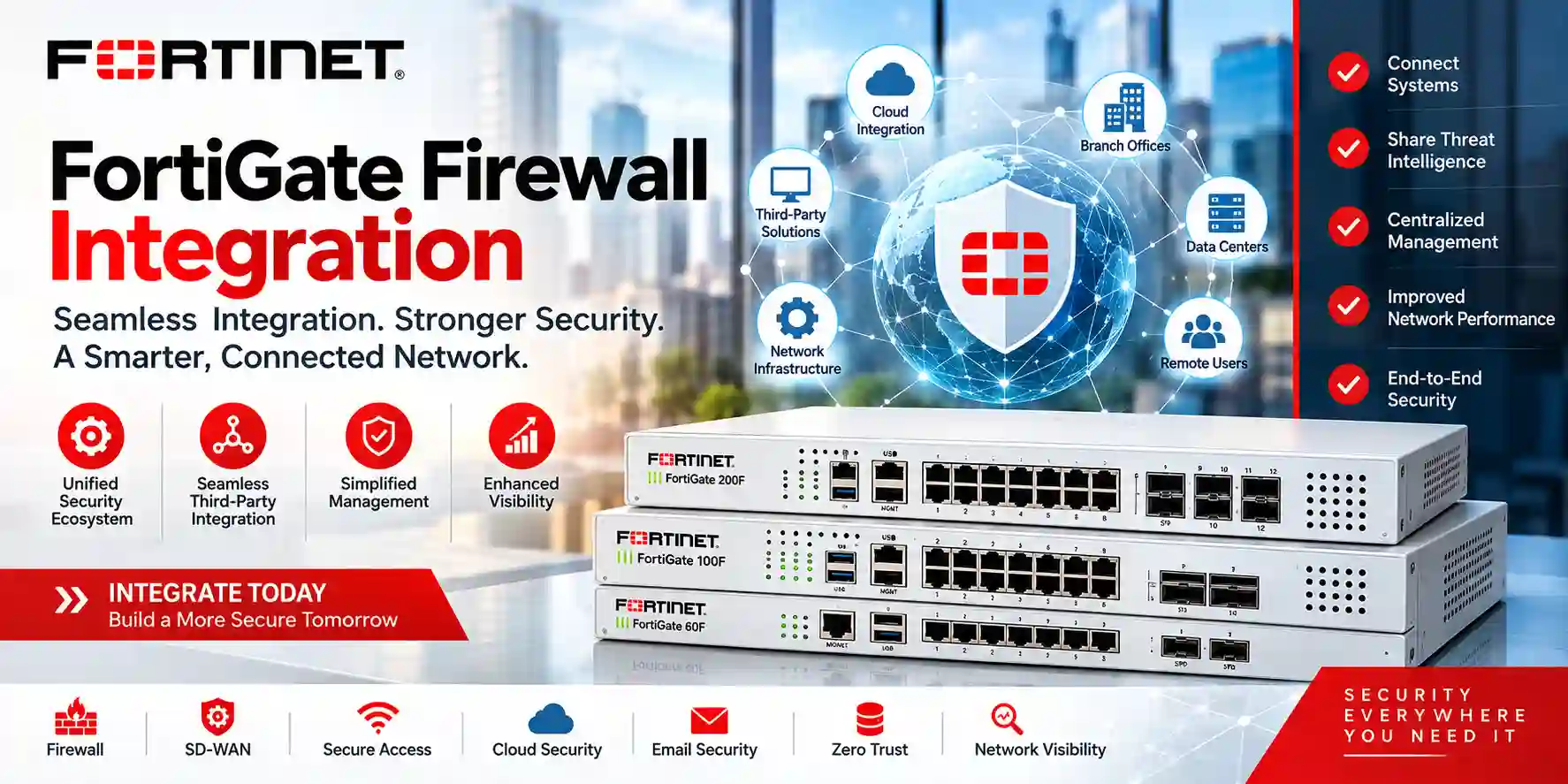
What a Fortinet Firewall Deployment Should Cover
A deployment should start with a current-state map. That includes the internet service or services, addressing, routing, DHCP, DNS dependencies, switch uplinks, wireless networks, server networks, guest access, voice systems, CCTV or operational devices, externally published applications and branch connectivity. The purpose is to understand which traffic must continue to work and which traffic should be restricted. This is particularly important when replacing an existing firewall because the old configuration may contain years of accumulated objects, exceptions and rules that no longer match the present network.
The second stage is solution sizing and design. FortiGate selection should consider the traffic that will actually be inspected, not only the advertised speed of an internet circuit. Encrypted traffic inspection, intrusion prevention, application control, VPN use, concurrent sessions, high availability, interface requirements and expected growth can all influence appliance choice. Where several branches are involved, the design may also consider Secure SD-WAN, standardised templates and central management through FortiManager. FortiAnalyzer may be relevant when the organisation needs stronger log retention, reporting and operational visibility.
The implementation stage converts that design into interfaces, zones, routes, objects, policies, security profiles, VPNs and management controls. Administration should be protected, configuration backups should be created, and the final rule base should be understandable enough for the next administrator to maintain. The project should finish with testing, documentation and a rollback or recovery plan appropriate to the change risk. A firewall that passes traffic is not necessarily a finished deployment; the business must also know how it is managed, updated, reviewed and supported after go-live.
Deployment Lifecycle: From Discovery to Handover
Record circuits, subnets, VLANs, public IP use, users, servers, remote access, existing VPNs, security services, switch connections and application dependencies.
Choose the FortiGate form factor and capacity for inspected traffic, VPN demand, resilience, interfaces, growth and the management model the IT team can sustain.
Configure administration, interfaces, zones, routing, objects, policies, security profiles, VPNs, SD-WAN, logging and backups against the agreed design.
Move traffic in a controlled window, verify services in a defined sequence and retain a practical rollback path if a critical dependency does not behave as expected.
Test browsing, business applications, DNS, published services, branch tunnels, remote access, policy matching, logging, failover and administrator access.
Provide configuration backup, network notes, support information, subscription details, change guidance and a review schedule for firmware, rules and renewals.
FortiGate Features That Influence Deployment Design
Fortinet’s FortiGate portfolio spans branch, campus, data-centre, virtual and cloud use cases. That breadth means the deployment method should be chosen around the environment rather than forcing every site into one template. Physical appliances are common at office and data-centre edges. FortiGate-VM can be used where the firewall must operate inside a virtual or public-cloud architecture. Organisations with several sites may standardise policies, device groups and change processes with FortiManager. FortiGuard security services can add current threat intelligence and inspection functions according to the selected service bundle and licensing entitlement.
Secure SD-WAN is relevant when a site has multiple WAN links and needs policy-aware path selection, resilience or direct internet access for defined applications. The deployment still needs careful routing, performance objectives and failover testing; adding a second circuit alone does not create a useful resilience design. IPsec VPN is commonly used for site-to-site connectivity, while remote-access requirements should be designed around current Fortinet capabilities, user identity, device posture and the organisation’s security policy. Where zero-trust access is part of the architecture, the project should define who can reach which application and under what conditions instead of treating remote users as automatically trusted network members.
Segmentation is another major design decision. Users, servers, guests, cameras, voice systems, management interfaces and operational devices often have different trust requirements. VLANs and firewall zones can create useful boundaries, but segmentation only becomes effective when the traffic rules between those zones are explicit, testable and maintainable. The deployment should therefore connect switch and wireless design with firewall policy so that the logical security model matches the actual network.
Sizing, Licensing and Quotation Preparation
A useful Fortinet firewall quotation needs more than a requested model number. Start with current and expected internet bandwidth, number of users, number of sites, active security functions, remote-access demand, site-to-site VPN requirements, public-facing services, required interfaces, high-availability expectations and likely growth. If the business is replacing another firewall, include the existing model and whether policies and VPNs must be migrated. If multiple WAN circuits will be used, identify their type and speed and explain whether the objective is failover, active use of both links, application steering or all three.
Licensing should be discussed as part of the security design. Fortinet offers FortiGuard security services and support options, and the appropriate choice depends on which inspection, threat-prevention, support and operational capabilities the organisation intends to use. Subscription terms and renewal planning matter because some security functions depend on active services. A quote should therefore separate appliance, service bundle or subscription, support term, optional central-management or logging components, accessories and deployment work so procurement teams can see what is being approved.
For a broader view of integrated technology services, review FourTeck Tanzania services, which connects firewall work with networking, Wi-Fi, server, voice, surveillance and infrastructure requirements. Buyers comparing supporting hardware can also use the FourTeck Tanzania technology shop as a category-level reference for switches, wireless access points, firewalls, servers and related business equipment.

Fortinet Firewall Deployment Tanzania
Fortinet Firewall Deployment Tanzania should begin with the way the organisation actually connects to the internet and to its internal systems. A headquarters, retail chain, hotel group, professional office, education environment, logistics business or operational site can all use FortiGate, but the policy and resilience requirements will differ. For Tanzania-based projects, the first practical questions are usually the available WAN services, expected bandwidth, number of users, critical cloud applications, branch connectivity, remote-access needs and whether the current LAN already separates business systems into useful VLANs. This information is more valuable than starting with a model number because it determines the workload the firewall must handle after security inspection is enabled.
A deployment plan can cover a new installation, replacement of an ageing firewall, migration from another security platform or standardisation of several sites onto FortiGate. Migration requires special care. Existing NAT rules, published services, VPN tunnels, DNS behaviour and application exceptions should be mapped before the old device is removed. Policies that have accumulated over time should be reviewed rather than blindly recreated. The objective is to preserve legitimate business traffic while using the project to reduce unnecessary exposure and make the new configuration easier to understand.
Tanzania projects may also need resilience planning where cloud applications, payment systems, communications or remote branch access depend on reliable internet. If two WAN connections are available, Secure SD-WAN can be designed around measured service quality, failover priorities and application requirements. The project should test what happens when one path fails, how quickly traffic recovers and whether inbound services or VPNs have additional dependencies. Power protection, rack space and switching are also relevant because the firewall depends on the surrounding infrastructure to remain available.
For procurement, provide the site count, bandwidth, approximate user population, important security functions, VPN quantity, current firewall if any, target deployment date and the expected support term. FourTeck can then frame the requirement around a suitable FortiGate class and deployment scope without assuming stock, pricing or a one-size-fits-all configuration. Multi-country customers can also compare regional Fortinet planning through FourTeck Africa Fortinet firewall support guidance, particularly when support and renewal continuity need to be coordinated alongside deployment.
Fortinet Firewall Deployment Dar es Salaam
Fortinet Firewall Deployment Dar es Salaam is often driven by dense business networks where internet access, cloud services, branch connectivity, Wi-Fi, IP telephony, servers and security systems converge at the same office or campus edge. In this type of environment, the firewall must be sized for the traffic that will be inspected during busy periods, not merely for an ISP package headline. The discovery stage should identify user populations, guest networks, server segments, CCTV traffic, voice systems, remote workers and externally reachable services so security policies can be mapped to real operational flows.
For offices replacing an existing firewall, cutover planning is particularly important because public IP addresses, DNS records, NAT rules and third-party tunnels may be tied to the old device. A pre-change inventory can capture those dependencies and define a test sequence. Critical services should be tested immediately after migration, with clear criteria for whether to continue troubleshooting on the new platform or invoke a rollback. This makes the change easier to manage than an open-ended installation where problems are discovered only after users return to work.
Dar es Salaam organisations using multiple internet circuits can evaluate FortiGate Secure SD-WAN for branch or head-office resilience. The design should define the purpose of each link, which applications can use either circuit, which traffic has priority and what health checks determine that a path is usable. For organisations operating several locations, FortiManager can also be considered for central policy administration, while FortiAnalyzer can support more structured logging and reporting. These tools are most valuable when the operating team has a clear process for approving changes and reviewing events.
A quotation request should include the Dar es Salaam site type, number of floors or network zones, internet bandwidth, WAN count, user count, required VPNs, any high-availability requirement and whether switching or wireless changes are part of the same project. That context helps separate a simple edge-firewall installation from a broader segmentation, branch-connectivity or security-modernisation exercise. The finished deployment should leave administrators with documented interface assignments, policies, VPNs, backup files and support details rather than an undocumented configuration that only the installer understands.
Fortinet Firewall Deployment Mwanza
Fortinet Firewall Deployment Mwanza can be planned around organisations that need dependable security for a main office, a branch, a hospitality environment, a trading operation, a warehouse or another business site that depends heavily on internet-delivered applications. The initial design should identify whether the site is mostly consuming cloud services, hosting local servers, connecting to a headquarters, providing guest Wi-Fi or supporting specialised devices. Each pattern produces a different rule set and a different priority for bandwidth, VPN, segmentation and logging.
A branch-oriented Mwanza deployment may require a compact FortiGate with secure internet access, IPsec connectivity to another location and simple segmentation between staff, guests, voice and operational devices. A larger site may need more interfaces, higher inspected throughput, redundant WAN circuits, advanced routing and centralised control. The important buying decision is therefore not whether a firewall is labelled small or enterprise, but whether its real security performance and interfaces fit the workload with suitable growth margin. Enabling several inspection services can change throughput, so model choice should be based on the expected configuration.
Where connectivity resilience matters, the project should document the behaviour expected during an ISP problem. A secondary circuit can support failover, but the design must also consider DNS, public services, VPN tunnel endpoints and application sessions. Secure SD-WAN can steer traffic using defined rules and link-health measurements, yet it still needs testing under failure conditions. A practical handover should include an explanation of how to recognise a degraded WAN path and how the firewall is expected to respond.
For procurement teams in Mwanza, useful project information includes current and planned bandwidth, user count, number of sites, VPN requirements, business-critical applications, existing VLANs, whether public services are hosted locally, expected logging retention and the desired support period. If the network is growing, include foreseeable changes such as a second branch, more wireless users or an internet upgrade. That allows deployment planning to account for realistic expansion without oversizing the environment with features the business does not need. The final goal is a secure, maintainable configuration that fits the operational capability of the local IT team.
Fortinet Firewall Deployment Arusha
Fortinet Firewall Deployment Arusha can be especially useful for organisations whose networks combine business users with guest access, hospitality systems, conferencing, cloud applications, CCTV, IP telephony or operational devices. These environments benefit from deliberate segmentation because not every device should have the same level of trust. The deployment can define separate zones for employees, guests, servers, cameras, voice equipment and management traffic, then create firewall policies that allow only the flows each zone genuinely needs.
Hospitality and customer-facing environments also place strong emphasis on availability. Guest internet problems can affect experience, while back-office systems may have different security and performance priorities. A FortiGate design can therefore separate guest traffic from corporate applications and use multiple WAN connections where the site has access to diverse services. If Secure SD-WAN is used, the business should decide whether the secondary link is primarily for continuity, active load use or application-specific routing. These decisions should be documented so future changes do not accidentally undermine the original resilience plan.
Remote access is another common requirement. Instead of enabling broad network access for every remote user, the design should identify which user groups need which resources and how identity, endpoint controls and logging will be handled. Site-to-site IPsec tunnels can connect Arusha operations with another office, data centre or regional hub, while central management may help a multi-site organisation maintain consistent policy. The firewall should also integrate with the switching and wireless design so VLAN boundaries are enforced consistently from access layer to internet edge.
A good Arusha quotation brief should describe the building or campus, network zones, number of users and devices, internet circuits, required VPN destinations, existing firewall, high-availability needs, public services and any compliance or reporting expectations. Where the organisation is opening or renovating a site, firewall deployment should be coordinated with rack layout, UPS capacity, structured cabling, switch uplinks and wireless planning. This prevents the security appliance from being treated as an isolated box and gives the project a stronger operational foundation after handover.
Fortinet Firewall Deployment Dodoma
Fortinet Firewall Deployment Dodoma should be designed around continuity, policy clarity and manageable access for the organisation using it. Offices and institutions often need to protect internal business systems while still supporting cloud platforms, remote users, partner connections and public internet access. The firewall architecture should identify trust boundaries first: which networks contain ordinary users, which contain servers, which are guest or visitor networks, and which devices need tightly controlled management access. Policies can then be written in a way that is easier to audit and maintain.
Where a Dodoma site connects to other locations, IPsec VPN design should include addressing, routing, encryption settings, redundancy expectations and ownership of the far-end configuration. Overlapping IP ranges can create complications during mergers or branch additions, so addressing should be checked before tunnels are built. For organisations with several FortiGate devices, central management can reduce inconsistent changes, but governance still matters: administrators need a defined process for policy approval, configuration backup and emergency access.
Resilience also extends beyond the firewall. A correctly configured FortiGate will not protect availability if the rack loses power, an upstream switch fails or both WAN circuits use the same physical path. Deployment planning should therefore ask how critical the site is, what outage duration the business can tolerate and which surrounding dependencies need attention. High availability may be considered for environments where firewall hardware failure is unacceptable, but it adds design requirements for interfaces, switching, state synchronisation and testing.
For a Dodoma deployment request, procurement and IT teams should share bandwidth, user quantity, critical applications, expected security services, WAN design, branch connections, remote-access needs, current firewall information and preferred support term. The deployment scope should state whether it includes policy migration, SD-WAN, VPN, FortiGuard activation, central logging, testing and documentation. A defined scope makes it easier to compare proposals on what will actually be delivered rather than only on the appliance cost, and it creates clearer accountability during implementation and handover.
Fortinet Firewall Deployment UAE
Fortinet Firewall Deployment UAE frequently involves branch offices, headquarters, warehouses, hospitality sites, professional firms and regional companies that need standardised security across several locations. In these projects, FortiGate can operate as the internet security edge while also supporting site connectivity and SD-WAN. The design should define whether each site needs a standalone firewall, a high-availability pair, central policy control, dedicated logging or cloud-hosted security components. These choices depend on business criticality and operating scale rather than on location alone.
UAE environments can also have complex internet and cloud dependencies. A company may use multiple ISPs, SaaS platforms, Microsoft 365, cloud-hosted applications, private data-centre services and international VPN links at the same time. Secure SD-WAN can help steer traffic across available paths, but application priorities, link-health measurements and failover expectations must be defined during design. Public-facing services require careful NAT and security-policy planning, while remote access should be limited to approved users and applications with appropriate identity controls.
For migration projects, maintaining business continuity during cutover is usually more important than recreating every historical firewall rule. The current configuration should be reviewed for active objects, VPNs and dependencies, then translated into a cleaner target policy where possible. DNS changes, public IP assignments, third-party tunnels and service-provider handoffs may require coordination outside the firewall team. A change plan should therefore name the parties responsible for ISP, cloud, application and remote-site changes before the maintenance window begins.
FourTeck buyers coordinating security between Tanzania and the Gulf can use the FourTeck Fortinet UAE specialist site for regional Fortinet product context. For the deployment itself, send the intended site architecture, circuit speeds, user counts, security functions, expected FortiGuard term, required VPNs and any need for FortiManager or FortiAnalyzer. This creates a better basis for a solution than asking for an appliance without describing the traffic and operations it must support.
Fortinet Firewall Deployment Uganda
Fortinet Firewall Deployment Uganda can support organisations building a consistent security edge across a headquarters and distributed branches. A useful design begins by classifying the sites: some may need only secure internet access and a tunnel to the main office, while others may host servers, public services or larger user populations and therefore require more capacity and operational visibility. Standardising on FortiGate can simplify support when interface naming, VLAN structure, policy templates, VPN conventions and backup procedures are documented consistently.
Branch connectivity should be planned with the WAN environment in mind. If sites have more than one circuit, Secure SD-WAN can provide policy-based path selection and failover, but the project must determine how each circuit is used and how link quality is measured. If a branch has only one practical connection, the security design should still consider how users will work during an ISP outage and which services require alternative access. These operational questions help distinguish firewall availability from internet availability.
VPN design may include site-to-site IPsec for branch traffic and controlled remote access for staff or administrators. The deployment should avoid broad, permanent trust between locations when narrower policies are sufficient. Central logging can help investigate incidents across several sites, and FortiManager can be considered where policy consistency and controlled change are priorities. Licensing and FortiGuard services should be selected according to the inspection and protection features the business intends to use rather than treated as a generic add-on.
For Uganda projects, a clear quote request should identify each site, users, bandwidth, WAN count, existing firewall, business applications, VPN destinations, required security profiles and expected support term. Multi-country organisations can review the FourTeck Uganda technology site when coordinating related networking and infrastructure requirements. The firewall deployment should conclude with tested connectivity, configuration backup, change notes and a defined ownership model for ongoing policy updates and renewals.
Fortinet Firewall Deployment Kampala
Fortinet Firewall Deployment Kampala often needs to support busy office environments where business applications, cloud platforms, guest Wi-Fi, IP phones, cameras and remote connections all share the same upstream internet services. The firewall should not be configured as a single flat trust boundary in this scenario. Network segments can be created around business roles, then FortiGate policies can control which groups may communicate. This improves visibility and reduces the risk that a compromised or poorly managed device has unnecessary reach across the network.
Kampala businesses with several branches may also benefit from a repeatable deployment pattern. Standard interface roles, address objects, VPN naming, security profiles and logging can reduce troubleshooting time when the same architecture is used across locations. FortiManager becomes more relevant as the device count grows because it can centralise policy and configuration workflows. FortiAnalyzer may be considered when longer-term event visibility, reporting or cross-device analysis is important to the IT or security team.
Internet resilience deserves specific design work. Two links from different providers can improve continuity, but only if failure detection and routing behaviour are tested. Secure SD-WAN policies can direct selected application traffic across preferred paths and move traffic when link quality falls below the defined threshold. The project should also document which applications are sensitive to changing public IP addresses and whether inbound services can continue when the primary circuit fails. These are deployment questions rather than product specifications.
To scope a Kampala Fortinet deployment, provide expected user and device counts, internet speeds, required network segments, remote-access population, branch VPN list, hosted services, available rack and power conditions and the preferred maintenance window. If the firewall replaces an existing platform, include exports or summaries of the active rule base, NAT rules and tunnels without sending passwords or private keys in an initial sales enquiry. This gives the implementation team enough context to plan migration while protecting sensitive credentials until an agreed secure working process is in place.
Fortinet Firewall Deployment Arua
Fortinet Firewall Deployment Arua may be centred on a branch, service location, institution or operational site where straightforward administration and dependable remote connectivity are more important than an overly complex feature set. The discovery process should establish what the site must access locally and remotely, whether it hosts any services, how many users and devices connect, and whether the location needs a permanent VPN to a headquarters or data centre. These answers help right-size the FortiGate and keep the rule base understandable.
For a remote or distributed site, resilience planning should consider practical connectivity constraints. If a second WAN service is available, it can be evaluated as a failover path and integrated with Secure SD-WAN. If only one service is viable, the project should document the business impact of a circuit outage and identify alternative operational procedures. Firewall high availability does not solve an upstream connectivity problem, so investment decisions should distinguish between hardware resilience, power resilience and ISP resilience.
Security policy can remain simple without becoming weak. Staff devices, guest Wi-Fi, cameras and management interfaces can be separated so each zone receives only the access it requires. Site-to-site VPN traffic should be limited to the applications and subnets that actually need to cross the tunnel. Logging should be sufficient for troubleshooting and incident review, and configuration backups should be retained securely. Where the branch is managed from another city or country, administrator access should be restricted and documented.
A practical Arua quotation request should include the site role, estimated users, WAN service, local network ranges, devices that need segmentation, destination of any VPN, required internet filtering or threat-prevention functions and the intended support term. If installation is part of a wider branch opening, identify the switch, wireless, rack and UPS requirements at the same time. Coordinating these elements avoids discovering during installation that the firewall has nowhere suitable to mount, the switch lacks the required VLAN configuration or the power design cannot support the network reliably.
Fortinet Firewall Deployment Mbarara
Fortinet Firewall Deployment Mbarara can be tailored for organisations that want stronger control over internet use, branch connectivity and access between internal network segments. The project should begin by identifying the applications that matter most to the business and how users reach them. Cloud applications, local servers, VoIP, point-of-sale systems, surveillance devices and remote-office connections can have very different performance and security needs, so the firewall policy should reflect those differences instead of treating all traffic equally.
A deployment may include application control, intrusion prevention, web security functions and malware protection through the appropriate FortiGuard services. These controls can increase inspection workload, which is why sizing should be based on the intended security configuration. The design should also consider encrypted traffic and the organisation’s policy on inspection. Where decryption is required, certificate deployment, application compatibility, privacy obligations and exception handling need to be planned rather than enabled without testing.
For branch-to-head-office links, IPsec VPN can provide encrypted connectivity over the internet. The implementation should specify subnets, routing, tunnel monitoring and failover behaviour, and the policies should restrict access to the required systems. If the Mbarara site uses two internet circuits, Secure SD-WAN can be configured to prefer a path based on business rules and measured link condition. The acceptance test should include deliberate path failure so the team understands what users will experience when a circuit is unavailable.
Procurement teams can improve quotation accuracy by providing user count, bandwidth, WAN links, current network diagram, key applications, server locations, VPN requirements, existing firewall and growth plans. The implementation scope should also state who is responsible for ISP coordination, third-party VPN changes, switch configuration and application testing. Clear responsibility prevents delays during the maintenance window and makes the handover more useful. The resulting FortiGate configuration should be backed up and documented so future administrators can safely change policies without rebuilding the original project knowledge from scratch.
Fortinet Firewall Deployment Gulu
Fortinet Firewall Deployment Gulu should be scoped around the role of the site in the wider organisation. A small branch that primarily accesses cloud services may need a different FortiGate configuration from a regional hub that aggregates VPN traffic, hosts local applications or provides connectivity to several downstream networks. This distinction affects throughput, interface count, routing, logging and the level of resilience required. A useful deployment brief therefore describes the site function before naming the appliance.
Network segmentation can reduce unnecessary trust between user devices, guest access, cameras, voice systems and administrative equipment. The firewall can enforce policies between these zones while the switching layer carries the corresponding VLANs. This requires coordinated configuration: a VLAN created on the switch but not correctly represented on the firewall will not produce the intended security boundary. Deployment testing should therefore confirm DHCP, routing, DNS and permitted cross-zone access for each important device group.
For remote management, administrator exposure should be minimised. Management interfaces should not be left broadly reachable from the internet, and access should follow the organisation’s identity and security policy. Configuration backups, named administrators, change notes and firmware planning all help reduce the operational risk that appears months after the initial installation. If FortiManager is used, the organisation should define whether changes are pushed centrally and how emergency local access is controlled.
A Gulu Fortinet firewall quotation can be prepared more accurately when the customer shares expected users, circuit speed, network segments, remote sites, required security services, VPN design, support term and any central-management requirement. If the project forms part of a multi-site rollout, include the common template and any local exceptions. This lets the deployment maintain standardisation while still respecting differences in bandwidth, devices or business functions at the Gulu location. The goal is repeatable security that remains practical to operate rather than a unique configuration at every branch.
Fortinet Firewall Deployment Kenya
Fortinet Firewall Deployment Kenya can range from a compact branch rollout to a multi-site enterprise security programme connecting Nairobi, Mombasa and other operating locations. The technical approach should be based on the organisation’s traffic profile, user population, cloud use, data-centre connections, remote access and business-critical applications. FortiGate appliances can be deployed at individual sites, while virtual FortiGate options can extend the same security architecture into supported cloud environments when the design requires it.
For multi-branch networks, Secure SD-WAN can combine networking and security at the branch edge. The implementation should define application priorities, acceptable latency or loss, preferred circuits, backup paths and the routing model between branches and central resources. If every site is configured separately without standards, operational complexity can grow quickly. FortiManager can help centralise policy and configuration workflows, while FortiAnalyzer can support broader event visibility and reporting. The value of these platforms depends on disciplined naming, templates and change control.
Migration projects should include policy rationalisation. Legacy firewalls often contain unused objects, temporary rules and broad exceptions that were never removed. A FortiGate rollout creates an opportunity to confirm which flows are still required and which can be narrowed. Security profiles should be introduced with testing so essential applications continue to work. If SSL inspection is part of the design, certificate distribution and application compatibility should be evaluated in advance, especially for managed endpoints and specialised business software.
FourTeck maintains a dedicated Fortinet Kenya reference page for organisations researching FortiGate, licensing and deployment support in that market. A Kenya quotation request should still provide actual bandwidth, users, VPNs, security features, interfaces and required support term so the proposal reflects the real deployment. Regional standardisation is most successful when hardware, licensing, policy templates, documentation and renewal schedules are considered together rather than purchased as unrelated line items.
Fortinet Firewall Deployment Kuwait
Fortinet Firewall Deployment Kuwait can support companies operating headquarters, branches, project sites, retail outlets or customer-facing environments that need a consistent security edge. The design should account for the mix of internet-delivered SaaS, private applications, voice, video, guest networks and remote connectivity in use. The firewall must have enough capacity for the inspection services that will be enabled and enough interfaces or virtual segmentation options for the network architecture planned over its useful life.
Organisations using redundant internet services can evaluate Secure SD-WAN for traffic steering and failover. The business should decide which applications are most sensitive to latency, which can use either link, and which require a particular public IP or partner route. VPN tunnels and published services may require extra planning when traffic moves between WAN circuits. A resilient design therefore combines link monitoring with application, routing and DNS considerations rather than assuming two circuits automatically provide seamless continuity.
Security-policy design should be based on application need and trust boundaries. Administrative systems, servers, guest access, user devices, cameras and voice platforms can be separated into zones, with explicit rules controlling communication. FortiGuard security services can provide threat-prevention capabilities according to the selected entitlement. Central management can become useful for businesses with several sites or policy owners, particularly where the organisation wants a consistent way to approve changes, store configurations and review device status.
For a Kuwait deployment quotation, prepare a concise network summary with WAN speeds, user and device counts, site quantity, existing firewall, required VPNs, security services, interfaces, high-availability expectations and target support term. If the firewall is part of an office move or new site, include rack, UPS and switching dependencies in the same planning exercise. This makes the implementation scope clearer and reduces late surprises around cabling, power or port availability. The final configuration should be documented and backed up so ongoing support does not depend solely on the original installation engineer.
Fortinet Firewall Deployment Ghana
Fortinet Firewall Deployment Ghana can be designed for a single office or a distributed organisation that needs secure connectivity between branches, cloud applications and central services. The first stage should establish how traffic enters and leaves each site, what internal network segments exist, which applications are business critical and what level of outage the organisation can tolerate. These facts determine whether the project is mainly a straightforward internet-edge installation, a broader segmentation exercise or a multi-site SD-WAN and VPN rollout.
Where branches rely on cloud services, local internet breakout may reduce unnecessary backhaul, but the security policy must still provide consistent inspection and access controls. Secure SD-WAN can help select paths based on business rules and link health. A head office may require different controls, such as inbound publishing, server-zone protection, stronger log retention or high availability. Using one FortiGate family across different site sizes can simplify operational knowledge while still allowing the appliance class to be matched to each location’s traffic.
FortiGuard services should be chosen based on the inspection and threat-prevention features the organisation intends to operate. Renewals should be tracked as part of the security lifecycle so services do not lapse unexpectedly. Firewall rules should also be reviewed periodically because organisations change: new cloud platforms are adopted, old servers are retired, branches move and temporary project access becomes permanent if nobody removes it. A deployment is therefore the start of an operational lifecycle, not the final security activity.
For procurement in Ghana, useful inputs include bandwidth, users, sites, security requirements, VPNs, hosted services, desired logging, management tools and support term. If existing firewalls are being replaced, a policy and tunnel inventory can help identify the real migration workload. Include any planned internet upgrades so the FortiGate is not selected only for today’s circuit. The most useful quotation will show the relationship between the appliance, FortiGuard or support services, optional management components and the professional deployment work needed to bring the system into production safely.
Fortinet Firewall Deployment Nigeria
Fortinet Firewall Deployment Nigeria can address complex business environments where companies operate several branches, combine on-premises and cloud applications, support remote users and require stronger visibility over internet traffic. The architecture should define the role of each FortiGate: branch edge, headquarters perimeter, data-centre firewall, cloud firewall or a combination of functions. Different roles place different demands on throughput, interfaces, routing, VPN scale and high availability, so standardisation should not mean using the same hardware size everywhere.
For distributed organisations, central policy management can reduce inconsistency. FortiManager may be considered for multi-FortiGate estates where administrators want common objects, controlled templates and a repeatable change workflow. FortiAnalyzer can add centralised visibility and reporting when local device logs are not sufficient for operational or compliance needs. These platforms should be included in the design only when the organisation has a clear use case and ownership model; adding management tools without process discipline does not automatically improve security.
Secure SD-WAN can also be important where sites have more than one internet or private WAN option. Deployment should include performance objectives for business applications and test scenarios for packet loss, latency and link failure. Site-to-site IPsec tunnels should be designed with route ownership, addressing and failover in mind. Remote-user access should be restricted by identity and need rather than treated as a permanent extension of the trusted LAN. Segmentation between users, servers, guests and device networks can further reduce unnecessary lateral access.
A Nigeria quotation brief should document sites, users, WAN links, inspection features, VPNs, public services, management requirements, high availability and target subscription or support term. For migrations, include the size and complexity of the existing rule base because the engineering effort may be driven more by policy translation and testing than by physical installation. A disciplined cutover plan should name critical applications, test owners and rollback criteria so management understands how business continuity will be protected during the change.
Fortinet Firewall Deployment Seychelles
Fortinet Firewall Deployment Seychelles can be planned for hospitality, professional, retail, institutional and multi-site environments where reliable access to cloud services and secure separation between business and guest traffic are important. A hotel or resort, for example, may have staff systems, guest Wi-Fi, voice services, cameras, payment-related systems and building or operational devices on the same physical campus. These functions should not automatically share the same trust level, making segmentation and clear firewall policy central to the design.
Connectivity planning is equally important in island environments where available internet services and redundancy options may differ by site. If two circuits are available, Secure SD-WAN can help use them according to policy and measured quality, but the project should establish what continuity is realistically possible. A second circuit that shares the same upstream dependency may not provide the expected resilience. Critical applications should be mapped to their internet and DNS requirements, and failover should be tested before the system is relied upon during a real outage.
For organisations connecting several properties or offices, IPsec VPN can provide encrypted site-to-site links, while a central management approach can improve consistency. Policies should permit only the resources each site requires and should be reviewed when systems change. FortiGuard services and support entitlements should be selected and renewed according to operational needs. Configuration backups and administrator access controls are especially important when the site is managed remotely or when technical support may need to be coordinated from another country.
To prepare a Seychelles Fortinet deployment request, provide the site type, user and device counts, WAN services, key network zones, cloud applications, VPN destinations, public services, required inspection features and any central logging or management requirement. If the site includes guest access or hospitality systems, explain which networks must remain isolated and which shared services such as DNS or printing need controlled communication. That level of detail enables a proposal to focus on secure, maintainable architecture instead of selecting a firewall only from internet bandwidth.
Fortinet Firewall Deployment: Integration and Migration Checklist
| Area | Confirm before cutover | Validate after cutover |
|---|---|---|
| WAN | Circuit addressing, gateways, public IP use, modem or handoff details | Internet reachability, DNS, expected public IP and failover |
| LAN and VLANs | Subnets, DHCP, switch trunks, gateway ownership and routing | Addressing, inter-zone rules, guest isolation and device reachability |
| Policies | Active services, objects, exceptions and business owners | Correct rule matching, security profiles and denied traffic review |
| VPN | Peers, subnets, authentication method, routing and third-party contacts | Tunnel establishment, allowed application paths and recovery |
| Published services | NAT, DNS, certificates, server addresses and ports | External reachability, logging and restricted source access where required |
| Operations | Admin accounts, support entitlement, backups and monitoring | Secure management, log visibility, backup restoration process and handover |
Quotation Checklist for Fortinet Firewall Deployment
To request a useful quotation, prepare the information below. Exact technical details can be refined during discovery, but these inputs help avoid an incomplete proposal.
- Country, city and number of sites included in the project.
- Current and planned internet bandwidth for each site, including secondary WAN links.
- Approximate number of users and connected devices.
- Existing firewall brand/model and whether configuration migration is required.
- Required VPNs: site-to-site, remote access, partner or cloud connectivity.
- Important network segments such as users, servers, guests, voice, cameras and management.
- Security functions expected to be enabled and any specific FortiGuard requirement.
- High-availability, FortiManager, FortiAnalyzer or central-logging requirements.
- Public-facing applications, NAT dependencies and critical business services.
- Preferred support/subscription term, target cutover date and acceptable downtime window.
Fortinet Firewall Deployment FAQs
What information is needed before deploying a FortiGate?
At minimum, document WAN circuits, public IP usage, LAN subnets, VLANs, DHCP and DNS dependencies, critical applications, existing firewall rules, NAT, VPN peers, remote-access needs, management access and acceptable downtime. For a new site, add user/device counts, expected growth and the switching and wireless design.
How should a FortiGate be sized?
Size for the workload after required security functions are enabled. Consider inspected bandwidth, encrypted traffic, IPS and other security profiles, VPN use, sessions, interfaces, high availability and growth. Raw firewall throughput alone is not a complete sizing method.
Can Fortinet firewall deployment include dual-WAN or SD-WAN?
Yes, FortiGate includes Secure SD-WAN capabilities that can be used to manage multiple links. The project should still define the objective, application priorities, link-health measurements, routing and failover expectations and should test behaviour when a circuit degrades or fails.
Can an existing firewall configuration be migrated?
Migration is possible, but it should begin with an inventory of active policies, objects, NAT, VPNs and public services. Legacy rules should be reviewed instead of copied automatically. The cutover plan should include testing and a practical rollback path for critical services.
When are FortiManager and FortiAnalyzer useful?
FortiManager is relevant when an organisation wants centralised policy and configuration management across FortiGate deployments. FortiAnalyzer is useful when centralised log visibility, analytics and reporting are required. Their value increases as the environment becomes more distributed or governance requirements become more structured.
Does the firewall deployment include FortiGuard licensing?
Licensing and security services should be specified in the quotation. Fortinet provides FortiGuard security services and support options, and the appropriate entitlement depends on the functions, term and operating requirements selected for the deployment.
What should be handed over after deployment?
A practical handover can include a configuration backup, interface and VLAN summary, VPN details without exposing sensitive secrets unnecessarily, policy notes, administrator-access method, subscription/support information, known exceptions, test results and guidance for future changes and renewals.
Decision Recap
A successful Fortinet firewall deployment aligns the FortiGate platform with the network it is protecting. Choose capacity for inspected traffic, design zones and rules around real business flows, plan VPN and SD-WAN behaviour before cutover, select FortiGuard and support entitlements intentionally, and verify every critical dependency during testing. Multi-site environments should also decide whether central management and logging are needed so security policy stays consistent as the estate grows.
For cross-border programmes, the same principles can be applied with local site variations in bandwidth, WAN availability, user count and infrastructure. Standard templates are useful, but each deployment still needs a site-specific inventory and acceptance test. The objective is a firewall environment that administrators can operate confidently after implementation, with clear documentation, backups, renewal awareness and a defined path for future changes.
Consultation Panel: Prepare Your Fortinet Deployment Scope
When contacting FourTeck, share the project location, number of sites, bandwidth, users, existing firewall, VPN requirements, required security functions and target deployment window. For migration work, include a high-level description of the existing rule base and public services. Do not send passwords, private keys or other sensitive credentials in an initial sales message.
This information allows the discussion to focus on the correct FortiGate class, FortiGuard and support term, management options, migration effort and testing scope. It also makes it easier to identify related switching, wireless, rack, power or branch-connectivity work before the firewall change reaches production.