
Fortinet Hardware, Virtual and Cloud Deployment Options
Fortinet security can be deployed in more than one form factor, and the correct choice depends on where traffic flows, where applications run, how the organisation manages infrastructure, and how licensing should align with procurement. FortiGate physical appliances are designed for on-premises and edge locations, while FortiGate-VM extends FortiOS security into virtualised data centres and public-cloud networks. Cloud-oriented options also include marketplace consumption models, FortiFlex where applicable, cloud-native approaches and hosted FortiGate services for organisations that want different operational models.
For Tanzania buyers, the practical question is not simply “hardware or cloud?” A stronger design starts with internet bandwidth, inspection requirements, branch count, high-availability objectives, private-cloud platforms, public-cloud accounts, workload location, VPN needs, application paths, logging and management. Fourteck can help turn those inputs into a clearer bill of materials and deployment plan without assuming that every site needs the same form factor.
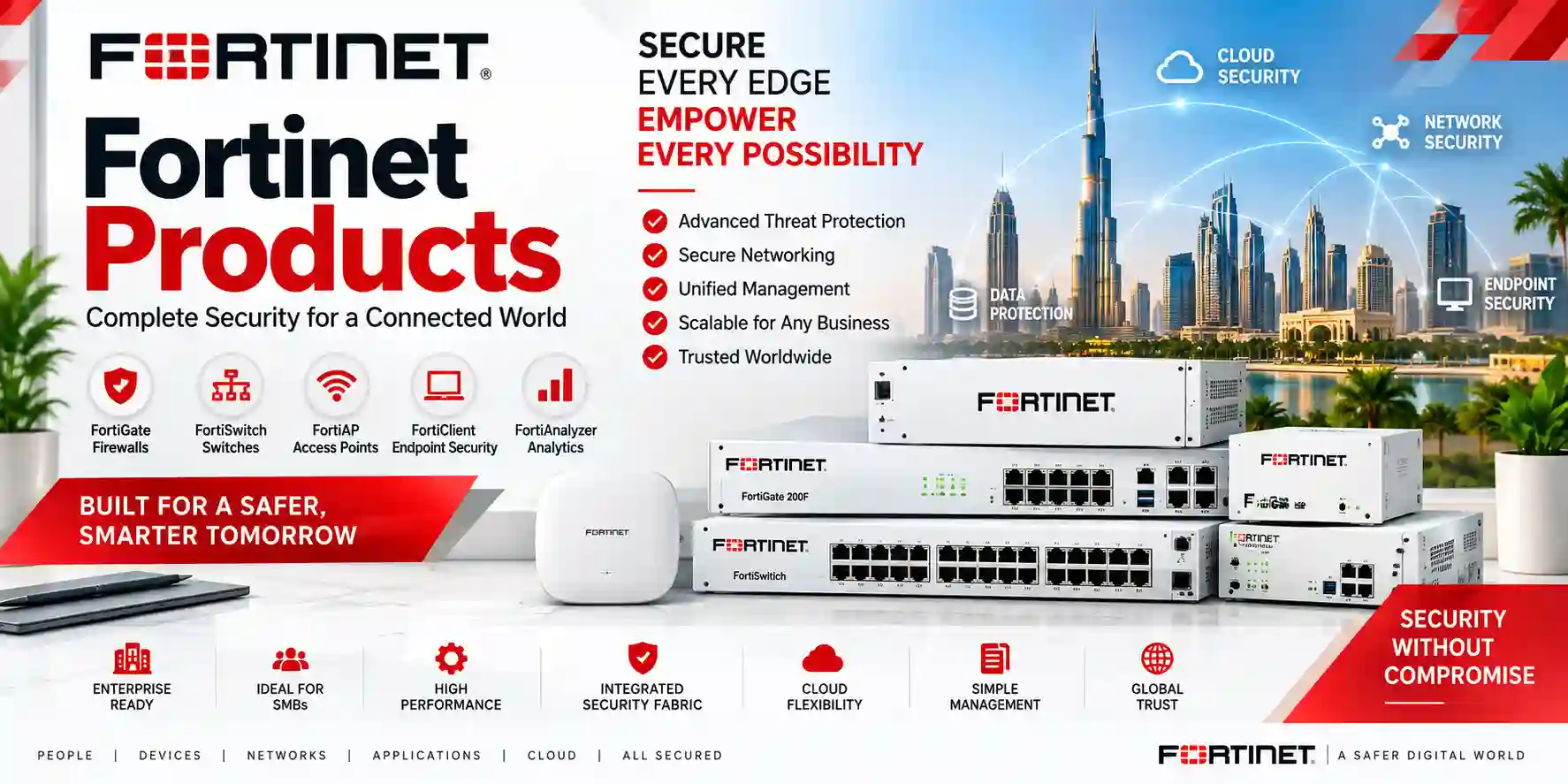
Which Fortinet deployment model fits your environment?
Fortinet positions FortiGate NGFW for physical, virtualised and cloud environments. The security policy model remains familiar because FortiGate hardware and FortiGate-VM run FortiOS, but the surrounding infrastructure is different. A physical appliance brings dedicated network interfaces and Fortinet security processing hardware to a branch, campus or data-centre edge. A virtual appliance consumes hypervisor or cloud compute resources and is inserted into virtual network paths. Cloud-native and as-a-service options shift more of the infrastructure responsibility toward the cloud or service provider. The best fit therefore depends on traffic architecture and operating model rather than on a simple feature checklist.
Physical FortiGate hardware
Purpose-built appliances are a natural choice where traffic reaches a physical internet edge, branch, campus or data centre. Model selection should account for enabled security inspection, VPN, interface types, high availability, future bandwidth and the traffic that must be processed during peak periods.
FortiGate-VM
FortiGate-VM can run in private and public cloud environments. Fortinet documents support across major public clouds and common hypervisors such as VMware, Hyper-V and KVM, with licensing and capacity mapped to the virtual deployment. This makes the VM form factor suitable when security must live inside virtual infrastructure.
Public-cloud marketplace
FortiGate-VM can be provisioned through supported public-cloud marketplaces or deployed with a bring-your-own-license model. Marketplace consumption can simplify procurement for teams that already manage cloud billing, while BYOL may suit organisations that want licensing to follow their existing Fortinet procurement process.
Hybrid and multi-cloud
A mixed estate can use physical FortiGate at sites and FortiGate-VM in private or public cloud. Centralised management, logging and repeatable policy become important because the objective is consistent enforcement without treating every environment as a separate security island.
Direct answer: hardware, VM or cloud?
Choose hardware when the firewall must terminate or inspect traffic at a physical site and dedicated interfaces or appliance-based performance are central to the design. Choose FortiGate-VM when workloads, network segments or security controls live inside a virtualised data centre or public cloud and the firewall should be deployed as software. Choose marketplace, flexible-consumption or cloud-native approaches when cloud procurement, elasticity or reduced infrastructure ownership matters. Many organisations use more than one model because branch traffic, data-centre traffic and cloud workload traffic do not follow the same path.
Fortinet hardware deployment
FortiGate hardware spans entry, mid-range and high-end appliance families for branches, campuses and data centres. Fortinet’s physical appliances use purpose-built security processors in supported models to accelerate networking and security functions. The practical advantage of a physical form factor is architectural clarity: defined ports, rack or desktop placement, direct WAN/LAN handoff and a dedicated device lifecycle. This is especially useful at sites where the firewall is the internet gateway, SD-WAN edge, VPN concentrator or segmentation point between local networks.
Hardware sizing should not be based only on raw firewall throughput. Buyers should identify the internet links, expected encrypted traffic, security profiles that will be enabled, IPsec requirements, number of users and devices, interfaces, wireless or switching integration, log retention and redundancy. High availability may require paired appliances and appropriate upstream/downstream design. Power, rack space, cooling, cabling and out-of-band access should also be considered before the equipment is ordered.
A hardware FortiGate can still be part of a cloud strategy. It may secure branch internet access while IPsec tunnels or SD-WAN links connect users to applications hosted in cloud platforms. In that architecture, the physical appliance protects and steers traffic at the site while FortiGate-VM or another Fortinet cloud security component protects cloud-side network paths. This is why the buying conversation should include both current site topology and future application location.

FortiGate-VM for private cloud and virtualised data centres
FortiGate-VM packages FortiGate capabilities as a virtual appliance. Fortinet documents deployment across private-cloud hypervisors including VMware ESXi/vSphere, Microsoft Hyper-V and KVM, with additional platform support depending on release and deployment package. This form factor is valuable when the traffic requiring inspection stays inside a virtual environment, when east-west segmentation is required between virtual network zones, or when the organisation wants a firewall that can be provisioned without installing a physical appliance in the same location.
Virtual firewall design must account for the infrastructure underneath it. vCPU allocation, virtual NIC design, hypervisor networking, storage, host capacity and placement affect the solution. Resilience may depend on both FortiGate high-availability configuration and the availability architecture of the hypervisor cluster. A VM firewall should not be sized independently from the workloads it protects; network traffic patterns, inspection services, encrypted sessions and expected growth still matter. Licensing should also be checked against the selected FortiGate-VM model and procurement method.
Automation becomes more important in virtual and cloud environments. Fortinet documents integrations with infrastructure-as-code and automation approaches such as Terraform modules, cloud deployment templates, Ansible and APIs. This can help teams make firewall deployment repeatable, but automation should follow a reviewed architecture. A fast template can reproduce a mistake just as efficiently as a correct design, so route tables, interfaces, availability zones, management access, logging and policy ownership should be defined before automation is used at scale.
Fortinet public-cloud deployment
FortiGate-VM is available for major public-cloud environments, including AWS, Microsoft Azure, Google Cloud and Oracle Cloud Infrastructure, with platform-specific deployment guides and marketplace options. In the cloud, the firewall is not simply a virtual copy of an appliance connected to two cables. The design must follow cloud networking constructs such as virtual networks, subnets, route tables, load balancers, transit services, availability zones and cloud-native identity controls. The FortiGate-VM must sit in the correct path so the intended north-south or east-west traffic actually passes through inspection.
Procurement can differ from on-premises hardware. Fortinet supports BYOL and on-demand marketplace models for FortiGate-VM, while FortiFlex provides a flexible licensing mechanism for eligible deployments. The right approach depends on whether the organisation wants the license purchased through its security procurement process, consumed through cloud billing, or adjusted as cloud capacity changes. Cloud infrastructure costs are separate from the security license, so compute, storage, data transfer and load-balancing costs should be considered when comparing designs.
Public-cloud high availability also needs cloud-specific planning. Redundancy across zones, routing convergence, floating addresses or cloud-native traffic steering may work differently from a pair of physical appliances on a LAN. Before deploying, define failure scenarios: what happens if an instance fails, if a zone becomes unavailable, if a route changes, or if the management plane cannot reach the firewall? A useful quote or architecture discussion should include these operational questions, not just the FortiGate-VM license size.
Deployment option comparison
| Decision area | Physical FortiGate | FortiGate-VM | Cloud-native / as-a-service |
|---|---|---|---|
| Best architectural fit | Physical sites, branch edge, campus, data centre | Private cloud, virtual data centre, public-cloud VPC/VNet | Cloud-first services where infrastructure ownership should be reduced |
| Capacity basis | Appliance model and enabled inspection workload | VM model, vCPU resources, platform and traffic profile | Service capacity and consumption model |
| Procurement | Hardware plus support/security subscriptions | BYOL, marketplace/on-demand or eligible flexible licensing | Service subscription or consumption model |
| Key planning dependency | Ports, rack/power, WAN/LAN topology, HA cabling | Hypervisor/cloud networking, compute allocation, routes, HA design | Service integration, supported regions, traffic steering and policy model |
Selection, sizing and licensing guide
1. Map traffic
Identify internet, branch-to-branch, remote-user, data-centre and cloud workload flows. The firewall form factor should sit where those paths can actually be inspected and controlled.
2. Define inspection
State which services will be enabled, such as IPS, application control, web filtering, antivirus, SSL inspection, VPN or SD-WAN. Security workload influences sizing.
3. Set resilience
Decide whether the design requires a single instance, an HA pair, cross-zone resilience, dual internet links, redundant switching or multi-region recovery.
4. Choose procurement
Compare appliance purchase, virtual licensing, BYOL, marketplace consumption and eligible flexible licensing against your budgeting and cloud-account model.
5. Plan operations
Define who manages policy, logs, upgrades, backups, incident response and renewals. Centralised management becomes increasingly valuable as the number of FortiGate instances grows.
6. Validate growth
Include realistic bandwidth, user, branch, application and cloud-growth expectations so the design does not need immediate replacement or relicensing after deployment.
Quotation checklist
For a more useful Fortinet quotation, send the information that changes the architecture rather than only asking for “a FortiGate price.” This helps distinguish a physical appliance requirement from a VM or cloud deployment and reduces the risk of quoting the wrong capacity or license model.
- Site, cloud or virtualisation platform where the firewall will run.
- Internet bandwidth and expected growth.
- Approximate users, devices, branches and remote users.
- Security services expected to be enabled.
- IPsec, remote-access VPN and SD-WAN requirements.
- Required interfaces, virtual networks or cloud routing design.
- High-availability and disaster-recovery objectives.
- Existing Fortinet products, licences and management tools.
- Cloud marketplace preference, BYOL requirement or other licensing constraint.
- Target deployment date and any migration from an existing firewall.
Useful Fourteck Tanzania resources
The Tanzania site currently exposes a compact set of relevant pages rather than separate pages for every Fortinet deployment category. These verified resources help buyers connect firewall planning with surrounding infrastructure and the quotation process.
Tanzania technology shopReview the product-selection approach for firewalls, switches, wireless, servers and related business technology.
IT and security servicesUnderstand how discovery, integration, documentation and lifecycle support can fit into a deployment project.
About Fourteck TanzaniaSee the solution-led approach to connecting network, security, server and cloud requirements.
Contact and quotation pageSend bandwidth, users, deployment platform and project details for a more meaningful Fortinet discussion.
Regional deployment and procurement planning
Fortinet deployment choices can be standardised across countries while still adapting to each site, cloud account and operating model. The regional sections below focus on buyer questions, deployment patterns, integration and quotation inputs without assuming stock, delivery time, office presence or guaranteed service coverage.
Fortinet Hardware, Virtual and Cloud Deployment Options Tanzania
For organisations in Tanzania, Fortinet deployment planning should begin with the locations where users and applications actually operate. A head office may need a physical FortiGate at the internet edge, a private virtualisation cluster may need FortiGate-VM for internal segmentation, and workloads hosted in AWS, Azure or another public cloud may need cloud-side inspection. These requirements can exist at the same time. The objective is to avoid creating isolated security stacks for each environment when a coordinated architecture can apply consistent principles for policy, VPN, logging and access control. Buyers should document site bandwidth, branch connectivity, remote users, cloud accounts and server locations before selecting the form factor.
Tanzania procurement teams should also separate the firewall platform from the surrounding licensing and infrastructure. A physical appliance requires the correct model, interfaces, power, rack or desktop placement and relevant support or security subscriptions. FortiGate-VM requires the right virtual model, compute resources, hypervisor or cloud compatibility and a licensing path such as BYOL or supported marketplace consumption. Public-cloud deployments add platform costs for compute, storage, load balancing and data movement. A price comparison is only meaningful when these elements are placed in the same commercial view. This is especially important when one design looks inexpensive because cloud infrastructure or subscriptions were omitted.
A practical Tanzania design should include resilience and operations. If internet access is critical, ask whether dual WAN, SD-WAN or redundant providers are required. If the firewall protects cloud applications, identify how route tables and availability zones will behave when an instance fails. If several FortiGate devices are deployed across sites, define how administrators will manage policy, backups, logs and firmware. Centralised management can reduce inconsistency, but it must be included in the architecture rather than assumed after deployment. The same applies to logging and reporting: retention expectations and audit needs influence the solution.
When requesting a Tanzania quotation, share user count, internet bandwidth, current firewall model, branch count, VPN requirements, virtualisation platform, public-cloud provider, expected security services and growth plan. This gives Fourteck enough context to compare hardware, VM and cloud paths rather than simply naming one appliance. The result should be a deployment choice tied to traffic flows, operational responsibility and lifecycle cost. Organisations that are still deciding between on-premises and cloud can also use the exercise to identify which security functions must remain at the site and which should move closer to cloud workloads.
Fortinet Hardware, Virtual and Cloud Deployment Options Dar es Salaam
A Dar es Salaam business evaluating Fortinet should first decide whether the main security boundary is a physical office, a data-centre environment, a cloud network or a combination. Physical FortiGate appliances are commonly considered when the firewall terminates local internet circuits, site VPNs and network segmentation. FortiGate-VM becomes relevant when the organisation operates VMware, Hyper-V, KVM or supported public-cloud infrastructure and needs a firewall inside that environment. The two approaches are not mutually exclusive. A branch or headquarters firewall can protect local users while a cloud FortiGate protects applications, and encrypted connectivity can join the two into a controlled hybrid design.
For a new office or infrastructure refresh in Dar es Salaam, the firewall decision should be coordinated with switching, wireless, server and internet planning. A high-capacity FortiGate cannot compensate for an undersized LAN uplink or poorly segmented network, while a powerful virtual firewall cannot inspect traffic that cloud routing does not send through it. Define VLANs, guest access, server zones, voice or CCTV segments, remote access and branch connectivity before configuration. Where dual internet links are planned, document which applications require failover, which can use load balancing and how business-critical traffic should be prioritised.
Licensing is another decision point. Hardware buyers should identify which FortiGuard services and FortiCare level are required for the project rather than treating subscriptions as an afterthought. VM and public-cloud buyers should compare BYOL with supported marketplace or flexible-consumption paths and check who owns the cloud account. The finance team may prefer predictable term-based licensing, while a cloud team may prefer consumption aligned with its existing provider bill. Neither approach is automatically better; the correct choice is the one that fits governance and expected capacity.
A useful Dar es Salaam RFQ should therefore include the physical site design and the digital architecture. Provide internet speed, user/device count, existing firewall and switches, expected inspection features, VPN tunnels, remote users, cloud provider, virtualisation stack, high-availability objective and migration window. Fourteck can then help compare form factors and dependencies instead of producing a generic firewall quotation. For broader project planning, the verified Tanzania services page explains how network, security and infrastructure requirements can be reviewed together.
Fortinet Hardware, Virtual and Cloud Deployment Options Mwanza
For a Mwanza organisation, choosing between a FortiGate appliance and a virtual or cloud deployment should follow the application path. If most users work from a physical site and access the internet through local circuits, a hardware FortiGate may provide a clear security edge for web access, VPN, segmentation and SD-WAN. If important applications run on a virtual server cluster, FortiGate-VM may provide additional control inside that infrastructure. If workloads are hosted in a public cloud, cloud-side security may be needed so traffic between cloud networks or from remote users is protected close to the applications rather than being forced through an unnecessary detour.
The design should also account for how the site will be operated after installation. A smaller environment may be comfortable with a locally managed firewall, while a multi-site organisation may need central policy, logging and consistent configuration. Where branch links are important, secure SD-WAN and IPsec architecture can influence the hardware or VM sizing because the firewall is doing both networking and security work. Administrators should decide how configuration backups, firmware updates, administrator access and log review will be handled. These operational tasks are part of the deployment model, not separate support issues.
For virtualisation, Mwanza buyers should confirm the exact hypervisor, available vCPU resources, network interface design and whether the VM firewall must protect north-south or east-west traffic. In cloud, they should specify the provider, region, virtual networks, route tables and expected availability model. For hardware, interfaces, WAN handoff, PoE dependencies, rack space, UPS and high-availability cabling should be documented. These details determine whether the proposed FortiGate can be integrated without last-minute redesign.
When asking for pricing, avoid comparing only the purchase price of hardware against the licence price of a VM. Include subscriptions, cloud compute, public IPs, load balancers, data transfer, management and support. A fair comparison should cover the same period and the same protection level. Fourteck can help structure a Mwanza requirement around users, bandwidth, cloud workload location, security services and resilience so the resulting recommendation explains why a particular form factor is appropriate and what additional components are required for a complete deployment.
Fortinet Hardware, Virtual and Cloud Deployment Options Arusha
Arusha businesses planning Fortinet security can benefit from separating user access, local systems and cloud applications into distinct traffic flows before choosing equipment. A physical FortiGate is often the logical control point for office internet, guest access, local servers and site-to-site VPN. FortiGate-VM can protect workloads hosted on a virtualisation platform or create segmented security zones inside a private cloud. Public-cloud FortiGate-VM can sit inside cloud networks where application traffic requires more control than a basic perimeter rule set. A hybrid design can therefore combine multiple form factors while maintaining similar FortiOS policy concepts.
For hospitality, professional services, education, operational sites or multi-building environments, the firewall should be sized alongside the network. Guest traffic may need isolation, internal systems may need stricter policies, and remote administrators may need controlled VPN or ZTNA-related access depending on the wider solution. Cloud-hosted applications can change the traffic pattern because more user sessions traverse the internet. If SSL inspection, IPS, application control or web filtering are enabled, security processing becomes a key sizing factor. Advertised interface speed alone is not enough to establish suitability.
Arusha organisations with a small IT team should also assess management complexity. A single appliance may be straightforward, but multiple branches, VMs and cloud instances can create policy drift if each firewall is managed separately. FortiManager or cloud management options may be appropriate depending on the architecture, while FortiAnalyzer or cloud logging can support visibility and reporting. The exact management and logging products should be selected according to device count, operational process and retention needs rather than added automatically.
A strong quotation request for Arusha includes current topology, WAN circuits, user numbers, important applications, branch connectivity, virtualisation or cloud platforms, security services, VPN requirements and the desired maintenance model. If migration is from another firewall, include the existing model and identify important NAT, VPN and access rules that must be preserved. Fourteck can then compare hardware, virtual and cloud options on architecture, licensing and operational fit. The goal is a security platform that supports the way the organisation works today while leaving a documented path for expansion.
Fortinet Hardware, Virtual and Cloud Deployment Options Dodoma
A Dodoma organisation evaluating Fortinet can start with a simple architecture question: where must traffic be controlled? For a physical office or institutional site, a FortiGate appliance can serve as the internet firewall, VPN endpoint and segmentation gateway. For virtual server environments, FortiGate-VM can provide security inside the hypervisor network. For applications hosted in AWS, Azure, Google Cloud or another supported platform, a public-cloud instance can enforce policy within the cloud routing model. Some projects require all three because users, servers and applications are distributed across different environments.
Procurement planning should match that architecture. Hardware requires model selection based on real inspected traffic, interface requirements and resilience. Virtual deployment requires the correct VM capacity, hypervisor resources and licence. Cloud deployment requires both a Fortinet licensing choice and cloud infrastructure budgeting. If the organisation uses formal procurement or budget cycles, licence term, renewal responsibility and support should be defined in the bill of materials. This makes it easier to compare proposals that might otherwise include different bundles or omit important recurring costs.
Dodoma projects should also document continuity expectations. If a firewall failure would interrupt important public services, internal applications or branch connectivity, a single device or instance may not be appropriate. Hardware HA can protect against appliance failure, while cloud designs can use supported HA patterns across availability zones. Dual internet can improve WAN resilience when correctly configured, but the design must identify how sessions, VPNs and routing behave when a link changes. Testing these scenarios is part of a dependable deployment.
For a quote, provide internet bandwidth, user and device counts, application categories, branch sites, VPN requirements, local server networks, virtualisation platform, cloud provider and logging expectations. Identify any need for web filtering, IPS, application control, SSL inspection, SD-WAN or remote access so sizing reflects the security services that will be enabled. Fourteck can use this information to compare a physical FortiGate with FortiGate-VM or cloud options in a way that supports procurement, implementation and ongoing management rather than focusing on model numbers alone.
Fortinet Hardware, Virtual and Cloud Deployment Options UAE
UAE organisations often operate a mix of offices, data-centre services, cloud applications and regional branches, so Fortinet deployment planning benefits from a hybrid view. Physical FortiGate appliances can protect office and data-centre edges, FortiGate-VM can secure private virtual infrastructure, and public-cloud instances can apply policy to workloads hosted in major cloud platforms. The key design task is to map the traffic between users, branches, cloud networks and applications and then place the firewall form factor where it can enforce the intended policy with acceptable latency and resilience.
Cloud procurement is particularly important in a UAE enterprise environment because security and cloud budgets may be owned by different teams. BYOL can keep Fortinet licensing under central procurement, while marketplace consumption can align with an existing cloud account. FortiFlex may provide another option for eligible use cases. The commercial comparison should include cloud compute, storage, data transfer, load balancers and any management or logging services. Hardware proposals should likewise include the appropriate FortiCare and FortiGuard subscriptions so both designs are compared on a consistent functional basis.
Multi-site companies should define how security policies are standardised. A UAE headquarters, cloud environment and overseas branches may share common application and VPN requirements but differ in bandwidth or local network design. Central management can help keep object names, security policies and upgrade processes consistent, while central logging supports investigation across sites. However, centralisation should not remove local architecture discipline: routing, interfaces, cloud availability zones and site-specific WAN failover still need correct design.
For UAE-focused Fortinet information, Fourteck maintains a dedicated Fortinet UAE resource covering FortiGate, licence renewal, Secure SD-WAN and related security products. A quotation request should include user count, internet links, current firewall, cloud provider, branches, VPNs, required inspection services and target availability. That enables a comparison of hardware, FortiGate-VM and cloud deployment models based on operational fit rather than on headline throughput or purchase price alone.
Fortinet Hardware, Virtual and Cloud Deployment Options Uganda
Uganda organisations considering Fortinet should begin by mapping offices, branches, data-centre resources and cloud workloads. A physical FortiGate can be used at a site edge for internet security, VPN and segmentation, while FortiGate-VM can be deployed within supported virtualisation platforms or public-cloud networks. For businesses expanding from a single office to multiple locations, this flexibility can help maintain a consistent firewall platform even when one site uses physical hardware and another environment is virtual. The choice should follow traffic and operational ownership, not a preference for one form factor in every location.
Branch connectivity can strongly influence sizing. If the FortiGate also handles site-to-site IPsec, remote access and Secure SD-WAN, those functions add to the security workload. A quote should state the number of tunnels, WAN links, expected bandwidth and applications that need priority or failover. If important systems are hosted in a cloud VPC or VNet, the route design should show whether traffic is inspected in the cloud or brought back through a branch firewall. Backhauling may be appropriate in some architectures but unnecessary in others.
Virtual and cloud deployments require a different bill of materials from physical appliances. Specify the hypervisor or cloud provider, compute allocation, required interfaces, availability design and preferred licensing model. BYOL may suit central procurement; marketplace consumption may fit cloud teams; flexible licensing may suit eligible variable workloads. Each option should be evaluated across the expected contract period and include cloud infrastructure costs. Management, logging and support should also be included so the operational model is clear after go-live.
Fourteck’s Uganda technology site provides a regional path for IT and networking enquiries. For a Fortinet deployment discussion, provide users, bandwidth, branch count, cloud or virtualisation platform, existing firewall, security services, VPN needs and resilience objectives. These details allow the architecture to distinguish what belongs at the physical edge, what belongs inside virtual infrastructure and what should be enforced in the cloud, creating a more coherent hybrid security design.
Fortinet Hardware, Virtual and Cloud Deployment Options Kampala
Kampala businesses planning a Fortinet deployment may have a straightforward office edge, a multi-branch network or a hybrid cloud environment. The first architecture step is to identify the security zones and paths that matter: staff internet access, guest networks, servers, cloud applications, remote users and branch links. A physical FortiGate can protect the local edge and internal segments, while FortiGate-VM can be positioned inside a virtual data centre or public cloud. If the business uses several environments, a mixed deployment can keep similar FortiOS policy concepts while placing enforcement closer to the traffic.
For Kampala organisations with rapid user or application growth, firewall sizing should include future bandwidth rather than only today’s internet plan. Security services such as SSL inspection, intrusion prevention and application control can create more workload than simple routing or basic stateful firewalling. The same principle applies to virtual firewalls: adding more vCPU may require an appropriate licence and must be supported by the underlying platform. Procurement should therefore include both current capacity and a realistic upgrade path.
Cloud deployment adds architecture questions that do not exist in the same form on a physical LAN. Route tables must direct traffic through the firewall, management access must be controlled, availability zones must be considered, and cloud-native load balancing or transit services may be part of the design. Teams using automation can benefit from templates and infrastructure-as-code, but configuration should be reviewed before being replicated. Naming standards, address objects and policy structure are especially useful when multiple cloud or branch firewalls are managed together.
A Kampala quotation request should include the current network diagram if available, WAN providers and speeds, branch count, users, remote access, IPsec tunnels, cloud provider, virtualisation platform and required security profiles. If the project includes switching, wireless or servers, mention those dependencies because VLAN and routing decisions can affect the FortiGate design. The objective is to choose a form factor and licence model that can be installed, operated and renewed predictably rather than treating hardware and cloud as separate purchasing exercises.
Fortinet Hardware, Virtual and Cloud Deployment Options Arua
For an Arua office or organisation, a Fortinet project should match the scale of the environment while preserving an upgrade path. A physical FortiGate may be appropriate when the main requirement is securing local internet, segmenting users and devices, and connecting to other sites with VPN. If applications are hosted on virtual servers or public cloud platforms, FortiGate-VM can extend the same firewall platform closer to those workloads. The organisation does not need to choose one form factor permanently; it can begin with a site appliance and add virtual or cloud enforcement as infrastructure changes.
Connectivity resilience deserves attention before model selection. If business applications depend on continuous internet access, document whether a secondary WAN link is planned and how failover should behave. Secure SD-WAN can help steer traffic across multiple links, but policies must be based on application importance and link conditions. VPN tunnels to other branches or cloud networks should be counted in sizing, and administrators should understand how tunnel endpoints change if the WAN fails over. These details influence configuration and testing.
Arua buyers considering FortiGate-VM should confirm whether they control the hypervisor or cloud account. In a private virtual environment, compute resources and virtual switching are part of the deployment responsibility. In public cloud, route tables, availability zones, public IPs and provider charges matter. BYOL and marketplace options can create different commercial models, so the quote should identify which party purchases the licence and which party pays the cloud infrastructure bill. Support and security subscriptions should also be visible rather than hidden in a later renewal cycle.
For procurement, provide user count, number of network segments, internet speed, VPN sites, remote users, cloud applications, security services and the desired level of redundancy. If there is an existing firewall, include its model and any known performance or support problem. This gives the solution designer enough information to compare a current-generation physical FortiGate with a virtual alternative without oversizing the project. A clear requirement also makes future expansion easier because the original architecture documents why each component was selected.
Fortinet Hardware, Virtual and Cloud Deployment Options Mbarara
Mbarara organisations can approach Fortinet deployment as an architecture choice rather than a product-only purchase. A physical FortiGate provides a dedicated security platform at an office, branch or server room. FortiGate-VM provides a software form factor for supported virtualisation and cloud environments. Cloud-native or service-based Fortinet options can suit workloads that need a different operating model. The important step is to define which traffic requires control: employee internet access, server access, branch links, guest networks, remote users, cloud applications or traffic between cloud subnets.
Where the site runs business applications locally, the firewall design should be coordinated with server and network segmentation. Users may not need direct access to every server, guest traffic should normally remain separated from internal resources, and management interfaces should have restricted access. A physical appliance can enforce these policies if routing passes through it. In a virtual data centre, FortiGate-VM can perform a similar role inside the virtual network. The routing architecture must intentionally direct traffic through the firewall; installing a VM alone does not create segmentation.
Licensing and lifecycle should be documented from the beginning. Hardware may include a chosen FortiGuard protection bundle and FortiCare support. FortiGate-VM can use supported BYOL, marketplace or flexible options depending on deployment. The bill of materials should state the term and renewal responsibility. If the environment is expected to grow, identify whether the selected model can accommodate additional bandwidth, users or virtual resources and what commercial change would be required to scale.
A Mbarara request for quote should include internet bandwidth, network zones, user count, VPN needs, branch connections, existing Fortinet or other firewall, cloud provider, virtualisation technology and availability requirements. If remote administration is required, define how administrators will securely access the device and where configuration backups are stored. These operational inputs help avoid a design that works on the installation day but becomes difficult to manage or expand. Fourteck can then compare deployment models with a clear explanation of dependencies, licensing and integration.
Fortinet Hardware, Virtual and Cloud Deployment Options Gulu
For Gulu businesses and institutions, the right Fortinet form factor depends on whether security is needed primarily at a physical site, inside virtual infrastructure or around cloud workloads. A hardware FortiGate can consolidate firewalling, VPN and secure branch connectivity at the local edge. FortiGate-VM can protect virtual networks and can be deployed in supported public cloud platforms. A hybrid design can use the physical appliance for user and site traffic while a VM secures cloud-side applications, reducing the need to route every flow through one distant security point.
The sizing discussion should cover the services actually enabled. Intrusion prevention, web filtering, antivirus, application control and encrypted traffic inspection add processing demand. IPsec VPN and SD-WAN can also influence performance requirements. For hardware, interface quantity and type are important; for a VM, vCPU capacity and virtual NIC design matter. A procurement document that simply states “FortiGate” without these details leaves too much room for proposals that are technically different and difficult to compare.
Gulu organisations using cloud services should document whether users access SaaS directly, connect to infrastructure hosted in a VPC/VNet, or use site-to-site VPN into a cloud network. Each pattern has different firewall placement choices. Where a cloud FortiGate is used, routing, availability and marketplace or BYOL procurement should be reviewed alongside the cloud platform bill. Where only SaaS access is required, a local physical firewall may remain the main enforcement point and can apply web and application controls according to policy.
For a more accurate quotation, include user count, bandwidth, critical applications, branch and remote-user requirements, public-cloud or hypervisor details, security services and the desired support term. Mention any need for central management or logging across multiple locations. The chosen design should make it clear who updates policy, who monitors alerts, how configuration is backed up and how licence renewals will be tracked. That operational clarity is as important as the initial installation because security effectiveness depends on continued management after the device or VM is deployed.
Fortinet Hardware, Virtual and Cloud Deployment Options Kenya
Kenya organisations often need to connect headquarters, branches, remote users and cloud applications, making Fortinet deployment flexibility useful. Physical FortiGate appliances can secure office edges and provide VPN or Secure SD-WAN, while FortiGate-VM can operate in private virtualisation and public-cloud networks. A business does not have to standardise on a single form factor; it can standardise on security policy principles and management while using the most appropriate deployment model for each environment. This is especially relevant where applications are being moved gradually from local servers to cloud platforms.
Before selecting hardware, calculate the traffic that will pass through security inspection and consider future internet upgrades. If multiple WAN links, IPsec tunnels or SSL inspection are part of the plan, include them in sizing. For VM deployments, document the hypervisor, allocated vCPUs, interface design and expected throughput. In cloud, define the VPC/VNet structure, routes, availability zones and procurement model. BYOL, marketplace consumption and flexible licensing can create different cost profiles, and the cloud infrastructure bill must be included in any total-cost comparison.
Kenya procurement teams should also plan migration. Replacing an existing firewall involves more than changing the device. NAT rules, site-to-site VPNs, public services, address objects, policies and certificates may need to be reviewed and recreated. A cloud migration adds route and dependency changes. A phased approach can reduce risk when the organisation has several branches or critical services. Configuration should be tested against the business applications that depend on it rather than only verifying that internet browsing works.
Fourteck’s Kenya IT solutions site provides a regional enquiry path for firewall and networking requirements. For a Fortinet RFQ, send bandwidth, branches, users, cloud provider, virtualisation stack, VPN needs, security services, logging requirements and target deployment date. This information helps compare hardware and VM options on a common basis and supports a design that can be managed consistently as the organisation expands.
Fortinet Hardware, Virtual and Cloud Deployment Options Kuwait
Kuwait businesses comparing Fortinet deployment options should identify whether the main requirement is branch-edge protection, data-centre security, cloud workload inspection or a hybrid of these. Physical FortiGate appliances provide dedicated hardware for office and data-centre network boundaries. FortiGate-VM brings FortiOS into supported virtualised and public-cloud environments. Cloud-oriented service models can further reduce the need to own infrastructure in selected use cases. A well-designed estate can combine these options while using central policy and logging to create a more consistent security operation.
For Kuwait projects with high-bandwidth links or many encrypted applications, sizing should focus on threat-protection and inspection requirements rather than raw port speed. The quote should state which FortiGuard services will be enabled, whether SSL inspection is planned, how many VPNs or remote users are expected, and whether Secure SD-WAN will handle multiple circuits. For hardware, interfaces and HA are key. For FortiGate-VM, vCPU capacity, cloud or hypervisor networking and availability architecture take the place of physical port planning.
Commercial evaluation should cover the full lifecycle. Hardware needs subscriptions and support to match the required security level. Virtual and public-cloud deployments may use BYOL, marketplace or other eligible consumption models. Public-cloud compute and data charges remain separate. Management and logging should be included where required, and the ownership of renewals should be assigned to a team. This avoids unexpected service gaps caused by a licence reaching the end of its term without a renewal process.
Fourteck’s Kuwait technology site provides a regional path for networking and cybersecurity enquiries. For a Fortinet quote, provide current firewall details, internet bandwidth, sites, VPNs, cloud platforms, required security inspection, HA expectations and management preferences. The purpose is to compare physical and virtual deployment as complete solutions, including the surrounding infrastructure and operational tasks that determine whether the firewall remains effective after installation.
Fortinet Hardware, Virtual and Cloud Deployment Options Ghana
For Ghana organisations, Fortinet deployment planning can start with a map of where applications and users reside. A physical FortiGate can protect office internet access, servers and branch links. FortiGate-VM can protect private virtual infrastructure or public-cloud networks where workloads are hosted. Where the organisation uses SaaS, local applications and cloud infrastructure together, the design may need both physical and cloud enforcement. This avoids forcing every security decision into one location and lets policy follow the network architecture more closely.
Sizing should be based on the expected security workload. User count is useful, but bandwidth, session patterns, SSL inspection, IPS, VPN and application control can be more significant. A branch with modest user numbers but high encrypted traffic may need different capacity from a larger office with lighter inspection. A VM should likewise be sized according to traffic and vCPU resources rather than assumed to scale automatically. If cloud auto-scaling or cloud-native security is being considered, confirm the supported service model and design before purchase.
Ghana buyers should compare commercial options over the same timeframe. Hardware may involve appliance cost plus FortiGuard and FortiCare. FortiGate-VM may use BYOL or marketplace licensing, while cloud infrastructure charges are billed separately. Management and logging can add further licences or services. A total-cost view is more useful than comparing only the initial invoice because security subscriptions and cloud resources continue after deployment. Procurement teams should also identify renewal dates and responsibilities.
The deployment plan should state how the firewall integrates with switches, wireless networks, servers, directory services and remote access. It should also define resilience, backups, administrative access and monitoring. When requesting a quote, provide internet links, sites, users, cloud provider, hypervisor, critical applications, VPNs, security services and target support term. A clear Ghana requirement allows Fourteck to explain when a physical appliance is appropriate, when a VM makes more sense and when a hybrid design provides the cleanest path for future growth.
Fortinet Hardware, Virtual and Cloud Deployment Options Nigeria
Nigeria enterprises and growing businesses can use Fortinet in physical, virtual and public-cloud architectures, but the form factor should follow the network rather than the other way around. A physical FortiGate is useful at a branch, campus or data-centre edge where traffic enters through physical interfaces. FortiGate-VM is useful inside private virtualisation or cloud networks. Public-cloud marketplace deployment can support teams that want to provision security alongside cloud infrastructure. Hybrid organisations may deploy several forms and manage them as one broader security estate.
Large or distributed environments should pay particular attention to segmentation and central management. Branch users, server networks, guest traffic, operational devices and cloud workloads may have different trust requirements. A FortiGate can enforce these boundaries only if network design directs the traffic through it. Central policy management can improve consistency across many firewalls, but it should be paired with clear change control, naming standards and logging. Otherwise, central tools simply make inconsistent policies easier to distribute.
For cloud security, Nigeria buyers should document the provider, regions, network topology and availability requirements. A single FortiGate-VM instance may be sufficient for a lab or non-critical workload but may not meet a production resilience objective. HA across availability zones, route changes and load-balancing dependencies should be part of architecture review. Licensing can be BYOL, marketplace or another supported consumption method depending on the platform. Cloud infrastructure and security licences should be budgeted separately but evaluated together.
A useful Nigeria RFQ includes user counts, branch sites, WAN speeds, cloud networks, virtualisation platform, VPN requirements, required FortiGuard services, SSL inspection expectations, management/logging needs and migration scope. If the organisation already owns Fortinet licences, identify them so compatibility and reuse can be assessed rather than assumed. The commercial goal is to compare complete deployments: appliance or VM capacity, licences, management, integration and support. This provides decision-makers with a clearer view of what each option requires throughout its lifecycle.
Fortinet Hardware, Virtual and Cloud Deployment Options Seychelles
Seychelles organisations considering Fortinet may need to balance compact on-site infrastructure with growing use of cloud applications. A physical FortiGate can provide a clear internet security edge for an office, hospitality property, institution or operational site. FortiGate-VM can protect virtual servers or public-cloud workloads when applications move beyond the local network. The form factor should be chosen by traffic path, available infrastructure and operational capability. A small physical site can still use cloud FortiGate where important workloads are hosted remotely.
Resilience planning is particularly important for any environment where internet connectivity supports core business services. If multiple WAN links are available, the firewall design can include failover or Secure SD-WAN, but the policy should define which applications are critical and how they are tested. VPN connectivity to cloud or other branches should be included in sizing. Where the local environment has limited rack space or wants to reduce on-site complexity, a virtual or cloud component may complement rather than replace the physical edge.
Cloud licensing can be attractive because it aligns deployment with the application environment, but it still requires governance. Decide who controls the cloud account, how FortiGate-VM is licensed, how administrators gain access, where logs are retained and what happens when the cloud instance fails. BYOL and marketplace models can have different commercial and administrative implications. The quote should also include provider infrastructure costs and any additional management or logging services so the total design is visible.
For a Seychelles quotation, provide the site type, users, internet links, remote-access needs, cloud provider, virtualisation stack, expected security services and availability objective. If the project supports guest and business networks, state how these should be separated. If applications are hosted outside the site, identify whether traffic should use direct internet access or a VPN path. These details help Fourteck compare physical FortiGate, FortiGate-VM and hybrid options without oversizing or leaving important dependencies unstated.
Integration with switching, Wi-Fi, servers and cloud networking
A Fortinet firewall is only one layer of the architecture. Physical FortiGate depends on correct WAN handoff, switching, VLANs, DNS, identity and route design. FortiGate-VM depends on hypervisor or cloud network interfaces and routes. Public-cloud deployment may depend on cloud transit, load balancers or user-defined routes. If those dependencies are not planned, the firewall may be correctly configured while traffic bypasses it or follows an inefficient path.
For broader infrastructure planning, consider how FortiSwitch, FortiAP or third-party switching and wireless equipment map user and device segments to firewall policy. Servers and virtual machines should be placed in defined security zones, while management networks should be restricted. Remote access should use approved identity and authentication methods, and site-to-site VPN should follow documented address plans. These details make hardware, virtual and cloud FortiGate instances easier to operate as a single security architecture.
Fortinet deployment FAQ
Is a physical FortiGate more secure than FortiGate-VM?
The form factors are designed for different infrastructure contexts. Security effectiveness depends on correct architecture, sizing, configuration, subscriptions, updates and operational management. Hardware uses dedicated appliance resources, while FortiGate-VM runs in virtual or cloud infrastructure. The appropriate choice is the one that can be placed correctly in the traffic path and operated reliably.
Which hypervisors can FortiGate-VM use?
Fortinet documents FortiGate-VM support for major private-cloud and virtualisation environments including VMware ESXi/vSphere, Microsoft Hyper-V and KVM, with additional platform support depending on the release and deployment package. Always validate the current Fortinet compatibility documentation for the exact FortiOS version and platform before deployment.
Can FortiGate-VM run in AWS, Azure and Google Cloud?
Yes. Fortinet provides FortiGate-VM options for major public-cloud platforms including AWS, Microsoft Azure and Google Cloud, with platform-specific deployment and marketplace paths. The design must still account for cloud networking, routes, availability and the selected licensing model.
What is the difference between BYOL and marketplace licensing?
BYOL means the Fortinet licence is procured separately and then applied to the supported cloud deployment. Marketplace or on-demand models place the security software charge within the cloud marketplace billing path. Which is preferable depends on procurement, contract terms, cloud-account ownership and expected usage. Cloud infrastructure charges remain separate.
Can physical and virtual FortiGate firewalls be managed together?
Fortinet provides centralised management options for FortiGate estates, including FortiManager and cloud-based management services depending on requirements. A mixed hardware and VM environment can therefore be managed using common operational processes, but device versions, policy design, administrator roles and licensing should be planned.
Does cloud deployment remove the need for high availability?
No. Cloud infrastructure can provide resilient building blocks, but the FortiGate architecture still needs a defined failure model. Production designs may require multiple instances, supported HA patterns, multiple availability zones, route failover and cloud-native load balancing. The exact pattern depends on the cloud provider and application architecture.
How do I size a FortiGate for Tanzania?
Provide internet bandwidth, expected inspected traffic, users, devices, VPNs, SSL inspection, IPS, web filtering, SD-WAN, interfaces, growth and redundancy requirements. For FortiGate-VM, add the hypervisor or cloud platform and vCPU capacity. Sizing should be based on the enabled security workload rather than raw firewall throughput alone.
Can Fortinet support a hybrid on-premises and cloud security design?
Yes. Fortinet positions FortiGate across physical, virtual and cloud environments, allowing organisations to use hardware at sites and FortiGate-VM or cloud services near hosted workloads. The design should focus on consistent policy, secure connectivity, logging and management while respecting the routing and availability requirements of each environment.
Regional Fourteck resources
Organisations coordinating Fortinet or related IT requirements across multiple markets can use Fourteck’s regional sites for localised enquiry paths. The following verified destinations are relevant to this page’s regional coverage.
Decision recap
Use physical FortiGate where a dedicated appliance best matches the physical network edge or data-centre boundary. Use FortiGate-VM where the protected network is virtualised or hosted in public cloud. Use marketplace, flexible-consumption or cloud-native options when the operational and commercial model benefits from cloud-style procurement. Use hybrid deployment when users, sites and applications are spread across more than one infrastructure type.
Before buying, validate traffic paths, inspection services, bandwidth, vCPU or appliance capacity, high availability, licensing, management, logging and migration. Those factors determine the complete solution. Fourteck can use the same inputs to prepare a clearer quotation and explain the dependencies between FortiGate, cloud networking, switching, virtualisation and ongoing security operations.
Consultation panel: what to send Fourteck
Send the current firewall model, internet bandwidth, user/device count, branch count, virtualisation platform, cloud provider, VPN requirements, security services, availability target and preferred licensing method. If you have a network diagram, cloud topology or existing rule-set summary, include it. Fourteck can then compare the deployment options using the same technical assumptions and identify any switching, routing, cloud or management dependencies that should be part of the scope.