
Fortinet Products and Services
Fortinet’s current portfolio spans secure networking, next-generation firewalls, enterprise LAN and WLAN, unified SASE, cloud security, endpoint protection, security operations, application security and AI-powered FortiGuard security services. For a business buyer, the useful task is not to select the longest product list; it is to map the right Fortinet capabilities to the users, applications, sites, internet links, cloud services, risk profile and operational resources that actually need protection.
Fourteck Tanzania can help structure a Fortinet requirement for new deployments, refresh projects, branch standardisation, secure wired and wireless networks, remote-user access, central management, security visibility and subscription planning. Product suitability, commercial availability, licensing, support entitlement and implementation scope should always be confirmed for the exact project before purchase.
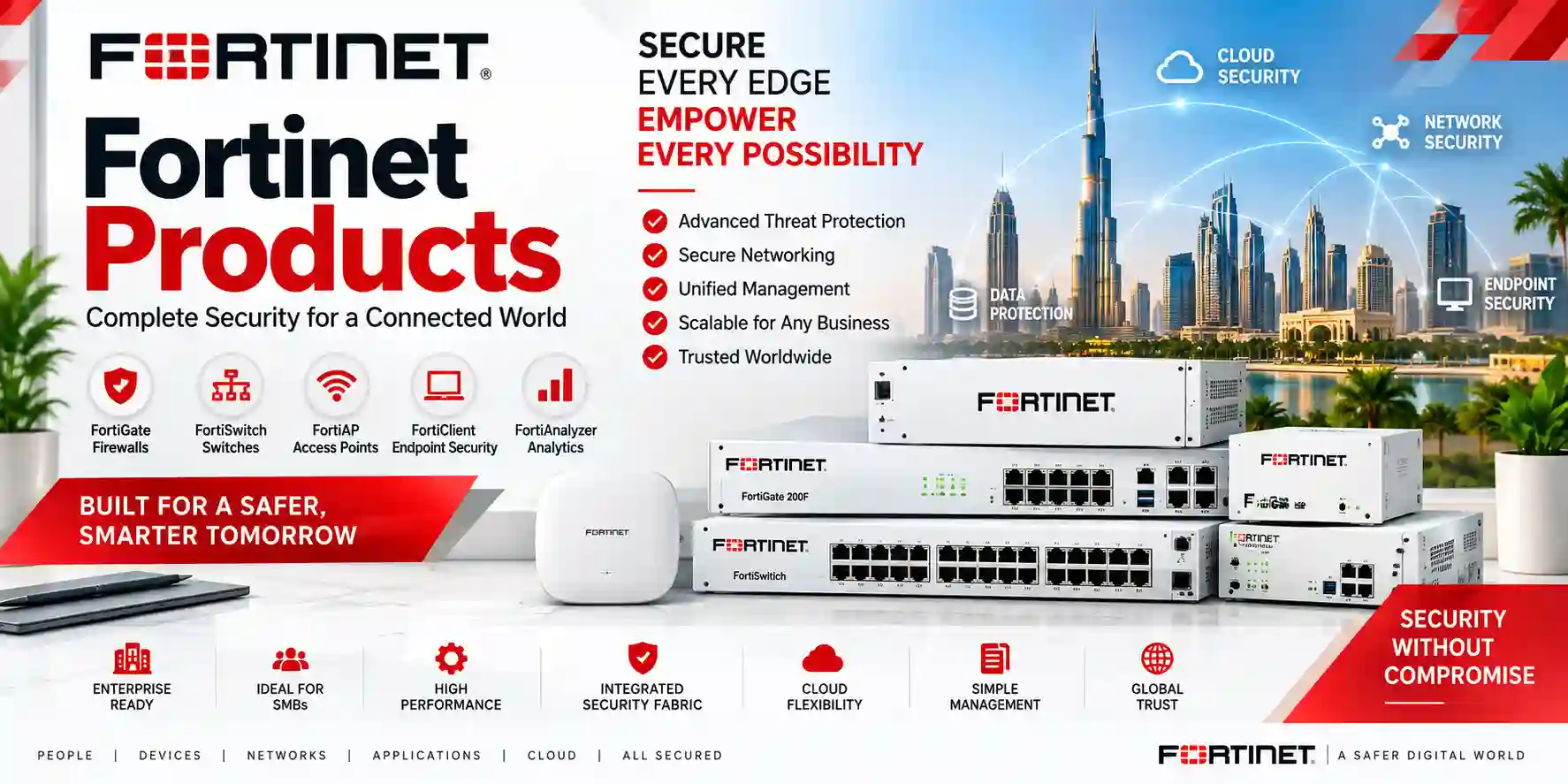
What Fortinet Products and Services Cover
Fortinet positions its Security Fabric as a platform that connects networking and security across different parts of an organisation. The portfolio includes physical and virtual firewalls, secure Ethernet switching, secure wireless LAN, SASE, ZTNA, endpoint security, network access control, web application and API protection, email security, central management, analytics, SIEM, SOAR, EDR and managed or expert-led security services. The value of that breadth is architectural choice: a small office may begin with a FortiGate and a defined security subscription, while a distributed enterprise may combine FortiGate, FortiSwitch, FortiAP, FortiManager, FortiAnalyzer, endpoint controls, SASE and security operations tools.
Fortinet’s current product material describes FortiGate next-generation firewalls as platforms for protecting users, data and applications across hybrid environments. FortiSwitch can operate as standalone switching or integrate with FortiOS through FortiLink. FortiAP provides indoor, outdoor and specialised wireless access options with FortiGate or cloud management. FortiManager is designed for centralised network and security management, while FortiAnalyzer consolidates telemetry and can provide data, analytics, detection and automation capabilities. FortiClient provides endpoint telemetry and secure-access functions, FortiEDR adds endpoint detection and response, FortiNAC controls network access for connected assets, FortiWeb protects web applications and APIs, and FortiMail protects business email environments.
FortiGuard AI-Powered Security Services are a major part of the lifecycle. Fortinet publishes more than twenty services across the wider Security Fabric, available through bundles or, for some services, individually. That means a procurement decision is not complete when the hardware model is selected. Buyers should also identify the subscription bundle, support term, management approach, log-retention expectations, remote-access method, update policy and renewal process. A well-built bill of materials should make those lifecycle items visible before approval rather than discover them after installation.
Fortinet Product Portfolio for Business Buyers
FortiGate Next-Generation Firewalls
FortiGate is the central firewall family in the Fortinet portfolio. Deployment options extend from compact branch appliances to large platforms and virtual or cloud form factors. Selection should account for inspected traffic rather than raw interface speed alone. Internet bandwidth, encrypted traffic, IPS, malware inspection, application control, concurrent users, VPN tunnels, WAN links, interface requirements, high availability and expected growth all influence sizing.
FortiSwitch Secure Ethernet
FortiSwitch covers access, campus, data-centre and ruggedised switching families. Fortinet supports standalone management as well as integration through FortiLink, with FortiGate and FortiManager able to provide centralised control in appropriate designs. Buyers should define port count, PoE load, uplink type, fibre needs, redundancy, endpoint density and whether the switch will be part of a Fortinet-managed branch or campus architecture.
FortiAP Secure Wireless LAN
FortiAP provides secure wireless access with different indoor, outdoor, wall-jack, antenna and radio configurations, including current Wi-Fi generations. The right design depends on coverage, client density, application demand, roaming, wall construction, radio interference, switch uplinks and PoE. A quotation should therefore be based on site characteristics rather than an access-point count guessed from floor area alone.
FortiManager
FortiManager centralises management for FortiGate and related Fortinet networking environments, helping teams standardise policies, device settings, templates and rollout processes. It becomes particularly relevant when an organisation has several firewalls, branches or administrators and needs change control, consistent configuration and a single operational view rather than individual device administration.
FortiAnalyzer
FortiAnalyzer consolidates logs and telemetry and adds analytics, reporting, threat intelligence and automation capabilities. The right deployment depends on event volume, retention period, reporting needs, investigation workflows and regulatory or internal audit requirements. Planning log architecture early avoids a common problem in which security data exists but cannot be retained or searched at the level the organisation expects.
FortiClient and Secure Access
FortiClient acts as an endpoint Fabric Agent and can support secure access, endpoint telemetry, VPN or ZTNA-related workflows depending on edition and architecture. Buyers should distinguish between remote-access requirements, endpoint-protection requirements and cloud-delivered SASE requirements because these are related but not identical purchasing decisions.
FortiSASE
FortiSASE provides cloud-delivered secure access for distributed users and locations. It is relevant when security policy must follow users beyond the traditional office perimeter or when organisations want to converge networking and security for hybrid work, SaaS access and smaller branch or thin-edge locations. Identity, endpoint posture, application paths and user geography should be defined before selecting the architecture.
FortiEDR and Endpoint Security
FortiEDR is designed for endpoint detection, protection and automated response across supported workstation, server and cloud workload environments. It can complement network controls by providing endpoint-level visibility and containment. Endpoint count, operating systems, existing protection, response processes and SOC responsibilities should be documented before licensing.
FortiNAC
FortiNAC provides network-access control and device visibility for IT, IoT, OT and other connected assets. It can support profiling, segmentation and automated response in multi-vendor networks. NAC projects require careful discovery because port counts, device types, authentication methods, switch compatibility, network topology and exception handling all affect design and rollout effort.
FortiWeb
FortiWeb protects web applications and APIs and is available in multiple form factors, including hardware, virtual and cloud-oriented options. It is relevant for public portals, business applications and APIs that need application-layer protection, bot mitigation or other WAAP/WAF controls. Application architecture, traffic volume, TLS, API usage, hosting model and deployment path should be confirmed first.
FortiMail
FortiMail provides email security across on-premises, cloud and hybrid email environments, with options intended to address phishing, business email compromise, impersonation, malware and other email-borne threats. Procurement should account for mailbox or user counts, Microsoft 365 or Google Workspace integration, mail flow, retention requirements and operational ownership.
FortiSIEM, FortiSOAR and Security Operations
Fortinet’s security-operations portfolio includes tools for event management, orchestration, automation, response and broader SOC workflows. These products make the most sense when the organisation has clear log sources, incident processes, response ownership and staffing expectations. The goal should be measurable operational improvement, not simply adding another security console.
FortiGuard, FortiCare and Subscription Planning
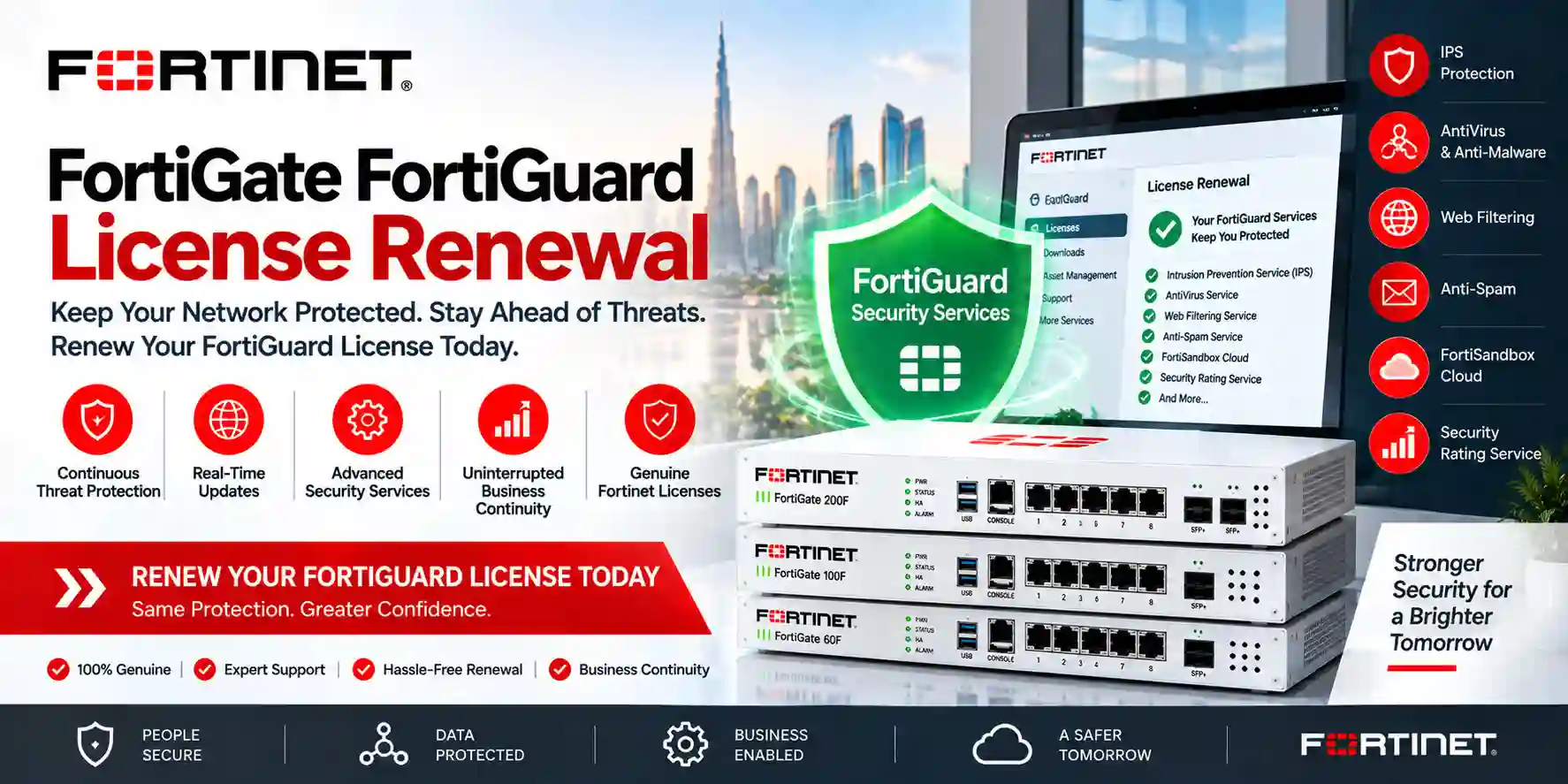
FortiGuard AI-Powered Security Services provide the continuously updated security layer used across multiple Fortinet products. Fortinet publishes a portfolio of more than twenty services, with common functions including intrusion prevention, antivirus or malware protection, web security, DNS security, application control and other specialised protections. Service availability varies by product, package and subscription. A buyer should therefore avoid treating the word “license” as a single generic item. The quotation should name the exact bundle or services, the term, the supported product, the FortiCare entitlement where applicable and the renewal date.
FortiCare covers Fortinet support services and is separate from the security functionality of individual FortiGuard services, even though commercial bundles may package entitlements together. For existing deployments, renewal planning should begin with the serial number, current support contract, subscription end date, deployed feature set and expected hardware lifecycle. If a firewall is approaching a replacement decision, renewing without reviewing the platform may create avoidable cost; equally, allowing a required subscription to expire can reduce access to updates or licensed protection.
For procurement teams, the safest approach is to ask for a line-by-line commercial proposal: appliance or software, support term, security-services bundle, management or analytics licenses, implementation scope, migration effort and optional services. That structure makes it easier to compare proposals and avoids confusion between one-year, multi-year and hardware-only pricing.
Fortinet Services: Design, Deployment, Optimisation and Lifecycle Support
Fortinet’s own professional-services portfolio follows a lifecycle model that includes consulting, planning and design, implementation, optimisation, transformation and expert services. That lifecycle is a useful way for buyers to frame any Fortinet project, even when the work is performed by an integrator rather than by Fortinet directly. The first stage should establish the desired business and security outcome. The second should turn that outcome into architecture, sizing, licensing and implementation requirements. The third should control migration, testing and handover. The final stage should define operations, review and renewal.
How to Select the Right Fortinet Solution
A correct Fortinet design starts with requirements that can be measured. For a firewall, record internet circuit speeds, expected growth, number of users and devices, the amount of encrypted traffic, security services to be enabled, site-to-site VPNs, remote users, WAN links, public-facing services and high-availability expectations. For switching, count current and future ports, PoE devices, uplinks, fibre runs and redundancy needs. For wireless, document floor plans, user density, device types, voice or video usage, guest access, indoor or outdoor zones and roaming requirements. For central management and analytics, estimate the number of managed devices, administrators, changes, events and retention period.
The same discipline applies to SASE, endpoint security and application security. FortiSASE or ZTNA projects should define users, locations, applications, identity sources and access policies. Endpoint projects should define supported operating systems, device ownership, current agents and response responsibilities. FortiWeb projects should document the applications, APIs, hosting platform, traffic profile, TLS termination and development workflow. FortiMail projects should document the email platform, domains, user counts and mail-flow requirements.
Avoid selecting by model popularity alone. A model that is common in one market may be undersized for a heavily inspected network or unnecessarily large for a light branch. Product datasheets should be checked against the exact software release and service configuration, and lifecycle status should be verified before ordering. When replacing an older FortiGate, treat the project as a chance to review policy quality, unused objects, obsolete VPNs and logging gaps rather than copying every historical setting unchanged.
Related Fourteck Tanzania Pages
The current Tanzania site has a compact set of verified pages rather than many separate Fortinet product-category pages. These links help connect a Fortinet requirement with the broader network, service and procurement context. Additional product-specific Tanzania links should only be added after they are published and verified.
Technology Services in TanzaniaReview solution planning, integration and lifecycle themes for firewalls, switching, Wi-Fi, servers and other systems that commonly interact with a Fortinet deployment.
About Fourteck TanzaniaSee how Fourteck Tanzania approaches outcome-led technology planning, system dependencies, deployment preparation and long-term maintainability for business infrastructure.
Fourteck Tanzania SolutionsExplore the wider Tanzania solution portfolio, including firewall and VPN security, networking, Wi-Fi, servers and infrastructure that may need to be coordinated with Fortinet products.
Contact Fourteck TanzaniaUse the verified Tanzania enquiry page to submit user counts, sites, bandwidth, current equipment, required security outcomes and the preferred Fortinet products for quotation review.
Fortinet Products and Services Tanzania
For Tanzanian organisations, Fortinet procurement is usually most effective when firewall, branch connectivity, secure LAN, wireless, endpoint access and security operations are treated as parts of one architecture rather than separate purchases. A head office may begin with a FortiGate at the internet edge, but the final design can also involve FortiSwitch for access switching, FortiAP for staff and guest wireless, FortiManager for central policy administration and FortiAnalyzer for logs and security visibility. Distributed businesses can extend the design through site-to-site VPN, Secure SD-WAN or cloud-delivered access approaches depending on the way users and applications are distributed.
Tanzania buyers should prepare a requirement that reflects actual operating conditions. Record each office or site, internet circuit, expected bandwidth, number of users, critical cloud applications, local servers, VPN dependencies, guest networks, IP phones, cameras, Wi-Fi clients and any public applications. A firewall that looks adequate from headline throughput may behave differently once deep inspection and security services are enabled, so sizing should use the relevant protected-traffic figures and the security profile the business intends to run. Where dual internet is required, define whether the objective is simple failover, load distribution, application-aware steering or a broader SD-WAN design.
Commercial planning should separate hardware, FortiGuard subscriptions, FortiCare support, management and analytics licenses, implementation effort and renewal dates. This is especially important when procurement teams compare hardware-only offers with bundled quotations. For existing Fortinet users in Tanzania, a renewal request should include the serial number, current entitlement, expiry date and any planned upgrade. For a replacement project, include the current firewall model, configuration complexity, VPN count, routing, interfaces and maintenance-window constraints.
Fourteck Tanzania’s verified site also provides broader guidance on integrated technology services and business IT product selection. Those pages are useful because Fortinet projects depend on the infrastructure around the security platform: switching capacity, cabling, PoE, wireless design, servers, cloud applications, UPS protection and administrator processes. A quotation becomes much more meaningful when these dependencies are known before a model is selected.
Fortinet Products and Services Dar es Salaam
A Dar es Salaam Fortinet project can range from a compact office firewall to a multi-floor corporate network, data-room edge, hospitality environment, warehouse or distributed branch hub. The city context makes internet-edge design and secure connectivity especially important for organisations that depend on cloud productivity, ERP, hosted applications, online payments, voice, video meetings and remote access. Instead of selecting the firewall only from user count, businesses should document the peak traffic profile, important SaaS applications, branch tunnels, public services, inspection requirements and expected WAN growth.
For office and campus networks, the Fortinet conversation can extend beyond FortiGate. FortiSwitch may be relevant where access switching, PoE, segmentation and FortiLink-based management fit the design, while FortiAP can provide managed wireless for staff, guests and mobile devices. The switch power budget should account for access points, phones, cameras and other powered devices. Wireless planning should consider meeting rooms, dense office areas, walls, floors, guest usage and application demand rather than relying on a simple access-point-per-square-metre rule.
Organisations with several Dar es Salaam locations or branches elsewhere in Tanzania may also need central policy control and log visibility. FortiManager can help standardise configuration and administration across multiple devices, while FortiAnalyzer can support consolidated logging, reporting and investigation. The appropriate architecture depends on the number of Fortinet devices, change frequency, retention needs and security team workflow. If remote or travelling staff are part of the requirement, FortiClient, ZTNA or SASE options should be evaluated against identity, endpoint posture and application-access needs rather than assumed to be interchangeable.
For a practical Dar es Salaam quotation, provide the site type, current firewall and switches, internet speeds, user and device counts, branch links, VPN users, Wi-Fi scope, required security services, license term and preferred migration window. The verified Fourteck Tanzania contact page can be used to start that discussion. Availability, subscription terms, delivery scope and engineering work should be confirmed against the final bill of materials rather than assumed from a generic product page.
Fortinet Products and Services Mwanza
Fortinet requirements in Mwanza often benefit from a branch-resilience perspective. Businesses may be connecting a regional office, warehouse, retail site, educational facility, healthcare location or operational branch back to applications hosted in Dar es Salaam, another country or the cloud. In that situation, the security gateway is also part of the connectivity design. The project should therefore define primary and backup internet links, the applications that must remain usable during a circuit problem, VPN or SD-WAN requirements and the amount of local traffic that must be inspected.
A FortiGate with correctly planned WAN policies can support secure branch connectivity, but resilience depends on more than enabling a feature. The design should specify how each WAN link is monitored, which applications take priority, what happens when latency or packet loss increases and how return traffic is handled. If the branch depends on voice, video, ERP, cloud file services or remote desktop applications, those workloads should be included in testing. Configuration backups, documented ISP details and remote-management access are also important for branches where troubleshooting should not depend on someone travelling to the site.
Mwanza LAN and wireless design should be coordinated with the firewall. FortiSwitch can provide managed access and PoE where suitable, while FortiAP can extend secure wireless to offices, meeting areas or operational spaces. Warehouse or large-floor deployments need attention to distance, shelving, interference and mounting, while guest or contractor devices should be separated from internal business resources through appropriate VLAN and firewall policies. If cameras or other IoT devices share the network, segmentation and device visibility become part of the security architecture.
Procurement should include an expansion allowance. A branch that begins with one internet circuit, twenty users and a few access points may later add CCTV, IP telephony, cloud applications or more staff. The right solution is not necessarily an oversized appliance; it is a design that has enough inspected capacity, interfaces, PoE, uplink speed and license coverage for realistic growth. Buyers can use the Fourteck Tanzania shop guidance to structure those compatibility and lifecycle questions before requesting the exact Fortinet bill of materials.
Fortinet Products and Services Arusha
Arusha organisations may have a different security mix from a conventional single-site office. Hospitality, tourism, professional services, education, NGOs, branch operations and customer-facing environments can combine business systems with guest connectivity, mobile staff, cloud applications and multiple user groups. Fortinet products can support this mix, but the network should first distinguish business-critical traffic from guest, visitor and unmanaged device traffic. Segmentation, authentication and secure internet access are therefore often more important than simply choosing a faster firewall.
For hotels, lodges, offices and multi-building environments, FortiAP and FortiSwitch may be considered alongside FortiGate. Wireless planning should account for room or building construction, outdoor areas, roaming, client density and the difference between guest internet access and internal operational systems. PoE switching should be sized for the complete powered-device load, including access points, phones and cameras where present. If the property has separate administration, guest, CCTV, POS or facilities networks, VLAN design and firewall policy should follow those trust boundaries.
Arusha businesses that rely on remote management or cross-border teams should also consider how administrators and users access applications. Traditional VPN may be suitable for some workflows, while ZTNA or SASE designs can be relevant when access should be based more closely on identity, device posture and application rather than broad network reach. The correct option depends on the applications, endpoint ownership, identity platform and operational model. FortiClient is part of this discussion, but its edition and management requirements should be aligned with the chosen access architecture.
A useful quotation request should include user groups, number of sites, internet links, guest Wi-Fi requirements, current firewall, switching and wireless equipment, cloud services, remote users, public applications and subscription term. If the environment is already using Fortinet, add serial numbers and expiry dates. This makes it possible to distinguish a simple license renewal from a broader refresh or architecture improvement. Fourteck Tanzania’s services overview explains why firewall, Wi-Fi, switching and supporting infrastructure should be planned as connected systems rather than isolated product purchases.
Fortinet Products and Services Dodoma
Dodoma Fortinet projects can involve public-sector style environments, professional offices, education, branch networks and organisations that need secure access to central applications. These deployments often place a premium on policy consistency, documentation and controlled administration. A FortiGate deployment should therefore begin with a clear network diagram, address plan, trust zones, WAN links, published services, VPNs and administrator roles. This information provides the basis for a firewall rule set that is understandable and supportable rather than a collection of exceptions added over time.
If several offices or departments are involved, centralised management may be worth evaluating. FortiManager can support policy and configuration consistency across multiple Fortinet devices, while FortiAnalyzer can consolidate logs and security telemetry for reporting and investigation. The value of these platforms grows when there is a defined operational process: who approves changes, who reviews alerts, how long logs must be retained, how configuration backups are controlled and how incidents are escalated. Technology should reinforce those processes rather than substitute for them.
Secure LAN and wireless access can be added through FortiSwitch and FortiAP where the architecture fits. For meeting rooms, training areas or offices with many mobile users, wireless capacity and roaming should be planned from actual density and application needs. For PoE deployments, power budget and UPS capacity should be checked. Where separate departments, guests, cameras or building systems share the same physical network, segmentation should be designed at the switching and firewall layers so access follows business requirements.
Procurement documentation for Dodoma should state the exact Fortinet product family, form factor, license bundle, support term, accessories, transceivers, power requirements, implementation scope and acceptance criteria. Avoid approving a quote that says only “Fortinet firewall with license” because different bundles can materially change functionality and lifecycle cost. The current Fourteck Tanzania technology-planning approach emphasises discovery, requirement definition, architecture, deployment and lifecycle review, which is a useful structure for a security procurement file.
Fortinet Products and Services UAE
For organisations coordinating Fortinet projects between Tanzania and the UAE, the main value of a regional approach is standardisation. A company may have headquarters, procurement teams, cloud workloads or branch offices in Dubai, Abu Dhabi or Sharjah while operating facilities in East Africa. Using compatible firewall families, naming standards, VPN architecture, central management and common subscription terms can reduce operational friction, although each site still needs to be sized for its own bandwidth, users and applications.
The UAE market often involves higher-speed internet, data-centre connectivity, multi-cloud access and a strong requirement for remote or hybrid user security. FortiGate, FortiSASE, FortiManager, FortiAnalyzer, FortiClient and application-security products can be combined in different ways, but the design should start with traffic paths and trust boundaries. If users in the UAE access applications hosted in Tanzania, Europe or public cloud regions, application latency, DNS, identity, VPN topology and inspection location all matter. A security design that ignores the network path can introduce performance problems even when the individual security products are correctly configured.
Procurement teams should also align renewals across countries where practical. Standard terms can simplify budgeting, but co-termination and entitlement rules should be checked before assumptions are made. For multi-country rollouts, maintain a serial-number register, site owner, device model, software version, support expiry, FortiGuard bundle, management platform and configuration-backup status. That creates a usable lifecycle record for both technical and commercial teams.
Fourteck maintains a verified Fortinet UAE specialist site that covers FortiGate, license renewal, Secure SD-WAN, VPN, switching, wireless and management topics. Customers with broader UAE technology requirements can also use Fourteck UAE. These regional links are most useful when they support a real cross-border requirement; local stock, delivery, engineering scope and commercial terms should still be confirmed for each order.
Fortinet Products and Services Uganda
Uganda-based Fortinet deployments often share requirements with Tanzania: secure branch connectivity, controlled internet access, resilient WAN links, managed Wi-Fi, central policy administration and practical lifecycle planning. Organisations that operate across both countries can benefit from standardising the way branches are designed. That might mean a consistent FortiGate policy structure, naming convention, VLAN model, VPN approach, log destination and subscription term while still choosing appliance sizes that fit each branch’s traffic and user count.
A branch template should not become a rigid one-size-fits-all design. A small office with light SaaS use has different inspection and switching needs from a high-traffic branch with local servers, guest Wi-Fi, CCTV and several WAN links. FortiGate sizing should account for enabled security services and encrypted traffic. FortiSwitch requirements should include PoE power, uplink speed and port growth. FortiAP design should consider building layout and client density. If branches are numerous, FortiManager and FortiAnalyzer can reduce the operational burden of separate device management and dispersed logs.
For Uganda-Tanzania connectivity, define whether sites need full-mesh VPN, hub-and-spoke connectivity, SD-WAN overlays or application-specific routing. Document which services are local, which are hosted in a regional head office and which are cloud-based. That information determines where inspection, policy and failover should occur. Remote support also benefits from standard configuration backups, consistent administrator access and an agreed firmware strategy.
Fourteck’s verified Uganda technology site can support regional coordination for organisations with Uganda requirements, while the Tanzania site remains the starting point for Tanzania project discussions. Use both only when the business genuinely spans the two markets. Product availability, delivery terms, implementation resources and local commercial conditions can differ, so a multi-country project should maintain a separate bill of materials and project scope for each country even when the technical standard is shared.
Fortinet Products and Services Kampala
Kampala is a natural hub for multi-site Uganda networks, so Fortinet planning there often involves both a larger office and smaller downstream branches. A head-office FortiGate may need more interface capacity, inspected throughput, VPN scale and logging than branch appliances. It may also operate as a VPN or SD-WAN hub. If that role is expected, the model should be selected for aggregate branch traffic and security services rather than only the number of people working in the Kampala office.
Central operations can justify FortiManager and FortiAnalyzer. FortiManager helps when administrators need common templates, controlled changes and consistent policy across many devices. FortiAnalyzer can centralise logs and security telemetry, but retention, analytics and incident workflows should be defined before sizing. If the IT team does not know which events need action, simply collecting more logs does not solve the operational problem. Define dashboards, reports, escalation rules and ownership as part of the rollout.
The Kampala campus or office LAN may also combine FortiSwitch and FortiAP. A secure-access design should identify employee devices, guests, voice, cameras, servers and building or IoT systems. These groups may share physical switches but should not automatically share the same trust level. VLANs, firewall policies, authentication and NAC can be used in different combinations according to the organisation’s risk and operational capability. Where FortiNAC is being considered, verify the switch environment, authentication methods and device-profiling requirements before procurement.
A well-prepared Kampala request should include a topology diagram, current device inventory, ISP circuits, branch count, user count, VPN design, cloud applications, Wi-Fi scope and desired security-services bundle. If the project is linked to a Tanzania operation, add the inter-country traffic paths and identify which systems need cross-border access. The regional Fourteck Uganda site provides a relevant local-market reference, while solution architecture should remain based on verified technical requirements rather than geographic keyword matching.
Fortinet Products and Services Arua
For an Arua branch or operational site, the most important Fortinet design question may be resilience rather than maximum appliance size. If critical business applications are hosted elsewhere, the branch should have a clear strategy for internet outages, circuit degradation and remote troubleshooting. FortiGate Secure SD-WAN or dual-WAN capabilities can be relevant, but the design must specify which links are available, how they are monitored and which applications should use each path. A backup link that exists but is never tested is not the same as a resilient architecture.
Branch hardware should also be supportable with limited local intervention. Document WAN interfaces, internal VLANs, switch ports, wireless access points, UPS connections, ISP contacts and recovery steps. Maintain encrypted configuration backups and define administrator access before the equipment is deployed. If FortiManager is used centrally, templates and zero-touch or remote provisioning can reduce site-by-site inconsistency, but the implementation process should still include acceptance testing and a rollback plan.
Arua offices that combine staff Wi-Fi, guest access, cameras, phones and business systems should segment those device classes. FortiSwitch and FortiAP can be integrated with the Fortinet secure networking architecture where appropriate. The switch PoE budget, AP coverage, uplink capacity and local cabling should be checked before purchasing a firewall bundle, because weak LAN infrastructure can make an otherwise strong security platform appear unreliable. If cellular or wireless WAN is part of continuity planning, confirm supported hardware and the expected service conditions before including it in the design.
Procurement should favour a complete branch pack rather than a firewall-only line item when the site needs switching, wireless, optics, rack accessories or subscriptions. The pack should state exact models, quantities, license terms, power and mounting requirements and any services needed for migration or commissioning. For projects coordinated across Uganda and Tanzania, use Fourteck Uganda and the Tanzania contact channel as regional references, but confirm every delivery and service commitment against the actual order.
Fortinet Products and Services Mbarara
Mbarara organisations planning a Fortinet deployment should consider whether the site is a standalone office, regional hub or part of a wider branch network. A standalone site may prioritise internet security, remote user access and Wi-Fi segmentation. A regional hub may need larger VPN capacity, centralised services, multiple internet links and stronger logging. These differences matter more than the city name when choosing a FortiGate platform, so the proposal should clearly state the role the appliance will perform.
For a growing office, plan the secure LAN at the same time as the firewall. Count wired users, printers, phones, cameras, access points and server connections. Separate PoE devices from non-PoE demand and include realistic port growth. FortiSwitch can fit environments that want closer FortiGate integration, while FortiAP can provide managed wireless for staff and guests. If the business has large meeting rooms, customer areas or warehouse-style spaces, wireless capacity and RF design should reflect those usage patterns.
Security subscriptions and support should be visible in the commercial plan. Buyers often compare one appliance quote with another without noticing that the included FortiGuard bundle or support term is different. The request should name the desired security outcomes—such as IPS, malware protection, web security or DNS security—and then map those outcomes to the correct current bundle. If the organisation already owns Fortinet equipment, use serial numbers and portal entitlement information to avoid ordering an incompatible or duplicate renewal.
For Mbarara branches that report to Kampala or a regional office in Tanzania, standardisation can make operations easier. Use consistent object naming, policy structure, VPN templates, monitoring and documentation, while allowing different appliance sizes where traffic demands differ. A central FortiManager or FortiAnalyzer deployment may become appropriate as site count grows. The Fourteck Uganda website can be used for Uganda-side product and solution discussions, with commercial availability and support scope verified for the specific Mbarara project.
Fortinet Products and Services Gulu
Gulu Fortinet deployments can be approached as secure branch architecture projects. The first objective is to identify what must continue working when connectivity is poor or a device fails. List cloud applications, local services, voice, POS, file access, VPN dependencies and any operational systems that are time-sensitive. Then define primary and secondary internet options, traffic priorities and local fallback. This turns WAN resilience from a vague requirement into testable behaviour.
A FortiGate can provide the branch firewall and secure connectivity layer, but the rest of the site should be designed to match. FortiSwitch may provide managed access and PoE, and FortiAP may provide staff and guest wireless. If the branch has cameras or IoT devices, segmentation helps prevent those endpoints from sharing unnecessary access with finance, administration or server networks. If device identity and access control are important at larger sites, FortiNAC can be evaluated, but its value depends on the wider network and operational process.
Remote administration is especially important for a branch that may not have a security specialist on site. Central management, configuration backups, monitoring, documented cabling and labelled interfaces can reduce recovery time. Firmware upgrades should be planned rather than performed ad hoc, with configuration backup, compatibility checks and a maintenance window. Logs should be sent to an appropriate central platform if the organisation requires historical investigation rather than relying solely on local device storage.
For procurement, prepare a branch template that can be reused for Gulu and comparable sites: firewall capacity band, WAN interfaces, switching ports and PoE, AP count and type, UPS, rack accessories, FortiGuard bundle, FortiCare term, management connection and implementation checklist. This allows finance and IT teams to compare like with like. Where a wider regional standard exists, align the Gulu site with it without ignoring local connectivity and physical conditions. The verified Fourteck Uganda regional site is available for Uganda enquiries connected to such a rollout.
Fortinet Products and Services Kenya
Kenya and Tanzania operations are frequently connected through regional management, shared applications, logistics, finance or branch networks. A Fortinet standard can simplify those cross-border environments if it is based on architecture rather than identical hardware everywhere. FortiGate appliances can be selected by branch size and inspected traffic while sharing common policy principles, VPN standards, object naming, administrator roles and reporting. FortiManager and FortiAnalyzer can help centralise those processes when the number of devices makes per-firewall administration inefficient.
For Nairobi or other high-demand offices, internet and cloud traffic may justify a larger security gateway, higher-speed uplinks and more detailed segmentation. Smaller branches may use compact FortiGate appliances with simpler LANs. FortiSwitch and FortiAP can provide consistent access-layer design across both types of location, but switch PoE and wireless density should still be sized locally. Where remote workers move between countries, a FortiClient, ZTNA or FortiSASE strategy may create more consistent access than separate VPN practices, subject to identity and application requirements.
Cross-border procurement should keep product and entitlement records accurate. A shared spreadsheet or asset platform can track site, device model, serial number, FortiOS version, support expiry, FortiGuard bundle, license owner, management system and configuration backup. This is especially useful when different regional teams are responsible for purchasing and technical administration. Subscription renewals should be mapped to the correct serial numbers rather than requested only by product family.
Fourteck’s verified Kenya technology site and Tanzania site provide separate regional contact paths for organisations operating across both markets. Use the Kenya site for Kenya requirements and the Tanzania site for Tanzania requirements, while coordinating architecture where the business needs a shared standard. Availability, delivery scope, taxes, licensing and implementation details can differ by country and should be confirmed separately even when the final network design uses the same Fortinet product families.
Fortinet Products and Services Kuwait
Kuwait-linked Fortinet projects are relevant for Tanzanian organisations that share regional ownership, applications, suppliers or IT standards with Gulf operations. The technical opportunity is to use common security architecture where that reduces complexity: FortiGate for firewall and secure networking, FortiManager for policy administration, FortiAnalyzer for visibility, and selected Fortinet access, endpoint or application-security products where they fit the requirement. Common architecture can make inter-company VPNs and support processes easier to document, but each location still needs its own capacity and connectivity assessment.
If Kuwait and Tanzania sites communicate through VPN or SD-WAN, document every important application path before selecting the design. Some traffic may need direct internet access locally, while other traffic may need to reach a data centre or cloud environment through controlled paths. Link latency, bandwidth, failover and asymmetric routing can affect application performance. Security teams should also decide where logs are stored, who can administer devices and how changes are approved across countries.
Commercial coordination should not assume that product bundles, taxes, delivery timelines or service scope are the same in both markets. Maintain separate bills of materials and quotations while aligning naming standards and support terms where useful. For licenses, record exact serial numbers and expiry dates. For hardware refresh, verify product lifecycle and current replacement options rather than buying an older model simply because it matches an existing branch.
Fourteck’s verified Kuwait technology site provides a regional channel for Kuwait requirements, while the Tanzania site covers Tanzania enquiries. This separation helps multi-country organisations keep local commercial scope clear while still discussing a common Fortinet architecture. The most useful request includes user count, bandwidth, branches, VPN dependencies, current devices, required FortiGuard services, management expectations and the target support term for each country.
Fortinet Products and Services Ghana
Ghana-based branches that are part of an Africa-wide Fortinet environment can benefit from the same principles used in East Africa: standardise security policy and operational processes, then right-size the hardware for each site. A Ghana office may need a FortiGate for internet protection and VPN, FortiSwitch for managed access, FortiAP for secure wireless and a connection to regional FortiManager or FortiAnalyzer platforms. The exact combination should follow the site’s traffic, applications, users and support model.
For organisations with headquarters elsewhere, avoid backhauling every cloud application through a distant hub simply for consistency. Map application destinations, user locations and security requirements first. Secure SD-WAN or SASE may provide more flexible designs when users rely heavily on SaaS and public cloud, but these technologies should be selected after latency, identity and policy requirements are understood. Where traditional site-to-site VPN is sufficient, keep the architecture simple and well documented.
A Ghana rollout should include a repeatable acceptance checklist: internet failover if required, DNS, business applications, VPNs, Wi-Fi, segmentation, security-policy logging, administrator access and configuration backup. Subscription entitlements should be activated and recorded, and renewal ownership should be assigned to a named team or process. This prevents a common lifecycle gap in which the hardware remains in service but the organisation loses track of support or security-service expiry.
Fourteck’s verified Ghana technology site is a relevant regional path for Ghana requirements. For a business operating in Ghana and Tanzania, use each regional site for the corresponding commercial enquiry while sharing technical standards where that improves manageability. A multi-country request should identify each country, delivery destination, user count, bandwidth, branch role, current firewall and desired subscription term so the final bill of materials is not based on assumptions.
Fortinet Products and Services Nigeria
Nigeria operations can add scale and complexity to a regional Fortinet architecture. Large user populations, multiple branches, public applications, cloud workloads and varied connectivity may justify a more structured management and security-operations model. FortiGate can provide the firewall and secure networking layer, while FortiManager and FortiAnalyzer can support administration and visibility. FortiEDR, FortiNAC, FortiWeb or FortiMail may be added when endpoint, access-control, application or email risks justify those specialised controls.
The key is to avoid buying every Fortinet product simply because it integrates with the Security Fabric. Each addition should solve a defined operational or security problem. FortiEDR should be linked to endpoint response requirements. FortiNAC should be linked to device discovery and access enforcement. FortiWeb should be linked to public web applications or APIs. FortiMail should be linked to email threat and mail-flow requirements. This use-case discipline keeps the architecture understandable and reduces shelfware.
Nigeria-Tanzania businesses should also plan regional connectivity carefully. If traffic crosses multiple internet providers or cloud regions, application performance, path selection and failover deserve as much attention as firewall throughput. Use monitoring and real traffic tests to validate the design. Central logging should include enough retention for investigation, while role-based administration should separate day-to-day network tasks from higher-risk security changes where the organisation’s staffing model supports that distinction.
Fourteck’s verified Nigeria technology site can be used for Nigeria-side enquiries connected to a regional project. The Tanzania site should remain the path for Tanzania requirements. Keep commercial proposals distinct by country and include exact product families, subscription terms, accessories, delivery scope, implementation tasks and renewal responsibilities. That structure gives procurement teams a clearer basis for approval and makes it easier for technical teams to maintain a consistent security standard after deployment.
Fortinet Products and Services Seychelles
Seychelles Fortinet requirements can be strongly influenced by connectivity, hospitality, remote administration and the cost of on-site intervention. A hotel, resort, office, services company or distributed property may need to protect staff networks, guest internet, payment or management systems, cameras and cloud applications while maintaining reliable remote support. In such environments, a well-documented architecture and a realistic redundancy plan can be more valuable than selecting the largest possible firewall.
FortiGate can provide perimeter security, segmentation, VPN and WAN policy, with FortiSwitch and FortiAP used where the secure networking architecture fits. Hospitality-oriented wireless networks should separate guest access from operational systems and should be designed around room layout, building materials, outdoor areas and roaming. PoE switching and UPS capacity should be considered for access points, cameras and phones. Where several properties share an IT standard, central management and logging can improve consistency and reduce the need for individual device configuration.
Because technical travel can be costly, remote recoverability should be designed from the start. Keep configuration backups, ISP details, labelled cabling, spare critical accessories and a documented procedure for restoring service. Use central monitoring where appropriate and define who receives alerts. If dual WAN is available, test failover under controlled conditions. If cellular, satellite or other alternative connectivity is part of the plan, confirm its bandwidth, latency, public-IP behaviour and compatibility with the intended VPN or SD-WAN design before assuming it will work as an identical backup path.
For Seychelles procurement coordinated through Tanzania or a broader Fourteck relationship, the request should state the island or property, user count, building type, current firewall and switching, WAN links, Wi-Fi scope, guest requirements, remote-management expectations and license term. No stock, delivery time or local engineering presence should be assumed without confirmation. A detailed bill of materials and remote-support plan allows the buyer to make a more reliable decision and gives the technical team the information needed to operate the system after handover.
Regional Fourteck Network for Fortinet and Security Projects
For organisations with genuine multi-country requirements, these verified Fourteck network sites provide regional or specialist contact points. They should be used to coordinate requirements, not as evidence of stock, office presence or guaranteed service in a specific location.
Fourteck KenyaRegional technology contact point for Kenya projects that may need coordination with Tanzania.
Fourteck UgandaRegional technology contact point for Uganda branches, Kampala projects and East Africa standardisation.
Fourteck KuwaitRegional reference for Kuwait IT and cybersecurity requirements connected to wider projects.
Fourteck GhanaRegional technology site for Ghana requirements and Africa-wide coordination.
Fourteck NigeriaRegional technology site for Nigeria business IT and security enquiries.
Firewall DubaiSpecialist firewall site for organisations comparing firewall and network-security requirements linked to Dubai and the wider region.
Fortinet Deployment and Integration Checklist
| Area | Information to collect | Why it matters |
|---|---|---|
| Internet and WAN | Circuit speeds, providers, public IPs, failover, latency, growth | Drives firewall capacity, interfaces, SD-WAN and resilience design. |
| Users and devices | Employees, guests, endpoints, IoT, cameras, phones, servers | Influences policies, segmentation, switching, wireless and endpoint scope. |
| Security services | IPS, malware, web, DNS, application control and other required protections | Determines the FortiGuard bundle and realistic inspected performance target. |
| Remote access | VPN users, ZTNA applications, identity, MFA, endpoint ownership | Helps choose between VPN, FortiClient, ZTNA and SASE designs. |
| LAN and Wi-Fi | Ports, PoE, uplinks, floor plans, density, guest access, roaming | Defines FortiSwitch and FortiAP scope and prevents bottlenecks. |
| Operations | Admins, change process, logs, retention, alerts, backups, renewal owner | Determines the management, analytics and lifecycle process after deployment. |
Fortinet Products and Services FAQs
Which Fortinet products are most commonly used in business networks?
Common Fortinet product families include FortiGate next-generation firewalls, FortiSwitch secure Ethernet switches, FortiAP wireless access points, FortiManager, FortiAnalyzer, FortiClient, FortiSASE, FortiEDR, FortiNAC, FortiWeb, FortiMail and FortiGuard security services. The appropriate combination depends on the network, users, applications and operating model.
How do I choose the right FortiGate firewall?
Start with inspected traffic, internet bandwidth, encrypted traffic, user and device count, VPNs, security services, interfaces, WAN links and growth. Compare those needs with the current Fortinet datasheet for the exact model and software generation. Do not size only by raw firewall throughput or by user count.
What is the difference between FortiGuard and FortiCare?
FortiGuard refers to Fortinet security services and threat-intelligence-backed protections, while FortiCare refers to Fortinet support services. Commercial bundles can include both types of entitlement, so buyers should confirm the exact package and term rather than assuming the word “license” covers every service.
Can FortiSwitch and FortiAP be managed with FortiGate?
Fortinet supports integrated management scenarios for FortiSwitch and FortiAP through FortiOS, as well as other management options depending on product and architecture. The exact model, firmware compatibility and intended management platform should be confirmed before deployment.
When should I consider FortiManager and FortiAnalyzer?
FortiManager becomes useful when central policy and configuration management can reduce complexity across several devices or sites. FortiAnalyzer is useful when consolidated logs, analytics, reporting, detection and investigation are required. Their sizing should reflect device count, event volume, retention and operational workflow.
Does Fortinet support remote workers and hybrid access?
Yes. Fortinet provides technologies including VPN, FortiClient, ZTNA and FortiSASE. The right choice depends on user identity, device posture, application access, geographic distribution, cloud usage and the level of network access users require.
Can I renew a FortiGuard subscription without replacing the firewall?
A renewal may be possible when the appliance remains eligible for the required support and services. Before renewing, verify the serial number, current entitlement, expiry, lifecycle status and whether the existing platform still meets performance and security needs.
What information should I send for a Fortinet quotation in Tanzania?
Provide the site location, number of users and devices, internet bandwidth, existing firewall, branches, VPN users, WAN links, switch and Wi-Fi needs, public applications, desired security services, support term and target timeline. For renewals, include the serial number and current expiry details.
Quotation Checklist for Fortinet Products and Services
Before requesting a quotation, collect enough information to distinguish the technical requirement from the commercial bundle. This reduces rework and helps procurement compare equivalent proposals.
Decision Recap
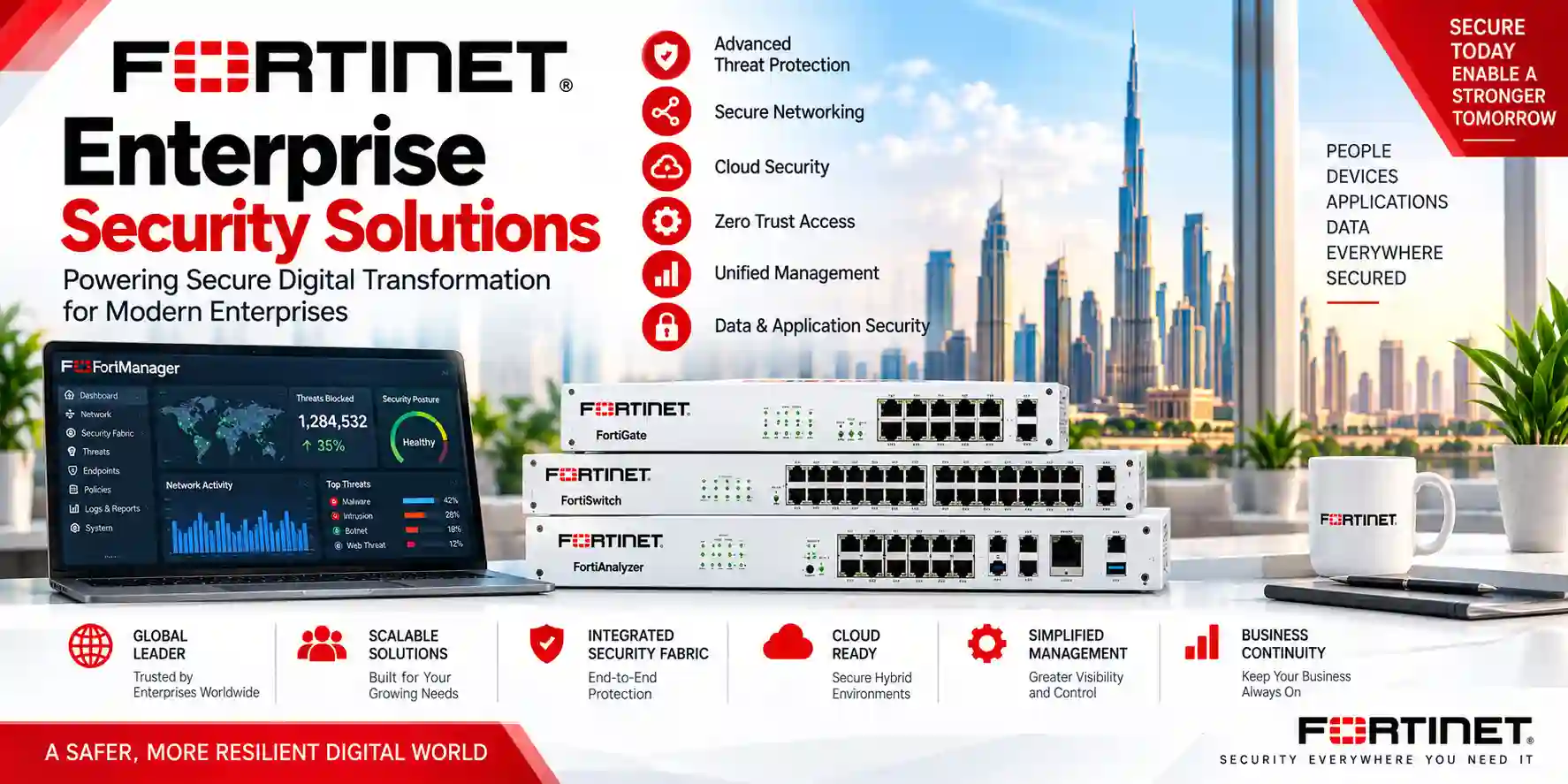
Choose Fortinet by architecture and measurable requirements, not by brand familiarity or model popularity. FortiGate is the firewall and secure-networking foundation for many deployments; FortiSwitch and FortiAP can extend that architecture into the LAN and WLAN; FortiManager and FortiAnalyzer can improve control and visibility across larger environments; FortiClient, FortiSASE, FortiEDR, FortiNAC, FortiWeb, FortiMail and security-operations tools address more specialised access, endpoint, application, email and SOC requirements.
The commercial decision should include the exact FortiGuard and FortiCare entitlements, term, accessories, management, implementation and renewal ownership. For Tanzania and regional projects, use verified regional Fourteck pages for the corresponding country, but confirm availability, service scope and delivery terms for the actual order.
Discuss a Fortinet Requirement with Fourteck Tanzania
Share your current firewall, internet bandwidth, user count, branches, VPN requirements, switching and Wi-Fi scope, security services, subscription term and target location. Fourteck can use those inputs to structure the product and service discussion before a formal quotation is prepared.