
Secure branch connectivity · application-aware routing · integrated protection
Fortinet Secure SD-WAN Solutions
Fortinet Secure SD-WAN brings software-defined WAN control and next-generation firewall security together on the FortiGate platform. For organizations operating multiple offices, retail sites, hotels, campuses, warehouses, data centers or cloud-connected environments, the solution can use multiple WAN transports—including broadband internet, MPLS, cellular and other supported links—while steering traffic according to application requirements and measured link health.
FourTeck can help businesses evaluate whether Secure SD-WAN is appropriate, size FortiGate appliances for real security workloads, define primary and backup connectivity, plan application priorities, prepare VPN overlays, centralize configuration with FortiManager, improve operational visibility with FortiAnalyzer and document a deployment that can be repeated across branches. The objective is not simply to add a second internet line; it is to turn available links into a policy-driven WAN that responds to performance, resilience and security needs.
What Fortinet Secure SD-WAN does
It monitors available WAN paths, identifies applications, applies business-defined rules and can steer sessions toward the path that best meets performance and policy requirements. Fortinet integrates these WAN functions with FortiGate security rather than treating the SD-WAN edge and firewall as unrelated products.
Where it fits
Typical projects involve branch-to-head-office connectivity, resilient internet access, direct access to SaaS, multi-cloud connectivity, migration from static WAN routing, replacement or optimization of MPLS-heavy designs, and standardized connectivity for organizations adding new sites.
What buyers should define first
Branch count, internet circuits, application priorities, expected traffic, VPN topology, security inspection, high-availability requirements, cloud destinations, routing protocols, logging, central management, support model and future growth should be clear before the FortiGate model and licensing are finalized.
Fortinet Secure SD-WAN architecture in practical terms
The core of Fortinet Secure SD-WAN is FortiGate running FortiOS. Fortinet documentation positions FortiGate as the edge platform that combines SD-WAN, next-generation firewall functions and advanced routing. In a multi-site environment, each branch or hub can be designed around the capacity, security and interface requirements of that location rather than forcing every site to use identical hardware.
SD-WAN members represent the connections that the platform can use. Those members may include physical WAN interfaces, supported VLANs, tunnels and other interfaces depending on the design. Performance SLA health checks can be used to measure the quality of paths using indicators such as latency, jitter and packet loss. SD-WAN rules then determine which traffic should use which paths and under what conditions. A business may decide that voice and video should prefer the lowest-latency circuit, ERP traffic should prioritize a highly reliable path, cloud browsing should use broadband directly, and lower-priority traffic can use available capacity more flexibly.
For organizations operating many FortiGates, FortiManager can provide centralized policy, configuration and orchestration. FortiAnalyzer can add centralized logging, analytics and reporting. Fortinet also documents integration with cloud environments and FortiSASE, giving businesses options to extend the design beyond traditional site-to-site connectivity. The exact set of components should match the operational model: a small two-site project does not need the same management architecture as a group with dozens or hundreds of branches.
A useful local starting point is FourTeck Tanzania’s business technology services overview, which explains how firewalls, switching, Wi-Fi, cabling and lifecycle support fit together. Secure SD-WAN projects are strongest when the WAN is considered alongside the LAN, security policy and the applications users actually depend on.
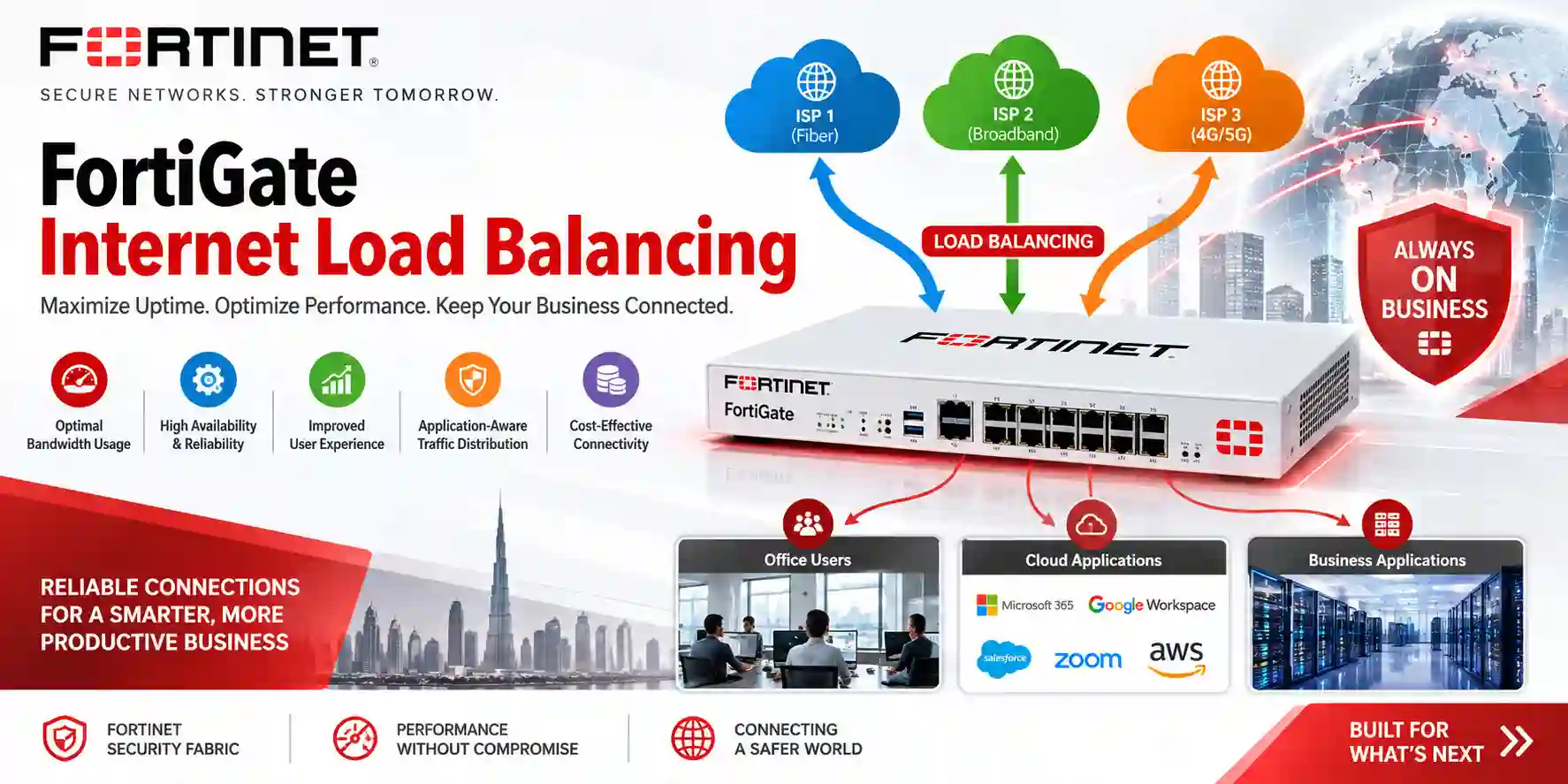
Multi-WAN is one building block of SD-WAN. The stronger design adds application awareness, continuous path measurement, security policy, routing logic and operational visibility instead of relying on simple primary/backup internet switching alone.
Key capabilities to evaluate
Application-aware steering
Traffic policies can be built around applications and business intent rather than static destination routing alone. This is useful when collaboration, ERP, cloud, web, backup and other workloads need different treatment.
Path health and failover
Performance SLA measurements can support path selection and failover decisions. The objective is not only to notice when a link is completely down, but also to recognize when quality degrades enough to affect important applications.
Integrated NGFW security
Fortinet’s design places SD-WAN and FortiGate security on the same platform. Security services, inspection depth and throughput requirements should therefore be included during model sizing rather than treated as an afterthought.
Central management
FortiManager can help standardize templates, policies and administration across multiple FortiGates. This becomes increasingly valuable when branch count grows and configuration consistency matters.
Visibility and analytics
FortiAnalyzer can centralize logs and analytics, while Fortinet’s SD-WAN monitoring services can add operational insight into ISP, path and application performance depending on the selected services and deployment.
Cloud and SASE path
Fortinet supports cloud on-ramp and integration with FortiSASE. Organizations can therefore plan branch connectivity with future hybrid-work and cloud-security requirements in mind rather than creating an isolated WAN architecture.
Licensing and subscription planning
Fortinet states that Secure SD-WAN is not licensed by bandwidth, data transfer or service tier. Fortinet’s current FortiOS guidance also explains that basic SD-WAN functionality is included on FortiGate, allowing WAN link load balancing and traffic steering without a separate SD-WAN feature license. However, advanced services can require additional paid subscriptions. Fortinet specifically documents an SD-WAN Service Bundle for capabilities such as the FortiGuard SLA database and hosted speed tests, and its ordering guidance lists additional management, monitoring, support and security service options.
For procurement, this means the bill of materials should separate the FortiGate appliance or virtual appliance from FortiGuard security subscriptions, FortiCare support, optional SD-WAN services, FortiManager or FortiManager Cloud, FortiAnalyzer, cellular connectivity components and any professional services. Buyers should ask for the exact subscription term and included services rather than assuming every feature is permanently included with the hardware.
Fortinet Secure SD-WAN Tanzania
Organizations in Tanzania often need WAN designs that can accommodate different types of connectivity across branches, cloud applications and operational sites. A Secure SD-WAN project can be particularly useful where offices depend on more than one internet connection, where branches need encrypted connectivity to central systems, or where performance-sensitive SaaS applications must continue working when one carrier path degrades. The important step is to design around the actual links available at each location rather than assuming identical service quality everywhere.
For a Tanzania deployment, start by documenting each site: primary and secondary carrier, subscribed bandwidth, public addressing, last-mile type, typical latency, packet loss during busy periods, and any current VPN or MPLS services. Then list the applications that matter to users—Microsoft 365, Google Workspace, ERP, finance platforms, voice, video meetings, cloud CRM, web systems, remote desktop, backups and any custom applications. Fortinet Secure SD-WAN policies can be designed around these business priorities, but the policy is only as good as the performance targets and application dependencies defined during discovery.
Security sizing is equally important. A FortiGate that appears adequate when looking only at raw firewall throughput may not be appropriate if the project requires deep inspection, IPS, application control, VPN, logging and multiple WAN links at the same time. FourTeck Tanzania’s FortiGate 30G Tanzania page is one current product reference, but model selection for SD-WAN should always be based on verified Fortinet performance data and the actual branch workload rather than using one appliance for every site.
Procurement teams can use the FourTeck Tanzania technology shop as a starting point for product discussions, while the Tanzania contact page is useful for sharing branch counts, bandwidth, preferred subscription terms and implementation expectations. A useful quotation should clearly separate appliances, licenses, central management, analytics, accessories and deployment services so the complete lifecycle cost is visible.
Fortinet Secure SD-WAN Solutions Dar es Salaam
Dar es Salaam deployments frequently center on head offices, multi-floor corporate buildings, retail operations, logistics businesses, hotels, professional services and organizations with branches elsewhere in Tanzania. In these environments, the SD-WAN design often begins at the main internet edge because a large share of business traffic may be destined for cloud applications rather than a local data center. Backhauling every SaaS session through an old hub-and-spoke path can introduce unnecessary latency, while uncontrolled direct internet access can create security gaps. Fortinet Secure SD-WAN provides a framework for combining local internet use with FortiGate inspection and application-aware path control.
A Dar es Salaam head office may also act as a hub for branch VPNs. If that is the case, the hub FortiGate needs to be sized for aggregate encrypted traffic, concurrent sessions, security services and failover. High availability may be more appropriate at the hub than at smaller sites, and internet diversity should be examined at the physical last-mile level. Two services from different providers do not automatically provide real path diversity if they enter the building through the same conduit or depend on the same upstream infrastructure. During design, the business should ask what will happen if one ISP fails, if the building loses a fiber path, or if a link stays technically up but experiences high latency and packet loss.
Application priorities should also reflect the office. Finance and ERP may need stable encrypted access, call center systems may be sensitive to jitter, video conferencing needs predictable upstream and downstream quality, and large backups should not overwhelm the same links during working hours. SD-WAN rules can differentiate these behaviors when the requirements are defined correctly. FortiAnalyzer can help operations teams correlate network and security events, while FortiManager can reduce configuration drift when Dar es Salaam serves as the administrative center for several branches.
The FourTeck Tanzania home page describes the wider network, firewall, Wi-Fi and infrastructure portfolio that may surround an SD-WAN deployment. For a new office or WAN refresh, include switching, VLANs, server access, wireless networks, voice, UPS protection and rack design in the project review so the FortiGate is not installed into an undocumented LAN that limits the value of the WAN upgrade.
Fortinet Secure SD-WAN Solutions Mwanza
For businesses operating in Mwanza, Secure SD-WAN planning can focus heavily on continuity between local operations and systems hosted in Dar es Salaam, other Tanzanian cities or cloud platforms. A regional branch may depend on centralized ERP, inventory, finance, file services, voice, collaboration and security platforms. If all of those services depend on a single WAN circuit, the branch can lose productivity even when local devices remain operational. Adding a second path provides potential resilience, but SD-WAN is what allows the organization to use that path according to business rules rather than treating it only as a manual emergency backup.
A useful Mwanza design distinguishes between link failure and link degradation. A circuit can remain connected while latency rises, packets are lost or available throughput drops. Performance SLA health checks give the FortiGate measurements that can be used in steering decisions. For example, interactive applications might move to a healthier link while bulk traffic continues on the original path. The thresholds must be based on the application’s tolerance and normal local conditions; unrealistic values can make traffic change paths too frequently and create instability rather than resilience.
Hardware selection should also consider environmental and operational realities. If a branch has limited rack space, unstable power or restricted on-site technical support, the design should include appropriate mounting, UPS capacity, remote administration and documented rollback procedures. Zero-touch or centrally orchestrated deployment can reduce the amount of device-by-device configuration, but the site still needs correct WAN handoff details, cabling, addressing and change coordination. Where cellular is considered as a backup path, signal quality, data plan limitations and expected failover traffic should be evaluated instead of assuming mobile connectivity can carry every workload indefinitely.
For broader network preparation, FourTeck Tanzania’s network and security service coverage includes switching, Wi-Fi, firewall and lifecycle considerations. A Mwanza SD-WAN quote should identify the FortiGate, subscriptions, WAN interfaces, any cellular extension, management platform, logging, installation, migration window and support responsibilities in separate line items so decision-makers can see what is essential and what is optional.
Fortinet Secure SD-WAN Solutions Arusha
Arusha businesses can have connectivity requirements that span hospitality, tourism, professional services, NGOs, education, regional offices and distributed operational sites. These environments often mix guest internet, corporate cloud access, voice and video, booking or business applications, security systems and administrative traffic on the same physical connectivity. Secure SD-WAN can help separate the business intent of those workloads by using application-aware routing and policy, while the FortiGate firewall continues to enforce the security controls appropriate to each segment.
A hotel or hospitality property, for example, may have high guest bandwidth demand that should not interfere with property-management systems, payment applications, staff communications or administrative VPN traffic. A professional office may prioritize Microsoft 365, Teams, Zoom or another collaboration platform. An NGO with remote field coordination may rely on encrypted access to shared systems and need a backup path that remains usable during provider outages. These are different SD-WAN goals even though all may use two or more internet connections. The design should therefore start with traffic categories and business impact rather than simply creating equal-cost load balancing.
Security segmentation is an important companion to WAN policy. Guest Wi-Fi, office users, IP cameras, access-control systems, servers and infrastructure management should not automatically share one flat network. The FortiGate can participate in segmentation, while managed switches and business Wi-Fi enforce the LAN side of the architecture. This is why an SD-WAN upgrade can be a good opportunity to review VLAN design, IP addressing, DNS, DHCP, routing and firewall policy at the same time.
FourTeck Tanzania’s company overview and technology enquiry page can be used to frame a requirements discussion. For Arusha, include site count, number of users, guest-network demand, ISP details, expected VPN peers, cloud applications, security services and any seasonal traffic variation. Those details help distinguish between a compact branch design and a property or campus that needs higher throughput, more interfaces, centralized reporting or high availability.
Fortinet Secure SD-WAN Solutions Dodoma
Dodoma SD-WAN projects may involve administrative offices, institutions, education, healthcare, professional services and businesses that need reliable connectivity to national headquarters or cloud applications. In these cases, resilience and policy consistency can matter as much as raw bandwidth. An organization that has several sites may prefer to standardize on a repeatable branch template so that VPN, routing, application steering, logging and security controls are deployed consistently rather than being rebuilt from scratch at every location.
FortiManager can support this centralized approach by providing configuration templates and policy administration across multiple FortiGates. The operational benefit is not that every branch becomes identical; different sites can still have different circuits, VLANs or capacity. The benefit is that common security rules, naming conventions and SD-WAN logic can be maintained in a controlled way. When the organization later adds another office, the implementation team has an established architecture and documentation set instead of relying on individual memory.
For institutions that handle sensitive information, direct internet access should be introduced deliberately. SD-WAN can improve performance to cloud applications by avoiding unnecessary backhaul, but those sessions still require security inspection, DNS controls, user access policy and logging according to the organization’s requirements. Fortinet’s integrated model is designed to keep the networking and firewall decisions in the same platform. If advanced encrypted inspection or multiple FortiGuard services are planned, FortiGate sizing should use the relevant threat-protection metrics and not simply the internet speed printed on the ISP contract.
A Dodoma procurement request should include desired subscription duration, high-availability requirements, rack and power conditions, internet handoff type, current firewall, planned migration window and support expectations. The FourTeck Tanzania shop provides broader procurement context, and the current Tanzania product archive shows available catalog entries while the wider solution can be scoped through a direct project enquiry.
Fortinet Secure SD-WAN Solutions UAE
Organizations that operate between Tanzania and the UAE may want a common WAN and security architecture across regional offices. Fortinet Secure SD-WAN supports this kind of standardization because the same FortiOS policy framework can be used at branches of different sizes while FortiManager provides centralized administration. A regional design can define common rules for internet breakout, branch VPNs, cloud access, application priorities, logging and security services, then adapt interface details and appliance size to each site.
For UAE offices, WAN options may include high-capacity business broadband, dedicated internet, MPLS or other managed circuits. The SD-WAN design should still validate true carrier diversity, service-level expectations and cloud destinations. A Dubai or Abu Dhabi office with heavy Microsoft 365, collaboration and public-cloud use may benefit from local internet breakout, while traffic to Tanzania-hosted systems can continue through encrypted overlays. The policy should reflect where applications actually live and which flows need private connectivity, rather than forcing every packet through one regional hub.
Procurement across countries also raises licensing and support questions. Standardizing subscription terms can simplify renewals, but device sizes may vary by branch. FortiGate models should be selected based on secure throughput, VPN, interface count, users and expected traffic at each location. If central logging is required, FortiAnalyzer capacity and retention should be sized for the total environment. A resilient regional hub may justify high availability and redundant power even where smaller branches use a single FortiGate.
For regional Fortinet requirements, FourTeck’s verified Fortinet UAE specialist site covers FortiGate, license renewal, deployment and Secure SD-WAN topics. Tanzania organizations with UAE branches can use that regional resource alongside the Tanzania project team to maintain a clearer bill of materials, model standard and renewal plan across locations without assuming that one physical appliance size fits every office.
Fortinet Secure SD-WAN Solutions Uganda
Uganda is a natural regional consideration for organizations with operations spanning East Africa. A company with sites in Tanzania and Uganda may need branch-to-branch connectivity, access to shared cloud systems, central security policy and a repeatable method for bringing new locations online. Fortinet Secure SD-WAN can support that model by combining encrypted overlays, application-aware routing and integrated FortiGate security across different underlay connections.
The first design decision is whether traffic should flow directly between branches, through a central hub, or through a hybrid topology. A hub-and-spoke design may simplify certain controls, while direct overlays can reduce latency for site-to-site workflows. Cloud applications add another dimension because they may perform better with secure local internet breakout. The right answer depends on application location, compliance requirements, operational skill, branch size and the need for centralized inspection. SD-WAN should not be treated as one topology; it is a policy framework that can support multiple approaches.
For connectivity, two providers or two access technologies can create useful resilience, but the business should still measure real performance. Latency, jitter and packet loss may vary between cities and carriers, especially during congestion. Performance SLA thresholds can be tuned so important applications leave a degraded path before users experience severe disruption. However, thresholds should be tested carefully to prevent unnecessary path changes. Voice, video, transaction systems and general web traffic may each need different rules.
FourTeck’s verified Uganda technology site provides regional context for networking and business communications. For a Tanzania-Uganda SD-WAN project, prepare a branch matrix listing city, ISP, bandwidth, IP addressing, users, applications, existing firewall, VPN peers and desired failover. That single document can make cross-border procurement and configuration more consistent while highlighting which branches require larger FortiGate appliances or additional services.
Fortinet Secure SD-WAN Solutions Kampala
Kampala may serve as a country headquarters or major branch for regional businesses, making it a likely aggregation point for VPN, cloud and branch traffic. In this role, the SD-WAN design should account for more than the bandwidth of one local internet connection. The FortiGate may terminate multiple IPsec tunnels, perform security inspection, route between internal segments, apply application-aware WAN rules and forward logs to central management. These combined workloads are what should drive appliance sizing.
A Kampala hub can also be designed with more than one upstream carrier. The value of SD-WAN is the ability to use those connections intelligently. A primary fiber circuit can carry high-priority workloads, a second business internet link can share traffic or provide failover, and a cellular path can be reserved for critical management or low-bandwidth continuity if that matches the business requirement. The exact strategy should be based on cost, data limits, SLA, provider diversity and the applications that need to survive an outage.
Centralized operations become important as branches grow. FortiManager can support repeatable templates and policy packages, while FortiAnalyzer can help administrators investigate security and network events. Change control should still be disciplined: configuration backups, maintenance windows, rollback steps and post-change validation are essential when moving existing VPNs and default routes into SD-WAN zones. A technically correct configuration can still cause business disruption if the migration sequence is not planned.
For companies managing Kampala from a broader East African IT function, align the Uganda configuration with Tanzania naming conventions, routing, security profiles and documentation. Standardization can reduce support time, but local WAN handoffs, public IPs and application dependencies must remain site-specific. The FourTeck Uganda regional site can support the local technology discussion, while the Tanzania team can coordinate a common architecture for organizations that want one design language across both countries.
Fortinet Secure SD-WAN Solutions Arua
Arua deployments can place a stronger emphasis on connectivity resilience, remote administration and efficient use of available WAN services. If a branch is far from the organization’s central IT team, the design should minimize the need for frequent hands-on configuration while still providing a safe recovery path when a change does not work as expected. Secure SD-WAN can help by allowing multiple link types and centralized policy, but operational planning is just as important as the feature set.
For a smaller branch, a practical design may use business broadband or fiber as the primary link and cellular or another provider as backup. The FortiGate can monitor both paths and apply a policy that reserves the backup for essential services when capacity is limited. This is different from indiscriminate load balancing. If the backup path has lower bandwidth or data caps, the SD-WAN rule set can prioritize VPN, key cloud applications and administrative traffic while delaying or restricting bulk transfers until the primary link returns.
Remote support also needs secure management. Administrative access should not depend entirely on the same tunnel being repaired. Out-of-band or alternate-path management may be valuable for critical sites. Configuration changes should be centrally backed up, device naming should be consistent, and the branch should have simple physical documentation showing WAN ports, local LAN ports, power, UPS and ISP equipment. These operational details reduce troubleshooting time when someone on site has limited networking experience.
When requesting a Fortinet Secure SD-WAN quote for Arua, include the number and type of WAN circuits, expected users, critical applications, required VPN destinations and the realistic failover bandwidth. If the branch supports POS, inventory, medical, education or other time-sensitive systems, identify them explicitly. That information helps the design avoid a common mistake: buying an appliance with enough ports but creating a failover path that cannot sustain the business functions it is expected to protect.
Fortinet Secure SD-WAN Solutions Mbarara
Mbarara businesses with distributed operations can use Secure SD-WAN to make branch connectivity more application-aware and less dependent on a single fixed path. Retail, logistics, education, hospitality and service organizations may need dependable access to centralized systems while also using SaaS and internet services directly. Traditional routing can send traffic along a path that is technically reachable but poorly suited to the application at that moment. SD-WAN adds continuous health information and policy-based selection to the decision.
One useful planning exercise is to classify traffic into operational tiers. Tier one might include payment, ERP, voice or another system whose disruption directly affects the business. Tier two might include collaboration, email and line-of-business SaaS. Tier three could include software updates, backups or recreational browsing. These categories do not have to map to identical Fortinet rules, but they help stakeholders explain the business consequences of congestion or failover. Engineers can then translate those priorities into SD-WAN SLA targets, traffic shaping and path selection.
The WAN strategy should also align with security segmentation. A branch with IP cameras, staff Wi-Fi, guest internet, phones and business systems may have very different traffic profiles. Segmenting those networks makes it easier to define who can access what and prevents a guest or IoT network from consuming the same resources as critical applications. FortiGate policy, managed switching and wireless design should therefore be reviewed together.
For Mbarara procurement, ask suppliers to state whether the quote includes FortiGuard services, FortiCare, advanced SD-WAN services, FortiManager, FortiAnalyzer and installation. Confirm the subscription term and renewal process. If the site is part of a Tanzania-Uganda group, use the same documentation template and policy naming across both countries. Consistency makes troubleshooting, renewal planning and future branch rollout more predictable, even where the local ISPs and appliance sizes are different.
Fortinet Secure SD-WAN Solutions Gulu
Gulu sites that rely on centralized services can benefit from a WAN design that treats link quality as a changing condition instead of a static assumption. If a branch has one fast primary connection and one lower-capacity alternative, SD-WAN can be configured to keep normal traffic on the preferred path while automatically moving selected applications when the primary link fails or falls outside defined performance thresholds. This helps preserve essential connectivity without pretending every backup circuit has the same capacity.
A key design question is what the branch should continue doing during a prolonged outage. If the answer is “everything,” the backup link must be sized and priced accordingly. If the answer is “transactions, email and management only,” the SD-WAN rules can prioritize those functions and restrict large backups, cloud sync or guest use. This business-continuity conversation should happen before configuration because it affects both the WAN service and FortiGate policy.
FortiGate also provides the security boundary for direct internet access. When a branch starts using local breakout to improve SaaS performance, traffic no longer needs to travel to a distant hub simply for inspection. That can reduce latency, but it increases the importance of consistent security profiles, DNS policy, logging and updates at the branch. Central administration can help ensure the branch is not treated as a weaker security perimeter than headquarters.
For a Gulu site, include power and equipment protection in the project. A redundant WAN has limited value if the firewall, modem and switch all lose power during a short interruption. UPS capacity, protected power distribution, clear cabling and remotely accessible management can improve real availability. SD-WAN should therefore be viewed as part of the branch resilience design, not as a software feature isolated from the physical environment.
Fortinet Secure SD-WAN Solutions Kenya
Kenya is an important regional market for organizations headquartered in Tanzania or operating across East Africa. A shared Fortinet Secure SD-WAN architecture can create a consistent branch experience across the two countries while allowing each site to use the connectivity that is locally available. The design can standardize security policy, VPN overlays, application categories, logging and central management while keeping ISP details, bandwidth and interface assignments specific to Nairobi, Mombasa or other locations.
Cloud access is often a central reason to modernize the WAN. If branches rely on Microsoft 365, Google Workspace, cloud CRM, public cloud workloads or other SaaS platforms, forcing all traffic through a remote headquarters can add latency and consume expensive private WAN bandwidth. Secure local internet breakout can improve the path while FortiGate applies firewall and security controls locally. For traffic that still belongs on a private overlay—such as access to internal servers—the same FortiGate can maintain encrypted branch connectivity.
The business should also decide how much central management is required. A few sites may be manageable individually, but larger estates benefit from FortiManager templates, controlled policy changes and shared visibility. FortiAnalyzer can help centralize logs for troubleshooting and security analysis. If multiple countries are included, retention and access policies should be reviewed according to organizational and legal requirements rather than assuming every log must be handled identically.
FourTeck’s verified Kenya IT solutions site includes network security and business connectivity coverage. A regional Tanzania-Kenya quotation should list each branch, proposed FortiGate, subscription bundle, management components and implementation scope separately. This gives procurement teams a clear view of which parts are standardized and which costs vary because of user count, bandwidth, high availability or site-specific connectivity.
Fortinet Secure SD-WAN Solutions Kuwait
Kuwait offices connected to a Tanzania headquarters or wider regional environment can use Secure SD-WAN to combine local internet access with encrypted corporate connectivity. The important architectural question is where applications live. If users mainly access SaaS and public cloud services, local breakout can provide a more direct path. If core applications remain in a Tanzania or UAE data center, VPN overlays may carry those specific flows. SD-WAN policy can choose between available paths based on business intent and measured quality.
Cross-region deployments should pay close attention to latency. No WAN technology can remove geographic distance, but good routing can avoid adding unnecessary detours. Performance SLA measurements can help select the healthier of available links, while application-aware rules keep latency-sensitive traffic away from paths that are congested or unstable. Engineers should establish baseline measurements before migration so they can compare the new design with the previous WAN rather than relying only on user impressions.
Security policy should remain consistent even when the underlying connectivity changes. FortiGate allows SD-WAN and security to coexist on the same platform, helping organizations avoid a design where networking and firewall decisions are managed in separate systems. Where FortiManager is used, common templates can be applied to Kuwait and Tanzania sites while retaining country-specific addressing, interfaces and services. The same principle applies to logging: FortiAnalyzer can centralize data, but storage and retention should be sized for the aggregate traffic and reporting need.
FourTeck’s verified Kuwait technology site can support local procurement discussions. For a cross-border project, request an itemized bill of materials with consistent subscription dates where practical, clearly defined support responsibility and a shared network diagram. That documentation becomes especially valuable when different teams or carriers are involved in each country.
Fortinet Secure SD-WAN Solutions Ghana
Ghana deployments may be part of a broader African network where branch connectivity, cloud adoption and security policy need to be standardized across countries. Secure SD-WAN can support this regional approach because it separates the business policy from the underlying carrier. One branch might use two fiber links, another may use internet plus cellular, and another may retain an MPLS circuit while adding broadband. The FortiGate can treat these as SD-WAN members and apply policy according to health, application and operational preference.
For a Ghana branch that depends on a central ERP or data center, encrypted overlay design and routing are important. The project should define address space carefully to avoid overlapping networks between countries, which can complicate VPNs and mergers of previously independent sites. Dynamic routing may be appropriate in larger environments, while smaller sites can use simpler designs. The objective is not to introduce complexity for its own sake, but to create an architecture that can grow without requiring disruptive renumbering or ad-hoc tunnels every time a new site is added.
Security subscriptions and lifecycle planning should be included from the start. Advanced threat inspection, web filtering, application control and other FortiGuard services can affect both protection and throughput. FortiCare supports the product lifecycle, while optional SD-WAN services can add advanced monitoring capabilities. Procurement teams should compare quotations using the same subscription duration and service bundle; otherwise a lower initial price may simply reflect fewer included services.
The verified FourTeck Ghana site provides a regional contact point for technology requirements. For Tanzania-Ghana network planning, create one WAN standards document covering naming, routing, VPN, security profiles, logging and management. Then create a site-specific appendix for each branch with ISP and hardware details. This combination makes the regional design easier to understand and audit.
Fortinet Secure SD-WAN Solutions Nigeria
Nigeria can present demanding multi-site networking scenarios for organizations with branch offices, retail networks, logistics operations, service locations or country headquarters. Secure SD-WAN can help when the business needs to combine multiple carriers, preserve access to cloud and corporate applications during link problems, and apply a common security policy at every edge. The design should be built from actual application and carrier data because link performance can vary significantly by location and time.
A larger Nigeria deployment may justify centralized FortiManager and FortiAnalyzer from the beginning. When dozens of branches are involved, manually configuring every firewall increases the risk of inconsistent rules, naming and VPN settings. Templates and controlled policy packages can reduce that variation. Zero-touch deployment workflows may also shorten branch rollout when local staff can install preplanned equipment and the central team completes the policy remotely. The implementation still requires reliable documentation of WAN handoffs, local subnets and change windows.
Bandwidth economics also matter. SD-WAN can use broadband alongside private connectivity, allowing organizations to reserve more expensive circuits for traffic that truly needs them while cloud and internet-bound applications take a more direct route. However, savings should not be assumed automatically. The business should compare carrier costs, appliance and subscription costs, support, management and migration effort over the expected lifecycle. In some cases a hybrid MPLS-plus-internet approach may be the most practical intermediate step.
FourTeck’s verified Nigeria IT services site can support regional discussions, while the broader FourTeck Africa site provides context for multi-country projects. For Tanzania-Nigeria connectivity, include traffic estimates between countries, cloud destinations, failover expectations and centralized management in the requirements so the proposal reflects the whole WAN rather than isolated firewall purchases.
Fortinet Secure SD-WAN Solutions Seychelles
Seychelles offices, resorts, hospitality operations and regional businesses can have WAN requirements where internet resilience and cloud access are central to day-to-day operations. Secure SD-WAN can help organizations use multiple available paths more deliberately, especially when critical applications, payment systems, reservations, collaboration tools or administrative services must continue during a provider problem. The design should reflect the actual availability and cost of alternate connectivity rather than assuming every location can obtain two equivalent links.
When the backup path is more constrained, traffic policy becomes important. The organization can identify which services must remain available and which can wait. For example, operational transactions and management access may receive priority while large backups, software downloads or guest traffic are restricted during failover. This approach can make a smaller backup circuit far more useful than an unmanaged design where every device competes equally for limited capacity.
Hospitality environments also benefit from clear segmentation. Guest networks, staff devices, property-management systems, voice, cameras, access control and building systems have different security and bandwidth needs. FortiGate policy can support that segmentation at the security edge while SD-WAN decides which external path is appropriate. Managed switches and wireless access points must align with the VLAN design so the segmentation is preserved from the endpoint to the firewall.
For a Seychelles branch connected to Tanzania or another regional hub, confirm the VPN topology, application locations and expected cross-border traffic before choosing the appliance. If most services are cloud-hosted, a direct local internet architecture may reduce unnecessary backhaul. If critical systems remain at headquarters, encrypted overlays remain important. The final quotation should include the FortiGate, security and support subscriptions, any SD-WAN service bundle, central management, implementation and the local WAN services required to make the resilience plan real.
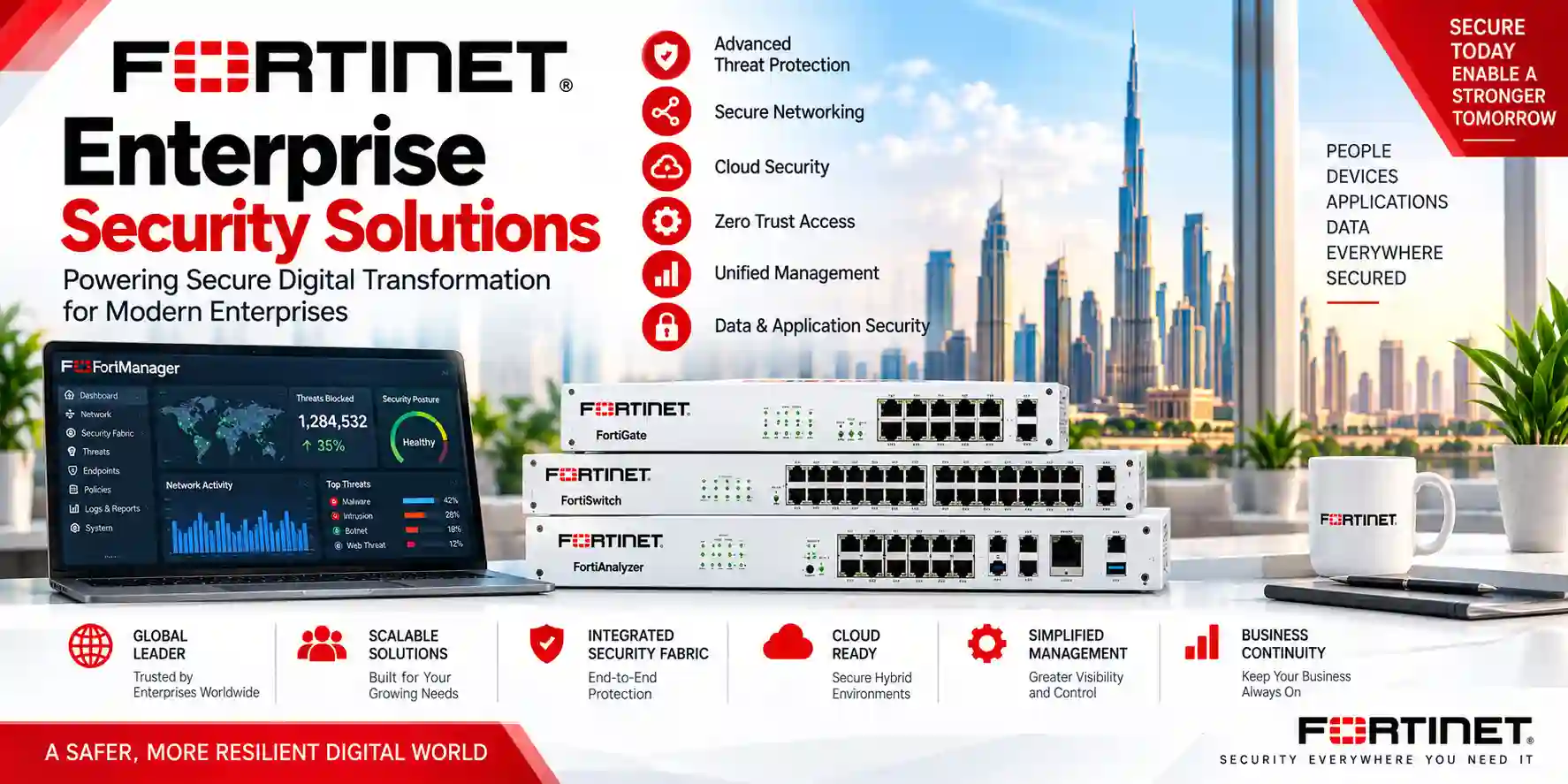
Secure SD-WAN, dual WAN and load balancing: not the same thing
Dual WAN generally means a device has two upstream connections available. Load balancing distributes traffic across more than one path according to a chosen method. Basic failover moves traffic when one path stops working. Secure SD-WAN goes further by combining multiple paths with application identification, performance measurement, policy-based steering, encrypted overlays, centralized management options and integrated security. A project that only needs basic internet failover may not require the same architecture as a national branch network.
This distinction matters during quotation. A buyer asking for “two internet lines with automatic failover” may need a relatively simple configuration. A buyer asking for “voice on the lowest-jitter path, cloud applications on broadband, ERP on an encrypted overlay, automatic remediation for degraded links, centralized policy for twenty branches and reporting” is describing a more complete SD-WAN solution. The FortiGate model, management components, subscription services and implementation effort can therefore be very different even though both scenarios use more than one WAN connection.
FourTeck can help turn the requirement into a technical scope before the hardware is selected. That protects the project from both under-buying and unnecessary complexity.
Related Tanzania network and security resources
FortiGate 30G Tanzania
Review the current FortiGate 30G product page as one FortiGate reference. Secure SD-WAN sizing still needs verified throughput, users, VPN and enabled security services for the intended site.
FourTeck Tanzania services
The services page explains firewall, networking, Wi-Fi, switching, infrastructure and lifecycle considerations that often sit around an SD-WAN deployment.
Technology procurement
Use the Tanzania shop page for product-selection guidance covering firewalls, network switches, wireless access points and supporting infrastructure.
Project enquiry
The FourTeck Tanzania contact page lists the information that helps turn a network requirement into a practical quotation.
Tanzania technology overview
The FourTeck Tanzania home page maps the wider IT, telecom, network-security and infrastructure portfolio around the WAN edge.
About FourTeck Tanzania
Use the about page to understand the integrated approach to IT, telecom, security and infrastructure planning.
Quotation checklist for Fortinet Secure SD-WAN
Frequently asked questions
Is Fortinet SD-WAN included with FortiGate?
Fortinet documents basic SD-WAN functionality as included on FortiGate, including WAN link load balancing and traffic steering. Advanced services such as the FortiGuard SLA database and hosted speed tests can require the SD-WAN Service Bundle. Security subscriptions, support and central management may also be separate depending on the design.
Can Fortinet Secure SD-WAN use MPLS and internet together?
Yes. Fortinet describes SD-WAN as able to work with different underlay transports, including MPLS, broadband and cellular connectivity. This makes phased migrations possible where an organization keeps an MPLS circuit for selected traffic while adding internet capacity for cloud and other workloads.
Does SD-WAN replace a firewall?
SD-WAN by itself is a WAN technology. Fortinet’s Secure SD-WAN is delivered on FortiGate so routing, application steering and firewall security operate on the same platform. The security policies and subscriptions still need to be designed according to the organization’s risk and inspection requirements.
What is the difference between Fortinet Secure SD-WAN and dual-WAN failover?
Dual-WAN failover can switch to another connection when a primary path fails. Secure SD-WAN can add continuous performance measurement, application-aware steering, business policy, encrypted overlays, centralized management and integrated security. A simple two-link office may not need every enterprise SD-WAN component.
Which FortiGate model should I use for SD-WAN?
There is no single model for every deployment. Size according to real internet and VPN throughput, users, sessions, security services, SSL inspection, interfaces, redundancy, branch count and future growth. Use the current Fortinet data sheet and ordering guide for the exact model and software release being proposed.
Do I need FortiManager for Secure SD-WAN?
A small deployment can be managed directly on FortiGate, while larger multi-site environments can benefit significantly from FortiManager for centralized configuration, policy and orchestration. The decision should reflect branch count, administrator workflow and the need for standardized templates.
What does FortiAnalyzer add?
FortiAnalyzer centralizes logs, analytics and reporting for Fortinet environments. It is particularly useful when administrators need a broader view across multiple FortiGates or need historical information for troubleshooting, security investigation and operational reporting.
Can Secure SD-WAN improve Microsoft 365 or cloud application performance?
It can improve path selection by steering cloud-bound traffic according to application policy and link health, and it can reduce unnecessary backhaul where secure direct internet access is appropriate. Actual performance still depends on the ISP, cloud path, latency, endpoint, LAN and application service.
Can Fortinet Secure SD-WAN support cellular backup?
Fortinet supports wireless WAN options and FortiExtender integration in its Secure SD-WAN portfolio. The project should still verify signal, provider coverage, data plan, available bandwidth and whether the backup is intended for full traffic or only selected critical applications.
What information is needed for a Tanzania Secure SD-WAN quotation?
Share the number of sites, users, current FortiGate or firewall models, internet providers and bandwidth, critical applications, VPN requirements, security services, high-availability expectations, management preferences and desired subscription term. A simple branch spreadsheet is often enough to begin accurate sizing.
Decision recap
Fortinet Secure SD-WAN is most relevant when a business needs more than a basic firewall or single internet connection. It can combine multiple WAN paths, application-aware steering, secure overlays and FortiGate security on one platform, with optional centralized management, analytics and advanced services. The business value depends on good design: realistic performance SLAs, correct FortiGate sizing, real carrier diversity, clear application priorities and a support model that can maintain the environment after deployment.
For Tanzania and multi-country operations, the most practical next step is to document each site and request an itemized architecture rather than asking only for “an SD-WAN box.” That approach gives procurement, IT and management a common view of the hardware, subscriptions, circuits, migration and ongoing operational requirements.
Plan your Fortinet Secure SD-WAN project with FourTeck
Share your branch list, internet circuits, critical applications, current firewall estate and target outcome. FourTeck can help translate those inputs into FortiGate sizing, WAN policy, subscription choices, central management requirements, migration planning and a structured quotation.
For multi-country requirements, FourTeck also operates verified regional technology sites for East Africa, West Africa and the Gulf, helping customers maintain a more consistent approach across locations while keeping local connectivity and site requirements visible.