
Fortinet Security Operations Solutions
Fortinet Security Operations brings together prevention, detection, investigation, automation and response capabilities for organizations that want a more coordinated security operations model. The portfolio can support lean IT/security teams, established SOC environments and larger enterprises that need to correlate telemetry across network, endpoint, identity, cloud, email, operational technology and third-party security tools.
The current Fortinet SecOps direction includes FortiSOC as a cloud-delivered unified SOC platform, alongside established products such as FortiSIEM, FortiSOAR and FortiAnalyzer. Endpoint and network detection capabilities such as FortiEDR and FortiNDR, exposure-management tools, threat intelligence and managed security services can be combined according to the organization’s maturity, staffing model and risk profile. The practical goal is not to deploy every product; it is to create a defensible operating model in which analysts receive useful context, repetitive tasks are automated and incidents can move from alert to investigation and response with fewer manual handoffs.
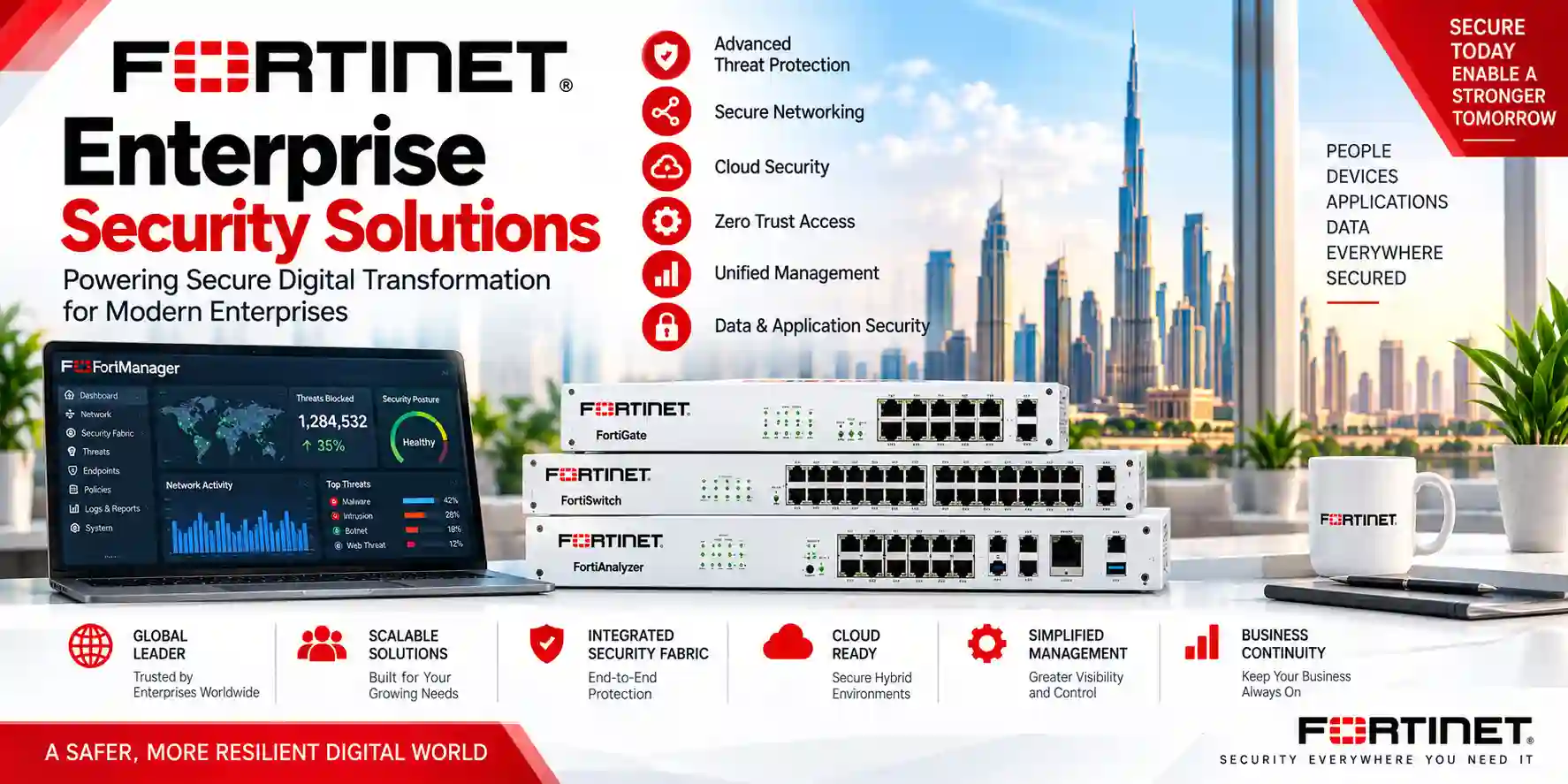
What Fortinet Security Operations Solutions are designed to solve
Security teams frequently face fragmented logs, duplicated alerts, disconnected security products and investigation workflows that depend on manual searching across several consoles. Fortinet’s Security Operations portfolio is designed around a broader SecOps fabric: collect and correlate security data, identify suspicious behavior, provide analyst context, orchestrate actions and help teams contain or remediate threats. This approach can be especially useful when a business already operates FortiGate, FortiClient, FortiMail, FortiWeb or other Fortinet technologies and wants to improve the way telemetry is used after an event is generated.
FortiSOC is Fortinet’s current unified SaaS SOC platform. It is positioned to bring together SIEM, SOAR, threat intelligence, identity-related detection and AI-assisted operations in one platform experience. FortiSIEM remains relevant for organizations that need enterprise-wide IT/OT event collection, correlation, analytics, CMDB context and incident workflows. FortiSOAR focuses on orchestration, playbooks, case management and automation across tools and teams. FortiAnalyzer provides centralized security logging, analytics, reporting and investigation functions, particularly for organizations with Fortinet infrastructure. FortiEDR and FortiNDR extend detection and response into endpoint and network behavior, while FortiRecon, FortiDeceptor, FortiSandbox and other products can address additional exposure, deception and malware-analysis requirements.
A successful SecOps project therefore begins with the operating problem rather than the product list. Some customers need centralized logging and compliance visibility. Others need to reduce alert fatigue, connect ticketing and response tools, improve threat hunting or provide continuous monitoring without building a large in-house SOC. FourTeck can help structure the requirements before quotation so that product selection, licensing, retention, integrations, workflow design and deployment method are discussed together.
Unified SOC platform
FortiSOC can provide a unified cloud-based SOC operating layer for organizations that want consolidated analytics, automation, threat intelligence and AI-assisted investigation in a common experience.
SIEM and analytics
FortiSIEM can collect and correlate data across IT and OT environments, while FortiAnalyzer supports centralized log analysis, reporting and security visibility across Fortinet and supported multivendor environments.
SOAR and automation
FortiSOAR can coordinate investigation and response workflows using connectors, playbooks, case management and automation so repetitive analyst work is reduced and response procedures become more consistent.
Endpoint and network detection
FortiEDR and FortiNDR add behavioral visibility and detection at the endpoint and network layers, supporting investigations that require more context than perimeter alerts alone can provide.
How to plan a Fortinet SecOps architecture
The first planning step is to map telemetry sources. List firewalls, endpoints, identity systems, servers, cloud services, email platforms, applications, vulnerability tools, OT systems and existing SIEM or ticketing systems. The second step is to define the investigation path: who receives alerts, who validates them, how incidents are prioritized, who authorizes containment and what evidence must be retained. The third step is to decide which workflows are safe and useful to automate. Automation is most effective when the underlying procedure is clear, approved and auditable.
Licensing should be reviewed at the same time as architecture. FortiSOC, FortiSIEM and FortiSOAR have different subscription, user, capacity and deployment considerations. Log volume, event rate, data retention, number of integrations, concurrent analysts, high-availability requirements and whether the environment is cloud, virtualized, hybrid or on-premises can all influence the final bill of materials. Buyers should request a configuration-based quote rather than treating SecOps software as a single fixed-price item.
Related FourTeck resources
Review the broader networking, firewall, server, Wi-Fi and infrastructure areas that often feed data into a Security Operations architecture.
FourTeck Tanzania shop and product guidance
Use the shop guidance to structure product, compatibility, lifecycle and infrastructure questions before requesting a coordinated security quotation.
Contact FourTeck Tanzania
Share the number of sites, current Fortinet estate, telemetry sources, analyst count, retention expectations and target use cases for quotation planning.
FourTeck Africa IT and cybersecurity solutions
Useful for regional organizations coordinating firewall, endpoint, server, networking and security projects across multiple African markets.
FourTeck Uganda solutions
Relevant to organizations standardizing security and infrastructure requirements between Tanzania and Uganda branches or operating units.
Fortinet Security Operations Solutions Tanzania
Organizations evaluating Fortinet Security Operations Solutions in Tanzania should start by defining what security data is available today and which operational gaps are creating risk or unnecessary workload. A Tanzanian enterprise may already have FortiGate firewalls at headquarters and branches, Microsoft or other identity services, business endpoints, servers, cloud workloads and third-party applications. A SecOps design can bring selected telemetry into a common monitoring and investigation process so analysts are not forced to jump between isolated consoles during an incident. For a lean IT team, the initial requirement may be centralized logging, alert prioritization and clear escalation. For a mature SOC, the priority may be multivendor correlation, IT/OT visibility, automated enrichment, incident case management, threat hunting and response orchestration.
Tanzania deployments should also account for practical infrastructure realities. Log collection can generate significant data movement, and remote branches may have different internet quality, latency or backup-connectivity arrangements. The architecture should identify whether data will be processed locally, forwarded to a central platform or consumed by a cloud-delivered service. Retention policies should be based on business and regulatory needs rather than an arbitrary default. The project team should also document time synchronization, DNS, certificate requirements, firewall rules, authentication, administrative roles and backup procedures because these operational details affect the reliability of monitoring.
For procurement, buyers should request a scope that separates software subscriptions, implementation, integration, migration, training and ongoing support. FortiSOC may suit customers seeking a unified SaaS operating model, while FortiSIEM, FortiSOAR and FortiAnalyzer remain relevant when the organization wants specific capabilities or already has a defined architecture. Endpoint and network detection can be added where deeper visibility is required. Before quotation, share the number of users and sites, expected data sources, daily or event-rate estimates when known, analyst count, current Fortinet products, high-availability expectations and target workflows. This information helps avoid under-sizing and reduces the chance of paying for capabilities that are not aligned with the real security operations process.
Fortinet Security Operations Solutions Dar es Salaam
Dar es Salaam organizations often operate dense business networks that combine headquarters users, branch connectivity, cloud applications, remote access, customer-facing services and third-party connectivity. For these environments, the value of a Fortinet Security Operations program is the ability to connect multiple detection points into a consistent workflow. A financial-services team may care about correlation, privileged activity and evidence retention. A logistics company may need visibility across office systems, warehouses and remote sites. A hospitality or retail organization may have many endpoints and branch firewalls that generate large volumes of security events. The architecture should reflect those operational differences rather than using one generic SOC template.
A practical Dar es Salaam assessment can begin with a telemetry inventory and a one-week or representative sampling of alert sources. Security teams should identify which alerts already receive attention, which are regularly ignored, which investigations require manual enrichment and which response steps are repeatable. FortiSIEM can be considered when broad event collection, correlation and asset context are priorities. FortiSOAR can be considered when analysts need standardized response playbooks and integration with ticketing, messaging, endpoint, firewall or other tools. FortiAnalyzer can help Fortinet-centric environments centralize logs and reporting, while FortiSOC offers a path for organizations that prefer a unified cloud-delivered SOC platform.
Procurement teams in Dar es Salaam should also plan integration and operational ownership. A SIEM or SOAR platform does not create a complete SOC on its own; someone must maintain data-source onboarding, tune detections, review automation, manage user access and update response procedures. Where internal staffing is limited, managed monitoring or expert services may be part of the discussion. The quotation should state which systems will be integrated, how many users require platform access, what log-retention target applies, how long implementation and migration activities are expected to run, and what training is included. This produces a clearer basis for comparing proposals and for deciding whether the organization should begin with foundational monitoring or move directly toward a more advanced SOC operating model.
Fortinet Security Operations Solutions Mwanza
Mwanza businesses considering Fortinet Security Operations Solutions may have a mixture of central office systems, distributed branches, field operations and remote users. In that environment, security monitoring should be designed to work even when every site does not have identical bandwidth, staff or infrastructure. Rather than sending every possible log without a plan, the project should identify which events are security-relevant, how much data each source produces and which telemetry must remain continuously available for investigation. This is particularly important when branch connectivity is shared with business applications, voice, backups or other operational traffic.
A phased SecOps approach can reduce complexity. Phase one can centralize the most valuable sources, such as firewalls, core servers, identity systems and key endpoints. Phase two can improve correlation, asset context and threat-hunting capability. Phase three can add automation for repeatable response procedures such as alert enrichment, ticket creation, user or host isolation requests and evidence collection. FortiSIEM, FortiSOAR, FortiAnalyzer, FortiEDR and FortiNDR can participate at different stages depending on the requirement. FortiSOC can be evaluated when a unified cloud platform is preferred and the organization wants to consolidate multiple SOC functions under one operating model.
Mwanza procurement teams should ask suppliers to explain data flow, bandwidth implications, retention, resilience and licensing in plain operational terms. If a remote collector, virtual machine or other component is required, the compute, storage and network dependencies should be included in the scope. If the organization already uses another endpoint, identity or ticketing platform, integration should be verified rather than assumed. The final quotation should identify what is included in onboarding and what becomes an ongoing administrative responsibility. This approach helps local IT teams avoid buying a powerful platform without the processes needed to operate it effectively and creates a clearer path for future expansion into additional sites, data sources and automated workflows.
Fortinet Security Operations Solutions Arusha
Arusha organizations can have very different security profiles: tourism and hospitality groups, NGOs, professional offices, education institutions, healthcare operations and regional businesses may all depend on cloud applications, internet access, endpoint devices and branch connectivity but face different monitoring priorities. Fortinet Security Operations Solutions can be planned around these differences. A hospitality group may want fast visibility into endpoint, identity and network anomalies across several properties. An NGO may prioritize auditable monitoring and controlled access across mobile users and distributed systems. An education environment may need to distinguish routine high-volume user activity from events that justify investigation.
The right architecture should therefore begin with use cases. Examples include detecting repeated authentication anomalies, identifying suspicious endpoint behavior, correlating firewall and identity events, monitoring privileged activity, centralizing incident evidence and automating initial investigation steps. FortiSIEM is relevant where correlation and broad event visibility are central requirements. FortiSOAR becomes valuable when analysts need repeatable playbooks across security and IT tools. FortiAnalyzer can provide centralized logging and security analytics in Fortinet-heavy environments. FortiSOC can be reviewed as a unified SaaS option for organizations that want integrated SOC functions and AI-assisted operations without managing several separate platforms.
For Arusha deployments, the technical scope should include authentication, user roles, system time, collector placement, connectivity, storage or retention, backup, software updates and administrator training. Organizations with seasonal workforce changes should also review how identity and endpoint onboarding affects monitoring. The procurement process should distinguish core subscription cost from professional services, connectors, migration and operational support. Buyers should ask for a design that can begin at a practical level and expand as the team matures. A smaller initial deployment that produces reliable, actionable alerts can create more value than a large rollout that overwhelms staff with poorly tuned events. The objective is a sustainable SOC process that fits the organization’s staffing and risk environment.
Fortinet Security Operations Solutions Dodoma
Organizations in Dodoma that handle public services, administration, education, professional operations or multi-site infrastructure may require strong visibility, controlled change management and clear incident records. Fortinet Security Operations Solutions can support this requirement by bringing selected logs, detections and investigation workflows into a common operating process. The design should identify which systems are business-critical, which data sources contain useful security context and which events require escalation. This prevents a monitoring platform from becoming a large archive with little operational value.
A mature design separates detection from response authority. Security platforms can identify suspicious activity and automate evidence gathering, but actions such as disabling accounts, blocking traffic or isolating systems should follow approved procedures. FortiSOAR is especially relevant to this governance because playbooks can be built around defined workflows and human approval points. FortiSIEM can correlate events and provide asset or IT/OT context. FortiAnalyzer can centralize and analyze security logs, while endpoint and network detection products can provide additional behavioral evidence. FortiSOC offers a cloud-delivered path for organizations that want a more unified SOC platform with integrated analytics, automation and AI-assisted investigation.
Dodoma buyers should include governance requirements in the quotation: administrator roles, approval workflows, audit trails, retention periods, access control, platform backup and disaster-recovery expectations. The supplier should state which integrations are standard, which require additional work and how existing security products will be connected. If compliance reporting is required, the exact reports, data sources and retention assumptions should be agreed before implementation. Procurement should also plan training for both security analysts and platform administrators because those are different responsibilities. A well-documented project should leave the organization with an architecture diagram, data-source list, access model, escalation process and configuration record so the platform can be maintained after the initial deployment.
Fortinet Security Operations Solutions UAE
For organizations operating in the UAE, Fortinet Security Operations Solutions can be evaluated as part of broader enterprise security modernization, branch standardization, cloud adoption or SOC consolidation. Many UAE environments combine high-bandwidth headquarters networks, public cloud services, remote users, managed services, application platforms and multiple security vendors. The SecOps architecture should therefore support multivendor telemetry and clearly separate collection, detection, investigation and response. FortiSOC can be considered when a unified cloud-delivered SOC platform is attractive, while FortiSIEM and FortiSOAR remain suitable where organizations want distinct SIEM and orchestration capabilities or need to integrate with an established SOC architecture.
Large UAE deployments should pay particular attention to data volumes and operational scale. Event-per-second expectations, daily ingestion, retention, search requirements, number of analysts and number of connectors can materially affect sizing and licensing. If security operations covers several business units, the platform may need role separation, tenant-style operational boundaries or delegated administration. Integration with identity, endpoint, network, ticketing, threat-intelligence and cloud-security systems should be planned using documented APIs and supported connectors rather than informal assumptions. Automation should be introduced first in repeatable, low-risk workflows and expanded after the team validates the results.
UAE procurement teams should request commercial clarity around subscription term, included features, implementation, migration, training and support. FortiSOC’s cloud delivery model may simplify some infrastructure requirements, but customers should still confirm service availability, data-region considerations and integration dependencies for the planned deployment. Organizations with existing FortiAnalyzer, FortiSIEM or FortiSOAR investments should map which capabilities remain useful and whether migration, coexistence or phased consolidation is the better approach. The best proposal is the one that fits the security operations workflow and governance model, not merely the proposal with the longest product list.
Fortinet Security Operations Solutions Uganda
Uganda organizations planning Fortinet Security Operations Solutions may need to monitor a combination of headquarters infrastructure, branch firewalls, endpoints, cloud applications and identity services. A centralized SecOps approach can help teams see related events across those systems rather than treating each alert as an isolated problem. This is particularly useful for businesses that have grown through multiple technology purchases and now operate several management consoles. The first design task is to identify which data sources add useful investigation context and which alerts currently consume the most analyst time.
A practical Uganda deployment can begin with network and identity visibility, then add endpoint and application sources. FortiSIEM can support cross-environment collection and correlation. FortiSOAR can connect incident workflows and automate repetitive enrichment or response activities. FortiAnalyzer may be appropriate for organizations with a significant Fortinet estate that require centralized security logging and reporting. FortiEDR and FortiNDR can add endpoint and network behavioral evidence. FortiSOC can be evaluated as a unified SaaS platform where customers prefer integrated SOC functionality with a single operating experience. Managed monitoring may also be considered when internal teams cannot provide continuous coverage.
Procurement in Uganda should include branch-connectivity assumptions in the architecture. The project should decide whether remote sites forward all logs, selected logs or locally filtered events, and what happens when connectivity is interrupted. Collector resilience, data buffering and recovery should be part of the technical discussion. Buyers should also ask how licensing changes when new branches or log sources are added. The quotation should identify the implementation scope, supported integrations, training, documentation and renewal model. For organizations operating across East Africa, standardizing naming, severity, response playbooks and reporting between Tanzania and Uganda can reduce operational friction even when each site has different connectivity or infrastructure.
Fortinet Security Operations Solutions Kampala
Kampala enterprises often have concentrated headquarters infrastructure with connected branches, remote workers and cloud applications. Fortinet Security Operations Solutions can provide a framework for turning those distributed security signals into a more organized SOC workflow. Instead of asking whether the business needs “a SIEM” in isolation, the project should ask what incidents must be detected, what evidence is needed for investigation, which teams participate in response and which actions can safely be automated. Those answers determine whether FortiSIEM, FortiSOAR, FortiAnalyzer, FortiSOC or complementary detection products are the best starting point.
Kampala customers with FortiGate networks may begin by centralizing firewall and security-service logs, then correlate them with identity and endpoint data. If investigations involve repetitive lookups across multiple systems, FortiSOAR can automate enrichment and case updates. If teams need broad asset context, IT/OT telemetry and correlation, FortiSIEM may fit the requirement. If the objective is an integrated cloud-delivered platform with unified SOC functions, FortiSOC can be evaluated. The design should not assume every alert deserves the same treatment; prioritization should consider asset importance, user context, threat intelligence and the confidence of the detection.
A Kampala quotation should define log sources, estimated ingestion, retention, analyst access, integration list and required implementation services. Customers should ask whether tuning, use-case creation, dashboards, report customization and playbook development are included or priced separately. Security teams should also decide how incidents move into the existing IT service-management process and how after-hours events are handled. A platform that detects issues without a defined escalation path can leave the organization exposed. The procurement objective is therefore a complete operating model: technology, people, process, documentation and support aligned with the organization’s actual security maturity.
Fortinet Security Operations Solutions Arua
Arua organizations may operate with smaller local IT teams, distributed facilities or links back to a central headquarters. In this setting, Fortinet Security Operations Solutions should be designed for operational simplicity. The objective is not to recreate the complexity of a large enterprise SOC at every site. Instead, local infrastructure can feed the security signals that matter into a central monitoring, investigation and response process. This can make branch activity visible without requiring dedicated analysts at each location.
The data architecture is important. Branch firewalls, servers, identity services and endpoints can produce large quantities of logs, so the project should identify which data is needed for threat detection, troubleshooting, compliance or forensic investigation. If network links are constrained or intermittent, buffering and forwarding behavior should be understood before deployment. FortiAnalyzer can help centralize Fortinet security logs; FortiSIEM can correlate wider multivendor and IT/OT telemetry; FortiSOAR can automate incident processes; and FortiSOC can be evaluated where a unified cloud SOC model is appropriate. Endpoint or network detection can be added where the risk case justifies deeper visibility.
Arua procurement teams should request a scalable scope. The proposal should show what is required for the first site and what changes when additional locations are added. Licensing, collector resources, storage, connectivity and administrator access should be clearly documented. Training should focus on the tasks local staff actually perform, such as confirming connectivity, checking collector health or escalating incidents, while advanced investigation can remain centralized if that matches the organization’s staffing model. This division of responsibility helps avoid a platform that is technically capable but too complicated for day-to-day operation. A well-planned deployment can provide useful visibility while keeping the local operational burden proportionate to the site.
Fortinet Security Operations Solutions Mbarara
Mbarara organizations evaluating Fortinet Security Operations Solutions may need to protect growing business networks without building a large SOC from the beginning. A staged design can be effective: first centralize security visibility, then improve detection quality, and finally automate selected response processes. The first stage should identify critical assets, administrative accounts, internet gateways, core servers and user endpoints. The second should map the security events that matter to those assets. The third should create repeatable handling procedures for the incidents that occur most often.
FortiSIEM can provide broad collection and correlation when the organization needs to see events across more than one vendor or technology domain. FortiAnalyzer can be used for centralized logging and analytics in Fortinet-focused environments. FortiSOAR can coordinate incident response and automate analyst tasks such as enrichment, notification, evidence collection and case updates. FortiSOC provides a unified SaaS approach for customers that prefer a consolidated platform. FortiEDR, FortiNDR and related technologies can extend visibility where endpoint or network behavior needs more detailed analysis. The combination should be chosen by use case, not by attempting to deploy the entire portfolio at once.
For Mbarara projects, a quotation should include expected log sources, estimated event volume, retention, analyst users, integrations and deployment responsibilities. If the customer has limited technical staff, operational support and managed monitoring should be discussed openly. If the customer already has an IT helpdesk, the SecOps workflow should integrate with it so security incidents are assigned, tracked and closed consistently. Expansion should also be planned: a platform that works for one office today should have a documented path for additional branches, cloud services and endpoints. Clear sizing and operational documentation can reduce future rework and make the security investment easier to manage.
Fortinet Security Operations Solutions Gulu
Gulu businesses and institutions can use Fortinet Security Operations Solutions to improve visibility across networks that may include remote branches, mobile users, local servers and cloud services. The design should prioritize dependable monitoring over unnecessary complexity. A security platform is most useful when the team knows which alerts require action, where supporting evidence can be found and who has authority to respond. This requires detection logic, escalation procedures and ownership to be defined alongside the technology.
FortiAnalyzer can provide a practical foundation for Fortinet-centric logging and reporting. FortiSIEM can extend monitoring across multivendor infrastructure and support more advanced correlation and asset context. FortiSOAR can automate workflows when the team is spending too much time on repetitive tasks. FortiSOC can provide a more unified cloud-delivered SOC environment where that model matches the organization’s requirements. Complementary endpoint and network detection can add behavioral visibility for organizations that need to investigate activity beyond perimeter events. Each component should have a defined operational purpose before it is added to the bill of materials.
Gulu deployments should also be planned around connectivity and support. If remote sites send data to a central or cloud platform, network reliability and bandwidth should be reviewed. The design should specify how data is buffered during an outage, how collector health is monitored and who is notified when a source stops reporting. Procurement should ask for documentation of supported integrations, administrator access, update procedures, renewal terms and training. Where possible, start with high-value data sources and a manageable set of detections, then expand after the team has demonstrated a consistent response process. This gives the organization a measurable security operations capability rather than simply a large volume of stored logs.
Fortinet Security Operations Solutions Kenya
Kenya enterprises often operate complex hybrid environments with headquarters, branches, cloud applications, mobile users, data-center workloads and multiple security vendors. Fortinet Security Operations Solutions can support this complexity by consolidating selected telemetry and providing a more consistent path from detection to investigation and response. The architecture can be built around FortiSOC as a unified SaaS SOC platform or around individual components such as FortiSIEM, FortiSOAR and FortiAnalyzer where those products better match the existing operating model.
A Kenyan organization with an established SOC may focus on reducing alert fatigue, connecting threat intelligence, improving cross-domain correlation and automating repetitive workflows. A growing business may simply need centralized security visibility and clearer incident escalation. The same product should not be assumed for both cases. FortiSIEM is relevant where the team needs broad event collection, IT/OT context and advanced correlation. FortiSOAR can orchestrate workflows across security and IT tools. FortiAnalyzer can centralize analytics and reporting across Fortinet infrastructure. FortiEDR and FortiNDR can deepen endpoint and network detection. FortiSOC can simplify platform consolidation when a cloud-delivered model is suitable.
Kenya procurement teams should evaluate subscriptions, data ingestion, retention, connectors, analyst users and implementation as separate cost drivers. Where the organization has regional operations, the design should also define tenancy, role separation, reporting boundaries and data-flow expectations between countries. Standardized detection severity and incident categories can help regional teams collaborate without forcing every site to use identical infrastructure. Before requesting a quote, provide an architecture summary, current Fortinet products, security-tool list, approximate number of endpoints and sites, preferred deployment model and the top five incident-response use cases. That information makes technical and commercial proposals easier to compare.
Fortinet Security Operations Solutions Kuwait
Kuwait organizations evaluating Fortinet Security Operations Solutions may need to consolidate visibility across corporate networks, remote-access users, cloud systems, branch infrastructure and specialized applications. A SecOps program should translate those technical components into practical detection and response workflows. The project should start with a risk and telemetry map: identify critical systems, privileged users, internet-facing assets, important business applications and the security tools that already generate alerts. This helps determine which data is valuable enough to collect and correlate.
FortiSOC can be evaluated when the organization prefers a unified cloud-delivered SOC platform. FortiSIEM can support enterprise-wide event collection, correlation and IT/OT context. FortiSOAR can standardize incident workflows and automate tasks across supported systems. FortiAnalyzer can provide centralized logging and analytics for Fortinet environments. Endpoint, network and exposure-management technologies can provide additional context where required. In a mature SOC, these capabilities can help analysts move faster by connecting related evidence. In a smaller team, they can reduce the number of manual steps required for initial triage.
Kuwait procurement teams should ask for clear service boundaries. Subscription licensing, implementation, data-source onboarding, detection tuning, playbook development, training and ongoing support should be itemized. If the deployment uses cloud services, regional availability and data-handling requirements should be confirmed for the intended subscription and project timing. If the deployment uses virtual or on-premises components, compute, storage, backup and high-availability requirements should be included. The strongest design will be one that can be operated with the available team and expanded according to measurable security needs, rather than one that assumes every possible SecOps capability must be enabled from the first day.
Fortinet Security Operations Solutions Ghana
Ghana businesses can use Fortinet Security Operations Solutions to move from device-by-device monitoring toward a coordinated incident process. As organizations add firewalls, endpoint protection, cloud services, identity systems and business applications, security information becomes distributed across many products. A centralized SecOps architecture can help correlate that information, prioritize events and provide analysts with a more complete view of an incident. This is useful for enterprises, service providers and growing organizations that need better visibility without multiplying the number of consoles analysts must check.
The starting point can vary. A Fortinet-centric customer may begin with FortiAnalyzer for centralized security logs and reporting. A business requiring broader multivendor correlation may evaluate FortiSIEM. A team with established detections but slow manual response can add FortiSOAR to orchestrate investigation and remediation steps. FortiSOC provides another option for organizations seeking a unified SaaS SOC platform. Endpoint and network detection can provide more evidence for threat hunting and containment. The key is to define use cases and expected operational outcomes before selecting licenses.
Ghana procurement teams should request a bill of materials that reflects log volume, number of sources, analyst users, retention, integration count and deployment model. The statement of work should identify data-source onboarding, dashboards, reports, playbooks, training and documentation. If the organization has branches outside Ghana, regional role separation and reporting should be included in the design. It is also helpful to define a tuning period after go-live because initial detections may require adjustment based on normal business activity. A controlled tuning process reduces alert fatigue and improves confidence in the platform, which is essential if the organization expects analysts or IT staff to act quickly when a high-priority incident is detected.
Fortinet Security Operations Solutions Nigeria
Nigeria enterprises can have large and highly distributed technology environments, making security operations a challenge of scale as much as detection. Fortinet Security Operations Solutions can help teams consolidate telemetry and automate parts of the investigation process across networks, endpoints, identity, cloud, applications and third-party security tools. For a large enterprise or service provider, the design may need to support substantial ingestion, many analysts and complex role separation. For a mid-sized business, the priority may simply be actionable visibility and a dependable escalation workflow.
FortiSIEM can provide enterprise-wide collection and correlation, including IT/OT context where required. FortiSOAR can coordinate incident-response playbooks, case management and integrations. FortiAnalyzer can centralize security logs and analytics in Fortinet-heavy estates. FortiSOC can be considered for organizations looking for a consolidated cloud-delivered SOC platform. FortiEDR, FortiNDR and exposure-management products can add deeper detection context. A mature environment may use several of these capabilities, but the project should still define which product owns each function so responsibilities and costs remain clear.
Nigeria procurement teams should insist on capacity assumptions. Event rates, storage or retention, search performance, high availability, number of sites, number of endpoints, number of connectors and expected automation volume should be documented. If the environment includes business-critical systems with strict change control, automated response actions should include approval gates. If multiple business units share the platform, access and reporting boundaries should be designed before onboarding. The implementation scope should include knowledge transfer because the long-term value of a SecOps platform depends on continuous tuning, data-source health, rule maintenance and response-process improvement. A technically strong platform produces the best result when the organization also invests in the operating discipline required to use it well.
Fortinet Security Operations Solutions Seychelles
Seychelles organizations may operate smaller local IT teams while still handling high-value business data, internet-facing services, hospitality systems, financial applications or distributed properties. Fortinet Security Operations Solutions can be designed to give those teams stronger visibility without creating an unnecessarily complex local SOC. Centralized or cloud-delivered monitoring can make it possible to correlate security events across firewalls, endpoints, identity and servers while keeping day-to-day administration proportionate to the size of the organization.
For a Fortinet-centric environment, FortiAnalyzer can provide centralized logging and analytics. FortiSIEM can be considered when the organization requires multivendor correlation or broader event-management functions. FortiSOAR is useful when response procedures involve repeated lookups, notifications, ticket updates or containment actions that can be represented as playbooks. FortiSOC provides a unified cloud SaaS option for organizations that want integrated SOC functions. Endpoint and network detection can be added where the risk profile requires more detailed visibility. Managed security services may also be relevant when continuous monitoring cannot be staffed internally.
Seychelles procurement should pay particular attention to connectivity, data flow and operational support. The project should specify what happens when internet connectivity is interrupted, how data is buffered, which administrative tasks require local access and which can be performed centrally. Subscription and support terms should be clear, as should any cloud-service regional availability considerations. A good quotation will describe the initial data sources, onboarding tasks, alert-tuning process, response workflow, administrator training and renewal model. This allows the customer to budget for the complete security operations lifecycle rather than only the initial license. The resulting platform should be simple enough to operate consistently but flexible enough to expand when additional properties, cloud services or users are added.
Selection guide: which Fortinet SecOps component fits which need?
Quotation checklist for Fortinet Security Operations
Fortinet Security Operations FAQ
What is Fortinet Security Operations?
Fortinet Security Operations is a portfolio of products and services for prevention, detection, investigation, automation and response. It includes SOC-platform technologies such as FortiSOC, FortiSIEM, FortiSOAR and FortiAnalyzer plus endpoint, network, exposure-management and managed security capabilities.
What is the difference between FortiSOC and FortiSIEM?
FortiSOC is Fortinet’s unified cloud-delivered SOC platform and is designed to combine multiple SOC functions in one SaaS experience. FortiSIEM remains a dedicated next-generation SIEM platform for enterprise-wide IT/OT event collection, analytics, correlation, asset context and incident response. The better fit depends on architecture, deployment preference and required capabilities.
Does FortiSOAR replace FortiSIEM?
No. SIEM and SOAR solve different operational problems. A SIEM concentrates on collecting, correlating and analyzing security data, while SOAR focuses on orchestrating workflows, case management and response automation. They can operate together, and some Fortinet platforms also include integrated automation capabilities.
Can Fortinet Security Operations integrate with non-Fortinet products?
Yes, several Fortinet Security Operations products are designed for multivendor environments. Integration depth varies by product and connector, so the exact third-party systems and required actions should be confirmed during design.
How is Fortinet SecOps licensing calculated?
Licensing varies by product and edition. Factors can include subscription level, users, capacity, data ingestion, deployment type and other product-specific metrics. A configuration-based quote is recommended after the organization documents its sources, retention, analyst count and required integrations.
Do we need a full SOC team before buying these tools?
Not necessarily. Fortinet positions its SOC platform for different stages of the security operations journey, including lean teams and advanced SOC environments. The important planning question is who will review alerts, maintain integrations, approve response actions and tune the platform after deployment.
What information is needed for a Fortinet Security Operations quote?
Provide the number of sites, current Fortinet products, third-party data sources, approximate event or log volume when known, desired retention, number of analysts, required integrations, preferred deployment model and top detection or response use cases.
Decision recap
Choose the platform based on the operating problem. Use centralized analytics when visibility is fragmented. Add SIEM when the organization needs broader correlation and security-event management. Add SOAR when investigations and response are slowed by repetitive manual workflows. Add endpoint and network detection when the team needs behavioral evidence closer to the attacker’s activity. Consider a unified SOC platform when consolidation and a common operating experience are priorities.
Before purchase, define data sources, retention, analyst roles, integrations, response authority and support ownership. Those requirements determine the real cost and value of a Security Operations deployment more accurately than a product name alone.
Plan a Fortinet Security Operations deployment with FourTeck
Share your existing Fortinet environment, third-party security tools, number of sites, log-retention target, analyst count, integration requirements and the incidents you want to detect or automate. FourTeck can use those details to structure a configuration-based discussion around FortiSOC, FortiSIEM, FortiSOAR, FortiAnalyzer and complementary SecOps capabilities.